Japan painting: its unique characteristics
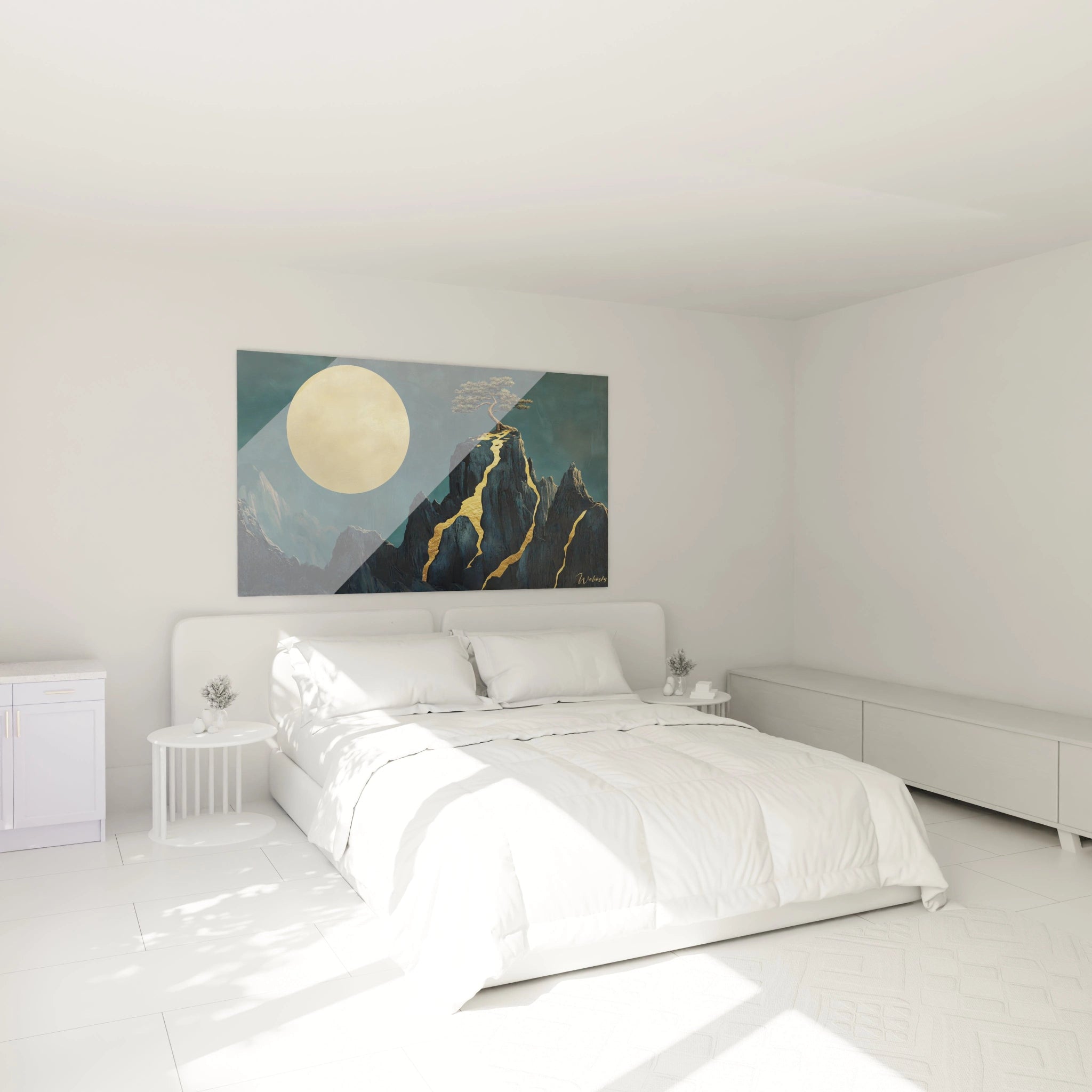
This Japan painting immediately captivates with its harmonious composition combining majestic mountains, solitary pine and dazzling golden moon. The work instantly transports viewers into a universe inspired by traditional Japanese aesthetics revisited with contemporary sensibility. The first impression is dominated by the striking contrast between the deep blue-black tones of the mountains and the brilliant glow of the moon and the veins running through the rock.
What distinguishes this mountainous Japan painting is the masterful application of golden lines recalling the kintsugi technique, creating a visual dialogue between strength and fragility. The solitary bonsai pine crowning the main summit adds a spiritual dimension characteristic of traditional Japanese art.
How this minimalist Japan painting is structured
The composition of this minimalist Japan painting is based on perfectly mastered balance between elements. The imposing golden moon occupies the upper left quadrant, creating a visual counterweight to the main mountain mass located on the right side. This asymmetrical arrangement, typical of Japanese aesthetics, generates dynamic visual tension that guides the viewer's gaze through the work.
The natural compositional lines formed by mountain ridges and golden veins lead the viewer's eye toward the solitary pine, the culminating point of the composition. Atmospheric perspective creates a sensation of depth, with secondary mountains fading in the background, reinforcing the immensity of the landscape represented in this minimalist Japan painting.
The colors of the Japan painting and their harmony
The color palette of this Japan painting is articulated around three main hues that complement each other perfectly:
- Deep blue-green (teal): dominating the background and creating a meditative nocturnal atmosphere
- Brilliant gold: illuminating the moon and mountain veins, adding a precious dimension
- Blue-black: defining mountain silhouettes with strength and character
This chromatic combination evokes traditional Japanese lacquers enhanced with gold. The contrasts between the cool mountain tones and the luminous warmth of gold generate a contemplative emotion, characteristic of an authentic Japan painting. The color harmony suggests a nocturnal landscape bathed in moonlight.
Textures and technical details of the traditional Japan painting
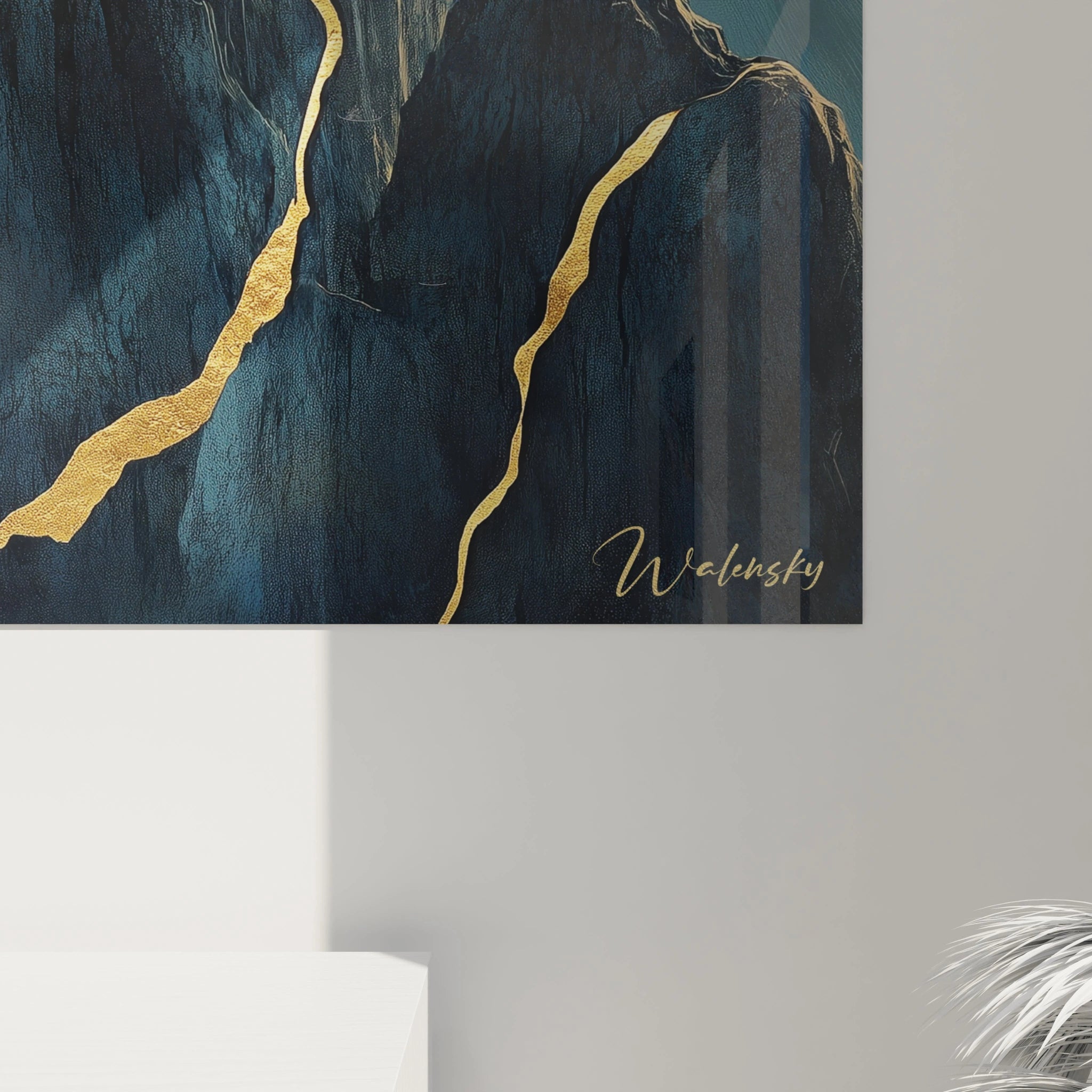
Careful observation reveals the richness of textures in this traditional Japan painting. The mountains present an almost tactile rough surface, contrasting with the smooth and reflective finish of the golden elements. This juxtaposition creates a striking relief effect that animates the flat surface of the painting and gives the illusion of a third dimension.
The technique employed probably combines several approaches: background work in acrylic or oil for the mountains, and application of genuine gold leaf or metallized gold paint for the veins and moon. This mixed method, characteristic of contemporary traditional Japan painting, allows for remarkable physical presence where golden elements seem to capture and reflect surrounding light.
What makes this mountain Japan painting unique
The originality of this mountain Japan painting lies in its poetic reinterpretation of the kintsugi concept applied to a natural landscape. Unlike classical representations of Japanese mountains, this work transcends simple illustration to become a powerful visual metaphor: the golden cracks symbolize the beauty born from adversity, a concept deeply rooted in Japanese philosophy.
The solitary pine, miraculously rooted at the summit of the main mountain, adds a distinctive narrative dimension to this Japanese wall decoration. Its presence evokes resilience and perseverance in the face of adversity, a recurring theme in traditional Japanese art. This combination of natural and symbolic elements creates a contemplative work of exceptional depth.
Depth and details of the Japan painting
Viewed from a distance, this work strikes with its harmonious balance and refined composition, essential characteristics of zen Japan painting. The majestic mountain silhouette and moon brilliance create an immediate impression of serenity and grandeur. The work functions perfectly as a coherent visual whole bringing a calming presence to any space.
When approaching, many subtle details reveal themselves: texture variations on the mountain flanks, nuances in blue-black tones, and the delicacy of the solitary pine branches. This richness of detail in the golden mountain Japan painting invites prolonged contemplation, offering a visual experience that renews itself with each observation and under different lighting conditions.
Where and how to display your zen Japan painting
This zen Japan painting will fully flourish in a space that respects its contemplative nature. A neutral color wall – white, light gray or even very pale blue – will allow the colors of the work to fully express themselves. Lighting is crucial: favor a direct but soft light source, ideally an adjustable spotlight, to highlight the reflections of the golden elements.
For harmonious integration into your interior, associate this Japanese wall art with refined decorative elements: furniture with simple lines, textiles with natural textures, and a few carefully selected objects. Recommended complementary tones include deep blues, natural wood, and discreet touches of black. Your Japan painting will thus become the focal point of a space inviting serenity.