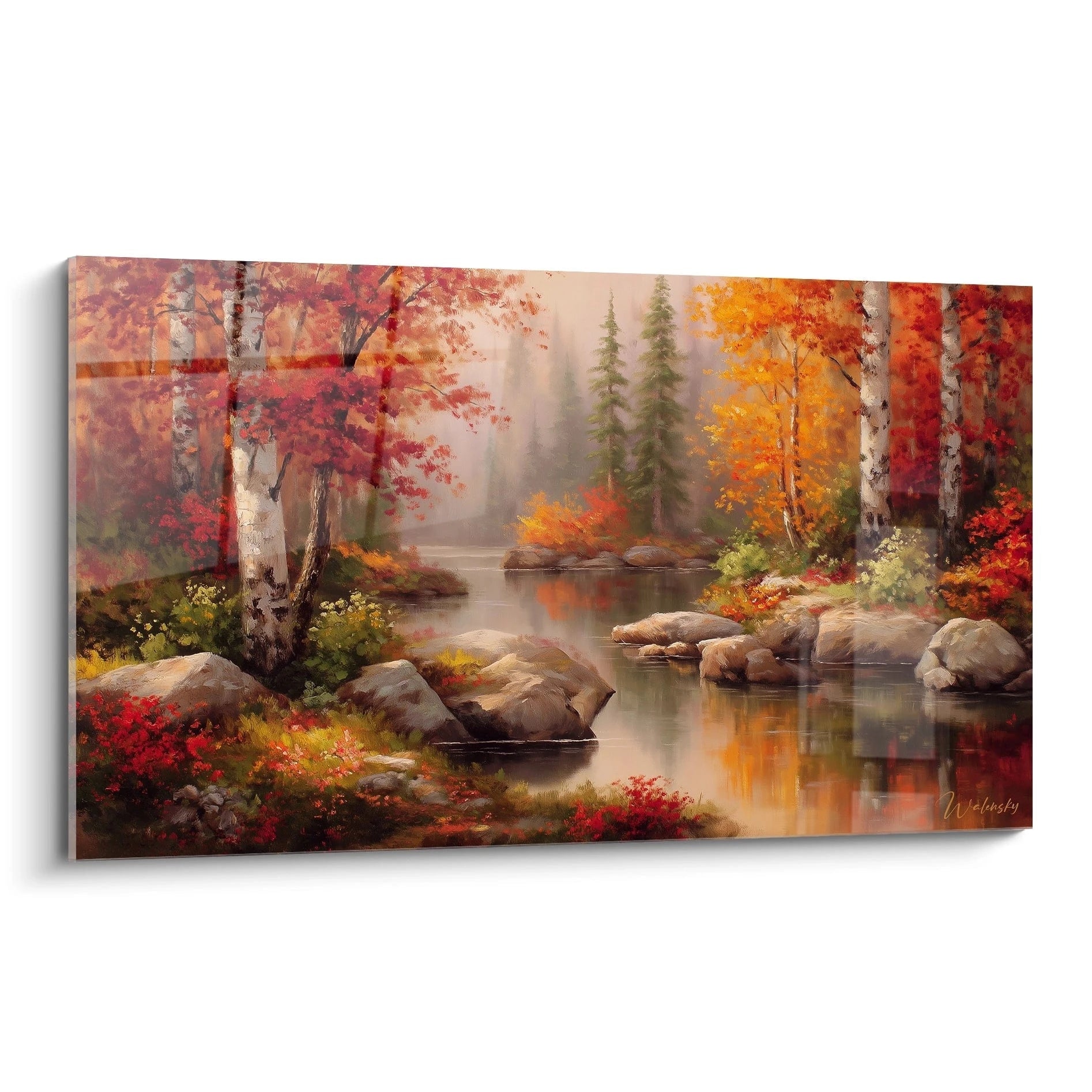
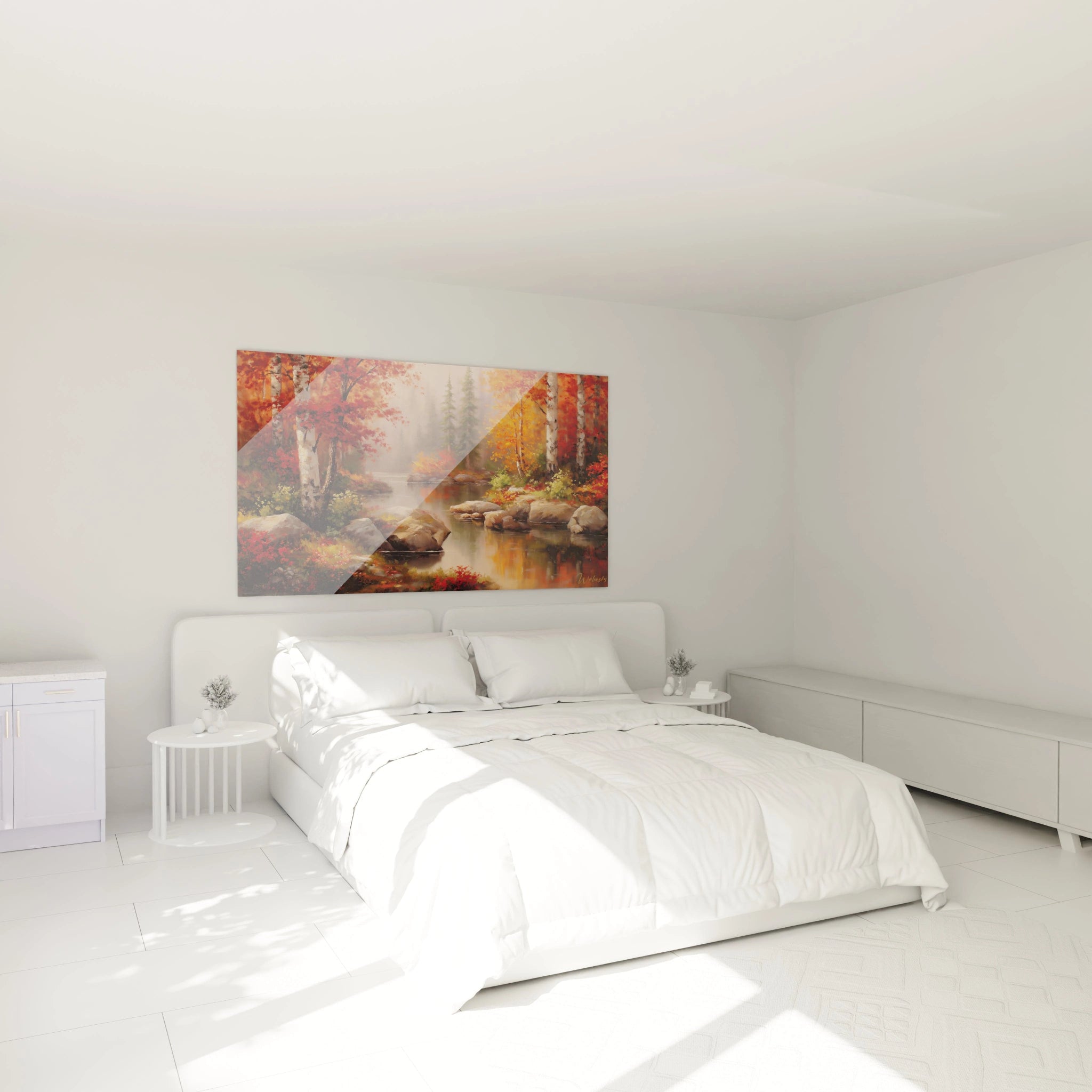
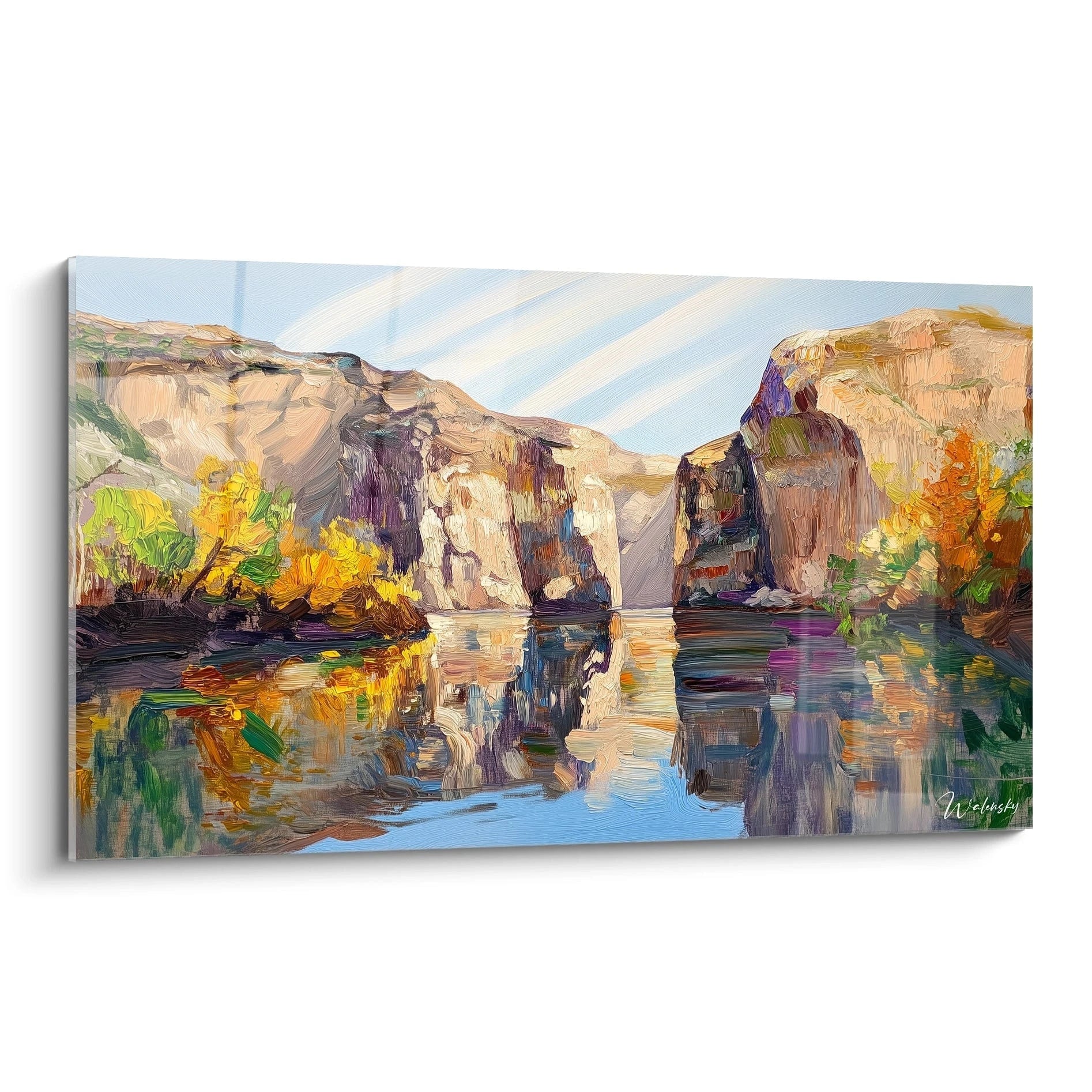
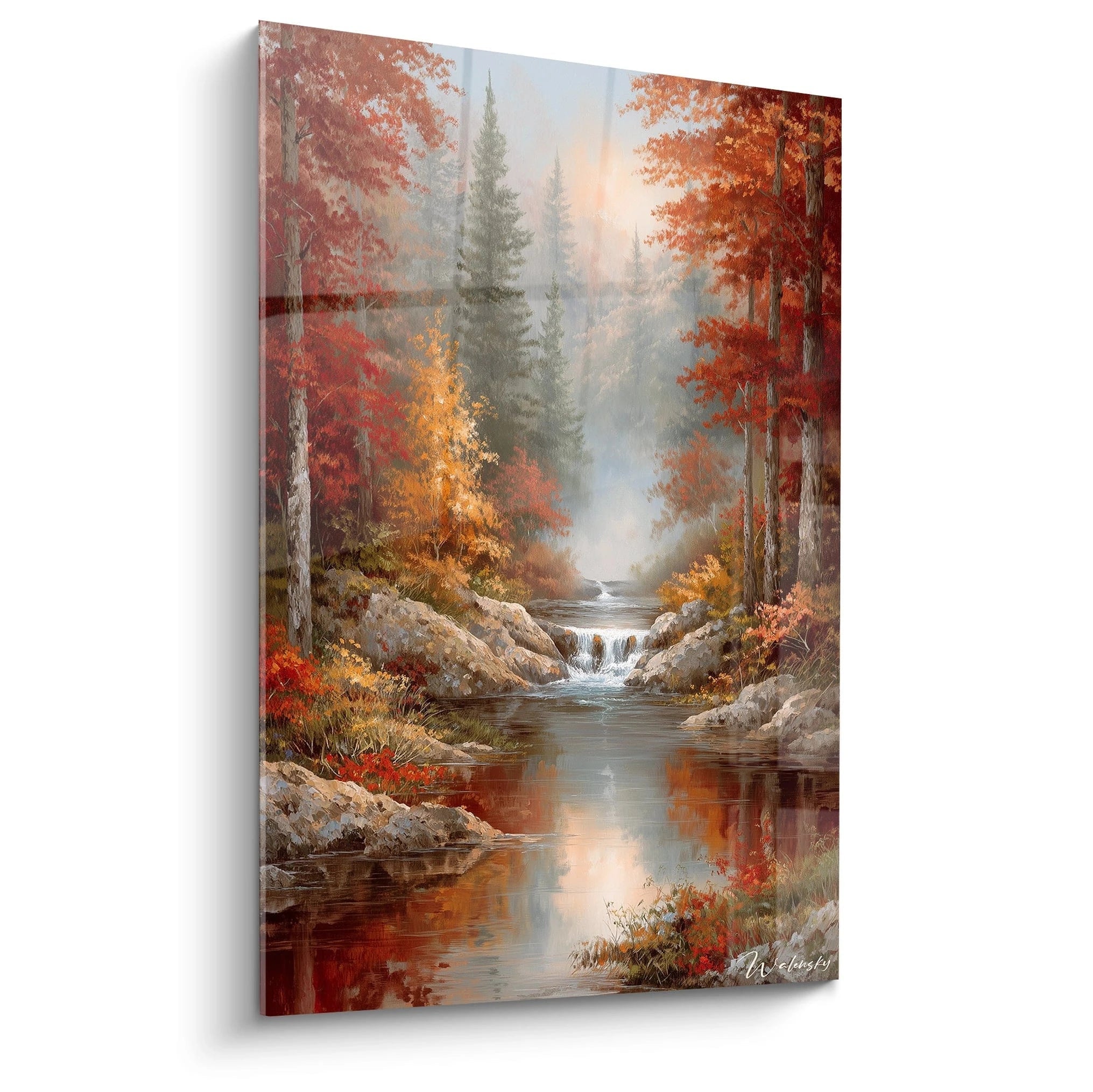
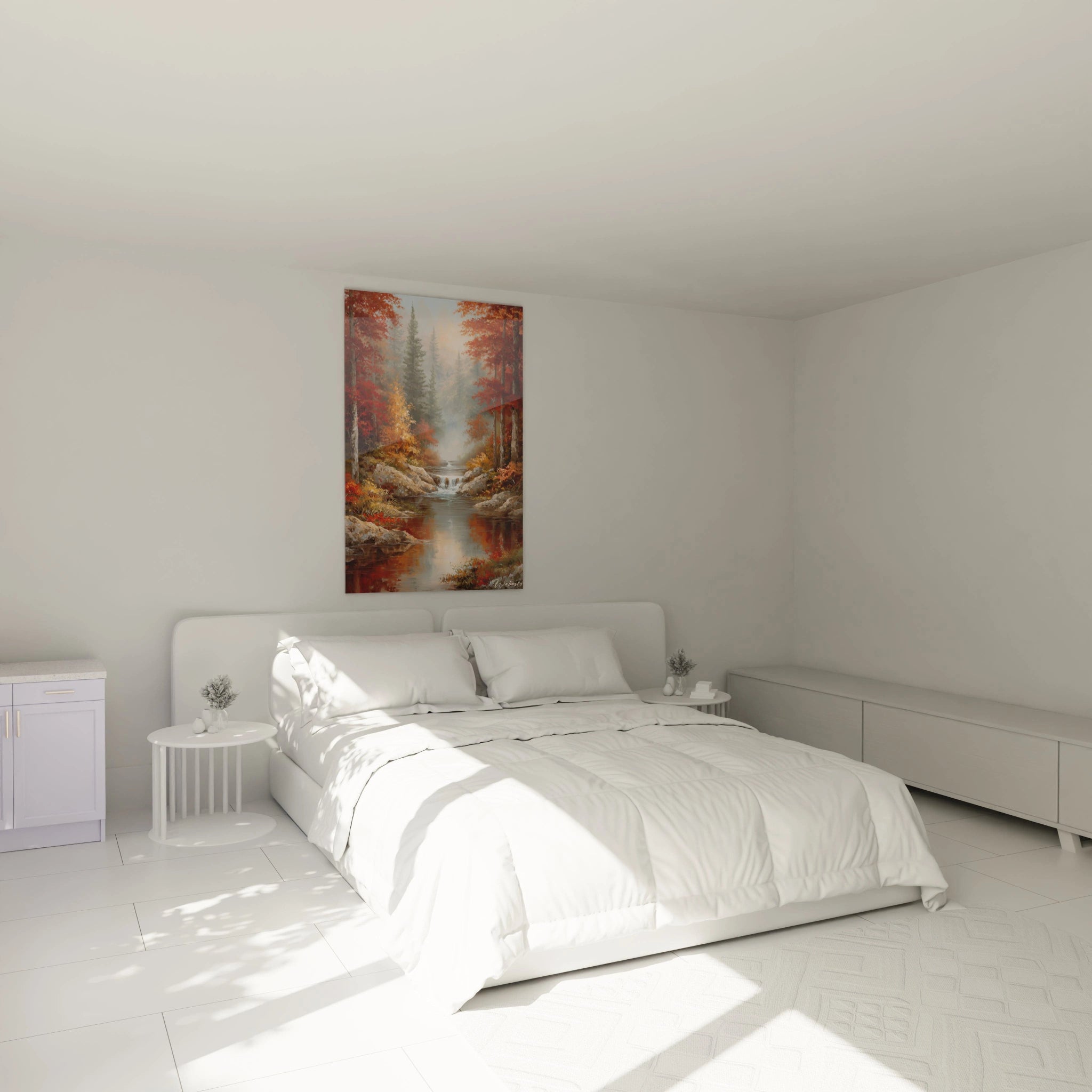
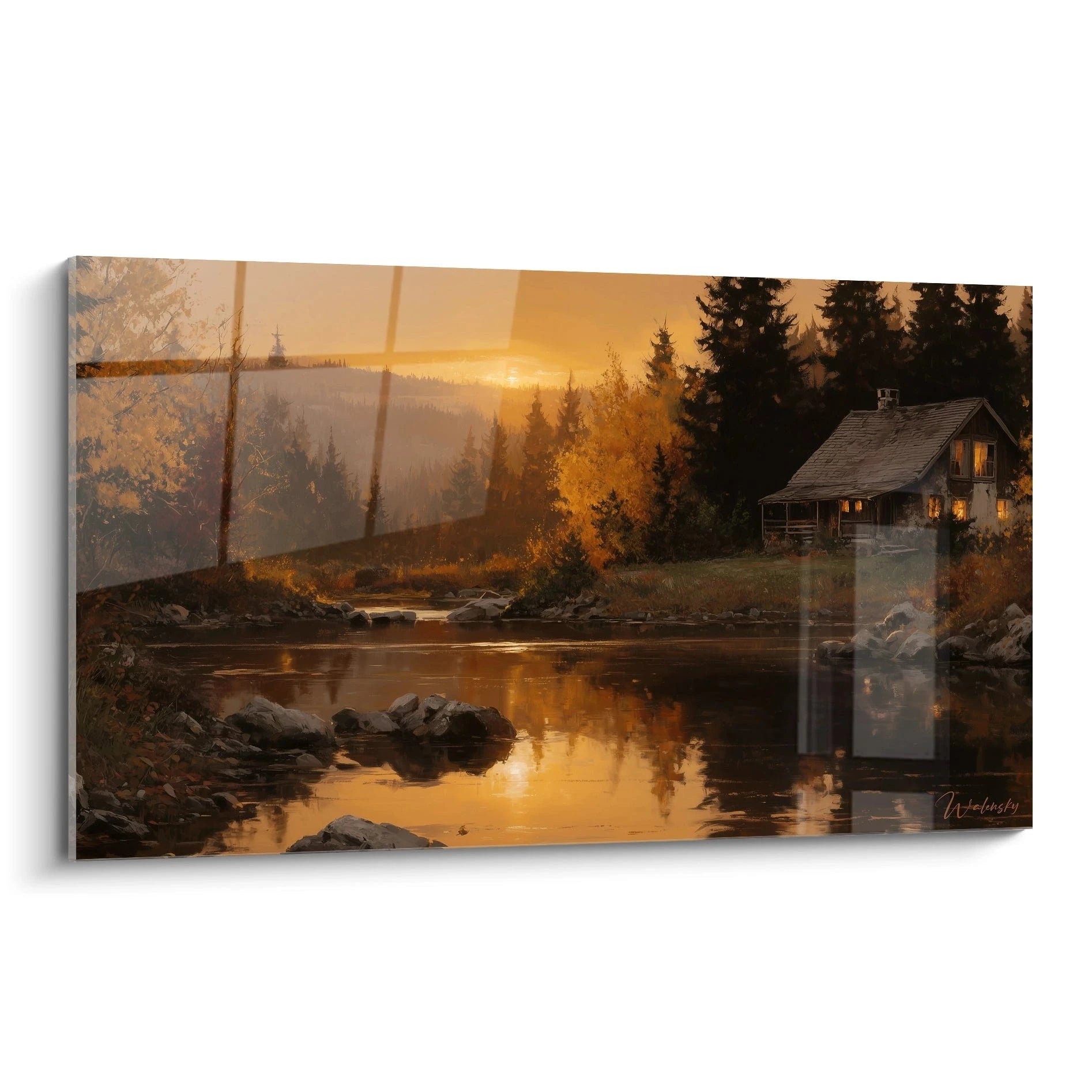
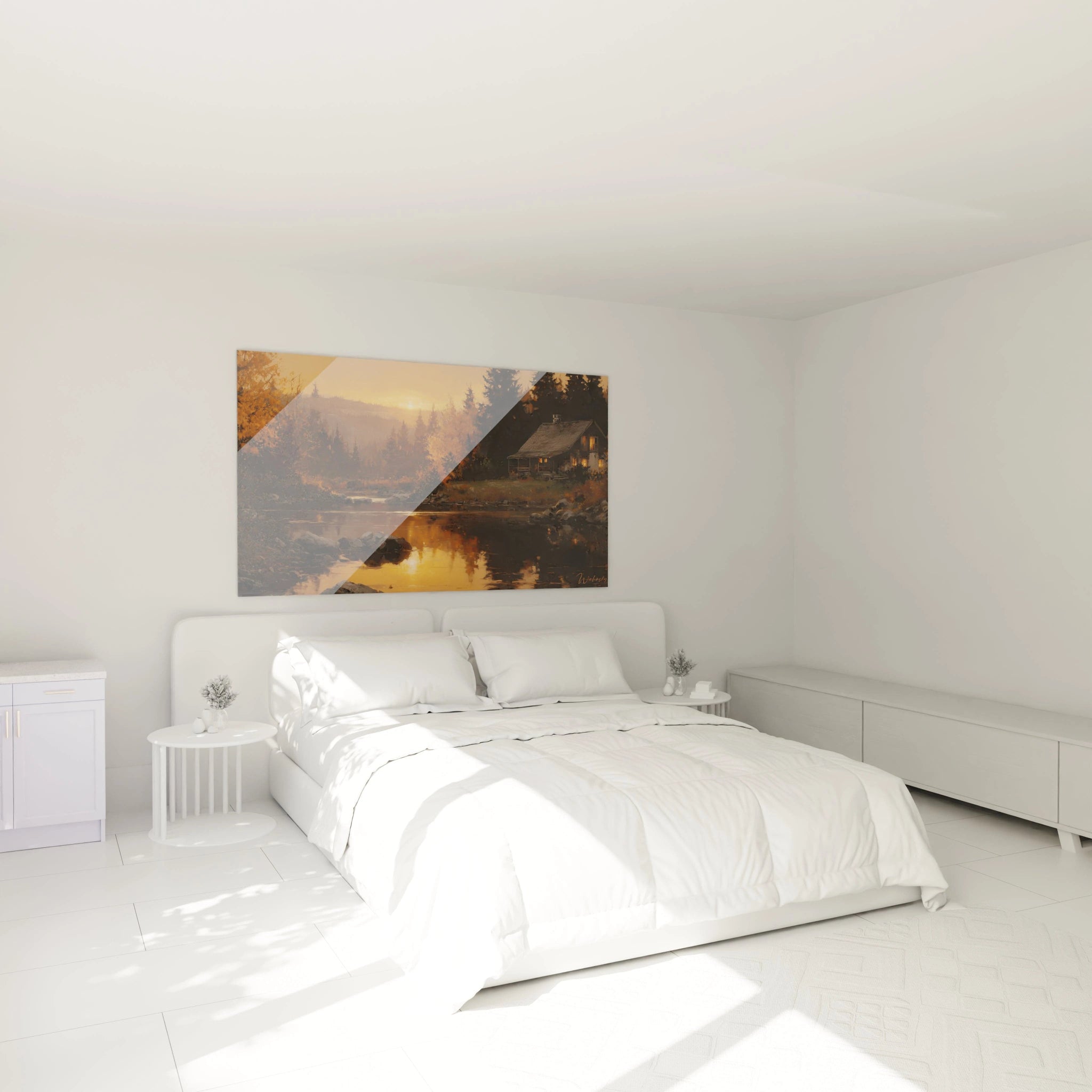
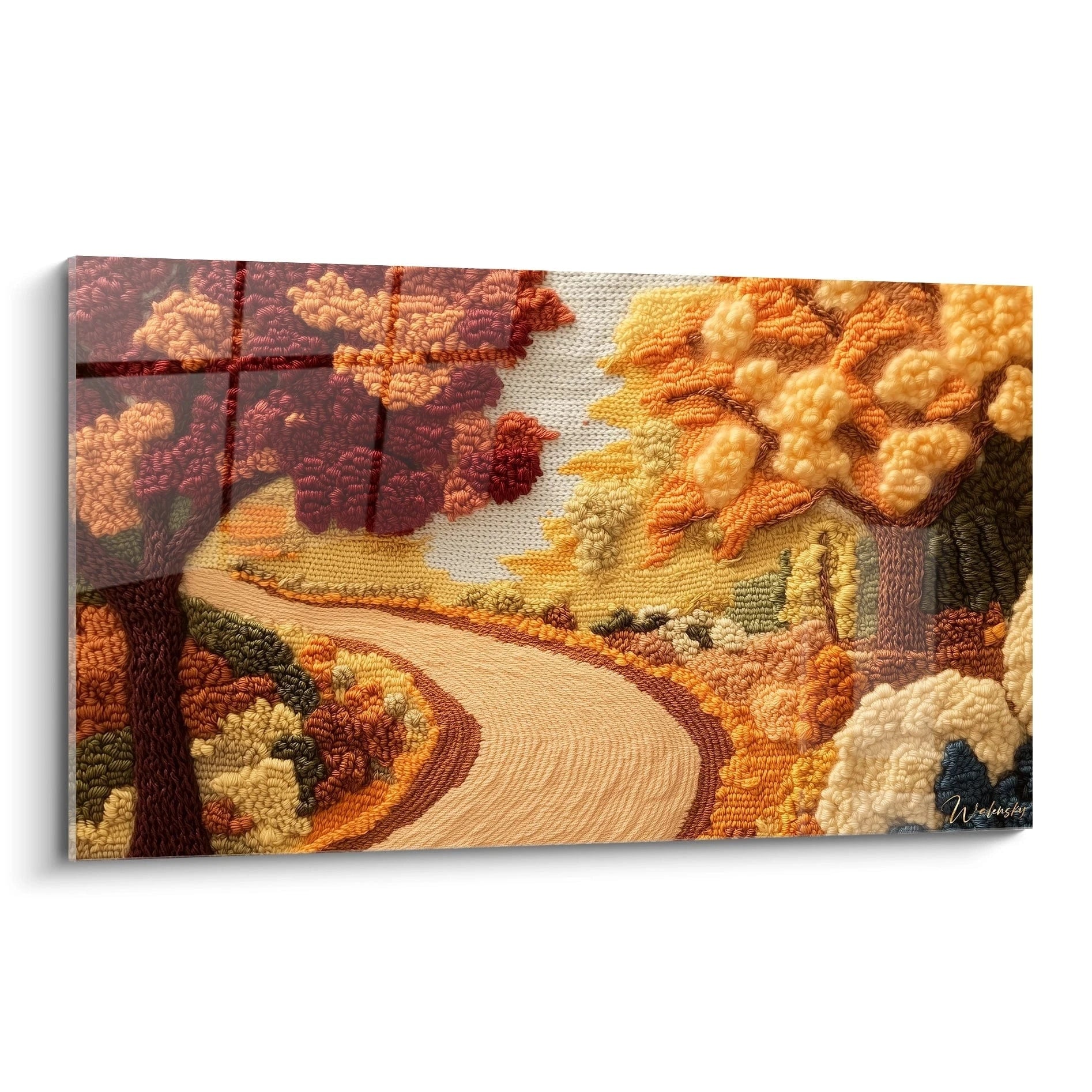
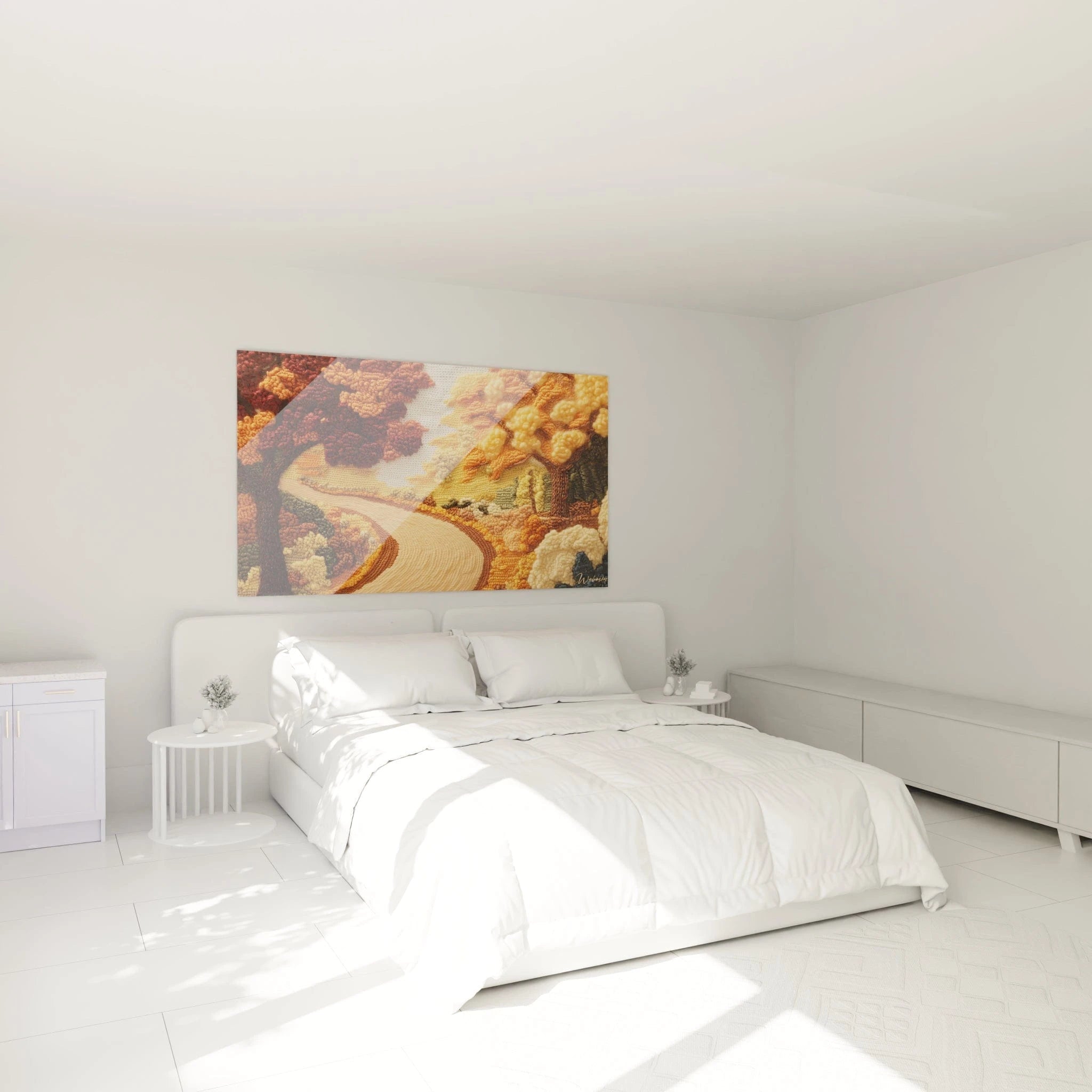
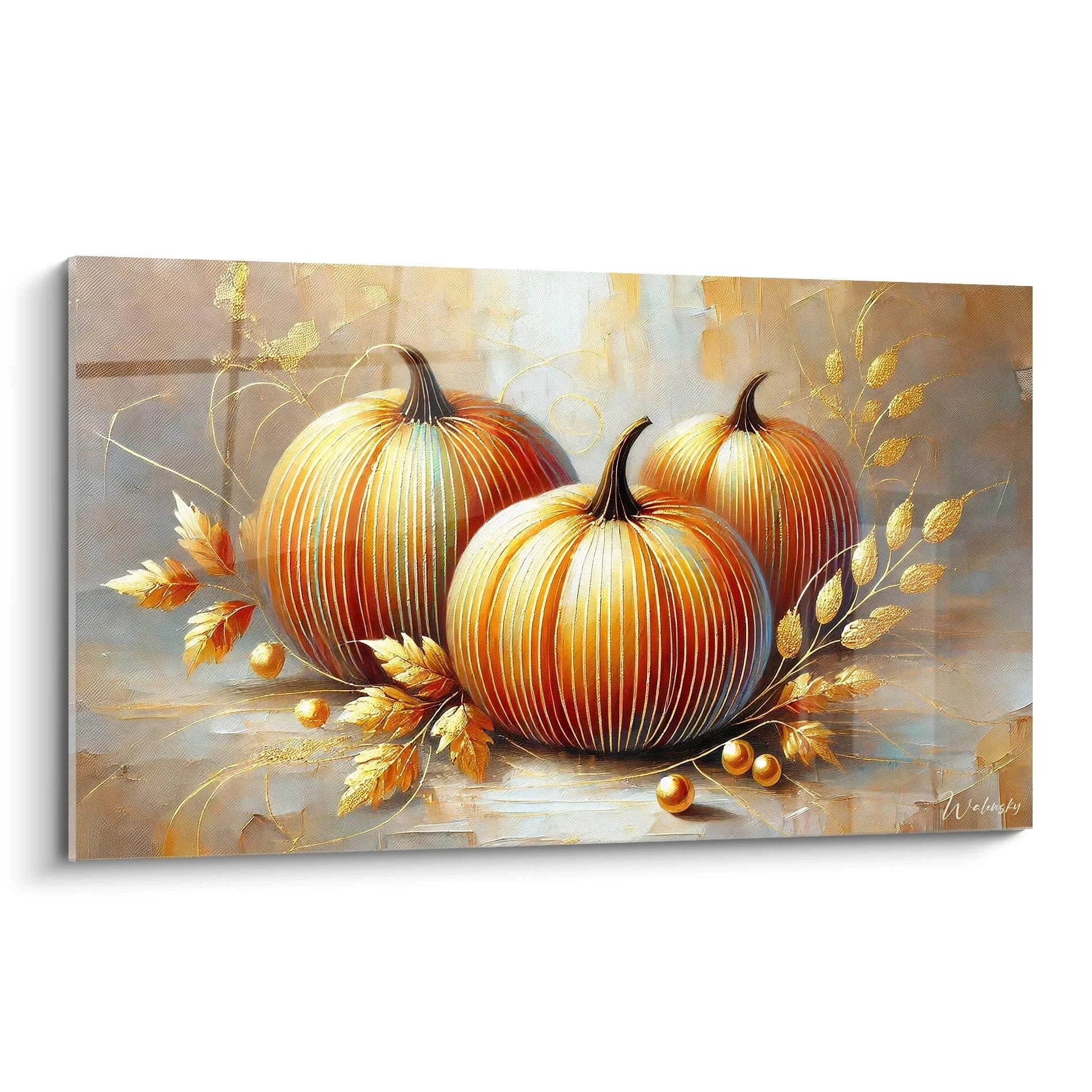
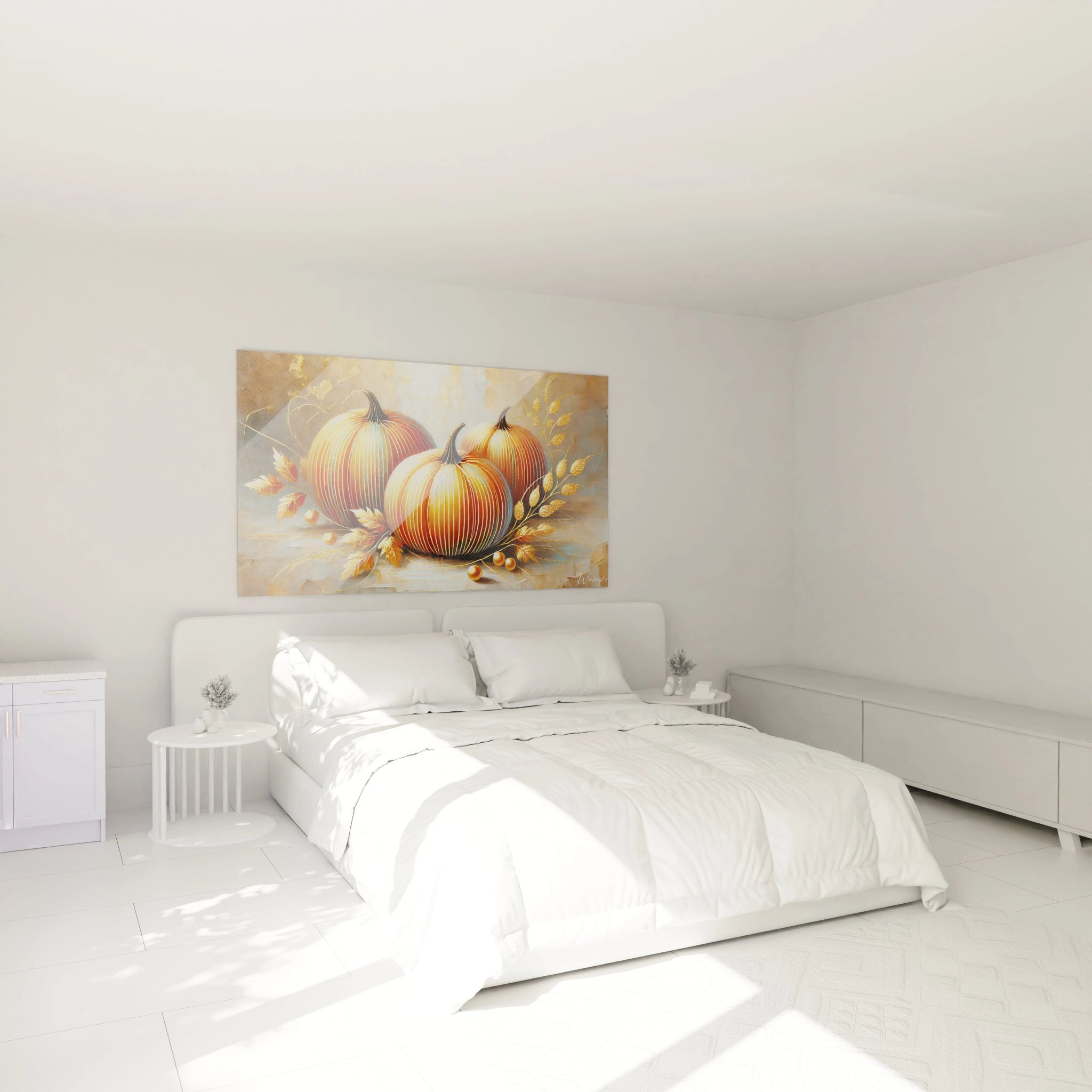
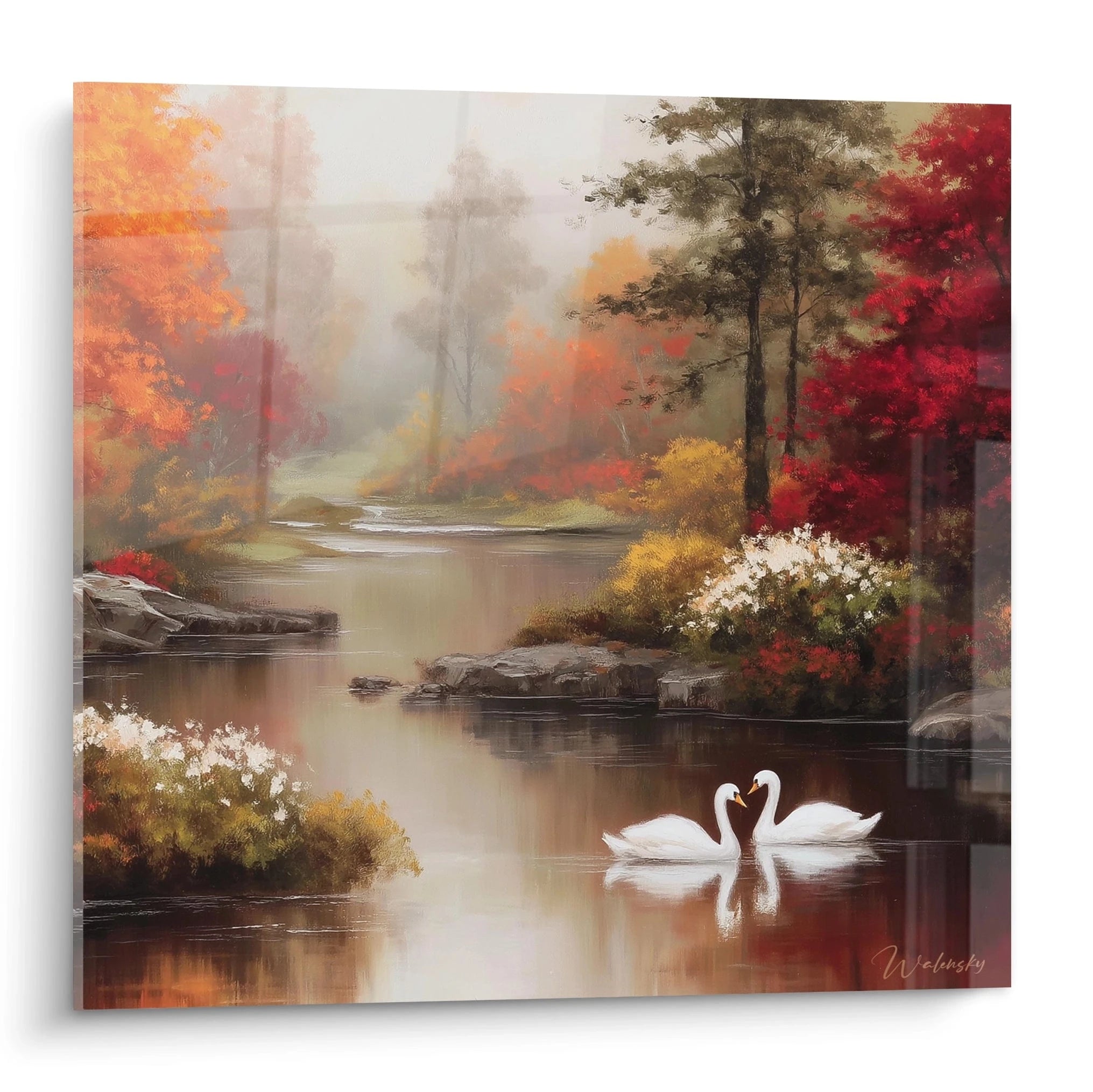
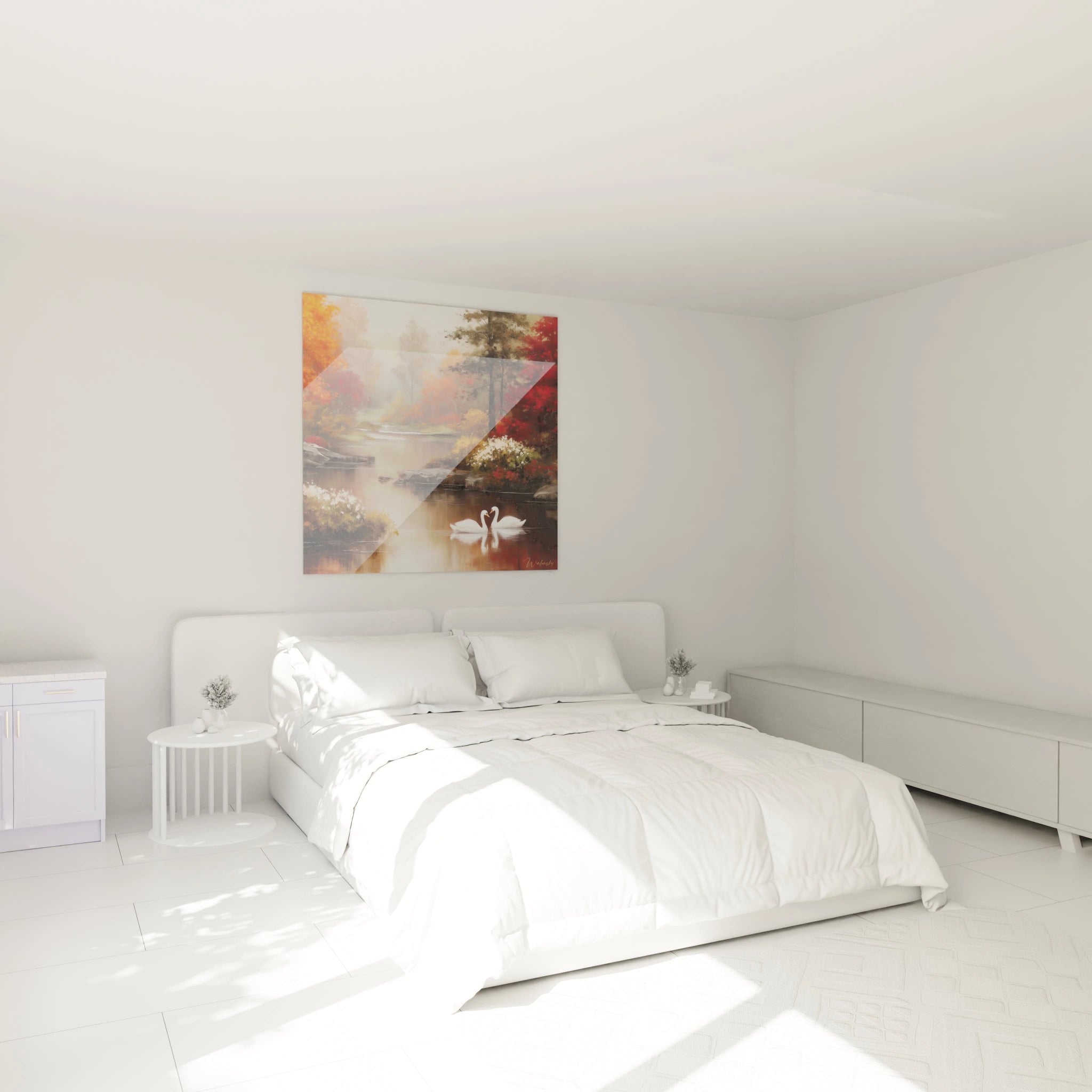
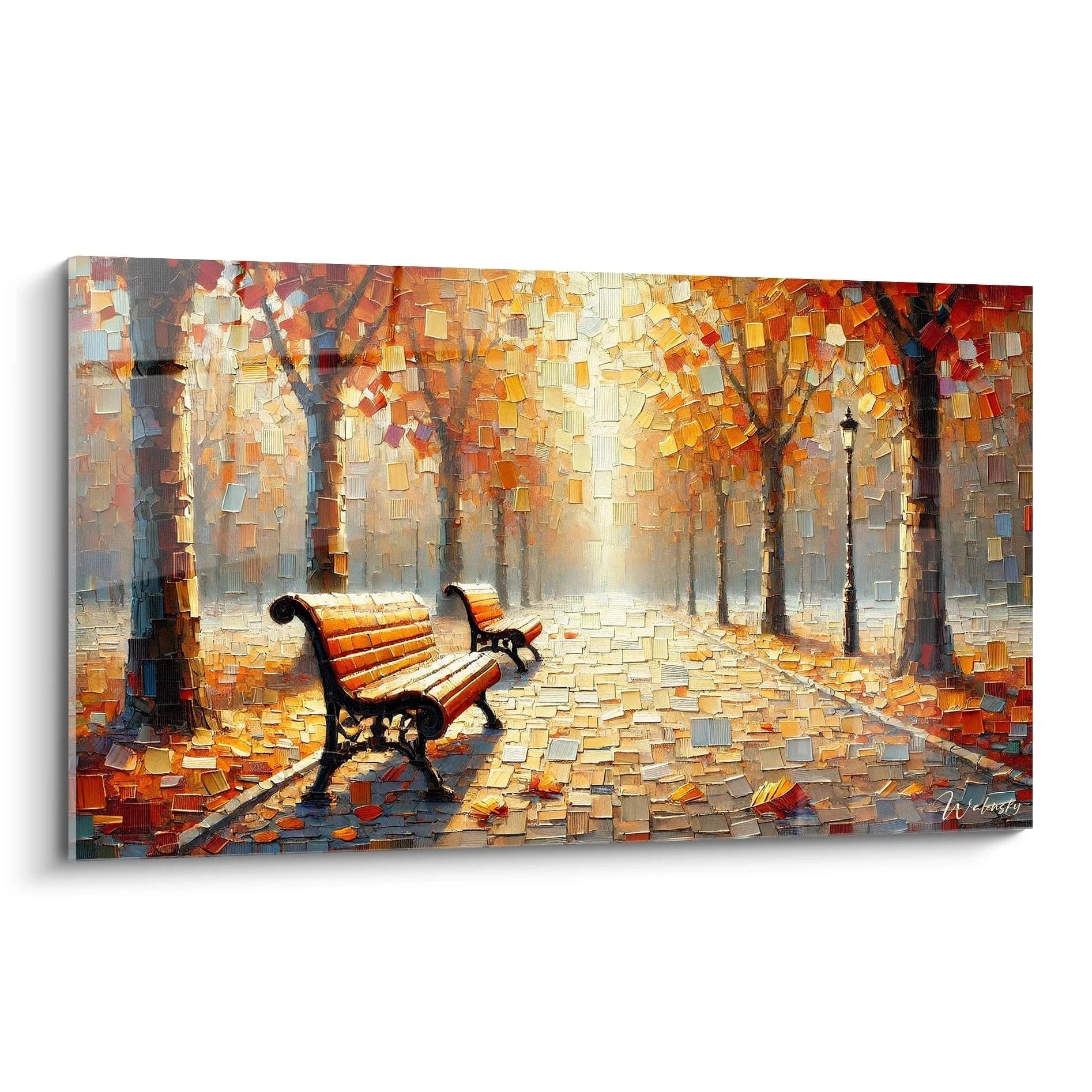
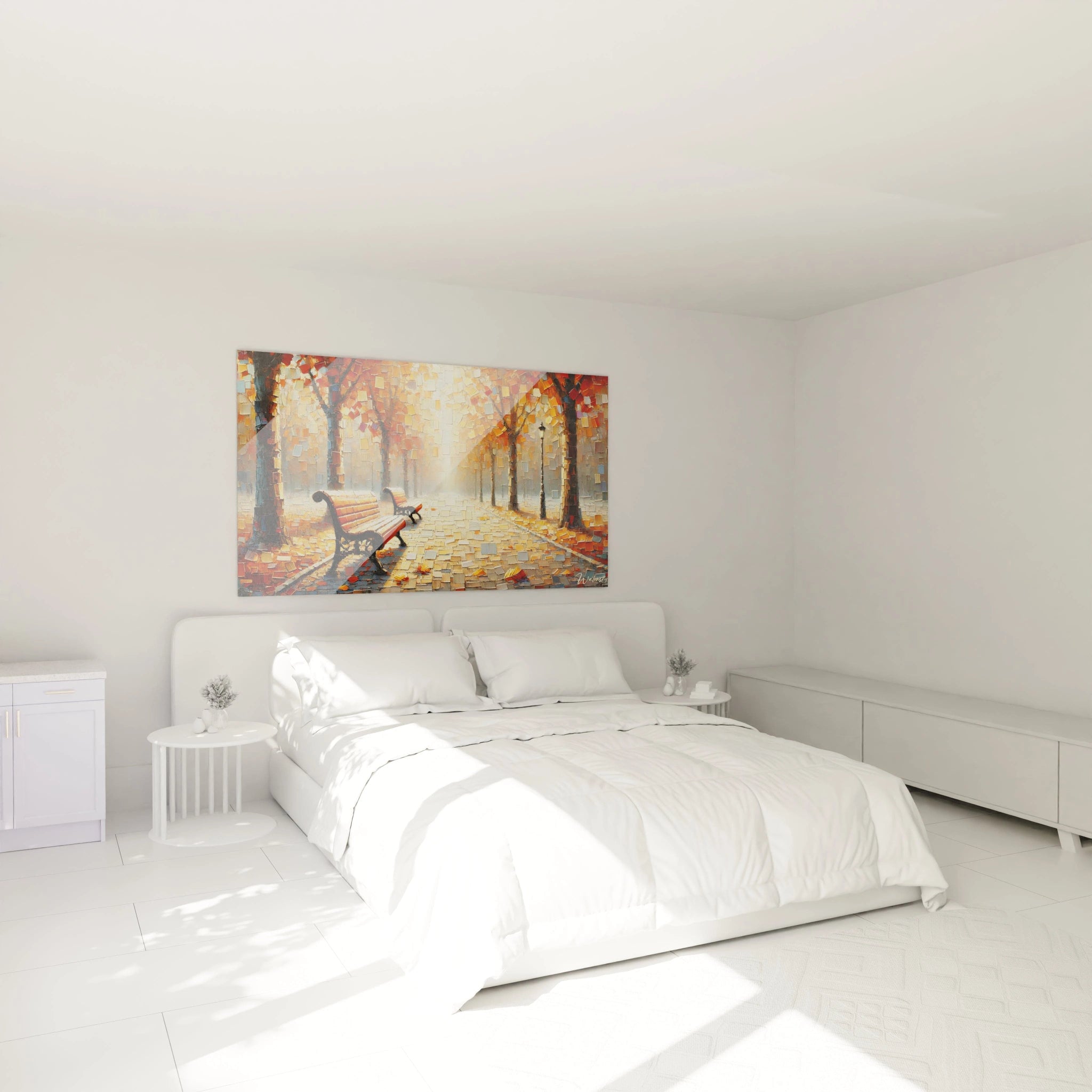
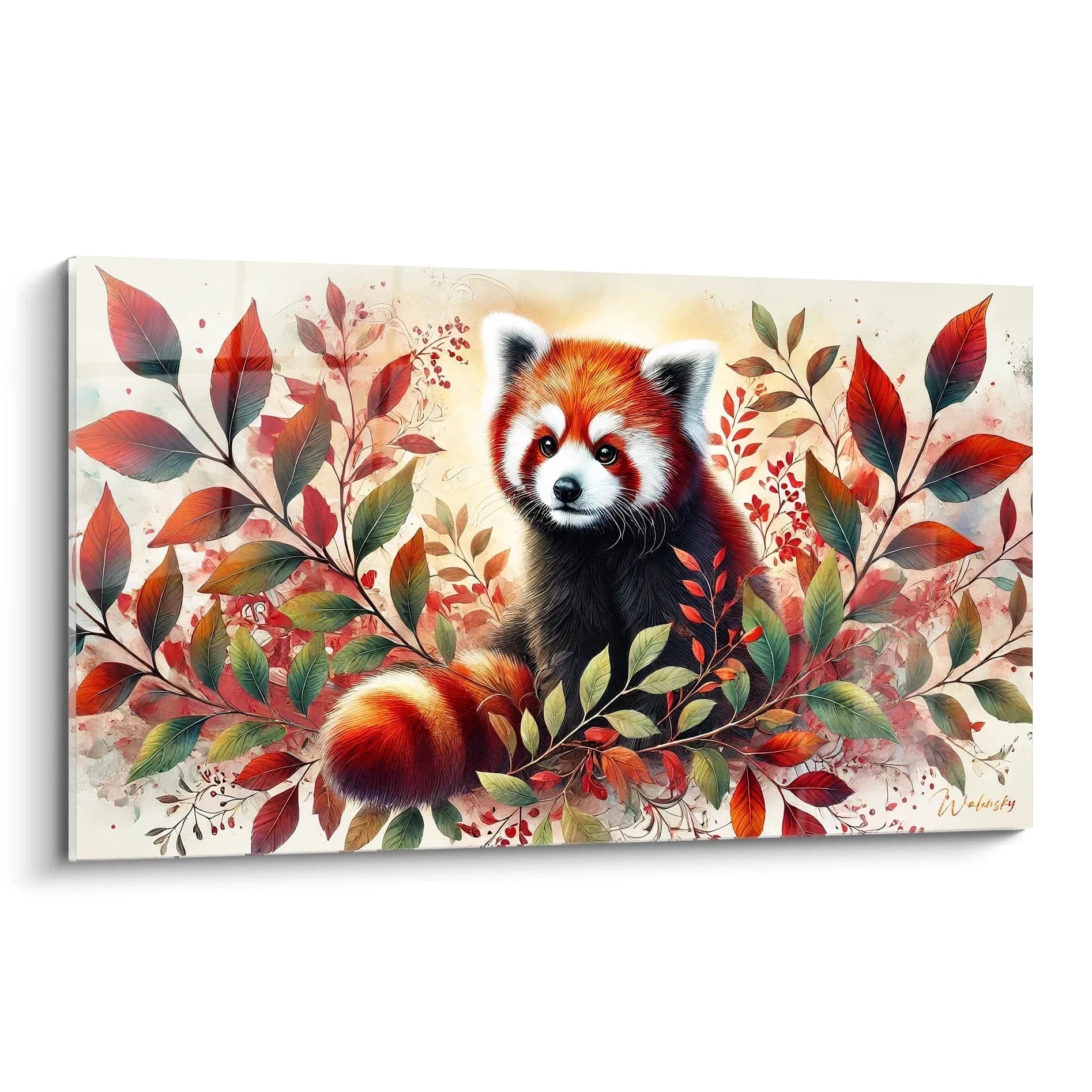
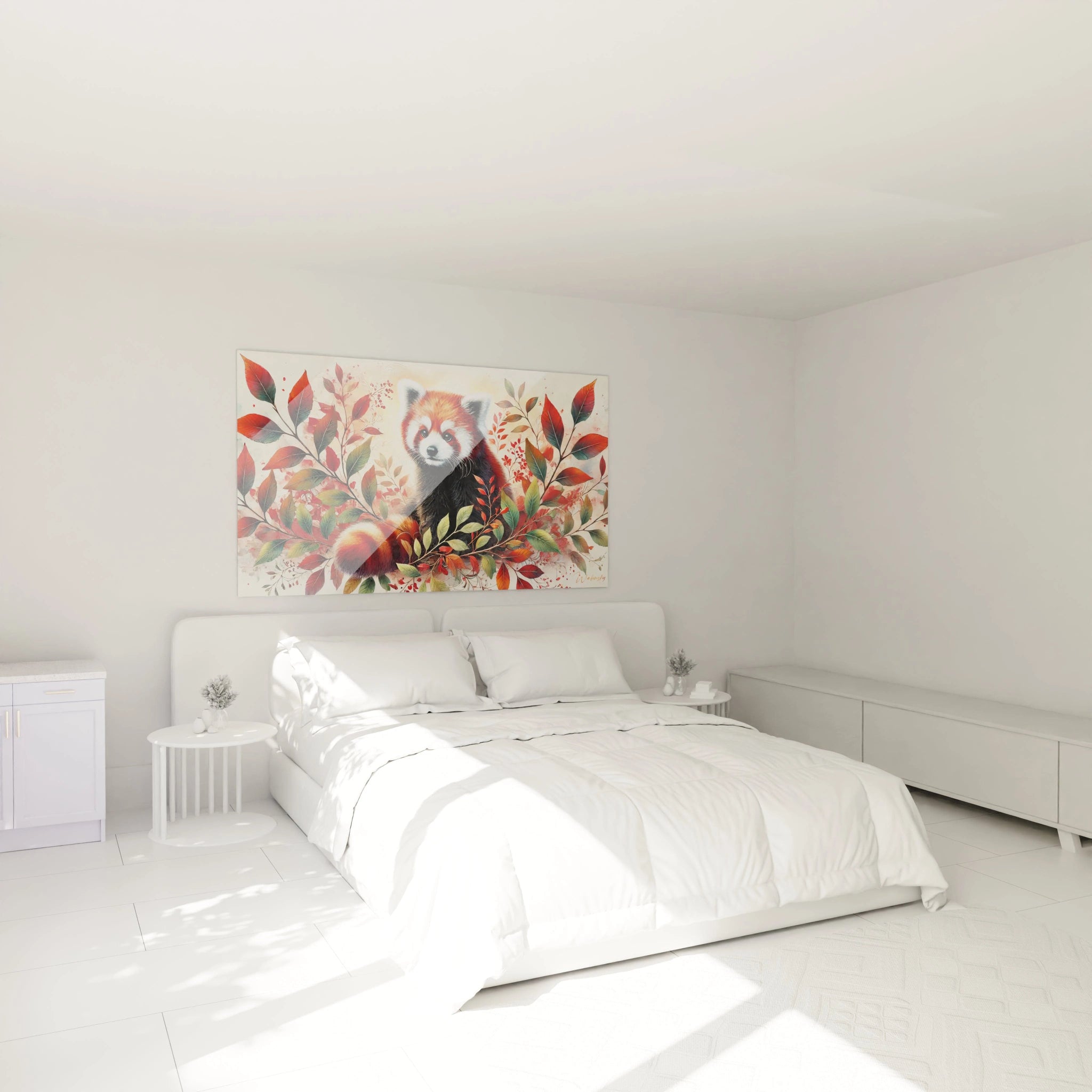
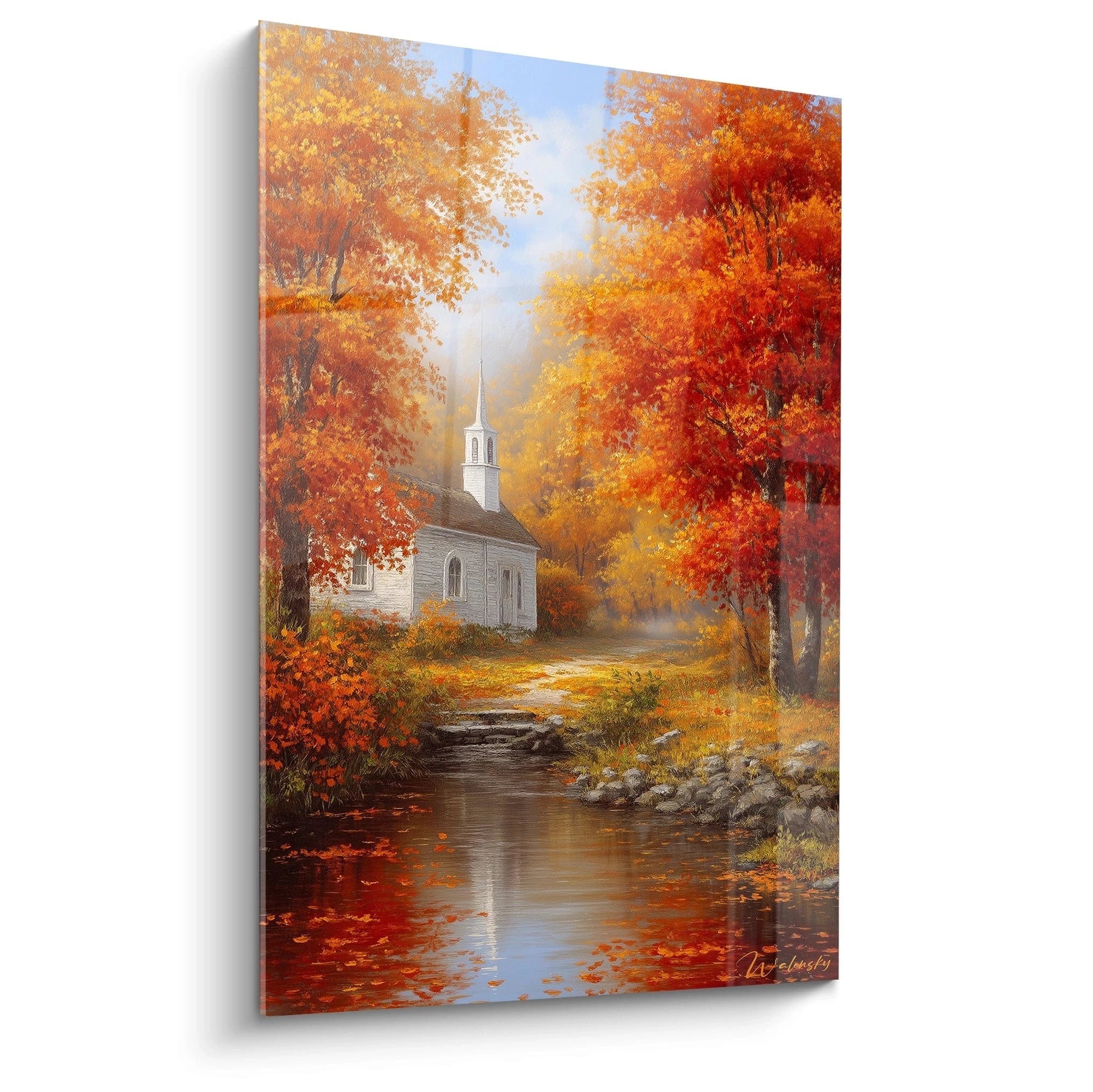
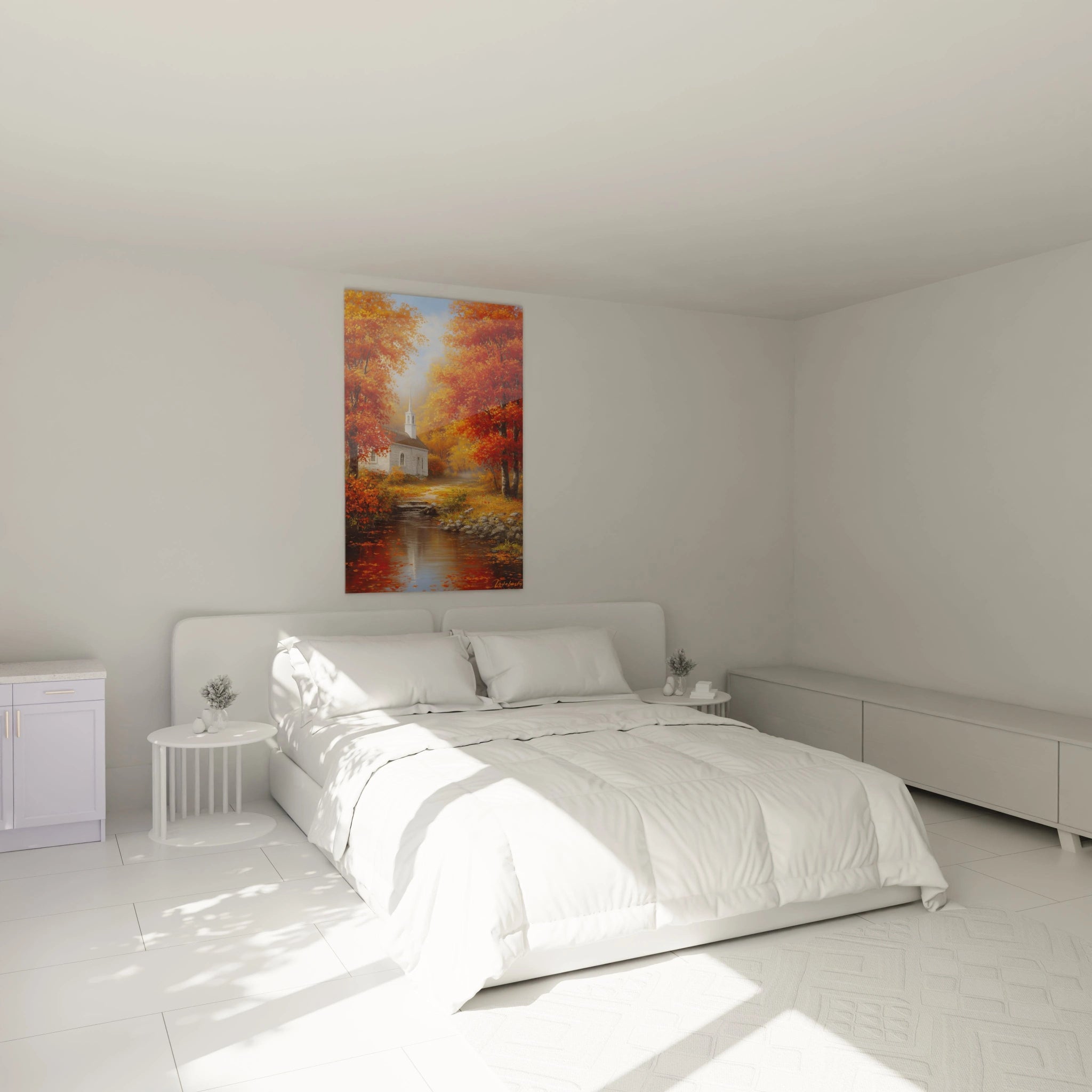
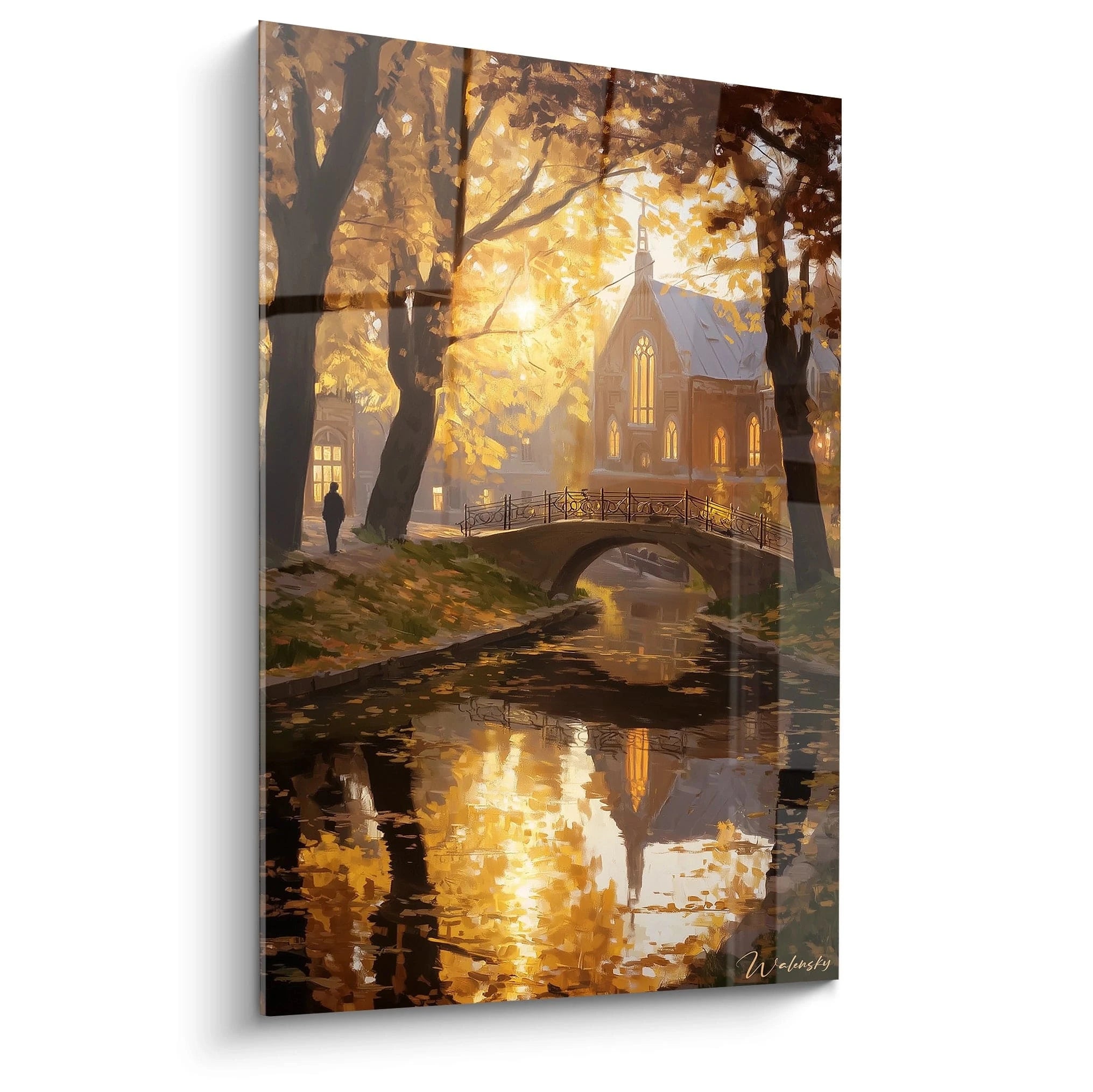
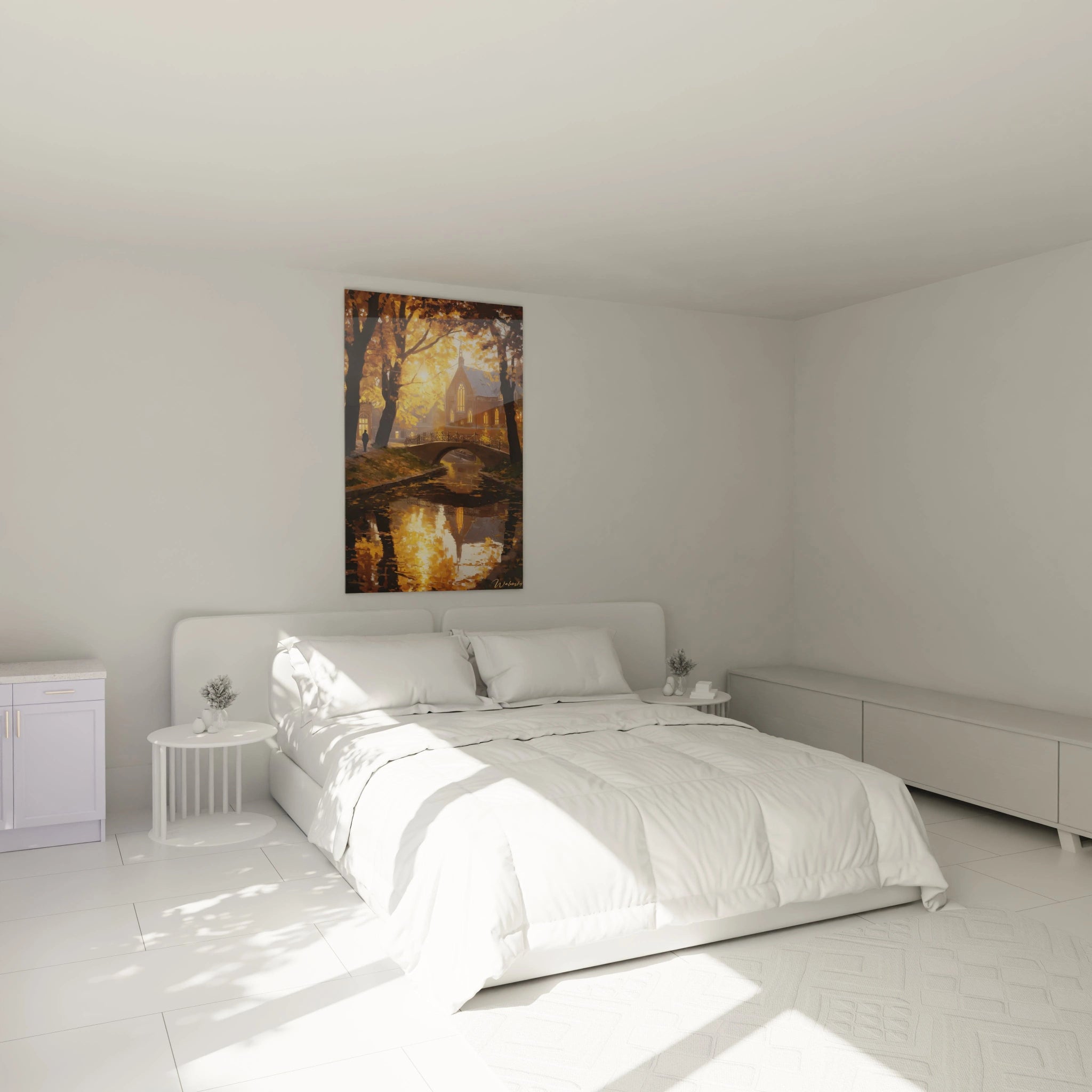
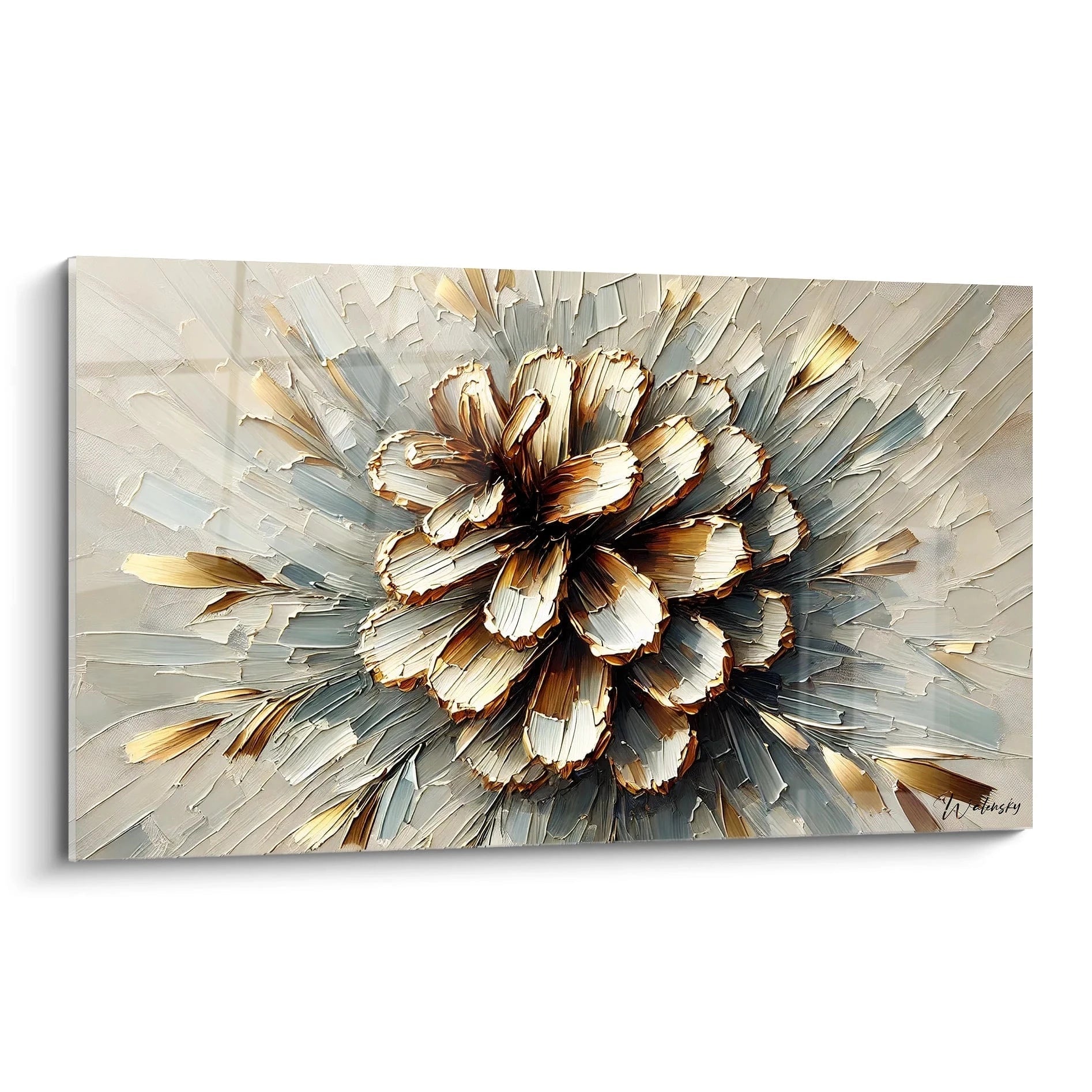
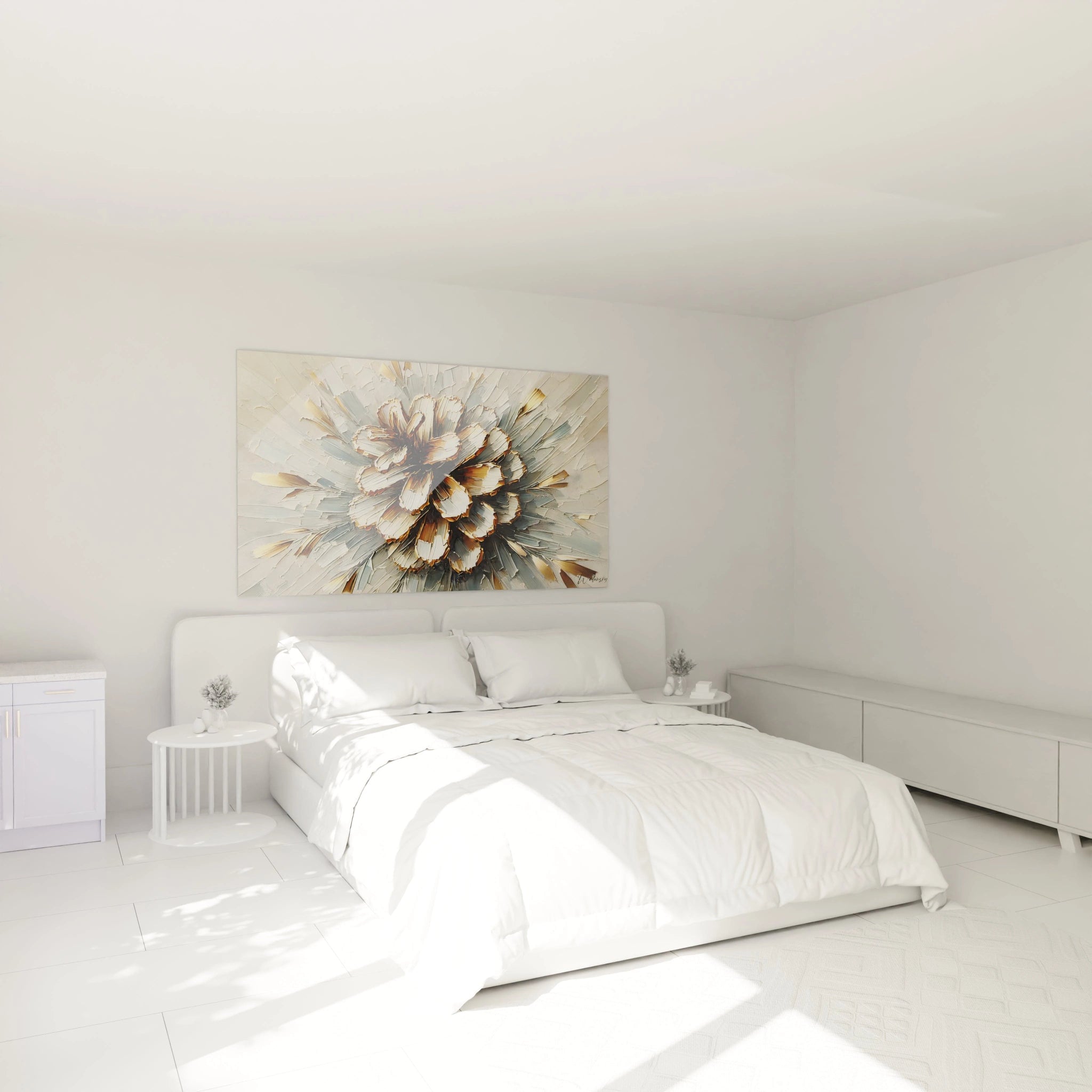
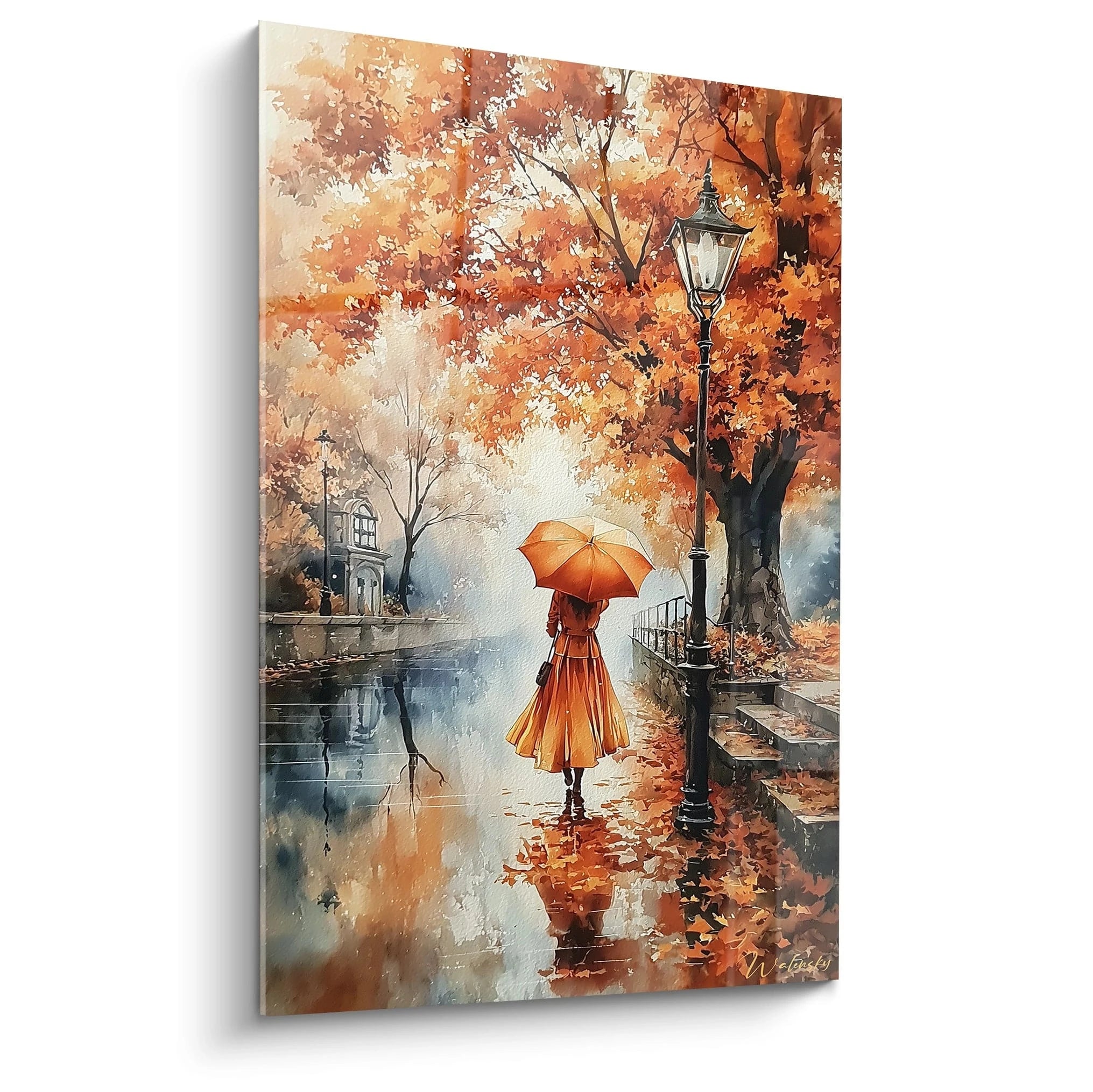
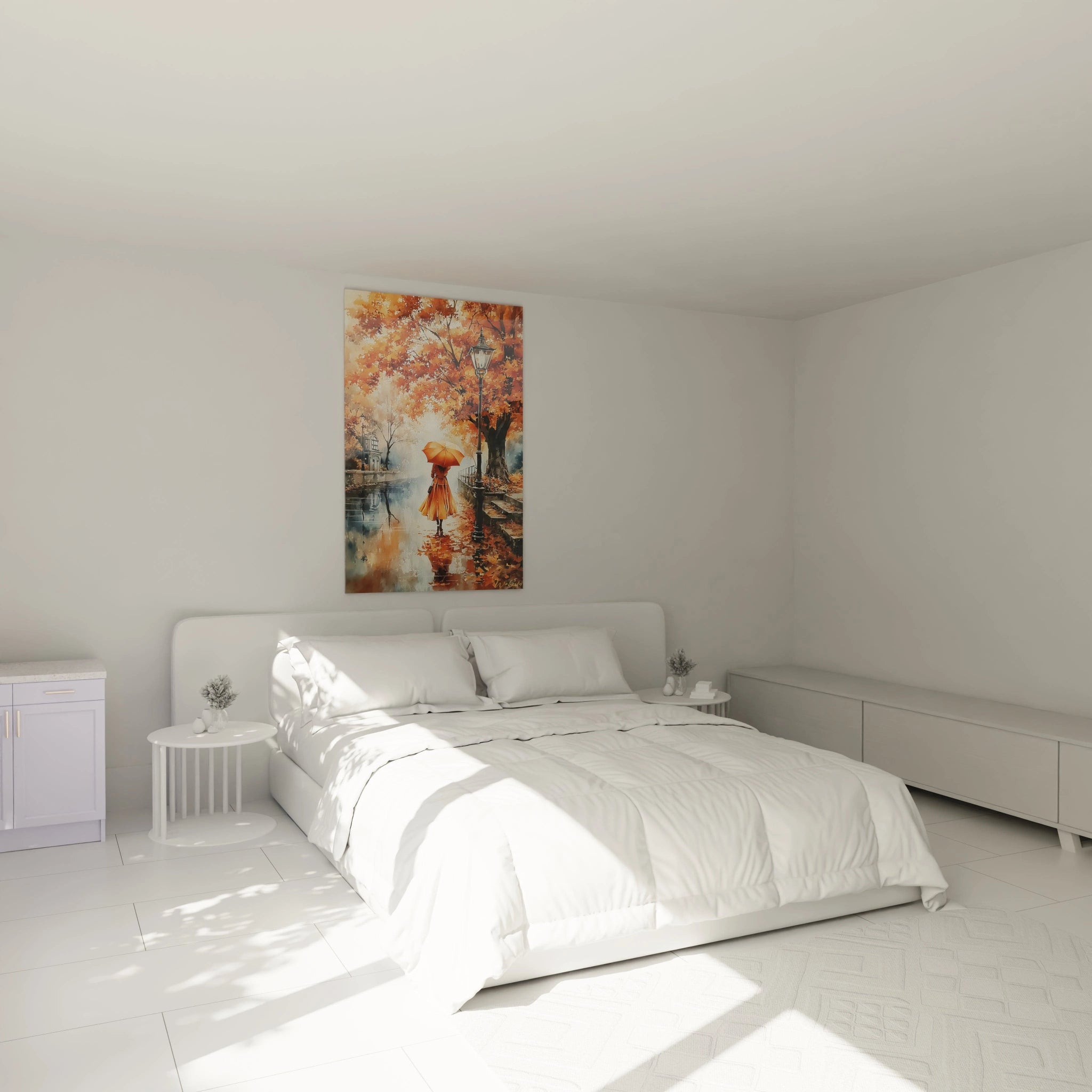
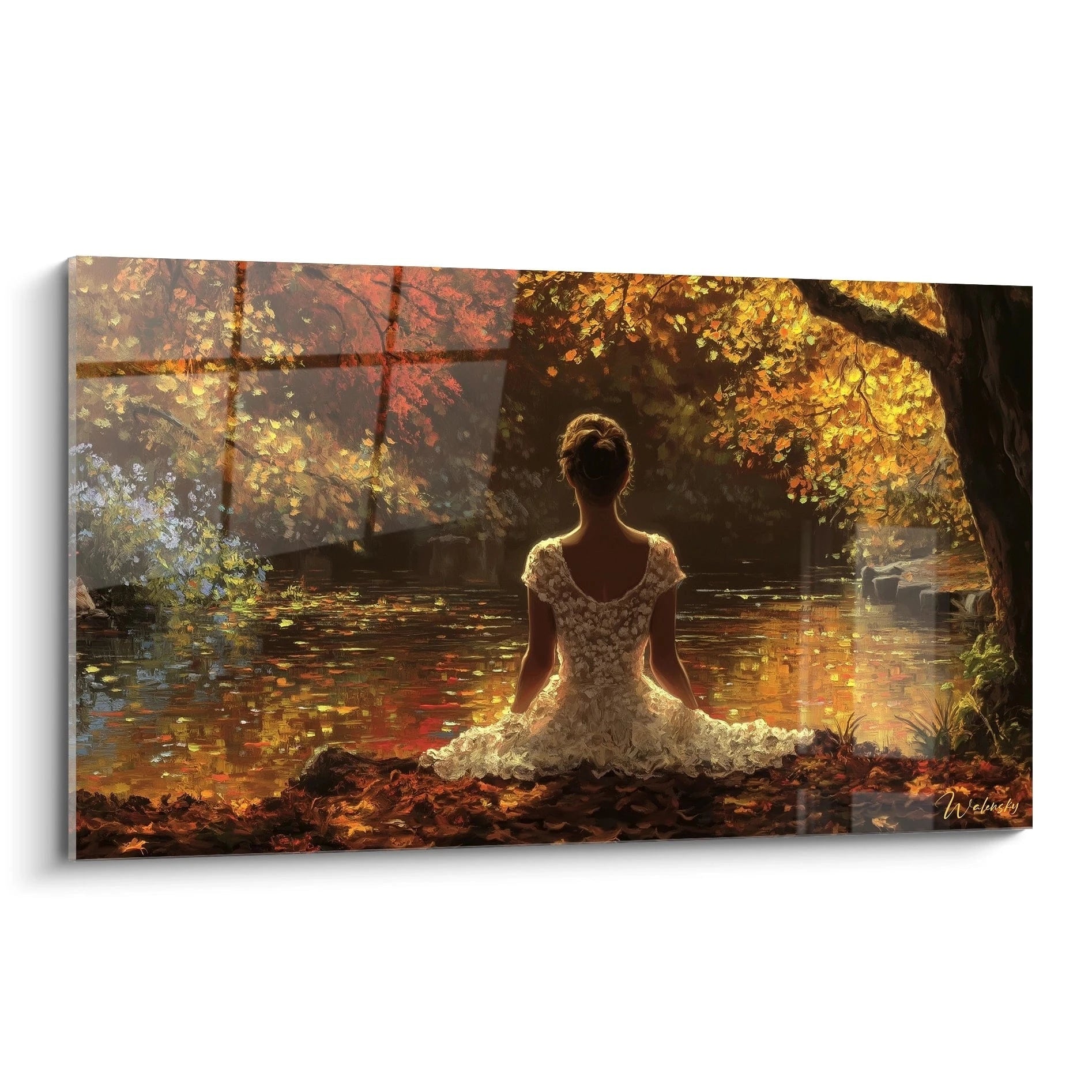
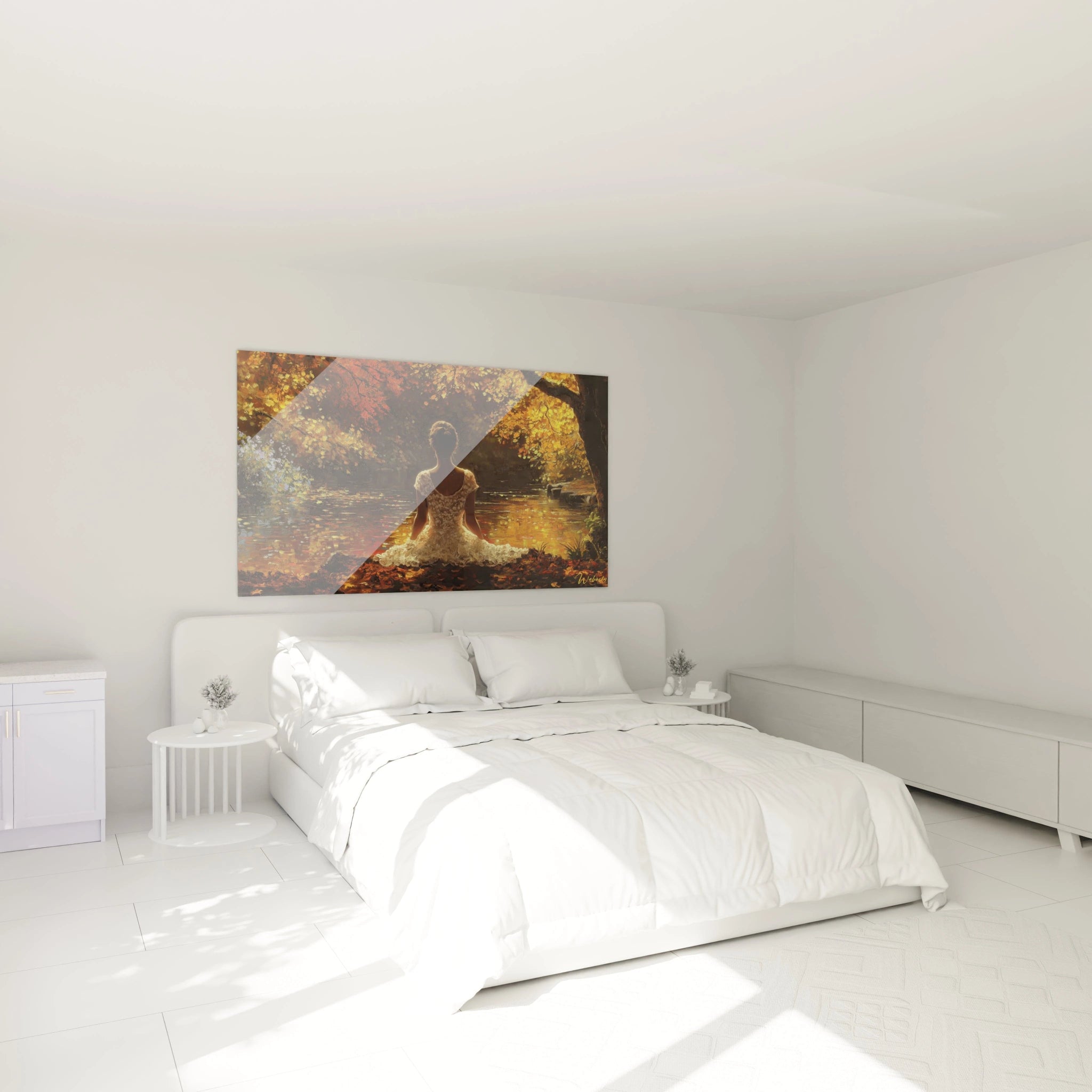
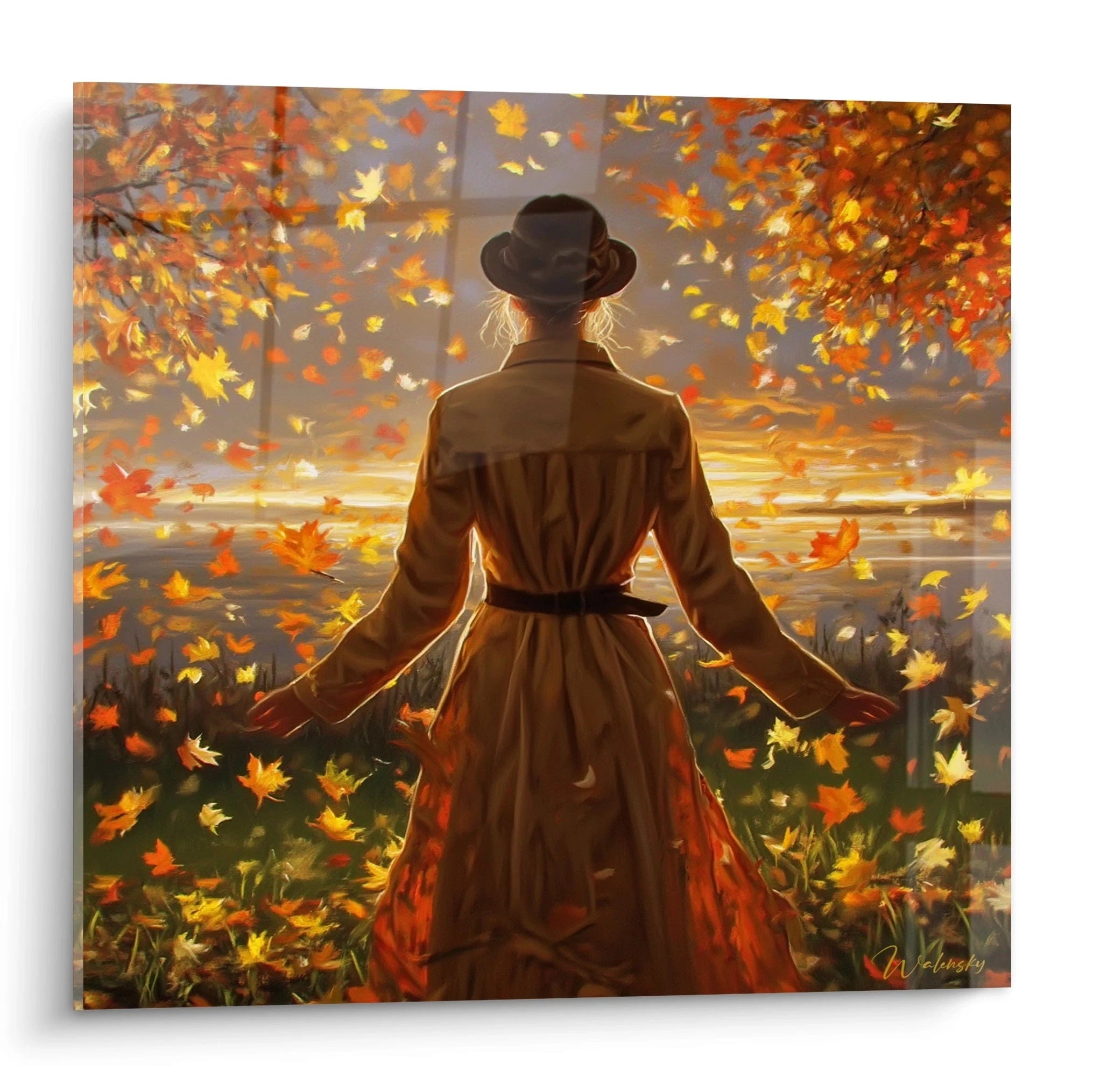
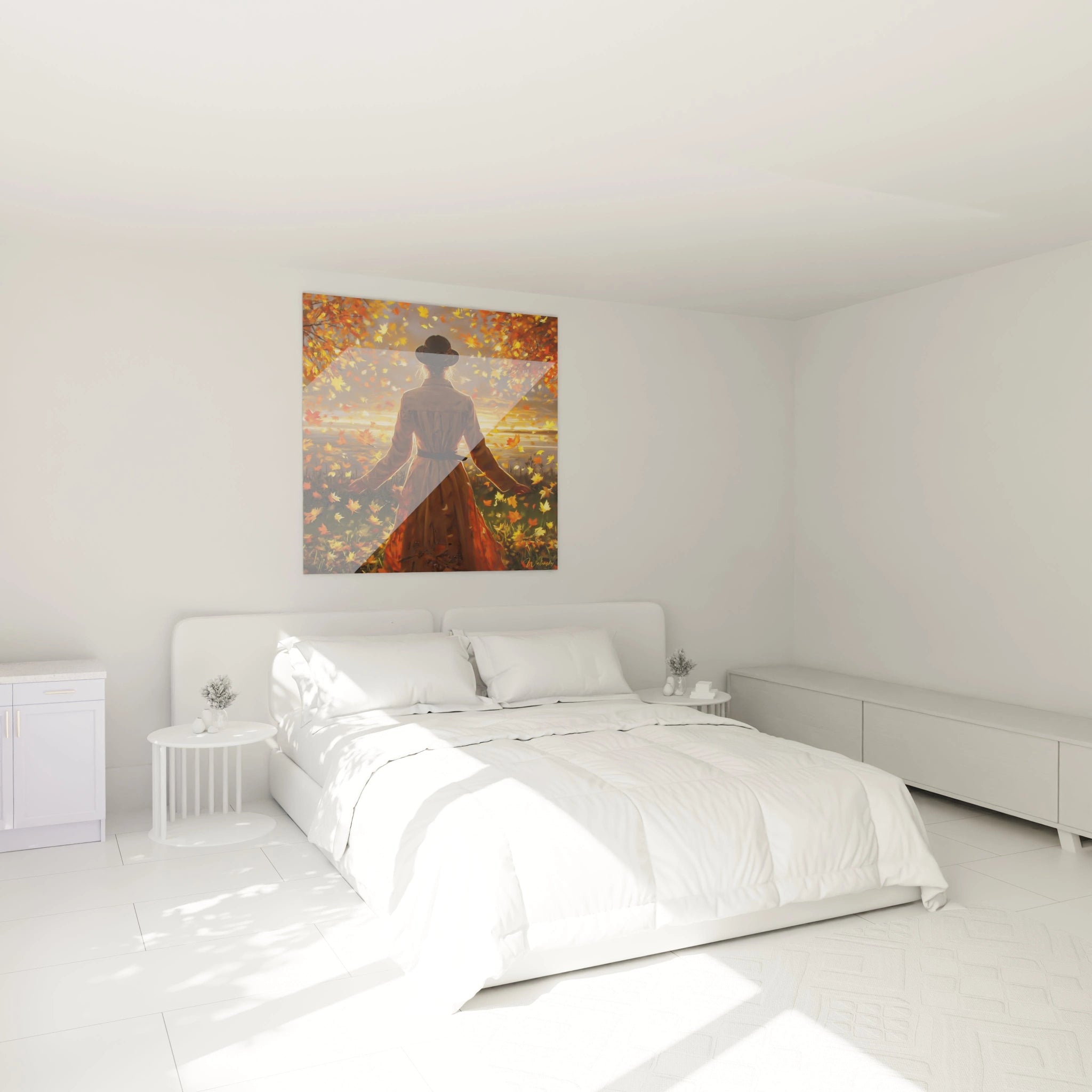
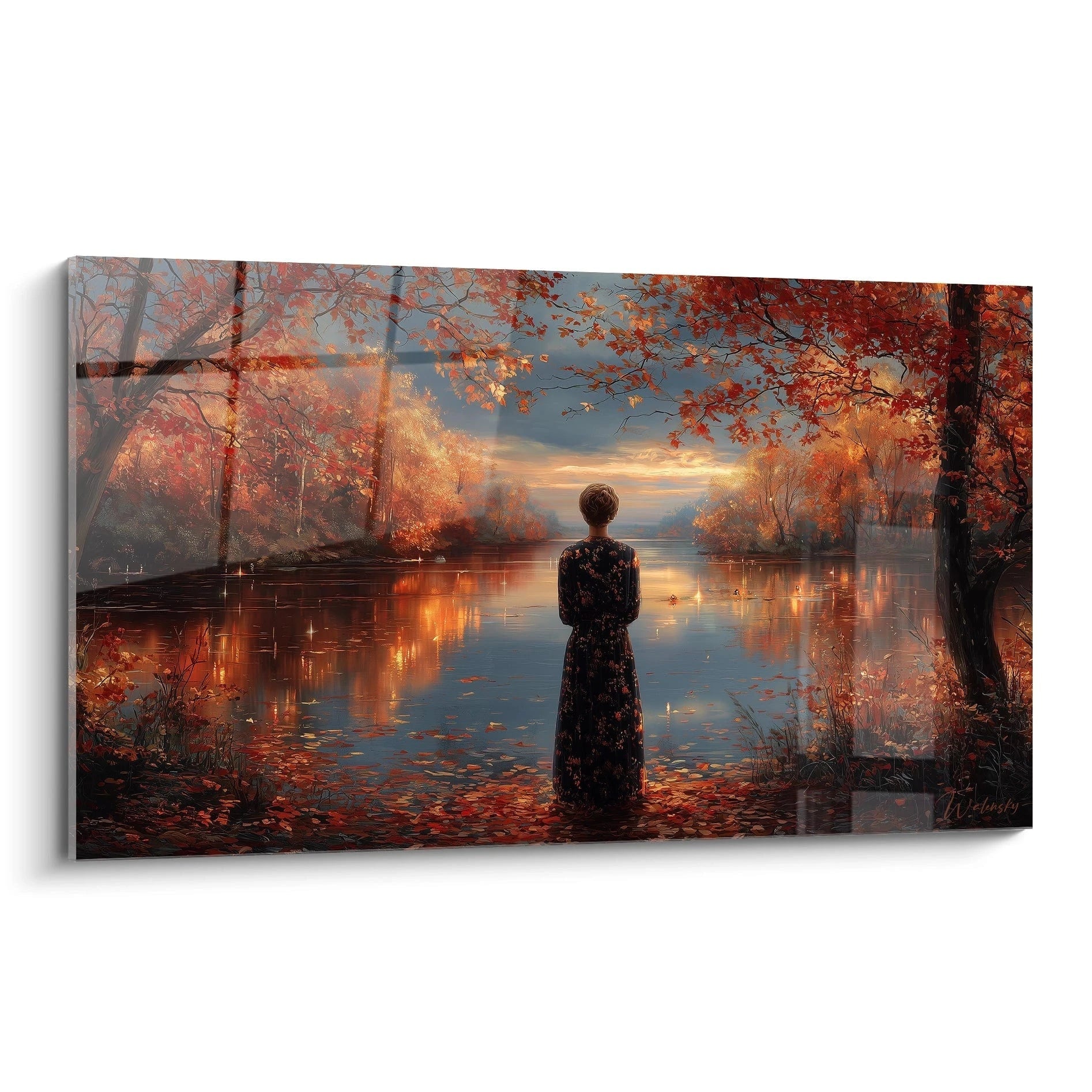
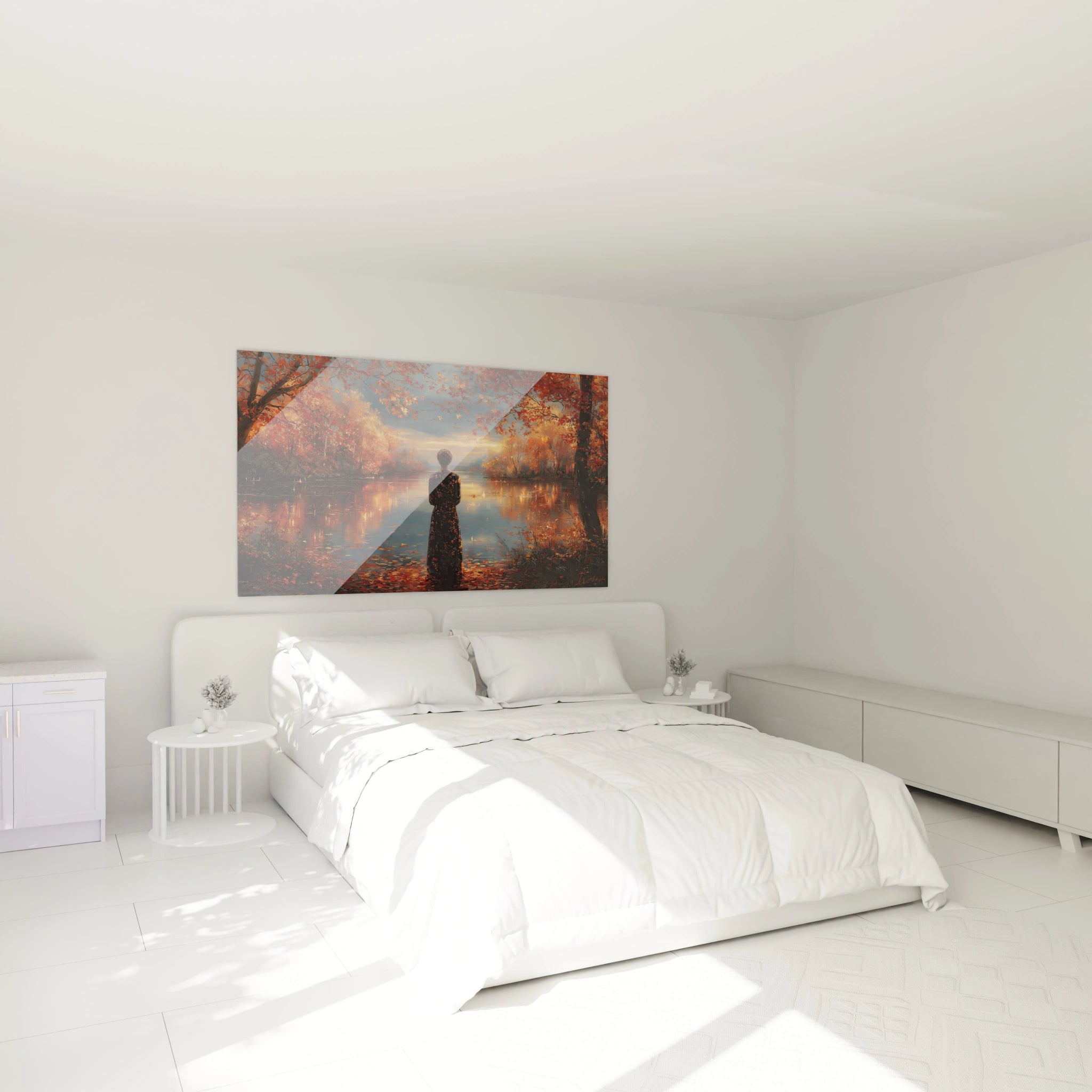
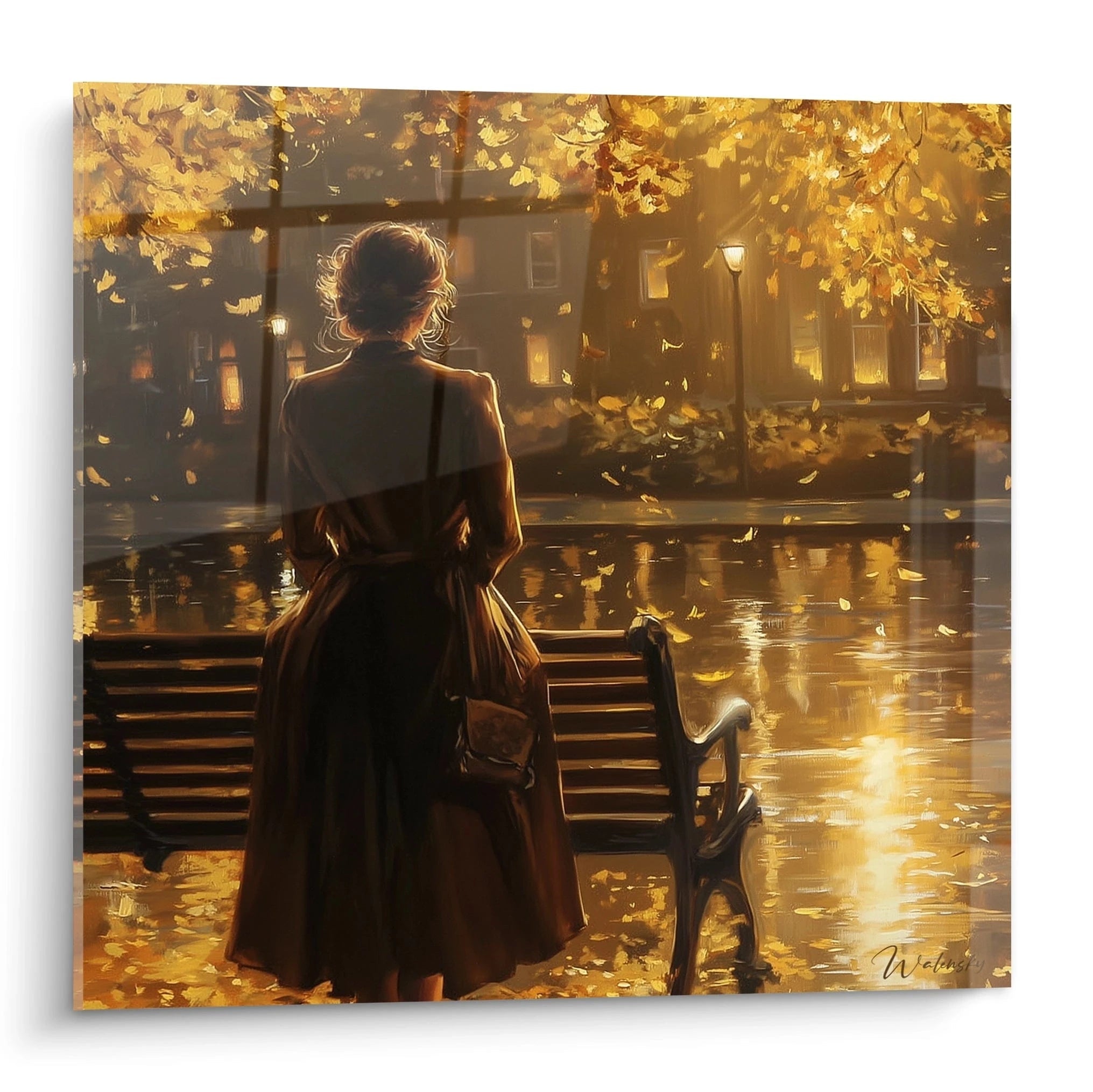
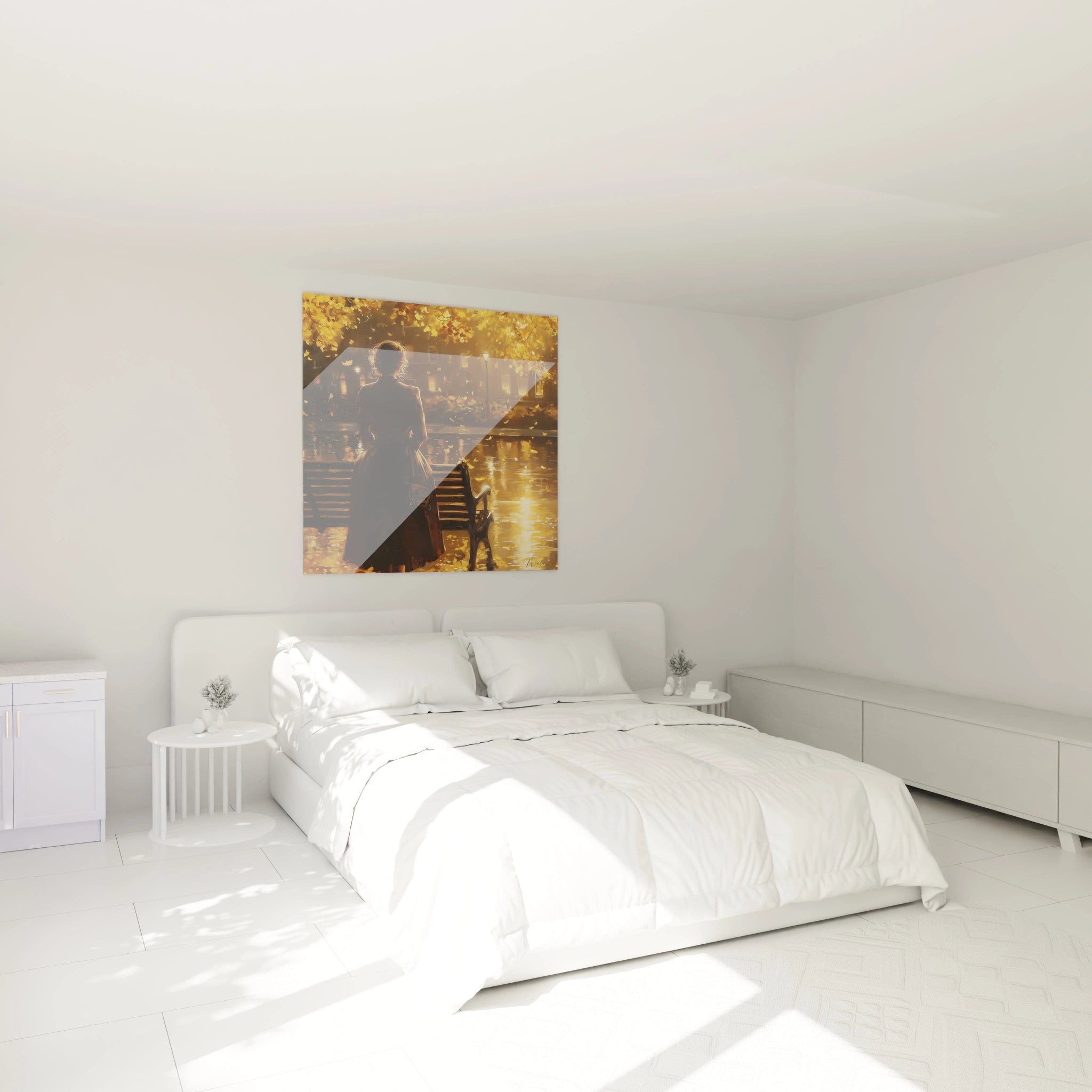
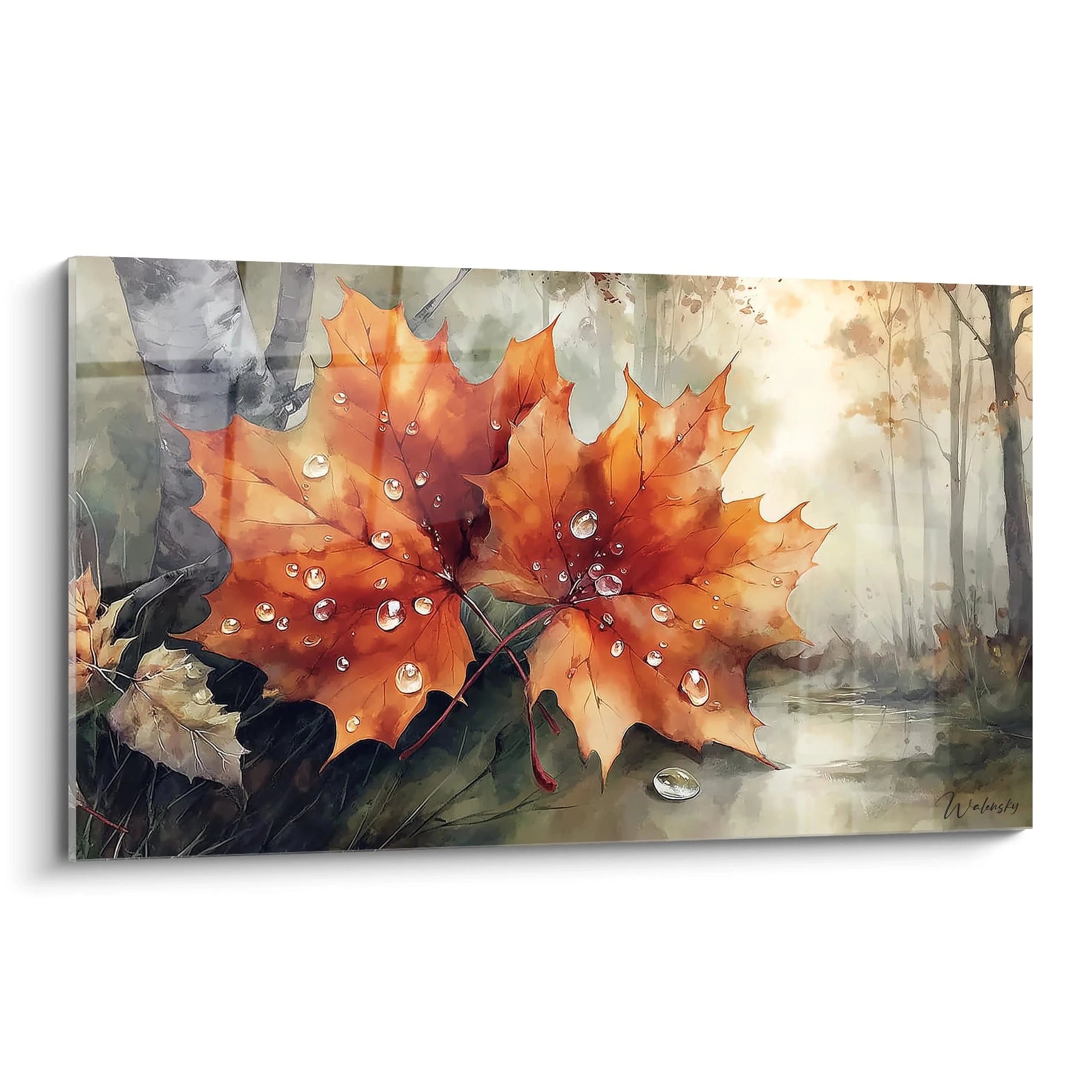
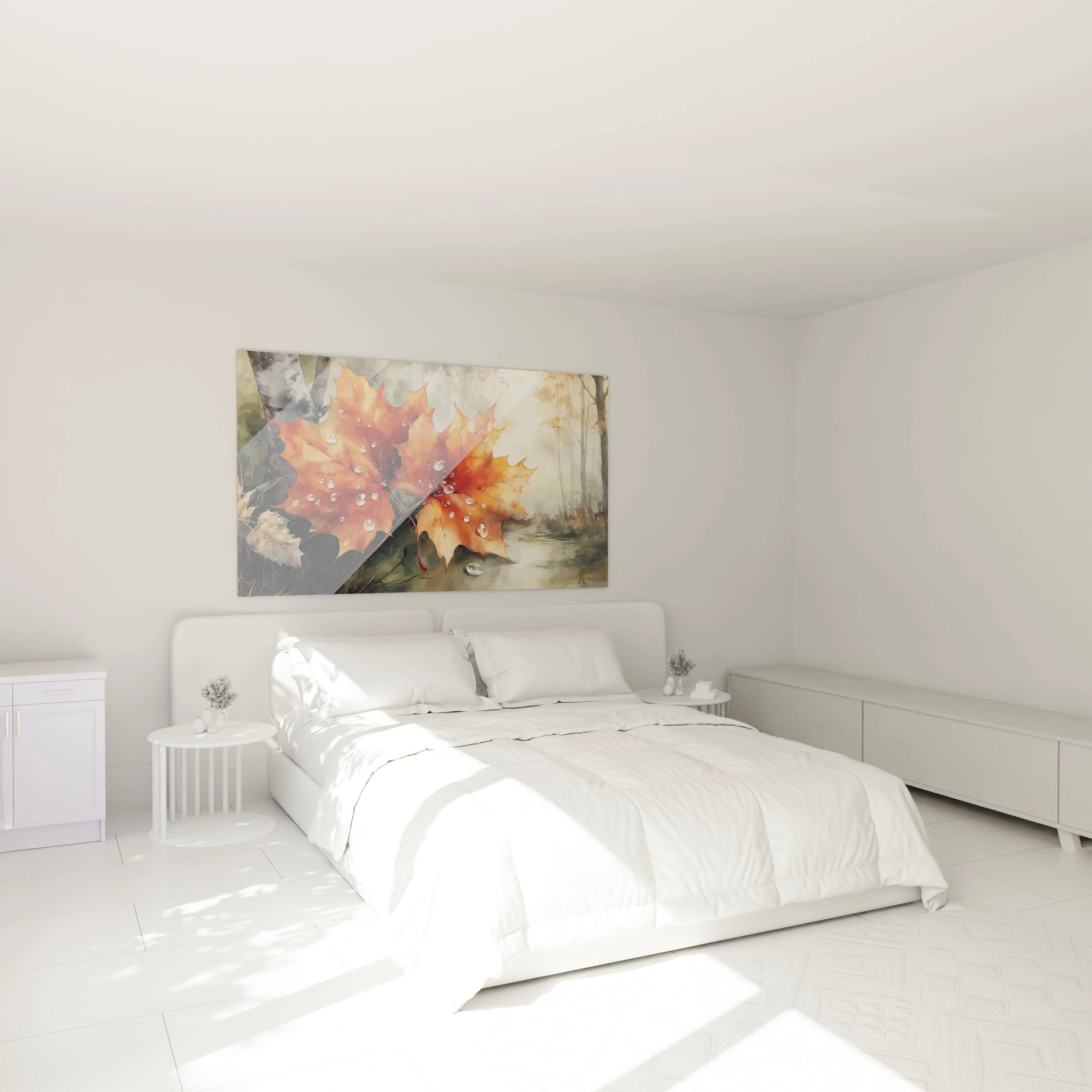
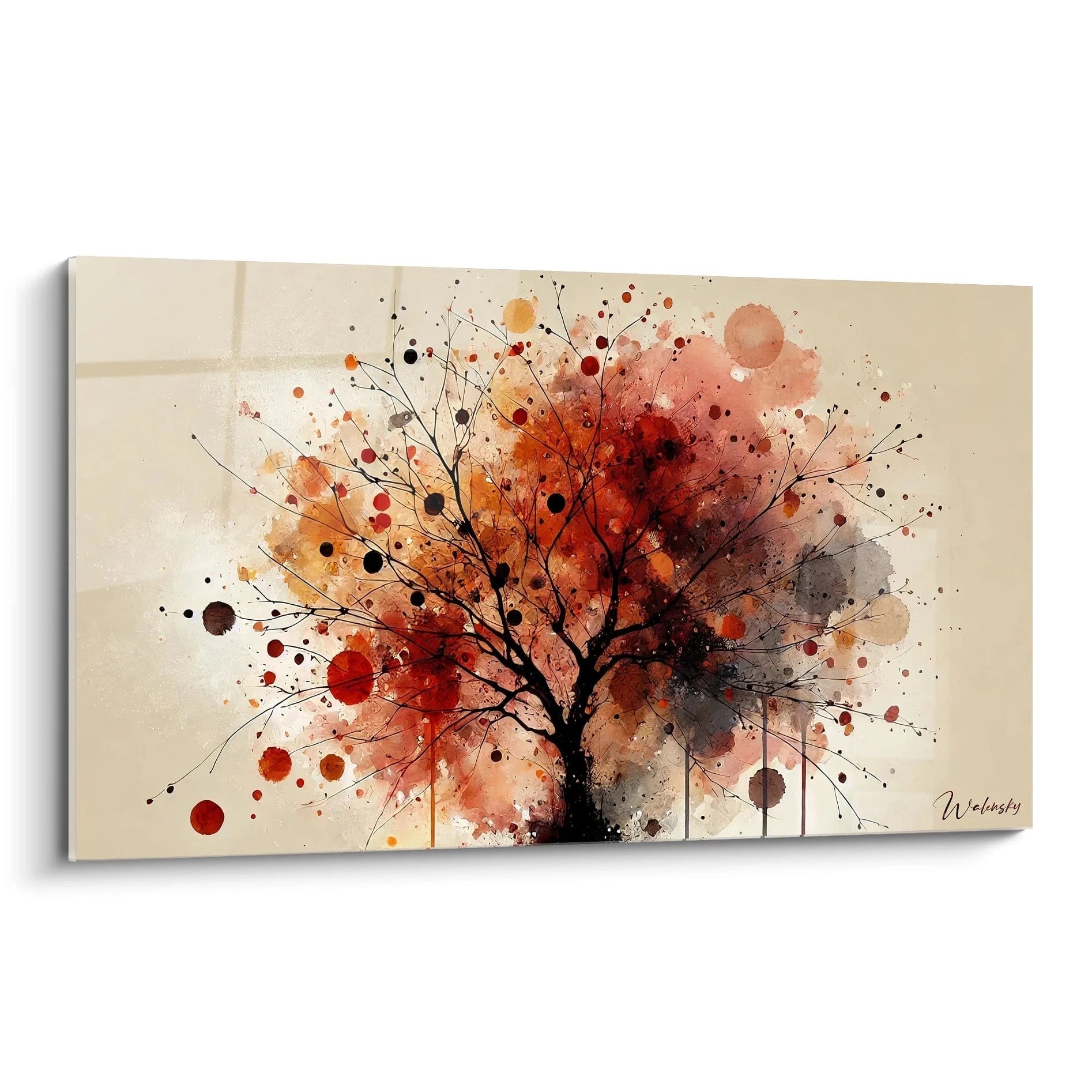
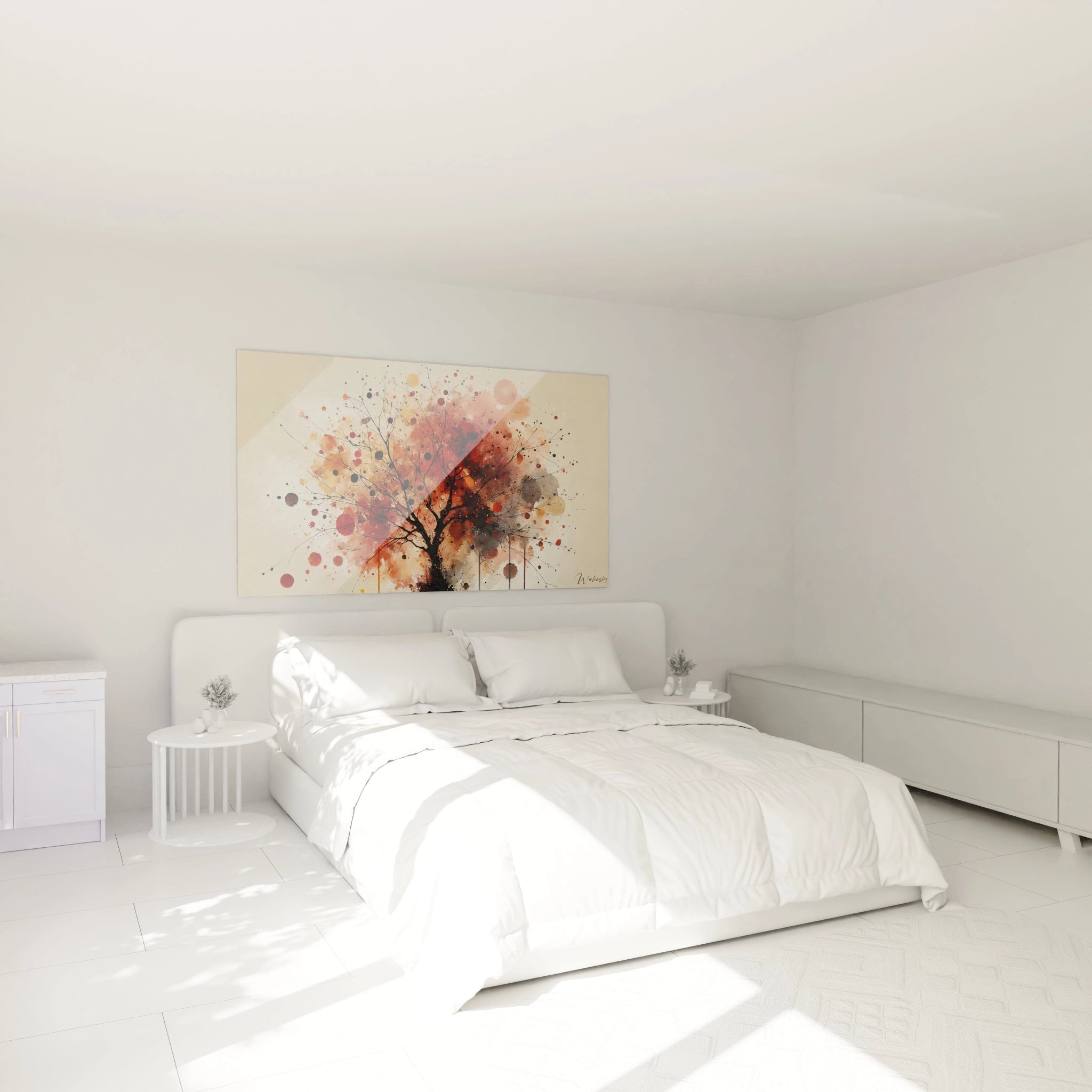
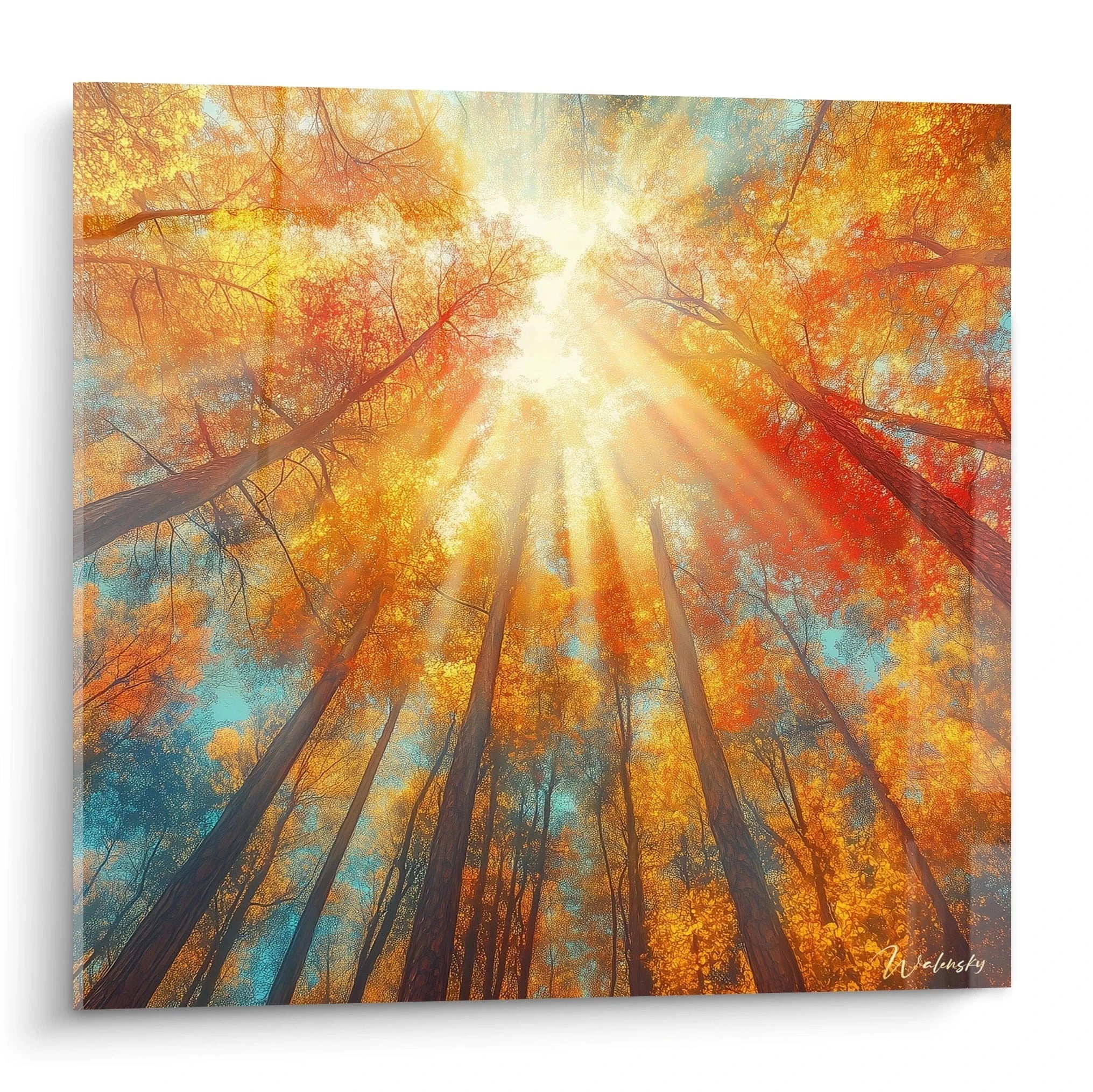
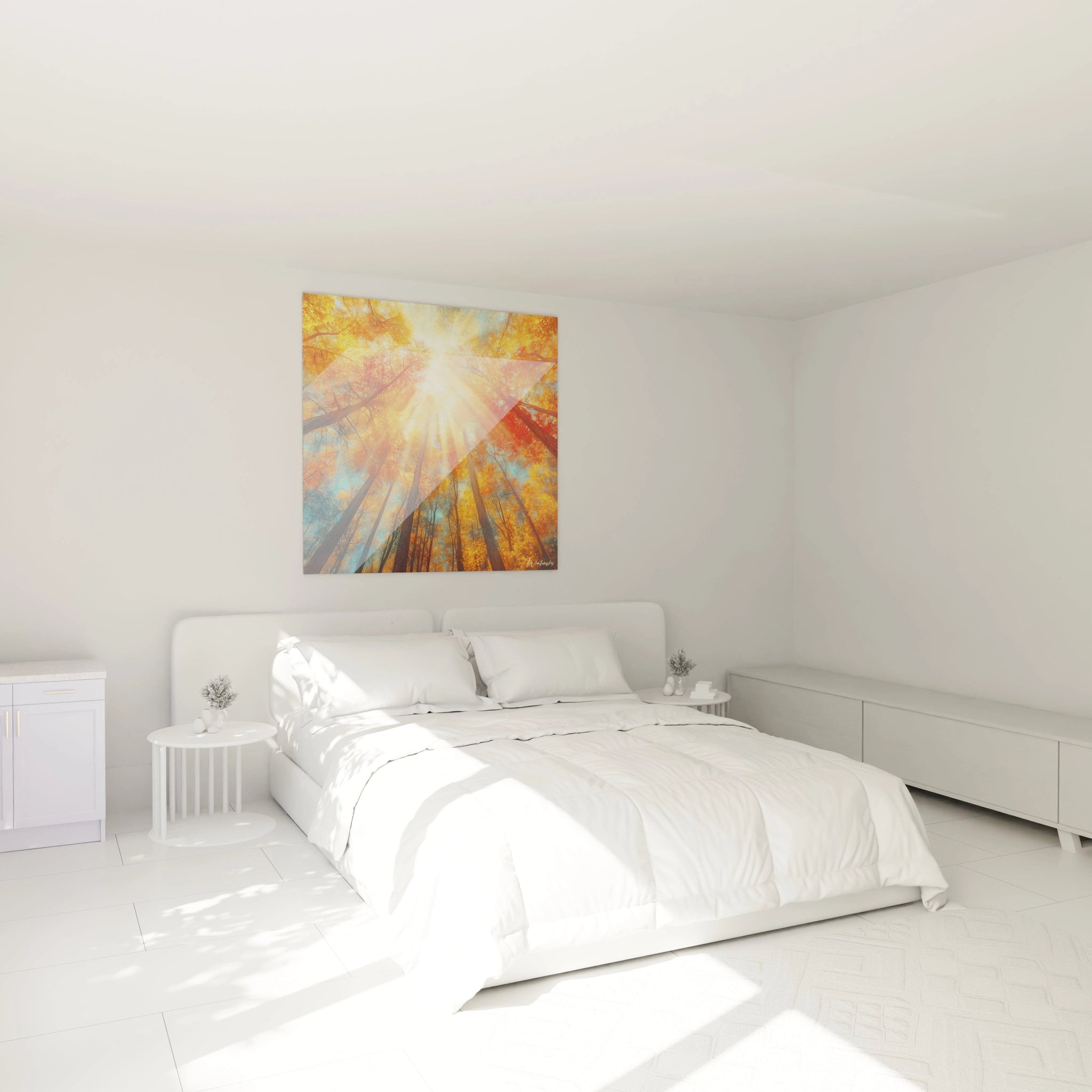
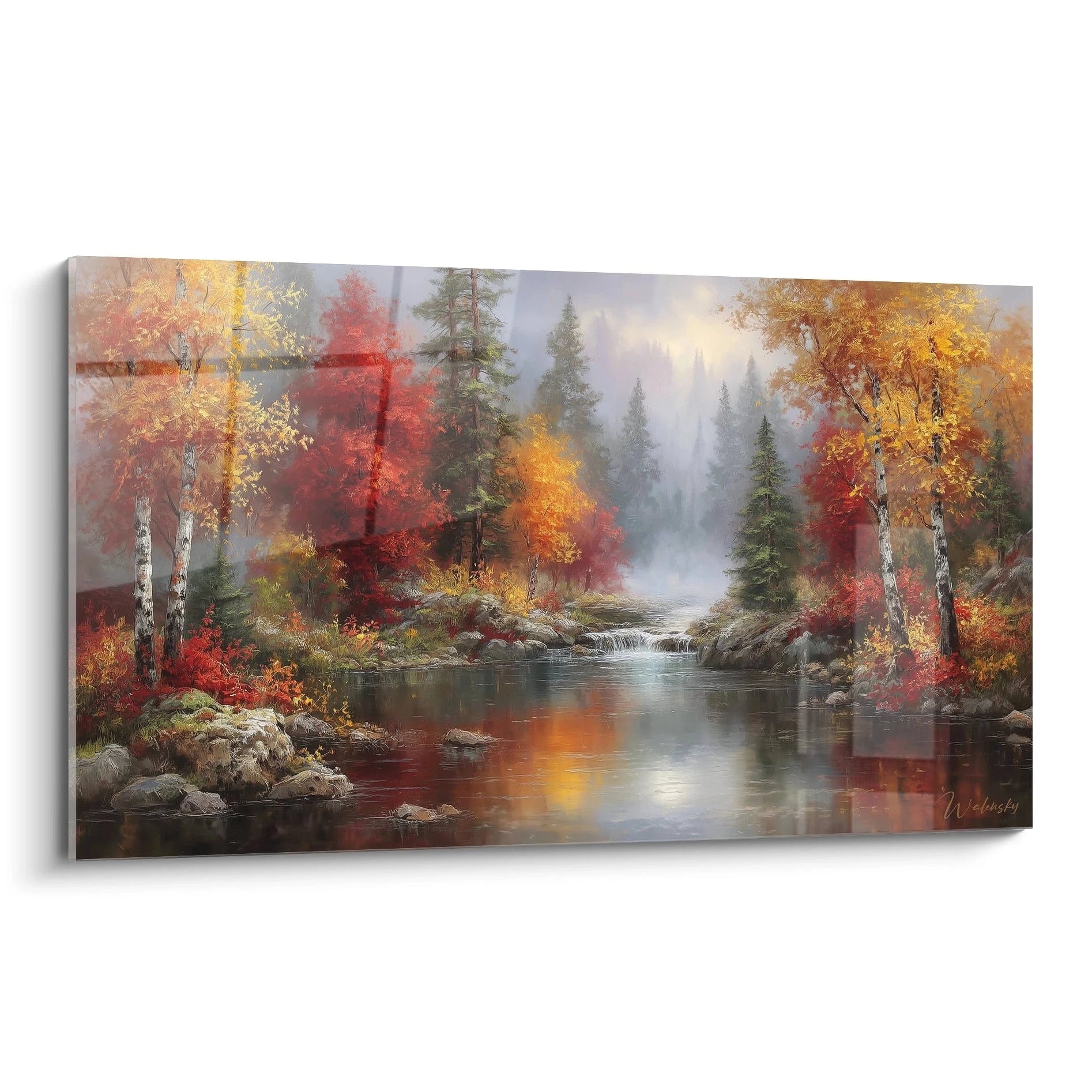
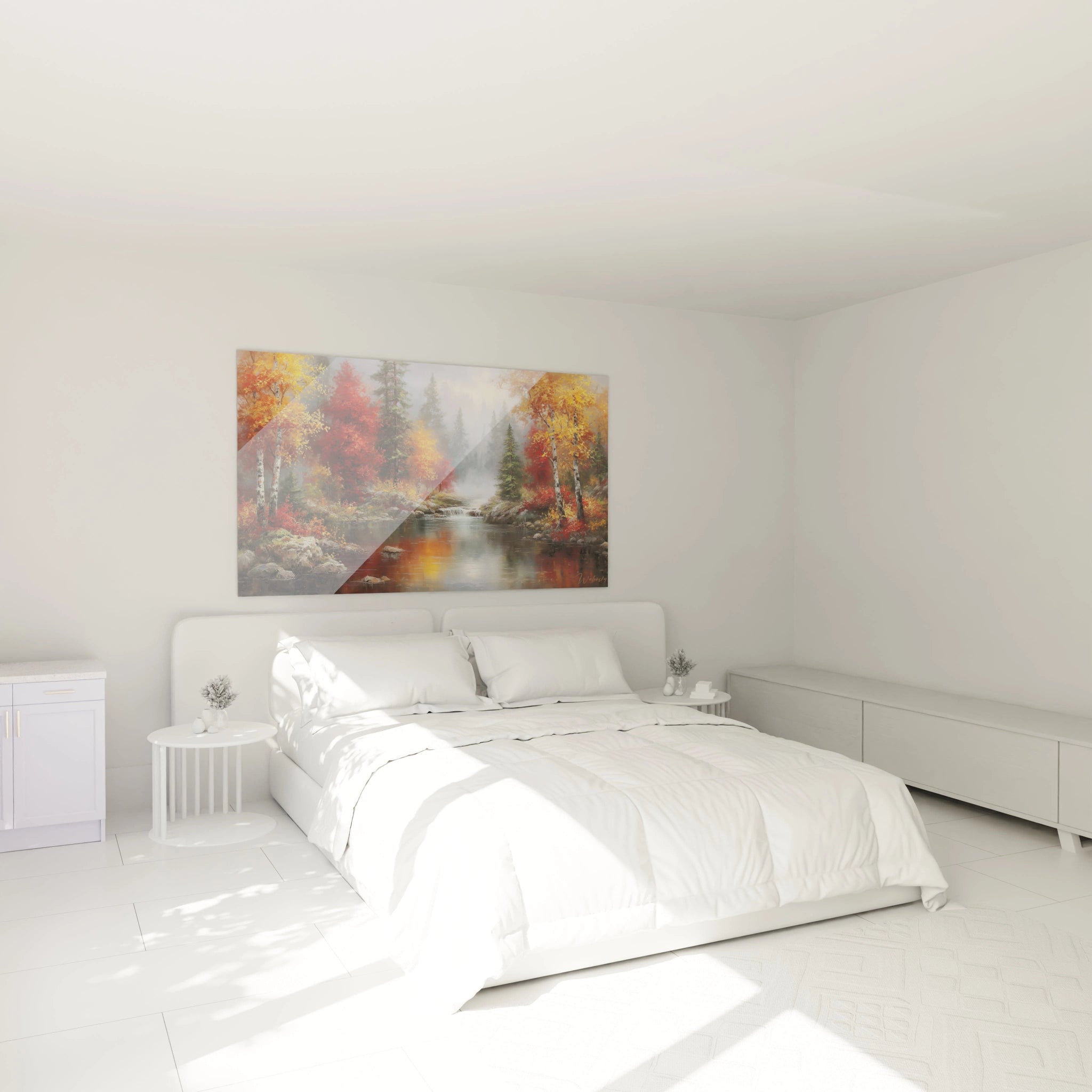
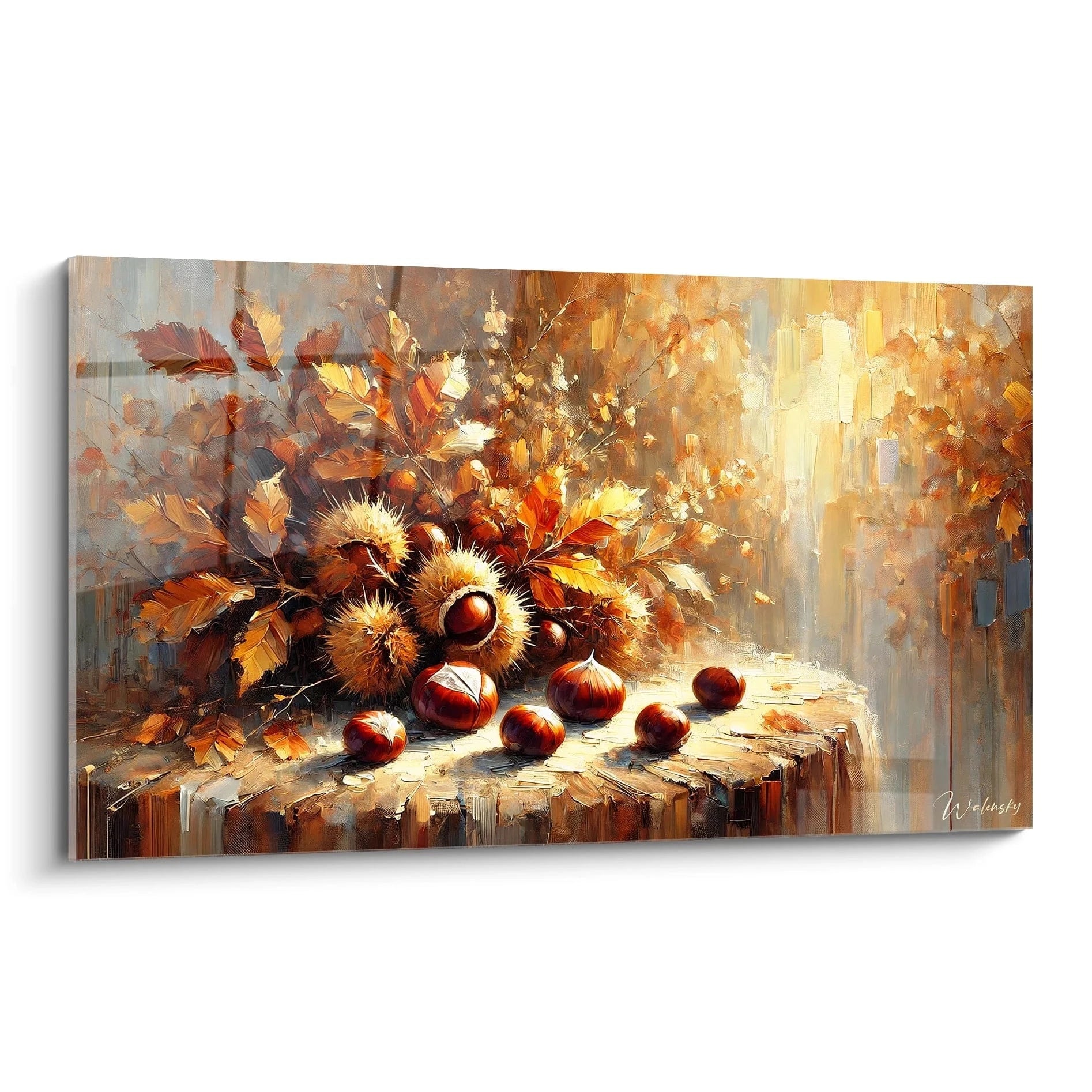
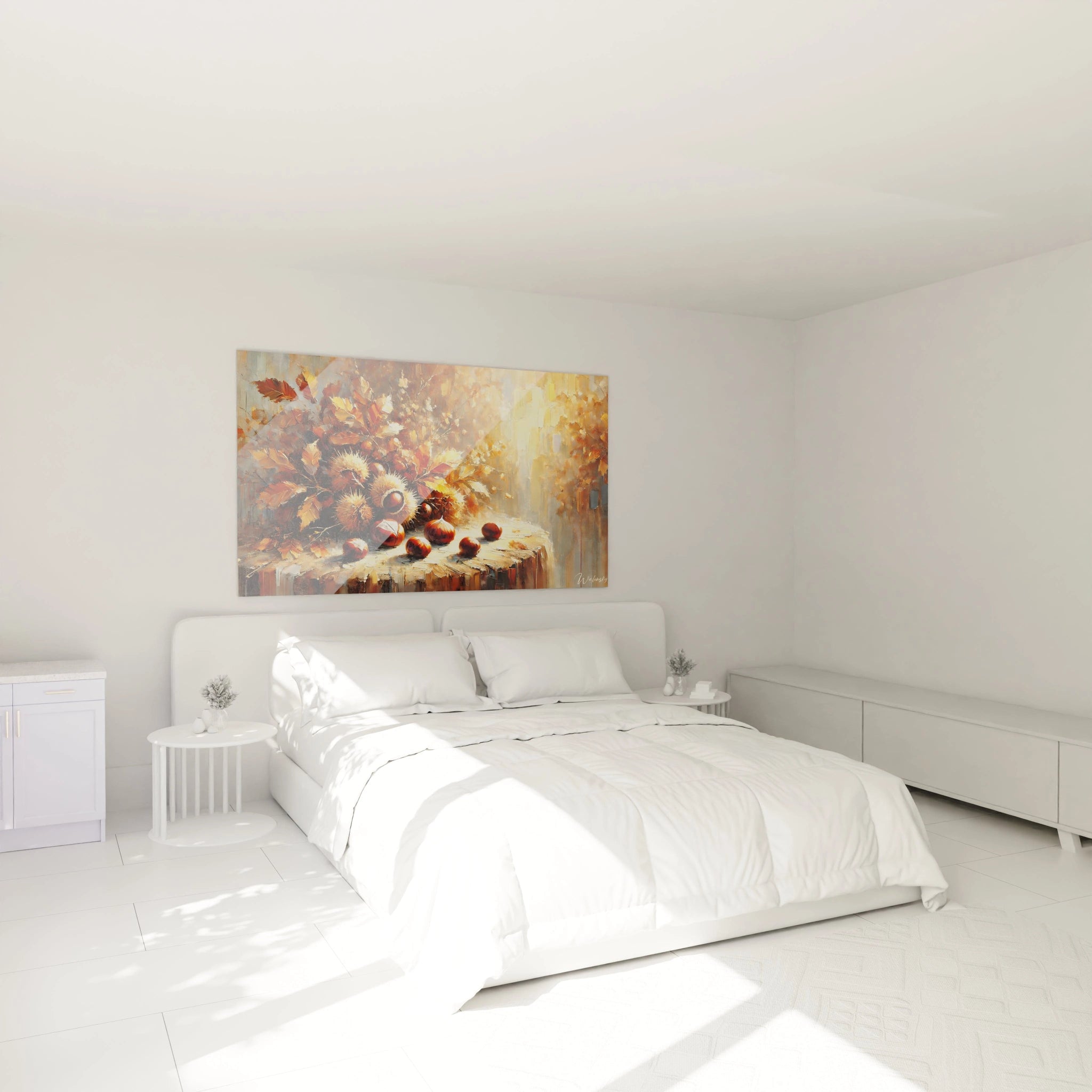
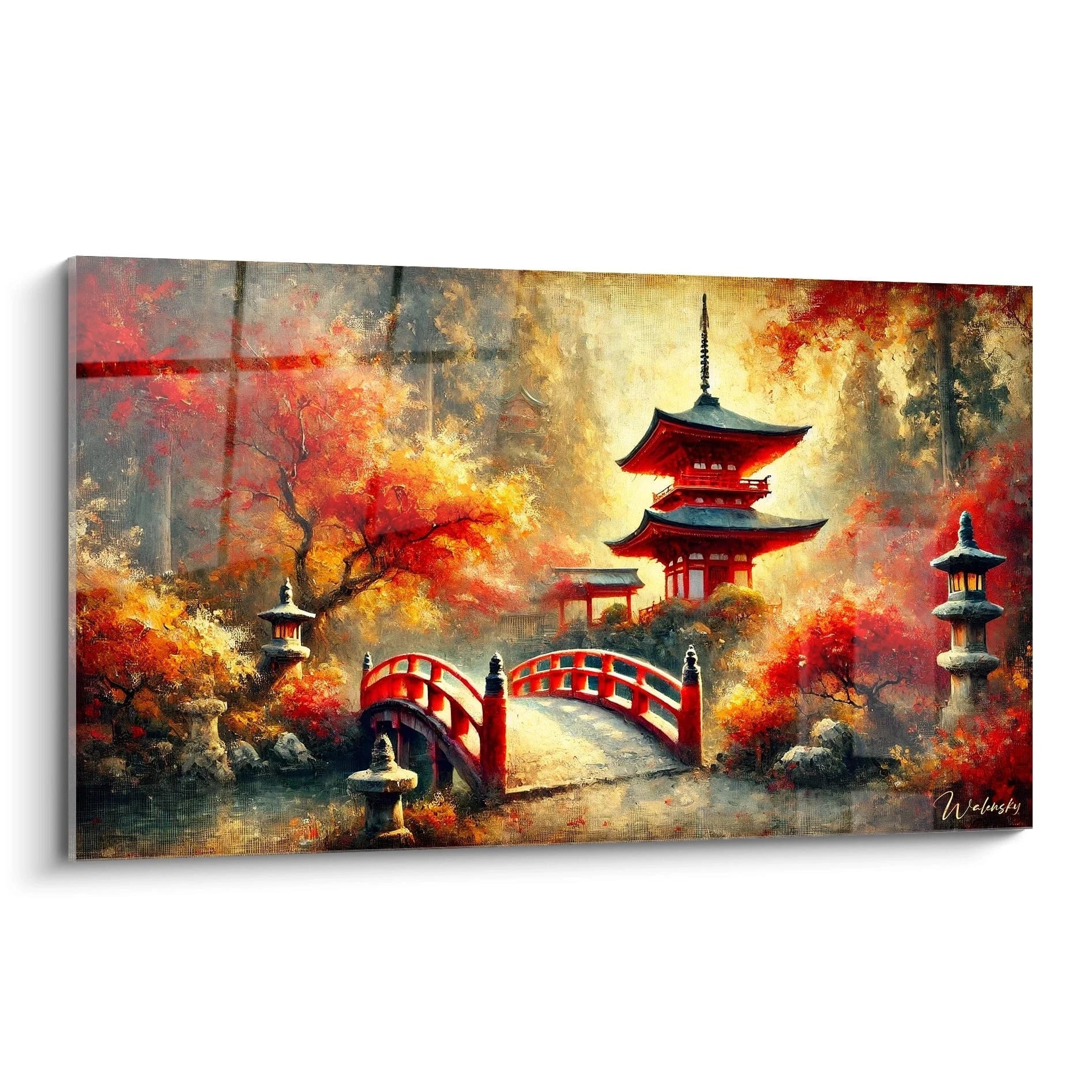
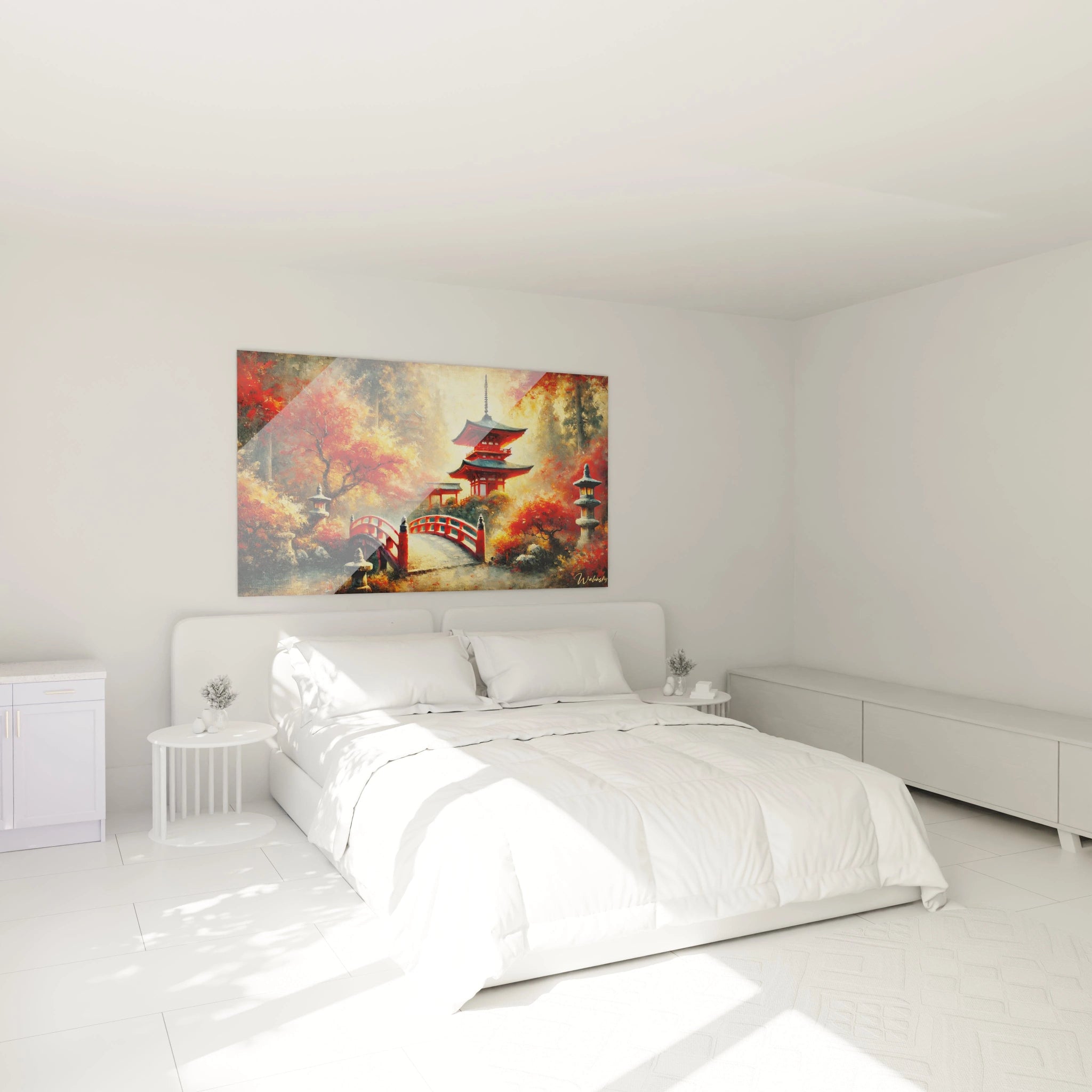
- Autumn Wall Art Presentation
- Autumn wall art cozy ambiance
- Autumn wall art warm colors
- Autumn wall art golden light
The arrival of autumn transforms our interiors into warm retreats as temperatures drop. Autumn wall art perfectly represents this seasonal transition, capturing the magic of flaming leaves and the particular atmosphere of this season. Discover how this unique decorative piece can transform your living space with its warm hues and characteristic light.
An autumn landscape wall art is more than just a simple decorative element – it becomes the focal point that transforms your interior's ambiance. These artistic creations capture the very essence of the fall foliage season, with its glowing reds, misty atmospheres, and that particularly distinctive golden light.
Each autumn wall art piece tells a unique visual story, evoking forest walks, the scent of damp woodland, and the crunch of leaves underfoot. This sensory immersion transforms your everyday space into a soothing autumn sanctuary.
Autumn Wall Art: Creating an Irresistible Cozy Ambiance
Autumn, this transitional season, has always inspired creators of wall art with its singular atmospheres. Autumn wall art stands out as a true creator of unparalleled cozy ambiance, ideal for transforming your interior into a warm refuge when outside temperatures begin to drop.
Why is autumn wall art the perfect ally for cozy atmospheres?
The particularity of autumn wall art lies in its unique ability to instantly recreate that sensation of envelopment felt during a walk in an autumn forest. Unlike spring or summer representations, the autumn color palette – composed of ochres, deep reds, and warm oranges – generates an immediate sensation of visual warmth. This exclusive characteristic makes autumn wall art the ideal decorative element to accompany your cozy evenings.
Works depicting autumn scenes possess this rare quality of visually softening the perceived temperature of a room by 2 to 3 degrees according to environmental psychology studies. This unconscious perceptual modulation is explained by the mental association between warm colors and thermal comfort – a phenomenon absolutely specific to autumn representations.
The cocoon effect: how autumn wall art transforms the acoustics of your spaces
An overlooked but fascinating aspect of large-format autumn wall art concerns its impact on a room's acoustics. Representations of dense autumn forests create a visual sensation of sound absorption similar to that experienced in a forest during this season. This psycho-acoustic phenomenon amplifies the impression of calm and isolation from the outside world, greatly reinforcing the cozy effect.
Interior design experts strategically recommend positioning autumn wall art facing relaxation spaces – sofas or reading chairs – to maximize this enveloping effect. This specific spatial configuration creates a visual dialogue between the rest space and the artwork, delimiting a true "comfort bubble" in your interior.
• Autumn woodland scenes with a carpet of fallen leaves particularly reinforce the sensation of acoustic isolation
• Representations of misty autumn mornings accentuate the impression of intimacy and separation from the outside world
• Close-ups of autumn details (leaves, bark, mushrooms) intensify the immersive effect
The olfactory dimension evoked by autumn wall art
A fascinating characteristic of autumn wall art resides in its exceptional ability to evoke olfactory sensations. Our brain associates autumn images so powerfully with their corresponding scents that simply contemplating a piece depicting an autumn woodland can trigger olfactory reminiscences of damp leaves, rain-soaked earth, or mushrooms.
This visual-olfactory synesthesia, particularly pronounced with autumn scenes, significantly contributes to the immersive and cozy experience. To amplify this phenomenon, position your autumn wall art in a transition zone like an entrance or hallway leading to the living room – neuroscientists have demonstrated that this configuration maximizes the sensory impact of evocative works.
Which autumn scenes should you prioritize for maximum cozy effect?
Not all autumn representations generate the same cozy emotional impact. Research in environmental psychology identifies specific motifs as particularly effective:
• Forest paths carpeted with russet leaves unconsciously encourage slowing down and introspection
• Autumn clearing scenes with filtered light create a sensation of protective natural shelter
• Close-ups of tree bark with autumn hues reinforce the feeling of grounding and stability
• Representations of cabins or dwellings in an autumn context amplify the feeling of refuge
Autumn artworks depicting end-of-day scenes, with that characteristic golden light so typical of autumn, possess scientifically demonstrated soothing power. This particular light, called "autumn golden hour", activates the same areas in our brain as those stimulated during deep relaxation experiences.
Strategic positioning of autumn wall art in your cozy space
The placement of your autumn wall art significantly influences its cozy impact. Positioning it facing the conversation space – whether a grouping of armchairs or a sofa – instantly transforms that space into an "autumn corner" conducive to warm shared moments.
For large spaces, opt for a panoramic-format autumn wall art that reproduces the immersive effect of a forest walk. This visual configuration unconsciously expands the perceived space while creating a sensation of immersion in a protective natural environment – the best of both worlds for perfect cozy ambiance.
Hanging height also plays a crucial role: for autumn wall art intended to create a cozy ambiance, favor a position slightly lower than standard recommendations. This specific arrangement reinforces the sensation of envelopment and intimacy, as if the autumn scene depicted naturally unfolded around you.Autumn Wall Art: Creating Seasonal Color Harmonies
Autumn is distinguished by its incomparable color palette that autumn wall art captures masterfully. This transitional season offers a unique visual spectacle where colors intensify paradoxically as nature prepares for winter rest. Artistic creations representing this season possess that rare quality of radically transforming an interior's atmosphere through their simple chromatic presence.
How does autumn wall art create a chromatic microclimate?
Perhaps the most fascinating phenomenon of autumn wall art concerns its unique ability to generate what interior design specialists call a "chromatic microclimate". Unlike representations of other seasons, autumn colors possess that rare faculty of radiating beyond the frame, diffusing their warmth throughout the surrounding space.
This chromatic projection is scientifically explained by the particular wavelength of autumn hues – primarily situated in the red-orange spectrum – which reflect more intensely on adjacent surfaces. A large-format autumn wall art can thus subtly modify the color perception of an entire room, creating an enveloping atmosphere without requiring physical transformation of the space.
Interior colorists strategically use this phenomenon by positioning autumn artworks as "chromatic correctors" in spaces dominated by cool or neutral tones. This technique instantly transforms a room's ambiance without intervention on permanent architectural elements.
• An autumn wall art with copper-dominant hues visibly warms a space with white or gray walls
• Representations of autumn woodlands perfectly balance contemporary interiors with clean lines
• Autumn mist scenes soften the sometimes overly clinical appearance of minimalist arrangements
The chromatic exclusivity of autumn wall art: colors impossible to reproduce otherwise
An absolutely unique particularity of autumn wall art lies in its ability to introduce into our interiors chromatic combinations impossible to reproduce by other decorative means. The natural association of flaming reds, deep oranges, and golden yellows – all present simultaneously yet in perfect harmony – constitutes a signature visual exclusively autumn.
These complex chromatic compositions, observable only during this brief transitional period in nature, are perfectly captured in autumn wall art. This specific polychromatic richness explains why these works retain their visual impact year after year, never seeming dated or monotonous.
Which autumn tones should you seek for specific psychological effects?
Research in environmental psychology demonstrates that certain specific autumn tones trigger predictable emotional responses, allowing you to judiciously select your autumn wall art based on the desired effect:
• Red-orange dominants stimulate creativity and encourage lively conversations – ideal for shared living spaces
• Golden yellow tones generate a sensation of well-being and optimism – perfect for hallways and entrances
• Warm browns and Sienna earths provoke concentration and reflection – recommended for work spaces
• Autumn purple gradients induce calm and introspection – excellent for bedrooms and meditation spaces
This psycho-chromatic specificity of autumn artworks explains their popularity in professional environments focused on innovation and collaborative creativity. These works unconsciously stimulate constructive exchanges while maintaining a warm atmosphere conducive to idea-sharing.
Chromatic dialogue: how autumn wall art interacts with your furniture
Autumn wall art automatically establishes what designers call a "chromatic dialogue" with surrounding furniture elements. This visual conversation proves particularly harmonious with certain specific materials:
Leather furniture develops a natural chromatic resonance with autumn wall art, their tanned hues responding harmoniously to the ochres and browns represented. This complementarity intensifies over time, as leather patinas into increasingly autumn-like nuances.
Dark woods (walnut, smoked oak, mahogany) maintain a privileged relationship with autumn wall art, their natural veining echoing the organic patterns of depicted landscapes. This material resonance greatly reinforces the artwork's immersive effect in the space.
How to create seasonal transitions with your autumn wall art?
A sophisticated decorative strategy consists of using autumn wall art as a seasonal chromatic pivot. By simply modifying a few surrounding textile accessories (cushions, throws, rugs) according to the seasons, you create a complete space transformation without moving the central artwork:
• In autumn/winter: surround your wall art with textiles in burgundy, mustard, and terracotta tones to amplify its natural warmth
• In spring/summer: combine it with accessories in sage green, teal, or natural linen for a refreshing contrast
This "seasonal staging" technique around permanent autumn wall art transforms your decoration into an evolving visual narrative, offering a renewed experience of your space with each seasonal change.
Specific lighting effects with autumn wall art
Light representation perhaps constitutes the most distinctive aspect of autumn wall art. This characteristic autumn light – low, golden, filtering through foliage – possesses unique visual properties that artists capture with particular attention.
Quality autumn wall art faithfully reproduces these specific lighting effects, creating in your interior a virtual window to this magical period when natural light acquires an almost tangible quality. This light dimension transforms the work into a genuine seasonal simulator, allowing you to enjoy this particular ambiance year-round.
Specialists recommend reserving dedicated lighting for autumn wall art – ideally an adjustable light source with warm temperature (2700-3000K) – to fully reveal its deep nuances and amplify its chromatic radiation throughout the surrounding space.Autumn Wall Art: Capturing Characteristic Golden Light
Autumn wall art fundamentally distinguishes itself from other seasonal creations through its unique ability to reproduce that extraordinary luminous phenomenon that photographers call "autumn golden light". This particular quality of light, present only during this brief transitional period, constitutes the very essence of the appeal exercised by artistic representations of this season.
What makes autumn light so unique in a wall art piece?
The absolute singularity of autumn wall art lies in its ability to capture that characteristic golden light which literally exists at no other time of year. This particularly luminosity results from a combination of astronomical and atmospheric factors specific to this season:
The specific inclination of solar rays during autumn creates a unique angle of penetration, producing elongated shadows and side lighting impossible to observe during other seasons. This particular light geometry, faithfully reproduced in quality autumn wall art, generates exceptional visual depth that transforms any wall into a dimensional window to this season.
The autumn atmospheric composition – characterized by higher relative humidity and specific suspended particles – modifies light diffraction in an absolutely unique way. This "autumn spectral signature", when correctly captured in wall art, produces that visually recognizable effect: a warm luminosity that seems to emanate from the very interior of depicted elements.
• Autumn woodlands perfectly illustrate this phenomenon with their almost tangible light rays passing through foliage
• Autumn forest edge scenes present that striking contrast between deep shadow zones and touches of golden light
• Representations of autumn waterways capture this characteristic light reflection that multiplies throughout the season
How does autumn wall art transform a room's light perception?
A fascinating phenomenon occurs with the introduction of large-format autumn wall art into a space: the artwork subtly yet perceptibly modifies the quality of experienced ambient light. This psycho-perceptual phenomenon, documented by interior design specialists, is explained by how our brain processes light visual cues.
The simple presence of an autumn representation with its characteristic golden light "warms" the perceived color temperature throughout the entire room. This phenomenon intensifies particularly in spaces benefiting from natural lighting, creating a visual dialogue between real light and depicted light that mutually amplifies their qualities.
Studies in visual neuroscience demonstrate that artworks depicting autumn scenes bathed in this specific light activate the same brain areas as exposure to real golden light, explaining the immediate soothing effect felt in the presence of these works.
The "seasonal window" phenomenon created by autumn wall art
A particularly valuable characteristic of autumn wall art concerns its function as a "permanent seasonal window". Unlike representations of other seasons, which may seem misaligned at certain times of year, the autumn image maintains its relevance and visual appeal throughout the annual cycle.
During cold months, autumn wall art serves as a soft visual transition between summer exuberance and winter austerity, offering a warm reminder of the last sunny days before the cold season. During warm months, it constitutes visual refreshment, evoking milder temperatures and a more subdued atmosphere.
Environmental psychologists qualify this phenomenon as "flexible temporal anchoring" - a rare ability of certain visual representations to harmoniously integrate into our cyclical perception of time regardless of the actual season, always offering relevant emotional resonance.
Why does represented autumn light stimulate creativity?
Recent research in cognitive psychology reveals an intriguing link between exposure to autumn light representations and measurable increases in creative abilities. This phenomenon is explained by several neuropsychological mechanisms:
The particular quality of autumn light – soft yet contrasted – simultaneously stimulates brain areas linked to relaxation and attention, creating an optimal mental state for idea generation. This dual activation, perfectly reproduced in quality autumn wall art, explains why these works are particularly recommended for creation and reflection spaces.
The subtle luminosity variations characteristic of autumn scenes – alternating intense bright zones and progressive shadow transitions – unconsciously engage our brain in a visual exploration process that stimulates associative thinking, the foundation of creativity. This specific light complexity makes autumn wall art a genuine "passive cognitive stimulator" in your space.
How to choose autumn wall art based on your light exposure?
Selecting autumn wall art must imperatively account for the specific light exposure of the space where it will be installed. This consideration, often overlooked, proves decisive for the artwork's visual impact:
• For north-facing rooms, prioritize autumn wall art with vibrant orange and red dominants that will compensate for the natural coolness of this exposure
• In south-facing spaces flooded with direct light, opt for autumn representations of woodlands or misty scenes that will bring a touch of mystery and depth
• For east-facing orientations, artworks capturing morning autumn light – clear and horizontal – will create natural resonance with actual lighting
• In west-facing rooms, autumn dusk scenes will magnificently amplify the natural golden end-of-day light
This harmonization between depicted and real light creates what experts call "immersive amplification" - the impression that real space and represented space mutually extend, partially abolishing the boundary between domestic interior and autumn landscape.
The unique visual evolution of autumn wall art throughout the day
A fascinating and exclusive characteristic of autumn wall art concerns its visual metamorphosis throughout the day. Unlike representations of other seasons, the artwork enters particular resonance with daily natural light variations, offering a constantly renewed visual experience.
At dawn, the amber and golden hues of wall art progressively illuminate, revealing previously veiled subtle details. As the sun rises, contrasts intensify, highlighting the dramatic structure of autumn landscapes. Evening light, meanwhile, intensifies reds and oranges, creating perfect concordance between depicted atmosphere and actual late-day ambiance.
This "visual respiration" throughout the day transforms autumn wall art into a living element of your decoration, offering not a frozen representation but a dynamic aesthetic experience that accompanies your day's natural rhythm.
FAQ on Autumn Wall Art
How to maintain autumn wall art to preserve vibrant colors?
To preserve your autumn wall art's color vibrancy, avoid exposing it to direct sunlight for extended periods. Dust it regularly with a soft duster or dry microfiber cloth. For artworks with protective coating, light wiping with a slightly dampened cloth suffices, but avoid any chemicals that could alter the pigments representing these precious autumn hues.
Is autumn wall art suitable for all rooms?
Autumn wall art adapts particularly well to shared living spaces like living rooms or dining areas where its warm colors foster conviviality. It also finds its place in offices where its golden luminosity stimulates creativity. For bedrooms, prioritize more soothing autumn scenes with brown and ochre dominants favoring relaxation rather than vibrant reds that could be overstimulating for a rest space.
What ideal size for autumn wall art in a small space?
In a small space, medium-format autumn wall art (60-80 cm) will create optimal visual impact without overwhelming the room. Prioritize compositions with deep perspective – like an autumn forest path disappearing into the distance – that will visually extend the space. Autumn scenes with a high horizon line also amplify vertical space sensation, ideal for small rooms with limited ceiling height.