- Equestrian Paintings Overview
- Equestrian Paintings - Equestrian Disciplines in Large Format
- Equestrian Paintings - Exceptional Horse Breeds
- Equestrian Paintings - Equestrian Club Atmosphere
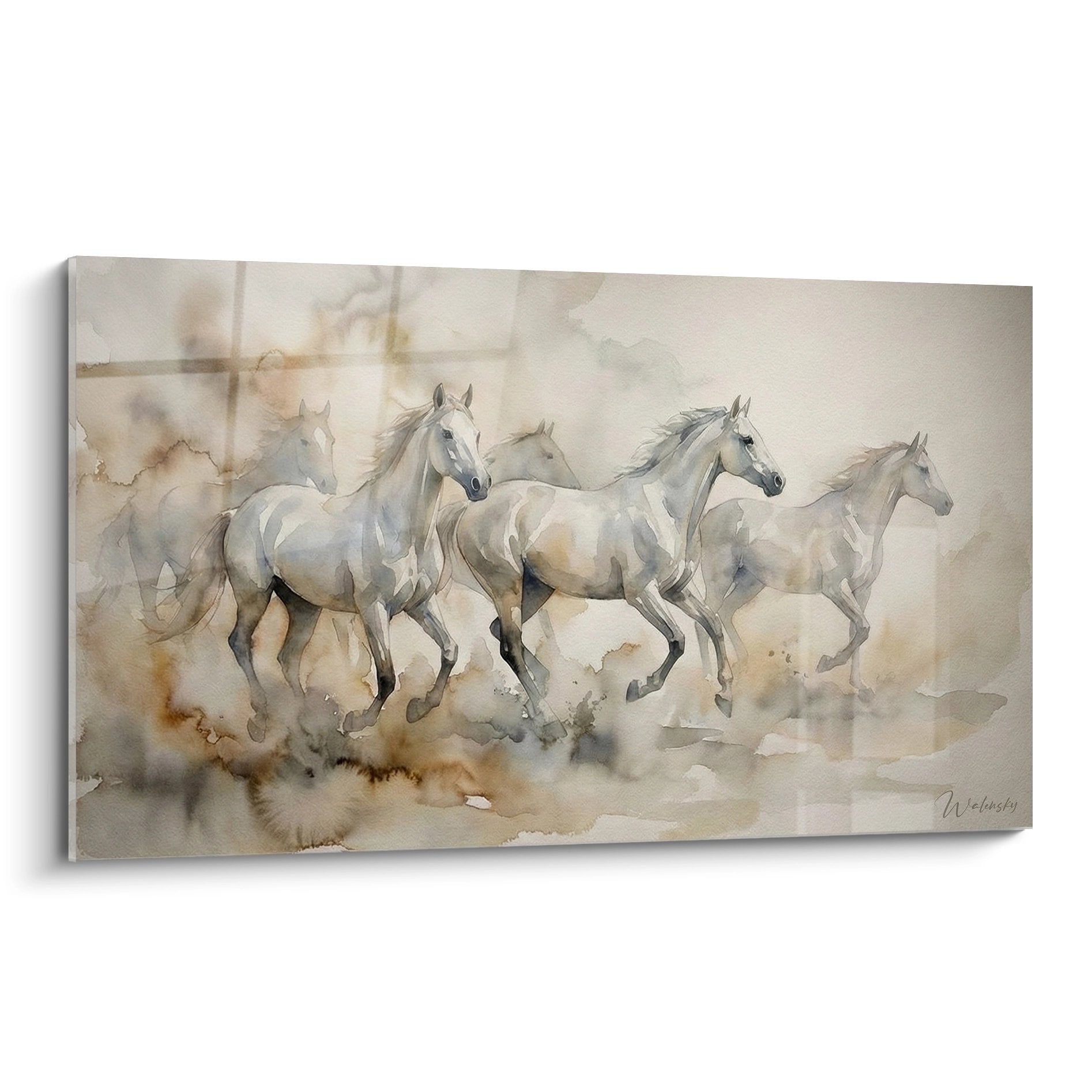
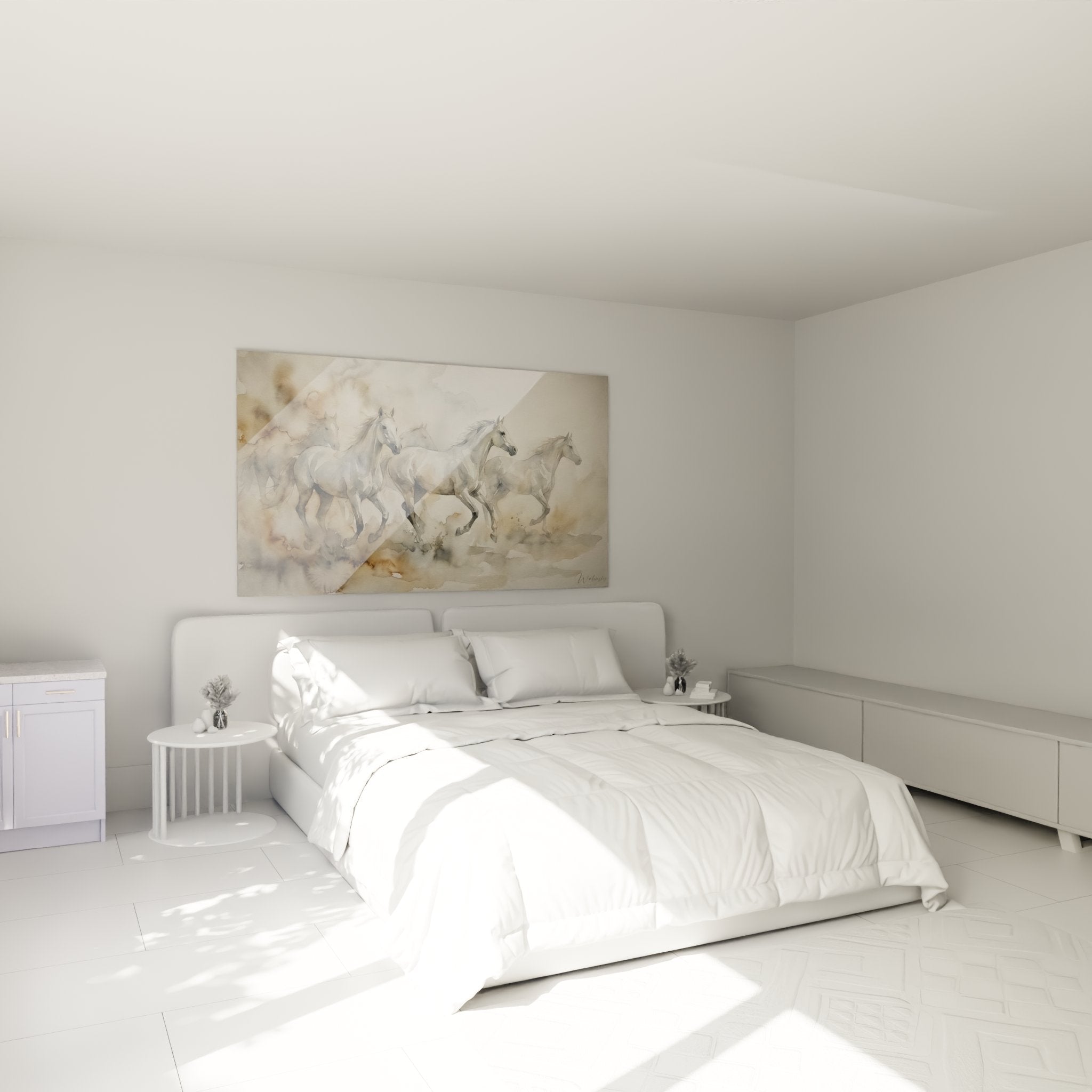
Discover our exclusive collection of large-scale equestrian paintings, specially designed for enthusiasts of the equestrian world. These wall creations capture the essence of the unique relationship between rider and mount, while elevating your living spaces. Whether you're a competitive equestrian athlete, stable owner, or equine art lover, our large format representations instantly transform your interior's atmosphere. Each visual celebrates the nobility of the horse, the technical mastery of disciplines, and the timeless elegance of the equestrian universe. Explore unprecedented artistic angles that will make your décor a true tribute to this passion.
Equestrian Paintings: Elevating Equestrian Disciplines in Large-Scale Wall Art
Which equestrian discipline should you choose for impactful wall décor?
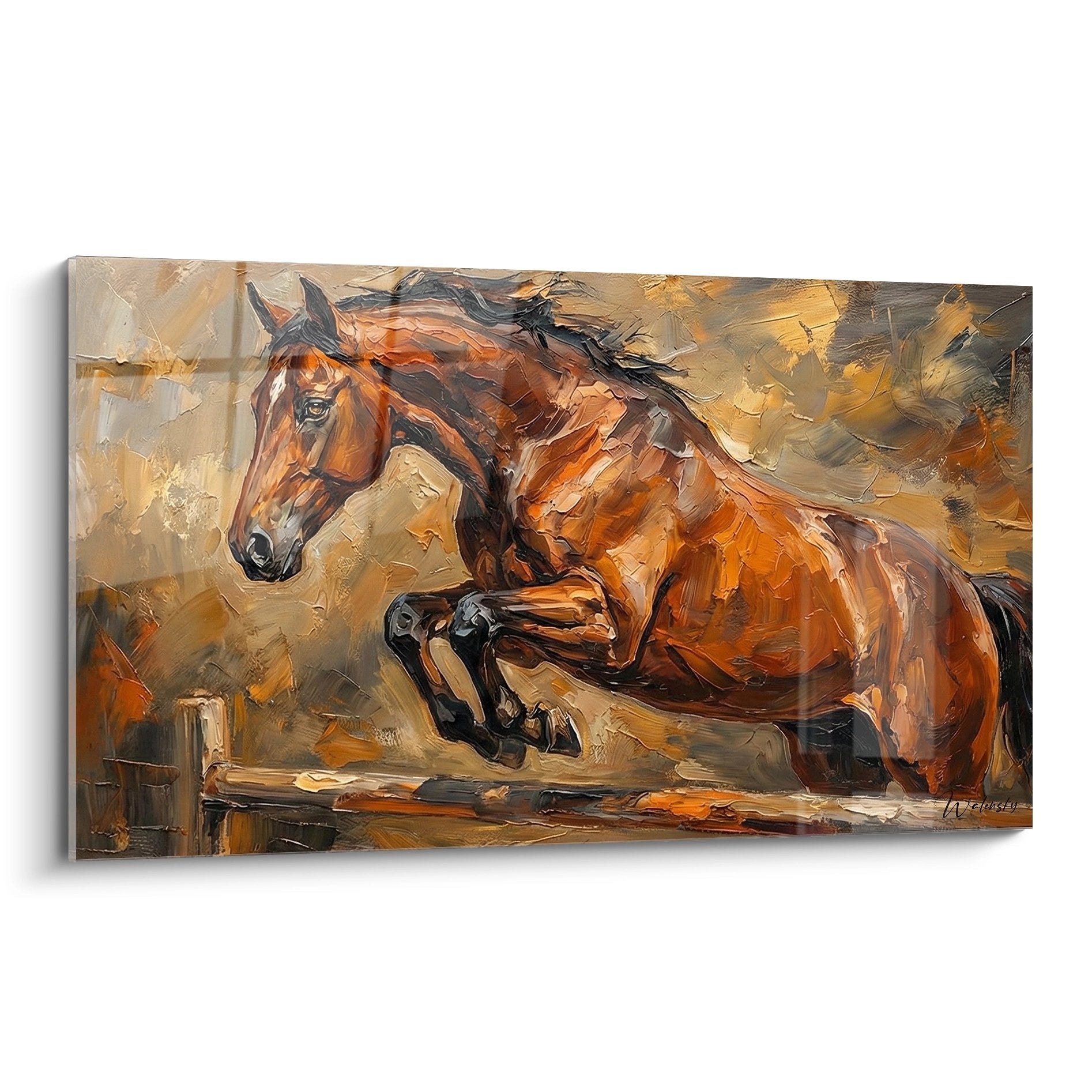
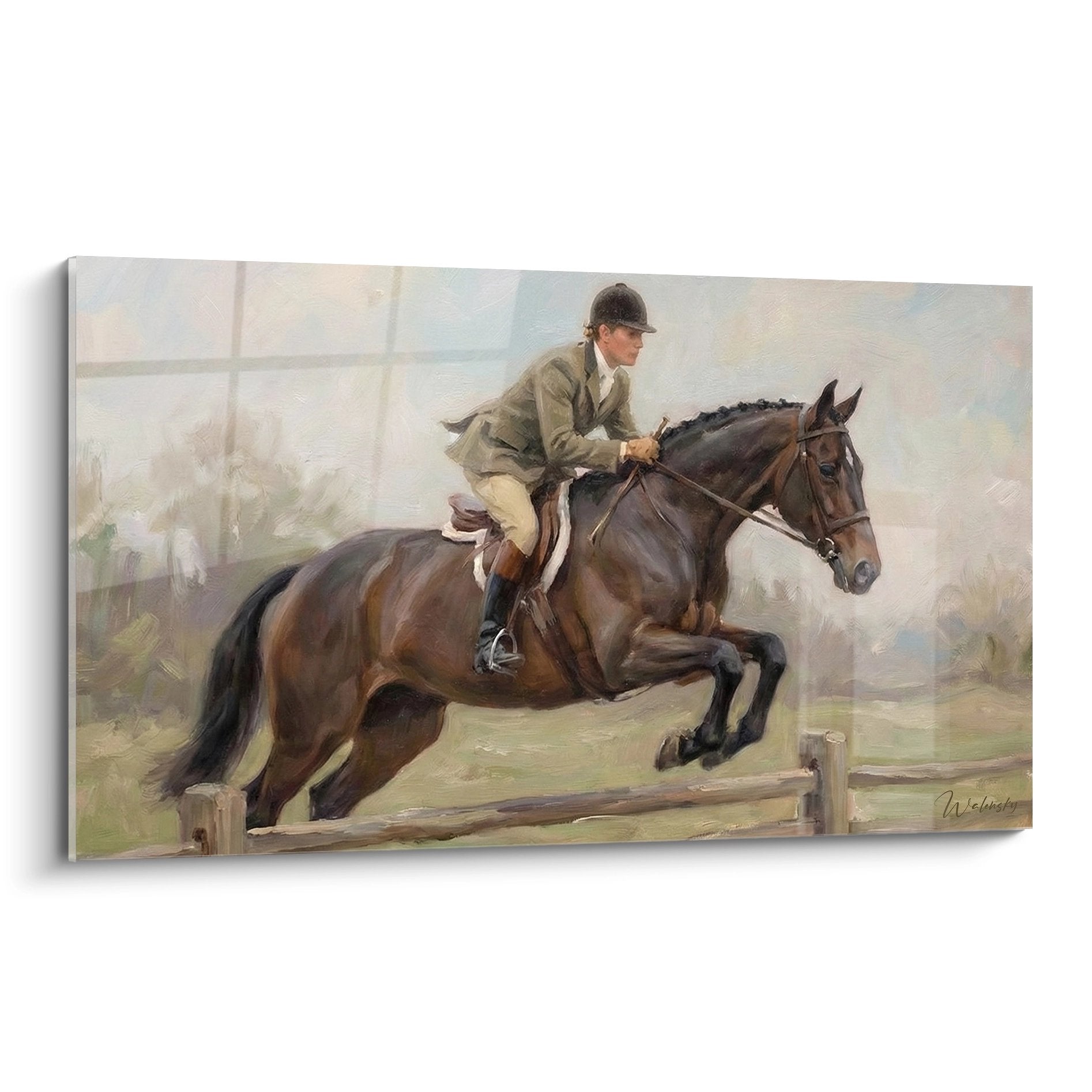
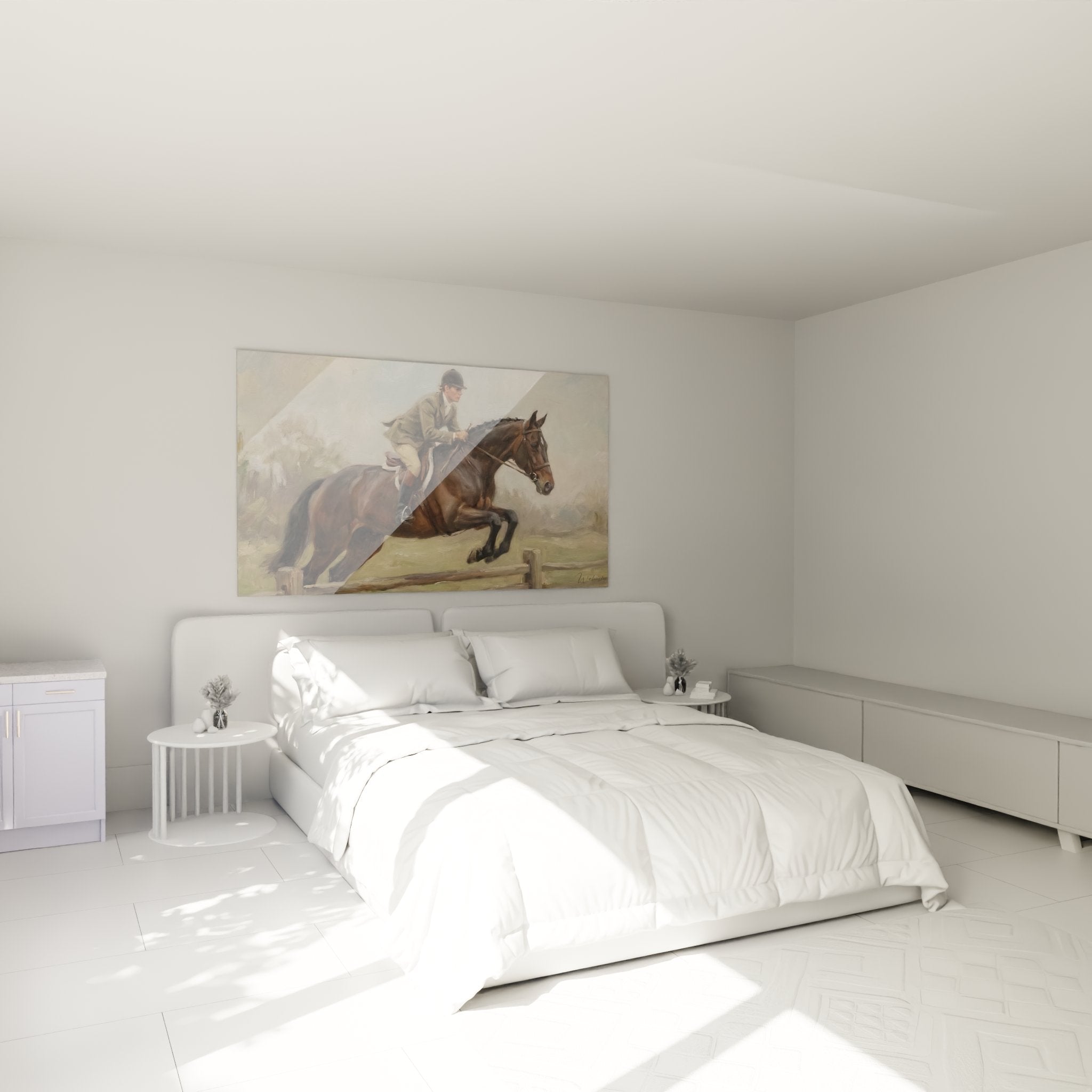
Equestrian paintings representing specific disciplines respond to a precise search for authenticity among riders. Jumping in large format captures that fraction of a second when the horse suspends its flight over a river or monumental oxer. The imposing dimensions allow for the transposition of the explosive power of the hindquarters during the takeoff, a technical detail that only a jumper will fully appreciate. This specificity radically differentiates these representations from generic equestrian illustrations.
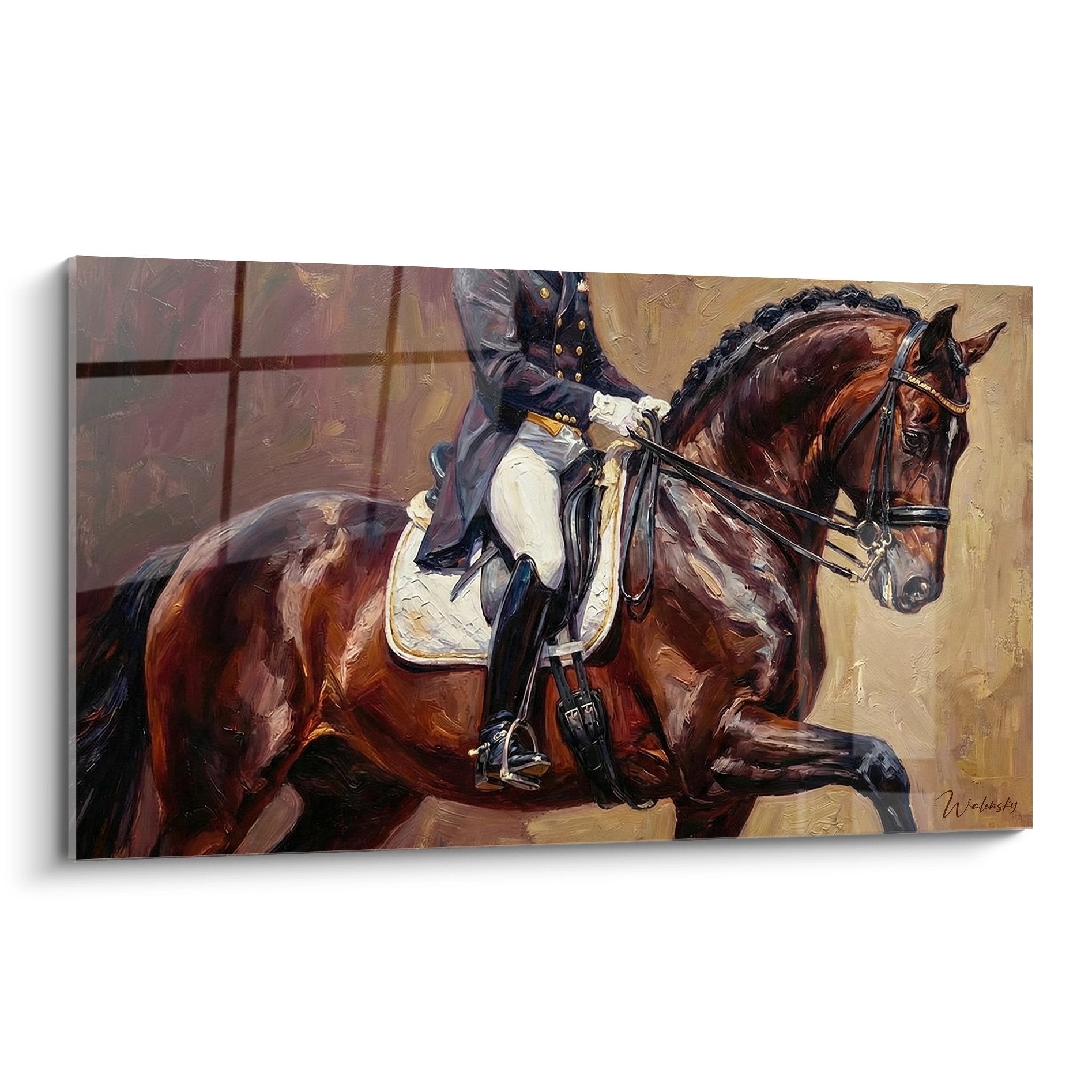
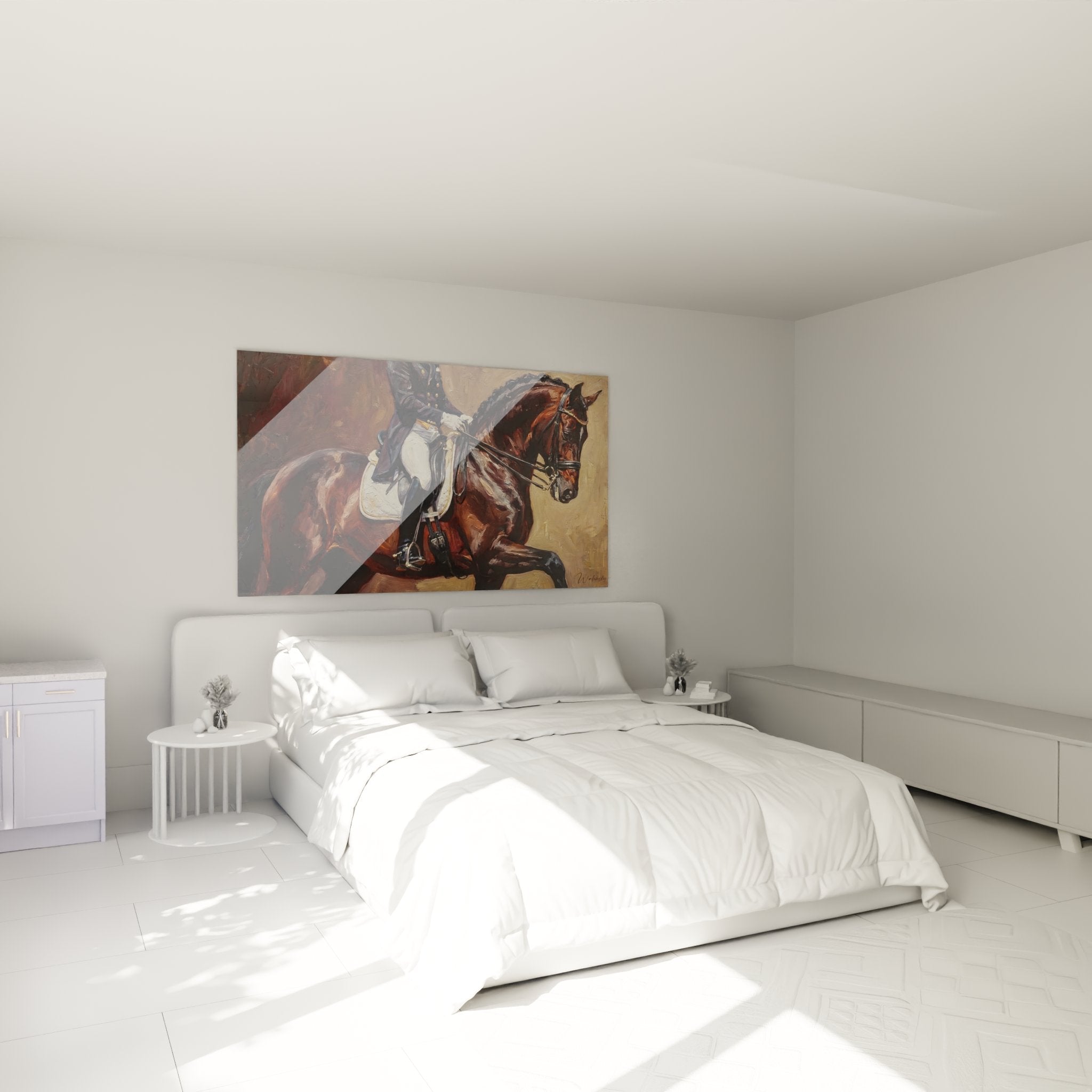
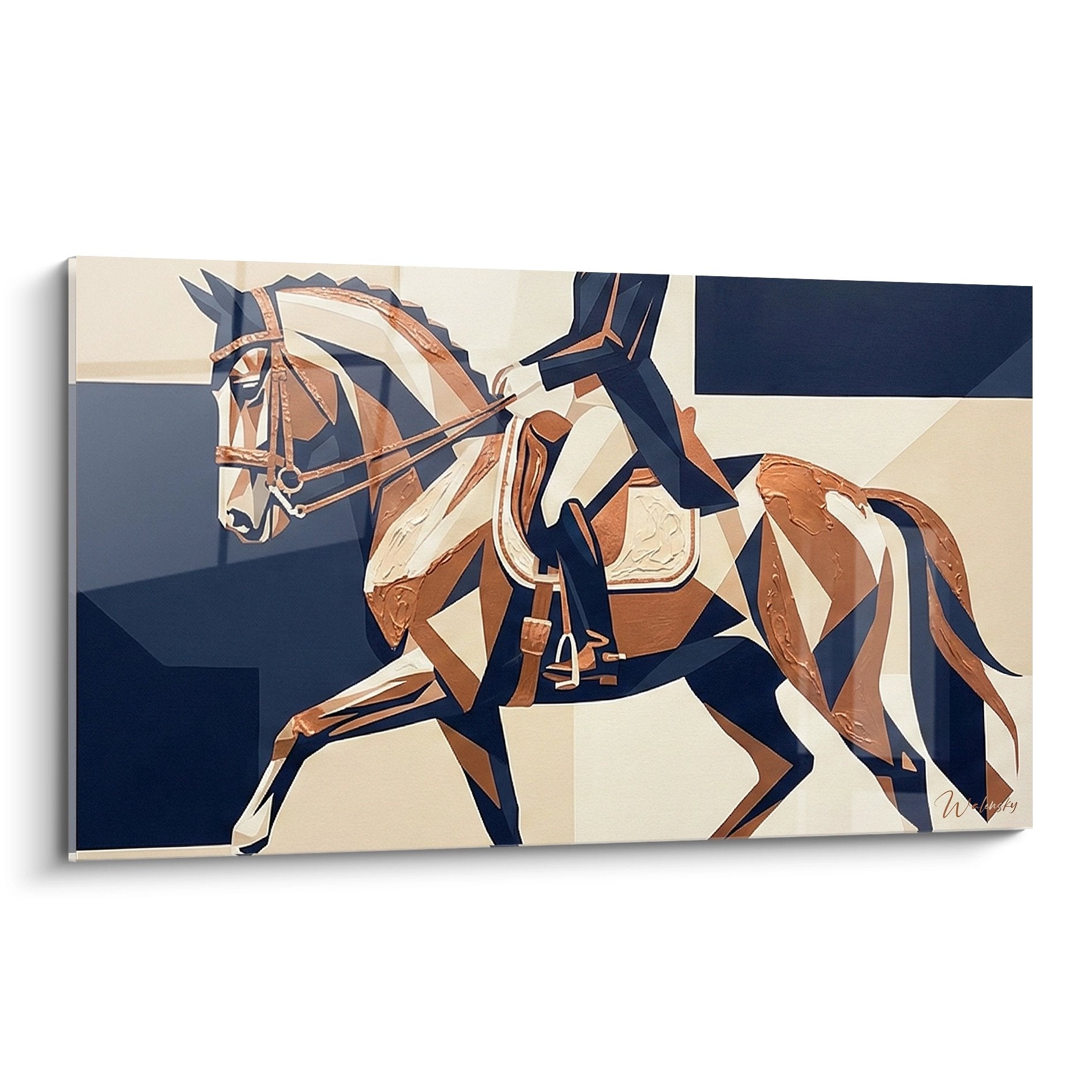
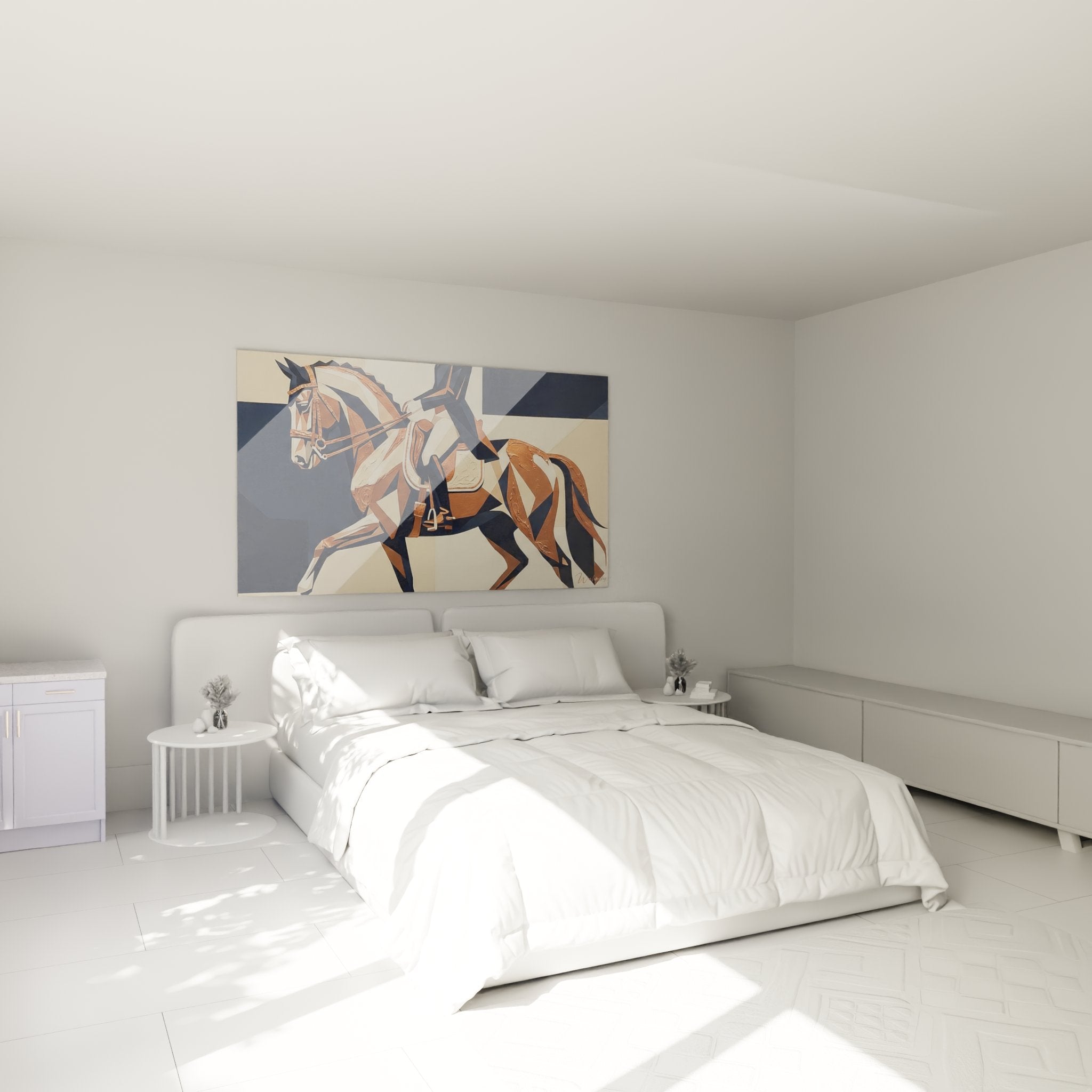
Dressage requires a completely distinct artistic approach in its wall representation. Spectacular extensions during passage, suspended piaffe with elevated forearms, or tight pirouettes require particular framing to express athletic grace. A large-scale dressage equestrian painting installed in a living room or tack room instantly showcases the technical mastery of this Olympic discipline. The lateral camera angle becomes essential to reveal the engagement of the hindquarters under the body mass, a fundamental detail overlooked in conventional representations.
Cross-country imposes unique visual constraints rarely exploited in
sports wall décor. Natural obstacles in varied terrain, water crossings with spectacular splashes, or imposing brush jumps in pastoral settings create unparalleled dynamism. XXL formats reveal splashes, rein tension, and the concentrated expression of the partnership, elements impossible to perceive in reduced dimensions.
How do international competition representations enrich your space?
Equestrian competition paintings capture the intensity of major equestrian world events. Reproducing the atmosphere of a Nations Cup course or a Grand Prix performance transforms a professional office or reception area into a true sanctuary dedicated to equestrian excellence. International arenas with their sponsor logos, technical colored obstacles, and spectators in grandstands create a visual context impossible to confuse with other sporting environments.
The representation of specific gaits constitutes a marker of expertise. A racing gallop with maximum limb extension in flight phase differs radically from a collected dressage gallop where amplitude is controlled. These biomechanical nuances, visible only on generous formats, speak directly to connoisseurs. A perfectly executed gallop equestrian painting in an equestrian club or equine veterinary clinic demonstrates deep understanding of equine locomotion.
What impact do specialized equipment have on visual composition?
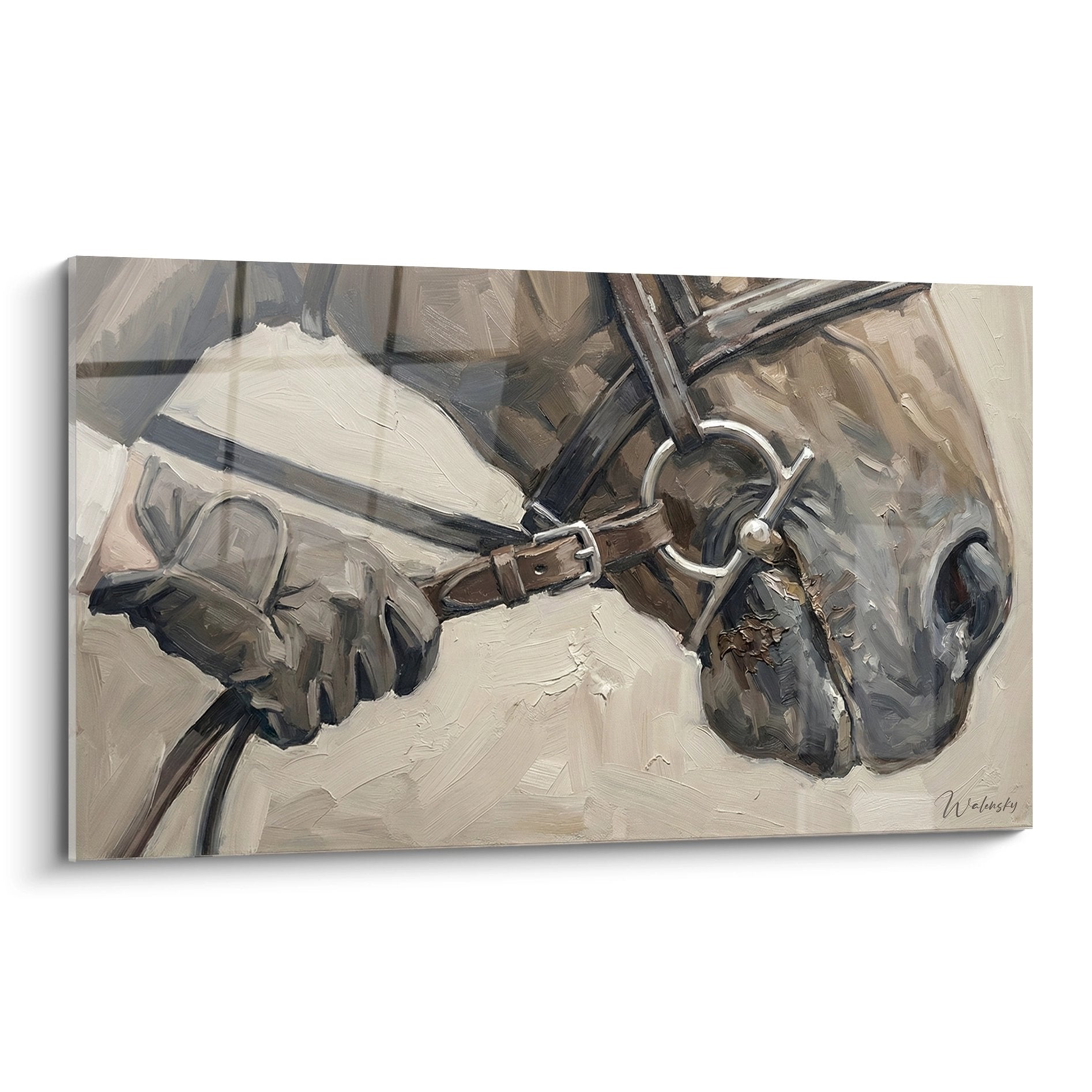
Equestrian paintings incorporating specific technical equipment add another dimension. Dressage bridles with their combined noseband, swan-neck spurs, or colorful cross-country protective gear tell a story that only the initiate completely deciphers. These distinctive elements ground the representation in authentic equestrian reality, far from generalist clichés.
The environment of professional equestrian facilities offers unexploited decorative possibilities. Olympic arenas with their immaculate white sand, covered riding halls with their imposing metal structures, or warm-up paddocks before competition constitute specific backdrops. A large-scale equestrian stable painting in an entry hall or waiting area of an equestrian center immediately creates professional identification.
Moments of complicity between rider and mount during warm-up, saddle girth checks before entering the arena, or congratulations after a clear round represent emotionally strong instants. These daily equestrian life scenes, captured in large format, resonate particularly with regular practitioners. They evoke personal memories and create an emotional connection impossible to reproduce with generic subjects.
Which technical criteria should be prioritized for optimal rendering?
Equestrian paintings require particular attention to contrast to reveal dark coats. A black Friesian on a dark background or a dark chestnut in a dense forest demands mastery of nuances that only imposing formats can faithfully restore. Reflections in the horse's eye, variations in coat brilliance according to light incidence, or muscular detail during effort become determining quality elements.
Depth of field plays a crucial role in visual hierarchy. Isolating the rider-mount partnership in sharp focus while suggesting a slightly blurred competition environment creates narrative focus. This photographic technique, valued by large wall dimensions, naturally guides the eye toward the main action. Obstacle equestrian paintings particularly benefit from this effect to dramatize the decisive moment of jumping.
How can you integrate equestrian dress codes into wall aesthetics?
Competition attire constitutes powerful visual markers. The black tailcoat of dressage with its top hat, the traditional red jacket of fox hunting, or the bright colors of cross-country helmets instantly identify the discipline. A dressage equestrian painting showing a rider in formal dress installed in a medical office or architect's studio brings an aristocratic touch of elegance difficult to equal.
Bib numbers, sponsors on saddle pads, or national flags during ceremonial events add a competitive dimension. These contextual details transform a simple equestrian representation into testimony of a structured and demanding sporting universe. Generous formats preserve the legibility of these secondary elements that considerably enrich visual narration.
Exceptional Horse Breeds: Equestrian Art at the Service of Contemporary Décor
Why do specific breeds transform decorative impact?
Equestrian paintings showcasing emblematic breeds respond to a quest for precise identification. A Thoroughbred Arabian with its characteristic concave profile and high-set tail creates a totally different aesthetic from a massive Comtois draught horse. Connoisseurs seek this morphological specificity in their wall décor. An equestrian painting featuring a Thoroughbred displayed in a stud or specialized veterinary clinic testifies to immediate sectoral expertise.
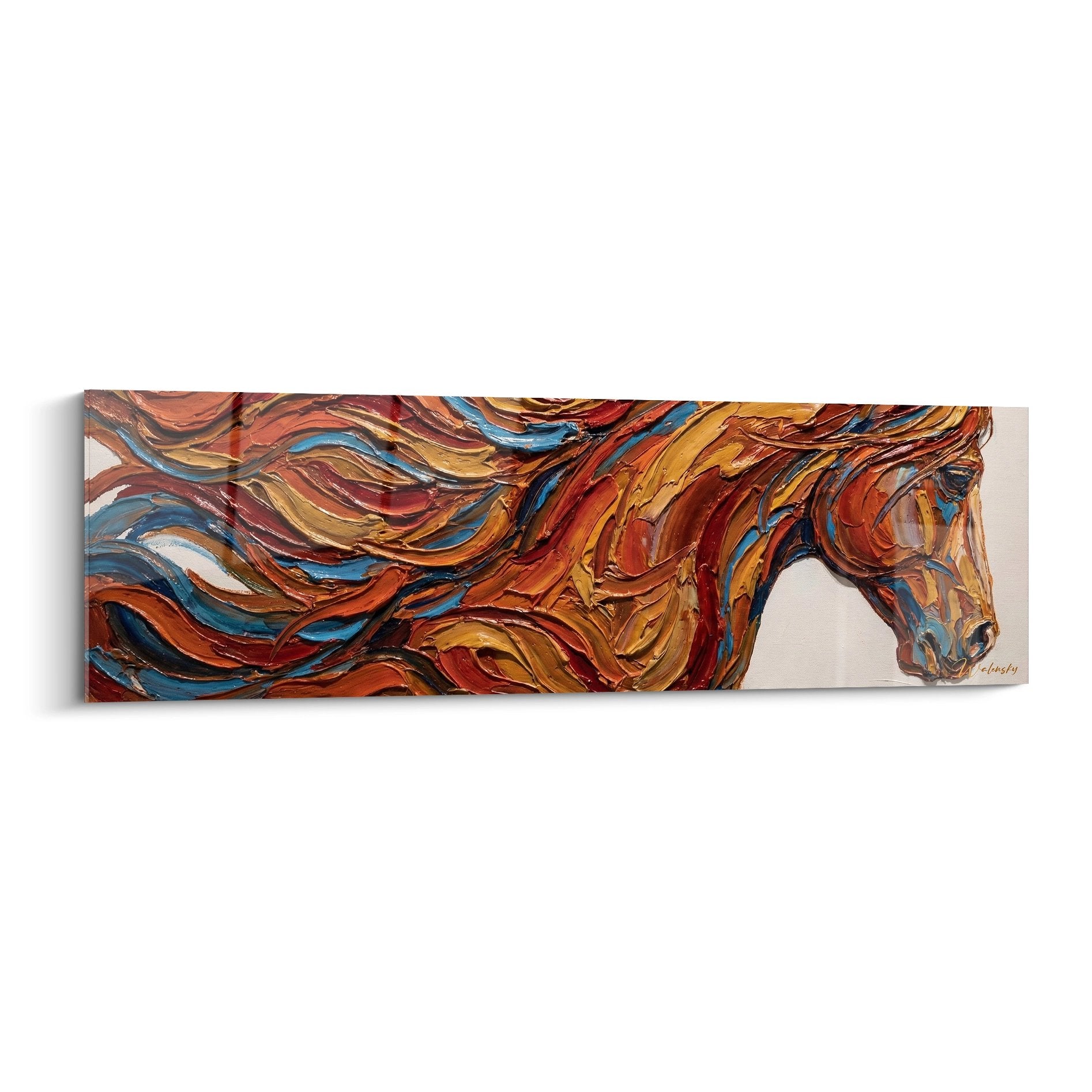
Baroque breeds like the Friesian or Lusitano offer spectacular artistic possibilities in large format. Abundant manes flowing in the wind, the uniformly black coats of the Dutch Friesian, or the naturally elevated gaits of the Portuguese Lusitano generate striking visual dynamism. These racial particularities justify imposing mural compositions where every anatomical detail becomes an aesthetic argument. The impossibility of recycling these representations for other animal contexts guarantees absolute originality.
Sport ponies constitute a specific decorative segment often neglected. Equestrian pony paintings in a teenage rider's bedroom or a pony club differ fundamentally from large horse representations. Compact proportions, particular facial expressions, and child-pony moments of complicity create unique narrative atmosphere. Generous formats allow capturing the emotion of these early equestrian learning experiences without falling into infantilization.
How does equine anatomy influence artistic composition?
The prominent musculature of a Quarter Horse in full reining slide reveals spectacular athletic power. Western equestrian paintings capturing these maximum effort moments require imposing dimensions to restore muscular definition of the hindquarters, hock engagement, or back tension. These anatomical details speak directly to Western discipline practitioners and create radical differentiation from traditional European representations.
Gaits specific to certain breeds completely modify the visual approach. The Icelandic tölt with its four-beat gait without suspension phase, the Colombian paso fino with three rapid beats, or the Missouri fox trotter's fox trot generate movement silhouettes impossible to confuse. A breed-specific equestrian painting in a themed living room or professional exhibition space demonstrates deep knowledge of global equine diversity.
What role do natural environments play in breed valorization?
Draught horses in their traditional agricultural context offer authentic decorative opportunities. An equestrian painting showing Percherons plowing in an autumn field creates nostalgia impossible to reproduce with sporting equestrian subjects. XXL formats reveal complex harnesses, trace chains, and coordinated hitch effort. This theme resonates particularly in rustic interiors, renovated farms, or regional gastronomic restaurants.
Wild or semi-wild breeds like American mustangs or Camargue horses evolving in freedom constitute a powerful emotional register. Equestrian paintings capturing wild horse collective gallops in desert or marshy landscapes convey a sensation of raw freedom. Dust clouds, windswept manes, or splashes in Camargue ponds generate dynamic visuals exploitable only in large format.
How do rare coat colors enrich the decorative palette?
Spotted coats like Appaloosa or Knabstrup bring unique chromatic complexity. An equestrian painting featuring an Appaloosa with leopard spots, white patches on dark croup, or striped legs creates incomparable visual interest. These genetic particularities justify bold mural compositions in contemporary interiors where originality prevails. The impossibility of confusing these representations with other domestic animals guarantees strong identity.
Two-tone manes, extensive leg markings, or irregular blazes constitute visual signatures that enthusiasts seek specifically. An equestrian painting featuring a black and white tobiano pinto in an industrial loft or modern dental office brings striking graphic contrast. Generous formats allow exploring pigmentary details that would become anecdotal in reduced dimensions.
Dilute coats like cremello, perlino, or champagne offer rare pastel tones in the equine universe. These blue-eyed or amber-eyed horses with cream or golden coats generate uncommon chromatic softness exploitable in zen spaces, master bedrooms, or medical waiting areas. A large-format cremello equestrian painting radically transforms a room's luminous ambiance through its unusual light palette.
What are the specificities of performance breed horses in wall art?
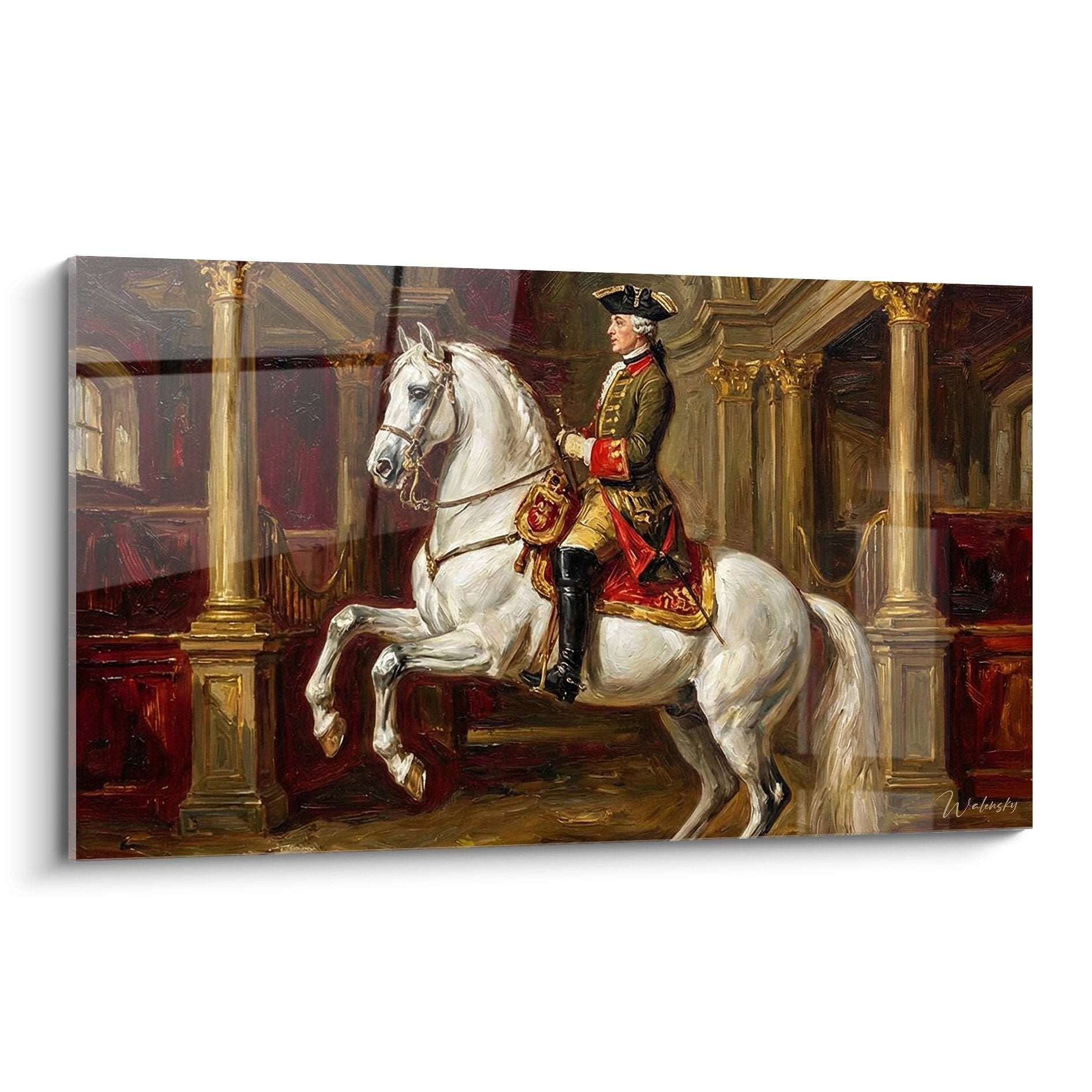
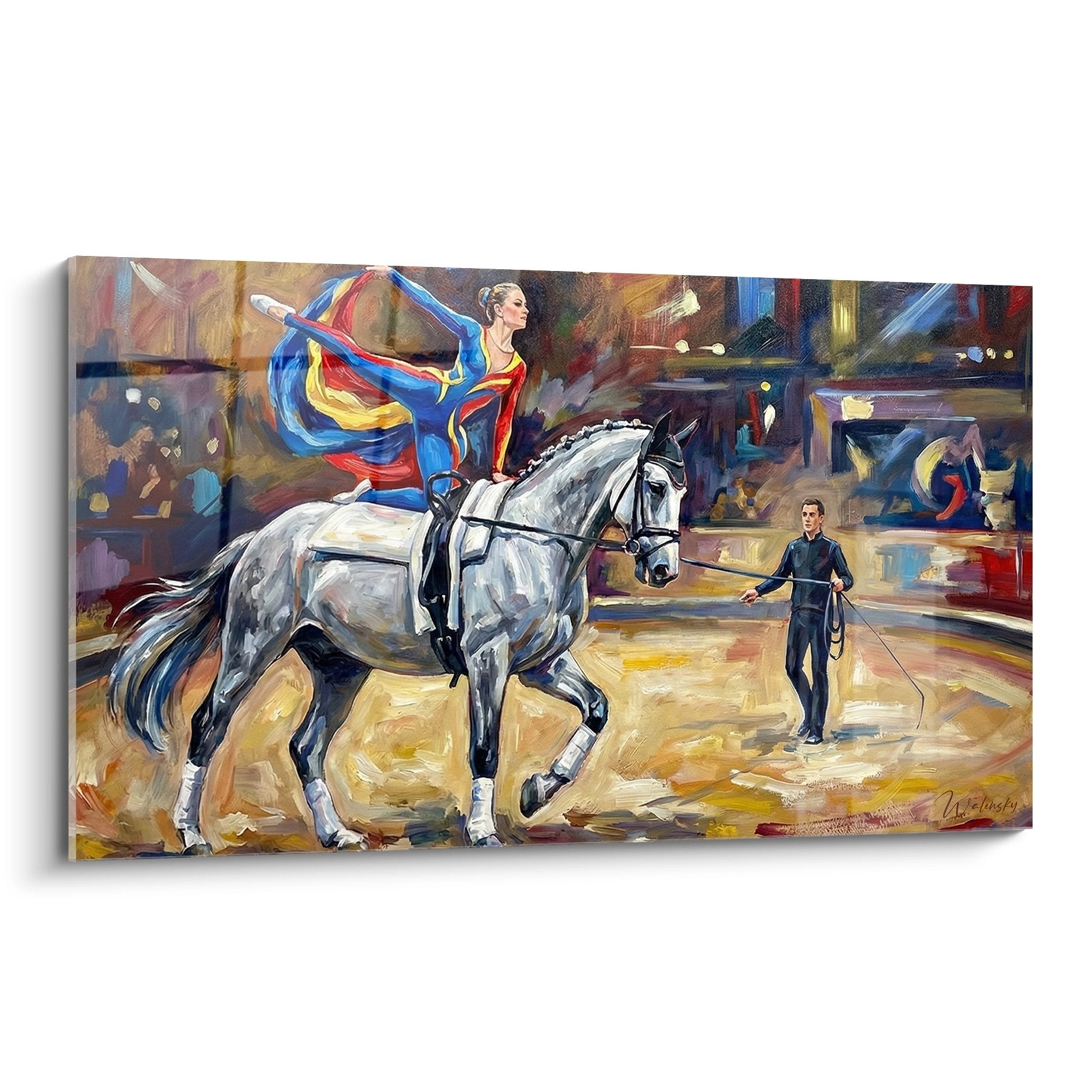
Performance breeds like the Andalusian or Lipizzaner in classical riding offer spectacular postures. Controlled rears, courbettes with bent forearms, or croupades with posterior suspension create suspended instants perfect for dramatic mural compositions. A high school equestrian painting in a theater, circus school, or law office brings cultural and historical dimension referencing aristocratic equestrian traditions.
Eastern breeds used in North African fantasias propose unique collective action scenes. Simulated charges in traditional costumes, synchronized powder shots, or abrupt halts at full gallop generate explosive visual energy. These fantasia equestrian paintings installed in Oriental restaurants, specialized travel agencies, or cultural spaces create total thematic immersion impossible with conventional equestrian subjects.Creating an Equestrian Club Atmosphere: Wall Décor for Dedicated Spaces
How can you transform a professional space into an equestrian sanctuary?
Large-scale equestrian paintings in tack rooms, equestrian clubs, or equine veterinary clinics create immediate thematic coherence. Unlike domestic spaces, these professional locations require authentic technical representations. An equestrian tack room painting showing the methodical organization of saddles, bridles, and protective gear on dedicated racks resonates with riders' daily experience. Imposing formats allow identifying every piece of equipment, creating a mirror effect with the actual environment.
Active stables and barns offer authentic equestrian life scenes rarely exploited. Horses placing their heads over doors, hay racks filled with fragrant hay, or buckets of feed lined up tell the story of daily care. A daily life equestrian stable painting in a meeting room of an equestrian center or a manager's office instantly establishes core business. These specific representations absolutely cannot be recycled for other animal or sporting themes.
What impact do equestrian infrastructures have on visual narration?
Work arenas with their dressage letters, varied obstacle lines, or carefully maintained surfaces constitute the visual DNA of equestrian centers. A large-scale Olympic equestrian arena painting in a club entrance hall or cafeteria creates aspiration for excellence. Marked course tracings, numbered stands, or colored drums immediately evoke the competitive equestrian universe for those in the know.
Covered riding halls with their characteristic metal structures, specific lighting, and spectator tribunes generate particular atmosphere. Covered arena equestrian paintings capturing the hushed ambiance of winter sessions, reflections on watered sand, or obstacle shadows create recognizable intimacy. These representations installed in multipurpose halls or relaxation spaces evoke practice continuity regardless of weather conditions.
How do equestrian rituals enrich professional décor?
Grooming moments constitute instants of complicity rarely valued in large format. An equestrian grooming painting showing meticulous brushing, energetic currying, or hoof cleaning captures the essence of rider-horse bonding. These technical gestures repeated daily resonate emotionally with all practitioners. Installed in a tack room or educational space, this type of representation reminds of the importance of basic care often neglected in favor of performance.
Farrier sessions with the blacksmith working heated iron, adjusting horseshoes, or trimming hooves offer unique artisanal perspective. An equestrian farrier painting in an equine clinic, professional training center, or blacksmith's forge celebrates this ancestral trade inseparable from equitation. Sparks, specialized tools, and concentrated gesture technique create spectacular visual dynamism in large format.
What place for conviviality moments in equestrian imagery?
Prize ceremonies on competition podiums, presentation ceremonies before competition, or victory honor laps constitute emotionally strong moments. Equestrian podium paintings with trophies, medals, and satisfied smiles capture months of training fulfillment. These representations in club leadership offices, trophy rooms, or VIP spaces motivate riders and valorize sporting success.
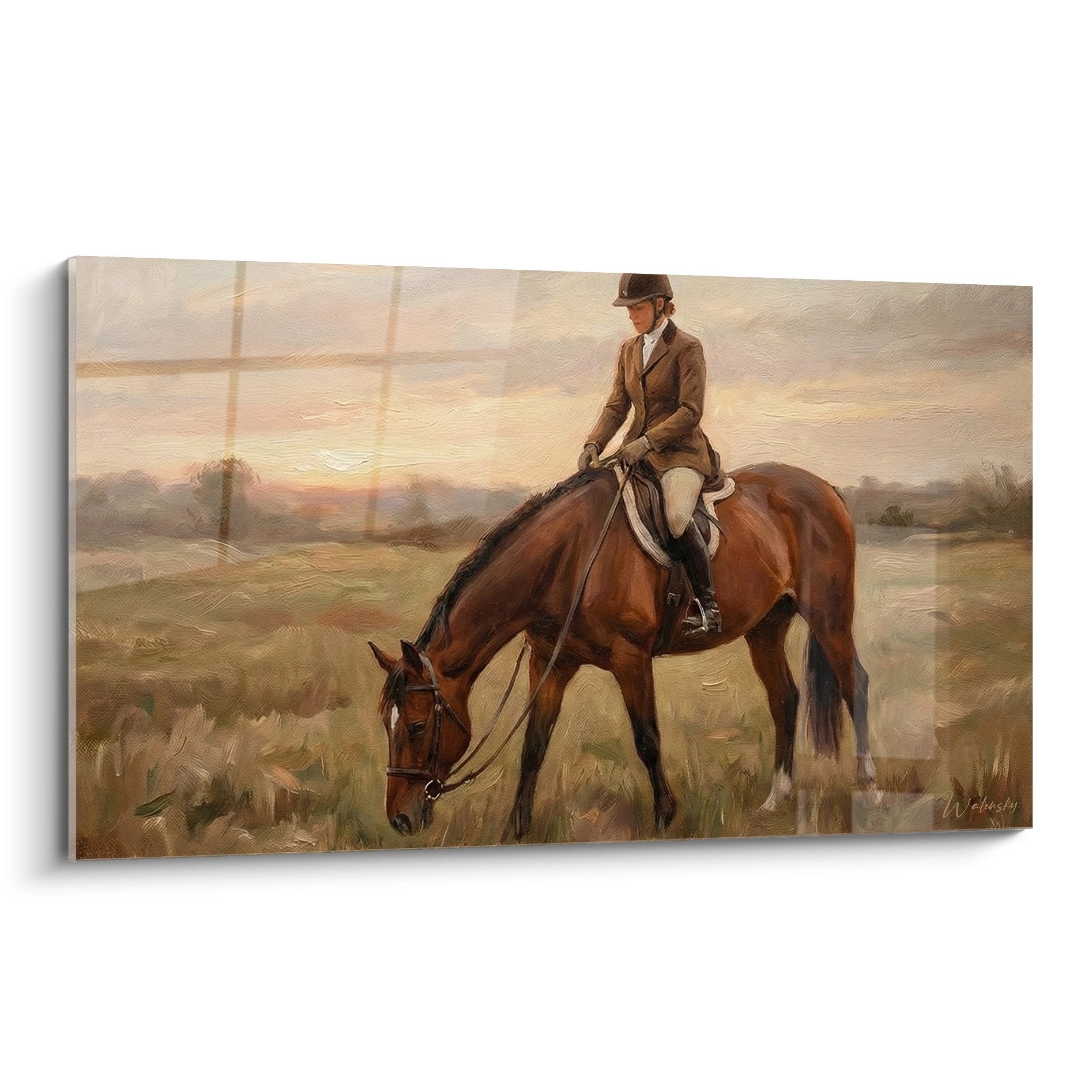
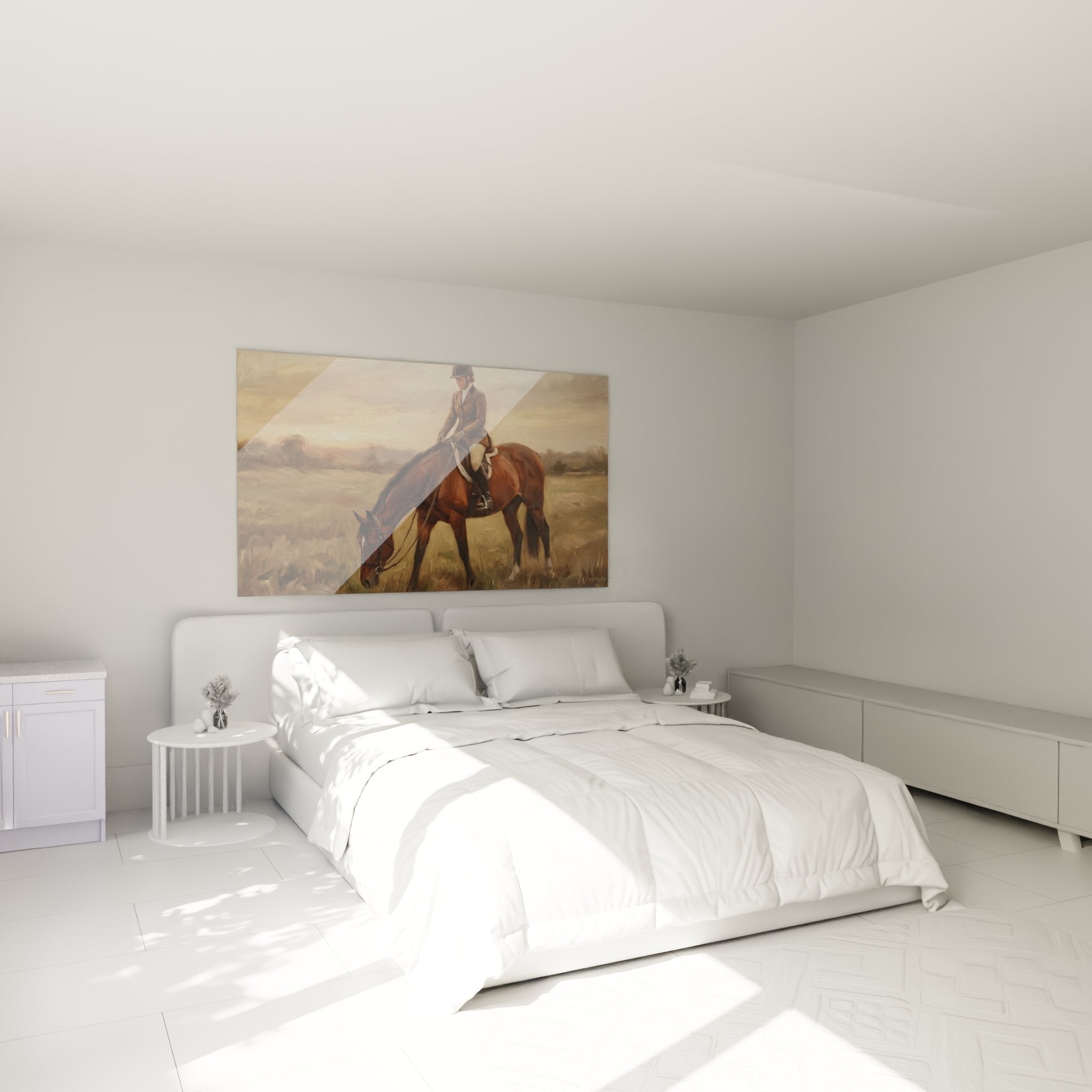
Group rides in outdoor settings with riders on forest paths, coastal routes, or mountain landscapes offer complementary leisure dimension. An equestrian trail riding painting in an equestrian tourism agency, rural vacation rental, or regional tourism office evokes accessibility and discovery pleasure. Muted forest light, winding trail perspectives, or summit panoramas create contemplative ambiances impossible with competition subjects.
How do rider generations influence decorative choices?
Children learning to ride on Shetland ponies, teenagers refining technique in clubs, and adults in amateur riding constitute distinct audiences. An equestrian baby pony painting in a riding school, equestrian daycare, or pediatric office captures beginner innocence. Oversized colored helmets, adapted safety stirrups, and concentrated young rider expressions create specific endearing atmosphere.
Senior riders practicing recreational or therapeutic equitation represent a rarely illustrated segment. Equestrian equine therapy paintings showing adapted sessions, secured groundwork approaches, or equine mediation exercises naturally find their place in health facilities, rehabilitation centers, or specialized structures. These representations valorize therapeutic benefits of equine contact beyond purely sporting dimension.
Which equestrian paintings work best for equestrian center waiting areas?
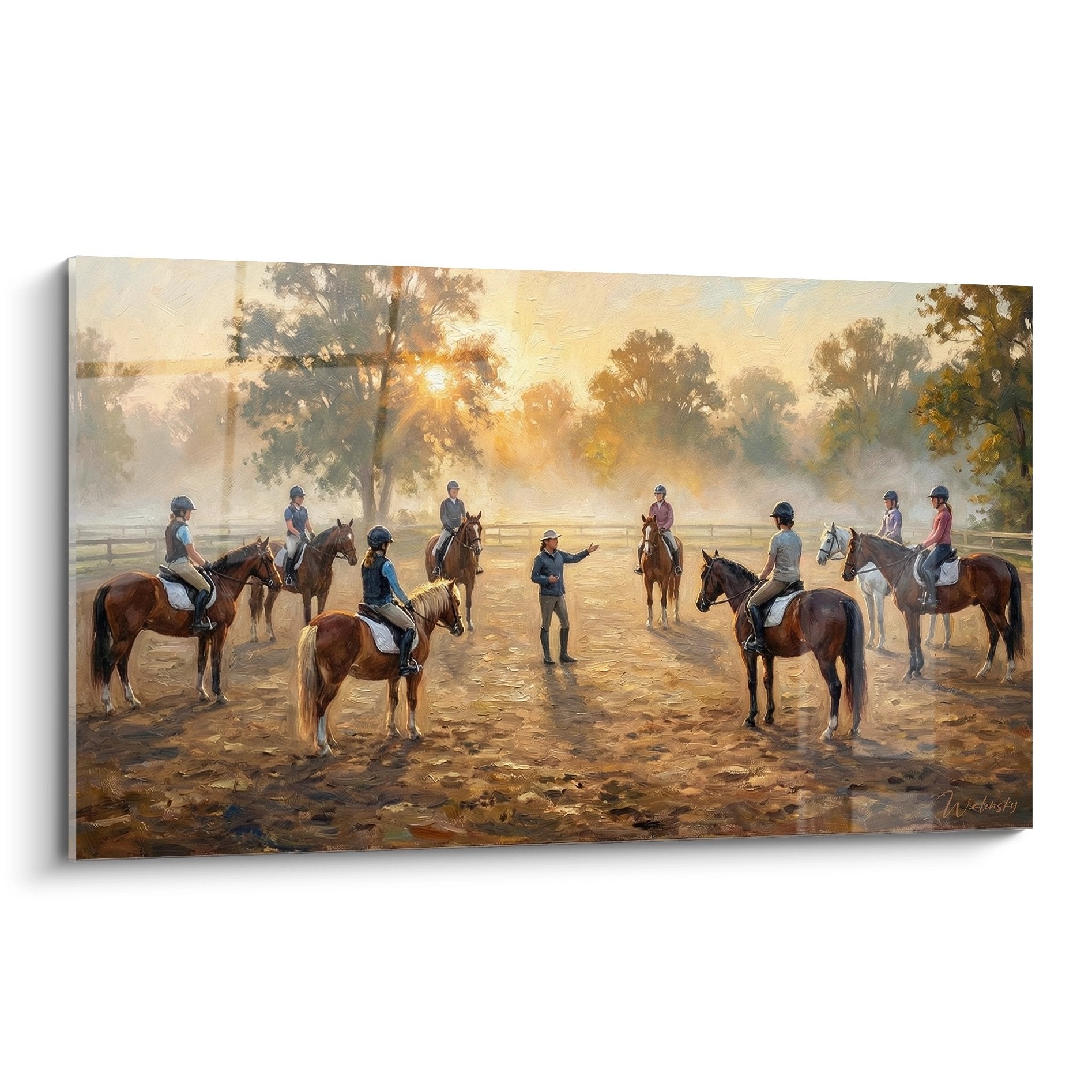
Waiting spaces require soothing visuals showing activity diversity. Prioritize equestrian paintings illustrating different disciplines, age groups, and practice levels so every visitor identifies themselves. XXL formats create immediate immersion in club universe.
How can you choose an equestrian painting to valorize a private boarding stable?
Private boarding stables require high-end representations valorizing investment and passion. Choose equestrian paintings showing premium facilities, sport horses in full competitive action, or exclusive complicity moments. Large dimensions affirm facility standing.
Which equestrian painting style should you prioritize in an equine veterinary clinic?
An equine veterinary clinic benefits from technical representations showing equine anatomy, care gestures, or specialized medical facilities. Large-format veterinary equestrian paintings reassure owners by displaying professional expertise while creating a dedicated atmosphere.
Do equestrian paintings suit non-equestrian spaces?
Absolutely. Gourmet restaurants, charming country hotels, law offices, or medical waiting areas frequently use large-scale equestrian paintings to evoke elegance, tradition, and refinement. The equestrian universe transcends sporting practice to become an appreciated cultural marker.