


Princess Wall Art for Children
Dive into a true fairy tale with our princess wall art for children! Between majestic castles, sparkling gowns and enchanted settings, these artworks create a soft and dreamy atmosphere. A princess wall art transports your child into a royal world, where magic and elegance become part of their everyday. Perfect for refined and inspiring decoration.
 Princess Wall Art No. 2 - Kids Edition273,90 €
 Princess Wall Art N°1 - Kids Edition273,90 €
In the same family
Also explore the theme Children
-
 View all54
artworks
View all54
artworks
-
 Angels for Children3
artworks
Angels for Children3
artworks
-
 Knights for Children2
artworks
Knights for Children2
artworks
-
 Children's Drawings2
artworks
Children's Drawings2
artworks
-
 Children's Dinosaurs3
artworks
Children's Dinosaurs3
artworks
-
 Kids Miscellaneous26
artworks
Kids Miscellaneous26
artworks
-
 Dragons for children2
artworks
Dragons for children2
artworks
-
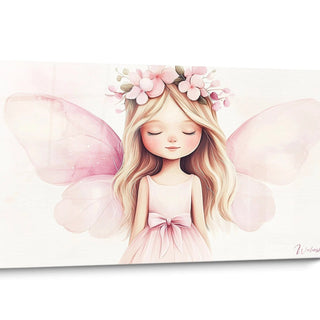 Magical for children3
artworks
Magical for children3
artworks
-
 Unicorns for Children3
artworks
Unicorns for Children3
artworks
-
 Pirates for Kids2
artworks
Pirates for Kids2
artworks
-
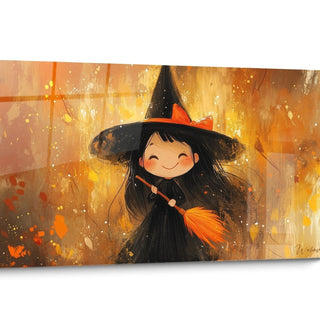 Witches for Kids2
artworks
Witches for Kids2
artworks
-
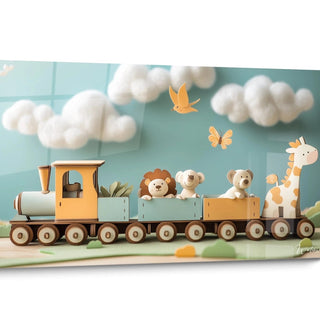 Trains for children2
artworks
Trains for children2
artworks
-
 Vampires for Kids2
artworks
Vampires for Kids2
artworks


All about Princess Wall Art for Children
- Princess Wall Art for Children Presentation
- Magical Princess Wall Art for Children
- Decorative Princess Wall Art for Children
- Educational Princess Wall Art for Children
Princess wall art for children represents far more than simple wall decoration. It is a transformative element that invites daydreaming, stimulates imagination, and creates an enchanted universe in your child's bedroom. Perfectly suited to spaces dedicated to little girls who dream of magical kingdoms, this type of wall art stands out for its unique characteristics and enchanting visual impact.
Princess wall art is distinguished by its soft and shimmering colors - primarily pastel tones, pinks, purples, and golds - that instantly capture attention while creating a soothing atmosphere conducive to sleep and enchanted dreams. Royal motifs, sparkling crowns, and majestic castles immediately transport viewers to a world of fairy tales, unlike wall art with sports or animal themes.
These large-format wall pieces constitute the ideal focal point for structuring the overall decoration of a child's bedroom. They naturally inspire the choice of complementary accessories such as cushions, curtains, or rugs that will reinforce the princely universe created.
For parents, acquiring a princess wall art for children also represents an investment in creative and emotional development. These visual representations nourish imagination, encourage role-playing, and contribute to the identity formation of young children.
Contemporary princess wall art moves away from classic stereotypes to present modern, independent, and adventurous princesses, thereby conveying positive values of autonomy and self-confidence. They constitute masterpieces that visually structure the space while inspiring wonderful stories that children can invent daily.
Princess Wall Art for Children: Creator of Enchanted Atmosphere
Integrating princess wall art for children instantly transforms a bedroom's atmosphere by conferring a magical dimension that only this specific theme can provide. Unlike generic illustrations, these immersive wall pieces create a genuine portal to an enchanted kingdom directly on your child's wall.
How does princess wall art influence the luminous atmosphere of a bedroom?
The distinctive feature of princess wall art lies in its unique ability to capture and reflect light thanks to the shimmering elements and iridescent colors that compose it. The golden, silver, and pearlescent details characteristic of these pieces interact with the natural or artificial lighting of the room, projecting delicate changing reflections on adjacent walls depending on the time of day.
This reflective property creates a soft illumination phenomenon particularly soothing for young children at bedtime, transforming the ordinary environment into an enchanted space. The specific color palettes of princess universes - dominated by soft pinks, lilac purples, and sky blues - are scientifically recognized for their relaxing effects on children's nervous systems.
The transformative effect on bedtime rituals
Princess wall art for children quickly becomes the central element of evening rituals. Its imposing yet reassuring presence serves as the ideal visual support for stories told before sleep. Parents regularly report that these wall pieces significantly facilitate the transition to bedtime, with children naturally drawn to this soothing universe.
- Creates a calming focal point that diverts attention from screens
- Serves as a backdrop for personalized stories before sleep
- Facilitates falling asleep through the serene atmosphere it generates
What are the unique interactions between the child and their princess wall art?
Unlike ordinary wall decorations, princess wall art for children quickly becomes an imaginary companion. Young children develop a particular relationship with these royal representations, often attributing personalities and stories to them that they enrich day after day.
This unique interaction fosters the development of narrative language, with children spontaneously beginning to dialogue with the depicted characters. Parents frequently report being surprised to catch their children in full conversation with "their princess," a sign of deep emotional attachment to this benevolent presence watching over their sleep.
The seasonal evolution of visual perception
A little-known but fascinating aspect of large-format princess wall art concerns its ability to appear to transform according to seasons and light intensity. In winter, the rosy and violet tones appear more intense and enveloping, creating a comforting visual cocoon. In summer, the same colors seem to brighten and shimmer more, reflecting external luminosity.
This subtle but perceptible transformation maintains the child's visual interest over time, unlike static decorations that eventually blend into the décor. Investment in quality princess wall art thus guarantees lasting fascination, harmoniously accompanying the evolution of the child's tastes for several years.
Princess Wall Art for Children: Architectural Element of the Bedroom
Princess wall art for children transcends its primary decorative function to become a genuine architectural element structuring the bedroom space. Its imposing presence redefines the perceived proportions of the room, creating an illusion of expanded space particularly valuable in bedrooms with modest dimensions.
How does princess wall art modify spatial perception?
Large-format princess wall art possesses the unique characteristic of creating a sensation of openness and depth. Its typical composition, often organized around distant castles or fairy-tale landscapes extending to the horizon, functions as a dimensional window that visually pushes back the physical limits of the bedroom.
This visual extension property proves particularly valuable in contemporary urban apartments where spaces dedicated to children may be constrained. Parents strategically choose these wall pieces for their perceived enlargement effects, transforming a standard bedroom into an apparently boundless enchanted kingdom.
- Creates visual depth that pushes back perceived walls
- Adds vertical dimension through ascending elements (towers, castles)
- Generates a sensation of expanded space through distant perspectives
Strategic arrangement with princely furniture
Princess wall art for children functions as an anchor point around which the rest of the furniture naturally organizes itself. Its position defines the functional zones of the bedroom, intuitively creating spaces dedicated to sleep, play, and relaxation.
Interior design specialists recommend positioning these large-format wall pieces facing the bedroom entrance to maximize their visual impact from the first glance. This strategic orientation transforms the experience of entering the room into a genuine transition to a fairy-tale world, clearly marking the passage between common family space and the child's personal kingdom.
The unique resistance to daily object projections
A practical yet rarely mentioned aspect of princess wall art concerns its exceptional robustness against childish manipulation. These wall pieces, specifically designed for active children's bedrooms, present superior resistance to light impacts such as accidental throws of stuffed animals or toys.
This particular durability, combined with its aesthetic qualities, explains why it often constitutes the central decorative element that will survive multiple bedroom rearrangements over the years. Its friction-resistant surface also allows simplified maintenance, a quality appreciated in a child environment.
What unique thermal effects are associated with princess wall art?
A little-known but significant characteristic concerns the thermal properties of large-format princess wall art. Its imposing presence on a wall contributes to a slight regulation of ambient temperature by reducing thermal variations on the wall surface.
This microclimatic stabilization, though subtle, participates in the overall bedroom comfort by attenuating sensations of cold walls in winter. Parents often unconsciously choose to place these wall pieces on exterior walls precisely to benefit from this complementary insulating effect that improves sleep comfort.
Interior architects specializing in children's spaces indeed frequently recommend the installation of large-format princess wall art on north or east-facing walls, naturally cooler, to maximize this thermal benefit and improve the sensation of protective cocoon so important in a child's sleeping environment.
Princess Wall Art for Children: Tool for Cognitive Development
Beyond their obvious aesthetic qualities, princess wall art for children constitutes genuine educational tools whose influence on cognitive development merits particular attention. These sophisticated royal representations specifically stimulate certain essential brain functions during crucial learning phases.
How does princess wall art stimulate the recognition of complex emotions?
Princess wall art stands out for the emotional richness of depicted characters. Unlike simplified illustrations, these works capture nuanced facial expressions - benevolent determination, contemplative reverie, quiet courage - offering young children a genuine visual dictionary of complex human emotions.
This daily exposure to sophisticated emotional representations significantly develops empathetic capacities. Neuroscientists have demonstrated that simple regular observation of varied facial expressions activates mirror neuron circuits responsible for our understanding of others' emotional states.
- Promotes early identification of facial micro-expressions
- Develops emotional vocabulary through daily visual association
- Reinforces neural circuits dedicated to emotional intelligence
The specific impact on narrative structuring
Princess wall art for children functions as a spontaneous story generator. Its intrinsic narrative composition, generally structured around a central character in a detail-rich environment symbolically laden (distant castle, mysterious forest, companion animals), constitutes a permanent invitation to narrative creation.
Speech therapists and language development specialists recognize the importance of these complex visual supports in acquiring fundamental narrative structures. Children exposed daily to these wall pieces naturally develop an intuitive understanding of narrative elements: main character, meaningful environment, suggested narrative tension.
Which specific attentional capacities are reinforced?
The detail richness characteristic of princess wall art creates particularly stimulating terrain for selective and sustained attention. Unlike screens that solicit reactive and fragmented attention, these static works encourage methodical and in-depth visual exploration.
This daily attentional exercise reinforces neurological circuits dedicated to voluntary concentration, a fundamental capacity for future academic learning. Parents frequently observe their children minutely examining their princess wall art, regularly discovering new details that had escaped their previous attention.
The unique role in positive identity construction
Contemporary princess wall art conveys positive feminine models combining inner strength and sensitivity. These nuanced representations, moving beyond traditional stereotypes, offer young children identification figures imbued with benevolent determination and autonomy.
Daily exposure to these visual models significantly contributes to the construction of positive self-image in young girls, particularly during the preschool period when initial identity conceptions are formed. The modern princess, represented as an actor in her own destiny rather than a simple decorative figure, naturally inspires confidence and measured ambition.
FAQ: Princess Wall Art for Children
At what age is princess wall art for children most beneficial for development?
The developmental benefits of princess wall art manifest from age 2, when the child begins constructing their imaginary universe, but their cognitive impact reaches its peak between ages 3 and 6, a crucial period for narrative language development and emotional understanding.
How to integrate princess wall art for children in a shared bedroom?
In a shared bedroom, position princess wall art for children in the personal space assigned to the child in question, thereby creating a natural visual boundary. Opt for models with harmonious colors that can complement other themes without creating aesthetic discord.
Can princess wall art for children accompany taste evolution until what age?
Contemporary princess wall art, particularly those presenting sophisticated designs and modern princesses, remain relevant until approximately 9-10 years old on average. Choose models with slightly stylized rather than infantilized representations to maximize their aesthetic durability.
How to effectively maintain princess wall art for children without damaging it?
To preserve the brilliance and quality of your princess wall art for children, use a microfiber duster for regular dusting and avoid prolonged direct exposure to sunlight which could alter its vibrant colors.
L'art qui suscite l'envie
Maison belge d'art mural grand format
14 jourspour changer d'avis*
Protection Walenskyincluse
Fabriquéen Italie
FormatXXL
Kit de fixationtoujours fourni
* Hors tableaux personnalisés et tailles personnalisées


