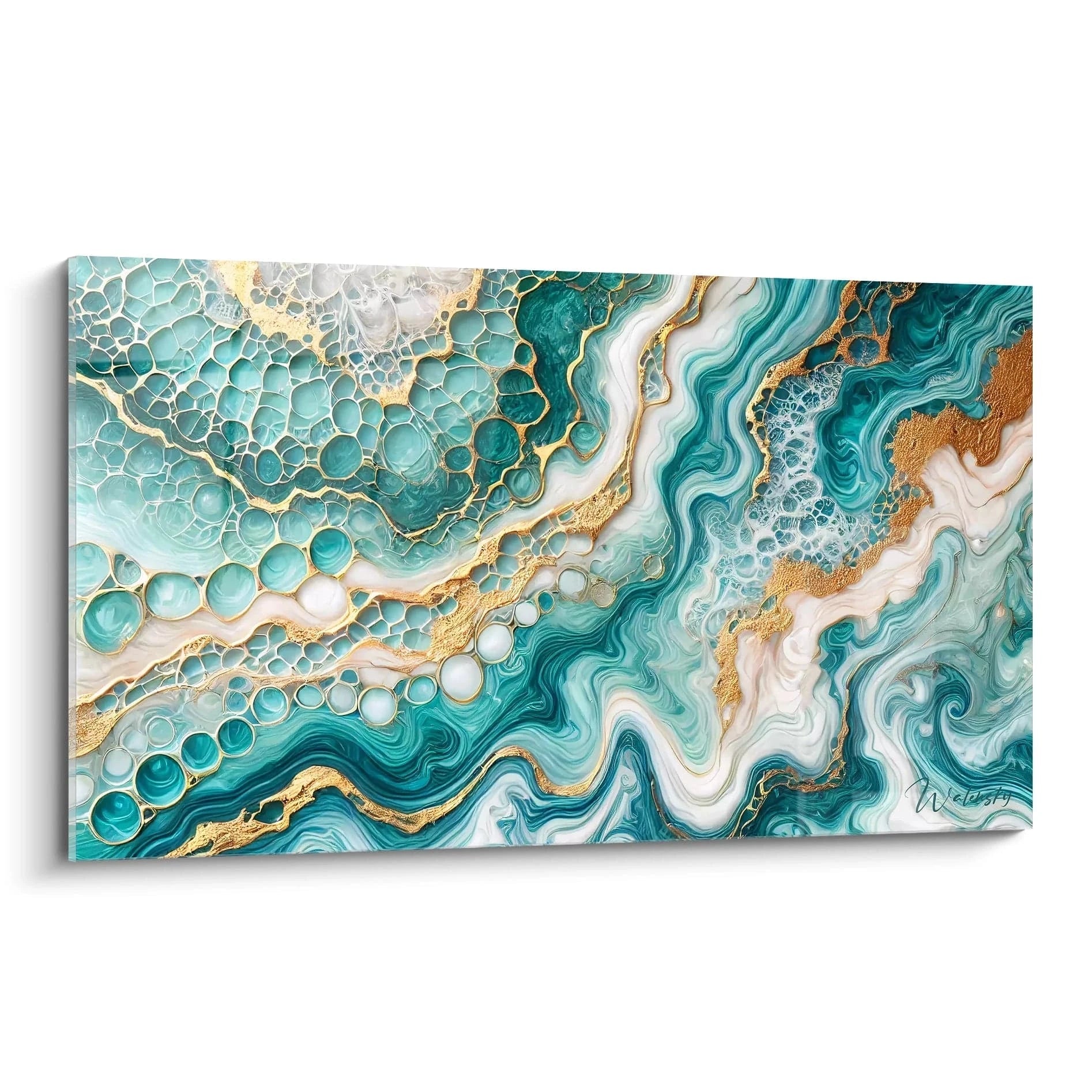
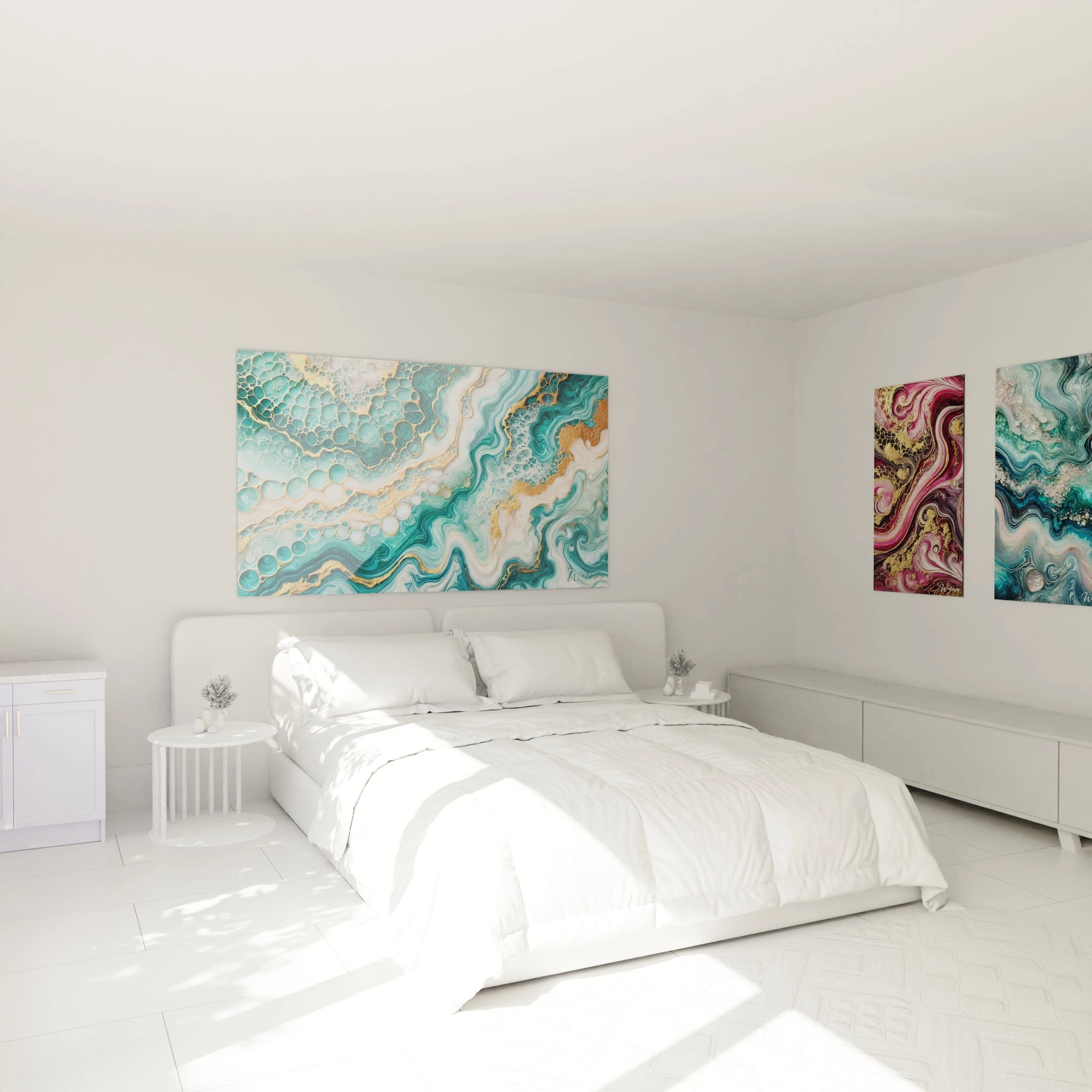
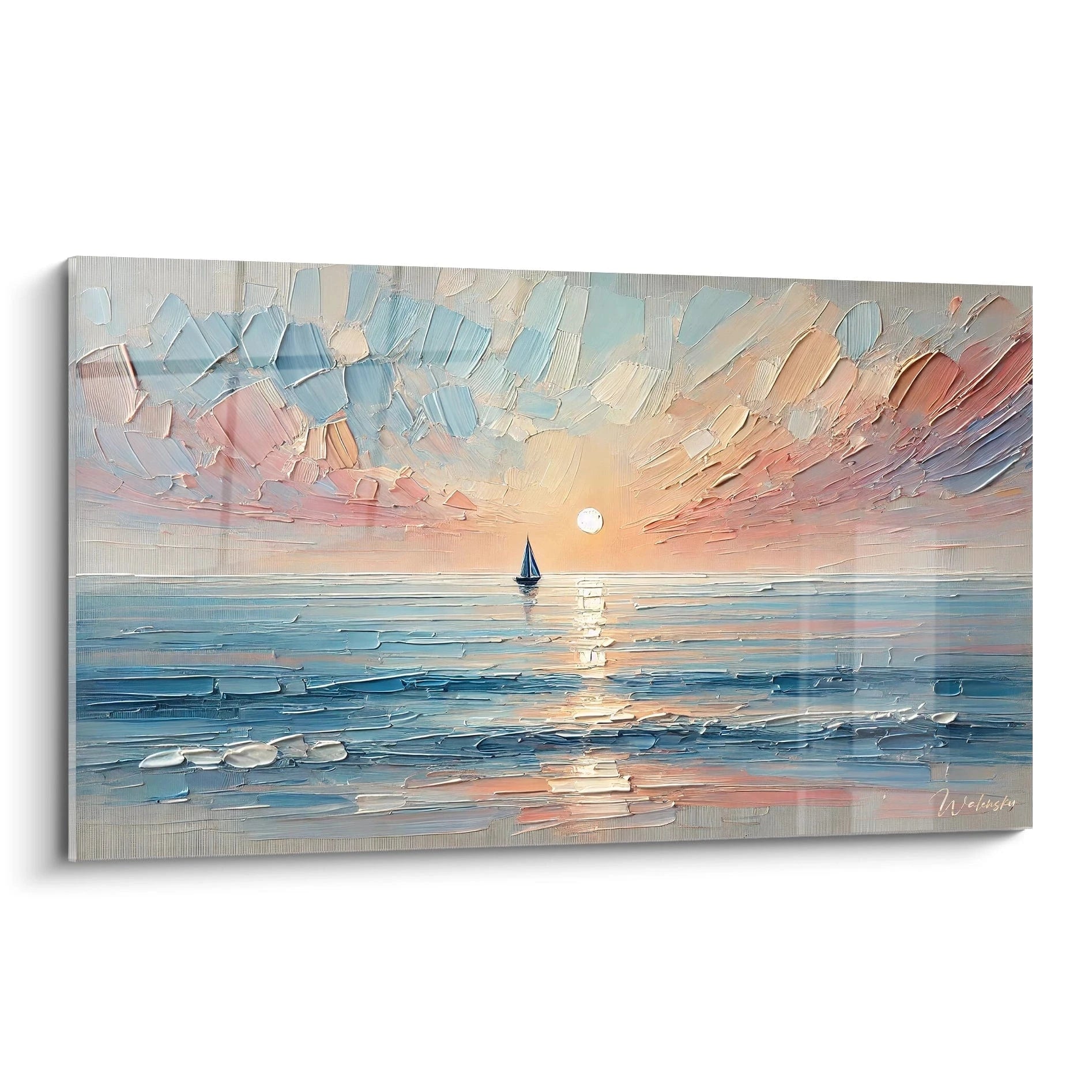
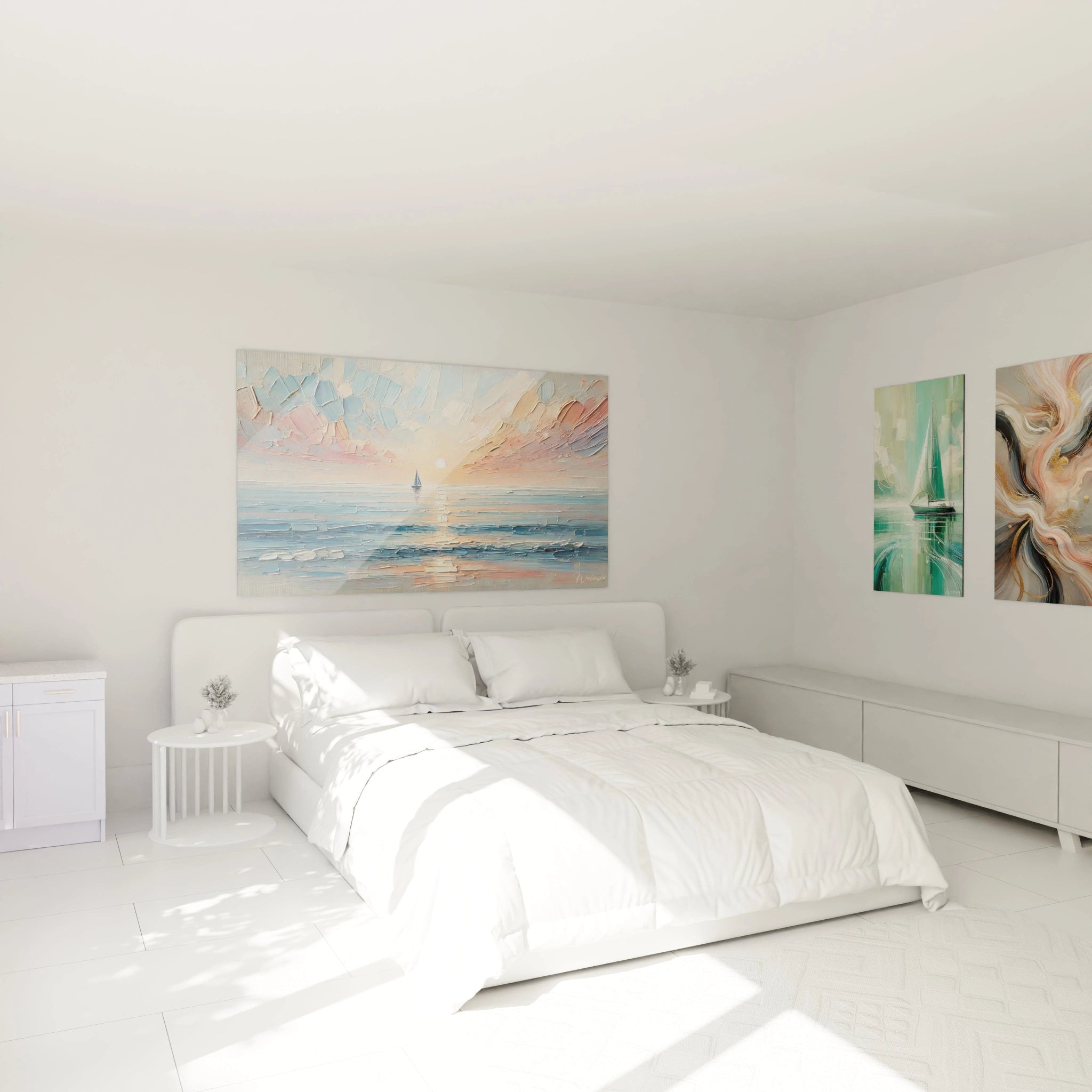
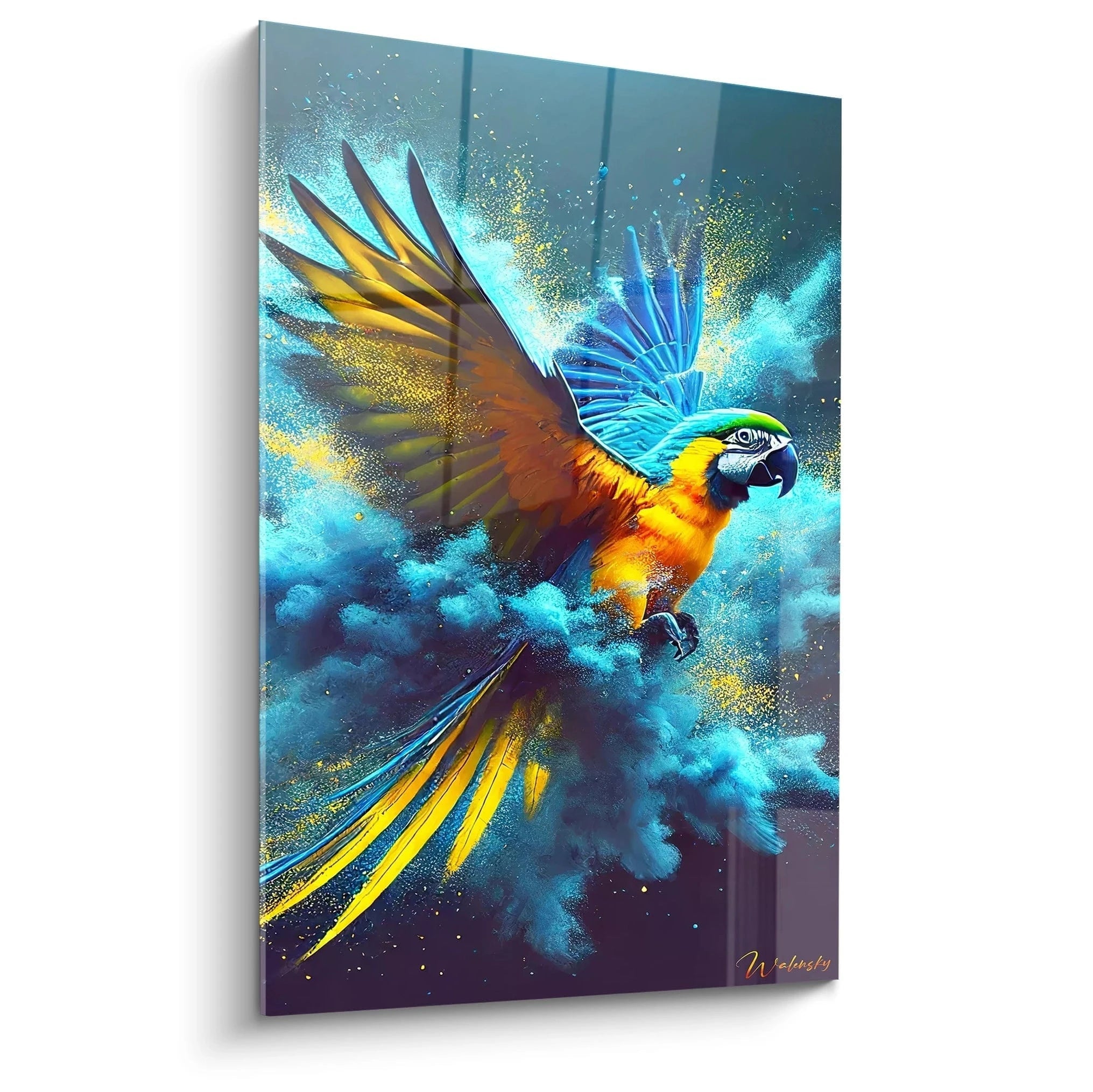
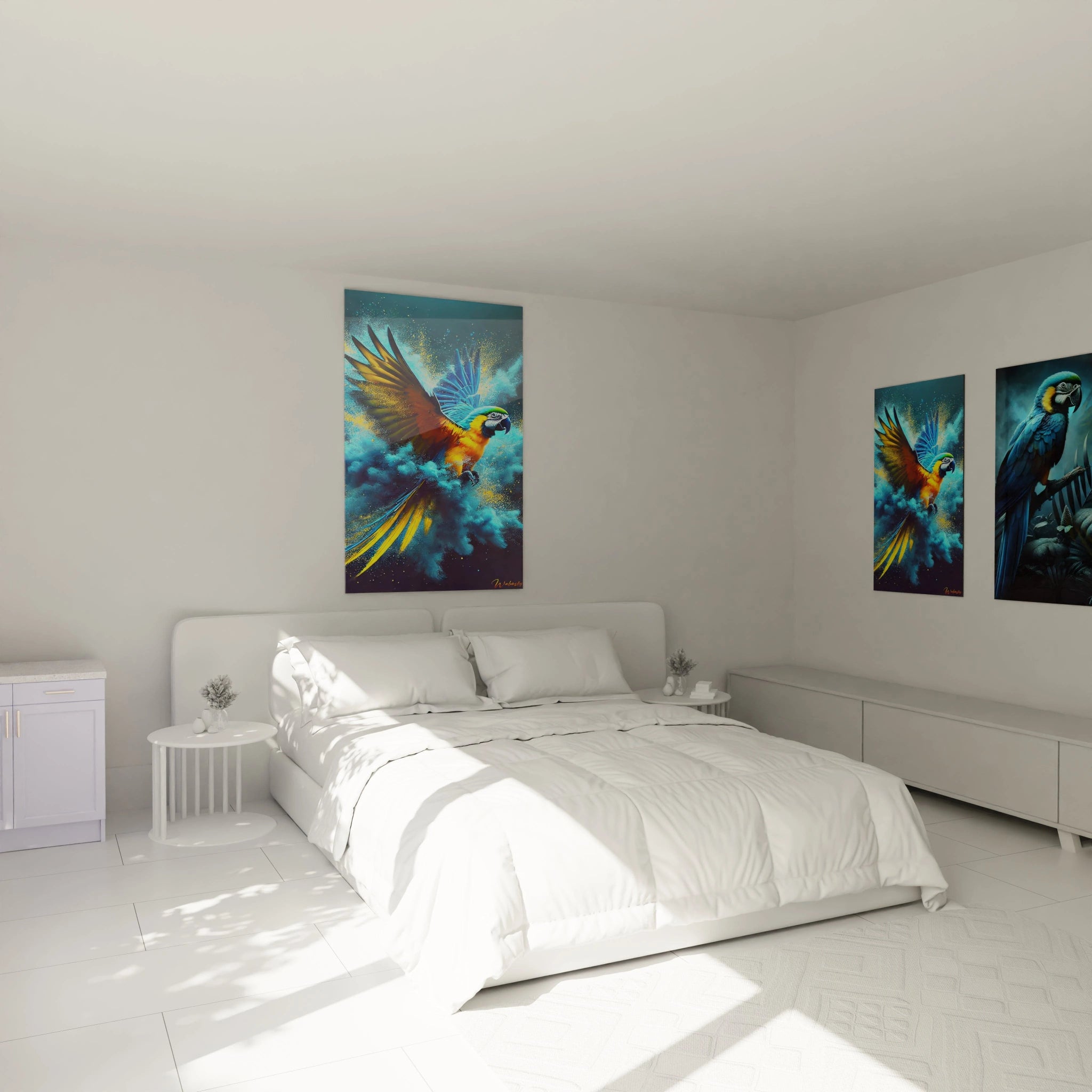
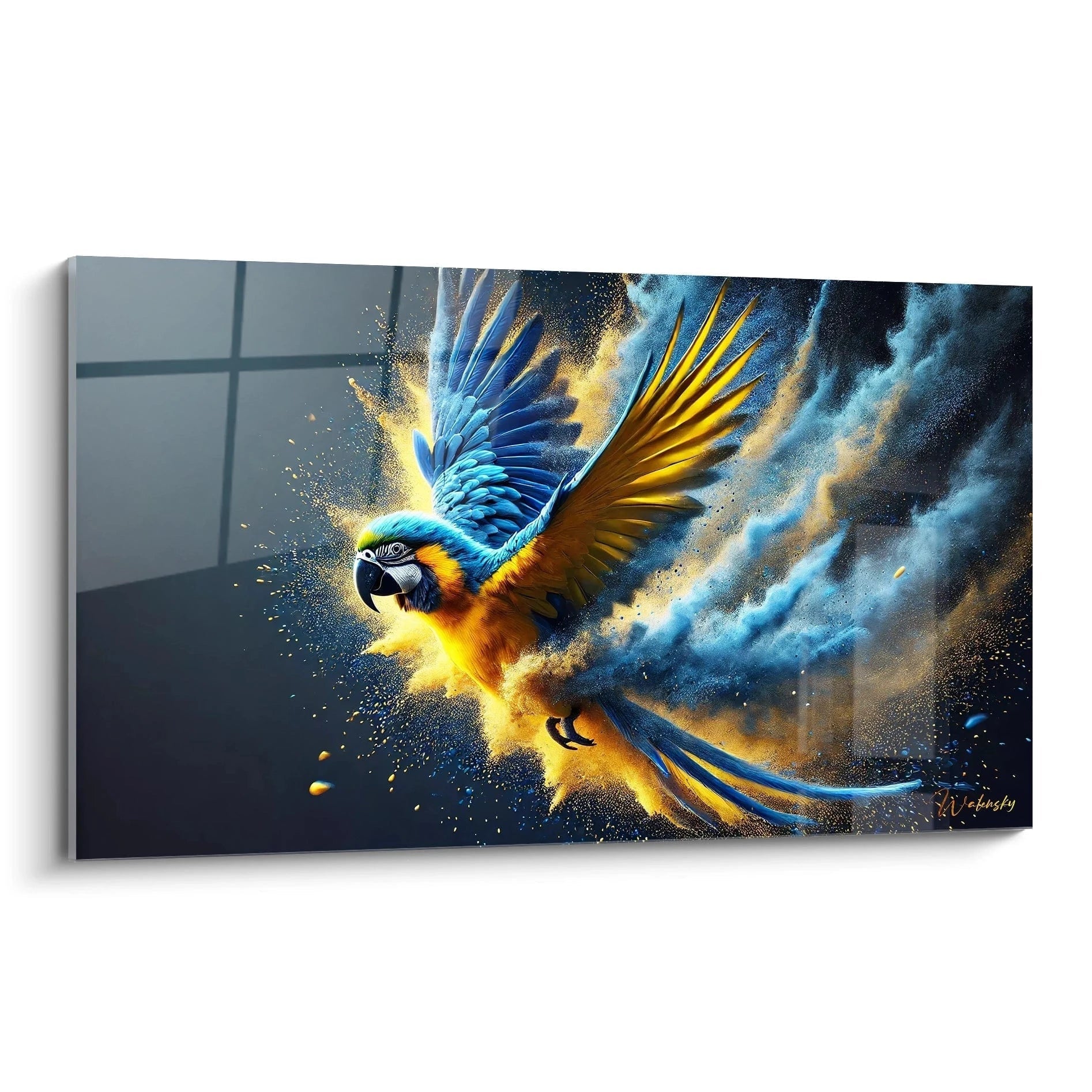
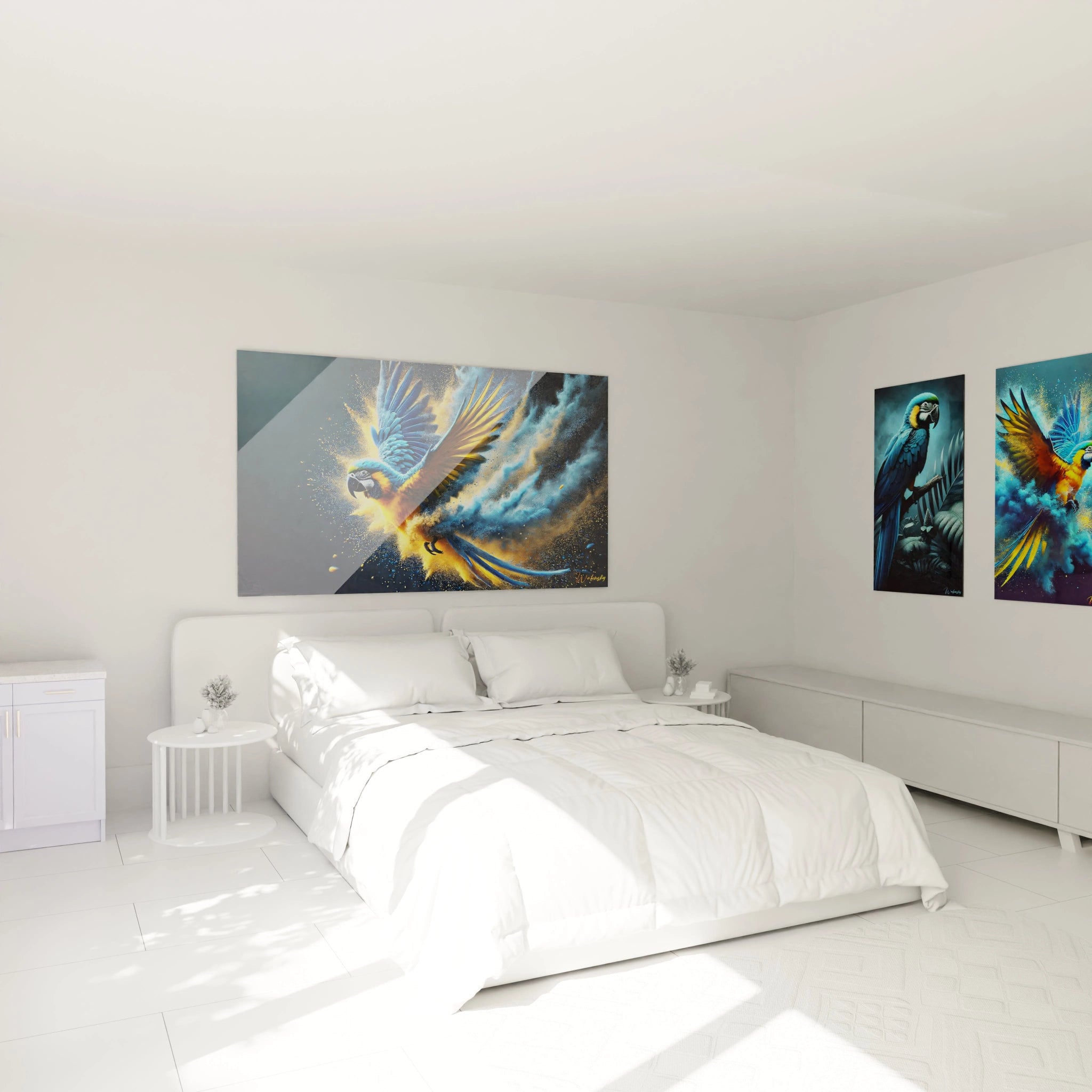
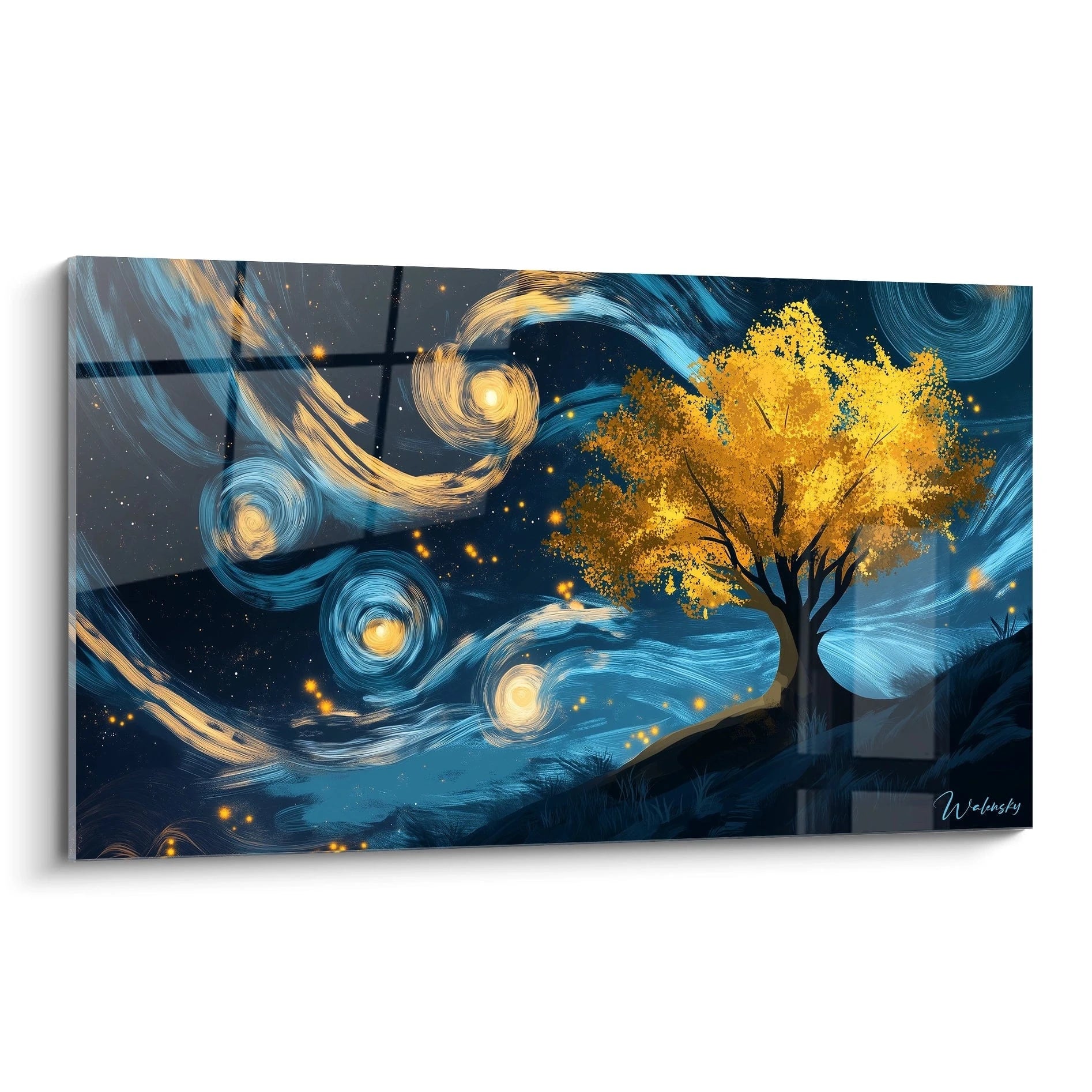
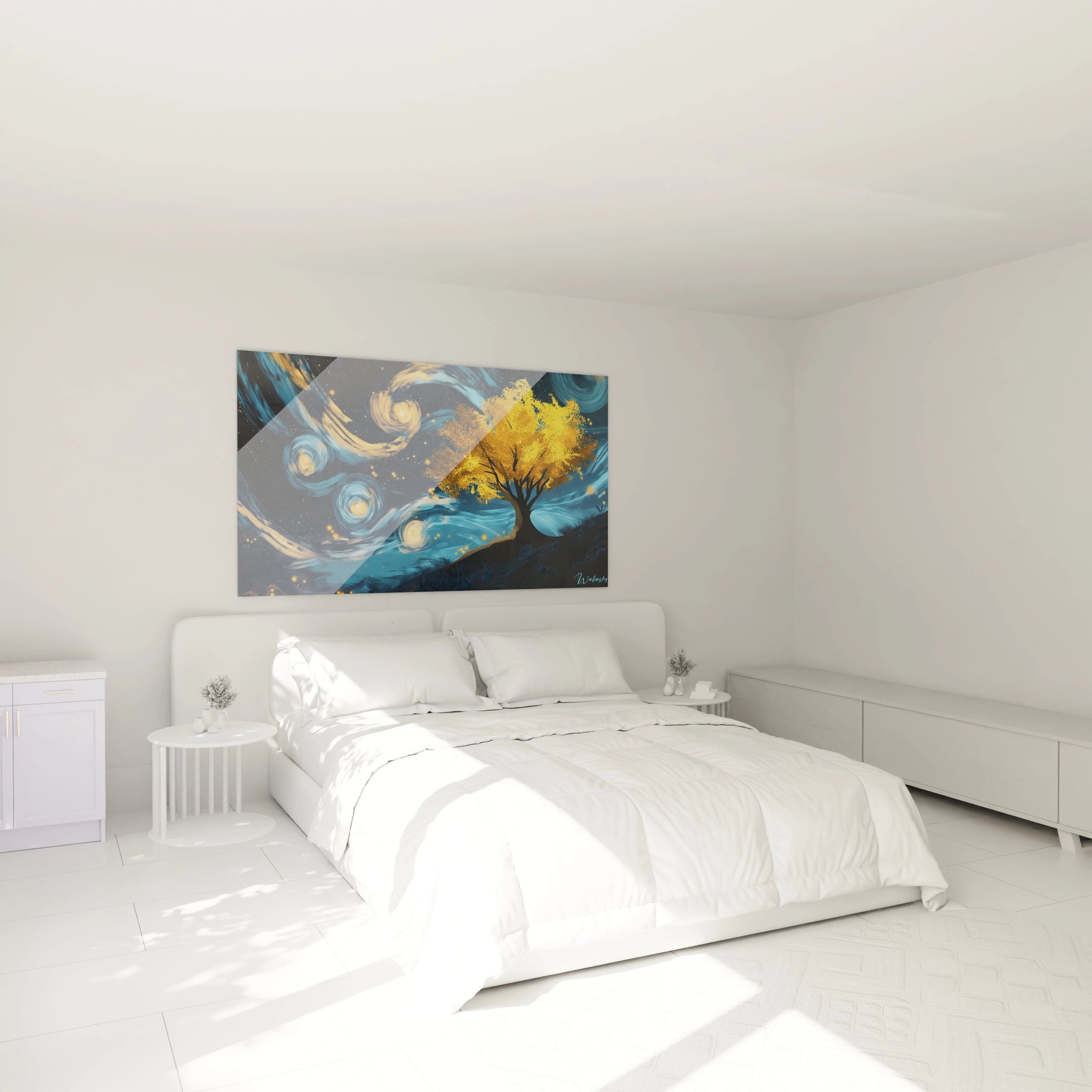
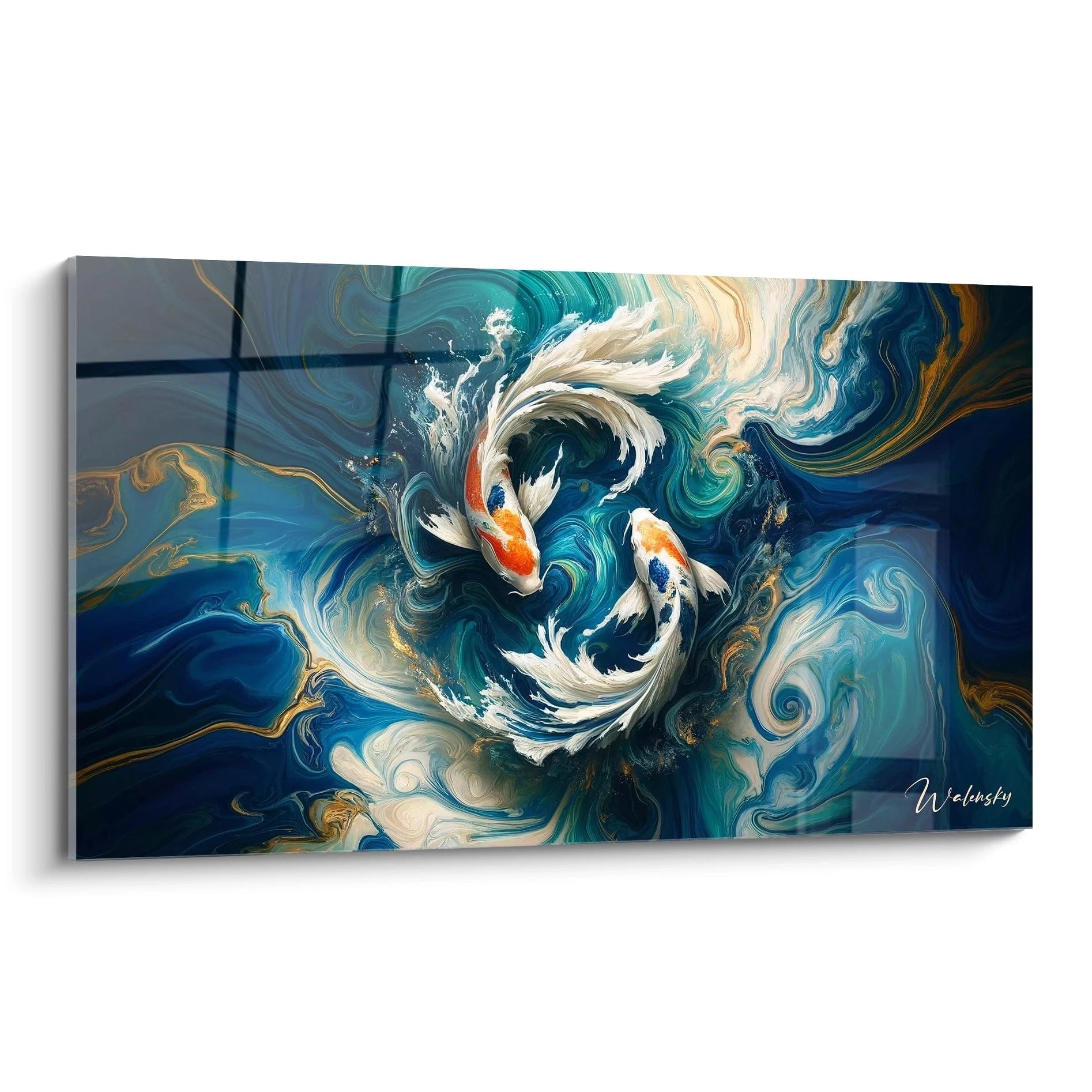
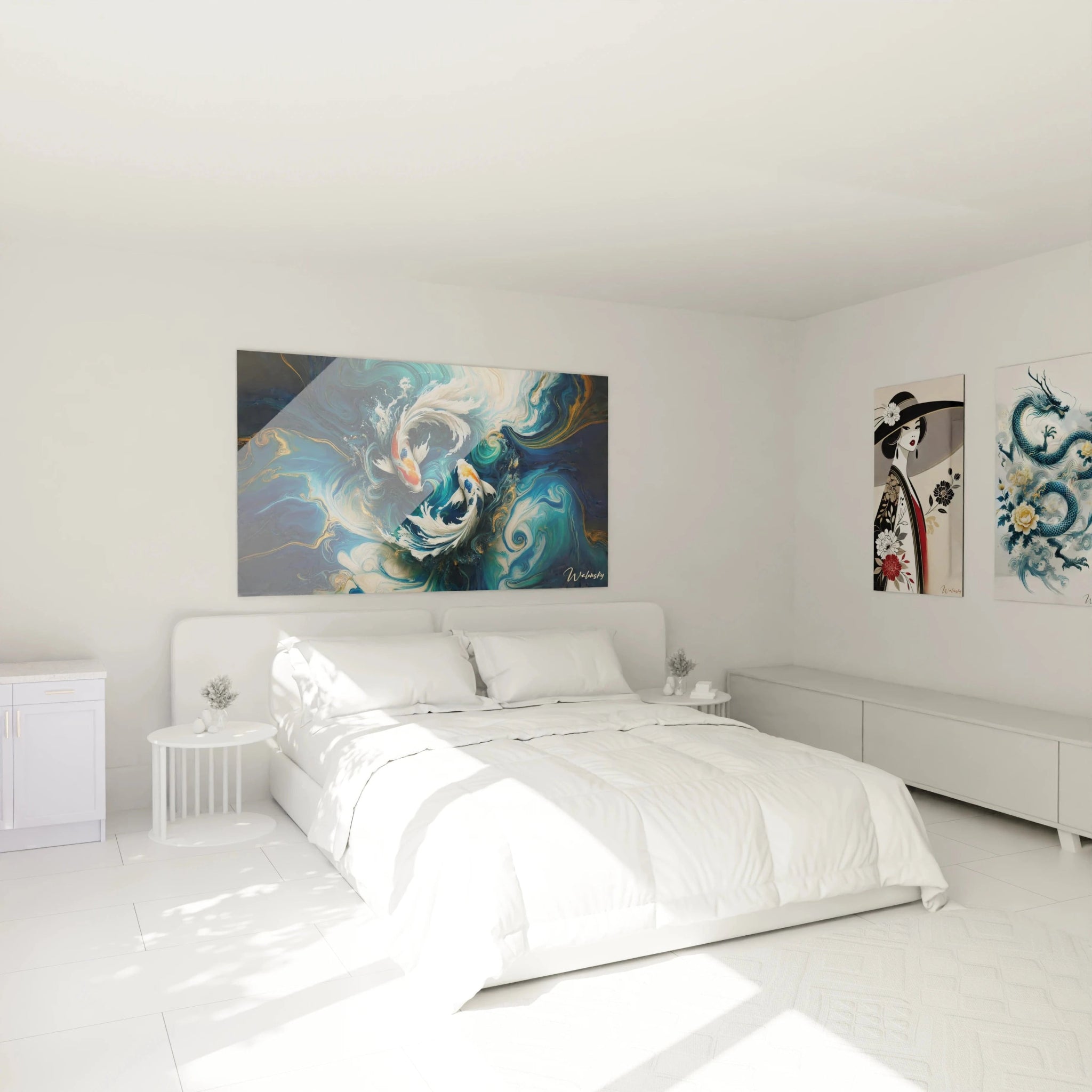
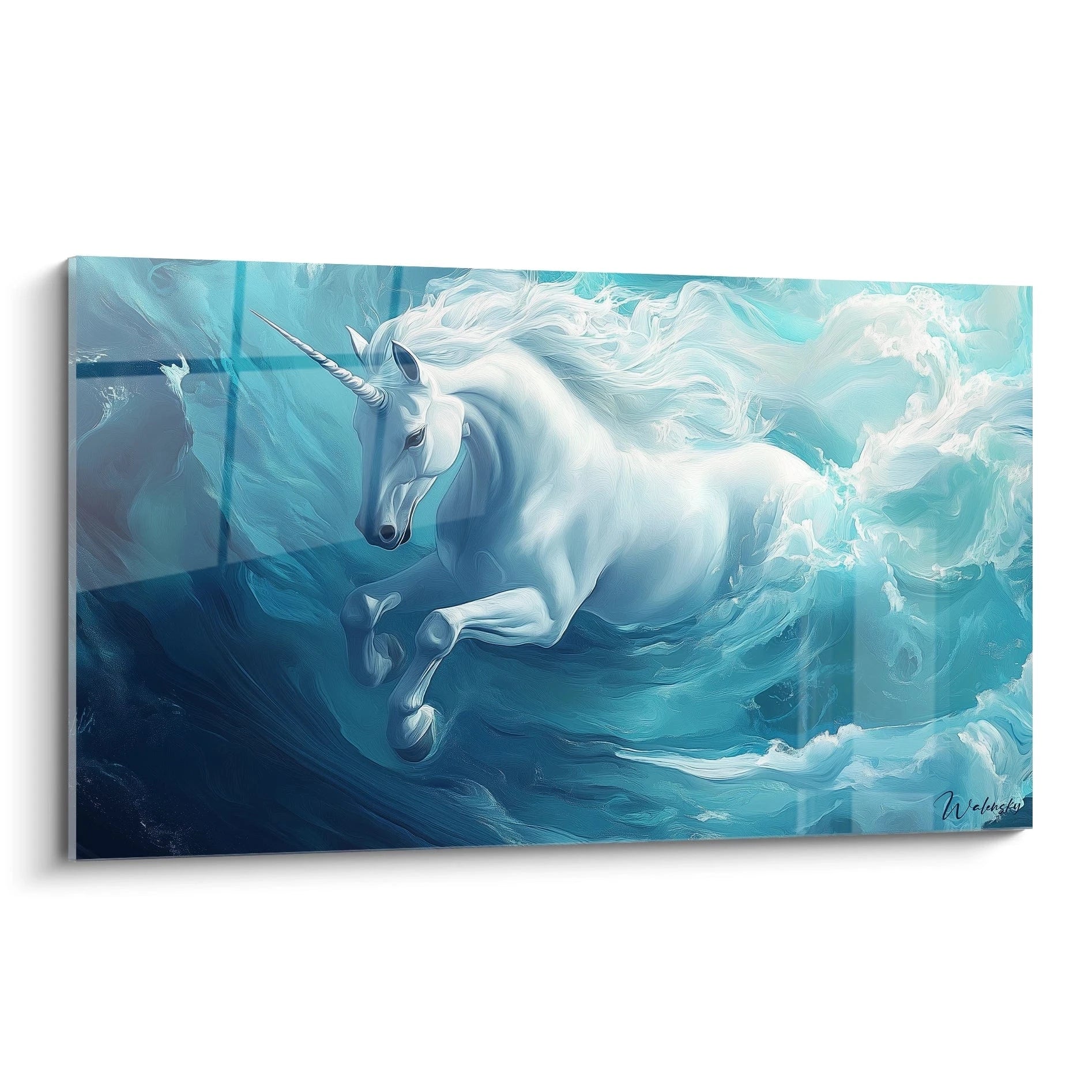
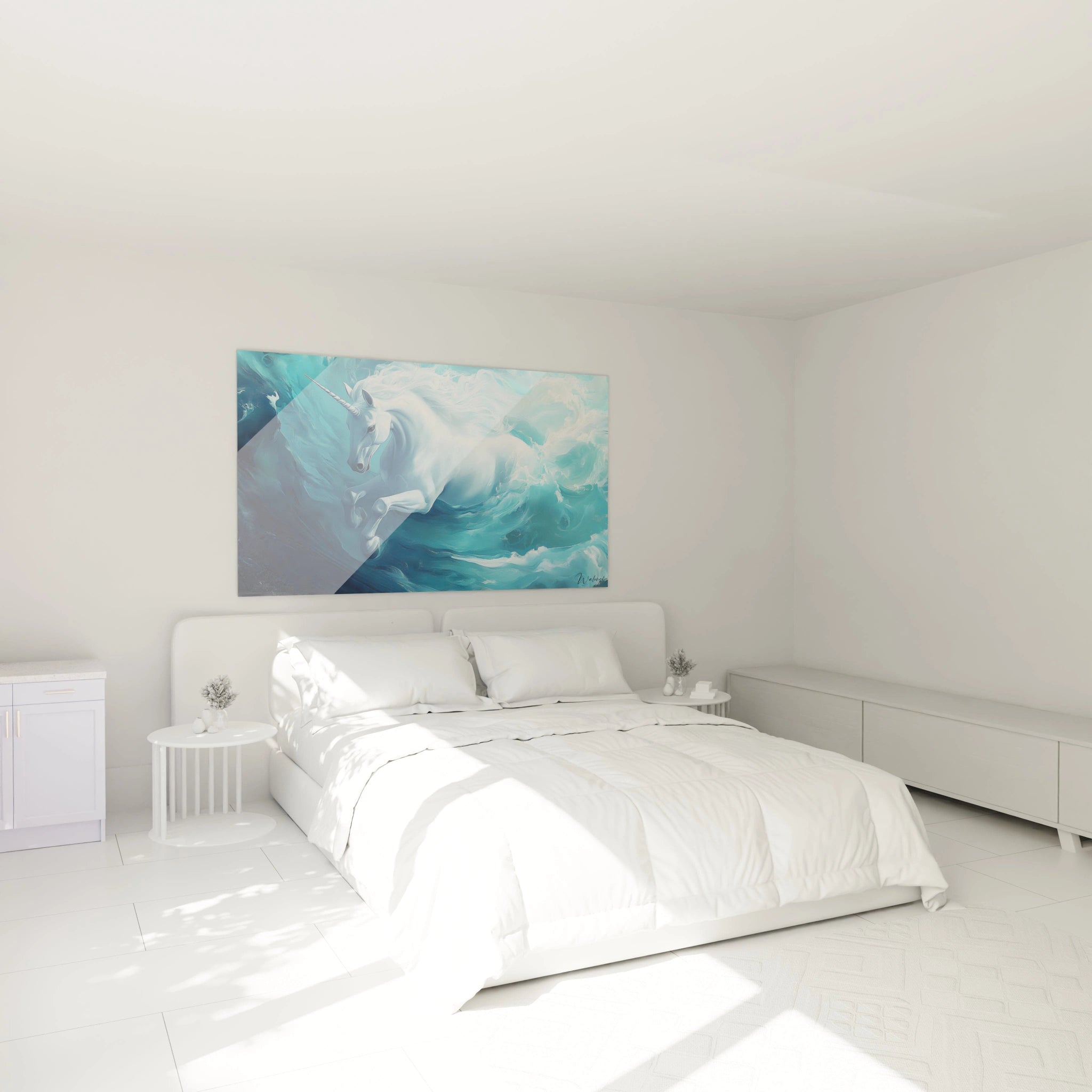
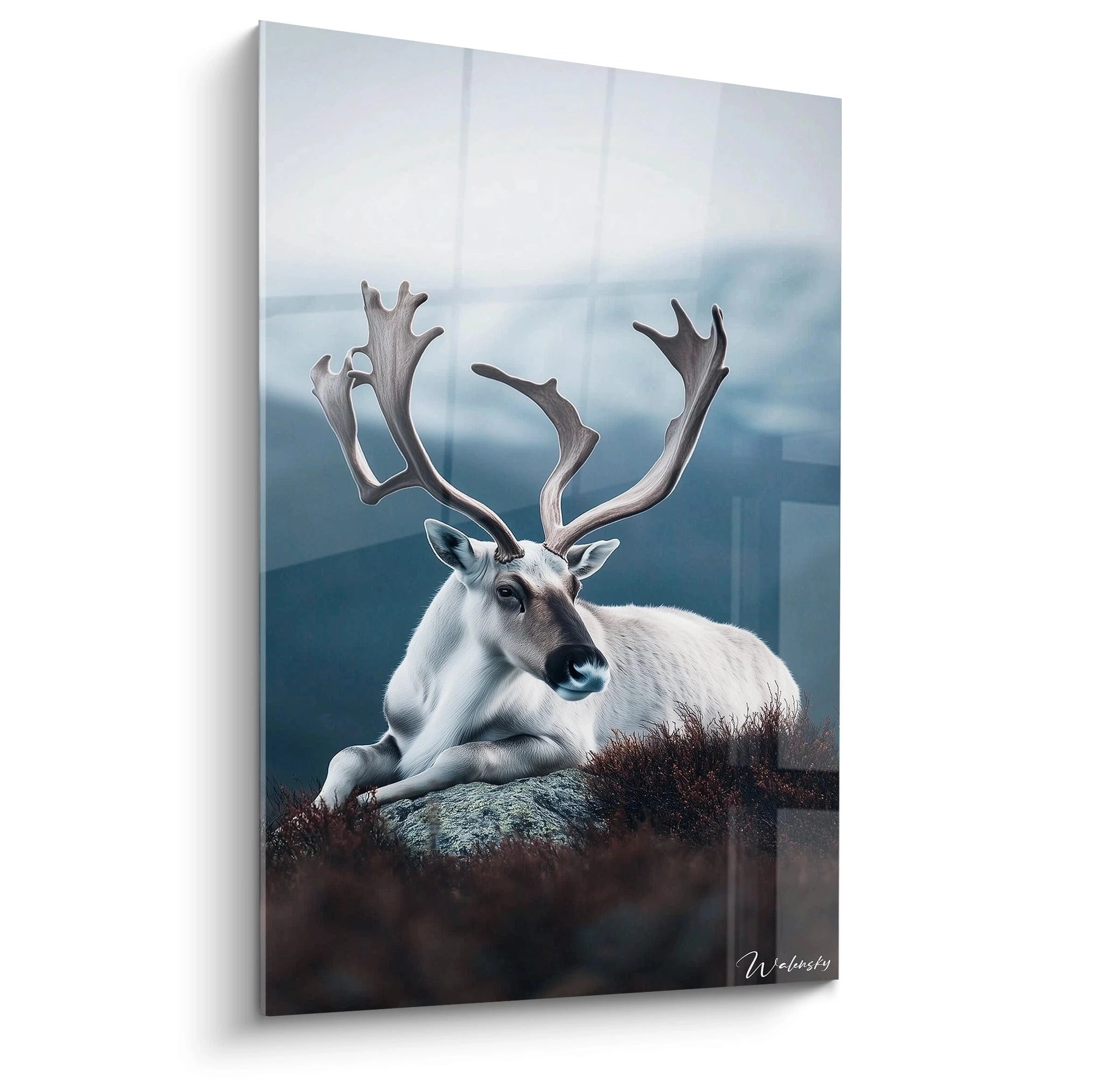
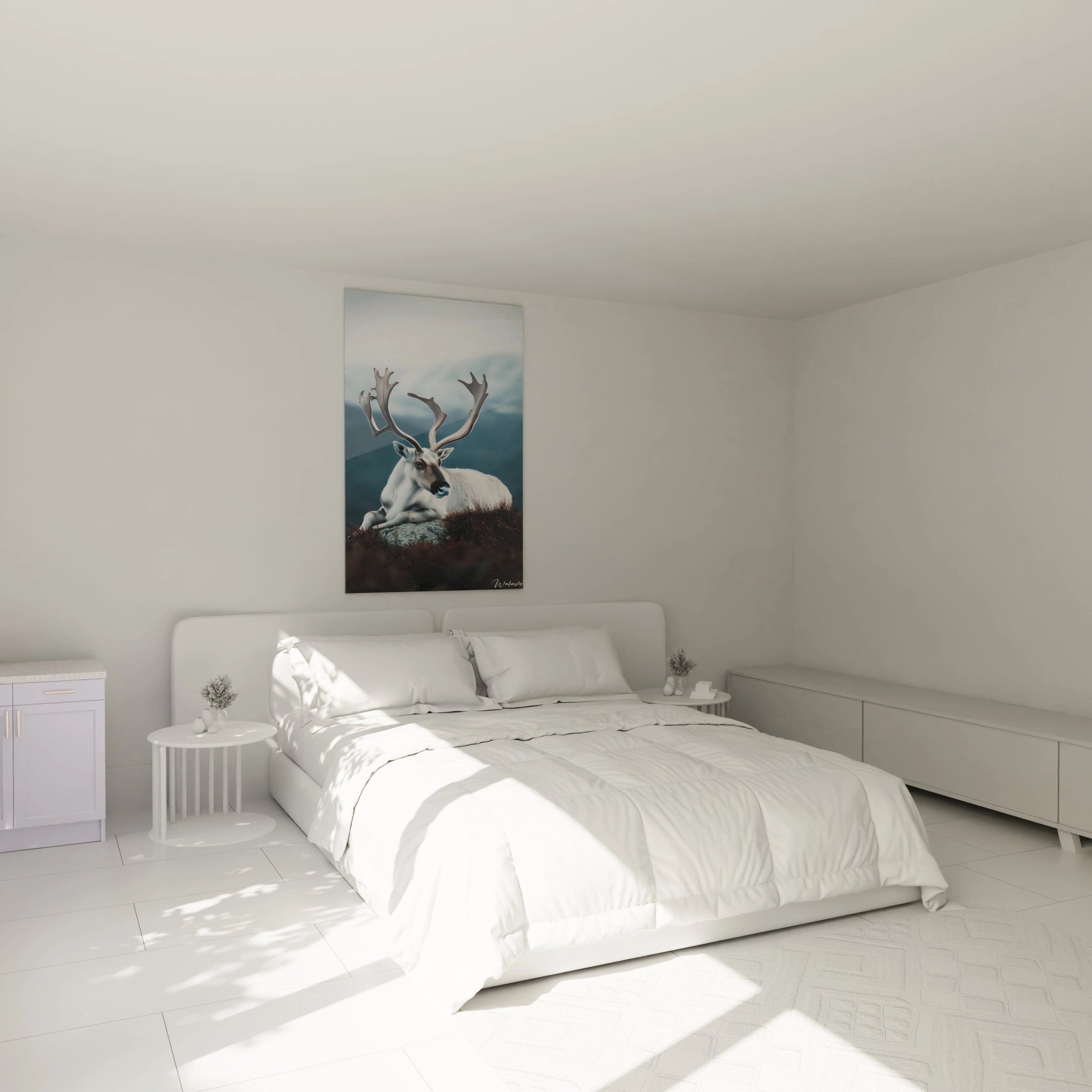
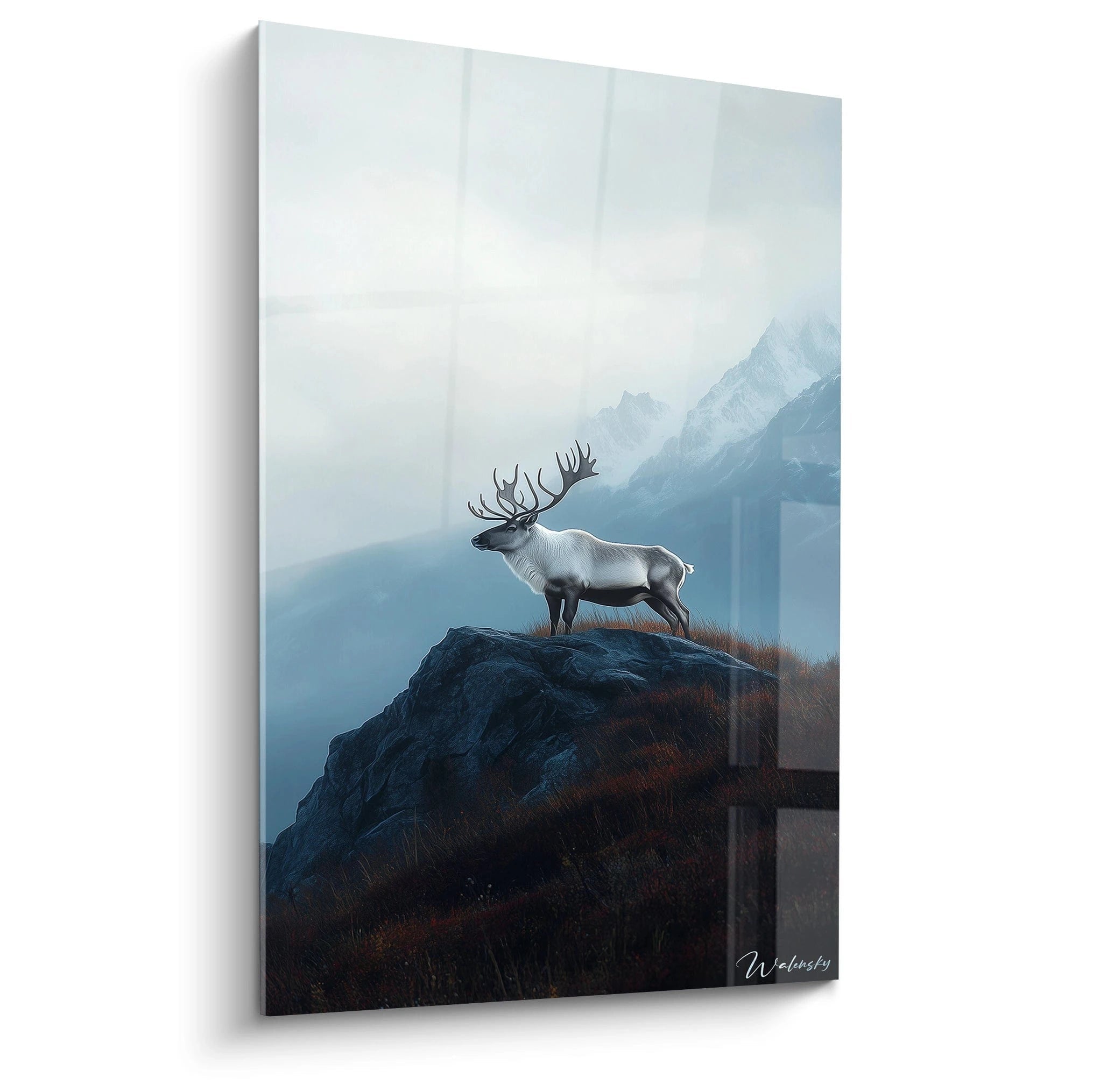
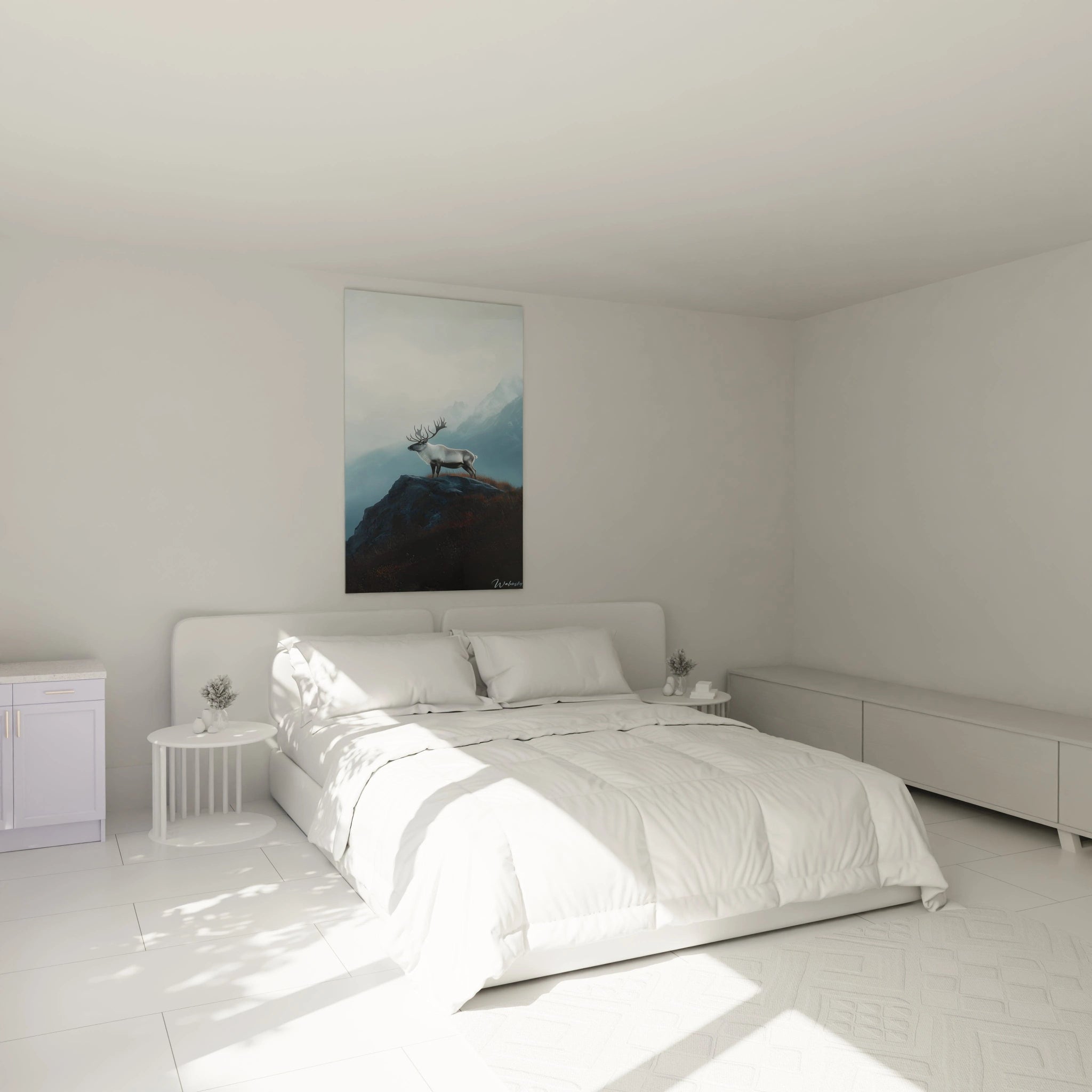
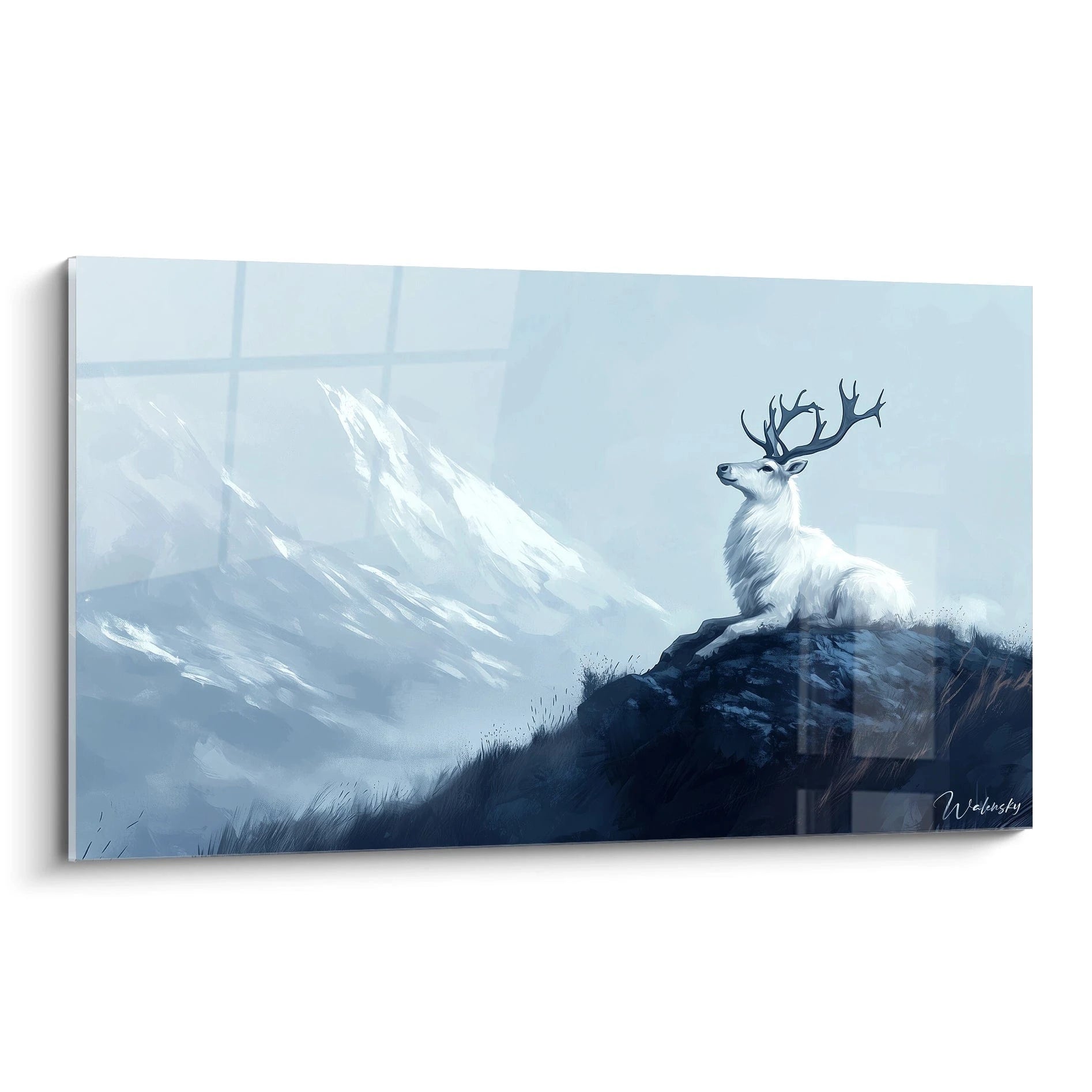
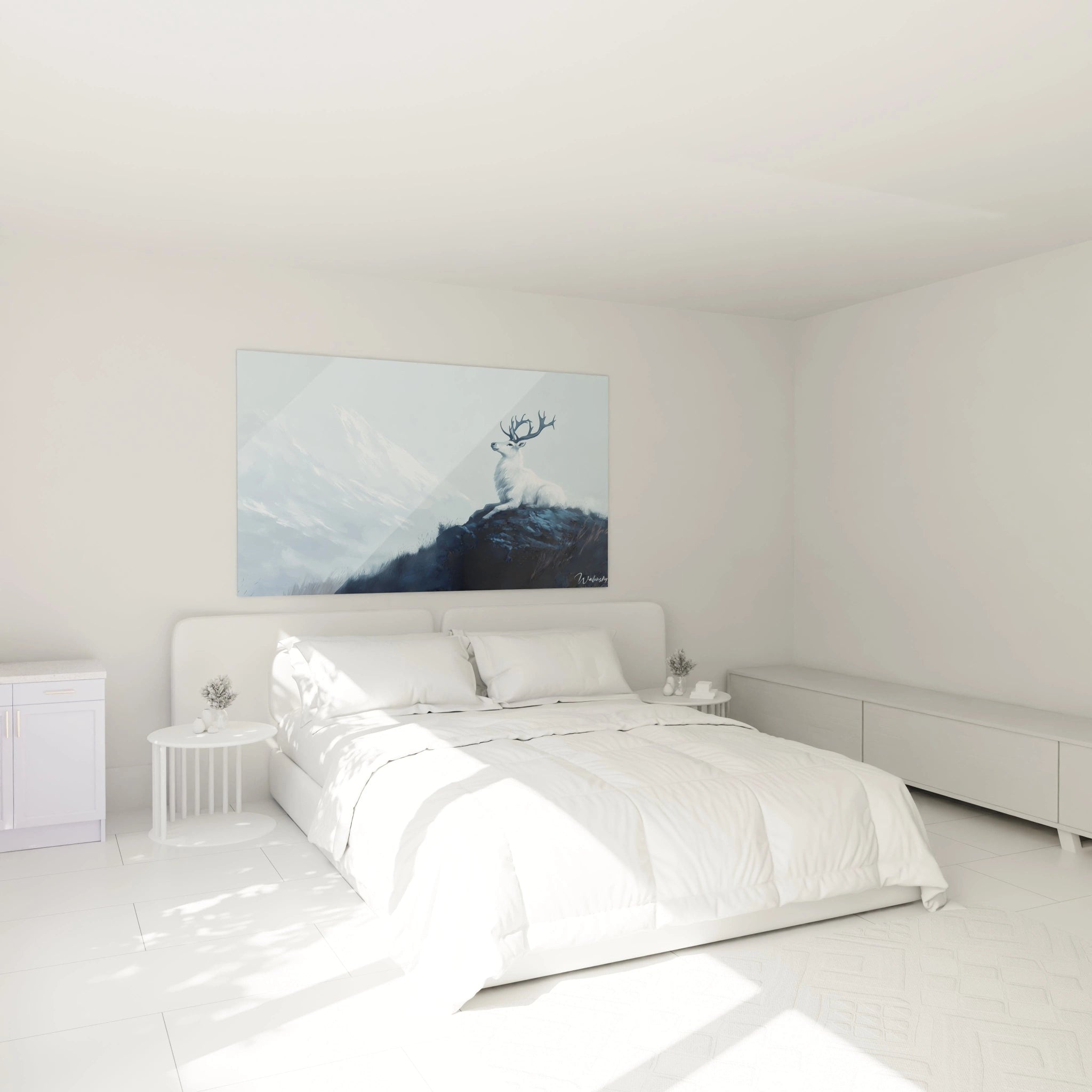
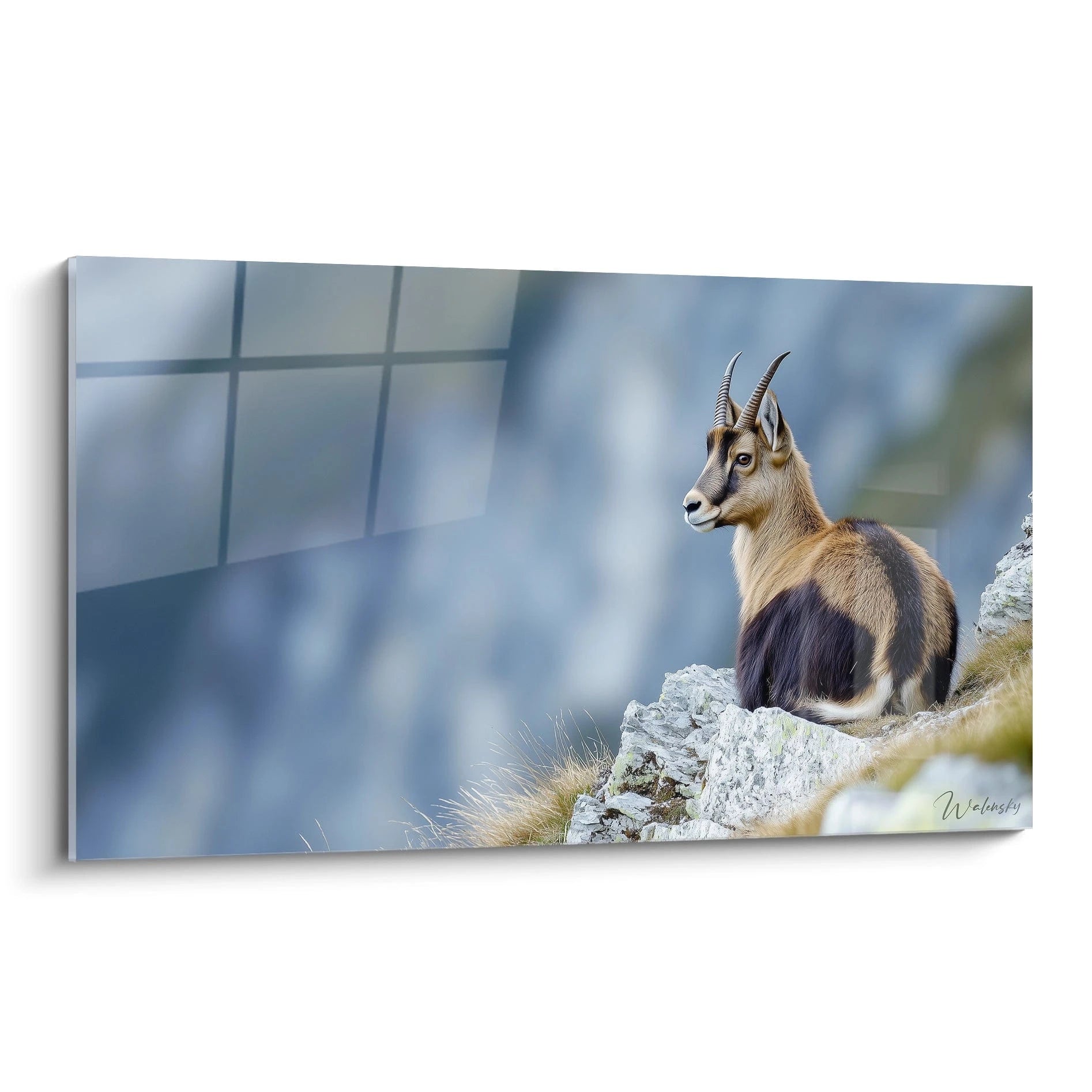
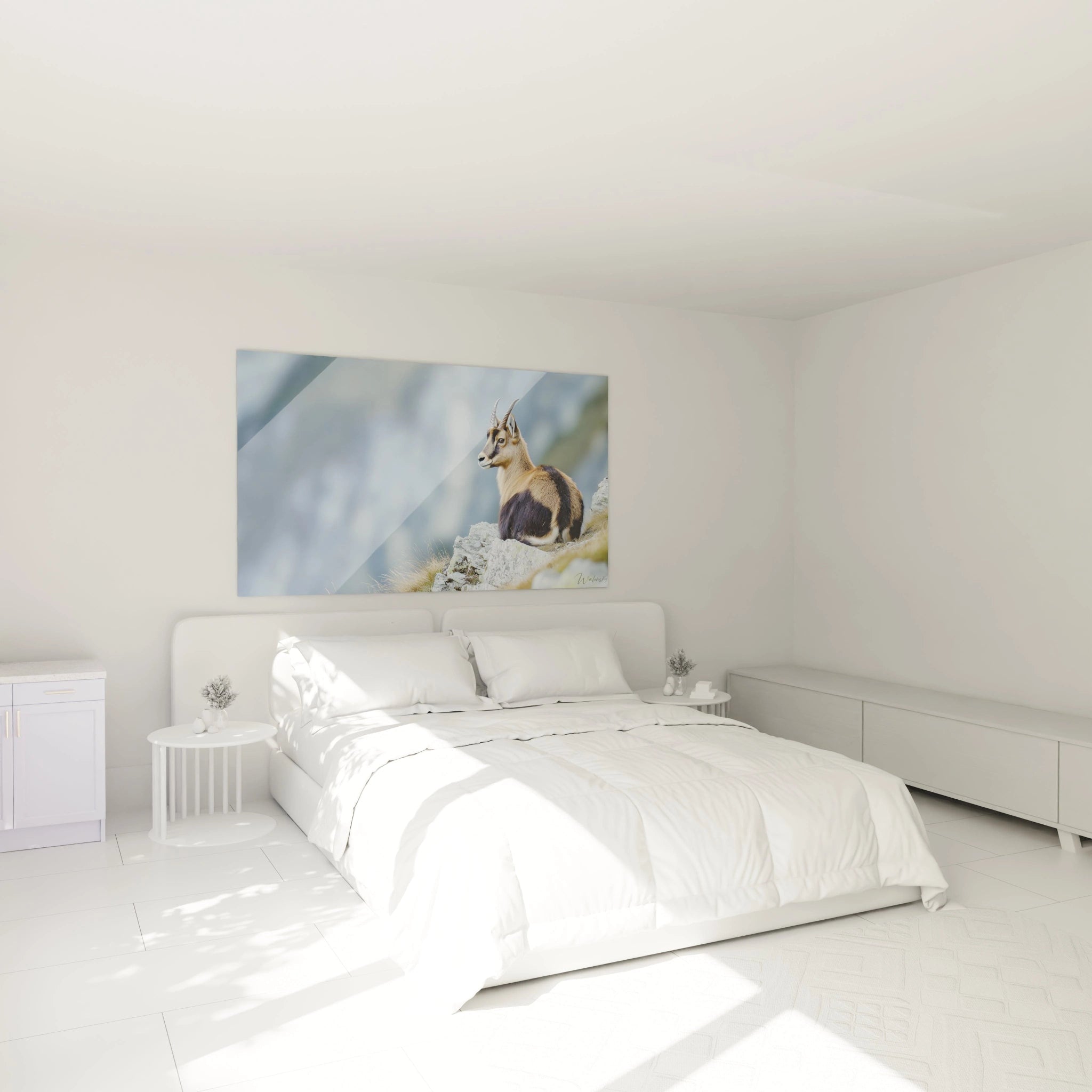
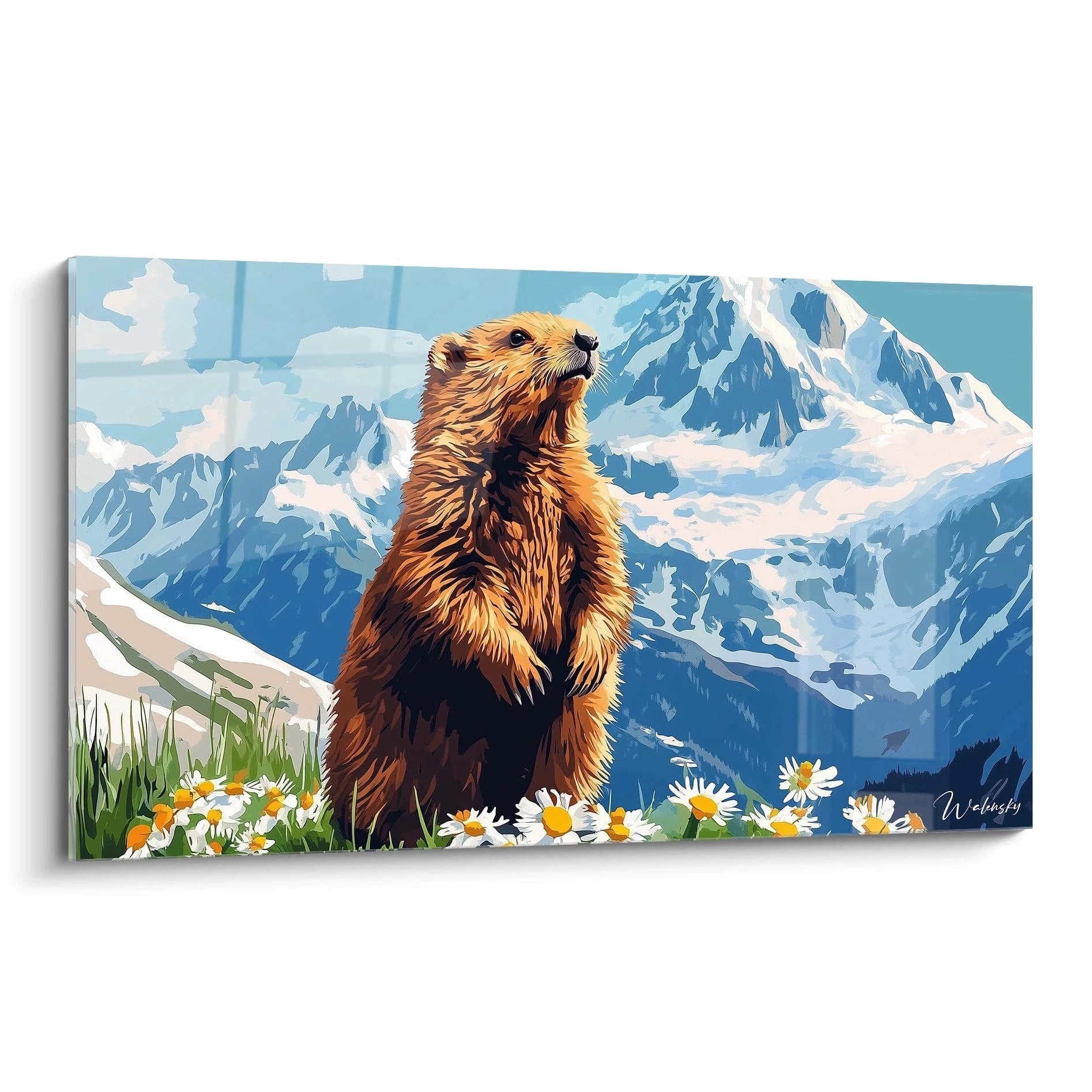
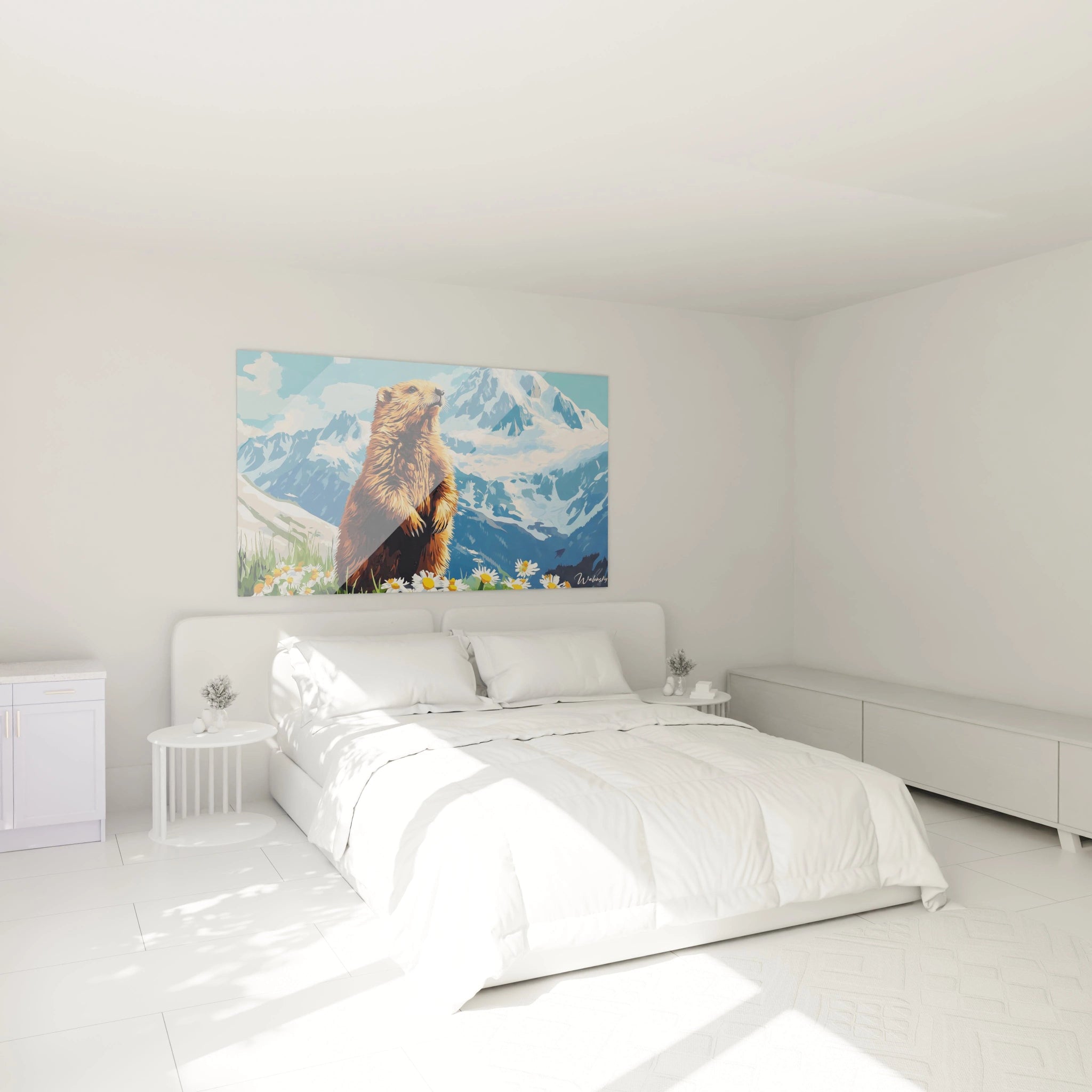
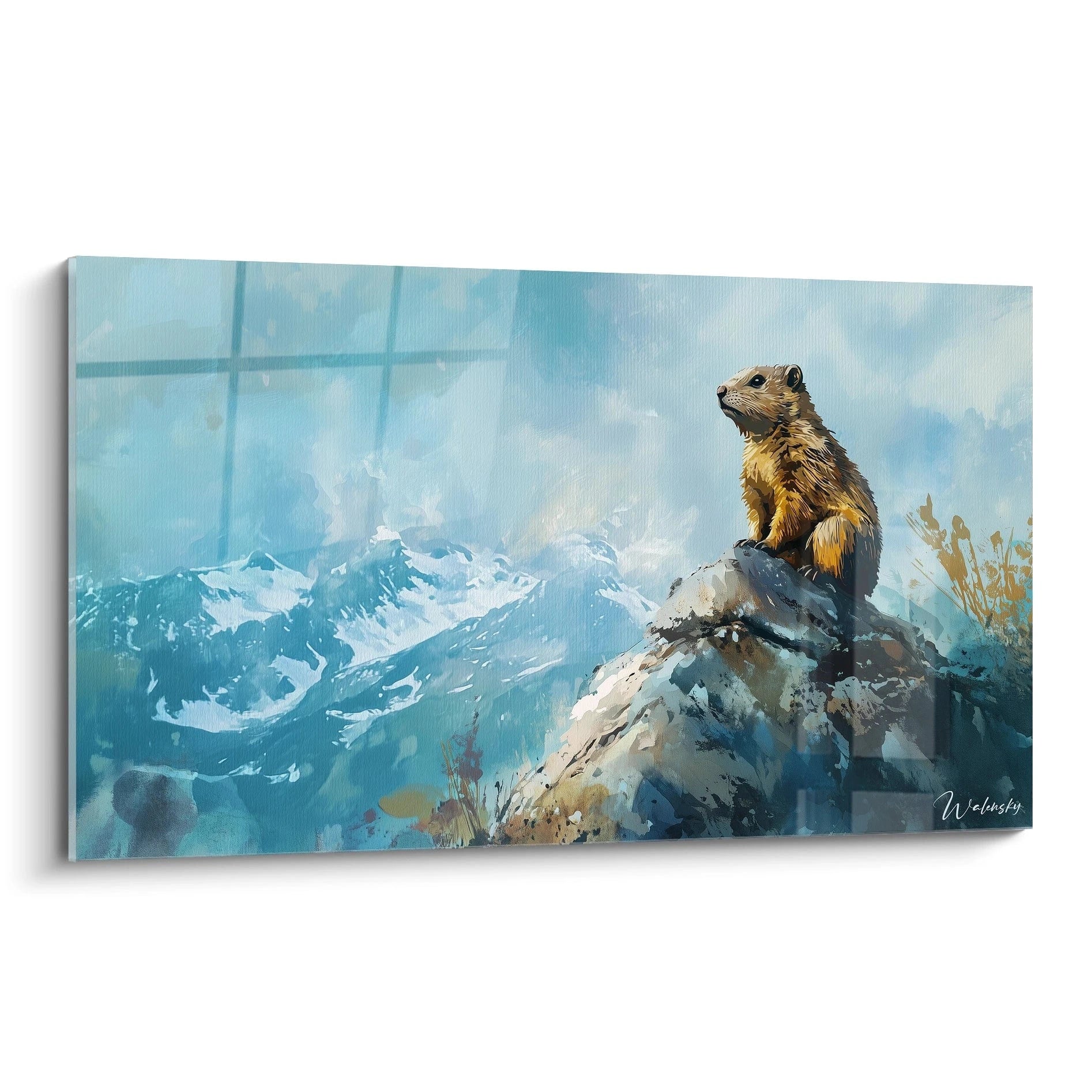
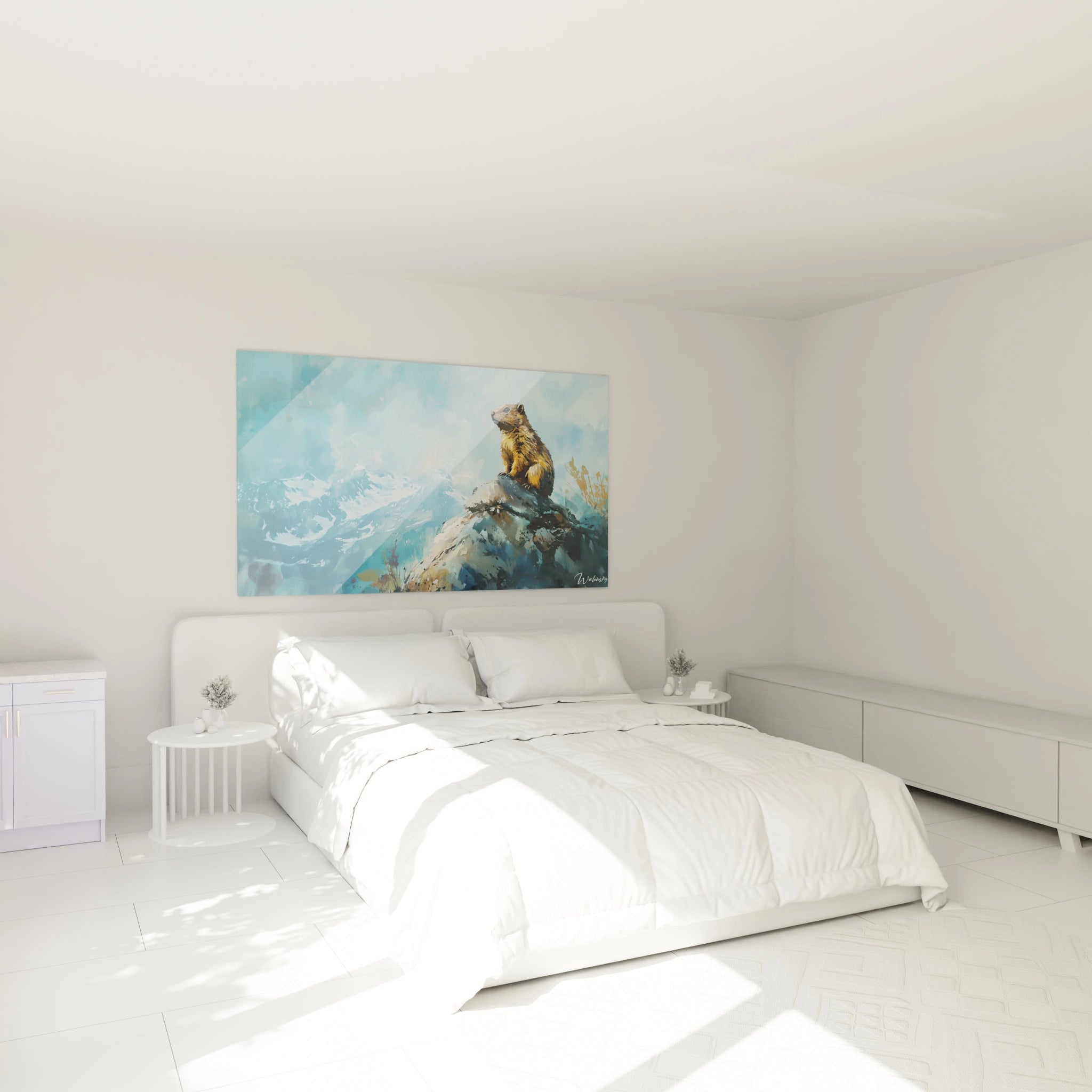
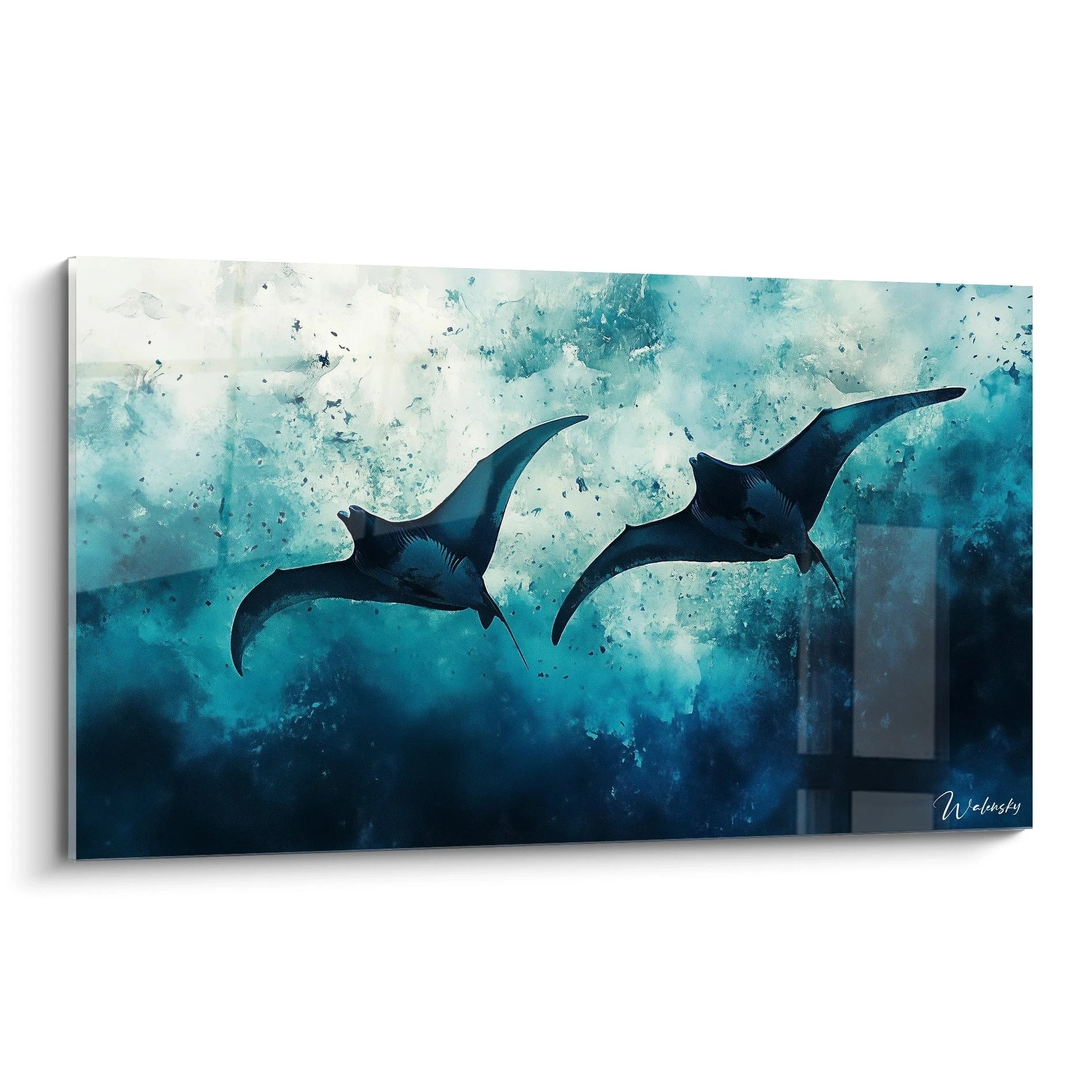
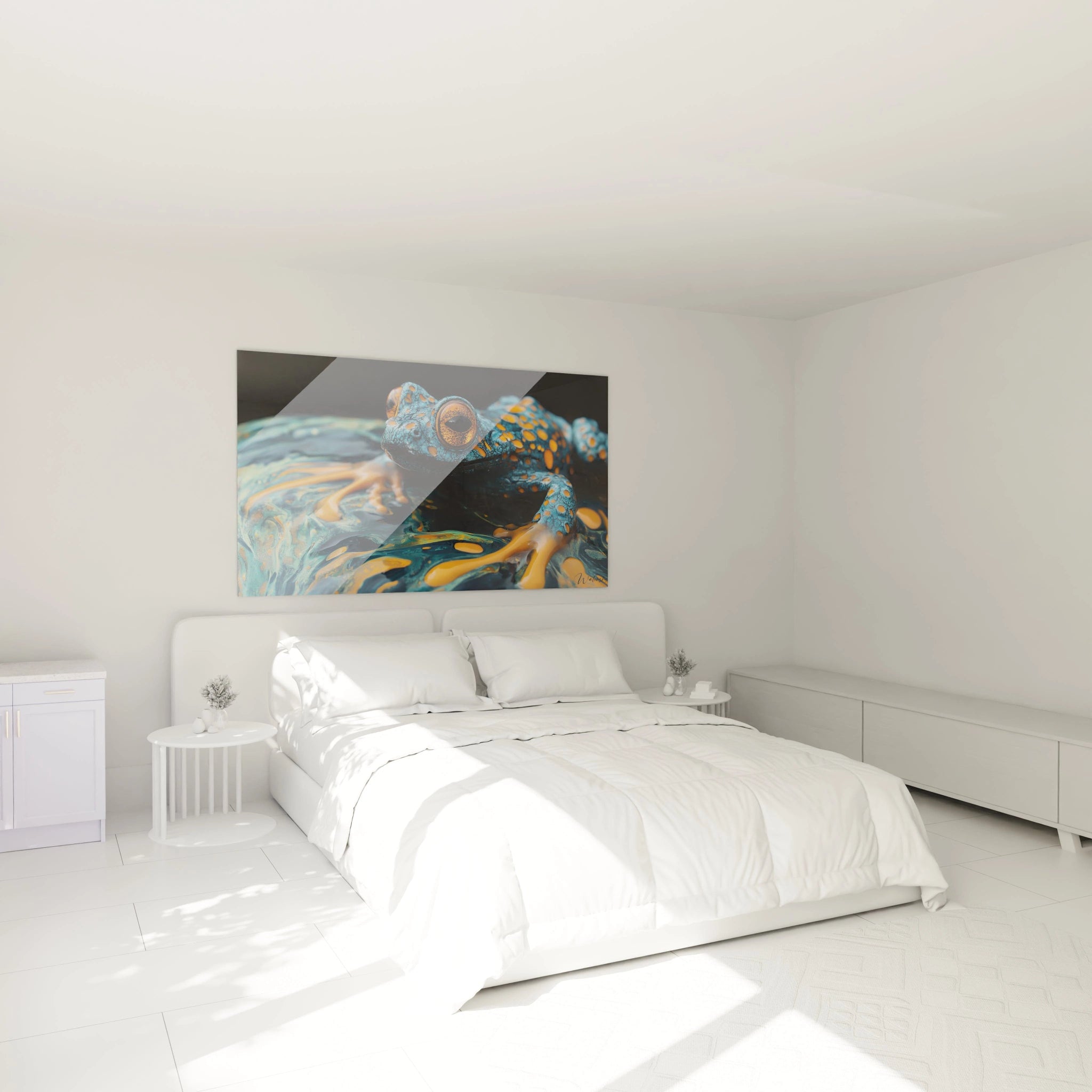
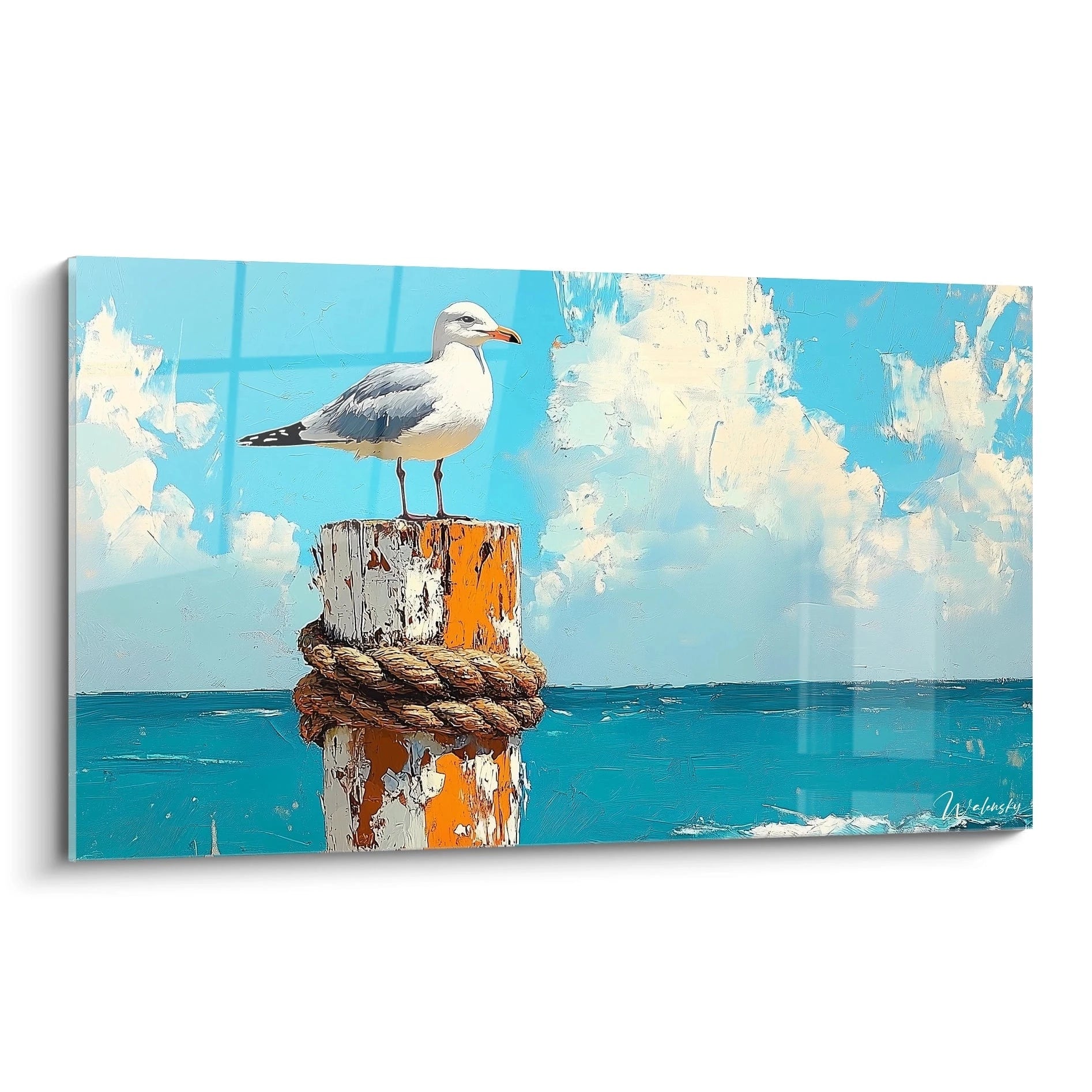
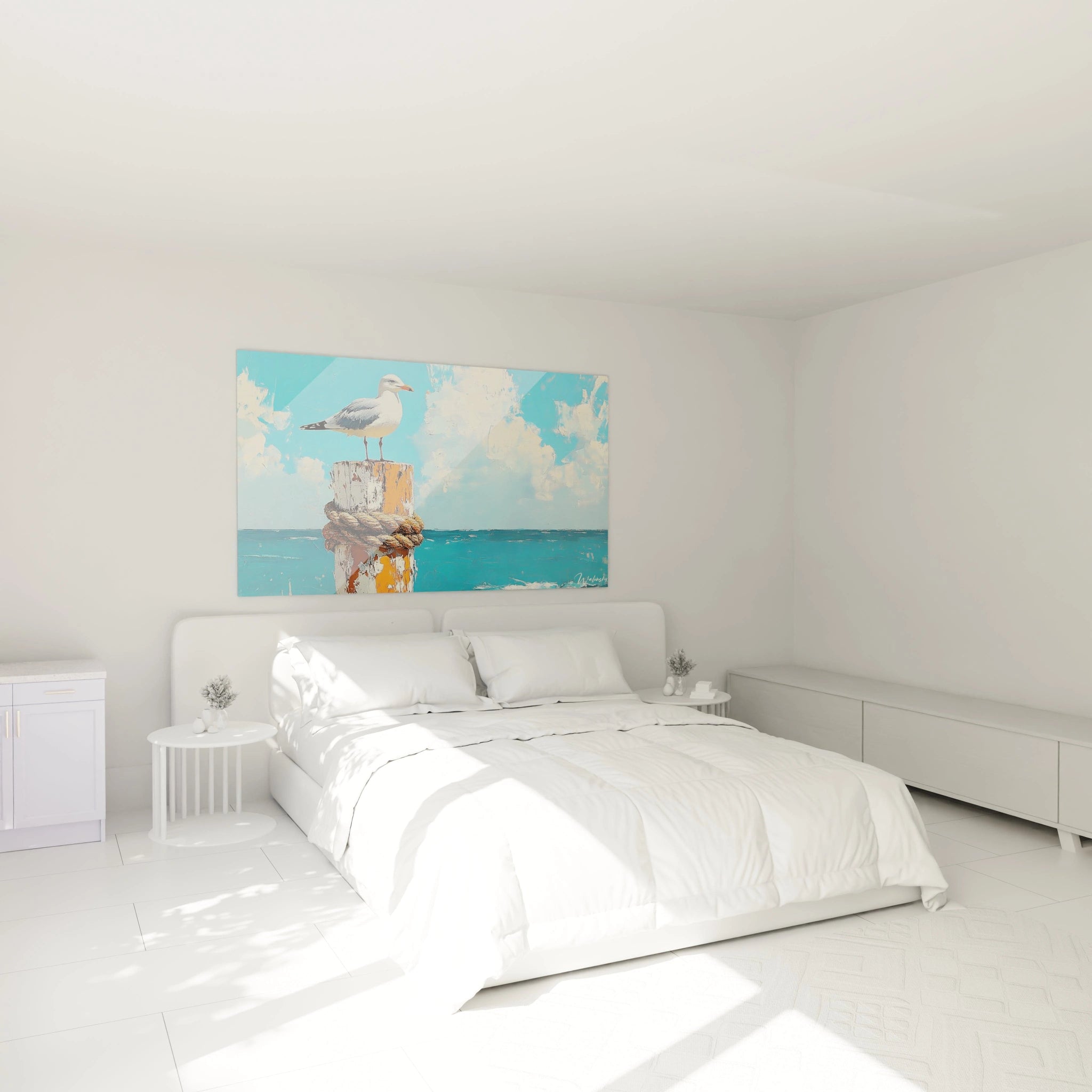
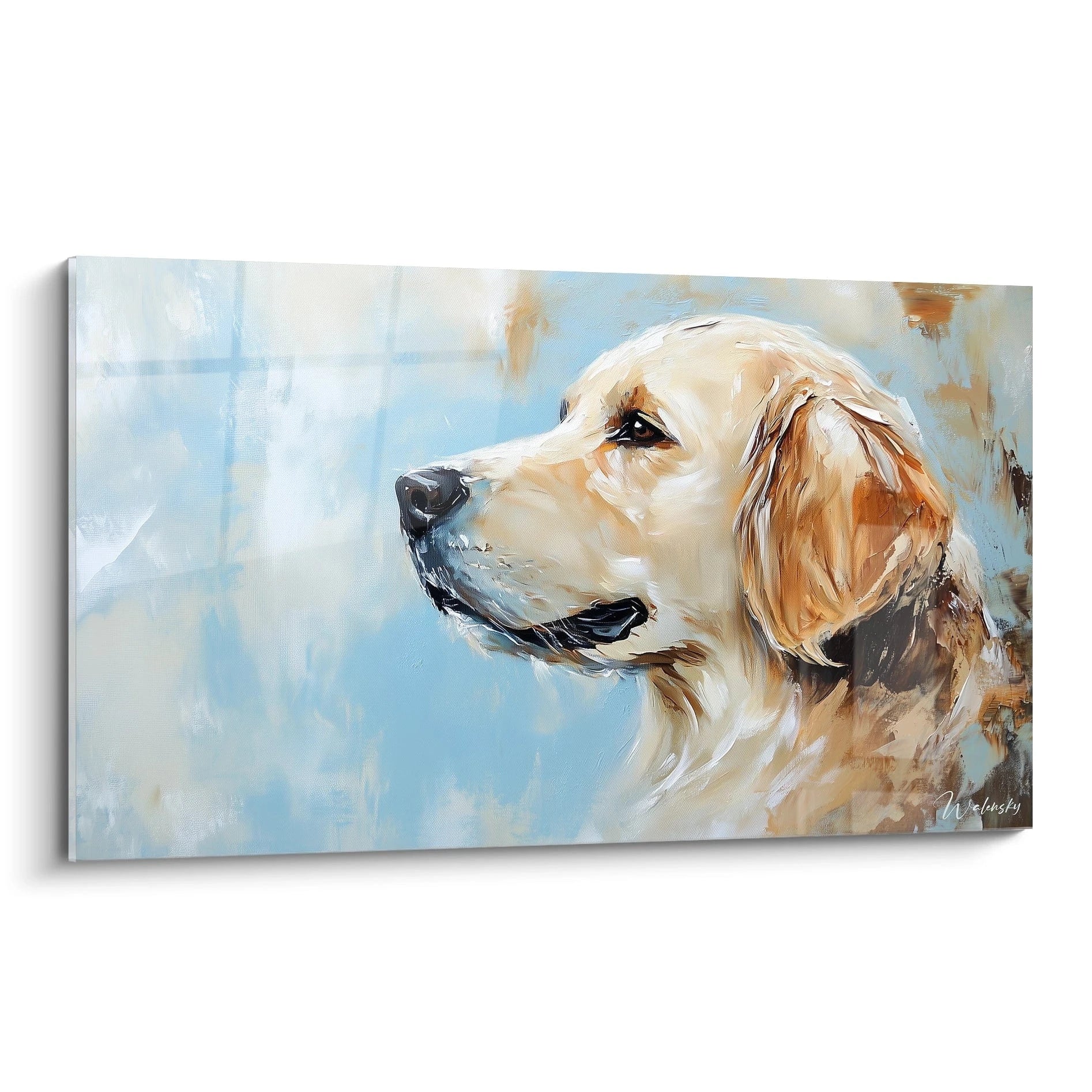
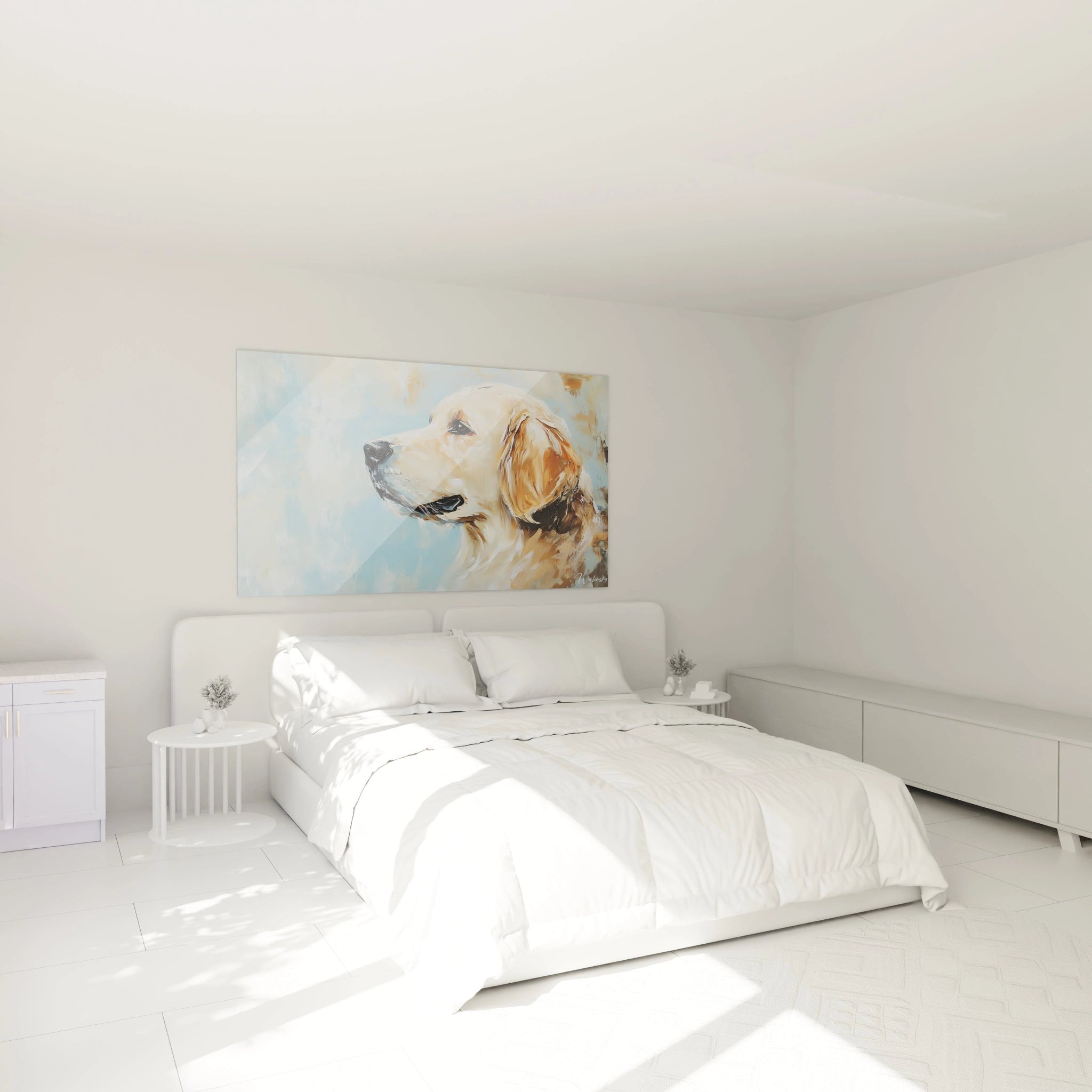
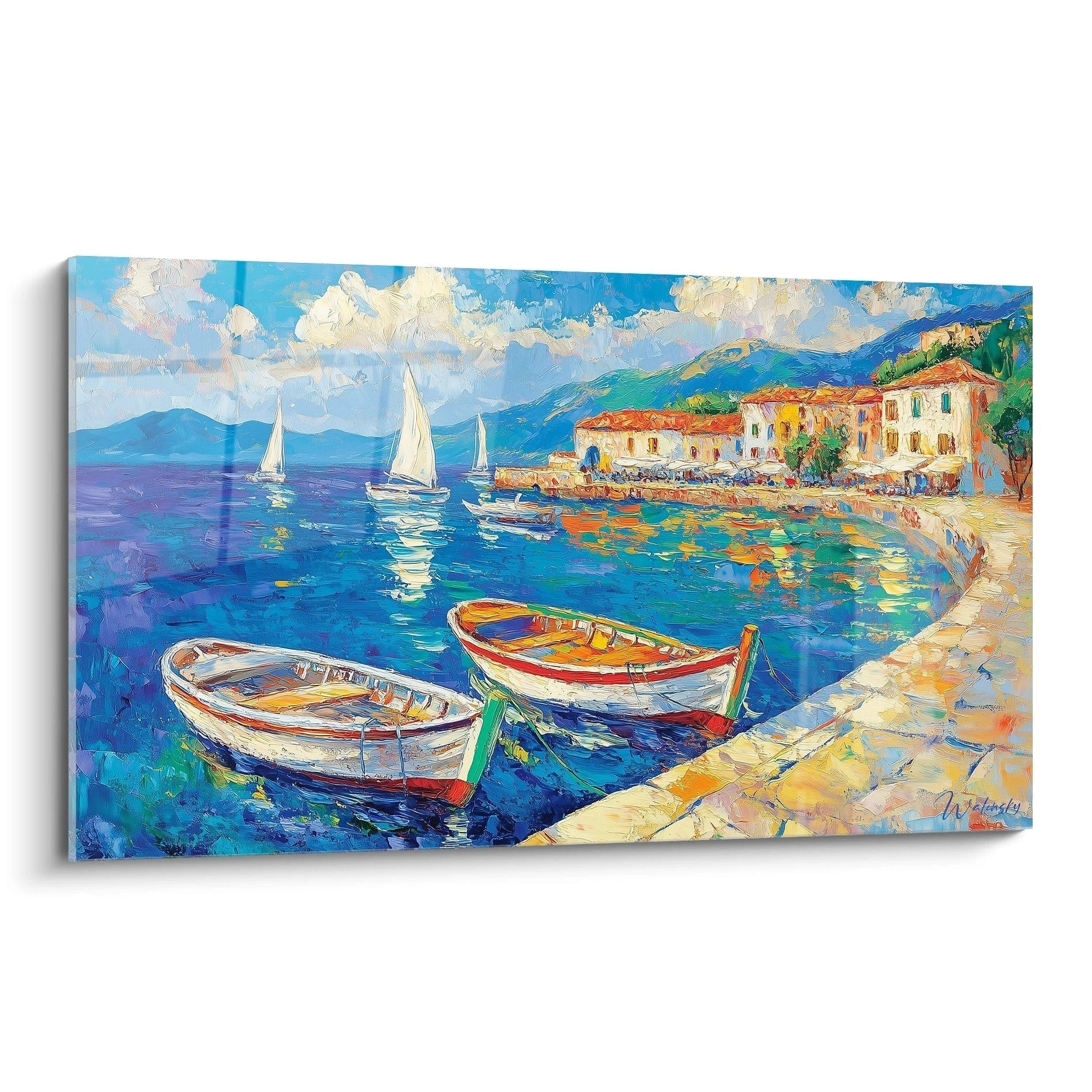
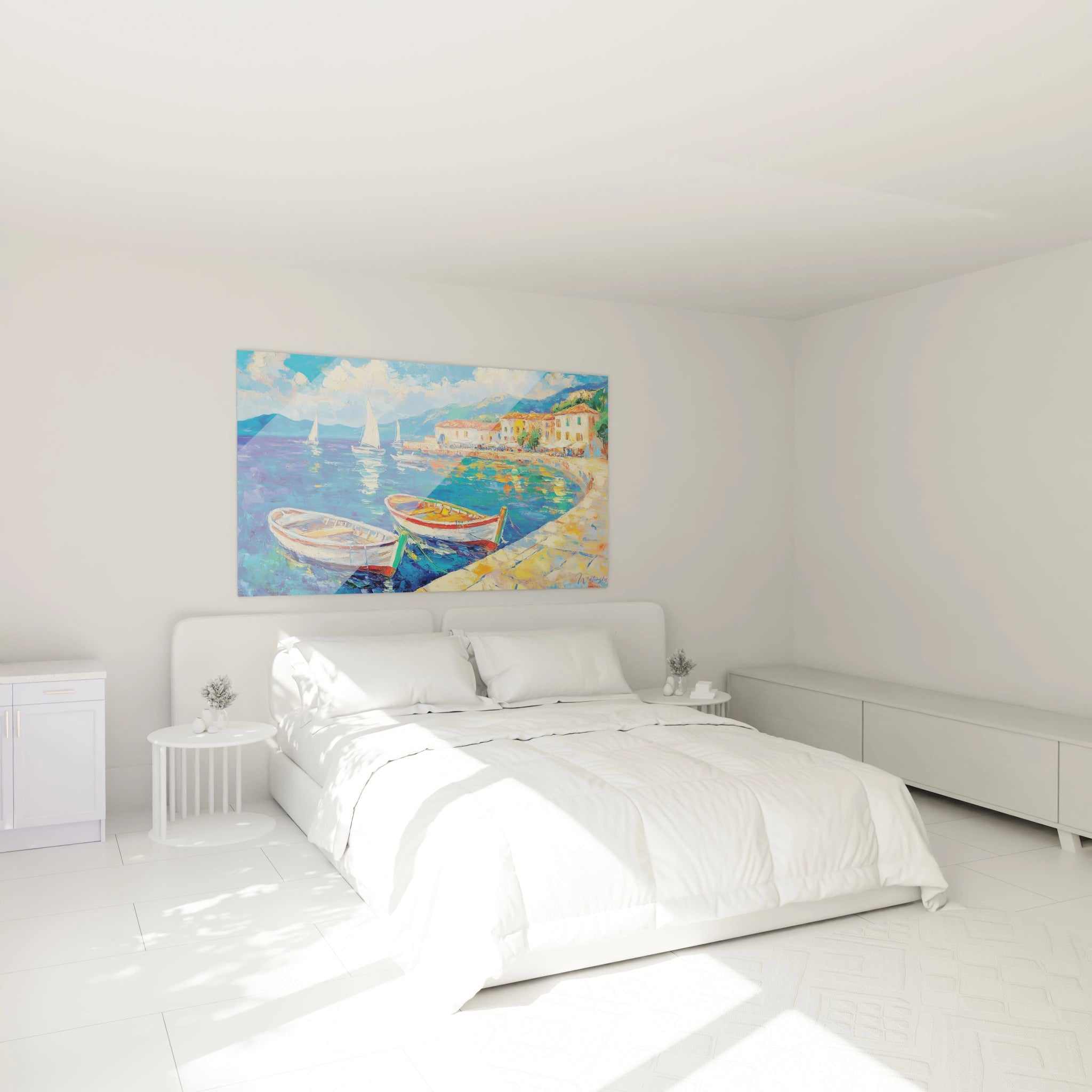
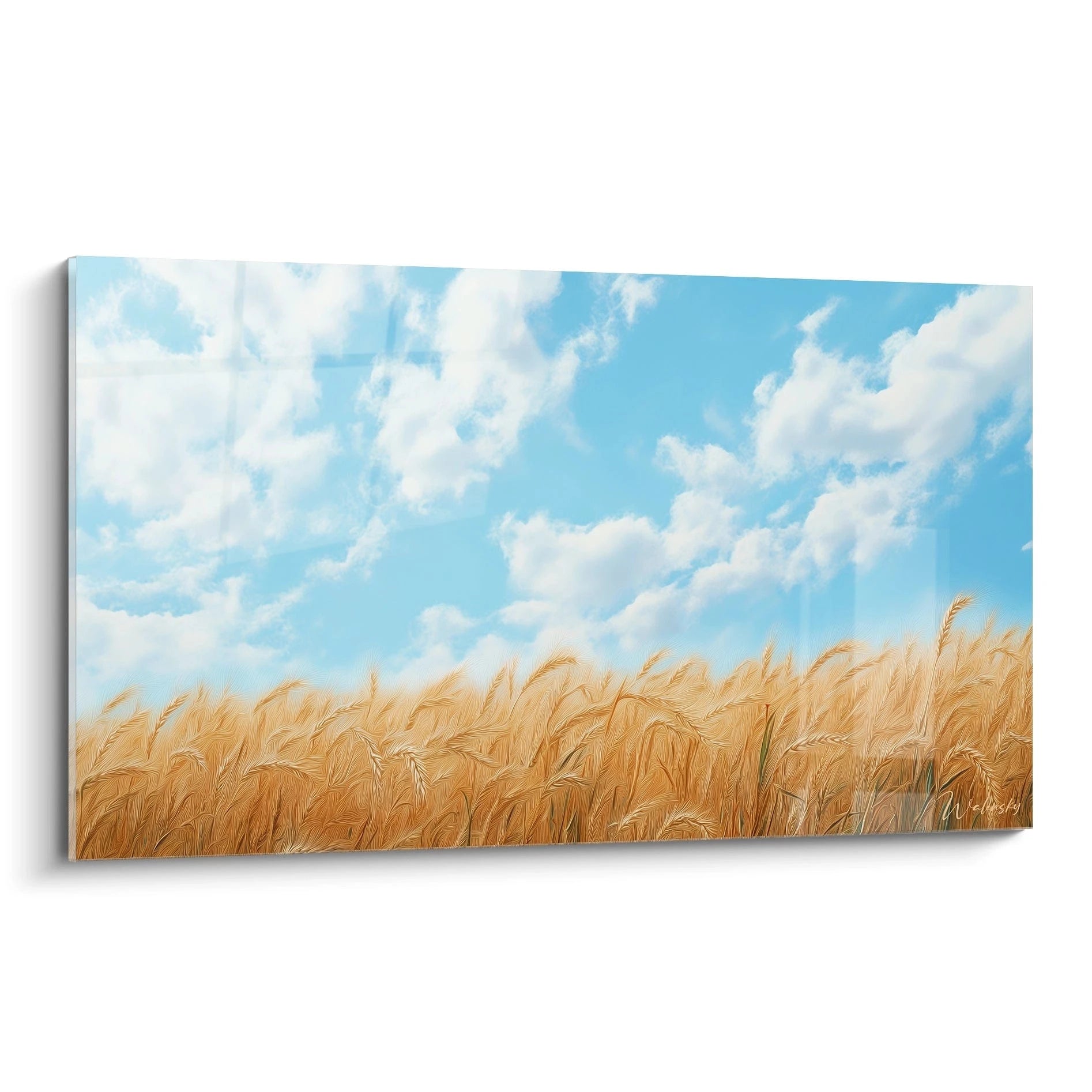
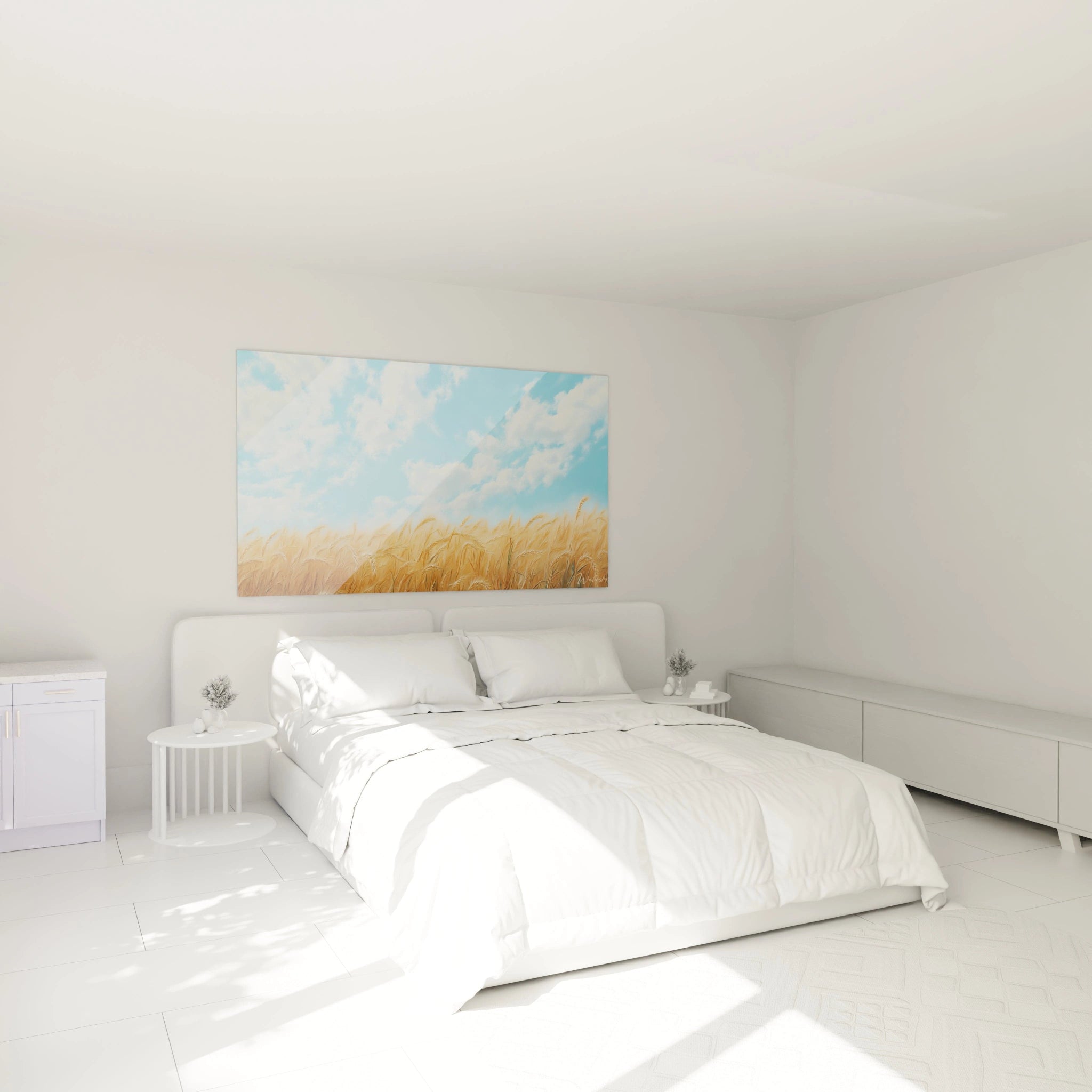
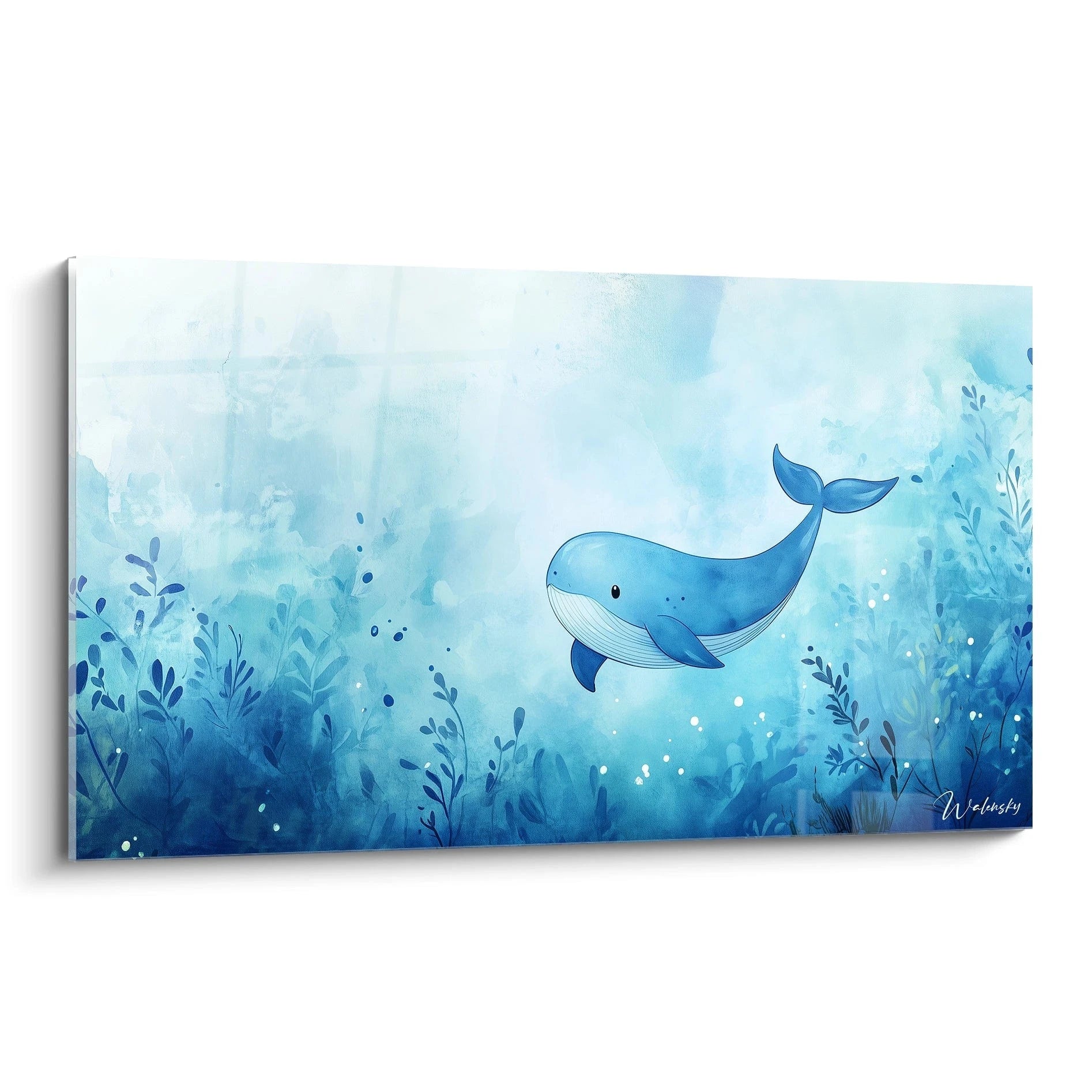
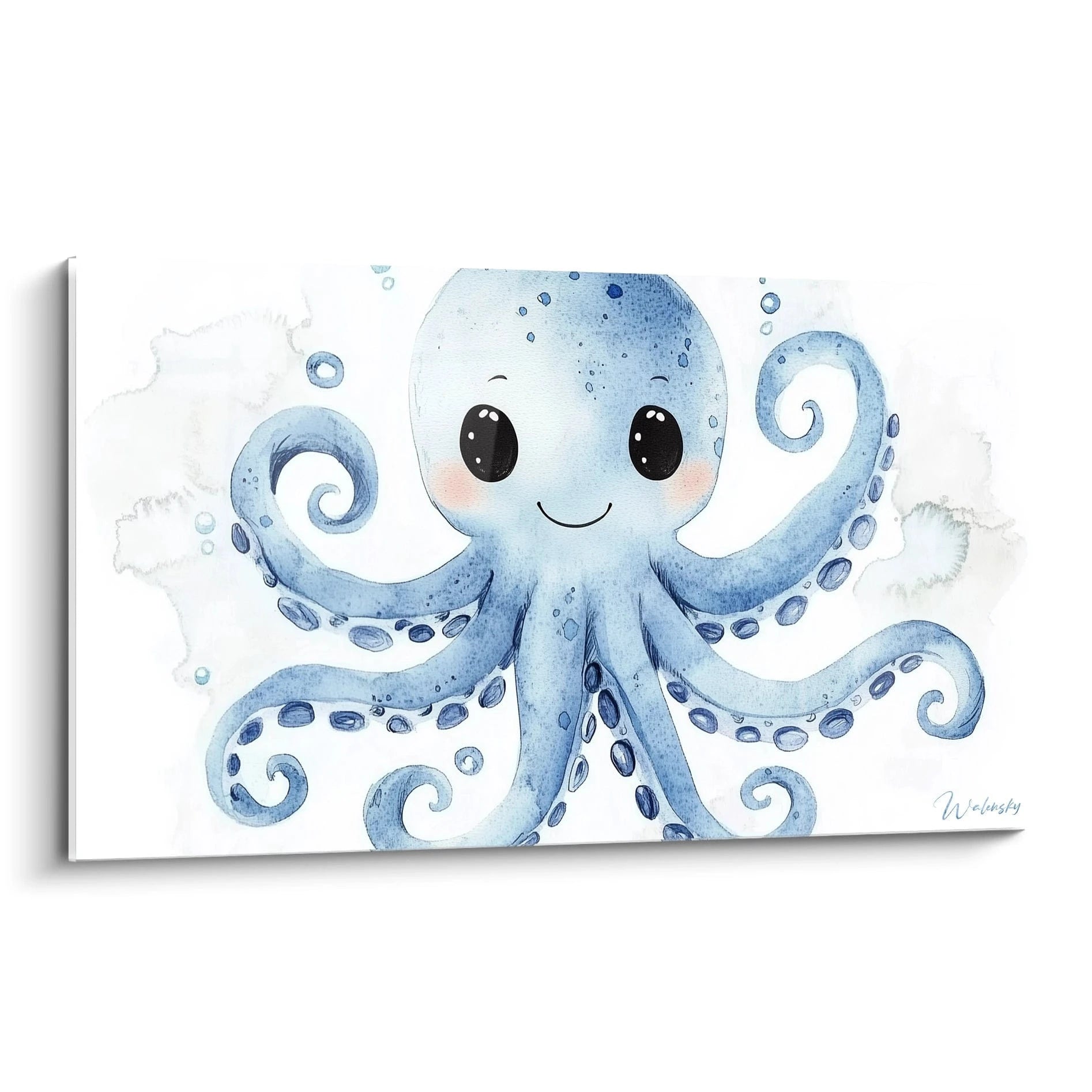
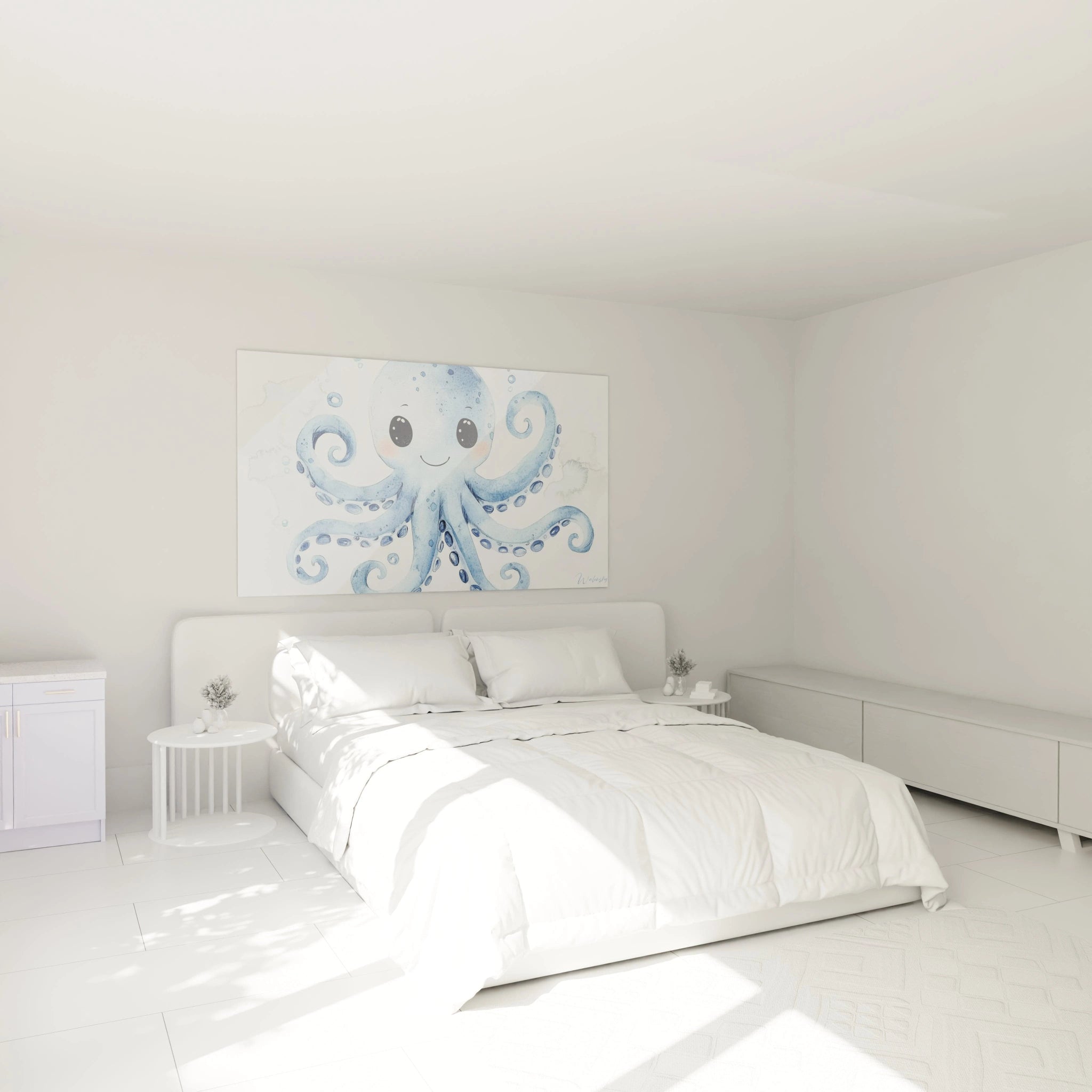
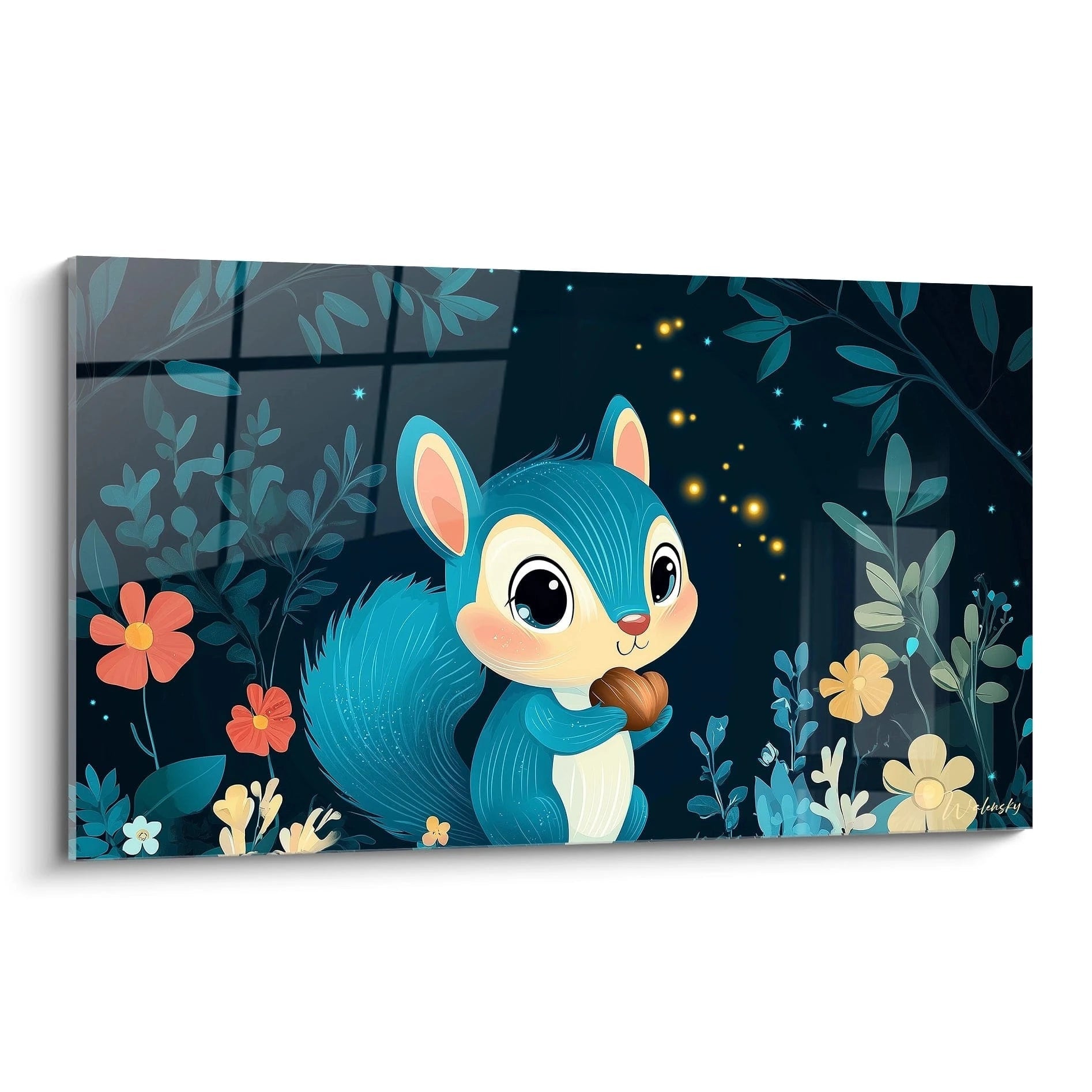
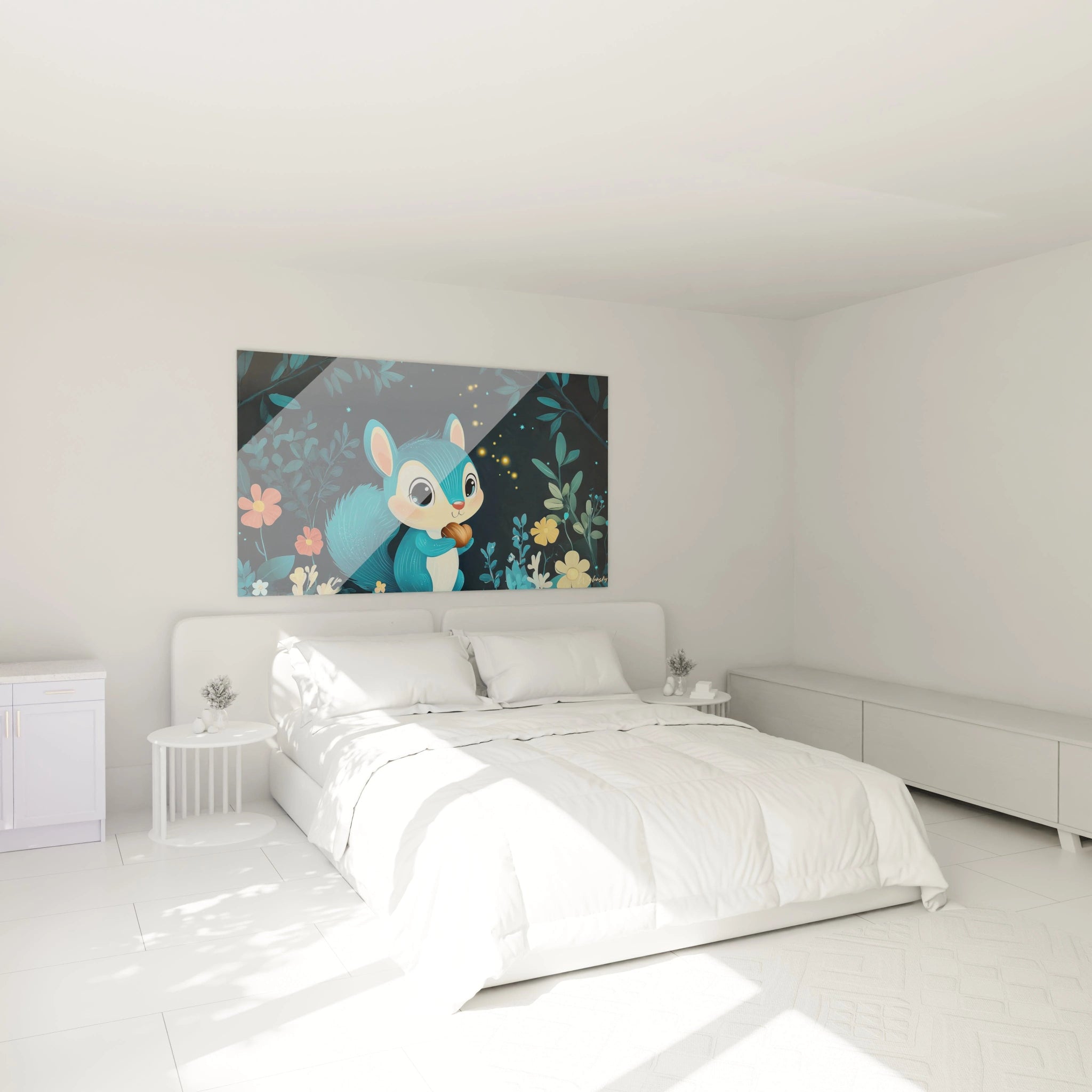
- Blue paintings overview
- Blue paintings calming atmosphere
- Blue paintings large format
- Blue paintings wall art
Blue paintings represent an exceptional decorative choice for transforming your living spaces. This deep and versatile shade instantly brings a serene and sophisticated dimension to your interior. Discover through our different tabs how to perfectly integrate these decorative artworks into your space, the specifics of large-format blue works, and how they can transform your wall décor.
Blue paintings: Creating a calming and immersive atmosphere
Blue paintings are far more than a simple decorative element – they represent a genuine gateway to a universe of serenity and emotional depth. The color blue possesses this unique capacity to radically transform a room's ambiance by establishing an immediate sense of calm.
Why do blue paintings exercise such a powerful psychological effect?
Habitat psychologists confirm that blue significantly reduces stress and anxiety levels in observers. A dominant blue painting in a living space acts as an emotional regulator, lowering blood pressure and slowing the heart rate of people who observe it daily. This physiological reaction explains why so many homeowners choose to invest in a blue painting for their relaxation spaces.
Color therapy, the science studying color's influence on our well-being, ranks blue at the top of therapeutic shades. A painting with deep blue nuances acts as a calming focal point in a visually cluttered room. Ocean or sky blue shades are particularly effective at creating what decorators call a "visual sanctuary" – a space where the eye can rest and the mind can refocus.
Blue paintings and spatial immersion
A fascinating characteristic of large-format blue paintings is their capacity to create a spatial immersion effect. Unlike paintings using warm shades that seem to advance in space, blue-dominated compositions create an impression of infinite depth. This optical property allows one to visually enlarge modestly-sized rooms.
Professional interior decorators use this property to transform constrained spaces into environments that appear more spacious and airy. A strategically placed monochrome blue painting on a main wall can visually push back the architectural limits of a 15 to 20% room according to spatial optics studies.
The unique versatility of blue paintings in different lighting environments
A remarkable and often overlooked aspect of blue paintings is their capacity to metamorphose their appearance based on ambient lighting conditions. This chameleon quality distinguishes blue creations from other monochrome artworks.
• Under morning natural light, cerulean nuances reveal their most vibrant tones
• At twilight hour, these same paintings adopt deeper, almost mystical tones
• Under cold white LED artificial lighting, blue pigments develop subtle luminescence
• In the glow of incandescent bulbs, they transform into more intimate and warm pieces
This chromatic adaptability essentially offers four different paintings in one single investment, an exclusive characteristic that only blue-dominated artworks can claim.
Blue paintings and the stimulation of creativity
Recent cognitive research has established a fascinating correlation between daily exposure to blue visual environments and measurable increases in creative performance. Participants working facing a monochrome blue painting showed a 29% improvement in associative thinking tests and generated 34% more innovative ideas than those exposed to neutral environments.
This cognitive stimulation explains why blue paintings enjoy particular success in creative work spaces, art studios, and architecture offices. An abstract blue painting can transform a simple wall into a daily inspiration catalyst.
The emotional resonance of different blue shades in wall art
The palette of blues used in contemporary wall art offers an incomparably rich emotional spectrum, with each shade awakening specific psychological resonances in the observer:
• Glacier blues evoke mental clarity and intellectual precision
• Deep ultramarine blues invite meditation and introspection
• Turquoise blues stimulate communication and creative expression
• Indigo blues promote intuition and extrasensory perception
• Cobalt blues establish a sense of protection and emotional security
This diversity allows one to select a blue painting not only for its aesthetic qualities but also for the specific emotional ambiance one wishes to cultivate in a given space.
Blue paintings thus represent far more than a simple decorative choice – they constitute a strategic decision to positively influence the psychological and emotional atmosphere of a living or working place. Their silent yet powerful presence continues to operate day after day, subtly transforming our experience of the spaces we inhabit.Blue paintings large format: Visual impact and spatial transformation
Large-format blue paintings represent a category of wall artworks with exceptional transformative properties. Their majestic presence in a space transcends simple decorative function to become a genuine architectural element that redefines the overall spatial experience.
What is the ideal dimension for a monumental blue painting?
Interior design experts agree on the existence of a specific "immersion threshold" for blue artworks. This unique phenomenon manifests when a blue painting occupies at least 60% of a wall's height, creating what professionals call the "portal effect".
For standard 2.5-meter ceilings, this generally corresponds to paintings at least 150 cm in height. At this dimension, the blue painting ceases to be perceived as a simple decorative element to become a genuine architectural extension, a window into a parallel space that seems to extend the room beyond its physical limits.
Unlike other colors that can quickly seem overwhelming in large format, monumental blue paintings take advantage of blue's unique property of creating a sense of space and breathing room. This characteristic explains why large blue paintings are particularly sought after for spaces with modest dimensions that they help visually expand.
Pigment density and perceptual depth
A remarkable characteristic of large-format blue paintings lies in their capacity to reveal what art conservators call "chromatic stratification" – a visual phenomenon where different shades of blue create an impression of three-dimensional depth.
Over an extended surface, blue pigments interact with light in a more complex manner, revealing subtleties imperceptible on reduced formats. This visual complexity explains why a large-format blue painting requires a minimum distance of 2.5 times its width to be fully appreciated, an essential consideration when placing it.
• Ultramarine blue paintings reveal their maximum depth at a distance of 3-4 meters
• Cerulean blue compositions require a viewing distance of 2-3 meters to unveil their subtle nuances
• Works in cobalt blues demand an observation distance of 3.5-4.5 meters for optimal perception
The temporal expansion phenomenon before large blue paintings
Studies in neuro-aesthetics have demonstrated a fascinating phenomenon unique to large blue paintings: subjective time expansion. Observers contemplating a monumental blue painting for 3 minutes estimated this time span at only 1.8 minutes on average.
This temporal distortion, exclusive to large-format blue compositions, transforms these artworks into genuine "psychological decompression zones" in high-pressure residential and professional environments. Large corporate halls and upscale waiting spaces particularly benefit from this soothing property.
The improved acoustics of spaces adorned with large blue paintings
A recent discovery in interior architecture reveals that large blue paintings significantly contribute to optimizing a space's acoustics. Their textured surface, particularly in abstract works or those with pronounced impasto, acts as a natural sound diffuser, reducing reverberation and improving acoustic clarity.
This property makes large blue paintings a privileged choice for music rooms, conversation spaces, and home cinema lounges where acoustic quality plays a central role in the overall experience. A blue canvas of 200 x 150 cm can reduce unwanted reverberation by 23% in a medium-sized room.
Circadian synchronization facilitated by large blue paintings
Research in chronobiology has highlighted the positive influence of large blue paintings on human circadian rhythm. The dominant presence of this color in daily visual field helps regulate melatonin production, the sleep hormone, thereby promoting a more harmonious sleep-wake cycle.
This particularity makes large-format blue paintings a judicious choice for bedrooms and relaxation spaces. Deep blue shades are particularly effective at facilitating the transition to relaxation states preceding sleep.
Large blue paintings thus fundamentally transform our experience of inhabited space, far exceeding their simple aesthetic function to become genuine mood modulators, spatial perception, and even physiological well-being. Their multisensory impact explains their growing presence in contemporary interior design concerned with combining aesthetics and advanced functionalities.Blue paintings: Revolutionizing your wall art with exceptional artworks
Blue paintings possess this rare capacity to radically metamorphose wall art while harmoniously integrating into virtually all interior styles. This exceptional versatility comes with technical and aesthetic particularities that deserve special attention when integrating them decoratively.
The strategic reflectivity of blue artworks in wall art
An often-neglected aspect of blue paintings concerns their light reflectivity coefficient (LRC), significantly different from other monochrome artworks. Blue pigments primarily reflect short-wave light, creating a perceptual halo that seems to extend the artwork beyond its physical limits.
This phenomenon, particularly notable at day's end, explains why blue paintings are often described as "alive" or "breathing" by observers. This dynamic quality transforms a simple wall decoration into an interactive element that dialogues with daily lighting variations.
To optimally exploit this property, decorators recommend:
• Positioning blue paintings on walls receiving lateral rather than frontal light
• Favoring accent lighting with neutral color temperature (3500-4000K)
• Maintaining a minimum distance of 30 cm between light sources and the pictorial surface
• Avoiding immediate proximity with highly reflective surfaces that could create visual interference
The chromatic integration of blue paintings in different decorative palettes
Blue paintings demonstrate exceptional chromatic integration capacity in varied decorative schemes, yet this versatility nonetheless obeys certain precise rules to reach its full potential.
In environments with neutral tonalities (gray, beige, off-white), a blue painting functions as what decorators call a "spatial activator", introducing visual dynamics without creating harmonic disruption. This punctual chromatic insertion allows one to energize a minimalist space while preserving its overall aesthetic coherence.
For decorations with dominant warm palettes (terracotta, ochre, natural wood), blue paintings create a particularly sophisticated complementary contrast. This opposed chromatic dialogue generates calculated visual tension that stimulates the eye without creating perceptual discomfort – a delicate balance that only the orange-blue combination can maintain with such elegance.
How do blue paintings influence the perception of architectural proportions?
A remarkable property of blue paintings lies in their capacity to subtly modify the perception of a room's architectural proportions. This characteristic makes them particularly valuable spatial correction tools in interior layouts presenting structural challenges.
For ceilings perceived as too low, a horizontal blue painting placed at eye level creates a visual flight line that diverts attention from vertical limitations. Conversely, in spaces with excessively elongated proportions, a vertical blue painting establishes an anchoring point that rebalances spatial dynamics.
In rooms with asymmetric dimensions, blue paintings can be strategically positioned to create what interior architects call "visual counterweights", restoring a sense of balance without requiring costly structural interventions.
The perceptual evolution of blue paintings in your décor
Unlike artworks using other chromatic dominants, blue paintings possess this unique faculty of evolving perceptually over time. This progressive visual metamorphosis constitutes one of their most valuable characteristics in lasting décor.
Upon initial installation, a blue painting immediately captures attention, functioning as a dominant focal point. Then, after 3-4 weeks of daily exposure, what environmental psychologists call "progressive perceptual integration" occurs: the artwork incorporates itself into the overall spatial perception without losing its presence.
This unique perceptual evolution allows blue paintings to avoid the visual fatigue phenomenon that often affects dominant decorative elements after several months. This attentional permanence explains why blue paintings statistically remain in place 4.7 times longer than artworks with other chromatic dominants.
Blue paintings and multi-level decorative stratification
Contemporary interior decorators exploit blue paintings' unique capacity to participate in what they call "multi-level decorative stratification" – a sophisticated approach where different decorative elements dialogue on multiple perception scales.
In this system, a blue painting can simultaneously:
• Serve as a visual anchoring element at the global architectural scale
• Create a chromatic transition between different functional zones
• Establish subtle dialogue with secondary decorative accessories
• Function as an autonomous narrative element for close contemplation
This perceptual versatility transforms a blue painting into a genuine "decorative node" capable of unifying disparate elements into a coherent and harmonious composition.
FAQs about blue paintings
What is the durability of pigments in a blue painting exposed to direct light?
Contemporary high-quality blue pigments offer excellent fade resistance, with estimated color stability of 12-15 years even under moderate light exposure. For optimal preservation, nevertheless privilege a location avoiding prolonged direct sunlight and consider applying a specific anti-UV protective varnish to the artwork.
Are blue paintings suitable for high-humidity spaces like bathrooms?
Blue paintings can perfectly integrate into humid environments provided one selects artworks with appropriate finishing. Look for paintings specifically treated with water-resistant varnishes that form a protective barrier against ambient humidity. For particularly steamy bathrooms, favor creations on composite supports rather than traditional ones.
How do I perfectly harmonize a blue painting with my existing furniture?
For harmonious integration, first identify any blue notes already present in your space – however subtle – and seek a painting whose primary tone resonates with these elements. Alternatively, create an intentional chromatic dialogue by choosing a complementary blue artwork to your dominant palette. Cerulean blues pair particularly well with light woods, while deep blues create elegant contrast with warm-toned furniture.