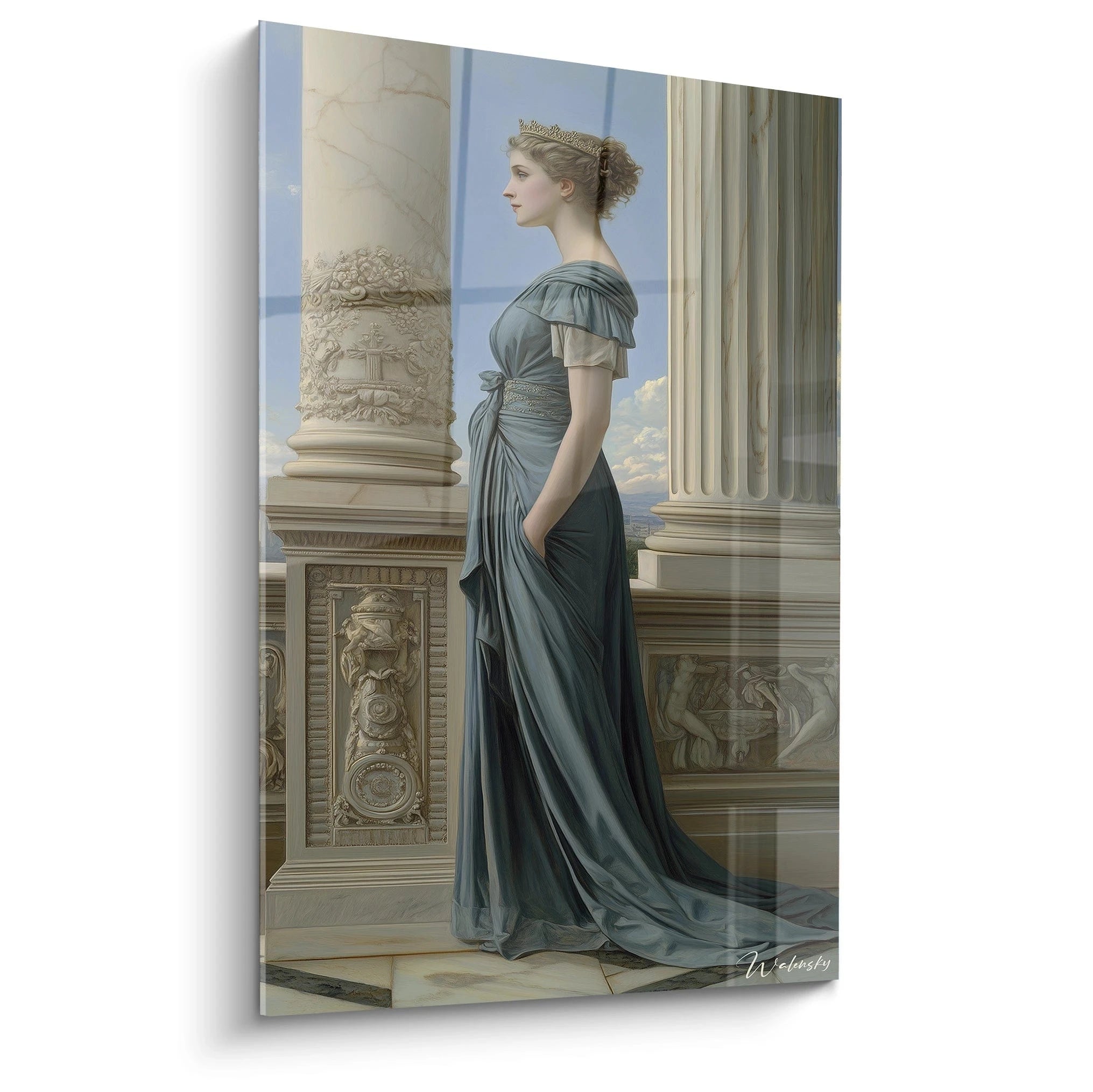
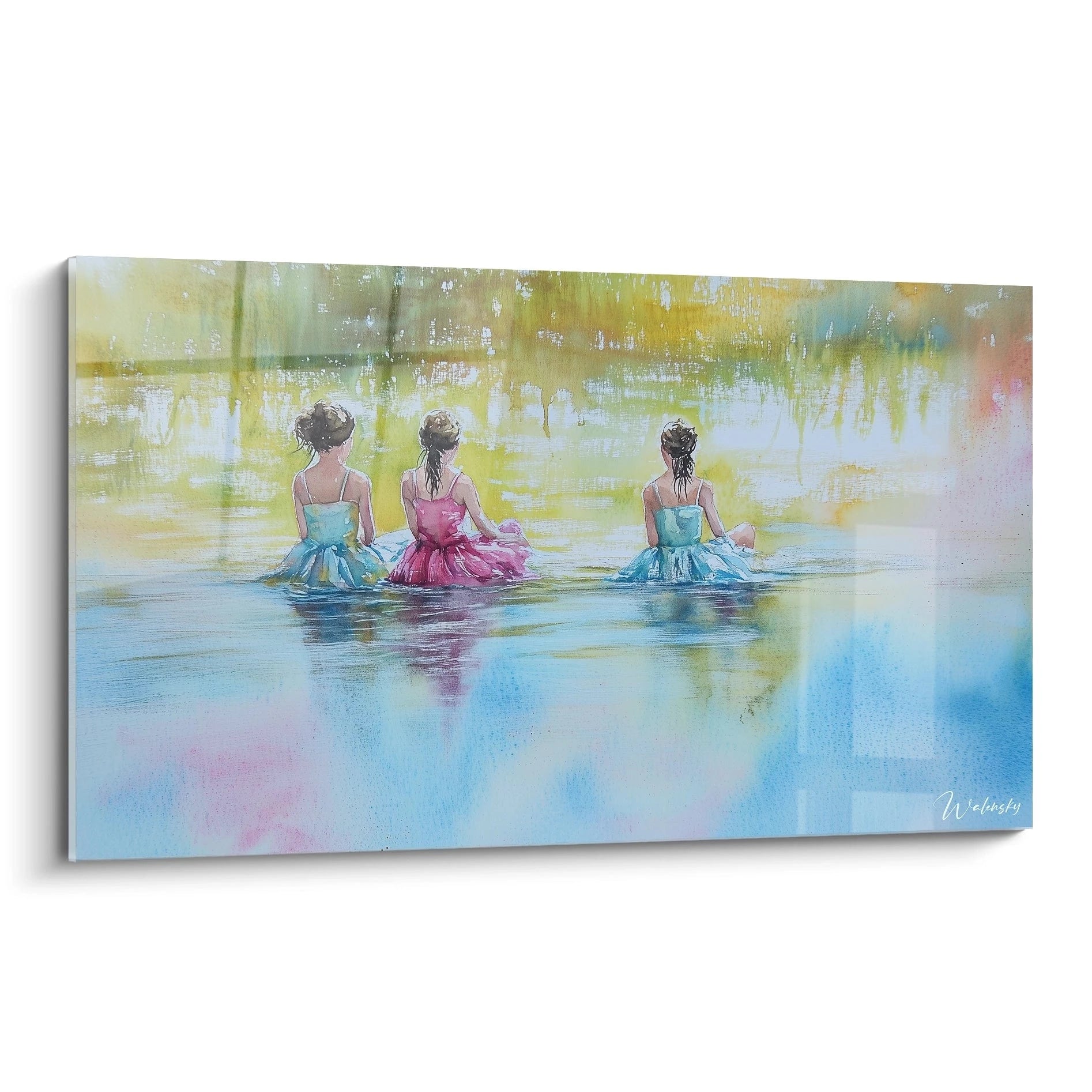
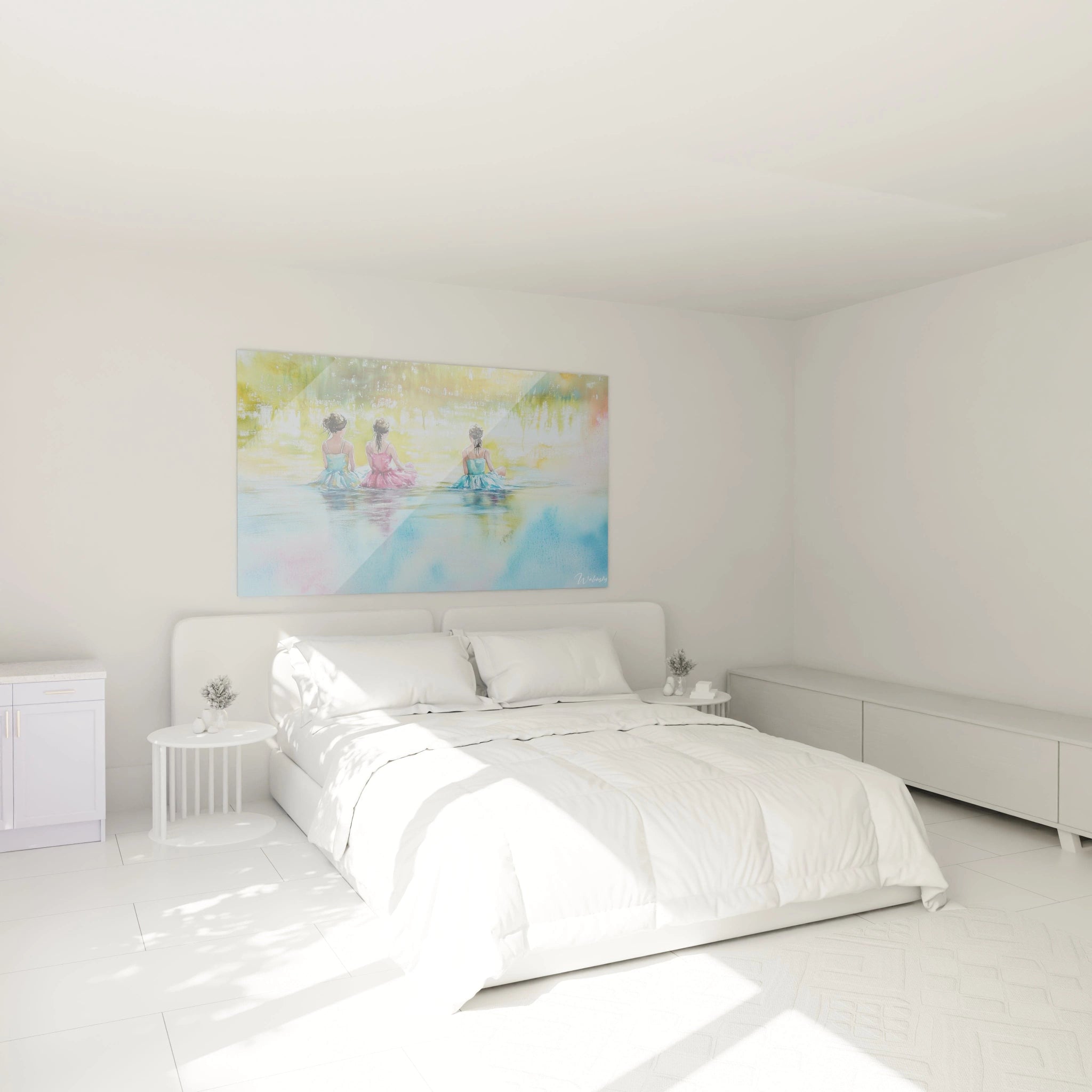
The paintings of Pierre Auguste Renoir represent the very essence of French Impressionism, capturing the joy of living and the beauty of everyday life with characteristic luminosity. Renoir, born in 1841 and died in 1919, left behind an incomparable artistic legacy that continues to influence modern art and captivate art lovers worldwide. His works, recognized for their vibrant hues and harmonious compositions, transform any space into a sanctuary of artistic refinement.
Among the greatest Impressionist masters, Renoir stands out for his unique pictorial technique, his warm color palette and his sensual representation of the human figure. Owning a painting by this celebrated artist in your home means far more than adding a decorative piece—it means integrating a historical testimony of one of the most fascinating periods in art history.
Quality reproductions of Renoir's paintings offer a unique opportunity to appreciate the artistic genius of this master in your personal environment. Whether drawn to his scenes of Parisian leisure, his expressive portraits or his luminous landscapes, each work by Renoir tells a story and creates a distinctive atmosphere that only a great master can evoke.
The Impressionist Heritage in the Paintings of Pierre Auguste Renoir
The paintings of Pierre Auguste Renoir embody the very essence of the Impressionist movement, while possessing a distinctive artistic signature that makes them immediately recognizable. Unlike other artists of his era, Renoir developed a particular approach to Impressionism that emphasizes the human figure and the joy of living, thus creating a unique visual legacy that transcends the temporal limits of this artistic movement.
How to recognize the authenticity of a Pierre Auguste Renoir painting?
The authenticity of a Renoir reproduction manifests itself in fidelity to the distinctive characteristics of his style. True representations of his works perfectly capture the lightness of touch, the characteristic luminosity and the warm color palette that define his work. Superior quality reproductions preserve the apparent texture of his brushstrokes and the way light seems to emanate from within his subjects rather than illuminate them from without.
Discerning collectors seek in Renoir's paintings this unique ability to capture fleeting expressions and ephemeral moments with remarkable sensitivity. Each reproduction must convey this almost tangible quality of suspended movement that characterizes his original works, particularly in his scenes of Parisian dance and leisure.
The influence of Renoir's paintings on the atmosphere of modern spaces
A Pierre Auguste Renoir painting radically transforms the ambiance of a room, creating a temporal bridge between the golden age of Impressionism and contemporary aesthetics. Unlike darker or more abstract works, Renoir's luminous and joyful scenes bring positive energy and a sense of lightness even to the most minimalist or industrial interiors.
Large format Renoir reproductions work particularly well in high-ceilinged spaces, where they create a warm focal point that softens the potential austerity of such environments. The visual depth of his compositions literally opens a window onto another world, visually enlarging even modest spaces.
- Renoir's nature and garden scenes bring freshness and vitality to contemporary urban spaces
- His female portraits introduce timeless elegance into modern interiors
- Scenes of Parisian leisure create an atmosphere of sophistication and joie de vivre
Why do collectors favor Pierre Auguste Renoir paintings?
Collectors and art enthusiasts seek Pierre Auguste Renoir paintings for their unique combination of artistic value, universal aesthetic appeal and emotional depth. Unlike some more esoteric or conceptual artists, Renoir's work possesses an immediate accessibility that never sacrifices artistic sophistication, making it a privileged choice for both novice and experienced collectors.
Investment in a quality reproduction of a Renoir painting also represents a judicious choice from a decorative standpoint. The harmonious color palette characteristic of the artist—with its soft pinks, luminous blues and delicate greens—naturally integrates into almost every modern residential color scheme, offering decorative versatility that few other artists can match.
For art connoisseurs, owning a Renoir painting testifies to an appreciation for the most revolutionary period in Western art history. Each work represents not only a magnificent decorative piece, but also a fragment of French cultural heritage and a testimony to the moment when art broke with academic conventions to embrace modernity.
The Characteristic Luminosity of Pierre Auguste Renoir Paintings
The distinctive luminosity that emanates from Pierre Auguste Renoir paintings constitutes their most recognizable visual signature. Unlike other Impressionists who primarily explored the effects of light on landscapes, Renoir developed a unique technique to capture how light interacts with human skin, fabrics and social atmospheres, creating an inner radiance that immediately distinguishes his works.
How does the light in Renoir paintings transform contemporary spaces?
The characteristic light effect in Pierre Auguste Renoir paintings possesses the remarkable ability to transform contemporary environments by infusing them with an atmospheric quality difficult to achieve through other decorative means. In modern interiors with clean lines and reflective surfaces, a Renoir reproduction acts as an organic counterpoint, bringing a visual warmth that balances the potential austerity of minimalist spaces.
Renoir's large paintings in warm tones work particularly well in north-facing spaces that receive primarily cool light. The warm colors and inherent luminosity of these works create the illusion of an additional light source in the room, visually compensating for the lack of direct sunlight. This quality is particularly valuable in northern climates or shaded urban apartments.
- Renoir's outdoor scenes bring a sense of fresh air and space to confined interiors
- Luminous portraits create a warm focal point even in the most austere rooms
- The warm palette perfectly compensates for interiors dominated by cold materials like metal and concrete
Adapting Pierre Auguste Renoir paintings to different modern lighting sources
Pierre Auguste Renoir paintings present a remarkable quality: their ability to adapt and react differently depending on lighting conditions, thus creating a dynamic visual experience throughout the day. High-quality reproductions of his works, printed with advanced technologies, preserve this essential characteristic that animated his original creations.
Under contemporary LED lighting with adjustable color temperature, Renoir paintings reveal different facets of their color palette. With warmer light (2700-3000K), Renoir's characteristic pinks and reds intensify, creating a more intimate atmosphere. Under more neutral lighting (4000K), blues and greens gain presence, balancing the composition and revealing details sometimes less apparent.
To maximize the visual impact of a Renoir painting in a contemporary interior, the installation of dedicated directional lighting, ideally with a Color Rendering Index (CRI) higher than 95, allows for faithful reproduction of the complex color spectrum that the artist so meticulously composed. This particular attention to lighting transforms a simple reproduction into an immersive experience that evolves with the cycles of natural and artificial light.
Modern reproduction techniques in service of Renoir luminosity
Advances in artistic reproduction technology have revolutionized our ability to capture the characteristic luminosity of Pierre Auguste Renoir paintings. Contemporary printing processes using up to 12 different inks now allow for astonishingly faithful reproduction of the subtle color variations and inherent luminosity that define his unique style.
Museum-quality reproductions employ spectral digitization technologies that capture not only visible colors, but also the light reflection properties of original paintings. This level of sophistication allows modern reproductions to preserve the "inner light" effect so characteristic of Renoir's works, where light seems to emanate from the subjects themselves rather than simply illuminate them.
For demanding collectors, reproductions on textured supports with selective varnish application allow recreation of not only the visual appearance but also the tactile dimension of Renoir's characteristic brushstrokes. This attention to sensory detail transforms a two-dimensional reproduction into an object that truly captures the artisanal essence of the original, while preserving its distinctive luminosity.
The Unique Pictorial Techniques of Pierre Auguste Renoir Paintings
The pictorial techniques developed by Pierre Auguste Renoir constitute one of the most significant innovations in Western art history. His unique method of juxtaposing colored strokes to create visual vibration, rather than mixing colors on the palette, revolutionized the approach to painting and influenced generations of artists. This distinctive technique gives his paintings a vitality and freshness that transcend time.
The stylistic evolution visible in different periods of Renoir paintings
The work of Pierre Auguste Renoir is characterized by a fascinating stylistic evolution reflected in the different reproductions available. His early Impressionist period (1864-1881) is distinguished by fragmented strokes and a brilliant palette that masterfully capture the fleeting effects of natural light on Parisian leisure scenes and landscapes.
In his so-called "Ingresque" or "sour" period (1883-1887), Renoir adopts a more linear and structured style, inspired by classical masters such as Ingres. Reproductions of paintings from this period reveal more defined outlines, a cooler palette and particular attention to form and composition rather than atmospheric effects. This stylistic diversity offers contemporary collectors the opportunity to select works that perfectly correspond to their aesthetic preferences and the ambiance of their space.
His final period, often called the "nacre period" (1890-1919), sees the emergence of a unique synthesis between his Impressionist touch and his interest in classical form. Despite the severe arthritis that afflicted him, Renoir develops a technique where paint is applied in translucent layers creating a characteristic nacre effect. Reproductions of these late works possess an inner luminosity and an almost tactile quality that transforms any space into a sanctuary of visual sensuality.
- Paintings from the Impressionist period bring dynamism and energy to contemporary spaces
- Works from the "Ingresque" period offer balance and structure to minimalist interiors
- Creations from the nacre period create an atmosphere of serenity and timeless contemplation
Why does Renoir's technique create a unique emotional connection?
The pictorial technique of Pierre Auguste Renoir generates a singular emotional response in the observer, distinct from that evoked by other Impressionist artists. Through his unique way of manipulating color and light, his paintings establish an immediate emotional connection that transcends cultural and temporal boundaries. This universal quality explains why reproductions of his works resonate so powerfully in contemporary interiors.
Neuroscientists have recently demonstrated that Renoir's particular technique, which combines complementary color strokes placed side by side rather than mixed, creates stimulating visual activity for the brain. This "optical fusion" that occurs in the observer's eye generates a dynamic visual experience that actively engages the viewer, unlike static images that can quickly become visually invisible through perceptual habituation.
For contemporary spaces often characterized by a certain chromatic neutrality, a Renoir painting introduces an element of visual vitality that constantly evolves based on viewing angle, observation distance and lighting conditions. This kinetic quality, inherent to his technique, ensures that the work remains visually stimulating day after day, year after year, unlike more literal images that may lose their impact over time.
How to choose the ideal Pierre Auguste Renoir painting for your space?
Selecting the perfectly suited Renoir painting for your space requires careful consideration of several specific factors. First, identify the stylistic period that resonates most with your personal aesthetic sensitivity and the overall ambiance of your interior. Works from his early Impressionist period, with their vibrant colors and animated scenes, will energize neutral spaces, while his later creations, with their softer tones and more serene compositions, will bring calm and depth to more lively environments.
Do Pierre Auguste Renoir paintings require particular protection against light?
Quality reproductions of Renoir paintings today benefit from advanced printing technologies offering exceptional resistance to fading. However, to preserve the integrity of the vibrant colors so characteristic of his work, it is recommended to avoid direct exposure to UV rays. Installing UV-protective glass or plexiglass provides effective protection without compromising visual appreciation of the distinctive luminosity of his creations.
What is the added value of a Pierre Auguste Renoir painting in an art collection?
Integrating a Pierre Auguste Renoir painting into a contemporary art collection creates a fascinating dialogue between artistic periods. His technical mastery of light and color offers an instructive counterpoint to modern approaches, while his celebration of the joy of living and everyday beauty brings a humanistic dimension that transcends aesthetic trends. For the discerning collector, a Renoir represents far more than a decorative acquisition: it is a historical witness to a fundamental artistic revolution that continues to influence our visual perception today.
Frequently Asked Questions
How to authenticate a Pierre Auguste Renoir painting sold as a quality reproduction?
Authenticating a quality reproduction of a Pierre Auguste Renoir painting involves several essential criteria: chromatic fidelity compared to catalogue raisonnés, the quality of the support and inks used, precision in reproducing subtle details of brushstrokes, and documentation accompanying the work. The best reproductions are accompanied by certificates detailing the digitization and printing process, as well as information about the original work.
Which Pierre Auguste Renoir paintings are most suitable for large modern spaces?
For modern spaces with generous dimensions, group scenes such as "The Luncheon of the Boating Party" or "Bal du Moulin de la Galette" offer narrative and visual richness that animate large wall surfaces without overwhelming them. These complex compositions invite prolonged contemplation and create an impressive focal point that structures the entire space, while introducing the human warmth characteristic of Renoir's work to sometimes austere environments.
How do Pierre Auguste Renoir paintings harmonize with contemporary architecture?
The aesthetic versatility of Pierre Auguste Renoir paintings allows them to integrate harmoniously into contemporary architecture despite their historical origin. In minimalist spaces with clean lines, his works bring an organic dimension and visual depth that counterbalance geometric austerity. Large-format reproductions, particularly those of his luminous landscapes or outdoor scenes, create a "window" effect that visually expands the space while enriching it with a natural and human presence.