


Indricotherium Wall Art
The colossal Indricotherium, also known as Paraceratherium, dominates our collection as the most imposing land mammal ever to roam the Earth. This giant ancestor of rhinoceroses could reach 5 meters in height and weigh 20 tons. Our artistic creations capture the prehistoric grandeur of this creature that browsed the treetops during the Oligocene. These impressive wall works evoke an era when animal dimensions exceeded imagination, offering a unique perspective on the evolution and diversity of life on Earth.
 Indricotherium Portrait Wall Art - Equestrian Elegance - Indricotherium Edition273,90 €
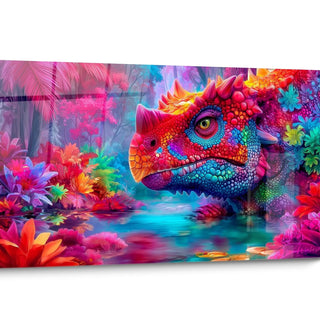
 Indricotherium Fantastic Wall Art - Mystical Garden - Indricotherium Edition273,90 €
In the same family
Also explore the theme Primordial Lands
-
 View all150
artworks
View all150
artworks
-
 Andrewsarchus6
artworks
Andrewsarchus6
artworks
-
 Argentavis9
artworks
Argentavis9
artworks
-
 Basilosaurus10
artworks
Basilosaurus10
artworks
-
 Dinosaur31
artworks
Dinosaur31
artworks
-
 Dunkleosteus5
artworks
Dunkleosteus5
artworks
-
 Prehistoric Frescoes8
artworks
Prehistoric Frescoes8
artworks
-
 Glyptodon8
artworks
Glyptodon8
artworks
-
 Kaprosuchus12
artworks
Kaprosuchus12
artworks
-
 Woolly Mammoth22
artworks
Woolly Mammoth22
artworks
-
 Megaloceros
-
 Megalodon9
artworks
Megalodon9
artworks
-
 Quetzalcoatlus8
artworks
Quetzalcoatlus8
artworks
-
 Scutosaurus9
artworks
Scutosaurus9
artworks
-
 Saber-Toothed Tiger11
artworks
Saber-Toothed Tiger11
artworks


All about Indricotherium Wall Art
- Overview Indricotherium Wall Art
- Indricotherium Wall Art - Anatomy and Monumental Dimensions
- Indricotherium Wall Art - Oligocene Reconstruction
- Indricotherium Wall Art - Modern Paleontological Decor
Discover our exceptional collection of Indricotherium wall art, celebrating the largest land mammal ever to roam our planet. These large-scale artistic representations capture the full majesty of this prehistoric giant rhinoceros that dominated Asian steppes 30 million years ago. Each creation offers a fascinating window into the Oligocene epoch, a pivotal period in mammalian evolution. Our paleontological representations combine scientific precision with spectacular visual impact, transforming your spaces into genuine natural history galleries. Immerse yourself in the world of extinct megafauna and let yourself be transported by the evocative power of these forgotten giants of the Tertiary.
The Indricotherium: When Wall Art Reveals the Colossus of the Oligocene
The Indricotherium wall art represents far more than simple wall decoration: it embodies the artistic reconstruction of the most imposing land mammal of all time. Standing 5 meters tall at the shoulder and weighing 20 tons, this ancestor of modern rhinoceroses surpassed even today's elephants in colossal dimensions. This monumental scale is precisely what radically distinguishes an Indricotherium representation from any other animal artwork.
Why does the Indricotherium's scale fascinate collectors so much?
The imposing formats of our wall creations faithfully reflect the staggering proportions of this prehistoric mastodont. Unlike representations of contemporary animals, a large-scale Indricotherium wall art allows one to visually grasp what it truly meant to encounter such a titan. Paleoartists rely on exceptional fossil discoveries, particularly the nearly complete skeletons found in Kazakhstan and Mongolia, to accurately restore every anatomical detail.
The characteristic elongated head, lacking a horn unlike modern rhinoceroses, is distinguished by its prehensile muzzle capable of reaching vegetation over 8 meters high. This unique anatomical feature makes each artistic representation a genuine lesson in evolutionary paleontology. The massive limbs, veritable organic pillars, supported a body of unprecedented proportions, evoking more the architecture of a suspension bridge than that of an animal.
How does the Indricotherium's musculature influence its artistic representation?
Artists specialized in paleoart pay particular attention to restoring the powerful musculature of this Oligocene giant. Visible muscle attachments on fossils reveal phenomenal force concentrated in the neck and shoulders. This anatomical robustness translates visually into impressive volumes that give wall creations striking decorative impact.
The reconstructed skin texture draws inspiration from current rhinoceroses while accounting for the Oligocene's specific climatic environment. The color variations offered in our ranges reflect current scientific hypotheses about the pigmentation of these extinct mammals. Some reconstructions favor neutral gray tones, while others explore brownish nuances suited to arid steppe landscapes.
The unique body proportions that define the Indricotherium
The exceptional elongation of the neck and front limbs constituted the major evolutionary adaptation enabling the Indricotherium to exploit an unprecedented ecological niche. This anatomical specialization radically distinguishes it from all other fossil or living perissodactyls. Quality Indricotherium wall art systematically highlights these singular proportions that make it an absolutely unique artistic subject.
- Height at shoulder reaching 5 to 5.5 meters depending on specimens
- Total body length approaching 8 meters from head to tail
- Body mass estimated between 15 and 20 tons for the largest individuals
- Skull measuring approximately 1.3 meters in length with specialized tooth rows
- Front limbs slightly longer than hind limbs creating a distinctive posture
What role did dentition play in the Indricotherium's ecology?
The particular dental formula of this giant rhinoceros testifies to a highly specialized diet. Prominent incisors and low-crowned molars indicate adaptation to browsing tender foliage at height. This unique ecological specialization justifies artistic representations showing the animal in feeding position, neck extended toward fronds inaccessible to other herbivores of its era.
Scale comparisons integrated into certain wall compositions allow one to concretely grasp the phenomenal size of the Indricotherium. Juxtaposed with a human, an African elephant, or even a mammoth, this Oligocene colossus literally dwarfs any contemporary reference. This perspective-giving constitutes a powerful narrative element that transforms simple decoration into a scientific education tool.
The paleontological discoveries that revolutionized our anatomical understanding
Paleontological expeditions conducted in Central Asian sedimentary basins between 1910 and today have progressively revealed this giant's complete anatomy. Articulated skeletons discovered in Kazakhstan provide a solid scientific foundation for modern artistic reconstructions. Each new paleontological publication refines our understanding of this exceptional animal's locomotion and natural posture.
The voluminous rib cage, necessary to house the vital organs of such a mastodont, gives artistic representations a massive presence particularly suited to large wall spaces. The imposing formats available in our collection allow faithful reproduction of this impression of colossal power that characterized the living Indricotherium. The complete absence of nasal horns, unlike modern rhinoceroses, simplifies the lines while accentuating the paradoxical elegance of this giant herbivore.
Paleoenvironmental Reconstruction: The Indricotherium in its Oligocene Habitat
An authentic Indricotherium wall art never limits itself to the isolated representation of the animal: it restores the entirety of the Oligocene ecosystem in which this giant evolved. The Oligocene epoch, extending from -34 to -23 million years ago, corresponded to a period of major climatic upheaval that shaped Central Asian landscapes. Open steppes dotted with tree groves constituted the preferred habitat of this herbivorous mastodont.
How do artists reconstruct Oligocene landscapes?
Paleoartists rely on paleobotanical data to faithfully restore the vegetation contemporary with the Indricotherium. Fossil pollen assemblages reveal a flora composed mainly of pines, archaic oaks, and herbaceous plants adapted to semi-arid climates. This scientific reconstruction confers upon wall compositions a paleoecological authenticity appreciated by discerning collectors.
The backgrounds of representations systematically evoke the immensity of Oligocene Asian steppes. Unlike the dense forests of the earlier Paleogene, the Oligocene sees the expansion of open environments favoring the evolution of large herbivores adapted to long-distance movement. This major ecological transition constitutes the essential context for understanding the evolutionary emergence of the Indricotherium.
What other animals cohabited with the Indricotherium?
The Oligocene Central Asian ecosystem housed remarkably diverse fauna that some artistic compositions incorporate to enrich the paleontological context. Chalicotheres with impressive claws, entelodon predators resembling giant boars, and the first large felids shared the Indricotherium's habitat. This faunal coexistence offers artists fascinating narrative possibilities.
- Embolotherium and other late brontotheres in residual forested regions
- Hyracodon and other moderate-sized rhinoceroses in wetland areas
- Entelodon mammouthoides, opportunistic superpredator of Oligocene plains
- Various chalicothere species with unique locomotor adaptations
- Early representatives of modern carnivores including amphicyonids and nimravids
The climatic conditions that shaped the evolution of this giant
The Oligocene corresponds to a phase of significant global cooling following the Eocene thermal optimum. This climatic transition favored the expansion of large herbivores capable of efficiently exploiting less luxuriant vegetation. Indricotherium wall art captures visually this evolutionary adaptation to the open and semi-arid environments characteristic of the epoch.
The chromatic tonalities favored in artistic reconstructions reflect this growing aridity: ochres, beiges, and browns dominate palettes, evoking vast grassy expanses punctuated by wooded areas. This particular ambiance fundamentally distinguishes Indricotherium representations from creations illustrating other, more humid or forested geological periods.
Oligocene paleogeography: from Asian steppes to artistic reconstructions
Major Indricotherium fossil deposits concentrate in present-day Kazakhstan, Mongolia, and western China. These regions corresponded during the Oligocene to vast inland plains isolated from oceanic influences by mountain ranges in formation. This unique paleogeographic configuration explains the gigantism of the Indricotherium, which exploited an ecological niche without contemporary equivalent.
Sophisticated wall compositions frequently integrate characteristic geological elements: sandstone rock formations, seasonal watercourses, laterite soils typical of contrasting climates. These environmental details transform each creation into a genuine paleoenvironmental reconstruction rather than simple animal portraiture. The scientific accuracy of these contextual elements constitutes a discriminating criterion for informed collectors.
Why did the Indricotherium disappear at the end of the Oligocene?
The extinction of the Indricotherium around -23 million years ago coincides with new climatic upheavals marking the Oligocene-Miocene transition. The progressive drying of Central Asia and modification of plant communities condemned this hyperspecialized giant. This finite temporal dimension confers upon artistic representations a particular emotional charge, celebrating a magnificence definitively vanished.
Paleoecological scenarios also suggest increased competition with other large herbivores better adapted to new environmental conditions. Early migratory proboscideans and more moderate-sized but more versatile rhinoceroses progressively supplanted the Indricotherium in its traditional ecological niches. This complex evolutionary history considerably enriches the visual narration of quality wall creations.
Decorative Integration and Scientific Value of Indricotherium Wall Art
Acquiring an Indricotherium wall art transcends far beyond simple decorative intent to inscribe itself within a genuine paleontological art collection. These large-scale representations radically transform the spatial perception of contemporary interiors while asserting a passion for natural sciences and the history of life on Earth. The monumentality of the subject demands ambitious formats that instantly become the dominant focal points of any exhibition space.
In what spaces does Indricotherium wall art produce the best visual impact?
Large architectural volumes constitute the ideal environment to welcome these imposing creations. Reception spaces in professional settings, particularly in scientific institutions, museums, universities, or research centers, benefit extraordinarily from the evocative presence of this Oligocene giant. The monumental scale of the subject naturally dialogues with generous ceiling heights and extended wall surfaces.
Private collectors frequently favor personal libraries, modern cabinets of curiosities, or double-height living spaces to fully showcase these spectacular works. Unlike conventional animal representations, Indricotherium wall art requires sufficient viewing distance to simultaneously grasp the entirety of the composition and meticulous anatomical details. This spatial constraint makes it a decorative investment particularly suited to large interiors.
How to compose a coherent decorative environment around this paleontological theme?
Contemporary museum aesthetics offers the optimal decorative framework for showcasing these scientific creations. Neutral and refined wall tones allow the chromatic richness and narrative depth of the work to express itself fully. Association with minimalist furniture avoids any visual competition likely to dilute the artwork's impact.
- Directional lighting enhancing the reliefs and depths of the composition
- Furniture in natural wood evoking organic fossil materials
- Presence of authentic fossils or paleontological replicas creating thematic coherence
- Scientific paleontology volumes strategically placed to reinforce the educational dimension
- Overall color palette favoring earth tones recalling fossiliferous sediments
What is the educational value of an Indricotherium representation?
Beyond its undeniable decorative impact, each Indricotherium wall art constitutes a remarkable vector of scientific mediation. Visitors systematically discover with astonishment the former existence of this little-known colossus, triggering conversations and further research. This educational dimension, particularly appreciated in family or professional contexts, fundamentally distinguishes these creations from purely ornamental works.
Educational institutions frequently exploit these representations as visual educational supports for addressing mammalian evolution, paleoecology, or paleoart reconstruction methods. The scientific precision of anatomical details authorizes legitimate didactic use, transforming the decorated space into an extension of traditional museum collections. This functional versatility fully justifies investment in these imposing formats.
Selection criteria for an informed acquisition
The quality of an Indricotherium representation is evaluated primarily on its fidelity to current paleontological data. Anatomical proportions must rigorously respect osteometric measurements established from reference fossils. The reconstructed environment requires irreproachable paleoecological coherence, avoiding frequent anachronisms in less documented creations.
The signature of the artist or paleoart studio constitutes a pertinent quality indicator. Practitioners recognized within the international paleontological community guarantee scientific rigor and technical excellence that durably enhance any collection. The formats available in our range allow precise adaptation of dimensions to your spatial constraints while preserving the monumental visual impact characteristic of the subject.
The evolution of the contemporary paleontological art market
Paleoart currently experiences remarkable enthusiasm among cultivated collectors and scientific institutions. This growing recognition reflects increased sensitivity to biodiversity issues and conservation, the study of past extinctions illuminating contemporary ecological challenges. Indricotherium wall art perfectly inscribes itself within this trend by celebrating extinct megafauna while questioning our relationship with nature.
Large-scale wall creations particularly benefit from this renewed interest, imposing formats enabling visual immersion comparable to traditional museum dioramas. The accessibility of these works democratizes access to a form of scientific art once reserved for specialized institutions. This sociological dimension considerably strengthens the relevance of integrating these spectacular representations into demanding contemporary interiors.
Frequently asked questions about Indricotherium wall art
What is the difference between Indricotherium wall art and a modern rhinoceros representation?
The Indricotherium radically differs from modern rhinoceroses through its colossal proportions, complete absence of nasal horn, exceptionally elongated neck, and unique ecological specialization. Artistic representations systematically highlight these distinctive anatomical characteristics that make it an absolutely singular paleontological subject, without equivalent in contemporary fauna.
Does Indricotherium wall art suit all interior styles?
These creations harmonize particularly with contemporary, industrial, or academic aesthetics favoring sophisticated and culturally affirmed atmospheres. Their monumental visual impact and scientific charge destine them primarily for spaces valuing erudition and originality rather than conventional or extremely minimalist decorative ambiances.
How to verify the scientific accuracy of Indricotherium wall art?
Rigorous representations rely on reference paleontological publications and scrupulously respect established osteometric proportions. The presence of specific anatomical details such as characteristic dental formula, relative proportions of limb segments, and absence of horns testify to serious scientific documentation distinguishing works of excellence.
Why choose Indricotherium wall art over other prehistoric mammals?
The Indricotherium embodies the absolute gigantism of land mammals, no other species ever achieving such dimensions outside the marine environment. This dimensional supremacy confers upon representations an incomparable narrative singularity, celebrating a definitive biological record particularly fascinating for natural history enthusiasts and collectors seeking the exceptional.


