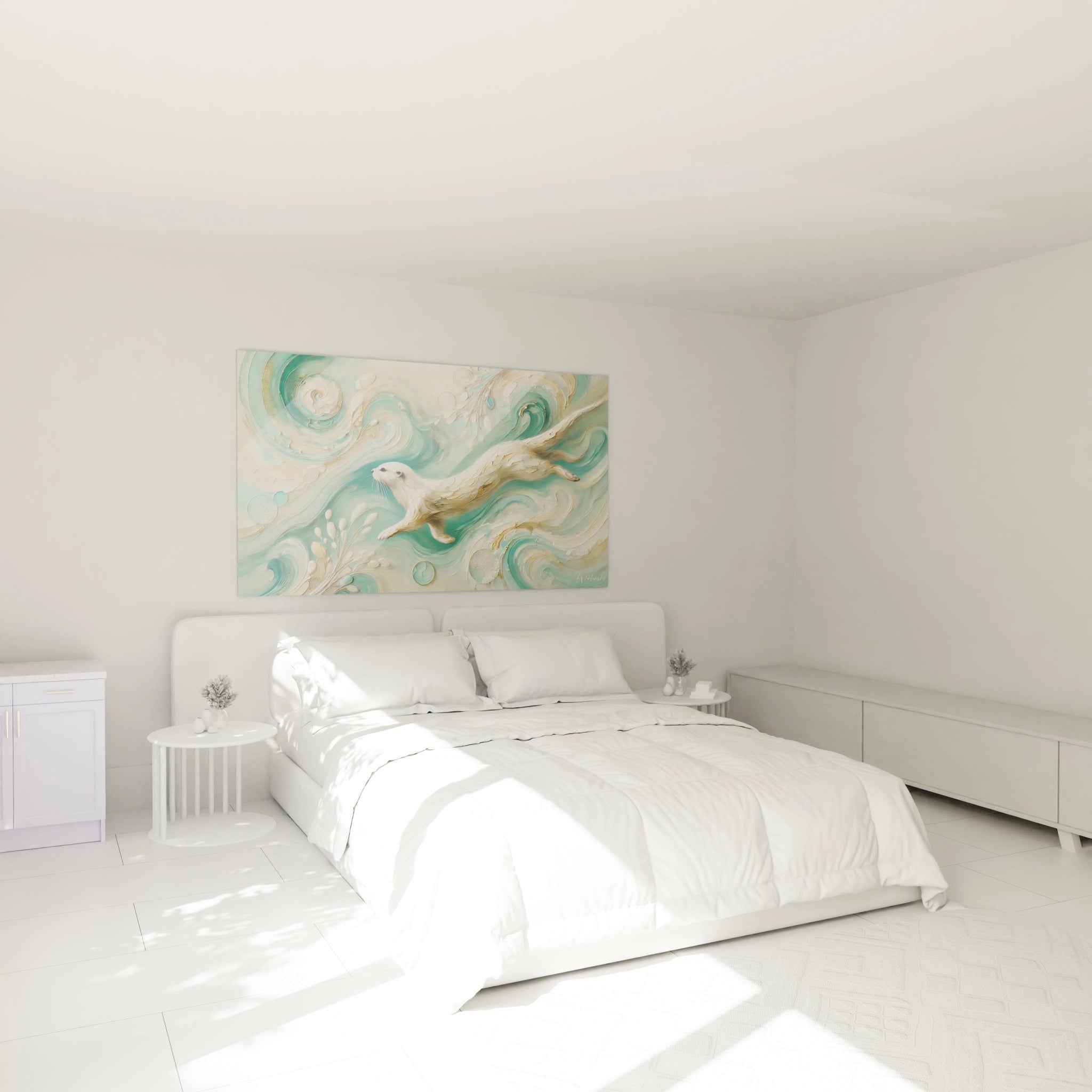
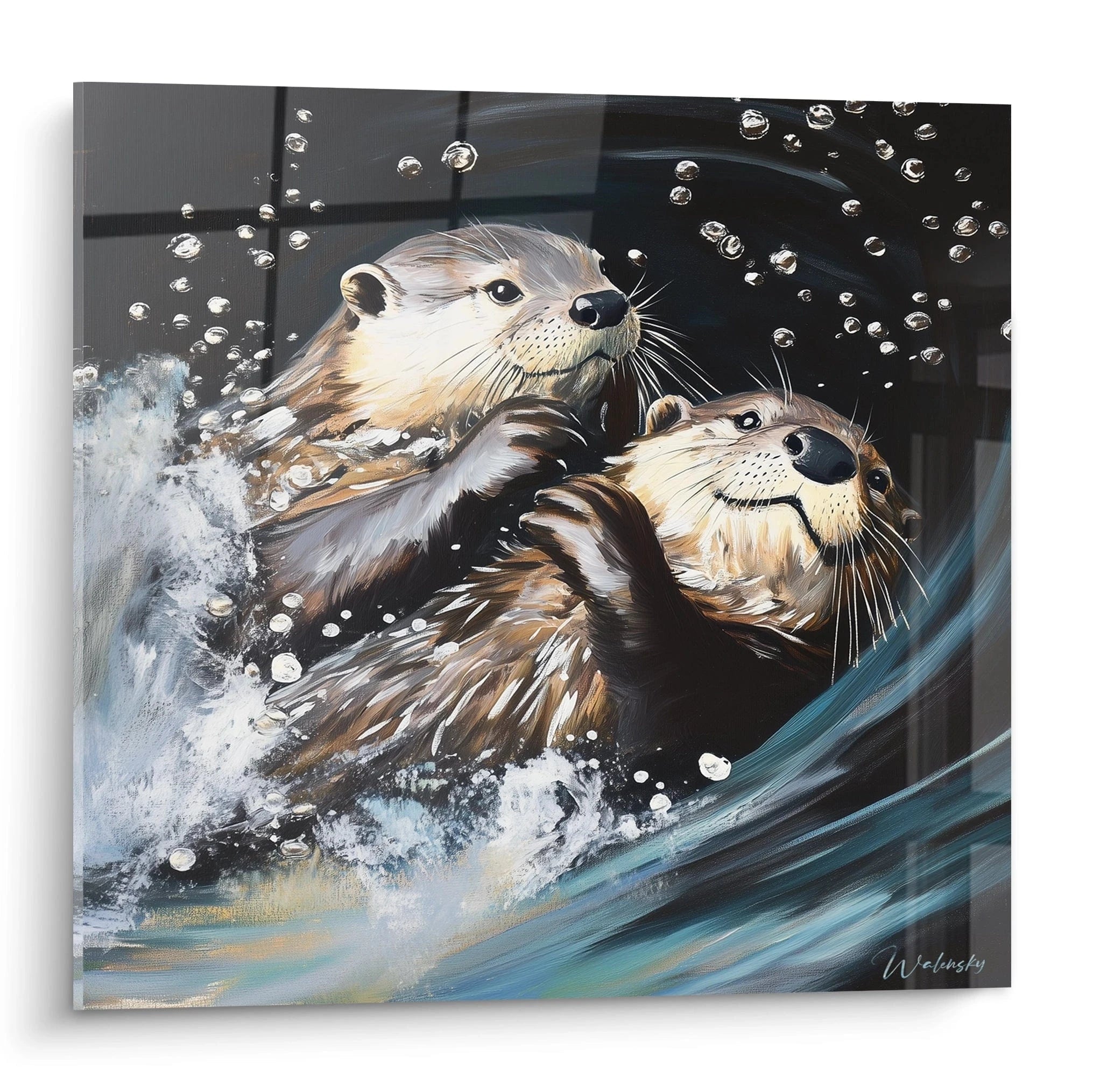
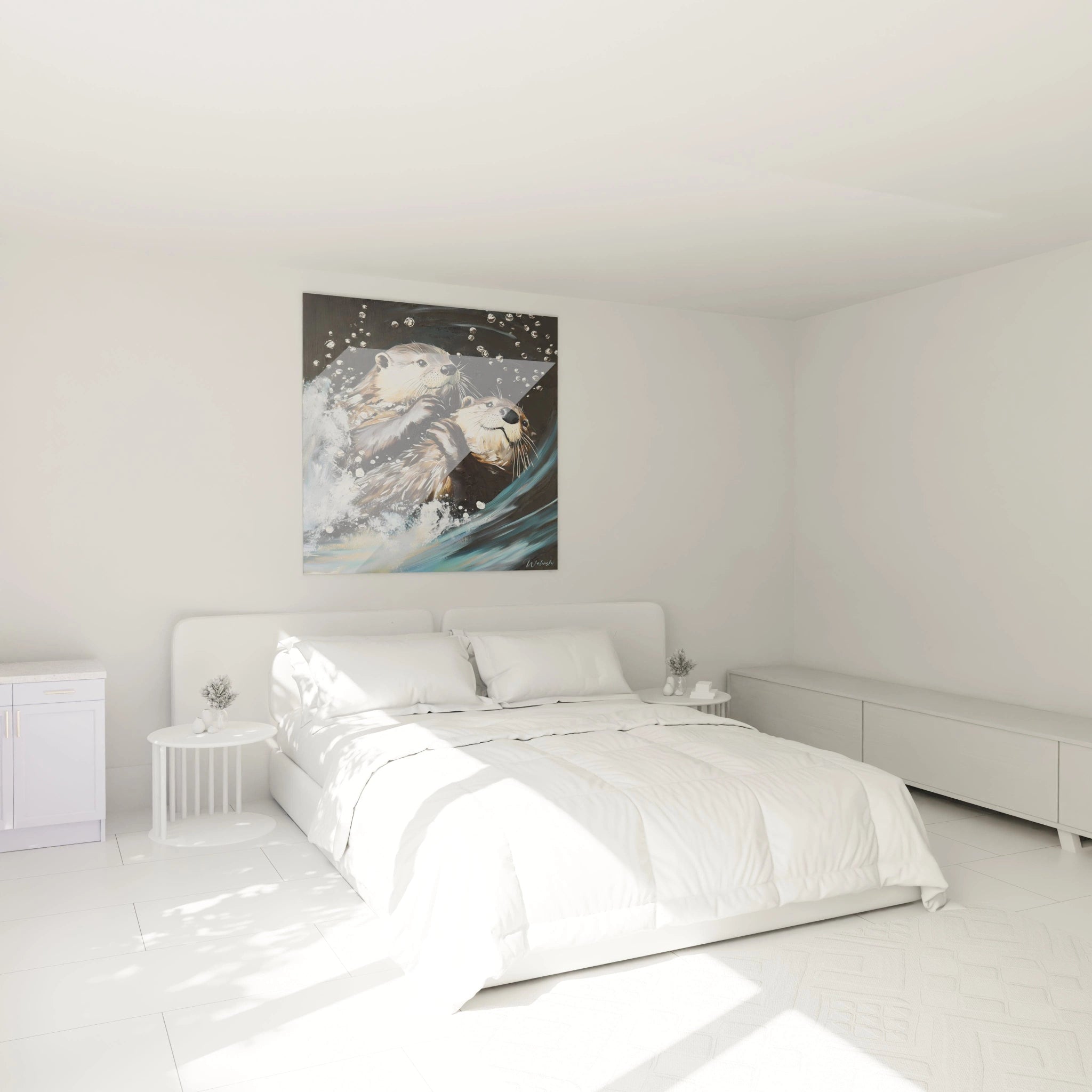
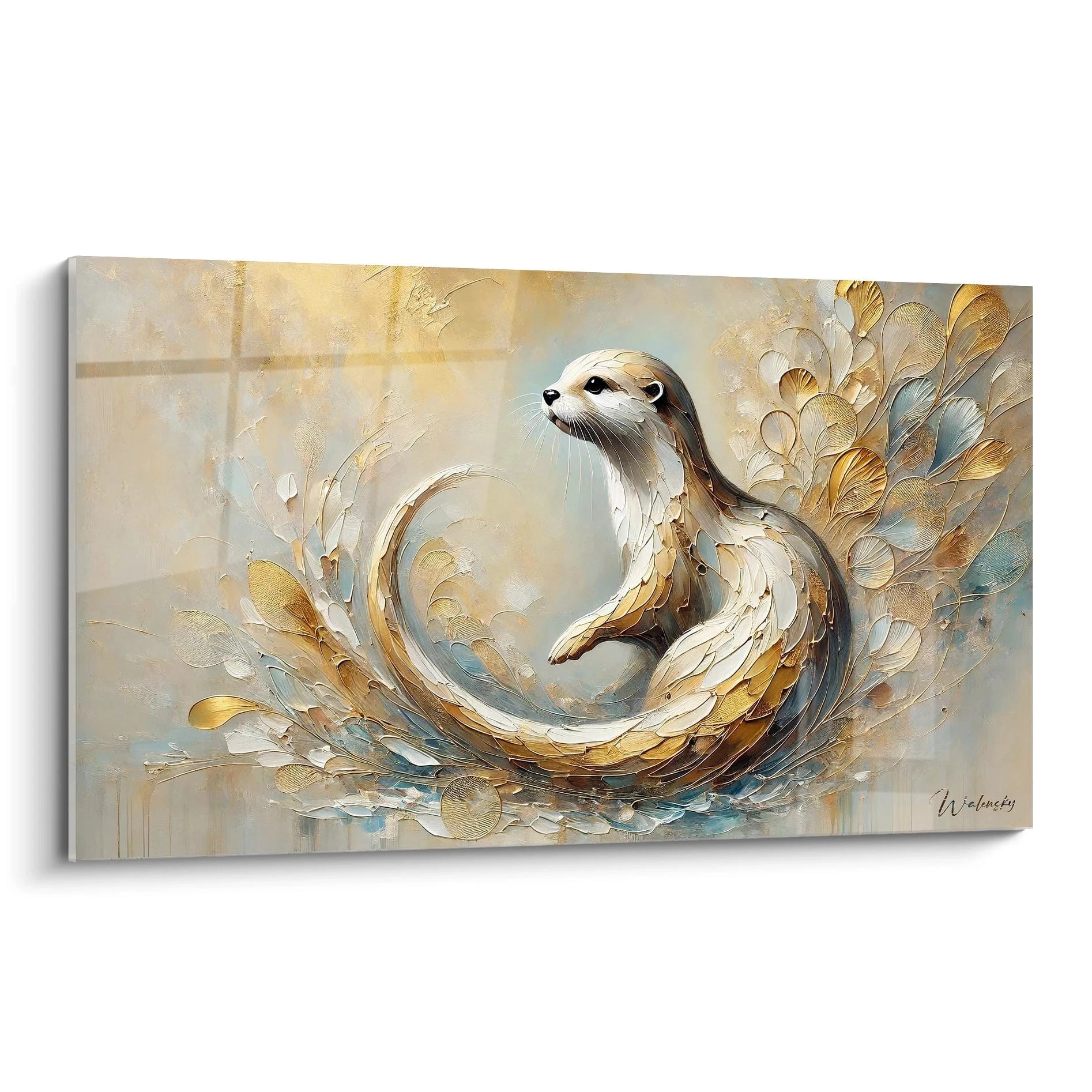
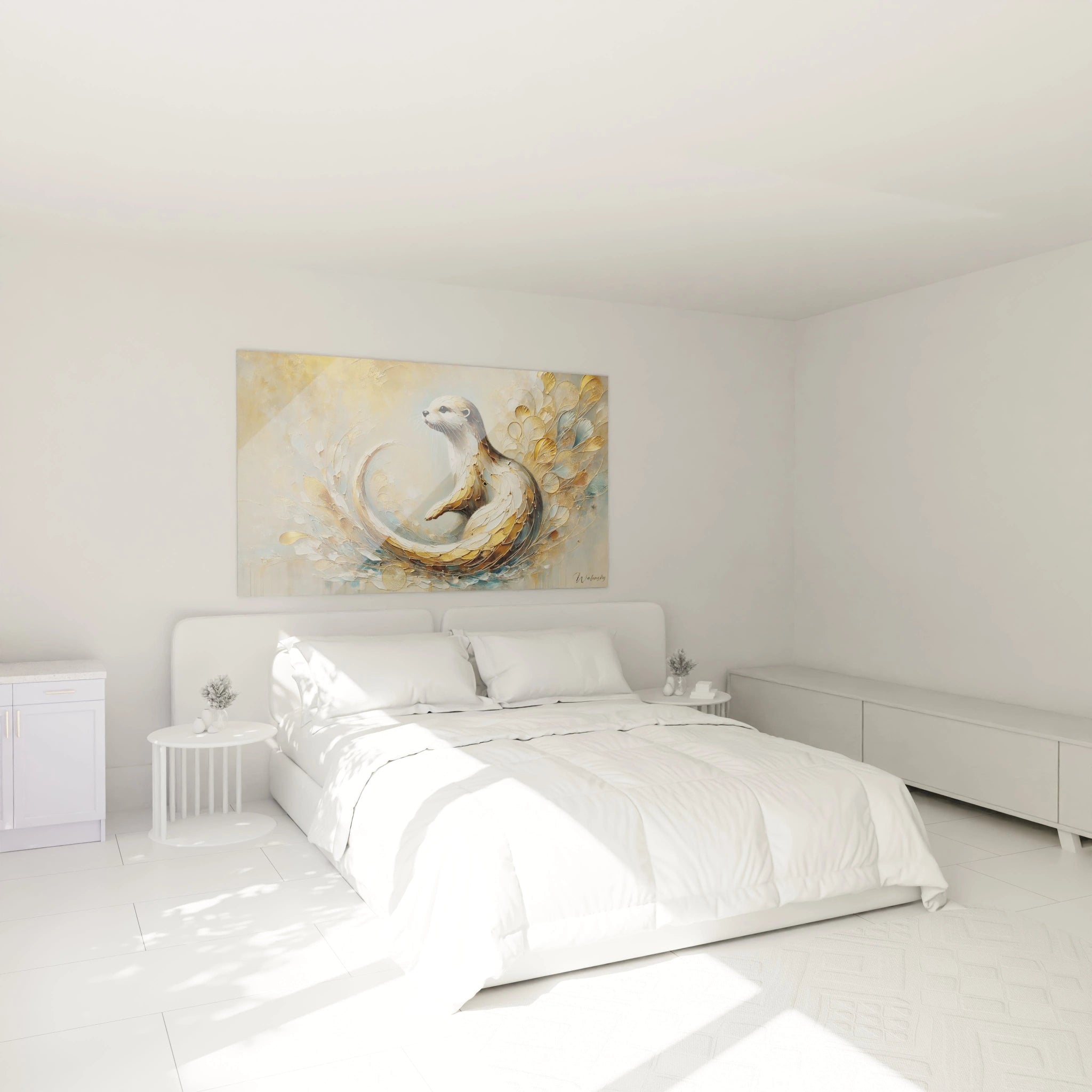
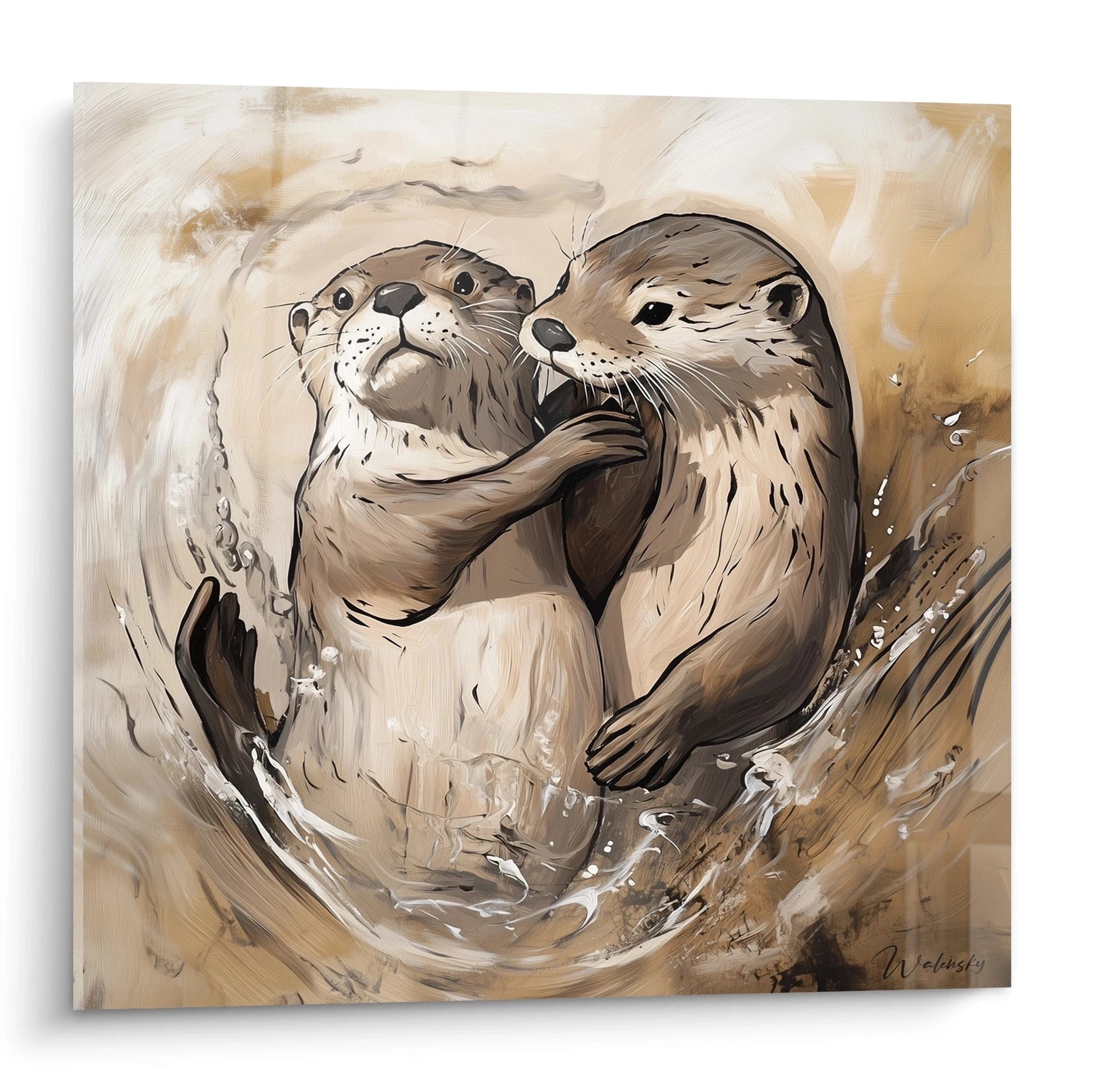
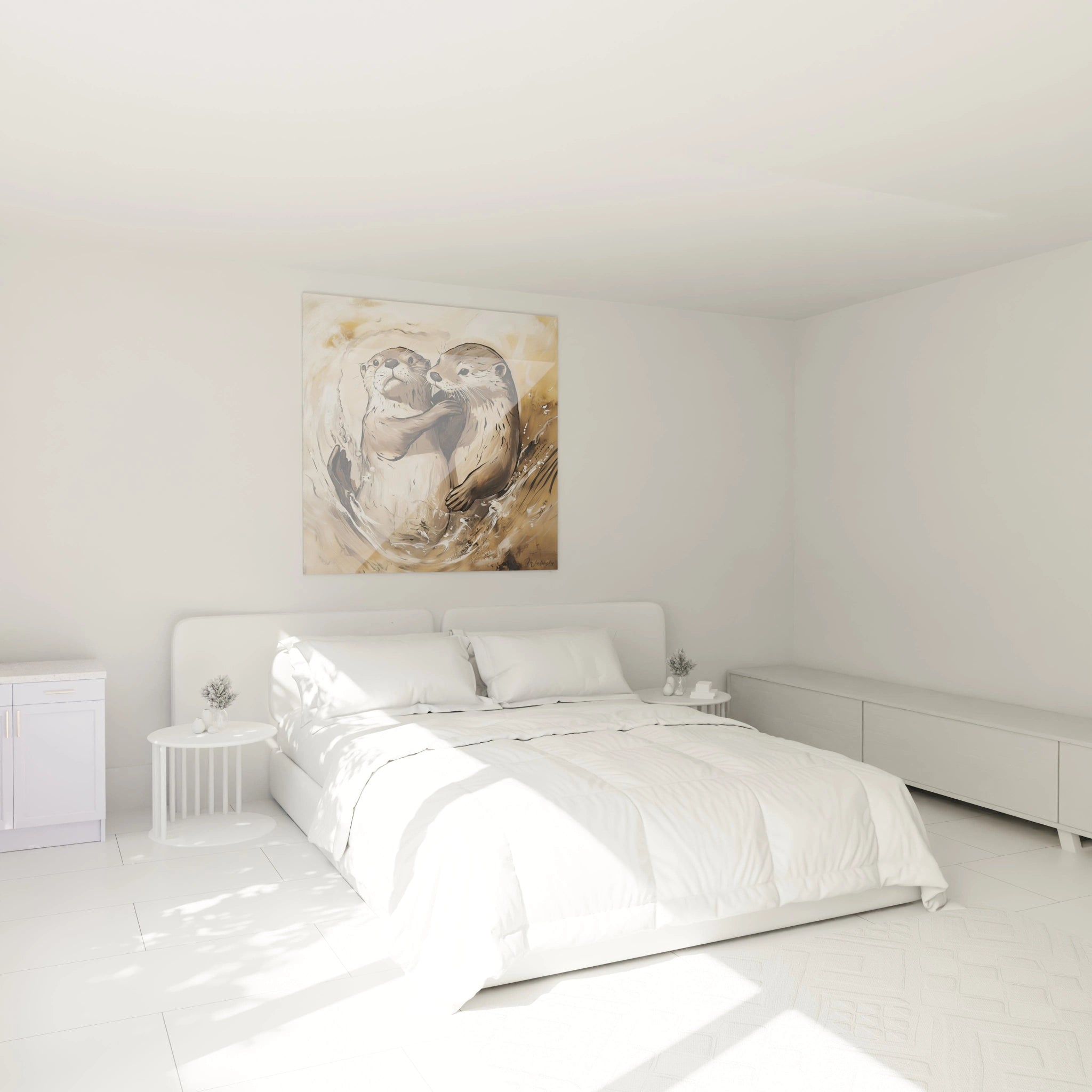
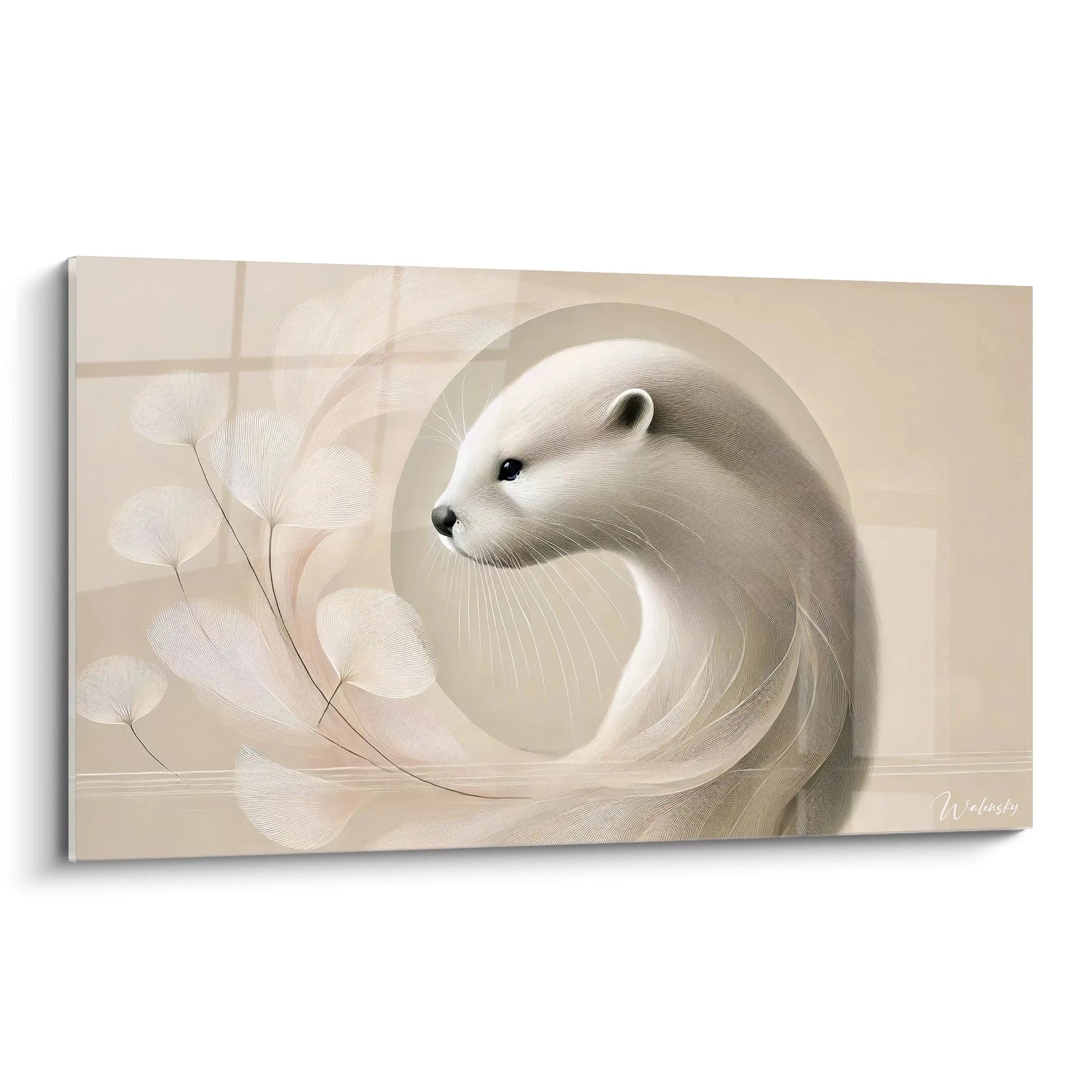
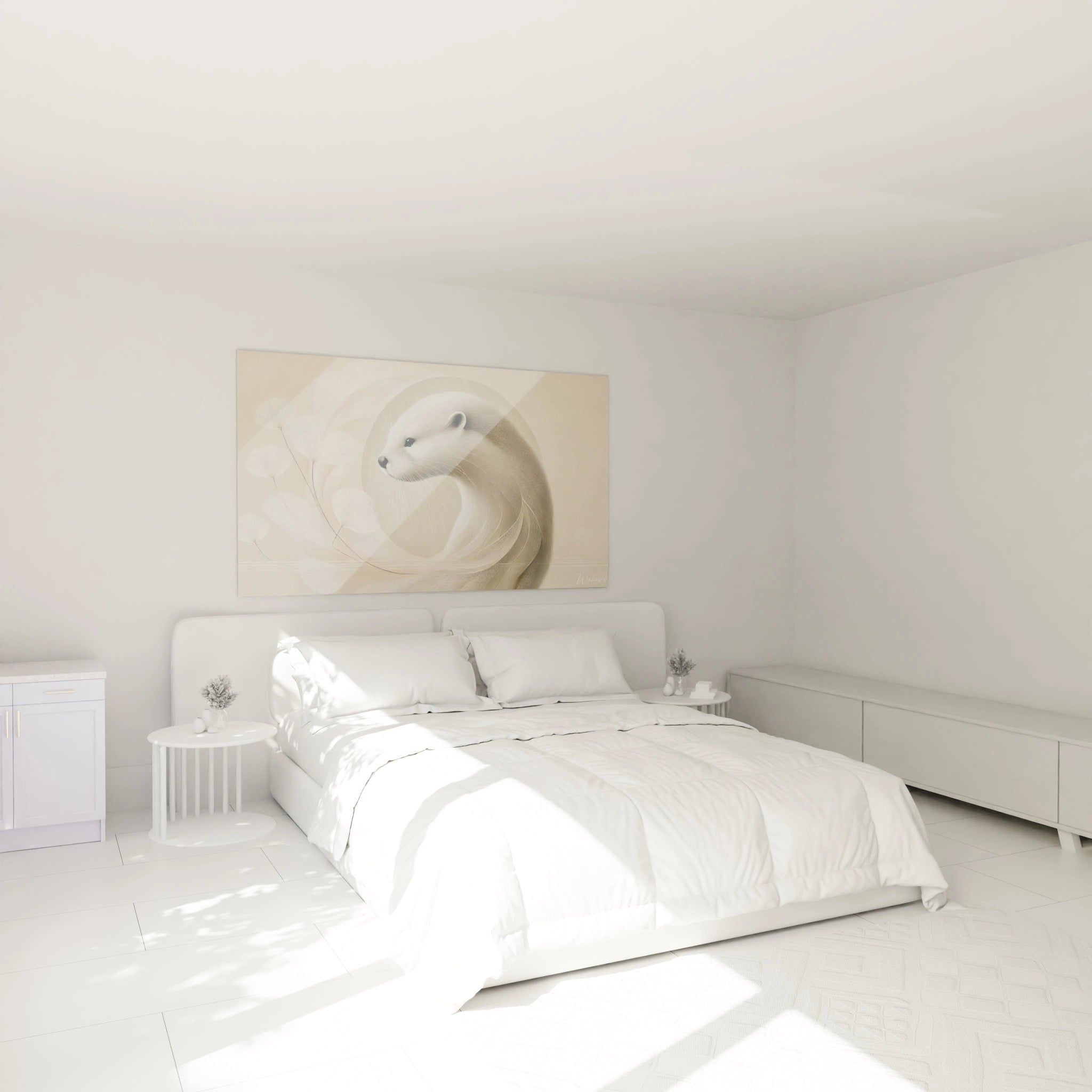
- Otter Paintings Presentation
- Otter Paintings Nature Decor
- Otter Paintings Aquatic Ambiance
- Otter Paintings Wild Aesthetic
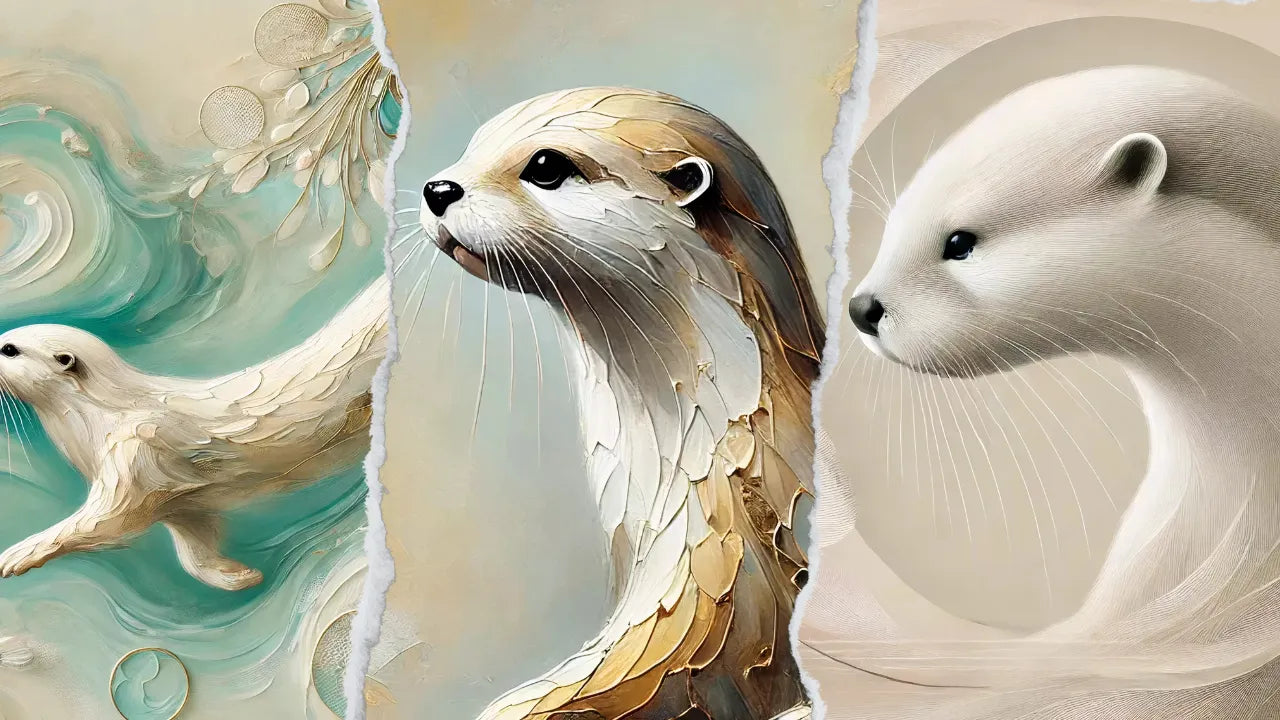
Otter paintings represent a unique decorative trend that brings a touch of wild nature and playfulness into your interior. These semi-aquatic mammals, recognized for their charisma and playful behavior, constitute a captivating artistic subject that transcends simple wall decoration.
These artworks showcase the distinctive physiology of otters, with their dense waterproof fur, elongated silhouette and almost human facial expressions. Unlike animal paintings, otter representations capture a particular dynamic between aquatic grace and boundless energy.
Otter paintings stand out for their decorative versatility. They integrate perfectly into nature-inspired interiors, contemporary spaces or even children's bedrooms, bringing an atmosphere that is both soothing and invigorating. Their characteristic color palette, blending browns, ambers and aquatic tones, creates visual harmony that coordinates with many decorative styles.
Ideal for wildlife lovers or defenders of endangered species, these paintings tell a story about biodiversity and the beauty of our aquatic ecosystems. Each work becomes a conversation piece, combining aesthetic value and environmental awareness.
Discover through our different sections how to integrate these magnificent otter representations into your interior decoration, the specificities that make their unique charm, and the multiple ways they can transform the atmosphere of your living spaces.
Otter Paintings: Merging Animal Art and Nature Decoration
Otter paintings constitute a distinctive category in the world of wall decoration, offering visual immersion into riverbank and lake habitats. Unlike conventional animal representations, these works capture the essence of a semi-aquatic mammal with fascinating behavior, creating a bridge between your interior space and natural ecosystems.
How do otter paintings transform a room's ambiance?
The visual impact of an otter painting far exceeds that of simple animal illustration. The unique physiology of these creatures – with their streamlined body, bright gaze and often playful posture – generates incomparable visual dynamics. The fluid movements characteristic of otters in their aquatic element create visual compositions that breathe life and movement into your interior decoration.
These artistic representations produce a soothing effect through dominant natural tones – rich fur browns harmonizing beautifully with the blues and greens of aquatic environments. This specific color palette in otter scenes promotes creating a serene and natural atmosphere, particularly suited to relaxation spaces like living rooms or bedrooms.
Integrating otter paintings into different decorative styles
Contrary to assumptions, otter paintings transcend the "cabin in the woods" decorative style and adapt remarkably to various aesthetic universes:
- In Scandinavian interiors, they bring an organic touch that perfectly complements clean lines and natural materials
- Within contemporary decoration, they constitute an unexpected focal point, creating striking contrast with minimalist elements
- For a bohemian style, they reinforce connection with nature and organic elements prized in this aesthetic
- In an industrial space, they soften raw lines through their natural and dynamic appearance
This versatility makes otter paintings a relevant decorative option for those wishing to instill character and originality into their interior without compromising their decoration's overall harmony.
Otter paintings and biophilic design: a natural alliance
Biophilic design, a major decorative trend, aims to reconnect residents with natural elements through interior design. Otter paintings fit perfectly within this philosophy by offering a visual window onto aquatic ecosystems. These artworks answer the fundamental human need for contact with nature, even in urban environments.
A study published in the Journal of Environmental Psychology demonstrates that artistic representations of natural environments and wildlife significantly contribute to stress reduction and improved mental well-being. Otter paintings, with their dynamic aquatic scenes and expressive subjects, maximize this beneficial effect.
Which dimensions to choose for an otter painting based on your space?
Large-format otter paintings (80×120 cm and larger) reveal the full richness of detail in these fascinating mammals – the precise texture of their waterproof fur, the subtleties of their facial expressions, and the complexity of their riverbank habitat. These imposing formats suit perfectly wall spaces like those above a sofa or in a spacious entryway.
For interiors with more restricted wall spaces, medium-format otter representations (50×70 cm) offer an excellent compromise, preserving the characteristic visual impact of these works while adapting to more limited configurations. Ideal for hallways, offices or transition spaces, these dimensions allow appreciating essential details without visually overloading the room.
Individuals particularly attached to otters often opt for triptych or polyptych compositions, allowing narrative scenes showing different facets of these mammals' behavior – from active fishing to characteristic playful moments of the species, through touching family interactions between mother and offspring.
Otter Paintings: Creating a Vivifying Aquatic Ambiance
Otter paintings fundamentally stand out from other animal representations through their unique ability to create sensory aquatic immersion. These works capture not only the animal, but also the fascinating interaction between the otter and its aquatic environment, generating dynamic visual experience that radically transforms a room's atmosphere.
The evocative power of aquatic scenes with otters
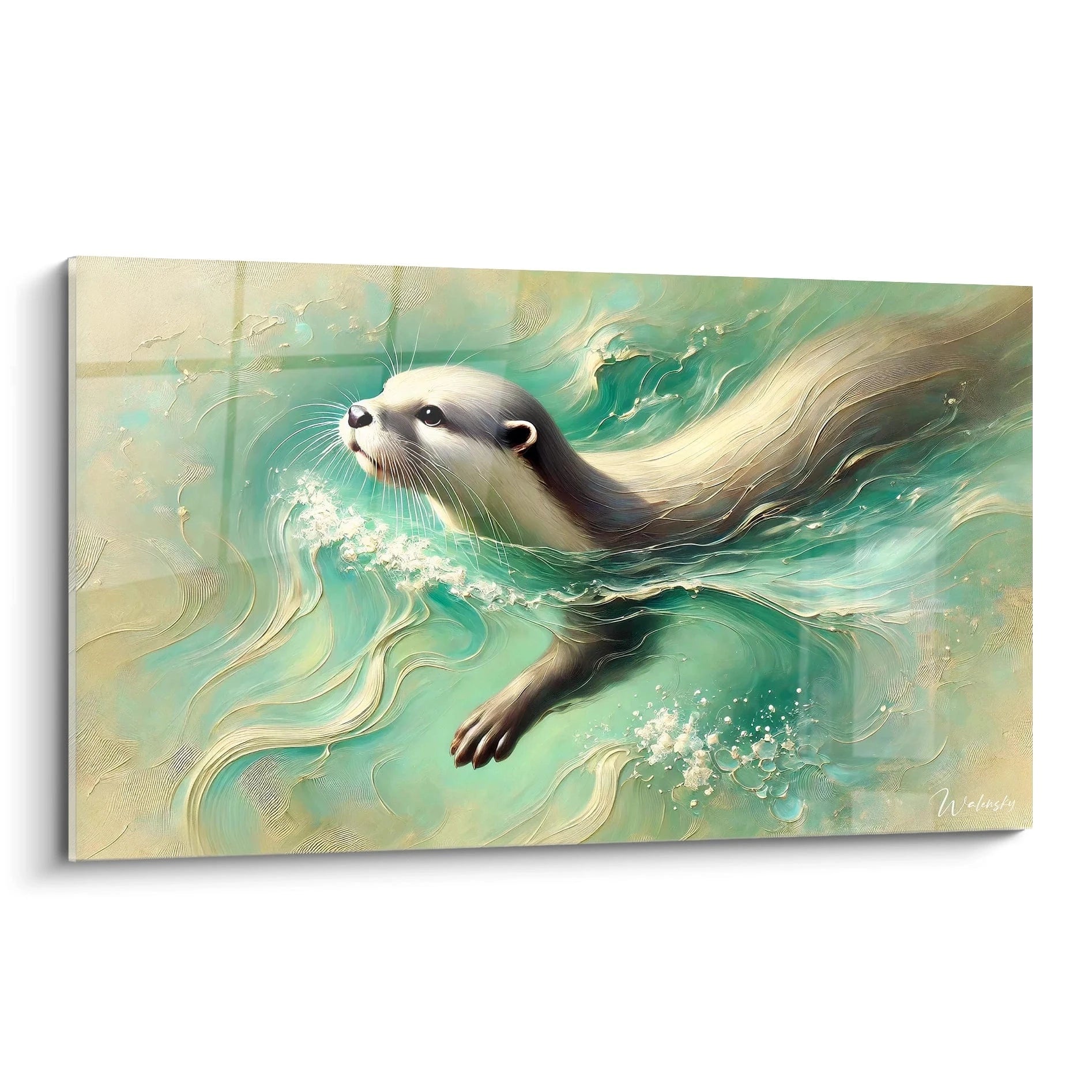
The semi-aquatic character of otters allows artists to create unique visual compositions playing on duality between terrestrial and aquatic worlds. The most striking representations often show these mammals at the interface between these two environments – head emerging from water, body partially submerged – creating visual tension impossible to reproduce with other animal subjects.
This particularity gives otter paintings an almost meditative dimension. Water, central element of these compositions, brings its intrinsic soothing qualities: light reflections, transparency, fluidity. When adding the liveliness and expressiveness characteristic of otters, a rare balance results between calm and dynamism.
- Aquatic reflections create light plays that bring the painting to life even under different lighting
- Water ripples around the animal suggest perpetual movement, adding kinetic dimension to your decoration
- Air bubbles often represented around diving otters add distinctive visual texture
- Representation of water droplets on the animal's waterproof fur offers light points that energize the composition
How do otter paintings influence spatial perception?
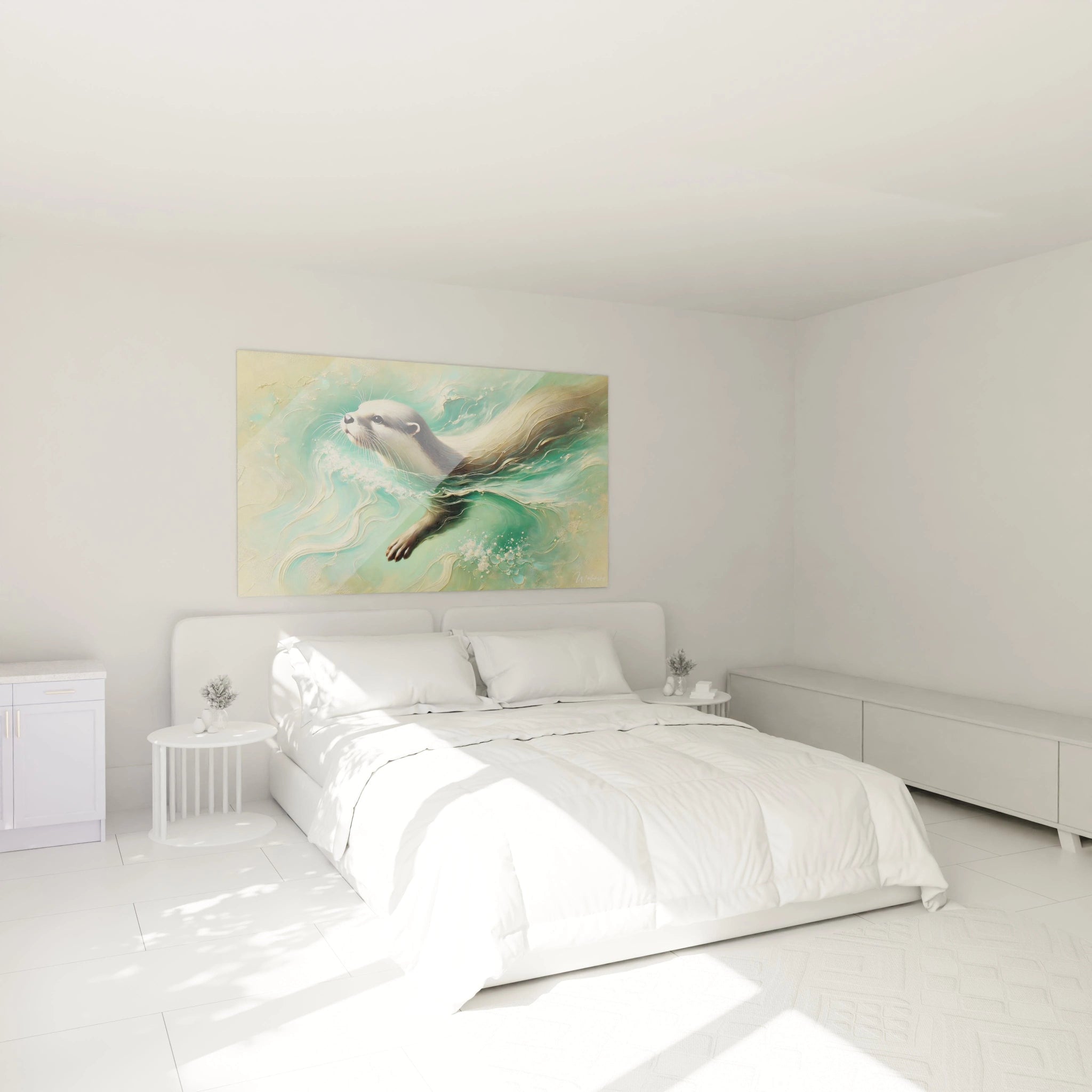
A remarkable phenomenon of large-format otter paintings lies in their ability to modify a room's spatial perception. Extended aquatic scenes create a depth effect that visually enlarges the space, comparable to installing a virtual window onto a natural environment. This characteristic proves particularly valuable in restricted urban spaces or rooms without natural exterior view.
In contemporary interiors with dominant neutral tones (whites, grays, beiges), introducing an otter painting brings a specific natural color palette – deep blues of waters, rich browns of fur, greens of riverside vegetation – establishing a chromatic focal point that structures the visual space of the entire room.
Seasonal influence on otter painting selection
Otter paintings present variety of seasonal compositions that differently influence interior ambiance. Winter representations, showing these mammals evolving in snowy or partially frozen environments, bring particular visual freshness especially appreciated in warm regions or summer months. The contrast between the apparent warmth of dense fur and the icy environment creates striking visual tension.
Conversely, summer scenes presenting otters in verdant waterways or sun-bathed water bodies infuse welcome visual warmth during cold months. These works, dominated by warmer and more vibrant tones, psychologically activate sensations of vitality and energy associated with fine weather.
Discerning collectors sometimes build seasonal otter painting selections they alternate throughout the year, thus using wall art as an adaptable element reflecting external natural changes and responding to variable psychological needs across seasons.
The unique visual acoustics of otter paintings
A rarely mentioned but fundamental aspect of otter paintings concerns what interior designers call "visual acoustics" – an artwork's ability to sensory suggest sounds. Representations of otters in action – diving into water, emerging vigorously, playing with pebbles – immediately evoke for the spectator the splashes, ripples and aquatic sounds associated with them.
This subtle yet powerful synesthetic dimension explains why these paintings are particularly sought after in spaces dedicated to relaxation like meditation rooms, therapy offices or rest areas in stressful professional environments. The brain unconsciously associates these images with soothing water sounds, reinforcing the overall relaxing effect.
Sound designers confirm that regular exposure to visual representations of natural environments accompanied by their implicit sound associations contributes to reducing ambient noise perception in urban spaces, creating beneficial cognitive masking effect for well-being.
The role of otter paintings in therapeutic environments
Healthcare professionals increasingly recognize otter paintings' therapeutic potential in clinical and wellness settings. Their combination of calming aquatic elements and dynamic animal presence addresses multiple psychological needs – from stress reduction through nature connection to mood enhancement through the animals' expressive qualities.
Patients exposed to thoughtfully positioned otter paintings during medical procedures report improved emotional states and reduced anxiety perception. The paintings serve as gentle focal points that redirect attention away from potentially stressful circumstances toward positive nature-based imagery.
Otter Paintings: Capturing Wild Aesthetic in Your Interior
Otter paintings distinguish themselves as a singular artistic category through the intrinsic duality of their subject – simultaneously wild and strangely familiar. This fundamental aesthetic tension explains their unique emotional impact and ability to profoundly transform an interior space's atmosphere.
Why do otter facial expressions create distinctive emotional connection?
The particular facial morphology of otters grants them almost human expressiveness that transcends simple animal representation. Their slightly prominent eyes, short muzzle and mobile facial features produce expressions our brain instinctively interprets as reflecting curiosity, joy or surprise. This instinctive emotional recognition establishes immediate affective bond with the observer.
Artists specializing in otter paintings intentionally exploit this unique characteristic by capturing moments when the animal's expressiveness is maximum – an otter surprised by a fish, contemplating with curiosity a floating object, or joyfully interacting with peers. This approach transforms these works into genuine emotional catalysts in the space where they're displayed.
- Adult otter facial expressions often evoke wisdom and intelligence, ideal for reflection spaces
- Young otter representations transmit joy and innocence, perfect for children's bedrooms or family spaces
- Scenes showing interactions between adult and young otters resonate particularly with families
- Close-up otter portraits create emotional intensity suited to intimate spaces
The balance between wild and domestic in otter compositions
A fundamental aspect of otter paintings lies in their unique ability to simultaneously embody both the wild world and an imagined form of domesticity. Unlike representations of predators (wolves, lions) evoking indomitable nature or conventional pets symbolizing complete domestication, otters occupy a fascinating intermediate position.
This balancing position manifests visually in the most successful works through juxtaposition of raw natural elements (steep rocks, tumultuous waterways) with behaviors evoking almost domestic play (object manipulation, playful interactions between individuals). This visual paradox creates aesthetic tension maintaining observer interest and preventing the work from slipping into decorative banality.
For contemporary spaces with minimalist or industrial aesthetics, this duality offers perfect counterpoint, introducing wild nature reference without creating excessive visual rupture. The animal evokes freedom while remaining visually accessible, unlike certain more intimidating faunal representations.
How does the unique visual texture of otter fur influence artistic perception?
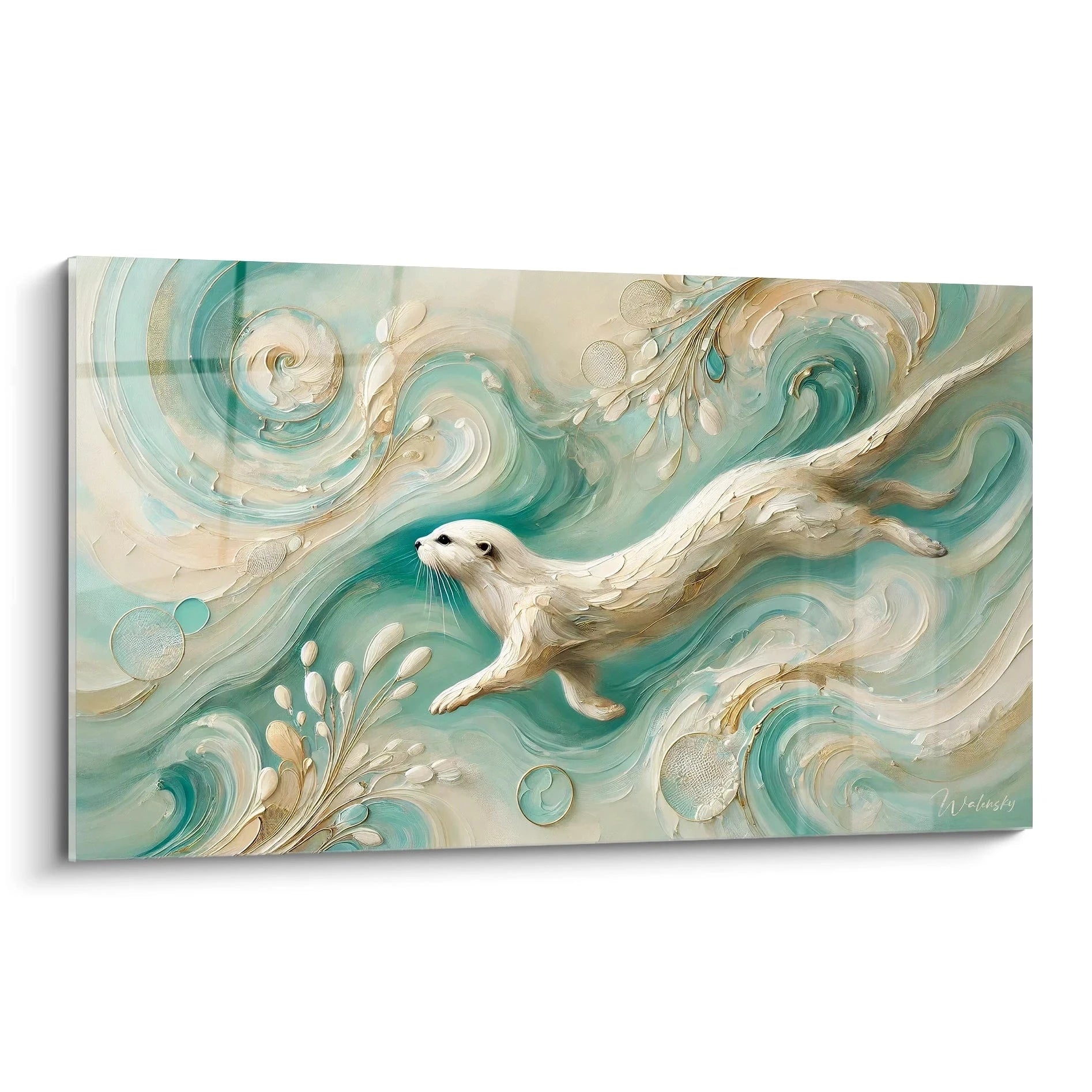
Otter paintings present distinctive textural richness thanks to representation of these animals' characteristic fur – dense, waterproof and presenting subtle gradations of nuances. This visual characteristic creates tactile focal point that effectively contrasts with smooth, uniform surfaces dominant in contemporary interiors.
Juxtaposition between textured fur and smooth aquatic surfaces generates textural duality adding supplementary sensory dimension to the work. Specialized artists exploit this particularity using specific pictorial techniques rendering subtleties of this interface – thick, layered strokes for fur contrasting with fluid glazes for aqueous surfaces.
This textural richness explains why otter paintings maintain their visual impact even in environments observed at variable distances, unlike certain works losing visual interest when not observed at optimal distance. This perceptual adaptability makes them particularly suited to large spaces where observation distance constantly varies.
Otter paintings' impact on domestic chronobiology
Research in biophilic design demonstrates that artistic representations of natural environments subtly influence our internal biological rhythms. Otter paintings, particularly those representing these animals in their typical crepuscular activities, can play regulatory role in domestic chronobiology.
Early morning otter scenes, with their bluish tones and soft luminosity, placed in wake-up spaces like bedrooms or kitchens, facilitate sleep-to-activity transition by gently stimulating non-visual light-sensitive receptors. Conversely, sunset otter representations, with their orange and amber dominants, promote evening relaxation in rest spaces.
This underestimated chronobiological functionality of otter paintings partially explains their growing popularity in spaces lacking direct natural light access or in Nordic regions with extreme seasonal luminosity variations, where they contribute maintaining visual reference to natural cycles.
Otter Paintings FAQ
What is the symbolic significance of otter paintings in interior decoration?
Otter paintings convey symbols of resilience and adaptability, these animals being known for their ability to thrive in changing environments. They also represent balance between joy of life and natural wildness, bringing enriching symbolic dimension to your decoration. In contemporary Feng Shui, they're considered as favoring emotional fluidity and adaptation to change.
How do I properly maintain a large-format otter painting?
Large-dimension otter paintings require specific maintenance to preserve their visual qualities. Avoid direct UV ray exposure which could alter the subtle nuances of represented aquatic environments. Regular dusting with soft brush is recommended. For paintings with textured finishes reproducing fur, avoid any contact with liquids that could infiltrate the reliefs.
Are otter paintings suitable for professional environments?
Otter paintings integrate remarkably well in certain specific professional contexts. They're particularly appreciated in private practice offices wishing to create both distinguished and accessible atmosphere. Medical waiting spaces benefit from their natural soothing effect. In corporate environments, they bring touch of controlled vitality, symbolizing adaptability and intelligence – values sought in contemporary professional world.