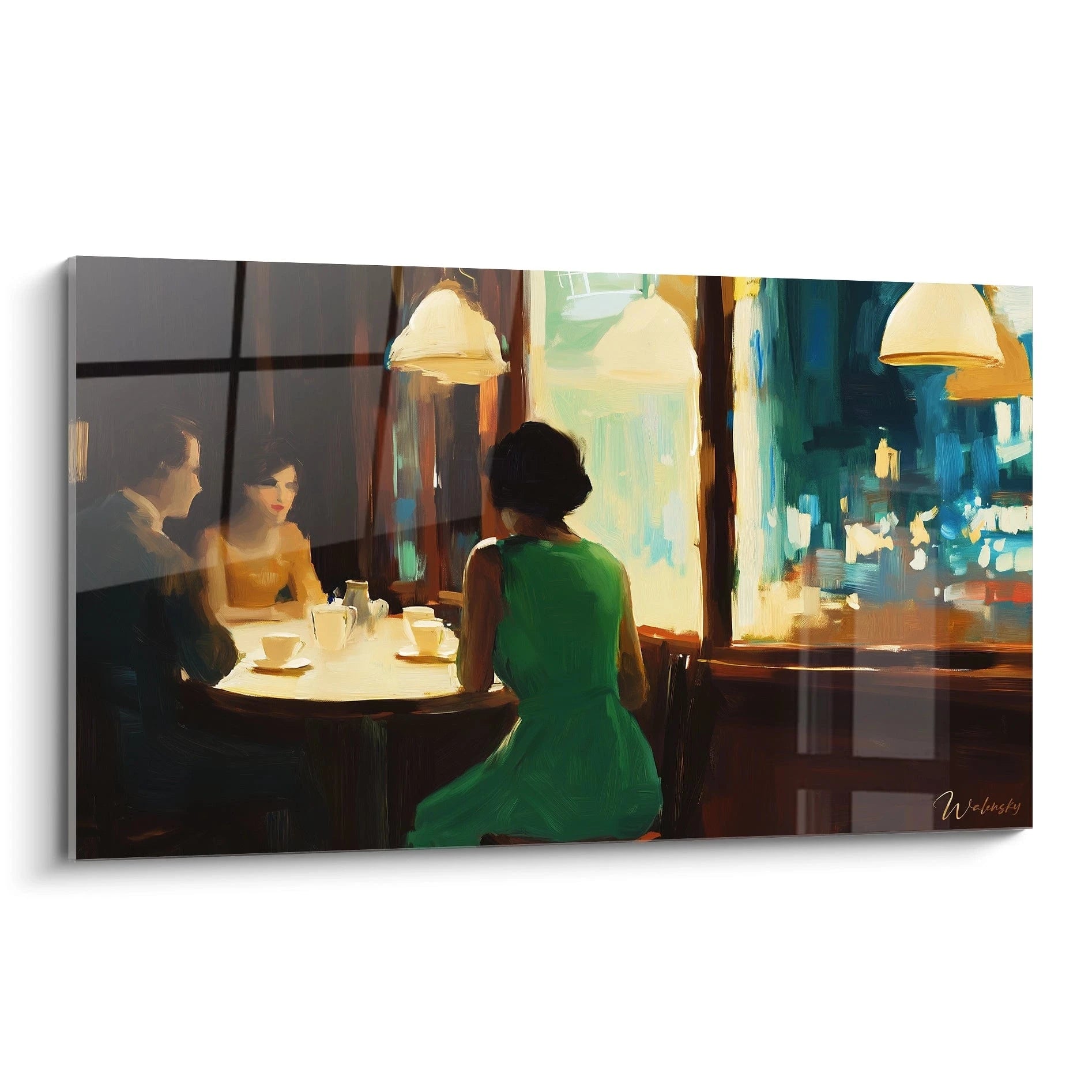
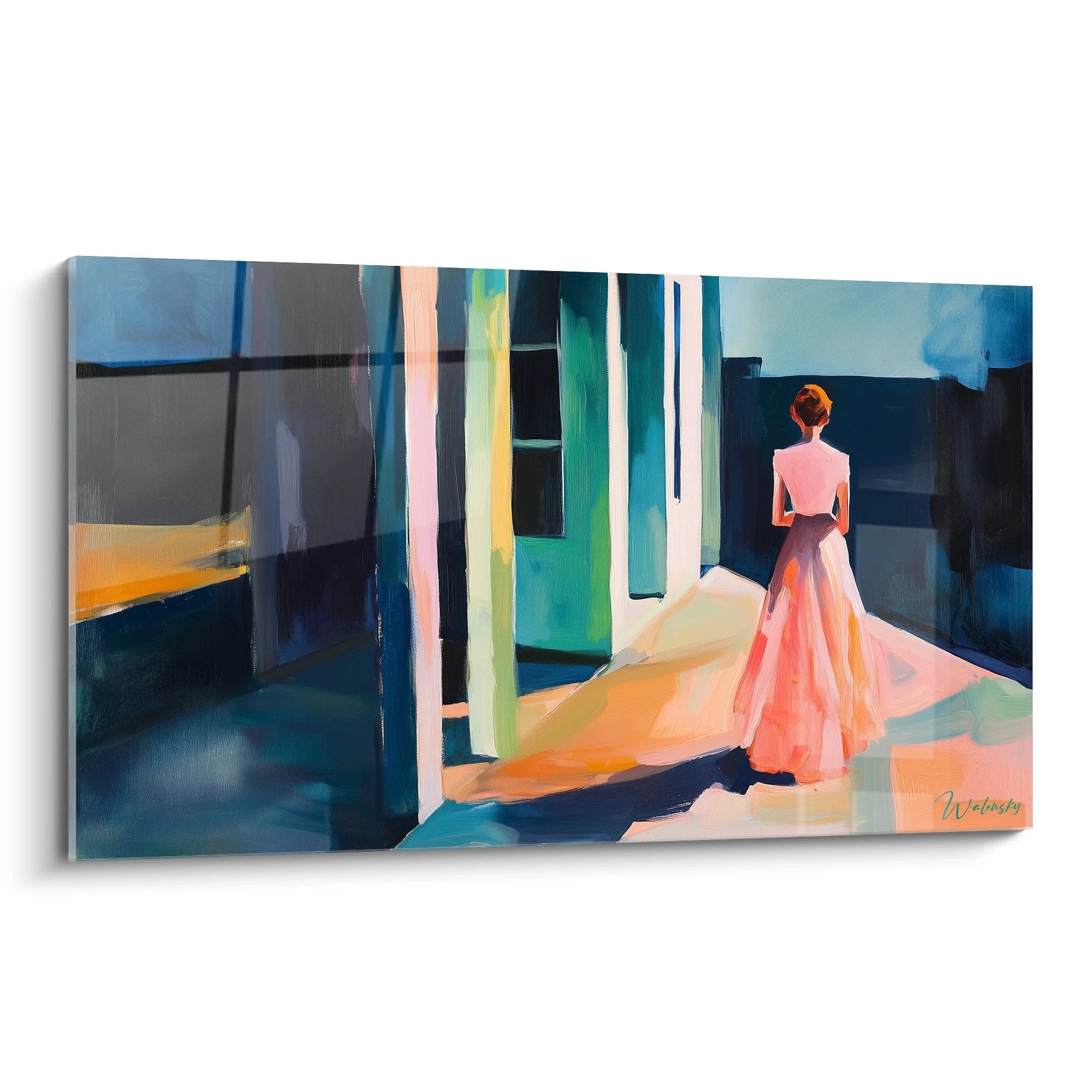
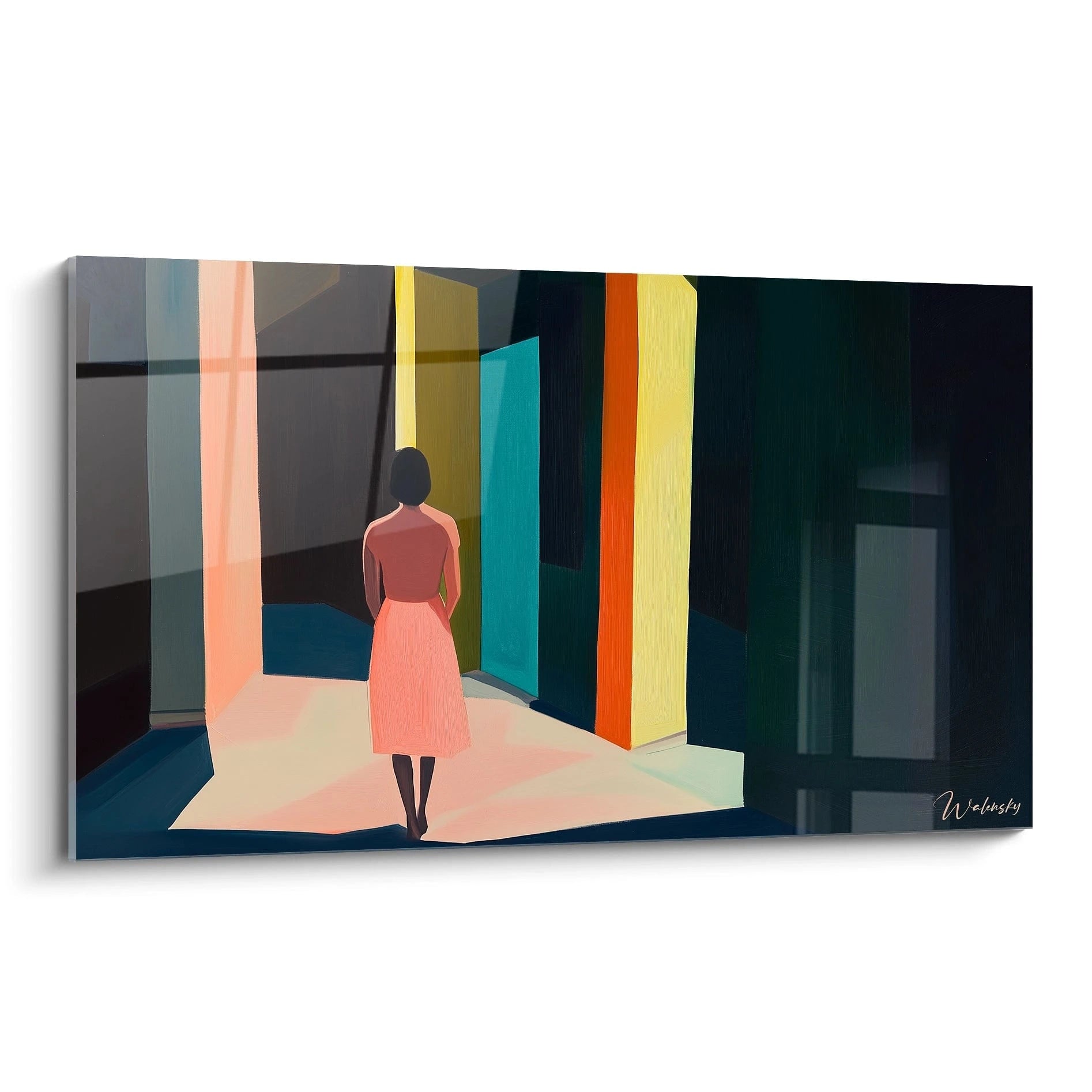
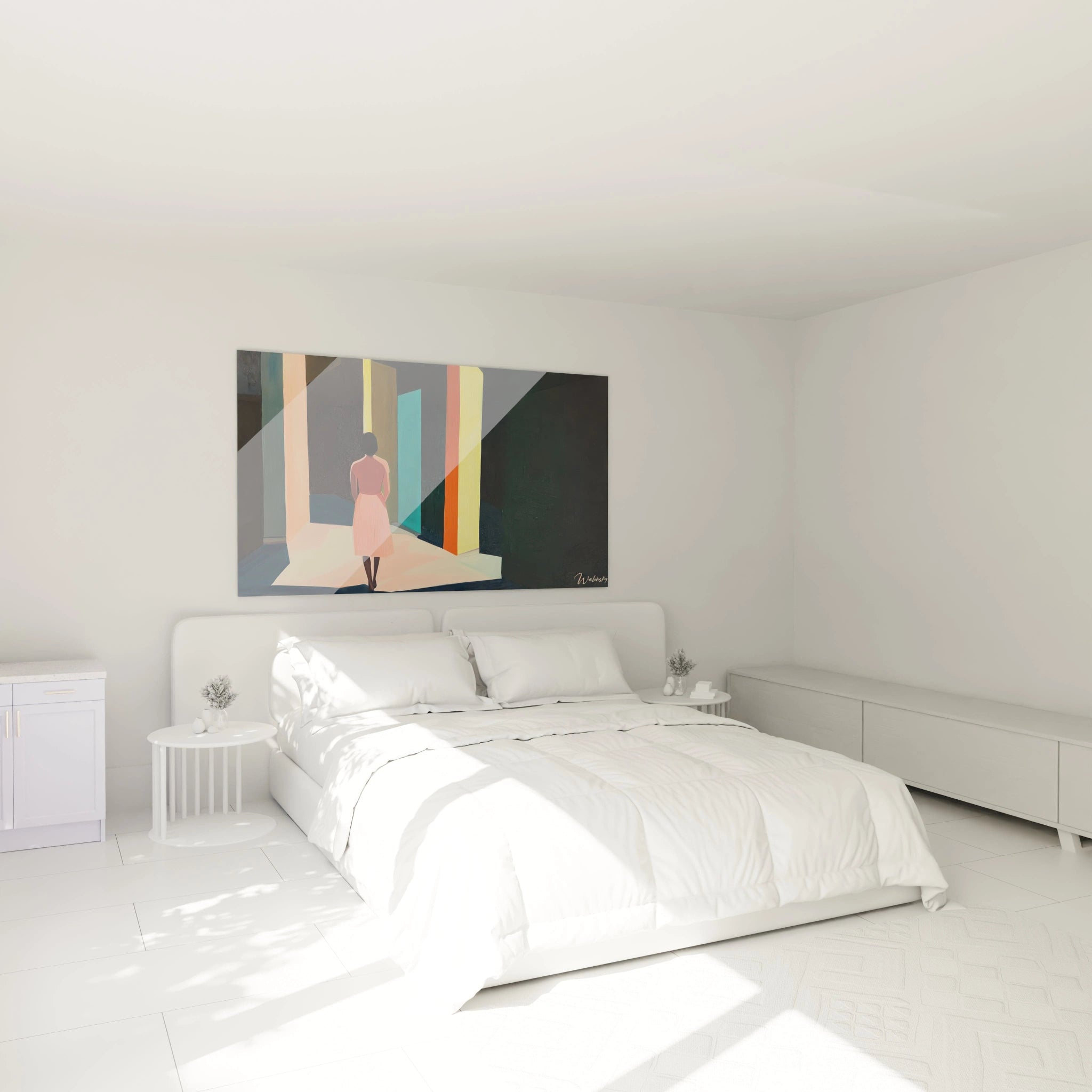
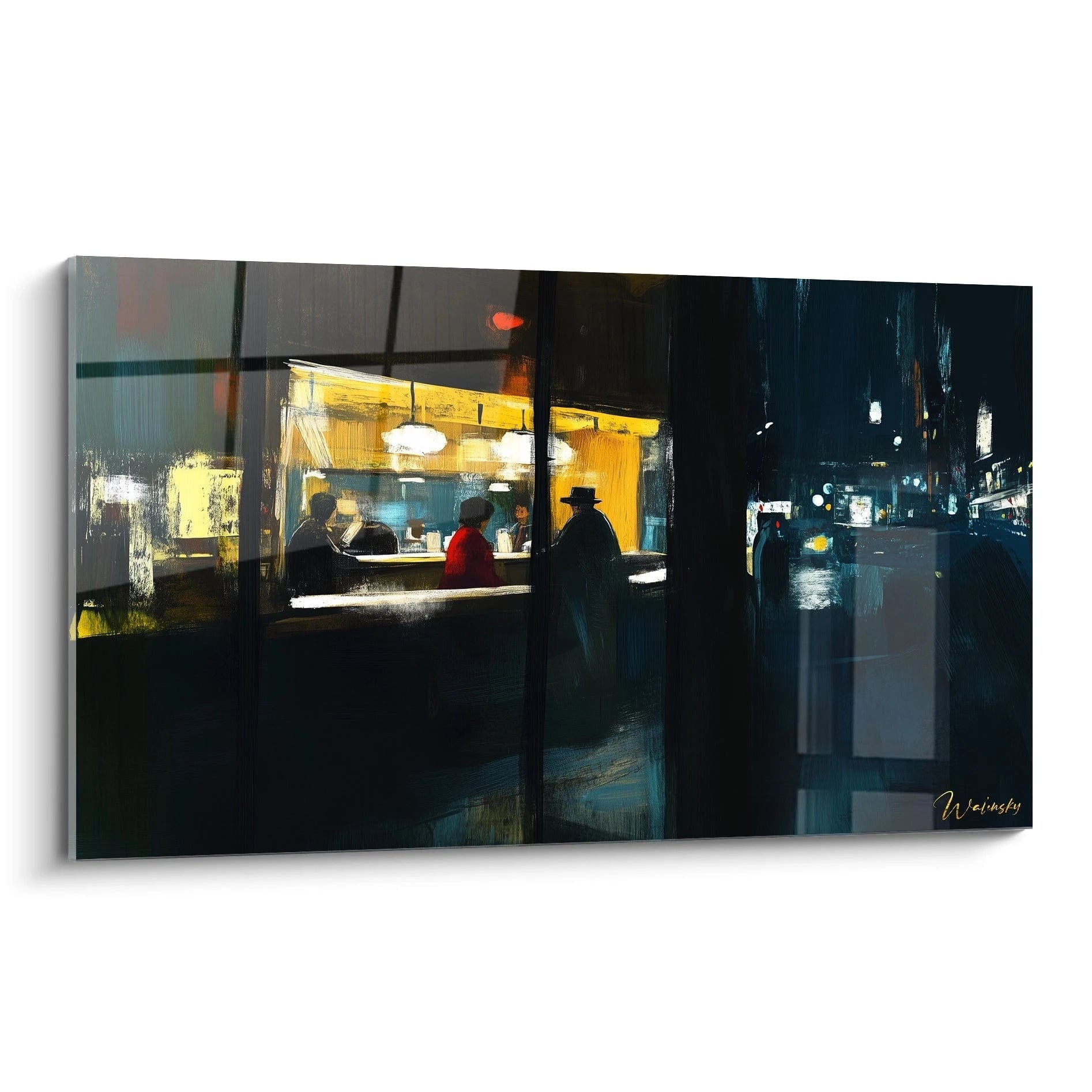
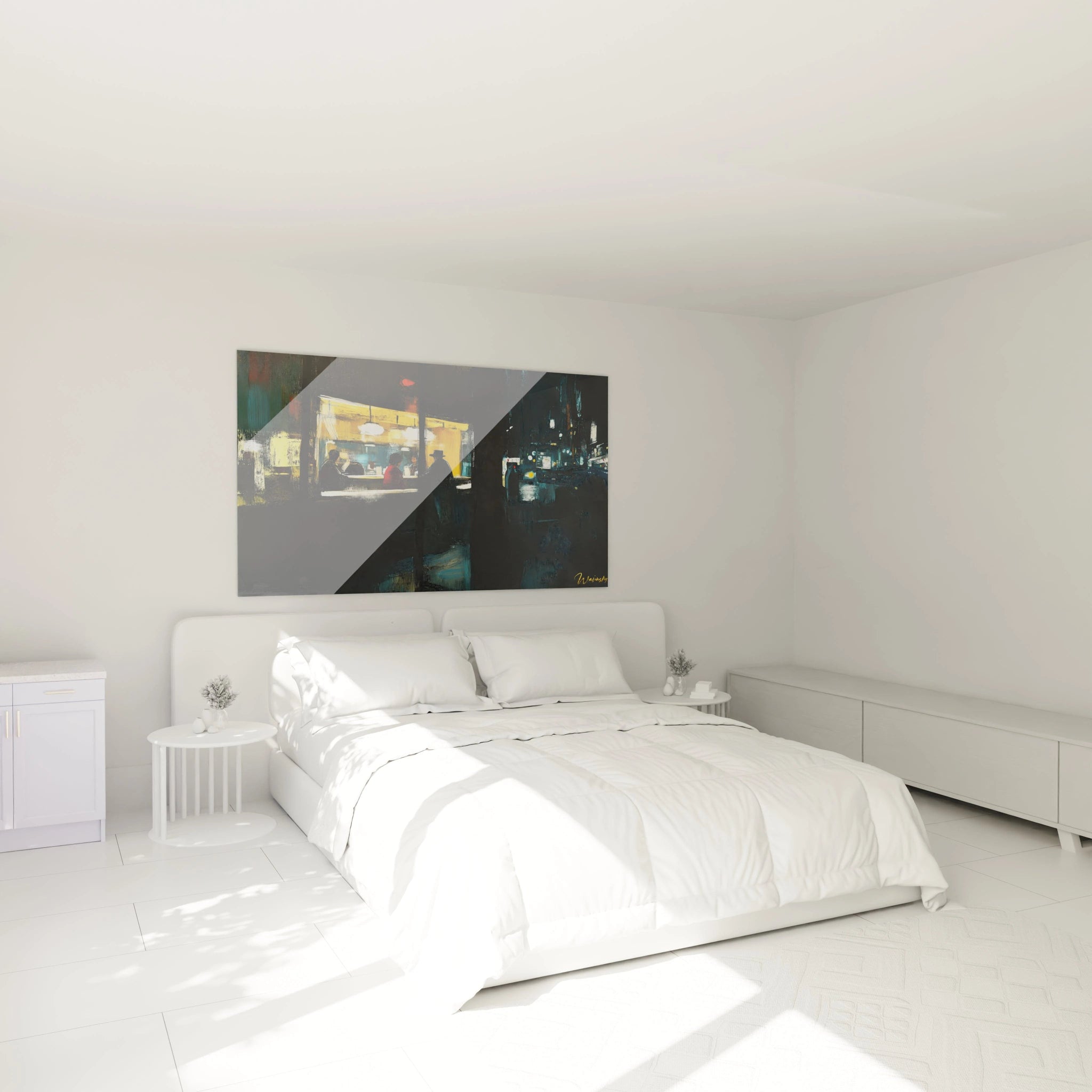
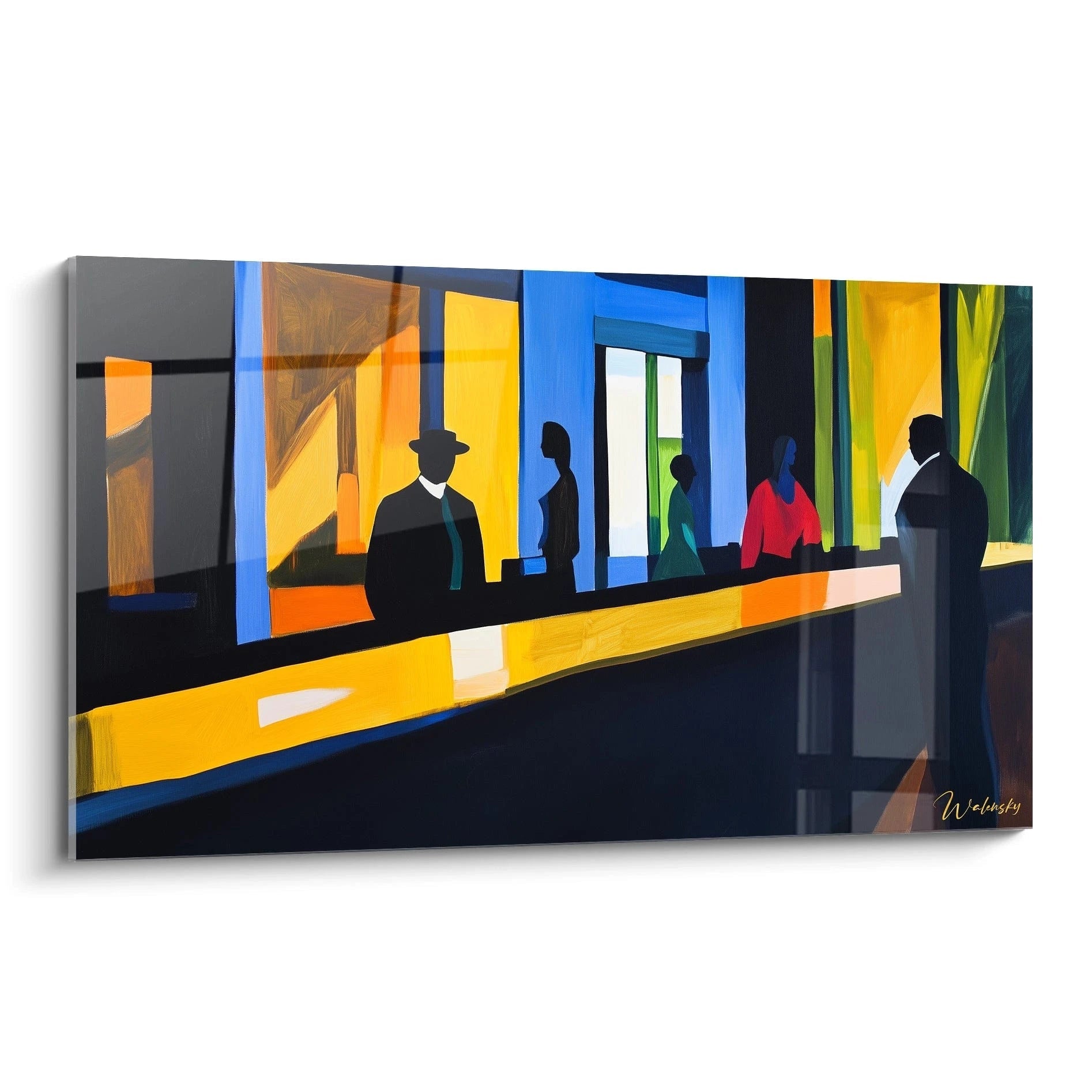
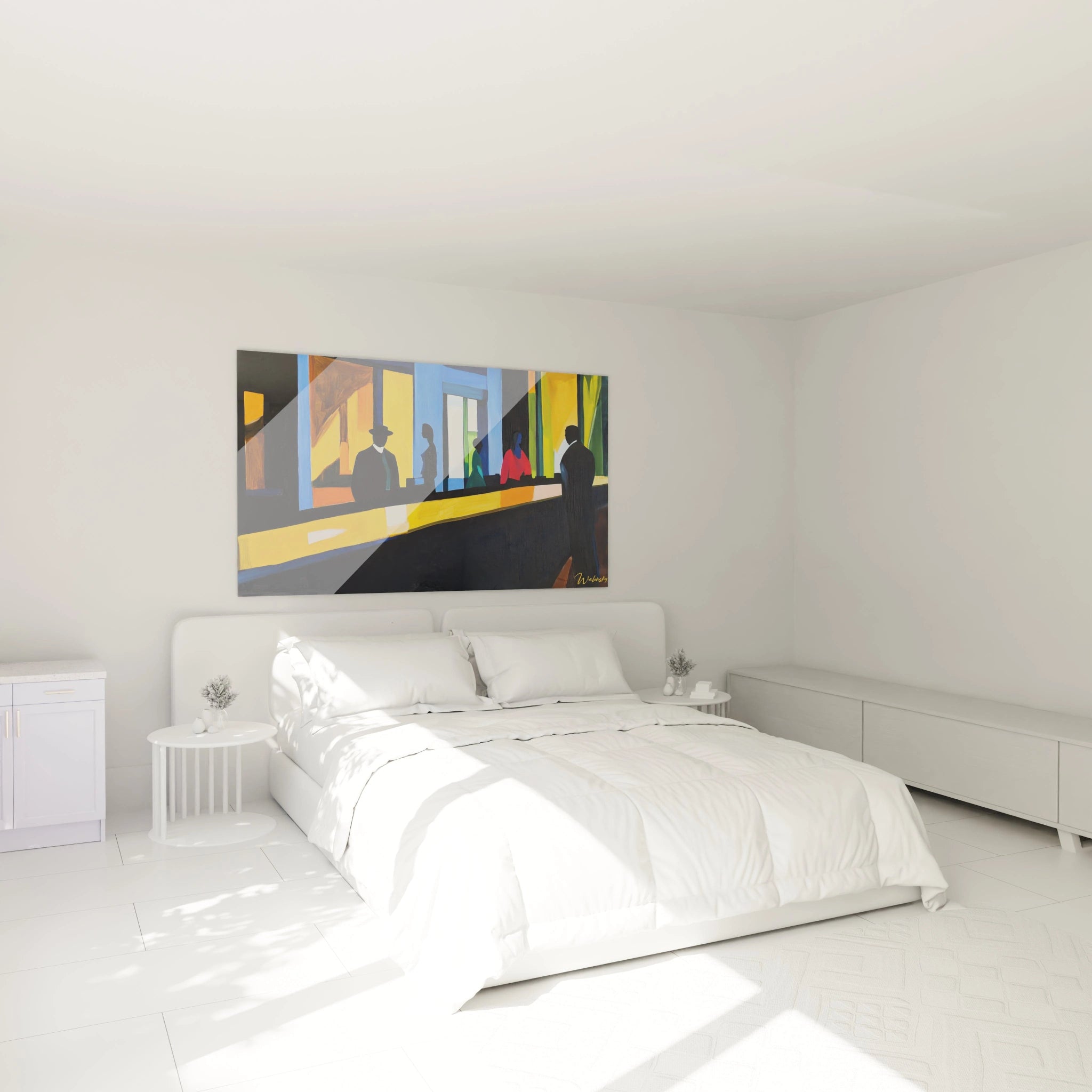
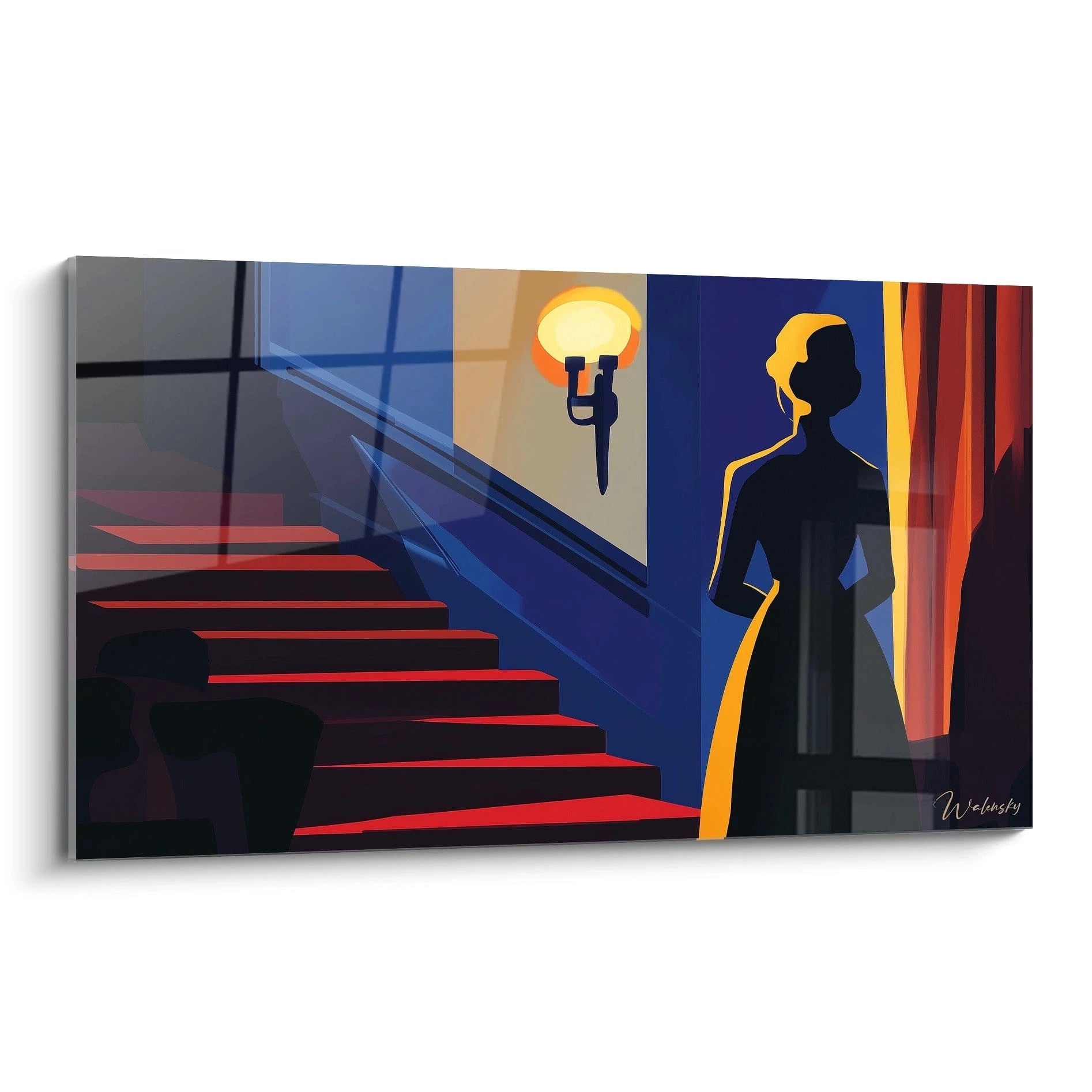
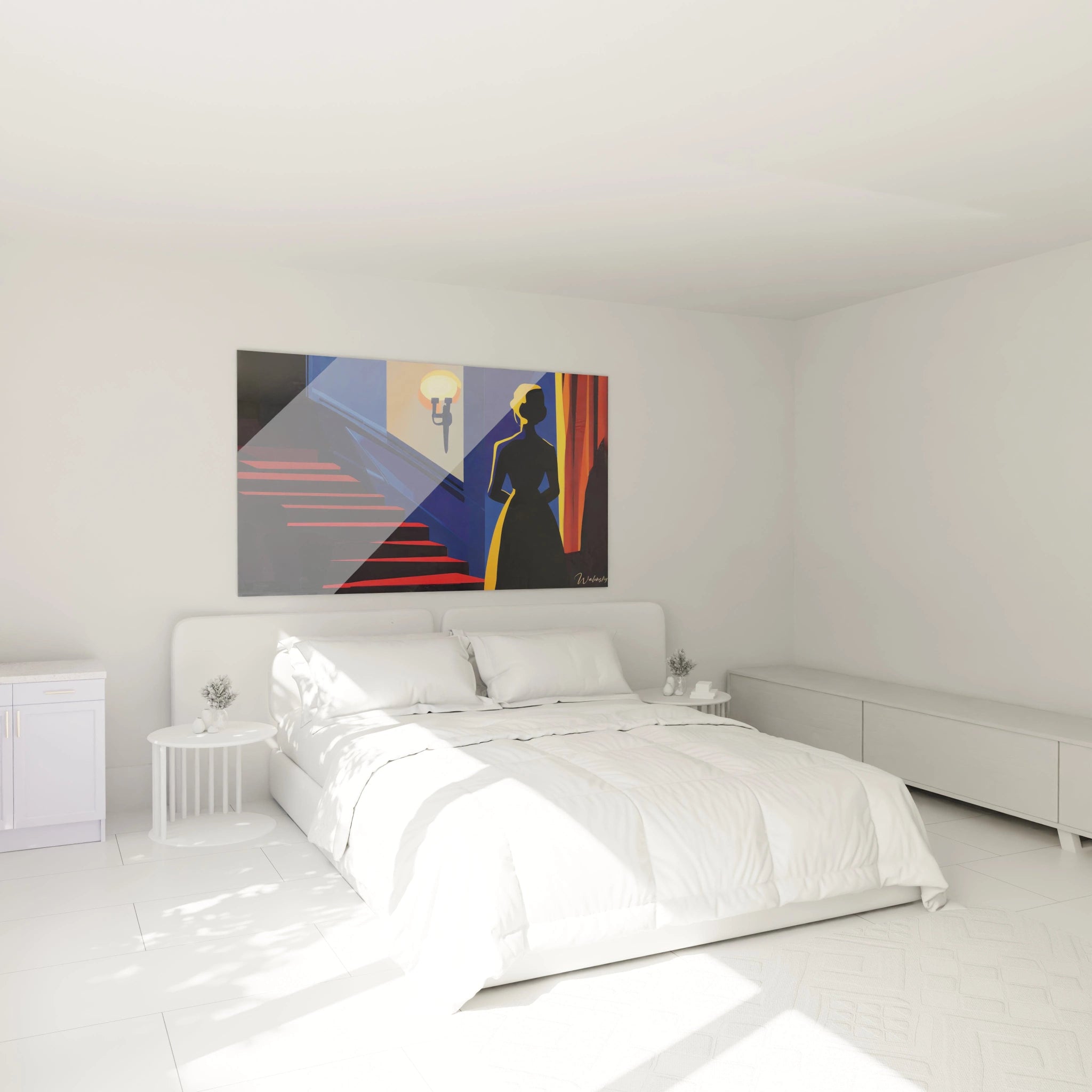
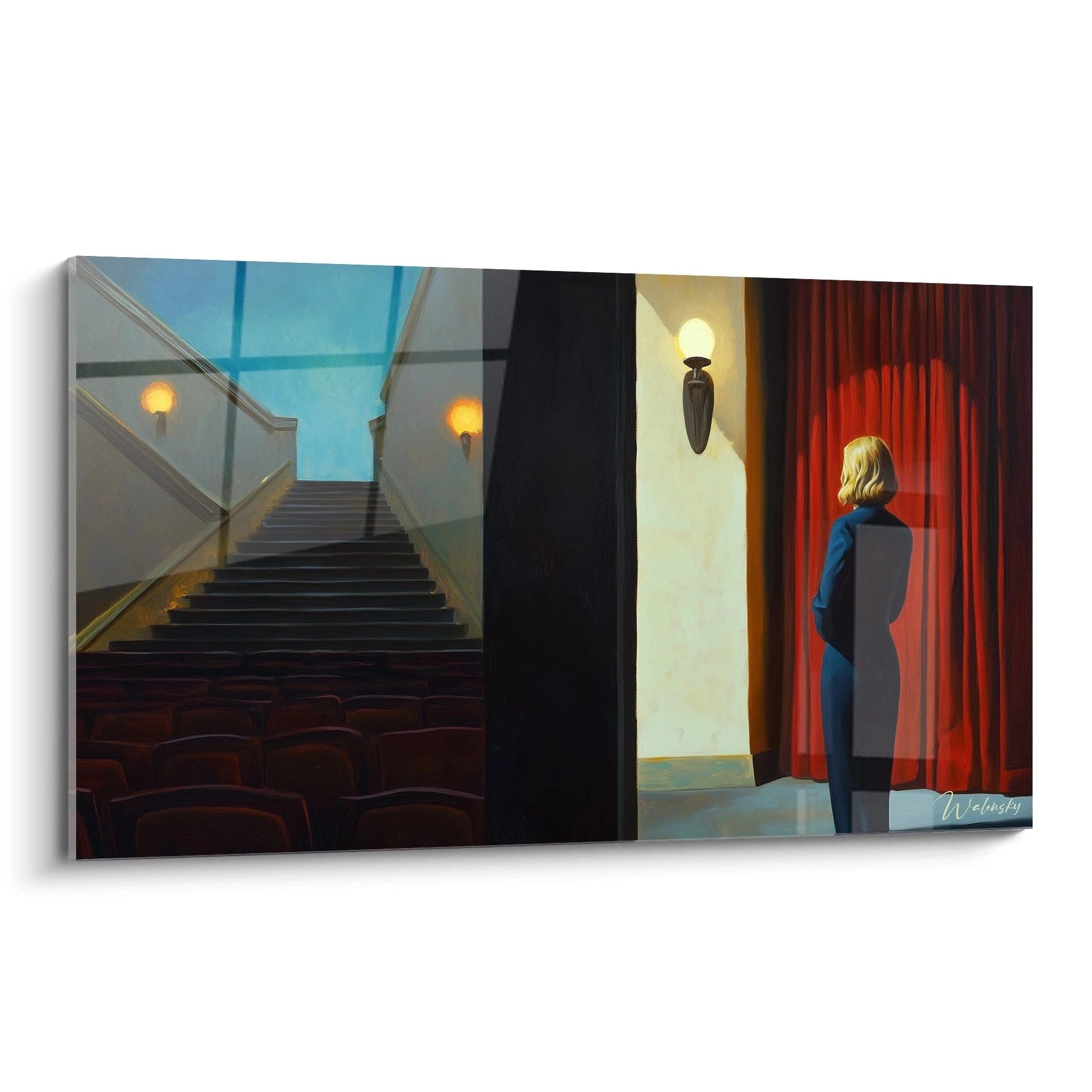
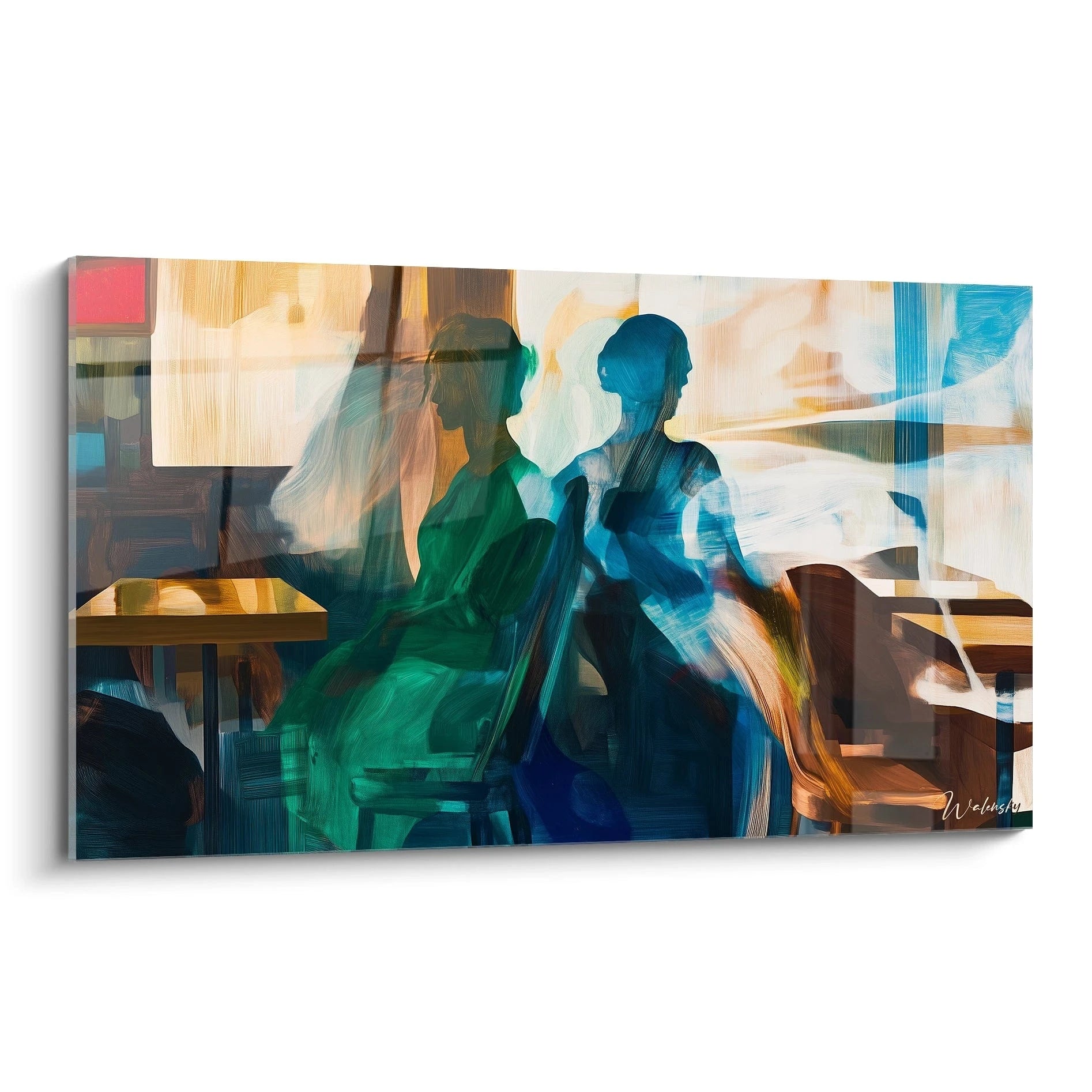
- Edward Hopper Painting Overview
- Edward Hopper Painting Artistic Analysis
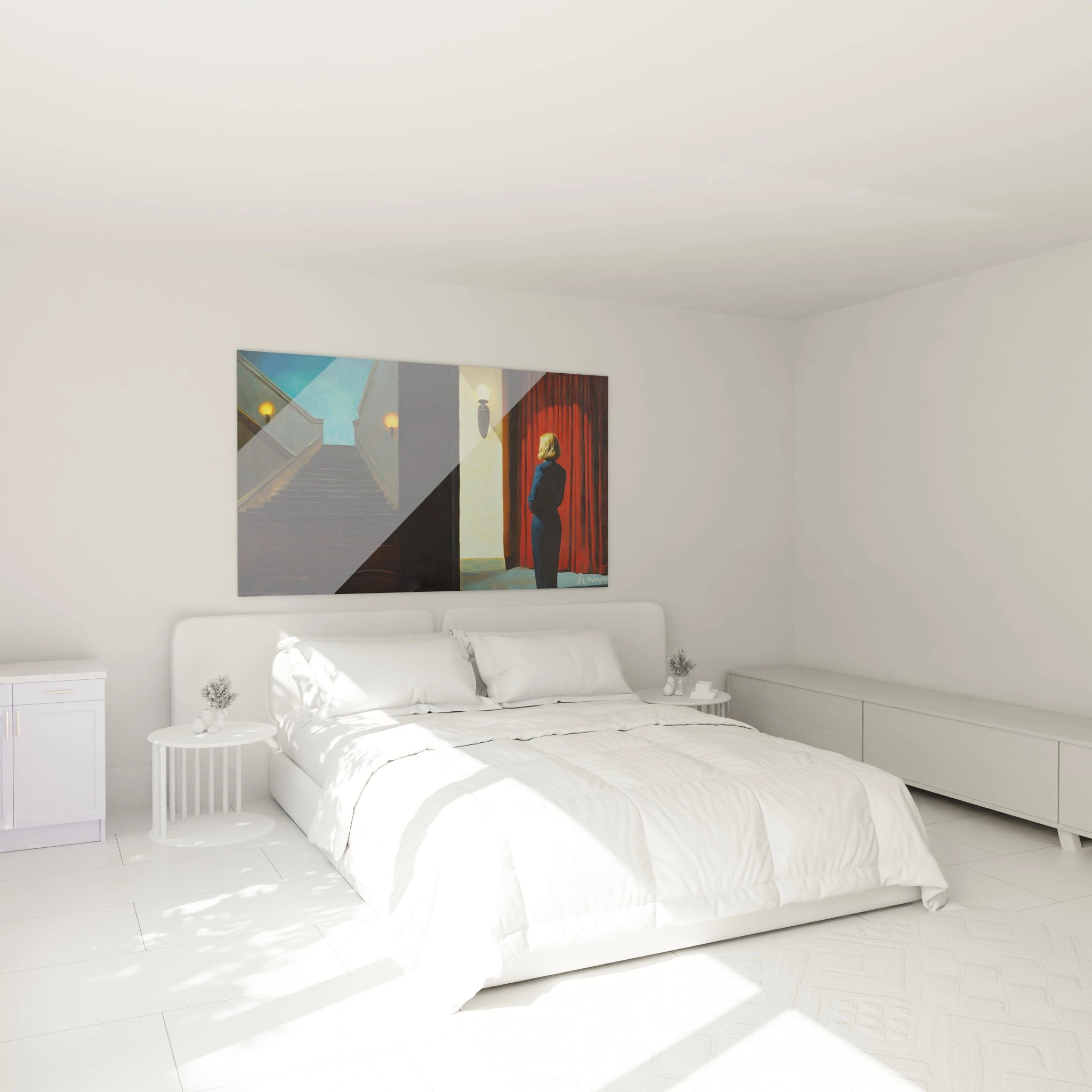
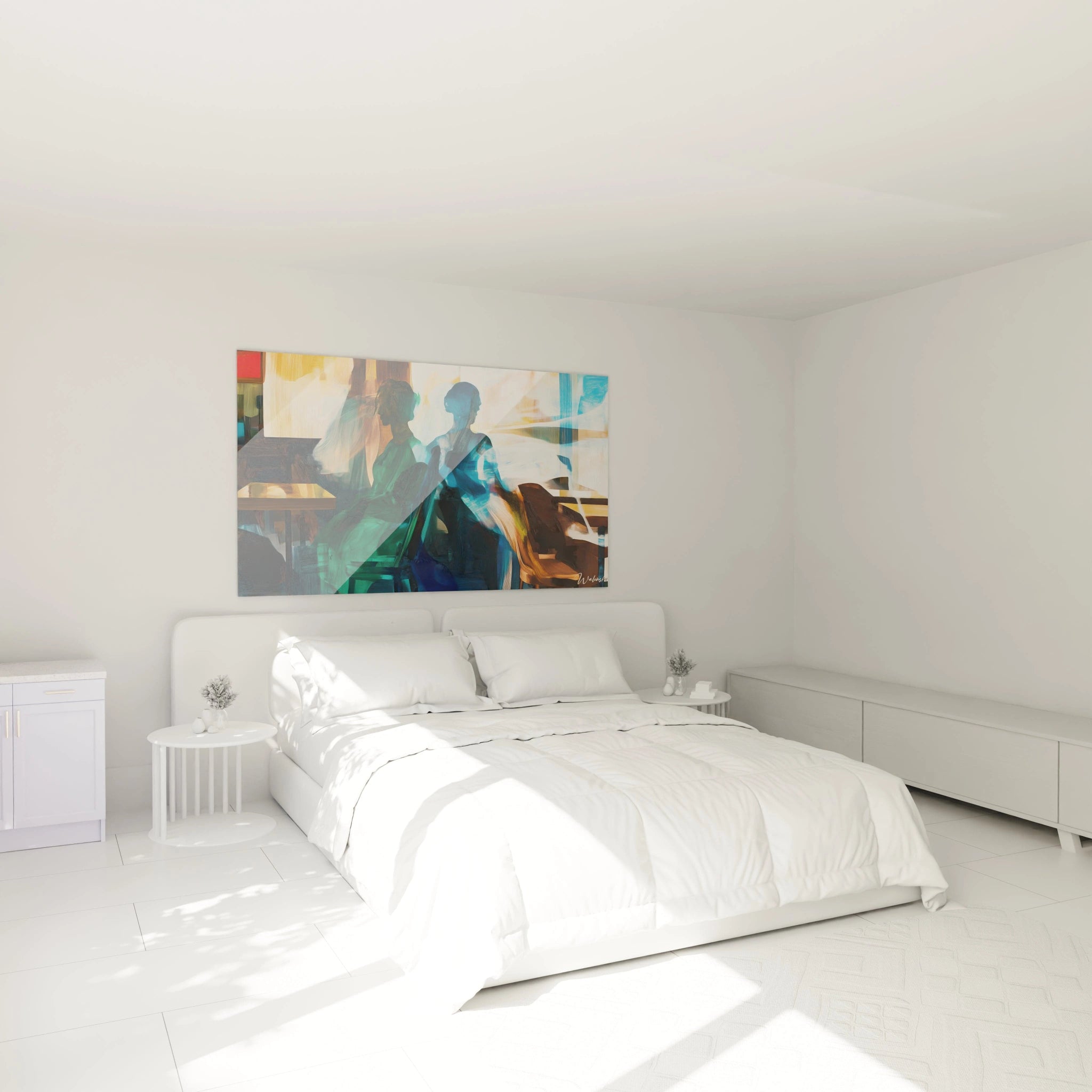
- Edward Hopper Painting in Interior Design
- Edward Hopper Painting as Art Investment
The works of Edward Hopper represent timeless masterpieces of 20th-century American art. Recognized for their striking representation of urban solitude and American landscapes, the celebrated paintings of this singular artist instantly transform a room into a refined cultural space. A pioneer of American realism, Hopper captured the essence of modern life with a melancholic precision that still resonates today with art enthusiasts and collectors.
The characteristic atmosphere of Edward Hopper's paintings, with their unique interplay of shadow and light, creates a striking focal point in any exhibition space. His iconic works such as "Nighthawks" or "Morning Sun" bring exceptional narrative depth to contemporary interiors, inviting reflection and contemplation. Hopper's distinctive color palette, dominated by luminous contrasts and subtly desaturated tones, remarkably harmonizes with current interior design trends.
Large-scale reproductions of Hopper's works radically transform a room's spatial perception, creating a window into mid-20th century America. Unlike purely decorative works, an Edward Hopper painting becomes a genuine cultural investment, bringing historical and intellectual dimension to your living or working space. These large-scale artistic representations immediately capture attention and naturally become the center of any conversation.
The Singular Artistic Universe of Edward Hopper Paintings
Edward Hopper's paintings distinguish themselves fundamentally through their silent narration and ability to transform the ordinary into the extraordinary. Each Hopper work tells an American story frozen in time, capturing moments of transition and anticipation that resonate deeply with the observer. This narrative characteristic immediately distinguishes his creations from other 20th-century artistic movements, where pure expression or abstraction often dominated.
How to instantly recognize an Edward Hopper painting?
Hopper's artistic signature is immediately identifiable through several distinctive elements. First, his incomparable mastery of natural light creates dramatic contrasts between shadowed zones and illuminated surfaces. This characteristic luminosity, often morning or late afternoon, generates a suspended atmosphere that becomes the artist's hallmark.
Hopper's compositions generally present precisely defined architectural spaces - building facades, restaurant interiors, hotel rooms - where human presence is either solitary or entirely absent. This tension between rigorous architecture and isolated human presence creates emotional resonance unique to his works.
Hopper's specific color palette also constitutes a major distinctive element. His paintings employ cold colors juxtaposed with warm surfaces, creating a particular chromatic balance that amplifies the psychological aspect of his scenes. These slightly desaturated hues contribute to the melancholic ambiance so characteristic of his work.
Why do Edward Hopper's paintings possess such powerful emotional resonance?
The emotional impact of Hopper's paintings stems from his exceptional ability to capture modern alienation. His works often depict characters in moments of profound introspection, creating a psychological mirror where viewers can project their own experiences of urban solitude. This psychological dimension transforms his paintings into immersive experiences rather than mere aesthetic representations.
Hopper's night scenes, particularly admired by collectors, create a cinematographic ambiance ahead of their time. His emblematic painting "Nighthawks" (1942) perfectly illustrates this quality, with its illuminated restaurant contrasting against surrounding darkness. This iconic work has influenced countless filmmakers and photographers, demonstrating the considerable cultural impact of Hopper's creations.
Architecture in Hopper's paintings is never a mere backdrop, but becomes a character in itself. The strict geometric lines of his buildings create a rigid framework that amplifies the vulnerability of human figures. This tension between architectural structure and human fragility generates exceptional narrative depth, transforming each painting into a complex visual narrative.
Edward Hopper's lesser-known technical innovations
Beyond his recognizable style, Hopper developed several technical innovations worthy of mention. His paint application method, with superimposed layers creating subtle depth, allows particular luminosity that gives the impression light emanates from within the painting itself.
Hopper often worked from extremely detailed preparatory sketches, precisely establishing composition before applying a single brushstroke. This methodical approach allowed him to create works where every visual element contributes to the overall atmosphere, without superfluous detail.
Hopper's strategic use of perspective often creates distinctive visual tension. His slightly elevated viewpoints or unusual angles confront viewers with everyday scenes in a new light, transforming the ordinary into the extraordinary through this simple perspectival shift.
An Edward Hopper painting is not merely a decorative element - it becomes a portal to mid-20th century America, capturing an era's essence with remarkable sociological precision. The experience of contemplating such a work daily transcends simple aesthetic appreciation, offering unparalleled cultural and historical depth to your environment.Strategic Integration of an Edward Hopper Painting in Contemporary Design
An Edward Hopper painting radically transforms a room's spatial perception by establishing unique narrative depth. Unlike purely decorative works, Hopper paintings create a dimensional window to mid-20th century America, instantly establishing historical and emotional connection with the space. This transcendent quality far exceeds simple ornamental function to become a genuine temporal anchor in your interior.
How does an Edward Hopper painting modify a room's spatial psychology?
The psychological effect of a Hopper painting on interior space proves particularly fascinating. His works, often characterized by deep perspectives and interior scenes viewed from outside (or vice versa), create spatial extension illusions that visually enlarge the room. This characteristic makes large-scale reproductions of his paintings a strategic choice for contemporary urban spaces with limited dimensions.
The characteristic luminosity of Hopper paintings, with their striking contrasts between shadowed zones and illuminated surfaces, directly influences environmental light perception. A work like "Morning Sun" (1952), with its masterful representation of morning light, can literally illuminate a naturally dim north-facing space, creating alternative visual clarity source.
Hopper's urban scenes, such as "Early Sunday Morning" (1930), establish fascinating architectural dialogue with contemporary interiors. The streamlined lines and geometric structures present in his works remarkably harmonize with current minimalist trends, creating aesthetic continuity between artwork and exhibition environment.
Strategic positioning to maximize Edward Hopper painting impact
The ideal location for an Edward Hopper painting differs significantly from usual conventions. His works gain particular impact when placed in transition zones - hallways, landings, entrances - thus reflecting the passage and in-between thematic so characteristic of his work. This conceptual correspondence between artwork content and placement creates profoundly coherent spatial resonance.
Paintings depicting Hopper's night scenes, such as his emblematic "Nighthawks", reveal their full power when installed in social spaces - dining rooms, reception halls - where they establish contemplative atmosphere conducive to intellectual exchange. These works' meditative quality subtly transforms such spaces' social dynamics.
For works depicting intimate interior scenes, such as "Room in New York" (1932), positioning in private spaces - bedrooms, personal offices - creates a troubling mise-en-abyme effect where represented intimacy echoes lived intimacy. This conceptual superposition generates particularly immersive spatial experience.
Large reproductions of Hopper's maritime paintings, such as "The Long Leg" (1935), find optimal expression in spaces with pronounced architectural constraints. Their open horizon and immensity suggestion effectively counterbalance spatial limitations, creating visual escape within constrained environments.
Chromatic interaction between Edward Hopper paintings and contemporary design
Hopper's distinctive palette, characterized by luminous contrasts and slightly desaturated tonality, presents remarkable adaptability to current interior design color trends. His amber tones and deep blues naturally integrate into neutral color schemes favored in contemporary interiors, creating immediate visual harmony.
A painting like "Gas" (1940), with its dramatic juxtaposition between artificial lighting and natural twilight, becomes a light-regulating element in space. The orangish tones of the gas station contrasting with deep evening blue create balanced chromatic temperature subtly influencing overall room perception.
The bright architectural facades present in certain Hopper works, as in "Second Story Sunlight", introduce dynamic chromatic accents that can serve as starting point for an entire room's color scheme. These colored elements act as visual catalysts allowing coherent chromatic extensions throughout the space.
Integrating an Edward Hopper painting transcends simple decoration to become genuine spatial and emotional design strategy. Its presence fundamentally transforms space perception, luminosity, and atmosphere, creating intellectually stimulating and visually sophisticated environment that constantly evolves through repeated observation.The Evolving Value of an Edward Hopper Painting as Artistic Investment
Acquiring an Edward Hopper painting, whether a museum-quality reproduction or, for fortunate collectors, a numbered lithograph, represents far more than simple decorative purchase - it's cultural investment with progressive appreciation. Hopper artwork values experience constant appreciation over decades, significantly surpassing usual American art market fluctuations. This appreciative stability transforms these paintings into heritable patrimony assets.
Why do Edward Hopper's paintings exceptionally resist fashion effects?
Hopper's works' remarkable resilience against ephemeral trends explains through several distinctive factors. First, their intrinsic narrative quality transcends purely aesthetic considerations, conferring interpretive depth that renews with each generation. Unlike art movements strongly anchored in their era, Hopper's exploration of modern solitude gains relevance as our society paradoxically becomes more connected yet emotionally isolated.
Hopper's lasting influence on contemporary visual culture - from cinema to advertising photography - constantly maintains his works within active cultural dialogue. This omnipresence in collective imagination effectively supports his paintings' market and cultural value, creating virtuous appreciation circle combining artistic and financial value. Directors like Wim Wenders or Todd Haynes continue explicitly referencing his work, perpetuating his cultural influence.
The objective rarity of Hopper's original works - who produced only approximately 366 paintings during his career - considerably amplifies museum-quality reproduction values. This quantitative limitation starkly contrasts with other major 20th-century artists' prolificacy, creating constant acquisitive pressure on secondary market that positively reverberates through premium reproduction segment.
How does cultural perception of Edward Hopper paintings evolve?
Contemporary reading of Hopper works continuously enriches through new sociological and psychological interpretations. Initially perceived as mid-century American documents, his paintings now undergo analysis as visionary explorations of digital alienation and urban isolation. This prophetic capacity anticipating current social concerns substantially reinforces their relevance and, consequently, market appreciation.
International exhibitions dedicated to Hopper systematically experience record attendance, demonstrating expanding global audience. The "Edward Hopper: An American Love Story" retrospective at Paris's Grand Palais attracted more than 784,000 visitors in 2019, establishing attendance record. This growing public popularity internationally diversifies and strengthens potential market for the artist's works.
Growing academic interest in Hopper's technical dimensions and compositional innovations also contributes to constant revaluation. Recent studies regarding his unique light mastery and perspectival innovations enrich appreciation beyond usual thematic readings, thus attracting particularly demanding and influential collector segment.
Acquisition and appreciation strategies for Edward Hopper paintings
To maximize Edward Hopper painting appreciation potential, several selection criteria prove determining. Reproductions of his emblematic works - such as "Nighthawks", "Morning Sun" or "Gas" - generally benefit from immediate recognition supporting appreciation. However, knowledgeable collectors increasingly interest themselves in lesser-known works, such as his Cape Cod landscapes or railway scenes, offering superior discovery and appreciation potential.
Reproduction technical quality constitutes crucial factor in long-term appreciation. Reproductions using advanced printing technologies capturing Hopper's texture subtleties and characteristic chromatic nuances maintain significantly better value. Initial investment in museum-quality reproduction generally proves economically sound through notably slower depreciation.
Reproduction format also merits particular attention. Large formats, particularly for works like "New York Movie" or "Office in a Small City", allow visual immersion approaching museum experience. This immersive quality substantially increases perceived value and emotional painting impact, justifying substantial value premium on resale market.
FAQ about Edward Hopper paintings
What Edward Hopper work is most sought for artistic investment?
"Nighthawks" remains unquestionably the most iconic Edward Hopper painting and most demanded on premium reproduction market. Its universal recognition and status as American cultural icon make it particularly stable and appreciated investment, with value continuing steady progression for decades.
How to identify quality Edward Hopper painting reproduction?
Excellent reproduction is recognized through chromatic fidelity to slightly desaturated Hopper tones, precision of luminous contrasts, and printing support quality ideally presenting subtle texture recalling original canvas. Authenticity certificates mentioning printing technology and edition limitation constitute significant value indicators.
Do Edward Hopper's maritime paintings have same value as urban scenes?
While historically less valued than emblematic urban representations, Hopper's maritime scenes currently experience substantial revaluation among collectors and experts. Their exceptional luminosity and streamlined composition particularly well suit contemporary aesthetic trends, suggesting superior medium-term appreciation potential.
What is Edward Hopper's paintings' influence on contemporary art?
Hopper's influence on contemporary art manifests primarily in narrative photography, independent cinema, and certain hyperrealist painting currents. Artists like Gregory Crewdson or Richard Tuschman explicitly develop neo-Hopperite aesthetics, creating intergenerational dialogue constantly maintaining Hopper's work at contemporary artistic conversations' center.