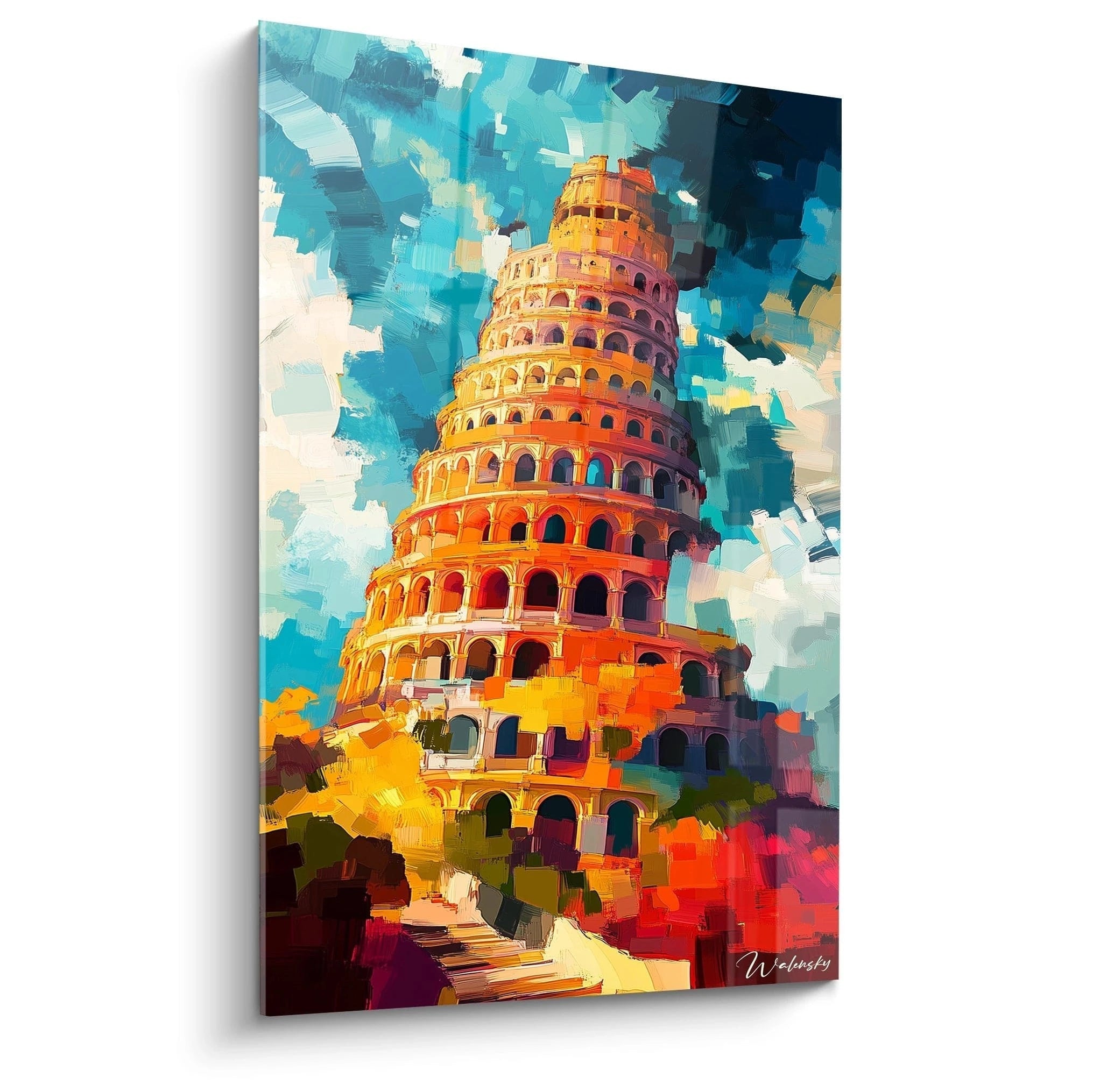
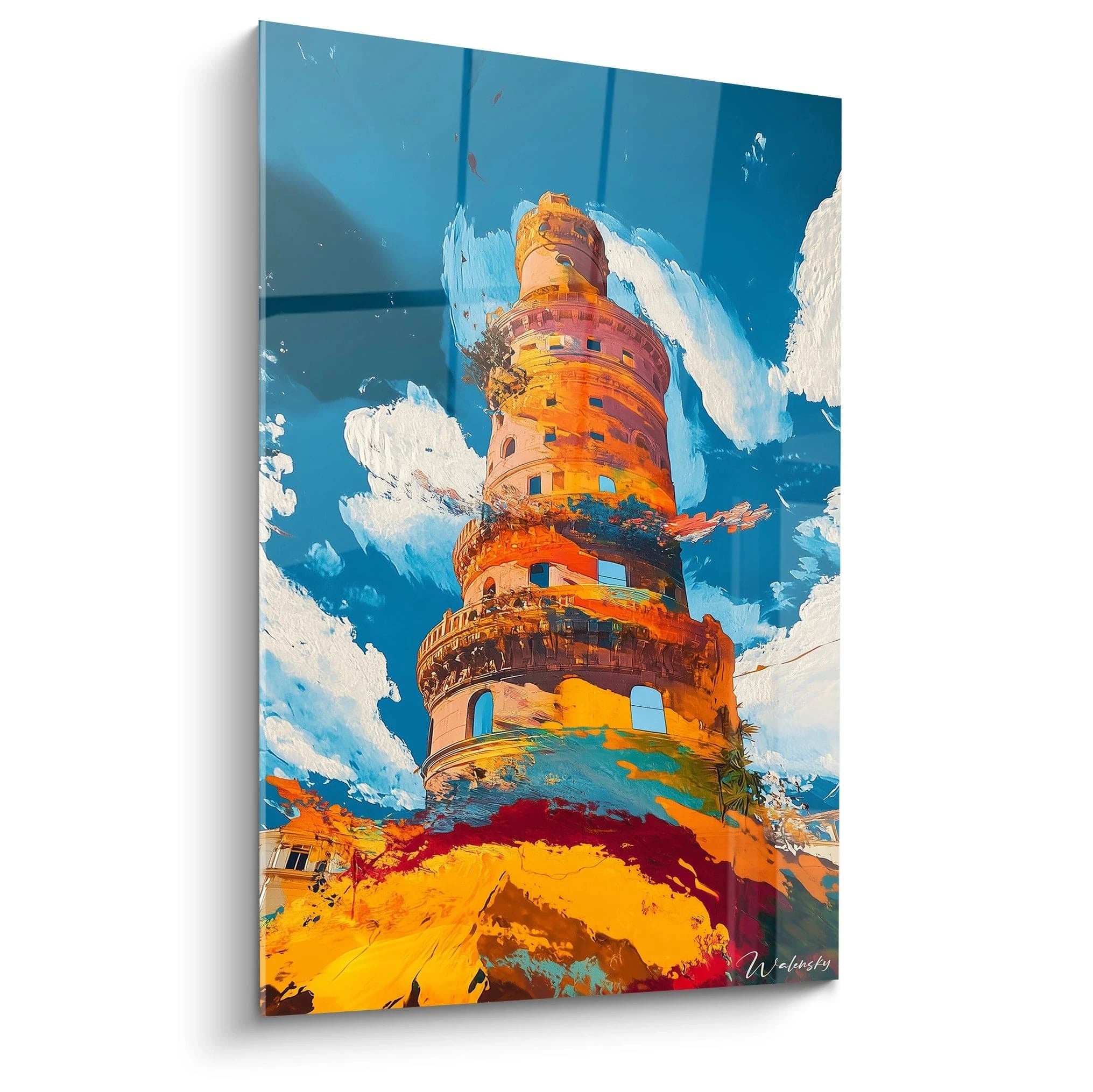
- Pieter Bruegel the Elder Painting Presentation
- Pieter Bruegel the Elder Pastoral Universe Painting
- Pieter Bruegel the Elder Folkloric Symbolism Painting
- Pieter Bruegel the Elder Visual Narrative Painting
The works of Pieter Bruegel the Elder represent a major turning point in the history of Flemish art in the 16th century. Nicknamed "Bruegel the Peasant" for his marked interest in rural life, this major artist of the Northern Renaissance developed a unique approach that continues to captivate art enthusiasts around the world. Each painting by Pieter Bruegel the Elder is distinguished by its narrative richness, its meticulous observation of popular customs, and its singular treatment of landscapes.
Reproductions of paintings by Pieter Bruegel the Elder constitute masterpieces for collectors and passionate lovers of Flemish art. These famous paintings bring exceptional historical depth and visual richness to any interior. The density of the scenes represented, often populated by dozens of characters going about their daily activities, transforms each observation into a true discovery.
In the following tabs, discover three fundamental aspects that make paintings by Pieter Bruegel the Elder timeless works: his unique approach to the pastoral universe, his symbolism rich in folklore and teachings, and his complex visual narrative that invites prolonged contemplation.
The Pastoral Universe in the Paintings of Pieter Bruegel the Elder
The paintings of Pieter Bruegel the Elder are distinguished by their authentic and detailed representation of rural Flemish life in the 16th century. Unlike his contemporaries who favored idealized religious or mythological scenes, Bruegel chose to immortalize the daily lives of peasants with remarkable ethnographic precision. This unique approach transforms his works into veritable visual historical documents.
Why do Bruegel's paintings offer complete immersion in the rural world?
The power of Pieter Bruegel the Elder's paintings lies in their ability to capture the very essence of rural life in all its dimensions. Each scene teems with authentic details: period agricultural tools, clothing specific to different rural social classes, and faithfully reproduced vernacular architectures. These elements create a veritable visual encyclopedia of 16th-century farming practices.
In "The Harvesters" (1565), Bruegel presents not only the agricultural techniques of the era but also captures the particular atmosphere of this crucial period of the peasant calendar. The scorching heat of summer is felt almost physically through the postures of the workers and the particular luminosity that bathes the scene.
- Faithful reproduction of agricultural seasonal cycles
- Precise details of Flemish village customs
- Meticulous representation of tools and working techniques
Peasant festivities: a privileged subject in Bruegel's paintings
Scenes of village festivities occupy a prominent place in the work of Pieter Bruegel the Elder. "The Wedding Feast" (1567) constitutes an emblematic example of his ability to grasp the essence of popular celebrations. The artist depicts not only the festive aspect but also reveals the social codes, implicit hierarchies, and human interactions characteristic of these gatherings.
These representations of festivities are never gratuitous: they serve to reveal profound truths about the human condition. Bruegel observes his subjects with an ethnographic gaze, capturing the expressions, gestures, and behaviors that define the collective identity of Flemish rural communities.
How do Bruegelian landscapes transform our perception of rural spaces?
The paintings of Pieter Bruegel the Elder completely redefine our understanding of rural landscape. His striking panoramas, as in "Hunters in the Snow" (1565), present a totalizing vision of the territory. Unlike contemporary representations that often isolated natural elements, Bruegel harmoniously integrates human activity within a broader environment.
This approach revolutionizes the pictorial representation of rural spaces by creating a veritable visual ecosystem. Villages, fields, forests, and water courses are articulated in a coherent composition that underscores the interdependence between humans and their environment. This holistic perspective makes Bruegel's paintings works particularly suited to contemporary spaces seeking to evoke a profound connection with the natural world.
The lasting influence of these landscape representations manifests in our modern appreciation of rural spaces. The paintings of Pieter Bruegel the Elder remind us of the importance of seasonal cycles and the symbiotic relationship between human communities and their natural environment, themes that resonate particularly in our current ecological context.
Folkloric Symbolism in the Paintings of Pieter Bruegel the Elder
The paintings of Pieter Bruegel the Elder overflow with rich and complex folkloric symbolism that transcends their apparent simplicity. Each work constitutes a veritable visual rebus where proverbs, popular traditions, and social critiques intertwine in a multilayered narrative. This symbolic dimension transforms the experience of observing his paintings into a stimulating intellectual exploration.
In what way do Flemish proverbs become embodied in Bruegel's paintings?
The masterpiece "Flemish Proverbs" (1559) magistrally illustrates Bruegel's ability to transpose popular wisdom visually. In this teeming composition, more than one hundred proverbs and idiomatic expressions come to life in the form of interconnected scenes. Each character, each depicted action corresponds to a specific vernacular expression, creating a visual dictionary of popular expressions of the era.
This transposition of language into images makes Bruegel's paintings works particularly suited to intellectual living spaces. Their presence stimulates conversation and cultural exchange, transforming a simple decorative element into a catalyst for enriching social interactions. Owning a reproduction of a Bruegel painting is to invite a collective exploration of shared cultural references.
- Unique visualization of Flemish idiomatic expressions
- Encoding of popular wisdom in everyday scenes
- Creation of visual riddles that stimulate intellectual engagement
Hidden social critique in the paintings of Pieter Bruegel the Elder
Beneath the apparent simplicity of peasant scenes lies an incisive social critique. Living during an era of religious and political turmoil, notably during the Spanish occupation of the Netherlands, Bruegel develops an allegorical visual language to express potentially subversive commentary. This political dimension gives Bruegel's paintings a rare contextual depth.
In "The Land of Cockaigne" (1567), Bruegel uses folklore to critique idleness and gluttony. This work, apparently a simple representation of a paradise of abundance, actually constitutes a biting satire of excess and decadence. This characteristic dual reading of Bruegel's paintings makes them inexhaustible objects of contemplation.
How do mythological references enrich Bruegelian iconography?
Although primarily recognized for his peasant scenes, Pieter Bruegel the Elder skillfully integrates mythological references into his visual repertoire. "The Fall of Icarus" (1558) perfectly illustrates this fusion between classical mythology and contemporary observation. The mythological drama of Icarus drowning literally fades into an everyday landscape where human activities continue, indifferent to the tragedy unfolding.
This juxtaposition creates a fascinating visual tension between the extraordinary and the ordinary. Bruegel's paintings thus invite reflection on the place of grand narratives in our daily lives, on how universal dramas can go unnoticed amid our daily concerns. This philosophical dimension adds contemplative depth to spaces adorned with these works.
Bruegelian iconography also draws from carnival traditions and seasonal celebrations. "The Battle Between Carnival and Lent" (1559) explores the tension between indulgence and austerity through an abundance of symbols linked to popular rituals. This work demonstrates how Bruegel's paintings capture the very essence of the cultural cycles that punctuated the life of Flemish rural communities.
The Complex Visual Narration of Pieter Bruegel the Elder's Paintings
The paintings of Pieter Bruegel the Elder are distinguished by visual narration of exceptional complexity. Unlike most works of his era that favored a single focal point, Bruegelian compositions present a polyphonic narrative structure where dozens of micro-narratives coexist simultaneously. This characteristic transforms each painting into an inexhaustible universe to explore.
How does panoramic composition revolutionize the viewer's experience?
The panoramic vision adopted by Bruegel in works such as "The Tower of Babel" (1563) or "The Numbering at Bethlehem" (1566) fundamentally redefines the relationship between viewer and work. Unlike traditional passive contemplation, Bruegel's paintings require active participation: the eye is constantly in motion, discovering new details and new scenes with each observation.
This immersive approach makes Bruegel's paintings works particularly suited to contemporary living spaces. A quality reproduction placed in a daily passage space offers a visual experience that constantly renews itself. Each day reveals a new aspect, a previously unnoticed detail, transforming the work into an evolving intellectual companion.
- Multifocal narrative structures that stimulate visual exploration
- Dynamic composition inviting multiple reading paths
- Narrative microcosms that reveal the diversity of human experience
How do the seasons transform narration in Bruegel's paintings?
Bruegel's series of "Seasons" magistrally illustrates his profound understanding of the structuring role of natural cycles in human experience. Each seasonal painting does more than represent a changing landscape; it narrates how behaviors, work, and social relationships metamorphose to the rhythm of the seasons.
"Hunters in the Snow" (1565) is not limited to depicting a winter landscape, but narrates the complex adaptation of an entire community to the rigors of cold. This temporal dimension greatly enriches the experience of Bruegel's paintings, transforming them into visual meditations on the relationship between cyclical time and human existence.
Why do Bruegel's paintings create a unique immersive experience?
The narrative immersion created by Pieter Bruegel the Elder's paintings results from a meticulous orchestration between detailed foreground and panoramic background. In "The Fall of the Rebel Angels" (1562), the gaze constantly oscillates between the teeming chaos of the foreground and the broader cosmic structure suggested by the overall composition. This dynamic tension generates a particularly rich contemplative experience.
Bruegel's paintings invite prolonged contemplation that resembles a form of visual meditation. Their narrative density allows daily observation over long periods without exhausting their potential for discovery. This characteristic makes them ideal works for permanent living spaces where their presence enriches daily experience in a lasting way.
The tactile dimension of depicted scenes - texture of clothing, materiality of tools, grain of stone - adds an additional sensory layer to the visual experience. Quality reproductions of Bruegel's paintings manage to transmit this tactile richness, creating an almost physical presence in the exhibition space.
FAQ: Pieter Bruegel the Elder Paintings
What is the most emblematic work among the paintings of Pieter Bruegel the Elder?
"The Tower of Babel" (1563) is often considered one of Bruegel's most emblematic works, illustrating his mastery of monumental compositions and his ability to integrate a multitude of architectural and human details into a coherent narrative structure.
How to recognize the authenticity of a reproduction of a Pieter Bruegel the Elder painting?
A quality reproduction of a Bruegel painting is recognized by the precision of details, particularly in miniature scenes and the facial expressions of characters. Faithfulness to the original colors, notably the earthy and greenish tones characteristic of his palette, also constitutes an important indicator of authenticity.
What is the impact of Pieter Bruegel the Elder's paintings on contemporary art?
Bruegel's influence on contemporary art manifests primarily in the complex narrative approach and detailed representation of collective scenes. Artists such as Peter Blake or creators of immersive installations draw direct inspiration from his ability to create visual universes teeming with details and interconnected micro-narratives.