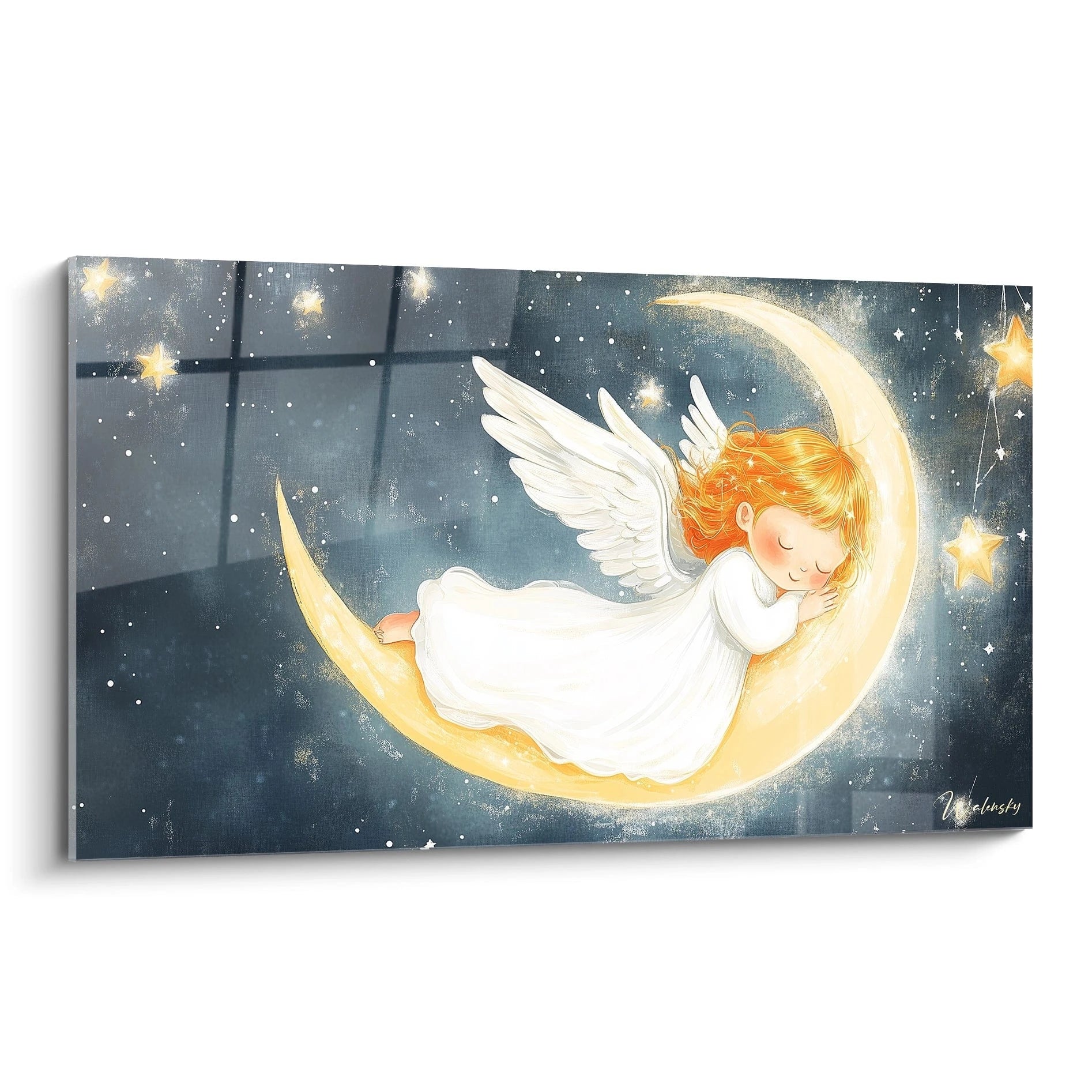
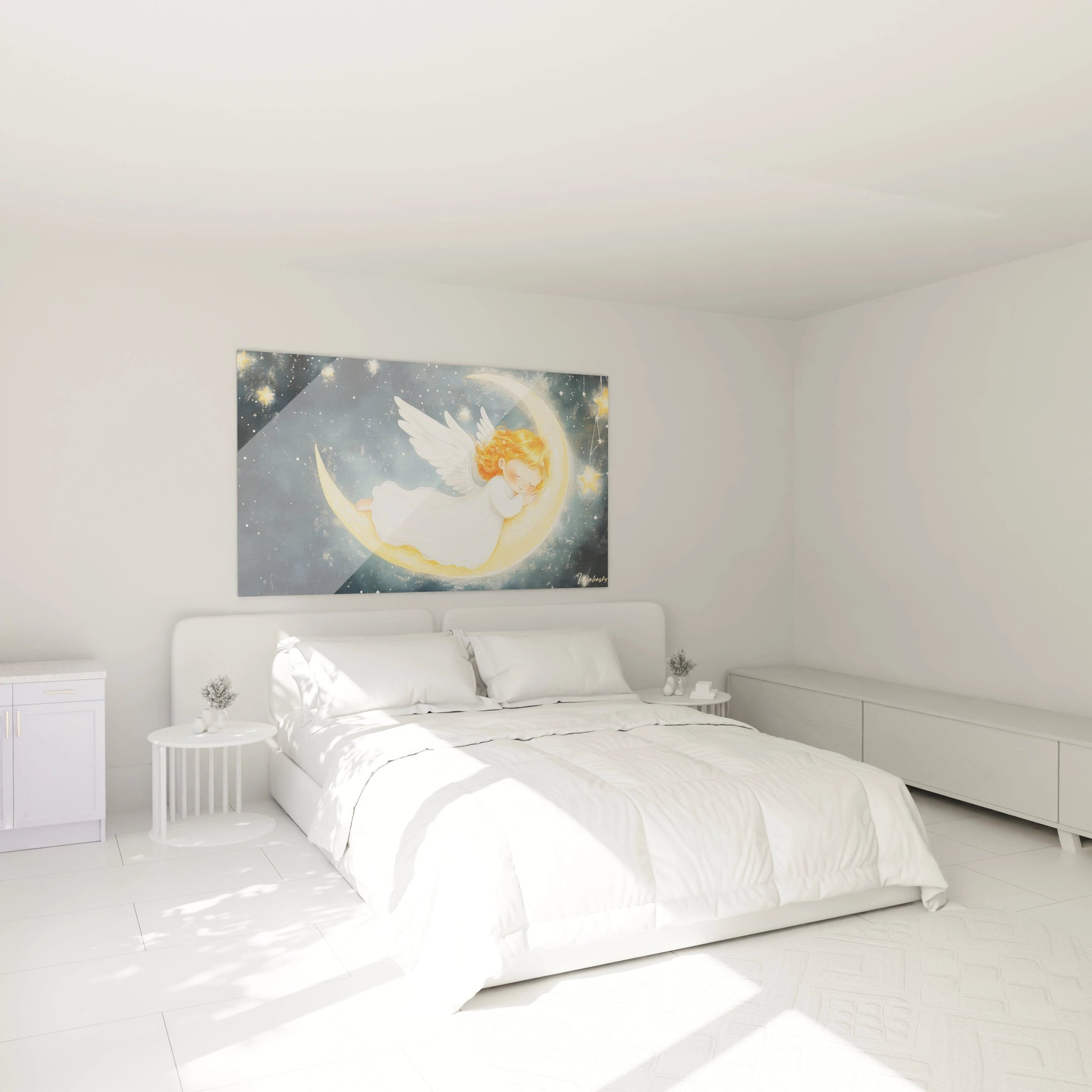
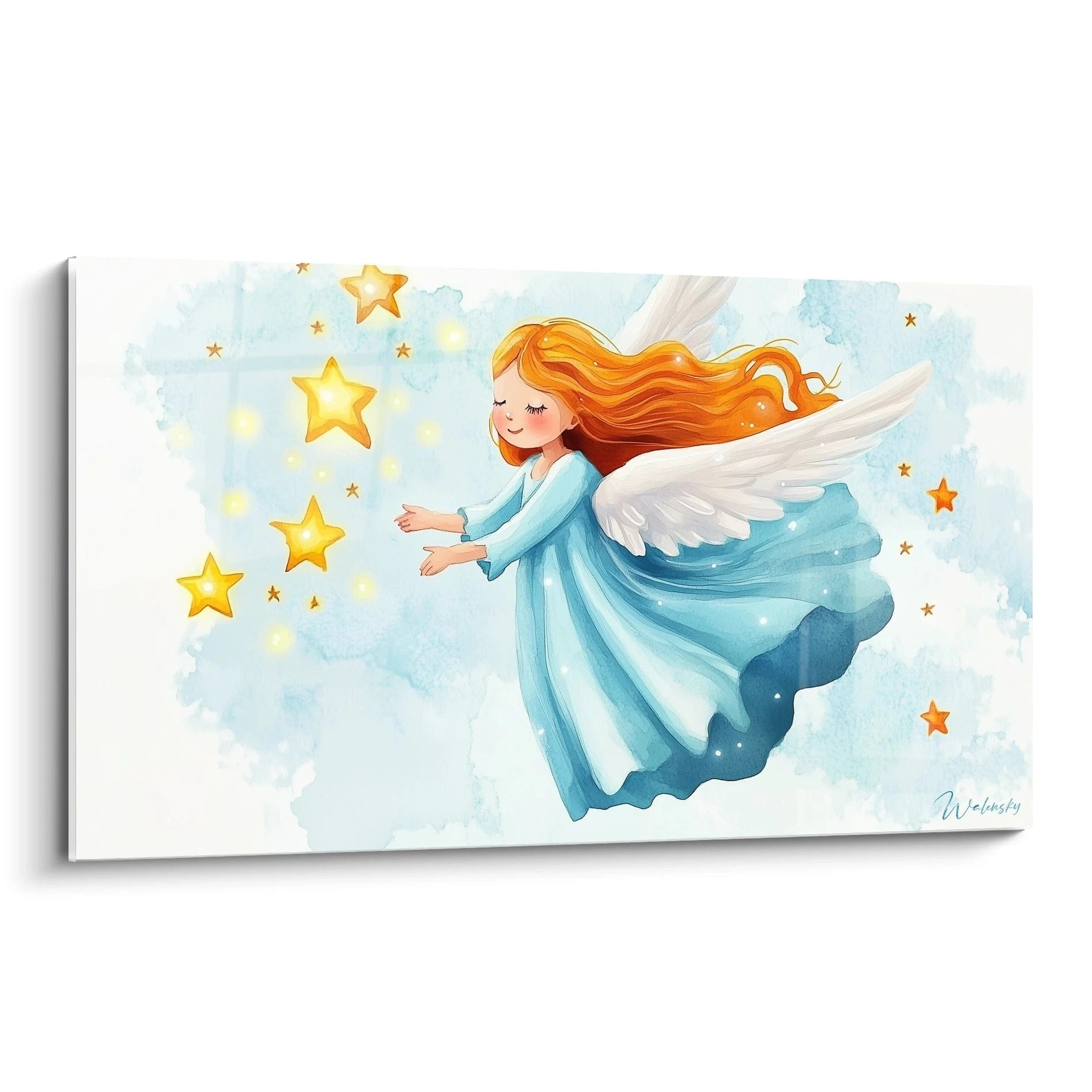
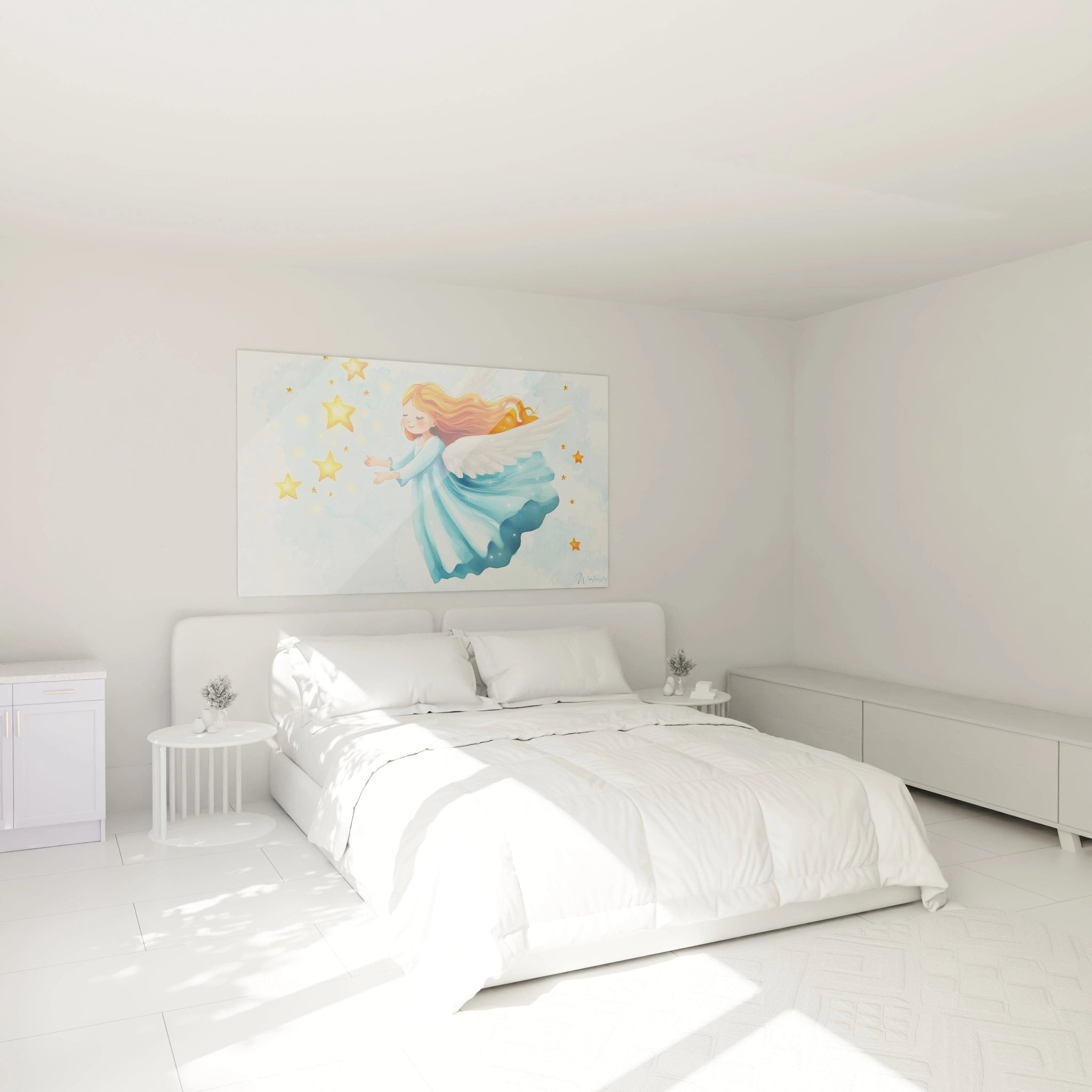
- Angel Painting for Children Overview
- Angel Painting for Children and Emotional Development
- Angel Painting for Children and Peaceful Sleep
- Angel Painting for Children and Spiritual Design
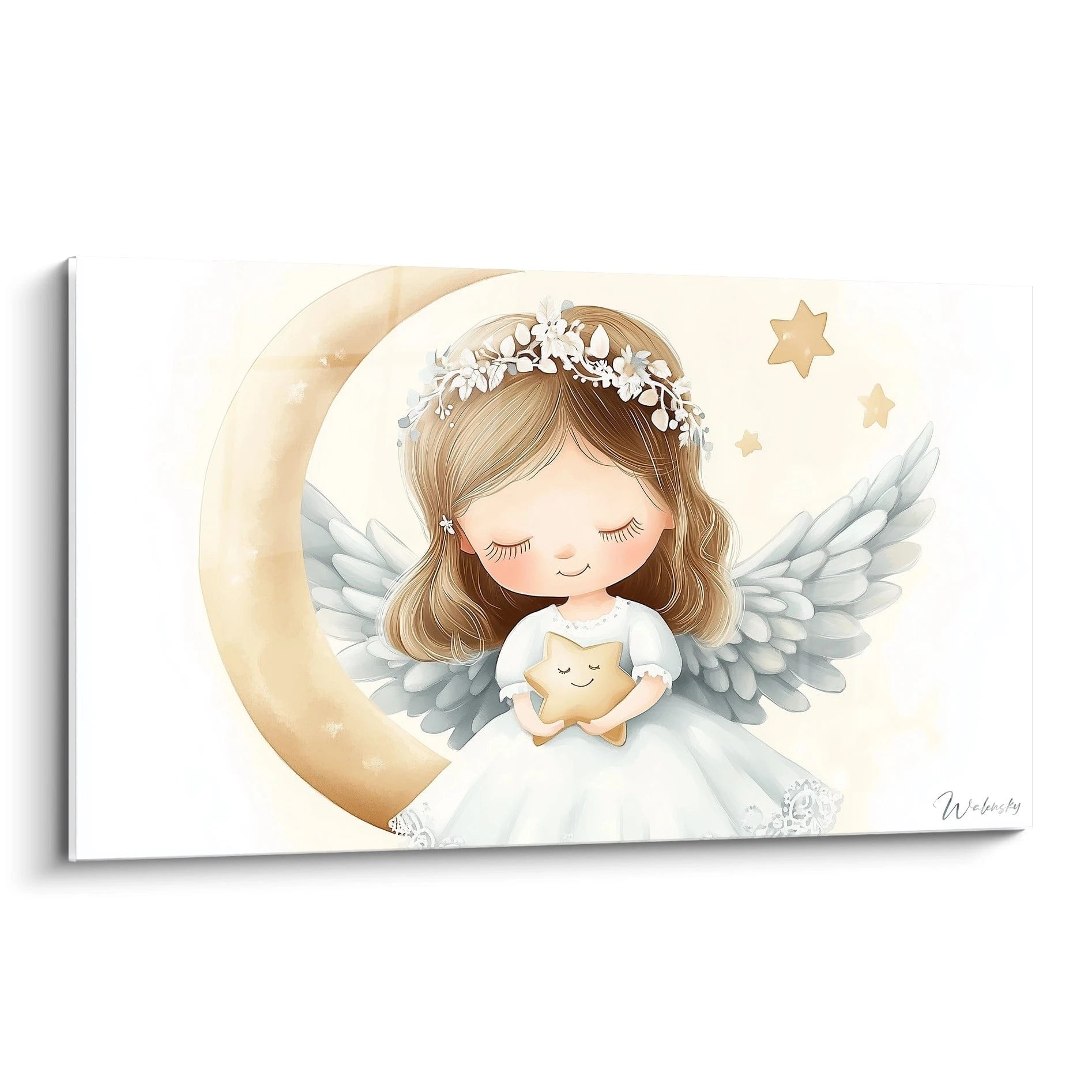
The angel painting for children represents much more than simple wall decoration - it is a true visual guardian that accompanies your child in their development. These celestial representations combine aesthetic beauty and protective symbolism, creating a reassuring environment in your child's bedroom. Unlike classic illustrations, angel paintings bring a benevolent spiritual dimension that fosters serenity and positive imagination.
These large-format artworks stand out through their ability to transform a room's atmosphere, instantly establishing a reassuring presence that watches over your child. Angelic symbolism, recognized in many cultures, offers a sense of protection particularly sought by parents concerned with their child's emotional well-being.
Discover our collection of angel paintings for children specially designed to create a haven of peace in their bedroom. Each illustration is thoughtfully created to blend harmoniously into the child's world while bringing this particular protective dimension.
Angel paintings stand out through their unique ability to grow with the child. While younger ones will see soft and reassuring figures, older children can develop their own interpretation of these celestial guardians, allowing the painting to maintain its relevance over the years.
Unlike fleeting decorations that quickly lose appeal, an angel painting often becomes a companion for growth, sometimes even a silent confidant for the child who projects their thoughts and emotions onto it. This unique relational dimension distinguishes these artworks from simple decorative elements.
The Angel Painting for Children: Ally of Emotional Development
Angel paintings designed for children's bedrooms play a significant role in the emotional development of the youngest. Unlike standard decorations, these celestial representations create an environment conducive to soothing and security, two fundamental elements for serene development.
What emotional impact does an angel painting have on a child's development?
Angelic iconography offers a constant benevolent presence that naturally helps reduce childhood anxiety. Several psychologists specialized in child development emphasize the importance of protective symbols in the immediate environment of the youngest. A large-format angel painting creates what experts call a "reassuring visual anchor" - a comforting point of reference to which a child can unconsciously connect when feeling vulnerable.
Representations of guardian angels are particularly effective for children going through periods of insecurity, such as adapting to a new school or spending their first nights in their own bedroom. The constant visual presence of a symbolic protector helps overcome these delicate transitions.
How to choose an angel painting suited to your child's specific sensitivity?
Each child presents unique sensitivity to visual representations. For particularly creative or imaginative children, choose an angel painting with soft yet vibrant colors that will positively stimulate their imagination without overloading their mental space. For more sensitive or anxious children, opt for representations where the angel clearly adopts a protective posture, thus reinforcing the message of security.
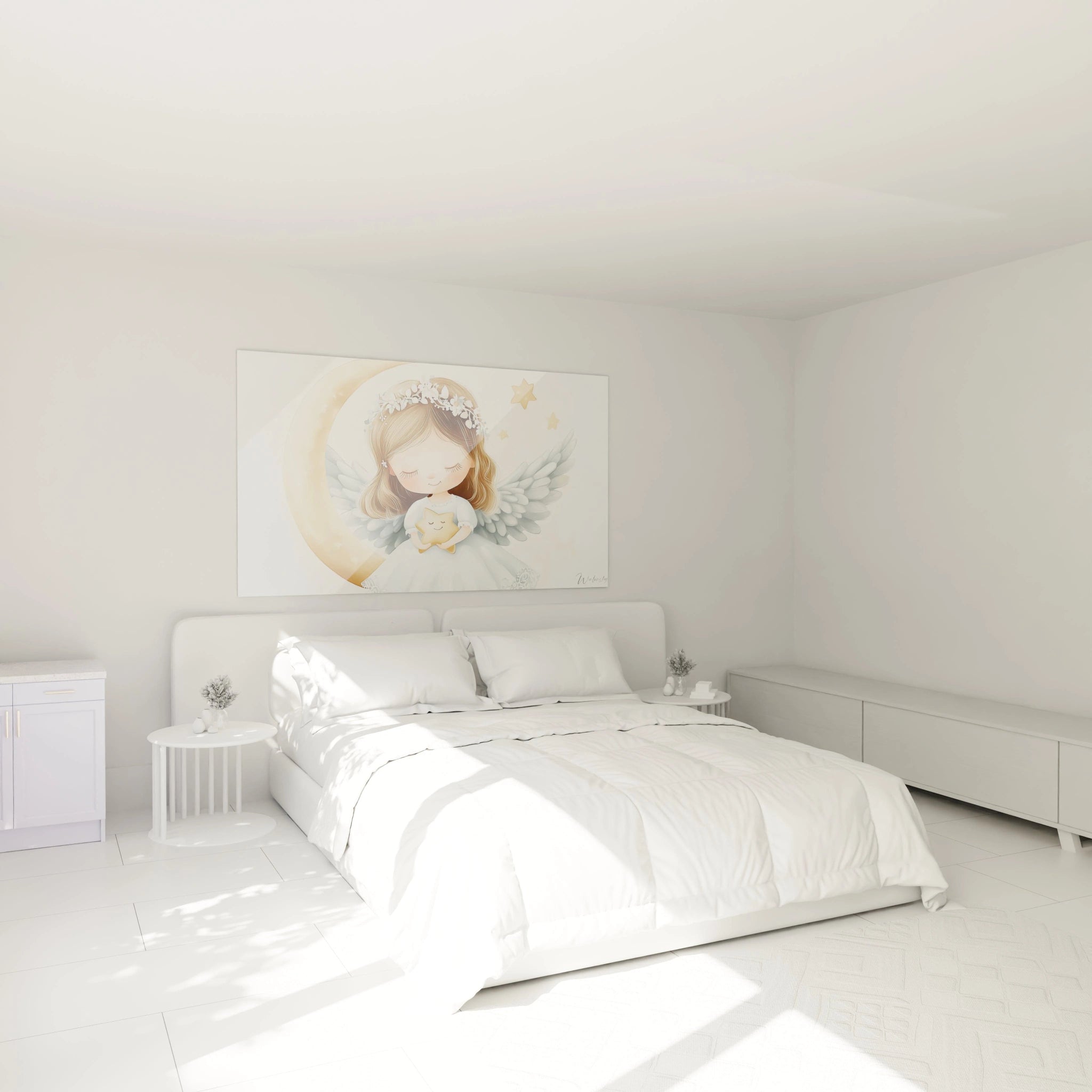
The size of the painting also plays a crucial role in its emotional impact. A large format creates a more imposing and reassuring presence, particularly suited for children who need a reinforced sense of protection. Placed facing the bed, this visual guardian becomes the last image seen before falling asleep and the first upon waking, framing the sleep period in a symbolic protective envelope.
Child psychology experts recommend involving the child in choosing the painting, even for the youngest. Observing their reactions to different angelic representations will allow you to identify the one that resonates most deeply with their particular sensitivity.
Angelic symbolism as a support for emotional dialogue
An often-overlooked aspect of angel paintings for children is their ability to serve as mediators for addressing complex emotional subjects. These representations offer a visual vocabulary that allows parents to naturally introduce concepts such as protection, kindness, or even spirituality in a way adapted to children's understanding.
Many parents report using the angel painting as support for soothing rituals before bedtime. Evoking the protective presence of the angel during the night transforms the painting into a true emotional management tool, helping the child develop their own inner resources when facing nighttime fears.
Specialists in art therapy also emphasize the narrative potential of these artworks. Encouraging a child to imagine stories involving their painting's angel develops their capacity to express and manage emotions through narration - a valuable emotional skill that will accompany them well beyond childhood.
To maximize these emotional benefits, choose an angel painting with important dimensions that integrates as a central element in the child's bedroom, rather than a simple decorative accessory. This significant visual presence transforms the daily experience of the space and reinforces the constant sense of protection.
Angel Painting for Children: Solution to Sleep Difficulties
The impact of an angel painting on children's sleep quality constitutes a phenomenon often observed by parents, but rarely explored in depth. Beyond simple decoration, these celestial representations exercise a subtle yet powerful influence on the nocturnal environment and how the child feels about the critical moment of falling asleep.
How does an angel painting concretely improve children's sleep quality?
Pediatric sleep specialists identify separation anxiety as one of the main causes of sleep difficulties in children. A large-dimension angel painting, strategically placed in a child's field of vision from their bed, creates what psychologists call a "presence substitute" - a visual representation that symbolically fills the parental absence during the night.
Unlike traditional nightlights that only modify lighting ambiance, the angel painting establishes a constant presence that persists even when the light turns off. The child internalizes this protective presence, which naturally activates their parasympathetic system - responsible for relaxation and physiological sleep preparation.
Studies in child neuropsychology suggest that calming images viewed within 15 minutes before sleep significantly influence the nature of mental images that arise during the falling-asleep phase. An angel painting contemplated before bedtime positively orients this critical transition toward sleep.
The protective role of angel paintings against night terrors
Night terrors and recurring nightmares affect nearly 30% of children between 3 and 8 years old. Psychologists specialized in this field recommend installing reassuring visual elements such as guardian angel paintings to create a "secure anchor" in the sleep environment. During nocturnal awakenings, the immediate view of this protective figure facilitates calming and resumption of the sleep cycle.
A particularly interesting aspect concerns children going through hypersensitivity phases. For these specific profiles, an angel painting with large dimensions offers a soothing focal point that helps them filter excessive sensory stimulation typically responsible for sleep difficulties. This "positive visual filter" function clearly distinguishes these artworks from simple wall decorations.
Parental testimonies reveal that introducing an angel painting in the bedroom often coincides with a significant reduction in nighttime calls and visits to the parents' bedroom. This autonomy regarding sleep represents a major developmental milestone for the child.
Establishing bedtime routines centered on the angel painting
Pediatric sleep experts unanimously emphasize the importance of predictable routines to signal to a child's brain the approach of rest time. An angel painting provides the opportunity to create a specific and personalized sleep routine that reinforces its effectiveness night after night.
Many parents report having developed practices such as "saying goodnight to the guardian angel" or imagining together a story where the angel watches over the child's sleep. These micro-routines centered on the painting transform the sleep experience into a positive moment rather than a source of anxiety.
To maximize these benefits, choose an angel painting with soothing colors dominated by soft blues, lavenders, or luminous whites - hues scientifically associated with melatonin production, the natural sleep hormone. The ideal positioning is in the direct field of vision from a lying position, creating a final positive visual impression before closing your eyes.
Specialists also recommend referencing the angel painting verbally during moments of daytime anxiety, thus reinforcing its mental association with the sense of security that will be particularly valuable at bedtime. This "positive conditioning" technique amplifies the painting's effectiveness as a sleep improvement tool.
Angel Painting for Children: Creating an Adapted Spiritual Space
Integrating an angel painting in a child's bedroom transcends simple decoration to become a true vector of adapted spiritual awakening. In an era when traditional landmarks are transforming, these representations offer a gentle and visual introduction to spiritual protection concepts particularly important in a child's overall development.
Why integrate a spiritual dimension into the child's daily environment?
Developmental psychologists emphasize the importance of offering children supports for apprehending the invisible dimensions of existence. Unlike abstract concepts difficult for young minds to grasp, an angel painting proposes a tangible and accessible representation that materializes these complex notions.
This visual materialization responds to a fundamental developmental need. Between ages 3 and 7, children go through what specialists call "the period of early existential questioning," where questions naturally emerge about protection, invisible forces, and the continuity of existence. A large-dimension angel painting offers an ideal mediation support for accompanying these questions without imposing a rigid dogmatic framework.
Anthropologist specializing in childhood Maria Montoya observes that "angelic representations in a child's daily space create natural cognitive bridges between the tangible and intangible." This "conceptual bridge" function fundamentally distinguishes these artworks from simple decorative illustrations.
How does the angel painting contribute to structuring the child's spiritual imagination?
Unlike theological abstractions, the angel painting offers the advantage of providing an accessible visual incarnation that structures nascent spiritual imagination. This tangible representation becomes an anchor point around which the child can organize their first metaphysical conceptions in a way adapted to their cognitive development level.
Educators specialized in non-denominational spiritual awakening of children frequently use these representations as dialogue supports. The painting then becomes a "third-party mediator" that facilitates the expression of existential questions often difficult for young children to verbalize directly.
A particularly important aspect concerns the visual representation of unconditional kindness - a fundamental concept in the development of balanced spirituality. Through the image of the guardian angel, the child internalizes the idea of a protective presence that transcends the imperfections and limitations of human protections.
Setting up a "spiritual corner" centered on the angel painting
Many parents report having naturally developed a true "spiritual corner" in their child's bedroom, centered around the angel painting. This dedicated space, even if minimal, creates a symbolically differentiated zone that helps the child develop their capacity for recollection and interiority.
To maximize this dimension, choose a location that allows the child to contemplate the painting from a comfortable position. Some parents report having installed a small armchair or cushion facing the painting, thus creating a dedicated space for quiet moments that gradually becomes associated with a particular state of mind.
Specialists in child space design also recommend accompanying the angel painting with complementary objects that reinforce its spiritual dimension without creating visual overload: a small shelf with a few meaningful objects chosen by the child, or indirect lighting that gently highlights the artwork without creating glare.
FAQ on Angel Paintings for Children
At what age does an angel painting for children become relevant in their bedroom?
Angel paintings for children can be introduced from birth, but their cognitive and emotional impact becomes particularly significant between ages 2 and 3, when the child develops sharper awareness of their environment and begins to express nighttime fears. At this age, the visual representation of a protector becomes particularly relevant and reassuring.
How do I explain the meaning of an angel painting to my child without imposing a specific religious vision?
You can present the angel painting as a "special friend who watches over you" or a "invisible guardian who protects you," adapting the explanation to your child's age and sensitivity. This approach allows you to convey the protective essence of angelic symbolism without anchoring it in a specific denominational framework, leaving the child free to develop their own interpretation as they grow.
What dimension of angel painting for children offers the best visual impact in a standard bedroom?
For an average child's bedroom (130-160 sq ft), a large-dimension angel painting (minimum 80x120cm) creates optimal visual presence without excessively dominating the space. This size allows appreciation of the representation's details while establishing a significant presence visible from any point in the room, thus reinforcing its symbolic protective effect.