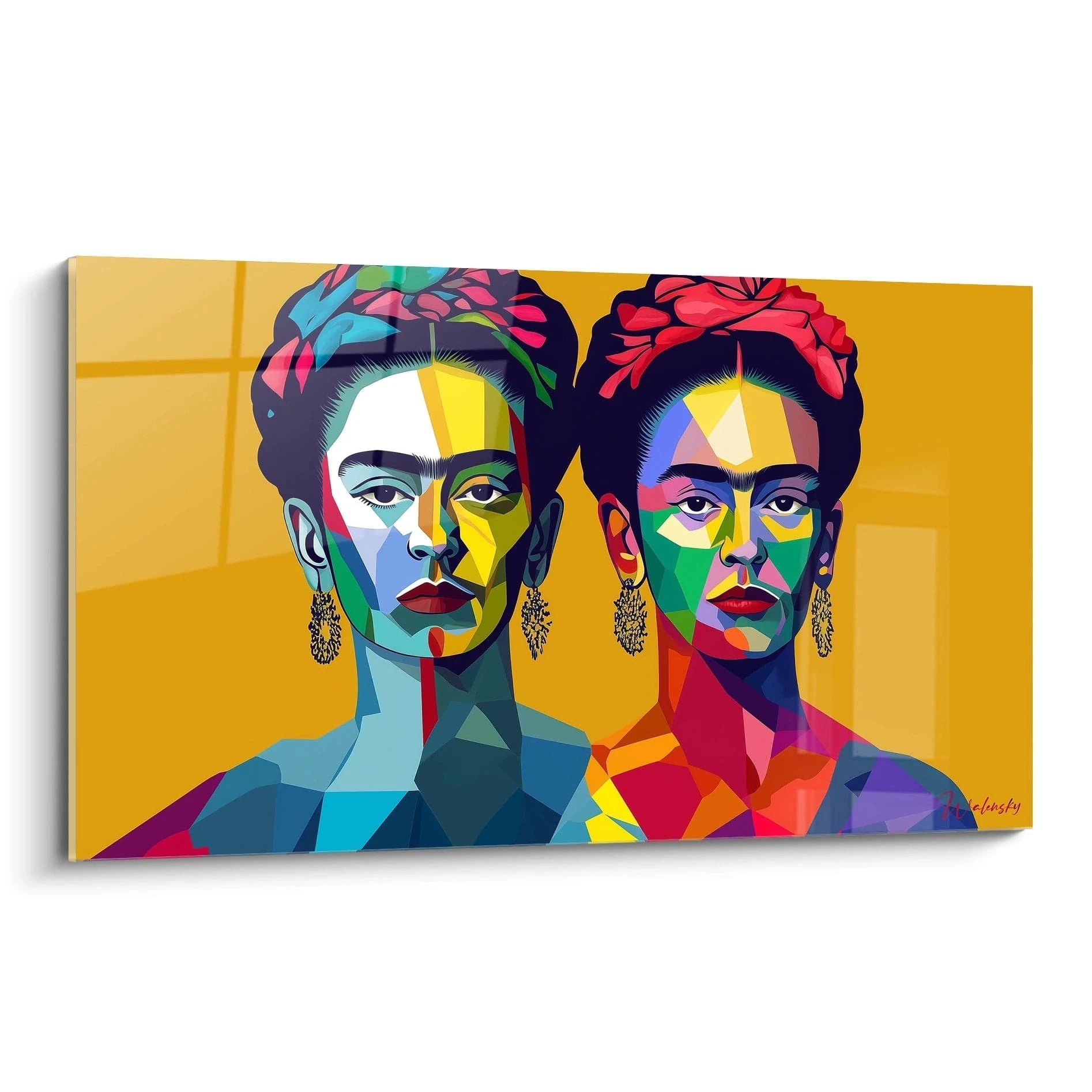
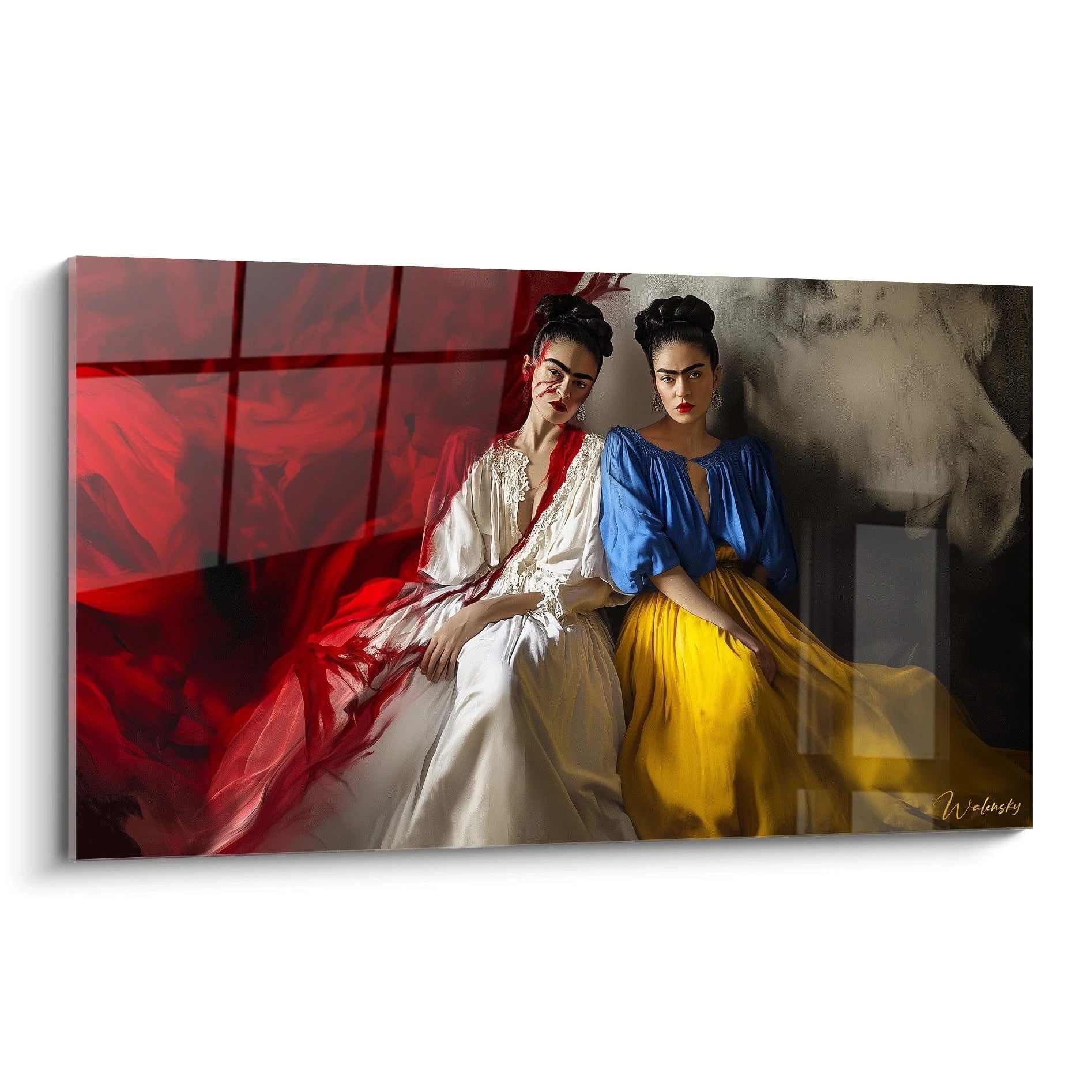
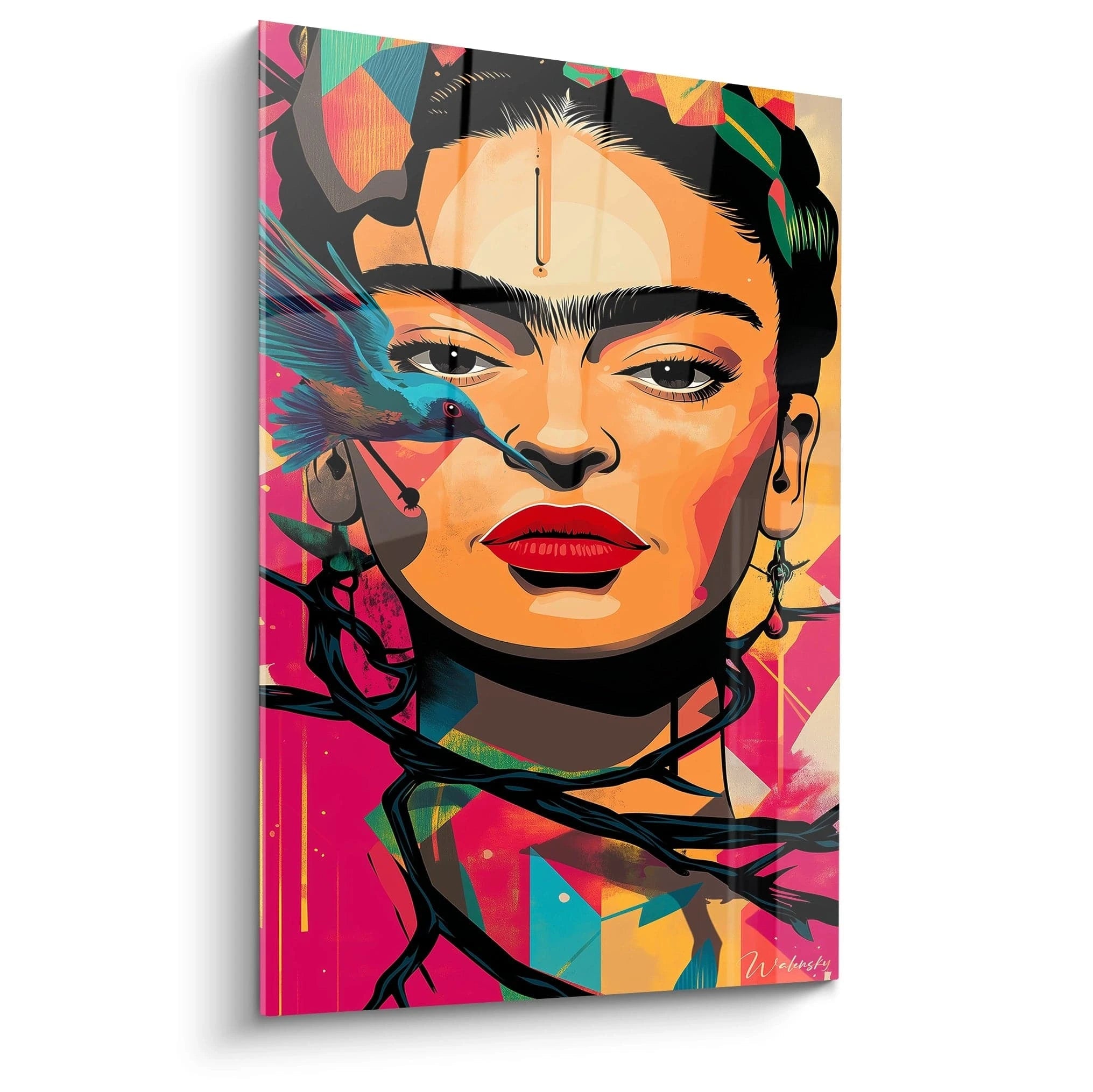
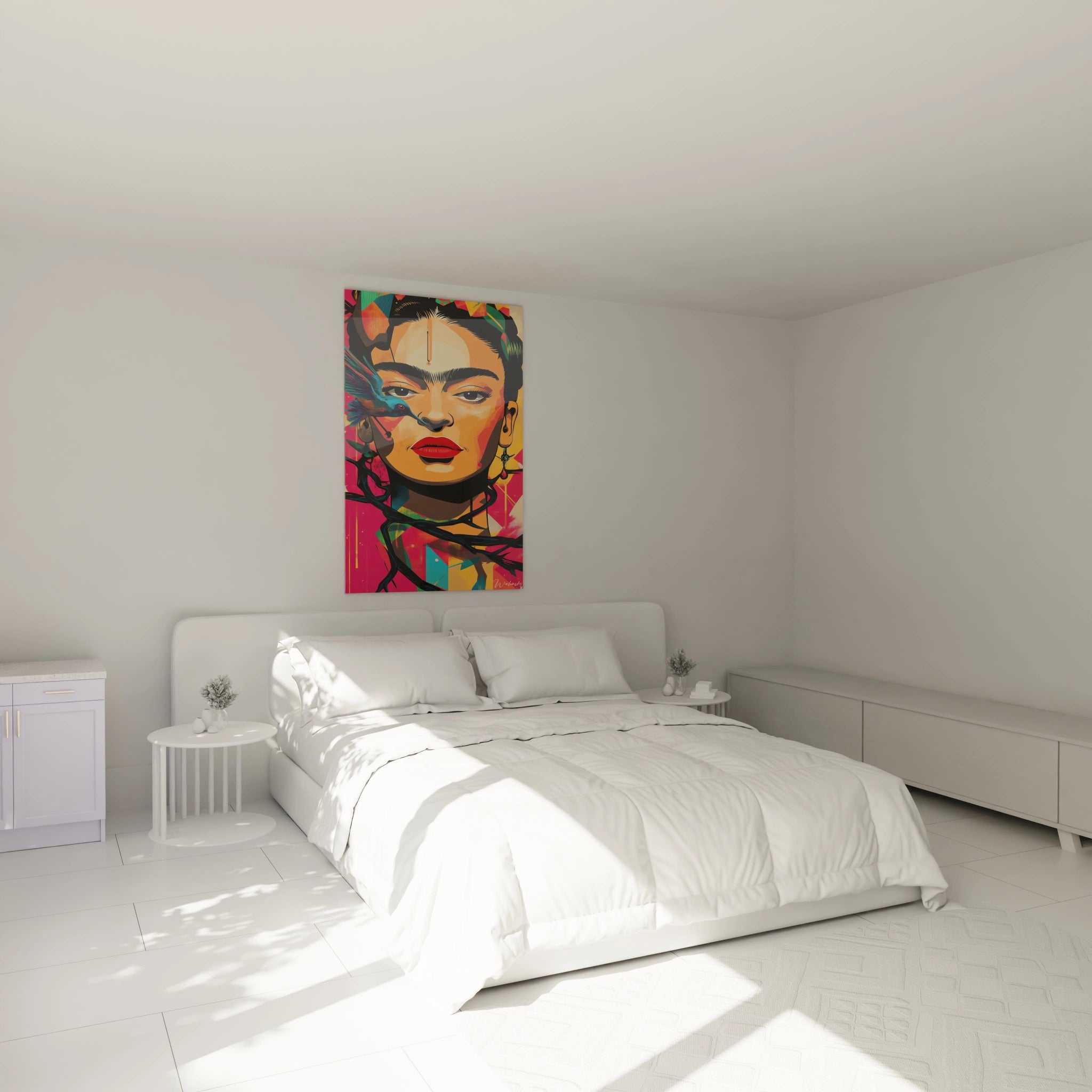
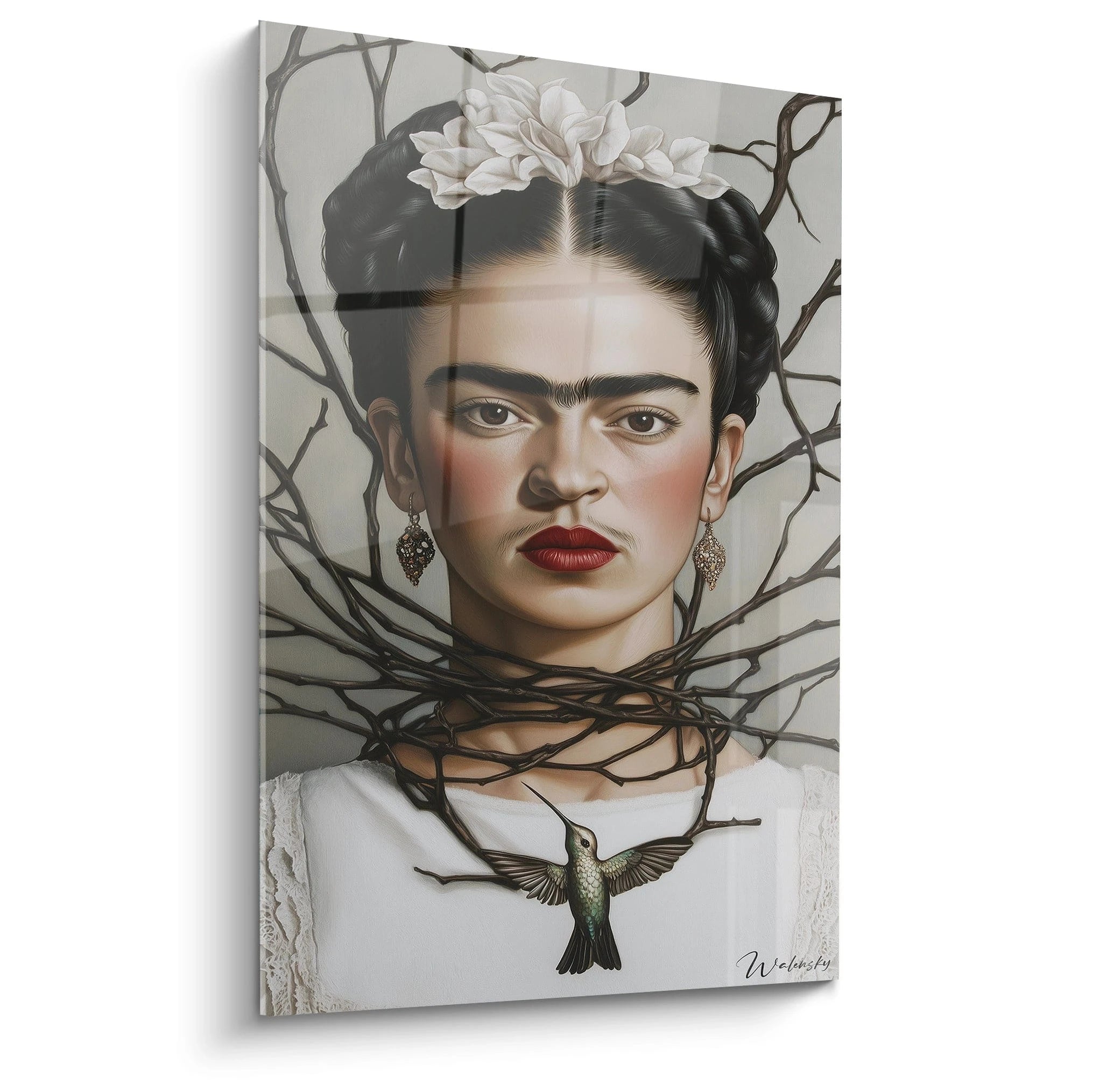
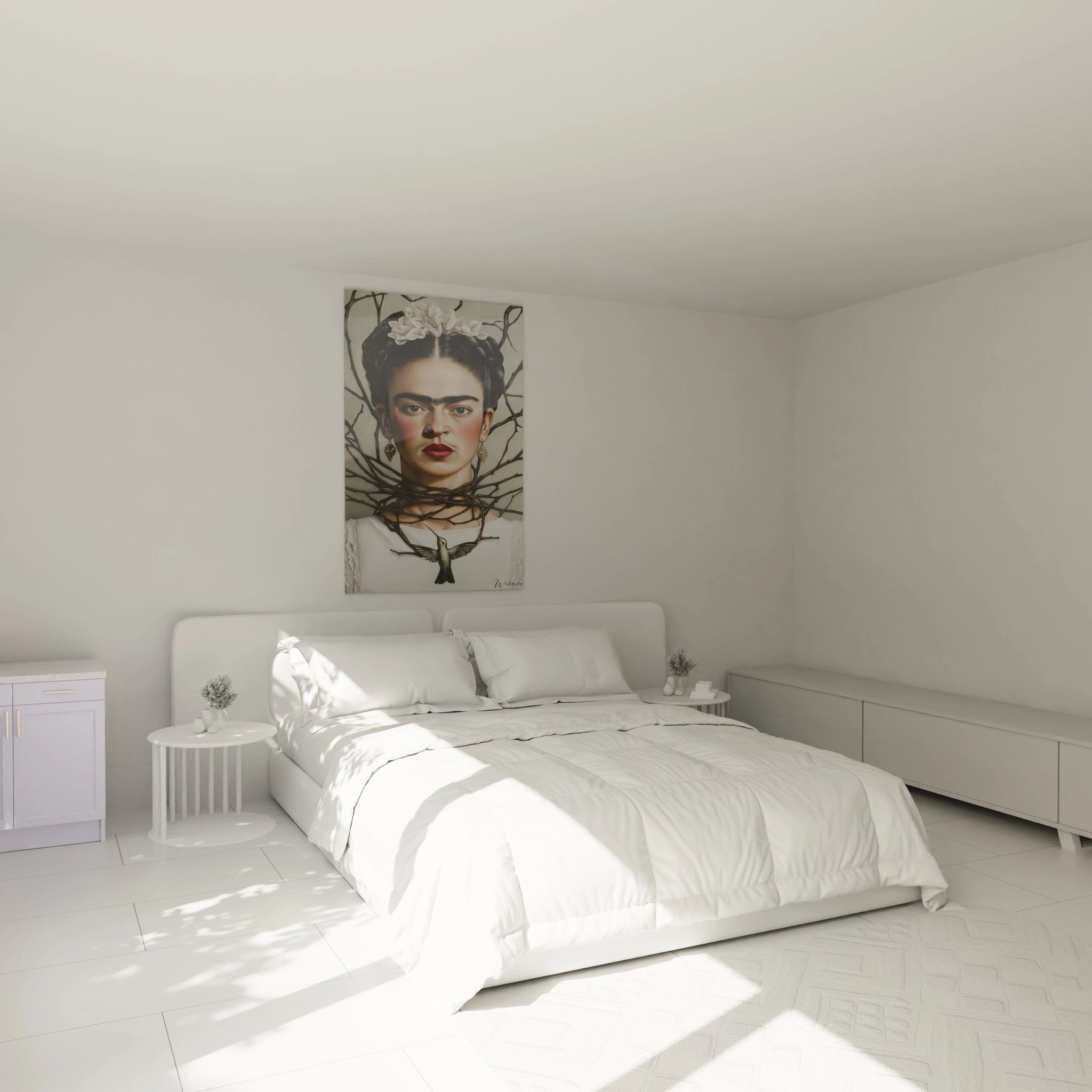
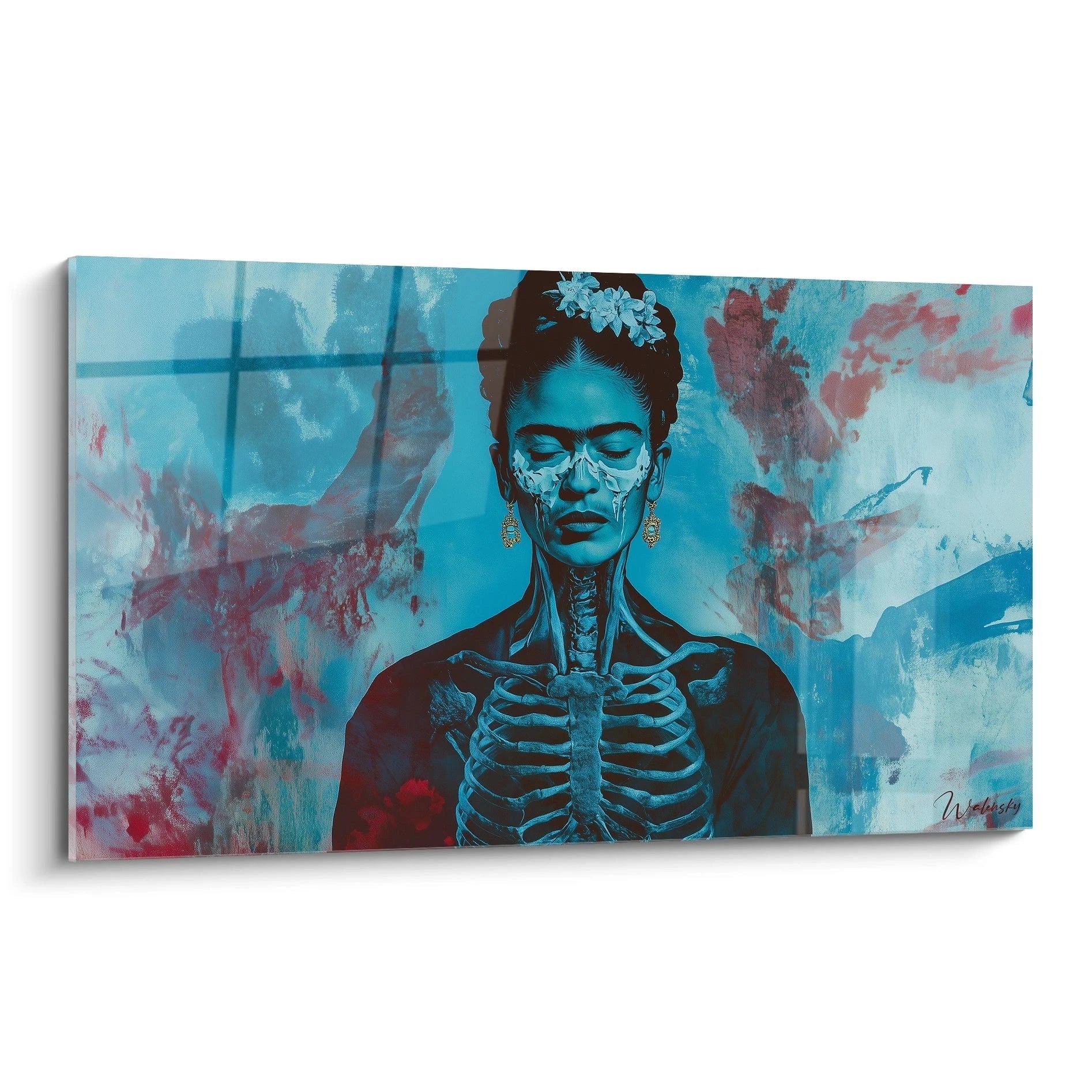
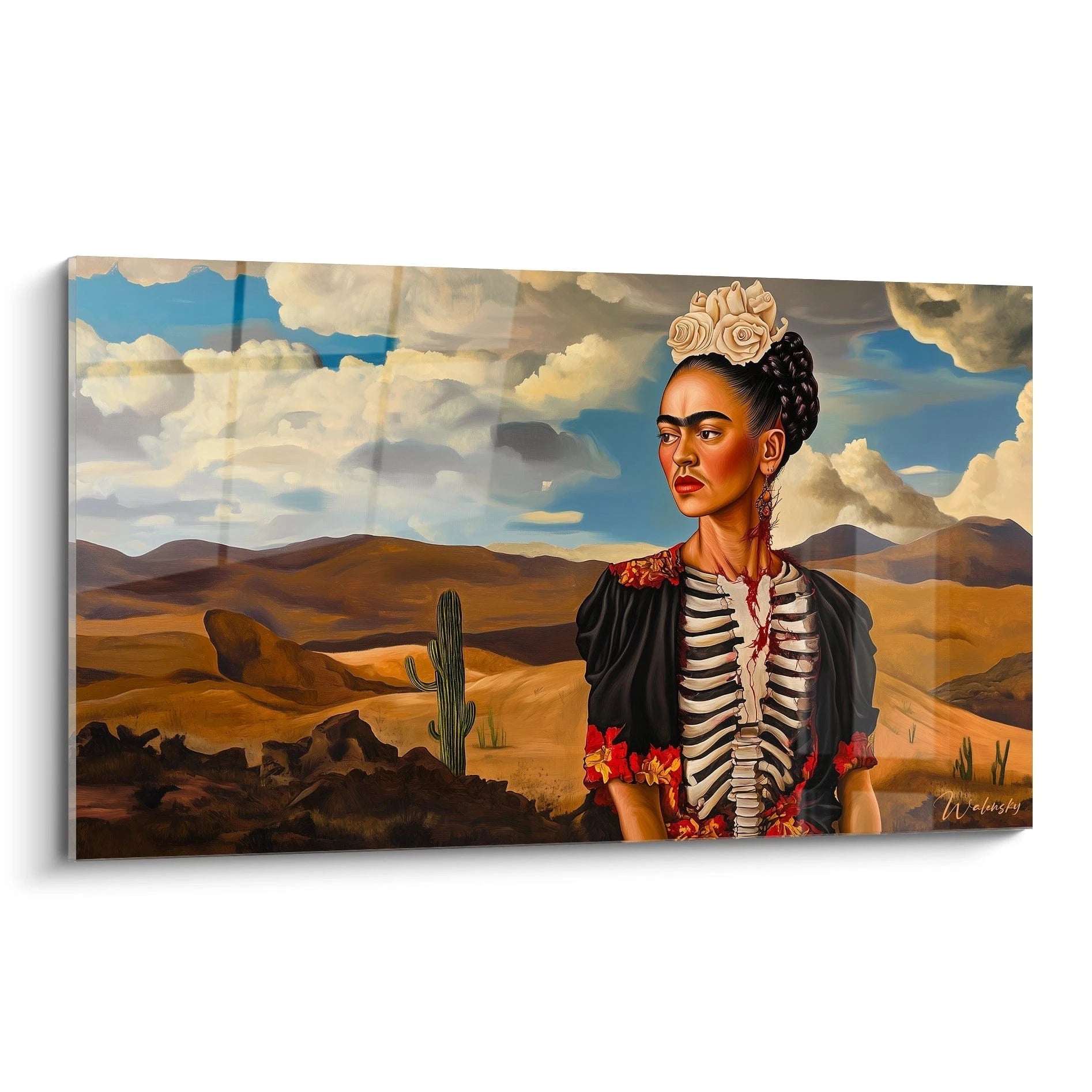
- Frida Kahlo Paintings Overview
- Frida Kahlo Paintings Mexican Symbolism
- Frida Kahlo Paintings Visual Autobiography
- Frida Kahlo Paintings Contemporary Decorative Impact
Frida Kahlo paintings represent the pinnacle of Mexican artistic expression in the 20th century, blending autobiography, national folklore, and political vision within an immediately recognizable aesthetic. Each work becomes an open window into the artist's tormented soul, transforming personal pain into universal beauty.
Frida Kahlo's pictorial universe is characterized by brilliant color palettes inspired by Mexican traditions, complex symbolic compositions, and striking frontality. These celebrated paintings transcend their status as mere decorative objects to become visual manifestations of resilience and cultural identity.
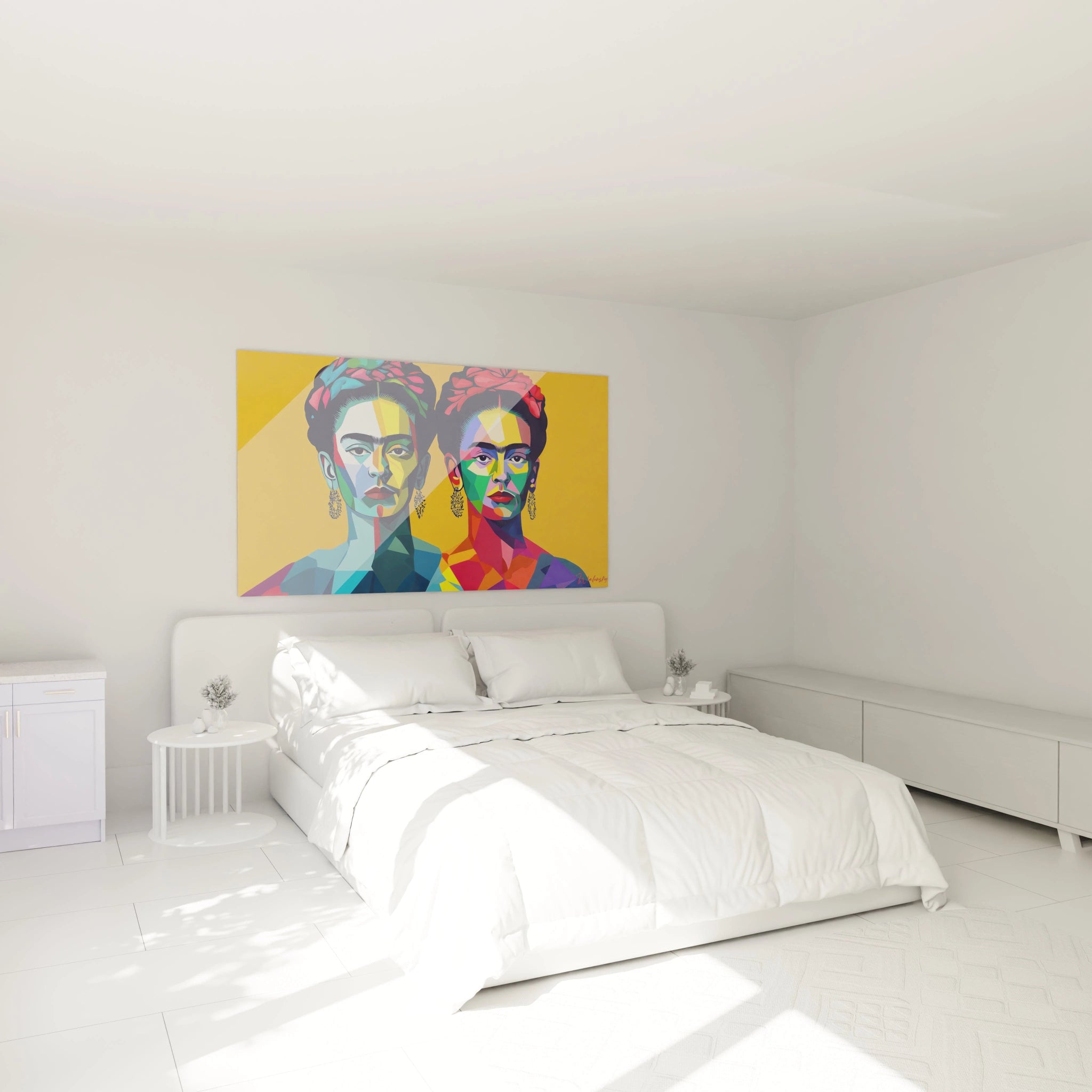
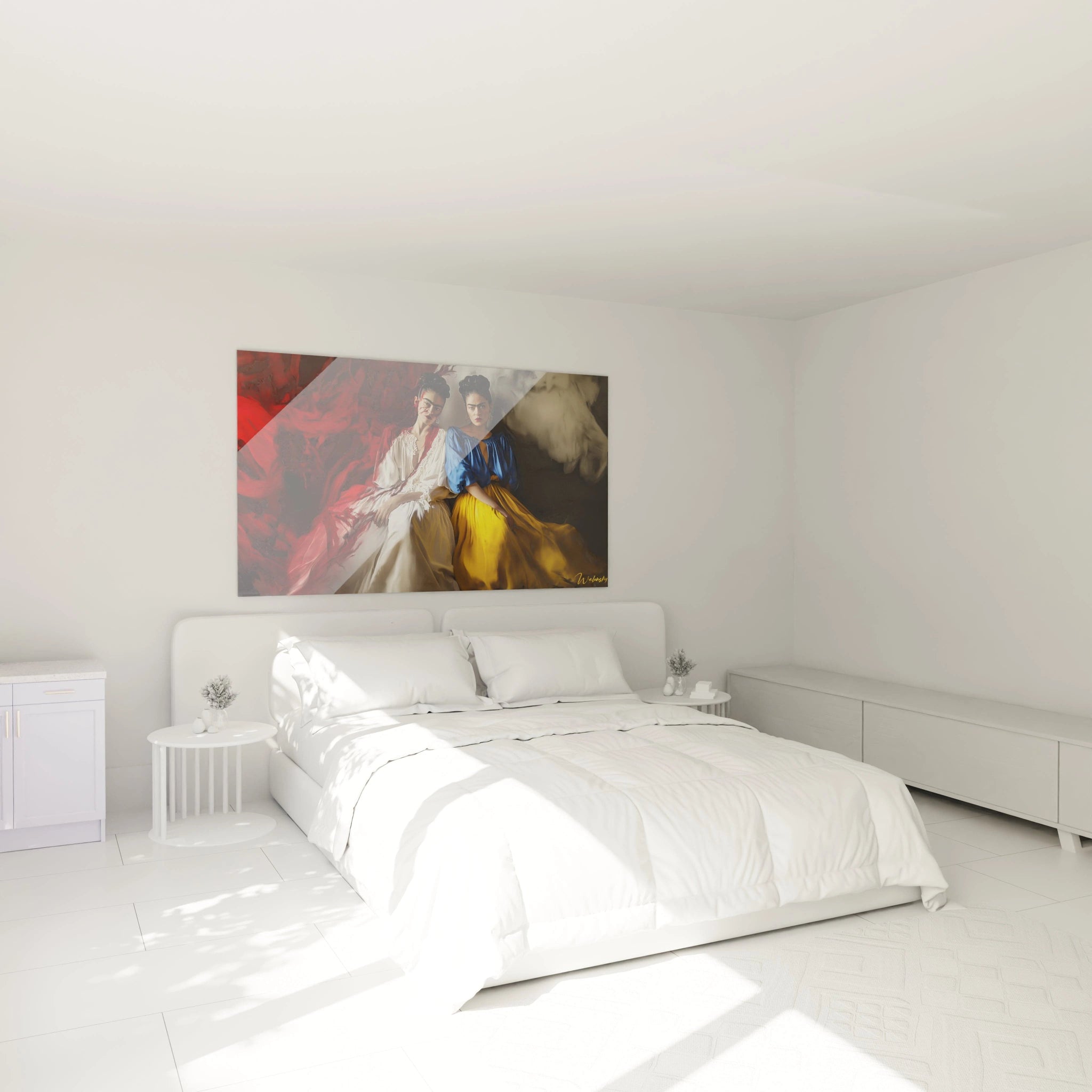
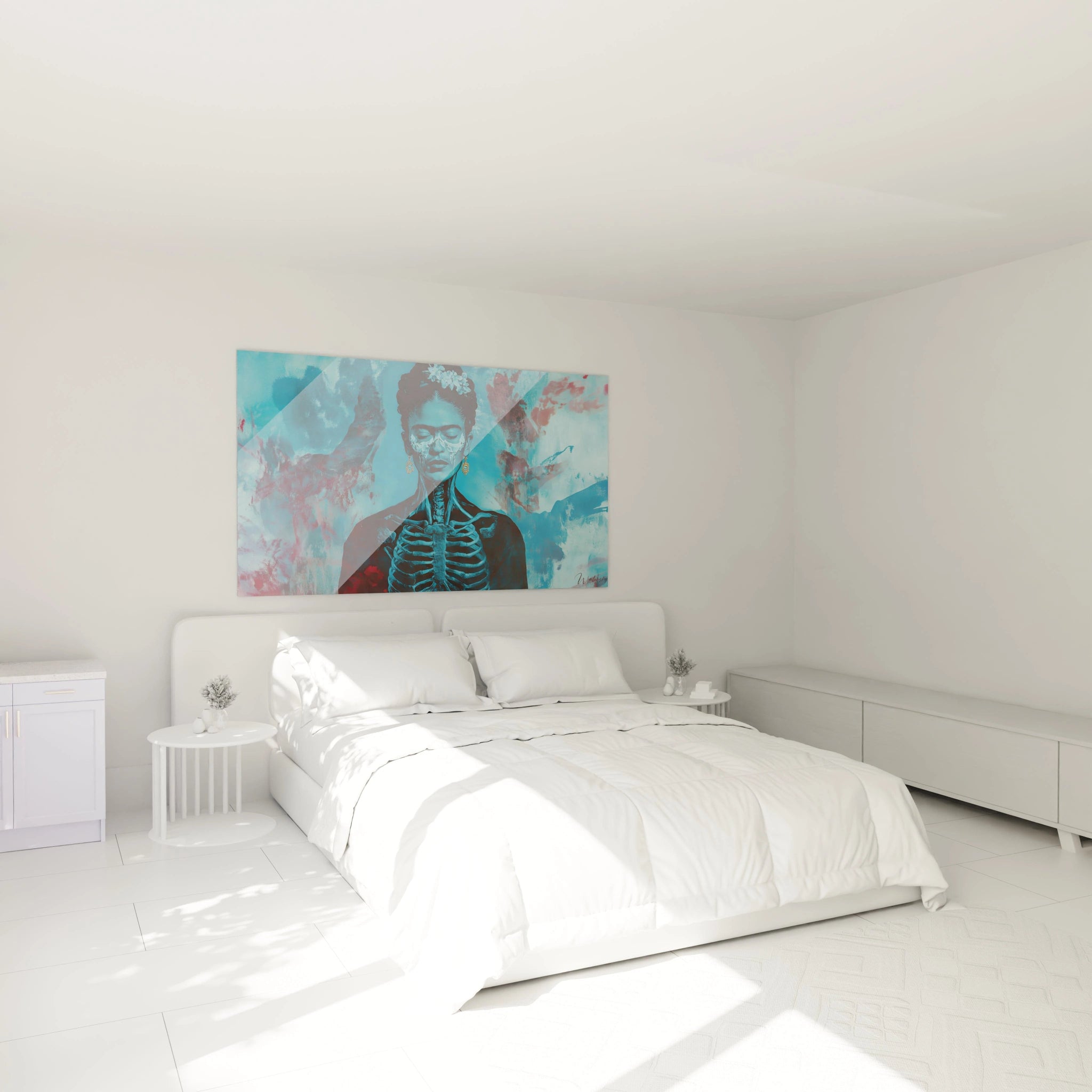
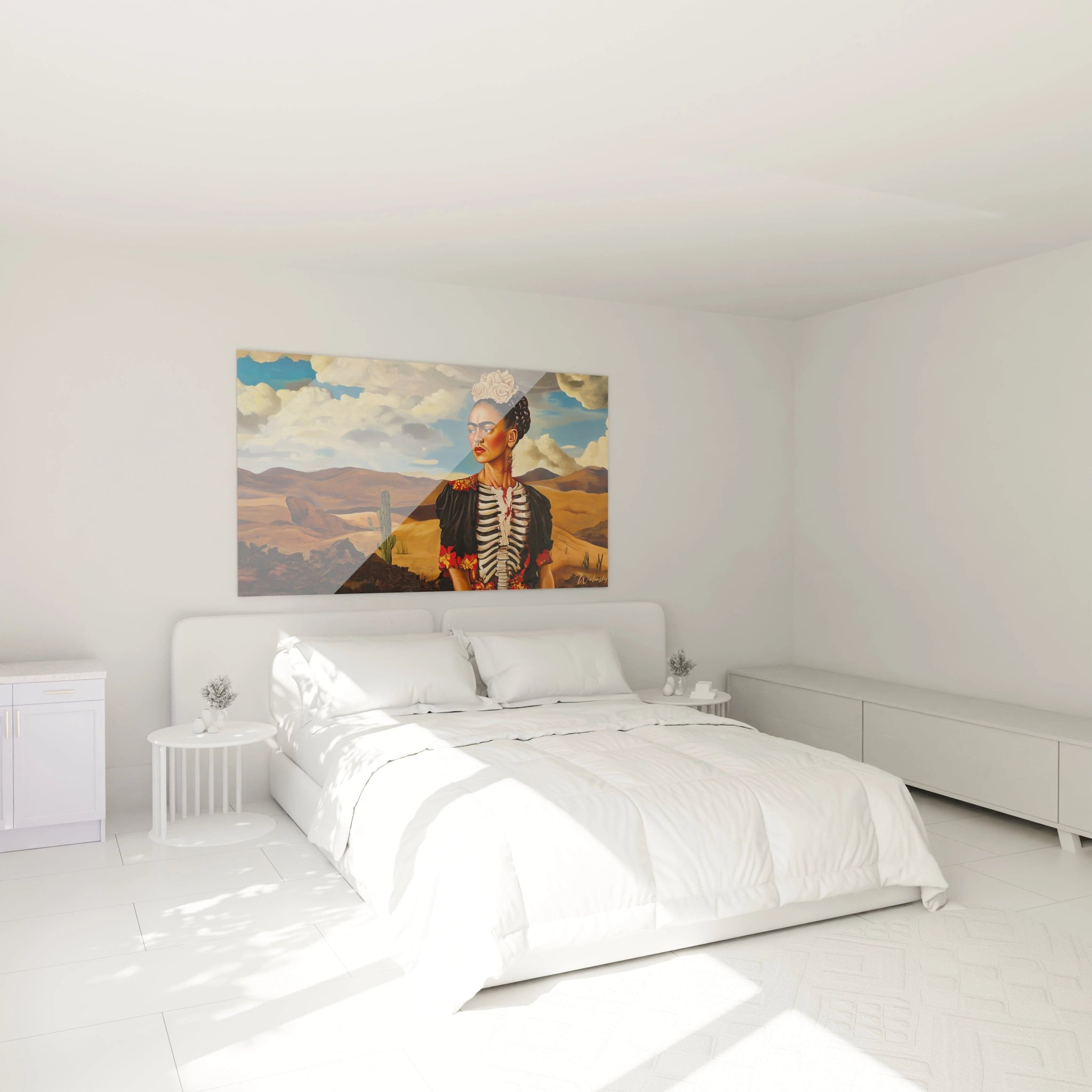
The impact of Frida Kahlo paintings on contemporary interior design lies in their capacity to radically transform a room's atmosphere. Their presence brings narrative dimension, emotional depth, and incomparable visual richness to any living space.
Discover in the following tabs three essential dimensions of Frida Kahlo paintings: their grounding in Mexican symbolism, their function as visual autobiography, and their decorative impact in contemporary interiors.
Frida Kahlo Paintings: Immersion in Authentic Mexican Symbolism
Frida Kahlo paintings constitute an exceptional visual repository of Mexican symbolic heritage, transforming every wall into a portal toward Mexico's profound cultural identity. Kahlo's pictorial work integrates pre-Hispanic and colonial symbolic elements into a visual synthesis that transcends simple wall decoration.
How do Frida Kahlo paintings reinvent Mexican identity within domestic space?
Frida Kahlo's creations distinguish themselves through their capacity to embody the essence of mexicanidad through dense and stratified visual language. Unlike superficial folkloric representations, her paintings capture the cultural and historical tensions that define Mexican national identity. By integrating a Frida Kahlo painting into your interior, you're not simply adding a decorative piece, but a genuine distillation of cultural history that radically transforms spatial perception.
Aztec and Mayan iconography reinterpreted by Kahlo enables direct visual connection with Mexico's pre-colonial roots. The representations of symbolic animals like deer, spider-monkeys, or parrots in her paintings are not mere decorative elements, but spiritual entities that enrich the room's atmosphere with authentic cosmological dimension.
The distinctive color palette of Frida Kahlo paintings
The chromatic signature of Frida Kahlo paintings draws directly from Mexican popular art and traditional ex-votos. Bold use of deep blue (known as "Frida blue"), carmine red, and emerald green creates a visual microclimate that radically transforms perceived light in the room. Unlike standardized contemporary works, Kahlo paintings establish a specific emotional temperature that influences the overall ambiance of the space.
This distinctive palette becomes particularly striking in contemporary minimalist or neutral spaces, where it introduces a chromatic contrast focal point that completely reorients visual circulation. Collectors frequently report that integrating a Frida Kahlo painting substantially modifies the perception of surrounding decorative elements.
The transformative effect of syncretic religious symbols in Kahlo paintings
Mexican religious syncretism finds particularly powerful visual expression in Frida Kahlo paintings. The integration of Catholic, pre-Hispanic, and popular elements creates unique spiritual density that distinguishes these works from simple artistic reproductions. Reinterpreted imagery of the Virgin of Guadalupe by Kahlo confers particular aura that transcends simple decoration.
Owners of Frida Kahlo paintings frequently testify to the lasting emotional impact that these syncretic representations exercise on visitors, creating a contemplative focal point that far exceeds traditional decorative function. In contemporary interiors, this dimension becomes particularly valuable as a counterpoint to dominant aesthetic standardization.
- Reinterpreted Aztec iconography creates temporal bridge with pre-colonial Mexico
- Distinctive color palette transforms perceived luminosity of space
- Syncretic religious symbols establish unique spiritual depth
Frida Kahlo paintings also distinguish themselves through their capacity to evoke Mexican artisanal traditions like Huichol art or Zapotec textiles. This artisanal dimension introduces visual texture and graphic rhythm that perceptually activate wall surfaces, creating dynamic visual dialogue with surrounding architecture.
The visual imprint of a Frida Kahlo painting extends far beyond its physical frame, subtly influencing subsequent decorative choices and establishing a distinctive aesthetic signature for the entire space. Collectors often develop an evolving relationship with these works, progressively discovering new symbolic layers that continuously renew the visual and emotional experience of their daily environment.
Frida Kahlo Paintings: Visual Autobiography as Transformative Interior Element
Frida Kahlo paintings constitute a unique phenomenon in contemporary wall art through their profoundly autobiographical dimension. Unlike purely decorative works, these paintings establish narrative presence that fundamentally transforms the emotional dynamics of interior space. Daily experience alongside a Kahlo painting becomes a constant visual dialogue with the artist's brilliant personal history.
How does the autobiographical dimension of Frida Kahlo paintings alter space perception?
The singularity of Frida Kahlo paintings lies in their capacity to transcend simple representation to create genuine biographical presence within space. The artist's self-portraits, with their direct and penetrating gaze, establish visual contact that persists and evolves according to viewing angles and ambient light. This quality of "living gaze" radically distinguishes these works from conventional artistic reproductions.
Collectors frequently report that integrating a Frida Kahlo painting subtly modifies their spatial habits, creating visual attraction zones that restructure room circulation and usage patterns. The narrative power of these works generates what some decorators call a "biographical field" that permeates surrounding atmosphere.
The visual chronicle of physical pain so characteristic of Frida Kahlo paintings establishes unique contemplative dimension in daily space. Unlike purely decorative works that progressively fade from consciousness, representations of the artist's suffering maintain persistent emotional presence that enriches the experiential depth of domestic environment.
The distinct psychological impact of Frida Kahlo's autobiographical paintings
The psychological singularity of Frida Kahlo paintings derives from their capacity to visually materialize emotional interiority. Representations of exposed organs, broken spinal columns, or externalized hearts create visual vocabulary that radically exceeds conventional decorative conventions. This symbolic anatomy generates productive visual tension that emotionally activates surrounding space.
Many environmental psychologists have documented the "Kahlo effect" - this capacity her paintings have to facilitate emotional expression among residents and visitors of a space. The wall presence of such powerfully articulated personal vulnerability creates context conducive to relational authenticity, transforming the social function of reception spaces.
- Direct gaze of self-portraits establishes visual connection that persists over time
- Representation of physical pain establishes distinctive contemplative dimension
- Symbolic anatomy generates visual tension that emotionally activates space
The feminist dimension of Frida Kahlo paintings as conversational catalyst
Frida Kahlo paintings integrate powerful feminist dimension that transcends their aesthetic value to become genuine discursive interfaces. Visual exploration of themes like thwarted motherhood, feminine identity, or bodily autonomy transforms these works into actual interfaces that substantially enrich the social life of spaces where they're displayed.
The unique capacity of Kahlo paintings to generate meaningful exchanges around gender issues fundamentally distinguishes them from conventional decorative elements. Testimony from owners indicates that these works facilitate the emergence of substantive conversations, transforming the conversational function of domestic spaces.
The visual expression of identity duality so characteristic of Frida Kahlo paintings resonates particularly in contemporary environments marked by fluidity and identity complexity. This thematic resonance establishes temporal connection that continuously actualizes the relevance of these works, unlike ephemeral decorative trends.
Frida Kahlo paintings also establish visual dialogue with surrounding architecture that evolves according to natural light variations. Collectors report that the perception of these works transforms substantially throughout hours and seasons, creating living visual experience that contrasts with the static quality of conventional decorative wall elements.
Frida Kahlo Paintings: Contemporary Resonance and Distinctive Spatial Impact
Frida Kahlo paintings exercise singular spatial influence that radically distinguishes them from other wall art elements. Their presence imposes immediately identifiable atmospheric signature that transcends transitory decorative trends. Integrating a Kahlo painting into contemporary space creates emotional and aesthetic anchor point that restructures the entire environmental experience.
How do Frida Kahlo paintings restructure the emotional geography of interior space?
The concentrated emotional power of Frida Kahlo paintings generates what interior decorators call a "visual center of gravity" that subtly reconfigures spatial perception. Unlike decorative works that simply complement furnishings, Kahlo paintings become the focal point from which the entire space conceptually and emotionally reorganizes itself.
Testimony from owners reveals that integrating a Frida Kahlo painting substantially modifies space occupation dynamics. These works frequently generate spontaneous contemplation zones where residents and visitors naturally pause, creating new circulation patterns and social interaction within domestic environment.
The symbolic density characteristic of Frida Kahlo paintings establishes particularly effective visual counterpoint in minimalist contemporary interiors. This productive tension between the work's iconographic complexity and surrounding architectural sobriety creates spatial dynamics that substantially enrich daily habitat experience.
The specific chromatic impact of Frida Kahlo paintings on light perception
Frida Kahlo paintings distinguish themselves through their unique capacity to modify the overall chromatic perception of a space. The artist's distinctive palette, characterized by pronounced contrasts and saturated hues inspired by Mexican craftsmanship, acts as light modulator that transforms perceived temperature of ambient lighting.
Specialists in spatial chromotherapy have documented the "Kahlo effect" on spaces' psycho-emotional balance. The interaction between deep blues, terracotta reds, and vibrant greens characteristic of her paintings creates chromatic climate that subtly influences the emotional state of occupants, distinguishing these works from neutral-impact decorative elements.
- Specific chromatic contrasts modulate perception of ambient lighting
- Symbolic density creates visual counterpoint to minimalist interiors
- Emotional presence generates contemplation zones that restructure spatial usage
The unique perceptual evolution of Frida Kahlo paintings over time
Unlike conventional artistic reproductions whose perception progressively dulls, Frida Kahlo paintings are characterized by remarkable perceptual evolvability. The symbolic and narrative stratification of these works enables progressive discovery of new meanings and visual details that continuously renews aesthetic experience.
Collectors frequently report that their relationship with a Frida Kahlo painting traverses several distinct phases, from immediate visual impact to deepened symbolic understanding that continues developing over years. This experiential longevity constitutes particularly precious attribute in contemporary decorative context often marked by rapid perceptual obsolescence.
The contextual adaptability of Frida Kahlo paintings also represents distinctive asset for evolving spaces. These works demonstrate remarkable capacity to maintain visual and emotional relevance through changes in furnishings, lighting, or room function, evidencing aesthetic resilience rarely observed in conventional decorative elements.
FAQ about Frida Kahlo Paintings
What is the meaning of animals in Frida Kahlo paintings?
Animals in Frida Kahlo paintings function as symbolic extensions of the artist herself. Monkeys represent the children she never had, deer embody her vulnerability and resilience facing pain, while parrots symbolize freedom and communication. These animal presences bring additional narrative dimension that considerably enriches the emotional impact of the work in interior space.
How do you harmoniously integrate a Frida Kahlo painting into contemporary interior?
Optimal integration of a Frida Kahlo painting rests on the principle of balanced contrast. These works express their full visual power when placed on neutral wall offering necessary breathing space. Soft directional lighting that avoids reflections while highlighting the work's chromatic richness will maximize its emotional impact without creating visual overload in surrounding space.
Why do Frida Kahlo paintings maintain such contemporary resonance?
The persistence of Frida Kahlo paintings' cultural impact is explained by their visionary exploration of themes now central to contemporary discourse: fluctuating identity, bodily autonomy, cultural hybridizations, and resilience facing adversity. This visual anticipation of current preoccupations confers Kahlo's works relevance transcending their historical context, transforming them into visual interfaces between different eras and sensibilities.