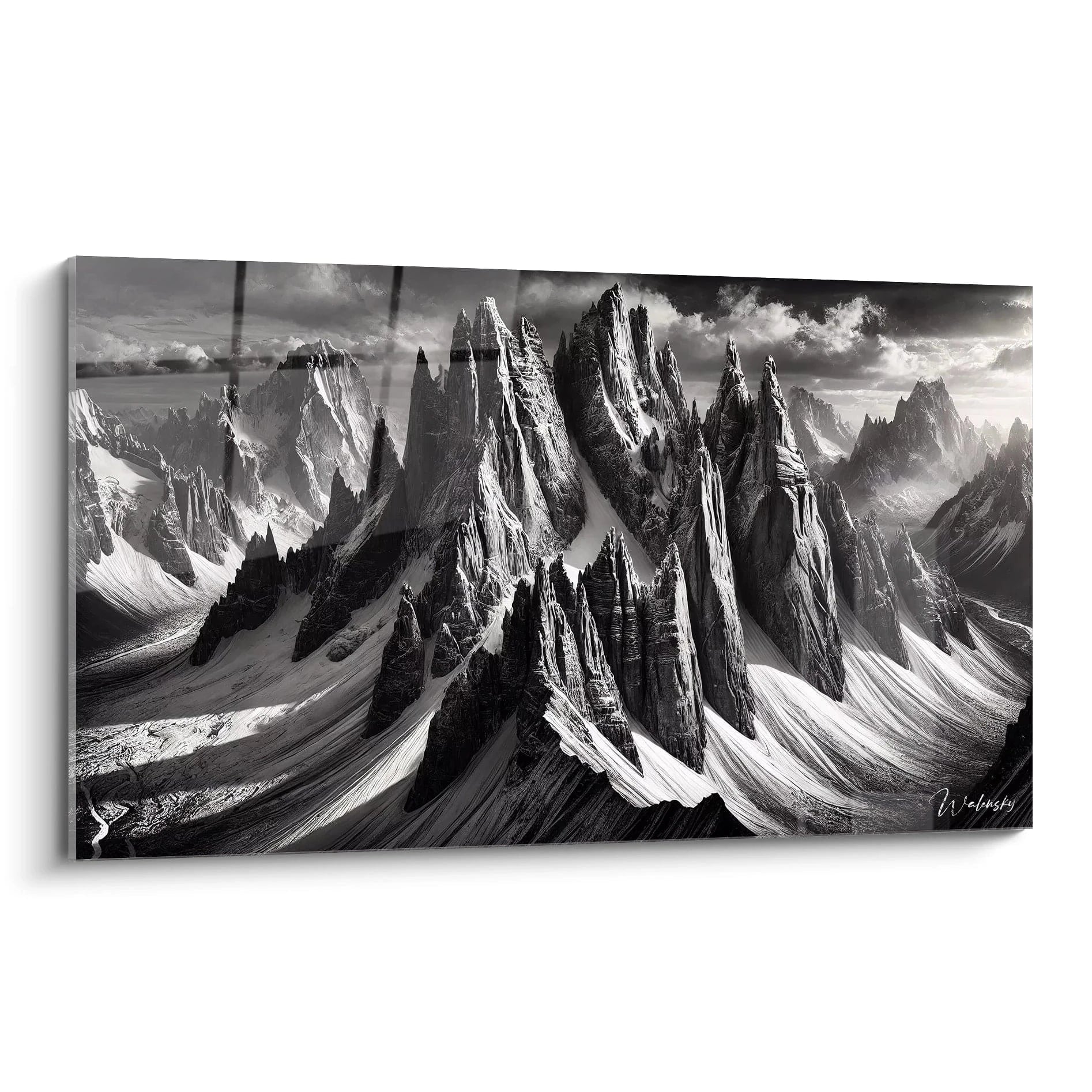
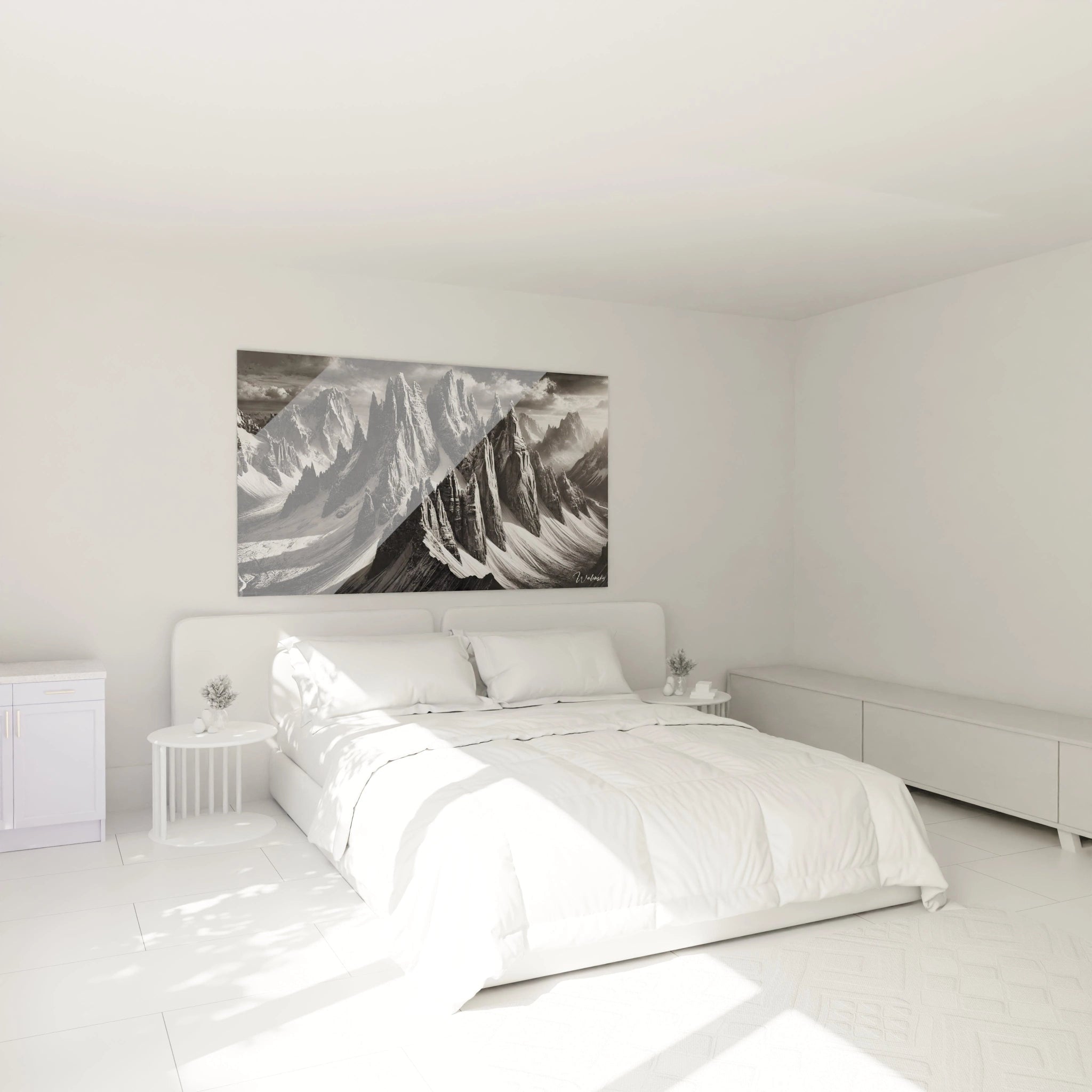
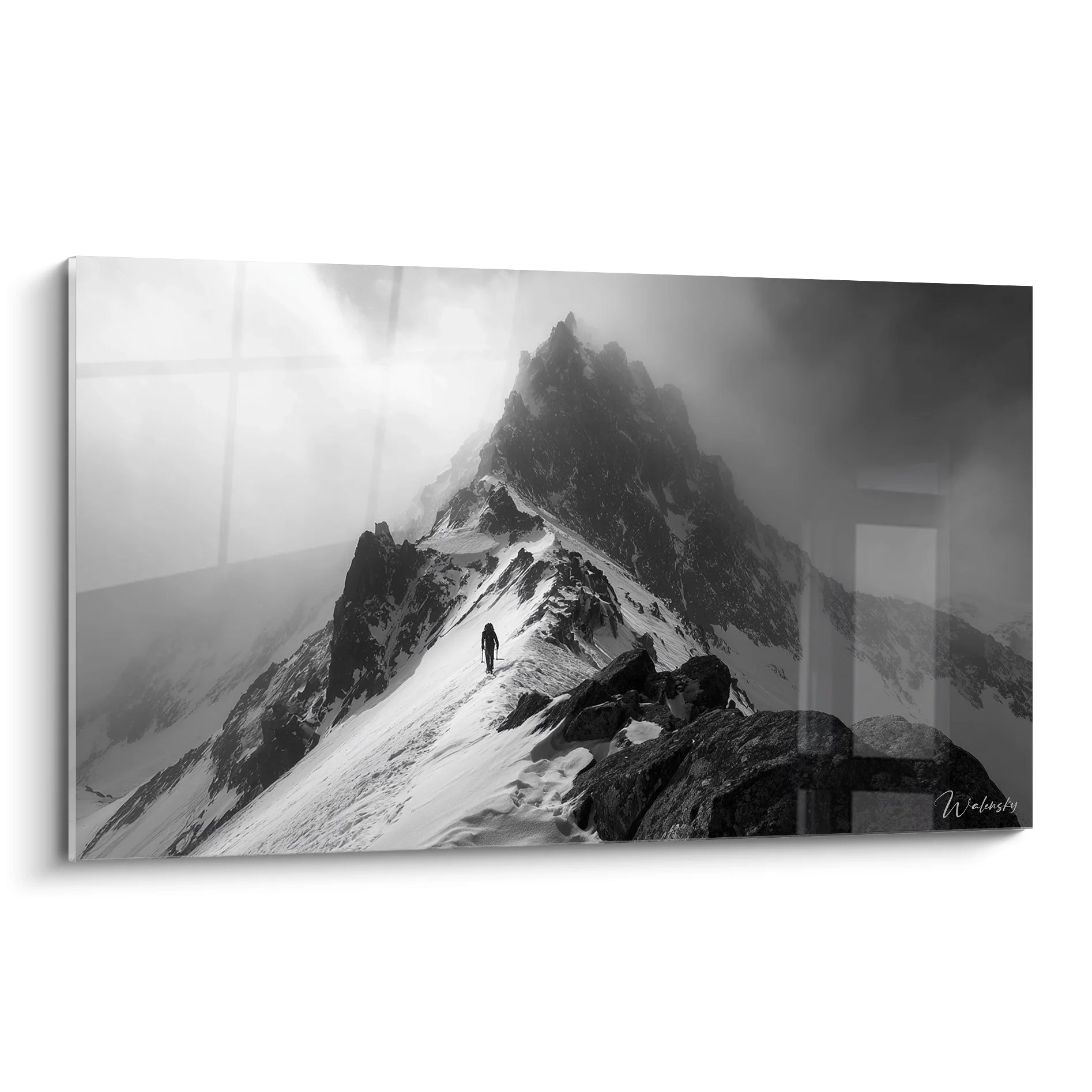
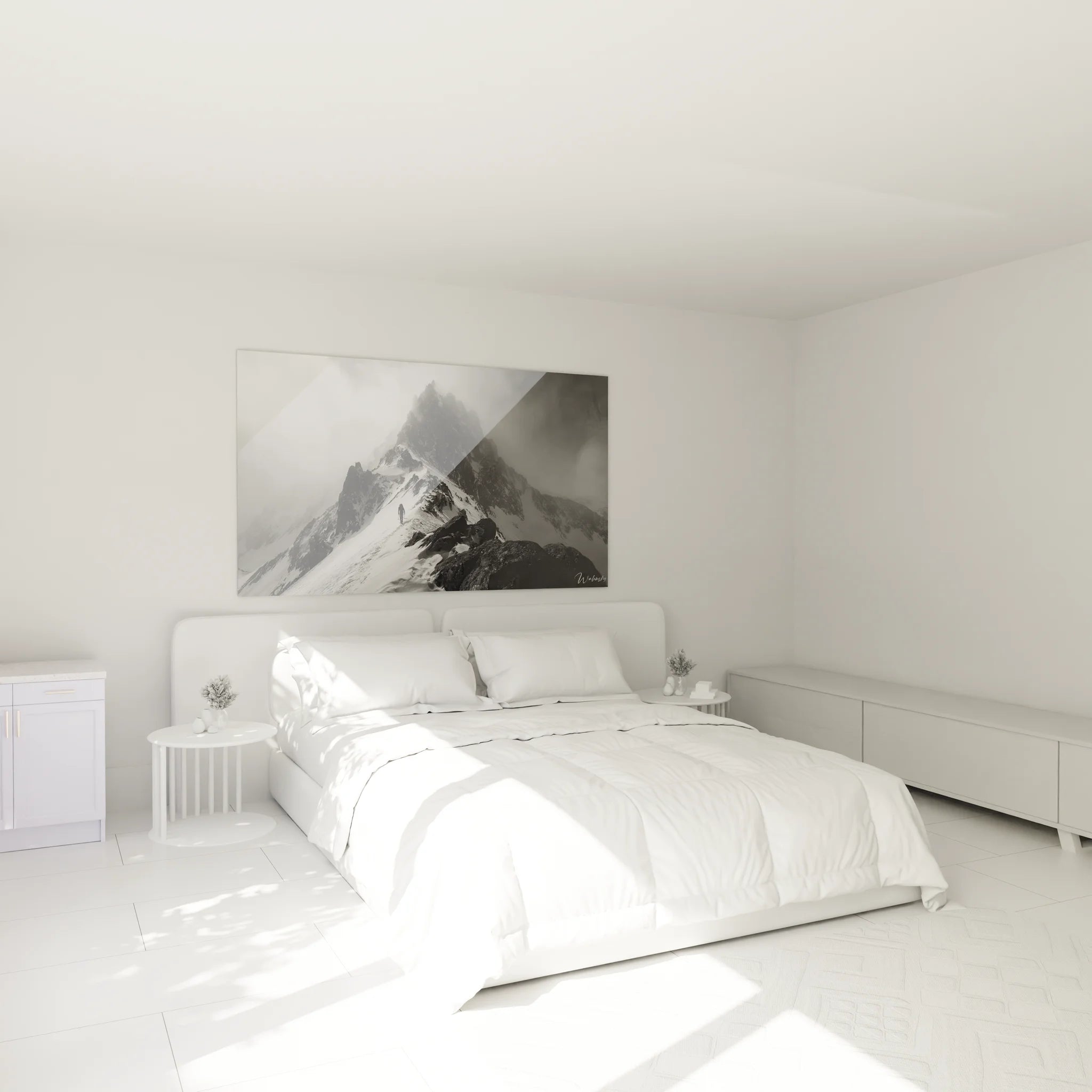
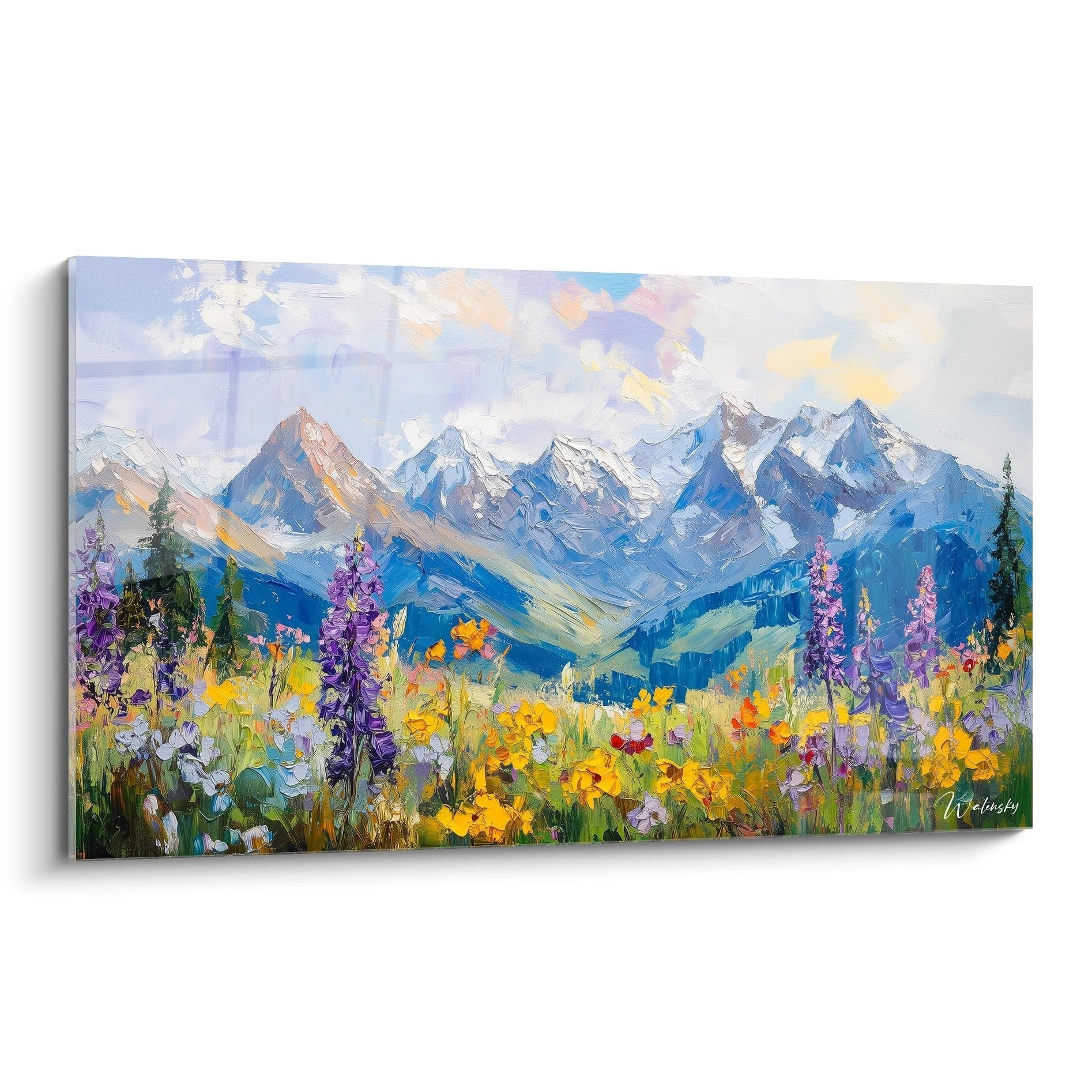
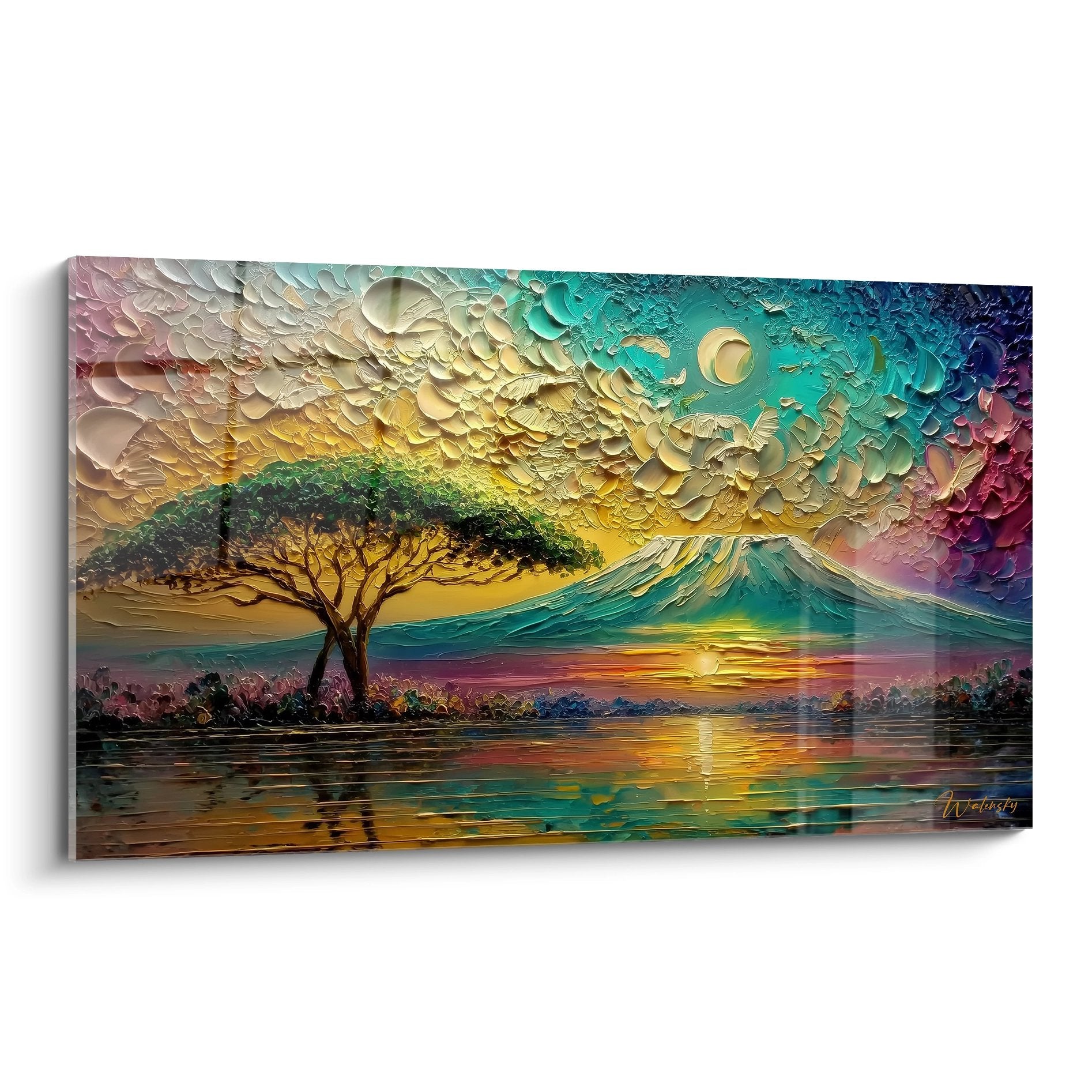
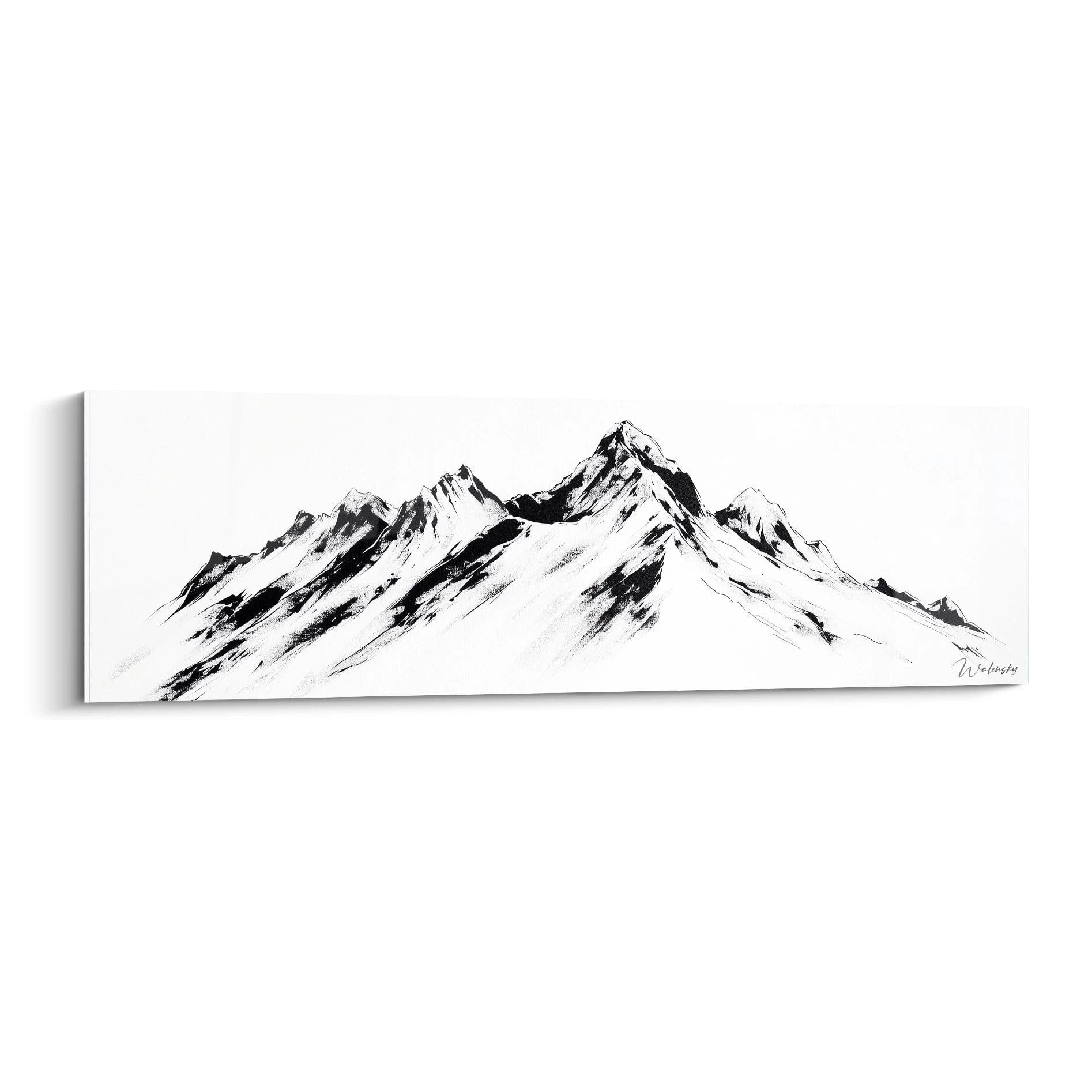
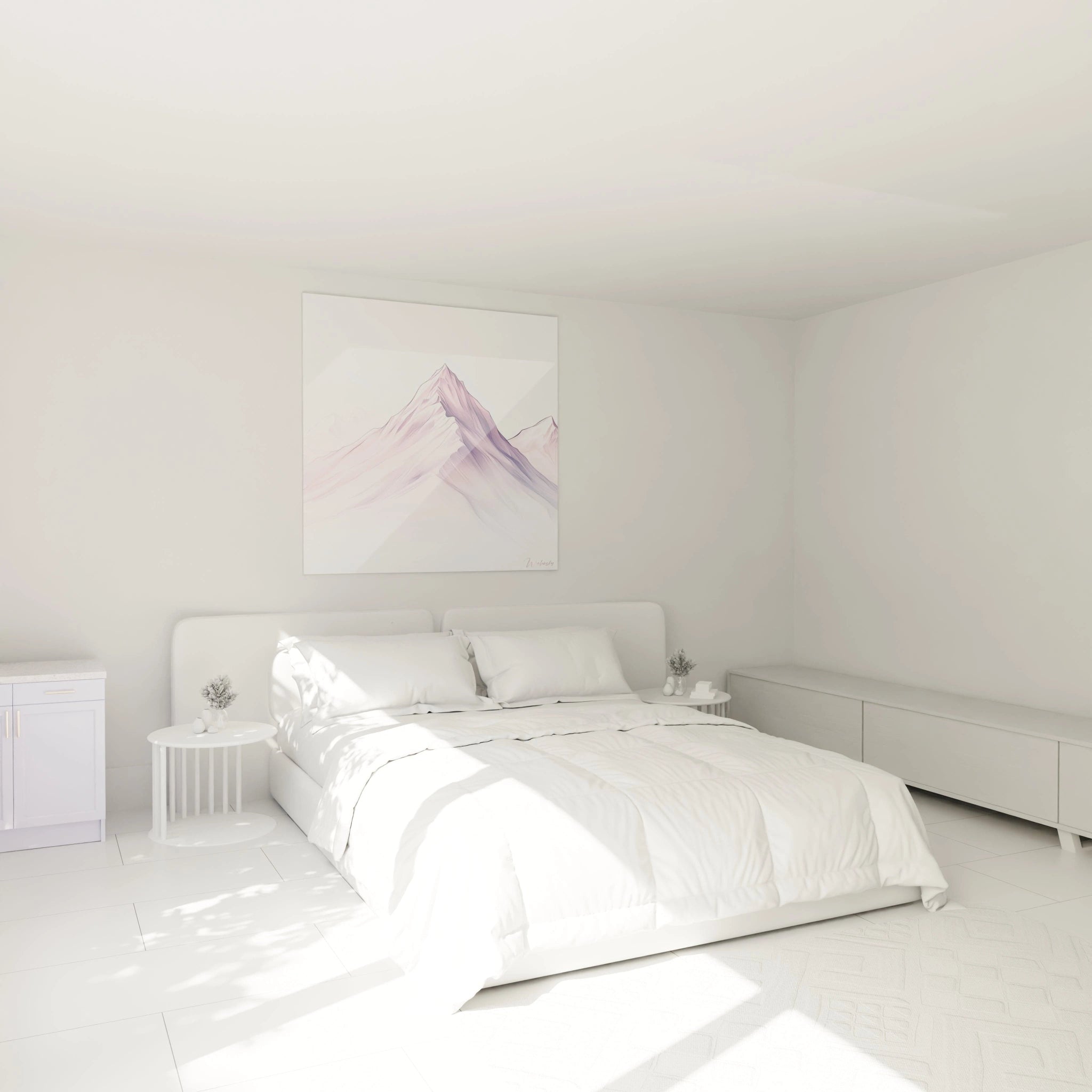
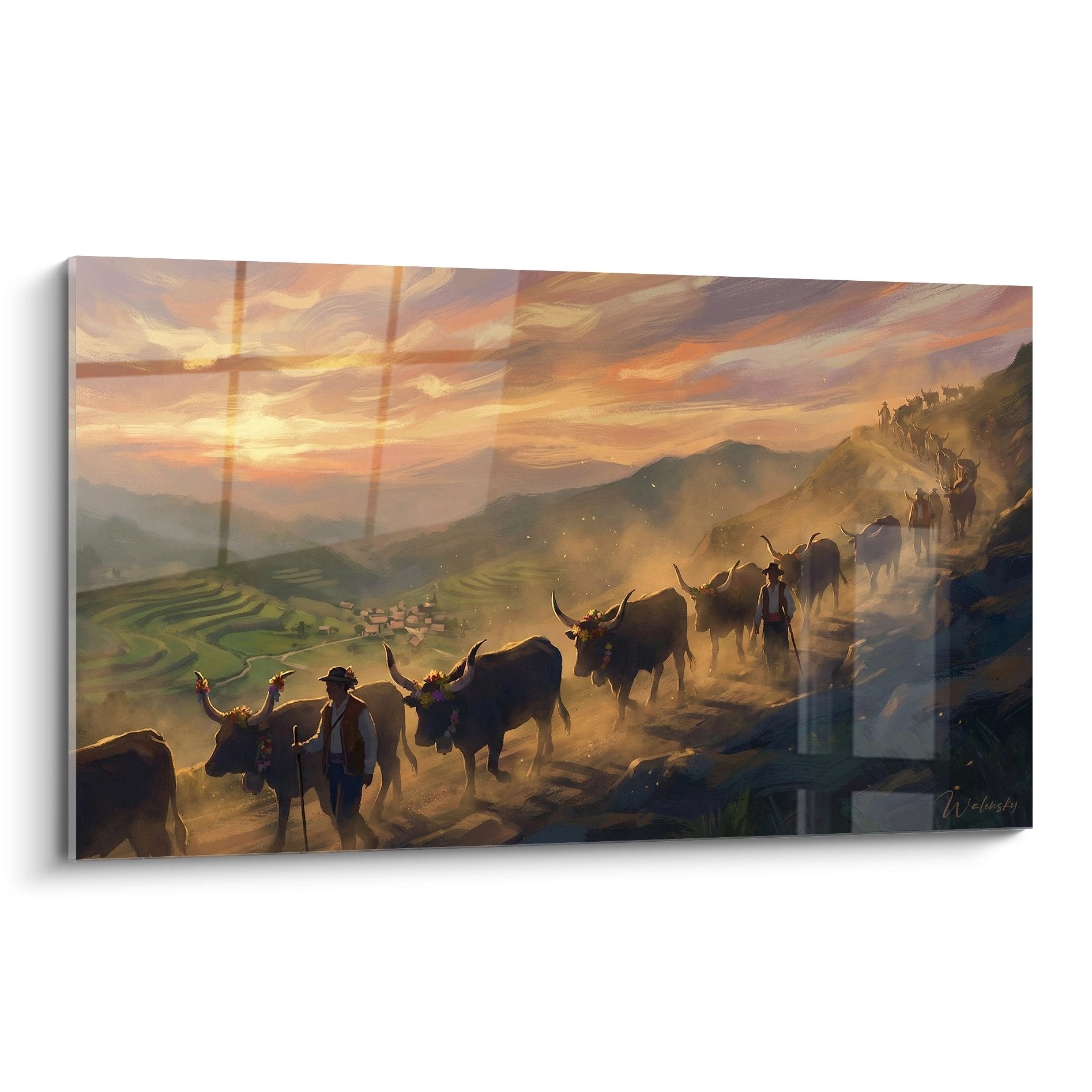
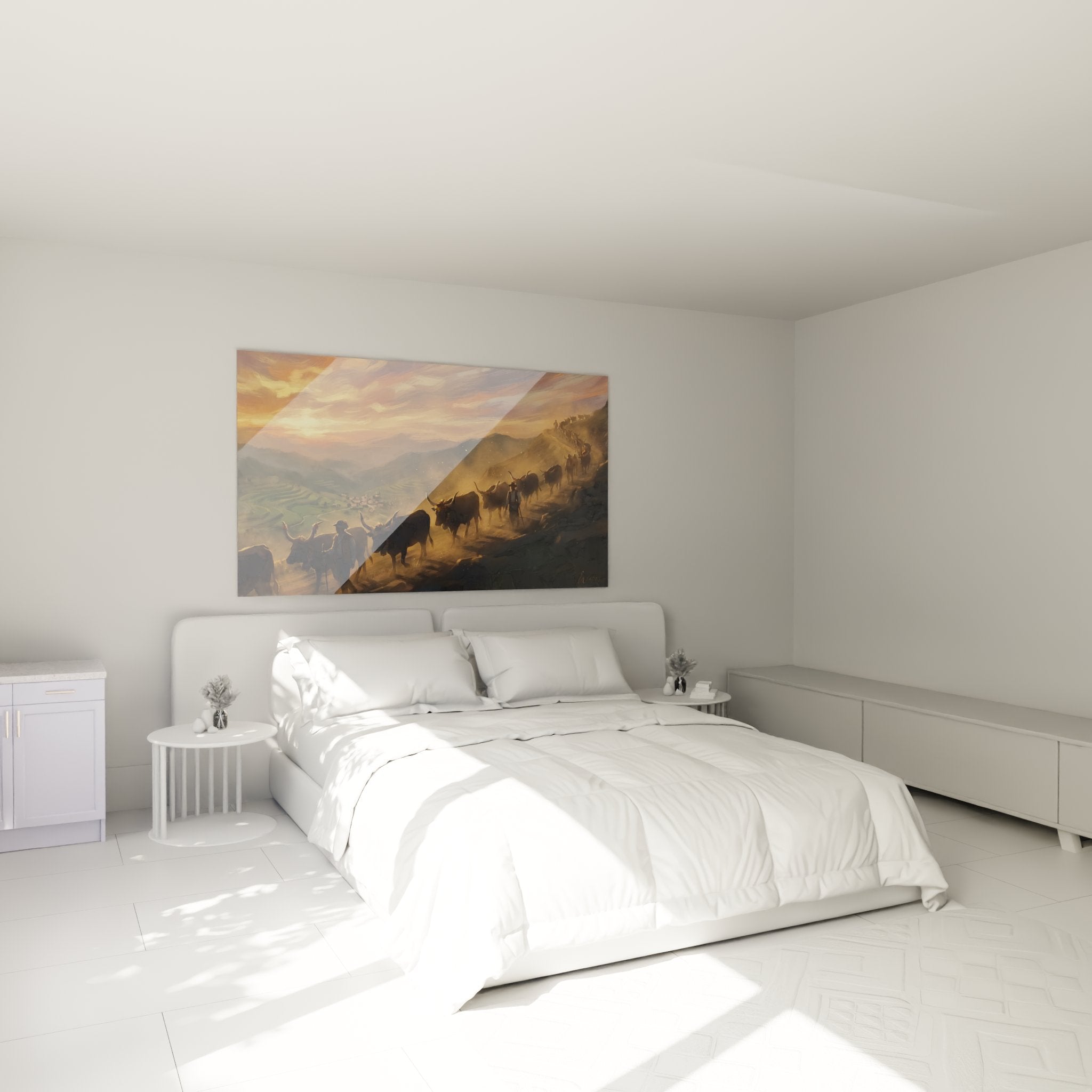
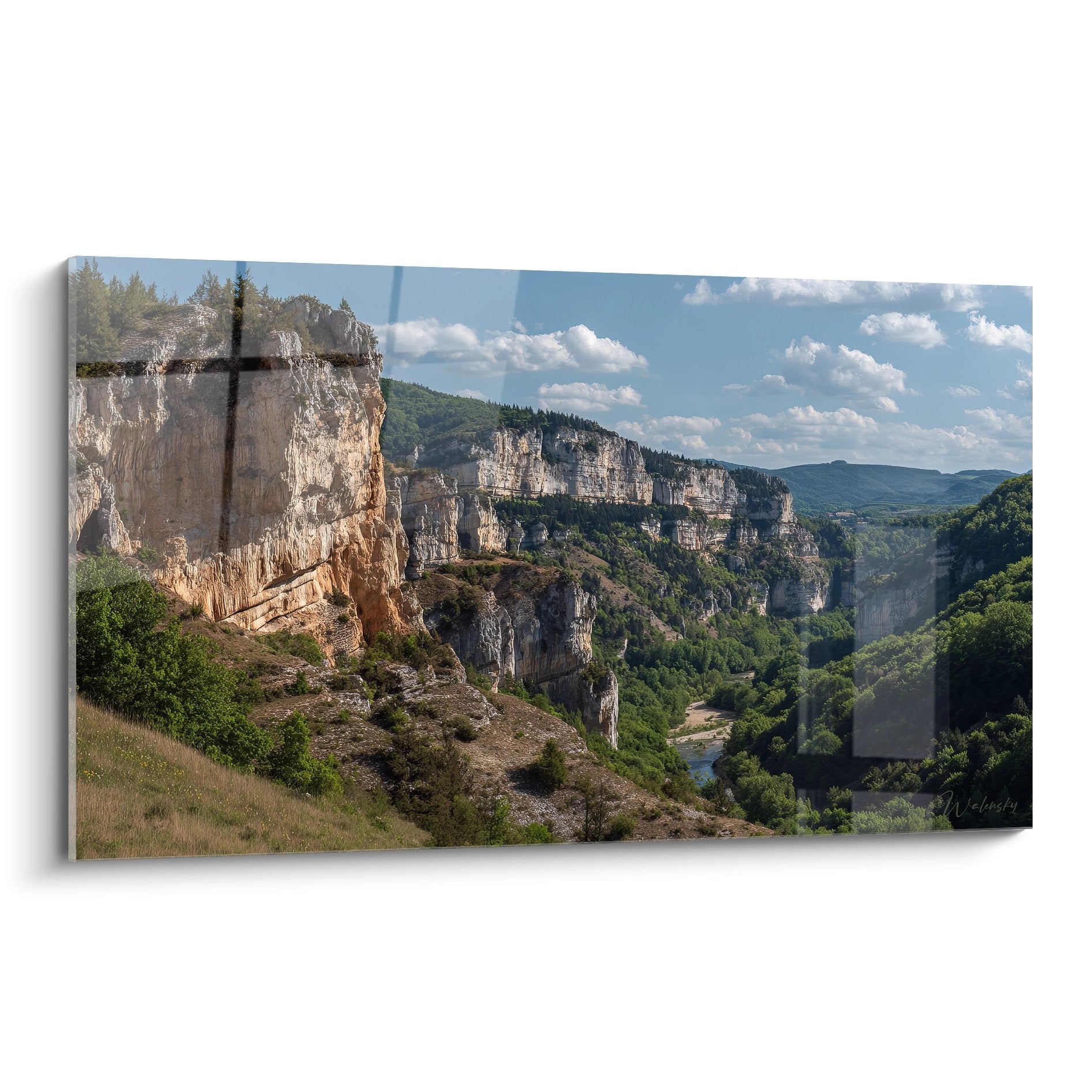
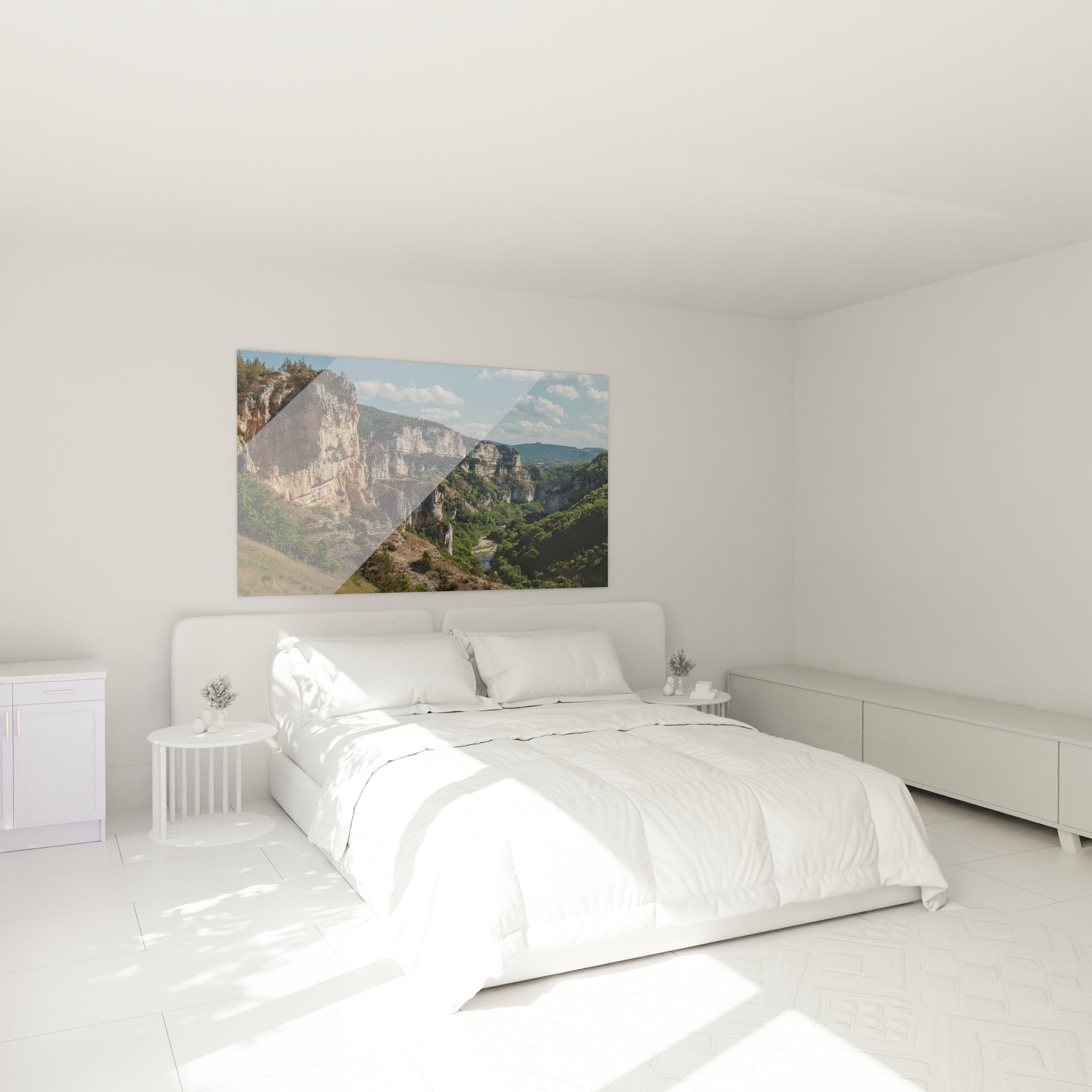
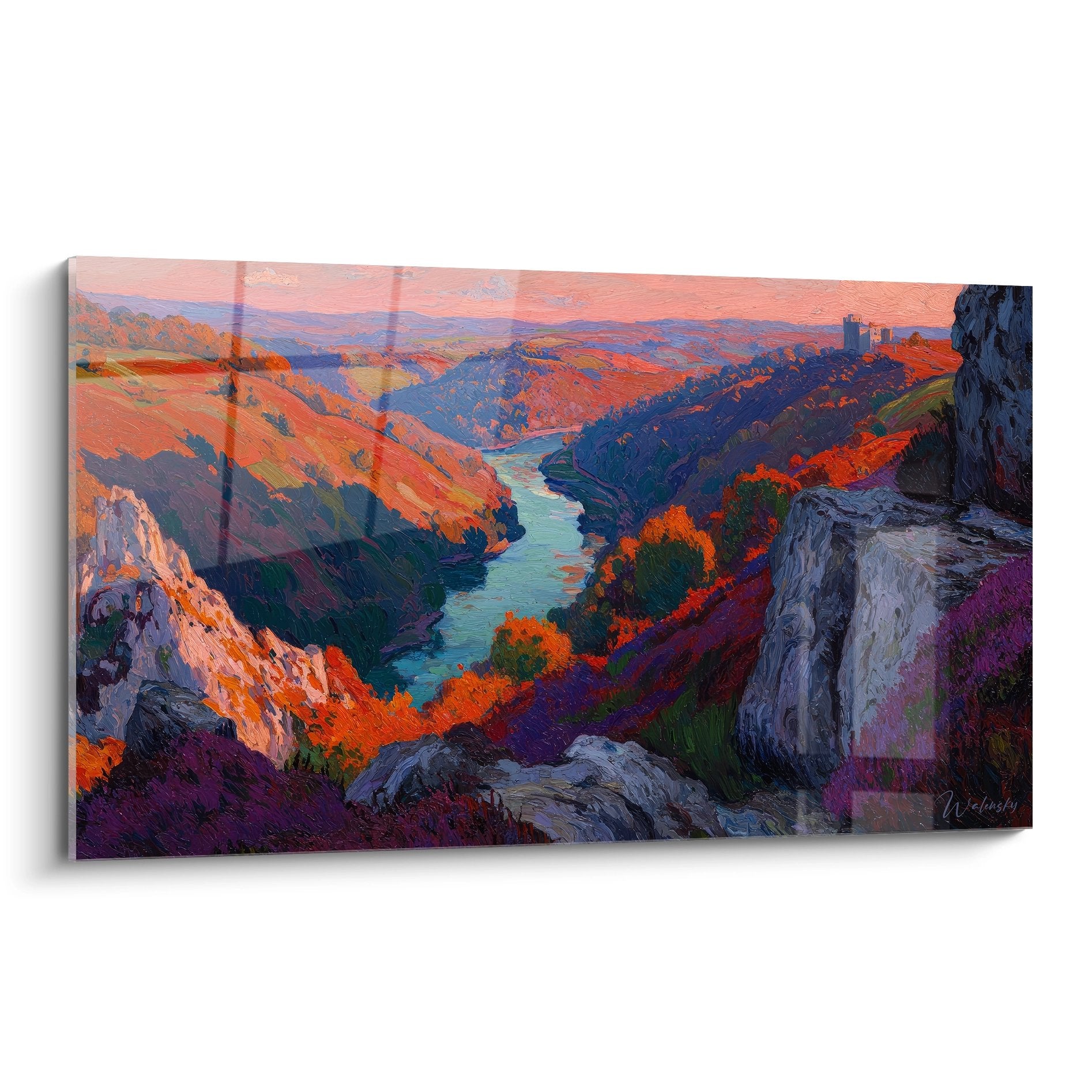
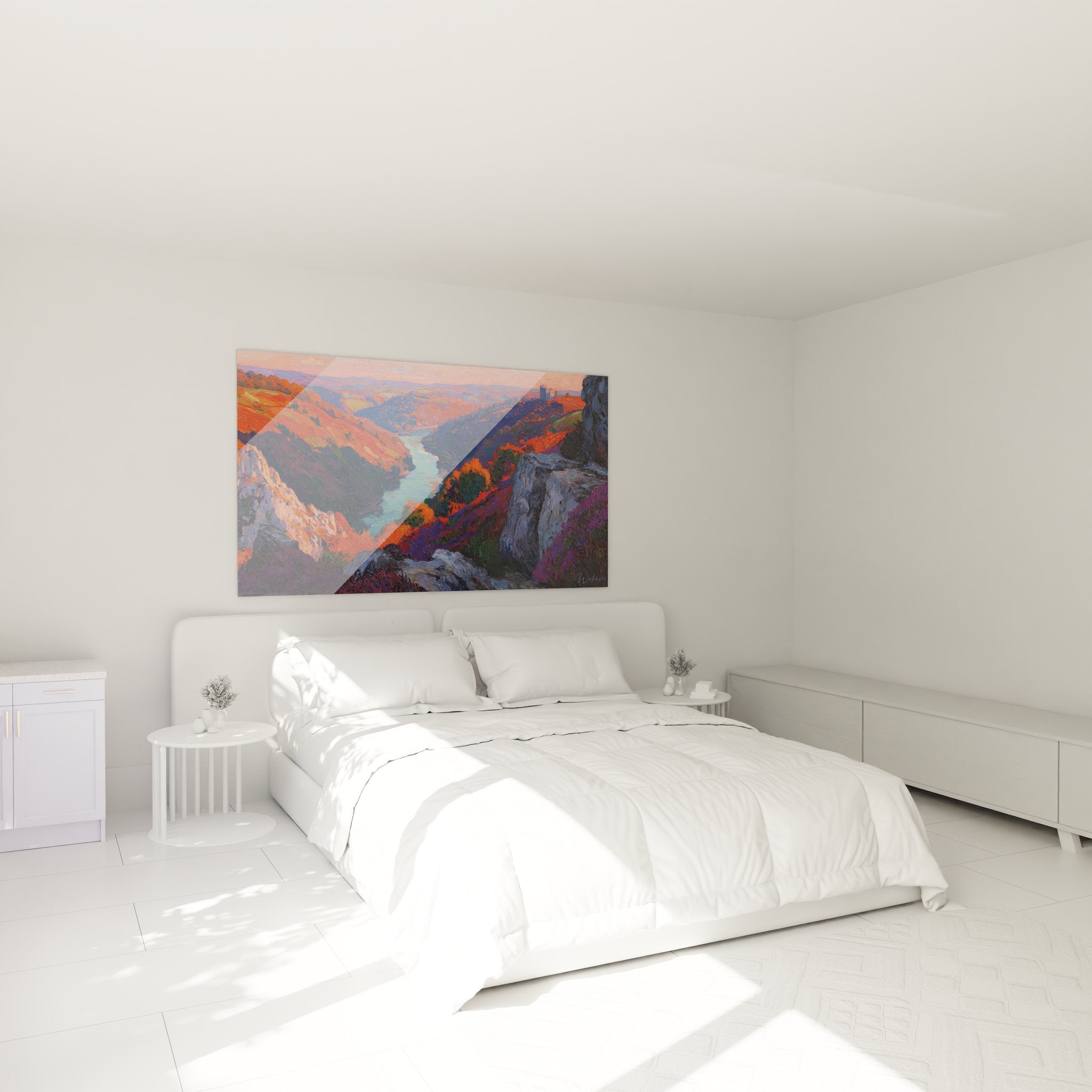
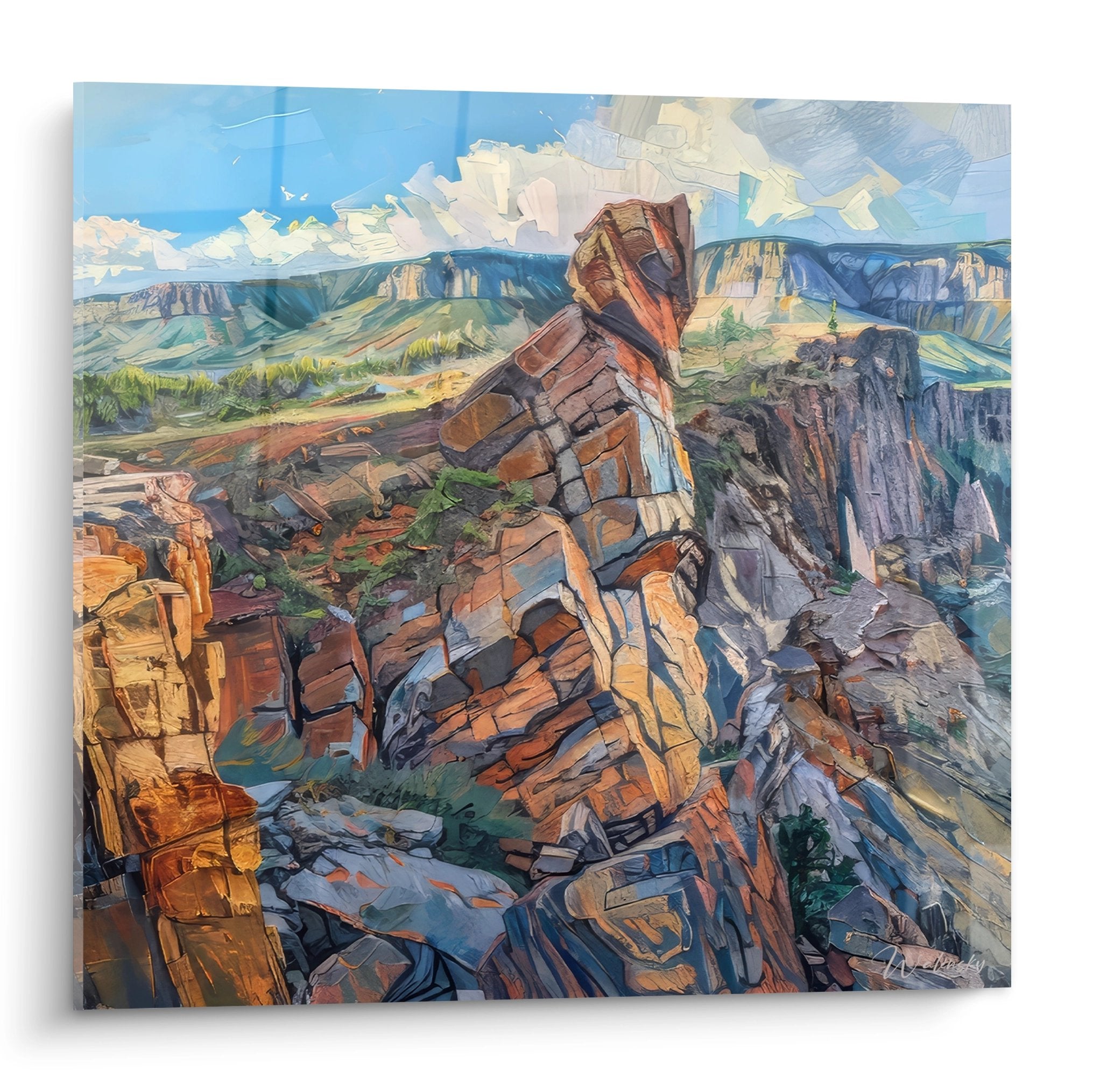
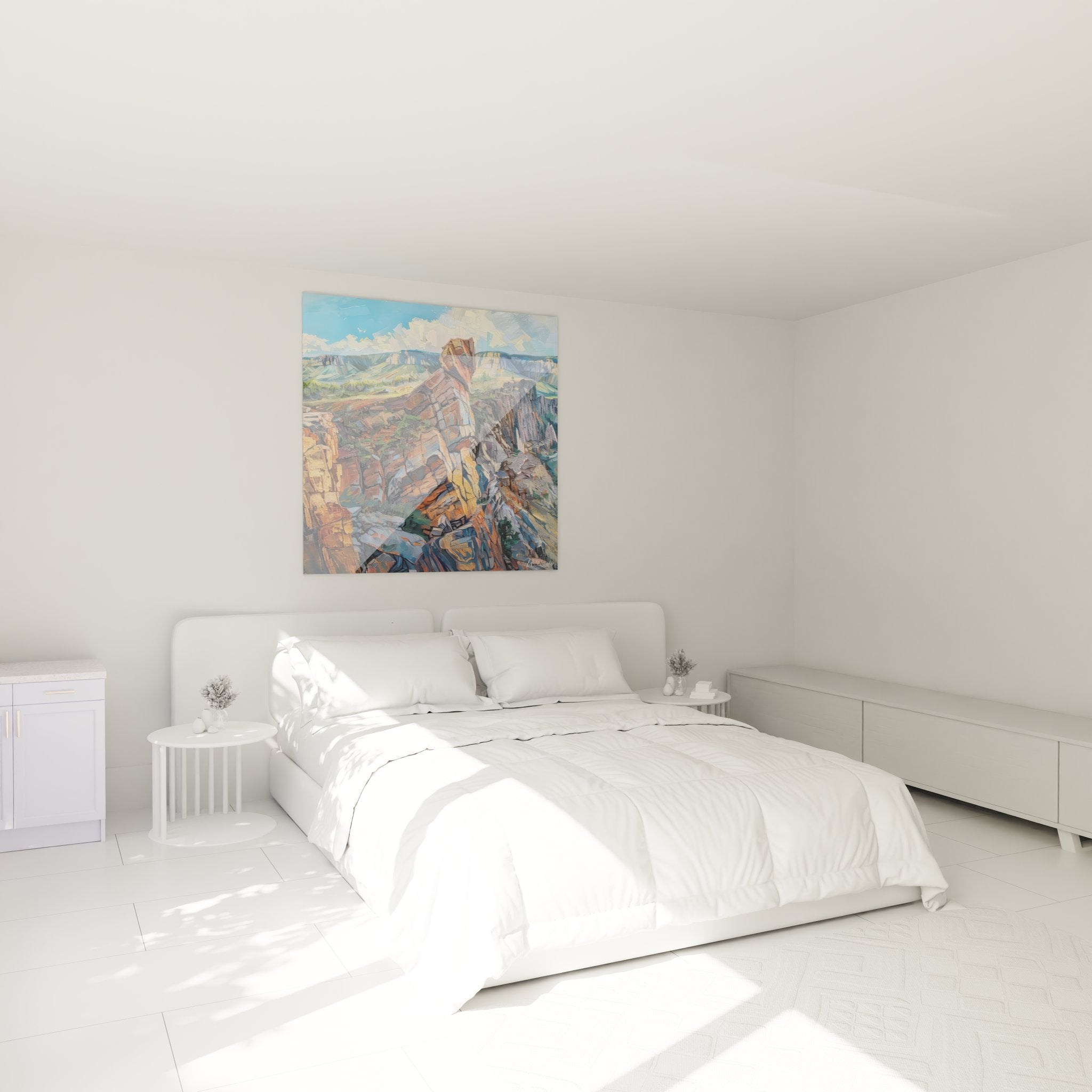
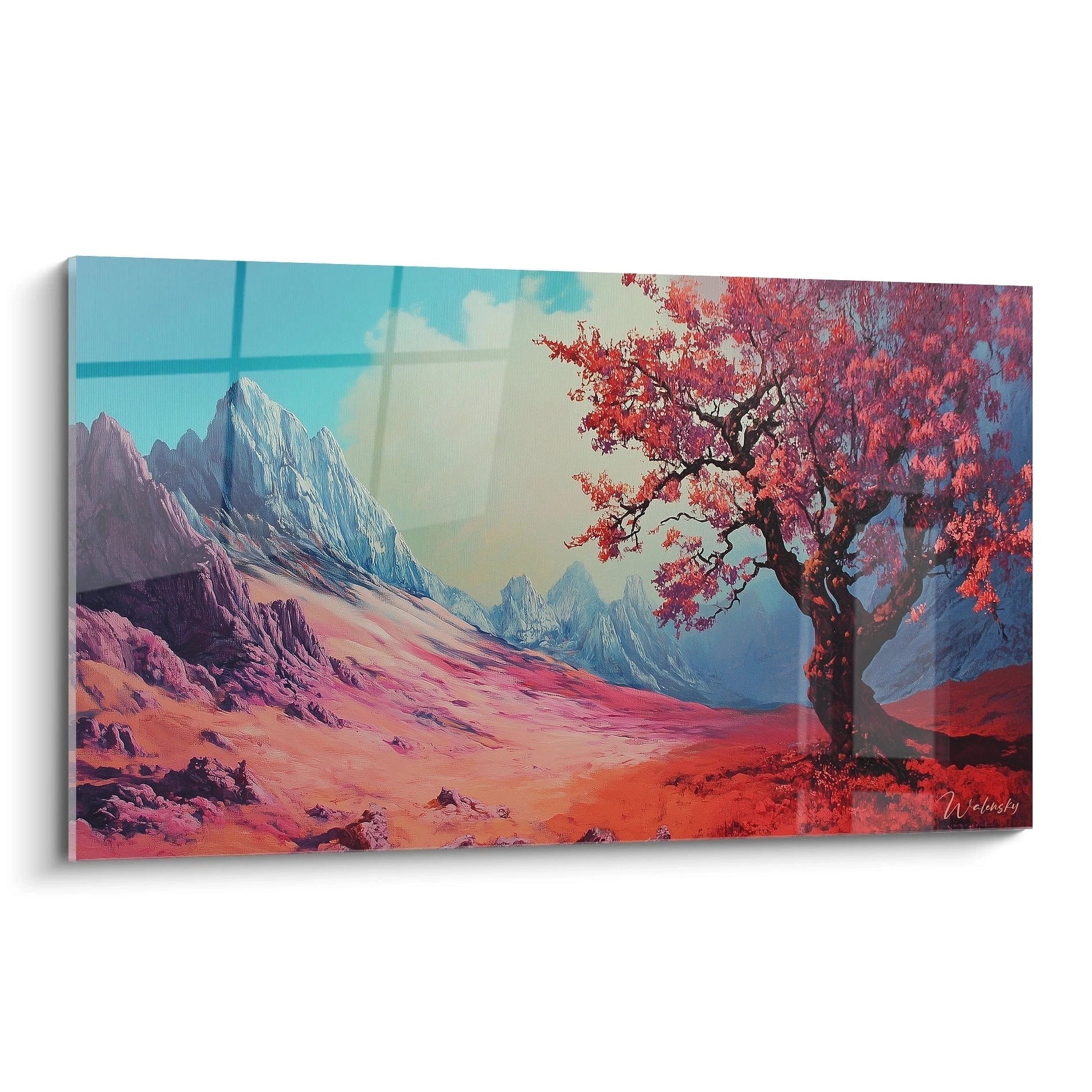
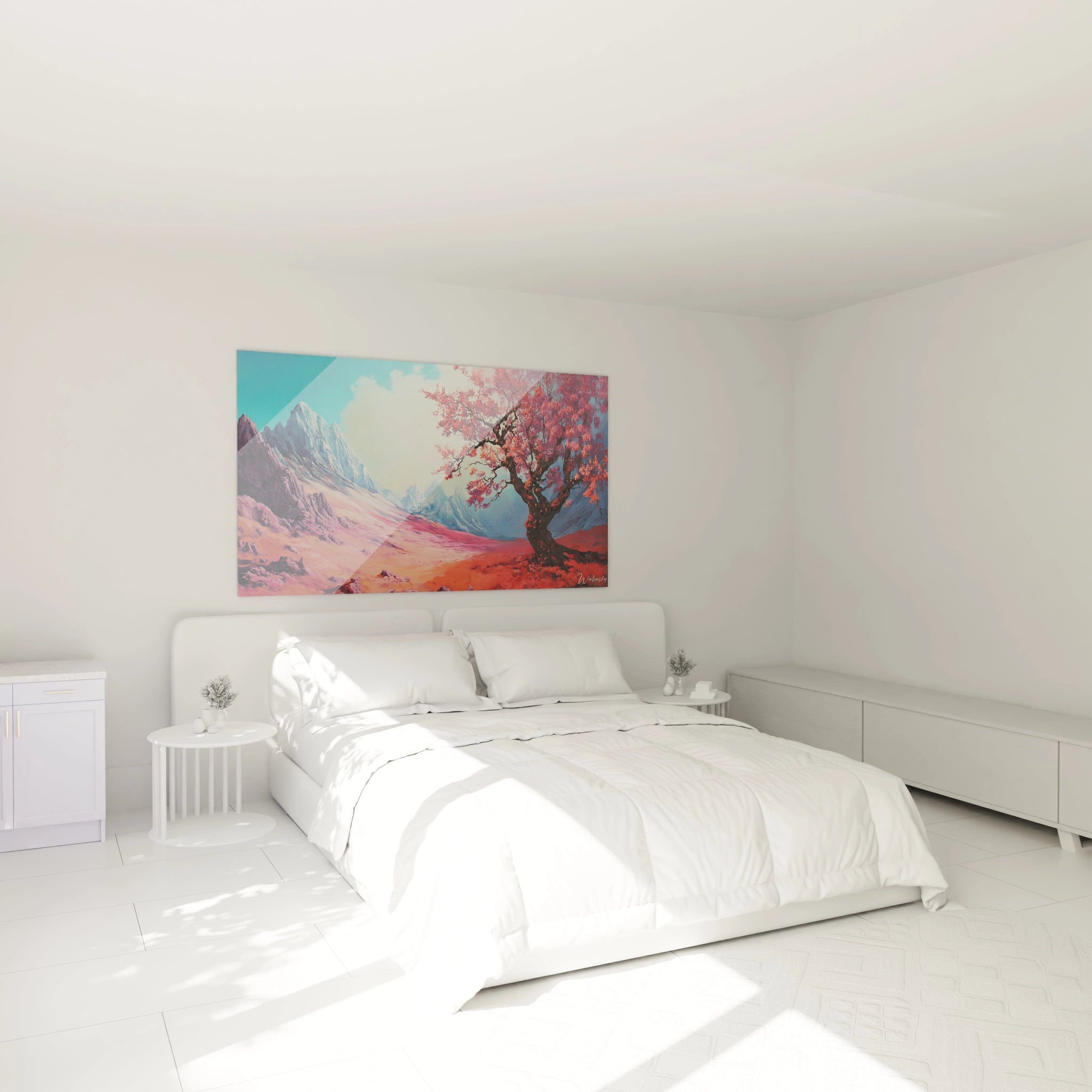
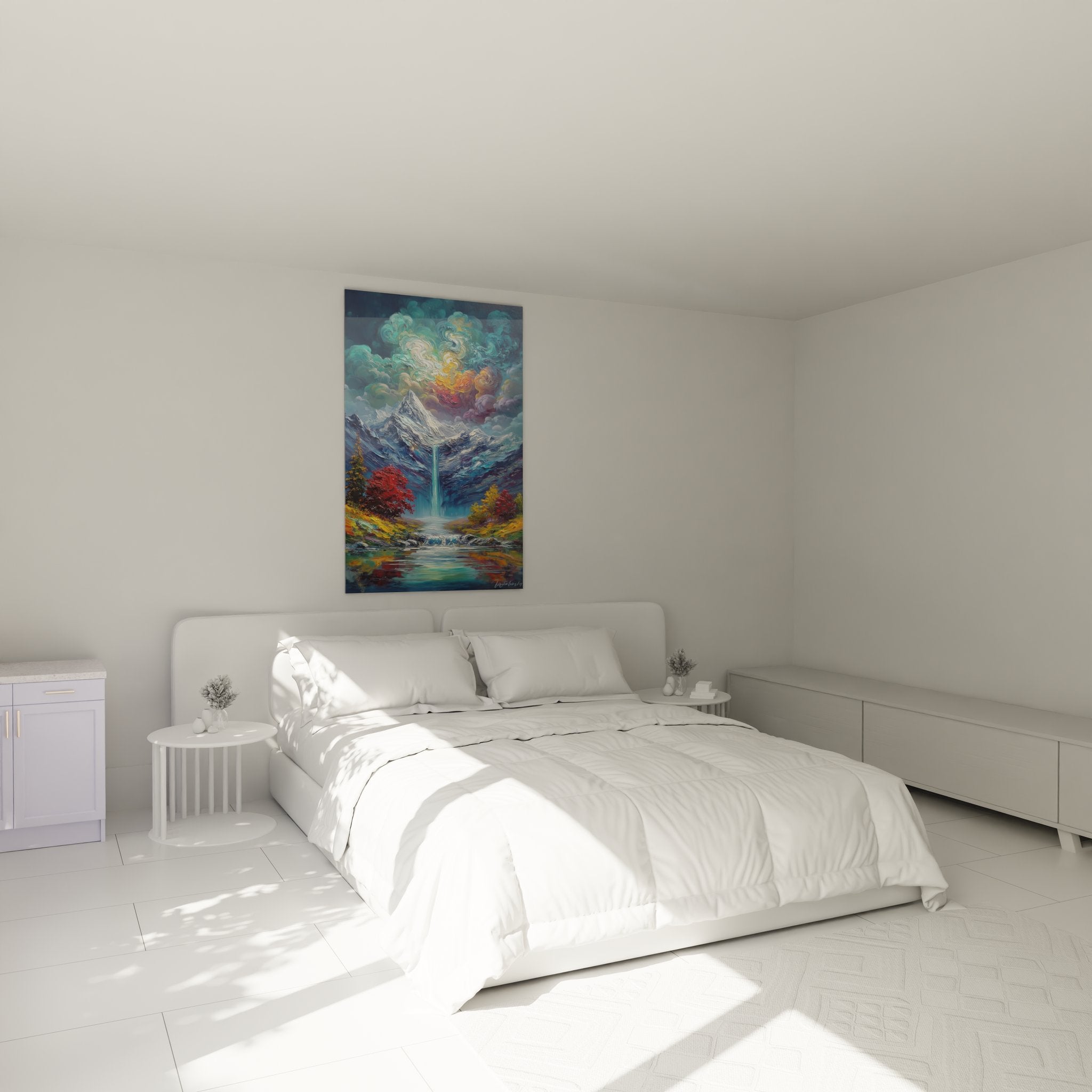
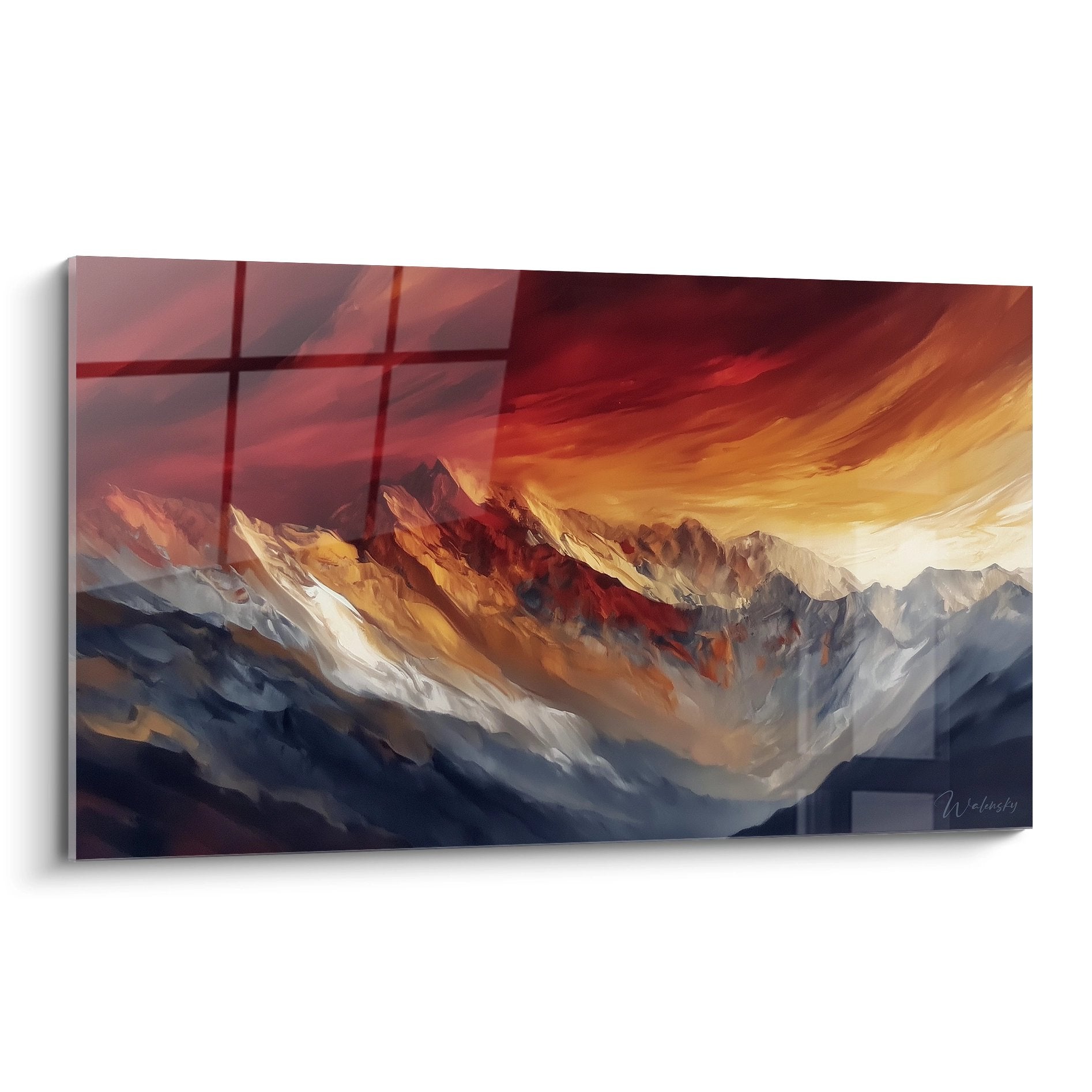
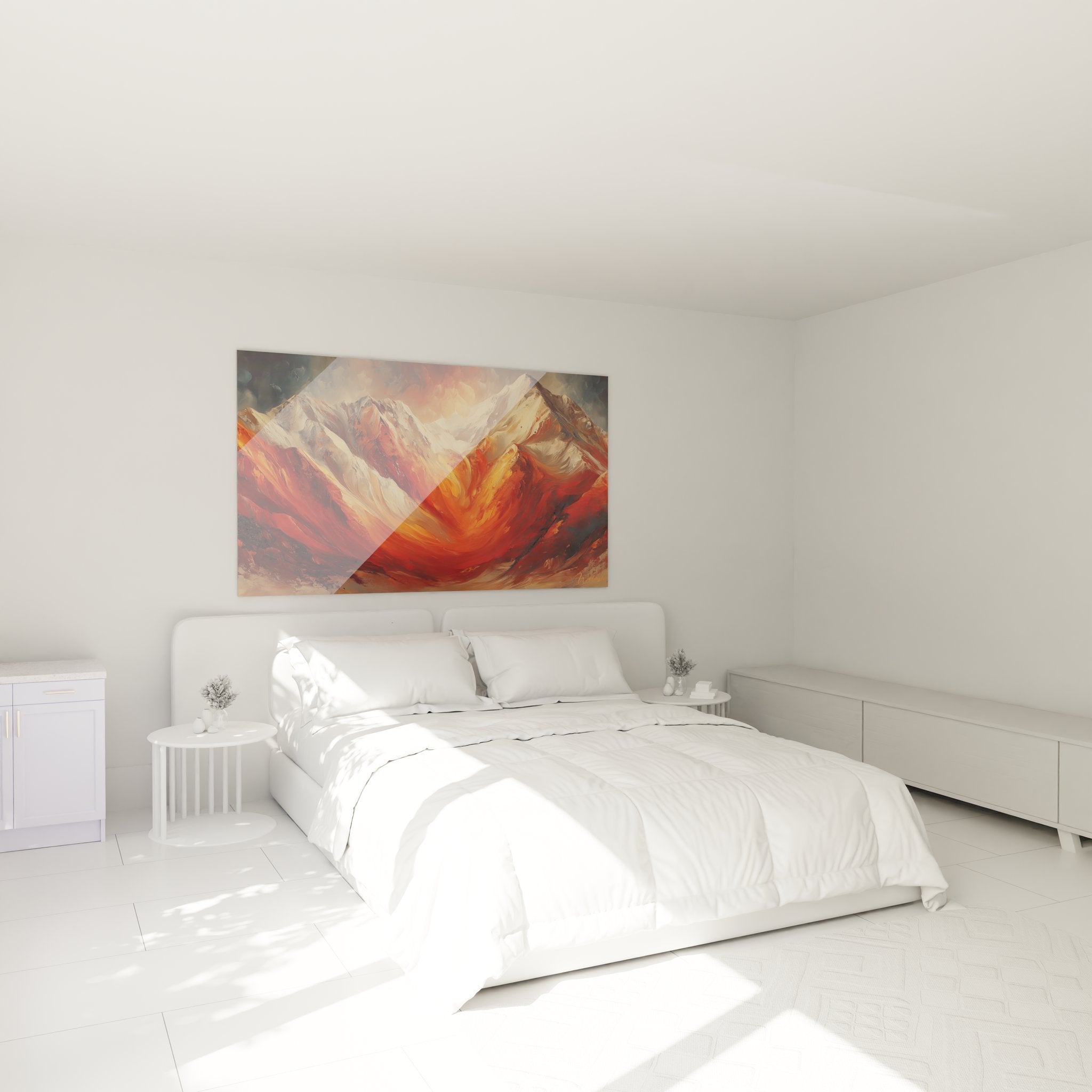
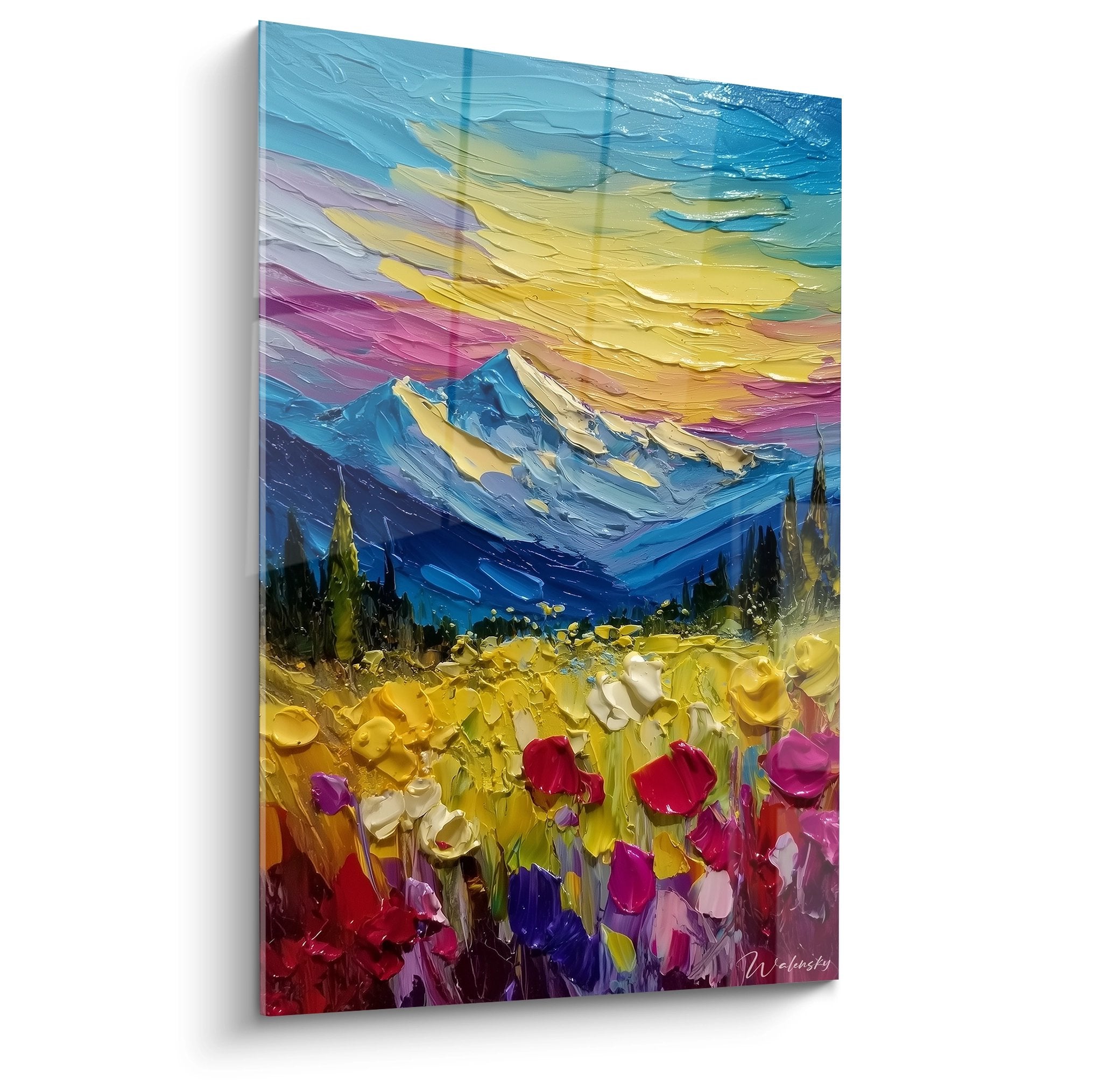
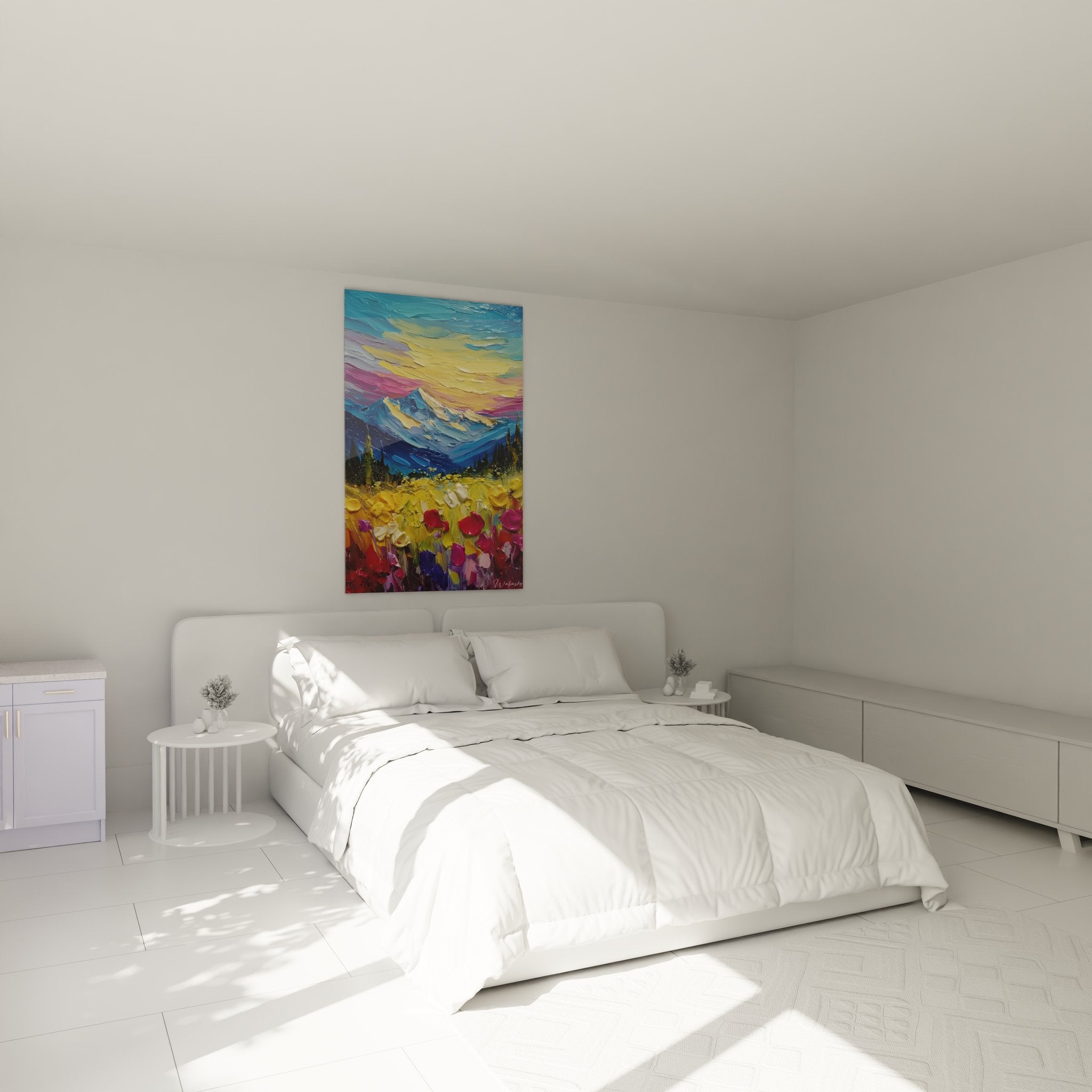
- Mountain Wall Art Presentation
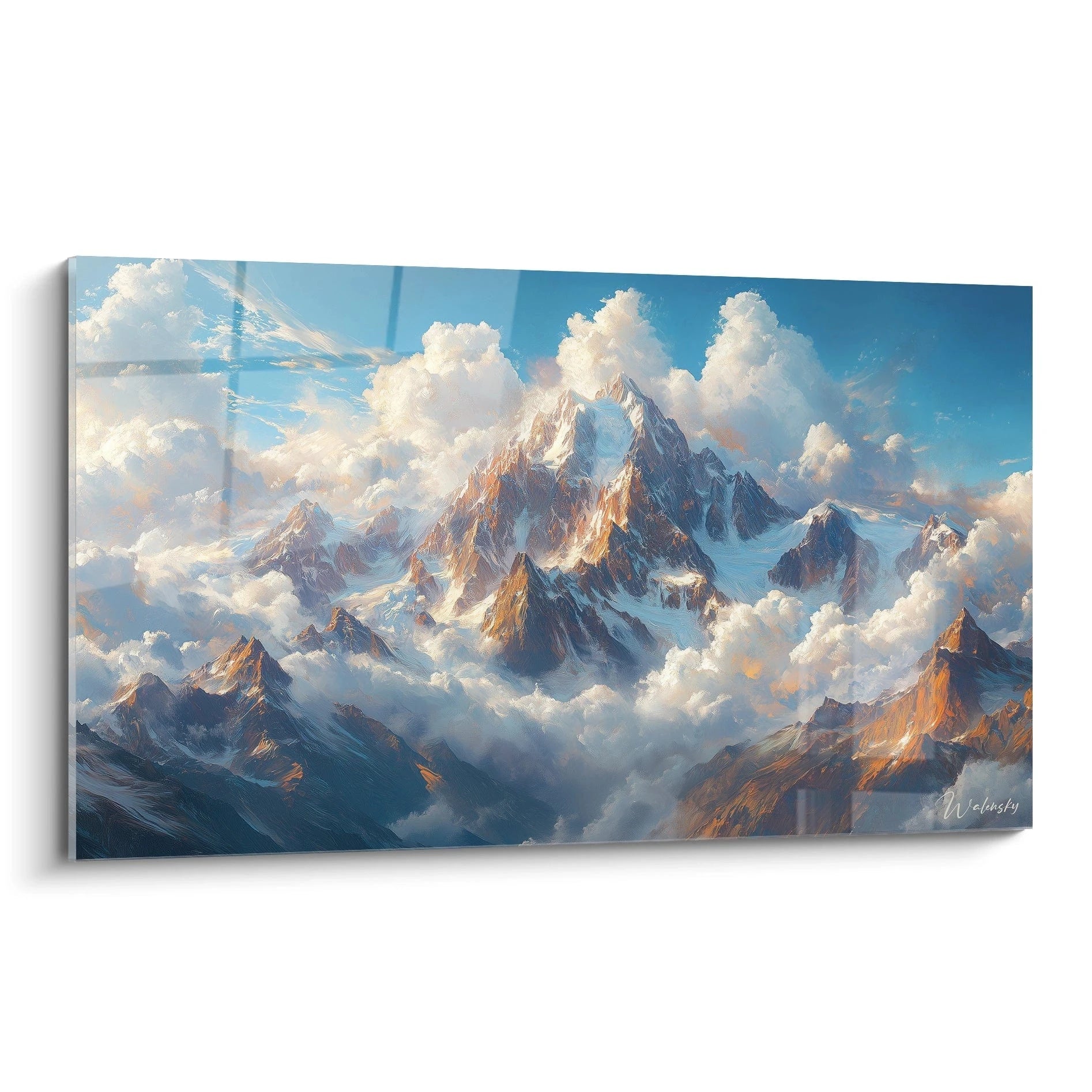
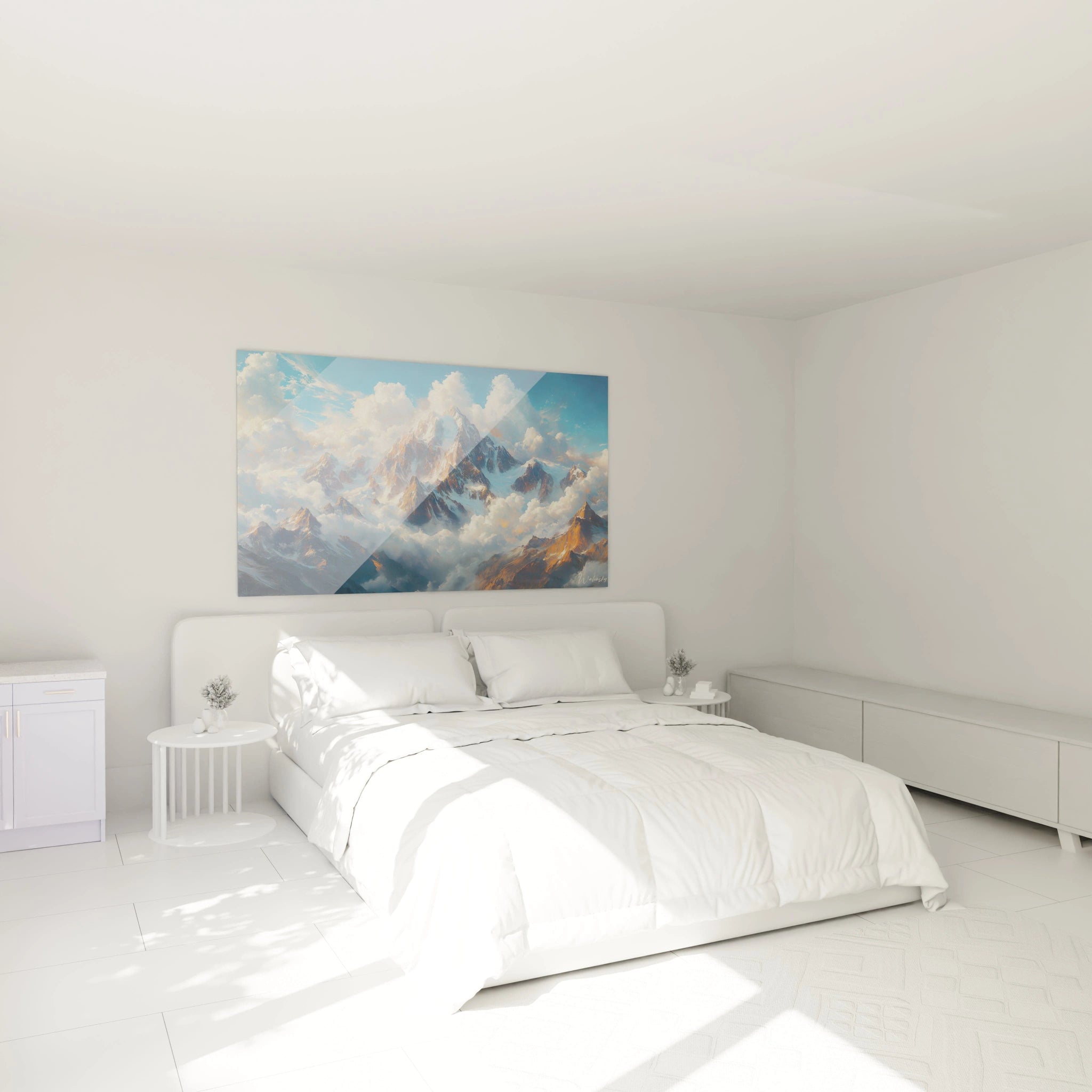
- Immersive Mountain Art
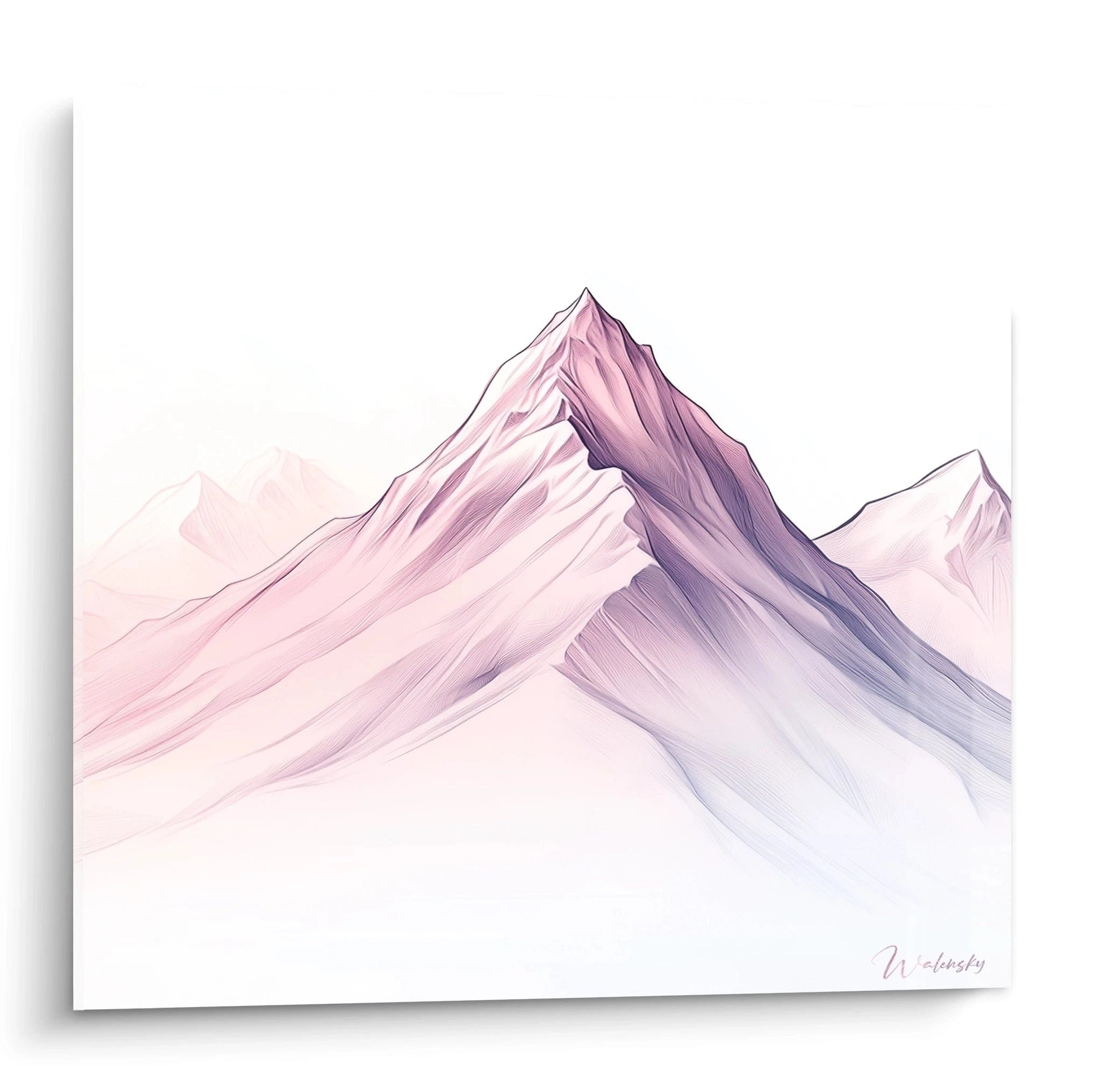
- Atmospheric Mountain Art
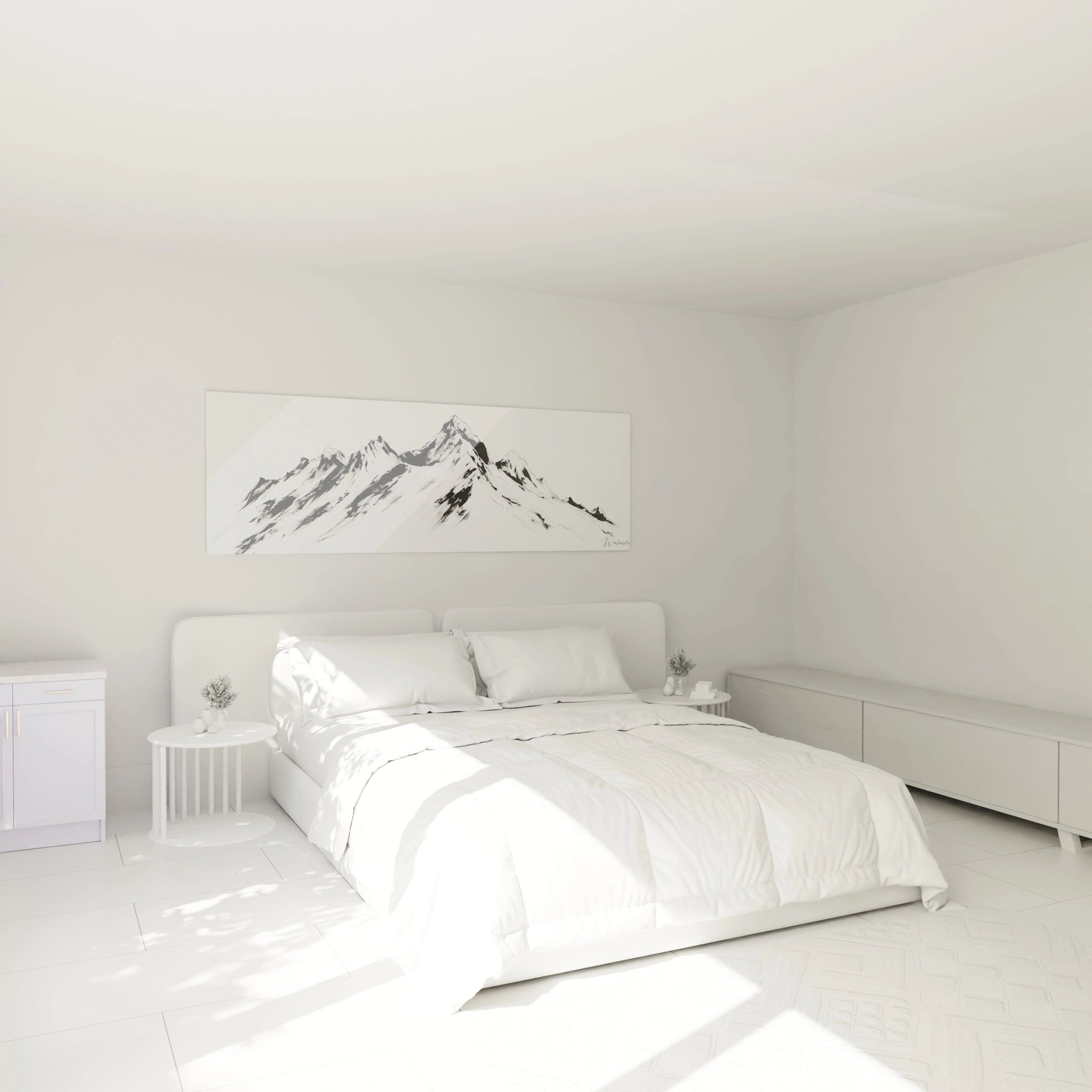
- Panoramic Mountain Wall Art
Mountain wall art represents far more than simple wall decoration – it's a window onto majestic peaks and alpine landscapes that instantly transforms your interior space. Unlike urban or marine representations, mountain artworks create a unique atmosphere of serenity and natural grandeur. Ideal for altitude and wilderness enthusiasts, this type of wall representation offers daily visual escape to the heights. Discover in our different tabs all the facets of these landscape artworks alpine, their distinctive features and how they can radically transform your interior ambiance.
Mountain Wall Art: Alpine Immersion for Your Interior
Mountain artworks distinguish themselves by their unique ability to radically transform the spatial perception of a room. Unlike other wall representations, an alpine panorama instantly creates incomparable visual depth, giving the impression that your wall opens onto a vast mountainous landscape.
How does mountain wall art modify the perceived temperature of a room?
A fascinating phenomenon occurs when an artwork depicting snow-capped peaks is installed in a living space. Studies in environmental psychology show that the visual presence of snow and ice can reduce the perceived temperature of a room by 1 to 3 degrees. This characteristic makes winter alpine representations a strategic choice for naturally warm spaces or south-facing rooms that accumulate heat.
The dominant cool tones of snow-covered summits effectively counterbalance environments where warm tones prevail, thereby creating natural chromatic balance. This unique property is particularly appreciated in Mediterranean regions or urban apartments subject to heat islands.
The altitude effect on your interior decoration
Representations of high peaks possess this exclusive characteristic of naturally directing the gaze upward, creating verticality that visually increases ceiling height. In modern apartments with standardized ceilings, this illusion of elevation is particularly sought after.
The strategic alignment of mountain wall art relative to existing architectural lines can significantly reinforce this sensation of vertical space. Position your alpine work so that the ascending lines of the peaks visually extend a staircase or column to maximize this architectural effect.
Why do mountain artworks promote concentration?
Neuroscientists have documented a phenomenon called the "alpine panoramic effect" which describes the impact of mountain views on our cognitive functions. Contemplation of high-altitude landscapes would activate brain areas associated with deep concentration and reflection.
This particularity makes mountainous representations an ideal choice for workspaces, home offices or study areas. The visual presence of majestic peaks naturally induces a mental state conducive to focusing on complex tasks, unlike marine landscapes which tend to favor relaxation and daydreaming.
Acoustics transformed by alpine landscapes
A rarely mentioned aspect concerns the psychoacoustic impact of large-scale mountain representations. The presence of a vast mountainous landscape subtly influences our sonic perception of space. Research in interior design suggests that large alpine panoramas create an unconscious expectation of particular acoustics, similar to open high-altitude spaces.
This characteristic makes mountain wall art an ideal complement in rooms where acoustics matter, such as music rooms or meditation spaces. The illusion of open space they generate can alleviate the sensation of stuffiness in moderate-sized rooms.
Exceptional resistance to visual monotony
Unlike geometric or abstract patterns that can quickly saturate our attention, mountainous landscapes possess visual complexity that remarkably resists perceptual fatigue. The multiple details, texture variations and shadow play of mountain relief offer a visual experience that continually renews itself depending on the viewing angle and lighting.
This characteristic of "persistent visual freshness" is particularly valuable for spaces where you spend long hours, such as a main living room or dining room. A quality mountain artwork continues to reveal new details even after years of daily observation.
Unique seasonal interaction
Alpine representations possess this extraordinary faculty of evolving visually with the seasons. During winter months, mountain wall art resonates with the exterior atmosphere, amplifying coherence between your interior environment and the natural world. In summer, the same artwork creates a refreshing contrast that balances high temperatures.
This seasonal dynamic gives mountain artworks unequaled decorative versatility. While other representations may seem discordant depending on the period, alpine landscapes maintain their visual relevance regardless of season, simply offering a different reading of their composition.
For people sensitive to seasonal mood variations, this characteristic represents a considerable asset, with the artwork acting as a constant visual anchor despite external environmental fluctuations.Mountain Wall Art: Capturing the Atmosphere of Summits
Artworks representing mountainous landscapes possess this remarkable characteristic of capturing and restoring the rarefied atmosphere of high altitudes. Unlike marine or forest representations that evoke density and humidity, alpine panoramas introduce into your living space this unique sensation of atmospheric lightness inherent to peaks.
The influence of mountain wall art on conscious breathing
A fascinating phenomenon occurs when a person regularly contemplates a mountainous landscape hanging on a wall: their breathing adapts unconsciously. Studies in environmental psychology have demonstrated that observation of large represented alpine spaces naturally favors deeper, slower breathing, similar to what we intuitively adopt at altitude.
This characteristic makes mountain wall art a privileged choice for spaces dedicated to active relaxation, such as yoga rooms or meditation corners. Alpine imagery automatically triggers what psychologists call the "panoramic breathing reflex" - amplified breathing stimulated by visual perception of vast and elevated spaces.
Why do mountain artworks create an emotional microclimate?
Representations of peaks influence the emotional atmosphere of a room in a manner entirely distinct from other landscape types. They generate what interior designers call an "emotional microclimate of elevation" - a zone where daily preoccupations seem literally to diminish through perspective effect.
This phenomenon of "emotional distancing" is particularly sought in decision-making spaces such as executive offices or conference rooms. The visual presence of vast mountainous landscapes naturally helps contextualize immediate problems within a broader perspective, thus favoring strategic rather than reactive reflection.
The kinetic luminosity of alpine representations
Unlike still lifes or plain landscapes, mountain artworks present this exceptional particularity of creating a "kinetic luminosity effect" in your interior. The altitude variations represented capture ambient light in a dynamic way, creating a luminous interaction that evolves subtly throughout the day.
This unique property transforms your alpine representation into a quasi-living artwork that constantly dialogues with your interior's lighting conditions. The represented peaks, ridges and slopes react differently depending on angle and light intensity, offering a visual experience that renews itself from morning to evening.
The exclusive memorial anchoring to mountain panoramas
Neuroscientists have identified a cognitive phenomenon specific to mountain landscape representations: they constitute particularly powerful memorial anchoring points in a living space. Due to their distinctive, non-repetitive geometry, mountain artworks rapidly become dominant spatial landmarks to which our brain instinctively attaches memories and associations.
This characteristic makes alpine panoramas a judicious choice for rooms associated with important moments or significant conversations. Placing mountain wall art in a family gathering room or celebration space significantly reinforces the emotional impact and memorability of events occurring there.
Creative stimulation through tiered horizons
Mountainous representations distinguish themselves by their unique capacity to stimulate creative thinking through their structure of multiple and tiered horizons. Unlike landscapes with single horizons (sea, desert, plain), alpine panoramas simultaneously present multiple superimposed horizon lines that activate different brain areas associated with mental projection and prospective imagination.
Research in creative neuroscience has shown that regular exposure to images presenting this multiple-horizon characteristic significantly favors divergent thinking and the ability to consider alternative solutions. This particularity makes mountain wall art especially suited to brainstorming spaces, creative workshops or design offices.
Chronobiological regulation through peaks
A little-known but scientifically documented characteristic of alpine representations concerns their influence on our temporal perception. The regular visual presence of mountain peaks in your field of vision subtly activates brain mechanisms related to long-time perception and natural cycles.
This property makes mountain wall art a regulating element in intense professional environments or highly active domestic spaces. They visually introduce a geological time scale that counterbalances the perpetual urgency of modern life, fostering a more measured and less reactive approach to daily challenges.Panoramic Mountain Wall Art: The Art of Grand Perspectives
Panoramic mountain artworks fundamentally transform the spatial experience of an interior through their unique capacity to reproduce the immensity of alpine ranges. Unlike standard formats that capture a landscape fragment, large-scale mountain panoramas recreate this distinctive sensation of multiple and stratified horizons inherent to high-altitude environments.
The psychogeographic impact of large-scale alpine formats
Large-scale mountain panoramas produce what environmental psychologists call the "transposition effect" - a cognitive phenomenon where the human brain partially integrates the represented space into its mental mapping of the immediate environment. Simply put, your mind begins unconsciously to include the represented valleys and peaks as virtual extensions of your living space.
This unique characteristic of large mountain artworks radically distinguishes them from other landscape representation types. While a forest artwork remains perceived as a simple image, a sufficient-dimension alpine panorama becomes a psychological extension of the inhabited space, substantially modifying global spatial perception.
How do altitude variations represented influence our balance?
A fascinating discovery in cognitive sciences concerns the impact of significant elevation variations representations on our vestibular system. Prolonged observation of mountainous landscapes with significant altitude variations subtly activates brain mechanisms related to balance and gravitational perception.
This delicate but constant stimulation of our balance system can have beneficial effects on general coordination and body awareness, particularly for sedentary individuals. This is why mountain artworks are often recommended in physical rehabilitation spaces or environments of prolonged static work.
The fractal perspective unique to mountain representations
Unlike most other landscape types, alpine panoramas naturally present fractal structures - patterns that repeat at different scales. This particular geometric characteristic offers visual complexity that engages our brain in a distinctive manner.
Neuroscientists have demonstrated that regular exposure to natural fractal patterns, such as those present in mountain ranges, measurably reduces stress by synchronizing our brain activity with certain fundamental rhythms of nature. This property makes mountain wall art a particularly judicious choice for high cognitive or emotional load environments.
The light amplification effect of alpine ridges
Mountain range representations possess this unique characteristic of maximizing and redistributing natural light in an interior space. The bright surfaces of snow-covered peaks and rocky ridges act as visual reflectors that amplify perception of ambient luminosity.
This particular optical property makes alpine panoramas a strategic choice for poorly lit or north-facing spaces. Studies in lighting design have demonstrated that a large, well-positioned mountain artwork can increase perceived room luminosity by 15 to 20%, creating a visually more spacious and welcoming environment without additional energy consumption.
The mineral resonance phenomenon in interior arrangement
Habitat psychologists have identified a phenomenon called "mineral resonance" that occurs when an artwork depicting mountain rock formations is introduced into an environment dominated by synthetic materials. The visual presence of geological structures establishes a natural counterpoint that unconsciously balances our need for connection to primordial elements.
This characteristic makes mountain panoramas an ideal complement to contemporary minimalist interiors where glass, metal and plastics predominate. They reintroduce the earth element visually, thereby completing the palette of fundamental materials necessary for our deep psychological comfort.
Seasonal chromatic evolution
A truly unique aspect of large mountain panoramas concerns their capacity to reveal different chromatic dominants according to seasons and exterior weather conditions. Through a complex optical phenomenon related to ambient light color temperature, the dominant hues of a mountain artwork seem to subtly modify according to seasonal conditions.
This property confers upon alpine representations a living and interactive dimension that few other subjects can offer. The same mountain artwork will reveal more its cool blue tones in summer, creating a refreshing contrast, while in winter, its warm and golden nuances will become more apparent, reinforcing your interior's warm atmosphere.
FAQ: Mountain Wall Art
What is the ideal size for mountain wall art in a spacious living room?
For a spacious living room, prioritize a panoramic mountain artwork of at least 120 cm width to truly capture the immensity of alpine landscapes. The ideal is to choose a format where width represents 1.5 to 2 times the height, thereby reproducing the natural aspect ratio of mountain panoramas. This optimal proportion allows you to recreate the effect of extended horizon characteristic of alpine views while maximizing visual impact in your space.
How do mountain artworks affect a room's acoustics?
Large mountain artworks, particularly those in panoramic format, positively contribute to a room's acoustics by breaking up flat reflective surfaces that can cause echoes. The visual representation of mountain relief also induces a psychoacoustic perception of open space that harmoniously complements the sonic experience. In rooms with high reverberation, a large-scale mountain artwork can subtly reduce sound reflection while enriching the overall sensory experience of the space.
What specific emotions does mountain wall art evoke compared to other landscapes?
Mountain wall art primarily evokes feelings of transcendence, elevation and perspective that are unique to this representation type. Unlike marine landscapes that induce relaxation and fluidity, or forest scenes that generate intimacy and mystery, alpine panoramas stimulate emotions related to accomplishment, deep contemplation and mental clarity. This distinctive emotional signature makes mountain wall art a particularly apt choice for spaces dedicated to reflection, important decisions or long-term strategic vision.