


Banshee Wall Art
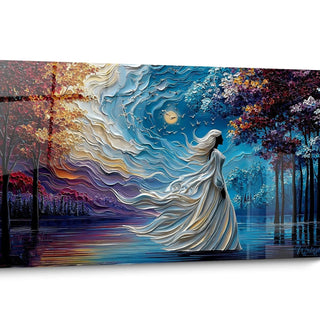
The Banshee, a feminine spirit from Irish folklore, weeps through our collection with her characteristic prophetic lamentations. This spectral entity traditionally appears before an imminent death in ancient Irish families, combing her long hair while emitting piercing shrieks. Our artistic creations capture the ethereal and melancholic appearance of the Banshee within the Celtic mist. These wall artworks bring a mystical and poetic dimension inspired by Gaelic traditions, evoking the connection between the world of the living and the dead in deeply rooted ancestral Irish mythology.
 Woman with Feathered Hair Wall Art - Spirit of the Cherry Blossoms - Banshee Edition273,90 €
 Mysterious Silhouette Wall Art - Colorful Autumn Forest - Banshee Edition273,90 €
In the same family
Also explore the theme Myth and Legends
-
 View all332
artworks
View all332
artworks
-
 Apollo2
artworks
Apollo2
artworks
-
 Other Myths and Legends14
artworks
Other Myths and Legends14
artworks
-
 Bigfoot2
artworks
Bigfoot2
artworks
-
 Chupacabra2
artworks
Chupacabra2
artworks
-
 White Lady2
artworks
White Lady2
artworks
-
 Dragon142
artworks
Dragon142
artworks
-
 Icarus1
artwork
Icarus1
artwork
-
 Kraken3
artworks
Kraken3
artworks
-
 Lilith1
artwork
Lilith1
artwork
-
 Mokele-Mbembe3
artworks
Mokele-Mbembe3
artworks
-
 Narcissus5
artworks
Narcissus5
artworks
-
 Pegasus27
artworks
Pegasus27
artworks
-
 Shiva62
artworks
Shiva62
artworks
-
 Ulysses1
artwork
Ulysses1
artwork
-
 Wendigo1
artwork
Wendigo1
artwork
-
 Yeti2
artworks
Yeti2
artworks
-
 Zeus1
artwork
Zeus1
artwork


All about Banshee Wall Art
- Presentation Banshee Wall Art
- Banshee wall art: Symbolism and Celtic atmosphere
- Banshee wall art: Creating an Irish Gothic space
- Banshee wall art: Visual and decorative power
A banshee wall art piece represents one of the most fascinating creatures in Irish folklore: this spectral messenger whose legendary cry announces life's great passages. These large-format mural representations capture the troubling duality of this feminine spirit, oscillating between ethereal beauty and unsettling presence. Adopted by lovers of Celtic mythology and collectors of gothic art, this wall decoration instantly transforms a space into a mystical sanctuary where fascination with ancient legends blends with contemporary dark aesthetics. Discover how to integrate this legendary figure into your décor to create a unique atmosphere charged with mystery and cultural authenticity.
The Irish Prophetic Spirit: Decoding Symbolism in Your Wall Art
Why choose a banshee representation for your interior?
A banshee wall art piece far transcends simple wall decoration to become a genuine portal into ancestral Celtic folklore. This spectral mourner, known as "bean sí" in Irish Gaelic, embodies a millennia-old oral tradition where death is not an ending but a transition announced by omens. Unlike generic mythological representations, the banshee possesses a specific cultural identity anchored in major Irish families, conferring rare historical authenticity to its mural representation. Collectors of myths and legends specifically seek these visuals for their capacity to simultaneously evoke ancestral terror and melancholic beauty.
The iconography of the funerary messenger distinguishes itself through unique visual attributes: white or silvered hair tousled by nocturnal wind, floating spectral garments, eyes reddened by eternal weeping, and that mouth frozen open in a silent yet omnipresent cry. These specific visual elements create an aesthetic tension that only this creature of Irish folklore can generate. A large-format size amplifies this phantom presence, transforming the wall into a window onto a world where the living and the dead communicate through premonitory signs.
The silent cry: how sonic dimension influences visual composition
The fascinating particularity of banshee wall art lies in its capacity to visually represent a legendary acoustic phenomenon. The "keening" - this traditional Irish funeral lamentation - constitutes the very essence of this creature, and contemporary artists excel at translating this sonic dimension into visual language. Undulating lines evoking sound waves, mouths open capturing the precise instant of the shriek, hair seeming to vibrate under vocal intensity: all these details transform a static image into an almost auditory experience.
This translation of the prophetic cry creates a particularly striking effect in spaces where silence predominates - private libraries, gothic meditation rooms, or chambers dedicated to reflection. The tension between the room's actual silence and the implicit cry of the representation generates a unique meditative atmosphere. Visitors often report an uncanny impression of nearly hearing the lament through their eyes, a rare psychological phenomenon that only representations of this Irish mourner manage to trigger.
Spectral femininity: deconstructing the archetype of the messenger woman
The banshee embodies a form of femininity radically different from conventional mythological figures. Neither warrior, nor seductress, nor maternal protector, she represents woman as channel between worlds, holder of knowledge of fate that no one wishes to receive. This unique position in the pantheon of legendary creatures makes her a particularly relevant symbol for contemporary spaces questioning traditional gendered archetypes.
A mural representation of this spectral feminine figure engages powerfully with current themes surrounding female voice long reduced to silence. Her cry impossible to ignore, her presence that forces listening despite the terrifying message, her persistence through the centuries: all elements that resonate with contemporary movements of reclaiming female speech. In a personal office or creative space, this messenger becomes a daily reminder of the power of a voice refusing to be silenced.
Integration into a Celtic myths collection
For enthusiasts of myths and legends, the banshee represents an essential masterpiece. She integrates naturally alongside other figures of Irish folklore - leprechauns, selkies, dullahans - but with superior gravity and emotional depth. Her presence immediately anchors a collection in the dark and meditative register rather than the whimsical.
Visual association with other Celtic culture elements amplifies her impact: Celtic knots suggesting eternity, triskeles evoking life cycles, Irish crosses recalling the Christianization of ancient pagan beliefs. A thematic wall dedicated to Gaelic folklore gains exponentially in narrative coherence when this spectral mourner becomes its focal point. The imposing formats allow precisely this visual centrality necessary to organize a cohesive gallery around Irish legends.
Which spaces benefit most from a banshee representation?
Contrary to misconceptions, banshee wall art does not limit itself to gothic bedrooms of teenagers or themed bars. The spaces drawing best advantage from this imagery are often unexpected. Genealogy and family history offices find in this figure a poetic reminder of the importance of lineages and generational transmission - the banshee traditionally appearing only to members of certain ancient Irish families.
Music rooms and recording studios specializing in dark or experimental genres frequently adopt these representations for their intrinsic connection to vocal power and raw emotion. Private libraries devoted to fantasy, literary horror, or folklore studies also benefit from this presence that visually materializes explored themes in the volumes. Finally, therapeutic spaces working with grief and end-of-life accompaniment sometimes find in this messenger a visual metaphor helping to address difficult subjects with protective mythological distance.
Specific color palette: beyond black and white
While monochromatic representations of the Irish mourner dominate the market, the most sophisticated versions exploit a far more nuanced and specific color palette. Deep emerald greens evoking Ireland's misty hills, silvery grays recalling coastal fogs, midnight blues suggesting the dark hours of her appearances, touches of blood red symbolizing announced tragedy: these colorimetric choices considerably enrich emotional impact.
Subtle contrasts between bright areas and dense shadows create this impression of progressive materialization from nothingness, characteristic of spectral apparitions. Large formats allow precisely working these gradations with sufficient space for the eye to genuinely travel through different zones of phantom density. This sophisticated chromatic approach immediately distinguishes quality artistic representation from generic horrific illustration.
Creating an Irish Gothic Sanctuary: Decorative Architecture Around the Spectral Messenger
How to amplify dark Celtic atmosphere in your space?
Installing large-format banshee wall art demands comprehensive architectural reflection to maximize its immersive potential. Unlike generic gothic décor inspired by English Victorian architecture, authentic Irish Celtic ambiance relies on specific elements rarely integrated correctly. Rough stone walls or imitations of medieval Irish constructions - irregular gray stones rather than red bricks - create the ideal context for this spectral apparition.
Indirect lighting mimicking traditional Irish peat-fire illumination differs radically from classic gothic candles. This orange-brown luminosity, slightly smoky, interacts differently with mourner representations, creating shadow plays that make the figure literally vibrate as if materializing and dematerializing. Light sources placed from below rather than above reverse natural shadows, amplifying the supernatural impression - ancestral technique of Irish storytellers recounting revenant tales.
Plant associations and botanical elements specific to Gaelic folklore
The botanical dimension remains cruelly neglected in scenography around Irish mythological figures. Yet certain plants possess powerful symbolic links with the banshee in oral traditions. Hawthorn, considered the fairy tree and guardian of passages between worlds, brings authenticity when dried branches are positioned near the mural representation - never obstructing the view.
Ivy, symbolizing persistence and eternal memory in Celtic culture, can elegantly climb the frame sides or adjacent wall, creating fusion between nature and supernatural. Dried heather bouquets, emblematic flower of Irish moors where the banshee supposedly appears, add subtle color touches (pale violet) contrasting with dominant dark tones. These specific botanical elements radically distinguish thoughtful staging from simple horrific image placement on any wall.
What materials to absolutely avoid in the immediate environment?
Certain contemporary materials create catastrophic aesthetic dissonance with Irish spectral messenger imagery. Glossy plastic, reflective chrome surfaces, colored neons, ultra-modern translucent resin finishes: all belong to visual register incompatible with ancestral temporality this figure embodies. Banshee wall art loses 80% of impact surrounded by white minimalist Scandinavian furniture or raw metal industrial décor elements.
Privileged textures include aged wood (oak, Irish ash), patinated metals (rusty wrought iron, verdigris bronze), thick textiles (raw wool, coarse linen), and matte mineral surfaces (slate, dark granite). This material coherence creates a sensory cocoon where each element reinforces the impression of slipping into time suspended between mythic past and unsettling present. Investment in authentic accompanying elements exponentially multiplies perceived value and emotional impact of the mural masterpiece.
Creating transition zones: from daily life to mythology
Frequent error involves completely isolating the space dedicated to banshee representation, creating abrupt rupture with the rest of the home. A more sophisticated approach develops progressive transition zones allowing visitors to gradually slip into dark Celtic atmosphere. A corridor leading to the main room can present preparatory elements: reproductions of illuminated Irish manuscripts, photographs of Burren or Giant's Causeway landscapes, quotes in ancient Gaelic discreetly inscribed.
This narrative gradation psychologically prepares for confronting the central figure while avoiding aesthetic shock. The imposing formats of the main representation justify this thoughtful scenographic approach all the more - one does not discover a multi-meter-square wall of a spectral mourner without minimal visual preparation. Seasoned collectors understand that the experience begins not when the eye meets the image, but from first steps toward the space welcoming it.
Ambient sonorization: completing the visual experience
Though naturally silent, adding subtle sonic dimension transforms immersive experience radically. Creating specific audio ambiance for Irish folklore - recordings of moor wind, rain on thatched roofs, distant Celtic harp sounds, even traditional keening at barely perceptible volume - activates powerful sensory synergy. This audio layer must remain constant background rather than punctual diffusion, creating permanent sonic environment dialoguing with mural imagery.
Discrete sonic diffusion technology today allows integrating practically invisible speakers into adjacent walls, avoiding visual pollution. Audio loops must last minimum 45 minutes to prevent conscious repetition. Some collectors push sophistication to programming variations by time of day - denser, more unsettling ambiance evenings, more melancholic and contemplative daytime - amplifying the impression that spectral presence reacts to temporal cycles.
Which secondary lighting type for large dimensions?
Imposing-format banshee wall art requires sophisticated multilayer lighting strategy. Direct frontal lighting, catastrophic, flattens the image and destroys all atmospheric depth. The optimal approach combines several indirect sources creating progressive revelation zones. Adjustable spotlights placed at 45-degree angles on sides allow modeling any reliefs and creating dramatic cast shadows.
Bottom-up lighting, ancestral theatrical technique, amplifies the supernatural by inverting natural shadow of the spectral face - a particularly striking effect for representations centered on the mourner's facial expression. Programmable intensity variations allow evolving the figure's presence throughout the day: almost erased in full daytime luminosity, it progressively materializes as night falls, creating a living experience rather than a fixed image. This dynamic approach justifies investment in connected lighting systems allowing complex programming.
Visual Impact and Decorative Presence: Mastering the Evocative Power of the Spectral Mourner
Why do large dimensions amplify the phantom presence effect?
Imposing-dimension banshee wall art creates a rare psychological phenomenon: the impression of cohabiting with a presence. Unlike small formats remaining clearly identified as decorative objects, several-square-meter mural representations cross a critical perceptual threshold. The brain begins processing the image not as illustration but as an entity actually occupying space. This scale allows spectral face details - bulging eyes, mouth distorted by the cry, moving hair - to reach near-realistic proportions.
Monumental formats also allow representing the banshee in full figure, including floating spectral garments and inscription in recognizable misty Irish landscape. This environmental contextualization, impossible in small formats centered solely on the face, considerably enriches visual narrative. The viewer contemplates no longer simply an isolated mythological creature but a complete scene instantly transporting toward wind-beaten moors where these apparitions supposedly occur.
How to manage emotional intensity to avoid excess?
The representation of an Irish prophetic mourner inherently carries intense emotional charge - melancholy, dread, morbid fascination, respect for funerary sacred. In large formats, this intensity can quickly tip toward overwhelming without balance from counterbalancing elements. Integration of visual breathing spaces around the central figure becomes crucial: empty areas, dispersing mists, artistic blur zones allowing the eye rest.
The most sophisticated representations play with emotional ambiguity rather than pure horror. A banshee whose expression mingles pain and compassion, whose cry seems as much to warn as to mourn, whose presence evokes melancholy more than terror: these complex emotional nuances allow daily cohabitation where purely horrific imagery would quickly become oppressive. Choice of a mature artistic interpretation distinguishes the informed collector from simple seeker of strong sensations.
Perception evolution over time
A fascinating phenomenon reported by owners of monumental spectral messenger representations concerns their evolving relationship with the image. First weeks, presence dominates, imposes, sometimes unsettles. Progressively, familiarity establishes itself, not through trivialization but through connection deepening. Initially imperceptible details emerge during repeated contemplation: subtleties in phantom garment folds, opacity variations suggesting immaterial nature, backgrounds progressively revealing their secrets.
This progressive discovery justifies investment in detail-rich, compositionally deep representations. Simply decorative images exhaust visually in few glances, while truly developed works offer years of visual exploration. Some owners even testify to a form of protective attachment toward their banshee mural, perceiving it as space guardian rather than simple decorative element - a remarkable psychological transformation illustrating the power of large-scale mythological representations to profoundly affect inhabitants.
What impact on visitors unfamiliar with Irish folklore?
The reaction of people discovering for the first time a monumental banshee wall art without knowing the legend constitutes an artistic quality test. Superficial representations simply provoke generic impression of "gothic décor." Truly accomplished interpretations spark immediate fascination accompanied by questions: who is this figure? what does her cry mean? why does she simultaneously radiate beauty and unease?
This capacity to intrigue beyond the knowledgeable circle transforms the piece into a trigger for cultural conversations. The owner becomes Irish folklore narrator, orally transmitting - as Celtic tradition intended - bean sí stories. This unexpected pedagogical and social dimension adds unexpected use value to an initially purely decorative object. Imposing formats precisely facilitate these collective sharing moments before the image, multiple people contemplating simultaneously without impeding each other.
Integration into an evolving collection approach
For collectors progressively developing a coherent decorative universe around mythologies, the banshee representation functions as cornerstone from which other acquisitions radiate. Its positioning at the intersection of fantasy, gothic, folkloric, and Celtic opens multiple expansion directions. One can then pursue other feminine mythological figures (sirens, valkyries, funerary muses), other Irish creatures (dark leprechaun, dullahan), or other supernatural messenger representations.
The piece's large dimension also establishes clear visual hierarchy in the collection: subsequent smaller-format acquisitions naturally gravitate around without creating visual competition. This organic organization structures space intuitively, guiding the gaze along a coherent narrative path. Experienced collectors often plan evolution across several years, knowing the monumental banshee will constitute the permanent focal point around which everything else articulates.
Where to find authentic high-quality large banshee representations?
Truly accomplished representations of the Irish mourner, avoiding superficial horrific clichés for nuanced artistic interpretations, remain relatively rare on the market. Artists specializing in authentic Celtic folklore typically offer limited works combining historical research with contemporary sensitivity. Monumental formats require specific printing techniques preserving depth of blacks and subtlety of phantom nuances.
How to maintain wall art representing a dark mythological figure?
Representations with dominant dark tones of the spectral messenger require specific maintenance differing from bright-colored works. Dust accumulation progressively dulls the crucial contrasts between shadow zones and phantom light. Gentle monthly dusting with antistatic microfiber cloth generally suffices. Direct sun exposure, catastrophic, progressively fades the subtle nuances constituting the atmospheric richness.
Does banshee wall art suit all interior decoration styles?
This Irish folklore figure representation possesses strong visual identity incompatible with certain aesthetics. Minimalist Scandinavian interiors, bright Mediterranean ambiances, colorful bohemian décors create major stylistic dissonance. Conversely, it integrates perfectly with contemporary gothic universes, authentic Celtic decorations, dark academia ambiances, fantasy literature spaces, and collections of world mythologies.
What is the profound cultural significance of the banshee in Irish tradition?
Beyond often overexploited terrifying aspects, the spectral mourner embodies a specifically Irish conception of death as accompanied transition rather than brutal rupture. She materializes the idea that the deceased do not disappear without warning, that signs precede life's great passages, and that certain family lineages maintain connections with the afterlife. This profound anthropological dimension transforms her mural representation into an object of cultural reflection rather than simple horrific decoration.
L'art qui suscite l'envie
Maison belge d'art mural grand format
14 jourspour changer d'avis*
Protection Walenskyincluse
Fabriquéen Italie
FormatXXL
Kit de fixationtoujours fourni
* Hors tableaux personnalisés et tailles personnalisées


