


Glyptodon Wall Art
Discover the Glyptodon, this remarkable prehistoric giant armadillo protected by a massive carapace. Our collection highlights this armored mammal fascinanting that roamed South America millions of years ago. With its unique defensive structure and robust silhouette, the Glyptodon represents evolutionary adaptation at its finest. These wall artworks capture the originality of this South American megafauna and bring an educational and aesthetic dimension to your interior. Ideal for enthusiasts of unusual prehistoric creatures and little-known fauna.
 Glyptodon Mosaic Wall Art - Prehistoric Creature in Relief - Glyptodon Edition273,90 €
 Glyptodon Colorful Stained Glass Wall Art - Natural Mosaic - Glyptodon Edition273,90 €
 Glyptodon Stained Glass Wall Art - Scales of Light - Glyptodon Edition273,90 €
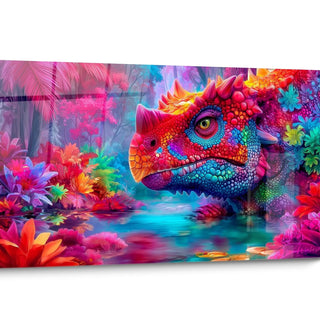
 Glyptodon Wall Art - Turquoise Scales in Nature - Glyptodon Edition273,90 €
 Glyptodon Giant Wall Art - Fantastic Twilight - Glyptodon Edition273,90 €
 Glyptodon Floral Wall Art - Golden Ocean - Glyptodon Edition273,90 €
 Glyptodon Wall Art - Nocturnal Floral Garden - Glyptodon Edition273,90 €
 Fantastic Glyptodon Painting - Enchanted Reflections - Glyptodon Edition273,90 €

In the same family
Also explore the theme Primordial Lands
-
 View all150
artworks
View all150
artworks
-
 Andrewsarchus6
artworks
Andrewsarchus6
artworks
-
 Argentavis9
artworks
Argentavis9
artworks
-
 Basilosaurus10
artworks
Basilosaurus10
artworks
-
 Dinosaur31
artworks
Dinosaur31
artworks
-
 Dunkleosteus5
artworks
Dunkleosteus5
artworks
-
 Prehistoric Frescoes8
artworks
Prehistoric Frescoes8
artworks
-
 Indricotherium2
artworks
Indricotherium2
artworks
-
 Kaprosuchus12
artworks
Kaprosuchus12
artworks
-
 Woolly Mammoth22
artworks
Woolly Mammoth22
artworks
-
 Megaloceros
-
 Megalodon9
artworks
Megalodon9
artworks
-
 Quetzalcoatlus8
artworks
Quetzalcoatlus8
artworks
-
 Scutosaurus9
artworks
Scutosaurus9
artworks
-
 Saber-Toothed Tiger11
artworks
Saber-Toothed Tiger11
artworks


All about Glyptodon Wall Art
- Overview Glyptodon Wall Art
- Glyptodon Wall Art: Symbolism and Visual Impact
- Glyptodon Wall Art: Educational Dimension
- Glyptodon Wall Art: Decorative Integration
Discover our exclusive collection of Glyptodon wall art, featuring this fascinating prehistoric armored mammal that roamed South America millions of years ago. These large-scale mural creations capture the majesty and power of this shelled creature, the giant ancestor of today's armadillo. Each representation highlights the Glyptodon's unique anatomy with its characteristic bony carapace and massive tail. Perfect for paleontology enthusiasts, collectors of prehistoric megafauna representations, or simply to bring originality to your space. Explore our complete prehistoric wall art collection and transport yourself to the South American Pleistocene era.
The Glyptodon Carapace: A Powerful Visual Statement in Your Interior
Why Does the Glyptodon Carapace Fascinate So Much?
A Glyptodon wall art piece immediately stands out through its legendary carapace representation, composed of over one thousand hexagonal bony plates fused together. This natural armor, measuring up to five centimeters thick on the living animal, offers an absolutely unique organic geometric pattern in prehistoric fauna. Contemporary artists exploit this exceptional texture to create mural works where each dermal plate becomes a fascinating graphic element. The complexity of this biological plating transforms each representation into a true artistic anatomical study.
The chromatic variations used to represent this carapace typically range from ochre tones, deep browns, and anthracite gray, recalling the probable colorations of the fossilized animal. This earthy palette integrates naturally into contemporary interiors while providing remarkable visual depth. The play of shadow and light on the dermal plates creates perceptible relief even on a two-dimensional surface, giving the impression that the creature could emerge from the wall.
The Protective Symbolism of the Glyptodon in Living Spaces
Beyond its striking aesthetics, a painting representing this armored mammal conveys strong symbolism of protection and resilience. In professional offices and workspaces, this imagery of natural defense resonates particularly with notions of strategic security and preparation facing challenges. Entrepreneurs and professionals appreciate this visual metaphor of an impenetrable armor forged by millions of years of evolution.
The impressive dimensions available for these mural representations amplify this protective presence effect. A format of 120x80 cm or larger allows capturing the meticulous details of the carapace while creating a dominant focal point that structures the entire room. This generous scale is essential to faithfully convey the massiveness of the Glyptodon, which weighed approximately two tons in adulthood.
Anatomical Contrast: Massive Tail and Compact Silhouette
One of the most striking visual peculiarities in a Glyptodon wall art piece lies in the representation of its armed tail. Unlike its armored and rounded body, this prehistoric mammal's tail was a true defensive weapon, ending with a bony mass bristling with sharp spikes. This anatomical contrast between the curved smoothness of the carapace and the aggressiveness of the caudal appendage creates captivating visual tension.
Artists often play on this dualism to compose dynamic works where the Glyptodon is represented in a semi-defensive posture, tail raised, ready to strike. This composition generates movement in the image that breaks the potential static nature of such a heavily armored animal. For collectors of megafauna representations, this anatomical peculiarity radically distinguishes the Glyptodon from other prehistoric herbivores.
Visual Texture and Perceptual Depth
Faithful representation of the Glyptodon's dermal plates demands particular attention to detail that transforms each work into a true technical feat. The best paintings capture not only the hexagonal shape of the scutellae, but also the variations in size and overlap that existed across different areas of the carapace. This anatomical fidelity creates visual richness that rewards prolonged observation.
Modern rendering techniques allow suggesting the three-dimensionality of this bony armor through subtle relief effects. Some representations incorporate metallic reflections or matte textures to accentuate the impression of mineral solidity of the carapace. This multi-textured approach gives quasi-sculptural presence to the mural work, particularly impressive in large formats.
What Atmosphere Does a Glyptodon Wall Art Create in a Modern Interior?
Integrating a representation of this armored mammal into a contemporary environment generates a unique atmosphere blending primitive robustness and current sophistication. The clean lines of modern furniture harmoniously contrast with the organic complexity of the carapace, creating aesthetic dialogue between distant past and contemporary design. This temporal juxtaposition brings conceptual depth to the space.
In industrial lofts or raw-style interiors, a Glyptodon wall art piece resonates particularly well with exposed materials like concrete, steel, or brick. The mineral texture of the carapace echoes these rough surfaces while introducing biological and historical dimension absent from construction materials. High-ceiling spaces particularly benefit from these large-scale representations that occupy vertical space without weighing it down.
The Glyptodon as an Educational Tool and Conversation Starter
Accessible Paleontological Education in Family Spaces
A Glyptodon wall art instantly transforms any wall into a captivating pedagogical support, particularly for curious young minds. Unlike omnipresent dinosaurs in popular culture, this armored mammal remains relatively unknown to the general public, sparking questions and discoveries. Parents appreciate this opportunity to introduce their children to the diversity of prehistoric life beyond Mesozoic reptiles.
The daily visual presence of this animal promotes passive learning and stimulates natural curiosity. Children regularly observing this creature spontaneously develop questions about its lifestyle, herbivorous diet, and habitat in Pleistocene South American plains. This continuous exposure serves as a springboard toward deeper paleontology and mammal evolution explorations.
How Does the Glyptodon Enrich Discussions About Evolution?
The evolutionary lineage of the Glyptodon offers a fascinating case study perfectly adapted for family or educational discussions. This animal represents an extinct branch of the Xenarthran family, which still includes living members such as armadillos, sloths, and anteaters. Observing a wall art depicting this armored giant allows concretely addressing concepts of adaptive radiation and ecological specialization.
Artistic representations often highlight anatomical similarities between the Glyptodon and its miniaturized current cousins, particularly in segmented carapace structure. This visible evolutionary continuity makes abstract concepts of descent and modification tangible even for non-specialists. Evolution biology enthusiasts find in these mural works ideal visual support for explaining how environmental pressures sculpt morphology over millions of years.
Pleistocene Megafauna: South American Ecological Context
A Glyptodon wall art piece naturally invites exploring the extraordinary Pleistocene ecosystem of South America, a period when this continent harbored stupendous diversity of giants. Contemporary with Macrauchenia, Megatherium, and Smilodon, the Glyptodon was part of unique fauna that developed in South America's geographic isolation before the Great Interchange.
This geographic specificity grants Glyptodon representations additional cultural dimension, particularly relevant for individuals with connections to Argentina, Uruguay, or Brazil—regions where the best-preserved fossils were discovered. Owning a mural work celebrating this regional paleontological heritage becomes an affirmation of cultural identity and attachment to South American roots.
Conversation Starter in Social Spaces
Unlike conventional animal representations, a Glyptodon wall art piece practically guarantees visitor reactions and questions. This unusual creature immediately breaks with standard decorative expectations and commands attention. In living rooms, reception areas, or professional reception spaces, this originality becomes a valuable conversational asset.
Hosts particularly appreciate this ability to generate spontaneous exchanges beyond habitual social platitudes. Explaining what a Glyptodon is, describing its lifestyle, recounting fossil discovery circumstances, or discussing extinction theories offers rich narrative repertoire. These naturally engaging discussions create convivial atmosphere while revealing the owner's intellectual interests.
Inspiration for Personal Scientific Exploration
Owning a mural representation of this prehistoric mammal frequently acts as a catalyst for deeper self-directed paleontology study. Owners often develop increased interest in recent fossil discoveries, new hypotheses about megafauna extinction causes, or paleoartistic reconstruction techniques. This work thus becomes the starting point of a continuous intellectual journey.
Enthusiasts particularly appreciate the opportunity to contextualize their wall art through complementary readings on the Pleistocene period, ecological interactions between giant herbivores and predators, or probable impact of early humans arriving in South America on these animal populations. This evolving appreciation dimension transforms initial acquisition into lasting intellectual commitment.
Integrating a Glyptodon Wall Art in Different Interior Environments
Spatial Optimization for Large Formats
Representations of large-scale Glyptodon require thoughtful spatial planning to maximize visual impact. The fundamental rule involves planning minimum visual distance of three to four meters to allow comprehensive apprehension of the creature in its entirety. Open-plan spaces like lofts, large living areas, or spacious entrance halls constitute ideal environments for these monumental works.
Positioning height carries particular importance with this specific subject. Unlike representations of slender animals, the Glyptodon possessed a squat, low-slung silhouette on short legs. Positioning the wall art so the lower carapace line sits between 80 and 100 cm from the floor creates an impression of ground presence consistent with the animal's actual morphology, as if it physically occupied the space.
Which Room Works Best for Displaying Glyptodon Wall Art?
Spaces for reflection and intellectual work align particularly well with Glyptodon wall art presence. Personal libraries, home offices, and professional practices benefit from the symbolism of knowledge and temporal exploration this creature evokes. The silent yet imposing presence of the armored mammal creates atmosphere conducive to concentration and deep thinking.
Spaces dedicated to family leisure and informal education, such as educational play rooms or reading corners for children, constitute also judicious placements. In these contexts, the wall art representing this prehistoric giant acts as visual anchor stimulating imagination and scientific curiosity. The work's generous dimensions transform the space into a true temporal window toward the Pleistocene.
Decorative Associations with Prehistoric Megafauna
For collectors wishing to create coherent thematic gallery, a Glyptodon wall art harmonizes beautifully with other Pleistocene South American megafauna representations. Association with works showing Megatherium, gigantic ground sloth, or Toxodon, massive herbivore related to ungulates, recreates complete ecological fresco of a vanished ecosystem.
This thematic gallery approach works particularly well in spacious hallways, stairwells, or longitudinal walls of large rooms. Chronological or geographical progression through different prehistoric species transforms spatial traversal into immersive paleontological journey. Size variations between different represented creatures add visual dynamism while respecting actual ecological hierarchy.
Professional Environments and Public Spaces
Natural science cabinets, regional museums, educational centers, and academic institutions find in Glyptodon representations a decorative tool reinforcing institutional identity. These mural works immediately signal the establishment's scientific and pedagogical orientation while creating memorable visual landmarks for visitors.
In reception areas of veterinary clinics or practices specialized in exotic mammals, a Glyptodon wall art establishes subtle yet powerful connection with animal kingdom evolution and diversity. This prehistoric presence reminds of evolutionary lineage temporal depth and contextualizes contemporary care within expanded paleobiological perspective.
Chromatic Coherence and Complementary Materials
The naturally earthy palette of Glyptodon wall art harmonizes exceptionally with raw organic materials. Exposed stone walls, aged wood cladding, or terra cotta surfaces create material echoes reinforcing prehistoric authenticity of the representation. This textural coherence amplifies impression of direct connection with ancient geological eras.
Furniture with clean lines and neutral tones (linen beige, stone gray, off-white) allows the wall art to visually dominate without chromatic competition. Conversely, touches of deep ochre, rust, or olive green in textiles or decorative accessories can echo tones present in the represented carapace, creating subtle thematic unity throughout the space.
FAQ: Frequently Asked Questions About Glyptodon Wall Art
Does Glyptodon wall art suit spaces with limited natural light?
Absolutely, the earthy tones and contrasts typical of Glyptodon representations remain perfectly legible even in moderate-light environments, unlike works with subtle nuances requiring optimal lighting.
What minimum distance between the wall art and surrounding furniture?
Plan at least 60 cm of clear space around the frame to enable fluid circulation and prevent furniture from casting shadows on the detailed prehistoric mammal's carapace.
Are Glyptodon representations scientifically accurate?
The finest works rely on current paleontological reconstructions based on fossils discovered in Argentina and Uruguay, guaranteeing remarkable anatomical fidelity regarding carapace structure and body proportions.
Can you combine Glyptodon wall art with representations from other prehistoric periods?
While possible, this association requires careful visual coherence as mixing Pleistocene creatures with Mesozoic dinosaurs can create temporal confusion for visitors sensitive to paleontological chronology.


