


Wall art for apartment
Personalize your living space with our apartment wall art collection. These contemporary creations are ideal for urban décor and adapt to all interior styles. Each work brings character and personality to your modern home, creating an atmosphere that reflects who you are. Whether you have a studio or a large apartment, our artistic compositions transform your walls into genuine expressions of your identity, combining contemporary aesthetics and domestic comfort for a unique interior.
 Precious Halos Artwork - Signature Edition273,90 €
 Heart of the Breeze Canvas - Abstract Boat Edition273,90 €
 Big Bang Artistic Dazzling Wall Art - Limited Edition🥇273,90 €
 Dawn Over the Bay Wall Art - Abstract Boat Edition273,90 €
 Mechanics of Colors Painting - Abstract Cubism Edition273,90 €
 The Invisible Bonds Wall Art - Contemporary Abstract Painting Edition273,90 €
 Echoes of Ancient Rocks Wall Art - Abstract Edition273,90 €
 Trace Artwork in Gold and Jade - Abstract Painting Edition273,90 €
 Between Us Canvas - Abstract Body Edition273,90 €
 Paint Bursts Canvas - Pop Art Abstract Edition273,90 €
 Reflection in Black and Gold Wall Art - Abstract Face Edition273,90 €
 Modern Muse Canvas - Contemporary Abstract Painting Edition273,90 €
 Blue Floating Hope Canvas - Abstract Multicolor Edition242,90 €
 Color Explosion Painting - Dynamic Splatter - Abstract Colorful Edition273,90 €
 Colorful Geometric Shapes Painting - Modern Abstract Composition - Geometric Abstract Edition N°3273,90 €
 Marbled Peace Wall Art - Zen Edition273,90 €
 Ancient Tree Wall Art - Life Tree Zen Edition273,90 €
 Night Tree Wall Art - Zen Life Tree Edition273,90 €
 Tree of Life Zen Dance of Seasons Wall Art273,90 €
 Breath of Earth Wall Art - Tree of Life Zen Edition273,90 €
 Tree Watcher of the Mountains Wall Art - Tree of Life Edition273,90 €
 Radiance Fractal Painting - Abstract Geometric Edition273,90 €
 Multicolor Abstract Birth of a Polychrome Sun - Abstract Edition Wall Art273,90 €
 Stained Glass Splendor - Geometric Abstract Wall Art Edition273,90 €
Explore further
In Wall art for apartment
-
 Abstract Wall Art for Apartment24
artworks
Abstract Wall Art for Apartment24
artworks
-
 Geometric Wall Art for Apartment24
artworks
Geometric Wall Art for Apartment24
artworks
-
 Colorful Apartment Wall Art24
artworks
Colorful Apartment Wall Art24
artworks
-
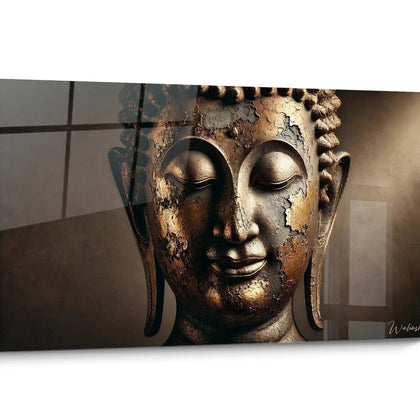 Golden Wall Art for Apartment24
artworks
Golden Wall Art for Apartment24
artworks
-
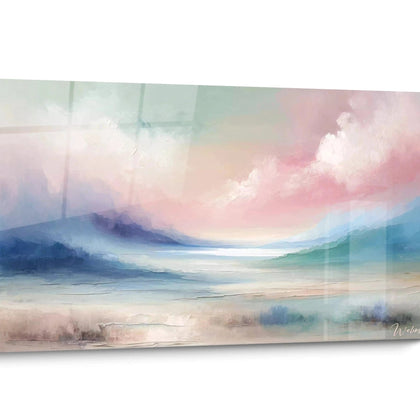 Wall Art for Zen Apartment24
artworks
Wall Art for Zen Apartment24
artworks
-
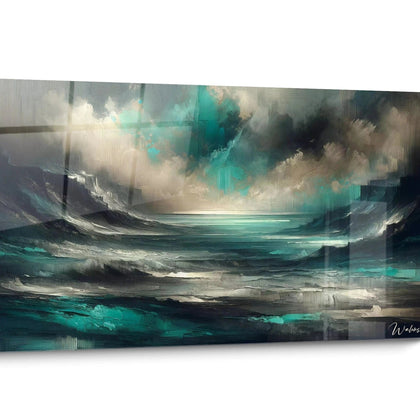 Expressionist Wall Art for Apartments16
artworks
Expressionist Wall Art for Apartments16
artworks
-
 Blue Apartment Wall Art24
artworks
Blue Apartment Wall Art24
artworks
-
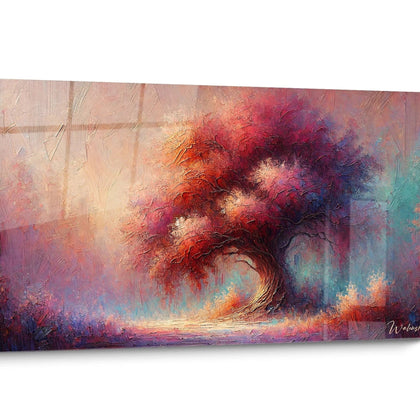 Red Wall Art for Apartment24
artworks
Red Wall Art for Apartment24
artworks
-
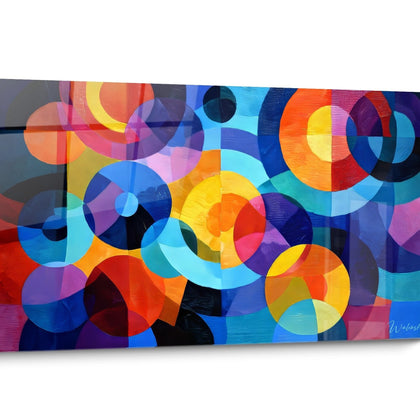 Orange Wall Art for Apartment24
artworks
Orange Wall Art for Apartment24
artworks
-
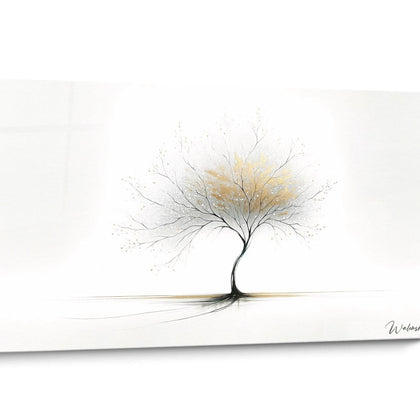 Minimalist Apartment Wall Art12
artworks
Minimalist Apartment Wall Art12
artworks
-
 Music Wall Art for Apartment11
artworks
Music Wall Art for Apartment11
artworks
-
 Wall Art for Apartment Tree9
artworks
Wall Art for Apartment Tree9
artworks
-
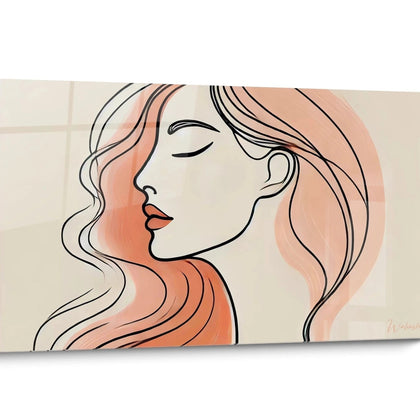 Portrait Wall Art for Apartment9
artworks
Portrait Wall Art for Apartment9
artworks
-
 Fluid Apartment Wall Art12
artworks
Fluid Apartment Wall Art12
artworks
-
 Futuristic Apartment Wall Art7
artworks
Futuristic Apartment Wall Art7
artworks
-
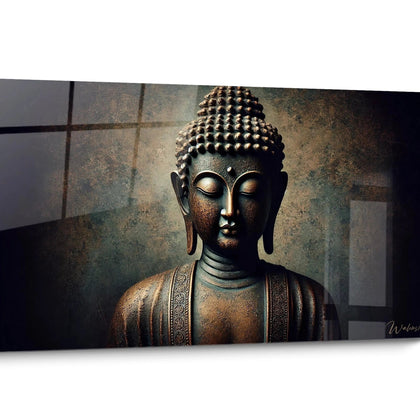 Buddha Wall Art for Apartment6
artworks
Buddha Wall Art for Apartment6
artworks
-
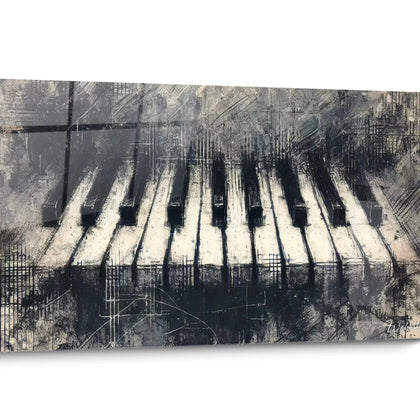 Black and White Wall Art for Apartment5
artworks
Black and White Wall Art for Apartment5
artworks
-
 Floral Wall Art for Apartment4
artworks
Floral Wall Art for Apartment4
artworks


In the same family
Also explore the theme Places
-
 Kitchen150
artworks
Kitchen150
artworks
-
 Coworking737
artworks
Coworking737
artworks
-
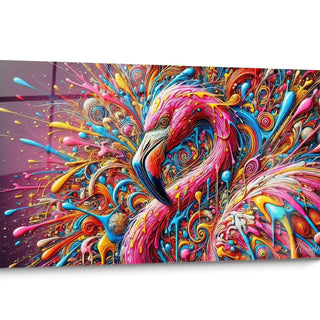 Professional Space737
artworks
Professional Space737
artworks
-
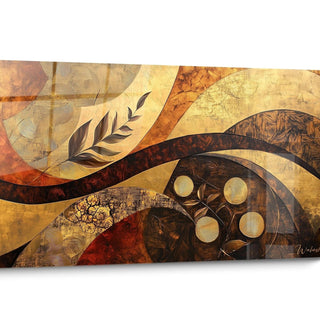 For Airbnb5368
artworks
For Airbnb5368
artworks
-
 For Library820
artworks
For Library820
artworks
-
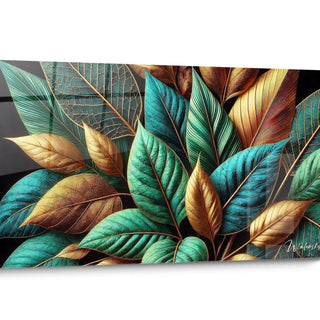 For Office737
artworks
For Office737
artworks
-
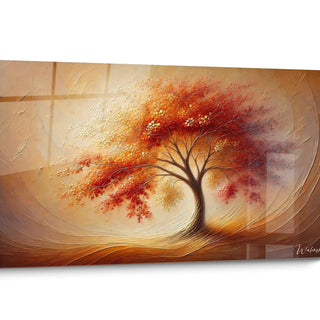 For Bedroom433
artworks
For Bedroom433
artworks
-
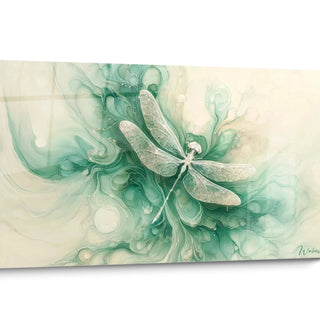 For Hallways899
artworks
For Hallways899
artworks
-
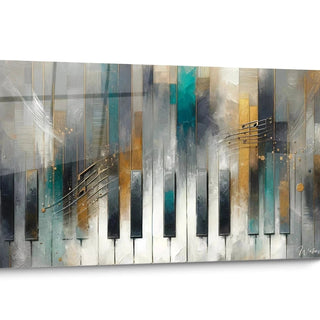 For Schools874
artworks
For Schools874
artworks
-
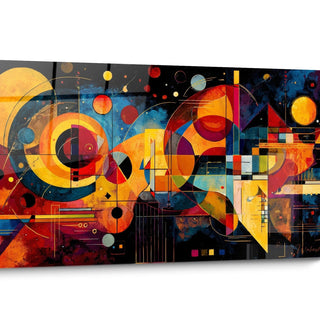 For Senior Residences899
artworks
For Senior Residences899
artworks
-
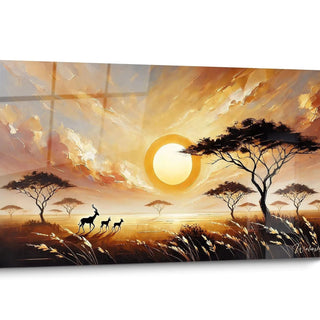 For Waiting Rooms372
artworks
For Waiting Rooms372
artworks
-
 For Bathroom85
artworks
For Bathroom85
artworks
-
 For Yoga Room213
artworks
For Yoga Room213
artworks
-
 For Living Rooms634
artworks
For Living Rooms634
artworks
-
 For spas449
artworks
For spas449
artworks
-
 Meeting Room737
artworks
Meeting Room737
artworks


All about Wall art for apartment
- Wall Art Presentation for apartment
- Wall Art for apartment - Spatial Optimization
- Wall Art for apartment - Mounting and Constraints
- Wall Art for apartment - Visual Arrangement
Discover our collection of wall artworks specially designed to enhance your apartment. Formats adapted to urban spaces, mounting solutions for all wall types, and maximum visual impact even in compact rooms.
Creating the illusion of space with large-format wall art for your apartment
Choosing wall art for your apartment becomes a strategic exercise when every square meter counts. Contrary to popular belief, opting for a large-scale artwork in a restricted space is a judicious architectural decision that radically transforms the volumetric perception of your urban home.
How does an imposing format visually push back the limits of your apartment?
Installing wall art for your apartment with generous dimensions creates a focal point that diverts attention from actual spatial constraints. This technique, employed by interior designers, exploits a simple psychological principle: our brain unconsciously evaluates available space based on the size of elements occupying it. An imposing mural composition implicitly suggests that a home has the capacity to accommodate masterpieces, thereby mentally redefining its proportions.
Compact urban residences benefit particularly from this bold approach. A panoramic format deployed on a main wall generates a fictitious depth that visually enlarges the room. This strategy works remarkably well in studios and elongated apartments where the objective is to counterbalance the corridor effect. The eye naturally traverses the composition rather than hitting nearby walls.
Which strategic zones should you prioritize in your urban home?
The placement of wall art for your apartment determines its spatial effectiveness. The wall opposite the entrance is the privileged location as it immediately captures the eye and establishes perspective. This first impression directly influences the sensation of amplitude felt. Hallways, often overlooked, transform into dynamic galleries when a major artwork is deployed there laterally.
Open living spaces require a different approach. Positioning a monumental artistic creation between the living room and kitchen areas creates subtle visual separation without physical partitioning. This implicit delimitation structures the space while preserving fluidity. In cramped bedrooms, the wall above the bed becomes ideal terrain for expression that draws the eye upward and lightens ground-level density.
The impact of color palettes on space perception
The palette of wall art for your apartment directly influences space sensation. Deep and saturated hues create a virtual opening in the wall, like a window to elsewhere. Dark compositions generate three-dimensional depth that makes walls recede. Conversely, light tonalities diffuse luminosity and amplify the natural reflective surfaces of the home.
Marked contrasts play a specific architectural role in apartments. A contrasted artwork attracts the eye as a priority, becoming the spatial reference point. The brain mentally organizes space around this dominant visual marker. Horizontal gradients optically extend room width, while vertical progressions accentuate ceiling height, particularly precious in recent constructions with compressed volumes.
Adapting visual themes to urban light constraints
Limited natural light characterizes many urban apartments, particularly those facing courtyards or oriented north. Wall art for your apartment should compensate for these light deficits rather than worsen them. Representations evoking external luminosity—sun-bathed landscapes, maritime scenes, clear skies—psychologically infuse a sensation of clarity into naturally dark spaces.
Homes benefiting from zenith lighting or large openings tolerate more absorbing compositions. Natural light abundance allows integration of creations with rich tonalities without risking darkened atmosphere. This flexibility authorizes bolder artistic choices. Seasonal sunlight variations should also influence your selection: an artwork that illuminates an interior in winter may appear dull under direct summer sun.
Managing proportions in multifunctional spaces
Contemporary apartments frequently integrate multiple functions within a single volume. Wall art for your apartment becomes a visual zoning tool. In a studio, positioning a major composition behind the sofa clearly establishes the relaxation zone, distinct from sleeping or work areas. This implicit segmentation structures daily life without erecting constraining physical barriers.
Through-rooms require a symmetrical approach. Two compositions of equivalent dimensions, placed on opposite walls, create a visual dialogue that unifies space while suggesting its versatility. This technique proves particularly effective in living-dining areas where the objective is to differentiate uses without fragmenting volume. The eye naturally circulates from one artwork to another, generating spatial dynamics.
Anticipating the evolution of your interior arrangement
Installing large-scale wall art for your apartment engages your decoration long-term. Urban homes nonetheless undergo frequent rearrangements, linked to personal or professional evolution. Favoring timeless themes guarantees lasting relevance despite furniture modifications. Abstract compositions or natural representations transcend decorative trends without ever appearing obsolete.
Mental modularity matters as much as physical flexibility. Your perception of an artwork evolves with time and changes in surrounding furniture. A creation sufficiently rich in details constantly rediscovers itself, revealing new aspects depending on your state of mind and surrounding arrangement. This interpretive depth justifies investment in a masterpiece that enduringly accompanies your urban residential journey.
Mounting solutions and technical considerations for your apartment wall art
Acquiring wall art for your apartment involves navigating between structural constraints and local rental regulations. Urban walls present specific characteristics that differ radically from individual home surfaces. Understanding these technical particularities guarantees secure and lasting installation of your monumental artworks.
Identify your wall type before any installation
Apartment construction generally combines several wall types. Load-bearing walls, in reinforced concrete or solid brick, offer exceptional strength capable of supporting significant loads. These structures accommodate voluminous wall art for apartments without difficulty with appropriate fixtures. The sound test remains the most accessible method: a dense, dull sound indicates a load-bearing wall.
Lightweight partitions, omnipresent in recent homes, require a different approach. Composed of plasterboard on metal framing, they limit weight capacity. These internal separations, recognizable by their hollow resonance, require specific plugs such as molly anchors or toggle bolts. For imposing formats, locating internal metal studs allows direct fixing to the hidden load-bearing structure.
What solutions exist for rentals and their restrictions?
Apartment rentals frequently impose contractual constraints limiting wall perforations. This common urban reality does not, however, prevent installation of significant-dimension wall art for apartments. Non-drilling mounting systems have evolved considerably, now offering surprising load capacity for monumental compositions.
High-strength adhesive hooks now support multiple kilograms when applied correctly. Surface preparation becomes crucial: thoroughly degrease the wall with household alcohol, let dry completely, then firmly apply supports respecting recommended setting time. Combining multiple anchor points distributes load and secures the assembly. Hanging rails, fixed at the top of the wall, offer a modular alternative that preserves wall integrity.
Managing sound insulation and neighbor impacts
Apartments inevitably share walls with adjacent homes. This proximity generates specific acoustic considerations when installing wall art for apartments. Drilling vibrations propagate through structures, particularly in recent buildings where separating partitions are sometimes minimal. Planning your work during time slots authorized by the homeowners' association regulations avoids neighborhood conflicts.
Beyond installation, the artwork itself influences interior acoustics. A large rigid surface reflects sound waves, modifying room reverberation. Apartments with bare walls and hard floors often suffer from unpleasant acoustics with pronounced echoes. Paradoxically, adding voluminous wall elements can slightly absorb certain frequencies and attenuate this effect. Compositions mounted on thick supports create a micro-cavity that partially traps waves.
Anticipating moves and installation reversibility
Mobility characterizes urban apartment living. Statistics show an average tenant changes homes every three to five years. This reality should influence your approach to installing wall art for apartments. Easily removable mounting systems preserve both your artistic investment and your rental security deposit.
Modular suspension kits enable rapid transfer of your artworks from one home to another. These standardized systems function on different wall types and adapt to various configurations. Photographing and documenting your initial installation facilitates reproduction in your next apartment. Preserving original packaging protects your acquisition during urban moves, often chaotic. Monumental formats require logistical planning: verifying stairwell and elevator dimensions before purchase prevents costly disappointments.
Prevent deterioration from residual humidity
Apartments, particularly ground-floor or top-floor units, experience significant hygrometric variations. Moisture rise affects lower levels, while converted attics experience notable thermal amplitudes. Wall art for apartments installed in these sensitive areas requires specific precautions to guarantee preservation.
Maintaining minimum three-centimeter distance between wall and artwork creates preventive air circulation. This natural ventilation prevents condensation stagnation, a phenomenon particularly problematic on cold exterior walls in winter. Recent apartments, often over-insulated and under-ventilated, paradoxically generate more interior humidity. Monitor the lower corners of your composition for early warning signs of hygrometric problems: appearance of stains or deformations signals excess humidity requiring intervention.
Optimize security against urban seismic risks
Though rarely discussed, seismic activity concerns many urban zones, even with moderate magnitudes. Tremors, though imperceptible daily, subject wall fixtures to cumulative stress. Large-format wall art for apartments represents significant mass whose fall would present real danger. Zones classified in moderate to high seismic risk justify additional precautions.
Anti-drop systems secure your monumental artistic installations. These simple devices, often neglected, prevent artwork lifting during vibrations. A simple steel wire strung between two fixing points and passing behind the frame usually suffices. This passive safety costs almost nothing but preserves your investment and protects occupants. Higher-floor apartments experience amplified seismic movements, further justifying this elementary foresight.
Visual strategies and spatial composition for your apartment wall art
Arranging wall art for your apartment transcends simple decoration to become an architectural decision. In constrained urban volumes, each visual element influences overall environmental perception. Mastering spatial composition principles transforms an artistic acquisition into a genuine residential optimization tool.
Creating illusory perspectives in linear spaces
Enfilade apartments, a configuration typical of Haussmann buildings and older urban constructions, present specific challenges. Strategically positioned wall art for apartments breaks the visual monotony of these room successions. Installing a major artwork along the circulation axis forces the eye to project into depth rather than perceive lateral narrowness. This visual appeal technique generates spatial dynamics.
Panoramic formats particularly accentuate this effect in hallways and passageways. An extended horizontal composition suggests fictitious lateral opening, psychologically compensating for actual spatial compression. Representations featuring horizontal vanishing lines amplify this extension sensation. Aerial views, seascapes, or panoramic urban scenes excel in this role, evoking distant horizons contrasting with home intimacy.
Balancing proportions between furniture and mural compositions
An apartment's visual harmony results from balance between horizontal and vertical volumes. Large-dimension wall art for apartments must dialogue with surrounding furniture without excessively dominating or being eclipsed. The empirical two-thirds rule functions effectively: artwork width should represent approximately two-thirds of the main furniture's length positioned below.
This proportion creates natural visual coherence. A 200-centimeter sofa ideally accompanies a composition 130 to 140 centimeters wide. Excessive discrepancies generate disturbing imbalance: overly small artwork appears awkwardly floating, while excessive format visually crushes furniture. In contemporary apartments with low, minimalist furniture, this rule slightly relaxes, authorizing bolder proportions compensating for modern elements' limited height.
Which viewing angles to prioritize based on room usage?
Each apartment space is experienced from specific positions determining optimal wall art installation for apartments. Living rooms are contemplated primarily seated, implying slightly lower hanging height than museum standards. Positioning the artwork's center at 140 centimeters from the floor, rather than conventional 150-160, significantly improves visual comfort from seating.
Bedrooms are primarily appreciated from lying positions. This unique perspective radically modifies installation rules. The artwork above the bed should be admirable without requiring uncomfortable cervical twisting. An approximately 15-degree angle from the rest position guarantees natural contemplation. Kitchens and work areas, where primarily standing movement occurs, tolerate higher installations. This adaptation to actual usage maximizes your artistic investment's impact.
Exploiting light reflection to amplify space
Interaction between lighting and surfaces massively influences an apartment's spatial perception. Wall art for apartments with appropriate finishes actively participates in light diffusion. Semi-matte surfaces capture and redistribute natural light without generating glare, subtly illuminating their immediate environment. This soft reflection visually widens restricted spaces.
East-oriented homes benefit from direct morning light that may create unwanted reflections on overly bright surfaces. Favoring absorbent finishes in these configurations preserves artwork legibility throughout the day. Conversely, dark or north-facing apartments gain from compositions with luminous tonalities and slightly reflective finishes maximizing minimal light diffusion. This strategy actively compensates for natural sunlight deficits characteristic of dense urban centers.
Adapting your selection to seasonal rotations
Urban apartments undergo marked atmospheric transformations between seasons. Winter atmosphere, with short days and prolonged artificial lighting, differs radically from summer ambiance bathed in natural light. Wall art for apartments can fit into a seasonal rotation strategy renewing your home's ambiance without costly furniture investments.
Alternating between warm-toned compositions with deep hues in autumn-winter and luminous creations with light tones in spring-summer maintains coherence with variable light conditions. This dynamic approach transforms your interior seasonally, combating visual monotony in restricted spaces. Modular mounting systems facilitate these rotations without wall damage. This practice, common among informed collectors, adapts perfectly to urban home constraints.
Composing with electrical constraints and visible outlets
Apartments, particularly older ones, often feature unsightly visible electrical installations. Outlets, switches, and technical boxes scatter walls, complicating harmonious arrangement. Judiciously dimensioned wall art for apartments can strategically hide these unaesthetic elements without obstructing functional accessibility. This dual aesthetic and practical function optimizes limited surface utilization.
Precisely measuring technical obstacle locations before purchase guarantees successful integration. Vertical formats particularly lend themselves to concealing mid-height outlets, particularly visible and disturbing elements. Maintaining five-centimeter safety margins around electrical equipment respects standards and facilitates potential interventions. This meticulous planning transforms technical constraints into strategic placement opportunities.
Frequently asked questions about apartment wall art
Does large format really suit small apartments?
Absolutely, and it's actually recommended. Contrary to common belief, an imposing format creates a focal point diverting attention from spatial constraints and generating volume impression. Multiple small formats visually fragment space and accentuate its cramped nature.
How do I protect my investment when moving apartments?
Systematically preserve original packaging offering optimal protection. Photograph the artwork before removal to document its condition. Prioritize vertical transportation and absolutely avoid stacking. For monumental formats, engaging specialized art transport companies guarantees maximum security.
Can I install voluminous artwork in a rented apartment?
Yes, thanks to numerous no-drilling mounting solutions now available. High-strength adhesive systems, suspension rails, and specialized hooks allow hanging imposing formats without compromising move-out condition. Nevertheless, verify your lease for any specific clauses. To complete your research, don't hesitate to browse all our artwork collections to discover compositions with varied themes.
What maintenance preserves my acquisition in urban environments?
Urban environments generate more dust and particles. Monthly dusting with a dry microfiber cloth generally suffices. Avoid chemical products that may alter finishes. Monitor corners and edges particularly where humidity could accumulate, especially near exterior walls.
L'art qui suscite l'envie
Maison belge d'art mural grand format
14 jourspour changer d'avis*
Protection Walenskyincluse
Fabriquéen Italie
FormatXXL
Kit de fixationtoujours fourni
* Hors tableaux personnalisés et tailles personnalisées


