


Abstract Geometric Wall Art
The Abstract Geometric Wall Art embodies the perfect balance between mathematical rigor and contemporary artistic expression. This collection celebrates the beauty of pure forms, clean lines, and structured compositions that transform every space into a modern gallery. Each abstract geometric artwork reveals a harmonious dialogue between vibrant colors and visual architecture. Ideal for minimalist or design-focused interiors, our selection of modern abstract geometric wall paintings brings structure and dynamism to your décor.
 Concentric Colored Circles Painting - Geometric Harmony - Abstract Paint Style Edition233,90 €
 Vertical colored stripes painting - Chromatic rhythm - geometric abstract edition213,90 €
 Translucent Colored Circles Wall Art - Geometric Symphony - geometric abstract edition233,90 €
 Orange and Blue Circles Painting - Geometric Harmony - geometric abstract edition233,90 €
 Concentric Colored Circles Painting - Geometric Harmony - geometric abstract edition233,90 €
 Overlapping Colored Circles Painting - Geometric Harmony - geometric abstract edition232,90 €
 Dynamic Abstract Geometric Painting - Explosion of Colors - geometric abstract edition232,90 €
 Overlapping Colored Circles Painting - Chromatic Harmony - geometric abstract edition232,90 €
 Abstract Geometric Wall Art - Mondrian Jackson Pollock Fusion - Abstract Geometric Edition232,90 €
 Multicolor concentric circles wall art - Geometric symphony - abstract geometric edition213,90 €
 Colorful geometric circles wall art - Modern harmony - abstract geometric edition213,90 €
 Colored geometric abstraction table - Mondrian fusion - geometric abstract edition213,90 €
 Orange circle and geometric shapes table - Abstract symphony - geometric abstract edition213,90 €
 Overlapping colored circles wall art - Geometric symphony - abstract geometric edition233,90 €
 Abstract colored composition wall art - Geometric symphony - abstract geometric edition233,90 €
 Transparent colored circles wall art - Chromatic symphony - abstract geometric edition233,90 €
 Colorful Abstract Painting - Dynamic Composition - Abstract Geometric Edition233,90 €
 Dynamic Abstract Composition Painting - Geometric Chaos - Abstract Geometric Edition233,90 €
 Overlapping Colored Circles Painting - Geometric Harmony - Abstract Geometric Edition233,90 €
 Silent Arch Teal Wall Art - geometric abstract edition233,90 €
 Luminous Oxidized Abyss Wall Art - abstract geometric edition233,90 €
 Meditative Arches Incandescent Orange Wall Art - Abstract Geometric Edition213,90 €
 Geometric Crossroads Vibrant Artwork - Cubism Abstract Edition213,90 €
 Timeless Mechanical Complexity Canvas - Abstract Geometric Edition233,90 €
Explore further
In Abstract Geometric Wall Art
-
 Abstract Wall Art2686
artworks
Abstract Wall Art2686
artworks
-
 Fluid Abstract Wall Art19
artworks
Fluid Abstract Wall Art19
artworks
-
 Golden Abstract Wall Art24
artworks
Golden Abstract Wall Art24
artworks
-
 Abstract Expressionist Painting17
artworks
Abstract Expressionist Painting17
artworks
-
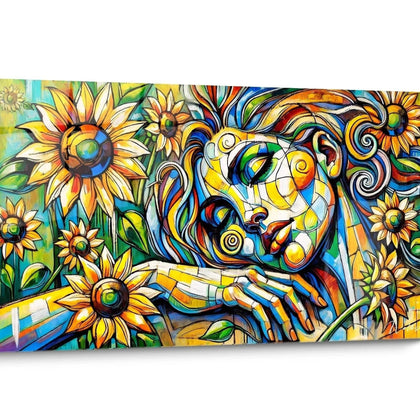 Abstract Face Wall Art15
artworks
Abstract Face Wall Art15
artworks
-
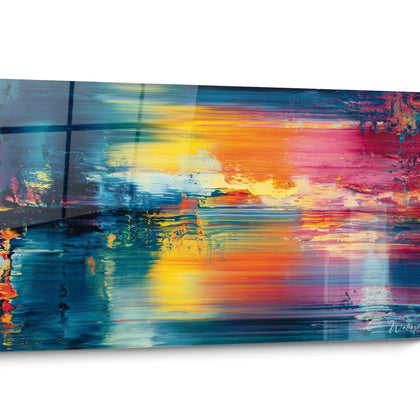 Colorful Abstract Painting24
artworks
Colorful Abstract Painting24
artworks
-
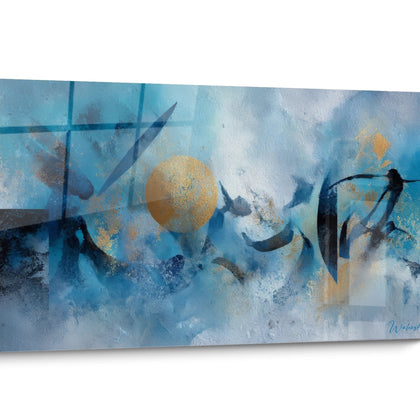 Abstract Calligraphy Wall Art17
artworks
Abstract Calligraphy Wall Art17
artworks
-
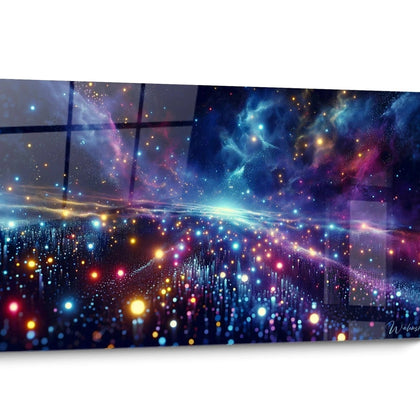 Blue Abstract Wall Art24
artworks
Blue Abstract Wall Art24
artworks
-
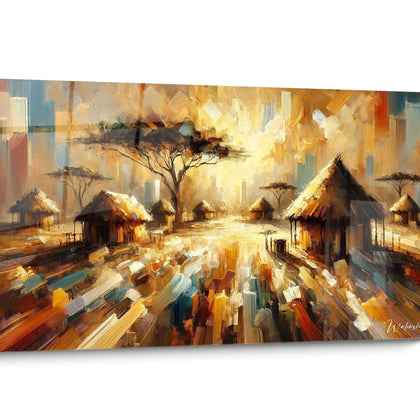 Abstract Orange Canvas23
artworks
Abstract Orange Canvas23
artworks
-
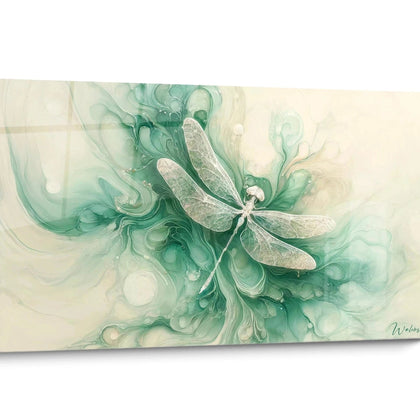 Abstract Spiral Wall Art7
artworks
Abstract Spiral Wall Art7
artworks
-
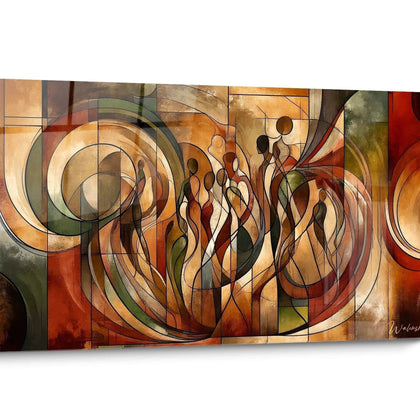 Abstract Dancer Wall Art9
artworks
Abstract Dancer Wall Art9
artworks
-
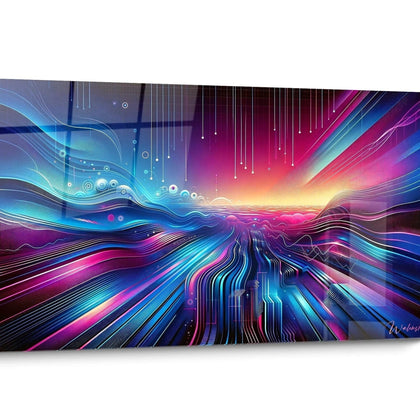 Futuristic Abstract Wall Art12
artworks
Futuristic Abstract Wall Art12
artworks
-
 Abstract Landscape Painting7
artworks
Abstract Landscape Painting7
artworks
-
 Abstract Cosmos Wall Art10
artworks
Abstract Cosmos Wall Art10
artworks
-
 Abstract Ocean Canvas9
artworks
Abstract Ocean Canvas9
artworks
-
 Abstract Crystal Wall Art7
artworks
Abstract Crystal Wall Art7
artworks
-
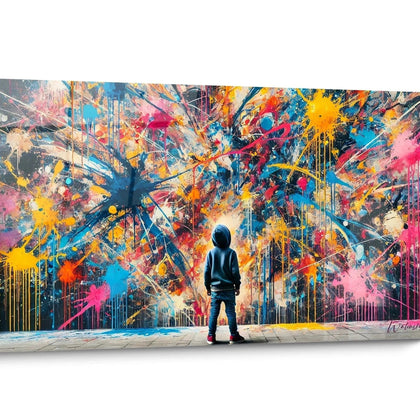 Abstract Painting Wall Art8
artworks
Abstract Painting Wall Art8
artworks
-
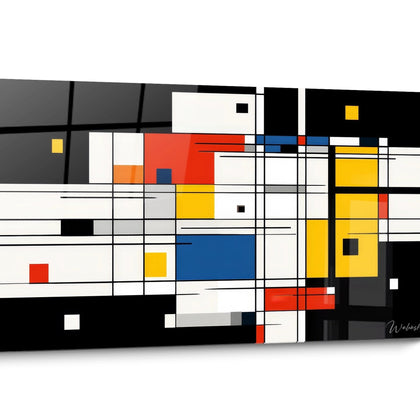 Abstract Mondrian Painting6
artworks
Abstract Mondrian Painting6
artworks
-
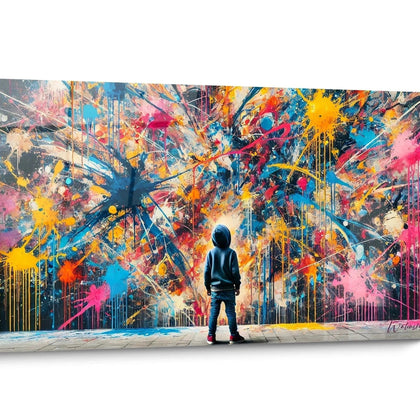 Abstract Pop Art Canvas5
artworks
Abstract Pop Art Canvas5
artworks
-
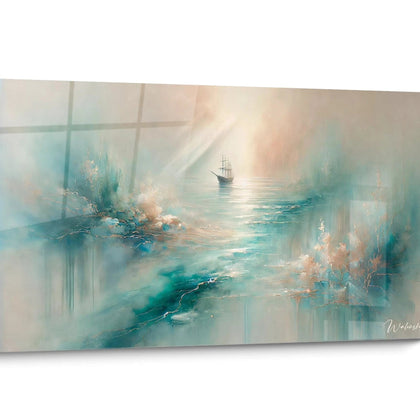 Abstract Boat Painting5
artworks
Abstract Boat Painting5
artworks
All about Abstract Geometric Wall Art
- Abstract Geometric Wall Art Presentation
- Composition & Visual Dynamics
- Architectural Impact
- Perception & Depth
Abstract geometric wall art represents the perfect alliance between mathematical rigor and contemporary artistic expression. This form of wall art transforms spaces through its angular structures, overlapping polygons, and compositions centered on calculated symmetry. Each geometric creation offers a stratified visual reading where forms respond to one another according to principles of repetition, alignment, and spatial tension. These large-format artworks immediately capture attention through their architectural character and ability to dialogue with the structural lines of modern interiors. Geometric abstraction invites intellectual contemplation, where the eye explores relationships between surfaces, angles, and chromatic intersections.
Geometric Structure as Modern Visual Language
An abstract geometric artwork relies on primary forms – triangles, squares, hexagons, diamonds – to construct a refined visual narrative. Unlike organic compositions, these artworks exploit the precision of straight lines and calculated angles to create controlled visual tensions. Overlapping polygons generate zones of depth where the eye distinguishes multiple superimposed planes, offering a progressive reading experience.
How do polygonal forms create spatial dynamics?
The arrangement of geometric forms in an abstract composition creates directed movement vectors. Triangles pointing in opposite directions establish contradictory forces that keep the eye in constant circulation. Inclined parallelograms suggest isometric perspective without recourse to figurative representation. This formal architecture transforms the flat surface into perceived three-dimensional space, particularly effective on formats exceeding 120x80 cm.
Chromatic relationships in angular abstraction
The palette of an abstract geometric artwork often obeys stark contrasts: charcoal black against pure white, cobalt blue opposed to copper orange, or monochromatic ranges declined by tonal values. These chromatic choices reinforce structural reading by clearly delineating each geometric zone. Sharp color transitions amplify the architectural effect, while subtle gradations within a single form add tactile sophistication to formal rigor.
The influence of constructivism and contemporary suprematism
This aesthetic draws its roots from avant-garde movements of the twentieth century, reinterpreted for current interiors. Compositions favor asymmetrical balance, where unequal visual masses compensate through strategic positioning. A large dark rectangle in the lower left finds its counterbalance in several small colored squares in the upper right, creating dynamic stability that enlivens the wall space without overwhelming it.
Architectural Integration of Abstract Geometric Forms
In contemporary spaces with refined lines, an abstract geometric artwork functions as a structural element in its own right. Its formal language dialogues directly with architectural angles – exposed beams, protruding partitions, linear staircases. Monumental formats transform a wall into a visual manifesto where the geometry of the built frame extends into pictorial geometry.
Which spaces particularly benefit from geometric abstraction?
Double-height entry halls, open mezzanines, and professional reception spaces constitute ideal locations. The verticality of an ascending diamond composition accentuates the perception of ceiling height, while a horizontal structure in parallel bands visually widens a narrow hallway. Executive offices adopt these artworks to project an image of strategic rigor and structured thinking.
Modulating spatial perception through angles
A large-format geometric artwork modifies the volumetric reading of a room. Diagonals oriented upward create a sensation of vertical expansion, ideal for compensating for standard ceilings. Compositions centered on concentric forms – nested squares, segmented circles – generate a magnetic focal point that mentally restructures the space around it. This ability to redefine perceived proportions proves particularly valuable in industrial lofts with irregular volumes.
Complementarity with other angular decorative elements
Geometric artwork naturally associates with sharp-lined furniture: asymmetric shelving, trapezoidal coffee tables, polyhedral lighting fixtures. This formal coherence creates a unified decorative language without falling into redundancy, provided you vary scales and orientations. An abstract sailboat artwork with fluid forms can offer an interesting counterpoint in an adjacent room to maintain stylistic diversity between connected spaces.
Perceptual Depth in Stratified Geometric Compositions
Abstract geometric art exploits optical illusions inherent in form intersections and chromatic contrasts to suggest multiple depths. Without resorting to classical perspective, these artworks create visual strata where certain forms seem to advance while others recede, generating ambiguous spatiality that captures attention durably.
Superposition techniques in angular abstraction
The partial transparency of a blue triangle crossing a red square creates a violet zone that signals their overlap. These colored intersections function as depth markers, hierarchically establishing the planes of the composition. Extra-wide formats amplify this effect by allowing more complex superposition sequences, where four or five layers of forms interact simultaneously on a 150x100 cm surface.
How does geometric abstraction stimulate spatial cognition?
The human brain instinctively seeks to resolve spatial ambiguities in geometric compositions. A pentagonal form can be read either as concave or convex depending on lighting and observation angle. This perceptual instability keeps the artwork alive, offering renewed readings with each viewing. Creative workspaces and design agencies favor these artworks for their ability to stimulate three-dimensional thinking.
Visual rhythms in repetitive geometric patterns
Some compositions exploit modular repetition – the same form declined in varying sizes, arranged according to mathematical progression. These rhythmic sequences create kinetic movement where the eye naturally follows the evolution of scales. Progressions in logarithmic spirals or grids deformed according to inverted perspective rules transform the static surface into a visual energy field.
Balance between order and rupture in abstract geometry
The most captivating compositions integrate elements of disruption within their ordered structure: a slightly offset angle, an unexpected color breaking a chromatic sequence, an incomplete form at the frame's edge. These controlled anomalies prevent reading from becoming mechanical, introducing narrative tension into pure abstraction. This dialectic between rule and exception resonates particularly in minimalist interiors where each detail carries amplified semantic weight.
Why choose an abstract geometric artwork for a contemporary interior?
These artworks offer intellectual sophistication that transcends fleeting decorative trends. Their universal formal language crosses cultures and epochs, guaranteeing lasting aesthetic relevance. Abstract geometry naturally integrates into modern architectural codes while bringing the artistic dimension necessary to humanize spaces with austere lines.
Which dimensions maximize the impact of geometric artwork?
Formats exceeding 100x70 cm allow compositional complexity to express itself fully. On smaller surfaces, details are lost and relationships between forms become illegible. Very large formats of 180x120 cm transform the artwork into an immersive architectural element, ideal for open living spaces where the wall becomes the principal actor in the ambiance.
How does an abstract geometric artwork evolve with light variations?
The angles and edges of geometric forms cast micro-shadows that shift with the sun's path, creating subtle variations throughout the day. Matte surfaces absorb light differently from satin areas, progressively revealing the composition's stratification. Directional artificial lighting amplifies these effects by accentuating certain lines at the expense of others, thus offering multiple possible readings of the same artwork.


