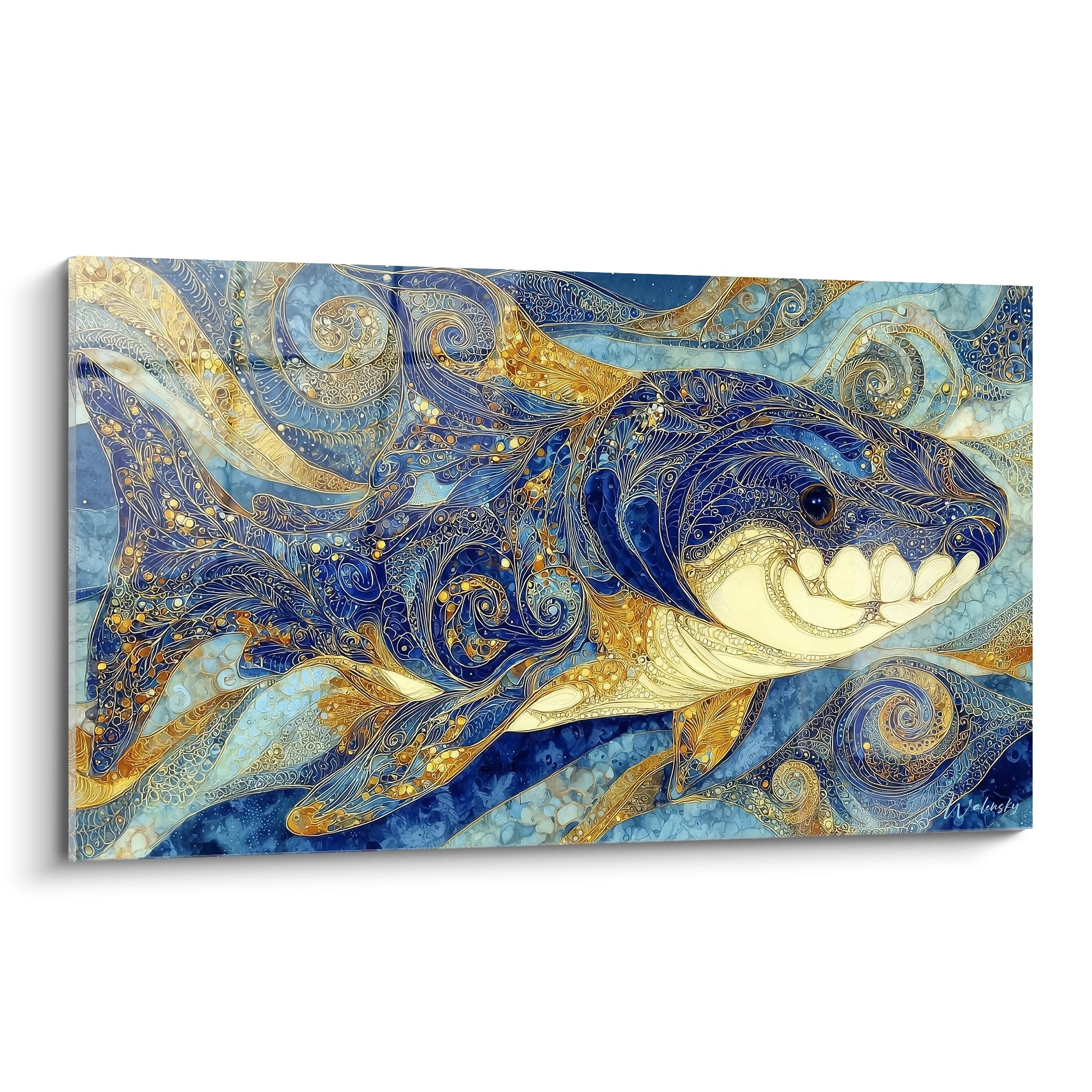
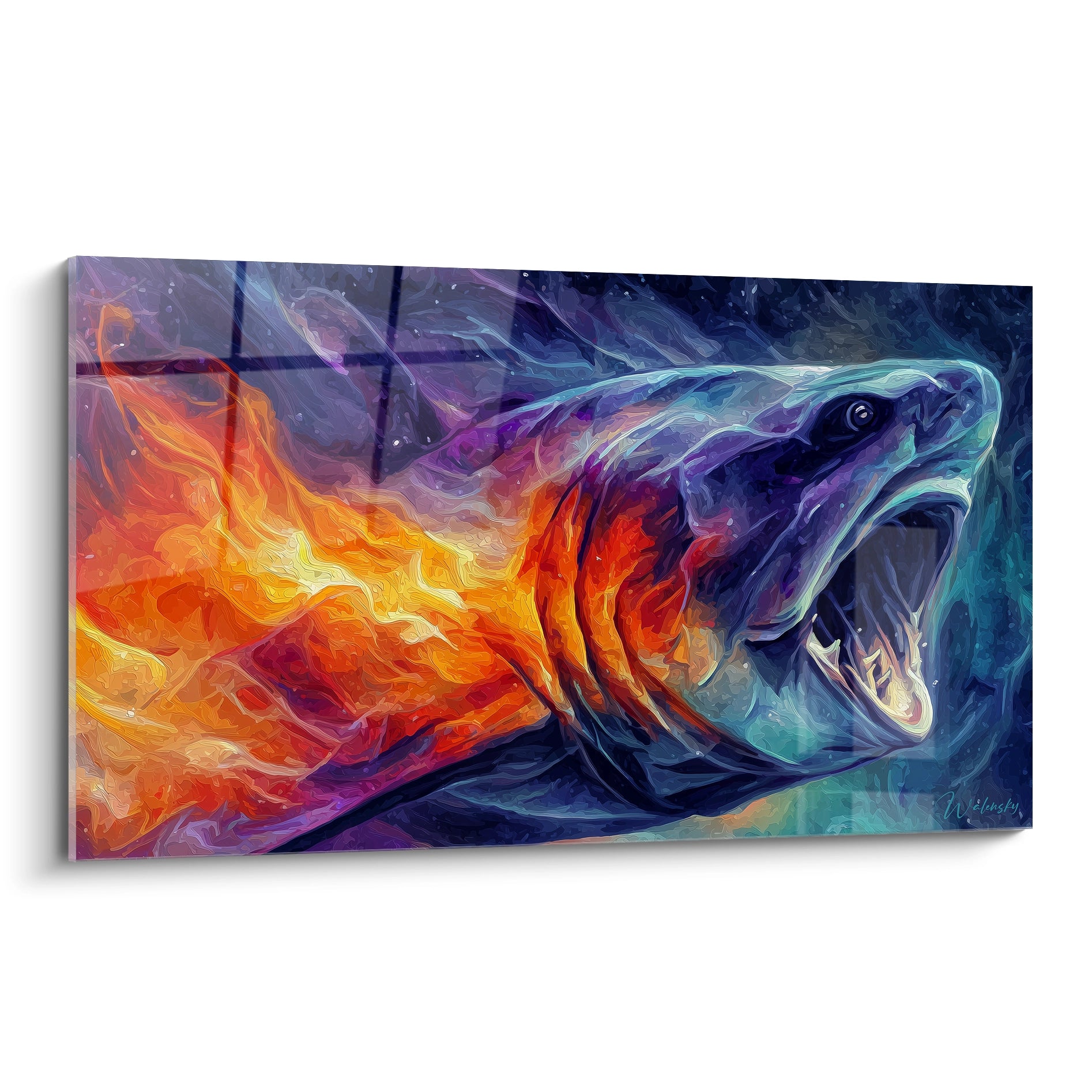
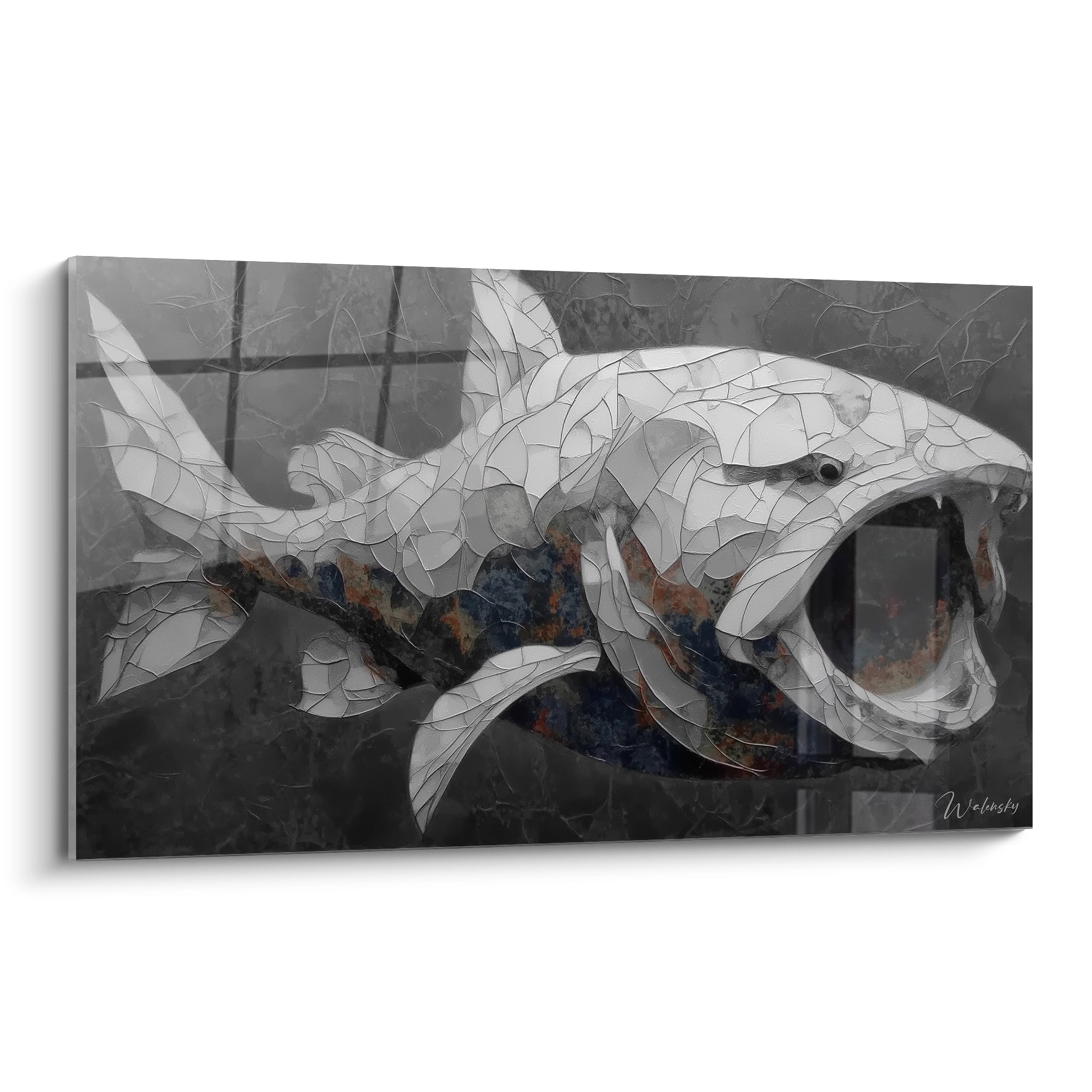
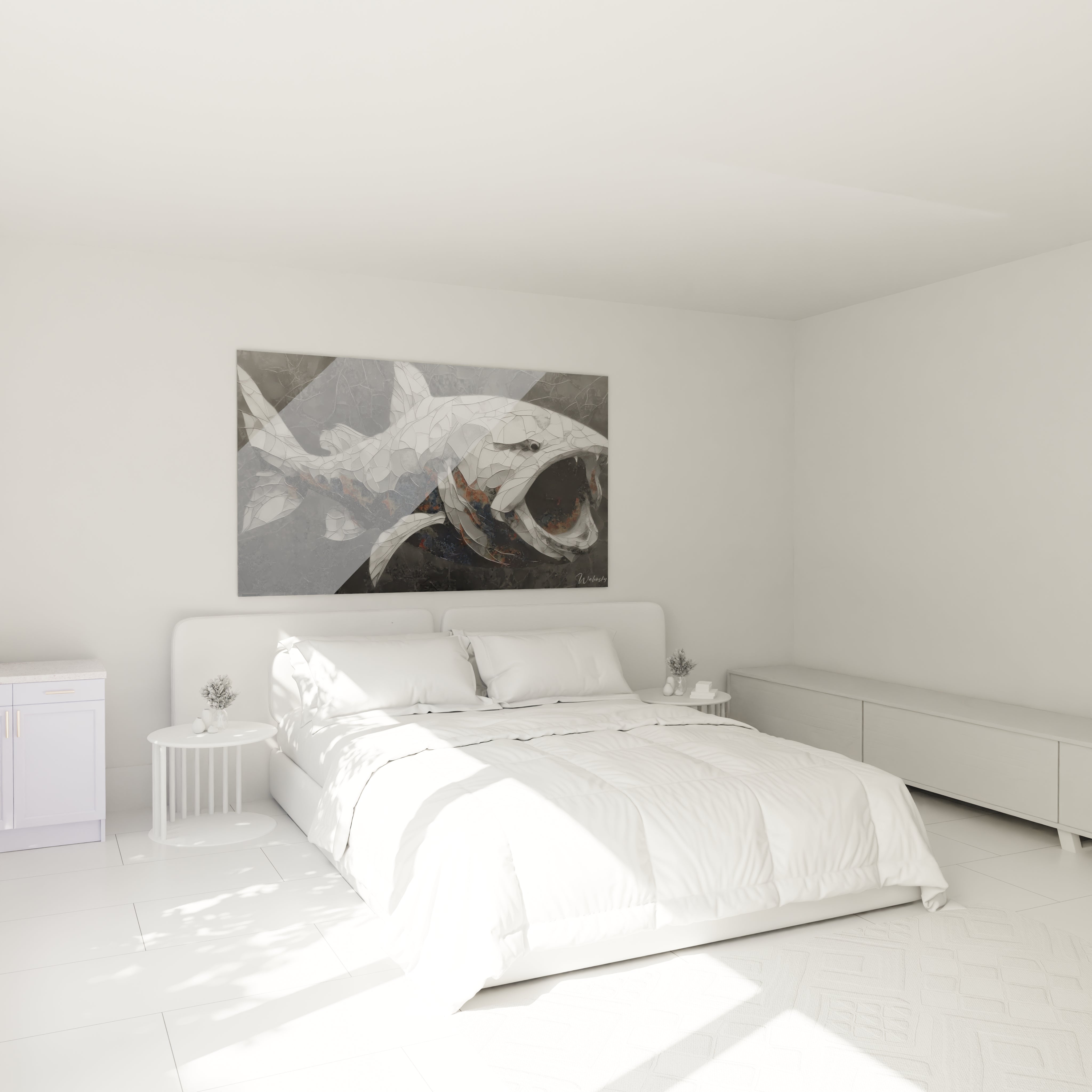
Discover the fascinating universe of prehistoric marine creatures with our collection of wall murals depicting ancient lands. Dive into the Devonian era and let yourself be captivated by the terrifying majesty of Dunkleosteus, this armored fish that dominated the oceans 360 million years ago.
The Intimidating Presence of Dunkleosteus Terrelli in Your Living Space
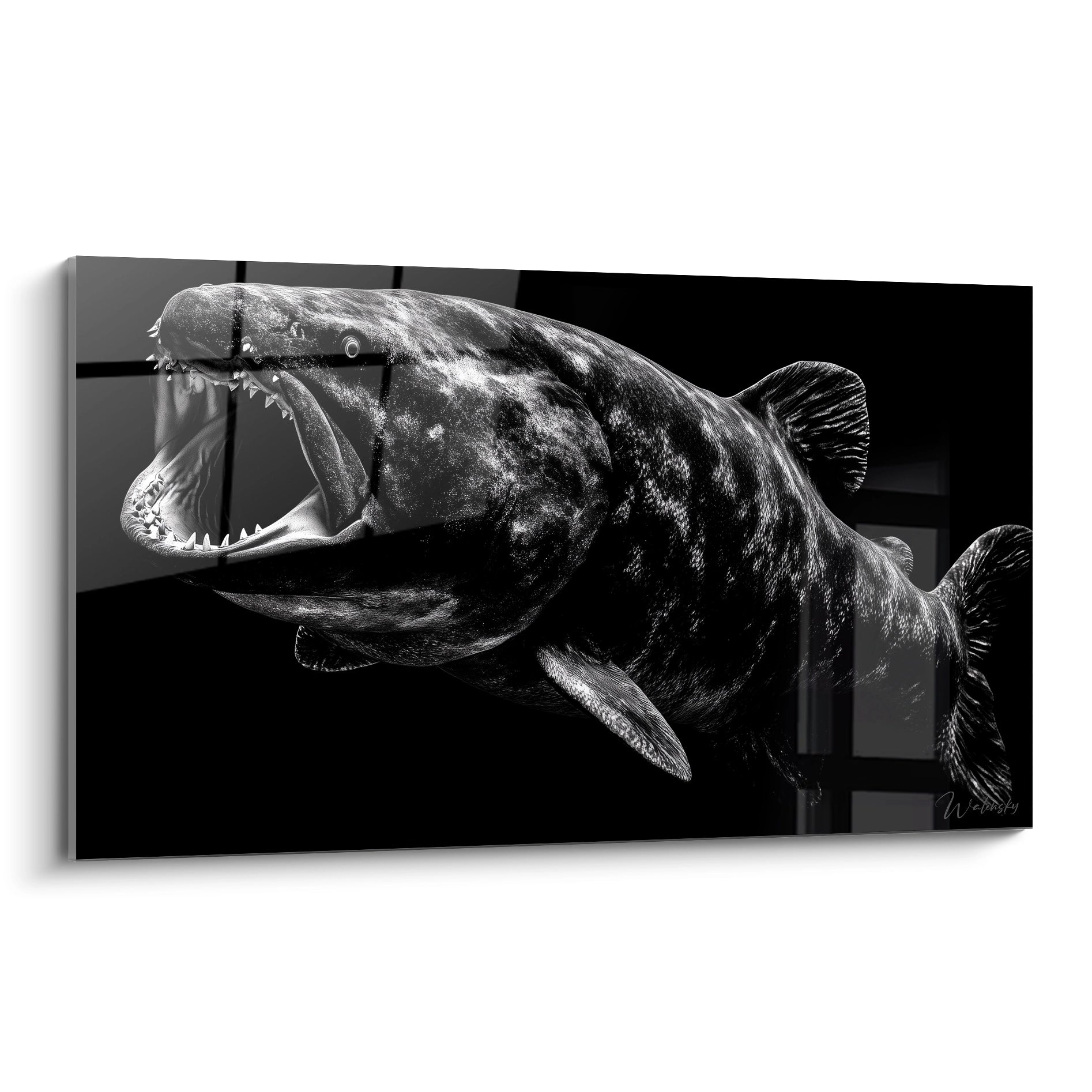
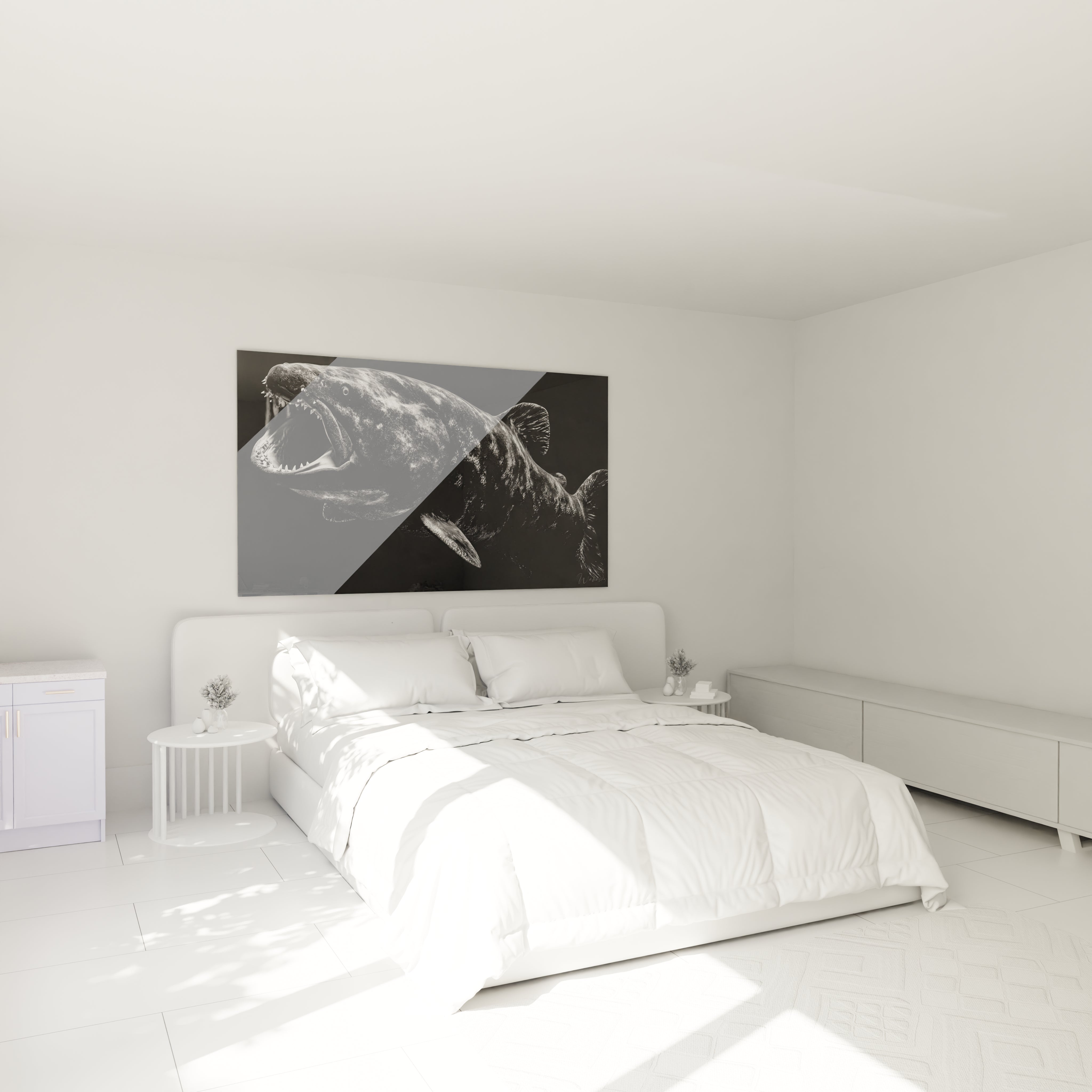
A Dunkleosteus artwork radically transforms a room's atmosphere by infusing it with primitive and fascinating energy. This wall mural depicting the most formidable marine predator of the Devonian immediately captures attention through its brutal aesthetics and instantly recognizable silhouette. The massive bony jaws, segmented dermal armor, and piercing gaze of this giant placoderm create a visual presence that leaves no one indifferent.
How Does the Prehistoric Armored Fish Redefine the Ambiance of a Professional Office?
In a work environment, the wall mural depicting Dunkleosteus terrelli conveys values of determination and strategic power. This predator of Devonian seas, capable of crushing armored prey with an estimated bite force of 5000 newtons, symbolizes efficiency and dominance in its ecosystem. Professionals in competitive sectors particularly appreciate this imagery that evokes evolutionary persistence and supreme adaptation.
The generous dimensions of these wall reproductions accentuate the intimidating impact of the fossilized specimen. A large-format visualization of the armored placoderm allows you to distinguish every anatomical detail: articulated bony plates of the skull, hydrodynamic morphology despite the armor, and that gaping maw capable of opening to 60 degrees. This visual precision transforms the room into a veritable paleontological cabinet of curiosities.
Paleozoic Aesthetics for Bold Reception Spaces
Entrance halls and reception areas benefit extraordinarily from installing a representation of the Devonian armored fish. The first impression generated by this creature of ancient depths immediately establishes a distinctive and memorable tone. Visitors find themselves facing visual testimony to 360 million years of evolutionary history, an instant conversation about the origins of complex marine life.
The natural color palette of Dunkleosteus terrelli - metallic gray tones, oxidized steel shades, blue reflections of armored scales - harmonizes remarkably with minimalist contemporary architectures. These geological and aquatic tones create visual bridges between modern design and prehistoric heritage, never falling into misplaced eccentricity.
Why Do Collectors of Marine Paleofauna Favor This Species?
The Dunkleosteus artwork occupies a particular position in the universe of paleontological decoration. Unlike representations of megalodons or later mosasaurs, this placoderm embodies the apex of armored fish before their massive extinction. Discerning enthusiasts specifically seek out this creature for its iconic status in the history of marine predation.
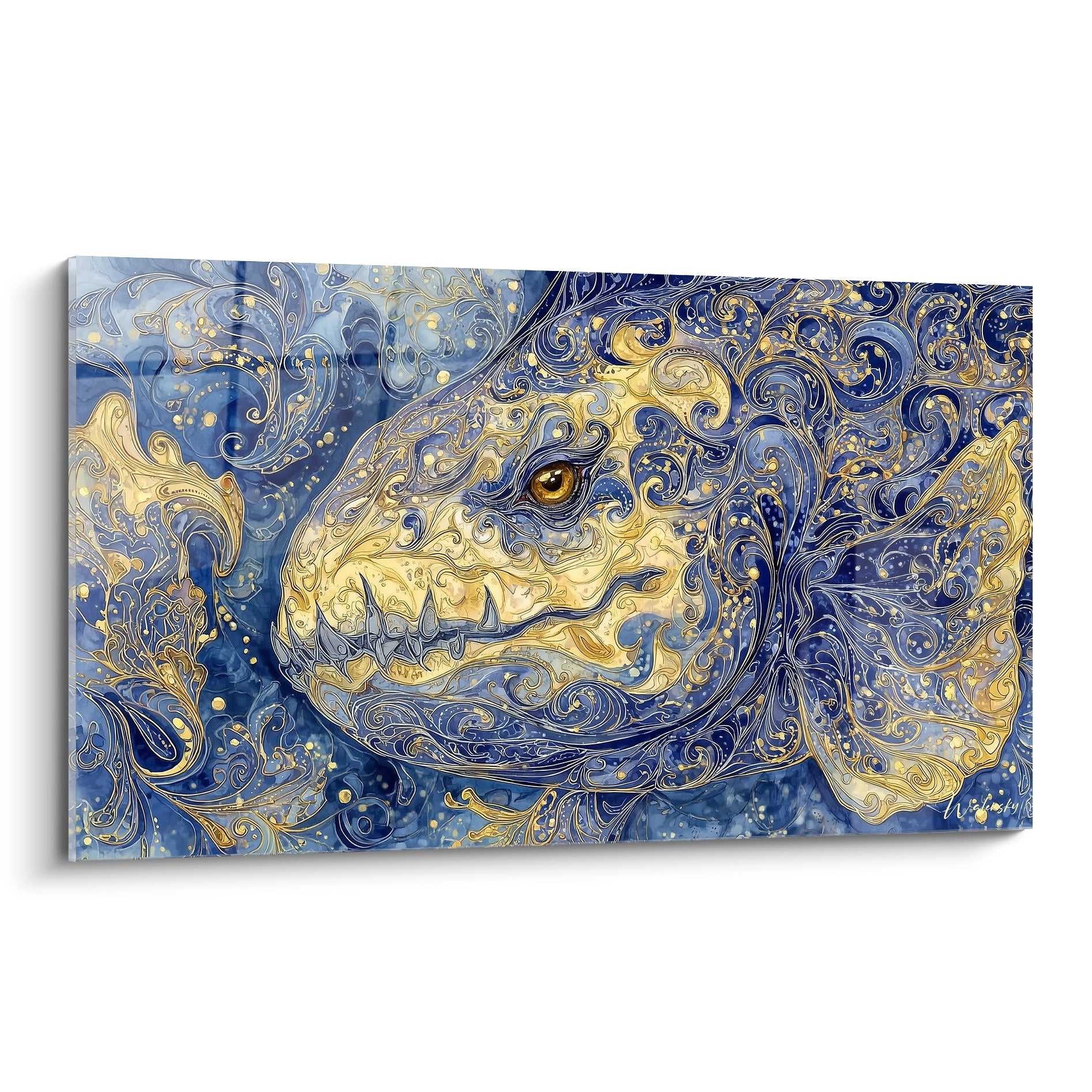
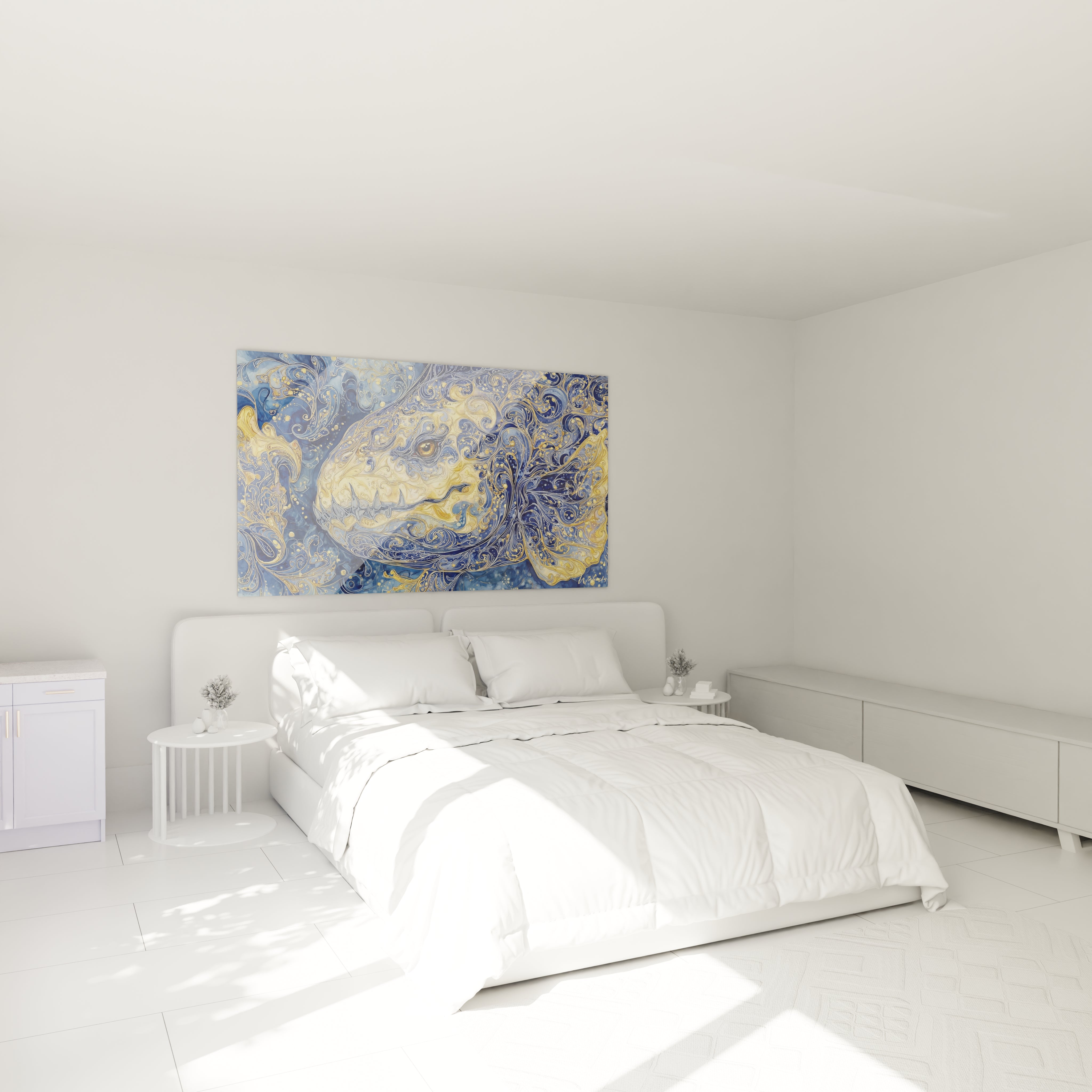
The artistic variations available explore different behavioral facets of the Devonian predator: attack positions with deployed jaws, movement through murky waters, territorial confrontations between rival specimens. Each interpretation reveals distinct aspects of the ecology of this apex predator that dominated Paleozoic upper reefs.
The Psychological Impact of Representations of Fossilized Marine Superpredators
The wall presence of a Dunkleosteus terrelli generates a complex emotional response mixing fascination and instinctive respect. This phenomenon is explained by our unconscious recognition of aquatic predator archetypes, amplified by the vertiginous temporal dimension separating our era from the Devonian Age. Neuroscience suggests that these images simultaneously activate our vigilance and intellectual curiosity centers.
In spaces dedicated to strategic thinking or creativity, this visualization of the ancestral armored fish stimulates a form of evolutionary thinking. Observing this creature that perfected underwater hunting over 50 million years encourages a long-term perspective on adaptation and innovation. Brainstorming sessions conducted before this representation benefit from particular energy, tinged with prehistoric determination.
Optimal Wall Configurations for Giant Placoderm Representations
Installing a Dunkleosteus artwork requires reflection on viewing angle and appreciation distance. These creatures reached 6 to 10 meters in length, and their large-format representation requires sufficient distance to grasp the entirety of their imposing morphology. Open spaces such as industrial lofts or spacious conference rooms fully reveal the dramatic potential of these reproductions.
Lighting staging plays a determining role in the enhancement of the placoderm's dermal textures. Indirect raking lighting sculpts the reliefs of the bony armor, creating shadow plays that accentuate perceived three-dimensionality. This museographic technique transforms simple decoration into a true immersive installation evoking the dark depths of the Devonian seas.
- Immediate evocation of the predatory power of primitive oceans
- Strong symbolism for competitive professional environments
- Spontaneous conversation around marine paleontology
- Metallic aesthetics compatible with contemporary designs
- Educational dimension on the evolution of aquatic vertebrates
The Scientific and Paleontological Dimension of Dunkleosteus Artwork
Acquiring a wall mural representation of Dunkleosteus terrelli transcends simple decorative acquisition to engage in permanent scientific popularization. This armored fish of the upper Devonian constitutes a fundamental milestone in understanding the evolution of jawed vertebrates. Every anatomical detail visible on these faithful reproductions tells a fascinating evolutionary story, from the biomechanical innovation of dermal plates to the predatory revolution of guillotine-like jaws.
Why Does Dunkleosteus Fascinate Contemporary Paleontologists So Much?
Specialists in marine paleofauna grant special status to Dunkleosteus artwork because it immortalizes the culmination of an evolutionary lineage now extinct. Placoderms represented radical evolutionary experimentation: fish entirely armored with heads and thoraxes protected by articulated bony plates. This unique anatomical architecture has never been reproduced since their disappearance during the terminal Devonian extinction.
Recent paleontological discoveries in Ohio's Cleveland Shale formations revolutionized our understanding of this superpredator's masticatory biomechanics. Finite element biomechanical analyses demonstrate that its jaws could exert pressure equivalent to the most powerful current crocodiles while opening at a lightning speed of 50 milliseconds. These scientific data considerably enrich appreciation of these wall representations.
Comparative Anatomy Revealed by Precise Artistic Representations
A scientifically documented wall reproduction of Dunkleosteus terrelli allows observation of anatomical characteristics that no other fish group possesses. The presence of sharp bony blades replacing traditional teeth constitutes a unique adaptation in vertebrate history. These self-sharpening structures through continuous friction represented considerable evolutionary advantage for crushing giant arthropods and other armored fish populating Devonian seas.
The cranio-corporeal proportions of the giant placoderm particularly intrigue morphologists: a massive head representing nearly one-third of total length, housing exceptionally developed adductor musculature. This anatomical configuration, perfectly visible in lateral profile representations, explains the absolute ecological dominance of this species in its biotope. The body's rear section, poorly fossilized due to its cartilaginous nature, is the subject of reconstructions based on related placoderms.
How Do These Wall Reproductions Contribute to Paleontological Education?
In higher education institutions specialized in Earth sciences and evolutionary biology, the Dunkleosteus artwork regularly serves as pedagogical support for illustrating concepts of mass extinction and adaptive radiation. The sudden disappearance of placoderms at the end of the Devonian, 358 million years ago, freed ecological niches immediately colonized by sharks and bony fish, which still dominate today.
Private museum collections incorporating representations of this prehistoric creature create informal learning opportunities for visitors of all ages. Children develop intuitive understanding of geological timescales by visualizing a creature that lived 160 million years before the first dinosaurs. This vertiginous temporal contextualization stimulates scientific imagination and curiosity for natural sciences.
Devonian Paleoecological Reconstructions in Wall Art
Contextualized representations of Dunkleosteus terrelli in its original environment offer a temporal window onto the coral reefs of the Paleozoic middle. These Devonian marine ecosystems presented extraordinary biodiversity with organisms now completely extinct: giant trilobites, diverse brachiopods, arborescent crinoids, and varied placoderms. Visualizing the armored superpredator hunting among these extinct life forms provides a meditative experience on the impermanence of biological empires.
Specialist marine paleoart artists rely on the most recent scientific publications to guarantee reconstruction accuracy. The proposed coloration schemes, though hypothetical in the absence of fossilized soft tissues, are inspired by behavioral ecology principles: counter-shading for vertical camouflage, disruptive tones to break silhouette, warning zones around the mouth. This scientific rigor transforms each reproduction into a reliable paleontological document.
Systematic Collection of Iconic Placoderms
Passionate paleontology enthusiasts frequently develop thematic collections of wall mural representations covering different families of armored fish. Alongside the Dunkleosteus artwork, one finds reproductions of Bothriolepis (small benthic placoderm), Coccosteus (intermediate form), or Titanichthys (giant filter-feeding placoderm). This comparative approach allows appreciation of the extraordinary morphological diversity of this extinct group and the different evolutionary strategies explored.
The wall arrangement of these different species according to their size or phylogenetic position creates a true personal exhibition on vertebrate evolution. The imposing dimensions available for Dunkleosteus representations naturally grant it the role of centerpiece, around which more modest specimens are organized. This educational scenography transforms a domestic space into a mini natural history museum.
- Pedagogical support for understanding the evolution of jawed vertebrates
- Anatomical precision based on latest paleontological discoveries
- Temporal window onto Devonian marine ecosystems
- Illustration of mass extinction and adaptive radiation concepts
- Foundation for thematic collections on diverse placoderms
The Atmosphere of Devonian Abysses Recreated by Dunkleosteus Artwork
Installing a wall mural representation of Dunkleosteus terrelli is inviting into your space a unique ambiance borrowed from the marine depths of the Paleozoic era. This creature evolved in murky waters laden with sediment, where limited visibility favored predators equipped with developed vibration detection. The particular atmosphere conveyed by these reproductions blends abyssal mystery, primitive power, and savage beauty of ancestral oceans, creating a profoundly immersive decorative experience.
How to Recreate Authentic Devonian Ambiance in a Modern Space?
Integrating a Dunkleosteus artwork into a contemporary environment requires reflection on overall atmospheric coherence. Interior designers specializing in paleontological themes recommend accompanying this centerpiece with elements evoking prehistoric marine depths: raw mineral textures recalling Devonian sediments, color palettes inspired by fossil-bearing shales, furniture with organic lines evoking ancient coral formations.
Twilight lighting ambiances particularly magnify representations of this deep-water predator. Variable intensity lighting mimicking luminosity variations according to marine depth creates dynamic visual experience. As light progressively diminishes, the Dunkleosteus seems to emerge from aquatic darkness, reactivating primordial emotions linked to encounters with great marine predators.
What Emotional Experience Does Prolonged Contemplation of the Armored Fish Provide?
Meditation before a large-format representation of Dunkleosteus terrelli induces a particular contemplative state, characterized by simultaneity of apparently contradictory emotions. Fascination with the biomechanical perfection of this prehistoric killing machine coexists with respect tinged with apprehension before its destructive power. This emotional duality recalls feelings experienced when observing great felines or sharks: aesthetic admiration tempered by consciousness of their lethality.
Creative visualization practitioners sometimes use these images of fossilized marine superpredators as meditation supports on resilience and adaptation. Dunkleosteus dominated oceans for nearly 50 million years, surviving multiple environmental perturbations before disappearing during the Devonian-Carboniferous mass extinction. This evolutionary longevity inspires philosophical perspective on persistence facing adversities.
Integration into Spaces Dedicated to Naturalist Collections
Contemporary cabinets of curiosities find in the Dunkleosteus artwork a structuring piece around which to organize their entire collection. This creature immediately establishes paleontological theme and geological timescale, allowing coherent integration of authentic fossils, specimen casts, Devonian minerals, and specialized scientific works. The resulting atmosphere evokes that of early nineteenth-century natural history museums.
Visual associations with other paleontological decorative elements create captivating evolutionary narratives. Juxtaposing a Dunkleosteus representation with that of a giant ammonite or contemporary nautilus visually illustrates continuity and ruptures in marine life history. These visual dialogues between different geological epochs stimulate reflection on very long-term evolutionary processes.
Why Do Aquatic Wellness Spaces Adopt This Prehistoric Iconography?
Thalassotherapy centers, aquatic spas, and balneotherapy spaces increasingly incorporate prehistoric marine fauna representations into their scenography. The Dunkleosteus artwork finds a natural place there, evoking ancestral human connection to oceans. This visual presence reminds that all complex life emerged from primitive seas, creating additional meditative dimension to aquatic relaxation experiences.
The paradoxically soothing aspect of this terrifying predator is explained by its absolute temporal distance. Unlike contemporary sharks that might trigger real phobias, Dunkleosteus belongs to such distant past that it becomes almost mythological. This temporal distance allows appreciation of its functional beauty without activating instinctive defense mechanisms, favoring conscious relaxation state.
Artistic Variations Exploring Different Behavioral Facets
The market for Dunkleosteus terrelli wall mural representations offers diversity of artistic interpretations exploring different moments of this predator's existence. Some reproductions privilege representation in active hunt, jaws agape revealing the interior of sharp bony blades. Others opt for more contemplative approach, showing the armored fish majestically patrolling its territory, all defenses deployed but in surveillance posture rather than immediate aggression.
Representations showing multiple individuals in social interaction are particularly prized by discerning collectors. Although Dunkleosteus gregarious behavior remains speculative lacking direct fossil evidence, fossil concentrations in certain sites suggest possible gatherings during reproduction periods or food abundance. These hypothetical behavioral scenes add captivating narrative dimension to wall reproductions.
FAQ - Frequently Asked Questions about Dunkleosteus Artwork
What is the best room for installing a large-dimension Dunkleosteus artwork?
Spaces with high ceilings and open walls are ideal for these imposing representations. Spacious living rooms, professional offices, personal libraries, and reception halls allow sufficient visual distance to fully appreciate the majesty of the prehistoric armored fish.
Is Dunkleosteus artwork suitable for decoration intended for marine biology enthusiasts?
Absolutely. This representation constitutes a fascinating bridge between paleontology and contemporary marine biology, perfectly illustrating vertebrate aquatic predator evolution. Marine biologists particularly appreciate the educational dimension of these reproductions that contextualize the evolutionary history of current oceans.
How does Dunkleosteus artwork integrate into a collection of prehistoric creature representations?
This Devonian armored fish occupies a unique chronological position, well before Mesozoic marine reptiles such as ichthyosaurs or plesiosaurs. In a complete paleontological collection, it represents the apex predator of primitive seas, perfectly complementing representations of terrestrial fauna or later geological periods.
What complementary decorative elements harmonize with Dunkleosteus artwork?
Authentic fossils of Devonian invertebrates, trilobite reproductions, mineralogical specimens from the Paleozoic era, and bound scientific works on marine paleontology create coherent atmosphere. Raw materials such as slate, shale, or oxidized metals reinforce ancestral geological aesthetics.
- Recreation of authentic prehistoric marine ambiances
- Meditative experience on evolutionary longevity and adaptation
- Centerpiece for naturalist cabinets of curiosities
- Mythological dimension through absolute temporal distance
- Artistic diversity exploring predatory and social behaviors