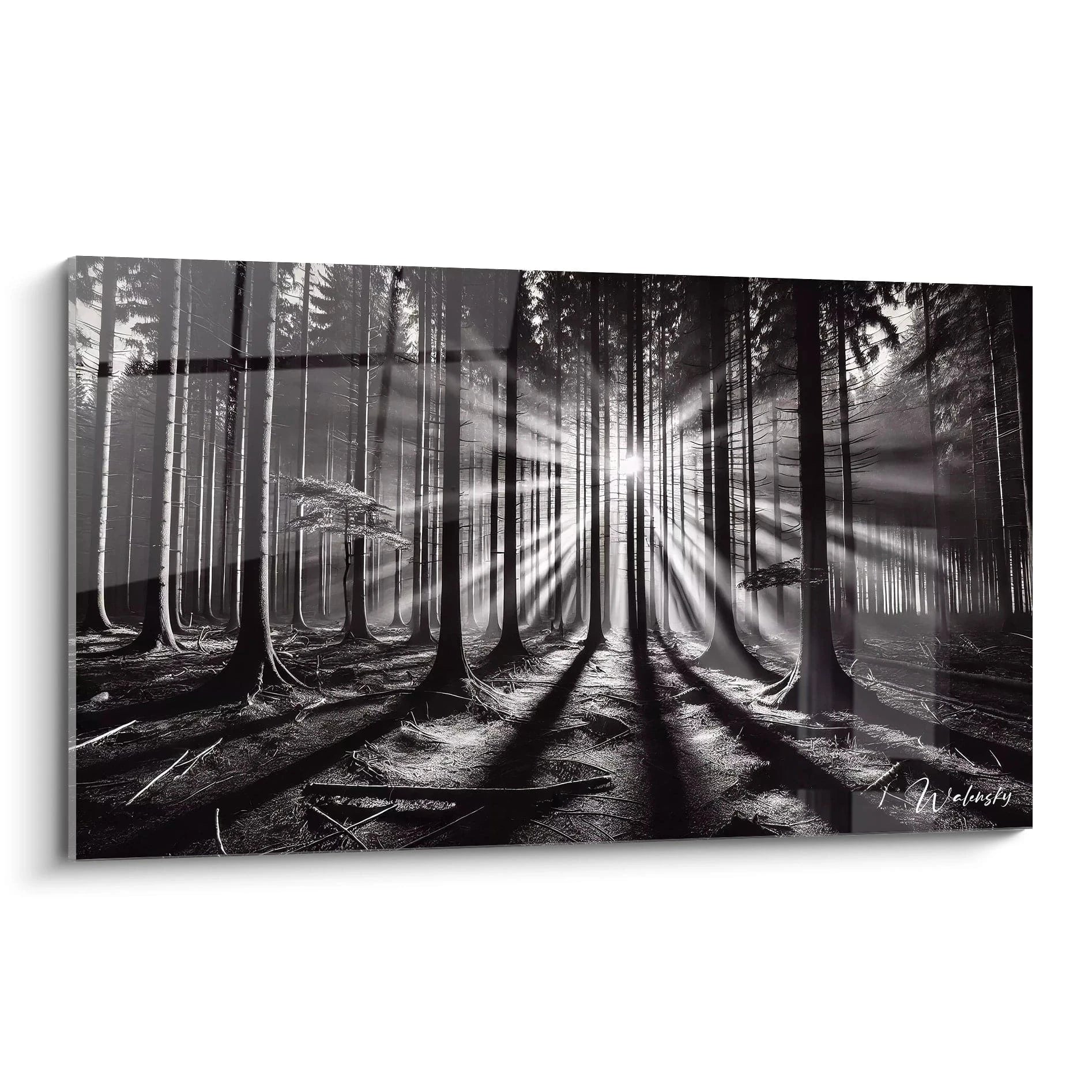
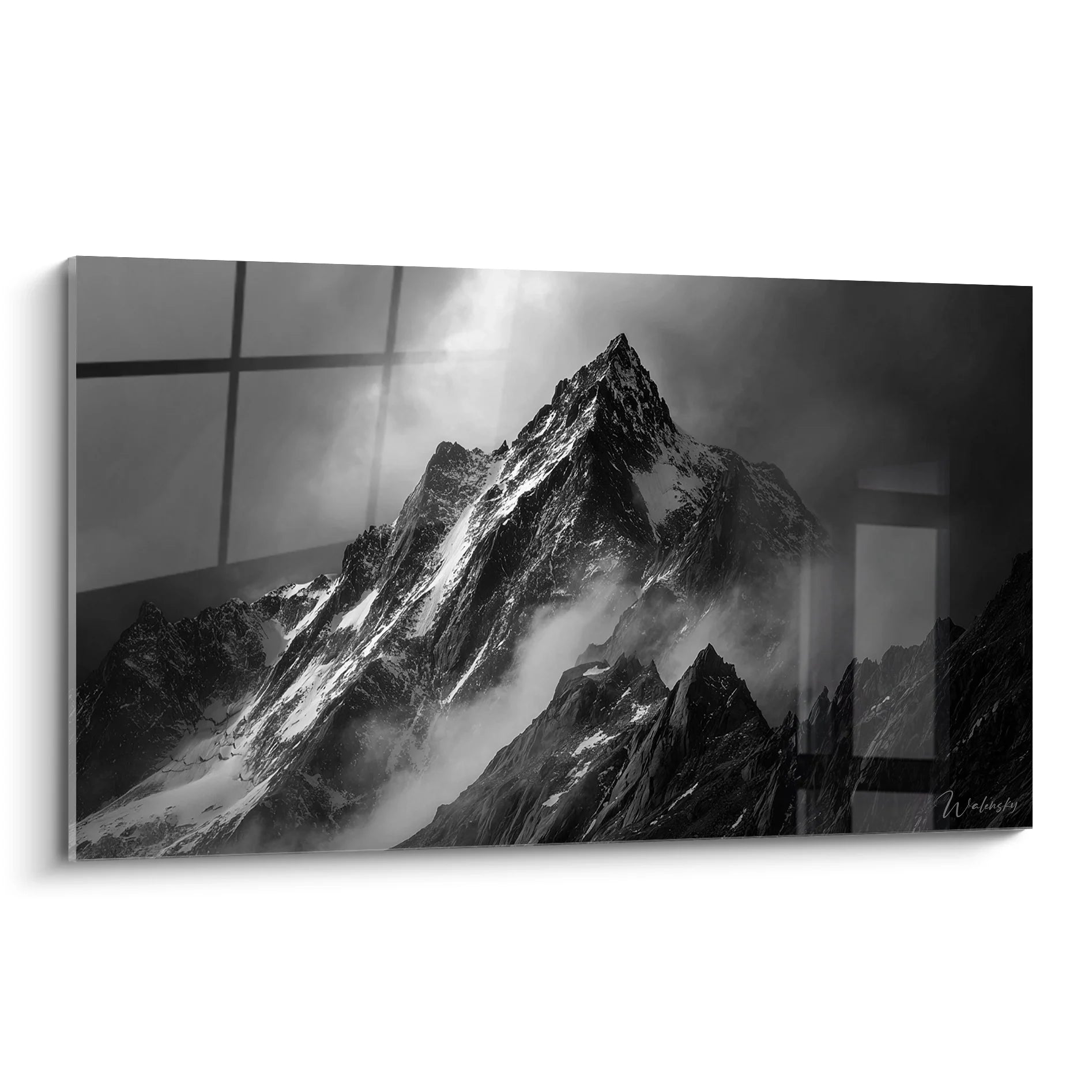
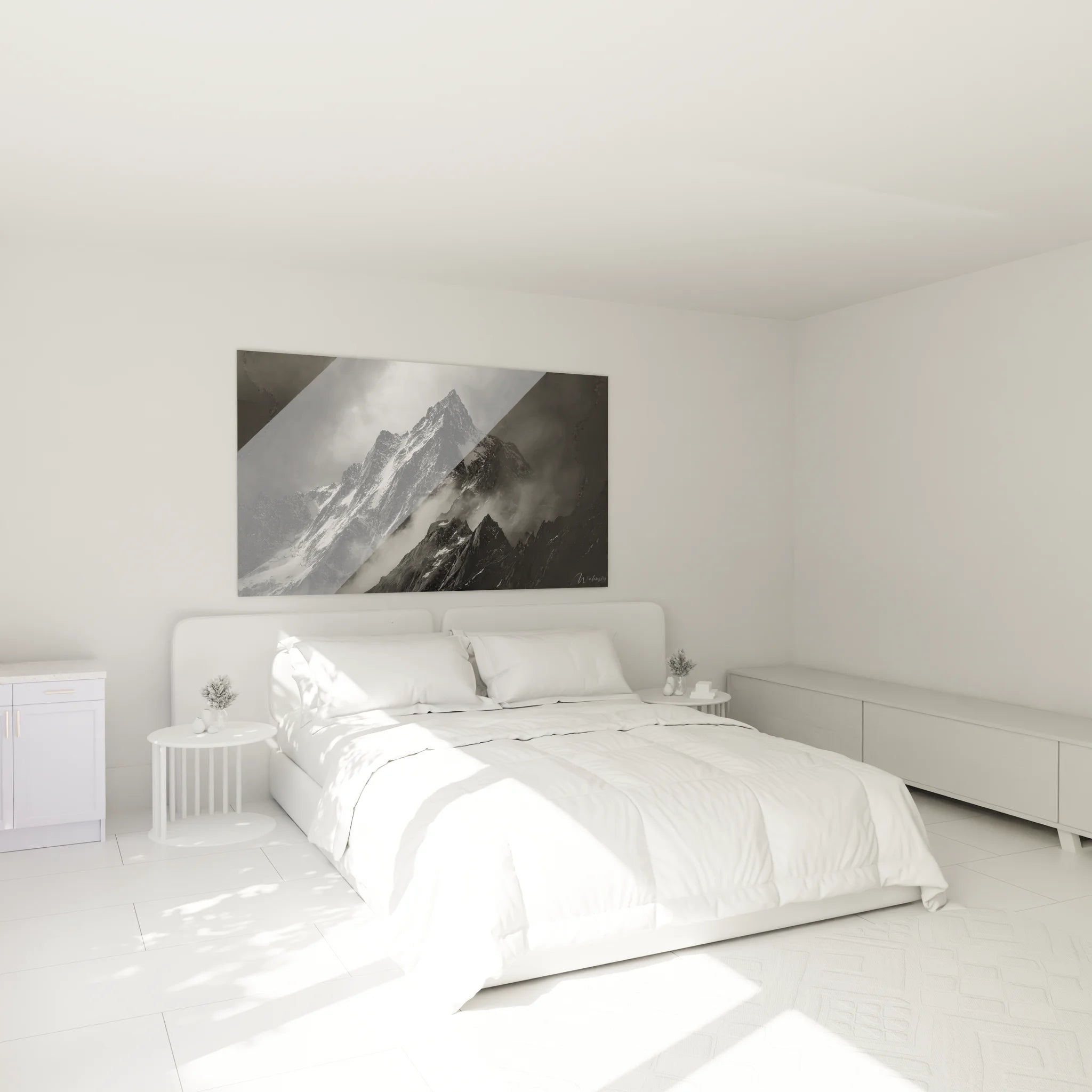
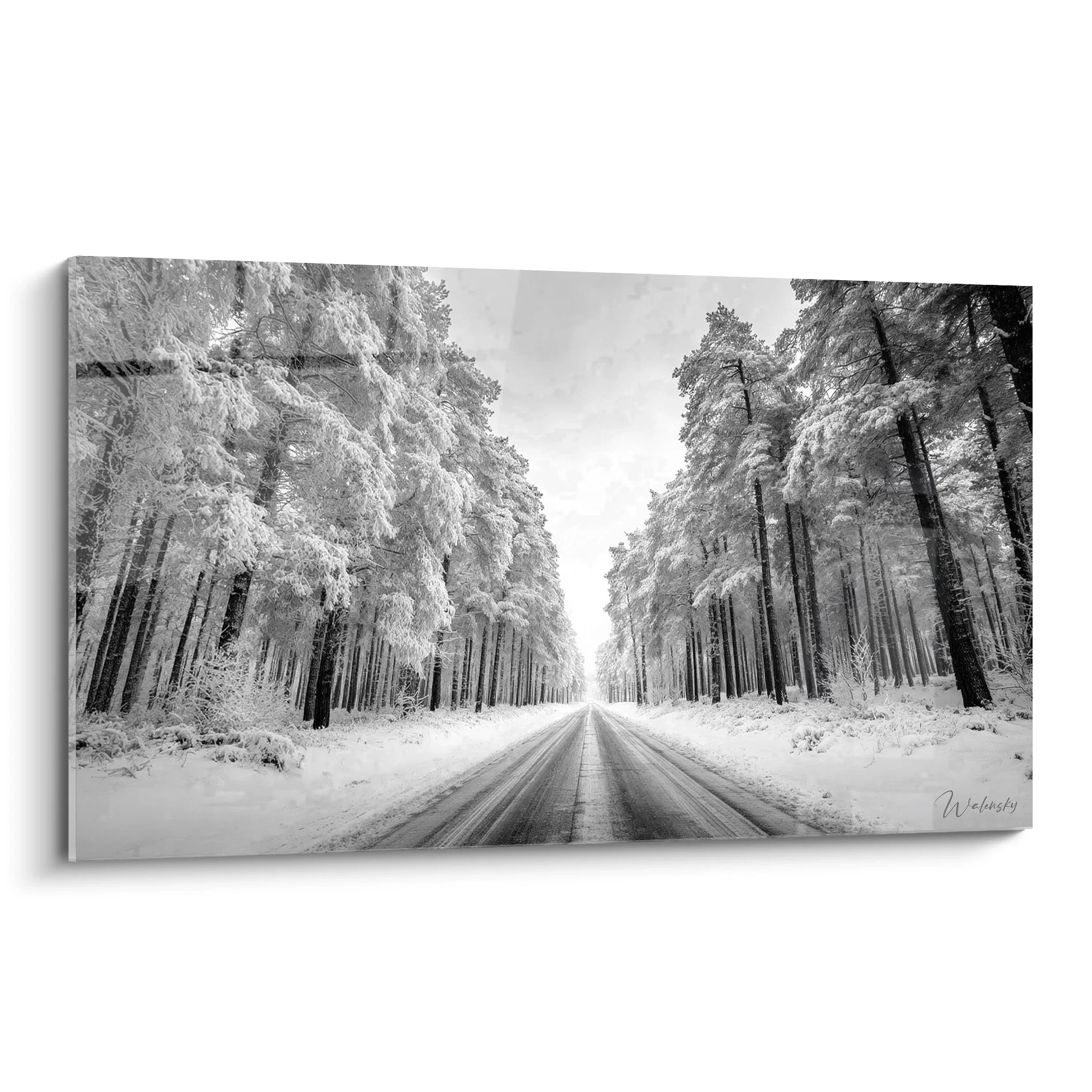
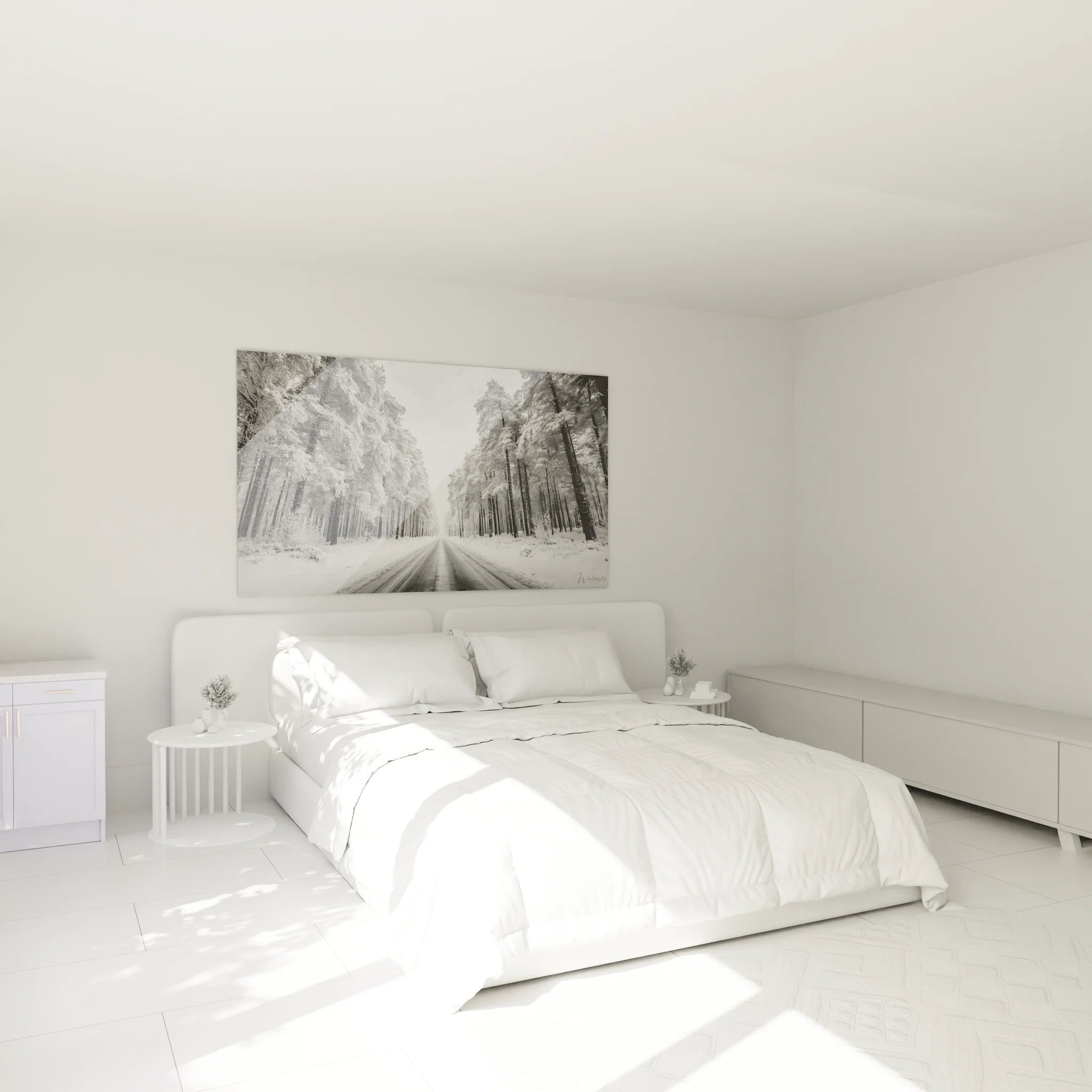
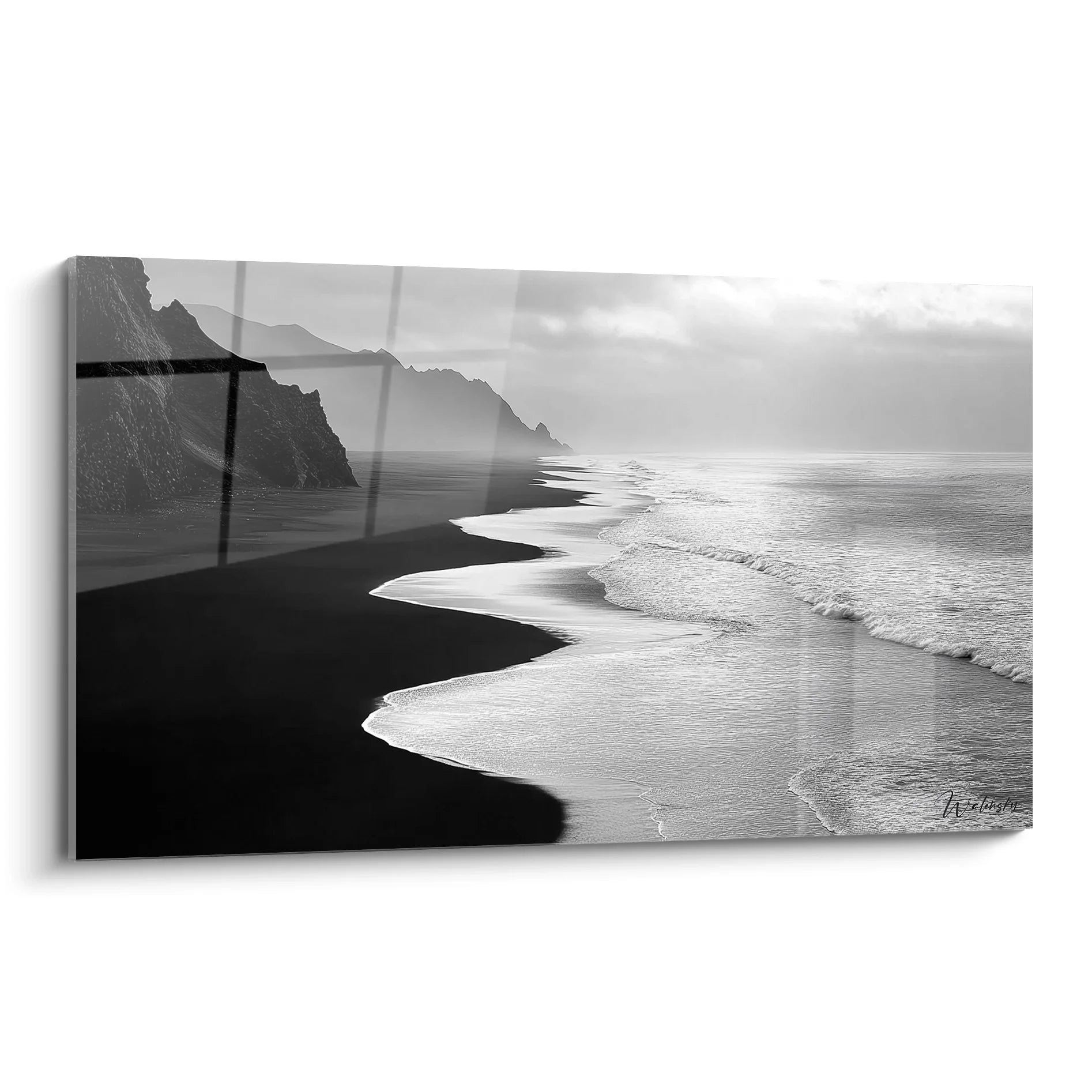
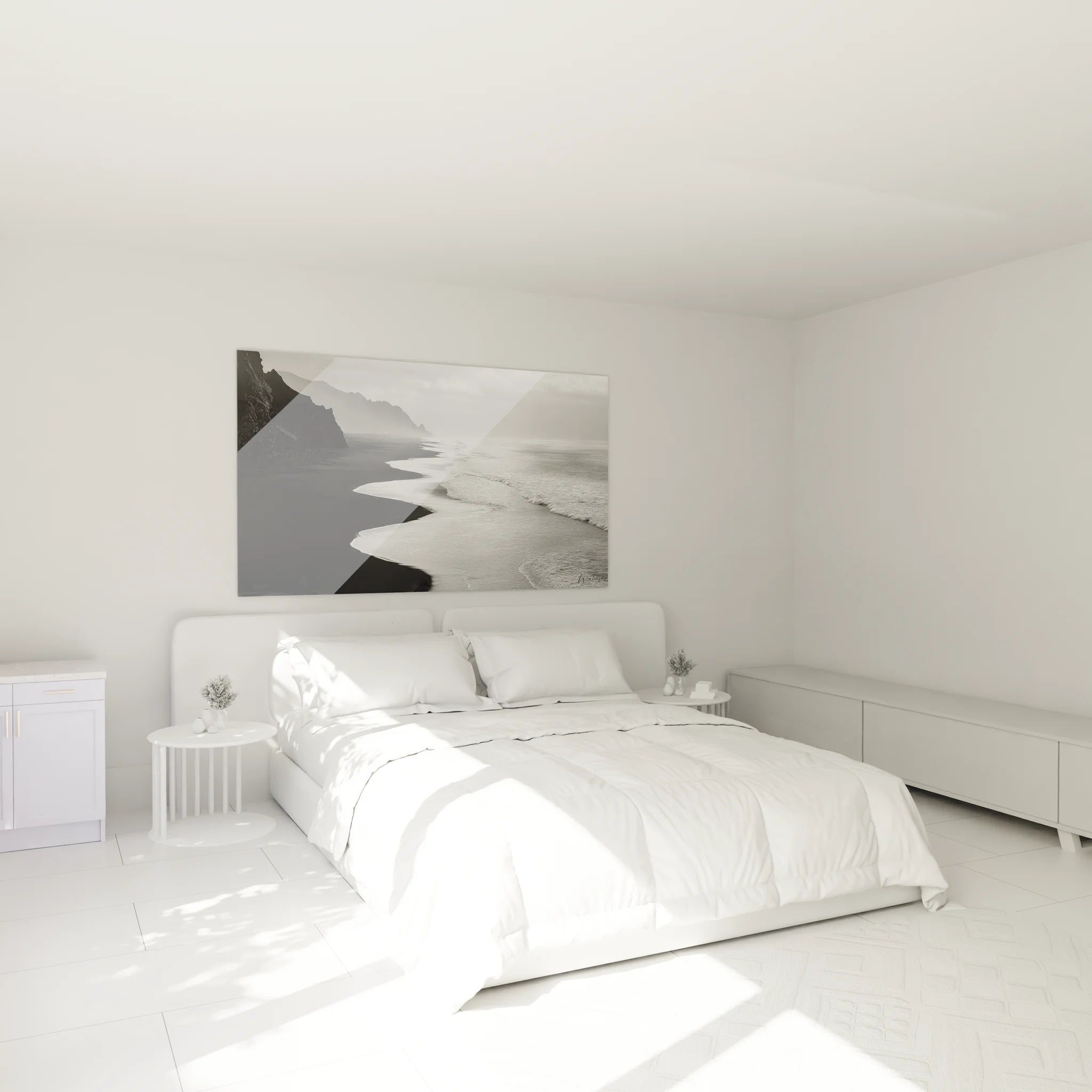
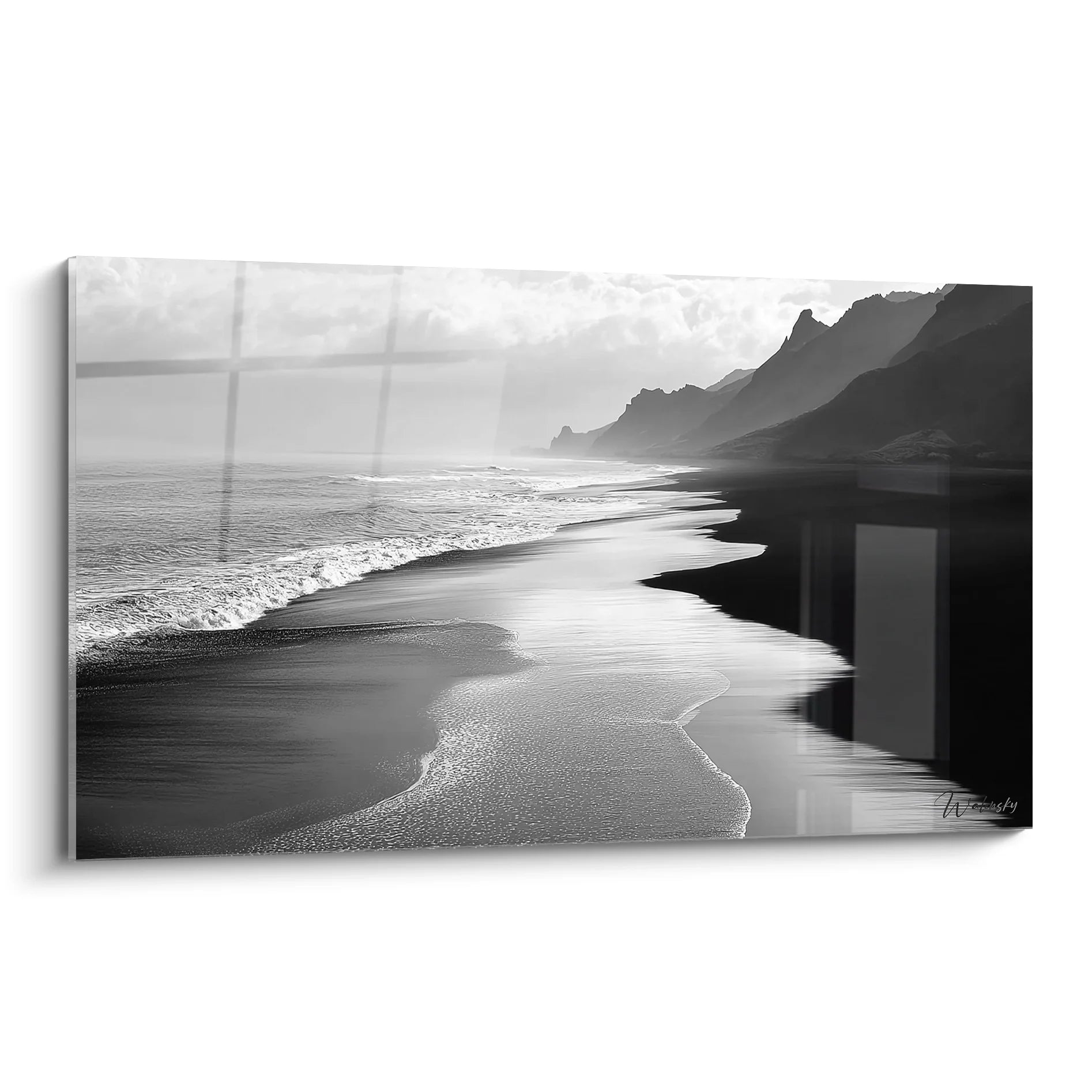
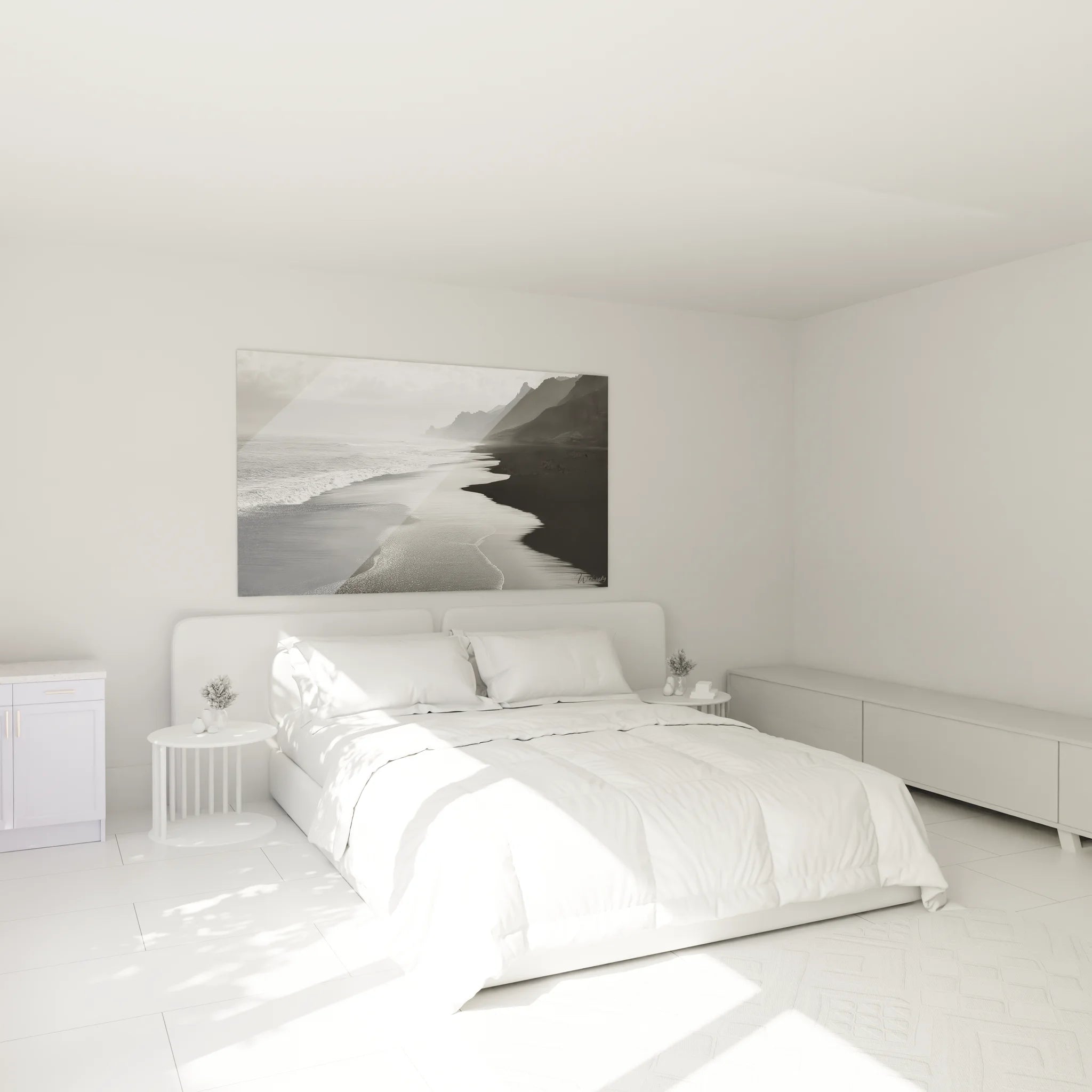
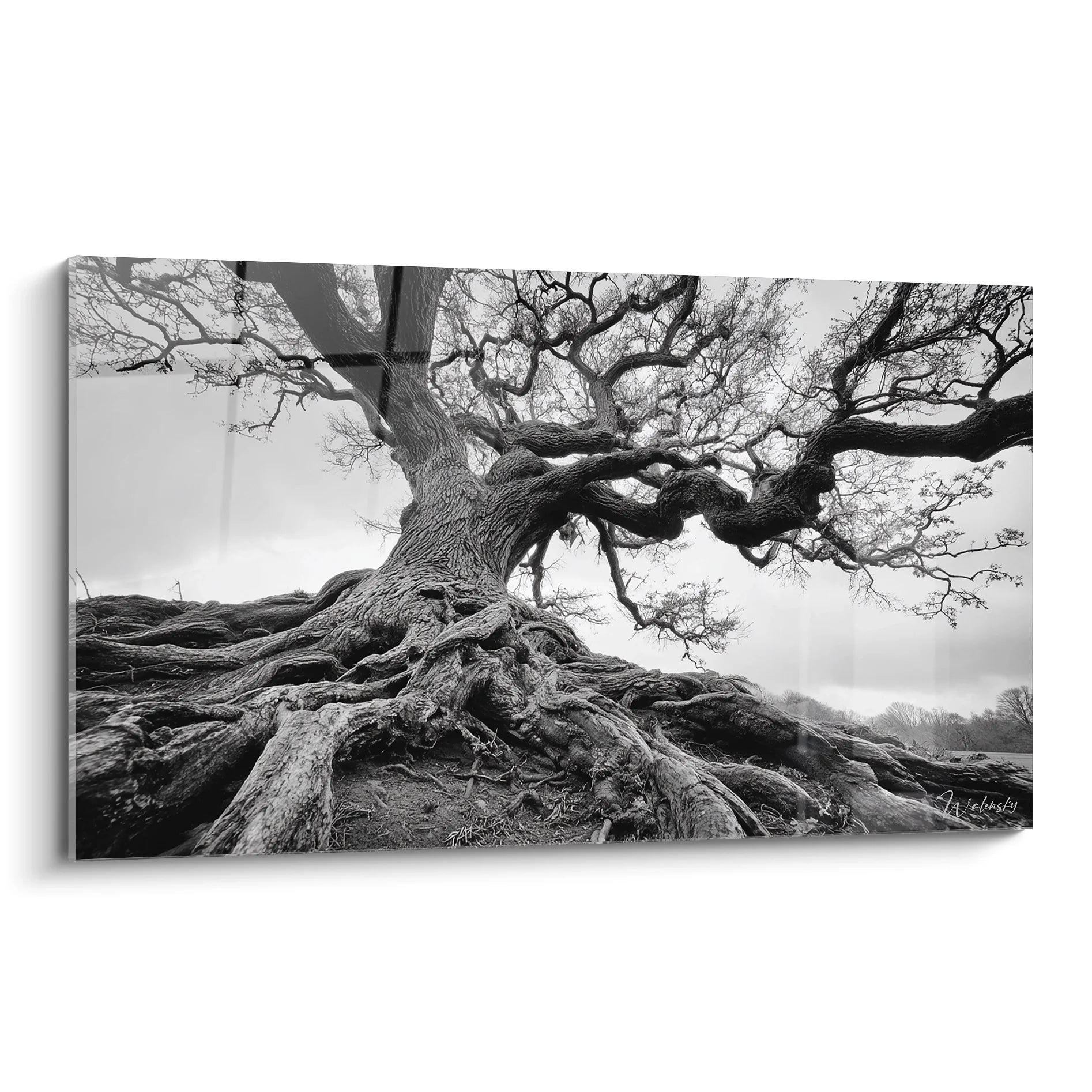
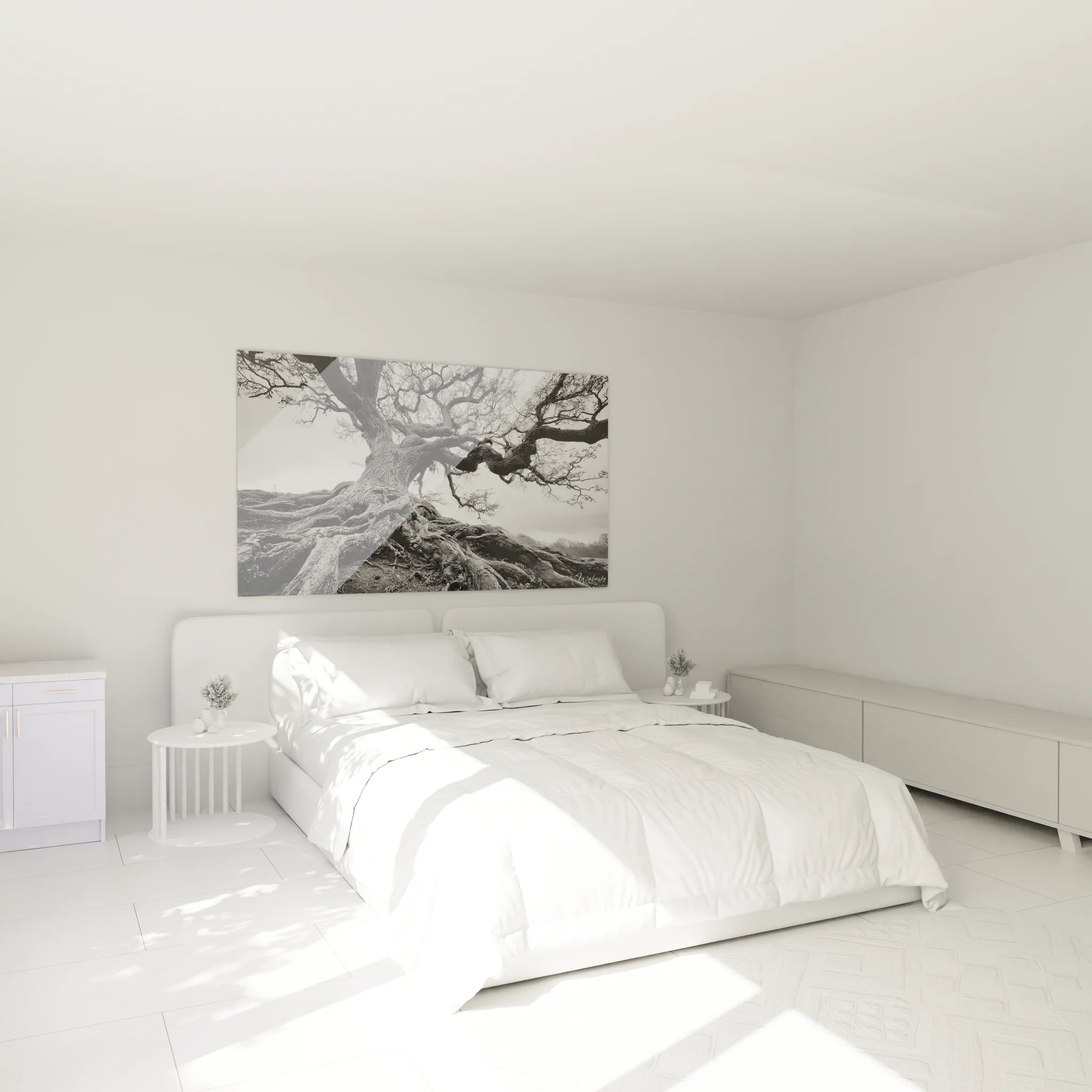
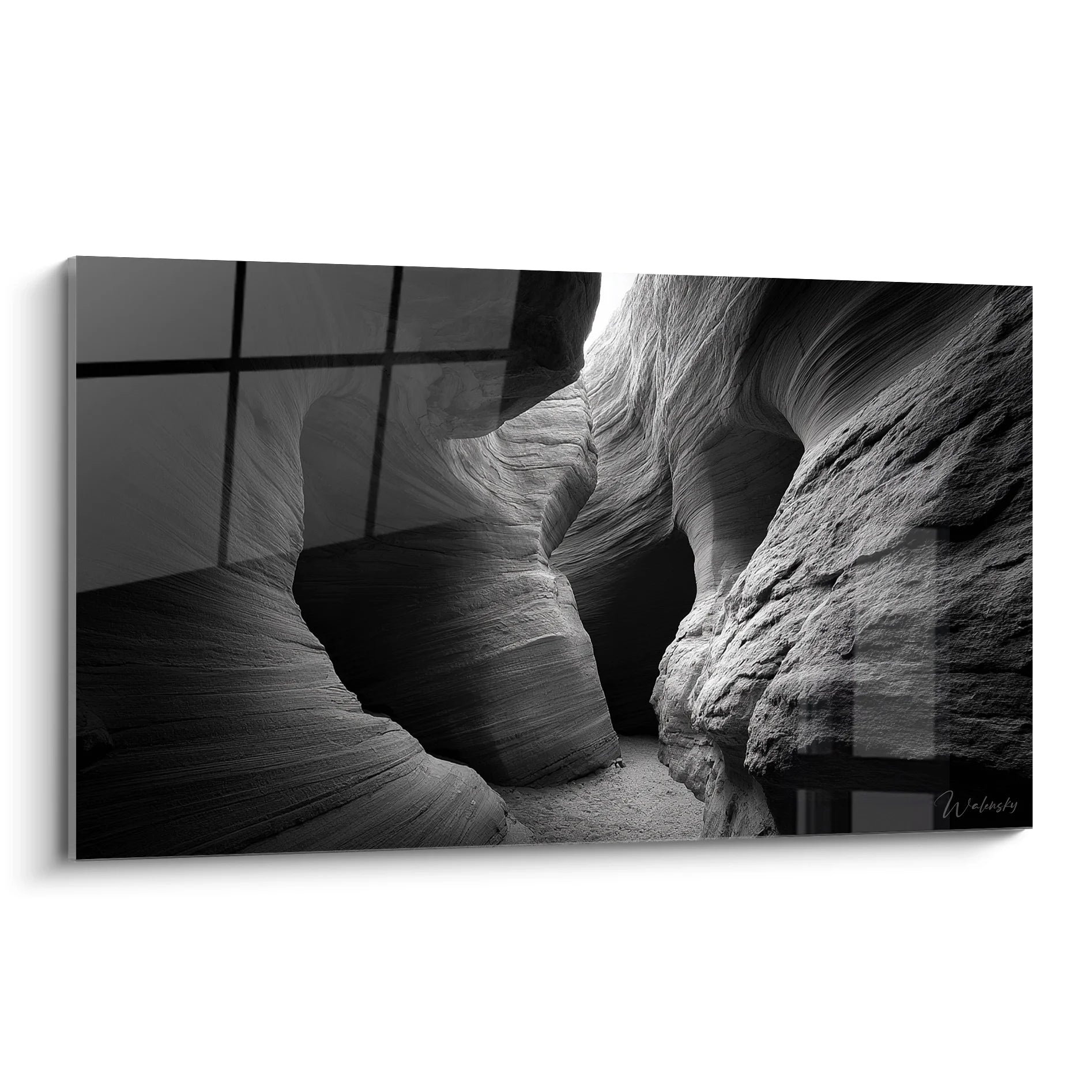
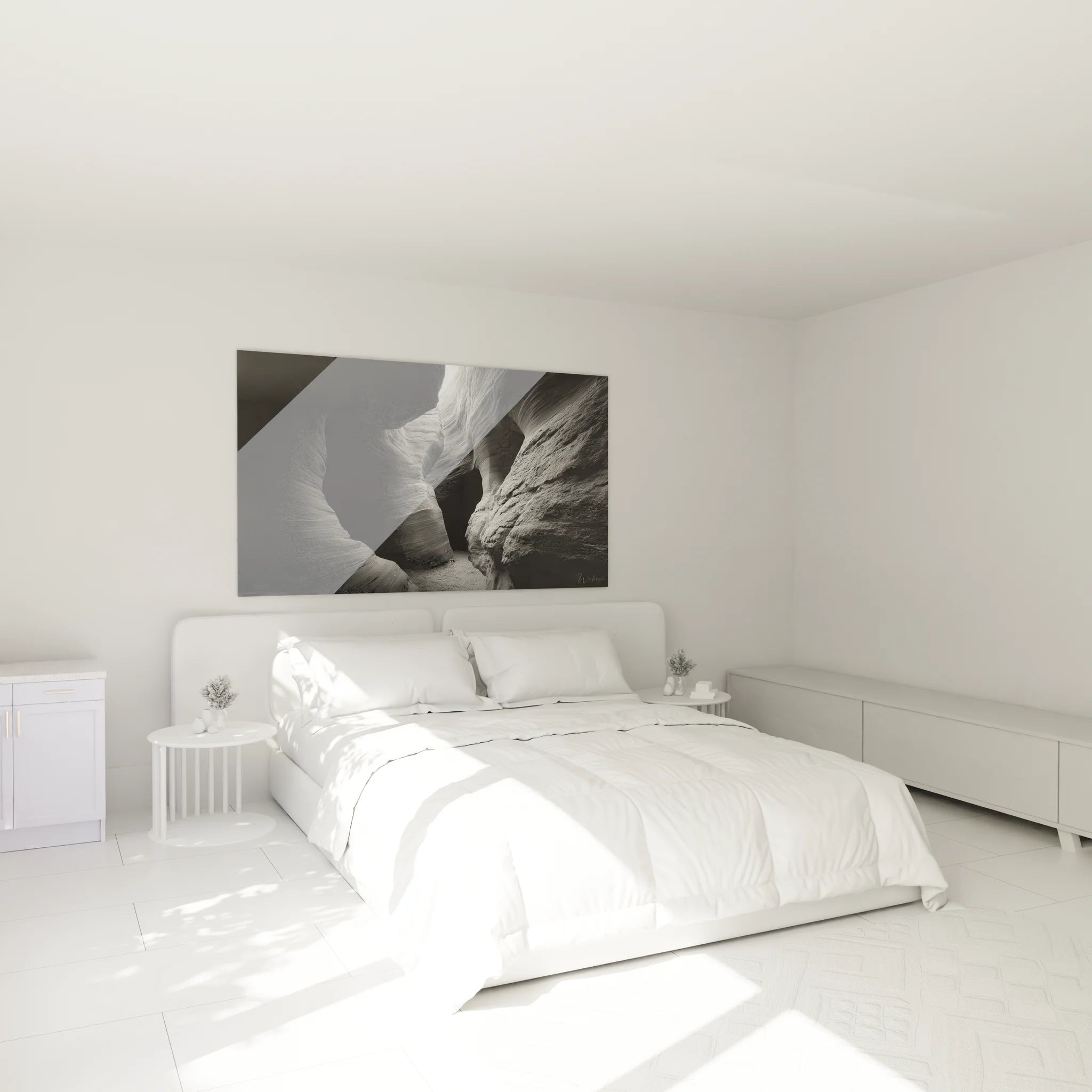
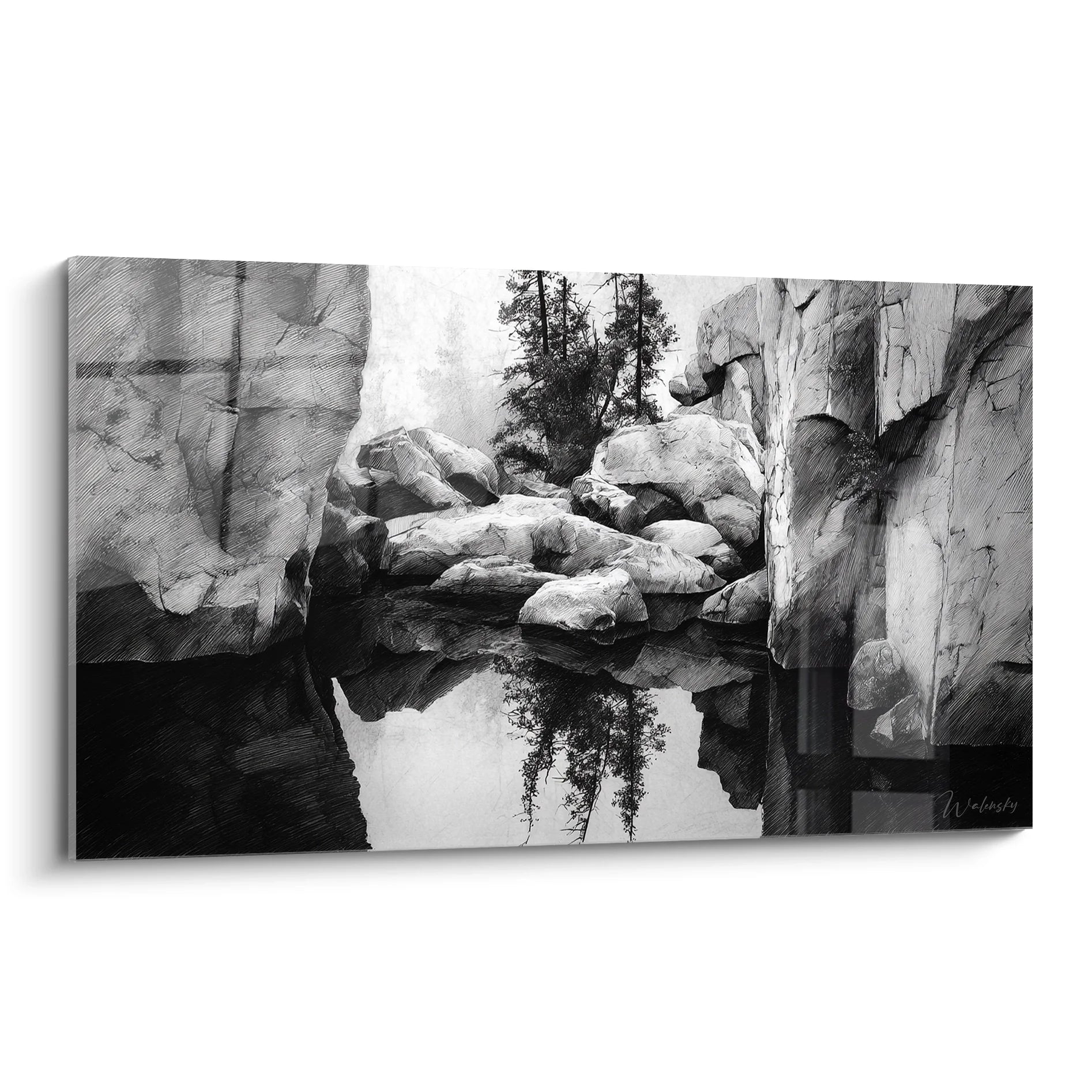
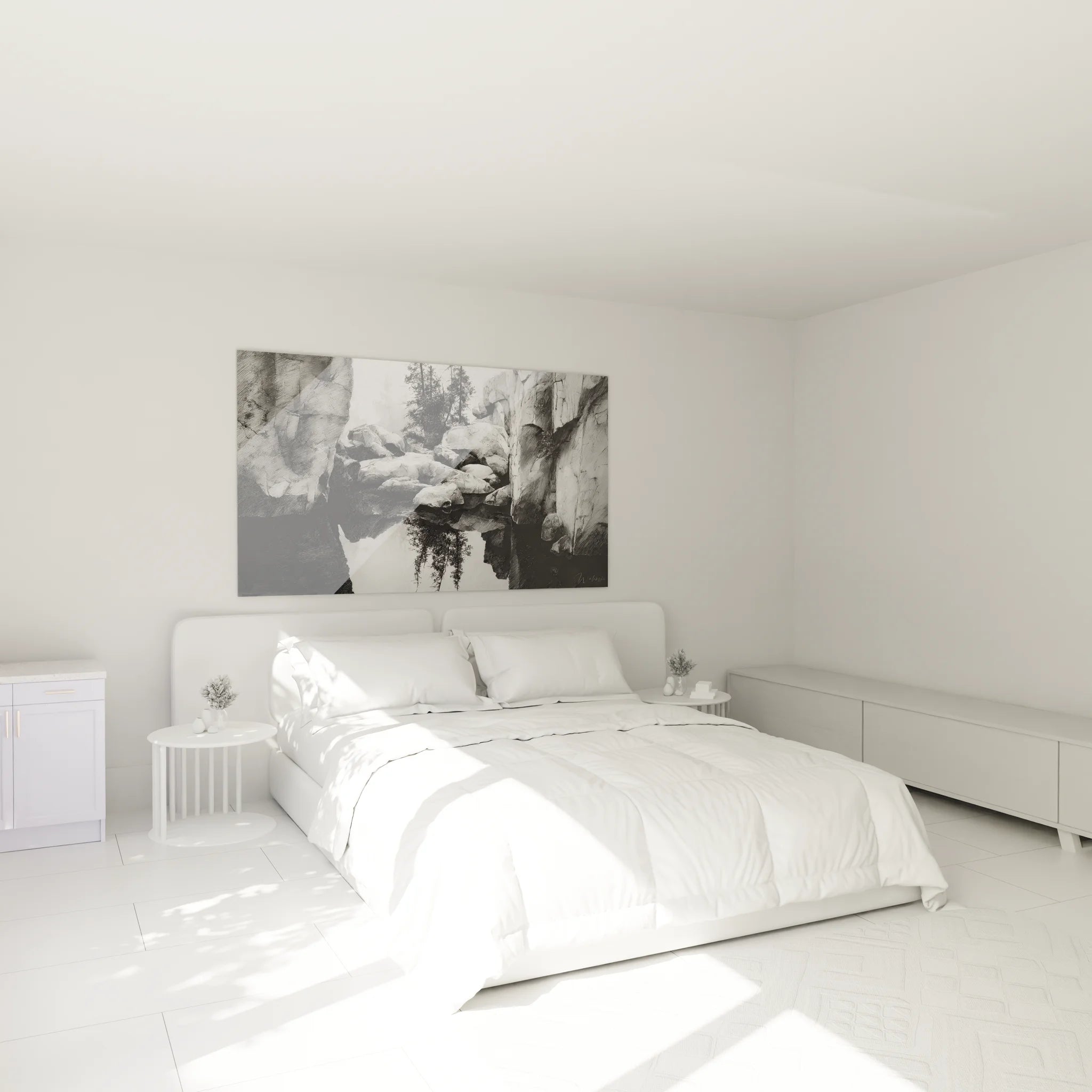
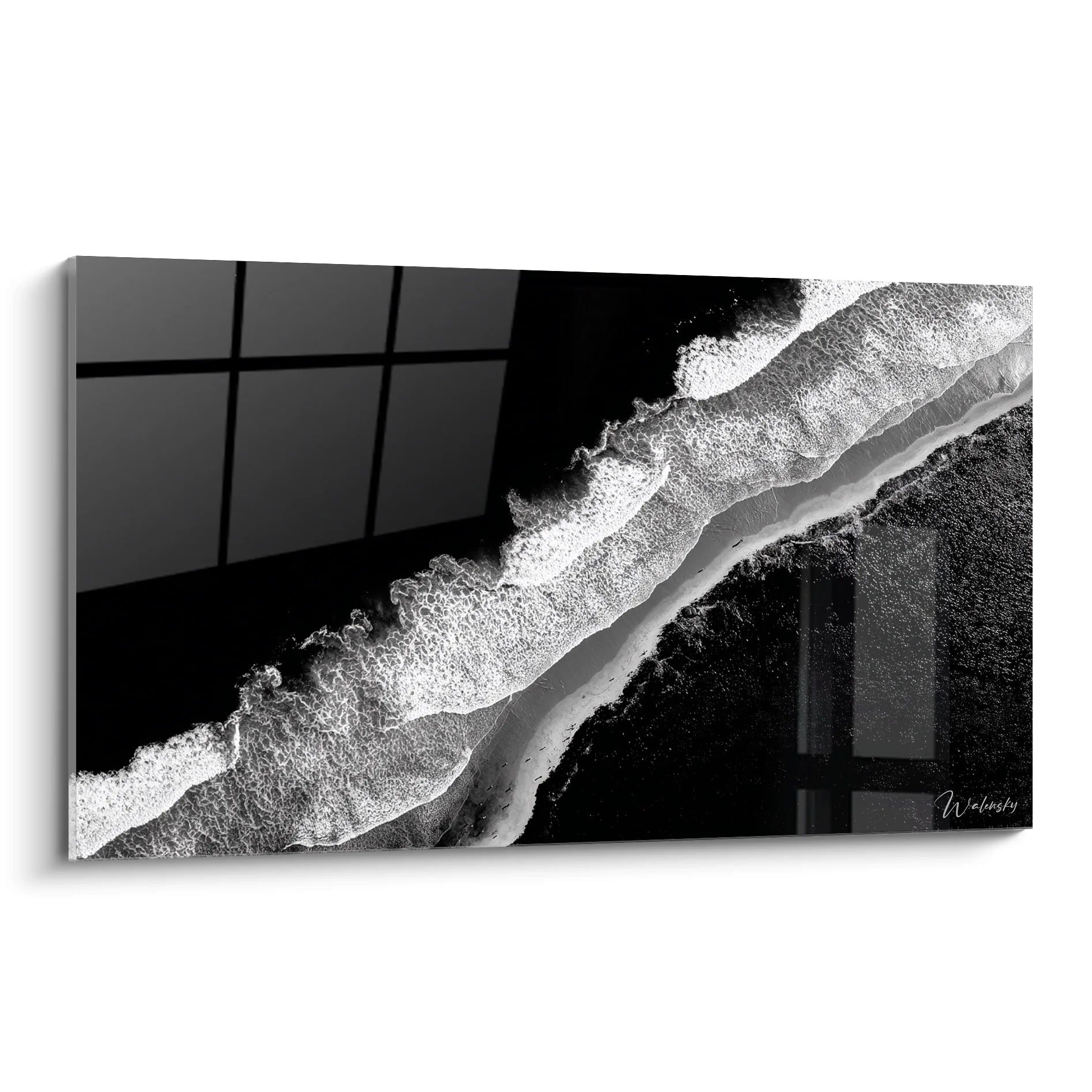
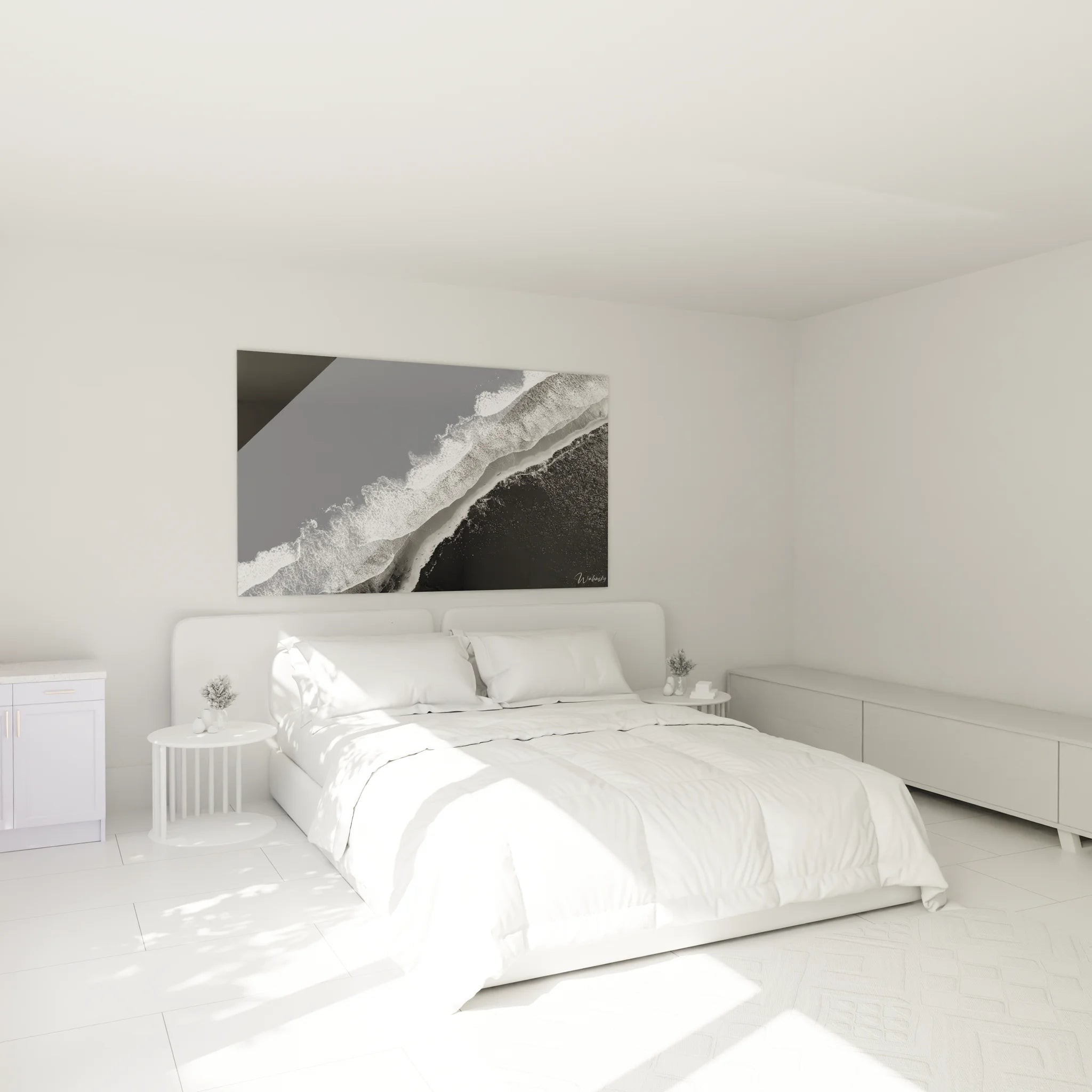
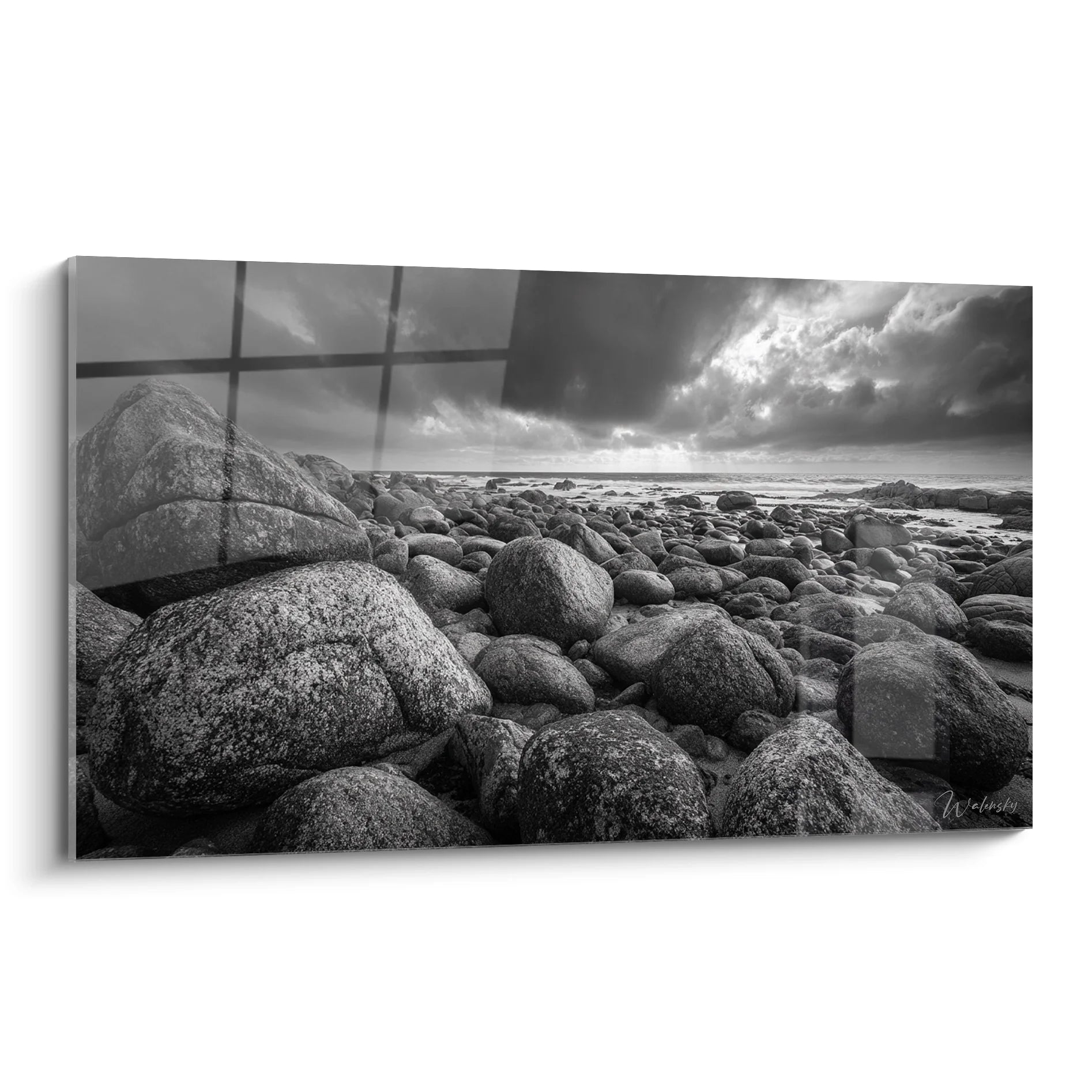
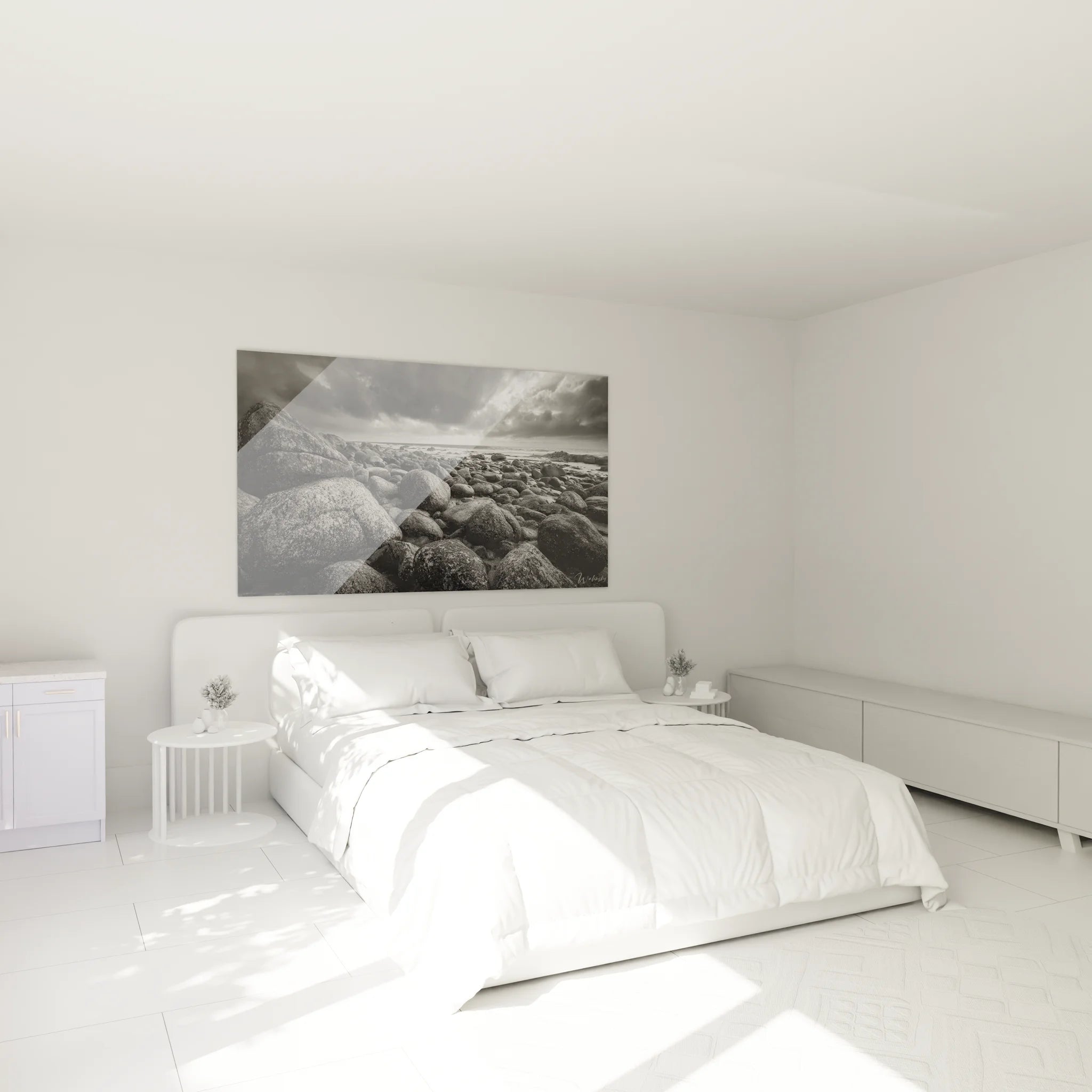
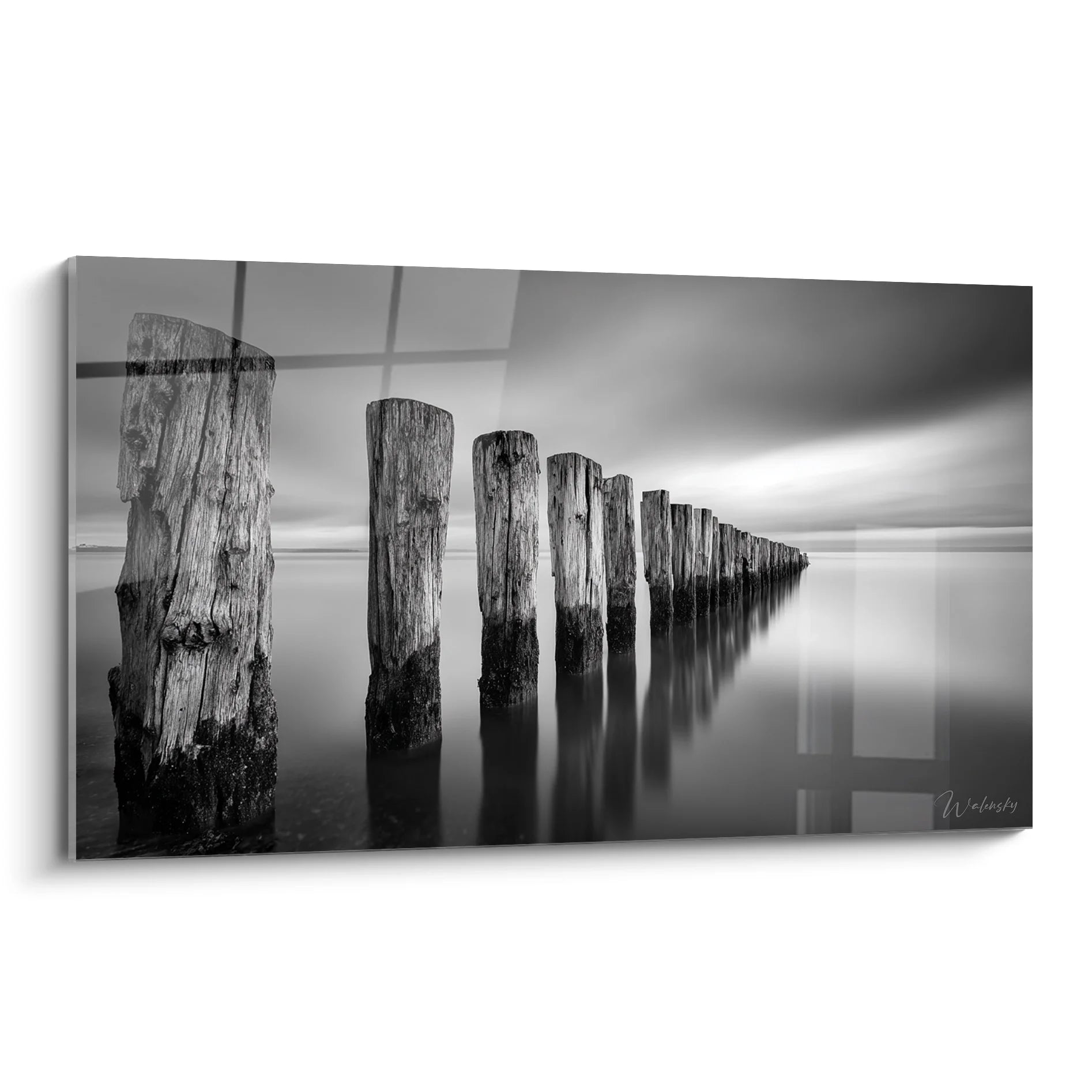
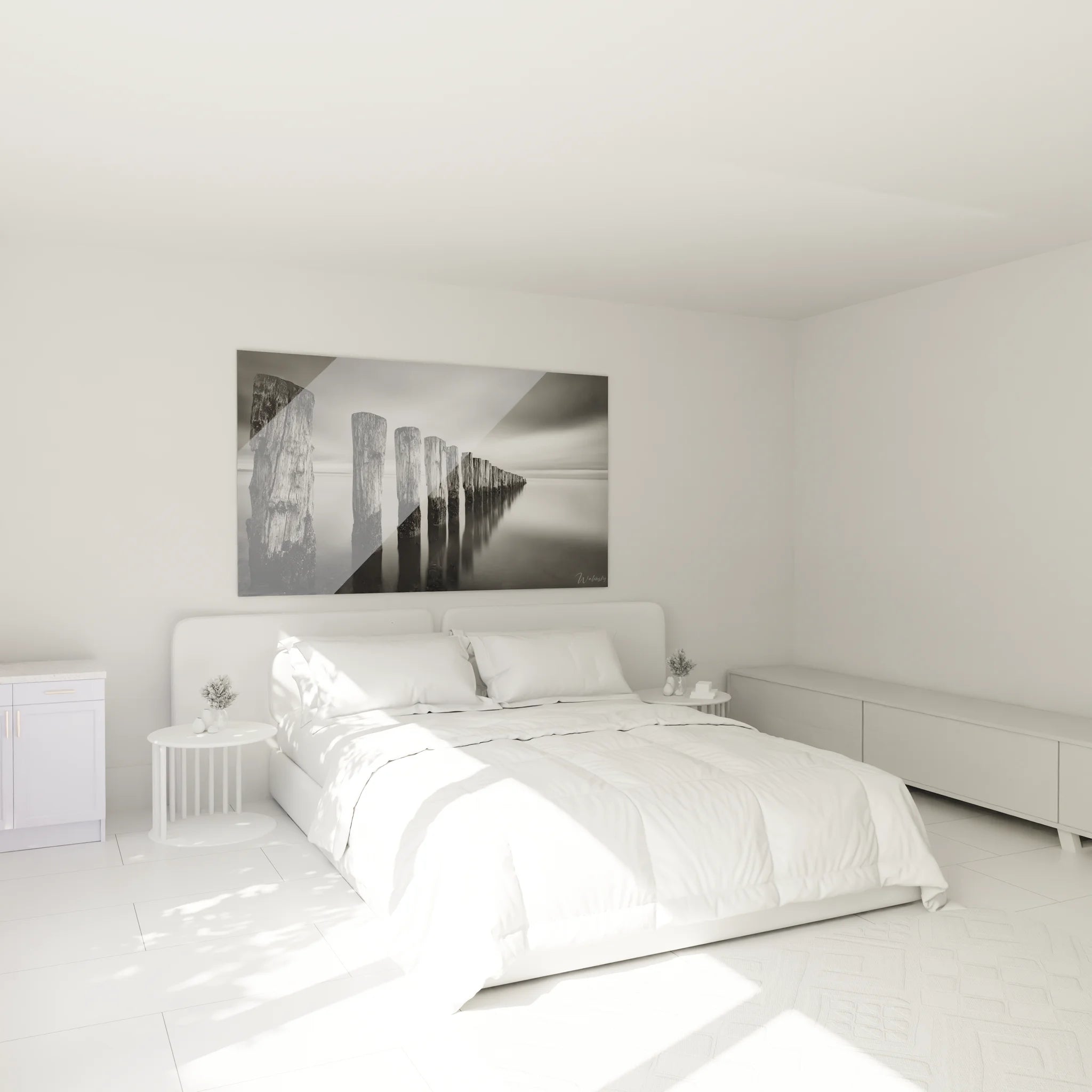
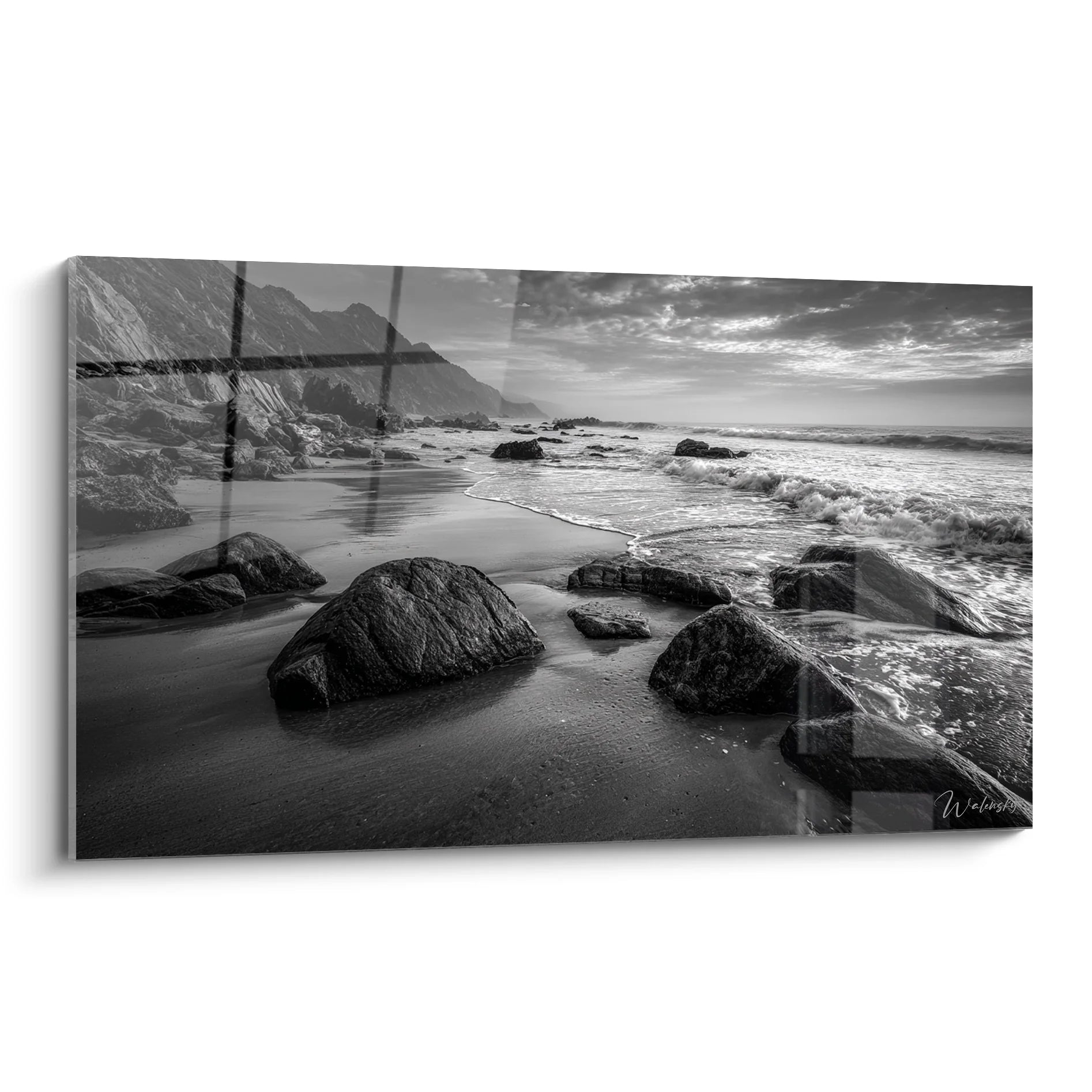
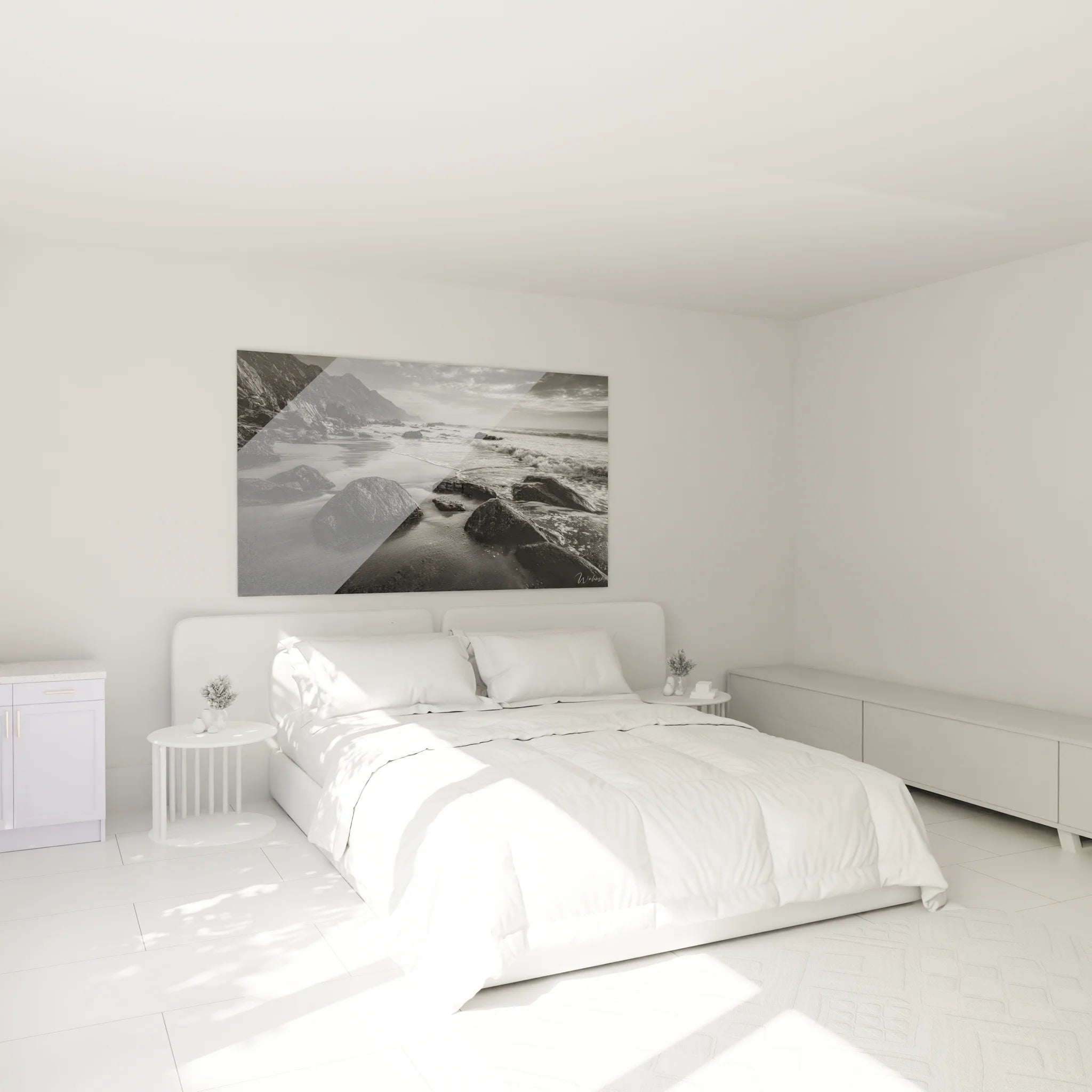
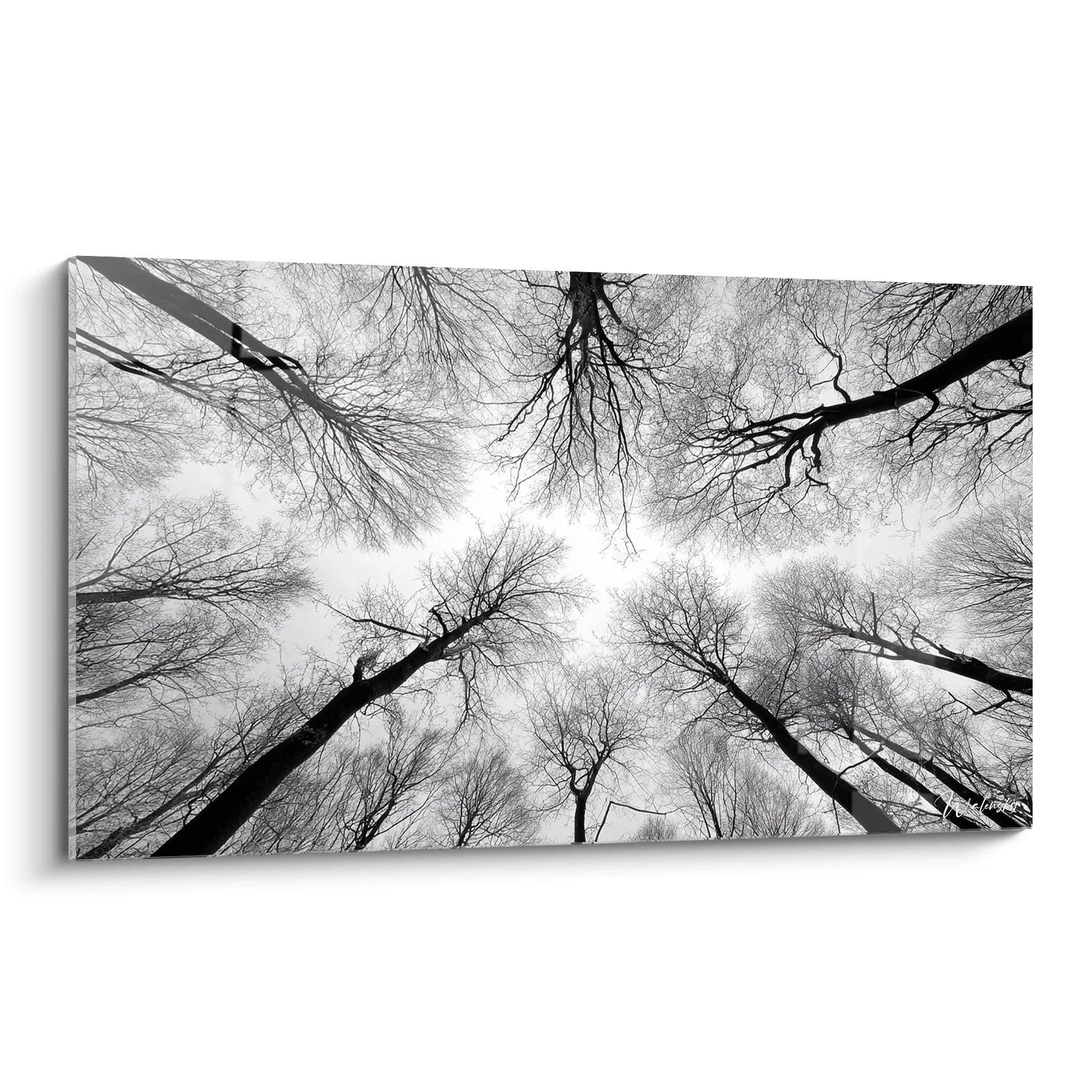
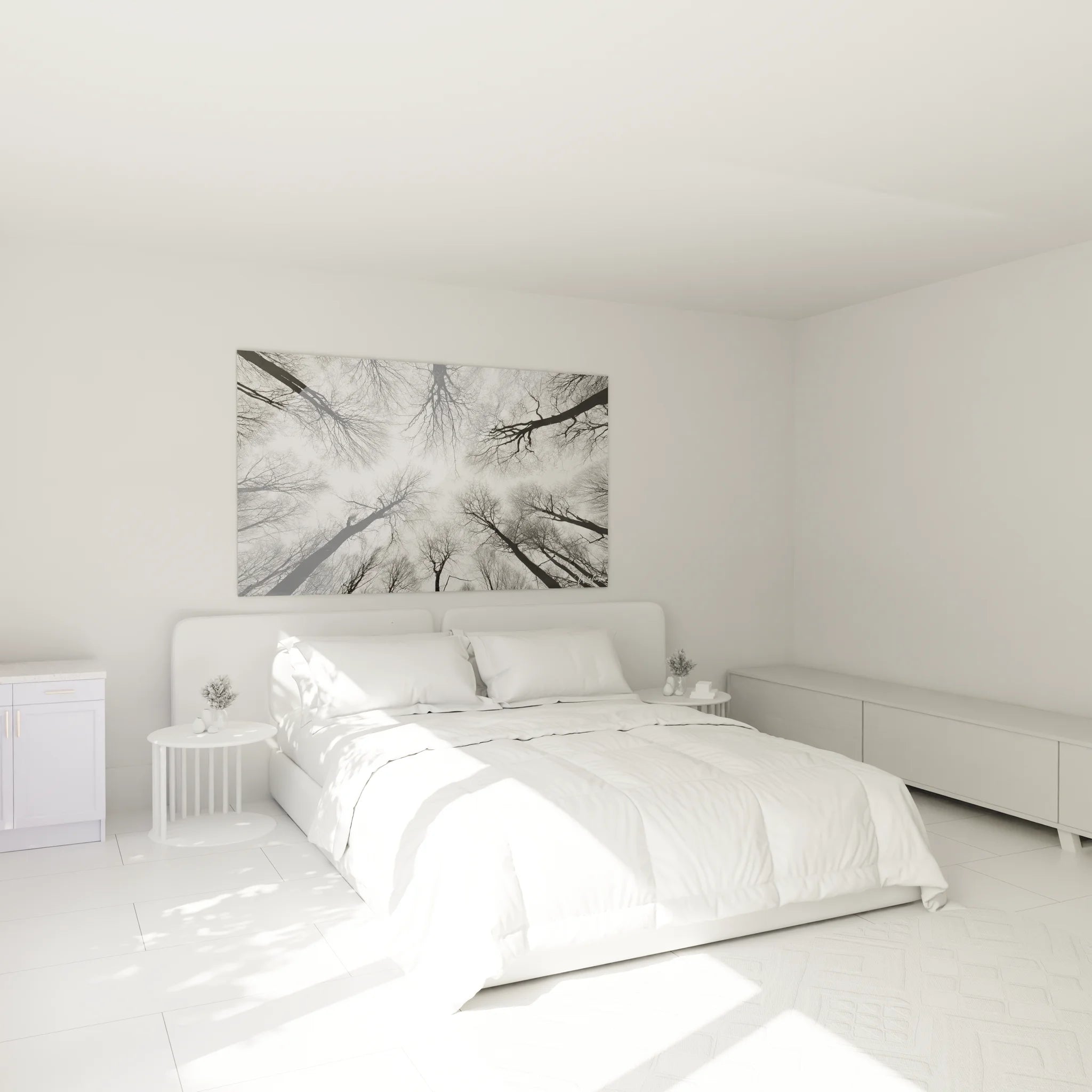
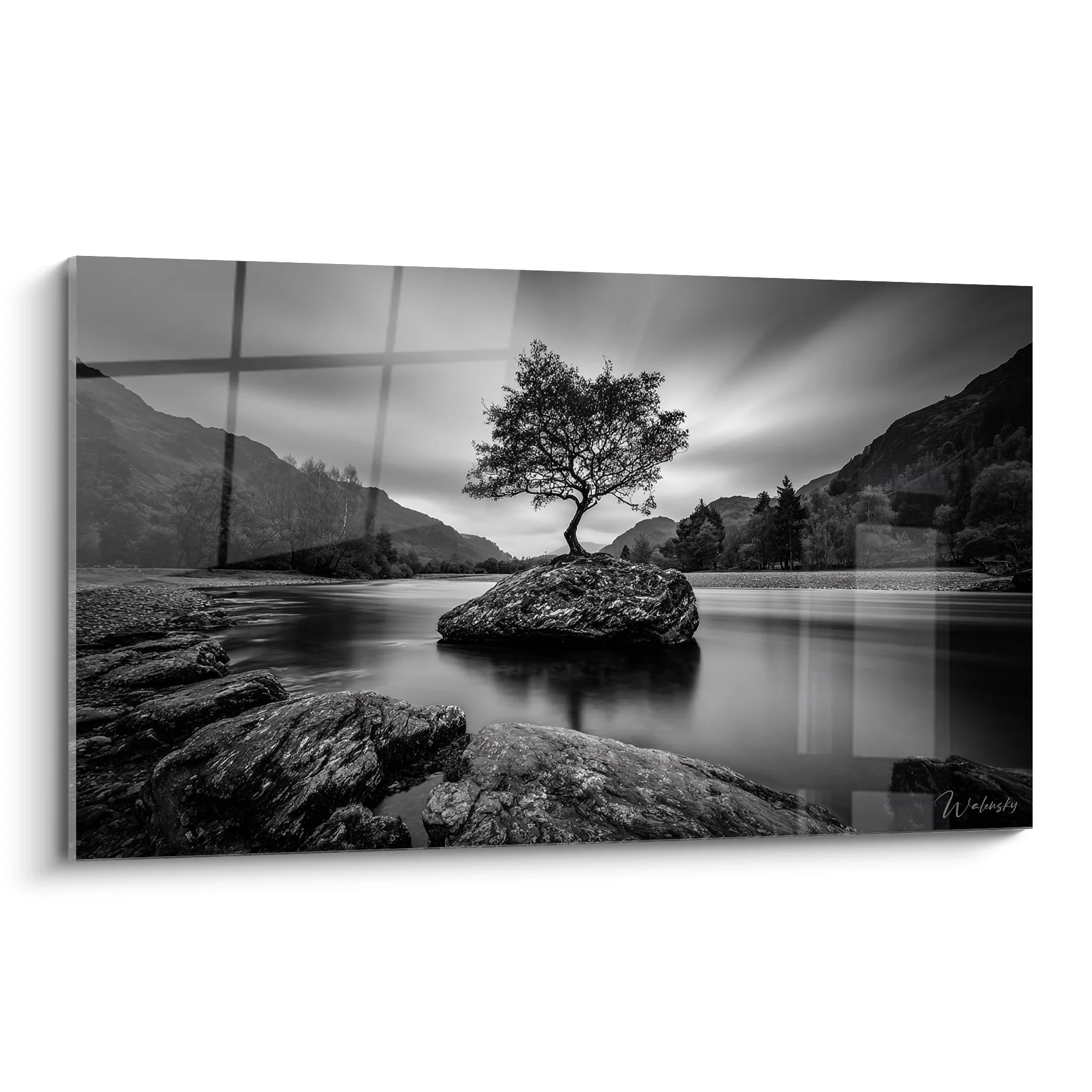
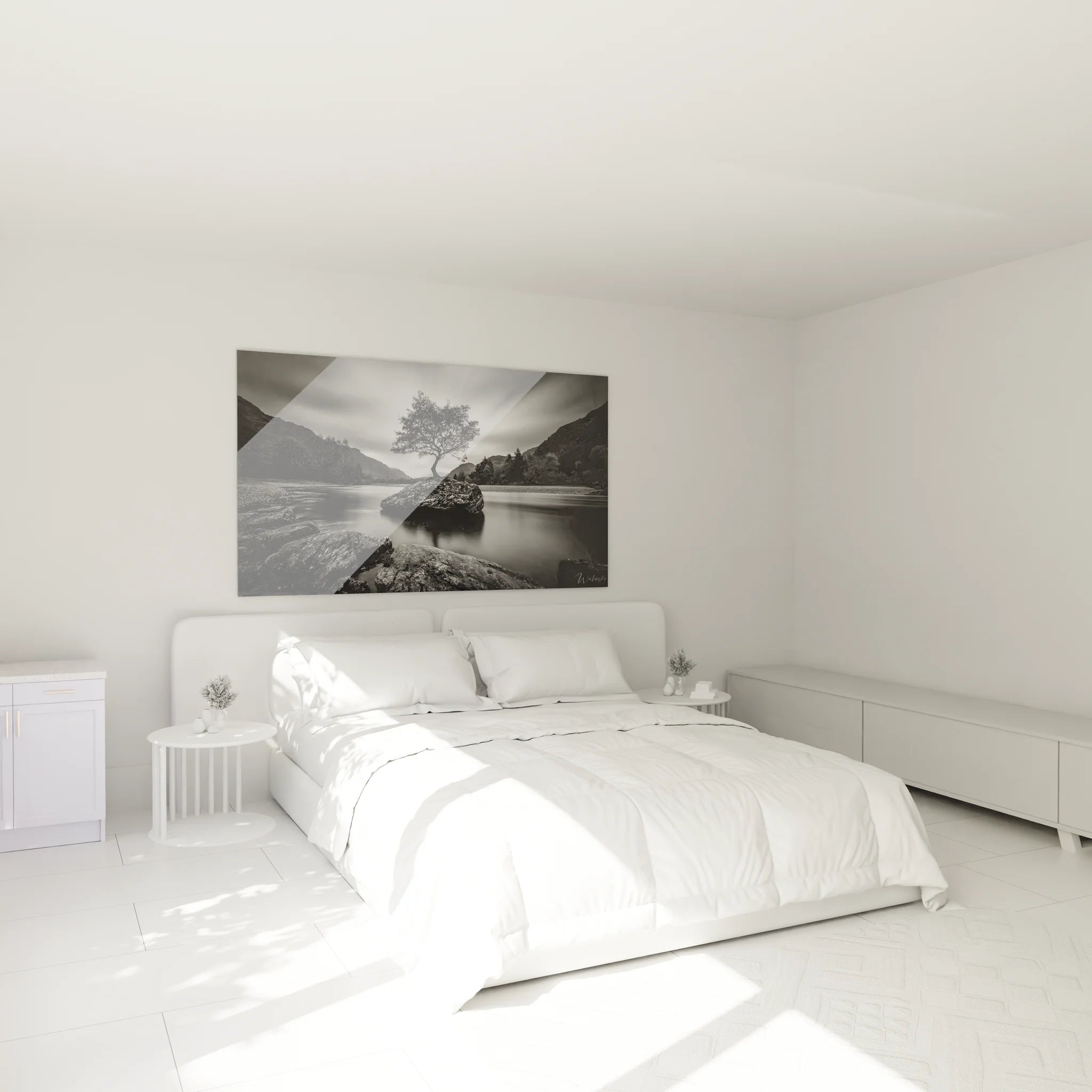
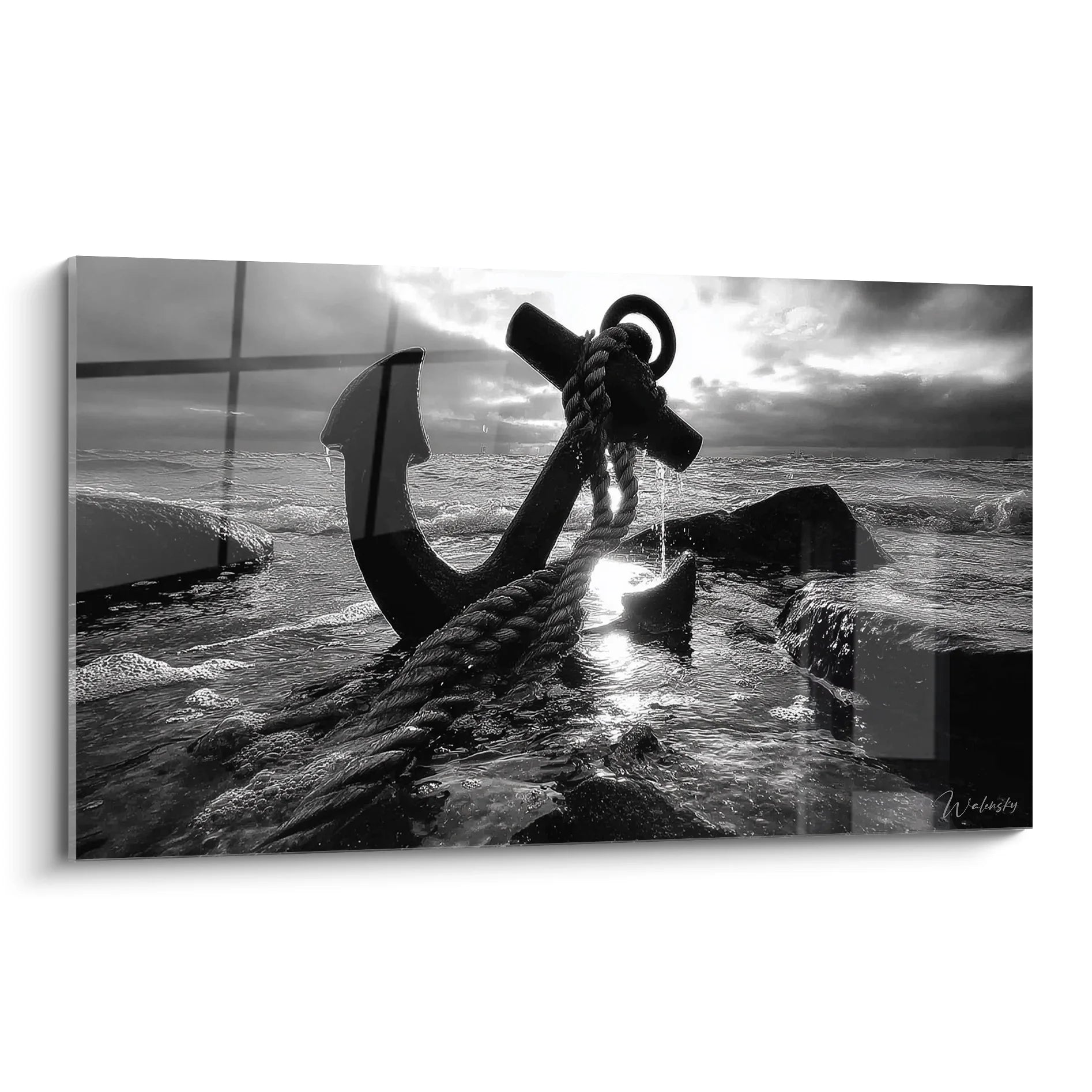
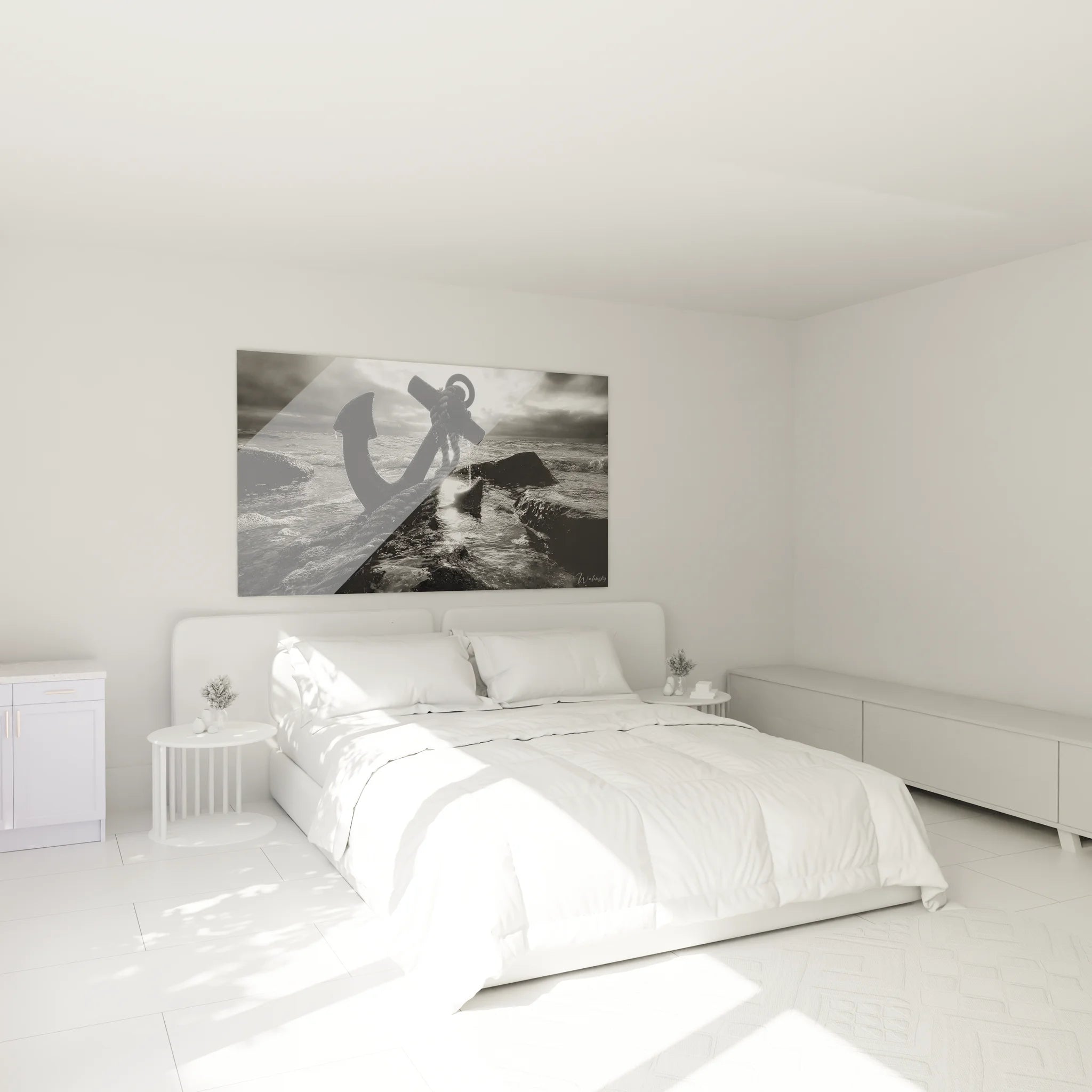
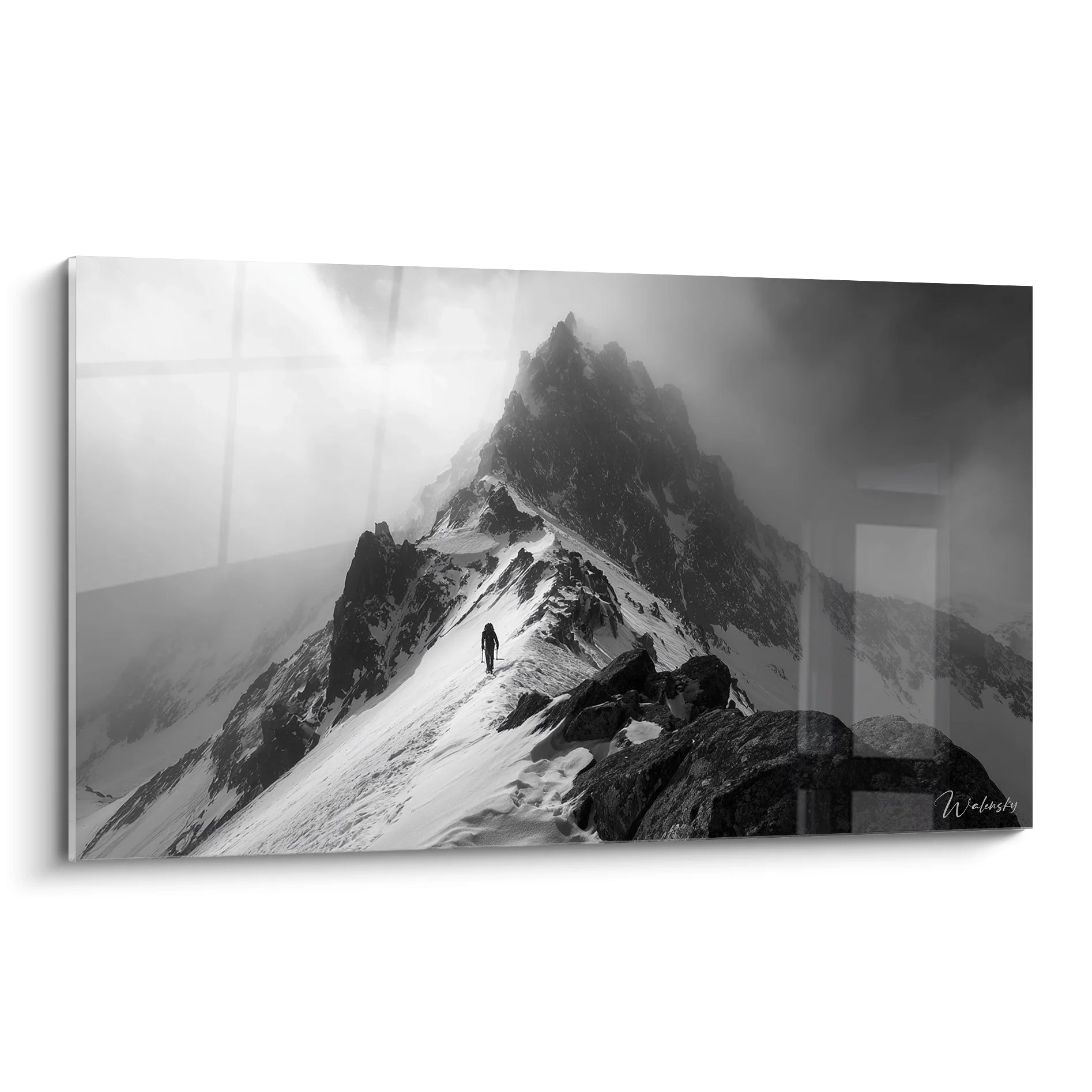
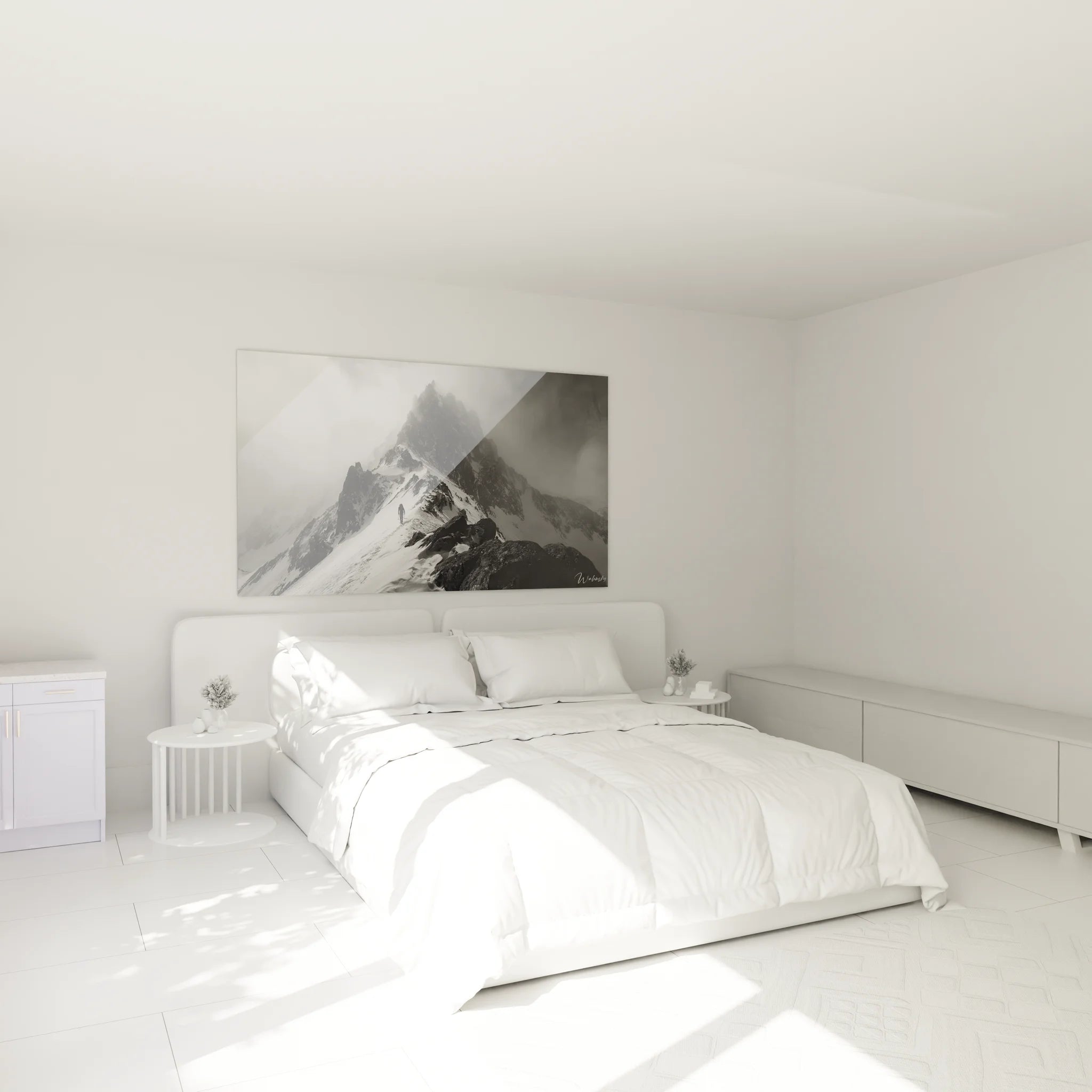
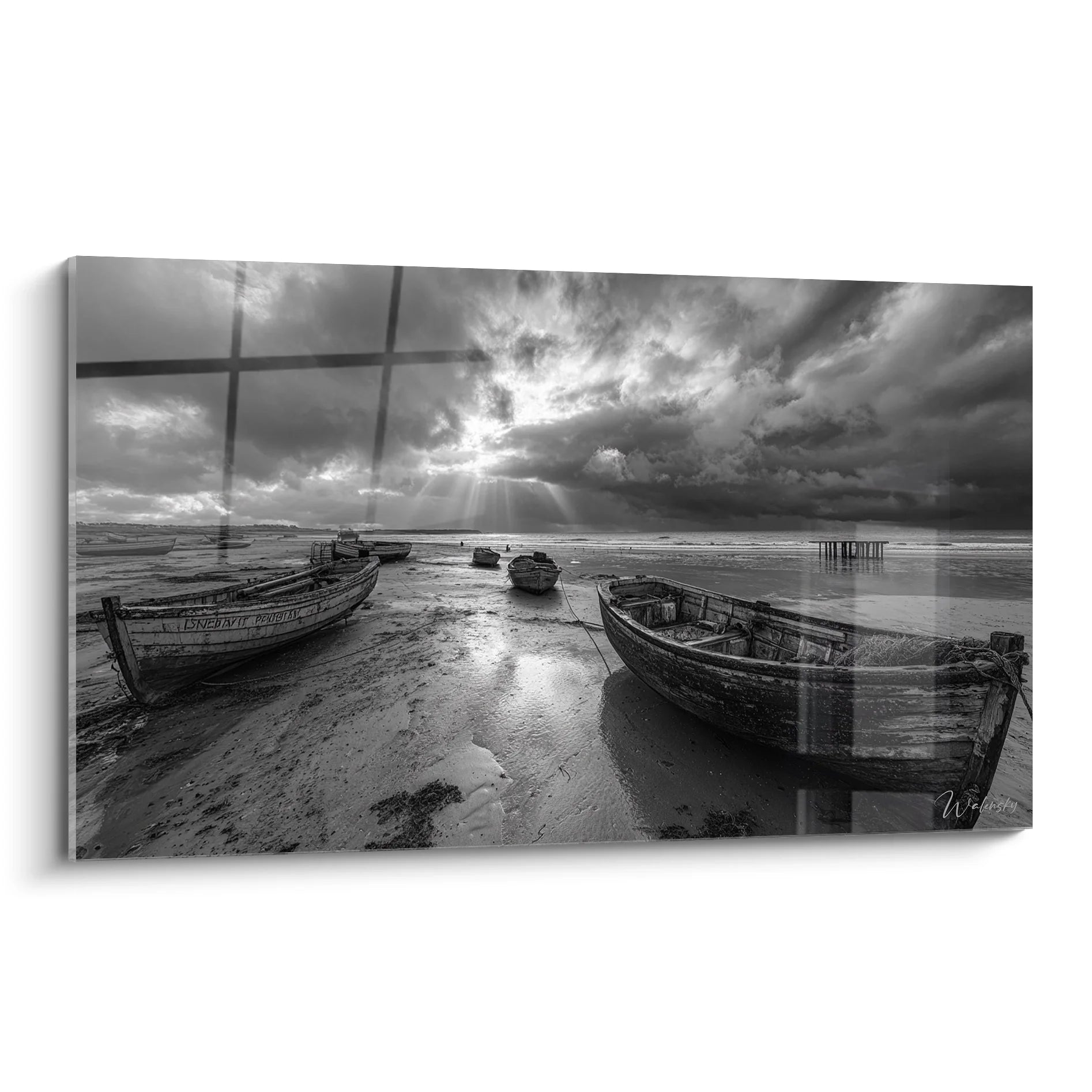
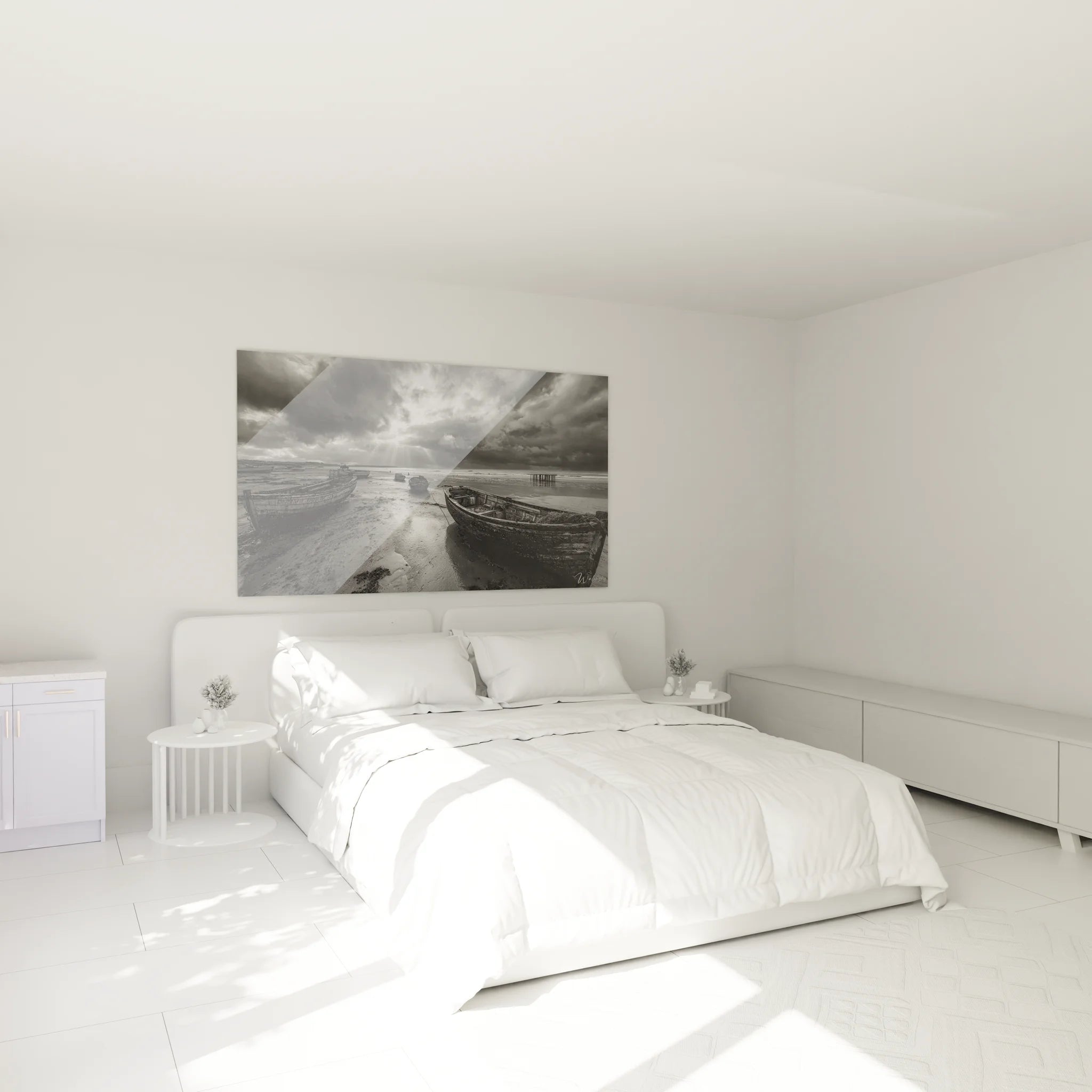
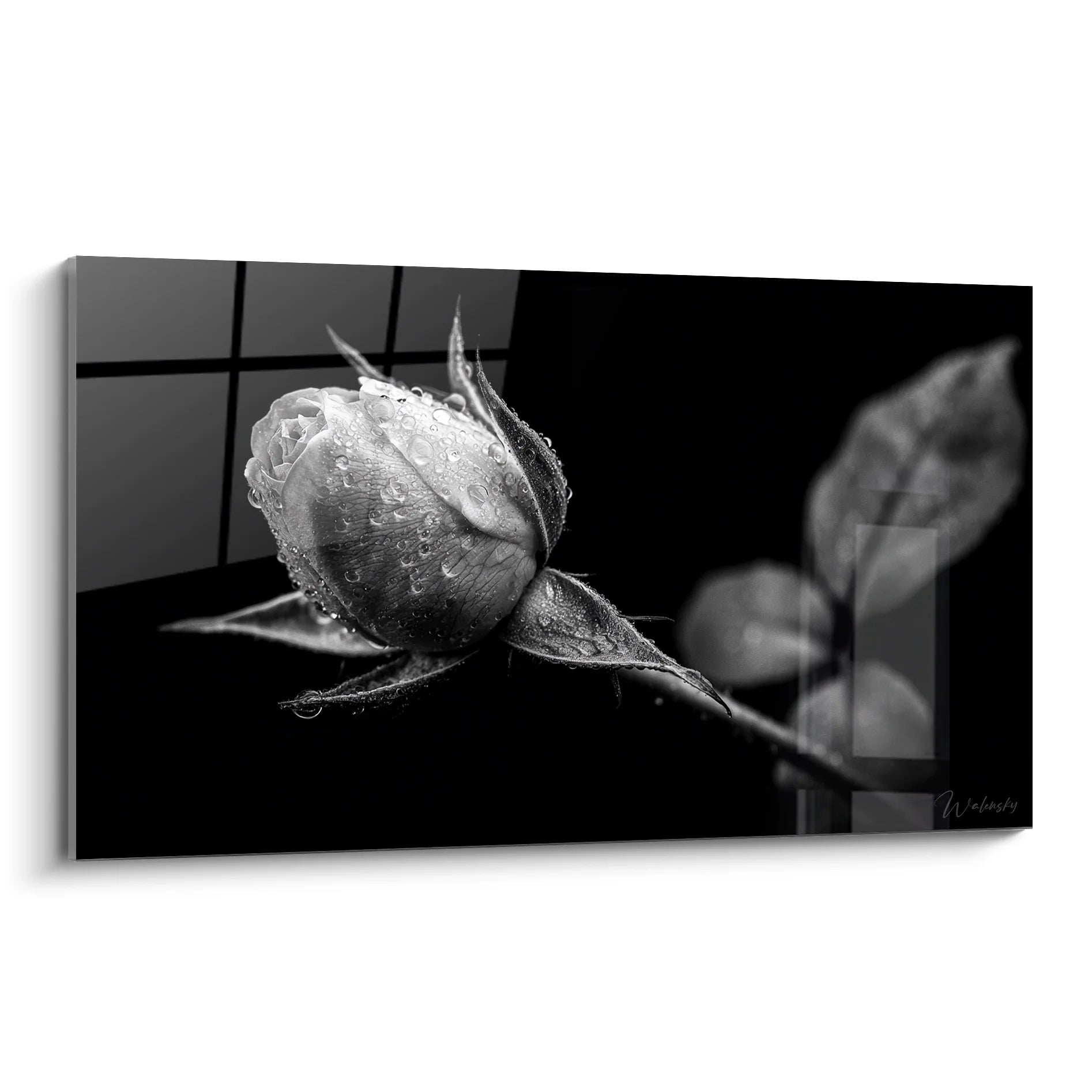
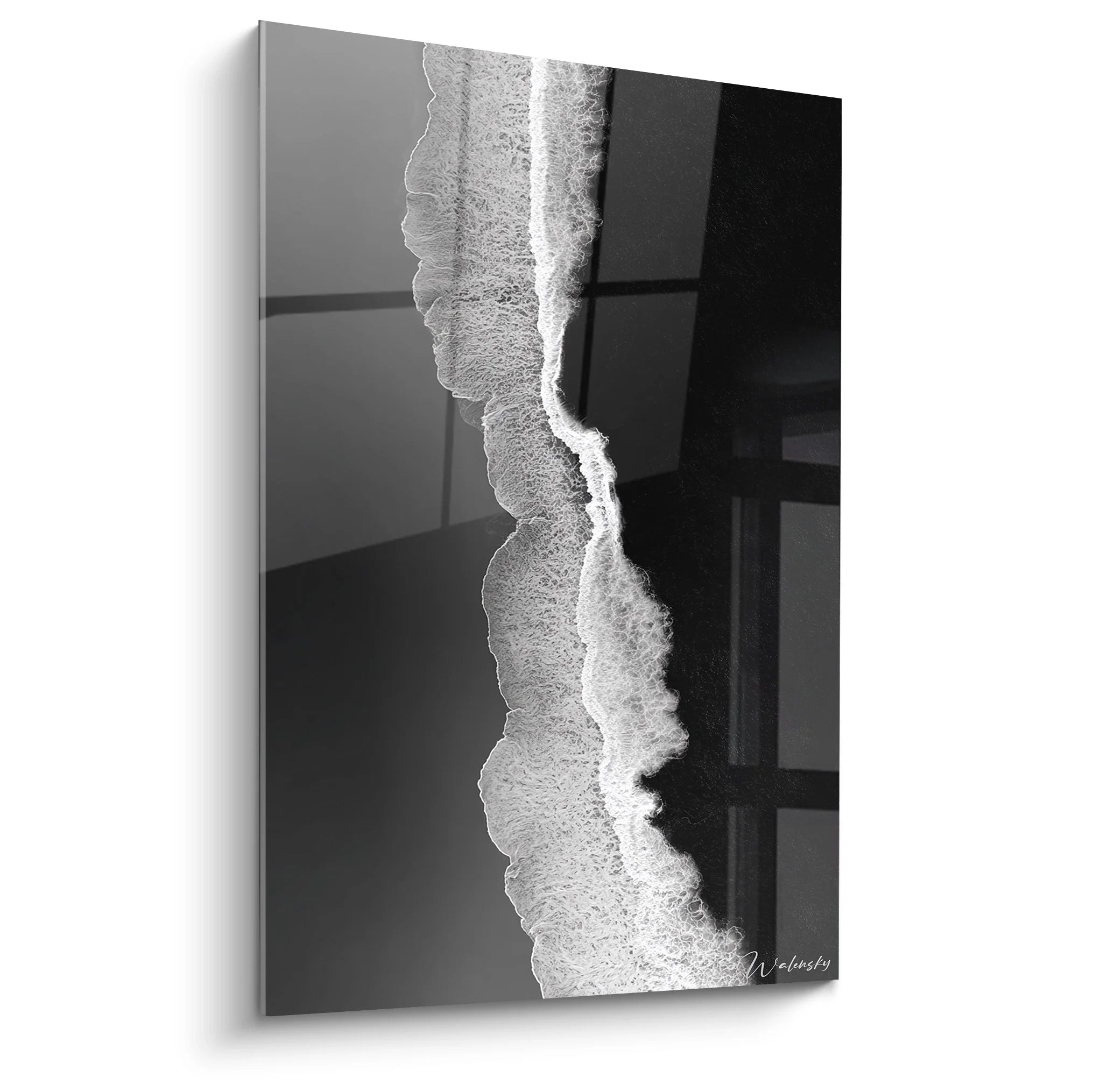
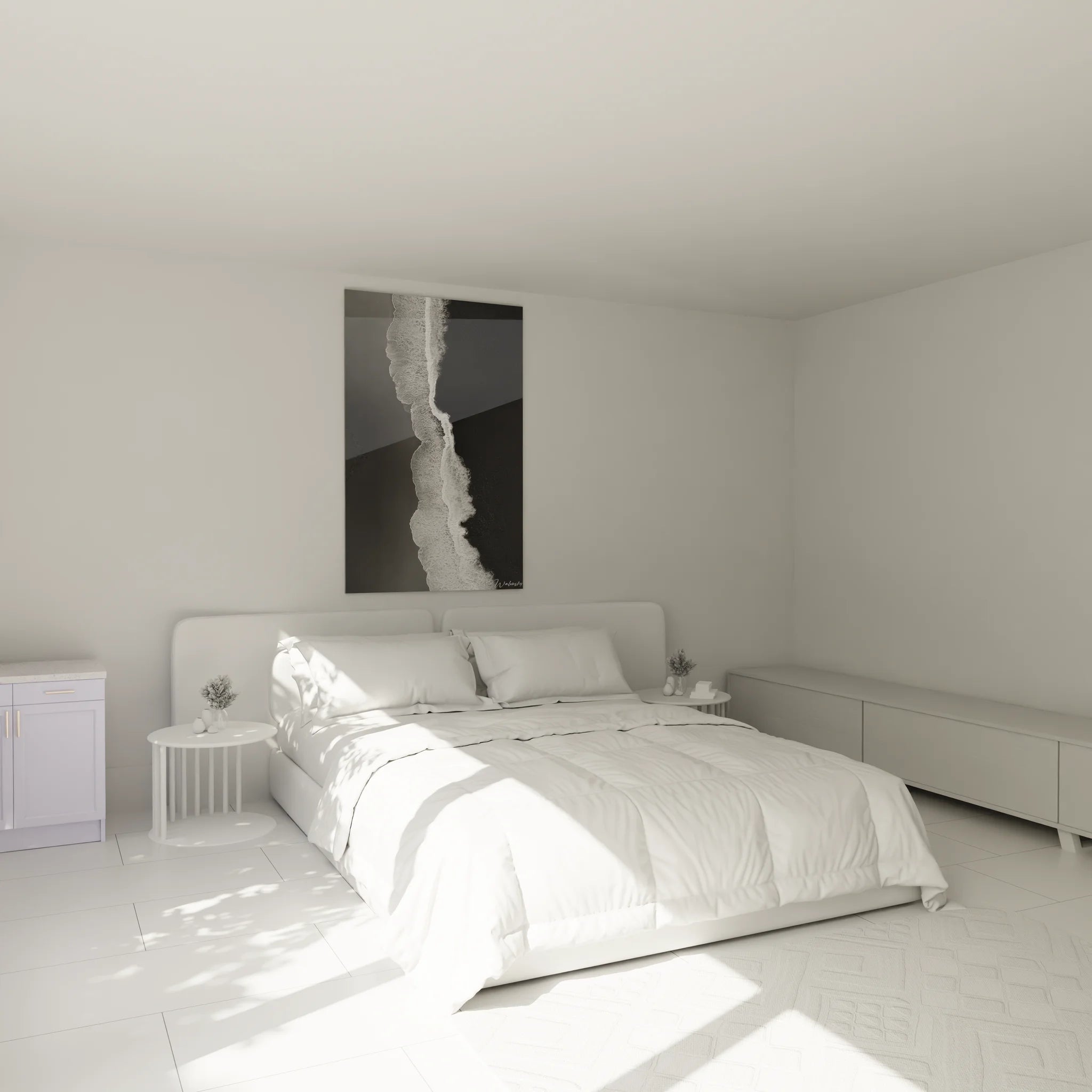
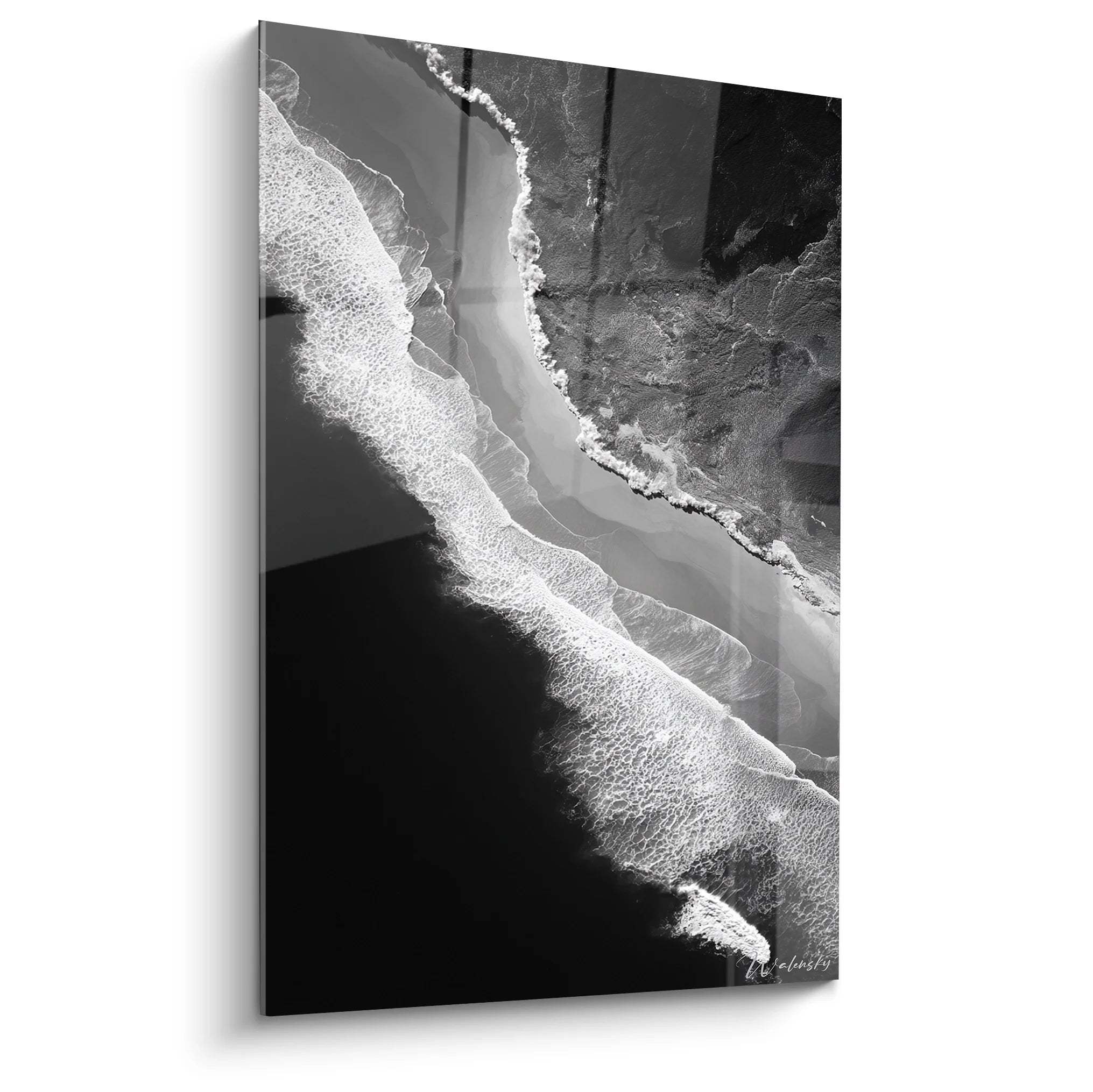
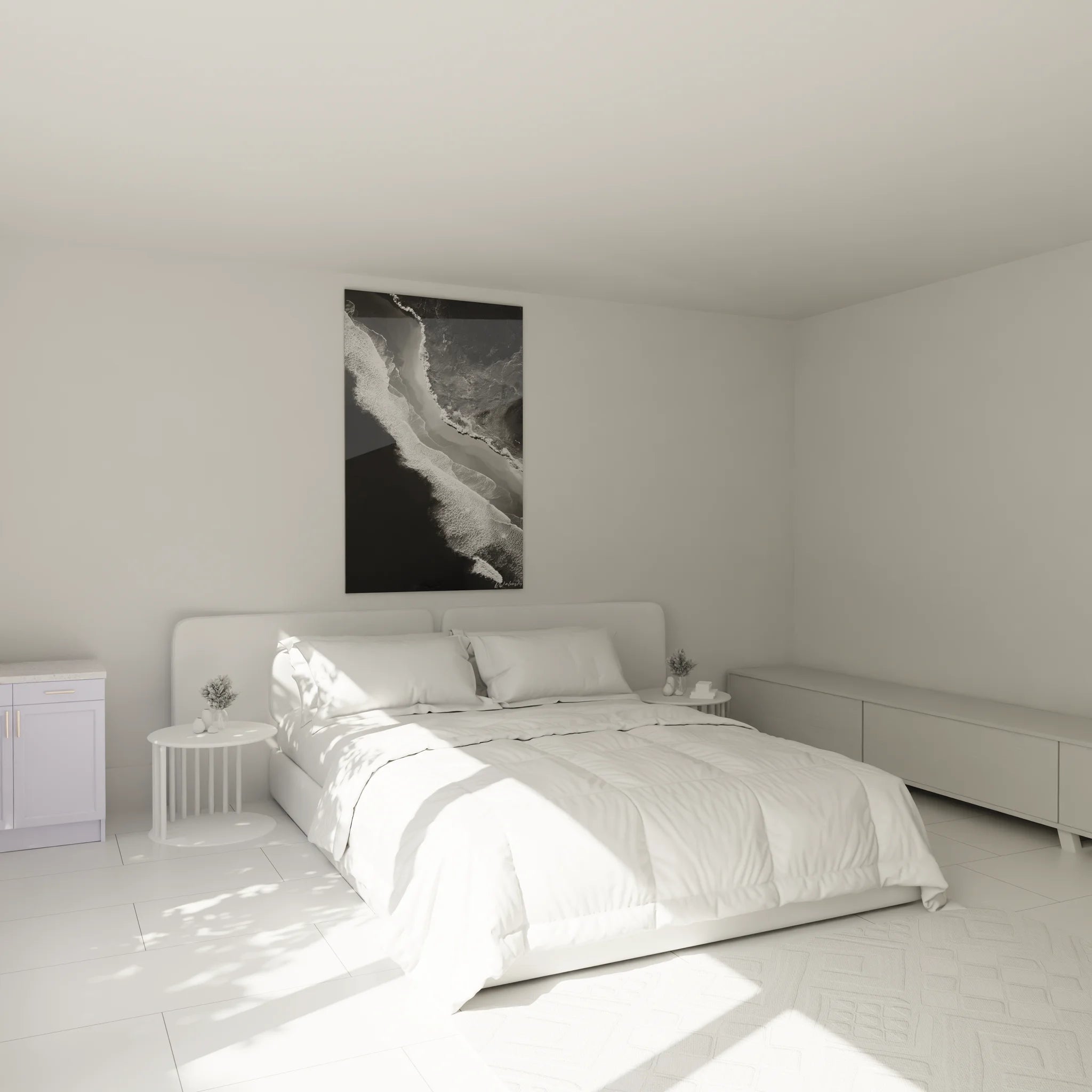
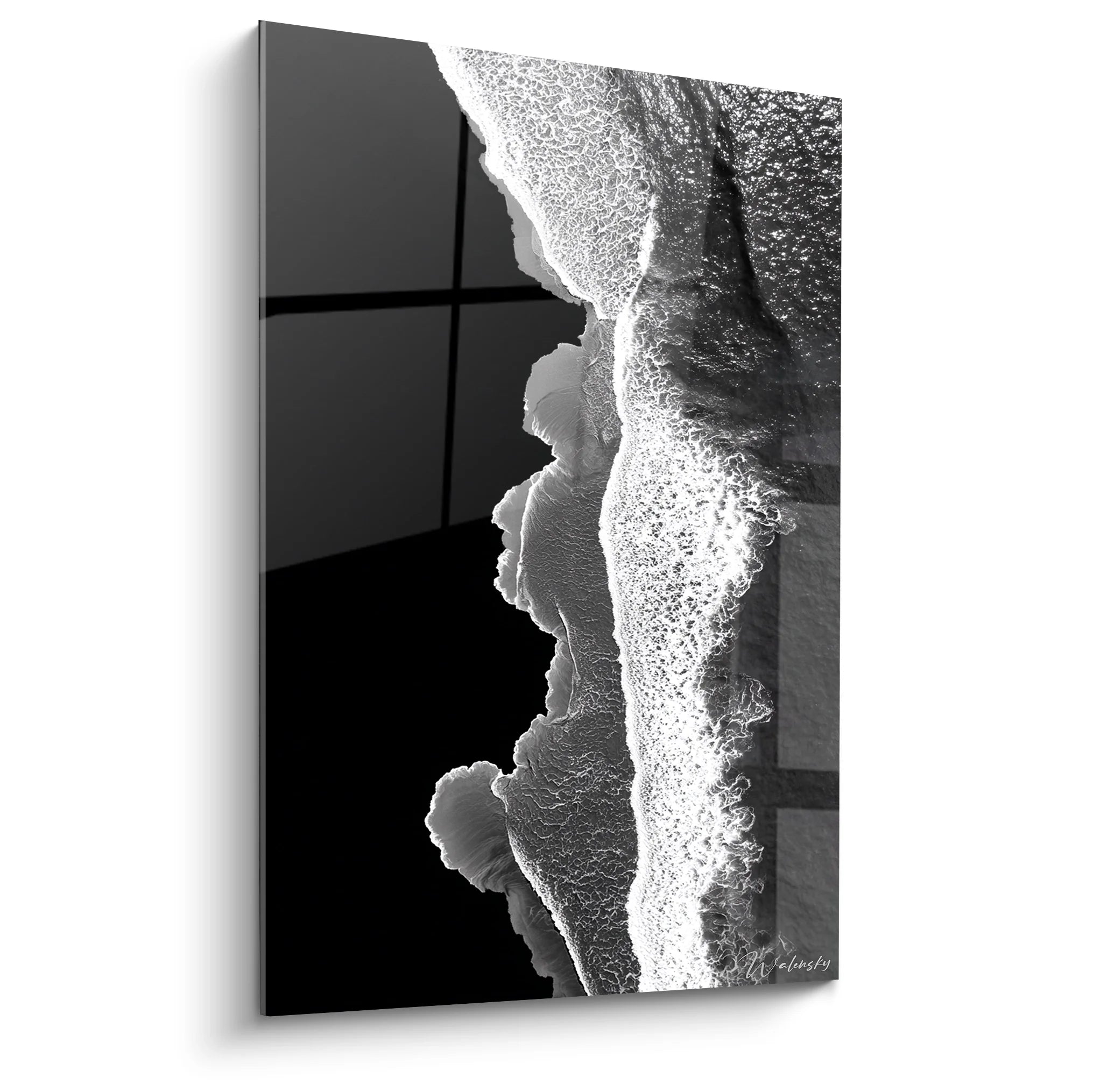
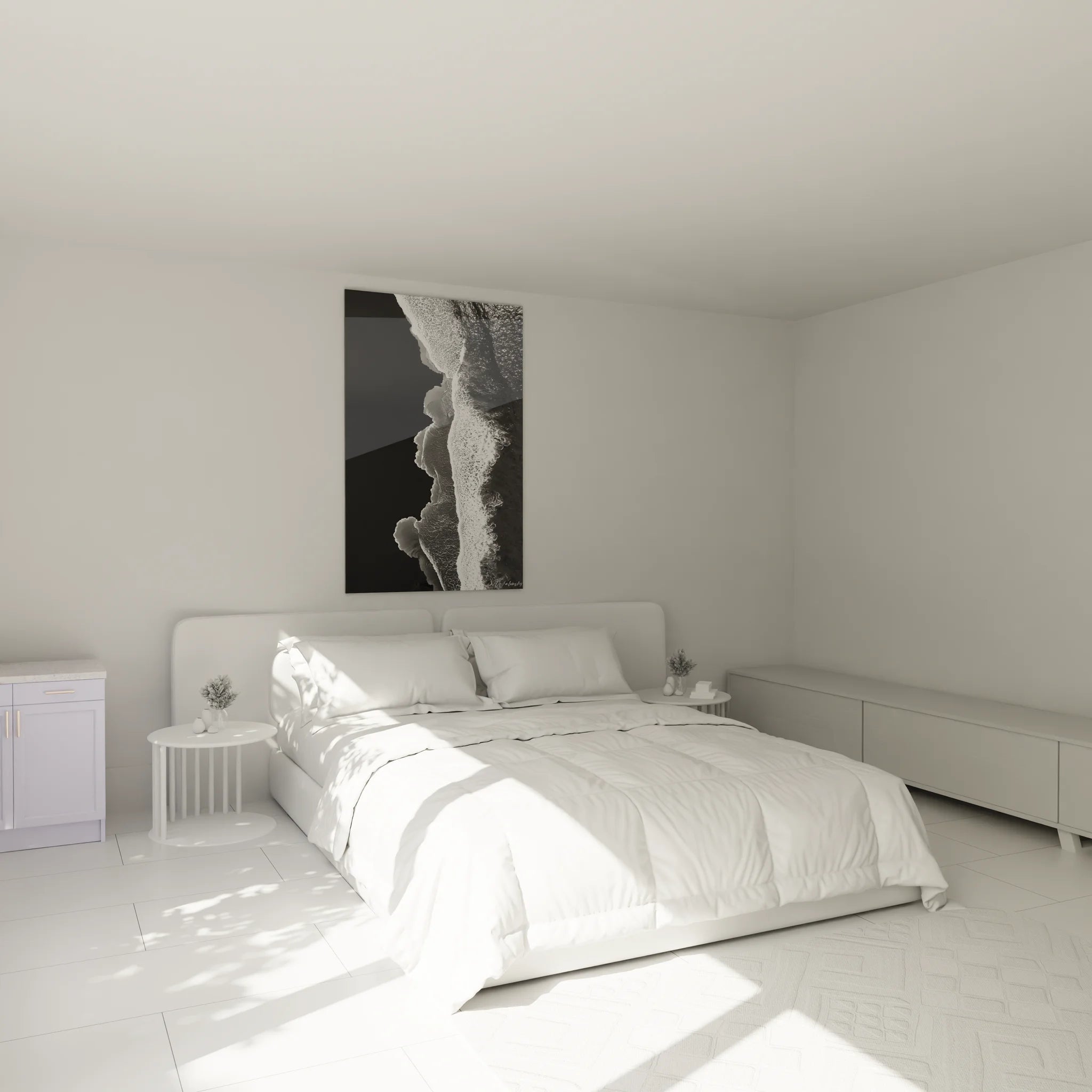
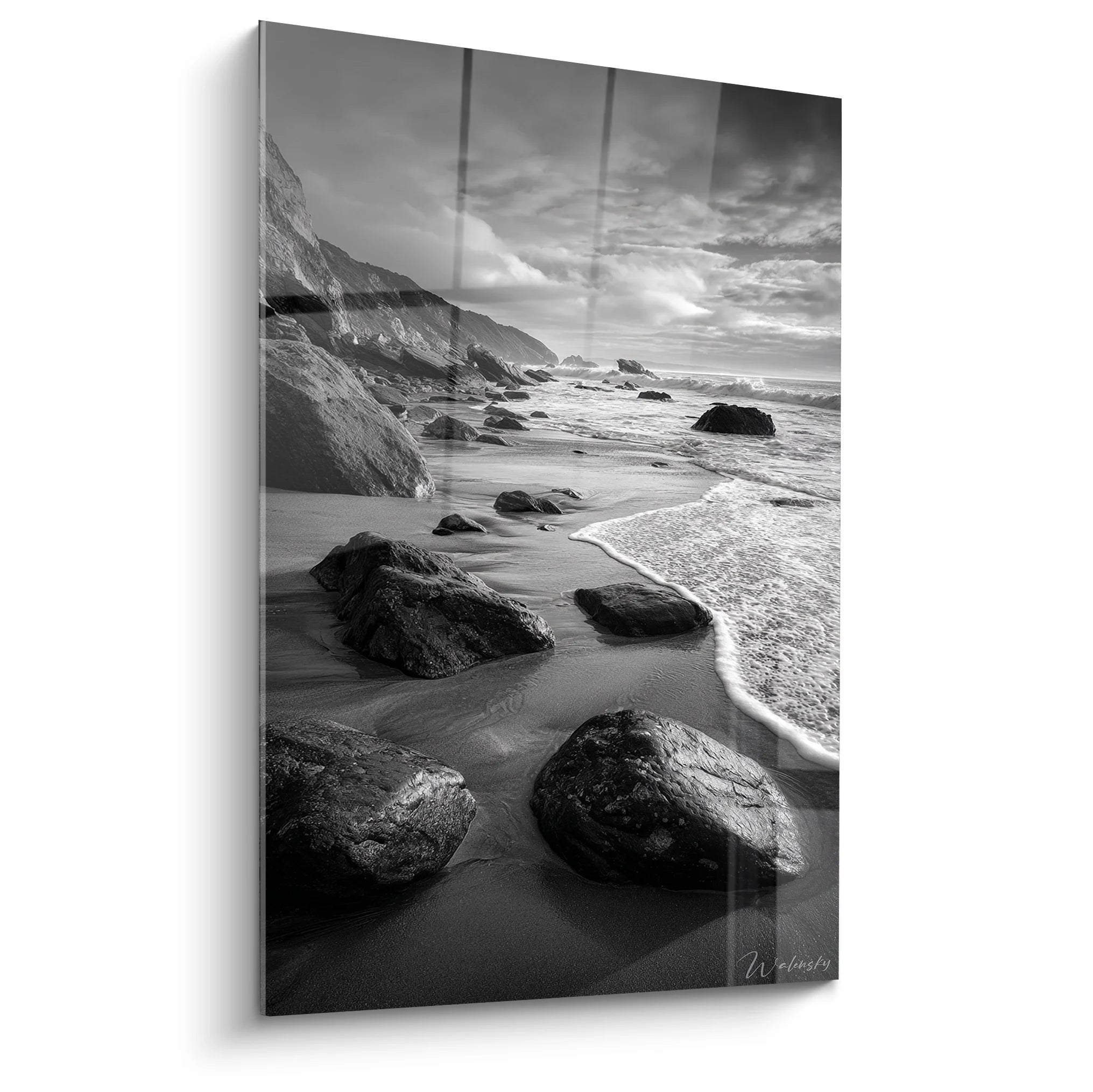
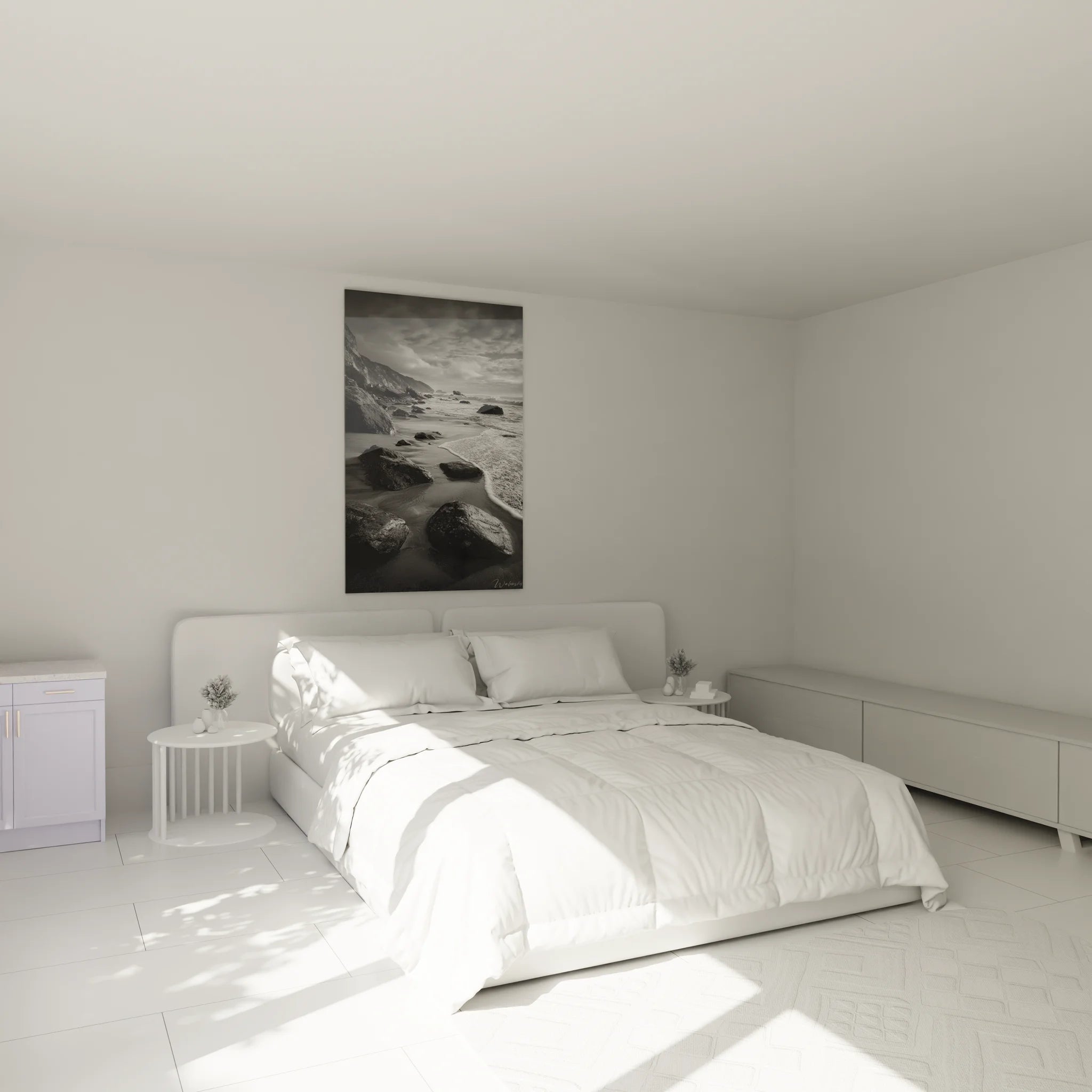
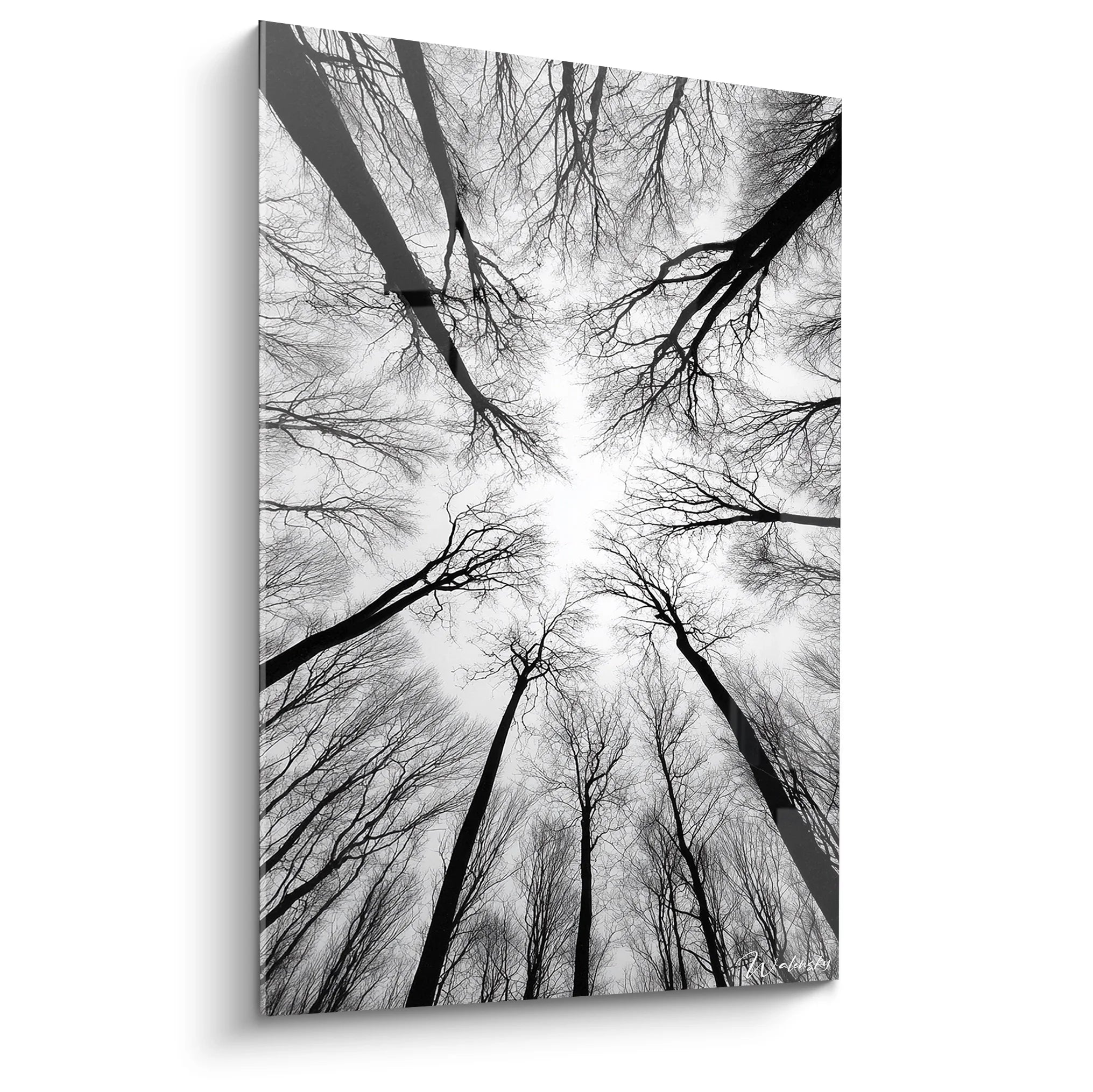
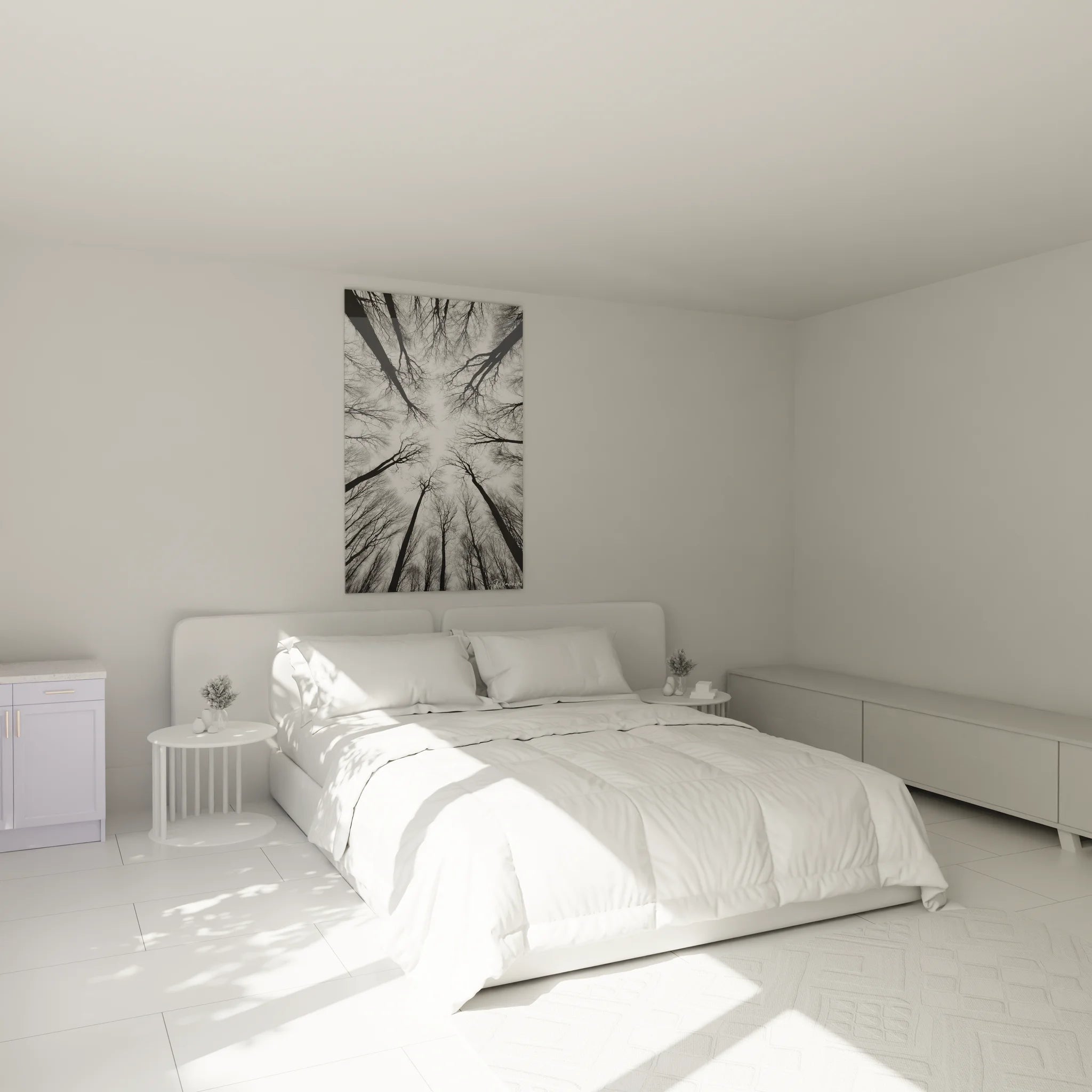
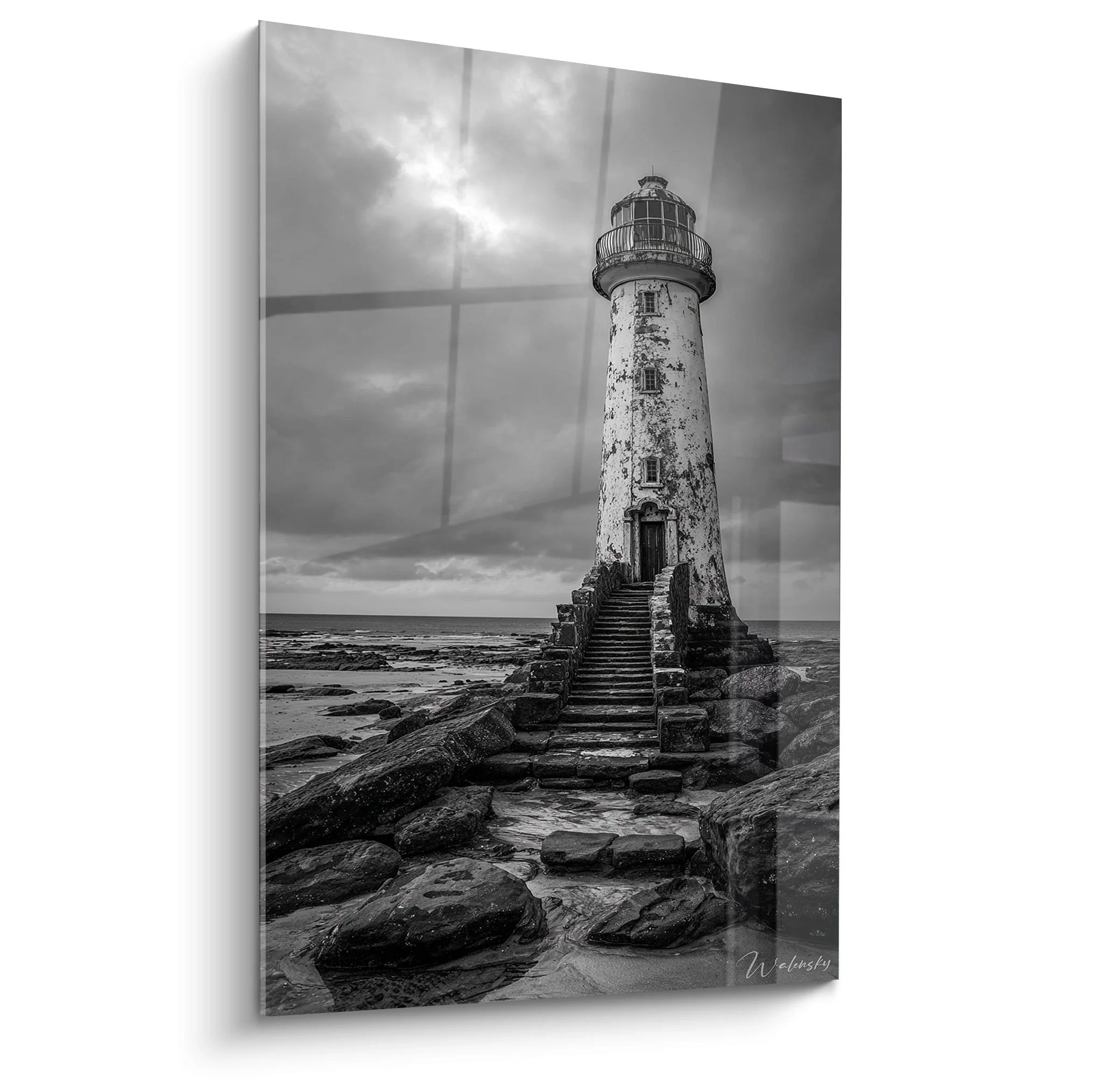
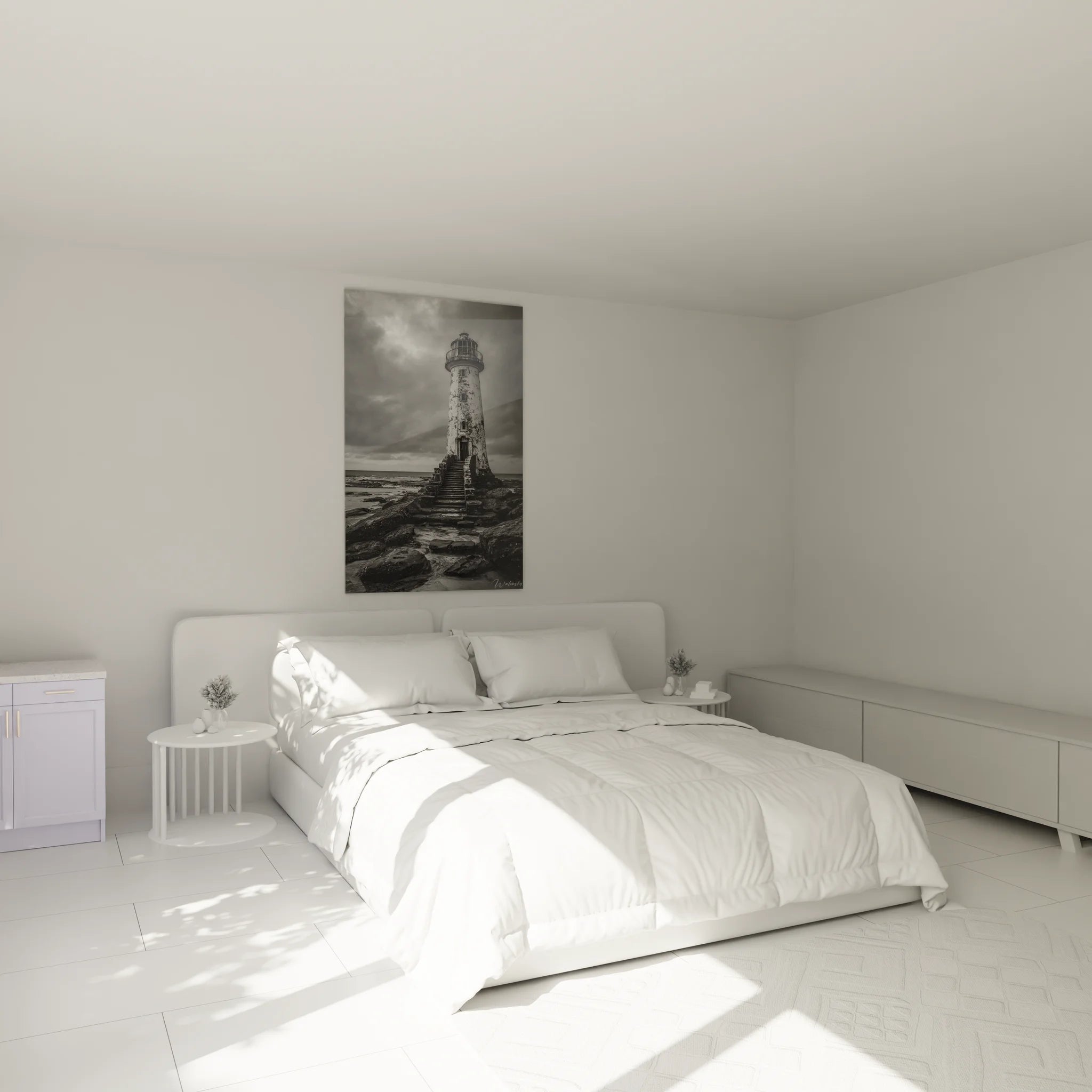
The black and white landscape painting represents a timeless artistic expression that transcends the ephemeral trends of interior decoration. This form of wall art distinguishes itself by its capacity to capture the raw essence of natural landscapes through the striking prism of monochrome.
The power of a black and white landscape lies in its ability to distill the emotion of a scene to its most fundamental expression. Without the distraction of color, each line, texture and gradient takes on heightened importance, creating a profoundly immersive visual experience.
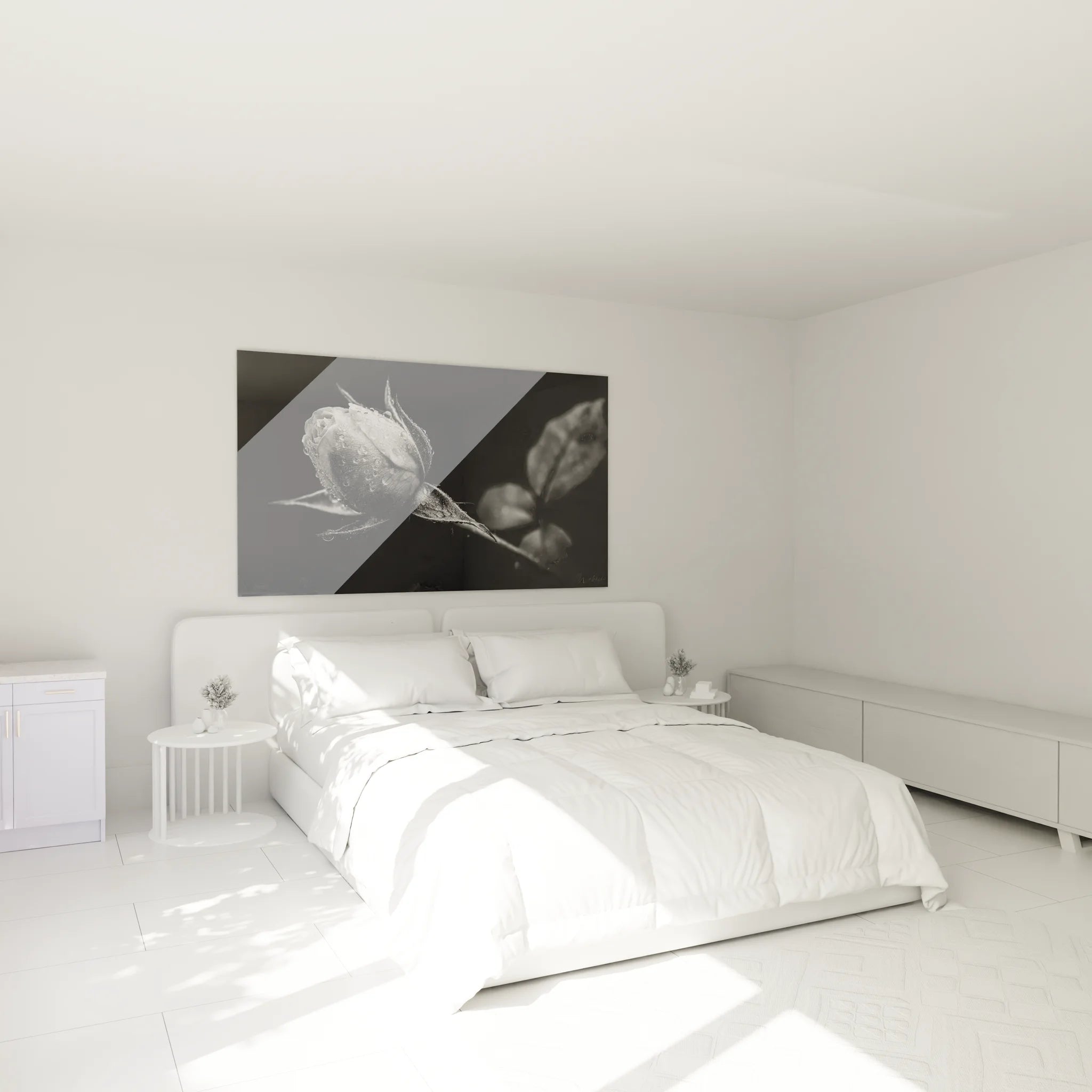
Large formats of black and white landscape paintings radically transform contemporary living spaces by creating dramatic focal points that dialogue with the surrounding architecture. Unlike colorful representations that may sometimes compete for attention, these monochrome works integrate harmoniously while retaining their distinctive character.
Black and white landscape photography, when presented in large format, creates a contemplative window onto distant horizons, inviting reflection and mental escape. This characteristic makes it a preferred choice for spaces dedicated to concentration or relaxation.
Contemporary art enthusiasts particularly appreciate how these monochrome landscape works can simultaneously honor classical photographic heritage while fitting perfectly into the most modern interiors, thus creating an elegant bridge between tradition and aesthetic innovation.
The Architectural Integration of Large Format Black and White Landscape Paintings
The architectural integration of a black and white landscape painting represents a sophisticated visual dialogue between the built environment and stylized natural representation. This aesthetic symbiosis transcends simple decoration to become a structural element of the inhabited space.
How do large monochrome formats transform the perceived geometry of a room?
Large black and white landscape paintings possess the remarkable capacity to redefine the architectural lines of a space. Unlike colorful works that may visually fragment a surface, monochrome landscapes extend spatial perception by creating visual continuity with surrounding structural elements.
In environments with sleek contemporary lines, these monochrome landscape representations act as virtual space extensions, creating the illusion of openings toward distant horizons. This characteristic is particularly valuable in urban environments where access to natural panoramas is limited.
The unique depth effect of architectural composition in black and white landscapes
The subtle gradation of gray, black and white tones in a monochrome landscape representation creates a three-dimensional depth effect that directly dialogues with the surrounding architecture. Horizon lines, valleys and geological formations in black and white establish visual vanishing points that virtually extend existing architectural perspectives.
Contemporary interior designers strategically use this property to visually correct proportions of problematic spaces – a narrow corridor appears wider when terminated by a horizontal black and white panorama, while a low ceiling seems to rise when faced with an imposing monochrome cliff.
Specific light interaction in achromatic landscape representations
An often overlooked but fundamental aspect of black and white landscape paintings concerns their unique interaction with ambient lighting. Unlike colorful works whose appearance can vary considerably depending on lighting, monochrome compositions maintain their visual integrity under different light conditions.
This perceptual stability allows integrating these paintings in spaces with variable or complex lighting conditions. In a cross-lit living room exposed to changing natural light, a monochrome landscape will retain its visual impact throughout the day, creating a constant architectural presence despite light fluctuations.
- Incorporation into spatial transitions (entrances, hallways, landings)
- Visual amplification of restricted architectural volumes
- Creation of structuring focal points in open spaces
- Balancing of architectural asymmetries through landscape framing
- Harmonization with raw materials (concrete, stone, natural wood)
A room's acoustics also benefit from large landscape formats, with paintings of significant dimensions helping to attenuate excessive sound reverberation. This complementary functional characteristic makes the black and white landscape painting a multifunctional arrangement element, simultaneously satisfying aesthetic and practical needs in contemporary interiors.
Spatial Perception and Contrast Dynamics in Black and White Landscape Paintings
The spatial perception of an interior environment undergoes a remarkable transformation in the presence of a black and white landscape painting. This perceptual alteration relies on visual mechanisms specific to monochrome processing of natural scenes, creating a unique immersive experience.
What psycho-visual effects are exclusive to large format monochrome landscapes?
Black and white landscape representations trigger cognitive processes distinct from those activated by their color counterparts. Our brain, freed from processing chromatic information, engages more deeply in the analysis of contrasts, textures and compositions. This intensified neurological response amplifies the perception of depths and scales within the inhabited space.
Large formats accentuate this phenomenon by occupying a significant portion of the visual field, creating a perceptual gateway into the represented landscape. This visual immersion generates a measurable spatial expansion effect – a room of modest dimensions appears substantially more spacious when it accommodates a monochrome panoramic representation.
The hierarchy of contrasts as structuring of perceived space
In a black and white landscape painting, the gradation of contrasts establishes a visual hierarchy that organizes the viewer's attention and, by extension, their perception of the surrounding space. Zones of intense contrast become visual anchor points that structure the overall spatial experience.
This perceptual organization differs fundamentally from that induced by colorful works. A monochrome mountain landscape, for example, uses exclusively tonal variations to distinguish successive planes, creating stratified depth that directly dialogues with the surrounding architecture.
Contemporary interiors, often characterized by restricted color ranges, resonate particularly well with this structuring through contrast. Designers exploit this complementarity by strategically positioning these works to reinforce or counterbalance existing architectural lines.
- Apparent dematerialization of the physical boundaries of the room
- Restructuring of the visual hierarchy of architectural elements
- Creation of an alternative visual rhythm to repetitive architectural patterns
- Introduction of organic complexity into minimalist environments
The positioning of a black and white landscape painting directly influences visual pathways within a space. A monochrome horizon placed at eye level establishes a horizontal reference line that subtly modifies the perception of vertical proportions, while a vertical composition accentuates the perception of ceiling height.
This manipulation of spatial perception makes the black and white landscape painting a remarkably versatile tool in visually correcting architecturally constrained spaces. The absence of chromatic distraction amplifies these corrective effects, allowing visual recalibration of problematic spatial proportions without resorting to costly structural interventions.
Harmonization between Contemporary Design and Monochrome Natural Imagery
The harmonization between contemporary architectural aesthetics and monochrome natural imagery represents a sophisticated visual dialogue that transcends simple decoration. The black and white landscape painting engages in a symbiotic relationship with modern spaces, creating unique aesthetic resonance.
How do monochrome landscapes complement contemporary materials?
Contemporary interiors often favor materials with pronounced textural characteristics – raw concrete, natural wood, brushed steel, exposed stone. These surfaces find a perfect visual echo in the natural textures captured by black and white landscape paintings. This textural correspondence creates sensory continuity between the built environment and natural imagery.
Unlike colorful landscape representations that may create visual rupture with architectural materials, monochrome gradients integrate harmoniously into the reduced palettes of contemporary spaces. A coastal landscape in black and white naturally dialogues with exposed concrete architecture, their respective textures responding to and amplifying one another.
Monochrome timelessness as antidote to decorative obsolescence
Contemporary architecture aspires to certain aesthetic permanence beyond fleeting fashions. Black and white landscape paintings share this quality of timelessness, their aesthetics transcending ephemeral decorative cycles. This stylistic resilience makes them particularly relevant artistic investments for spaces conceived with sustainable perspective.
Interior designers frequently recommend these monochrome works as permanent visual anchor points around which more transitory decoration elements can evolve. A forest panorama in black and white will retain its aesthetic relevance despite successive space redesigns, serving as a constant visual reference in a changing environment.
The abstraction/figuration duality exclusive to monochrome landscapes
A characteristic particularly valued in contemporary architecture is the capacity to play on the threshold between abstraction and concrete representation. Black and white landscape paintings perfectly embody this duality – a monochrome seascape can simultaneously function as an abstract composition of horizontal lines and as literal representation of a natural environment.
This interpretive ambivalence offers precious conceptual flexibility in architectural environments that navigate between minimalism and expressivity. Depending on viewing angle or observation distance, the same monochrome landscape work can reveal different visual readings, enriching spatial experience through this perceptual complexity.
- Reciprocal amplification of architectural and landscape textures
- Creation of visual breathing room in dense architectural environments
- Introduction of organic elements into rigorous geometric compositions
- Establishment of natural counterpoint to omnipresent domestic technology
The intrinsic luminosity of black and white compositions also contributes to optimizing light ambiances in contemporary spaces. A monochrome landscape with dominant light tones can amplify the perceived luminosity of a dark space, while a composition with deep blacks can create a visual anchor point in a very bright environment.
FAQ on Black and White Landscape Paintings
What is the ideal viewing distance for a large format black and white landscape painting?
The optimal viewing distance varies depending on the degree of detail in the work, but a practical rule is to plan a distance equivalent to 1.5-2 times the painting's diagonal. This distance allows you to appreciate simultaneously the overall composition and the textural nuances specific to monochrome renderings.
How does the black and white landscape painting interact with contemporary smart home lighting?
Programmable lighting systems offer fascinating possibilities with monochrome works. A black and white landscape painting reveals different nuances under various light spectra – warm lighting accentuates subtle sepia tones, while cooler light reinforces dramatic contrasts.
Do black and white landscape paintings require special maintenance in high-luminosity environments?
To preserve the depth of blacks and the subtlety of grays in a very bright environment, favor works protected by UV-blocking glass or specific treatment. This protection maintains the integrity of contrasts that constitute the very essence of monochrome landscape expression.