


Kitchen Wall Art
Discover our mouth-watering collection of kitchen wall art. Whether you want to add a gourmet touch to your living space or energize your kitchen with appetizing artworks, you'll find here unique and captivating pieces. Each artwork in our collection is carefully selected for its quality and originality, ensuring that every piece is a true work of art. Dive into our collection and let yourself be inspired by the beauty and creativity of culinary art.
 Overflowing Glass Painting with Pink and Turquoise Drippings - Tropical Splash - Cocktail Edition273,90 €
 Amber Glass with Swirling Flames Artwork - Liquid Flame - Beer Edition273,90 €
 Red and Orange Beer Glass Swirl Above Barrels Painting - Flame Background - Beer Edition273,90 €
 Black and White Beer Glass Artwork with Abundant Foam - Barrel and Pine Cone - Beer Edition228,90 €
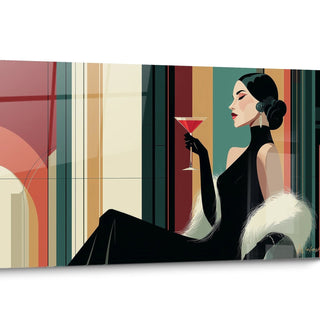
 Art Deco Cocktail Painting - Golden Elegance - Art Deco Edition228,90 €
 Olive Wall Art No. 1 - Kitchen Edition273,90 €
 Dynamic Freshness Wall Art - Kitchen Edition273,90 €
 Icy Cocktail Wall Art - Kitchen Edition273,90 €
 Aromatic Flames Wall Art - Kitchen Edition273,90 €
 Watermelon Quarter Coral and Gold Painting with Converging Lines - Arched White Crust - Watermelon Edition273,90 €
 Watermelon Quarter Painting in Pink and Gold with Splattered Gold - Curved Black Seeds - Watermelon Edition242,90 €
 Painting Red and Yellow Quarter with Aligned Seeds in a Fan - Thick Black Crust - Watermelon Edition242,90 €
 Watermelon Quarter Painting in Red and Gray with Angular Fragments - Shadow on the Floor - Watermelon Edition242,90 €
 Pink and Gold Quarter Painting near Roses - Golden Paint Drops - Watermelon Edition242,90 €
 Red and Green Quarter on White Background Painting - Close-up Watercolor - Watermelon Edition242,90 €
 Watermelon Slice Coral and Olive Green Painting - Summer Sketch - Watermelon Edition242,90 €
 Watermelon Painting Red and Navy Blue Gold - Golden Summer Glow - Watermelon Edition273,90 €
 Pink and Gold Quarter with Sparkling Splashes - Pearlescent Grid Background - Watermelon Edition273,90 €
 Watermelon Quarter Painting in Pink and Gold with Intertwined Geometric Lines - Grouped Black Seeds - Watermelon Edition273,90 €
 Watermelon Painting Pink and Gold Burst - Delicious Explosion - Watermelon Edition273,90 €
 Painting Red and Yellow Quarter in Front of a White Moon - Slender Shadow on the Ground - Watermelon Edition273,90 €
 Watermelon Quarter Painting - Red and Yellow Placed - Textured Gridded Background - Watermelon Edition273,90 €
 Watermelon Slices Red and Gold with Black Rays - Golden Geometric Triangles - Watermelon Edition273,90 €
 Watermelon Painting in Red and Gold with Graphic Lines - Geometric Summer Burst - Watermelon Edition273,90 €
Other families
Explore our other worlds
-
 Best Sellers240
artworks
Best Sellers240
artworks
-
 🔥 The Originals 🔥573
artworks
🔥 The Originals 🔥573
artworks
-
 Abstract4182
artworks
Abstract4182
artworks
-
 Africa608
artworks
Africa608
artworks
-
 Love154
artworks
Love154
artworks
-
 Animals10974
artworks
Animals10974
artworks
-
 Famous Artists ( inspirations )265
artworks
Famous Artists ( inspirations )265
artworks
-
 Asia378
artworks
Asia378
artworks
-
 Around the World3980
artworks
Around the World3980
artworks
-
 Culture222
artworks
Culture222
artworks
-
 Children54
artworks
Children54
artworks
-
 Space514
artworks
Space514
artworks
-
 Celebrations & Seasons670
artworks
Celebrations & Seasons670
artworks
-
 Finance38
artworks
Finance38
artworks
-
 History123
artworks
History123
artworks
-
 Professions235
artworks
Professions235
artworks
-
 Fashion696
artworks
Fashion696
artworks
-
 Artistic Movements793
artworks
Artistic Movements793
artworks
-
 Music653
artworks
Music653
artworks
-
 Myth and Legends332
artworks
Myth and Legends332
artworks
-
 Nature5000
artworks
Nature5000
artworks
-
 Black and white445
artworks
Black and white445
artworks
-
 Landscapes1531
artworks
Landscapes1531
artworks
-
 Retro298
artworks
Retro298
artworks
-
 Science and Mathematics122
artworks
Science and Mathematics122
artworks
-
 Sports & Leisure2470
artworks
Sports & Leisure2470
artworks
-
 Street Art167
artworks
Street Art167
artworks
-
 Primordial Lands150
artworks
Primordial Lands150
artworks
-
 Transportation15
artworks
Transportation15
artworks
-
 Zen2161
artworks
Zen2161
artworks
-
 Browse all our wall art25001
artworks
Browse all our wall art25001
artworks
-
 Places150
artworks
Places150
artworks
-
 Professionnels101
artworks
Professionnels101
artworks


All about Kitchen Wall Art
- Kitchen Wall Art Presentation
- Kitchen Wall Art Culinary
- Kitchen Wall Art Gastronomic Ambiance
- Kitchen Wall Art Decoration
Kitchen wall art represents far more than simple wall decoration. These artworks specifically designed for culinary spaces transform your kitchen into a place of gastronomic inspiration and personal expression. Unlike standard artworks, kitchen wall art is engineered to withstand the specific conditions of this environment: steam, temperature fluctuations, occasional oil or water splashes.
These artistic creations distinguish themselves through exclusively culinary themes: gastronomic still life compositions, illustrations of fresh ingredients, market scenes, representations of iconic kitchen tools, or inspiring quotes related to the art of dining. Their function far transcends decoration to become a daily source of inspiration for your culinary creations.
In contemporary kitchens where wall space is precious, these artworks optimize vertical surfaces while adding character and personality to a space often dominated by function. They create a visual focal point that can instantly transform the atmosphere of your culinary space.
Kitchen wall art also distinguishes itself through its capacity to subtly influence taste experience. Studies in neurogastronomy suggest that our visual environment directly affects our perception of flavors. Thus, artwork depicting citrus fruits can enhance our perception of acidic notes in a dish, while a work with warm tones intensifies the experience of spices.
Browse our thematic tabs to discover how to select the ideal kitchen wall art that will enhance your culinary space while reflecting your passion for gastronomy.
Kitchen Wall Art: Culinary Art as Inspiration Source
Incorporating kitchen wall art into your culinary space transcends mere decoration to create a complete sensory experience. These artworks specifically designed for the gastronomic world offer an additional dimension to your time spent cooking.
How do kitchen artworks influence your culinary creativity?
The presence of kitchen wall art depicting fresh ingredients or delicately composed dishes unconsciously activates your taste buds and stimulates your culinary imagination. Research in cognitive psychology demonstrates that regular exposure to aesthetically presented food images significantly increases creativity in preparing daily meals. An artwork illustrating a chef executing a precise technique can even serve as a subtle visual reminder to perfect your own technical gestures.
Unlike standard artworks, kitchen wall art is specifically designed to resist the particular conditions of this environment. Its surface is typically treated to withstand ambient humidity, temperature fluctuations, and occasional splashes without deteriorating. This exceptional resistance allows strategic placement, even near cooking or washing areas.
Which specific kitchen art themes should you prioritize?
Kitchen wall art comes in exclusive themes that particularly resonate in the culinary space:
- Compositions of citrus and exotic fruits for a vitaminized kitchen
- Fresh aromatic herbs to inspire seasoning
- Scenes from international gastronomic markets for culinary exploration
- Artistic representations of ancestral cooking techniques
- Gastronomic still life showcasing seasonal products
These themes specific to the culinary world transform your daily kitchen experience. Artwork depicting a Mediterranean market stall can instantly transport you to these regions and inspire you to incorporate their sunny flavors into your dishes.
The generous size of kitchen wall art allows it to have considerable visual impact that transforms the overall atmosphere of your culinary space. Unlike small decorative elements that blend into the décor, large-format kitchen wall art immediately becomes the focal point that defines the ambiance of your kitchen.
Can kitchen wall art replace traditional tile backsplash?
An emerging trend involves using large-format kitchen wall art as an alternative to traditional tile backsplash in areas not exposed to direct splashes. This innovative approach offers several advantages:
- Simplified installation compared to tile laying
- Ability to refresh aesthetics without major renovations
- Significant reduction of grout lines prone to residue accumulation
- Complete personalization impossible to achieve with standardized materials
These specially treated artworks offer resistance to light splashes while bringing incomparable artistic touch. Their smooth surface makes maintenance considerably easier compared to traditional tiled surfaces with their porous grout lines.
The specific lighting of kitchen wall art represents another distinctive aspect of these works. Unlike classical artworks requiring fixed lighting, kitchen wall art ideally benefits from a modular lighting system that adapts to different times of day and cooking activities. Soft directional lighting highlights the textures represented in the artwork, while brighter lighting reveals subtle details during meal preparation.
The remarkable acoustic properties of kitchen wall art constitute an often-overlooked advantage. In an environment dominated by hard, reflective surfaces (tile, countertops, appliances), these large artworks partially absorb sound and reduce reverberation, creating a more muffled soundscape conducive to conversation during meal preparation.
Ultimately, kitchen wall art transcends its purely decorative function to become true catalysts for enriched culinary experiences, stimulating all your senses while you create your gastronomic masterpieces.
Kitchen Wall Art: Creators of Unique Gastronomic Ambiance
Kitchen wall art exerts considerable influence on the atmosphere of your culinary space by creating complete gastronomic immersion. These artworks specifically designed for this environment act as true ambiance modifiers that transform a simple functional room into a space of culinary expression.
How does kitchen wall art modify flavor perception?
One of the most fascinating aspects of kitchen wall art lies in its capacity to influence your taste perception. Studies in neurogastronomy demonstrate that our immediate visual environment significantly modifies our sensory experience of food. Artwork depicting citrus fruits will intensify your perception of acidic notes in a dish, while a work with warm tones evoking oriental spices will amplify your sensitivity to spiced flavors.
Kitchen wall art also distinguishes itself through its capacity to reflect contemporary gastronomic trends. Unlike generic decorations, these artworks evolve with current culinary movements:
- Artistic representations of intercultural fusion cuisine
- Illustrations of fermentation techniques and natural preservation
- Visual evocations of locavore gastronomy and short supply chains
- Artistic interpretations of superfoods and conscious nutrition
- Visual celebrations of family culinary heritage
These avant-garde themes transform your kitchen into a contemporary space aligned with modern gastronomic values, far beyond simple wall decoration.
How does kitchen wall art create gastronomic visual signature?
Kitchen wall art enables you to establish a true gastronomic visual signature that reflects your personal culinary philosophy. Whether a minimalist approach inspired by Nordic cuisine, a celebration of vibrant marketplace colors from Mediterranean regions, or an exploration of ancestral Asian techniques, these artworks immediately announce your gastronomic identity to guests.
The interactive dimension of kitchen wall art constitutes a rarely explored innovative aspect. These artworks become natural conversation points during meals, stimulating exchanges around culinary traditions, gastronomic memories, or preparation techniques represented. This social dimension considerably enriches the dining experience.
Seasonal adaptation represents a significant advantage of large-format kitchen wall art. Unlike permanent decorative elements like tile or backsplash, these artworks can be changed throughout seasons to reflect seasonal products, thus creating a dynamic culinary environment that evolves with the gastronomic calendar.
The placement strategy for kitchen wall art differs fundamentally from conventional artworks. To maximize sensory impact, these artworks ideally install:
- Facing the preparation area to stimulate creativity while cooking
- In your field of vision from the dining table to enrich taste experience
- Near circulation areas to inspire in passing
- In visual continuation of food storage areas to create thematic continuity
These strategic placements transform the artwork into an active participant in your culinary experience rather than a passive decorative element.
The psychological impact of kitchen wall art on your relationship with food constitutes an unexpected benefit. Behavioral psychology studies suggest that regular exposure to artistic representations of healthy foods and respectful preparation techniques unconsciously encourages more balanced dietary choices and a more mindful approach to daily cooking.
Kitchen wall art also contributes to defining different functional zones in an open space. In contemporary kitchens integrated into living areas, these artworks visually delimit the culinary zone without requiring physical separation, thus preserving space fluidity and conviviality while creating distinctive identity for each functional zone.
Ultimately, kitchen wall art far transcends its decorative function to become true architects of immersive gastronomic experiences, fundamentally transforming your daily relationship with cooking and sharing meals.
Kitchen Wall Art: The Art of Culinary Wall Decoration
Integrating kitchen wall art into your culinary space represents a sophisticated decoration strategy that fundamentally transforms this room's identity. These artworks specifically designed for the culinary environment create considerable visual impact that influences your kitchen's overall atmosphere.
Why is kitchen wall art essential in modern culinary design?
In contemporary kitchens dominated by function, kitchen wall art introduces the necessary balance between practicality and aesthetics. These artworks instantly transform otherwise underutilized wall surfaces into personal expressions of your culinary passion. Unlike miniature decorative elements that get lost visually among utensils and equipment, large-format kitchen wall art immediately creates a captivating focal point.
The specific resistance of kitchen wall art to this environment's particular conditions fundamentally distinguishes it from conventional artworks. Their composition protects against:
- Fluctuating ambient humidity characteristic of culinary spaces
- Rapid temperature variations during intensive cooking periods
- Daily exposure to potentially greasy cooking vapors
- Occasional splashes inherent to culinary activity
- Frequent cleaning necessary in this environment
This exceptional durability guarantees that your investment retains its visual impact despite the demanding conditions of the culinary environment.
How to select ideal dimensions for your kitchen wall art?
Optimal sizing of kitchen wall art differs significantly from standard recommendations for other living spaces. In the culinary environment, the desired visual impact generally requires:
- Minimum size of 70 x 100 cm to create significant visual presence
- Proportional ratio to available wall surface (ideally occupying 50-60% of visible height)
- Adaptation to primary viewing distance during culinary activity (generally closer than in a living room)
- Dimensional harmony with adjacent kitchen modules
These considerations specific to the culinary space guarantee that your kitchen wall art will exercise optimal visual influence on the room's overall atmosphere.
The chromatic interaction between kitchen wall art and your countertop constitutes a fundamental often-neglected aspect. Unlike generic decorative approaches that simply prioritize harmony, kitchen wall art ideally creates intentional chromatic contrast with work surfaces to:
- Visually stimulate the space during lengthy preparation sessions
- Create visual separation that distinctly defines functional zones
- Introduce visual dynamics that break the monotony of technical surfaces
- Balance the cool tones generally dominant in contemporary kitchens
This sophisticated chromatic approach fundamentally transforms your culinary space's visual experience.
The seasonal evolution of your culinary wall decoration represents a distinctive advantage of kitchen wall art compared to fixed elements. The ability to modify these artworks allows you to align your visual environment with:
- Seasonal products you prioritize in your kitchen
- Chromatic palettes corresponding to culinary seasons
- Different preparation techniques you explore throughout the year
- Seasonal gastronomic celebrations and traditions
This adaptability creates a dynamic culinary environment that evolves in harmony with your gastronomic practice.
Integrating kitchen wall art into a specific lighting strategy represents an advanced dimension of culinary wall decoration. Unlike standardized lighting approaches, kitchen wall art ideally benefits from a modular system that adapts to different cooking activity phases:
- Soft lighting during meal planning to stimulate creativity
- More intense illumination during preparation to reveal technical details
- Subdued lighting during dining to create immersive ambiance
- Subtle chromatic variation to highlight certain artwork thematic aspects
This sophisticated approach transforms your kitchen wall art into an evolving artistic installation that adapts to different moments of your culinary experience.
FAQ on Kitchen Wall Art
How to effectively clean kitchen wall art exposed to cooking vapors?
To maintain kitchen wall art regularly exposed to cooking vapors, prioritize gentle but consistent cleaning. Use a microfiber cloth lightly dampened with diluted white vinegar and water mixture, gently wiping the surface along the texture direction. Absolutely avoid abrasive products or chemicals that could alter the specific protective finishes on kitchen wall art.What is the ideal hanging height for large-format kitchen wall art?
The optimal hanging height for kitchen wall art differs from standard recommendations for living spaces. Prioritize positioning where the center sits between 150 and 160 cm from the floor, slightly lower than in a living room, to account for the generally lower working position in kitchens. Adjust this height based on your size and specific working habits to maximize visual impact during your culinary activities.Can kitchen wall art effectively replace traditional backsplash?
Large-format kitchen wall art can indeed partially replace traditional backsplash in areas less exposed to direct water or oil splashes. For this specific application, exclusively select kitchen wall art equipped with reinforced moisture protection and resistant to frequent cleaning. Complement the installation with a transparent protective film specific to culinary environments that will preserve the artwork while maintaining its visual impact.How to coordinate kitchen wall art with displayed decorative utensils?
To create sophisticated visual coherence, establish thematic dialogue between your kitchen wall art and displayed decorative utensils. Rather than literal correspondence, prioritize conceptual complementarity: artwork evoking Mediterranean cuisine pairs perfectly with terracotta or olive wood utensils. Subtly integrate a common chromatic element that will create visual continuity while allowing each element to maintain its identity. These principles also apply to waiting areas where kitchen wall art can create pleasant anticipation.What is the average lifespan of kitchen wall art in active culinary environment?
The longevity of professional-quality kitchen wall art in an active culinary environment typically reaches 8 to 10 years without significant visual deterioration, provided you respect maintenance guidelines. This exceptional durability, comparable to high-end kitchen equipment, makes kitchen wall art a particularly cost-effective decorative investment long-term, even for real estate professionals seeking to enhance property value.How to harmoniously integrate kitchen wall art into complex architectural space?
In architectural configurations with structural constraints, such as staircases or irregular angles, kitchen wall art can be specifically dimensioned to perfectly fit these unique spaces. Opt for custom formats that transform these constraints into visual opportunities. A triangular kitchen artwork can thus magnify an overlooked angle while a narrow vertical composition will enhance a wall segment between two openings.Further reading
Our articles on this topic
- Gourmet Gallery Wall: Composing a Painting Ensemble for a Chic Country Kitchen
- Modern kitchen paintings: how to choose and where to hang them for a successful decor
- Coffee painting for a modern gourmet kitchen: our decor ideas
- Wall art for modern kitchens: ideas, precautions and inspirations
- Wall Art for a Designer Kitchenette
- Cherry painting: the playful, gourmet pop touch for your kitchen
L'art qui suscite l'envie
Maison belge d'art mural grand format
14 jourspour changer d'avis*
Protection Walenskyincluse
Fabriquéen Italie
FormatXXL
Kit de fixationtoujours fourni
* Hors tableaux personnalisés et tailles personnalisées


