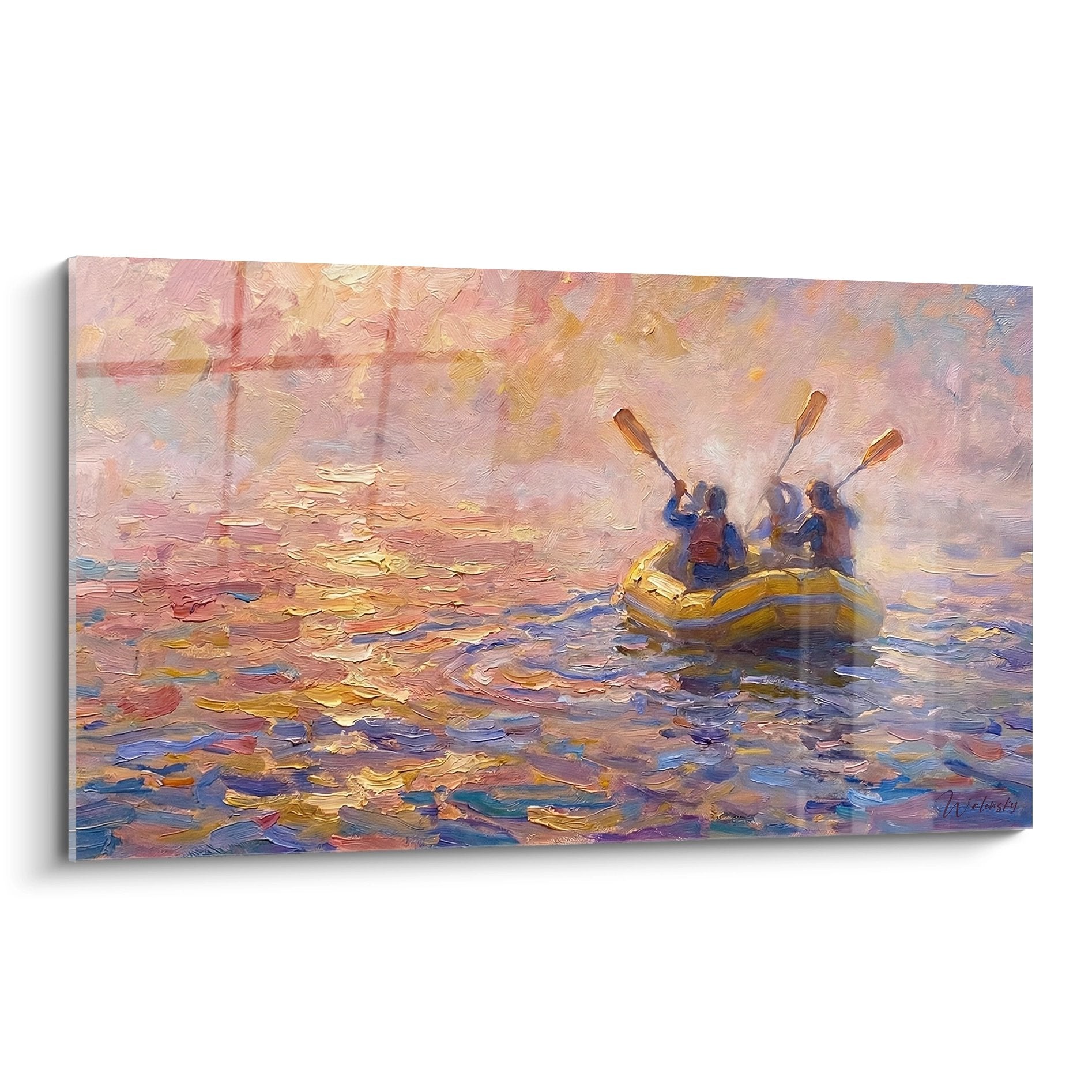
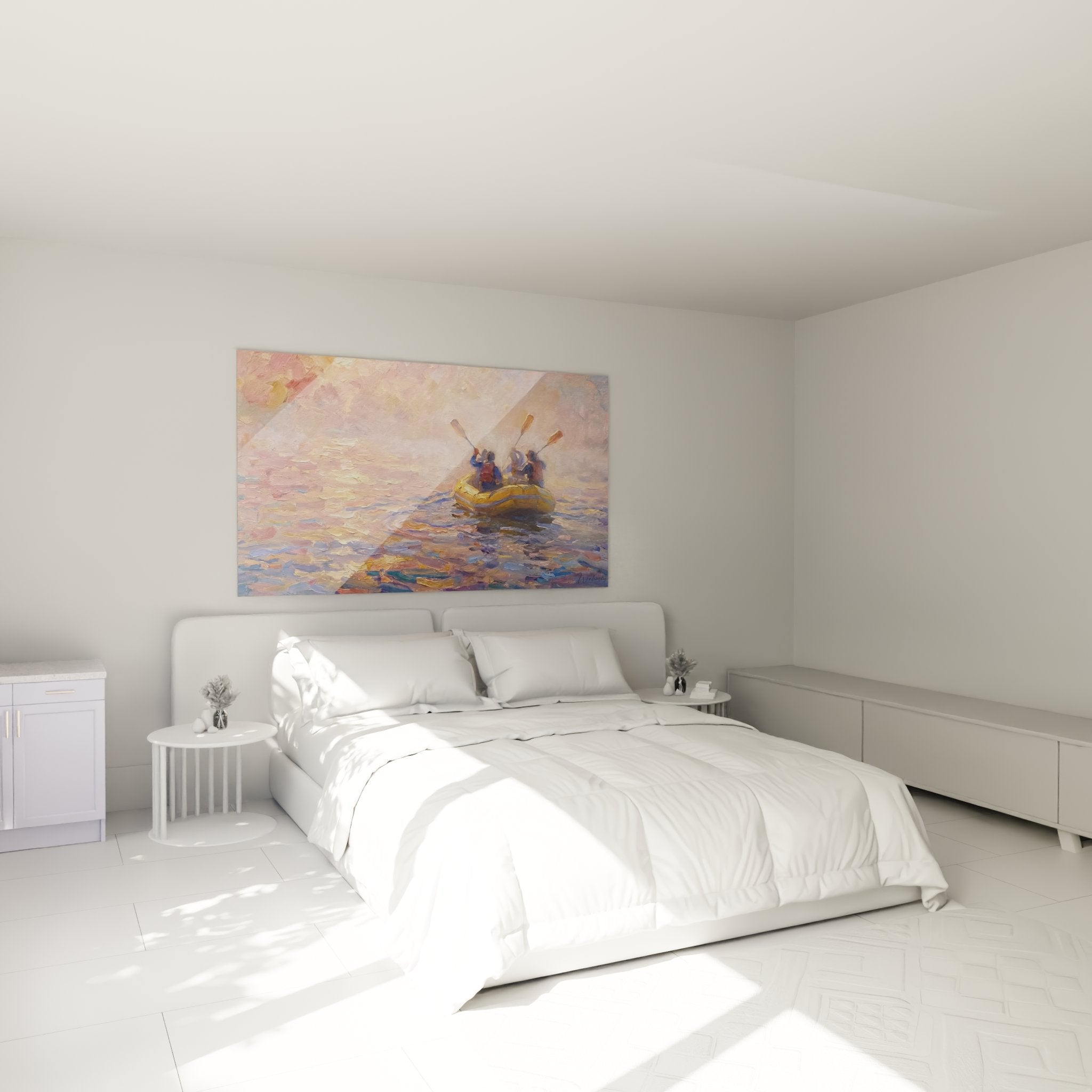
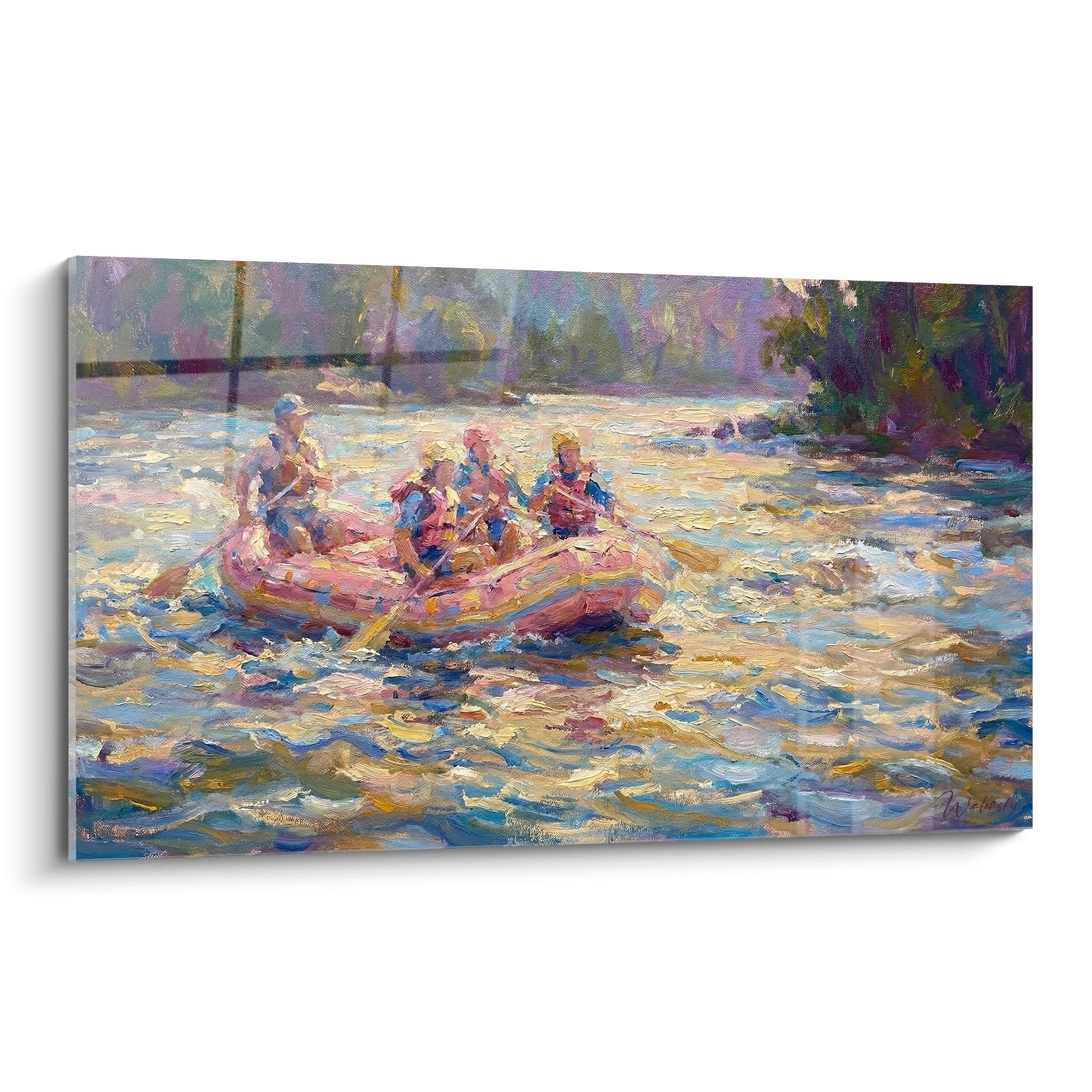
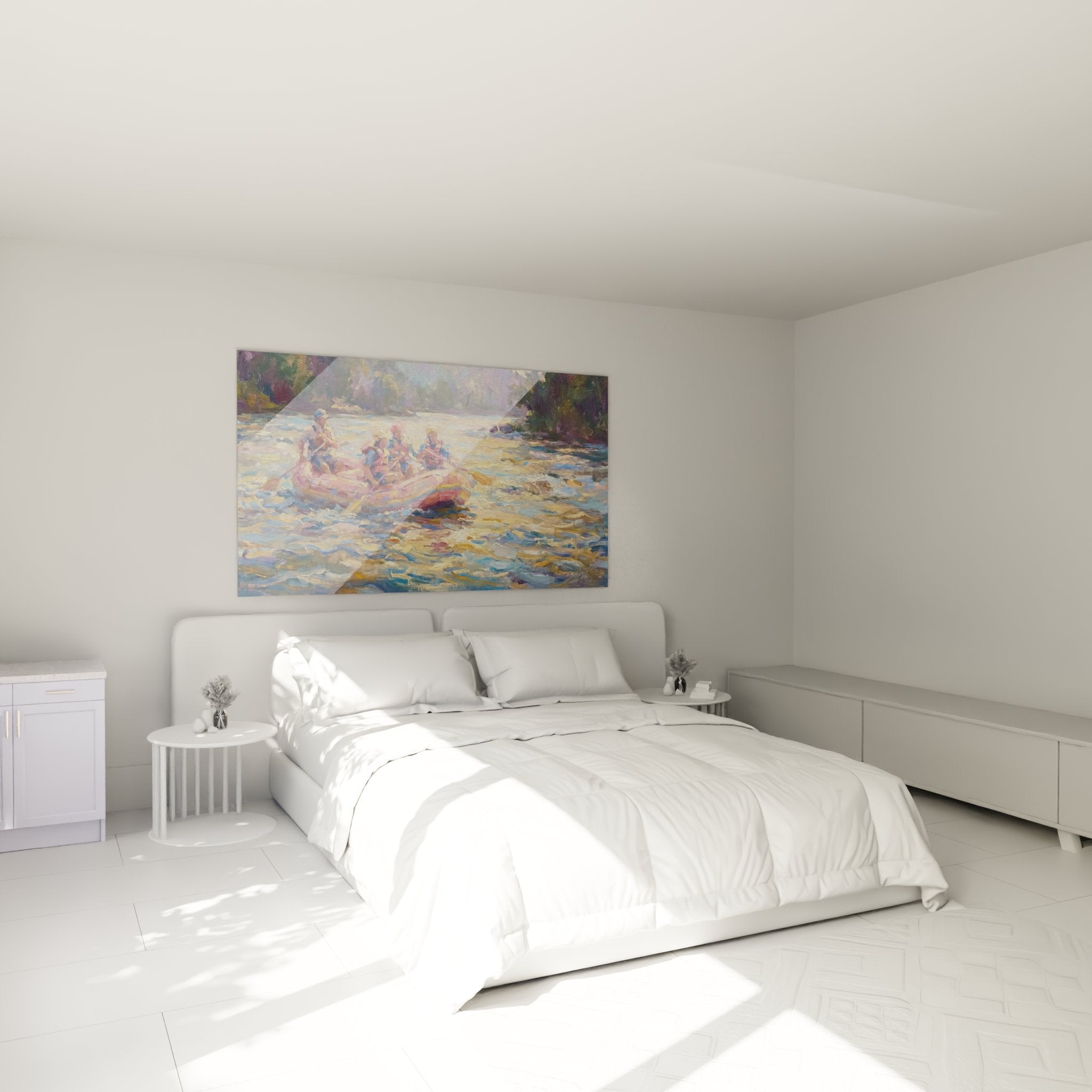
- Rafting Paintings Overview
- Rafting Paintings: Whitewater Energy
- Rafting Paintings: Extreme Adventure Décor
- Rafting Paintings: Symbolism of Overcoming
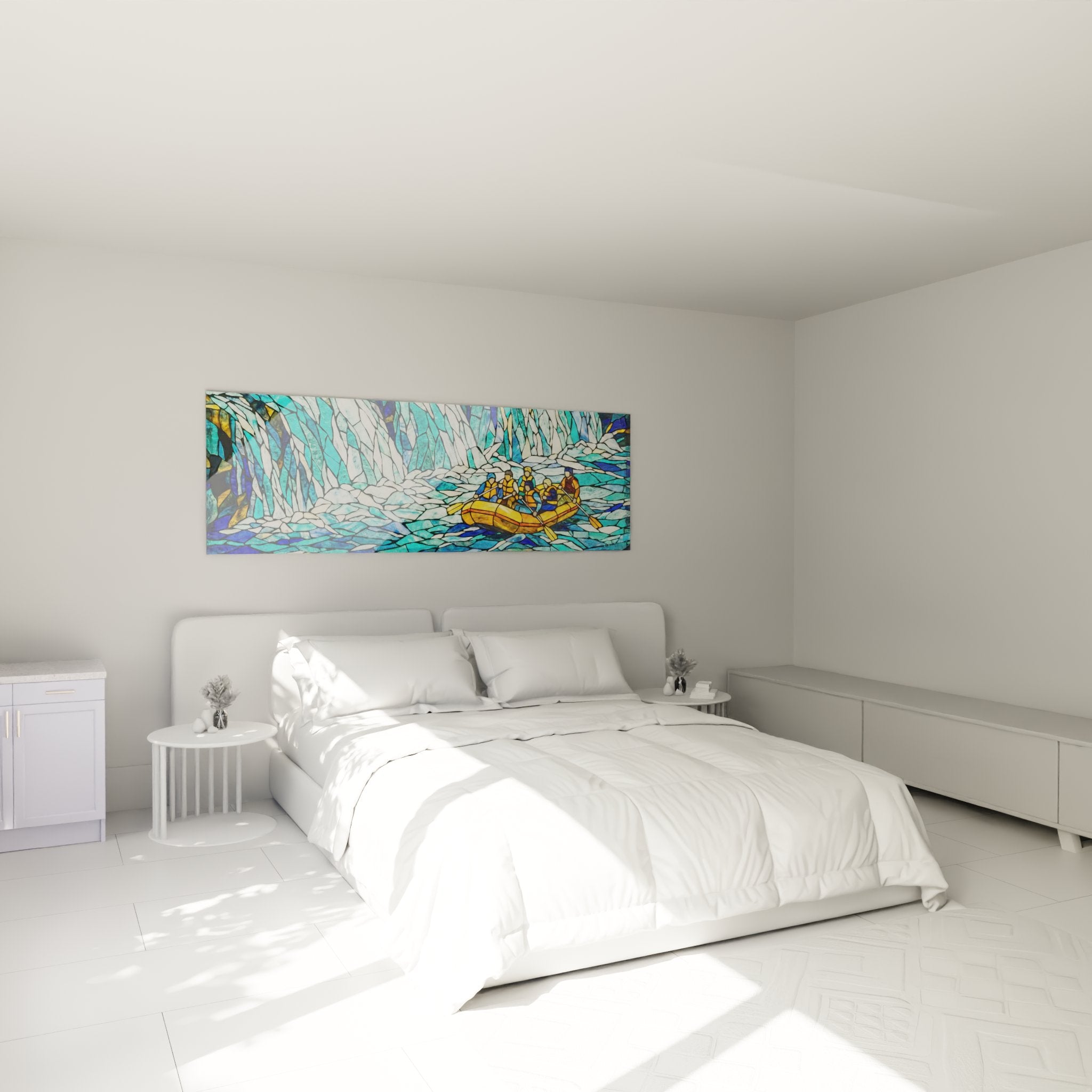
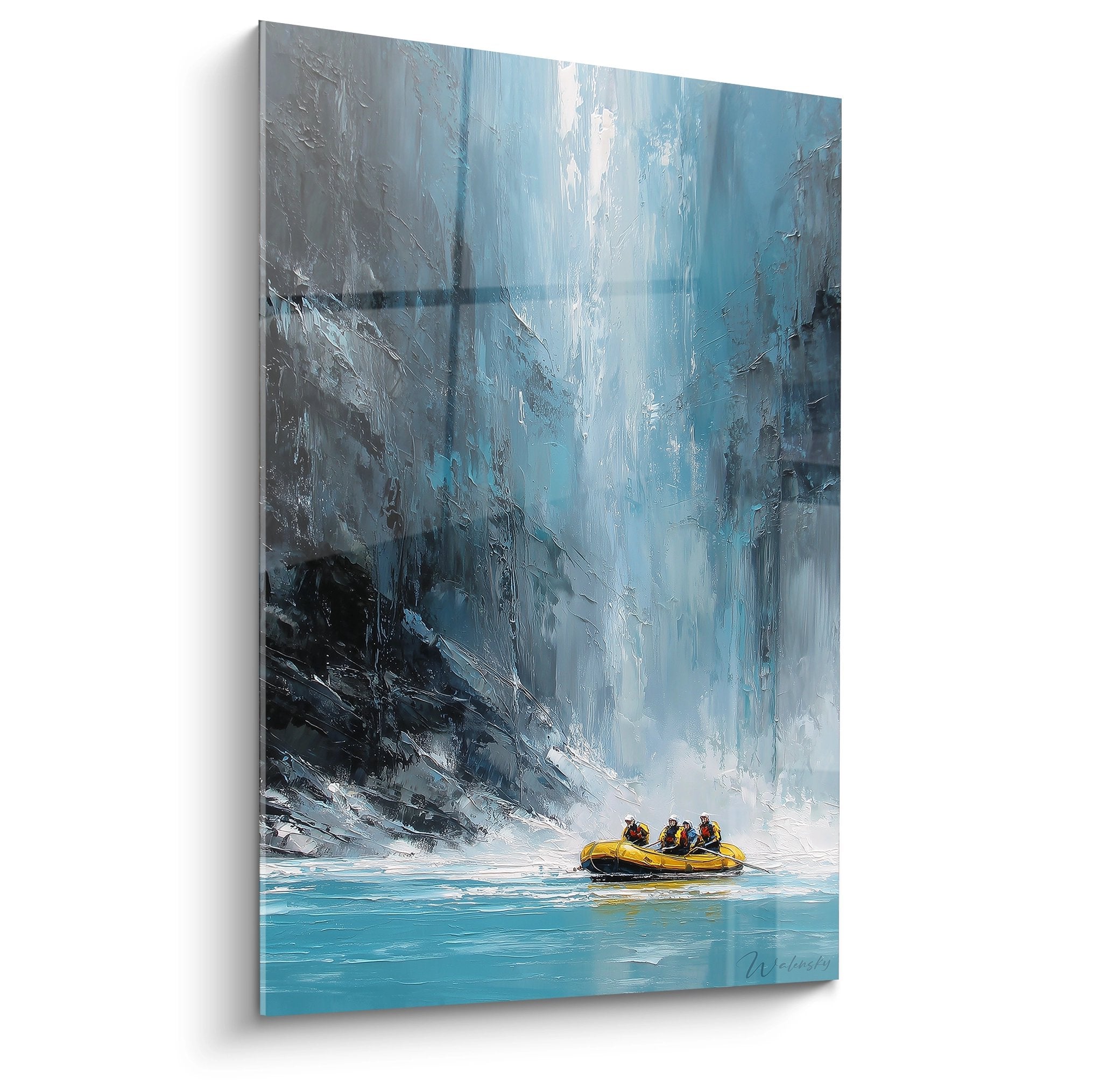
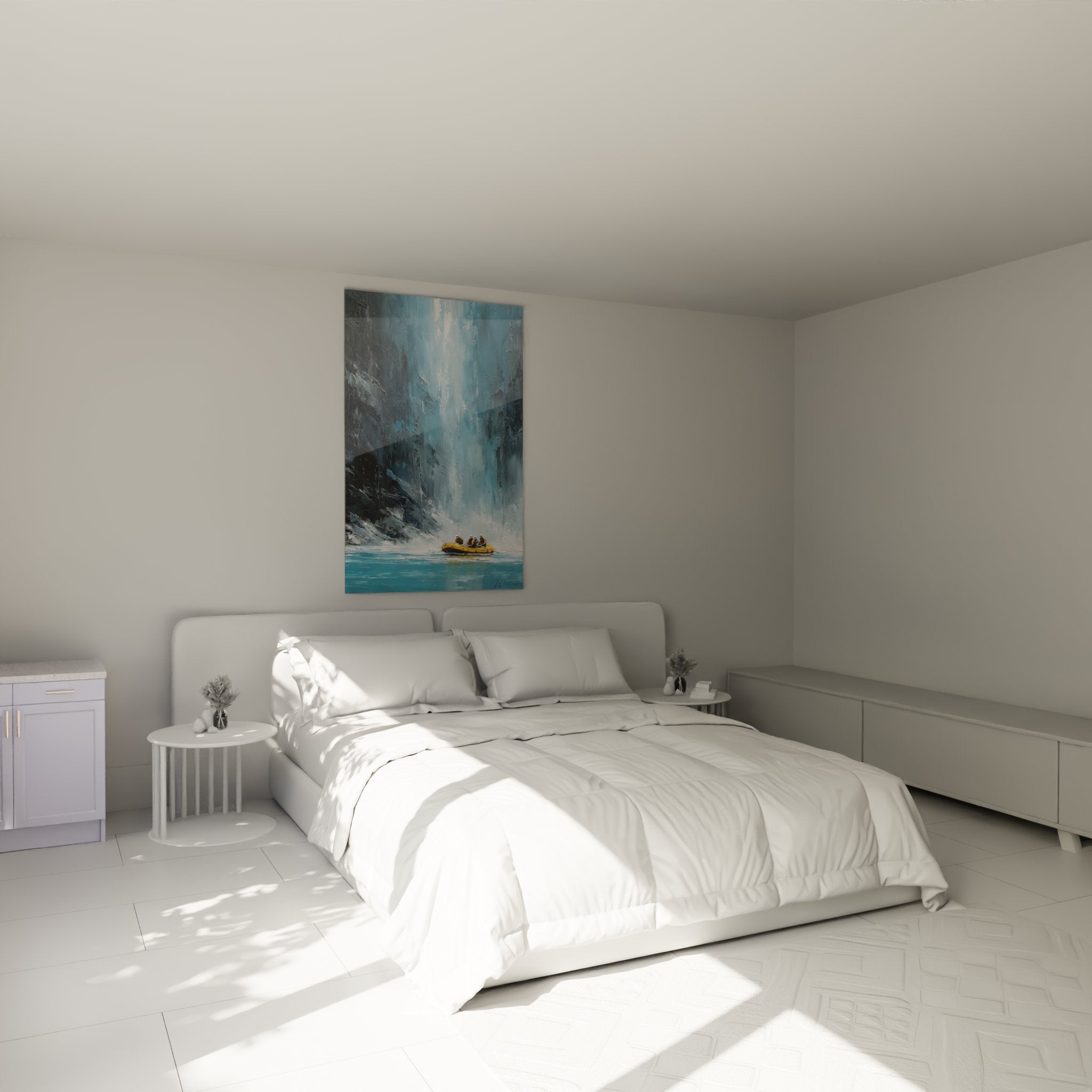
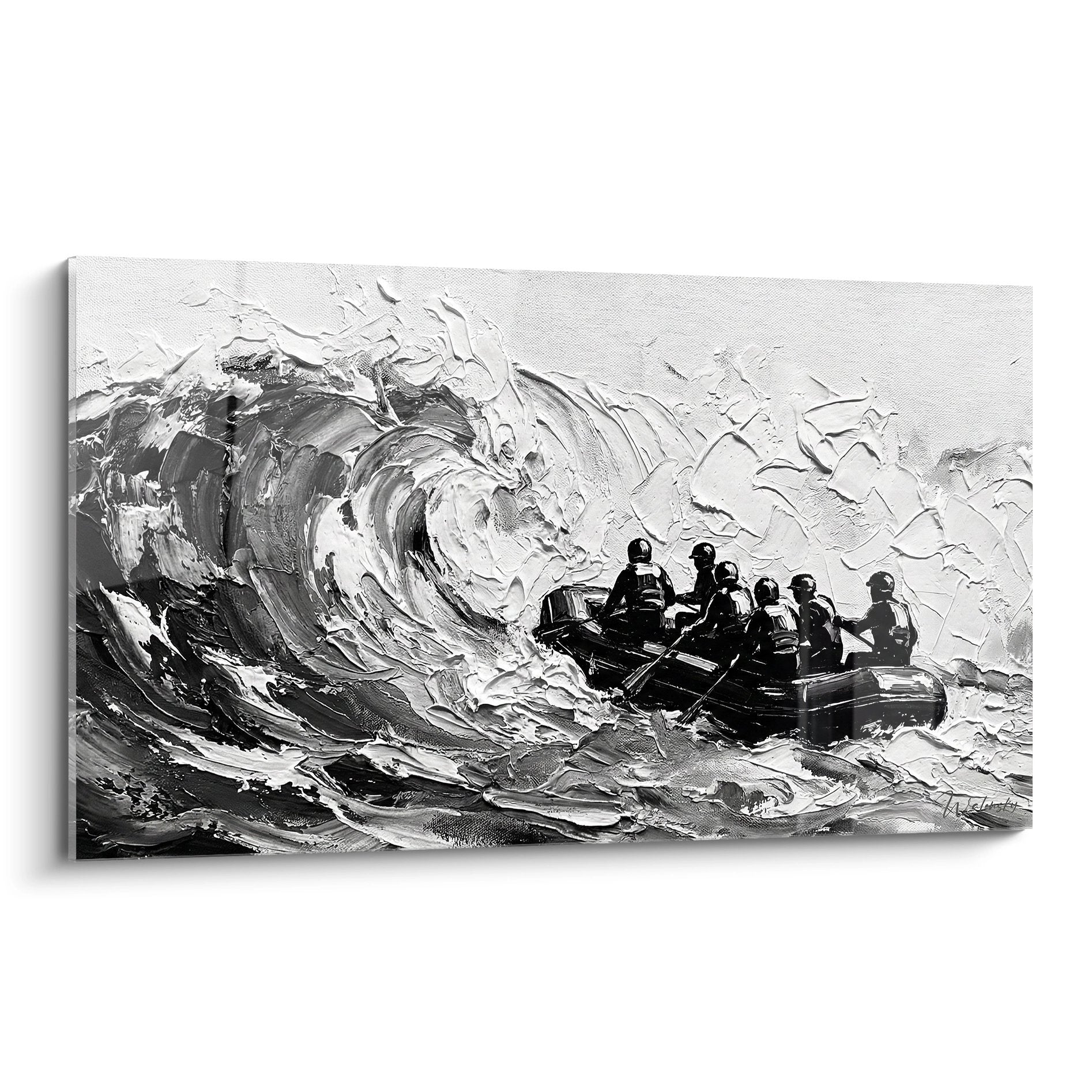
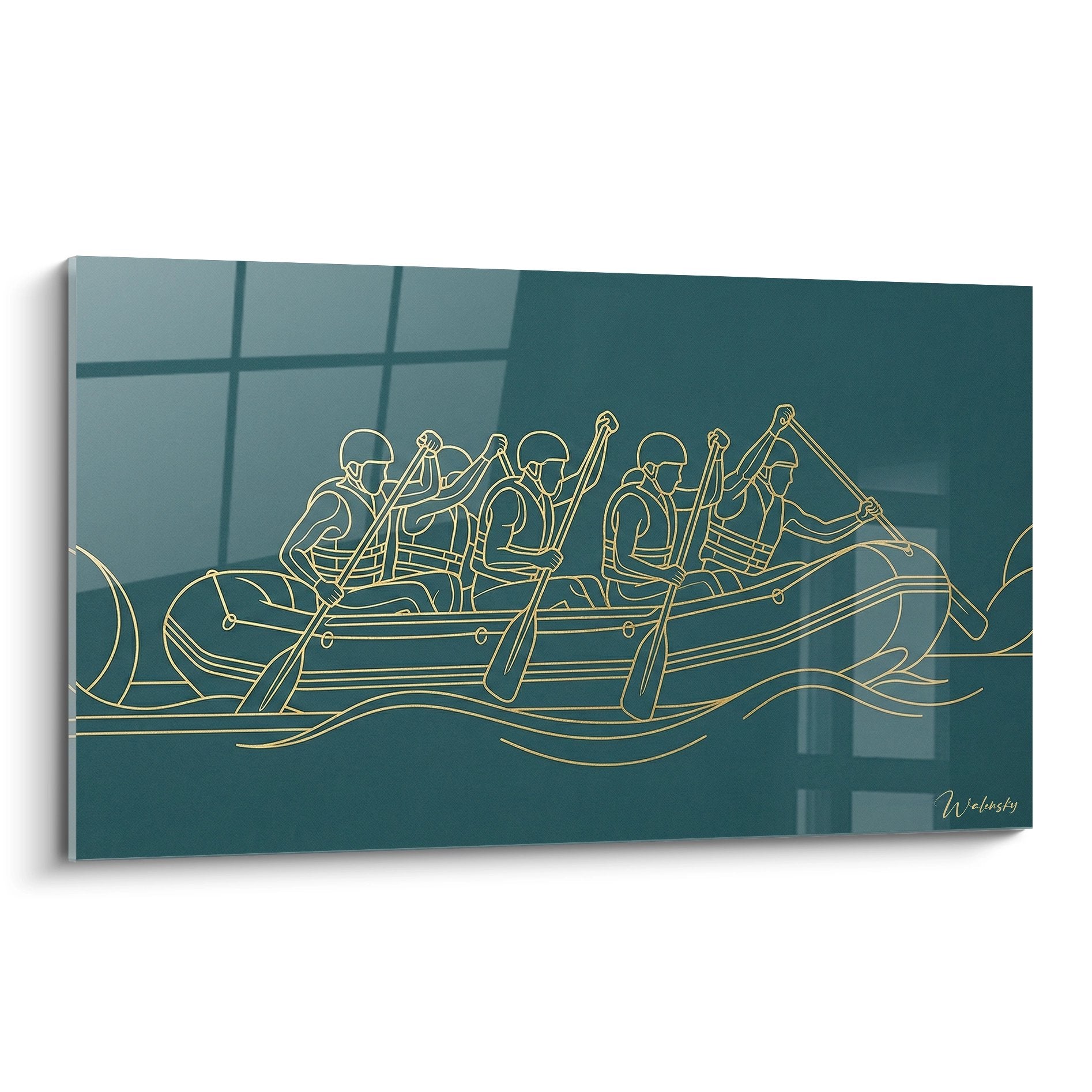
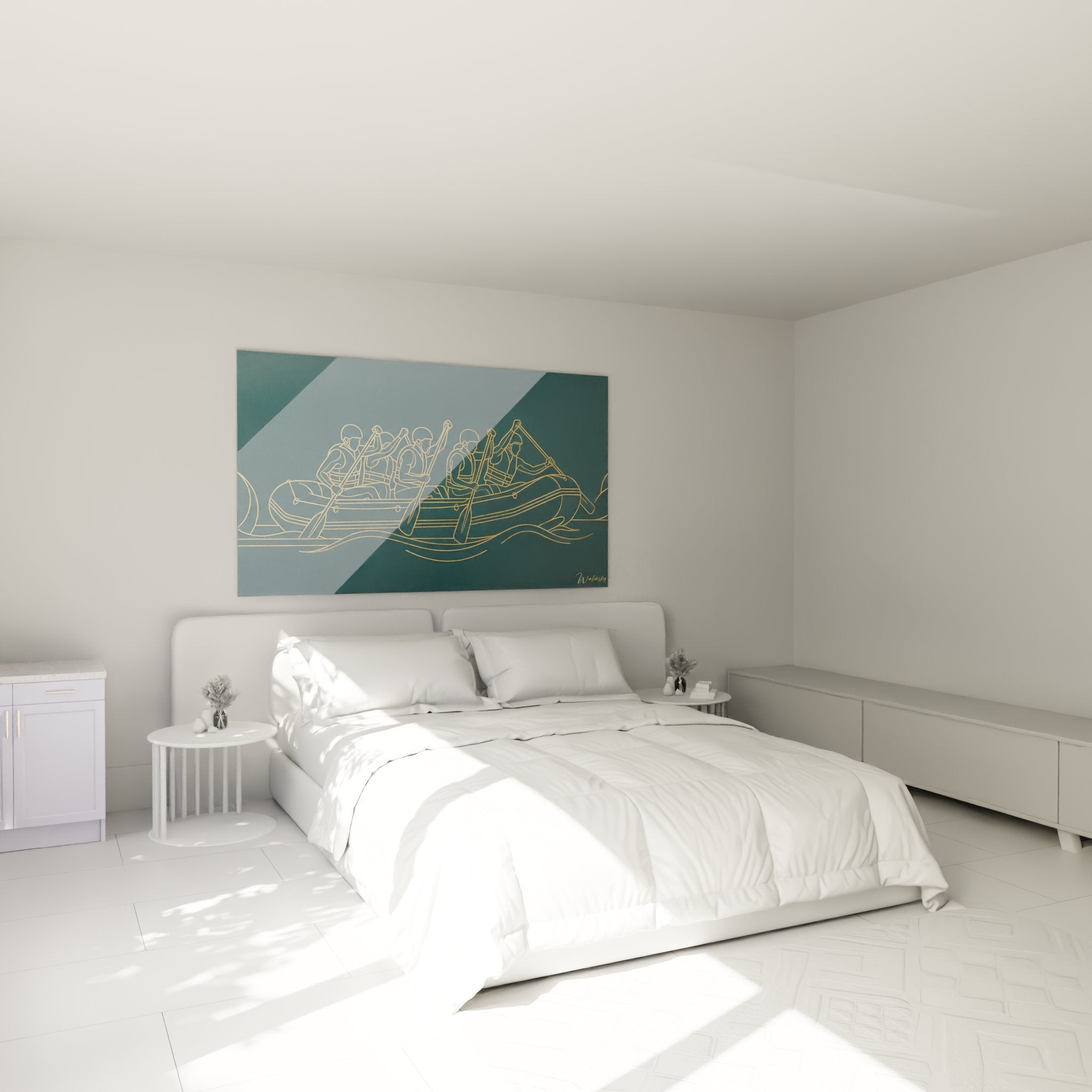
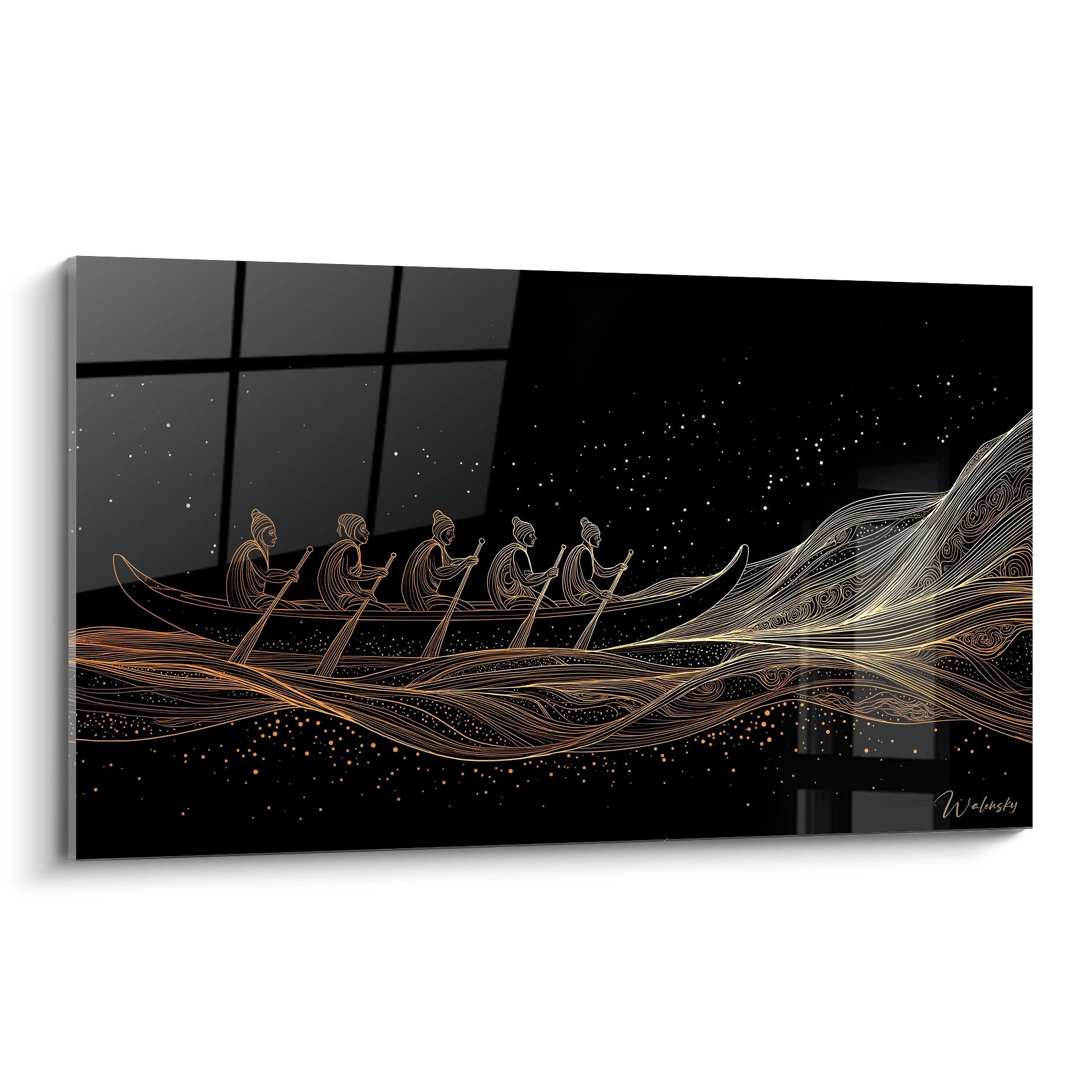
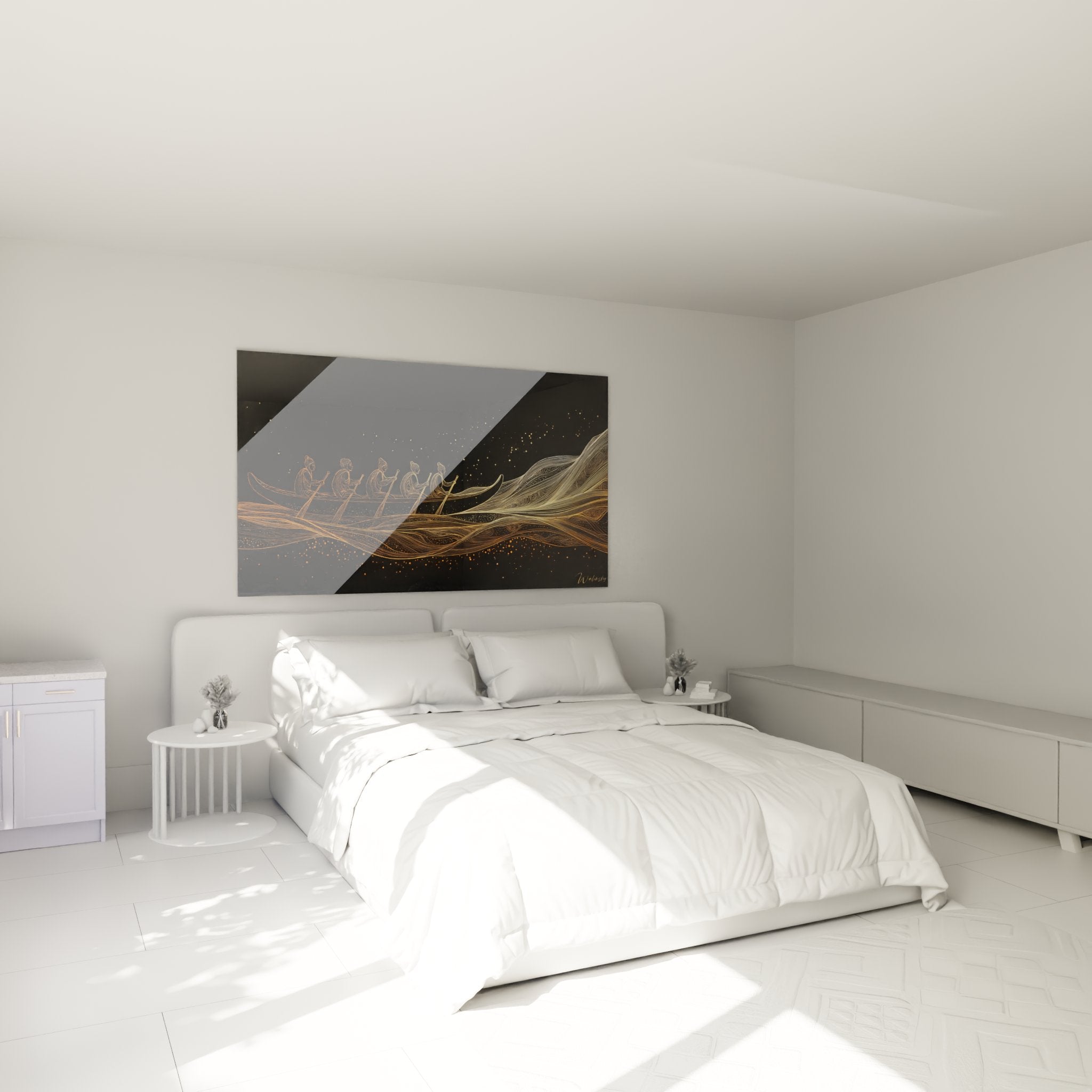
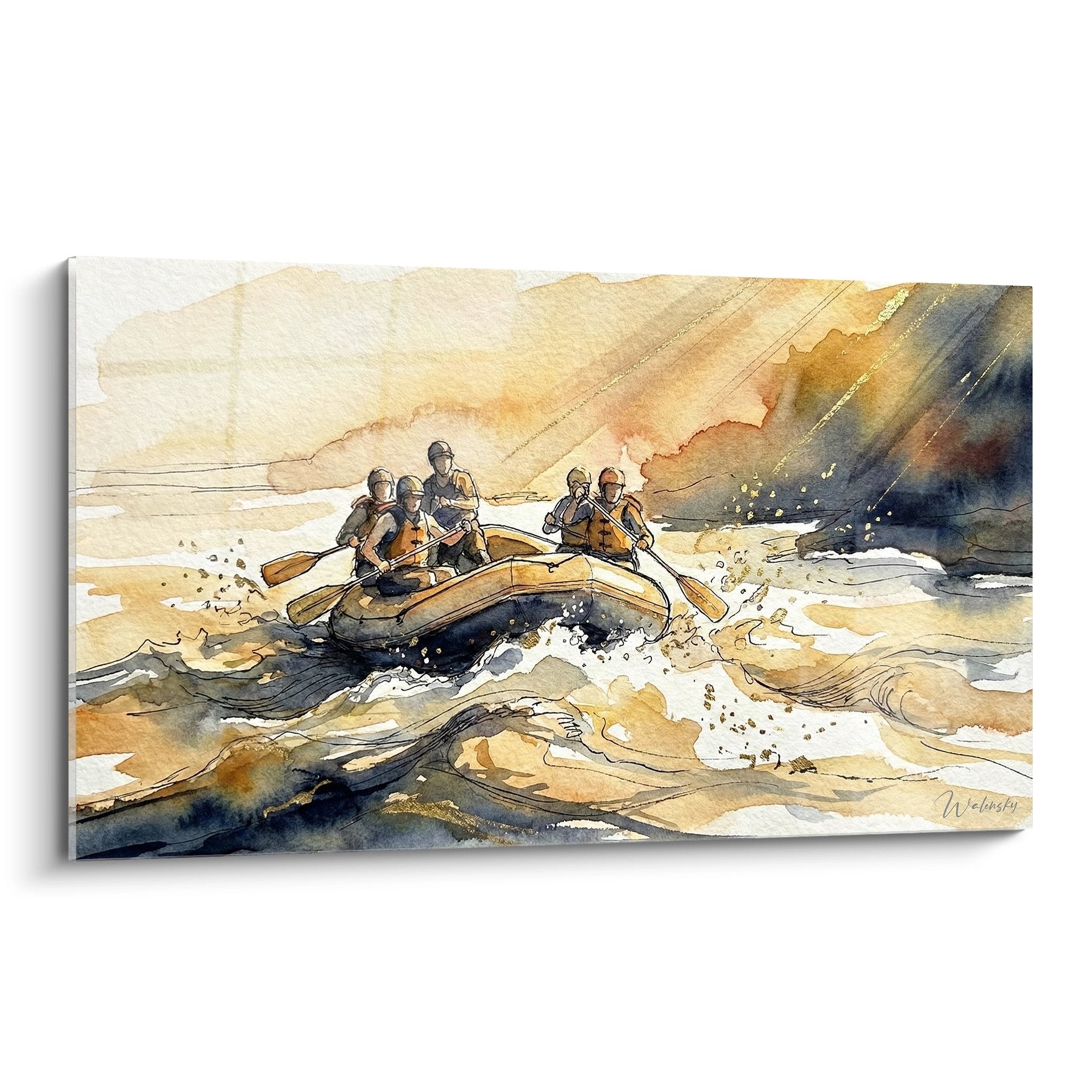
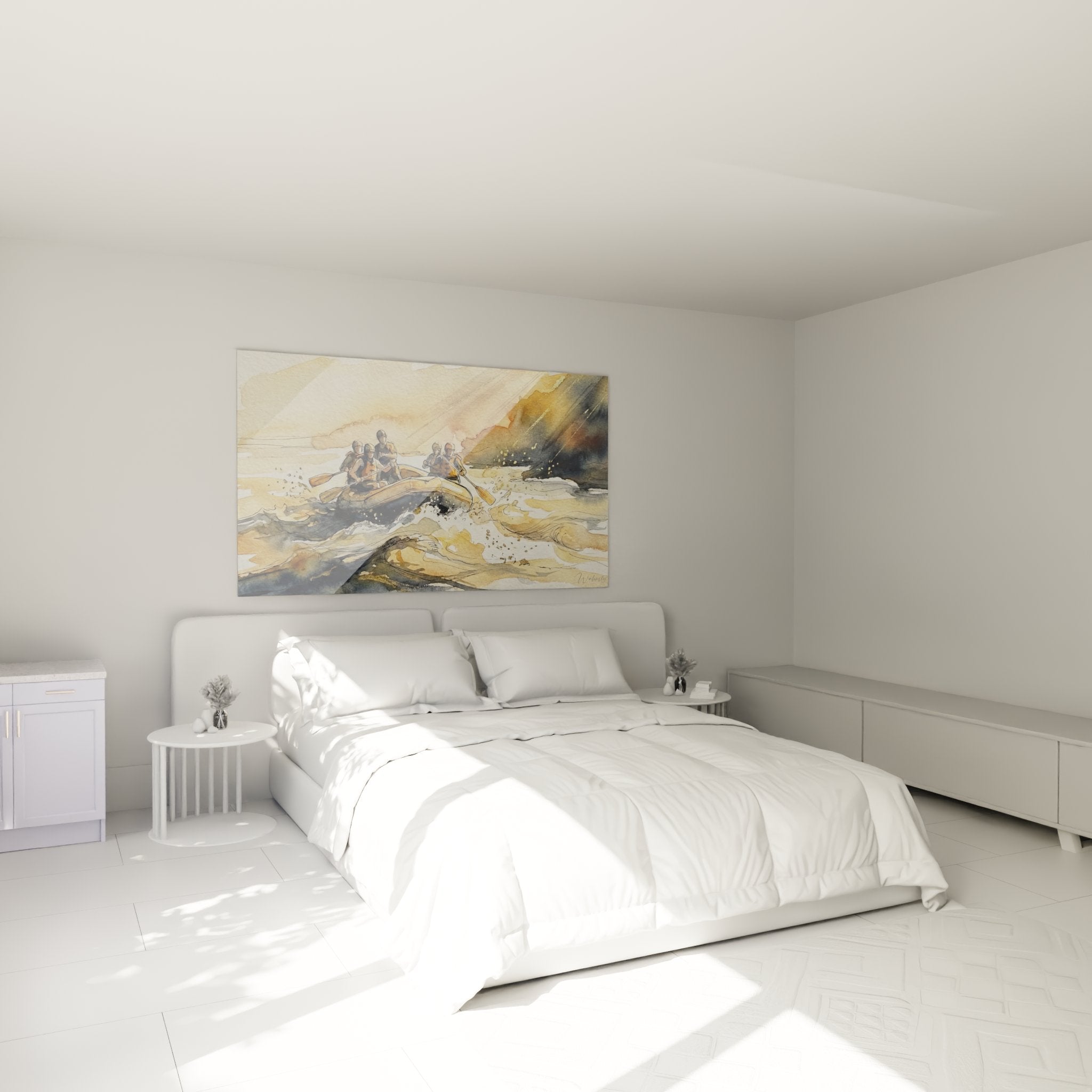
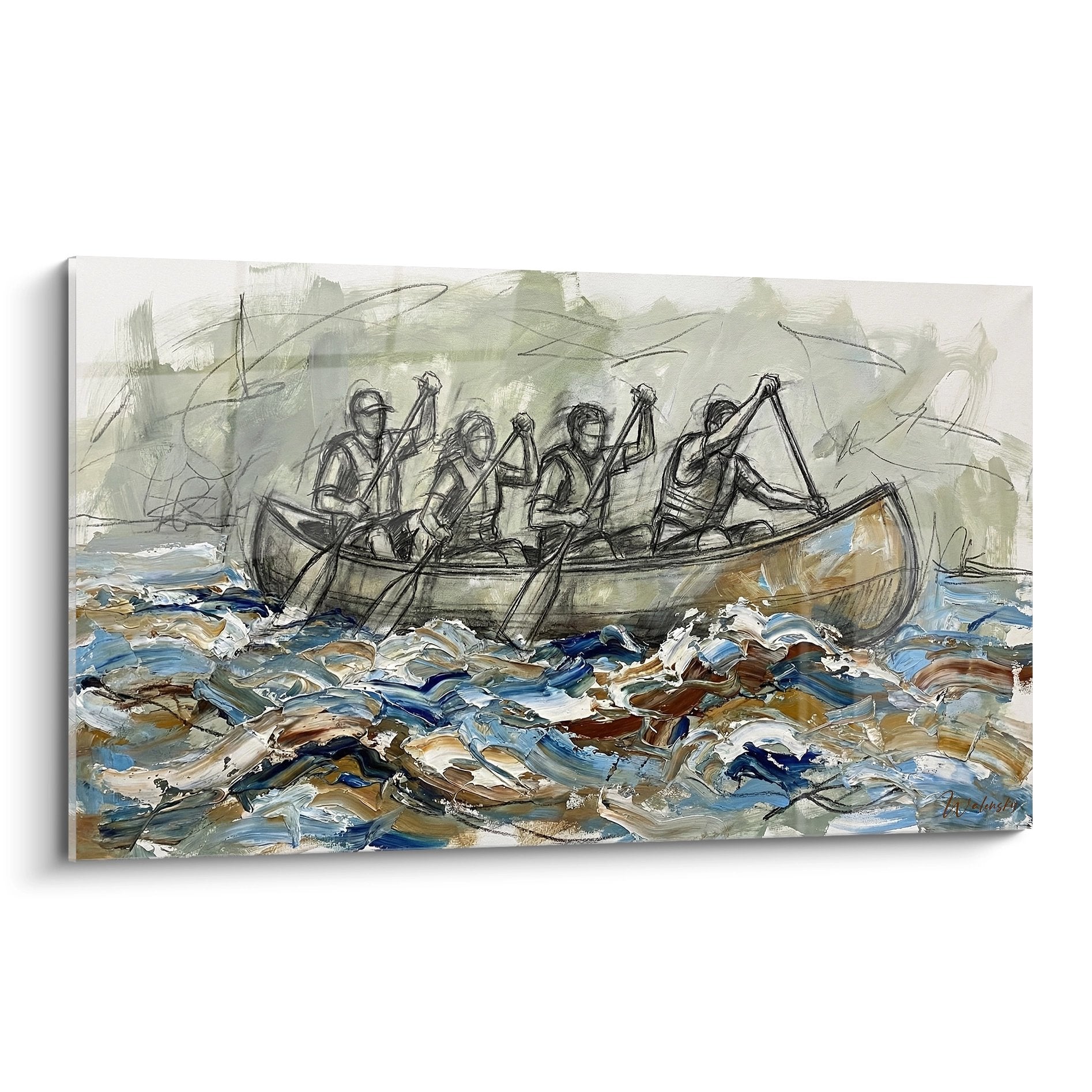
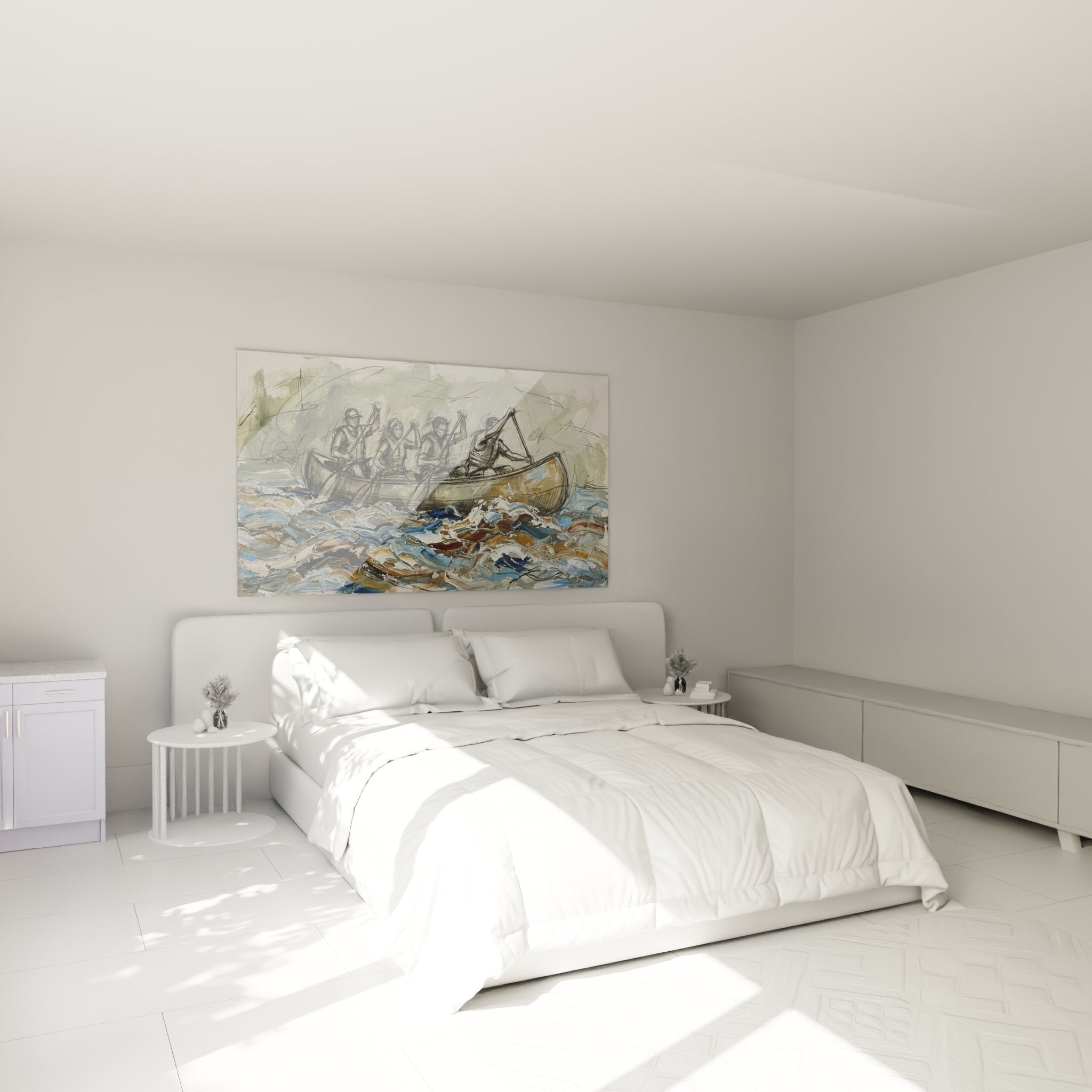
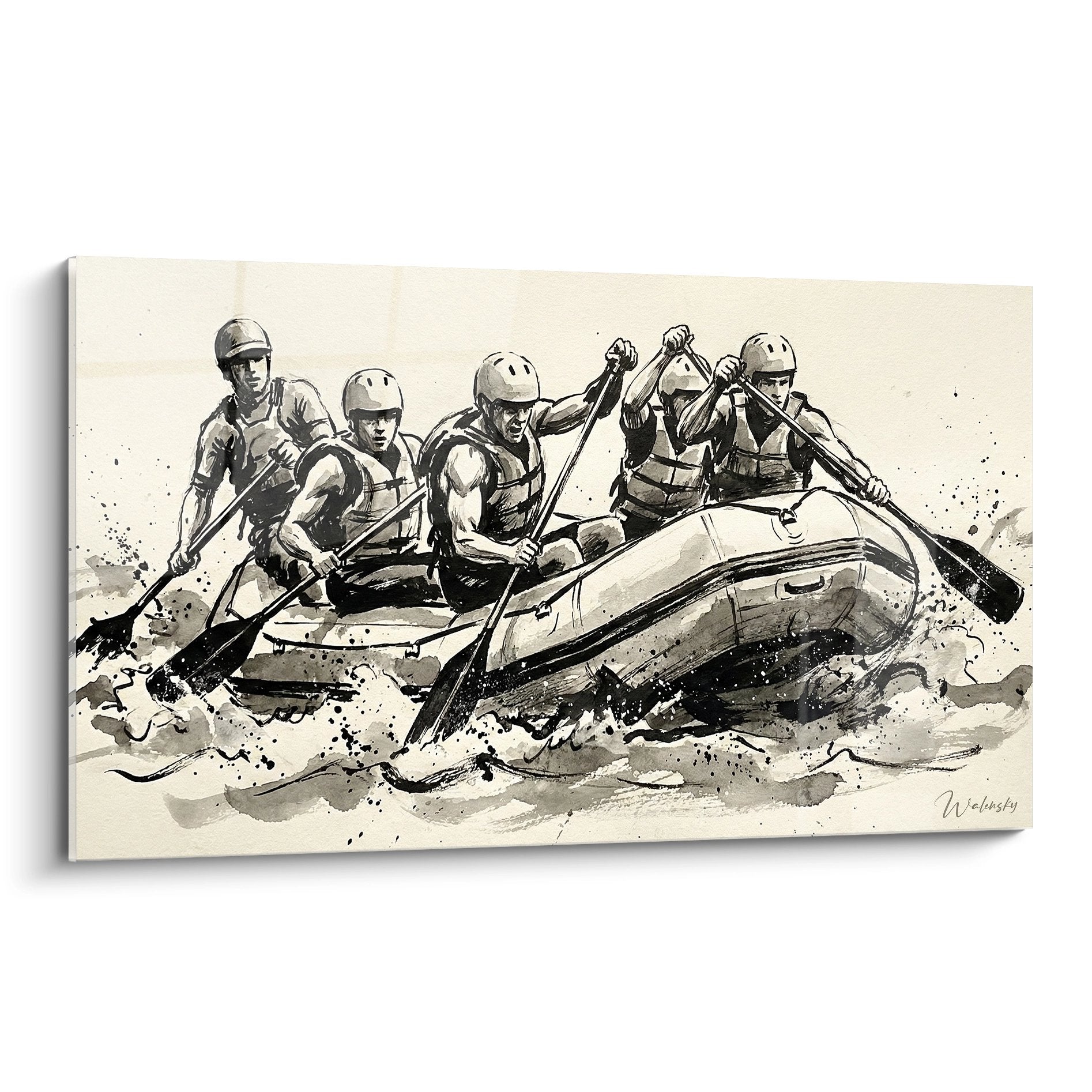
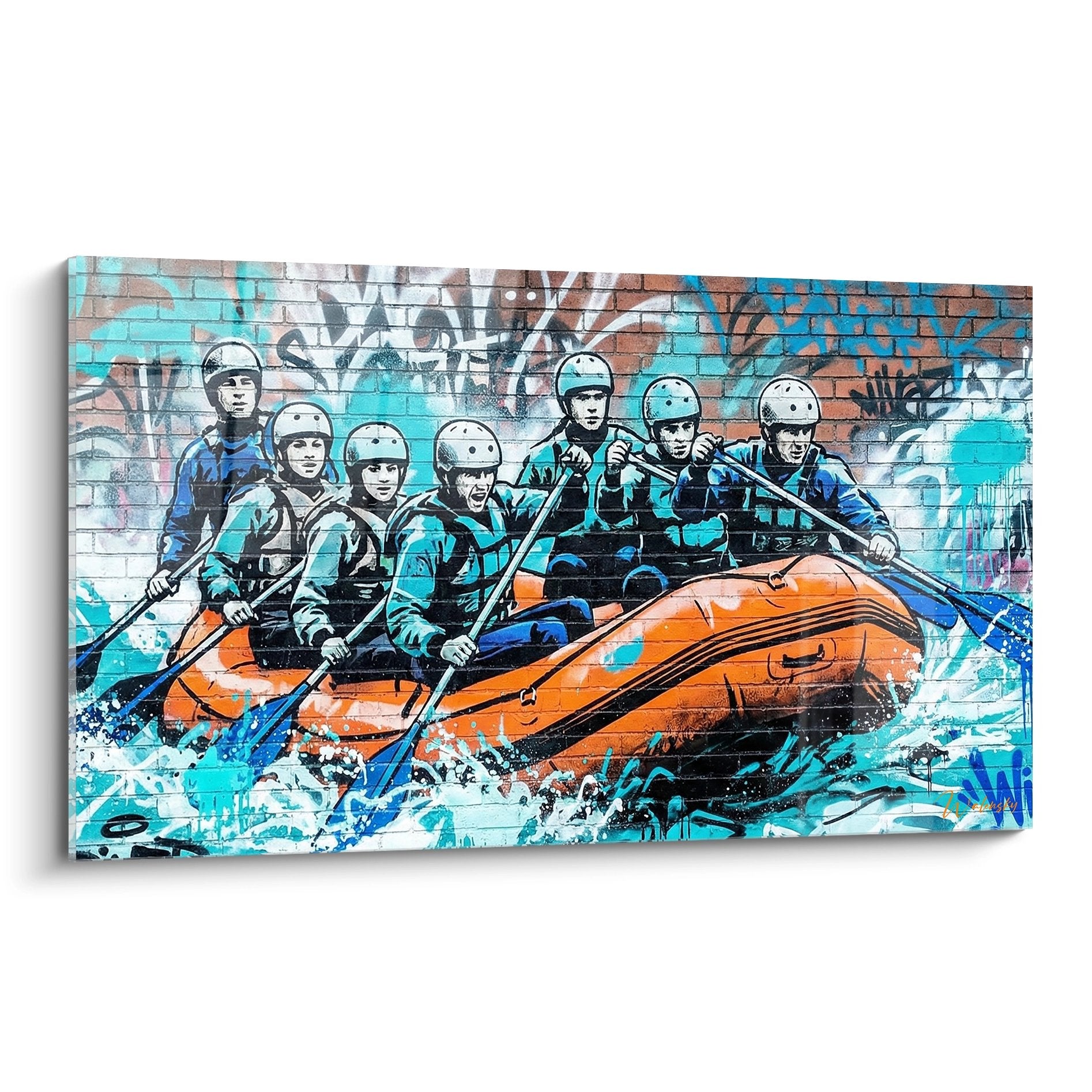
Dive into the intense world of rafting paintings, these wall representations capturing the very essence of whitewater descents. These large-scale artworks radically transform the atmosphere of your spaces by infusing them with the raw energy of tumultuous rivers and the adrenaline of rapids. Each visual immortalizes those moments when the boat faces cascades, when paddlers synchronize their movements against hydraulic power, creating an incomparable visual dynamic. The aesthetic impact of these adventure scenes goes far beyond simple decoration: they embody a mindset, a philosophy of life turned toward challenge and authenticity. The monumental formats available allow total immersion, as if the spray and roar of torrents came to life on your walls.
The Energetic Impact of Rafting Paintings in Your Interior
Rafting paintings possess the rare ability to instantly modify the energy charge of a space. Unlike static visuals, these representations of whitewater descents generate a perceptible dynamic that directly influences the mindset of occupants. The frozen movement of rapids, spray projected in crystalline showers, tense silhouettes of team members create a positive visual tension that stimulates mental vitality.
How do whitewater scenes transform a room's atmosphere?
The energy emanating from a large-format rafting painting stems from multiple simultaneous visual layers. The oblique trajectory of the boat suggests perpetual movement, while the surrounding rock formations create spatial compression that intensifies the sensation of speed. The deep turquoise tones of currents, punctuated by brilliant white foam, establish chromatic contrast that keeps the eye in constant alertness. This composition generates a form of passive vitalization: even without direct observation, the presence of these dynamic visual elements elevates the cognitive activation level of the environment.
Spaces benefiting most from this installation are those dedicated to mental or physical preparation. A home training room equipped with a wall representation of extreme sports experiences transformed atmosphere: the exercise routine becomes a quest for excellence, each repetition a rapid to conquer. Professional offices adopting these visuals notice tangible shifts in collective psychology: meetings become more reactive, creative sessions bolder, decision-making moments more determined.
The aquatic chromotherapy of torrents in decoration
The specific hues of whitewater possess visual properties distinct from classical maritime representations. The blue-green of glacial currents, charged with mineral particles, differs radically from ocean blue. This particular tint, associated with white splashes and silver reflections on moving water, creates a stimulating palette that fosters mental clarity without inducing nervous tension. Monumental formats amplify this effect: a surface of several square meters covered in these fluvial tones modifies the thermal perception of the room, bringing psychological coolness even in summer.
Interaction with natural light constitutes a fundamental aspect often overlooked. A rafting painting captures light differently depending on the hour: foam areas become nearly luminous in late afternoon, while gorge depths intensify at dusk. This natural variation prevents any visual monotony, the image evolving organically throughout the day. Owners report that their gaze is regularly drawn to these subtle transformations, creating an evolving relationship with the artwork rather than simple decorative habit.
Which spaces maximize the motivational effect of these visuals?
Personal challenge environments reap maximum benefit from these installations. A private weight training space, a paradoxical meditation corner, or an entrepreneurial project launch office find in these representations a powerful psychological catalyst. Daily exposure to this imagery of controlled confrontation with natural elements gradually forges a resilient mindset. Mornings begin under the symbolic gaze of these crews confronting torrents, unconsciously establishing a metaphor with daily challenges to overcome.
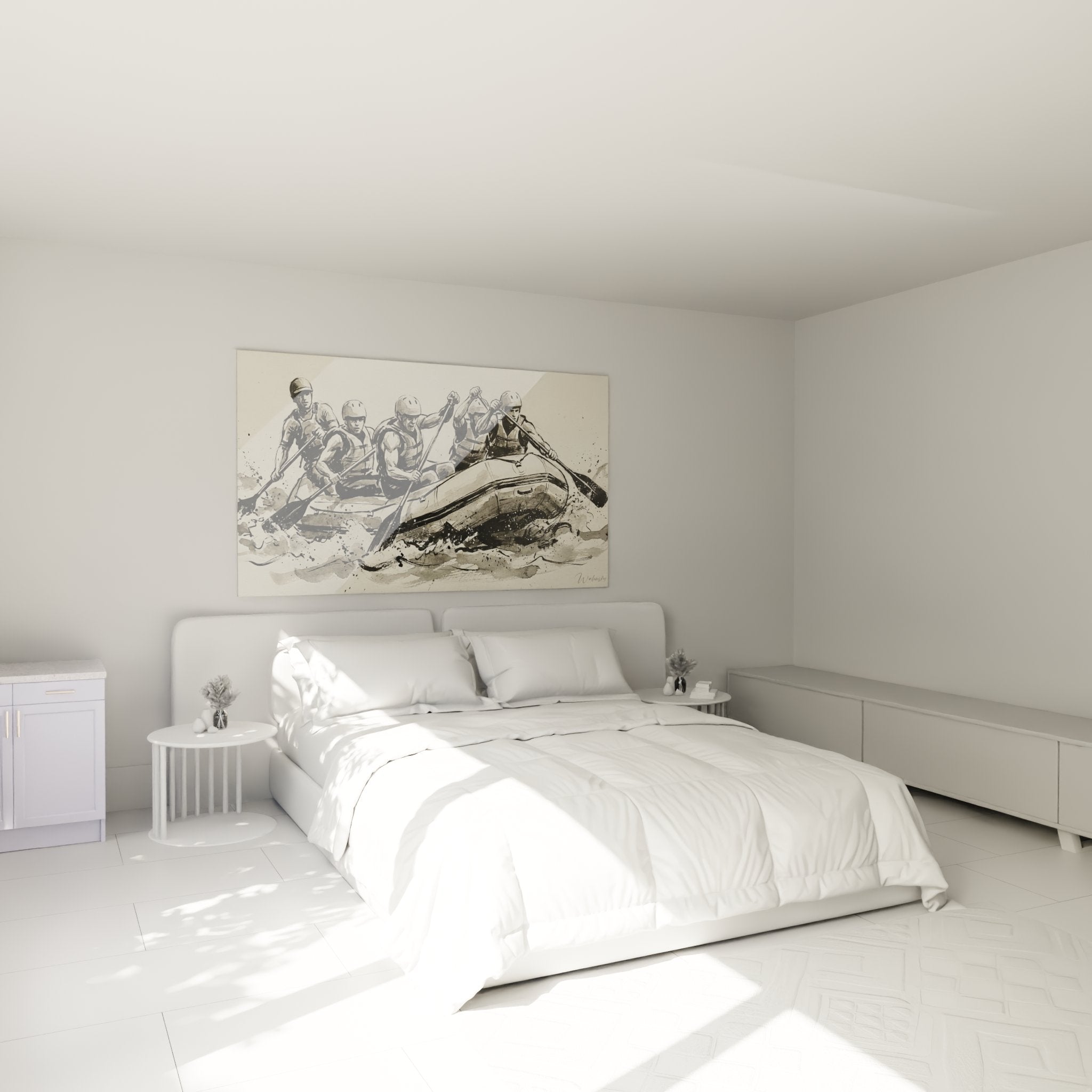
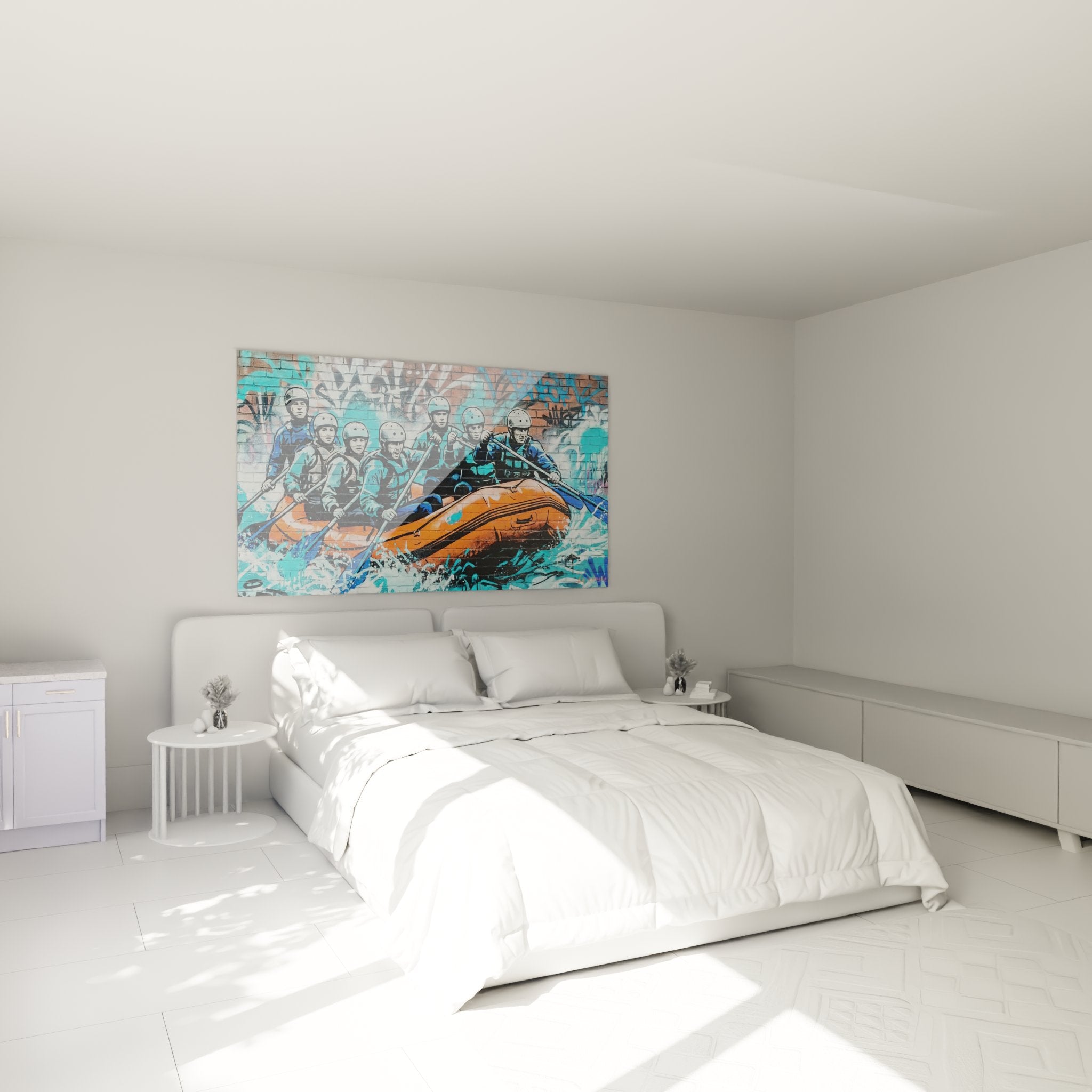
Large formats enable total architectural integration: a wall section of three to four meters becomes a virtual window onto the Verdon Gorges or Colorado Canyons. This monumental scale does more than decorate; it redefines the space itself. Visitors consistently report an impression of volumetric extension, as if the room gained depth. This spatial illusion transforms confined spaces into places of escape, closed surfaces into openings onto adventure.
The collective training effect in shared spaces
In family or professional environments, a rafting painting develops unique social dimension. Rafting being intrinsically a synchronized team activity, its representation naturally evokes cooperation under pressure. Living rooms hosting these visuals become spaces where conversations spontaneously drift toward ambitious projects, challenges to overcome together, common objectives. This subtle influence on relational dynamics explains their growing adoption in startup offices and active family homes.
Buyer testimonials reveal surprising behavioral transformations: adolescents previously reluctant toward outdoor activities suddenly manifest interest in nature outings, professional teams improve cohesion without direct management intervention. The visual acts as a permanent reminder that obstacles are crossed collectively, that coordination prevails over brute force, that total group engagement surpasses individual performances. This philosophy, inscribed visually in the daily environment, gradually permeates behaviors.
Decorative associations amplifying energetic impact
The complementary environment of a rafting painting largely determines its psychological effectiveness. Raw materials reinforce its authenticity: exposed stone, recovered driftwood, oxidized metal create thematic continuity with natural gorges represented. Directional lighting simulates light breakthroughs in enclosed canyons, accentuating the visual relief of waves and depth of hydraulic gorges.
Adapted vegetation elements extend immersion: ferns recalling shaded banks, succulents evoking arid canyon climates, stabilized mosses reproducing gorge humidity. This sensory stratification transforms a simple adorned wall into coherent decorative ecosystem. Imposing formats allow orchestrating an entire architectural section around this theme, creating thematic zones that segment space according to distinct atmospheres. The rafting corner becomes the territory of action and decision, contrasting with other more contemplative areas.
Integrating Rafting Paintings into an Outdoor and Adventure Universe
Enthusiasts of intense sensations and outdoor activities seek rafting paintings that resonate with their active lifestyle. These visuals constitute not mere nostalgic evocation of past escapades, but permanent anchoring of their adventurous identity in their private space. Coherence between domestic environment and personal values creates residential authenticity where each element reflects the existential priorities of the occupant.
What is the place of a rafting painting in an interior dedicated to extreme sports?
Collectors of outdoor equipment frequently construct thematic spaces where their passions take visual form. An imposing-dimension rafting painting naturally becomes the focal point of such an arrangement. Displayed above a vintage paddle rack, framed by colorful life vests suspended like sculptures, it visually federates all accumulated memories and equipment. This scenography transforms simple equipment storage into a personal museum of experienced adventure.
The psychological effect transcends simple aesthetic satisfaction. Returning daily to a space dominated by these reminders of physical engagement and surpassing maintains permanent form of mental preparation. Even during forced inactivity periods, winter or professional, the presence of these images preserves connection with adventurous identity. Owners report significant reduction in frustration linked to practice-free periods: the visual functions as a temporal bridge toward the next descent, the next expedition.
Creating a visual chronology of mythical destinations
Seasoned practitioners accumulate experiences across different emblematic waterways. A sophisticated decorative strategy involves assembling multiple representations of legendary rivers: the American Colorado with its ochre gorges, the African Zambezi above Victoria Falls, the French Verdon Gorges with emerald waters, the Chilean Futaleufú with world-class rapids. This geographic gallery does more than document past exploits; it materializes technical progression and constant horizon expansion.
Generous formats allow according each destination the importance it deserves. A several-meter painting dedicated to the Colorado, for example, can simultaneously capture canyon vastness, rapids intensity, and boat fragility against natural forces. This monumental scale honors the grandeur of these exceptional natural sites while creating immersion transcending simple souvenir photography. Non-initiated visitors thus visually discover the diversity of practice environments, each river possessing unique hydraulic personality.
How do these visuals influence practitioners' mental preparation?
Elite athletes in whitewater sports use visualization as mental training technique. Providing a permanent visual support in daily environment amplifies this practice. The rafting painting becomes a tool for passive psychological preparation: each passage before the artwork reactivates neural circuits associated with current reading, obstacle anticipation, crew coordination. This repeated stimulation, even unconscious, maintains form of cognitive preparation between river sessions.
Imposing formats offer sufficient detail for recurrent technical analysis. Wave formations, visible counter-currents, possible navigation lines become material for strategic reflection. Some practitioners organize descent planning sessions before these representations, using the visual as discussion support with crew members. This functionality transforms the decorative work into pedagogical and strategic tool, amply justifying acquisition for competitive teams or regular groups.
Evolution of visual taste with technical progression
Rafting beginners often prefer spectacular but relatively generic representations: large splashes, exaggerated facial expressions, saturated colors. With accumulated experience, preferences evolve toward subtler, technically precise visuals. An experienced paddler will appreciate a painting capturing the exact moment when the bow tilts into a stopper, when the crew initiates evasion maneuver, when bodies position to absorb impending hydraulic shock.
This visual sophistication justifies investment in monumental, superior-quality formats. Technical details become perceptible and appreciable only from certain dimensions and visual definition. A three-to-four-meter painting allows distinguishing paddler muscle tension, precise paddle angle in water, boat deformation under hydraulic pressure. These subtleties, invisible on reduced formats, constitute precisely what connoisseurs seek to enrich their environment with technically pertinent elements.
Integration in multi-activity outdoor spaces
Rafting enthusiasts rarely practice this sole discipline. Rock climbing, downhill mountain biking, canyoning, kayaking often constitute ecosystem of complementary activities. The rafting painting finds its place in broader visual symphony celebrating engagement in natural environment. The key lies in aesthetic coherence: prioritize representations sharing similar chromatic palette, coherent photographic style, comparable emotional intensity.
Dedicated spaces thus become genuine adventure sanctuaries where each activity has its monumental representation. Rafting, through its collective dimension and visual spectacularity, frequently occupies central position. Available generous dimensions allow establishing clear visual hierarchy, the main painting dominating space while secondary visuals complete narrative. This orchestration transforms simple interior into visual manifesto of chosen and assumed lifestyle.
The Symbolism of Collective Overcoming in Rafting Paintings
Beyond aesthetic impact, rafting paintings convey deep symbolism particularly relevant in professional and family contexts. Whitewater descent perfectly incarnates the metaphor of collective project facing unpredictable obstacles, requiring synchronization, mutual trust, and total engagement of each member. This metaphorical reading explains their growing adoption in environments where team cohesion determines success.
Why do companies adopt these visuals in their collaborative spaces?
Forward-thinking organizations recognize environmental visual influence on collective behaviors. A rafting painting installed in a strategic meeting room is never incidental: it immediately establishes psychological framework where boldness, reactivity, and interdependence become implicit norms. When teams gather under this visual of mastered confrontation with elements, discussions naturally gain in frankness and action orientation.
Technology startups and creative agencies figure among early adopters of this strategic decorative approach. Their coworking spaces frequently integrate monumental formats representing crews negotiating world-class rapids. The subliminal message is clear: we navigate turbulent waters together, each member must paddle in synchronization, obstacles are inevitable but collectively surmountable, hundred-percent engagement from everyone is non-negotiable. This permanent non-verbal communication gradually shapes corporate culture without requiring explicit management speeches.
Crisis management representation in rafting imagery
Every whitewater descent constitutes succession of micro-crises where decisions occur in fractions of seconds. This reality shines through in quality visuals capturing these tipping moments: the instant the guide shouts instruction, when boat enters perilous sequence, when crew reacts to the unexpected. For organizations evolving in volatile sectors, these images resonate deeply with operational daily reality.
Imposing formats capture complexity of these critical situations. A several-meter painting can simultaneously show approaching hydraulic threat, intense concentration expressions of teammates, body postures testifying to impact preparation, environmental elements contextualizing danger. This narrative richness transforms visual into permanent case study on collective adversity management. Teams exposed daily to these representations gradually internalize observed attitudes and behaviors: constant vigilance, instantaneous communication, coordinated reactivity.
What subliminal messages do these team action scenes transmit?
Semiological analysis of a rafting painting reveals multiple signification layers. Body position in boat communicates functional equality: each paddler occupies essential role, no position is superior to others. Direction of gazes expresses mutual trust: teammates don't watch each other but collectively focus on common obstacle. Facial expressions blend concentration and satisfaction, illustrating that intense challenge generates pleasure rather than suffering.
These implicit messages subtly influence team dynamics in spaces hosting them. Rigid hierarchies progressively dissolve favoring more horizontal structures. Members learn trusting each person's specific competencies rather than constantly checking others' work. Acceptance of discomfort as normal progression component replaces permanent security seeking. These cultural transformations, though difficult to quantify, are regularly reported by organizations having integrated these visuals in work environments.
Family application of rafting metaphor
Households adopting large-dimension rafting paintings in common spaces often make conscious symbolic choice. Family as boat navigating existence's rapids: parents guide but each child actively paddles, difficulties are crossed together, one member's abandonment compromises entire crew. This extended metaphor subtly permeates daily interactions and family decision processes.
Parental testimonies reveal creative pedagogical uses. During tensions or disagreements, the visual serves as reference reminding coordination importance. Adolescents traversing difficult periods find in these representations reminder that tumultuous passages are temporary and normal. Discussions on ambitious family projects naturally organize around these visual metaphors: preparing school year becomes "negotiating next rapid," planning move transforms into "navigating technical section." This narrative gamification of family life, supported visually by painting, strengthens cohesion and trivializes difficulties.
Monumental formats and amplified symbolic impact
Physical dimension determines directly symbolic weight. Small reproduction goes unnoticed losing all metaphorical force. A monumental three-to-four-meter format imposes itself visually and psychologically, becoming impossible to ignore. This massive presence communicates that represented values are not anecdotal but fundamental to place's identity.
Professional spaces using these installations for cultural purposes systematically privilege maximum dimensions compatible with their architecture. A reception hall dominated by giant rafting painting immediately announces to visitors, partners and potential recruits the organization's operational philosophy. Training rooms equipped with these visuals see sessions gain engagement intensity. Common break areas benefiting installations become places for more authentic project-oriented conversations. Investment in imposing format justifies itself through multiplied cultural influence return.
Frequently Asked Questions on Rafting Paintings
Do rafting paintings suit calm residential spaces?
Contrary to misconceptions, well-chosen rafting painting integrates harmoniously into peaceful interiors. The essential lies in selecting visual capturing moment of mastery rather than pure chaos. A scene showing perfectly synchronized crew elegantly negotiating technical passage brings positive energy without creating visual agitation. Natural gorge and water tones balance action representation intensity.
What viewing distance should be planned to fully appreciate a large format?
Monumental-dimension rafting paintings indeed require sufficient distance for optimal global appreciation. Empirical rule suggests visualization distance equivalent to one and a half times painting diagonal. However, unlike abstract works, these representations offer equally rich detail appreciation. Technical equipment, water textures, facial expressions constitute elements discoverable in close-distance observation, creating multi-scale visual experience.
Do these visuals lose impact over time and daily habit?
Fear of visual habituation is legitimate but largely unfounded for quality rafting paintings. Their compositional richness and narrative dimension prevent any perceptual monotony. Each observation reveals new details: previously unremarked splash, particular teammate posture, secondary landscape element. Moreover, interaction with variable natural light creates perpetually renewed visual dynamic. Owners regularly report rediscoveries even after several years of daily presence.
How can a rafting painting associate with other decorative themes?
Thematic versatility of rafting frequently surprises. Beyond obvious outdoor sports association, these visuals dialogue harmoniously with varied universes. Raw industrial interiors benefit from authenticity of wild natural environment scenes. Minimalist Scandinavian atmospheres find perfect chromatic complement in cold glacial meltwater tones. Travel and discovery-focused décor naturally integrates these fluvial exploration representations. The key lies in secondary-level reading: see not just sport but adventure, overcoming, connection with natural forces.