- Chinese Painting Panels Overview
- Traditional Chinese Painting Panels
- Contemporary Chinese Painting Panels
- Chinese Painting Panels Symbolism
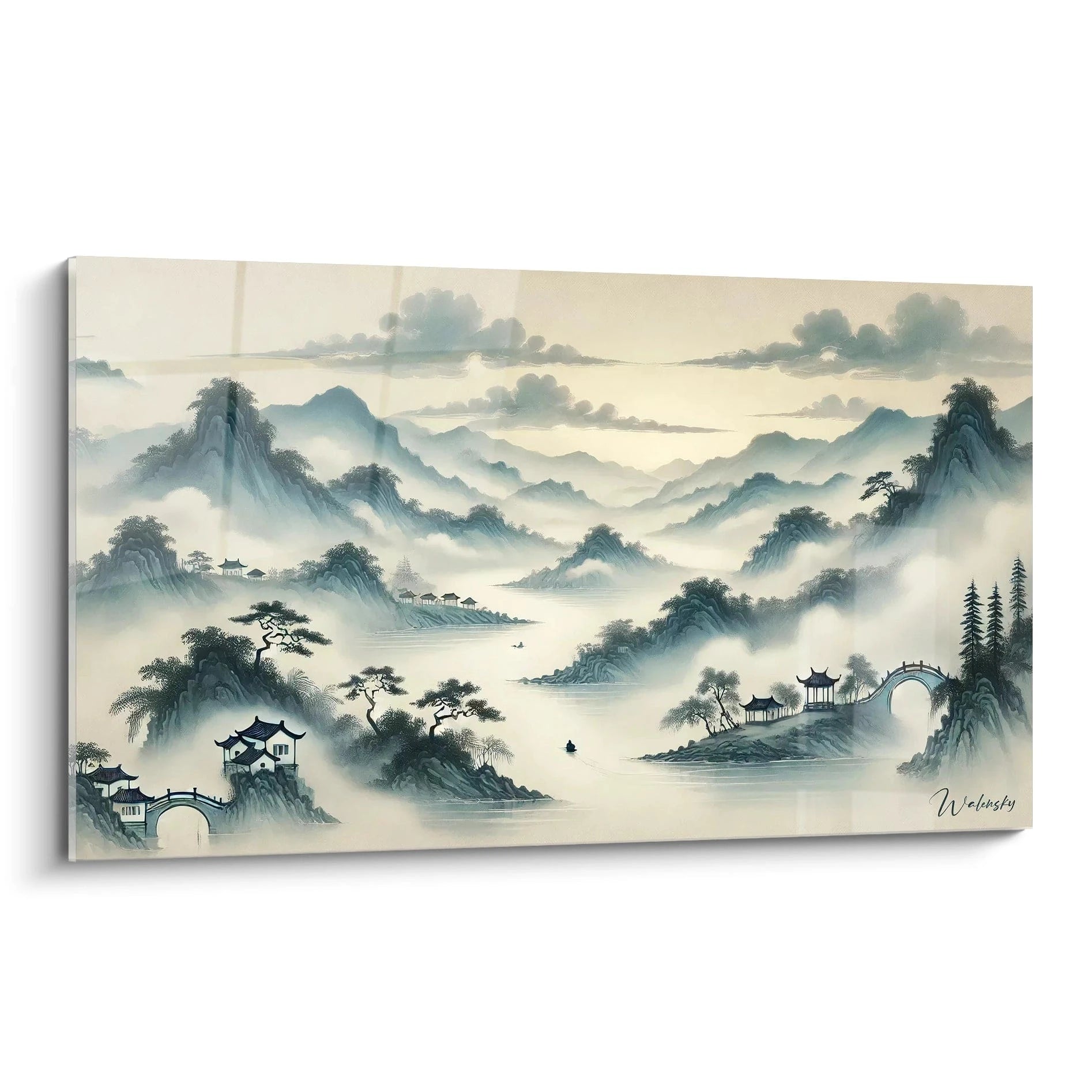
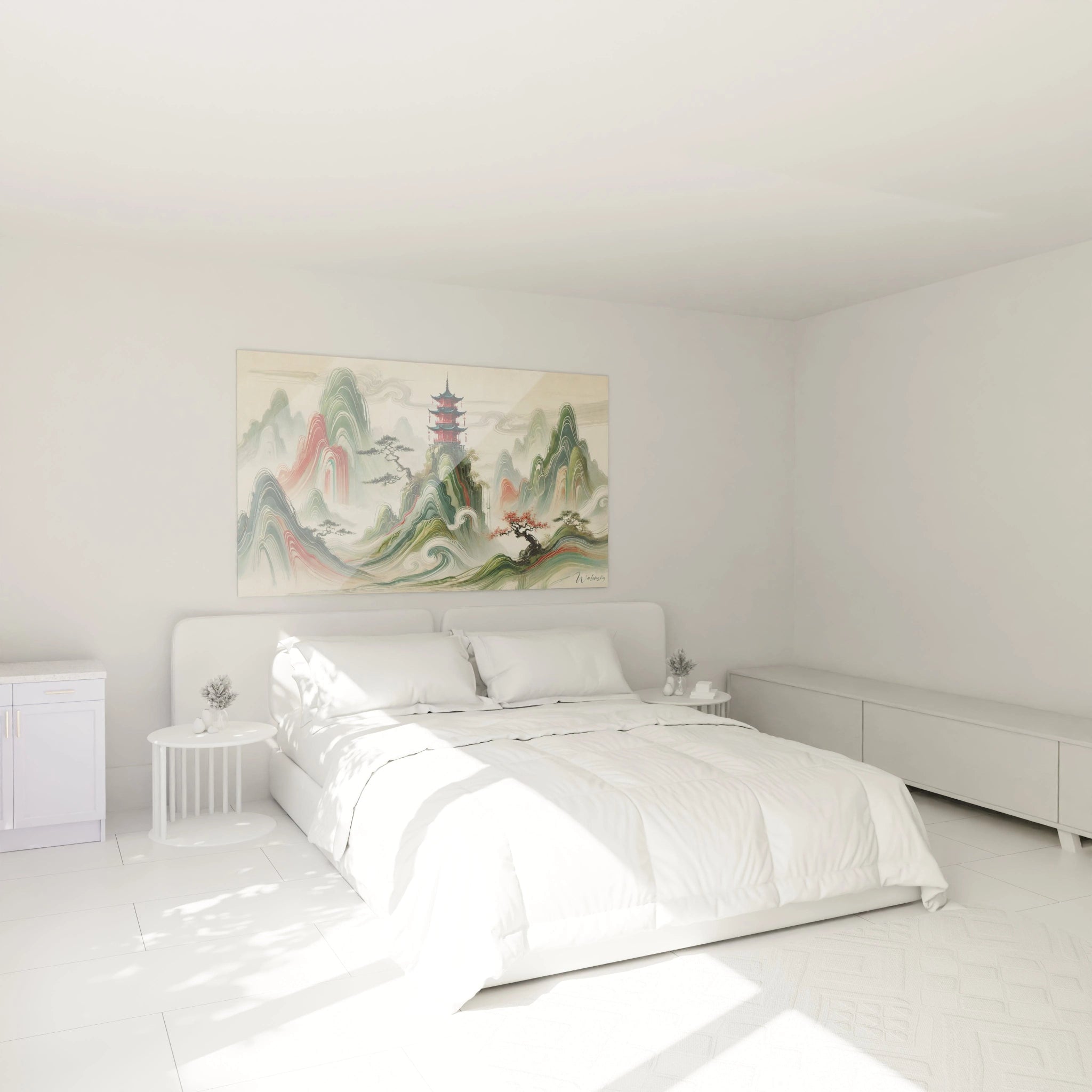
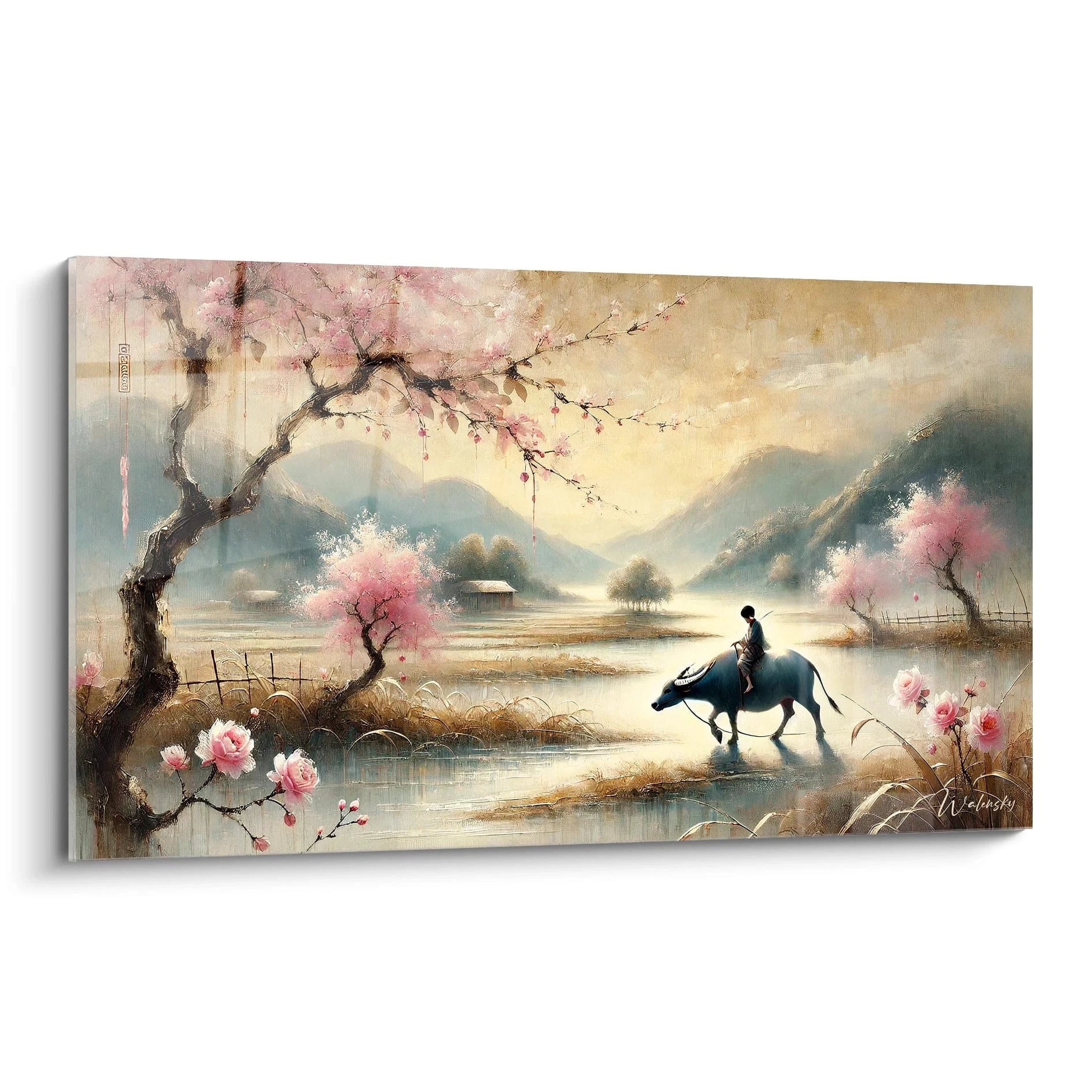
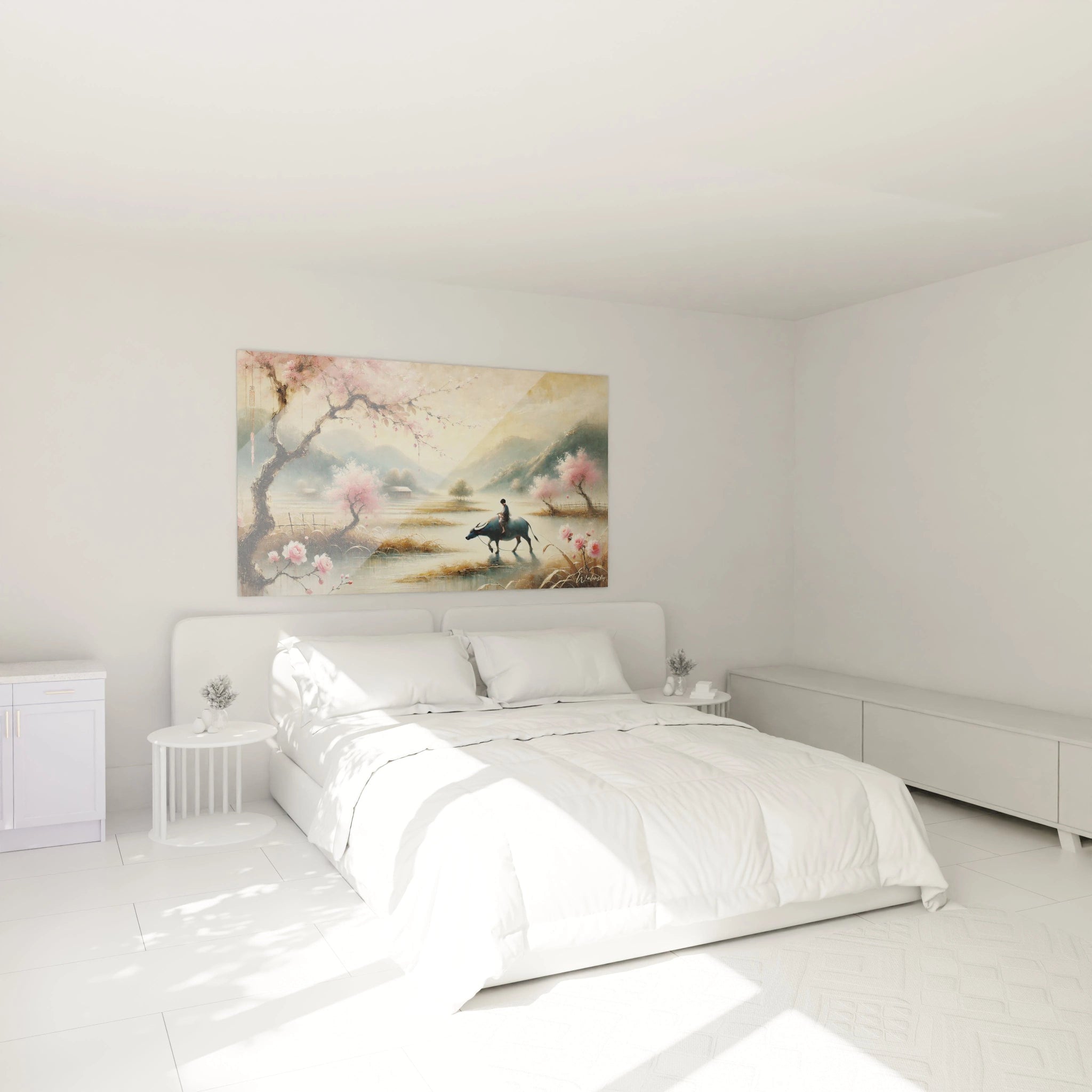
Chinese painting panels represent the very essence of an ancient art form where Oriental philosophy materializes through works of unparalleled depth. Unlike Western representations, these artistic creations do not simply seek to reproduce reality, but rather to capture the spirit of the elements depicted. Each panel thus becomes a visual meditation inviting contemplation.
Traditional Chinese painting, also called "guohua", is distinguished by its unique techniques using Chinese ink on rice paper or silk. Artists wield the brush with surprising mastery, creating interplays of shadow and light that evoke the fundamental duality of yin and yang. These artistic representations transmit not only visual beauty but also profound philosophical values.
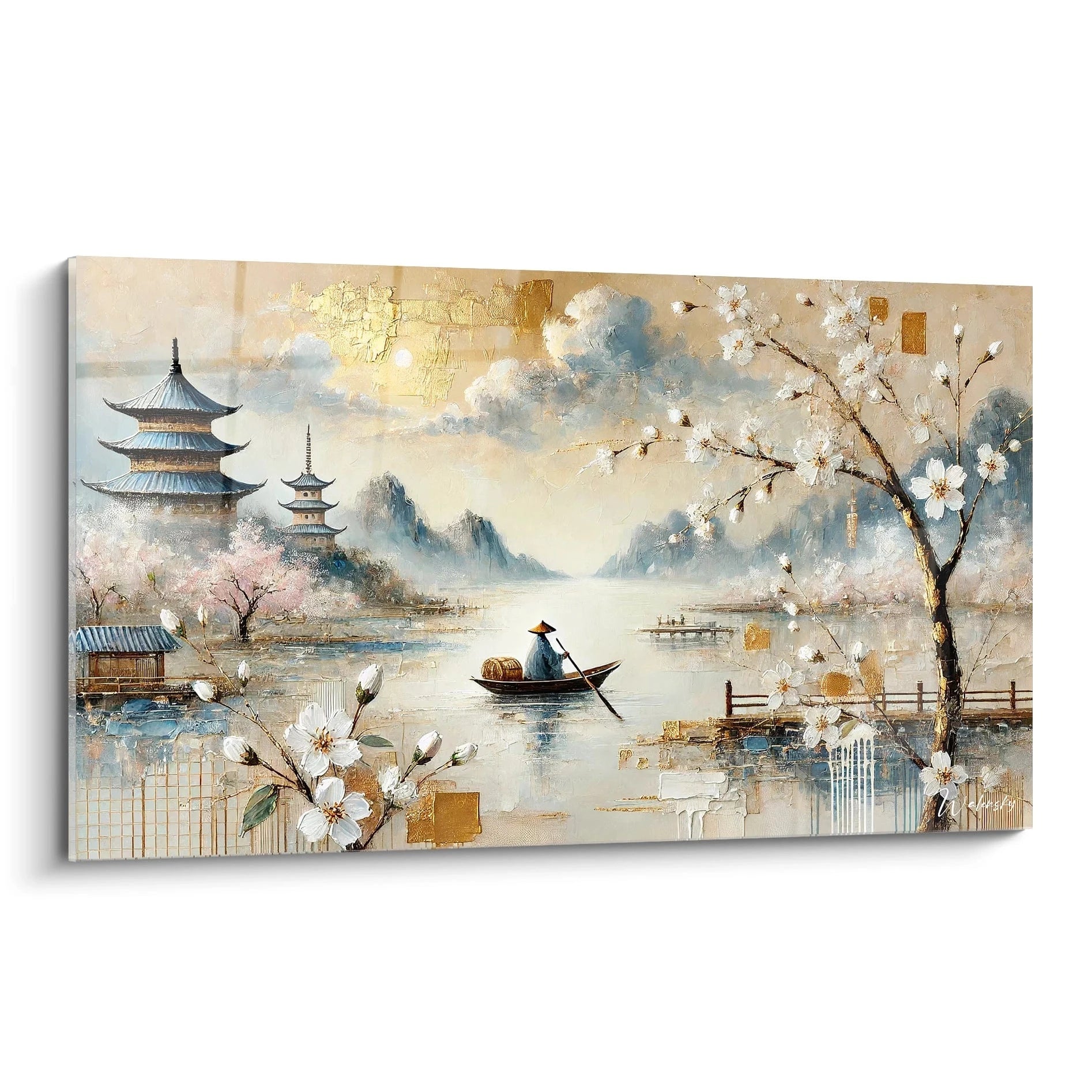
Whether misty mountain landscapes, panels of symbolic animals such as cranes or pandas, or delicate floral compositions, each work tells a story and carries within it a significance that transcends simple aesthetics. Chinese painting is an art of suggestion where emptiness is as important as fullness.
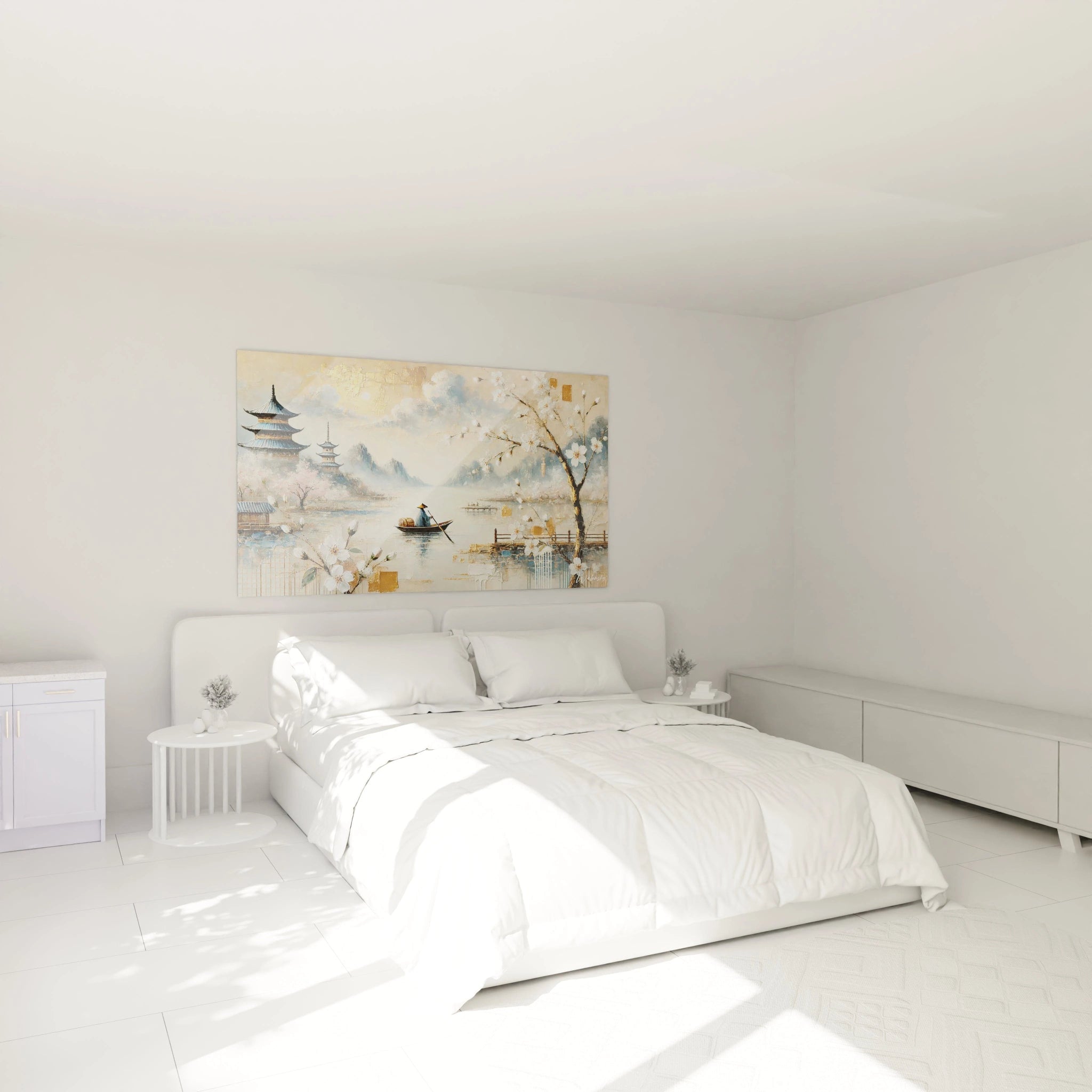
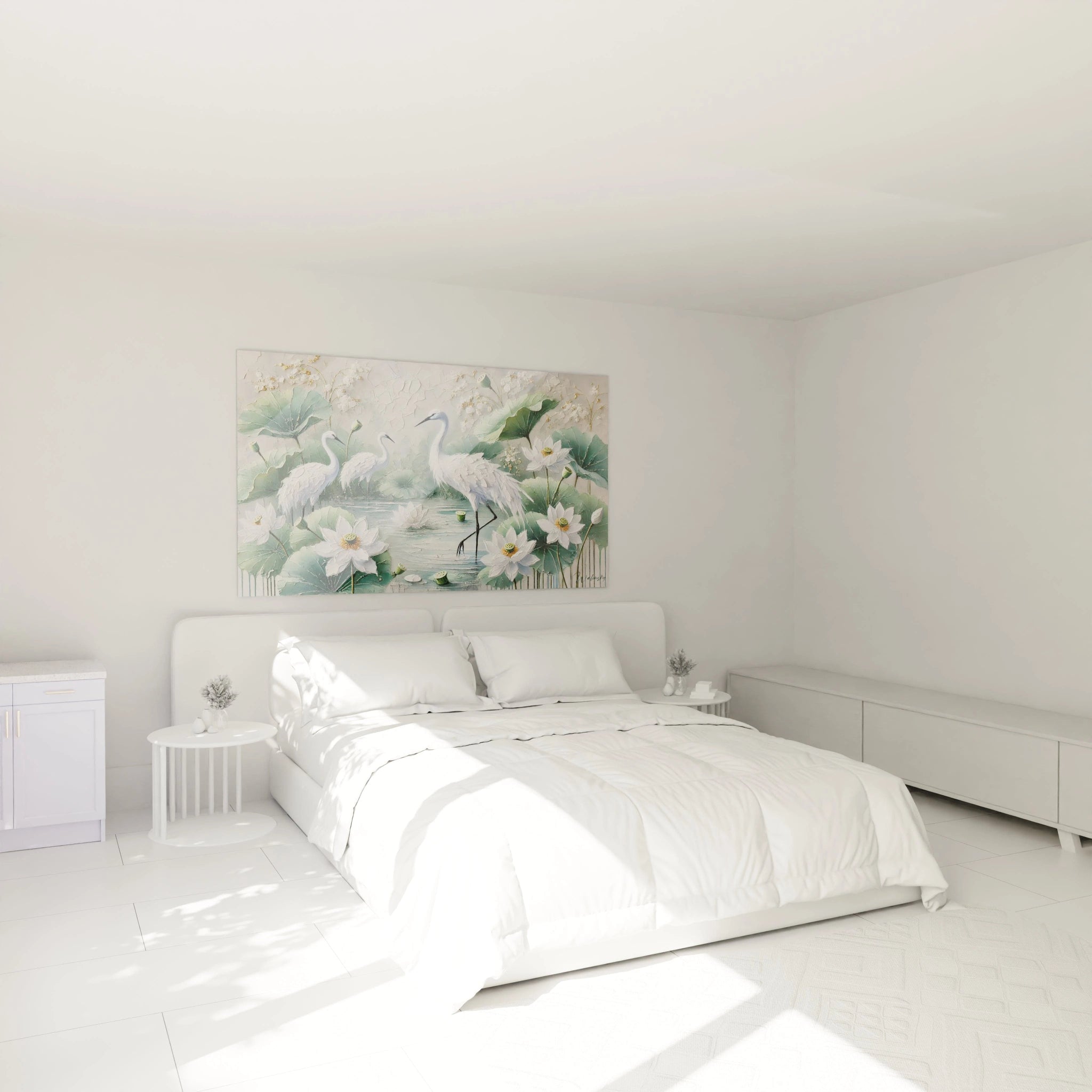
Art enthusiasts seeking deep and meaningful wall decoration will find in these panels a source of daily inspiration, transforming their living space into a haven of peace and energetic balance, faithful to the ancestral principles of feng shui.
Traditional Chinese Painting Panels: The Ancestral Art of Brush and Ink
Traditional Chinese painting panels embody one of the most ancient and venerated artistic heritages in the world, offering far more than simple wall decoration. These works are the fruit of a thousand-year tradition that has traversed dynasties, preserving techniques and philosophical principles deeply rooted in Chinese culture.
Why do traditional Chinese painting panels create a different atmosphere than other decorative styles?
Unlike Western works that often privilege realism and perspective, traditional Chinese painting panels operate on a fundamentally different principle: they capture the spiritual essence (qi) of the subjects represented rather than their exact appearance. This unique approach transforms the viewer's visual experience, inviting meditative contemplation rather than simple observation.
The power of Chinese painting panels lies in their ability to create an energetic connection with the space. Compositions dominated by empty spaces – representing water, sky or mist – are not unfinished areas but essential elements of the work, symbolizing the infinite and inviting imagination to complete the scene. This unique characteristic makes these panels ideal pieces for large wall spaces where they can breathe and deploy their soothing influence.
The unique techniques that define traditional Chinese painting
The art of brush technique, or "biyi", constitutes the distinguishing element of Chinese painting panels. Each brush stroke conveys precise intent and emotion, demanding exceptional technical mastery from the artist. The dry brush technique or "gan bi" creates rough textures evoking tree bark or rocks, while the diluted ink technique or "shui mo" produces mist and atmospheric distance effects impossible to reproduce with other mediums.
Traditional Chinese painting panels also utilize a unique vertical composition system, allowing the eye to travel from top to bottom through a landscape, as if embarking on a spiritual journey through mountains and valleys. This particularity makes them ideal pieces for the tall, narrow walls of modern interiors, offering a refined decorative solution adapted to contemporary architectural constraints.
Energetic harmony: the influence of feng shui in choosing a Chinese painting panel
In Chinese tradition, the placement of a panel is never coincidental. According to feng shui principles, Chinese painting panels representing mountains bring stability and protection when placed on the north wall of a room, while those illustrating water or weeping willows promote prosperity in the southeast. This energetic dimension fundamentally differentiates these works from other decorative styles, transforming the act of acquiring a panel into a conscious decision to harmonize one's living space.
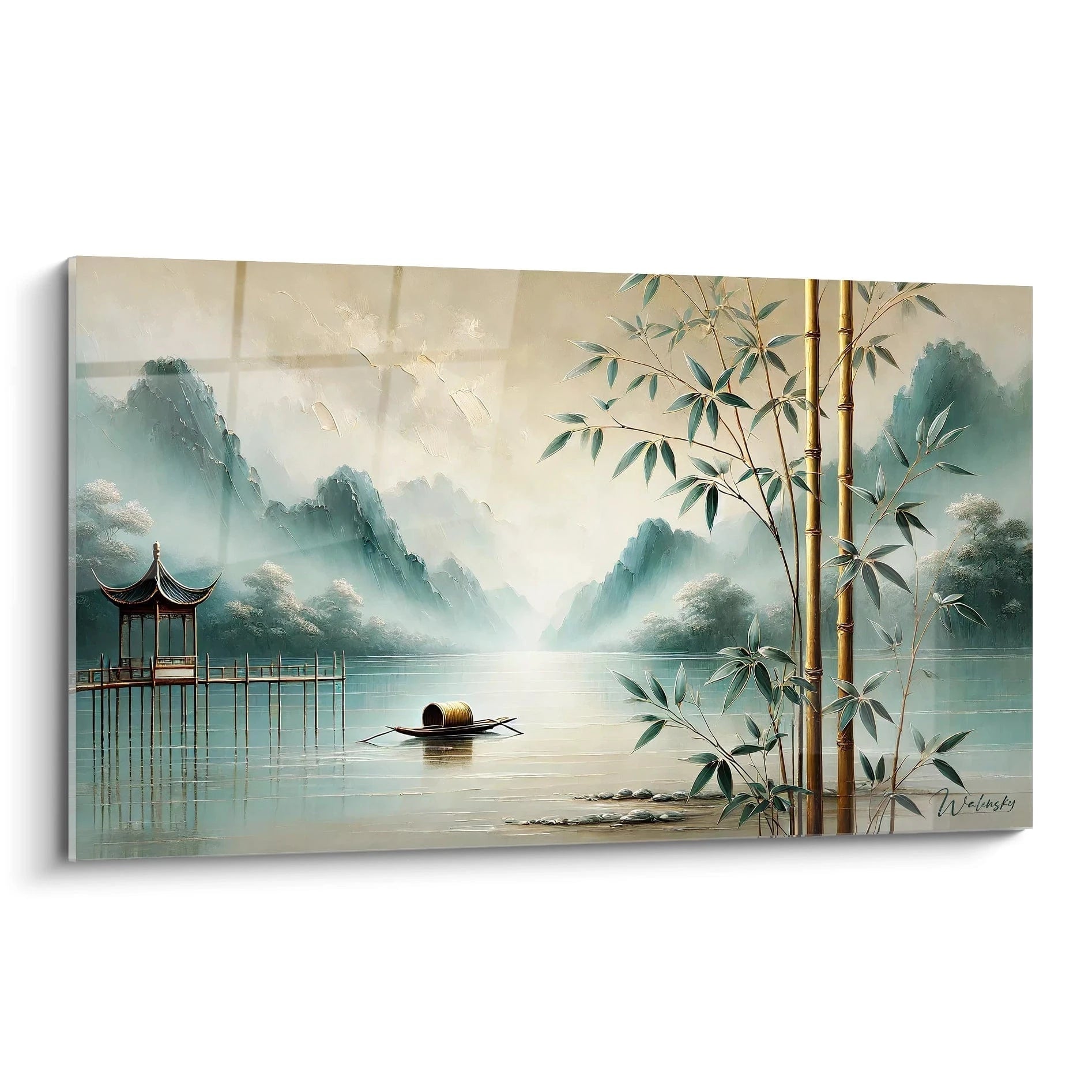
Discerning collectors thus choose their panels not only for their aesthetic beauty but also for their specific energetic properties. A panel representing bamboo, symbolizing resilience and flexibility, will ideally be placed in an office to inspire professional adaptability, while an artwork illustrating peonies – symbols of abundance – will find its place in a dining room or reception space.
How do traditional subjects of Chinese painting influence a room's atmosphere?
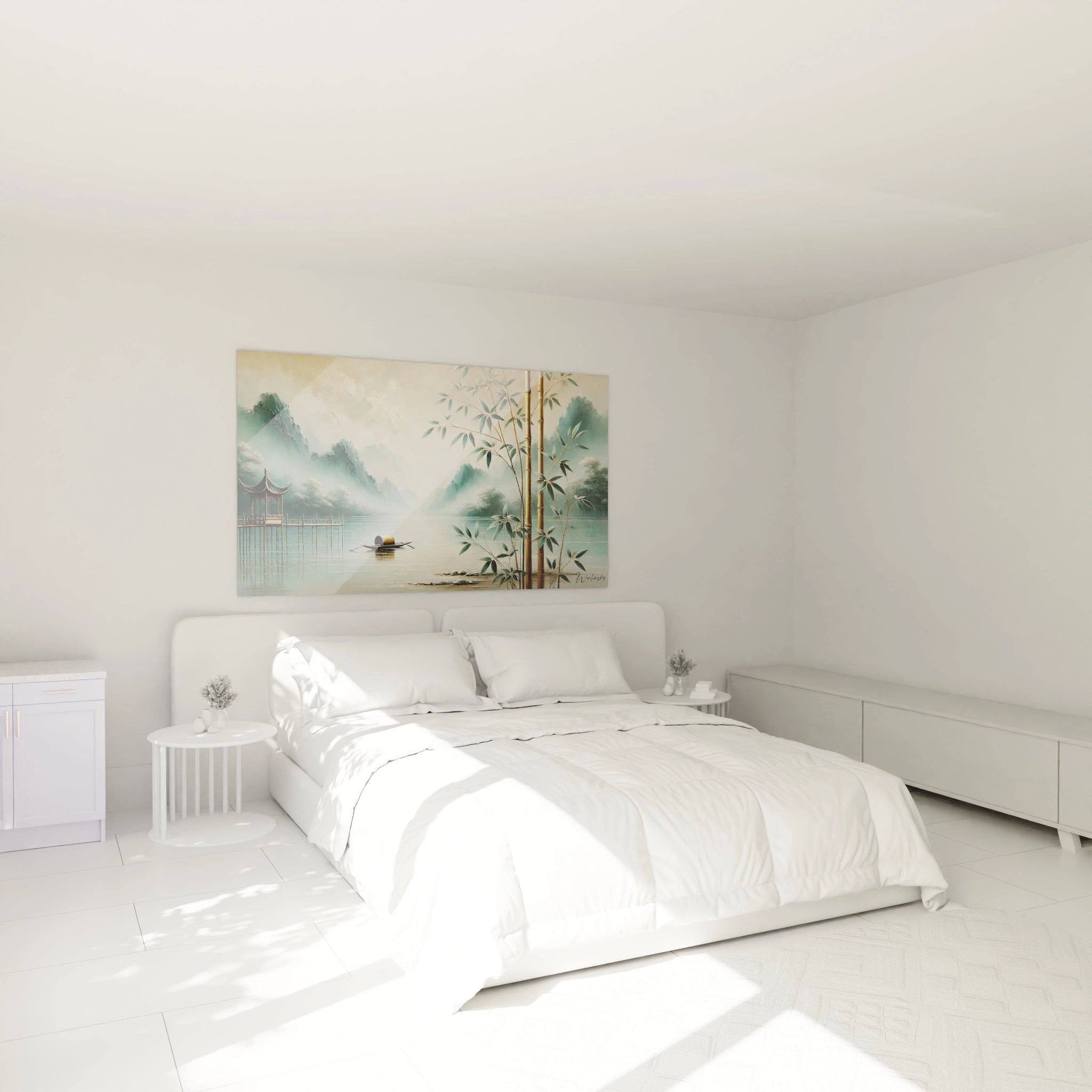
Large traditional Chinese painting panels generally focus on four noble subjects: orchids (symbolizing purity), bamboo (resilience), chrysanthemum (perseverance) and flowering plum (renewal). Each of these subjects, beyond its visual beauty, transmits specific energy to the environment where it is displayed. A panel of orchids in a bedroom will promote calm and serenity, while a representation of bamboo will stimulate creativity and adaptability in a work space.
Panels representing mountainous landscapes – "shan shui" – create a visual depth that literally enlarges the perceived space of a room. This characteristic makes these works ideal decorative solutions for small urban spaces, which they transform into open windows onto infinite landscapes and majestic nature, offering visual escape from urban confinement.
The importance of the four treasures of the scholar in creating traditional panels
The exceptional quality of a traditional Chinese painting panel stems largely from the noble materials used, known as the "four treasures of the scholar": the brush (mao bi), ink (mo), paper (xuan zhi) and inkstone (yan). The synergy between these elements allows for a variety of textures and nuances impossible to reproduce with Western mediums.
Large format traditional Chinese painting panels particularly benefit from these exceptional materials, allowing subtle gradations ranging from deep black to palest gray, thus creating depth and light effects that radically transform the perception of a space. This richness of nuances makes these works ideal masterpieces for interiors in neutral tones that they animate without overloading.
Unlike digital prints, each traditional Chinese painting panel exhibits unique variations in texture and ink absorption that create effects impossible to reproduce industrially. These characteristics make each work a truly unique piece whose presence transforms the very identity of an interior space.Contemporary Chinese Painting Panels: Artistic Fusion Between Tradition and Modernity
Contemporary Chinese painting panels represent a fascinating artistic phenomenon where millennial tradition and modern sensibilities meet to create works of exceptional depth. These creations transcend the simple decorative object to become true cultural bridges between East and West, particularly suited to interiors seeking to combine heritage and innovation.
How do contemporary artists reinvent the ancestral codes of Chinese painting?
The silent revolution of contemporary Chinese painting panels rests on an audacious reinterpretation of traditional techniques. Contemporary artists preserve mastery of line work and the philosophical importance of emptiness, while integrating Western aesthetic elements such as marked contrasts or asymmetrical compositions. This fusion creates panels with powerful visual presence, capable of becoming the focal point of a space without sacrificing the meditative subtlety inherent to Chinese art.
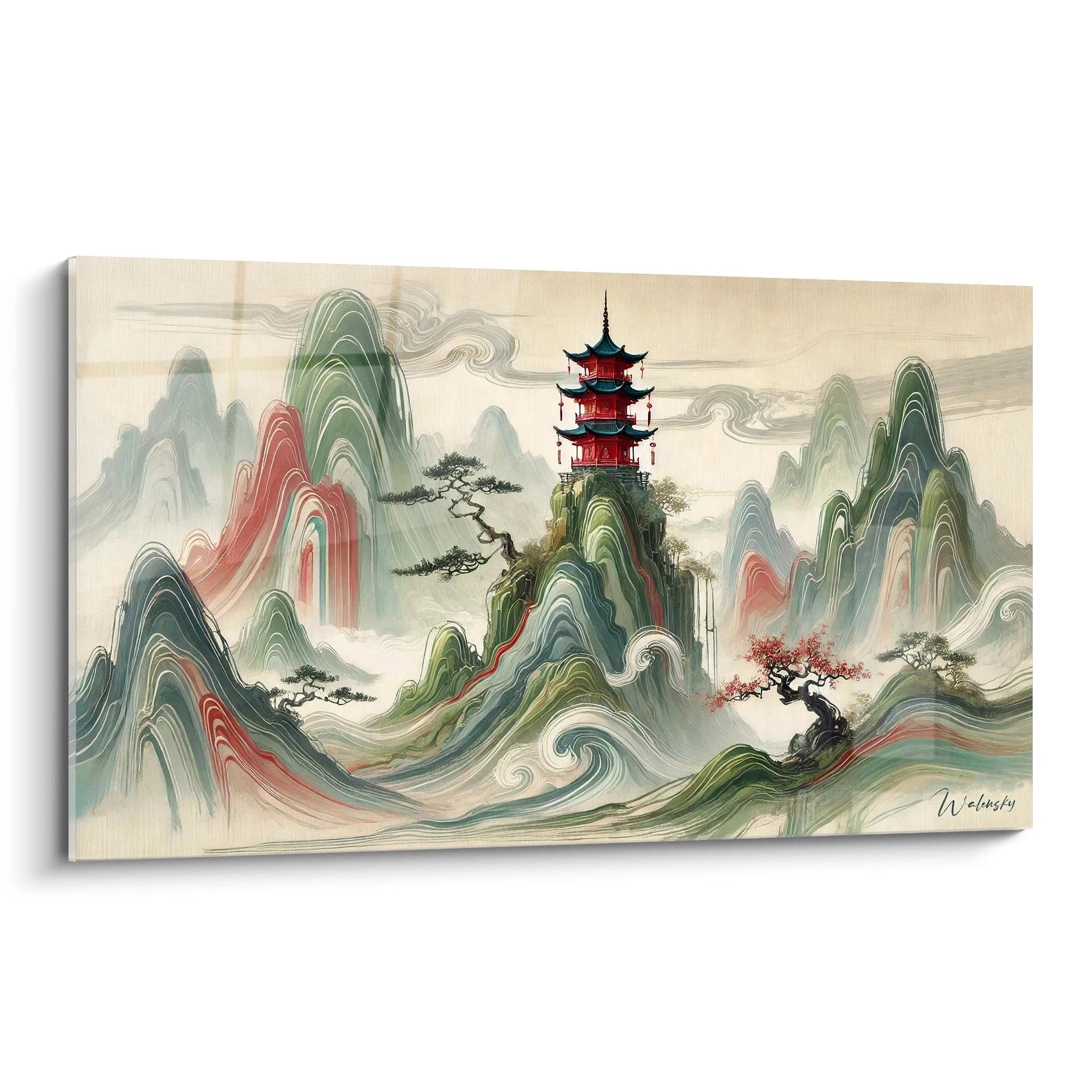
Large formats, particularly sought after for contemporary spaces with clear walls, benefit from this hybrid approach. A large contemporary Chinese painting panel can thus structure the visual identity of an entire room, offering a refined alternative to more conventional decorative options. The expanded color palette, sometimes incorporating vibrant pigments complementing traditional ink nuances, allows these works to dialogue harmoniously with interiors of varied styles.
The influence of Western artistic movements on current Chinese painting panels
Western abstract expressionism has profoundly influenced the evolution of contemporary Chinese painting panels, creating a fertile dialogue between the spontaneous gestures of action painting and the tradition of Chinese calligraphic line work. This confluence has given rise to works where the energy of gesture takes renewed importance, transforming contemplation into a dynamic experience that activates the surrounding space.
Discerning collectors particularly seek large format panels integrating this creative tension between disciplines. These works possess a unique ability to transform a minimalist contemporary space by conferring upon it cultural depth and emotional resonance impossible to obtain with purely decorative pieces. Their powerful visual presence makes them significant artistic investments for upscale residential spaces and prestigious professional environments.
New subjects and symbolisms in 21st century Chinese painting panels
While traditional Chinese painting panels concentrated on a codified repertoire of symbolic subjects, contemporary works explore resolutely current themes such as urbanization, environmental transformation or cultural identity in a globalized world. This thematic evolution allows contemporary panels to resonate with the preoccupations of modern collectors, while maintaining an anchor in Chinese artistic techniques and aesthetic philosophy.
Panels representing urban landscapes treated according to traditional techniques create a striking contrast between subject and medium, offering visual reflection on China's rapid modernization. These works, particularly impressive in large format, become profound cultural commentaries while preserving their decorative function, bringing intellectual dimension that transcends simple wall ornament.
The importance of format and scale in contemporary Chinese painting panels
Contemporary Chinese artists have revolutionized the dimensional approach to their works, creating monumental panels that perfectly respond to the needs of modern architectural spaces characterized by large wall surfaces. These impressive formats – sometimes several meters in height – allow complete visual immersion of the viewer in the work, transforming the traditional contemplative experience into an enveloping environmental encounter.
The current trend favors large diptychs and triptychs that can adapt to different spatial configurations. These modular ensembles offer installation flexibility impossible with traditional formats, allowing creation of personalized compositions perfectly suited to specific architectural constraints. This adaptability makes contemporary Chinese painting panels particularly relevant decorative solutions for spaces with atypical or evolving configurations.
The integration of unconventional materials in contemporary panels
Material innovation constitutes one of the signatures of contemporary Chinese painting panels, with the integration of elements such as gold leaf, mineral pigments or even certain industrial materials alongside traditional ink. These combinations create texture and light effects impossible to obtain with classical techniques, giving rise to works that dynamically interact with the lighting of their environment.
Panels incorporating metallic leaves notably present a reflective quality that transforms their appearance throughout the day, creating an evolving visual experience that constantly renews the decorative impact of the work. This changing dimension brings considerable added value compared to static decorative options, making these panels artistic investments with multiple facets.Chinese Painting Panels Symbolism: Decoding Deep Meanings and Decorative Impact
Chinese painting panels imbued with symbolism represent far more than simple decorative objects – they are vectors of profound meanings and subtle energies that fundamentally transform the spaces where they are displayed. This symbolic dimension, rooted in millennia of philosophical and cultural tradition, confers upon these works an unparalleled depth in the field of interior decoration.
How to decode hidden symbols in traditional Chinese painting panels?
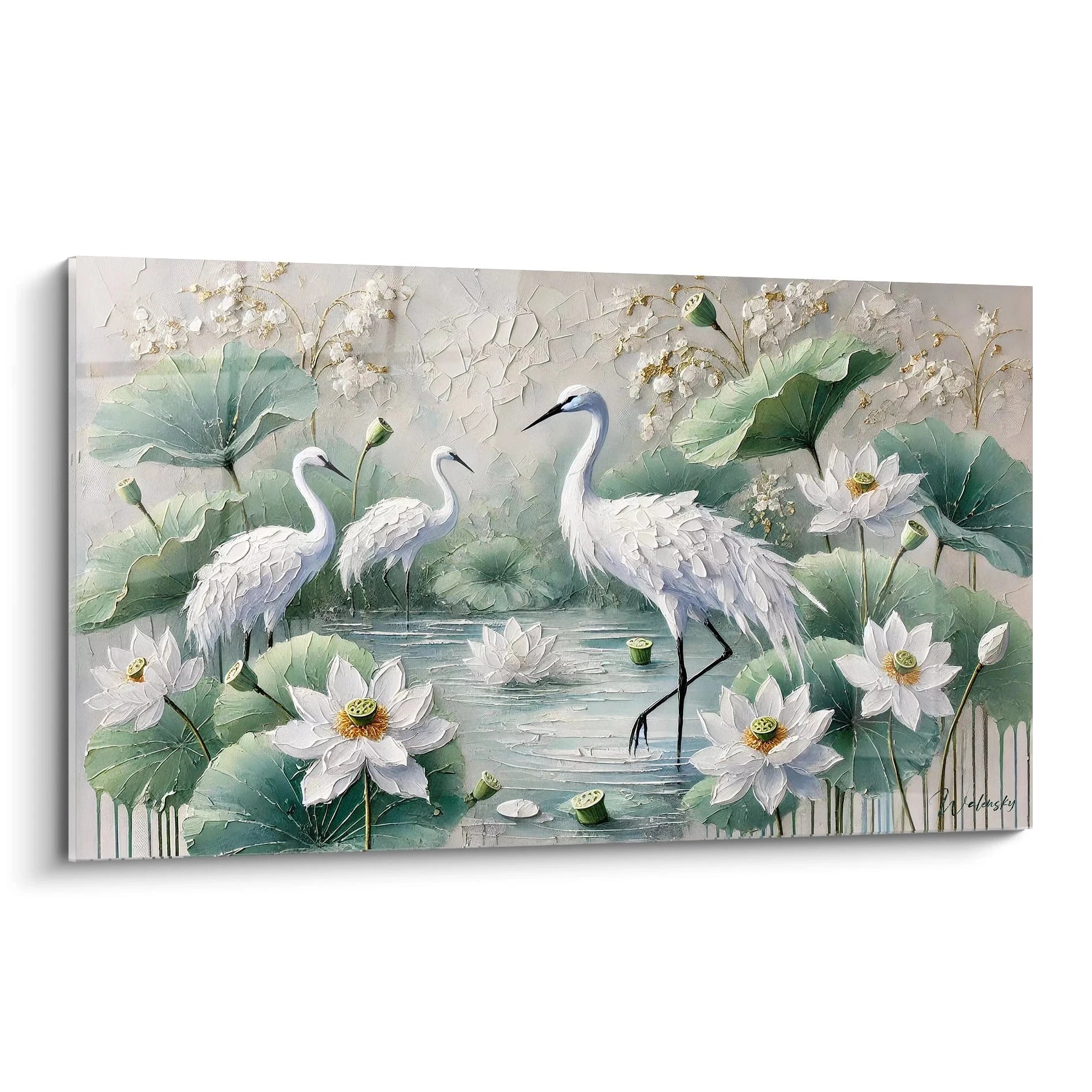
Each element represented in a Chinese painting panel carries precise meaning inscribed in a codified visual language. Pines, symbols of longevity and resilience, transmit energy of perseverance to the surrounding space. Cranes, messengers between heaven and earth, evoke spiritual elevation. Carp, symbols of perseverance and transformation, are particularly sought after for professional spaces where they inspire progress and success.
This symbolic richness transforms the act of acquiring a Chinese painting panel into a conscious choice to influence the energetic atmosphere of a place. A large panel representing peonies – symbols of abundance and prosperity – placed in a reception space or dining room, does more than visually beautify the space but also activates specific energies promoting generosity and sharing during social gatherings.
The impact of symbolic combinations on spatial and personal harmony
The unique strength of Chinese painting panels lies in their ability to combine multiple symbols to create complex and personalized visual messages. A composition associating bamboo (flexibility), orchids (purity) and rocks (stability) creates particularly harmonious energetic balance suited to meditation spaces or creative work. These symbolic combinations allow fine personalization of a work's influence on its environment, offering customized decorative solutions impossible to obtain with other artistic styles.
Discerning collectors select their panels based on specific symbolic constellations adapted to their personal or professional needs. An entrepreneur might thus prefer a panel associating the phoenix (rebirth) with the dragon (power), while a family space will benefit from the soothing presence of a panel representing lotus flowers (harmony) and mandarin ducks (fidelity), thus creating an energetic microcosm perfectly aligned with inhabitants' aspirations.
Symbolic colors in Chinese painting panels and their influence on atmosphere
Unlike the primarily monochrome palette of traditional Chinese painting, certain contemporary panels integrate specific colors whose symbolic meaning amplifies the decorative and energetic impact of the work. Red, symbolizing joy and vitality, radically transforms the dynamics of a space by infusing it with activating energy. Blue, evoking depth and serenity, conversely creates an atmosphere conducive to reflection and inner calm.
Large panels combining traditional black ink and touches of symbolic colors create visual tension particularly suited to contemporary spaces. These works establish a bridge between tradition and modernity, allowing their harmonious integration into interiors of varied styles. This aesthetic versatility, coupled with symbolic depth, explains growing attraction to these panels among interior decorators and architects seeking to create spaces that are both aesthetically refined and energetically balanced.
How do seasons represented in panels influence a space's harmony?
The representation of seasons in Chinese painting panels transcends simple temporal illustration to become a sophisticated tool for energetic harmonization of spaces. A panel illustrating spring – through plum blossoms or young bamboo shoots – will infuse energy of renewal and growth particularly beneficial in a space dedicated to creation or innovation. Conversely, a work evoking autumn – via reddening leaves or chrysanthemums – will create an atmosphere conducive to reflection and introspection, ideal for an office or library.
Large format panels representing complete seasonal landscapes become true emotional portals transforming the radical perception of a space. An urban minimalist interior can thus open onto the immensity of a winter mountain landscape, creating striking contrast between physical environment and visual escape proposed by the work. This ability to transcend spatial limits explains why these panels are particularly prized for confined urban residential spaces.
The role of calligraphic inscriptions in amplifying symbolic message
Chinese painting panels integrating calligraphic elements constitute particularly powerful works where image and text mutually reinforce each other. Poems or philosophical aphorisms finely calligraphed add an intellectual and spiritual dimension transcending simple aesthetic appreciation. These inscriptions transform the panel into a multi-sensory experience that evolves with each contemplation, progressively revealing layers of increasingly profound significance.
The presence of calligraphy on a Chinese painting panel makes it an object of daily meditation whose influence on the space and its occupants deploys over time. This evolving dimension fundamentally distinguishes these works from more literal decorative options, offering depth of experience impossible to obtain with purely ornamental creations.
FAQ on Chinese painting panels
What is the ideal placement for a Chinese painting panel according to feng shui principles?
According to feng shui principles, the ideal placement of a Chinese painting panel depends mainly on its subject. Panels representing mountains, symbols of stability and protection, are particularly beneficial on a room's north walls. Works illustrating water or weeping willows promote prosperity when placed in the southeast. For large living spaces, a monumental panel representing a landscape balancing mountain and water will create particularly harmonious energetic balance conducive to occupants' well-being.
How to distinguish an authentic Chinese painting panel from an industrial reproduction?
Authentic Chinese painting panels present several distinctive characteristics impossible to reproduce industrially. Carefully observe variations in ink density which, in an original work, create subtle depth effects through variable absorption of traditional paper. Also examine brush strokes which, under raking light, show slight relief testifying to the pressure exerted by the artist. Finally, authentic works develop unique patina over time, where reproductions maintain uniform appearance betraying their industrial nature.
What is the fundamental difference between Chinese and Japanese painting panels for interior decoration?
Chinese and Japanese painting panels, while sharing certain influences, present fundamental differences affecting their decorative impact. Chinese works generally privilege more complex and dense composition, creating powerful visual presence structuring the surrounding space. Japanese panels conversely adopt a minimalist approach where emptiness occupies preponderant place, generating atmosphere of meditative lightness. This fundamental difference makes Chinese painting panels particularly well-suited decorative elements for contemporary spaces seeking to combine impactful visual presence with cultural depth.