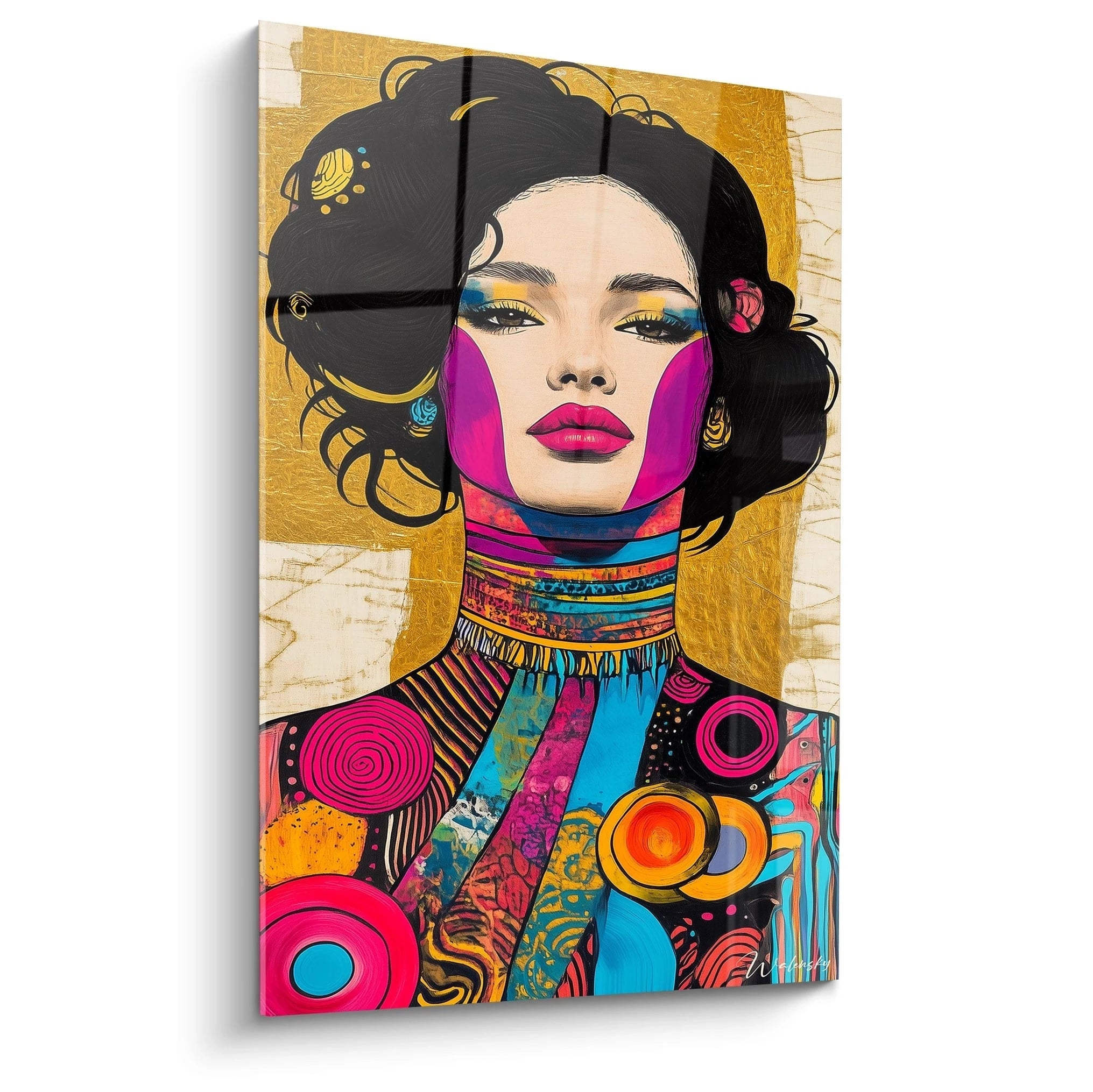
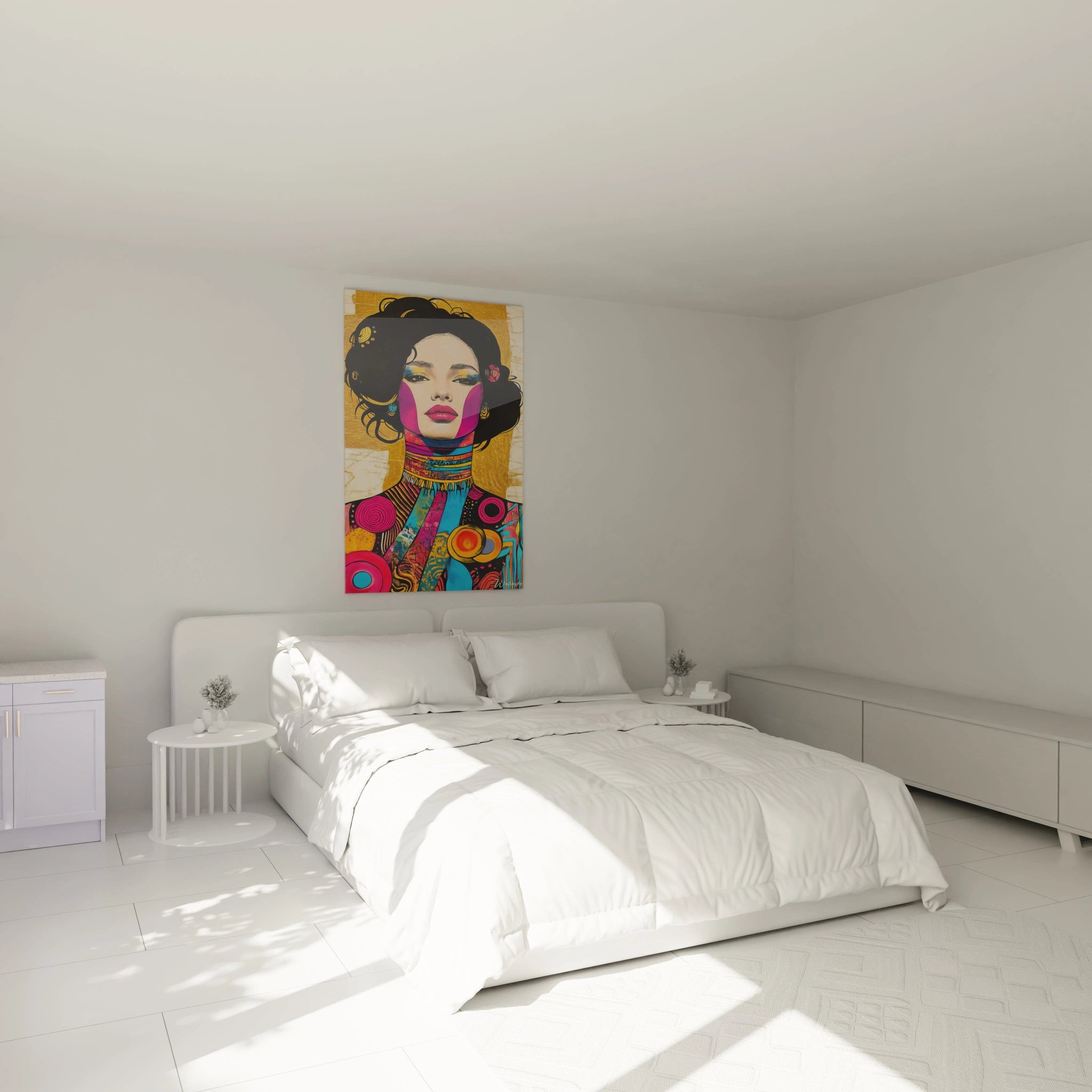
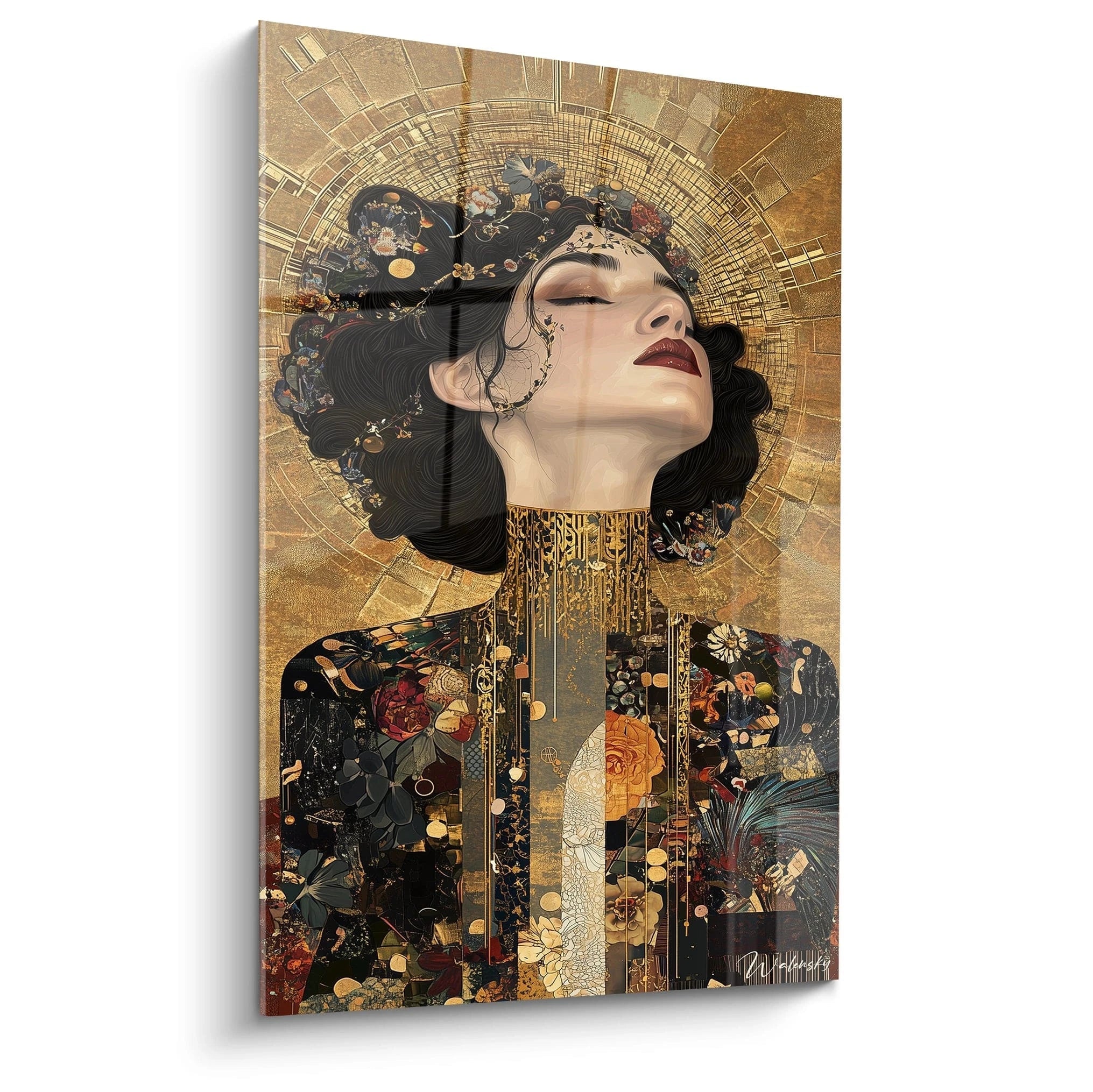
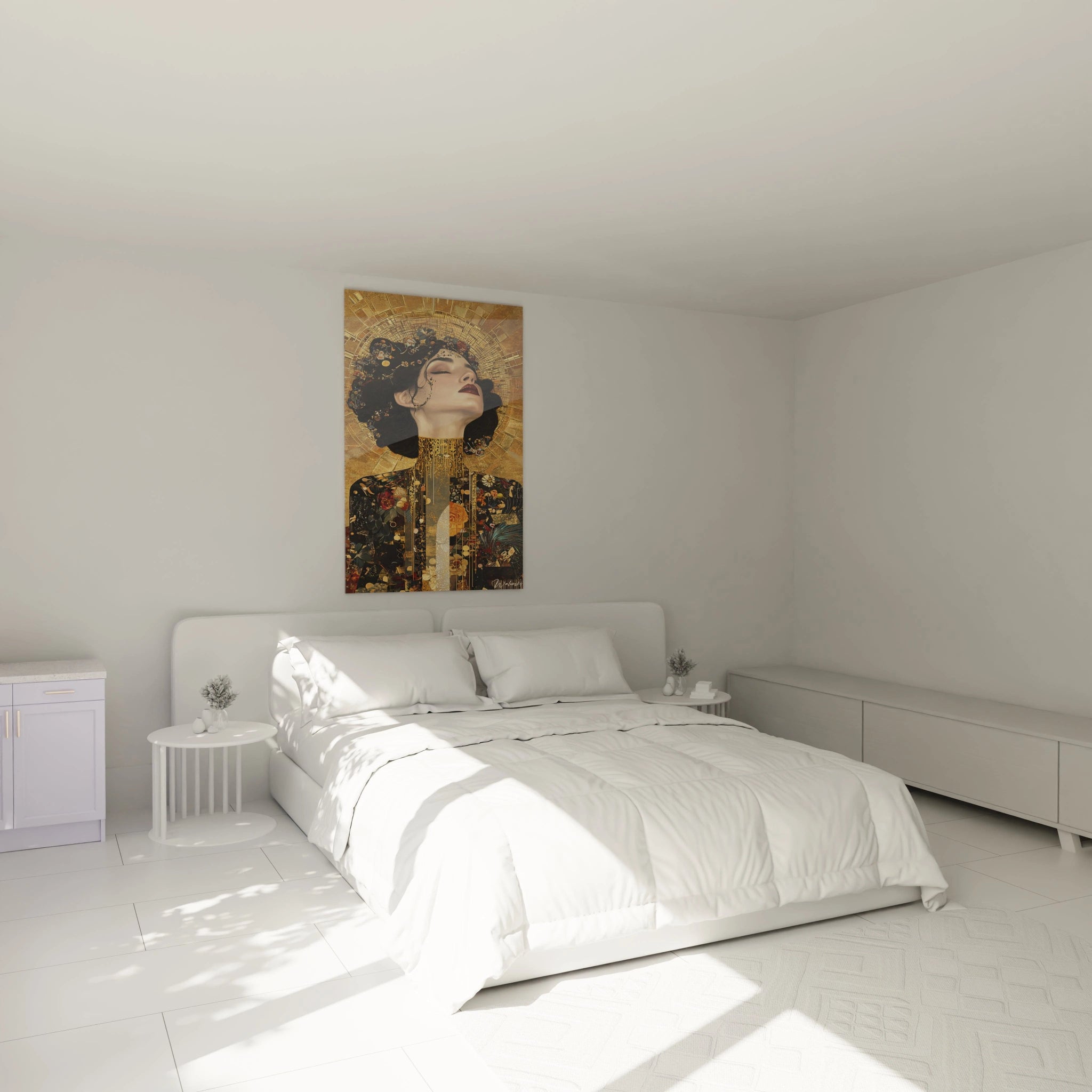
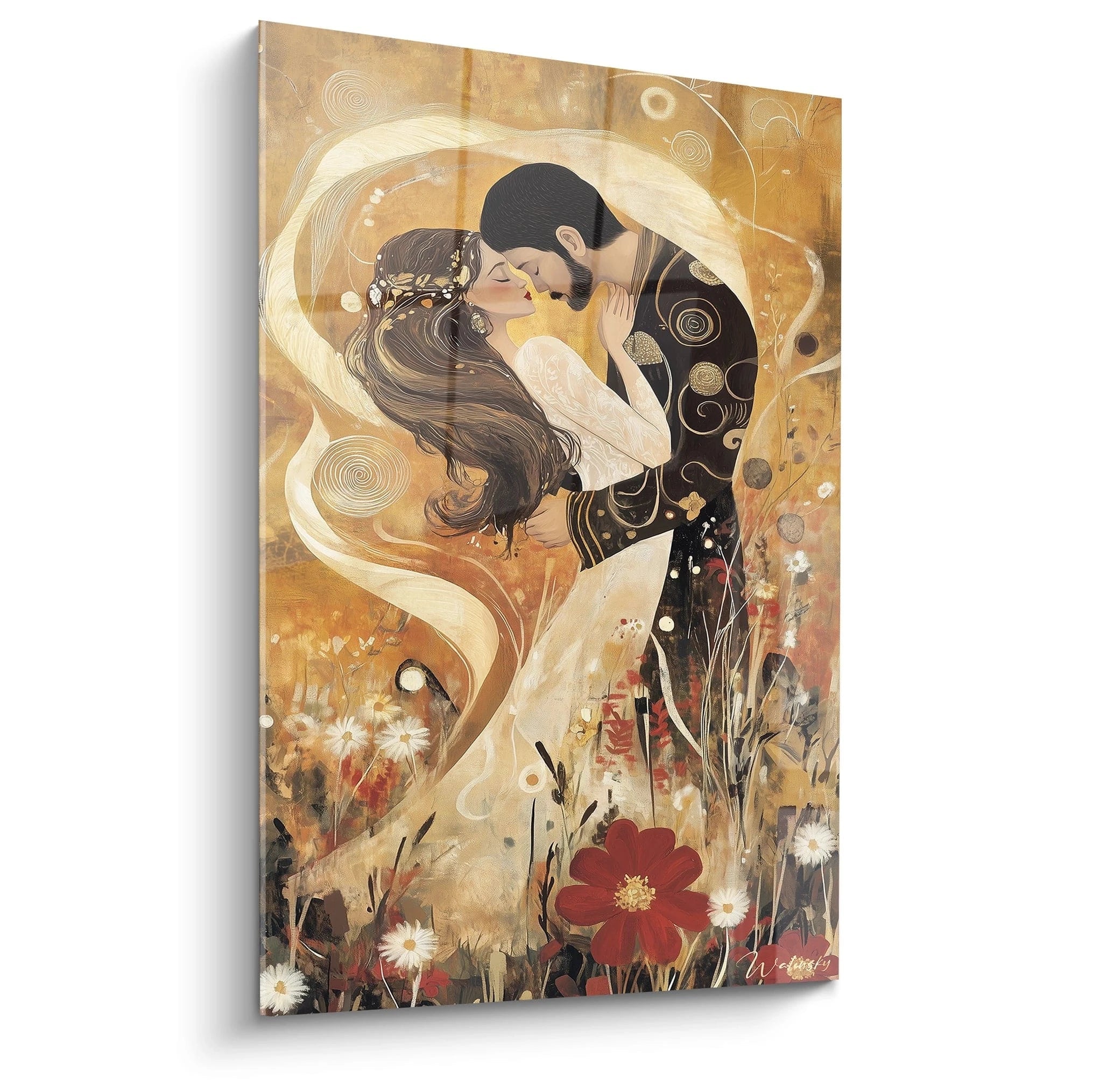
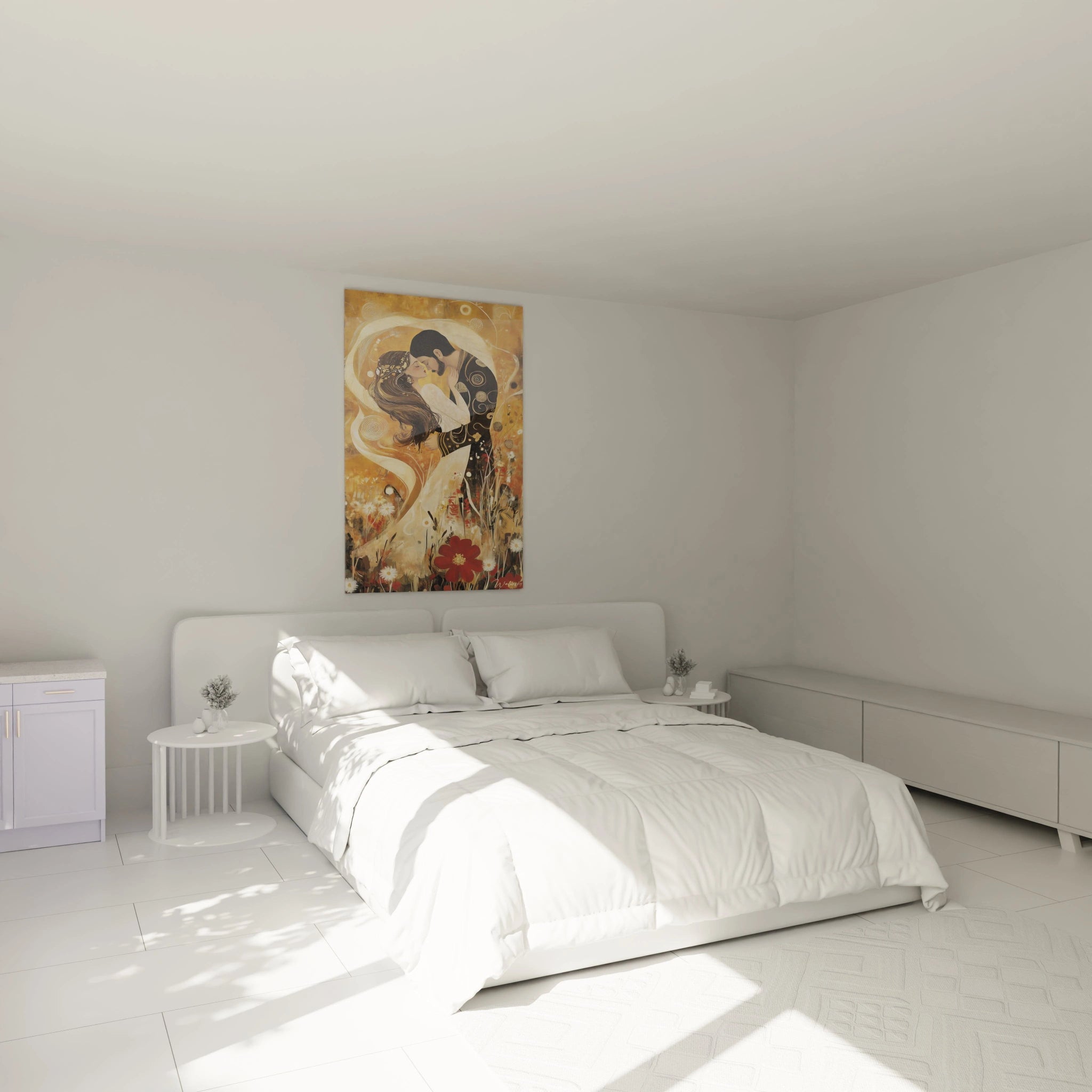
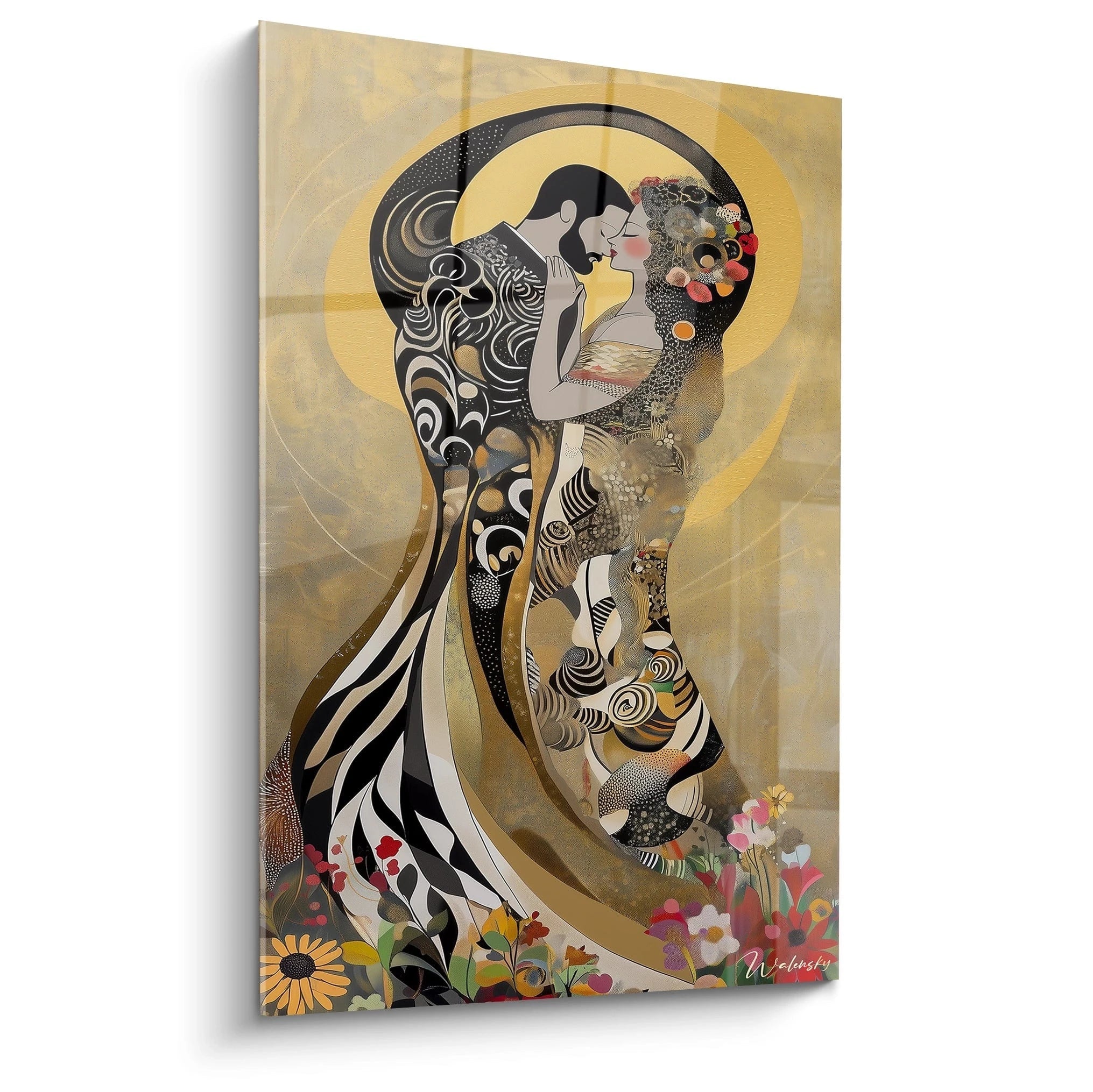
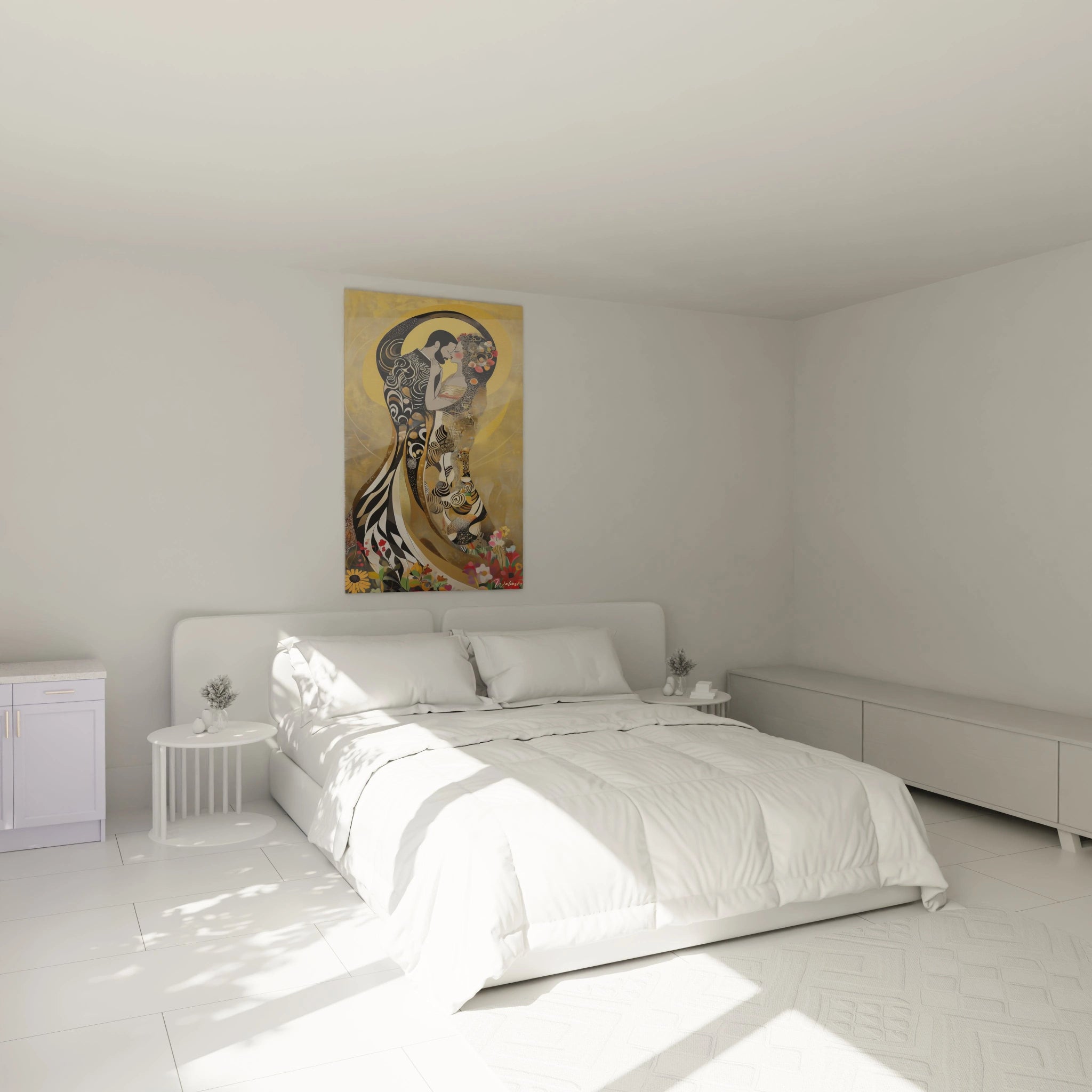
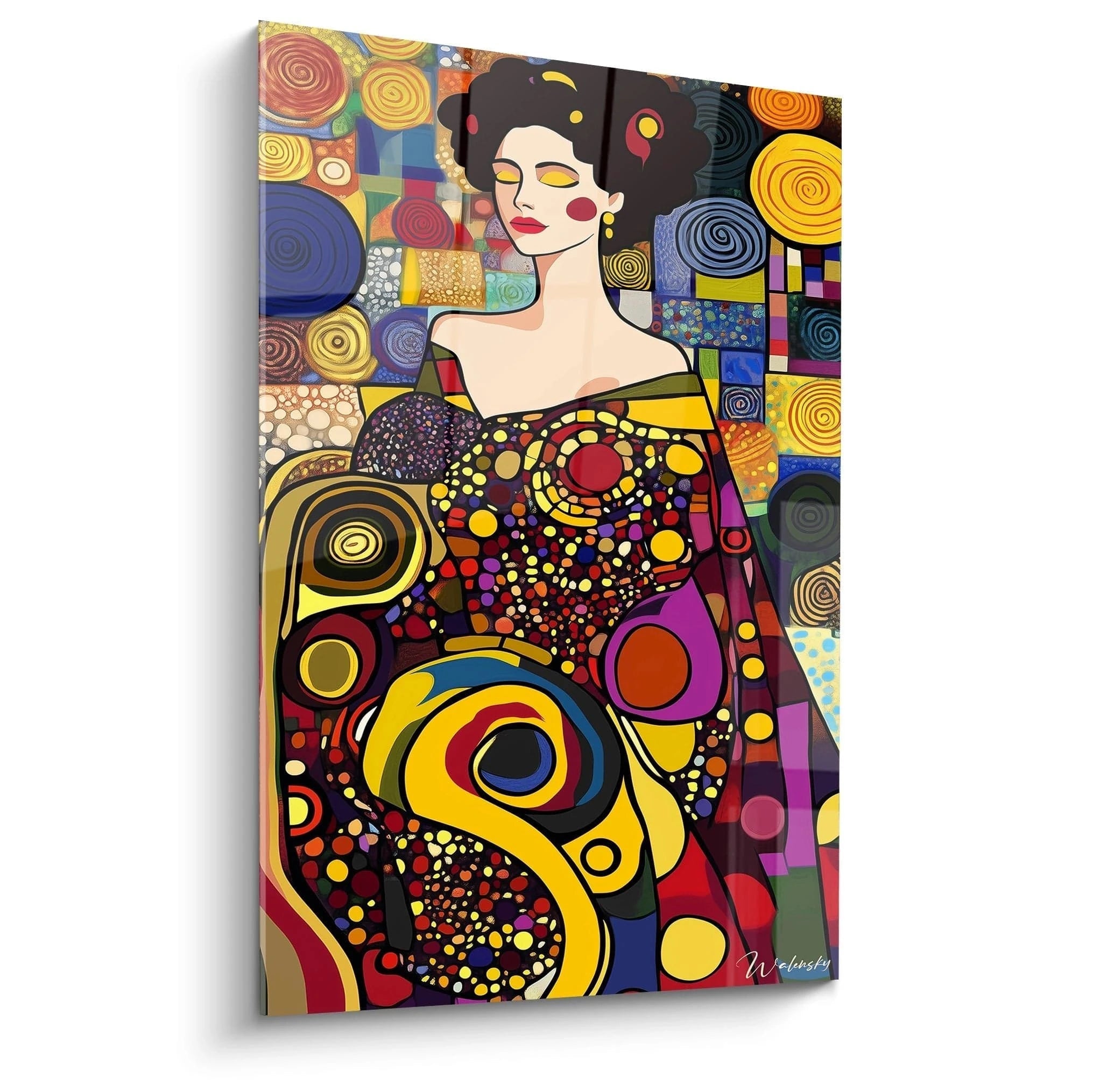
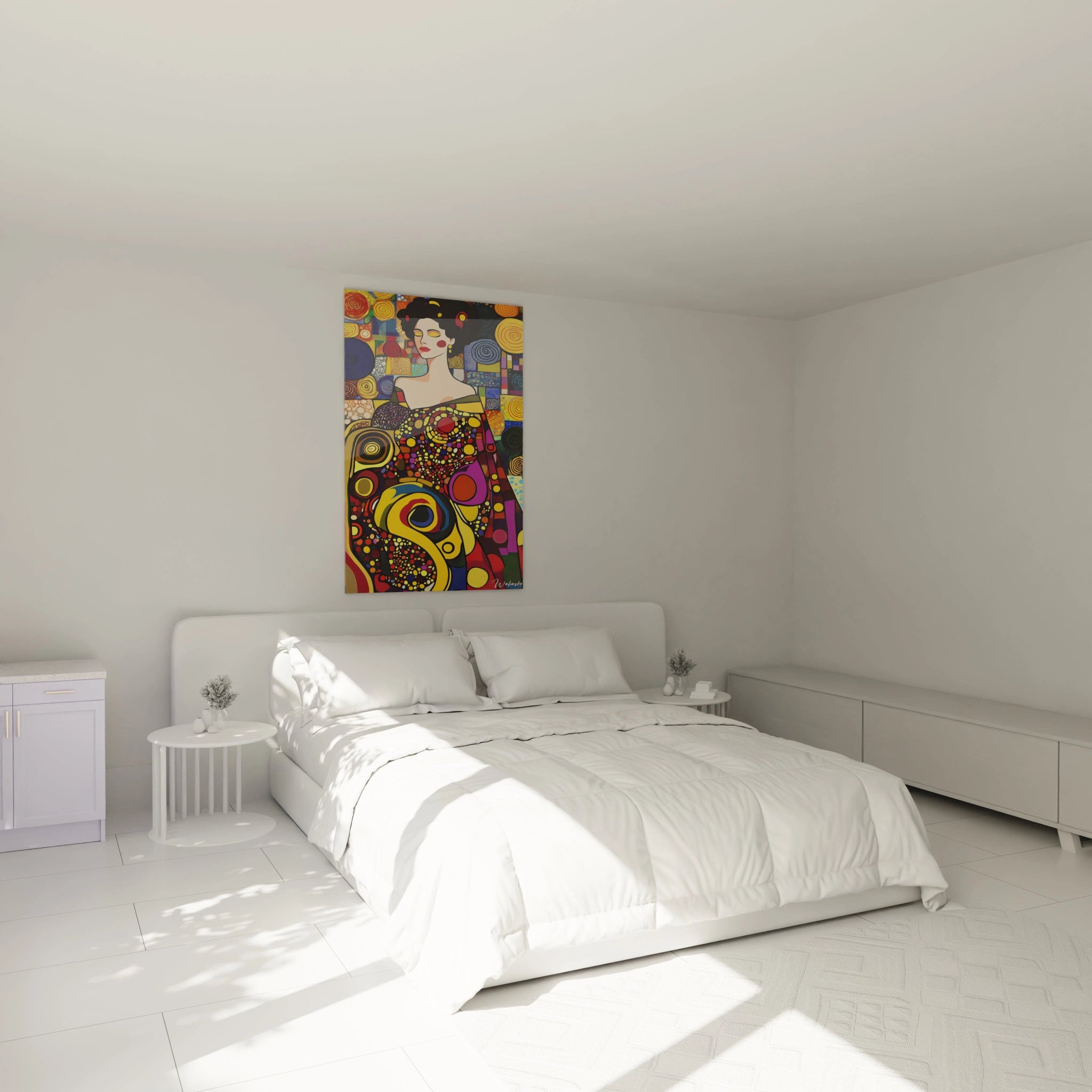
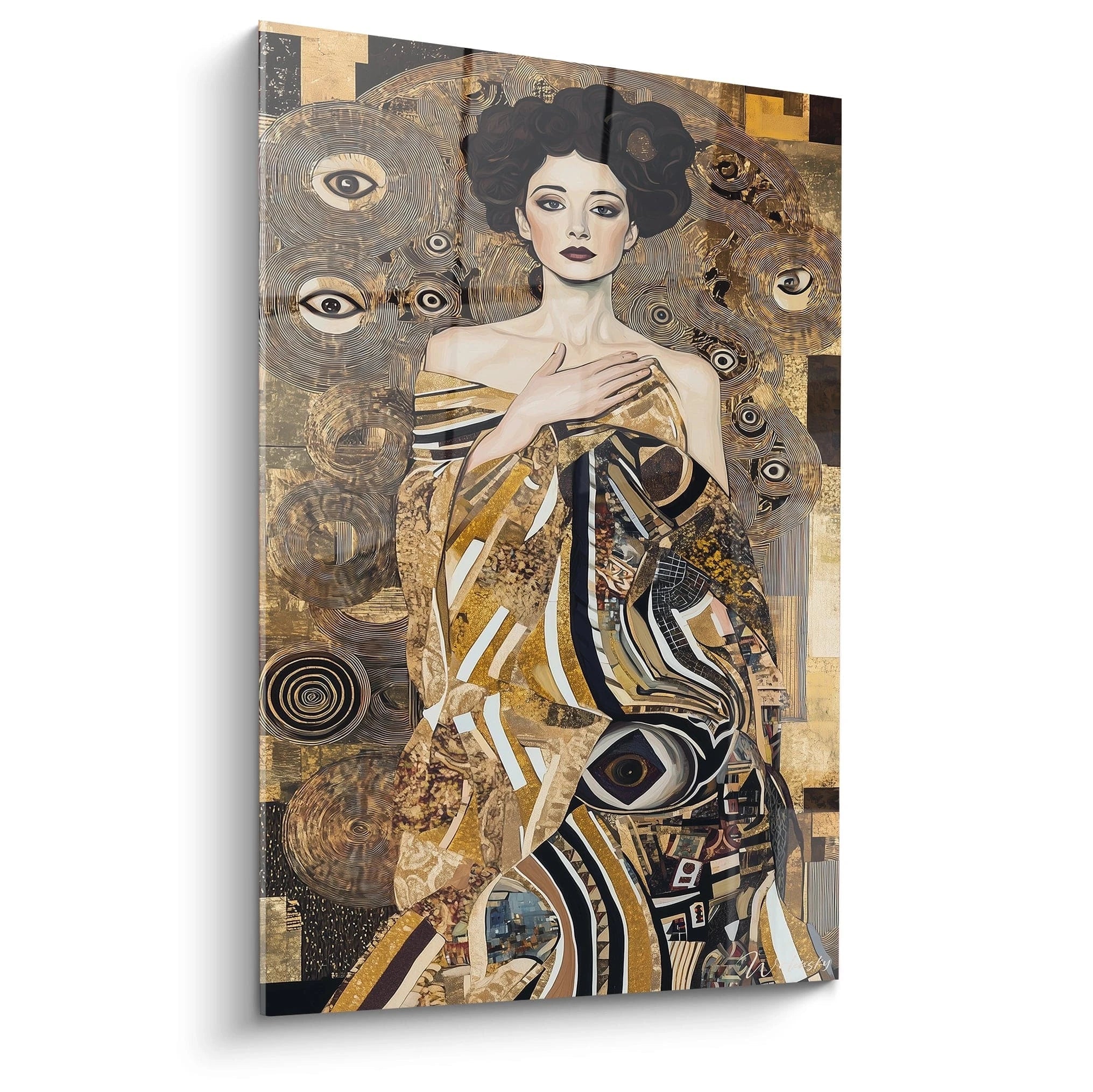
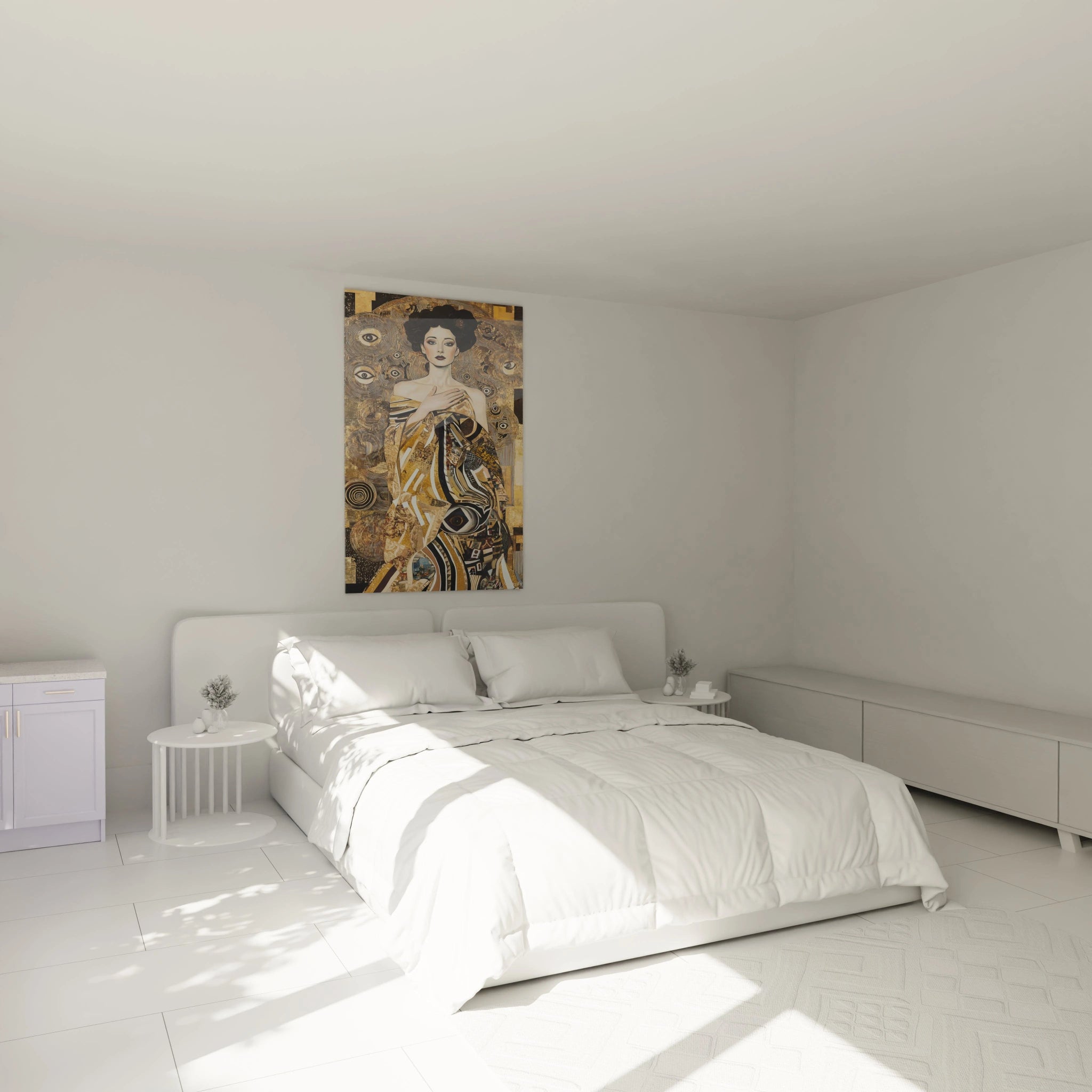
- Gustav Klimt Decoration Presentation
- Gustav Klimt Decoration Golden Symbolism
- Gustav Klimt Decoration Art Nouveau Influence
- Gustav Klimt Decoration Viennese Atmosphere
Gustav Klimt decoration transforms your interior into a genuine art gallery with the unique elegance of this master of Austrian symbolism. Combining opulent decorative patterns, glistening gold leaf and enigmatic female portraits, Klimt's works bring timeless sophistication to your living space. Whether you're an art lover, passionate about the Art Nouveau period or simply seeking a statement piece for your wall decor, discover how to integrate the fascinating world of Gustav Klimt into your interior through our three approaches. Explore the secrets of golden ornaments, the influence of Art Nouveau and the characteristic Viennese atmosphere to enhance your living space with these famous paintings with sumptuous patterns and enchanting colours.
Gustav Klimt Decoration: The Art of Golden Symbolism in Your Interior
The characteristic golden symbolism of Gustav Klimt's works radically transforms the atmosphere of your living space, creating a luxurious ambiance impossible to reproduce with other artistic styles.
How do Klimt's golden patterns create unique dynamic luminosity?
Gustav Klimt decoration stands out for its extraordinary ability to play with ambient light. Unlike more conventional works, Klimt's golden patterns capture and reflect light in changing ways throughout the day, creating a glittering effect that animates your space. This luminous phenomenon, inherent to the gold leaf used by the artist, transforms static decoration into a living element that evolves according to your room's natural or artificial lighting.
In the morning, the first rays of sunlight reveal subtle details of golden geometric patterns, while in the evening, dimmed light brings out contrasts with other coloured elements of the work. This unique interaction between light and golden ornamentation creates an exclusive visual experience unique to Klimt-inspired decorations.
The influence of Byzantine patterns in contemporary decoration
Gustav Klimt decorations incorporate reinterpreted Byzantine patterns that bring exceptional historical and symbolic depth to your interior. These complex geometric patterns, inspired by Byzantine mosaics that Klimt admired, create a fascinating bridge between ancient art and contemporary design.
By incorporating a Klimt decoration in your space, you introduce not only an aesthetically striking work, but also an element carrying rich historical symbolism. The spirals, circles and abstract geometric forms characteristic of his "golden period" add an intellectual dimension to your decoration that few other artistic styles can offer.
This fusion between Byzantine tradition and Viennese modernity creates a striking contrast with contemporary decorative elements, establishing your space as culturally sophisticated and visually captivating.
Which rooms in your interior should feature the metallic effect of Klimt's works?
Gustav Klimt decoration finds its ideal place in specific spaces where the metallic effect of his works can be fully appreciated. The rooms to prioritize are:
- Reception spaces such as the living room or dining room, where guests can admire golden details from different angles
- Transitional areas such as wide corridors or staircase landings, where changing light highlights golden variations
- Relaxation spaces such as a library or reading corner, where prolonged contemplation allows appreciation of pattern complexity
Your room's orientation also plays a crucial role in showcasing Klimt decoration. A room facing east-west benefits particularly from the grazing light of early morning and evening, amplifying the glittering effect of golden patterns. For less lit rooms, specific directional lighting can be installed to recreate this characteristic luminous interaction.
Walls in dark or neutral tones (deep blue, dark green, anthracite grey) maximize the visual impact of golden elements, creating a dramatic contrast characteristic of Klimt's style.
Integrating Klimt's feminine symbolism into contemporary spaces
The emblematic female representations in Gustav Klimt decoration bring a unique psychological and emotional dimension to your interior. Beyond their aesthetic beauty, these female figures symbolize various aspects of the human condition – sensuality, motherhood, life cycle – adding a narrative depth absent from purely ornamental decorations.
In a modern living space, these female representations create focal points charged with emotion that personalize your environment. Portraits like "Adele Bloch-Bauer" or the allegorical figures of "Hope II" establish an almost human presence that transforms the atmosphere of your room.
These works also serve as a fascinating counterpoint to minimalist contemporary architecture, their decorative and emotional richness softening the clean lines of modern interiors while creating an interesting dialogue between structural simplicity and ornamental complexity.
The alchemy of colours: matching Klimt hues with your existing palette
Gustav Klimt decoration presents a distinctive colour palette that can transform your existing colour scheme through thoughtful integration. The brilliant gold, the main characteristic of his work, is accompanied by specific complementary hues:
- Deep purples and royal blues that create a luxurious contrast with golden elements
- Emerald and olive greens that add a natural and organic dimension
- Rich browns and ochres that anchor the composition and add warmth
To harmoniously integrate Klimt decoration, identify the secondary colours present in the chosen work and incorporate them subtly into your space through textile elements, such as cushions or curtains, or decorative accessories. This approach creates visual cohesion between your Klimt masterpiece and your overall decoration.
The metallic tones present in Klimt's works can also be echoed in decorative details such as picture frames, lamps or vases, extending the aesthetic influence of your main decoration throughout your space.
Gustav Klimt Decoration: Art Nouveau Influence in Contemporary Design
Integrating Gustav Klimt decoration into your interior allows you to incorporate the very essence of the Art Nouveau movement, creating a fascinating bridge between this revolutionary artistic era and your contemporary living space.
How do Klimt's organic lines influence spatial perception?
Gustav Klimt decoration stands out for its sinuous and organic lines that radically transform the perception of your space. Unlike works with rigid compositions, the fluid forms characteristic of Klimt create an illusion of spatial expansion, particularly beneficial in often-constrained contemporary urban environments.
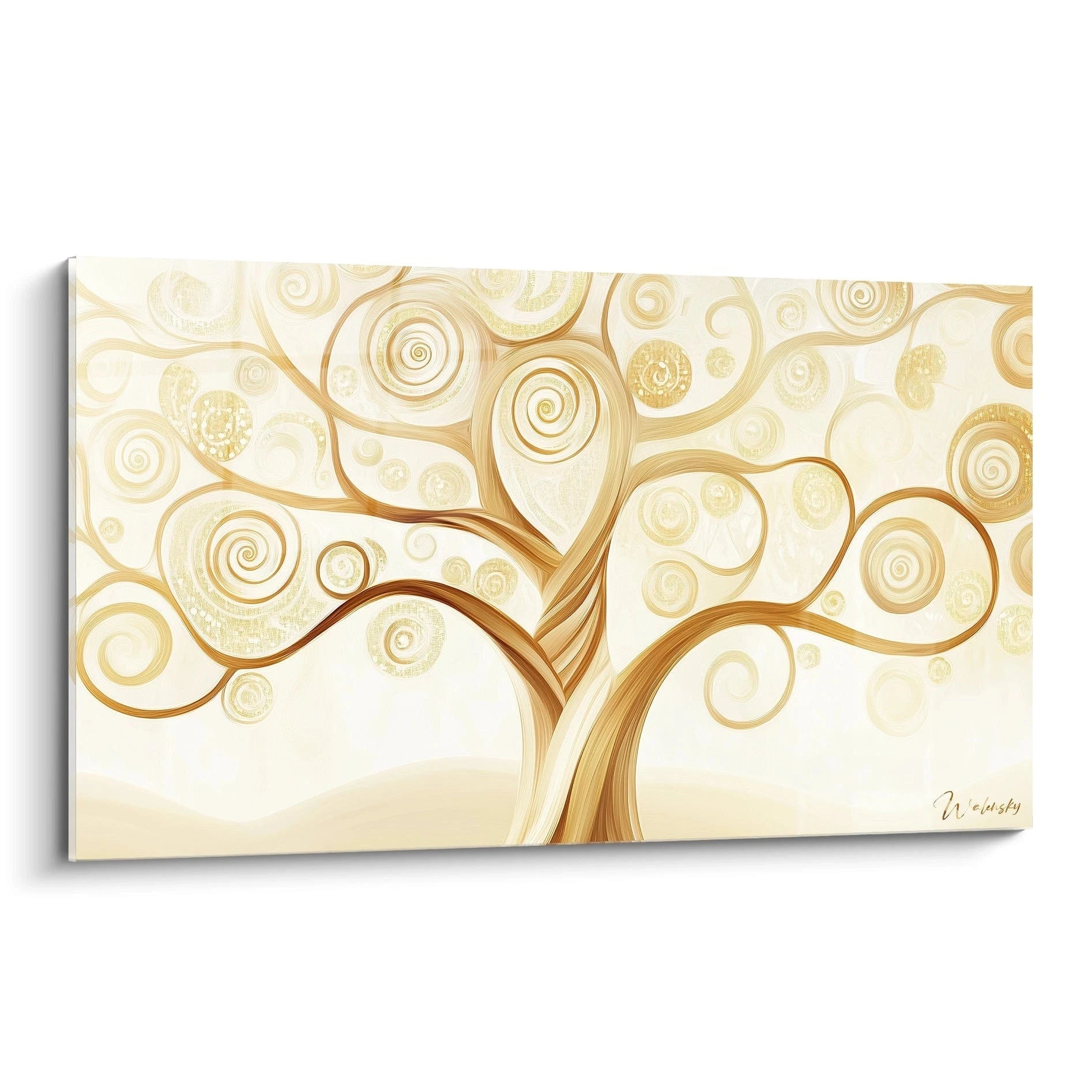
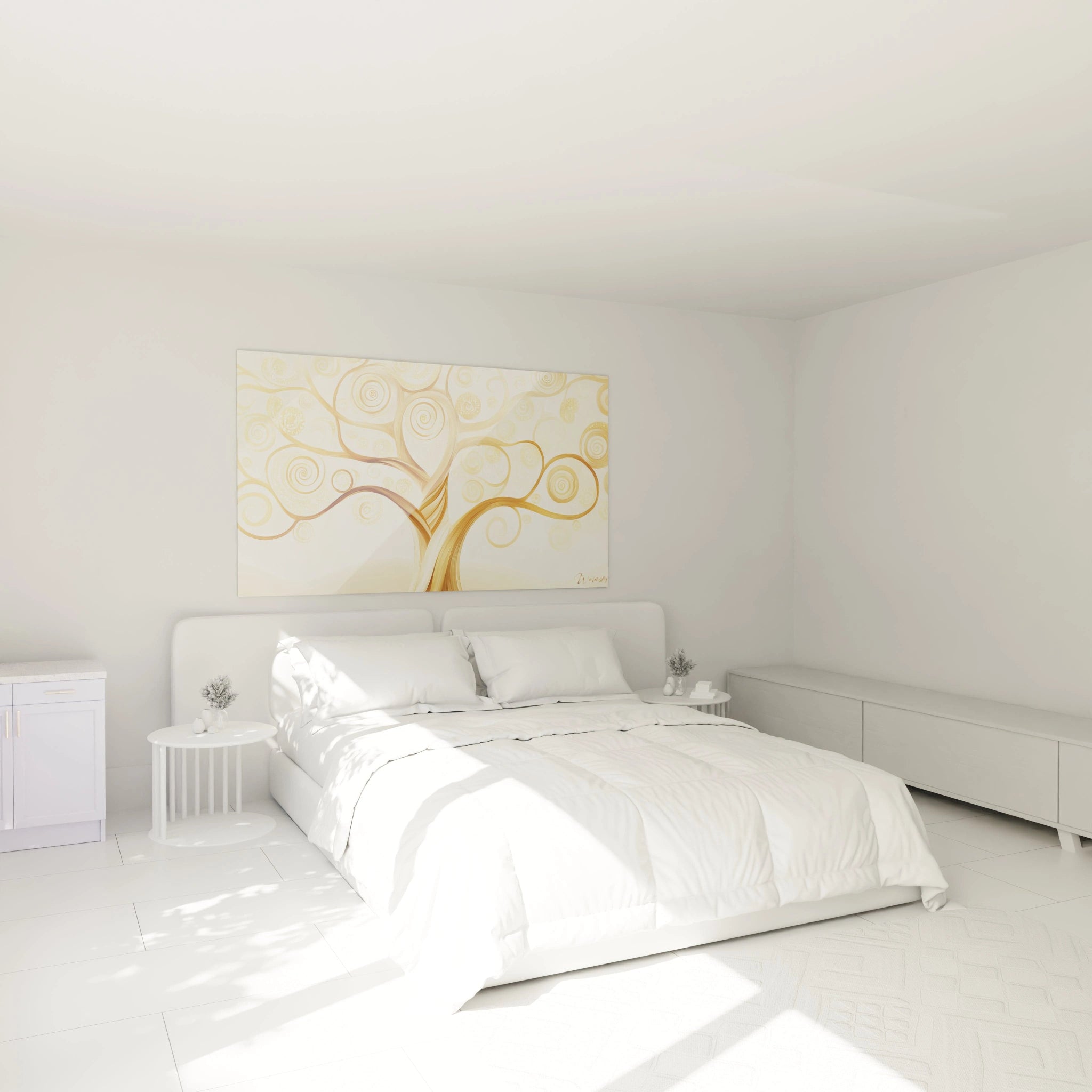
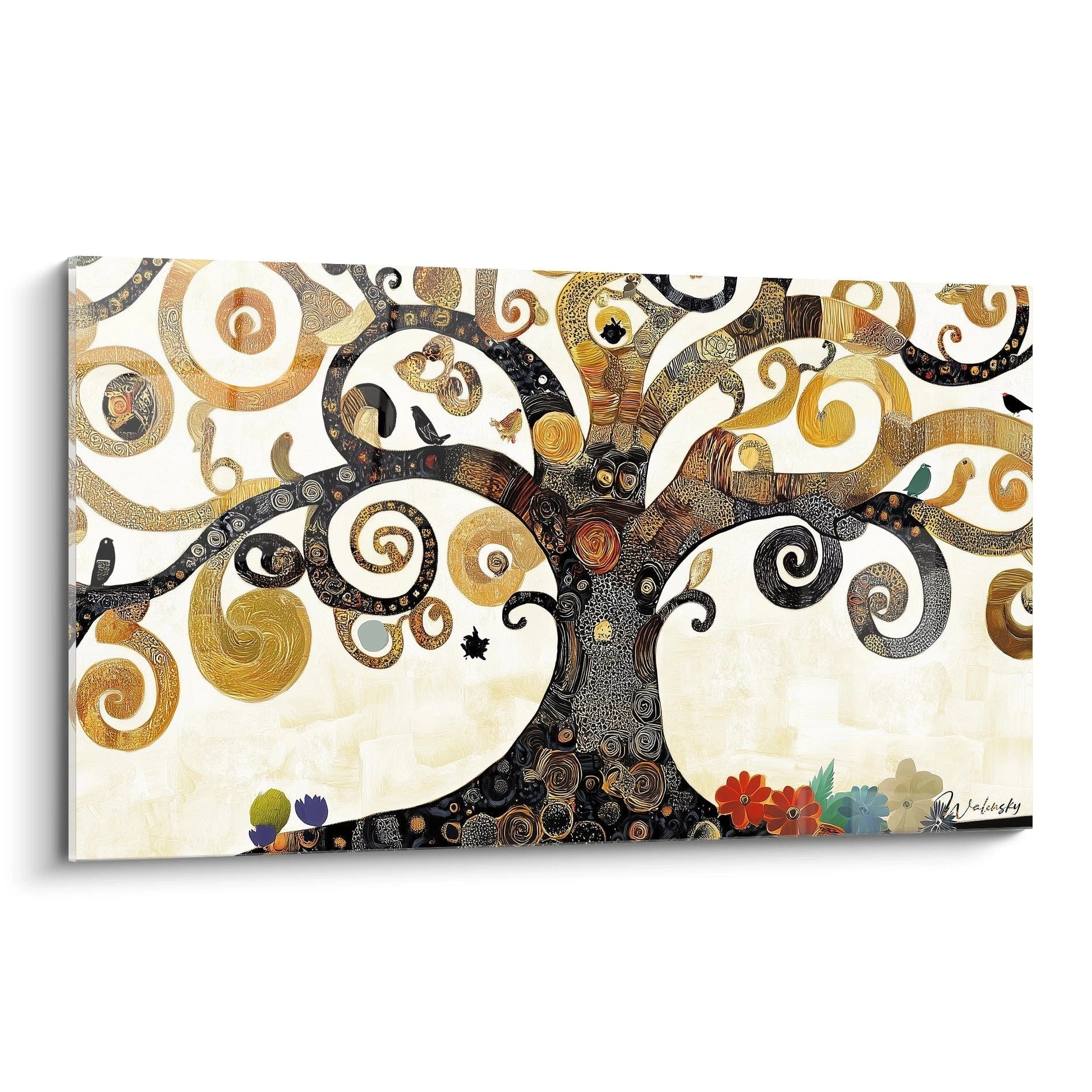
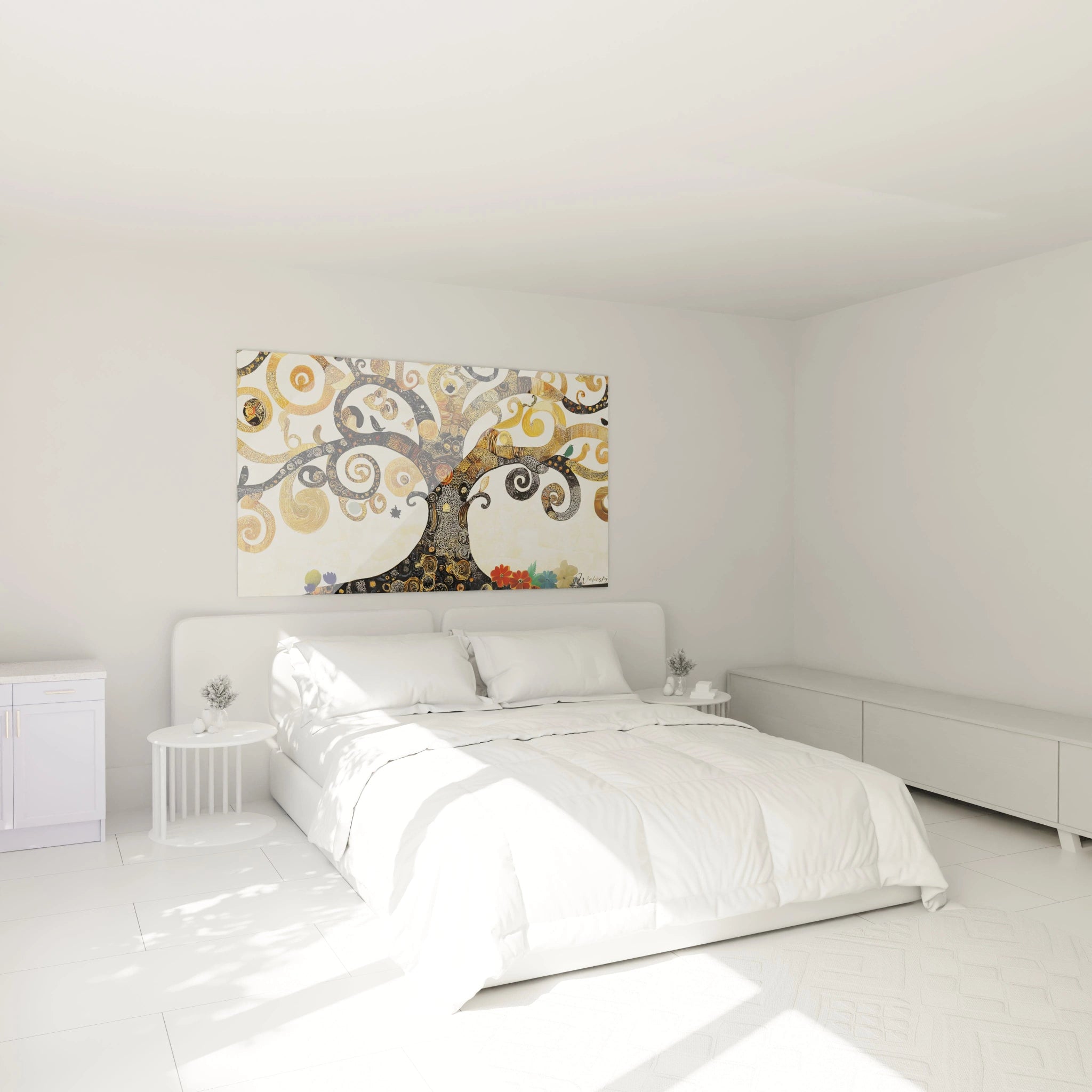
These undulating patterns, directly inspired by Art Nouveau principles, establish a visual circulation that guides the eye through the room, breaking the monotony of the right angles typical of modern architecture. The arabesques and spirals present in works like "The Tree of Life" introduce a visual movement that energizes even the most static spaces.
This visual fluidity characteristic of Klimt decoration effectively counterbalances the geometric rigidity of contemporary furniture, creating an aesthetic dialogue between different eras that greatly enriches your decor.
Stylized natural patterns as an alternative to conventional floral representations
Gustav Klimt decoration offers a sophisticated reinterpretation of natural elements that far exceeds conventional floral representations. Klimt's stylized vegetation patterns – with their geometricized forms and almost symbolic appearance – bring the freshness of natural elements without falling into the cliché of traditional floral patterns.
This unique approach to nature, characteristic of the Viennese Jugendstil of which Klimt was a leading figure, allows the integration of organic elements into a contemporary interior while maintaining refined and intellectually stimulating aesthetics. The foliage, flowers and trees represented in his works become abstract symbols rather than literal illustrations.
The botanical abstraction present in Klimt decoration constitutes a particularly relevant alternative for nature enthusiasts seeking to avoid the sometimes outdated appearance of naturalistic reproductions, while preserving the vitality and serenity associated with natural patterns.
Fusion of Japanese and European influences in your living space
Gustav Klimt decoration offers the unique advantage of simultaneously incorporating Eastern and Western influences, creating a sophisticated cultural bridge in your interior. The artist, deeply inspired by Japanese prints and Asian art, integrated these influences into a European context, creating an aesthetic fusion particularly relevant to our multicultural contemporary interiors.
This synthesis manifests through:
- The characteristic use of two-dimensional space recalling Japanese compositions
- The decorative simplification of natural forms, midway between European symbolism and Oriental minimalism
- The balance between Western ornamental detail and Asian refinement
By integrating Klimt decoration, you introduce this cultural duality that resonates particularly with the globalized aesthetics of contemporary interior design. This characteristic makes it an ideal choice for spaces seeking to transcend conventional style classifications and create a truly cosmopolitan environment.
Which furniture materials complement the visual textures of Klimt?
To maximize the impact of Gustav Klimt decoration, the choice of surrounding materials is of crucial importance. The complex visual textures characteristic of his works require specific tactile complements that amplify the overall sensory experience:
Velvet and moiré textiles echo the visual richness of Klimt's works, their changing surface recalling the play of light on gilding. These materials are particularly effective for furniture elements close to your decoration, such as armchairs or curtains.
Dark wood with visible grain (walnut, mahogany) establishes an interesting dialogue with Klimt's golden elements, recalling Viennese Secession interiors. Pairing Klimt decoration with Art Nouveau-lined wooden furniture creates a particularly successful historical and aesthetic coherence.
Brass and bronze, with their warm patina, extend the metallic presence of Klimt's works throughout your space through lighting elements or decorative accessories, creating subtle visual continuity.
Variations of Klimt aesthetics throughout different seasons
One of the exceptional qualities of Gustav Klimt decoration lies in its ability to adapt and transform your space throughout the seasons, creating a living experience that evolves throughout the year.
In autumn and winter, the golden and amber tones so characteristic of Klimt resonate with the warmer and more subdued light of these seasons, creating an enveloping and comforting atmosphere. This period is ideal for showcasing works like "The Kiss" or "Adele Bloch-Bauer I" whose gilding visually warms the space.
In spring and summer, the floral and stylized vegetation elements present in works like "Garden with Sunflowers" or late-period landscapes take on a new dimension, echoing the external natural rebirth. The more direct and brilliant light of these seasons brings out fine details and secondary colours often masked by the gold's brilliance.
This seasonal transformation of the same decoration offers perpetual renewal of your visual environment without requiring physical change, a characteristic unique to Klimt's works in your decoration.
Gustav Klimt Decoration: Recreating the Viennese Atmosphere of the Belle Époque
Gustav Klimt decoration allows you to capture the very essence of the cultural effervescence of early 20th-century Vienna, transposing this sophisticated and intellectual atmosphere into your contemporary interior.
Which Viennese architectural elements should be showcased with Klimt decoration?
The integration of Gustav Klimt decoration takes on a particular dimension when it enters into dialogue with certain architectural elements evoking the Viennese aesthetics of the Secession. These associations create a historical and stylistic coherence that transcends simple wall decoration.
High ceilings with ornamental moulding, characteristic of Haussmann-style apartments or early 20th-century buildings, constitute an ideal setting for Klimt's works. The verticality of these spaces echoes the elongated formats frequently used by the artist, notably in his decorative friezes such as those of the Stoclet Palace.
Ornamental door and window frames benefit particularly from proximity to Klimt decoration, creating visual continuity between architecture and art that recalls the Gesamtkunstwerk (total artwork) approach cherished by Viennese Secession artists.
Wall niches, alcoves and architectural recesses offer privileged settings to stage Klimt decoration, with the natural framing of these elements echoing the elaborate frames the artist specifically designed for his works.
Creating a Viennese literary salon atmosphere with Klimt's works
Gustav Klimt decoration constitutes the ideal anchor point for recreating the intellectual and artistic atmosphere of famous Viennese salons, transforming your space into a place of conversation and cultural exchange.
To authentically evoke this ambiance, position your Klimt decoration in a reception area where it will naturally become a conversation topic, recalling the central role of art in the discussions of Viennese intellectual circles. Complete the atmosphere with a selection of works on Viennese Secession, psychoanalysis or Mitteleuropean literature, arranged nearby.
The arrangement of furniture in conversational islands facing your Klimt decoration, rather than oriented toward a screen, encourages the exchange and shared contemplation characteristic of cultural salons. This spatial arrangement, directly inspired by Belle Époque Viennese interiors, fundamentally transforms the social dynamics of your space.
A shelf displaying a few decorative art objects with Art Nouveau lines, musical scores or reproductions of art journals from the period such as "Ver Sacrum" reinforces this cultural immersion, creating an environment conducive to artistic appreciation and intellectual exchanges.
The association between Klimt's works and your space's acoustics
A dimension often overlooked in integrating Klimt decoration concerns its impact on the acoustic experience of your space, an aspect particularly relevant considering the importance of music in Klimt's Vienna, contemporary with Gustav Mahler and Arnold Schoenberg.
Klimt's large-scale works, with their visually textured surfaces, suggest sensory richness that can be complemented by careful attention to your room's acoustics. By strategically positioning absorbent elements such as thick rugs, velvet curtains or concealed acoustic panels, you create a controlled sound environment that fosters contemplative appreciation of the work.
For a fully immersive experience, consider installing a discreet audio system allowing occasional playback of musical works contemporary with Klimt. Mahler's compositions, Strauss Jr.'s waltzes or innovative pieces from the Second Viennese School establish a historically coherent soundscape that amplifies the emotional impact of your decoration.
This multisensory approach, combining visual and auditory stimulation, reflects the Gesamtkunstwerk ideal pursued by Viennese Secession artists, transforming your space into a true total artistic experience.
Specific lighting to reveal details of Klimtian patterns
Gustav Klimt decoration requires a particular lighting approach to fully reveal the richness of its details and maximize the impact of the golden and textured surfaces characteristic of his work.
Directional lighting at moderate intensity, positioned at a calculated angle (approximately 30° from the vertical), constitutes the ideal solution to highlight the visual relief of Klimtian patterns without creating bothersome reflections on gilded areas. This type of lighting creates subtle shadows that emphasize texture depth, particularly important in works from his golden period.
The colour temperature of the lighting also plays a crucial role:
- Warm light sources (2700-3000K) amplify the richness of gilding and amber tones
- Slightly more neutral lighting (3500K) reveals with greater accuracy the secondary colour nuances often present in Klimt's works
- Using high CRI (Colour Rendering Index) lighting (>90) is essential to faithfully perceive colour subtleties
Variable intensity lighting systems provide the flexibility needed to adapt the light ambiance according to different times of day, revealing different facets of your Klimt decoration and constantly renewing the visual experience.
Transmitting the Viennese heritage through Klimt decoration
Beyond its immediate aesthetic value, Gustav Klimt decoration plays a significant cultural role in preserving and transmitting the intellectual and artistic heritage of fin-de-siècle Vienna, a fundamental period for modern European culture.
Integrating a Klimt work into your space creates an anchor point for exploring this rich cultural patrimony, where innovations in psychoanalysis (Freud), philosophy (Wittgenstein), music (Mahler, Schoenberg) and literature (Schnitzler, Hofmannsthal) converge. This educational dimension transforms your decoration into a genuine cultural portal, particularly valuable in a family context.
For cultural history enthusiasts, Klimt decoration becomes the catalyst for in-depth conversations about this pivotal period, stimulating visitors' intellectual curiosity and encouraging exploration of this crucial era whose influence continues to resonate in our contemporary society.
FAQ on Gustav Klimt Decoration
What is the best way to integrate Gustav Klimt decoration into a minimalist interior?
In a minimalist interior, prioritize a single large-scale Klimt work as a focal point on a clear wall in neutral tones. Avoid cluttering the space with other competing decorative elements. Works from his "golden period" like "The Kiss" create a striking contrast with minimalist aesthetics, while later landscapes integrate more harmoniously. Simple framing, in black or fine gold, maintains visual balance without compromising the work's impact.
How should you clean and maintain a quality reproduction of a Gustav Klimt work?
Quality reproductions of Gustav Klimt works require careful maintenance, particularly those including gilded or metallized finishes. Use only a soft duster or dry microfibre cloth to gently remove dust from the surface, avoiding circular motions that could alter finishes. Never use liquid cleaning products or sprays that could damage the inks and special finishes. For glass-covered reproductions, clean only the external surface with glass cleaner applied to the cloth, never directly on the glass.
Can Gustav Klimt decorations positively influence the emotional state of room occupants?
Klimt's works do indeed exercise significant psychological influence on the occupants of a space. Complex ornamental patterns promote meditative contemplation that reduces stress, while golden elements create a sensation of warmth and opulence that lifts mood. Deep symbolic themes offer continuous intellectual stimulation that enriches daily experience of the space. Environmental psychology studies suggest that regular exposure to complex yet harmonious works of art like Klimt's can improve creativity and concentration capacity in living or working spaces.