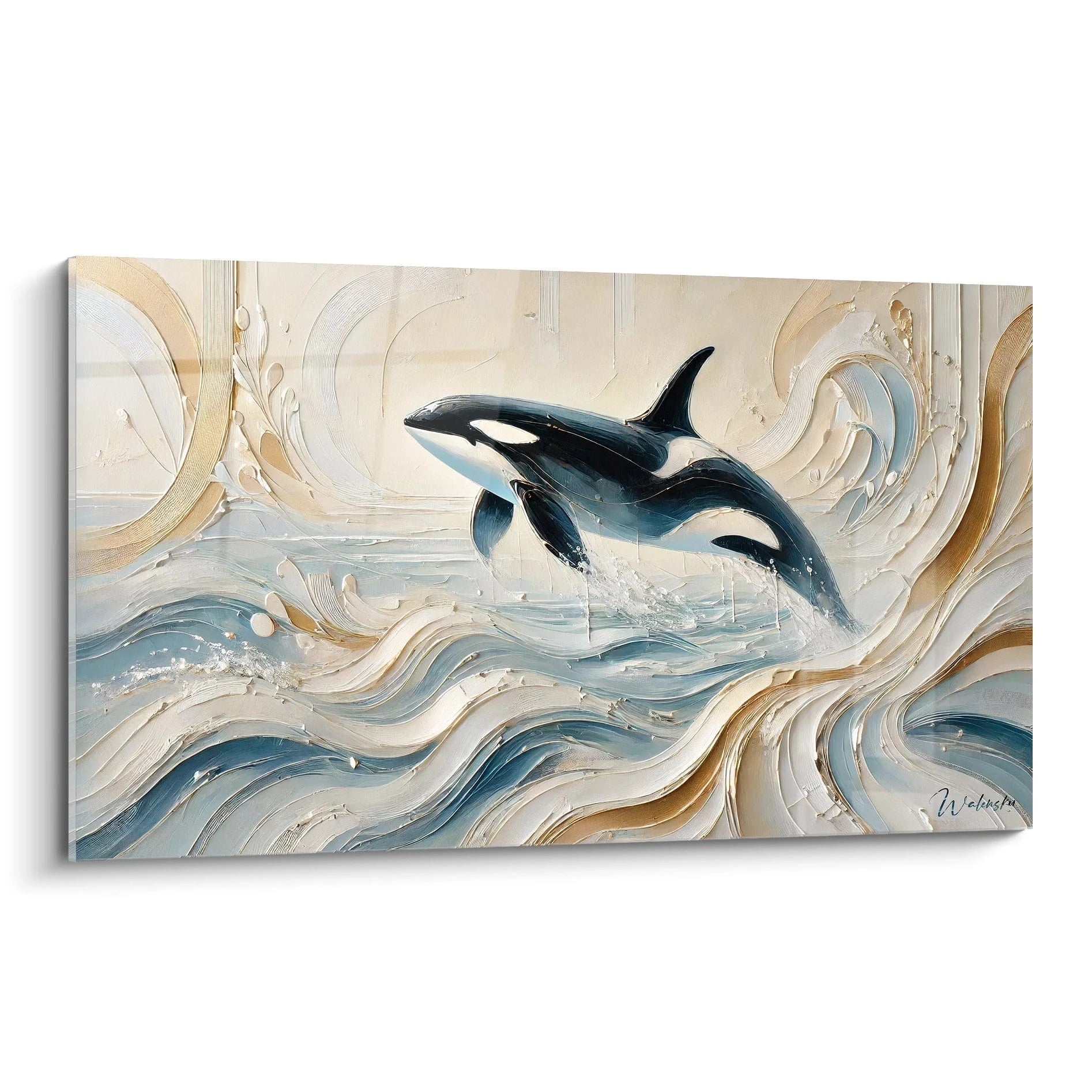
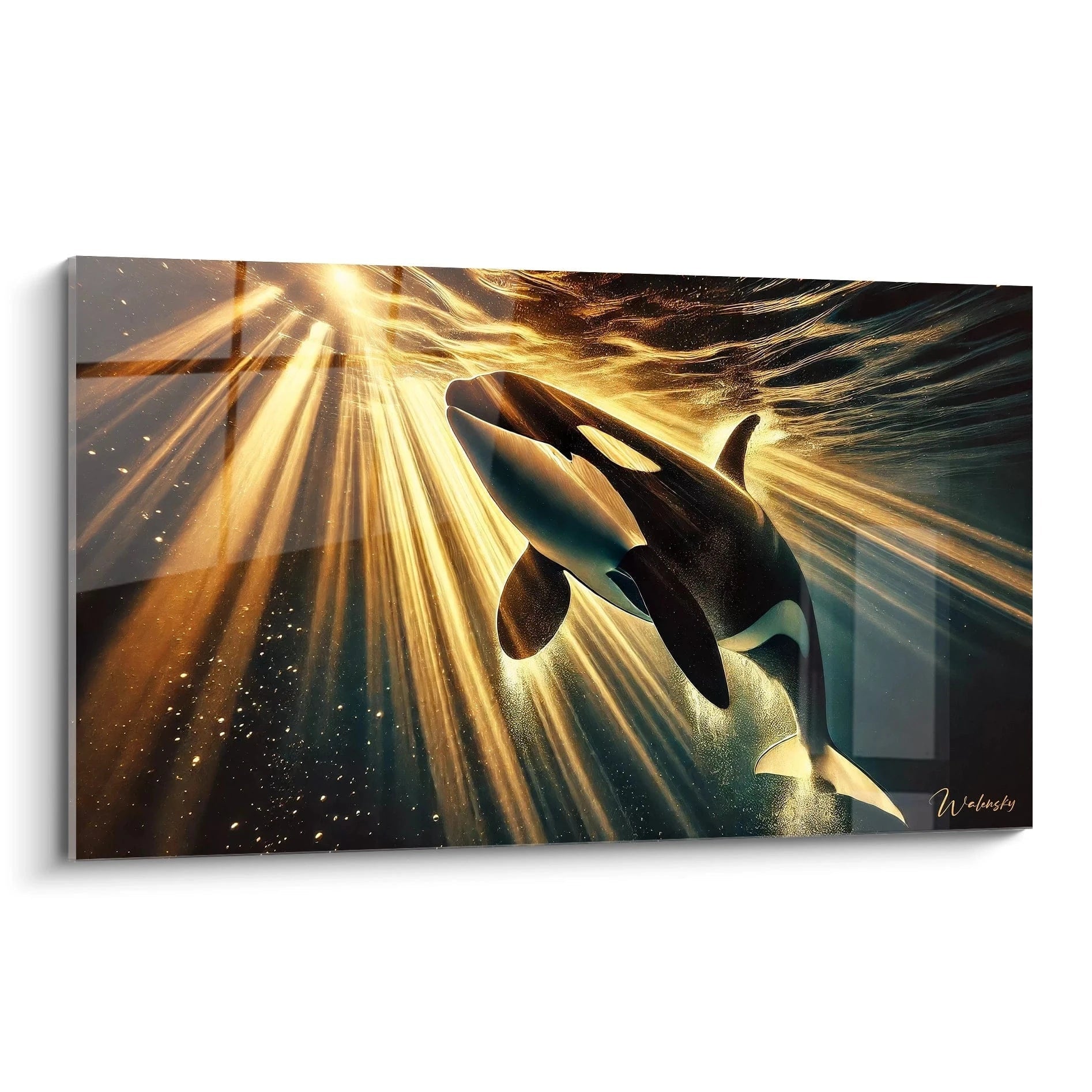
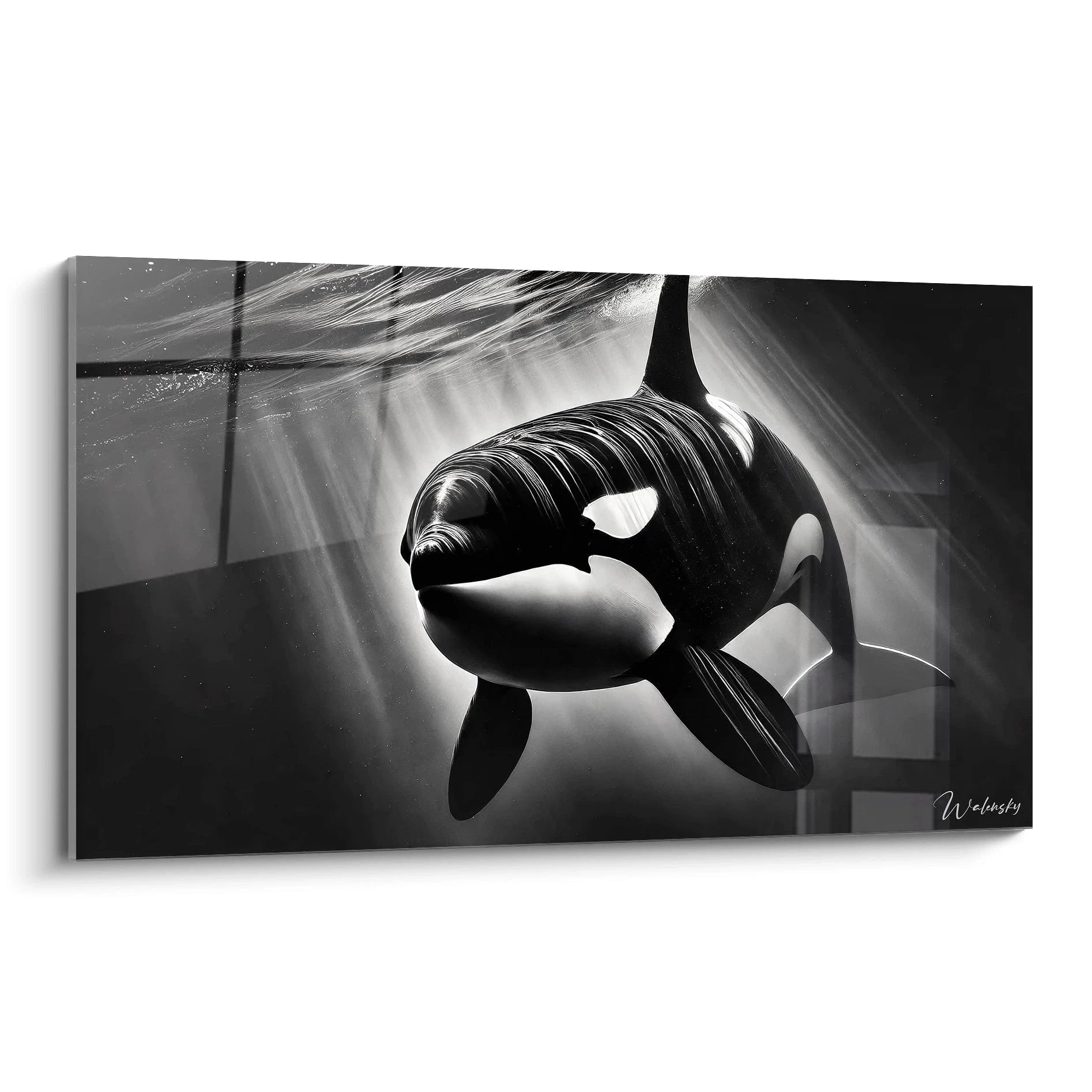
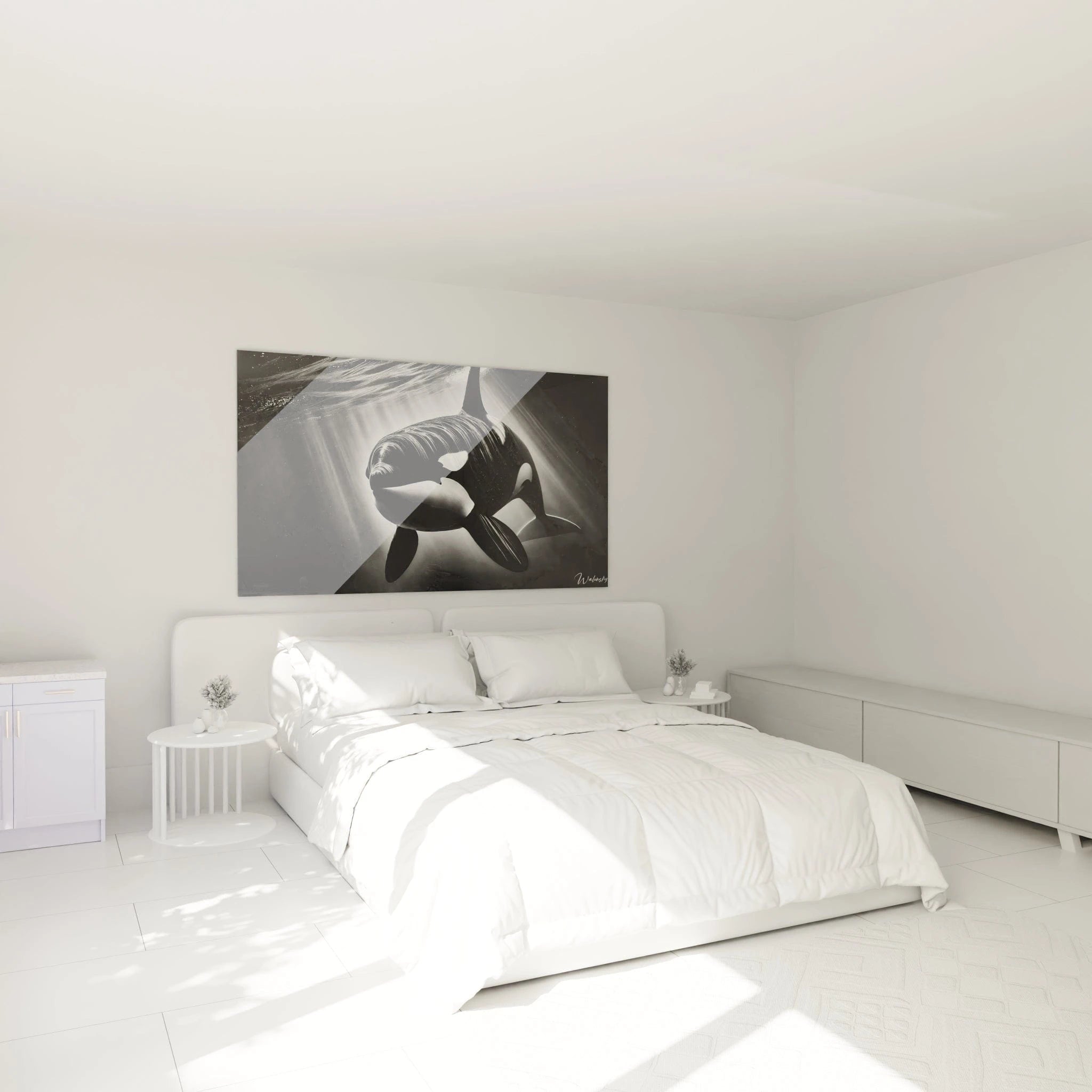
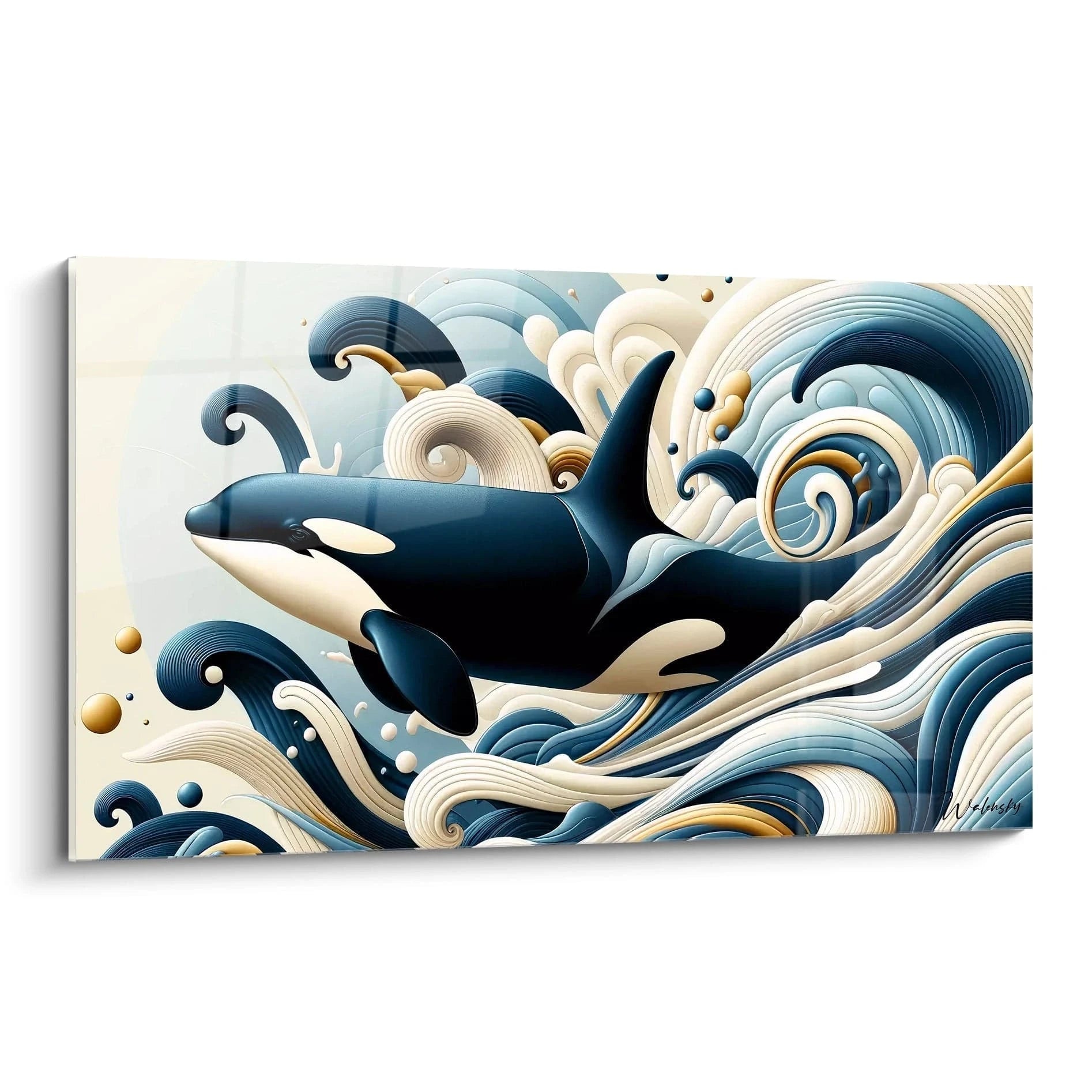
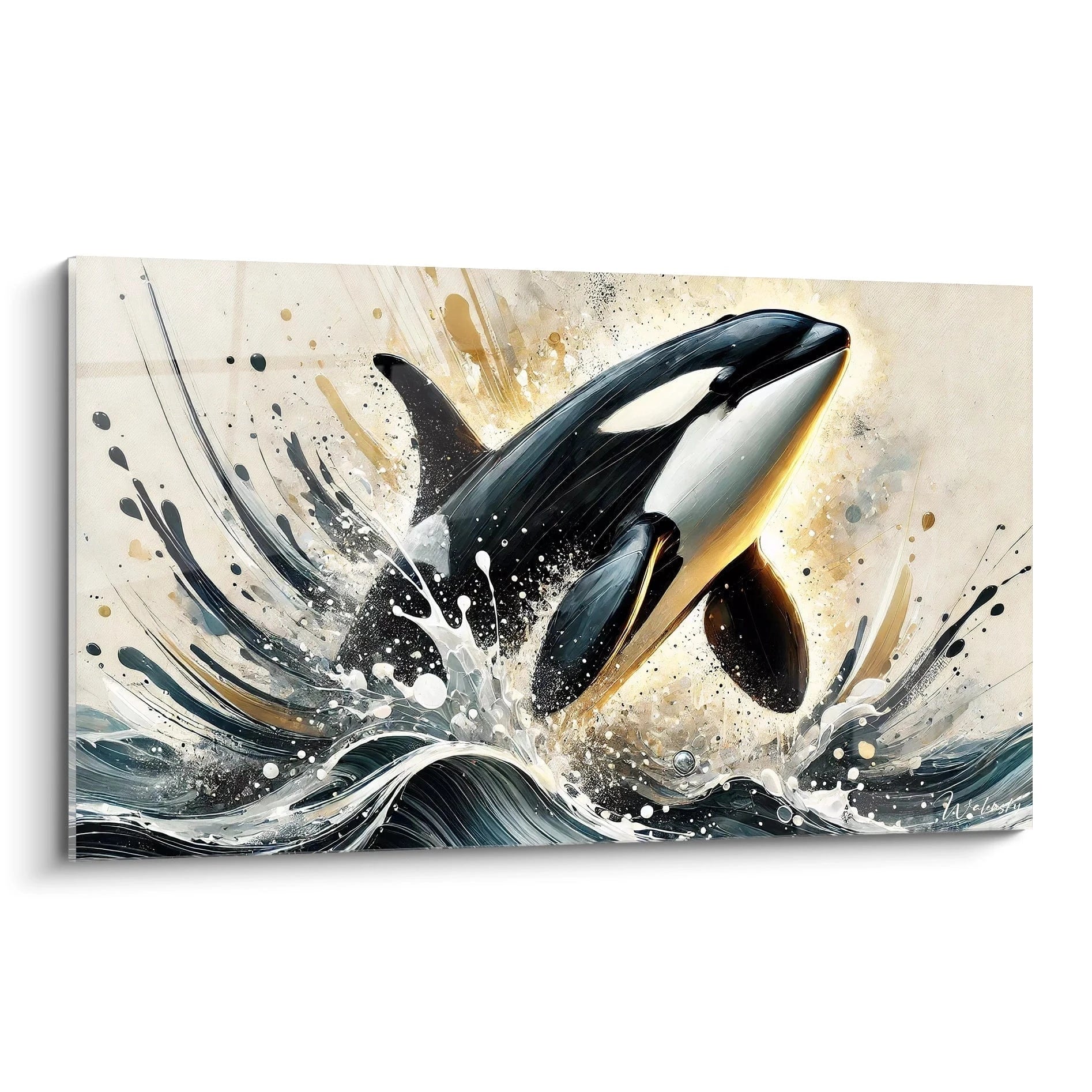
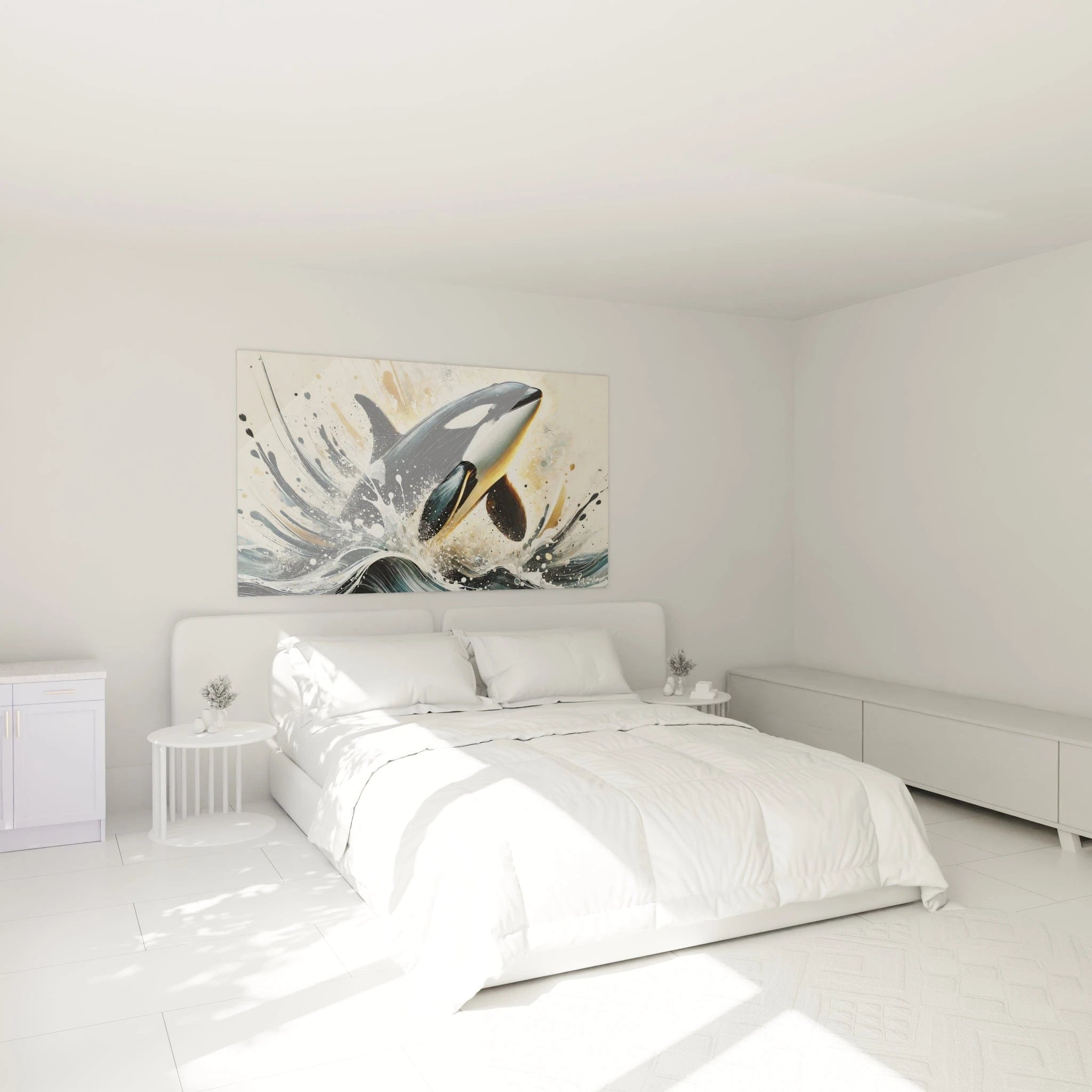
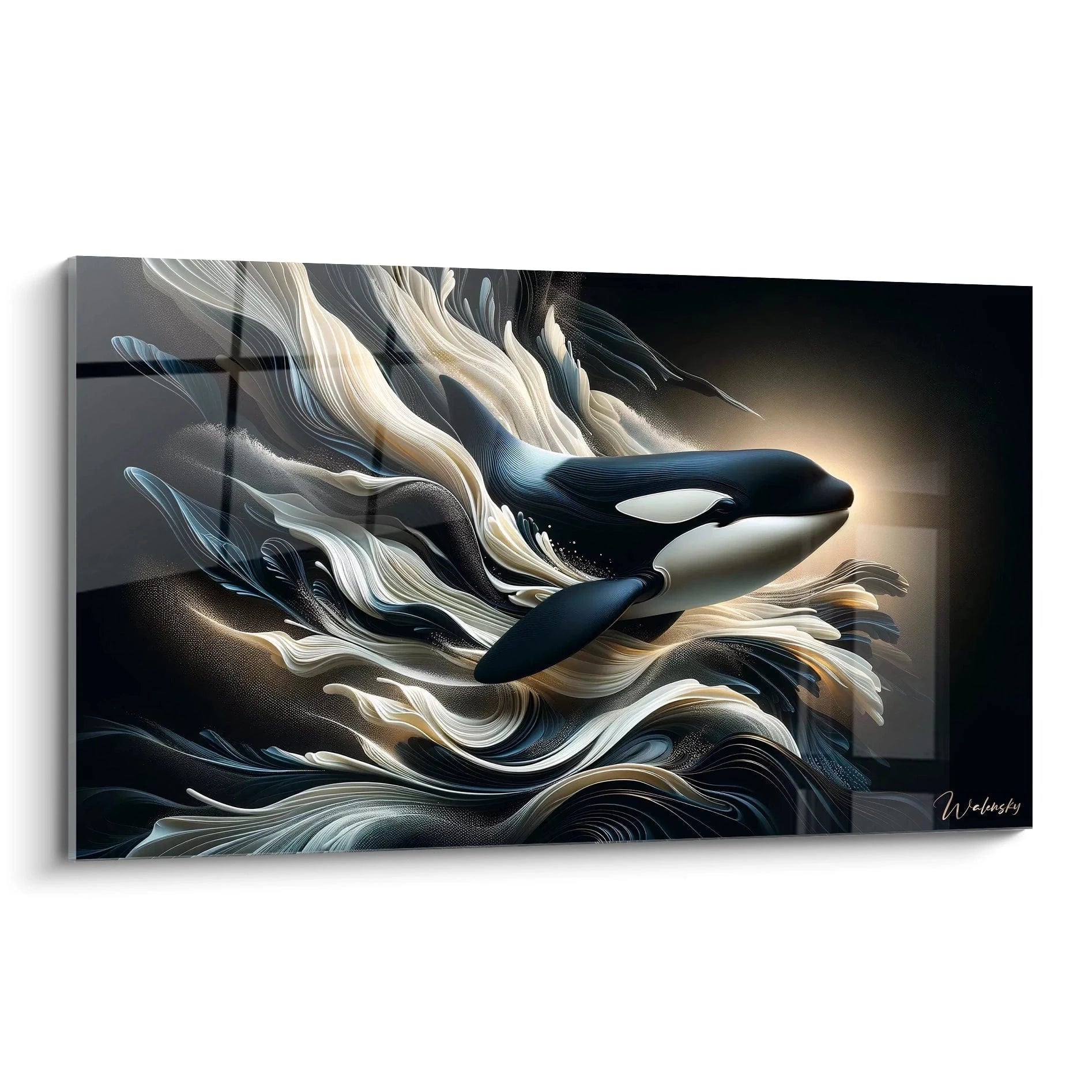
- Orca Paintings Overview
- Orca paintings marine atmosphere
- Orca paintings deep symbolism
- Orca paintings immersive decor
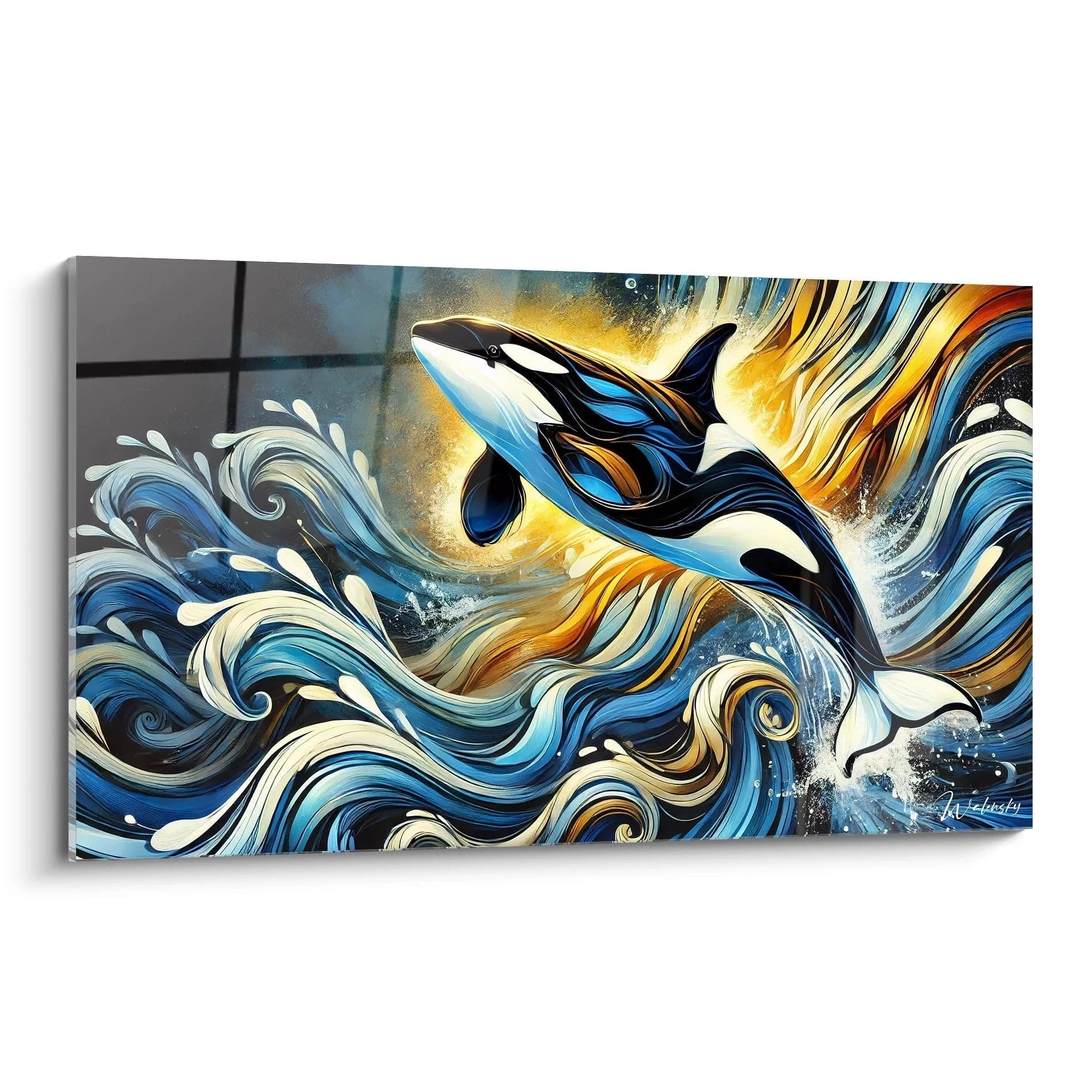
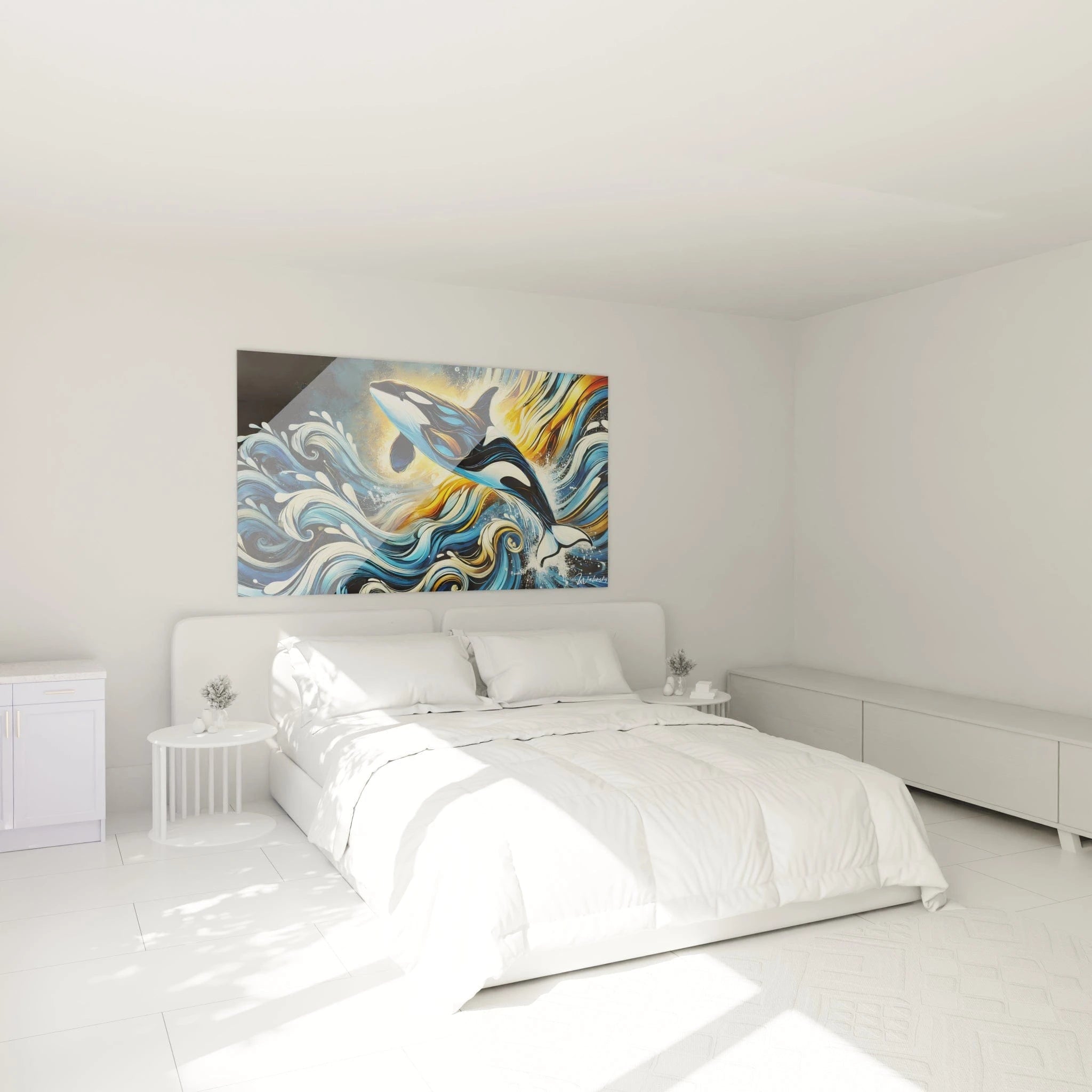
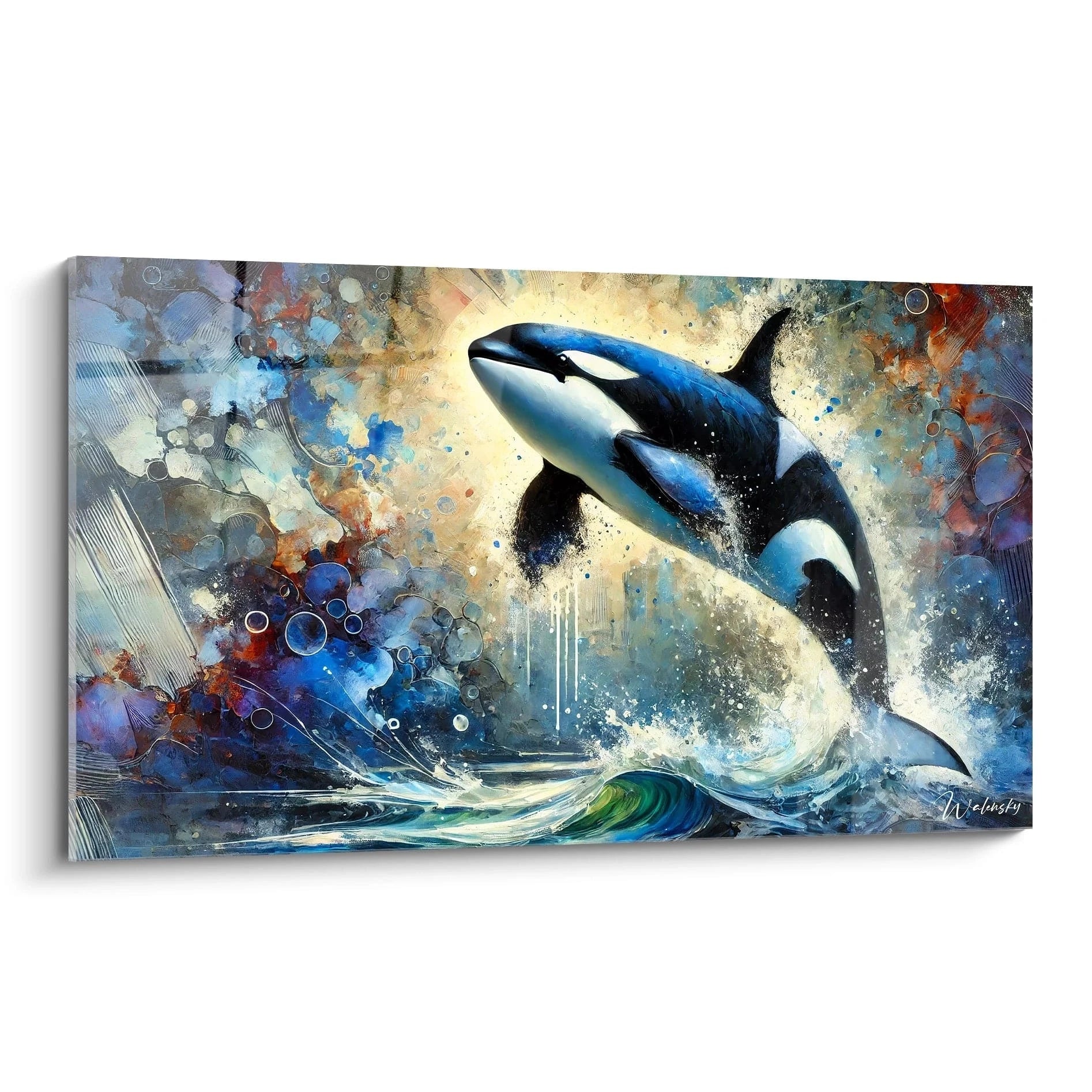
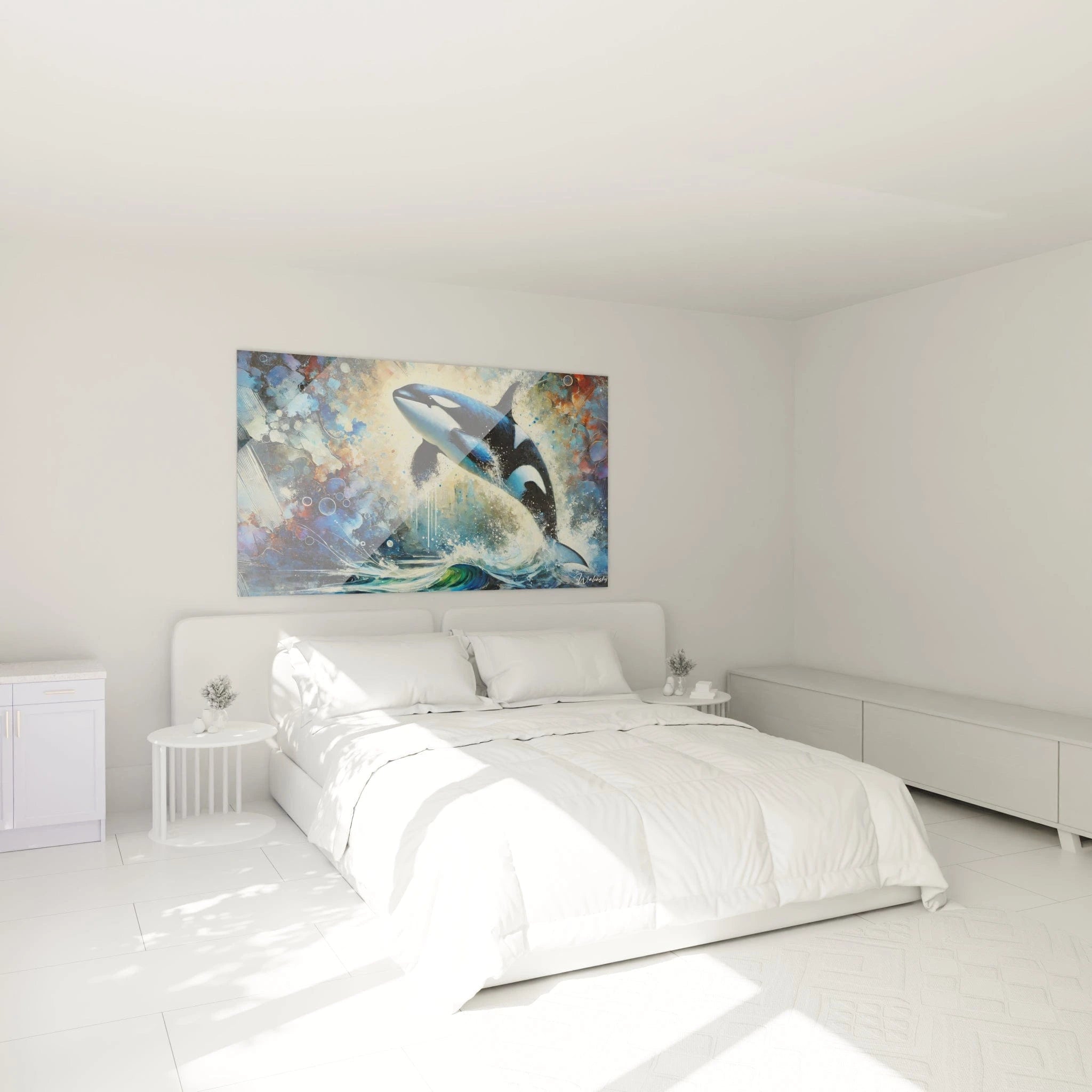
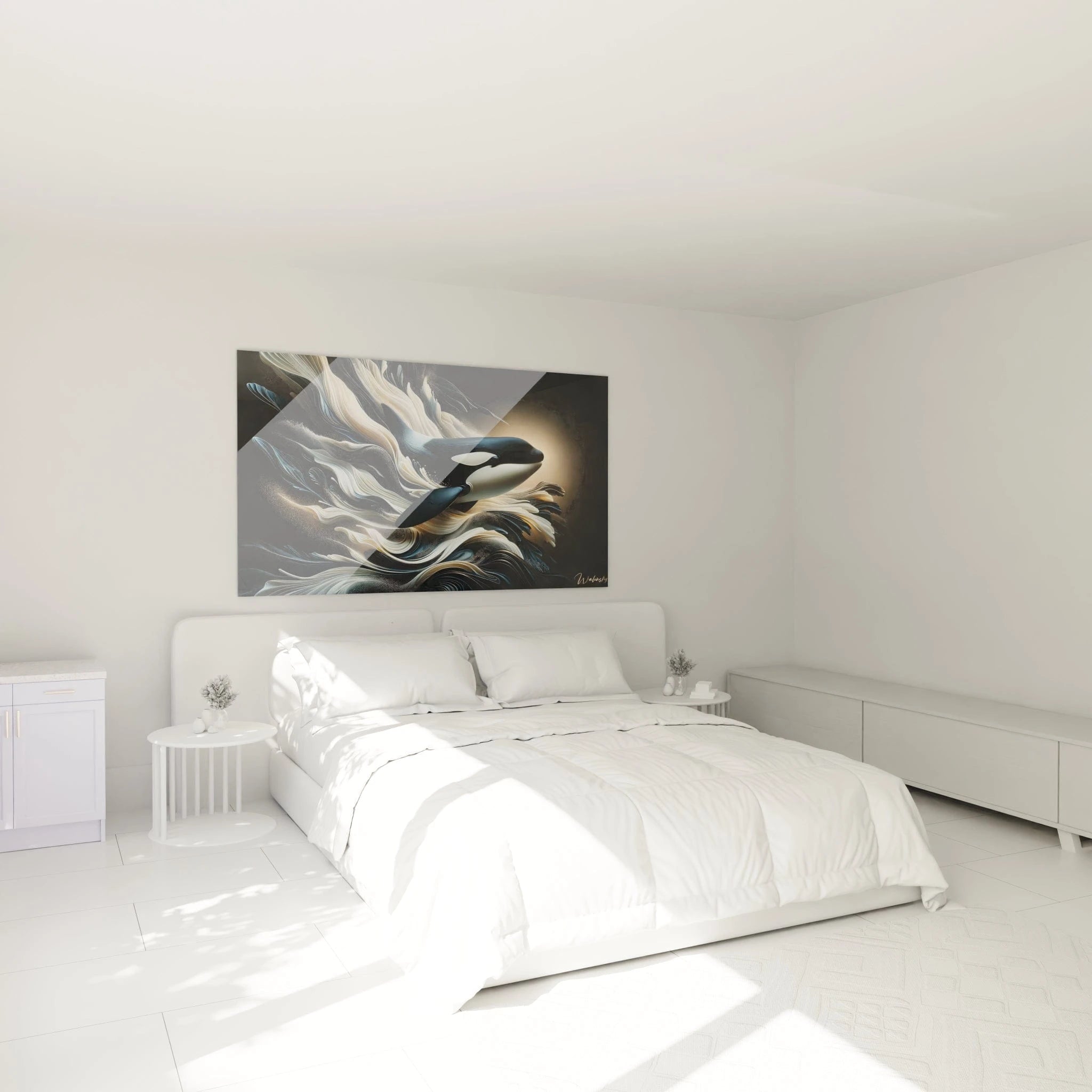
Orca paintings represent far more than simple wall decoration – they are a fascinating dive into the universe of these majestic marine creatures. These artworks capture the very essence of these emblematic ocean predators, combining power, mystery, and grace in a single striking visual representation. Perfect for marine life enthusiasts and those seeking unique decorative experiences, these animal paintings serve as a masterpiece capable of radically transforming a room's atmosphere.
The orca, often called the "killer whale," captivates through its striking black and white contrast, complex social behaviors, and remarkable intelligence. These unique characteristics are beautifully captured in paintings dedicated to this creature, creating visually compelling works charged with symbolism.
In the following sections, we will explore the multiple facets of orca paintings in depth: their ability to transform a space's atmosphere, their powerful symbolism, and their role in creating immersive decorative experiences. Each perspective will help you discover why these artistic representations stand apart from other animal paintings and how they can bring a unique dimension to your interior.
Orca Paintings: Creators of Deep Marine Atmosphere
Orca paintings distinguish themselves through their extraordinary ability to instantly transform a room's atmosphere, infusing it with a deep and mysterious marine ambiance. Unlike classical marine representations that often favor lightness and clear tones, orca illustrations introduce a dimension that is both majestic and enigmatic into your living space.
How do the black and white contrasts of orca paintings energize your interior?
The orca's distinctive visual signature – its striking contrast between deep black and brilliant white – gives paintings representing it an unparalleled graphic force. This natural chromatic duality automatically creates a powerful focal point in any room, immediately capturing attention without requiring additional decorative artifices.
The large contrast surfaces present in these artistic representations act as genuine space amplifiers, creating an impression of depth where other wall decorations might appear flat. This characteristic makes orca paintings a particularly judicious choice for modest-sized spaces that they help visually enlarge.
- Natural accentuation of your interior's architectural lines
- Visual balance between dark and light areas of your decor
- Reinforcement of the impact of surrounding decorative elements
The unique immersive effect of abyssal representations
Orca paintings differ radically from other animal representations through their ability to evoke the immensity of oceanic depths. The representation of these marine mammals in their natural habitat – the deep ocean – introduces an exceptional vertical dimension into your interior decoration, suggesting infinite depths beyond your walls.
This sensation of marine immensity radically transforms a room's spatial perception. While many decorative paintings simply dress a wall, orca representations in action seem to literally open a window to the abyss, creating a striking three-dimensional depth effect.
The dynamic aspect of orcas in motion adds a kinetic energy to your interior that few other subjects can match. The characteristic postures of these cetaceans – whether a majestic leap from the water or a powerful glide beneath the surface – infuse a sense of perpetual movement into spaces that might otherwise appear static.
Which rooms benefit most from orca paintings' influence?
Professional offices constitute a particularly conducive environment for installing orca paintings. The imposing presence and recognized intelligence of these marine predators subtly project an image of authority and sophisticated strategy – qualities highly valued in the business world. A strategically placed orca painting in a workspace can reinforce the professional atmosphere while offering a point of mental escape during moments of reflection.
Relaxation spaces such as meditation rooms or reading areas also benefit from orca representations. The fluid movement of these marine mammals in their natural element evokes a sensation of dynamic calm – a visual paradox that remarkably favors active relaxation and productive contemplation.
Spacious bathrooms constitute perhaps the most unexpected yet perfectly suited location for orca paintings. The natural association with the aquatic element creates obvious thematic continuity, while the inherent resistance of these illustrations to humid environments (unlike traditional photographs) makes them a particularly durable decorative solution in these high-humidity spaces.
Orca paintings' influence on lighting ambiances
Orca paintings present a fascinating particularity: their ability to transform their visual qualities depending on environmental lighting conditions. The characteristic combination of the orca's deep black and brilliant white reacts spectacularly to light variations, creating a dynamic visual experience that evolves throughout the day.
Under morning natural light, the white areas of orca representations capture and amplify ambient luminosity, projecting vivifying energy into the space. As daylight declines, these same paintings progressively adopt a more mysterious presence, dark areas gaining depth while light sections continue capturing the day's final rays.
When night falls under artificial lighting, orca paintings reveal yet another facet of their visual personality. Strategically placed directional lighting can dramatize the contrasts inherent to these works, casting sculptural shadows that extend their influence far beyond the painting's physical boundaries.
This lighting versatility makes orca paintings exceptionally adaptable decorative elements, capable of maintaining their visual impact and renewing their presence regardless of the time of day or night – a rare quality among wall decors.
Orca Paintings: Symbols of Power and Duality
Orca paintings transcend their simple decorative dimension to assert themselves as powerful symbolic vectors in interior design. These artistic representations of ocean masters convey a rich network of meanings that resonates deeply with certain fundamental human aspirations and significantly enriches the spaces they inhabit.
The unique symbolic duality of orca representations
The orca naturally embodies a fascinating duality that paintings representing it succeed in capturing with particular force. A formidable predator at the apex of the marine food chain, it is simultaneously recognized for its exceptional social intelligence and complex family behaviors. This harmonious coexistence between dominating power and social sophistication gives orca paintings an unequaled symbolic depth among animal representations.
This juxtaposition of contrasting aspects manifests visually in the animal's characteristic coloring – black and white in perfect opposition – creating a natural visual metaphor for balance between opposing forces. Orca paintings thus introduce into your living space a subtle reminder of the necessity to harmonize life's different facets.
Unlike representations of terrestrial predators that often evoke one-dimensional aggressiveness, orca paintings suggest a more nuanced and sophisticated form of power. They symbolize strategic intelligence rather than brute force, conscious domination rather than primal instinct – a symbolic distinction particularly valorizing in spaces dedicated to reflection or decision-making.
What psychological impact do orca paintings exert on different personality profiles?
For ambitious and determined personalities, orca paintings act as daily motivational amplifiers. This apex predator's imposing stature and undisputed mastery of its environment resonate profoundly with aspirations for leadership and excellence. Strategically placed in personal workspace or executive office, an orca artistic representation can constantly reinforce determination and subtly remind of qualities necessary for excellence.
Creative and intuitive individuals find in orca paintings a different but equally powerful inspiration source. The graceful fluidity of these marine mammals' movements, their ability to navigate between dark depths and luminous surface, evokes passage between conscious and unconscious, between analytical reflection and creative intuition – a constant visual reminder of maintaining free circulation between these different mental states.
For contemplative or spiritual personalities, the sophisticated community dimension of orcas offers a particularly rich visual metaphor. These marine mammals' complex social structure, their elaborate communication systems, and their documented altruistic behaviors create a natural representation of interconnection and interdependence – fundamental concepts in many philosophical and spiritual traditions.
- Visual reinforcement of leadership and mastery aspirations
- Subtle stimulation of balance between power and intelligence
- Daily reminder of community bonds' importance
Deep cultural meanings of orca representations
Pacific Northwest Indigenous cultures have for millennia accorded a preeminent place to the orca in their iconography and traditional narratives. For these peoples, the orca represented far more than a simple animal – it embodied a powerful spiritual being, guardian of the oceans and symbol of prosperity. Contemporary orca paintings inscribe themselves in this rich symbolic continuity, bringing to your interior an echo of these ancestral traditions deeply rooted.
In these traditional cultures, the orca was frequently associated with notions of family, community, and protection – a symbolism that resonates particularly in contemporary family living spaces. An orca painting placed in a common room or family gathering area can thus subtly reinforce these essential values, creating an atmosphere conducive to cohesion and communication.
Some traditions also considered the orca a passage-maker between worlds, capable of navigating different dimensions of existence. This transitional quality is found in orca paintings' unique ability to radically transform a space's perception, creating a visual opening toward an oceanic elsewhere that transcends the room's physical limits.
Orca paintings as personal identity markers
Choosing an orca painting as a central decorative element constitutes a strong and distinctive identity affirmation. In a world where decorative choices often tend toward uniformity, these singular artistic representations signal a personality that values originality, independent thinking, and a certain aesthetic boldness.
Natural science enthusiasts and environmental advocates find in orca paintings a means to visually express their connection with the marine world and their concern for its preservation. Beyond their aesthetic dimension, these works then function as daily reminders of ocean conservation's importance and its emblematic inhabitants.
For those passionate about evolutionary psychology and animal behavior, orca paintings offer a fascinating convergence point between art and science. The artistic representation of these mammals with remarkably developed intelligence – one of the rare non-human species demonstrating self-awareness and cultural traditions – allows introducing into domestic space a subtle reference to these fascinating scientific inquiries.
Orca Paintings: Creators of Immersive Experiences
Orca paintings transcend simple decorative function to become genuine generators of complete sensorial experiences. Their imposing presence and distinctive subject radically transform spatial perception, creating immersive environments that stimulate imagination and evoke the unique sensations of oceanic encounters.
How do orca paintings transform a space's perceived acoustics?
A fascinating and rarely documented phenomenon concerns orca paintings' psychoacoustic influence on our sound perception of the spaces they inhabit. These powerful visual representations of a deep aquatic environment trigger in many observers a subtle but measurable modification of their auditory perception – a phenomenon known in cognitive psychology as "cross-sensory transfer."
Testimonials gathered from orca painting owners reveal a remarkable trend: these works seem to create a subjective impression of high-frequency ambient noise attenuation, similar to the natural acoustic effect of underwater immersion. This perceptual modification helps create spaces experienced as calmer and more conducive to concentration, even in objectively noisy environments.
This influence on auditory experience makes orca paintings a particularly judicious choice for urban environments subjected to constant noise pollution. Strategic installation of these representations in living or working spaces can help create perceived tranquility zones that effectively counterbalance daily acoustic stress.
- Creation of a bubble of subjective acoustic tranquility
- Psychological attenuation of ambient high-frequency sounds
- Amplification of physical acoustic treatments' effectiveness
The perceived thermoregulatory impact of orca marine scenes
Orca paintings exert a surprising influence on our thermal perception of spaces, a phenomenon documented by several environmental psychology studies. Large-format representations of cold marine environments, characteristic of orcas' natural habitat, trigger cognitive mechanisms that subtly modify our thermal sensation.
In naturally warm spaces or regions with torrid climates, orca paintings can induce a subjective coolness sensation, reducing perceived thermal discomfort. This psychological property makes them particularly valuable decorative elements in Mediterranean or tropical environments, where they contribute to creating an impression of refreshment without additional energy consumption.
Paradoxically, in cold spaces, these same representations can contribute to perceived warmth through contextual contrast effect. The observer, confronted with a visual evocation of a significantly colder environment than their immediate space, tends to positively revalue ambient temperature – a phenomenon analogous to that experienced when returning indoors after intense cold exposure.
Which spatial arrangements maximize orca paintings' immersive impact?
Installing an orca painting facing a room's main entrance creates a particularly powerful transformative threshold effect. This spatial configuration allows visitors to be immediately transported into the oceanic universe upon entering the space, instantly establishing the distinctive ambiance only these representations can generate.
Alcove or architectural recess arrangements significantly amplify the depth effect inherent to orca paintings. By physically framing the work within a three-dimensional structure, this configuration reinforces the illusion of an opening toward marine depths, effectively transforming a simple decorative element into a genuine visual portal to the ocean.
Integration into a multi-sensory arrangement perhaps represents the most sophisticated approach to maximizing orca paintings' impact. Strategic combination with tactile elements (textures evoking marine environments), olfactory (subtle marine-scented diffusers), and even auditory (discrete ocean sounds) can create a complete environmental experience that transcends simple visual appreciation.
Unique interaction with seasonal lighting variations
Orca paintings present a remarkable ability to maintain their visual impact despite seasonal natural lighting variations – a quality distinctly setting them apart from other artistic representations. The pronounced chromatic contrasts characteristic of these works allow them to retain their readability and evocative power even under the limited lighting conditions of winter months.
During low-luminosity seasons, the white areas of orca representations effectively capture and amplify available light, creating luminosity points that visually energize spaces tending naturally toward shadow. This property makes orca paintings precious allies against the seasonal bleakness that can affect certain interiors during winter months.
Conversely, during summer periods characterized by abundant luminosity, the dark areas of these representations create visual anchoring points that counterbalance the potential glare of highly lit interiors. This adaptability to extreme lighting conditions gives orca paintings exceptional seasonal versatility.
Orca paintings FAQ
What is the ideal size for an orca painting in a spacious living room?
For a spacious living room, favor imposing formats of at least 100x150cm that allow capturing the orca's full majesty. These generous dimensions create genuine visual impact and enable appreciating the marine mammal's details. The immersive effect is directly proportional to the painting's size - the larger the representation, the more striking the impression of opening to the oceanic world.
Are orca paintings suitable for professional environments?
Absolutely, orca paintings are particularly appropriate for professional environments requiring an image of strategic authority combined with intelligence. They work remarkably well in conference rooms, consulting offices, and executive suites where they subtly symbolize mastered power and strategic thinking. Their imposing yet sophisticated presence reinforces the professional atmosphere while providing a distinctive memorable element.
How should I maintain an orca painting to preserve its visual impact over time?
To maintain an orca painting's optimal visual impact, avoid prolonged direct UV exposure that could alter its characteristic black and white contrasts. Regular dusting with a soft-fiber feather duster will preserve detail sharpness. For modern substrate models, semi-annual cleaning with a cloth lightly dampened with demineralized water generally suffices to maintain the brilliance of white areas that so much contribute to these representations' visual impact.