


Scutosaurus Wall Art
The Scutosaurus, a heavily armored reptile from the Permian period, makes a striking statement in our collection with its distinctive natural armor. This prehistoric reptile herbivore possessed bony protuberances and thick skin that protected it from predators 250 million years ago. Our artistic creations capture the unique armored appearance of this creature that evolved long before the age of dinosaurs. These wall artworks offer a window into the little-known Permian epoch, revealing the diversity of life forms that preceded the great Mesozoic reptiles with authenticity and scientific depth.
 Golden Scutosaurus Painting - Prehistoric Luxury Creature - Scutosaurus Edition273,90 €
 Prehistoric Scutosaurus Painting - Armored Power - Scutosaurus Edition273,90 €
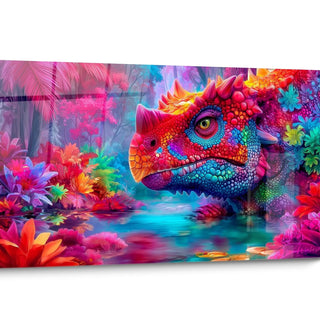
 Scutosaurus Fantastic Painting - Colorful Tropical Vision - Scutosaurus Edition273,90 €
 Golden Scutosaurus Canvas - Floral Majesty - Scutosaurus Edition273,90 €
 Dinosaur Mosaic Canvas - Scutosaurus Geometric Art - Scutosaurus Edition273,90 €
 Dinosaur Scutosaurus Canvas - Colorful Floral Mosaic - Scutosaurus Edition273,90 €
 Ornamental Scutosaurus Canvas - Golden Floral Majesty - Scutosaurus Edition273,90 €
 Armored Dinosaur Canvas - Golden Majesty - Scutosaurus Edition273,90 €
 Majestic Scutosaurus Canvas - Prehistoric Creature with Colorful Scales - Scutosaurus Edition273,90 €

In the same family
Also explore the theme Primordial Lands
-
 View all150
artworks
View all150
artworks
-
 Andrewsarchus6
artworks
Andrewsarchus6
artworks
-
 Argentavis9
artworks
Argentavis9
artworks
-
 Basilosaurus10
artworks
Basilosaurus10
artworks
-
 Dinosaur31
artworks
Dinosaur31
artworks
-
 Dunkleosteus5
artworks
Dunkleosteus5
artworks
-
 Prehistoric Frescoes8
artworks
Prehistoric Frescoes8
artworks
-
 Glyptodon8
artworks
Glyptodon8
artworks
-
 Indricotherium2
artworks
Indricotherium2
artworks
-
 Kaprosuchus12
artworks
Kaprosuchus12
artworks
-
 Woolly Mammoth22
artworks
Woolly Mammoth22
artworks
-
 Megaloceros
-
 Megalodon9
artworks
Megalodon9
artworks
-
 Quetzalcoatlus8
artworks
Quetzalcoatlus8
artworks
-
 Saber-Toothed Tiger11
artworks
Saber-Toothed Tiger11
artworks


All about Scutosaurus Wall Art
- Overview Scutosaurus Wall Art
- Scutosaurus Wall Art - Paleontological Reconstruction
- Scutosaurus Wall Art - XXL Format and Visual Impact
- Scutosaurus Wall Art - Permian Collection
Discover our Scutosaurus wall art, an exceptional representation of this armored reptile from the Upper Permian. This massive creature that lived 252 million years ago embodies the majesty of prehistoric fauna rarely known, long before the emergence of dinosaurs. Our large-format reproductions capture the distinctive anatomy of this armored herbivore in imposing dimensions that reveal every detail of its bony carapace and robust morphology.
Scutosaurus Wall Art: Paleontological Accuracy in Service of Mural Decoration
Acquiring a Scutosaurus wall art piece represents far more than a simple decorative purchase for paleontology enthusiasts. This mural representation of the Upper Permian armored reptile demands scientific rigor rarely observed in commercial prehistoric imagery. Unlike the fanciful reconstructions proliferating on the market, a faithful reproduction of Scutosaurus karpinskii requires deep understanding of Russian fossil discoveries and the latest paleobiological hypotheses concerning this enigmatic species.
What is the distinctive morphology of Scutosaurus represented on quality mural reproductions?
Scutosaurus stands out through an absolutely unique armored anatomy in the history of terrestrial vertebrates. Museum-quality mural representations highlight the massive osteoderm plaques that covered its skull, forming a bony armor comparable to ankylosaurs but developed 180 million years earlier. This cephalic cuirass, combined with dermal bosses along the vertebral column, constitutes the most spectacular visual element of a scientifically rigorous Scutosaurus wall art. The rough texture of these bony protections, often represented with chromatic variations ranging from slate gray to ochre tones of the Permian desert, creates exceptional visual depth on large mural formats.
The body proportions of Scutosaurus karpinskii pose considerable artistic challenge. With its 3.5 meters in length and massive body supported by short, robust limbs, this armored herbivore presented a squat silhouette radically different from the slender reptiles of its epoch. An authentic mural representation captures this imposing bulk, avoiding frequent errors that depict it as a generic pareiosaur. The short, thick tail, broad five-toed feet adapted to semi-arid substrates, and disproportionately voluminous skull constitute essential anatomical markers.
How to identify a credible paleo-artistic reconstruction of Scutosaurus?
The authenticity of a Scutosaurus mural reproduction rests on several verifiable scientific criteria. Fossil discoveries made in the Sokolki Formation in Russia provide the anatomical foundation for any serious reconstruction. A quality prehistoric worlds wall art relies on these specimens to accurately represent the characteristic herbivore dentition, composed of spatula-shaped teeth adapted to crushing the tough vegetation of the Late Permian.
Hypothetical coloration constitutes an aspect where art meets science. Although no fossilized pigment has been preserved, contemporary paleo-artists draw inspiration from modern ecological analogs—rhinoceroses, hippopotamuses—to propose plausible color schemes. Dominant neutral tones (gray, brown, ochre) correspond to semi-arid environments of the Pangaea supercontinent, while disruptive camouflage patterns or social coloration zones remain legitimate hypotheses. A sophisticated mural representation incorporates this scientific uncertainty by favoring realistic tones rather than fantastical colors.
The Permian environment: indispensable context for complete representation
Truly immersive Scutosaurus wall art extends beyond the isolated animal. The Upper Permian ecosystem offers a fascinating paleoenvironmental context that considerably enriches visual impact. Landscape reconstructions typically include vegetation characteristic of this period: primitive conifers of the Voltziales genus, seed ferns, and Glossopteris in southern regions of Pangaea. This distinctive flora, absent from later periods, immediately situates the scene in its correct temporal context.
Fauna contemporary with Scutosaurus enriches complex mural compositions. Predatory gorgonopsids, herbivorous dicynodonts, and early therapsids constitute the faunal assemblage of the terminal Permian. Depicting a Scutosaurus alongside an Inostrancevia or Dvinia creates authentic paleontological narrative impossible to confuse with later Mesozoic faunas. This temporal specificity transforms simple decoration into educational support documenting a critical phase in terrestrial vertebrate evolution.
Why does Scutosaurus fascinate paleo-art collectors?
Scutosaurus occupies a unique position in paleontological imagination. Unlike the over-publicized Mesozoic dinosaurs, this Permian reptile represents an evolutionary lineage completely extinct—the pareiosaurs—with no direct descendants. This total extinction during the Permian-Triassic catastrophe grants Scutosaurus status as witness to a definitively vanished world. For collectors seeking to distinguish themselves from conventional representations of Tyrannosaurus or Triceratops, a Scutosaurus wall art piece signals deep paleontological knowledge and appreciation for obscure creatures.
The relative rarity of quality artistic representations amplifies this appeal. While the market overflows with theropod dinosaur reconstructions, Permian reptiles remain largely under-represented in commercial paleo-art. This exclusivity transforms acquiring a Scutosaurus mural reproduction into a distinctive investment. The imposing dimensions of the real creature lend themselves magnificently to XXL mural formats, permitting detailed appreciation of the armored anatomy that constitutes its most remarkable characteristic.
Thematic integration in educational and museum spaces
Educational institutions and exhibition spaces find in Scutosaurus mural representations an exceptional pedagogical tool. Unlike universally known Mesozoic dinosaurs, this armored Permian herbivore allows introduction of more sophisticated paleontological concepts: geological period stratigraphy, mass extinctions, convergent evolution of defensive structures, biogeography of the Pangaea supercontinent. An imposing mural format amplifies didactic impact, capturing visitor attention and stimulating curiosity for obscure prehistoric fauna.
Evolutionary chronology constitutes another pedagogical axis. Positioning Scutosaurus wall art before dinosaur representations in a mural sequence concretely illustrates terrestrial fauna succession through the Late Paleozoic and Mesozoic. This chronological approach emphasizes that complex terrestrial ecosystems existed well before the dinosaur era, challenging popular perception associating "prehistoric" automatically with "dinosaur." Pareiosaurs like Scutosaurus represent a major reptile radiation of large-bodied herbivores, ecologically prefiguring sauropods but with radically different body architecture.
Scientific accuracy of a mural representation also transforms domestic space into continuous learning environment. Paleontology enthusiasts particularly appreciate verifiable anatomical details enabling in-depth discussions with visitors. The Scutosaurus dermal cuirass, for example, opens conversations on convergent evolution of defensive structures in large terrestrial herbivores—from Cretaceous ankylosaurs to contemporary armadillos—demonstrating how similar selective pressures generate comparable morphological solutions across unrelated lineages.
Scutosaurus Large Format Wall Art: Mastering Visual Impact of Prehistoric Armored Creatures
Monumental dimensions constitute a decisive factor in acquiring a Scutosaurus wall art piece. The very nature of this Permian armored creature—with its estimated body mass between 400 and 600 kilograms and length of 3.5 meters—demands mural treatment at appropriate scale to faithfully restore its imposing presence. Reduced formats dilute the visual impact of anatomical characteristics defining Scutosaurus: massive cranial osteoderm plaques, prominent dermal bosses, robust limbs supporting considerable mass. Only large-format reproductions permit full appreciation of the textural complexity of the bony armor and chromatic nuances of the Permian paleo-environment.
What mural dimensions optimize representation of the armored Scutosaurus?
The squat, armored morphology of Scutosaurus karpinskii imposes specific dimensional considerations rarely addressed for other prehistoric creatures. Unlike slender theropods or long-necked sauropods lending themselves to stretched horizontal formats, this armored reptile presents more compact proportions requiring different balance. Mural formats exceeding 120 centimeters in width permit capturing simultaneously the complete lateral view of the animal and sufficient environmental context to situate the scene in the semi-arid plains of the Upper Permian.
Wall support height plays crucial role in perceiving body mass. A Scutosaurus wall art measuring minimum 80 centimeters in height restores the real vertical proportions of this herbivore reaching 2 meters at the shoulder. This substantial vertical dimension also permits including stratigraphic context elements—sedimentary strata, Low Permian vegetation—visually anchoring the creature in its authentic paleogeographic environment. Formats below these critical dimensions reduce Scutosaurus to simple silhouette, sacrificing anatomical details constituting precisely its paleontological interest.
How does armored texture express itself on large mural formats?
The Scutosaurus dermal armor represents its most spectacular visual attribute, and only extended mural formats render justice to this distinctive characteristic. Cranial osteoderm plaques formed complex bony mosaic whose rough texture creates play of shadows and light particularly striking when represented on large surfaces. High-definition reproduction techniques reveal relief variations between main bony protuberances and intercalary zones, generating three-dimensional visual depth impossible to perceive on reduced formats.
Dermal bosses aligned along the vertebral column constitute another major textural element. These defense structures, regularly spaced on the animal's back, create visual rhythm naturally guiding viewer's gaze along the massive body. On a mural format exceeding one meter in width, this alignment of osteoderms becomes structuring graphic element organizing composition. Size variations between more developed thoracic bosses and progressively reduced caudal protuberances add subtle visual dynamism that only large dimensions permit fully appreciating.
The Permian environment at large scale: creating paleontological immersion
Extended mural formats offer opportunity to develop elaborate environmental context transforming Scutosaurus representation into true temporal window toward the Upper Permian. Semi-arid landscapes characteristic of this period—alluvial plains, seasonal river beds, dune formations—necessitate substantial visual space to be suggested convincingly. A generously dimensioned Scutosaurus wall art piece can integrate distinctive period vegetation: primitive conifers with irregular silhouette, relictual arborescendent ferns, areas of low vegetation adapted to increasing Permian aridity.
Atmospheric depth constitutes technical aspect rarely exploited on small formats but crucial for large compositions. Representation of heat haze, dust storms characteristic of Pangaea continental environments, or raking light creating long cast shadows demands spatial development only XXL mural dimensions authorize. These atmospheric effects serve not solely aesthetics; they reinforce paleoenvironmental authenticity evoking specific climate conditions of the Upper Permian—contrasted seasons, increased continental aridity, elevated mean temperatures.
Architectural integration of monumental formats representing armored creatures
Installing a large-dimension Scutosaurus wall art piece radically transforms interior spatial dynamics. Unlike theropod dinosaurs often represented in dynamic action, Scutosaurus's static and massive posture generates contemplative presence visually anchoring space. This meditative quality particularly suits intellectual work environments—personal libraries, study offices, consultation rooms—where a prehistoric armored creature representation but herbivorous creates atmosphere of concentrated serenity rather than predatory excitement.
Scutosaurus's naturally sober chromatic palette and its Permian environment facilitates integration into contemporary interiors with neutral tones. Dominant hues—slate gray of bony armor, ochres and browns of desert substrate, attenuated greens of xerophile vegetation—harmonize with minimalist aesthetics and natural materials (concrete, raw wood, stone) without creating visual dissonance. This stylistic compatibility distinguishes Permian fauna representations from Mesozoic reconstructions often saturated in vivid colors and dramatic contrasts.
Ratio of real scale and cognitive perception of prehistory
Mural reproductions approaching Scutosaurus's real scale generate unique cognitive connection with paleontological past. When a wall art piece depicts the animal in proportions close to its true size—either approximately 3.5 meters if space permits, or minimum at 1:2 scale for standard interiors—the spectator viscerally experiences presence of a Permian creature. This dimensional confrontation transcends intellect engaging corporeal and emotional understanding of prehistoric megafauna, impossible obtaining via reduced images or book illustrations.
Implicit comparison between human dimensions and those of armored Scutosaurus reveals important paleobiological information. Observing appropriately scaled representation, one immediately grasps why this dermal armor constituted effective defense against Permian predatory gorgonopsids. Body mass, robust proportions, and bony cuirass become tangible rather than abstract, transforming anatomical data into intuitive understanding. This implicit educational dimension justifies investment in large formats, particularly for spaces dedicated to paleontological awareness.
Monumental formats also permit exploring representation angles impossible at small scale. Dorsal view of Scutosaurus revealing symmetric arrangement of osteoderms along vertebral column, or frontal perspective emphasizing massive skull width, necessitate substantial mural dimensions maintaining anatomical legibility. These alternative viewpoints enrich three-dimensional understanding of the animal, complementing classical lateral views dominating conventional paleontological iconography.
Scutosaurus Wall Art: Building a Chronological Paleontological Collection of the Permian
Strategic acquisition of a Scutosaurus wall art piece ideally inscribes within approach of chronologically organized paleontological collection rather than thematic. Unlike conventional approaches juxtaposing different dinosaurs without temporal consideration, a structurally organized collection around geological periods offers superior narrative coherence and considerably increased educational value. Scutosaurus, as emblematic representative of the Upper Permian, occupies pivotal position in this evolutionary chronology—marking the apex of pareiosaur reptiles immediately before the Permian-Triassic mass extinction fundamentally reshaping terrestrial ecosystems.
How to structure a mural collection centered on Late Paleozoic era?
Constitution of mural representation series documenting the Upper Paleozoic logically begins with Late Carboniferous fauna—giant amphibians like Eryops, early amniotic reptiles, gigantic arthropods—before progressing toward the Lower Permian with emergence of primitive synapsids (pelycosaurs like Dimetrodon). The Scutosaurus wall art then represents this sequence's culminating point, illustrating the Upper Permian when herbivorous pareiosaurs and carnivorous therapsids dominated Pangaea's continental ecosystems.
This chronological progression reveals major evolutionary trends invisible in disorganized thematic collections. Successive observation of herbivorous adaptations—from relatively simple teeth of early plant-eating reptiles through specialized spatula dentition of Scutosaurus—documents vegetation resource exploitation evolution. Similarly, progressive emergence of elaborate defensive structures (osteoderm plaques, cuirasses, dermal bosses) illustrates evolutionary arms race between large herbivores and increasingly efficient predators, culminating with Scutosaurus karpinskii's massive armor against formidable gorgonopsids.
Why does Scutosaurus constitute a chronological pivot in paleontological collection?
Scutosaurus occupies exceptionally significant temporal position: it represents one of the last great terrestrial faunas before the Permian-Triassic catastrophe, the most devastating extinction in terrestrial life history. A mural collection including a Scutosaurus wall art piece can develop this dramatic contrast by juxtaposing rich Late Permian ecosystems with Lower Triassic desolation and slow biotical reconstruction following. This narrative rupture constitutes powerful pedagogical moment, underlining ecosystem fragility even when firmly established.
The Permian-Triassic transition illustrated by Scutosaurus's disappearance and later emergence of first archosaurs (ancestors of dinosaurs and crocodilians) represents major evolutionary turning point. Mural collections exploiting this temporal discontinuity create more sophisticated narrative than simple galleries of "largest predators" or "impressive herbivores." They document how global biotical crises reinitialize ecosystems, permitting previously marginal lineages (like Triassic archosauromorphs) occupying ecological niches freed by dominant group extinction (pareiosaurs, gorgonopsids, large dicynodonts).
Relevant faunal associations enriching collection centered on Permian
A Scutosaurus wall art piece gains context when associated with representations of other components of contemporary Permian fauna. Predatory gorgonopsids—particularly Inostrancevia alexandri, the largest among them—create dramatic contrast with the armored herbivore. This juxtaposition concretely illustrates evolutionary arms race: massive canines and powerful musculature of gorgonopside against dermal armor and body mass of Scutosaurus. Informed collectors seek these authentic ecological pairings rather than frequent anachronistic associations in commercial imagery.
Upper Permian herbivorous dicynodonts—particularly large forms like Lystrosaurus in its Permian version—excellently complement collection including Scutosaurus. These beaked therapsid herbivores represent radically different feeding strategy: relative agility and prolific reproduction rather than massive size and armored defense. Observing these two divergent evolutionary approaches exploiting Permian vegetation resources enriches understanding of Paleozoic ecological dynamics. The fact that dicynodonts survived Permian-Triassic extinction while pareiosaurs disappeared entirely adds further dimension to this comparison.
What geographic progression completes chronological Permian collection?
Scutosaurus's geographic distribution—principally known from Russian formations of northern Dvina region—suggests paleobiographic dimension for sophisticated collections. Upper Permian Pangaea presented distinct faunal zones despite absence of oceanic barriers. Russian pareiosaurs like Scutosaurus coexisted with specific faunal assemblages different from those of Southern Africa (Bradysaurus, Emydops) or China (Hongshanornis). Collection exploring these paleobiographic variations documents not solely temporal evolution but also spatial diversification of Permian life.
This geographic approach transforms acquiring a Scutosaurus wall art piece into first step of systematic exploration of Permian faunal provinces. Collectors can subsequently seek South African pareiosaur representations morphologically distinct, endemic Chinese therapsids, or North American Permian faunas dominated by different assemblages. This geographic diversification illustrates how, even on unified supercontinent, isolation by distance and climate gradients generate considerable biologic diversification.
Integration of paleoenvironmental elements in coherent collection
A truly sophisticated mural paleontological collection extends beyond iconic animals also integrating paleoenvironmental reconstructions. Associating Scutosaurus wall art with Permian landscape representations—fluvial deltas, alluvial plains, dune zones—without visible fauna creates visual breathing spaces in collection while documenting ecological contexts. These fauna-free environmental scenes function as reference palettes, establishing climatic and geological atmosphere in which creatures represented elsewhere evolved.
Permian flora reconstructions constitute another diversification axis. Primitive conifer forests, southern hemisphere Glossopteris stands, or seed-fern formations create essential botanical context. Understanding that Scutosaurus browsed vegetation radically different from later herbivorous dinosaur vegetation considerably enriches paleontological understanding. These plant representations also permit introducing concepts like palynologic stratigraphy or using plant fossils reconstructing paleoclimate.
FAQ: Scutosaurus Wall Art and Paleontological Collection
Is Scutosaurus wall art suitable for beginning a mural paleontological collection?
Absolutely. Scutosaurus represents excellent starting point for several reasons: its chronological position pivot before Permian-Triassic extinction, its distinctive morphology easily recognizable, and its relative rarity in commercial imagery guaranteeing collection originality. Beginning with Paleozoic creature rather than usual Mesozoic dinosaurs immediately signals more sophisticated and educational collecting approach.
How to authenticate paleontological quality of wall art representing Scutosaurus?
Verify anatomical accuracy comparing with museum reconstructions and recent scientific publications. Authenticity markers include: correctly positioned cranial osteoderm plaques, faithful squat body proportions from fossils, robust limbs with five toes, short thick tail. Beware representations artificially elongating body or exaggerating defensive structures beyond fossil data. Quality works often mention consultation with paleontologists or reference specific museum specimens.
What other Permian reptiles would ideally complement collection including Scutosaurus?
For balanced Upper Permian Russian fauna representation, associate Scutosaurus with Inostrancevia (apex predatory gorgonopside), Dvinia (small carnivorous therapsid), and Lystrosaurus (herbivorous dicynodont survivor). This combination documents main ecological guilds: armored megaherbivore, apex superpr predator, mid-sized carnivore, and herbivorous mass. Together, these four taxa reconstruct complete Permian terminal ecosystem trophic structure, offering paleontological narrative impossible obtaining single species.
Does Scutosaurus wall art dimension influence its value in chronological collection?
Definitely. In collection chronologically organized along wall, maintaining scale coherence between different periods amplifies narrative impact. If Scutosaurus represented at substantial scale, adjacent period creatures (Carboniferous, Triassic) should ideally follow same principle maintaining visual continuity. Uniformly generous formats (120+ centimeters) also permit developing sufficient environmental context so each geological period possesses distinctive visual identity, reinforcing collection's chronological progression.


