


Neural Wall Art
Discover the neural wall art collection, a captivating fusion of science and artistic creativity. These works explore neural networks and brain connections through innovative and hypnotic visual compositions. Inspired by neuroscience and intelligence, they transform the complexity of the human brain into sophisticated wall art. Perfect for medical offices, research spaces, or contemporary interiors, these creations stimulate imagination and invite reflection on the mysteries of the mind.
 Luminescent Neuron Canvas - Synaptic Connections - Neuronal Edition273,90 €
 Iridescent Neural Spiral Panel - Cosmic Connections - Neural Edition273,90 €
 Abstract Neural Network Panel - Golden Synaptic Connections - Neural Edition273,90 €
 Neuron Synaptic Panel - Purple Electrical Connections - Neural Edition273,90 €
 Synaptic Connections Panel - Neural Fusion - Neural Edition273,90 €
 Luminous Neuron Painting - Electrical Synapse - Neuronal Edition No. 2242,90 €
 Synaptic Connections Wall Art - Abstract Neuronal Explosion - Neuronal Edition273,90 €
 Abstract Neural Network Painting - Synaptic Connections - Neuronal Edition242,90 €
 Neural Network Painting - Abstract Synaptic Connections - Neuronal Edition273,90 €
 Luminous Neuron Painting - Electric Synapse - Neuronal Edition228,90 €
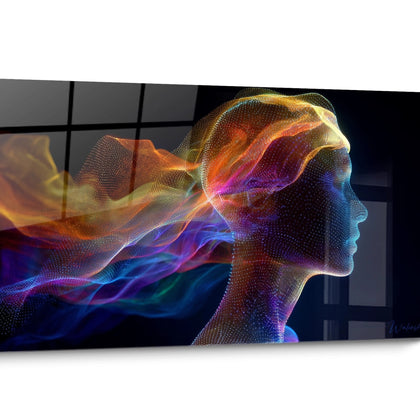
 Luminescent Female Profile Painting - Digital Synapses - Neuronal Edition273,90 €
 Cosmic Synaptic Connections Painting - Abstract Neuronal Fusion - Neural Edition228,90 €
 Human Neuronal Silhouette Painting - Colorful Electrical Connections - Neural Edition273,90 €
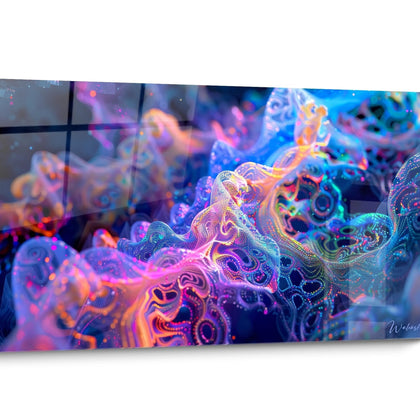
 Abstract Neural Synapse Wall Art - Colorful Cellular Fusion - Neuronal Edition228,90 €
 Female Digital Profile Wall Art - Neural Connections - Neuronal Edition273,90 €
Explore further
In Neural Wall Art


In the same family
Also explore the theme Science and Mathematics



All about Neural Wall Art
- Neural Wall Art Presentation
- Synaptic Architecture & Design
- Professional Cognitive Symbolism
- Large Format Neuroscience Aesthetics
Wall representations of the nervous system embody the perfect alliance between scientific precision and contemporary artistic expression. A neural wall art transcends simple decoration to become a visual celebration of the biological complexity that governs our thinking, consciousness and emotions. These mural creations captivate through their ability to transform abstract neurobiological concepts into striking visual compositions, where each represented synapse evokes the extraordinary electrochemical ballet unfolding in our brain at every instant.
Synaptic Architecture Revealed in Neuroscientific Wall Creations
The visual representation of neural connections constitutes a fascinating artistic challenge that transforms microscopy into a grandiose mural spectacle. A neural wall art of large dimensions allows visual exploration of the infinitely small amplified to architectural scale, where each dendrite becomes an information highway and each cell body a hub of biological processing. These mural representations capture the very essence of what makes us human: this invisible biological infrastructure that generates thoughts, memories and creativity.
How do action potential representations transform mural aesthetics?
Visualizations of electrical signals traversing axons offer unique visual dynamics to neuroscientific wall creations. Unlike static anatomical representations, these compositions suggest the perpetual movement of information through the nervous system. Artists and specialized designers use luminous gradients and chromatic contrasts to evoke the propagation of nerve impulses, thereby creating an impression of life pulsing across the mural surface. This approach transforms a wall into an open window onto invisible brain activity.
Mapping Synaptic Connections in Large Format
Monumental scale reveals details imperceptible in reduced versions. A large-scale neuroscientific wall decoration allows appreciation of the complexity of dendritic branching, these cellular extensions that exponentially multiply connection possibilities. Each branching becomes visible, each synaptic contact zone can be distinguished, offering a contemplative experience reminiscent of observing a star map where each luminous point represents a possibility of intercellular communication. This visual granularity transforms observation into meditation on biological complexity.
Why do pyramidal neuron representations dominate neuroscientific aesthetics?
Pyramidal neurons of the cerebral cortex, with their distinctive morphology and spectacular dendritic arborization, constitute the privileged subjects of neural wall creations. Their characteristic triangular structure offers natural symmetry that pleases the eye while maintaining scientific authenticity. These cells, responsible for higher cognitive functions, visually embody intelligence itself, conferring particularly powerful symbolic dimension in professional and educational environments.
Integrating Synaptic Vesicles into Visual Composition
Intercellular spaces, where chemical transmission of information occurs, become artistic focus zones in sophisticated mural representations. Visualization of vesicles containing neurotransmitters adds a fascinating microscopic dimension, transforming the neural wall art into a journey through biological scales. These small spheres, true chemical messengers, can be represented as luminous elements or suspended particles, creating visual depth evoking the real three-dimensional complexity of nervous tissue.
Color Codes Inspired by Modern Neuroimaging
Chromatic palettes of neural wall creations draw directly from contemporary brain imaging techniques. Gradients from deep blue to electric cyan evoke functional MRI scanners, while violet-orange combinations recall fluorescent markers used in confocal microscopy. This correspondence between wall art and scientific investigation methods reinforces perceived authenticity and creates a visual bridge between the laboratory and living or working space. Neuroscience enthusiasts immediately recognize these chromatic references that anchor decoration in tangible scientific reality.
- Dendritic arborization representation: Detailed visualization of branching allowing thousands of connections per cell
- Highlighting dendritic spines: These micro-structures where synaptic contacts establish appear as refined details
- Gray and white matter contrast: Visual distinction between cell body zones and myelinated axon bundles
- Integrated comparative scale: Some creations include dimensional references to appreciate the amplification achieved
The Influence of Histological Staining Techniques on Mural Aesthetics
Historical neural staining methods, such as Golgi technique that revolutionized neuroanatomy in the 19th century, continue inspiring contemporary aesthetics of mural representations. These approaches allowed selective visualization of certain neurons within dense cellular entanglement, creating striking black silhouettes against light background. This aesthetics of maximal contrast finds particular echo in modern wall design, where reading clarity prevails. A science mathematics wall art exploiting this visual tradition offers incomparable graphic power, transforming biological complexity into refined and impactful composition.
Cognitive and Intellectual Symbolism of Professional Neural Representations
In professional environments dedicated to mental health, neuroscience or cognitive innovation, the presence of a nervous system wall representation far exceeds decorative function to become a visual manifesto of the location's values and expertise. These mural creations instantly communicate commitment to understanding brain mechanisms and celebrating the complexity of human cognition. They transform waiting rooms, offices and consultation spaces into visual extensions of the field of expertise, reassuring patients and visitors about the scientific seriousness of the establishment.
What messages do neural representations convey in neuropsychology practices?
For cognitive health professionals, installing a nervous system wall representation constitutes a powerful tool of nonverbal communication. These visualizations evoke neuroplasticity, this fundamental concept underlying many modern therapies, suggesting that the brain retains capacity for adaptation and reorganization throughout life. Patients facing cognitive challenges find in these images a tangible representation of therapeutic hope: if neural connections can biologically reorganize, then functional recovery becomes conceptually accessible.
Psychological Impact of Synaptic Visualizations in Learning Spaces
Educational institutions specializing in cognitive sciences and neuroscience training centers use neural wall representations to create thematic immersion that intellectually stimulates. The constant presence of these visualizations in learners' visual field subliminally reinforces subject importance and creates an atmosphere of scientific seriousness. Students evolving in an environment visually coherent with their field of study develop stronger sense of community belonging, promoting engagement and persistence in demanding curricula.
How do cognitive science professionals personalize their spaces with these representations?
Researchers and clinicians in neuroscience often manifest deep identification with their object of study, the human brain. Installing a neuroscientific wall representation in their professional office or personal space reflects this passion transcending simple career to become intellectual quest. These mural creations serve as daily reminder of the magnificence of the system they study, renewed inspiration source facing research or clinical practice challenges. They also constitute conversation triggers with colleagues and visitors, facilitating exchanges about recent domain advances.
Neural Representation as Technological Innovation Marker
Companies developing artificial intelligence technologies or brain-computer interfaces frequently adopt neural visualizations as identity element of their spaces. This visual association between biological and artificial neural networks communicates the biomimetic inspiration of their innovations. Investors, partners and talents visiting these premises immediately perceive the conceptual connection between natural brain structure and computational architectures developed, reinforcing scientific credibility of entrepreneurial projects.
- Scientific expertise demonstration: Presence of anatomically precise representations signals deep domain knowledge
- Thematically coherent environment creation: Visual harmony between professional specialty and spatial ambiance
- Scientific conversation stimulation: These images become natural catalysts for intellectual exchanges
- Professional differentiation: In competitive market, these visual elements distinguish specialized spaces
Why do synaptic plasticity representations particularly resonate in therapy?
Visualizations showing formation and strengthening of new synaptic connections visually embody the healing process and therapeutic learning. These images offer concrete biological metaphor of changes therapy aims to induce in patients' thought patterns and behaviors. Ability to literally show how new neural pathways can develop and strengthen through practice and repetition provides incomparable visual support for explaining neurobiological mechanisms underlying therapeutic effectiveness.
Using Neural Representations in Professional Presentations
During conferences, webinars or neuroscience training, presence of a neural wall representation behind speakers creates visual coherence reinforcing scientific authority of discourse. These permanent visual elements avoid constant need to project anatomical images, allowing slides to focus on specific data and results. Video production environments for neuroscience educational content particularly benefit from these permanent installations immediately signaling content's scientific nature to viewers.
Contemplative Dimension of Nervous Network Visualizations
Beyond informative and symbolic function, large-scale neural wall representations offer unique meditative experience. Prolonged observation of branching complexity, thousands of potential connection points and apparently chaotic yet profoundly structured nervous tissue organization induces state of contemplative fascination. This quality transforms these mural creations into genuine supports for reflection on consciousness, identity and human cognition nature, fundamental questions naturally occupying minds of neuroscience professionals and enthusiasts.
Aesthetics of Neural Architectures in Monumental Mural Formats
The transition from textbook scientific illustration to large-scale wall creation radically transforms visual experience of neural representations. A monumental format reveals structural details impossible to appreciate in reduced dimensions, while creating immersive presence dominating architectural space. These large-scale mural installations fully exploit nervous system's fractal complexity, where each zoom level reveals new detail strata, from global network architecture to individual synaptic microstructures.
How does monumental scale reveal neural arborization complexity?
When neural representation extends over several meters, dendritic branching that appeared as simple lines becomes visually explorable structures. Observer can follow dendrite path from cell body to its finest terminations, appreciating spatially optimized distribution maximizing connection opportunities. This scale also allows visualization of actual nervous tissue density, where each cubic millimeter contains tens of thousands of connections, a numeric reality difficult to conceptualize but becomes tangible facing mural representation faithful to these biological proportions.
Spatial Considerations for Installing Monumental Neuroscientific Representations
Installing large-scale neuroscientific wall creation requires specific architectural planning. These representations require sufficient viewing distance to allow overall composition apprehension, typically between three and five meters depending on dimensions. Main walls of entry halls, stairwells or reception spaces constitute ideal locations, offering this distance while guaranteeing maximum visibility. Ceiling height also becomes critical factor: vertical formats exploiting available height create spectacular visual impact evoking verticality of cortical columns in the brain.
Why do multi-scale representations particularly fascinate in large format?
Certain sophisticated neural wall creations integrate multiple detail levels simultaneously: an overall view of the neural network with certain areas magnified revealing microscopic synaptic details. This multi-scale approach, perfectly suited to large formats, visually communicates one of neuroscience's major challenges: understanding how microscopic properties of individual synapses give rise to macroscopic phenomena of cognition and behavior. Resulting visual effect creates narrative depth where different biological stories unfold simultaneously according to observer's focus point.
Interaction Between Spatial Architecture and Represented Neural Organization
Space design specialists exploit structural correspondences between building architectural organization and represented neural architecture. A mural representation in stairwell can embrace space's verticality while evoking vertical brain cortical columns. Open spaces with multiple simultaneously visible levels allow installing representations extending across multiple floors, creating visual continuity mimicking long-distance connectivity between distant brain regions. This architectural integration transforms the building itself into nervous system metaphor.
- Optimal visual occupation: Large formats fully exploit available mural surfaces in generous spaces
- Architectural focal point creation: These monumental installations naturally become dominant visual elements of spaces
- Investment justification: Imposing size legitimizes cost associated with these specialized creations
- Immersive experience guaranteed: Large dimensions envelope observer's visual field, creating total immersion
How do textures and reliefs enrich monumental neural representations?
Certain large-scale neural wall creations incorporate textural variations adding tactile dimension to visual experience. Zones representing cell bodies may present slightly raised relief, while myelinated axons are suggested by smooth reflective surfaces evoking insulating sheath. These haptic variations, imperceptible in reduced formats, become significant at monumental scale, offering additional sensory richness reinforcing artwork engagement. Natural or artificial light effects on these textured surfaces also create visual dynamics evolving with time and observation angle.
Visual Coherence Challenges at Large Scale
Maintaining anatomical precision and stylistic coherence across several square meters represents considerable technical challenge. Relative proportions between different cell types, connection density and spatial orientation of structures must remain biologically plausible even at this amplified scale. Creators specialized in monumental neuroscientific visualizations often work from actual imaging data, digitally reconstructing nervous tissue sections before adapting them into mural compositions. This scientific rigor, even in decorative context, guarantees perceived authenticity and installation's educational value.
Perceptual Evolution with Visual Familiarity
A remarkable characteristic of monumental neural representations lies in their ability to progressively reveal new details to regular observers. Unlike simple images quickly exhausting interest potential, inherent complexity of neural architectures guarantees that each new observation can reveal previously unnoticed patterns, connections or structures. This quality transforms these mural creations into long-term visual companions, maintaining engagement and fascination even after years of daily presence in work or living environment.
Frequently Asked Questions About Neural Wall Representations
Are neural wall representations suitable for private residential spaces?
Absolutely, these creations find their place in interiors of neuroscience enthusiasts, medical students or simply scientific art lovers. They bring unique intellectual sophistication to personal work spaces, domestic libraries or home offices.
What is the ideal observation distance for a large-scale neural wall art?
For installation of approximately two meters width, three to four meters distance allows optimal overall composition apprehension, though close observation reveals additional fascinating details. Spaces allowing circulation at different distances offer richest experience.
Do neural representations require particular lighting environment?
Moderate ambient lighting ideally values these creations, avoiding reflections while allowing appreciation of chromatic nuances and contrasts. Certain sophisticated installations integrate directional lighting accentuating potential reliefs and textures, creating evolving visual drama according to day moments.
How do neural representations integrate into already furnished spaces?
Their generally sober chromatic palette, dominated by cool and neutral tones, facilitates harmonization with various furnishing styles. Contemporary minimalist environments, industrial spaces and Scandinavian interiors particularly welcome these creations becoming visual focal points without creating major stylistic conflicts.
L'art qui suscite l'envie
Maison belge d'art mural grand format
14 jourspour changer d'avis*
Protection Walenskyincluse
Fabriquéen Italie
FormatXXL
Kit de fixationtoujours fourni
* Hors tableaux personnalisés et tailles personnalisées


