


Megalodon Wall Art
The Megalodon, undisputed king of prehistoric oceans, dominates our collection as the greatest shark ever to exist. At 18 meters in length with 18-centimeter teeth, this marine predator captivates and terrifies our collective imagination. Our artworks capture the raw power and intimidating presence of this giant of the seas that dominated the oceans millions of years ago. These wall creations immerse your interior in the mysterious universe of ancient marine depths, evoking the primal force and immensity of the creatures that ruled beneath the waves.
 Megalodon Shark Wall Art - Golden Abyss Predator - Megalodon Edition273,90 €
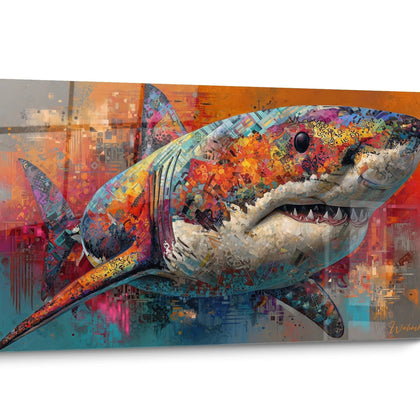
 Megalodon Shark Wall Art - Multicolor Digital Predator - Megalodon Edition273,90 €
 Colorful Shark Wall Art - Artistic Explosion - Megalodon Edition273,90 €
 Megalodon Stylized Wall Art - Majesty of the Depths - Megalodon Edition273,90 €
 Megalodon Painting - Majestic Escape in the Waves - Megalodon Edition273,90 €
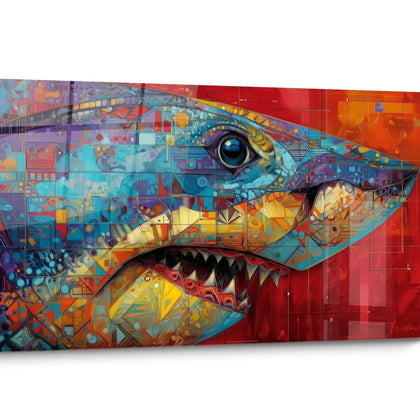
 Megalodon Shark Painting - Colorful Geometric Art - Megalodon Edition273,90 €
 Megalodon Shark Painting - Power of the Depths - Megalodon Edition273,90 €
 Fantastic Megalodon Painting - Predator of the Depths - Megalodon Edition273,90 €
 Great White Shark Megalodon Painting - Ardent Predator - Megalodon Edition273,90 €
Explore further
In Megalodon Wall Art

In the same family
Also explore the theme Primordial Lands
-
 View all150
artworks
View all150
artworks
-
 Andrewsarchus6
artworks
Andrewsarchus6
artworks
-
 Argentavis9
artworks
Argentavis9
artworks
-
 Basilosaurus10
artworks
Basilosaurus10
artworks
-
 Dinosaur31
artworks
Dinosaur31
artworks
-
 Dunkleosteus5
artworks
Dunkleosteus5
artworks
-
 Prehistoric Frescoes8
artworks
Prehistoric Frescoes8
artworks
-
 Glyptodon8
artworks
Glyptodon8
artworks
-
 Indricotherium2
artworks
Indricotherium2
artworks
-
 Kaprosuchus12
artworks
Kaprosuchus12
artworks
-
 Woolly Mammoth22
artworks
Woolly Mammoth22
artworks
-
 Megaloceros
-
 Quetzalcoatlus8
artworks
Quetzalcoatlus8
artworks
-
 Scutosaurus9
artworks
Scutosaurus9
artworks
-
 Saber-Toothed Tiger11
artworks
Saber-Toothed Tiger11
artworks


All about Megalodon Wall Art
- Overview Megalodon Wall Art
- Megalodon Wall Art - Impact and Dimensions
- Megalodon Wall Art - Paleontological Universe
- Megalodon Wall Art - Symbolism and Atmosphere
Discover our exceptional collection dedicated to megalodon wall art, a mural decoration that celebrates the greatest marine predator ever to exist. These large-format representations capture the majesty of this prehistoric giant shark that dominated the oceans millions of years ago. Each creation illustrates the power and mystery of this legendary extinct creature, offering a visual immersion into the depths of ancient times. For marine paleontology and natural history enthusiasts, these artworks constitute a fascinating decorative choice that combines spectacular aesthetics with scientific interest.
The Spectacular Impact of Large-Format Megalodon Wall Art in Your Space
A large-scale megalodon wall art radically transforms the perception of a room by creating a striking visual presence. The imposing formats, perfectly suited to large walls, allow you to convey the true scale of this apex predator that measured up to 18 meters in length. This monumental representation captures the very essence of the domination this giant shark exerted over the oceans of the Miocene and Pliocene.
How do XXL dimensions amplify the presence of the prehistoric predator?
The available large sizes create an immersion effect comparable to an encounter with the apex predator itself. The generous-scale representation allows you to distinguish every anatomical detail: rows of triangular teeth reaching 18 centimeters, a jaw capable of exerting 18 tons of pressure, and the hydrodynamic silhouette perfectly adapted for hunting. This realistic scale offers a visual experience that transcends simple decoration to become a true window into the past.
The impact of a large-format megalodon representation in a spacious living room or reception hall generates immediate emotional reactions. Visitors are instantly captivated by the imposing presence of this deep-sea hunter, creating a unique conversation focal point. This spectacular dimension is particularly suitable for professional spaces such as medical offices, architect offices, or waiting rooms, where it stimulates curiosity and wonder.
Rendering anatomical proportions to scale
Large-format creations allow exceptional anatomical faithfulness in representing Carcharocles megalodon. Unlike reduced formats, the significant dimensions authorize scientific precision in rendering morphological characteristics: the gill slits, the asymmetrical caudal fin typical of lamniforms, and the particular arrangement of pectoral fins. This accuracy satisfies both enlightened enthusiasts and paleontological precision aficionados.
Visual comparison with other marine species becomes particularly instructive in a generous format. Some compositions integrate scale elements such as current white sharks, dolphins, or even human silhouettes, allowing for a concrete understanding of this colossal size of the extinct apex predator. This perspective emphasizes the wonder at the extraordinary dimensions of prehistoric fauna.
Optimal use of available wall space
An imposing wall requires decoration matching its dimensions. Megalodon wall art perfectly meets this requirement by occupying space harmoniously without creating visual emptiness. Panoramic formats integrate particularly well above a long sofa, extended low furniture, or on a clear wall panel in a spacious entryway. This balanced occupation avoids the scattered effect created by multiple small decorations.
Double-height spaces, mezzanines, or staircases benefit exceptionally from these vertical representations of the prehistoric shark in upward attack position. This orientation exploits architectural verticality while creating an ascending visual dynamic. The viewer's eye naturally follows the predator's trajectory, guiding the gaze upward and amplifying the sense of space.
Creating an immersive prehistoric ocean atmosphere
Beyond the decorative aspect, a large-scale megalodon wall art establishes a particular atmosphere in the room. The deep tones of ancient oceans—abyssal blues, mysterious greens of the depths, silvery grays of scales—create a soothing yet dramatic color palette. This combination is particularly suited to contemporary interiors seeking a touch of originality without sacrificing elegance.
Association with other decorative elements evoking ancient lands amplifies the immersive effect. Accessories recalling marine geology, mineral tones in furnishings, or raw materials reinforce thematic coherence. This holistic decorative approach transforms the space into a genuine modern cabinet of curiosities dedicated to disappeared wonders.
Adaptability to different contemporary architectural styles
Contrary to preconceived notions, megalodon representation integrates remarkably into various decorative universes. Industrial interiors with exposed beams and brick create striking contrast with the organic forms of the giant shark. Minimalist Scandinavian spaces welcome this touch of wild nature that breaks with ambient sobriety. Even refined classical ambiances benefit from this bold counterpoint that modernizes the entire setting.
Offices and professional spaces increasingly adopt these representations of the prehistoric apex predator. In a dental office, the evocation of legendary jaws creates an original thematic connection. Companies linked to oceanography, marine biology, or natural sciences find decoration perfectly aligned with their field of expertise. This contextual relevance reinforces the visual identity of the professional space.
The Marine Paleontological Universe Revealed by Megalodon Wall Art
Artistic representation of the megalodon opens a fascinating window onto the oceans of the Cenozoic, the period when this giant shark reigned without rival over the world's seas. These visual creations are based on the most recent paleontological discoveries to accurately restore the appearance and behavior of this predator that disappeared approximately 3.6 million years ago. This scientifically informed approach distinguishes these representations from mere fanciful illustrations.
Reconstructions based on fossils and scientific research
Every detail of a megalodon painting stems from rigorous paleontological analysis. The hundreds of fossilized teeth found on all continents have allowed scientists to reconstruct the complete dentition and estimate body dimensions. Calcified vertebrae, rare but precious, have revealed crucial information about skeletal structure. These data inform modern artistic representations that combine scientific precision with aesthetic impact.
The anatomical proportions represented reflect the current scientific consensus from comparative studies with contemporary lamniforms sharks, particularly the great white shark. This shared family allows for extrapolation of certain morphological characteristics with reasonable reliability. However, artists also integrate a margin of creative interpretation for less documented aspects, creating a synthesis between scientific rigor and artistic expression.
What is the difference between scientific and artistic representations of the megalodon?
Scientific illustrations prioritize anatomical accuracy and strictly respect verified paleontological data. They typically present the shark in a neutral pose, in profile, allowing clear observation of its morphology. These representations primarily serve an educational and documentary objective, addressing academic institutions, natural history museums, or discerning paleontology enthusiasts.
Artistic creations take greater creative liberties to maximize visual and emotional impact. They place the megalodon in dynamic scenes: spectacular attack, emergence from abyssal depths, confrontation with other prehistoric marine creatures. Dramatic lighting effects, bold perspectives, and cinematic compositions transform simple representation into a genuine visual narrative. This approach perfectly suits wall decoration seeking spectacular effect.
The marine ecosystem of the Miocene and Pliocene
A contextualized megalodon painting often integrates other fauna elements contemporary to the apex predator. Primitive whales, favorite prey of the giant shark, frequently appear in these compositions. Prehistoric pinnipeds, giant sea turtles, and bony fish of the era enrich the scene and make it more authentic. This biological diversity illustrates the richness of Tertiary oceans.
The marine environments represented reflect the paleogeographic reality of the megalodon's privileged hunting zones. Warm shallow coastal waters, nutrient-rich continental shelves, and cold upwelling zones constitute typical habitats. Some creations even illustrate presumed nurseries where young megalodons grew protected from adult predators, revealing fascinating behavioral aspects.
Educational value for enthusiasts and young explorers
Beyond aesthetics, these wall representations possess appreciable pedagogical dimension. In a child's or adolescent's room passionate about natural sciences, the artwork becomes a daily learning support. It stimulates scientific curiosity, encourages questioning about species evolution, and introduces marine paleontology concepts. This educational function transforms decoration into an intellectual development tool.
Educational spaces such as classrooms, school libraries, or scientific leisure centers find in these representations striking visual material. The megalodon naturally captivates young minds through its extraordinary dimensions and apex predator status. This fascination constitutes an ideal entry point toward deeper learning in marine biology, geology, or evolutionary theory.
How to choose between realistic and stylized interpretation?
Photogenic realistic versions prioritize detailed textures, precise anatomy, and plausible colors based on pigmentation studies of current sharks. These representations suit demanding collectors, marine biology professionals, or enthusiasts seeking maximum scientific fidelity. They integrate particularly well in sober, elegant interiors where naturalistic precision serves as sophistication.
Stylized or semi-abstract interpretations offer greater artistic freedom. Colors can break free from realism to create specific chromatic atmospheres: electric blues, deep blacks with contrast, or refined monochromatic palettes. Forms sometimes simplify into striking graphic silhouettes. This modern design approach suits bold contemporary interiors seeking distinctive and personalized decoration.
Evolution of megalodon representations with scientific discoveries
Megalodon reconstructions have evolved considerably since first 19th-century attempts. Scientists initially believed this giant shark was simply an enlarged version of the great white. Recent research has nuanced this view, revealing significant morphological differences. Contemporary artistic representations integrate these advances, offering a more sophisticated and scientifically updated image of the extinct predator.
This ongoing evolution of paleontological knowledge ensures that recent creations reflect the scientific state of the art. Specialized artists often collaborate with paleontologists to ensure work accuracy. This synergy between art and science produces representations that simultaneously satisfy the aesthetic eye and scientific mind, offering unparalleled added value to enlightened enthusiasts.
The Symbolic Power and Atmosphere of Ancient Depths
The megalodon wall art conveys powerful symbolism that resonates deeply in collective consciousness. This apex predator embodies absolute domination, optimal survival, and perfect adaptation to its environment. These qualities particularly resonate with individuals seeking symbols of power, determination, and success. The presence of this legendary shark in a personal or professional space subtly communicates these values of excellence and performance.
The megalodon as symbol of domination and ambition
For more than 20 million years, the megalodon reigned without rival over the planet's oceans. This exceptional evolutionary longevity testifies to perfect adaptation and remarkable competitive superiority. For entrepreneurs, company leaders, or ambitious professionals, this symbolism resonates with their own aspirations for leadership and excellence. The decorative choice thus becomes the expression of a life philosophy centered on performance and self-surpassing.
The megalodon's legendary jaw, capable of crushing the bones of multi-ton whales, symbolizes exceptional strength of character. This raw power tempered by hunting intelligence represents the ideal balance between strength and strategy. In a management office or negotiation space, this visual presence unconsciously reinforces the natural authority and determination of the space's occupant.
What emotions does the visual presence of a prehistoric apex predator evoke?
Visual confrontation with the greatest marine predator ever to exist generates a complex emotional cocktail blending fascination, respect, and slight apprehension. This instinctive reaction to ancestral danger persists in our psyche despite the megalodon's disappearance millions of years ago. This controlled emotional tension, experienced in the comfort and safety of an interior, provides pleasant psychological stimulation similar to that sought in adventure films.
Wonder at disappeared grandeur constitutes another significant emotional dimension. The megalodon represents the lost magnificence of past geological eras, a window into a world that no longer exists. This nostalgia for an inaccessible past, this melancholy facing extinct creatures, creates emotional depth that simple representations of contemporary animals cannot equal. This temporal dimension considerably enriches the decorative experience.
The mysterious atmosphere of prehistoric abysses
Ocean depths retain their millennial mystery, and the megalodon perfectly embodies this fascinating inaccessibility. Representations often place the giant shark emerging from abyssal darkness, creating a dramatic light gradient between obscure depths and illuminated surface waters. This staging generates a contemplative and mysterious atmosphere that both soothes and intrigues.
Dominant tones—deep blues, dark greens, inky blacks punctuated by silvery glimmers—create a sophisticated and soothing color palette. These cool colors suit concentration spaces such as offices, personal libraries, or meditation rooms particularly well. Paradoxically, the presence of the apex predator does not visually aggress but rather establishes majestic serenity, that of great untamed natural spaces.
Connection with our collective fascination for extinct creatures
Humanity maintains a particular relationship with extinct species, oscillating between regret at their disappearance and fascination with their strangeness. The megalodon occupies a privileged place in this collective imagination, fueled by documentaries, films, and pseudo-scientific theories suggesting its survival in ocean trenches. This presence in popular culture reinforces the emotional impact of wall representation.
Possessing a megalodon representation means appropriating a fragment of this modern mythology. It affirms interest in natural mysteries, curiosity for scientific enigmas, and appreciation of disappeared wonders. This shared cultural dimension facilitates exchanges and conversations, transforming decoration into a vector of social connection around shared interest.
How does the artwork integrate into a prehistoric thematic collection?
For collectors passionate about ancient geological periods, the megalodon constitutes the ideal centerpiece of a collection dedicated to ancient lands. Its apex predator status naturally complements other representations of prehistoric terrestrial or flying creatures. This thematic coherence transforms the space into a genuine personal museum celebrating disappeared biodiversity.
Association with authentic elements—genuine fossils, tooth casts, vertebrae replicas—reinforces the collector dimension and confers additional legitimacy to the entire decorative ensemble. Some enthusiasts thus create genuine modern cabinets of curiosities where art meets science, where aesthetics serves knowledge. This holistic approach transcends simple decoration to become a genuine cultural and educational endeavor.
The psychological impact of visualized greatness and power
Environmental psychology demonstrates that our visual environment significantly influences our mental state and cognitive performance. The presence of a symbol of power like the megalodon can subtly reinforce self-confidence and determination. In competitive professional contexts, this unconscious influence constitutes a non-negligible psychological advantage.
Simultaneously, the natural and ancient dimension of the representation provides a soothing counterpoint to our artificial urban environments. This symbolic reconnection with primordial forces of nature provides beneficial psychological grounding. The megalodon thus becomes a bridge between our modern existence and the geological time cycles that relativize our daily concerns, offering a calming perspective on existence.
Can megalodon wall art be associated with other marine decorative styles?
Association with contemporary marine decorative elements creates interesting thematic continuity while marking temporal contrast. Representations of current whales, modern sharks, or coral reefs can visually dialogue with the prehistoric megalodon, illustrating oceanic evolution over millions of years. This juxtaposition enriches the visual narrative of the space.
How does the artwork influence the energy of a work or reflection space?
In an office or meeting room, the presence of the apex predator establishes a particular energetic dynamic. It evokes hunting strategy, predator patience, and efficiency of decisive action—all qualities sought in professional environments. This subtle influence can unconsciously encourage these behaviors in space occupants.
What is the visual durability of megalodon wall art over time?
Unlike ephemeral decorative trends, fascination with prehistoric creatures transcends epochs without becoming outdated. The megalodon, anchored in scientific reality and natural history, possesses remarkable thematic permanence. This decorative choice resists passing fashions, guaranteeing lasting aesthetic relevance that justifies investment in high-quality pieces.
How does the megalodon differ from other shark representations in decoration?
Contemporary sharks, while fascinating, lack the temporal and mythological dimension of the megalodon. The prehistoric shark adds historical and scientific depth absent from representations of current great whites or hammerhead sharks. This singularity confers distinctive originality on megalodon wall art that immediately distinguishes it from conventional marine decor, offering additional sophistication to individuality enthusiasts.
Further reading
Our articles on this topic
L'art qui suscite l'envie
Maison belge d'art mural grand format
14 jourspour changer d'avis*
Protection Walenskyincluse
Fabriquéen Italie
FormatXXL
Kit de fixationtoujours fourni
* Hors tableaux personnalisés et tailles personnalisées


