


Asia Wall Art
Explore our exquisite collection of wall art inspired by Asia. Whether you're looking to add an Oriental touch to your living room or energize your office with inspiring artworks, you'll find unique and captivating pieces here. Each artwork in our collection is carefully curated for its quality and originality, ensuring that every piece is a true work of art. Dive into our collection and let yourself be charmed by the beauty and richness of Asian art.
 Furious Guard Wall Art - Japan Edition273,90 €
 Wall Art In the Silence of the Reeds - Japanese Asia Edition273,90 €
 Bamboo Guardians Canvas - Chinois Asia Edition273,90 €
 Canvas Flower Painting - Asia Edition273,90 €
 Koi Dance Wall Art - Asia Edition273,90 €
 High Perch Wall Art - Asia Edition273,90 €
 Painting Woman in Gold and Amber Kimono - Moment of Grace - Geisha Edition273,90 €
 Geisha Painting in Blue Kimono Holding a Fan - Silent Elegance - Geisha Edition273,90 €
 Painting Kimono Pink and Coral with Hair Flower - Delicate Adorned Hairdo - Geisha Edition273,90 €
 Golden Geisha Painting with Black Kimono and Fan - Ceremonial Silence - Geisha Edition273,90 €
 Painting Fan Black and Gold with Swirling Volutes - Ribbons Suspended in the Wind - Geisha Edition242,90 €
 Geisha Painting in Gold Kimono on Amber Staircase - Golden Ascent - Geisha Edition273,90 €
 Geisha Leaning on a Balcony with Blue Night - Nocturnal Dream - Geisha Edition273,90 €
 Kimono Painting Ivory and Brown on Bamboo Path - Sleeve Raised by the Wind - Geisha Edition273,90 €
 Painting Pink and Grey Lantern under Rain - Reflection on Wet Ground - Geisha Edition273,90 €
 Geisha Painting in Black and Gold Before a Temple - Moment of Contemplation - Geisha Edition273,90 €
 Painting Woman in Pink and Fuchsia Kimono - Lunar Clarity - Geisha Edition273,90 €
 Golden Geisha Painting with Fan and Bells - Breath of Twilight - Geisha Edition273,90 €
 White Pine Painting Touched by a Beige and Turquoise Hand - Ford Stones - Geisha Edition273,90 €
 Wall Art Dancer in Blue and Orange Kimono - Nocturnal Whirlwind - Geisha Edition273,90 €
 Geisha Praying Under a Red Torii - Evening Prayer - Geisha Edition273,90 €
 Geisha Umbrella Blue and Golden Garden Painting - Silent Promenade - Geisha Edition273,90 €
 Geisha Ochre and Gold Painting on Staircase - Suspended Light - Geisha Edition228,90 €
 Geisha Leaning on a Blue Night Balcony Painting - Nocturnal Reverie - Geisha Edition228,90 €
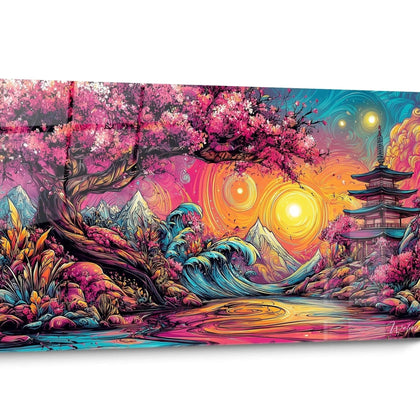


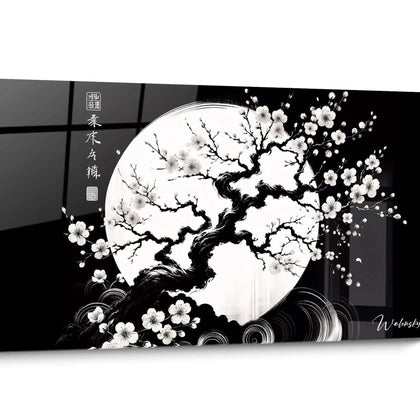
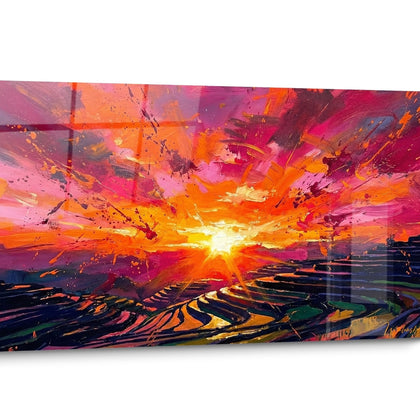
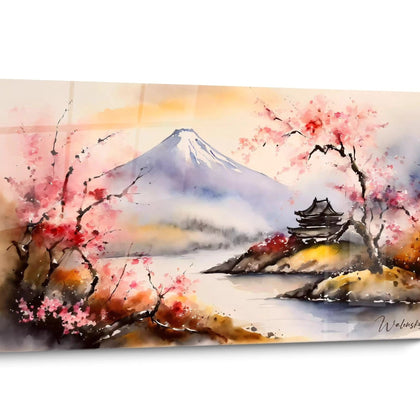
Other families
Explore our other worlds
-
 Best Sellers235
artworks
Best Sellers235
artworks
-
 🔥 The Originals 🔥573
artworks
🔥 The Originals 🔥573
artworks
-
 Abstract4182
artworks
Abstract4182
artworks
-
 Africa608
artworks
Africa608
artworks
-
 Love154
artworks
Love154
artworks
-
 Animals10974
artworks
Animals10974
artworks
-
 Famous Artists ( inspirations )265
artworks
Famous Artists ( inspirations )265
artworks
-
 Around the World3979
artworks
Around the World3979
artworks
-
 Kitchen1805
artworks
Kitchen1805
artworks
-
 Culture222
artworks
Culture222
artworks
-
 Children54
artworks
Children54
artworks
-
 Space514
artworks
Space514
artworks
-
 Celebrations & Seasons670
artworks
Celebrations & Seasons670
artworks
-
 Finance38
artworks
Finance38
artworks
-
 History123
artworks
History123
artworks
-
 Professions235
artworks
Professions235
artworks
-
 Fashion696
artworks
Fashion696
artworks
-
 Artistic Movements793
artworks
Artistic Movements793
artworks
-
 Music653
artworks
Music653
artworks
-
 Myth and Legends332
artworks
Myth and Legends332
artworks
-
 Nature5000
artworks
Nature5000
artworks
-
 Black and white445
artworks
Black and white445
artworks
-
 Landscapes1531
artworks
Landscapes1531
artworks
-
 Retro298
artworks
Retro298
artworks
-
 Science and Mathematics122
artworks
Science and Mathematics122
artworks
-
 Sports & Leisure2470
artworks
Sports & Leisure2470
artworks
-
 Street Art167
artworks
Street Art167
artworks
-
 Primordial Lands150
artworks
Primordial Lands150
artworks
-
 Transportation15
artworks
Transportation15
artworks
-
 Zen2161
artworks
Zen2161
artworks
-
 Browse all our wall art25001
artworks
Browse all our wall art25001
artworks
-
 Places150
artworks
Places150
artworks
-
 Professionnels101
artworks
Professionnels101
artworks


All about Asia Wall Art
- Asia Wall Art Presentation
- Symbolic Asia Art
- Panoramic Asia Wall Art
- Contemporary Asia Art
The Asia wall art represents far more than simple wall decoration – it is a cultural and artistic immersion into the millennia-old traditions of a continent with multiple facets. Unlike Western artworks, these visual representations integrate a profound philosophy where every element, every brushstroke tells an ancestral story.
Asian paintings distinguish themselves through their unique approach to space. The concept of emptiness, particularly important in Chinese and Japanese art, is not an absence but a meaningful presence that invites contemplation. This specific spatial conception radically transforms the atmosphere of contemporary interiors by introducing serenity and balance.
Asian wall art is also characterized by its distinctive techniques. Calligraphy, ink on silk, mineral pigments – all are know-how that create visual renderings impossible to reproduce with Western methods. This technical authenticity guarantees a unique aesthetic experience and incomparable decorative impact.
Integrating an Asia art piece into your interior goes beyond simple decoration. These works act as cultural bridges, subtly transforming the perception of space through their philosophy of minimalism and harmony. They create focal points that inspire calm and reflection, actively participating in the overall energetic balance of the room according to feng shui principles.
Each region of Asia offers its distinctive artistic vision. From misty mountainous landscapes of Chinese painting to bold Japanese prints, through colorful representations of Indian deities – the thematic diversity offers incomparable richness to suit all interior styles and spiritual aspirations. These works can adapt to all spaces, including living areas like the kitchen, where they bring serenity and harmony.
The large formats characteristic of Asian paintings radically transform the acoustics and spatial perception of a room. These large-scale works are not mere decorative elements but become architectural components in their own right, capable of completely redefining the identity of a space.
Asia Wall Art: Symbolism and Hidden Meanings in Oriental Mural Art
The symbolic power of the Asia art piece transcends its simple aesthetic dimension to offer unmatched spiritual depth in contemporary decorative art. Unlike Western works often focused on realism or direct emotional expression, Asian wall art operates as a truly coded language where every element carries precise meaning rooted in millennia of tradition.
What spiritual meanings hide within the motifs of an authentic Asia art piece?
Asian artistic creations reveal a symbolic universe of exceptional richness. The dragon, omnipresent in Chinese art, embodies power, prosperity and divine protection – far from its often negative Western representation. The crane, symbol of longevity and wisdom in Japan, brings unique contemplative dimension to the spaces it inhabits. Lotus flowers emerge from turbid waters to symbolize spiritual awakening and purity in Buddhist tradition, creating visual bridges between the material and spiritual worlds.
The misty mountainous landscapes so characteristic of traditional Chinese painting are not simple geographical representations but visual manifestations of Taoist philosophical concepts. Mountains embody the yang principle (masculine, solid) while water represents the yin principle (feminine, fluid), their harmonious coexistence in the same composition symbolizing the perfect cosmic balance sought in Oriental thought.
How do colors in Asia wall art transform a room's energy?
The color palette of Asian works obeys precise energetic principles that directly influence the atmosphere of spaces. Red, omnipresent in Chinese art, is not merely a simple decorative color but a powerful vector of vital energy (qi) promoting dynamism and prosperity. The deep blues present in certain Japanese paintings create zones of mental calm and promote concentration, particularly suited to intellectual work spaces or meditation.
The subtlety of neutral tones in Japanese monochrome ink painting (sumi-e) generates unique meditative atmosphere, impossible to reproduce with other pictorial traditions. These shades of gray, black and sepia create a visual effect that literally slows the heart rate and breathing of the observer, fundamentally transforming the physiological experience of inhabited space.
Representations of cherry blossoms (sakura) in Japanese art perfectly embody the cultural concept of "mono no aware" – the poignant awareness of impermanence and the ephemeral beauty of all things. Integrating these motifs into a contemporary interior brings profound philosophical dimension, inviting mindfulness and appreciation of the present moment.
Large Asia wall art and its energy impact according to feng shui
Large-format Asian wall art integrates harmoniously into feng shui principles, the ancient Chinese art of energy harmonization. A painting representing water placed in the north sector of the home activates career energy and life path, while a work in red or violet tones in the south sector strengthens social recognition and reputation.
The presence of a large Asia wall art influencing the circulation of "qi" (vital energy) can correct architectural imbalances in a room. A work placed strategically allows redirecting energy flows, neutralizing aggressive angles or unfavorable spatial configurations without requiring costly structural modifications.
Bamboo scenes, particularly prized in Chinese art, are not chosen solely for their visual elegance but for their powerful symbolism of resilience, growth and adaptability. These representations activate renewal and perseverance energies, particularly beneficial in spaces dedicated to new beginnings or creative projects.
The large formats typical of Asian paintings allow creation of veritable "energetic portals" in living spaces. These monumental works function as dimensional windows transporting the observer into distant landscapes, psychologically expanding the physical boundaries of the home – an effect particularly valuable in restricted urban spaces.
Asian calligraphic art, beyond its formal beauty, possesses unique vibrational dimension. Every character, every brushstroke resonates like a visual mantra whose frequency subtly influences surrounding atmosphere. A painting incorporating the character "和" (harmony) or "福" (fortune) does not merely represent these concepts – it energetically activates them in the space where it is placed.
Panoramic Asia Wall Art: Visual Immersion in Emblematic Oriental Landscapes
The panoramic Asia wall art radically transforms spatial perception of an interior by creating a true contemplative window onto distant horizons. Unlike standard formats, these elongated works faithfully reproduce how the human eye naturally perceives landscapes, offering immersive visual experience impossible to achieve with other artistic formats.
How does panoramic Asia wall art modify perception of architectural volumes?
Installing a panoramic Asian painting in a narrow space creates genuine architectural transformation without structural work. The extended perspective characteristic of representations of misty Chinese mountains or Vietnamese rice terraces creates illusion of openness that visually pushes walls back, generating amplified space sensation particularly valuable in contemporary urban habitats.
The horizontal composition of panoramic Asian works, inherited from traditional scrolls, directly influences the eye's journey and consequently movement in physical space. This specific orientation unconsciously guides inhabitants' and visitors' movements, naturally fluidifying displacement in complex or constrained architectural configurations.
The large panoramic formats typical of Asian art possess remarkable acoustic properties. Their extended surface partially absorbs sound waves, significantly reducing reverberation and improving sound comfort in spaces with hard surfaces (concrete, glass, tile). This subtle modification of the sonic environment contributes to creating the contemplative atmosphere characteristic of interiors inspired by Asian aesthetics.
Emblematic Asian landscapes and their specific emotional impact
Choice of a specific panorama profoundly influences the emotional atmosphere of a space. The majestic Guilin mountains represented in Chinese art induce feelings of stability and grounding, while vast Japanese seascapes with Mount Fuji in the background generate sensation of expansion and infinite possibilities. This direct relationship between represented subject and psychological impact enables true emotional architecture of living spaces.
Panoramic representations of Japanese cherry blossoms are not simple decorative images but genuine seasonal sensory calendars. Their presence in an interior acts as permanent seasonal marker, maintaining awareness of natural cycles even in the heart of most artificial urban environments. This subtle connection to natural rhythms significantly contributes to inhabitants' psychological well-being.
Panoramic works representing ancient Angkor temples or Japanese Shinto shrines lost in mist create exceptional meditative focal points. The depth of perspectives and subtle graduation of visual planes naturally guide the mind toward contemplative state, transforming simple passageway into daily mental rejuvenation place.
Integration techniques for large panoramic formats in different interior styles
Integrating a panoramic Asia art piece into minimalist contemporary interior creates fascinating architectural dialogue. The visual tension between structural simplicity of the space and narrative richness of the work generates dynamic balance that simultaneously amplifies impact of architecture and artistic creation, in symbiotic relationship impossible to achieve with other wall art styles.
In interiors with industrial influences, Asian panorama brings organic dimension and vital breath that harmoniously counterbalances rigor of raw materials. The unexpected encounter between delicacy of Vietnamese rice field landscape and roughness of concrete or steel creates particularly powerful contemporary visual narrative.
Specific lighting of panoramic works requires particular attention to fully reveal their unique visual qualities. Variable-intensity lighting systems allow adapting the work's presence according to time of day, transforming it in turn into dominant element or subtle atmospheric presence, thus multiplying its functions in the visual ecosystem of the home.
Panoramic representations of Japanese zen gardens or Buddhist temples surrounded by nature create incomparable "meditative windows." These visual openings onto spaces of serenity generate essential psychological decompression zones in our contemporary environments saturated with stimulation. Their presence fundamentally transforms daily experience of a space by introducing moments of contemplative pause.
The evolving perception of a panoramic Asian painting throughout seasons and changing light conditions constitutes perpetually renewed aesthetic experience. Subtle variations of natural lighting progressively reveal different depths and nuances of the work, creating living and dynamic relationship between inhabitant, space and artistic representation that far transcends simple decorative function. These qualities make Asian paintings particularly appreciated choices for vacation homes, where they contribute to creating atmosphere conducive to relaxation and rejuvenation.
Contemporary Asia Wall Art: Fusion Between Millennial Tradition and Modern Artistic Expression
The contemporary Asia wall art represents artistic revolution where ancestral heritage and modern vision dialogue, creating unique category of works that transcend traditional classifications. Unlike classical reproductions, these creations merge millennia-old techniques of Asian art with current aesthetic sensibilities to generate pieces resolutely anchored in our era while preserving the spiritual essence of Oriental thought.
How to recognize authentic contemporary Asia wall art of quality?
Identification of quality contemporary Asian artwork rests on several distinctive markers. Technical mastery of traditional gestures – fluidity of ink stroke, precision of gradations, balanced composition between emptiness and fullness – must harmoniously coexist with clearly identifiable personal artistic vision. This unique signature, combining respect for ancestral codes and creative reinterpretation, constitutes the quintessence of quality contemporary Asia wall art.
Materials used also reveal authenticity and value of contemporary Asian-inspired work. Natural pigments extracted from minerals, genuine China ink prepared according to traditional methods, supports in rice paper or silk – these elements confer visual depth and longevity to creations impossible to reproduce with standard industrial materials. Their presence testifies to authentic commitment to technical tradition in service of contemporary expression.
Artist provenance and training constitute essential indicator of cultural value of contemporary Asia wall art. Creators trained in traditional schools before developing their personal language produce works of exceptional coherence, where innovation naturally roots in deep understanding of fundamental principles. This authenticity of artistic journey translates visually into immediately perceptible technical and conceptual assurance.
Specific impact of large contemporary Asia wall art on atmosphere of modern spaces
Integrating large-format contemporary Asian work into minimalist interior creates fascinating architectural dialogue. Visual tension between structural simplicity of space and narrative richness of work generates dynamic balance that simultaneously amplifies impact of both architecture and artistic creation, in symbiotic relationship impossible to achieve with other wall art styles.
Large formats characteristic of contemporary Asian art fundamentally transform acoustics of modern spaces often dominated by reflective surfaces, and can even enhance transitional areas like a stairwell. Specific texture of works and their imposing dimensions create sound absorption zones that naturally soften the auditory environment, contributing to generating serenity atmosphere so characteristic of interiors influenced by Oriental aesthetics.
Presence of contemporary Asia wall art in living or work space establishes essential counterpoint to technological omnipresence. These works, rooted in millennia-old contemplative traditions yet reinterpreted for our era, create crucial visual and mental decompression zones in our environments saturated with screens and information. They reintroduce different temporality, inviting slow contemplation in world of instantaneity.
Specific themes of contemporary Asian creations and their current significance
Refined representations of nature in contemporary Asian art are not simple aesthetic choices but carry profound ecological dimension deeply current. These works, heirs to millennia-old tradition of nature veneration, resonate powerfully with contemporary environmental concerns, transforming spaces they inhabit into silent manifestos for essential reconnection to natural world.
Abstraction, already present in certain traditional forms of Asian art such as calligraphy, finds renewed expression in contemporary creations particularly suited to current sensibilities. These abstract works, rooted in traditional gesture but freed from figurative constraints, create powerful visual bridges between ancestral Oriental philosophies and modern Western aesthetics.
Contemporary creations inspired by ancient temples of Angkor, Bagan or Kyoto sanctuaries transcend simple architectural reproduction to explore notion of remnant in our constantly transforming world. These representations, oscillating between documentary precision and dreamlike interpretation, establish in contemporary spaces temporal depth that effectively counterbalances novelty obsession characteristic of our era.
FAQ on Asia wall art
What is the difference between traditional and contemporary Asia wall art?
Traditional Asia wall art rigorously respects aesthetic, technical and symbolic canons established for centuries in various Asian artistic traditions. It faithfully reproduces ancestral motifs, compositions and techniques. Contemporary Asia wall art, conversely, reinterprets these traditions through modern sensibility, merging traditional techniques and current artistic vision to create works that dialogue between heritage and innovation, while preserving the spiritual essence of Oriental philosophy.
How to integrate large Asia wall art into small space without creating visual crushing?
Harmonious integration of large Asia art piece into restricted space relies on several key principles. Favor works with light tonalities and airy compositions featuring significant proportion of "emptiness" (essential concept in Asian art). Position painting so its visual horizon naturally extends the space's perspective. Complete with subtle directional lighting that brings out painting's depth without visually imposing it. Paradoxically, well-chosen large format will visually enlarge a small space rather than reduce it.
Can Asia wall art integrate into interior with pronounced Western style?
Absolutely, integrating an Asia art piece into Western interior creates visually captivating intercultural dialogue. In classic European space, Asian work brings refined aesthetic tension that energizes the whole. The key lies in seeking subtle connection points – harmonizing tones with some existing décor elements, choosing motifs whose symbolism resonates with the place's history, or highlighting through framing that establishes visual transition between two aesthetic universes. This cultural encounter generates unique narrative richness in inhabited space.
Which Asia wall art subjects promote concentration in work space?
For a professional space, favor Asia wall art representing subjects specifically conducive to concentration. Chinese mountainous landscapes with refined lines naturally activate structured thinking and perseverance. Minimalist bamboo compositions, symbols of resilience and adaptability in Oriental philosophy, stimulate intellectual flexibility. Works of Japanese or Chinese calligraphy incorporating characters linked to wisdom or concentration create mentally stimulating environment. Avoid overly narrative or dramatic scenes that would distract attention in favor of compositions evoking stability and meditative depth.
L'art qui suscite l'envie
Maison belge d'art mural grand format
14 jourspour changer d'avis*
Protection Walenskyincluse
Fabriquéen Italie
FormatXXL
Kit de fixationtoujours fourni
* Hors tableaux personnalisés et tailles personnalisées


