


Jungle Wall Art
Discover our "Jungle Wall Art" collection, a series of captivating works that immerse your interior in the heart of wild nature. Each jungle wall art features lush vegetation, exotic animals and mysterious landscapes, bringing a sense of escape and adventure to your space. These artworks are perfect for creating a vibrant and natural atmosphere in your home. Let yourself be transported by the intensity of tropical wall art that evokes the richness and diversity of tropical fauna and flora.
 Water's Flow Artwork - Jungle Landscape Edition233,90 €
 Enchanted Path Painting - Jungle Landscape Edition233,90 €
 Eden of Verdure Artwork - Jungle Landscape Edition233,90 €
 Pond with Forest Peonies Painting - Floral Serenity - Jungle Edition233,90 €
 Leaf Forest Canvas - Jungle Landscape Edition233,90 €
 Mystery Jungle Painting - Jungle Landscape Edition233,90 €
 Tropical Landscape Painting - Golden Light in the Canopy - Jungle Edition213,90 €
 Tropical Refuge Wall Art at the Heart of Silence - Signature Edition233,90 €
 Secret Crossing Painting - Jungle Landscape Edition233,90 €
In the same family
Also explore the theme Landscapes
-
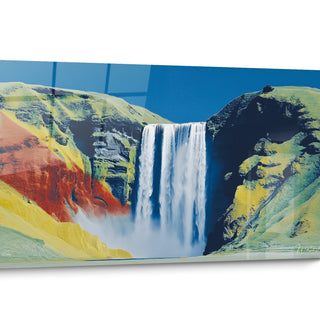 View all1336
artworks
View all1336
artworks
-
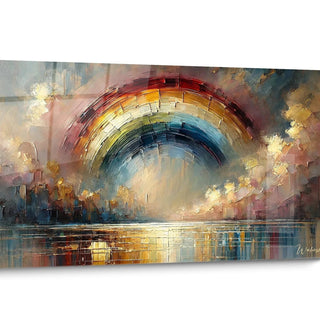 Rainbow2
artworks
Rainbow2
artworks
-
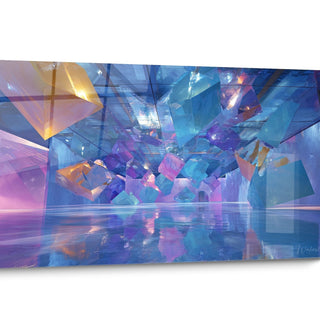 Architecture30
artworks
Architecture30
artworks
-
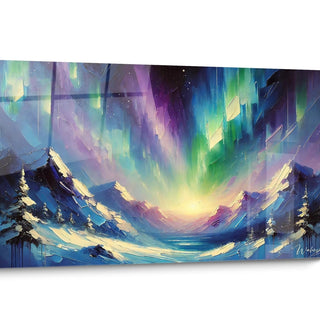 Northern Lights32
artworks
Northern Lights32
artworks
-
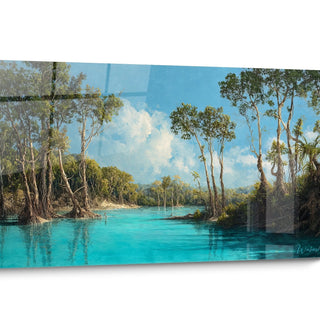 Other Landscapes117
artworks
Other Landscapes117
artworks
-
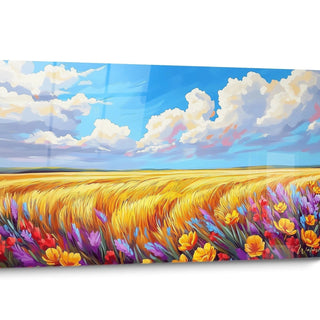 Campaign51
artworks
Campaign51
artworks
-
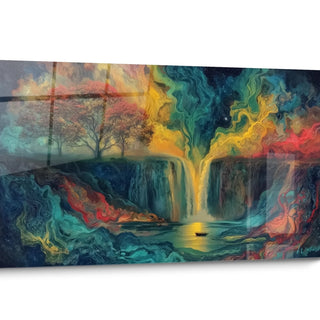 Cascade104
artworks
Cascade104
artworks
-
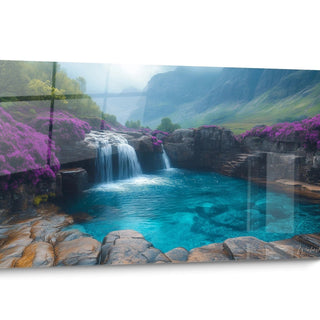 Waterfalls12
artworks
Waterfalls12
artworks
-
 Lavender Fields7
artworks
Lavender Fields7
artworks
-
 Sky14
artworks
Sky14
artworks
-
 Starry Sky8
artworks
Starry Sky8
artworks
-
 Sunset37
artworks
Sunset37
artworks
-
 Desert82
artworks
Desert82
artworks
-
 Underwater Depths38
artworks
Underwater Depths38
artworks
-
 Forest129
artworks
Forest129
artworks
-
 Gorges and Canyons41
artworks
Gorges and Canyons41
artworks
-
 Natural Caves565
artworks
Natural Caves565
artworks
-
 Islands and Archipelagos55
artworks
Islands and Archipelagos55
artworks
-
 Lakes77
artworks
Lakes77
artworks
-
 The World of the Sea189
artworks
The World of the Sea189
artworks
-
 Marine71
artworks
Marine71
artworks
-
 Sea77
artworks
Sea77
artworks
-
 Mountain218
artworks
Mountain218
artworks
-
 Hot Air Balloon5
artworks
Hot Air Balloon5
artworks
-
 Ocean16
artworks
Ocean16
artworks
-
 Abstract Landscape25
artworks
Abstract Landscape25
artworks
-
 Lighthouses20
artworks
Lighthouses20
artworks
-
 Beach105
artworks
Beach105
artworks
-
 Ports19
artworks
Ports19
artworks
-
 Savanna5
artworks
Savanna5
artworks
-
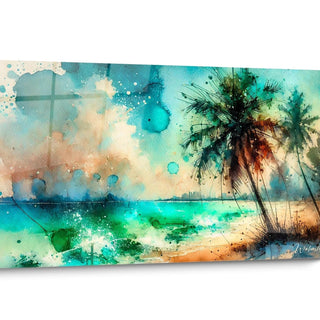 Tropics9
artworks
Tropics9
artworks
-
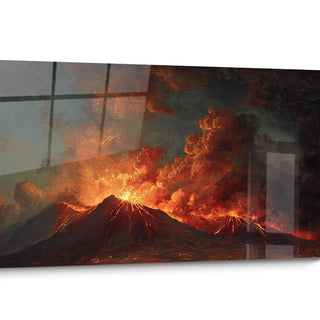 Volcanoes57
artworks
Volcanoes57
artworks
-
 Aerial View17
artworks
Aerial View17
artworks


All about Jungle Wall Art
- Overview Jungle Canvas
- Jungle Canvas Immersive Atmosphere
- Jungle Canvas Exotic Decor
- Jungle Canvas Visual Impact
The jungle canvas represents a bold decorative choice that instantly transforms the ambiance of your interior by creating a gateway to the most fascinating ecosystems on our planet. This distinctive wall decoration stands out through its ability to introduce an explosion of verdant greenery and wild life into your living spaces, offering far more than a simple decorative element.
Jungle representations on large format wall installations capture the very essence of these lush ecosystems, with their dense foliage, vibrant verdant hues and the mysterious dim light that reigns beneath the canopy. These exotic landscapes bring unparalleled visual depth that visually enlarges the space while creating a striking focal point in your interior.
The particular appeal of the jungle canvas lies in its versatility: it integrates just as well into a minimalist contemporary interior, where it creates a striking contrast, as into a more eclectic décor where it complements a bohemian or exotic ambiance. The richness of details and the complexity of vegetation patterns stimulate imagination and invite escapism, transforming any room into a sanctuary of tranquility and visual exploration.
Discover our complete range of landscape canvases to find the artwork that will transform your living space into an extraordinary visual experience.
Jungle Canvas: Creating an Immersive Atmosphere in Your Interior
The jungle canvas distinguishes itself from other wall decorations through its unique ability to radically transform the atmosphere of a room, creating an immersive experience that engages all the senses. Unlike urban or abstract representations, these large format works capture the ecological density and profusion of life characteristic of tropical ecosystems.
How does a jungle canvas modify the spatial perception of your interior?
One of the remarkable properties of the jungle canvas is its ability to modify our perception of space. The depth of vegetative layers represented creates an illusion of openness and expansion that transcends the physical limits of your wall. This characteristic makes the jungle canvas a particularly judicious choice for confined urban spaces or windowless rooms that immediately benefit from a sensation of enlarged space and connection with the natural world.
The deep perspectives typical of jungle scenes, with their trails disappearing into vegetation or light breakthroughs through the canopy, function as natural optical illusions that visually increase the dimensions of your living space. This perceptual amplification proves particularly effective in entryways, hallways or small living rooms that immediately gain in scope and dynamism.
The influence of verdant hues on psychological equilibrium
Beyond the aesthetic impact, the dominant color spectrum of jungle canvases – primarily composed of greens in their countless shades – exerts a documented influence on our psychological equilibrium. Studies in environmental psychology demonstrate that regular exposure to verdant hues reduces stress, lowers blood pressure and improves concentration.
This palette of natural colors associated with luxuriant representations of tropical vegetation creates a particularly soothing visual environment. In our contemporary interiors often dominated by straight lines, smooth surfaces and neutral colors, the jungle canvas introduces an element of biophilic contrast that responds to our innate need for connection with the natural world.
What is the acoustic particularity of a large format jungle canvas in your space?
A rarely discussed but fascinating aspect of large format jungle canvases concerns their acoustic dimension. These works do not literally modify a room's acoustics, but their visual richness and density of elements create what perception psychologists call an "imagined sound texture" – the brain unconsciously associates these dense images with a particular sound atmosphere.
This visual-auditory synesthesia explains why many jungle canvas owners report an increased sense of calm in spaces adorned with these works. Our brain, faced with these representations of dense forests, generates an association with the muffled and absorbing acoustics of forest environments, contributing to a subjective perception of calm and tranquility in the space concerned.
The seasonal dynamics of jungle canvases
Unlike representations of temperate or Mediterranean landscapes whose visual appearance clashes with the external environment during certain seasons, the jungle canvas maintains its visual relevance throughout the year. This seasonal timelessness makes it a particularly judicious decorative investment for regions with long winters or variable climates.
During cold months, the lush jungle canvas creates a welcome psychological counterpoint to the barrenness of the external landscape, bringing visual warmth and vitality to interiors potentially darkened by weather conditions. In summer, these same representations enter into harmonious resonance with surrounding greenery, amplifying the sensation of natural freshness in your living space.
- Complete sensory stimulation through multiple layers of represented vegetation
- Modification of spatial perception creating a sensation of expansion
- Therapeutic effect of verdant hues on psychological equilibrium
- Induction of a soothing "imagined sound texture"
- Maintained decorative relevance throughout all seasons
Jungle Canvas: The Art of Integrating Exoticism into Your Interior Decoration
The jungle canvas represents far more than a simple wall decoration – it constitutes a true thematic anchor point capable of guiding the entirety of your interior decoration. Unlike classical floral representations or conventional landscapes, jungle scenes introduce a unique narrative and immersive dimension that fundamentally transforms the spatial experience of your interior.
What are the visual microclimates created by a large dimension jungle canvas?
One of the most fascinating phenomena associated with large format jungle canvases concerns their ability to generate what interior designers call "visual microclimates". These zones of aesthetic influence manifest through a noticeable modification of the atmosphere in a radius of several meters around the work itself.
This phenomenon is explained by the subtle reflection of dominant verdant hues on surrounding surfaces, creating a chromatic halo effect that softens ambient lighting. In spaces benefiting from natural light, this luminous interaction evolves throughout the day, producing a visual dynamic that animates the space without requiring additional decorative elements.
The balance between visual lushness and architectural minimalism
The striking contrast between the organic density represented in a jungle canvas and the refined geometry of contemporary interiors creates a particularly sought-after aesthetic tension in current design. This juxtaposition between teeming nature and minimal architecture generates what specialists call a "contrasted biophilic resonance" – a visual dialogue between architectural order and natural complexity.
To maximize this effect, the optimal positioning of a large format jungle canvas proves crucial. Neutral and clear wall surfaces, ideally in light tones that reflect light, provide the perfect background to showcase the visual richness of these works. The negative space around the canvas plays an equally important role as the work itself, creating a zone of visual decompression that amplifies the impact of the representation.
The luminous stratification adapted to jungle canvases
The lighting of a jungle canvas requires a specific approach to fully reveal its visual depth and chromatic richness. Unlike abstract or monochromatic works that can satisfy themselves with direct lighting, jungle representations benefit from a luminous stratification that mimics the natural conditions of these ecosystems.
An ideal lighting installation combines a main modular source that reproduces natural light variations with secondary light points that create accent zones, thereby revealing different sections of the work according to the time of day. This luminous dynamic transforms the jungle canvas into a living installation that subtly evolves, continuously renewing the visual experience for the inhabitants and visitors of your space.
Complete sensory integration through olfactory accompaniment
To create a complete immersive experience around your jungle canvas, the integration of complementary olfactory elements represents an innovative approach rarely explored. Aromatic essences with woody, green or slightly floral notes establish a profound sensory connection with tropical visuals, anchoring the aesthetic experience in a multisensory dimension.
This visual-olfactory synchronization activates brain areas associated with positive memories and emotions, significantly reinforcing the emotional impact of your decoration. Contemporary diffusers with adjustable intensity allow you to fine-tune this olfactory presence according to times of day, creating an enveloping ambiance without ever becoming invasive.
- Creation of visual microclimates through chromatic reflection on adjacent surfaces
- Establishment of aesthetic tension between organic density and architectural minimalism
- Necessity of specific luminous stratification mimicking natural conditions
- Amplification of immersive experience through integration of complementary olfactory elements
- Dynamic evolution of artwork perception according to natural lighting conditions
Jungle Canvas: Maximizing Visual Impact in Contemporary Spaces
The jungle canvas distinguishes itself through its exceptional ability to become the dominant focal point of an interior space. Unlike more discreet decorative works that integrate harmoniously into a whole, these representations of lush vegetation assert themselves as true aesthetic statements that completely redefine the identity of a room.
How does strategic positioning amplify the immersive effect of a jungle canvas?
The visual impact of a jungle canvas depends considerably on its positioning in space. Research in environmental psychology reveals that the optimal location lies in the natural line of sight upon entering a room, thus creating what designers call a "perceptual impact point". This strategic position ensures that the work immediately captures attention and establishes the general atmosphere before the observer has even fully entered the space.
For very large format jungle canvases, wall surfaces at the end of perspective – such as the wall opposite the entrance of a hallway or elongated room – maximize the depth effect. This spatial configuration creates the illusion that the interior space naturally extends into the represented scene, symbolically erasing the boundary between the habitat and the evoked natural environment.
The chromatic interdependence with surrounding furnishing elements
A little-known particularity of the jungle canvas concerns its chromatic interaction with furnishing elements that surround it. The dominant hues – primarily deep greens and touches of ochre or terra cotta – establish a visual dialogue with natural materials present in the space such as wood, rattan, stone or natural textiles.
To amplify this chromatic resonance, the integration of decorative elements echoing the secondary colors present in the work – often touches of red, orange or violet from represented tropical flowers – creates a visual coherence that anchors the canvas in its environment. This approach transforms the work into a chromatic pivot around which the entire decorative palette of the space is articulated.
The dynamic of proportions between the canvas and architectural space
One of the fundamental principles for maximizing the impact of a jungle canvas concerns the ratio of proportions between the work and the architecture that houses it. Unlike traditional decorative conventions that recommend moderate dimensions, these representations reach their full immersive potential when they adopt imposing formats that occupy a significant proportion of the host wall.
This ideal dimensional ratio is generally established when the work occupies between 60% and 80% of the available wall height, thus creating a dominant visual presence without completely saturating the space. This ambitious scale transforms the jungle canvas into a veritable window onto elsewhere, rather than a simple decorative element, fundamentally modifying the spatial perception of the interior environment.
Seasonal adaptation of complementary decorative elements
To maintain the visual relevance and aesthetic freshness of a jungle canvas throughout the seasons, the adaptation of complementary decorative elements constitutes a rarely mentioned but particularly effective strategy. This approach consists of subtly modifying the accessories, textiles and secondary decorative elements that surround the work according to periods of the year.
During cold months, the integration of textured elements in warm hues – terracotta cushions, plaids in amber tones, artisanal ceramics – reinforces the sensation of visual warmth emanating from the tropical representation. Conversely, during the warm season, emphasis can be placed on accessories with lighter finishes and clearer hues that amplify the sensation of freshness evoked by the lush vegetation.
Jungle Canvas FAQ
What is the ideal size for a jungle canvas in a standard living room?
For a living room with standard dimensions (approximately 20-25m²), a jungle canvas of 120x80cm represents the minimum to create genuine visual impact. For a truly immersive effect, favor more imposing formats of 150x100cm or ideally 180x120cm that will radically transform the atmosphere of your space.
How to effectively maintain a large format jungle canvas?
The maintenance of a large format jungle canvas primarily requires regular dusting using a soft-bristled duster or specific anti-static brush to prevent particle accumulation that could dull the vibrant colors. Avoid prolonged direct exposure to sunlight that could gradually alter the intensity of the characteristic verdant hues.
Is a jungle canvas suitable for professional spaces?
Jungle canvases prove particularly well-suited to professional spaces seeking to create an atmosphere that is both stimulating and soothing. They effectively transform reception areas, relaxation spaces or creative meeting rooms into biophilic environments that reduce stress and improve concentration, as demonstrated by several studies on work environments integrating natural elements.
- Strategic position in the natural line of sight for immediate impact
- Chromatic interdependence with natural materials of the surrounding space
- Optimization of the ratio of proportions between the work and available wall surface
- Seasonal adaptation of complementary decorative elements
- Creation of a focal point that redefines the complete aesthetic identity of the space
Further reading


