


Dinosaur Wall Art
Dive into the fascinating world of dinosaurs with our exclusive collection of wall art pieces. Each creation captures the majesty and power of these legendary creatures that dominated the Earth millions of years ago. Perfect for paleontology enthusiasts and lovers of prehistoric art, this collection transforms your interior into a genuine natural history museum. From imposing T-Rexes to agile Velociraptors, explore the age of reptiles through striking artistic compositions that awaken imagination and curiosity.
 Futuristic Brachiosaurus Painting - Cretaceous Giant - Dinosaur Edition273,90 €
 Golden Diplodocus Wall Art - Giants at Sunset - Dinosaur Edition273,90 €
 Sauropod Dinosaurs by the Water - Prehistoric Sepia Ambiance - Dinosaur Edition273,90 €
 Fantastical Floral Dinosaur Wall Art - Cosmic Creature - Dinosaur Edition273,90 €
 Abstract Dinosaurs Wall Art - Geometric Fusion - Dinosaur Edition273,90 €
 Triceratops Wall Art - Colorful Majesty - Dinosaur Edition273,90 €
 Sauropod Sunset Wall Art - Prehistoric Giant - Dinosaur Edition273,90 €
 Tyrannosaurus Rex Wall Art in Prehistoric Forest - Jurassic Predators - Dinosaur Edition273,90 €
 Sauropods Sunset Painting - Colorful Giants - Dinosaur Edition273,90 €
 Dinosaurs by the Water - Prehistoric Reflections Painting - Dinosaur Edition273,90 €
 T-Rex Palette Knife Painting - Artistic Roar - Dinosaur Edition273,90 €
 Colorful Stained Glass Triceratops Painting - Dinosaurs Stained Glass - Dinosaur Edition273,90 €
 Colorful T-Rex Painting - Artistic Expression - Dinosaur Edition273,90 €
 Three Raptors Dinosaur Painting - Captivating Portrait - Dinosaur Edition273,90 €
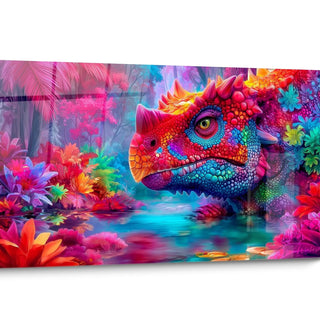
 Psychedelic Dinosaur Canvas - Colorful Dragon - Dinosaur Edition273,90 €
 Diplodocus Canvas in Black and White - Giants of the Jurassic - Dinosaur Edition273,90 €
 Diplodocus Canvas at Sunset - Explosion of Colors - Dinosaur Edition273,90 €
 Colorful T-Rex Canvas - Modern Expressionist Art - Dinosaur Edition273,90 €
 Sauropod Canvas Under Dramatic Sky - Prehistoric Majesty - Dinosaur Edition273,90 €
 Colorful T-Rex Canvas - Tyrannosaurus in Motion - Dinosaur Edition273,90 €
 T-Rex Family Roaring Painting - Prehistoric Hunters - Dinosaur Edition273,90 €
 Luminous Brontosaur Painting - Futuristic Vision - Dinosaur Edition273,90 €
 Compsognathus Dinosaur Wall Art - Nocturnal Predator - Dinosaur Edition273,90 €
 Three Roaring Dinosaurs Wall Art - Prehistoric Titans - Dinosaur Edition273,90 €


In the same family
Also explore the theme Primordial Lands
-
 View all150
artworks
View all150
artworks
-
 Andrewsarchus6
artworks
Andrewsarchus6
artworks
-
 Argentavis9
artworks
Argentavis9
artworks
-
 Basilosaurus10
artworks
Basilosaurus10
artworks
-
 Dunkleosteus5
artworks
Dunkleosteus5
artworks
-
 Prehistoric Frescoes8
artworks
Prehistoric Frescoes8
artworks
-
 Glyptodon8
artworks
Glyptodon8
artworks
-
 Indricotherium2
artworks
Indricotherium2
artworks
-
 Kaprosuchus12
artworks
Kaprosuchus12
artworks
-
 Woolly Mammoth22
artworks
Woolly Mammoth22
artworks
-
 Megaloceros
-
 Megalodon9
artworks
Megalodon9
artworks
-
 Quetzalcoatlus8
artworks
Quetzalcoatlus8
artworks
-
 Scutosaurus9
artworks
Scutosaurus9
artworks
-
 Saber-Toothed Tiger11
artworks
Saber-Toothed Tiger11
artworks


All about Dinosaur Wall Art
- Presentation Dinosaur Painting
- Dinosaur Painting : Species and Authenticity
- Dinosaur Painting : Periods of the Mesozoic
- Dinosaur Painting : Monumental Formats
Discover our exclusive collection of dinosaur paintings designed to transform living spaces into true windows onto the Mesozoic. Each mural captures the essence of the prehistoric creatures that dominated our planet for over 165 million years. Our large-format creations celebrate the majesty of extinct giants, from the ferocious Tyrannosaurus Rex to peaceful herds of Brachiosaurus roaming primordial forests. Explore authentic scenes inspired by the latest paleontological discoveries, where every anatomical detail testifies to the care taken in scientific representation. Whether you are looking for a lush Jurassic ambiance or the dramatic atmosphere of the Late Cretaceous, our selection offers unique perspectives on these fascinating eras. Perfect for sparking the curiosity of young enthusiasts or enhancing a space dedicated to adventure, these monumental visuals instantly transform the atmosphere of a room.
Dinosaur Painting : Paleontological Authenticity at the Service of Decoration
A quality dinosaur painting is distinguished by its fidelity to current scientific knowledge. Modern representations integrate recent discoveries that have revolutionized our understanding of these creatures: colorful plumage in some theropods, anatomically correct postures, proportions respecting authentic fossils. This requirement for accuracy transforms each visual into a true educational tool, where the child can identify the distinctive characteristics of a feathered Velociraptor or admire the complex bone structure of a Stegosaurus. Parents who are concerned about offering a stimulating intellectual environment prefer these representations that nourish natural curiosity rather than perpetuating outdated clichés.
Which species to prioritize for an educational dinosaur painting?
The choice of species represented determines the pedagogical impact of the visual. Prehistoric creature paintings featuring iconic specimens such as the Triceratops, with its three characteristic horns and bony frill, facilitate learning about defensive adaptations. Representations of carnivores such as Allosaurus or Spinosaurus, this semi-aquatic predator with a crocodile-like elongated skull, illustrate the diversity of hunting strategies. For an enriching comparative approach, prioritize compositions including several creatures of different scales: a titanic Argentinosaurus dominating the prehistoric canopy alongside more modest Compsognathus. This juxtaposition intuitively teaches notions of biodiversity and complex Mesozoic ecosystems.
The importance of anatomical representation in prehistoric visuals
Anatomical details distinguish a scientifically coherent visual from a simple fanciful illustration. An authentic dinosaur painting respects the skeletal proportions discovered during paleontological excavations: reduced forelimbs of the T-Rex, the long flexible neck of the sauropods composed of lightweight cervical vertebrae, the falcate claws of the Deinonychus. Skin textures are based on fossilized footprints and comparative studies with modern reptiles, offering polygonal scales, dermal bony protrusions, or proto-avian plumage depending on the species. This rigor transforms each observation into a learning moment, where the child develops their attention to detail and their understanding of morphological evolution.
Iconic Carnivores versus Majestic Herbivores
The contrast between predators and prey structures the prehistoric ecosystem depicted. Theropod carnivores fascinate with their appearance as perfected hunters: massive skulls with powerful jaws, dentition specialized in sharp blades, muscular hind limbs designed for explosive running. A visual centered on the Carnotaurus with its distinctive horns or the Giganotosaurus surpassing even the Tyrannosaurus in size creates an atmosphere of primal tension. Conversely, giant herbivores inspire awe with their peaceful dimension and extraordinary body architecture. Diplodocus reaching 30 meters in length, Ankylosaurus clad in bony armor, Parasaurolophus with their hollow crests producing deep sounds: each taxonomic group offers captivating visual peculiarities for a memorable dinosaur painting.
Updated representations integrating recent discoveries
Paleontology is constantly evolving, regularly overturning our vision of these extinct creatures. Modern visuals integrate these major scientific revisions. The Yutyrannus huali, a giant feathered tyrannosaur discovered in 2012, illustrates that many theropods sported complex plumage, far from the traditional reptilian image. Color reconstructions now rely on the analysis of fossilized melanosomes, revealing copper reds in some specimens, striped patterns in others. Postures have also evolved: tails held horizontally for dynamic balance, forelimbs positioned correctly. A dinosaur painting incorporating these advances offers a window into living science, showing young minds that knowledge progresses continually through researchers.
The comparative approach considerably enriches the educational dimension. Presenting an Archaeopteryx, this missing link between reptiles and birds, and a Microraptor with four wings, demonstrates visually the stages of avian evolution. Juxtaposing different families - a hadrosaurid with a duck-like beak, a pachycephalosaur with a thickened skull, a ceratopsian horned - teaches evolutionary radiation and adaptation to various ecological niches. This taxonomic richness transforms the wall into a true chronological fresco of the Mesozoic dynasties.
Marine and flying creatures of the Mesozoic
Beyond the terrestrial giants, the Mesozoic was home to equally spectacular aquatic and aerial ecosystems. Marine reptiles such as the Mosasaur, a 15-meter oceanic predator with jaws lined with conical teeth, or the Ichthyosaur with a prehistoric dolphin-like hydrodynamic profile, evoke the mysterious depths of ancient seas. Pterosaurs, these non-dinosaurian flying reptiles, offer extraordinary silhouettes: the tiny Anurognathus insectivore, the gigantic Quetzalcoatlus with an 11-meter wingspan dominating the Cretaceous skies. A dinosaur painting including these diverse creatures presents a complete vision of Mesozoic life, beyond terrestrial dinosaurs alone, considerably expanding the child's paleontological vocabulary and their understanding of the complex ecosystems of this distant era.
Dinosaur Painting: Journey Through the Periods of the Mesozoic
Each painting dinosaur tells the story of a specific geological era, with its characteristic fauna and distinctive landscapes. The Mesozoic is divided into three major periods - Triassic, Jurassic, Cretaceous - each offering radically different visual atmospheres. This temporal stratification allows for the creation of coherent thematic environments, where vegetation, creatures, and the overall atmosphere correspond to a precise chronological window. Understanding these distinctions guides towards an informed choice, transforming decoration into a true time travel where every environmental detail testifies to a documented paleontological reality.
The primitive atmosphere of the Triassic: the origins of giants
The Triassic period (252-201 million years ago) marks the dawn of the era of giant reptiles. Visuals representing this pioneering period feature creatures still modest compared to later titans: Eoraptor, one of the first dinosaurs, only one meter long, the intermediate-sized herbivore Plateosaurus, the agile carnivorous Coelophysis hunting in packs. Triassic landscapes are characterized by vegetation without flowering plants, dominated by primitive conifers, tree ferns, and giant horsetails. A dry atmosphere and fragmented supercontinents create desert landscapes interspersed with lush oases. A Triassic dinosaur painting evokes the uncertain beginnings of a lineage destined to dominate the planet for an additional 135 million years, offering a perspective on the humble origins of future colossal creatures.
How to visually identify the geological period represented?
Several clues allow for the intuitive dating of the depicted era. Vegetation is the most reliable marker: the absence of flowering plants signals the Triassic or Lower Jurassic, while the presence of primitive magnolias, palms, and deciduous trees indicates the Cretaceous. Iconic species function as temporal signatures: Stegosaurus and Brachiosaurus characterize the Upper Jurassic, Triceratops and Tyrannosaurus dominate the Late Cretaceous. Multi-species compositions respecting historical coexistence demonstrate appreciable scientific rigor: an Allosaurus hunting Stegosaurus belongs to the Jurassic, while a Velociraptor facing a Protoceratops is located in the Upper Mongolian Cretaceous. This chronological consistency considerably enriches the educational dimension of the wall visual.
The lush Jurassic: the apogee of giant herbivores
The Jurassic period (201-145 million years ago) represents the golden age of titanic sauropods. Jurassic visuals feature the most imposing terrestrial creatures that have ever existed: Brachiosaurus raising its long neck towards the canopy at a height of 13 meters, Diplodocus swinging its tail-whip 25 meters in total length, Apatosaurus roaming alluvial plains in family herds. Lush vegetation - majestic coniferous forests, cycads resembling palms, tree ferns creating dense undergrowth - characterizes a generally warm and humid climate. Carnivores such as Allosaurus or Ceratosaurus, although formidable, seem almost modest compared to the colossal herbivores. A Jurassic dinosaur painting evokes a green and prosperous planet, dominated by peaceful giants browsing the treetops in an atmosphere of prehistoric serenity.
The diverse Cretaceous: the explosion of biodiversity
The Cretaceous Period (145-66 million years ago) reaches the peak of dinosaur diversity. This final period sees the emergence of the most famous families: apex predator tyrannosaurs, horned ceratopsians forming gregarious herds, hadrosaurs with duck-like beaks and elaborate crests, armored ankylosaurs. With the continents having drifted to their current positions, each region develops distinct endemic faunas. A Cretaceous dinosaur painting can explore different biotopes: the North American plains with their iconic Triceratops and T-Rex, the Asian forests sheltering Velociraptor and Oviraptor, the Gobi deserts where Protoceratops coexists with Pinacosaurus. The appearance of flowering plants radically transforms the landscapes, introducing vibrant colors and floral diversity. This taxonomic and geographic richness offers an inexhaustible variety of spectacular visual compositions.
Scenes from the late Cretaceous possess a particular dramatic dimension, evoking the last moments of a doomed world. Visuals can suggest the approach of the final catastrophe: darkened skies, lush vegetation under ominous clouds, majestic creatures pursuing their daily existence without awareness of the imminent cataclysm. This twilight atmosphere adds a powerful emotional dimension, recalling the fragility of all domination and the impermanence of biological dynasties. For older children and adolescents, this perspective on mass extinction offers profound reflections on climate change, adaptation, and ecological resilience.
Which period to choose according to the child's age?
Age considerably influences the choice of the period represented. For young children (3-6 years old), the Jurassic period offers creatures immediately recognizable - the iconic long-necked Brachiosaurus, the Stegosaurus with its distinctive dorsal plates - in scenes generally peaceful and centered on herbivores. Jurassic visuals prioritize soothing green colors and harmonious compositions. For primary school-aged children (7-10 years old), the late Cretaceous offers more action and diversity, with charismatic predators like the Tyrannosaurus, confrontations between carnivorous and defensive herbivores, dynamic hunting scenes. Pre-teens (11-13 years old) appreciate representations of the more obscure and primitive Triassic, or dramatic Cretaceous scenes evoking imminent extinction, corresponding to their growing taste for complex themes and darker atmospheres.
Dinosaur Painting: The Impact of Monumental Formats
A dinosaur painting of a large dimension radically transforms spatial perception and thematic immersion. Monumental formats - frequently exceeding 120 centimeters in width - create a visually dominant presence that instantly captures attention. This generous scale is particularly relevant for prehistoric representations, where the creatures themselves possessed extraordinary proportions. Reproducing a Brachiosaurus or a Tyrannosaurus in imposing dimensions intuitively respects the majestic scale of these extinct animals, establishing a psychological correspondence between represented size and real size that reinforces emotional impact and childlike wonder at these giants of the past.
Why prioritize a large format for a dinosaur painting?
Generous dimensions multiply the immersive effect, creating a convincing time window. A monumental visual allows for the simultaneous inclusion of multiple creatures at different scales, reconstructing a complete ecosystem rather than a simple isolated portrait. One can thus represent a dominant Tyrannosaurus in the foreground, a group of Triceratops in the intermediate background, and pterosaurs soaring in a distant Cretaceous sky - this depth of field is impossible in reduced formats. Anatomical details gain readability: skin textures, precise dentition, structure of claws, colored patterns become perfectly discernible, transforming each observation into an educational discovery. For spacious children's rooms, an imposing format immediately establishes the thematic identity of the room, eliminating the need for additional decorative accessories.
Optimize the location according to the dimensions of the visual
Monumental formats require strategic reflection on positioning. The main wall of the child's room, typically the one facing the entrance or visible from the bed, is the ideal location to maximize visual impact. This dominant position transforms the morning awakening into a daily prehistoric expedition. Play areas particularly benefit from large panoramic compositions: a visual 150 to 180 centimeters wide overlooking the entertainment area stimulates the imagination during play sessions, the creatures depicted becoming fictional companions of invented adventures. In family common rooms, a monumental dinosaur painting brings a touch of adventure and scientific wonder, demonstrating that paleontological passion transcends the strictly childlike space to enrich the entire home.
How to adapt the visual scale to the room's area?
The correspondence between the visual dimensions and the spatial volume determines the perceptual harmony. For standard children's rooms (10-15 m²), a format of 120-140 centimeters wide establishes a marked presence without overwhelming the space. Large bedrooms or playrooms exceeding 20 m² can accommodate panoramic compositions of 160-200 centimeters, creating a spectacular mural effect. Ceiling height also influences the choice: standard ceilings (2.40-2.50 m) lend themselves to panoramic horizontal formats, while generous volumes with ceilings above 2.80 m allow for dramatic vertical compositions - a Brachiosaurus raising its neck towards the upper canopy brilliantly exploits this available height. Visual balance requires leaving a minimum of 30-40 centimeters of margin on the sides and above the visual to avoid a stifling effect.
The psychological impact of representations at imposing scale
Neuroscience confirms that large-size images stimulate more intensely the brain centers associated with wonder and emotional memory. A monumental dinosaur painting activates the child's imagination more intensely than a modest format, the creatures depicted acquiring a quasi-tangible presence in the lived space. This dimensional scale facilitates projective identification: the child more easily visualizes themselves exploring these prehistoric worlds when the creatures reach "real" proportions on the wall. Behavioral studies demonstrate that coherent thematic environments, where a major visual element clearly establishes the spatial identity, promote prolonged imaginative play and narrative creativity. The imposing format thus becomes an investment in the cognitive and creative development of the child.
Panoramic compositions also offer a cinematic dimension absent from standard formats. A visual stretching over 180 centimeters can deploy a complete narrative scene: a horde of Gallimimus fleeing to the left, a Tyrannosaurus emerging from the center in an explosion of movement, a primeval forest extending to the right. This dynamic visual sequence tells a story, stimulating the child's narrative language who invents dialogues and adventures for these prehistoric protagonists. Dramatic viewing angles - dizzying dives on carnivorous animals hunting, low-angle shots magnifying the stature of giant herbivores - fully exploit the generous dimensions to create perspectives impossible in reduced formats.
Combine multiple visuals to create a chronological mural?
Enthusiasts can consider an ambitious approach: deploy several painting dinosaur paintings of large size representing the different periods of the Mesozoic. A 4-5 meter wall can accommodate three compositions of 120-140 centimeters illustrating the Trias, the Jurassic and the Cretaceous, respectively. This visual chronology transforms the space into a true personal museum, where the child intuitively understands the temporal succession and progressive evolution of life forms. Transitions between periods become tangible: progressive disappearance of some families, emergence of new groups, transformation of plant landscapes. This museum approach is particularly suitable for spacious playrooms, family libraries or dedicated educational spaces, creating a permanent learning environment where every look nourishes scientific curiosity and paleontological passion.
FAQ - Frequently Asked Questions about painting dinosaurs
Is a dinosaur painting only suitable for children's bedrooms?
Absolutely not. While young enthusiasts are the primary audience, adults fascinated by paleontology, collectors of naturalist art, or lovers of bold themed decoration appreciate these visuals in offices, leisure spaces or even contemporary living rooms. The scientific aesthetic and the vertiginous temporal dimension transcend age.
Are scientifically accurate representations less visually appealing?
On the contrary, paleontological authenticity considerably enriches the visual impact. Recent discoveries revealing colorful plumage, complex social behaviors, and extraordinary adaptations offer a much greater aesthetic diversity than outdated reptilian clichés. Scientific rigor and artistic beauty reinforce each other in quality creations.
Can a dinosaur painting be combined with other decorative themes?
Thematic synergies work excellently: general scientific exploration, adventure and discovery, wilderness, or even more abstract approaches such as time travel. The natural tones of prehistoric landscapes - forest greens, desert ochres, atmospheric blues - harmonize easily with neutral or earthy contemporary palettes.
What durability to expect from a dinosaur painting in the face of evolving children's tastes?
The dinosaur passion generally lasts several years of childhood, from preschool to early middle school. Unlike fleeting trends, the attraction to these extinct creatures has a cultural and educational depth that endures. Even when the initial interest fades, the artistic quality and the scientific dimension preserve the decorative relevance of the wall visual.
Further reading
Our articles on this topic
- Dinosaur Wall Decor: Turning a Prehistoric Passion into Genuine Art
- Dinosaur fossil painting: scientific and botanical aesthetics in wall décor
- How to choose a dinosaur painting for a contemporary living room
- Prehistoric animal wall decor: the glyptodon, an underrated star for children's bedrooms
- Jurassic-era Dinosaur Triptych Painting: the office decor that changes everything
- Dinosaur painting in Japandi style for the living room: the unlikely pairing that works
L'art qui suscite l'envie
Maison belge d'art mural grand format
14 jourspour changer d'avis*
Protection Walenskyincluse
Fabriquéen Italie
FormatXXL
Kit de fixationtoujours fourni
* Hors tableaux personnalisés et tailles personnalisées


