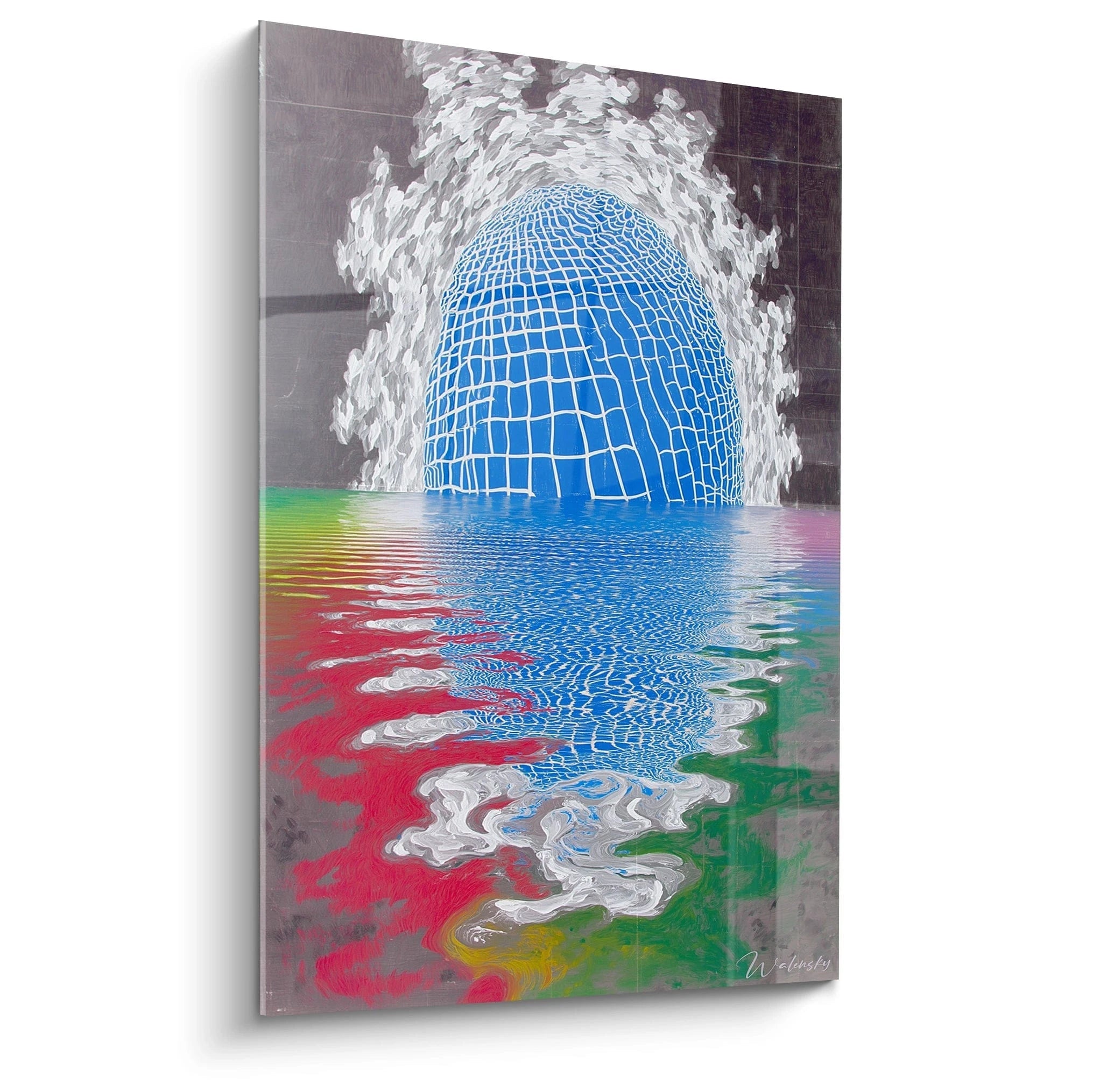
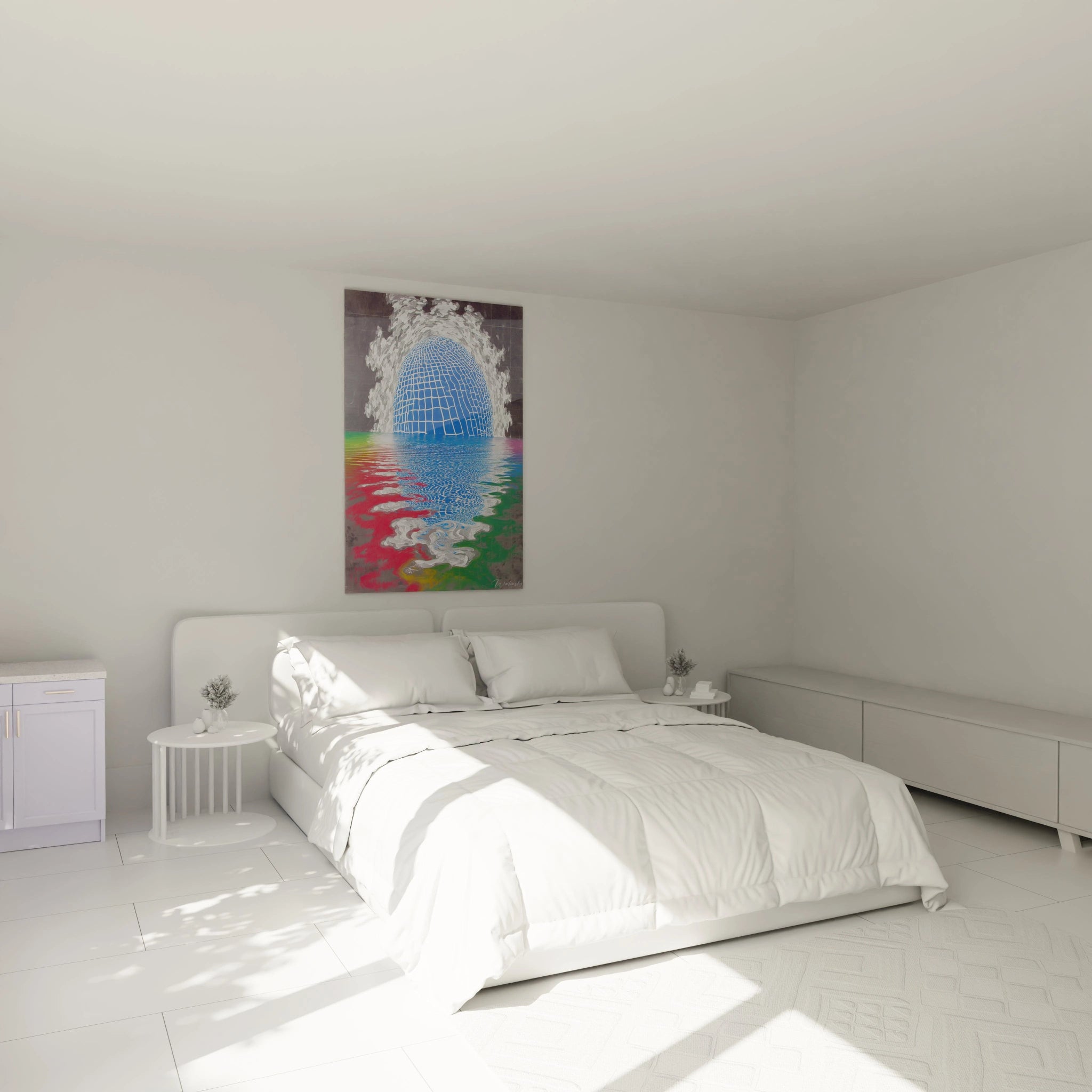
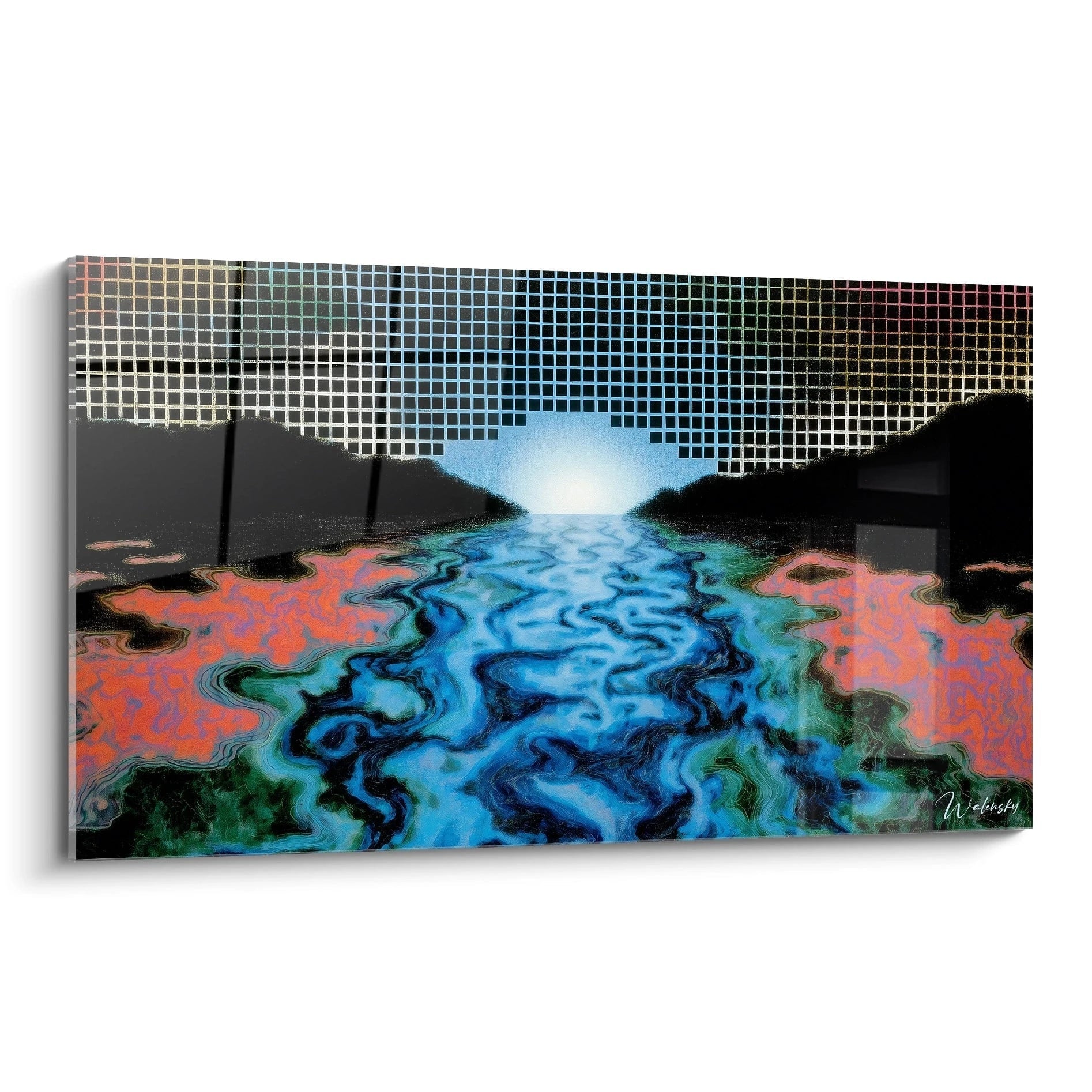
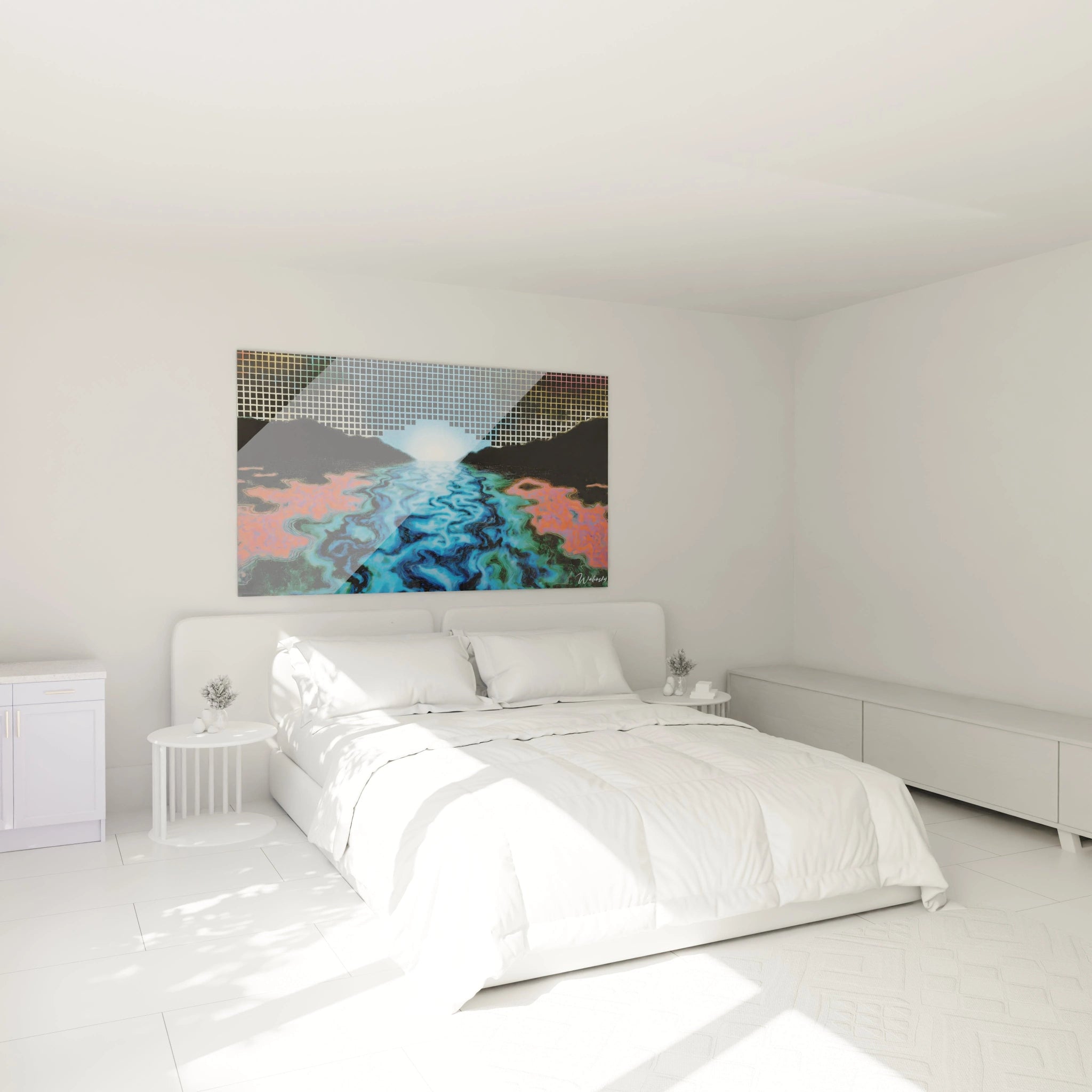
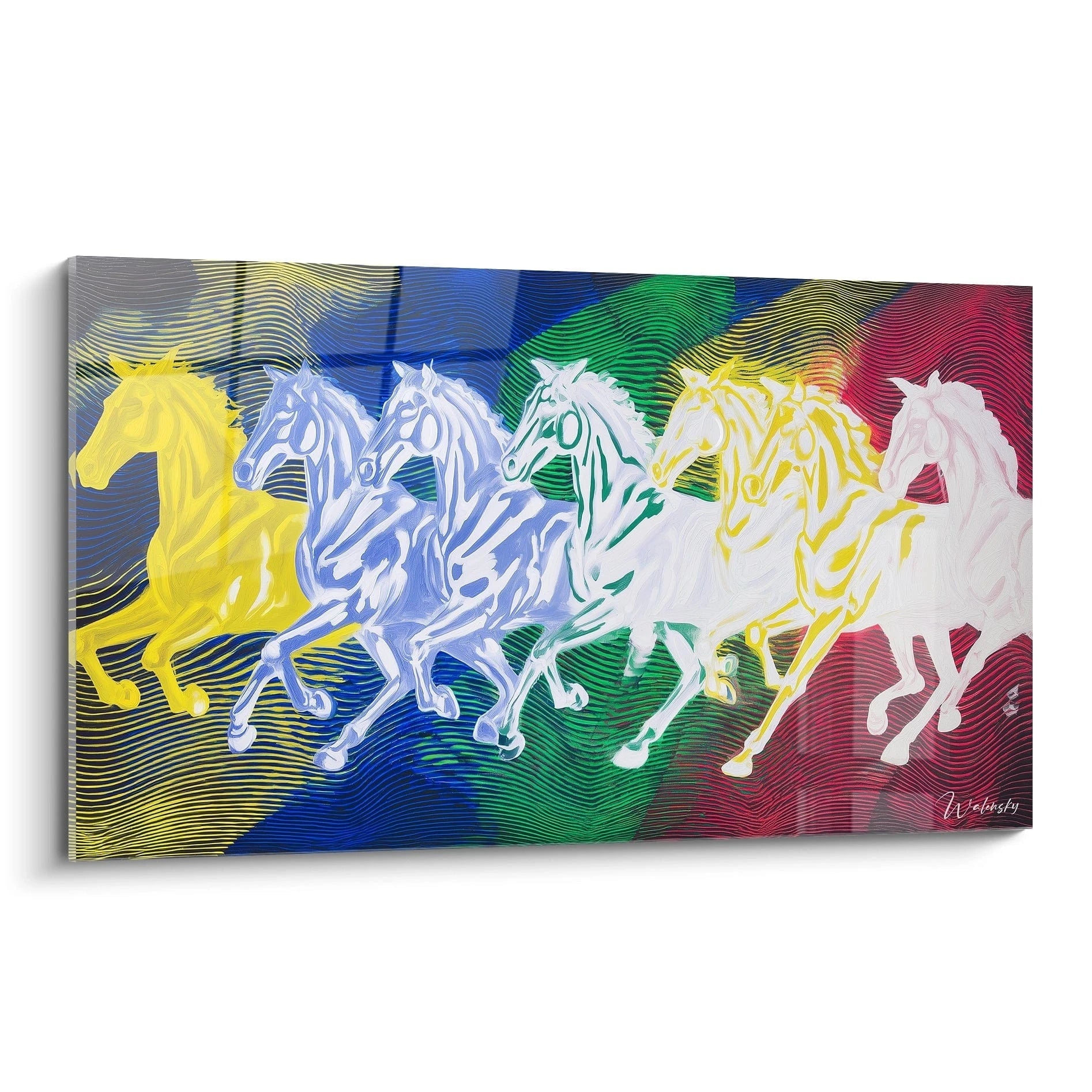
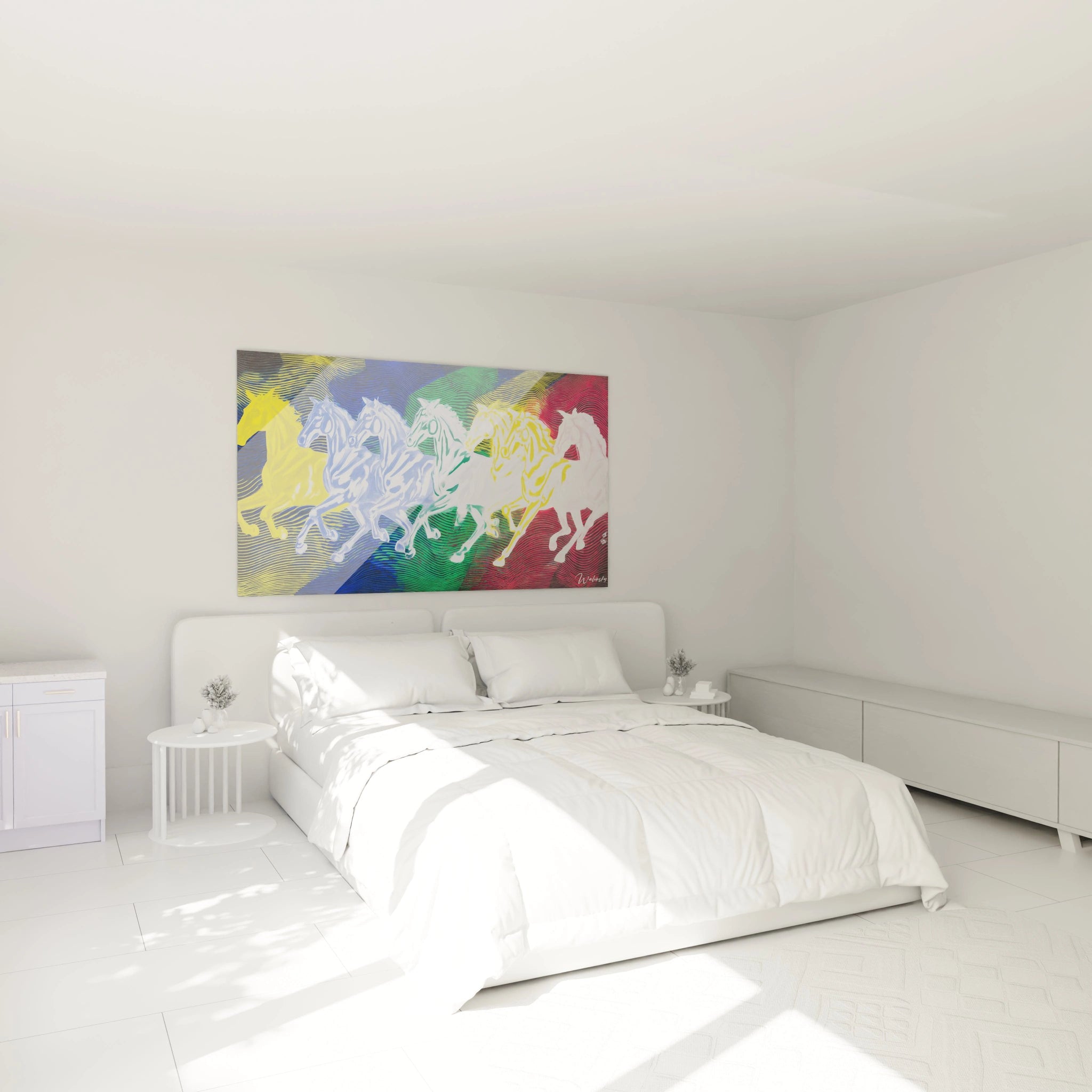
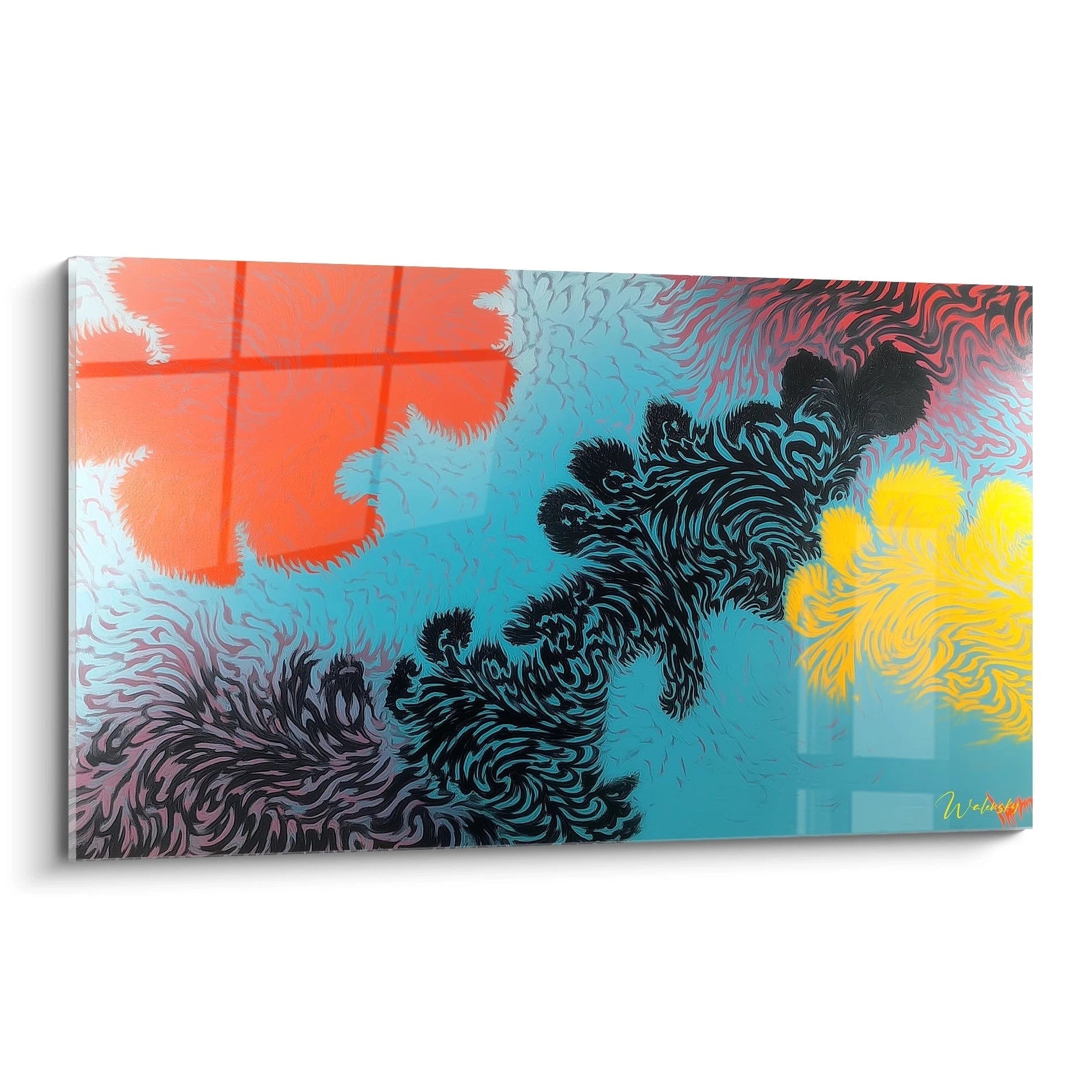
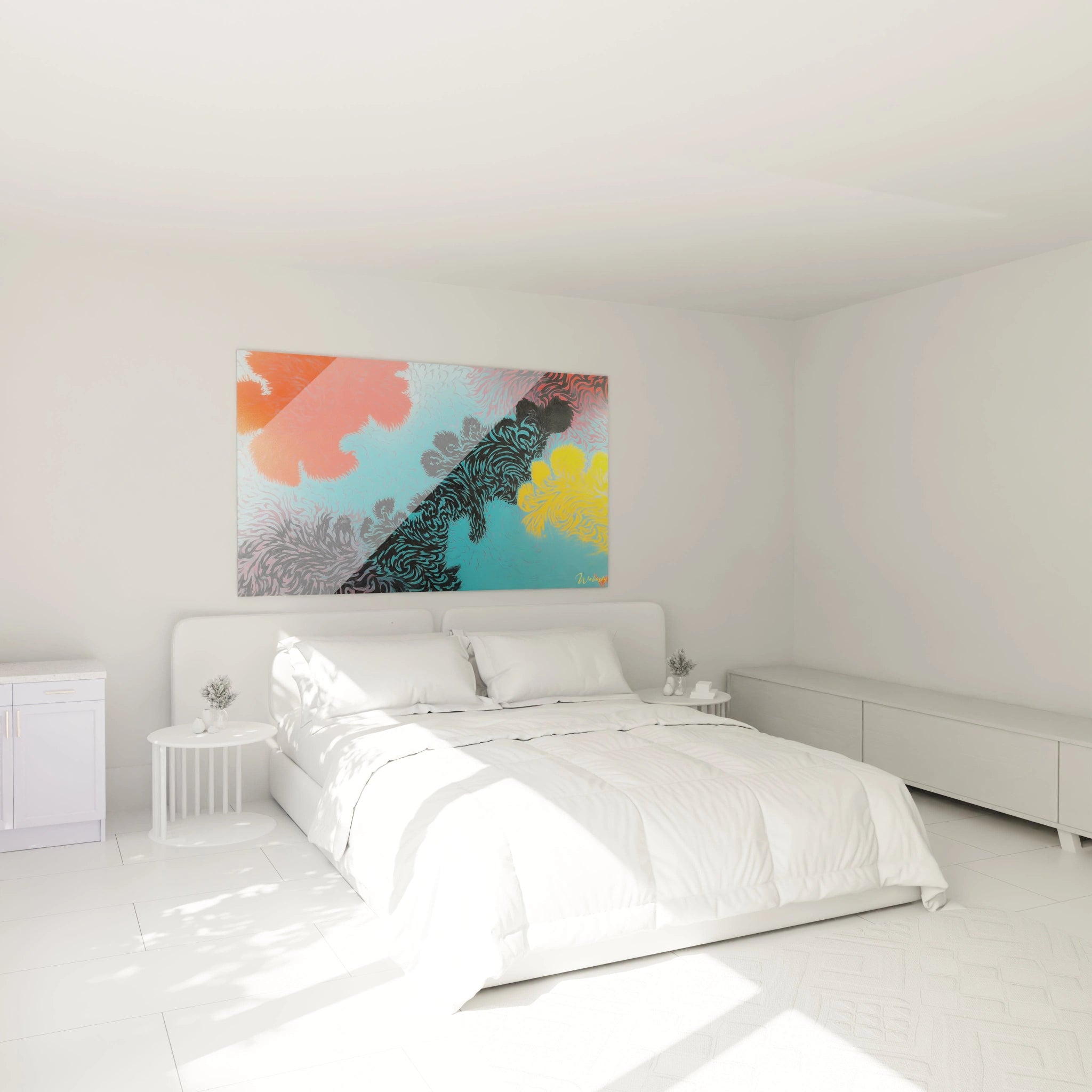
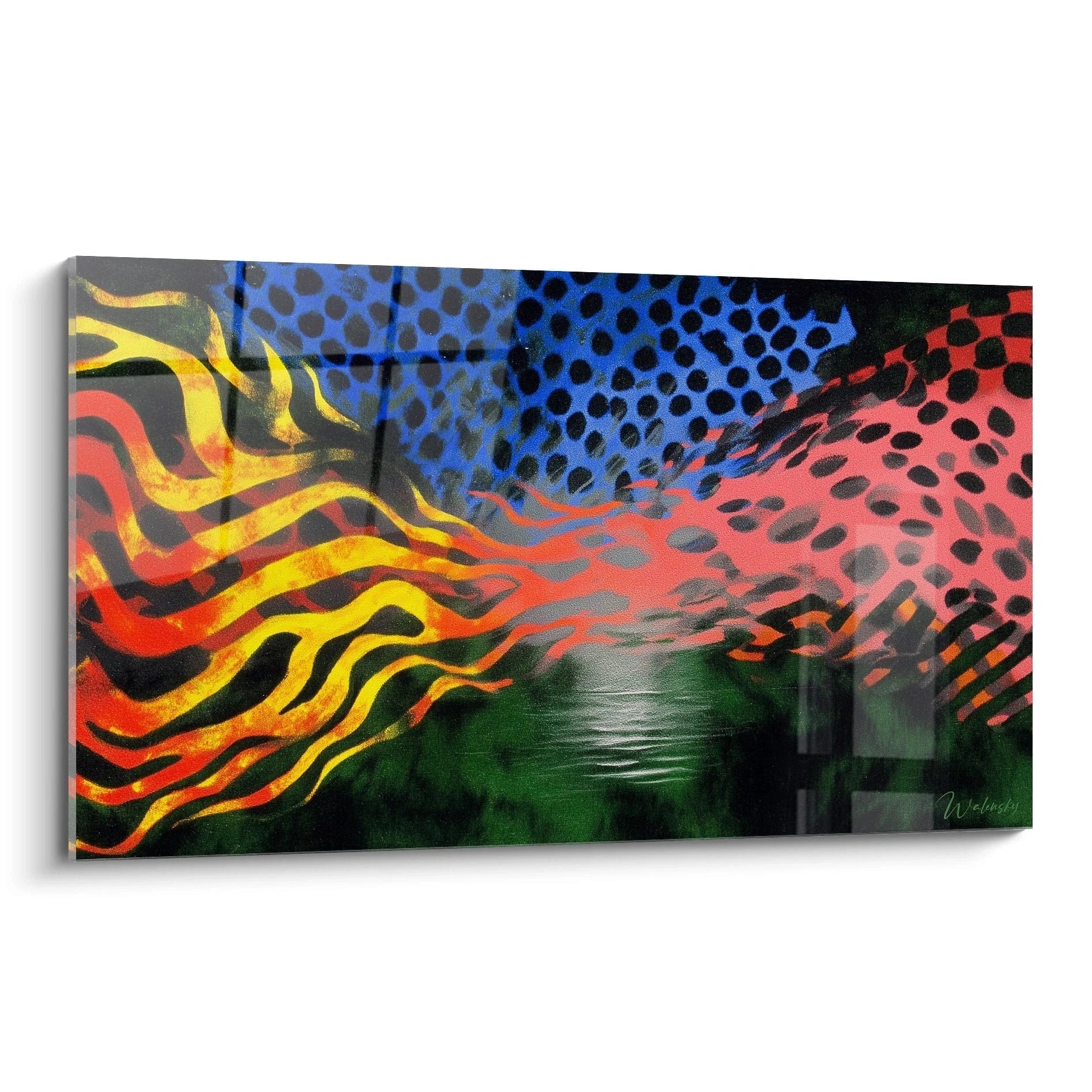
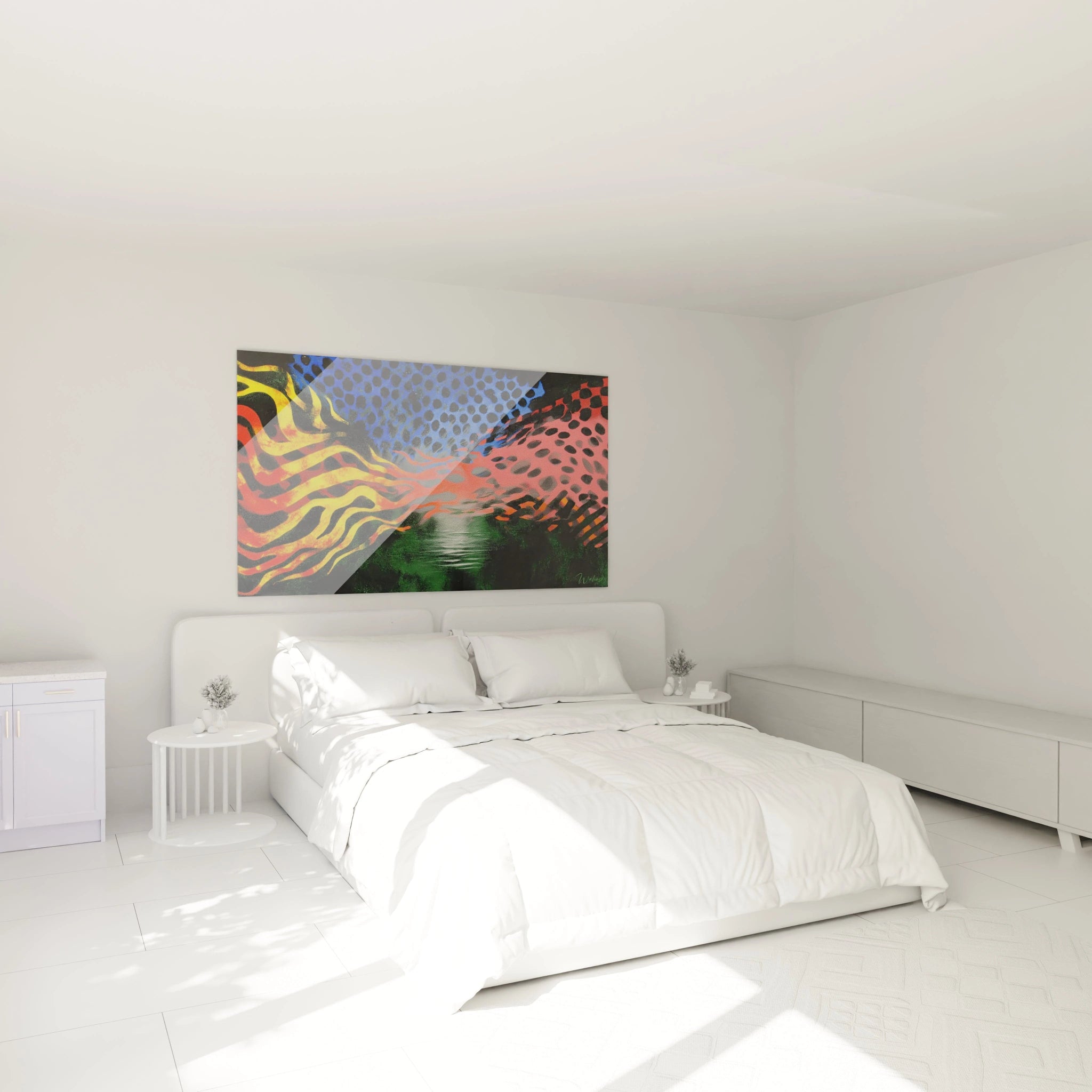
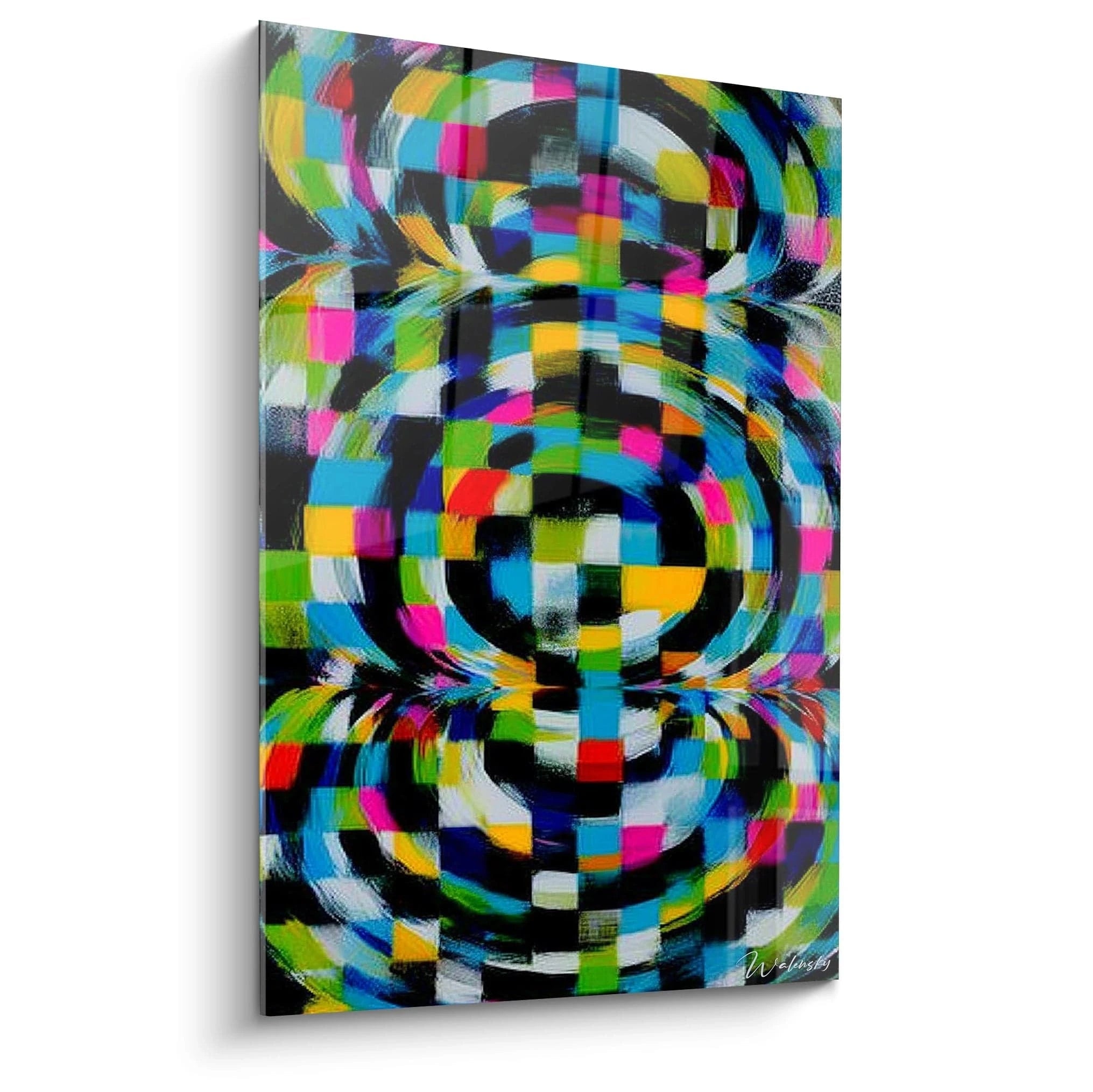
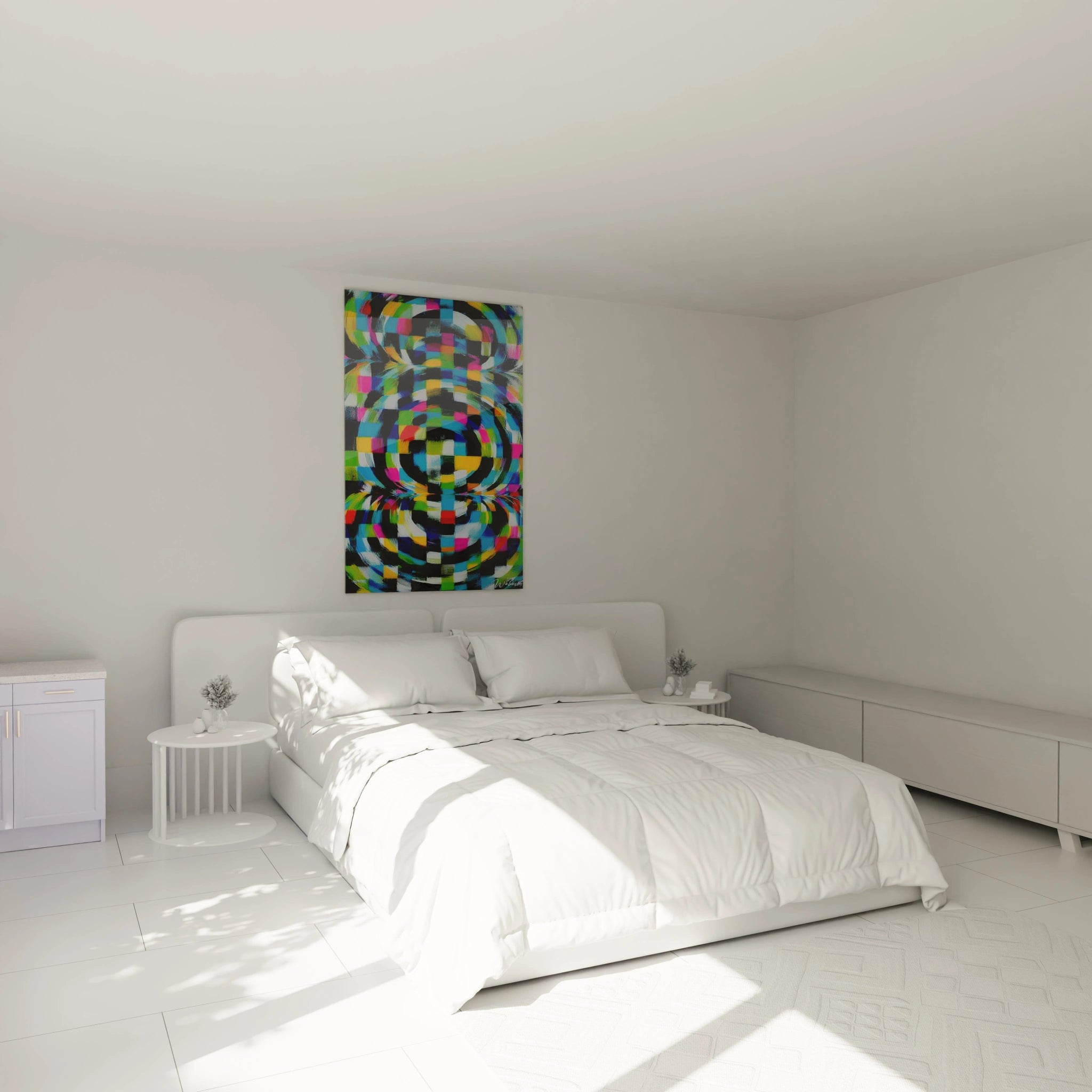
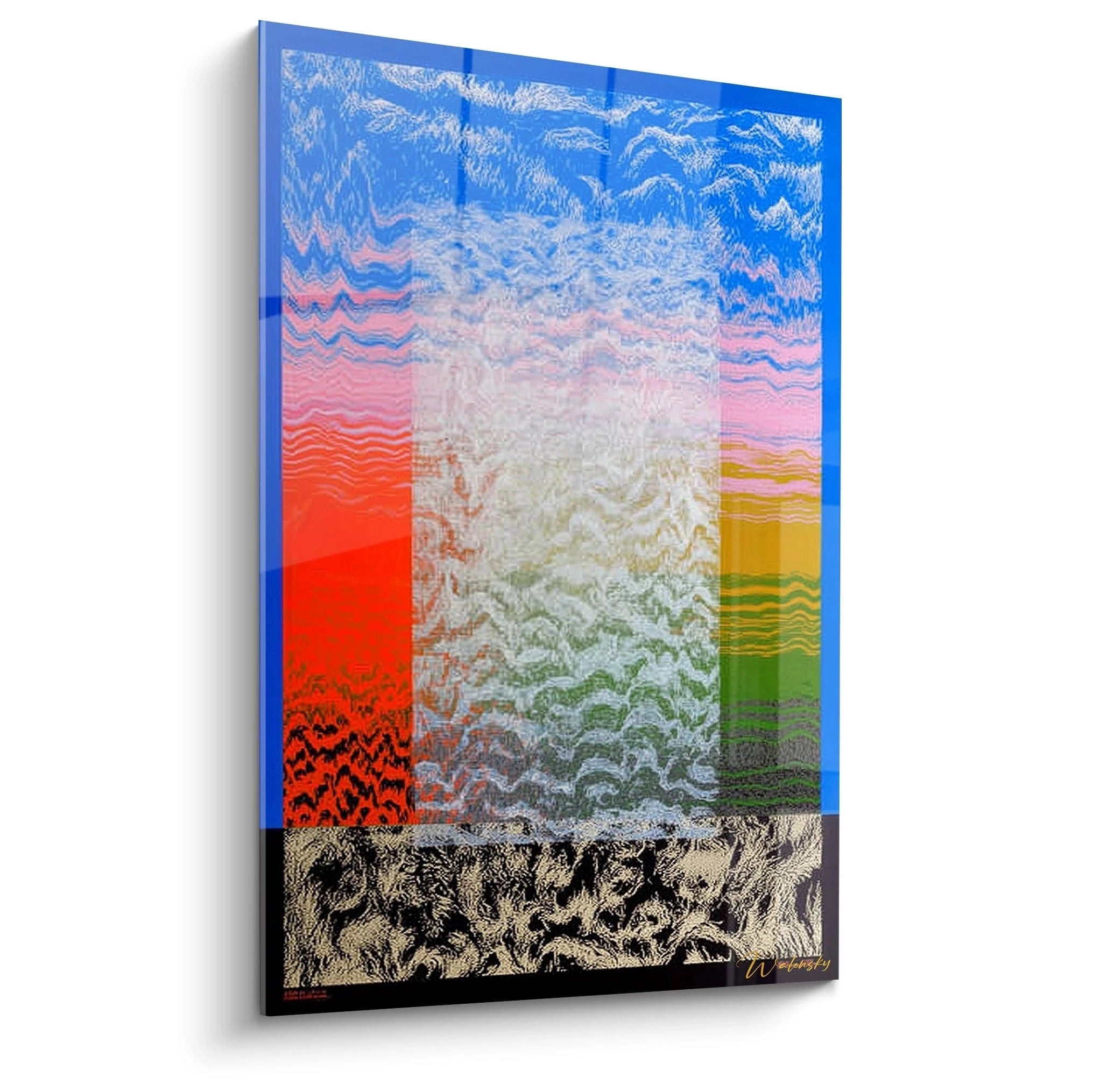
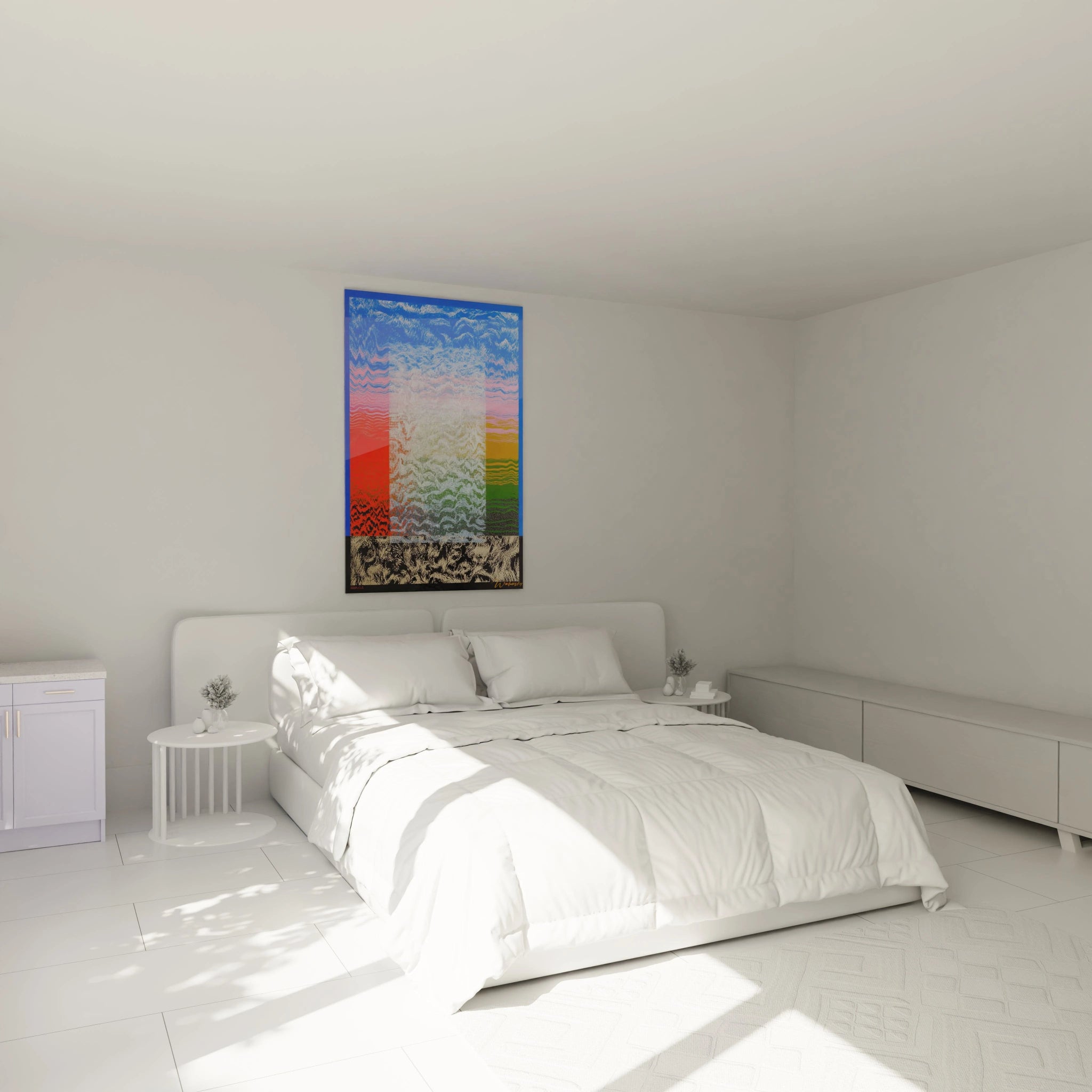
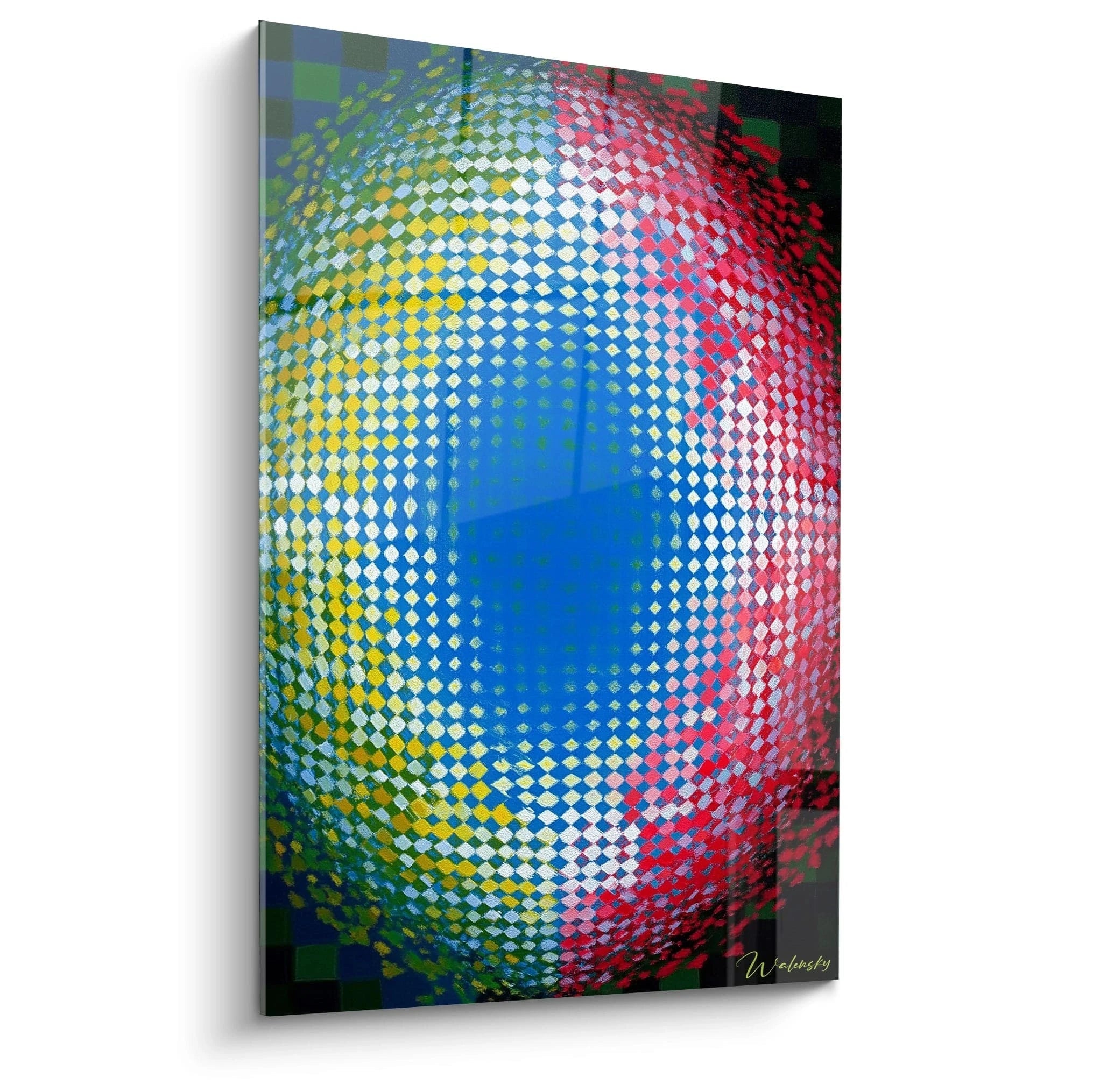
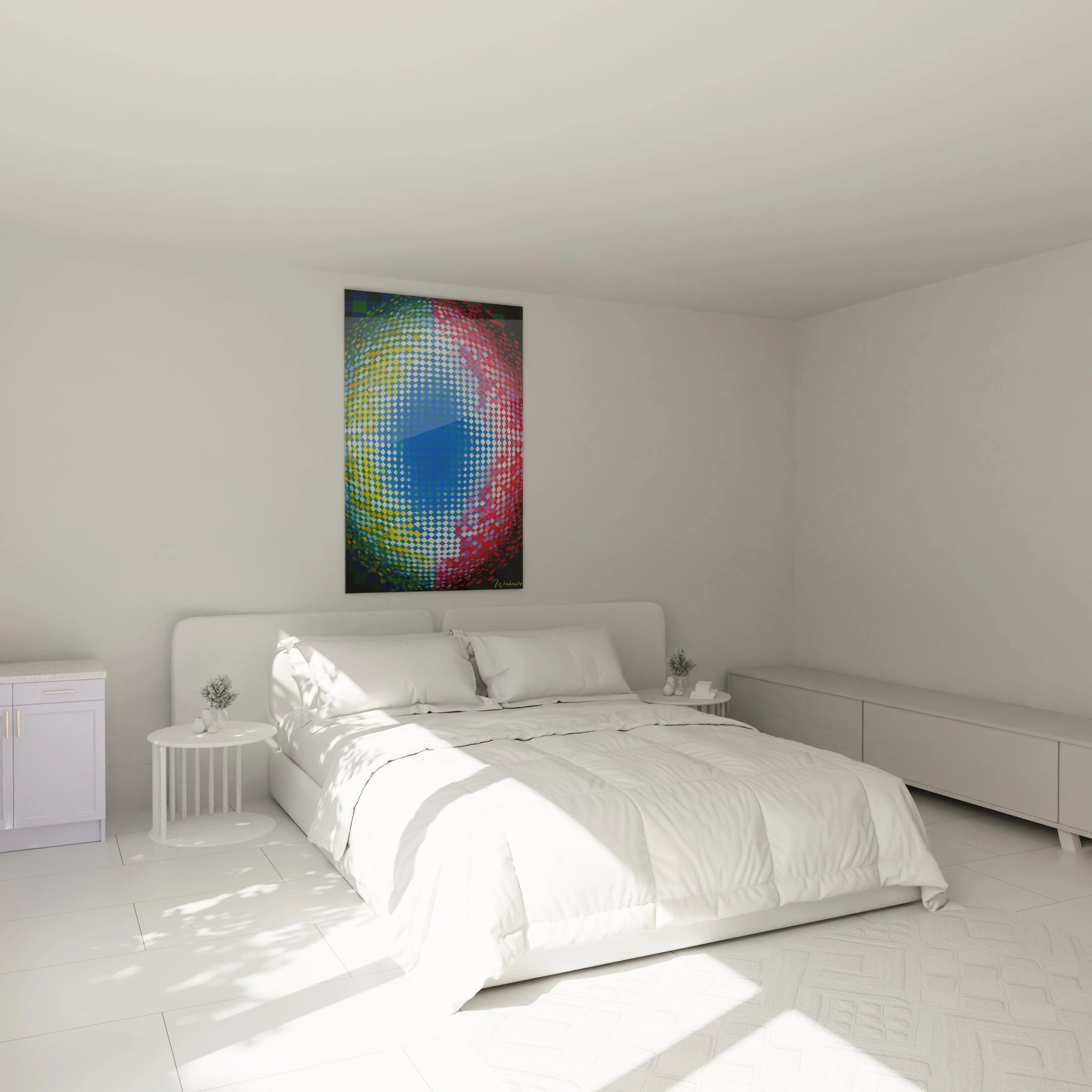
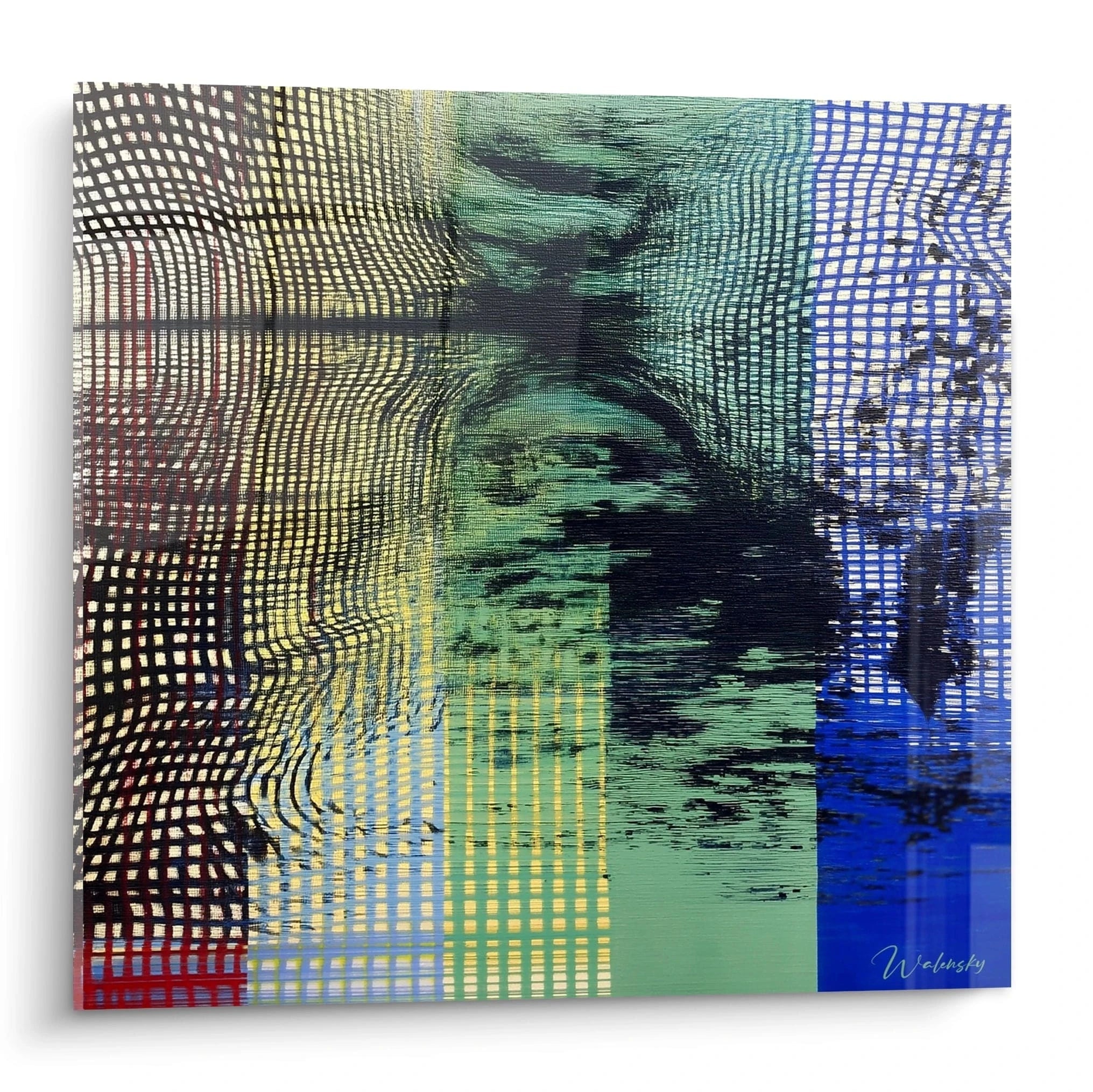
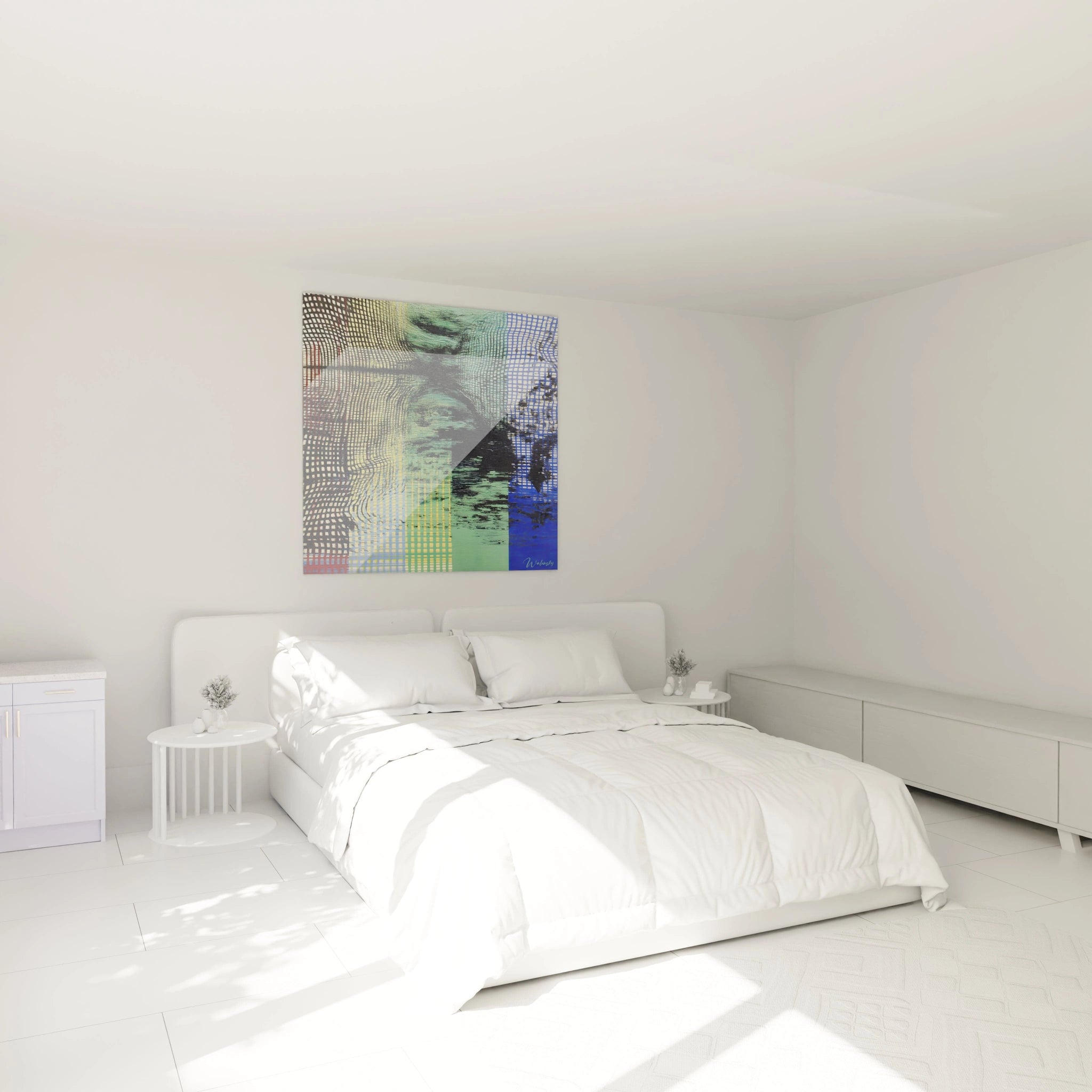
The Op Art painting represents the very essence of optical art, creating fascinating visual illusions that instantly transform the atmosphere of your interior. These wall artworks exploit perception games to generate movement and depth effects that immediately capture attention.
The Revolutionary Visual Impact of Op Art Paintings
Op Art paintings completely redefine the decorative experience through their unique optical properties. These creations exploit the neurophysiological principles of vision to generate illusions of perpetual movement that transform your walls into dynamic, living surfaces.
The natural stroboscopic effect produced by these artworks creates constant visual stimulation, particularly sought after in contemporary spaces where decorative impact must be immediate and memorable. Alternating geometric patterns generate optical vibrations that give the impression of a constantly moving painting, even when observed from different angles.
What are the unique perceptual effects of Op Art paintings?
Retinal persistence phenomena created by these artworks generate extraordinary visual sensations. Extreme chromatic contrasts activate different areas of the retina sequentially, producing perceptual oscillations that fascinate the observer. This particular neurological stimulation explains why these creations generate such powerful visual attraction.
The rhythmic alternation of geometric patterns induces three-dimensional depth effects on two-dimensional surfaces. This illusion of relief without physical matter constitutes the very essence of visual kinetic art, creating aesthetic experiences impossible to reproduce with other artistic forms.
How do Op Art paintings transform spatial perception?
Installing an Op Art painting radically modifies the perceived geometry of your space. The illusions of expansion and contraction generated by these artworks psychologically alter the apparent dimensions of rooms. A concentric pattern can create the illusion of infinite depth, while parallel linear patterns generate vanishing perspective effects.
• Optical spirals create visual vortices that seem to draw the gaze inward
• Vibrant grids generate continuous spatial undulations
• Concentric circles produce rhythmic pulsation effects
• Alternating stripes create hypnotic oscillatory movements
These perceptual transformations make each
Op Art painting a true generator of renewed visual experiences. The human eye, constantly stimulated by these optical phenomena, discovers new details and sensations with each observation, guaranteeing permanent decorative interest.
The visual neuroplasticity activated by these creations stimulates cognitive functions, creating an intellectually enriching environment. This unique neuroscientific dimension positions Op Art as both an aesthetic and functional decorative choice for modern living spaces.