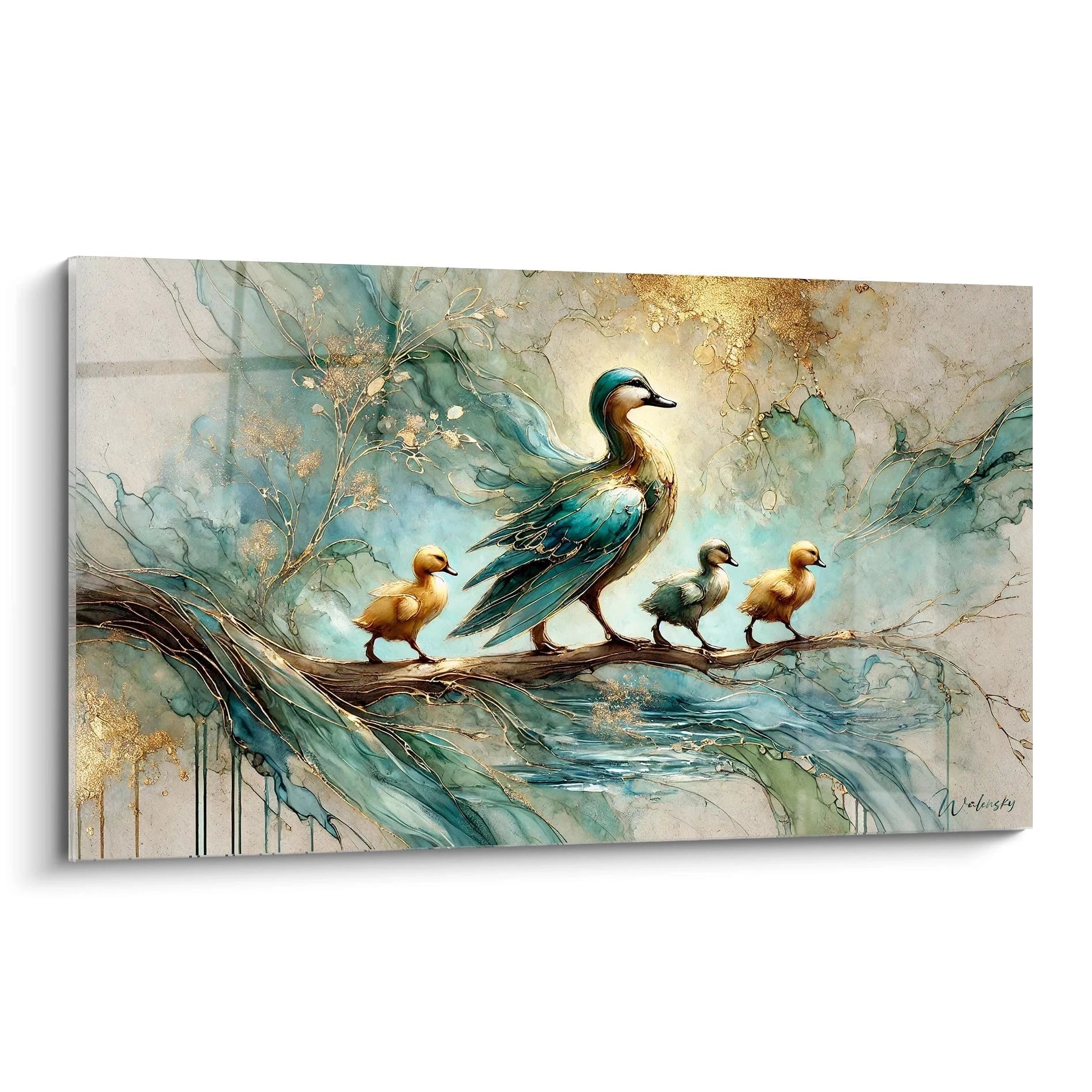
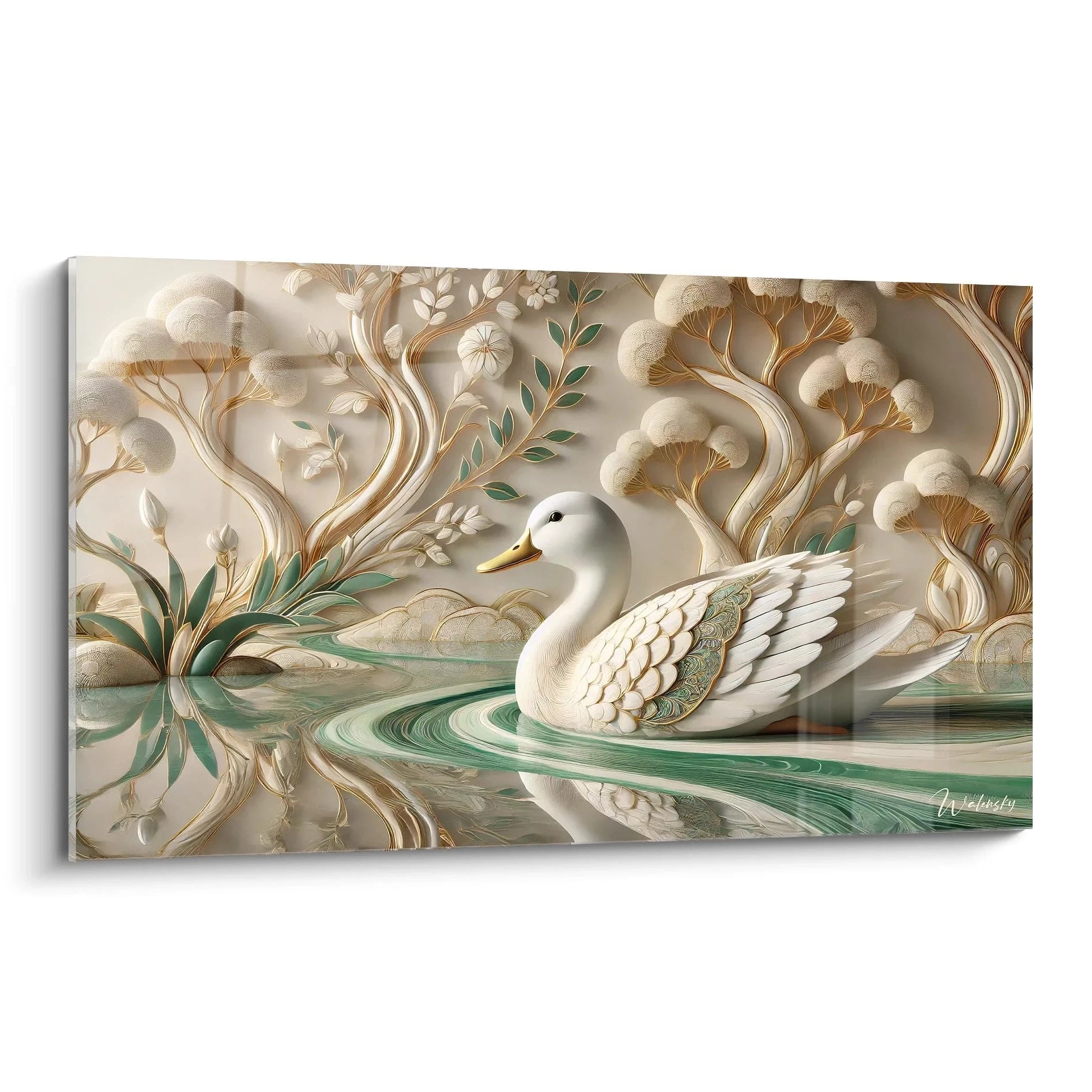
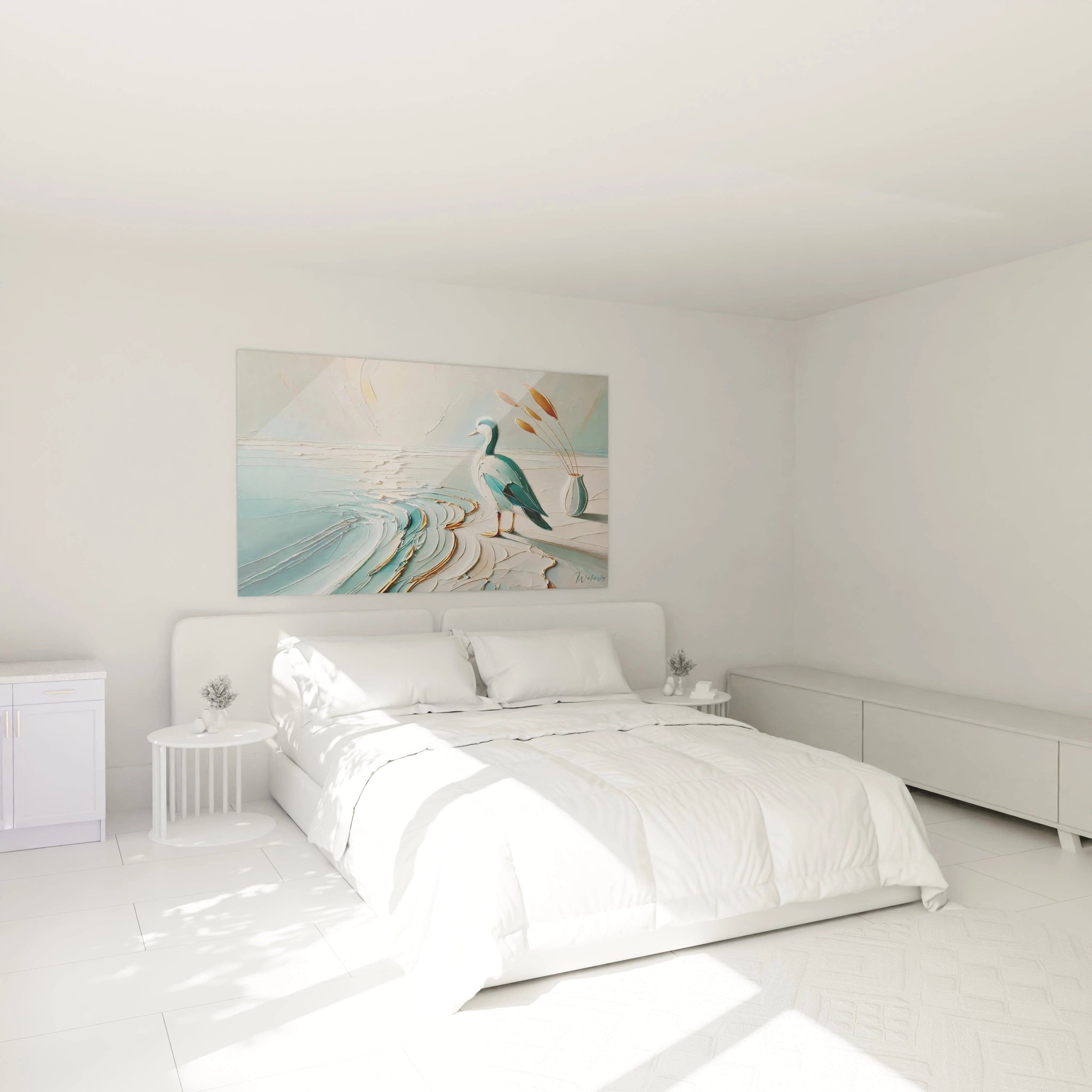
- Duck Paintings Presentation
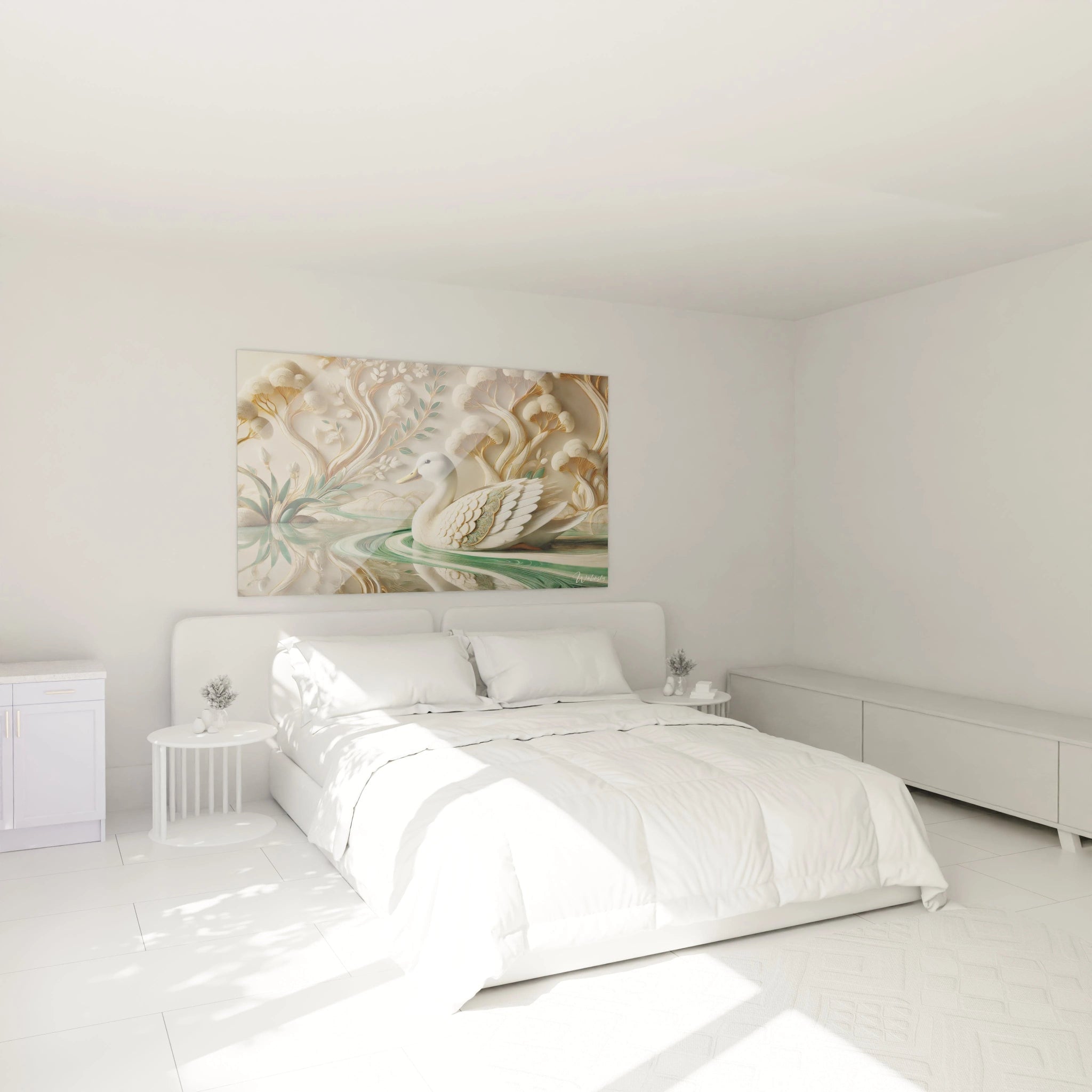
- Duck Paintings Large Format Décor
- Duck Paintings Natural Atmosphere
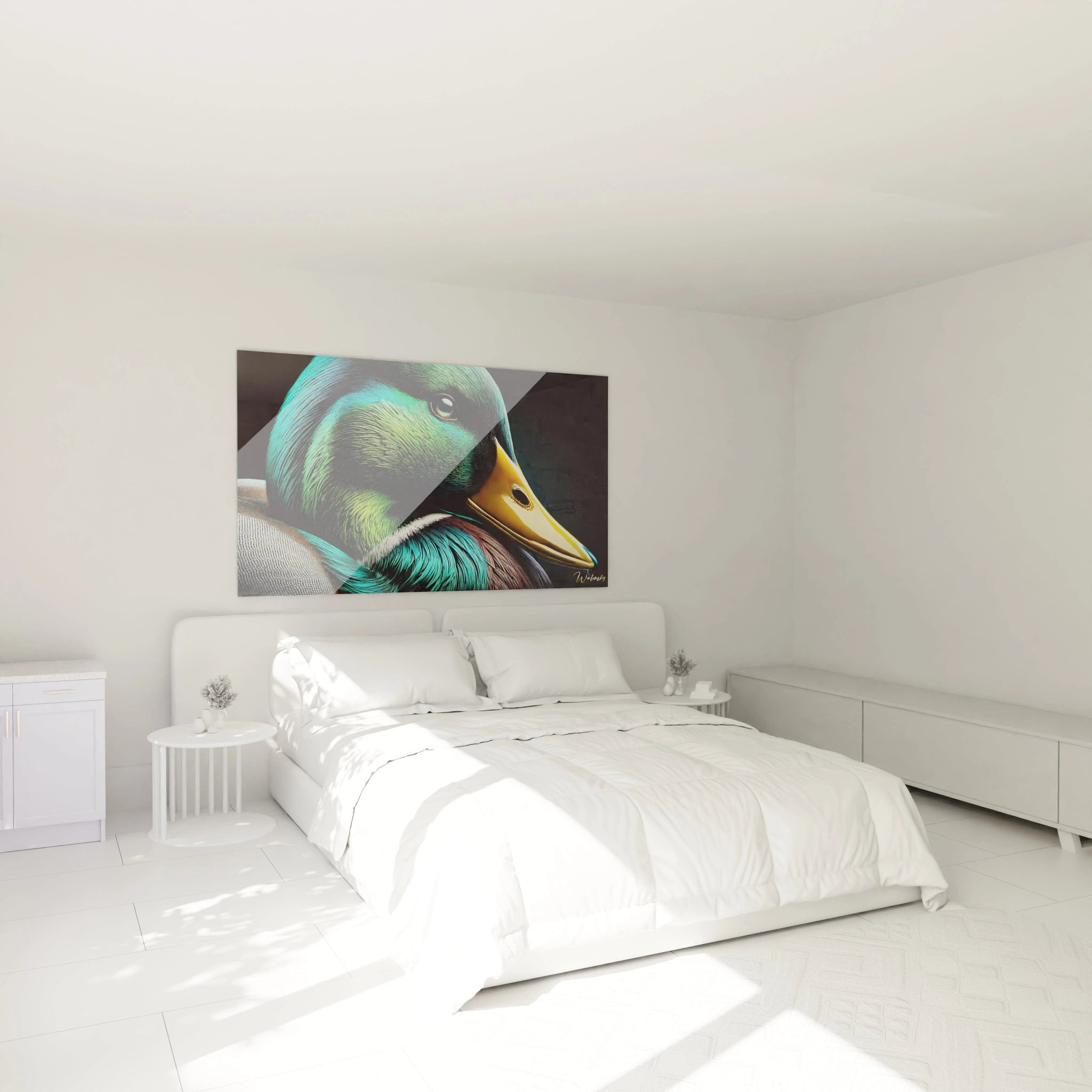
- Duck Paintings Architectural Integration
Discover our exclusive collection of duck paintings that will instantly transform your living space into a natural sanctuary. These magnificent works of art showcase these elegant aquatic birds in striking compositions, perfect for nature lovers and wildlife enthusiasts. Each duck painting is designed to bring a touch of serenity and connection with nature to your interior, while serving as a distinctive decorative element. Whether you're seeking realistic representations of ducks in flight, peaceful scenes of ducks swimming on a misty pond, or more modern artistic interpretations, our selection will captivate you. Ideal for large spaces and designed to create maximum visual impact, our animal paintings featuring ducks are a perfect choice for residences near lakes, country homes, or any interior wishing to celebrate the beauty of wildlife.
The Visual Impact of Duck Paintings in Contemporary Spaces
Large-format duck paintings represent far more than simple wall decoration – they constitute a true decorative statement capable of radically transforming a room's ambiance. In current interior design trends, these imposing duck paintings perfectly align with the pursuit of renewed connection with nature.
Why choose large-format duck paintings for your space?
A large-format duck painting instantly creates a focal point in your interior. Unlike representations of other animals, duck paintings offer unique symbolism of transition and adaptation – these birds moving with ease between three environments: air, water, and land. This natural versatility of ducks makes them particularly appropriate subjects for transition spaces in your home, such as spacious entryways or bright staircase landings.
Large-format duck paintings distinguish themselves through their ability to capture dynamic moments - whether a majestic flight of wild ducks over a misty pond or a peaceful scene of mallards gliding across water at dusk. This kinetic dimension inherent to duck paintings brings a sense of movement and life to spaces that might otherwise appear static.
Duck paintings: what influence on spatial perception?
A remarkable element of duck paintings is their effect on our spatial perception. Scenes depicting ducks in flight over water expanses create an illusion of depth that can visually enlarge a room. This characteristic makes large-format wild duck paintings a particularly wise choice for limited spaces that would benefit from a visual enlargement effect.
In minimalist modern interiors, a colorful duck painting can serve as the sole chromatic accent element, bringing life and dynamism to an otherwise monochrome environment. The natural hues present in decorative mandarin duck paintings – with their iridescent plumages reflecting blue-green, orange, and burgundy tones – can inspire an entire decorative palette for the rest of your room.
Integration of duck paintings in different interior styles
Duck paintings demonstrate remarkable adaptability across different decorative styles. In a rustic or country interior, a decorative mallard duck painting integrates naturally, reinforcing rural aesthetics and the connection with the outdoor environment. Realistic representations of ducks in their natural habitat perfectly complement raw materials like wood and stone.
For contemporary spaces, opt instead for a minimalist black and white duck painting that will bring a touch of sophistication while maintaining the symbolic link with nature. These more abstract or graphic interpretations of ducks harmonize perfectly with the clean lines and smooth surfaces of a modern interior.
In Scandinavian-style interiors, favor duck paintings in migration depicting winter or autumn scenes, with soft colors and misty atmospheres. These works complement the cozy and serene atmosphere characteristic of this decorative style while adding an additional natural dimension.
The unique psychological impact of duck paintings
Duck paintings exert a particular psychological effect on viewers. Environmental psychology studies demonstrate that representations of animals evolving in calm aquatic environments, like ducks, produce a significant soothing effect. This phenomenon explains why large duck paintings for living rooms are particularly recommended in spaces dedicated to relaxation and decompression.
The presence of an elegant design duck painting in a professional space can also help reduce perceived stress and improve concentration, thanks to unconscious associations with the calm and fluidity that these birds evoke. This wellness dimension, unique to representations of ducks and other aquatic birds, distinguishes these paintings from other animal representations.
The Evocative Power of Duck Paintings for a Natural Ambiance
Duck paintings possess the exceptional ability to instantly transport a fragment of wild nature to the heart of our interiors. These distinctive artworks capture the very essence of wetlands and aquatic ecosystems, creating a unique emotional connection with the natural world that few other animal representations can equal.
How do duck paintings transform a room's atmosphere?
A duck painting for a rustic dining room does far more than simply decorate a wall - it becomes an open window onto a preserved wild world. The visual presence of these aquatic birds, frozen in a moment of natural grace, instantly introduces notions of fluidity and tranquility into the space. Large-format wild duck paintings, in particular, create a visual immersion that profoundly alters our perception of the interior environment.
Unlike other wall décor, duck paintings evoke multiple sensory dimensions simultaneously. Beyond the immediate visual impact, they subtly suggest the soothing sounds of water, the gentle movement of reeds, and even the characteristic freshness of aquatic environments. This visual synesthesia constitutes the unique signature of duck paintings in the decorative universe.
The distinctive color palette of duck paintings
Duck paintings are characterized by a specific natural color range that distinguishes them from other animal representations. These works showcase subtle harmonies of aquatic blues, reed greens, golden ochres of plumage, and silvery grays of water surfaces. This particular palette, inherent to large-format colored duck paintings, possesses scientifically recognized calming properties that directly influence our emotional state.
The iridescent hues characteristic of duck plumage - particularly visible in decorative mandarin duck paintings - introduce touches of shifting colors that captivate the eye and create a dynamic effect even in a static representation. This subtle chromatic vibration clearly differentiates duck paintings from other animal paintings with often more uniform colors.
Duck paintings through the seasons
A fascinating aspect of duck paintings lies in their ability to represent seasonal metamorphoses of wetlands. A modern duck wall painting can capture the morning mist of an autumn pond, the crystalline luminosity of a winter lake, or the exuberance of a spring marsh. This temporal dimension greatly enriches the visual experience and allows duck paintings to evolve in our perception throughout the year.
Migration scenes represented in migrating duck paintings tell a story of cyclical movement and renewal that few other artistic subjects can embody with such force. This implicit visual narrative confers upon duck paintings a conceptual depth that transcends simple decorative aesthetics.
The effect of duck paintings on interior biophilia
The presence of an elegant design duck painting in a living space perfectly aligns with the concept of biophilia - our innate connection with the living world. Environmental psychology studies demonstrate that daily exposure to naturalistic representations like duck paintings significantly improves mental well-being, reduces stress, and increases creativity.
Large-format duck paintings act as "natural anchors" in our increasingly disconnected interiors from the wild world. They remind us of nature's fundamental rhythms and visually reconnect us with essential ecosystems often inaccessible in our urban daily lives. This "biophilic bridge" function perhaps constitutes the most valuable and distinctive value of duck paintings in our contemporary domestic environment.
The Strategic Art of Duck Painting Positioning in Interior Architecture
The architectural placement of a duck painting represents a subtle exercise that transcends simple aesthetic considerations. These distinctive artworks require thorough reflection regarding their spatial integration, particularly because of their aquatic theme and unique emotional impact on our perception of surrounding space.
Why does duck painting placement require particular attention?
Successful integration of a duck painting into your interior architecture depends on numerous factors specific to this theme. Duck paintings, through their representation of aquatic environments and moving birds, naturally establish visual guidelines that direct the gaze. A large living room duck painting strategically placed can thus create a flow of visual circulation that harmoniously accompanies the physical journey through the space.
Unlike other painting types, duck representations often introduce atmospheric perspectives - morning mists over the pond, water reflections, marsh depth - that can literally "open" a wall and create a sensation of spatial extension. This characteristic makes duck paintings valuable architectural tools for modifying our perception of a room's physical boundaries.
Optimal duck painting orientation according to architecture
The orientation of a duck painting in relation to natural light sources deserves particular attention. Large-format colored duck paintings generally benefit from lateral lighting that reveals the subtleties of water textures and plumages. However, minimalist black and white duck paintings can be positioned facing the light to accentuate graphic contrasts and the distinctive silhouettes of these birds.
The hanging height of duck paintings also differs from usual standards. Because of their specific subject - aquatic birds generally observed from a slightly elevated viewpoint in nature - duck paintings produce their optimal effect when placed slightly lower than average. This unique configuration mimics our natural observation perspective of ducks in their habitat, reinforcing the authenticity of the visual experience.
Duck paintings as architectural transition elements
A decorative mallard duck painting can play a fundamental architectural role by serving as a transition element between different spaces or ambiances. Strategically placed between an activity zone and a rest area, it visually facilitates this transition, symbolically reflecting the amphibious nature of the duck that moves harmoniously between different environments.
In contemporary architectures characterized by their openness and fluidity, a modern duck wall painting contributes to subtly defining different functional zones without resorting to physical separations. This ability to "zone" space while maintaining visual coherence constitutes a valuable and unique architectural function to representations of aquatic birds like ducks.
Interaction between duck paintings and reflective surfaces
A particularly interesting architectural dialogue establishes itself when duck paintings are positioned in relation to reflective surfaces. An elegant design duck painting placed to partially reflect in a mirror or glass surface creates a sophisticated visual play that echoes the natural pattern of ducks and their reflections on water.
This architectural staging specific to duck paintings amplifies the inherent effect of movement and depth in these works, while subtly multiplying their visual presence in the space. The interaction between the represented image and its partial reflection generates a complex visual experience that few other artistic themes can offer with such conceptual coherence.
FAQ: All you need to know about duck paintings
What is the ideal size for a duck painting in a large living room?
For maximum impact in a large living room, opt for large-format duck paintings, ideally between 100x70cm and 150x100cm. These formats allow you to appreciate plumage details and the aquatic environment while creating significant visual presence that structures the space.
Are duck paintings suitable for professional spaces?
Absolutely, duck paintings are particularly appropriate for professional spaces seeking an atmosphere that is both soothing and inspiring. Their symbolism of fluid movement and adaptation resonates perfectly with the values of agility and harmony prized in contemporary professional environments.
How to maintain a duck painting displayed in a bright room?
Duck paintings placed in very bright rooms require certain specific precautions. Opt for positioning avoiding direct UV ray exposure, use non-glare and UV-protective glass if the work is framed, and consider seasonal rotation of placement to preserve the vividness of colors characteristic of aquatic scenes.