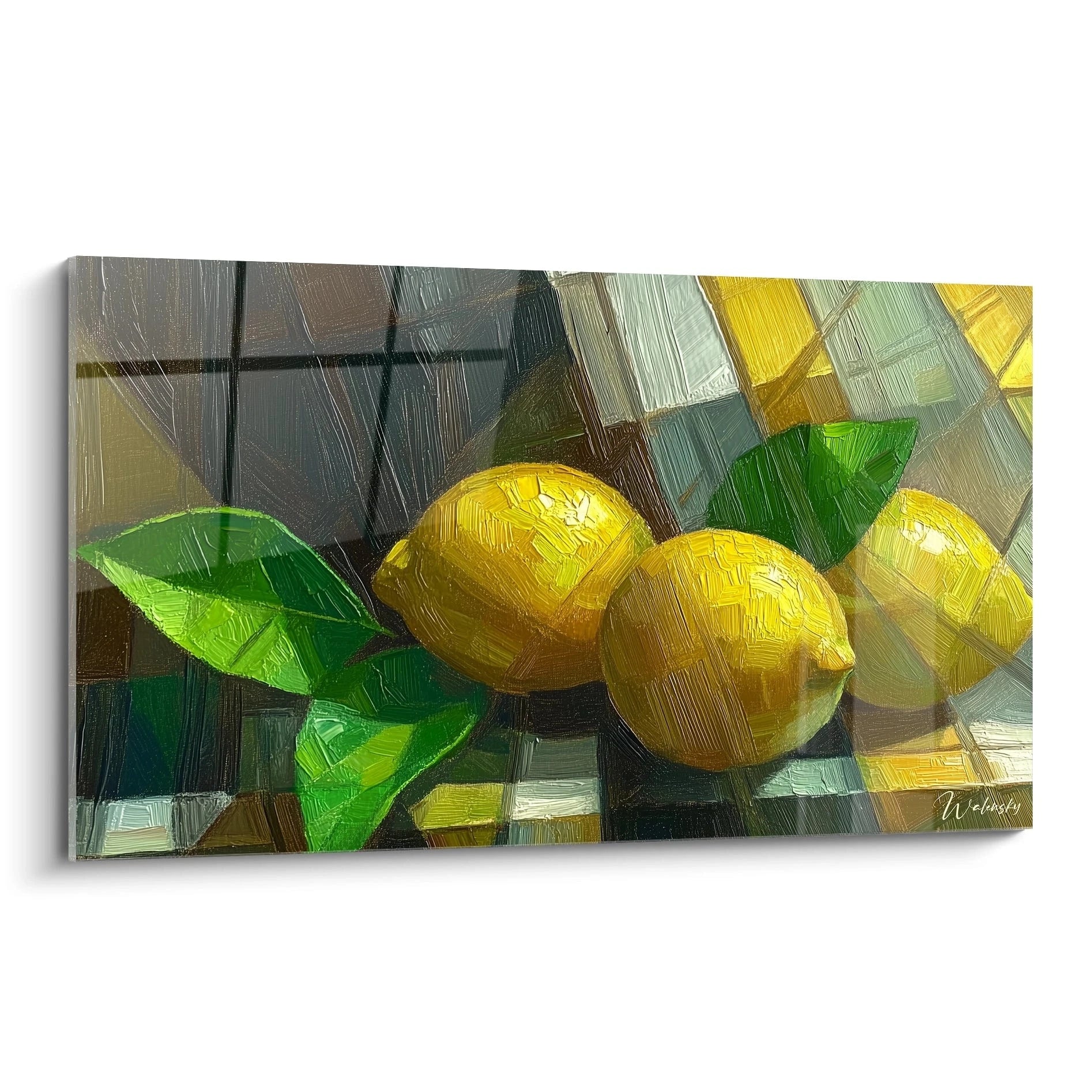
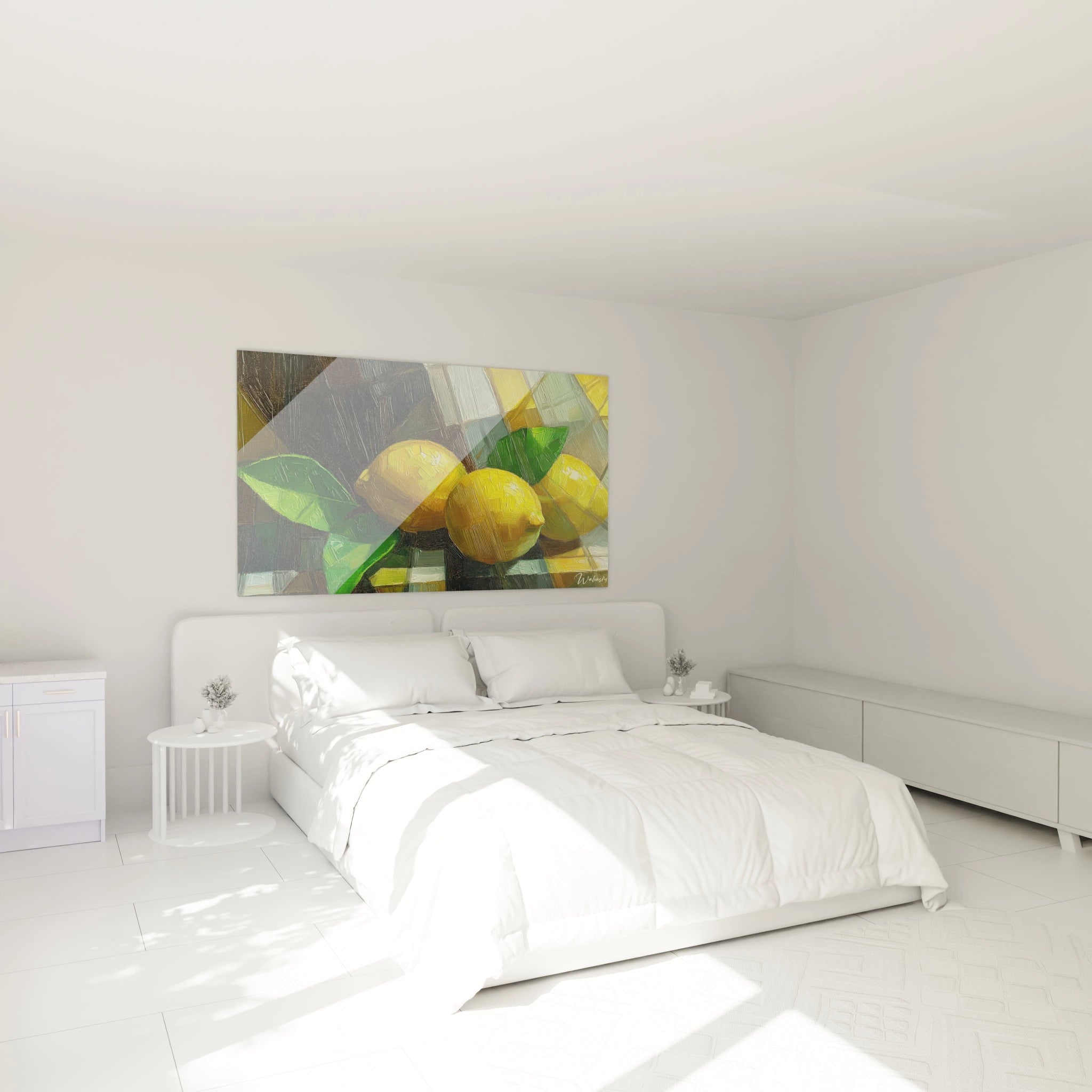
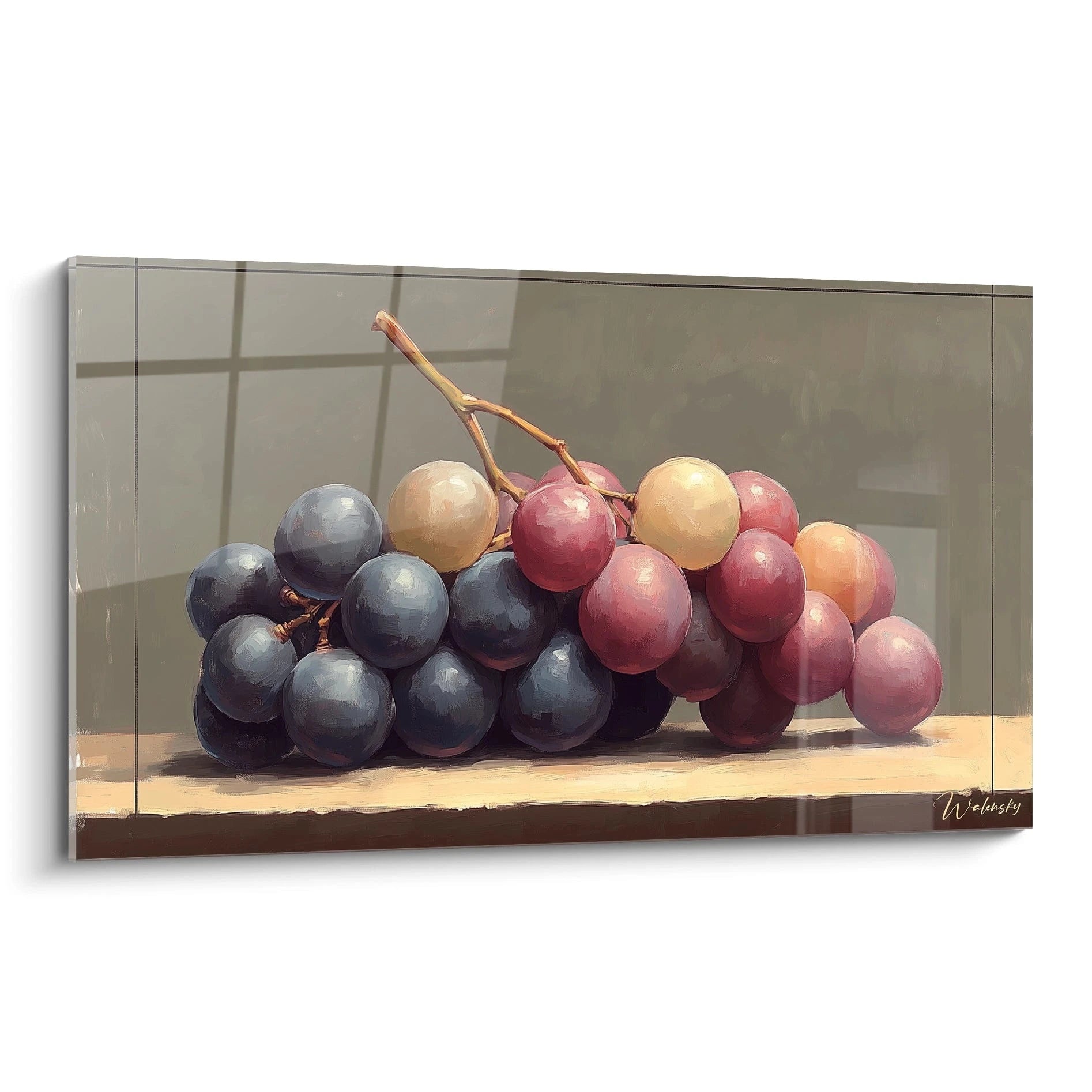
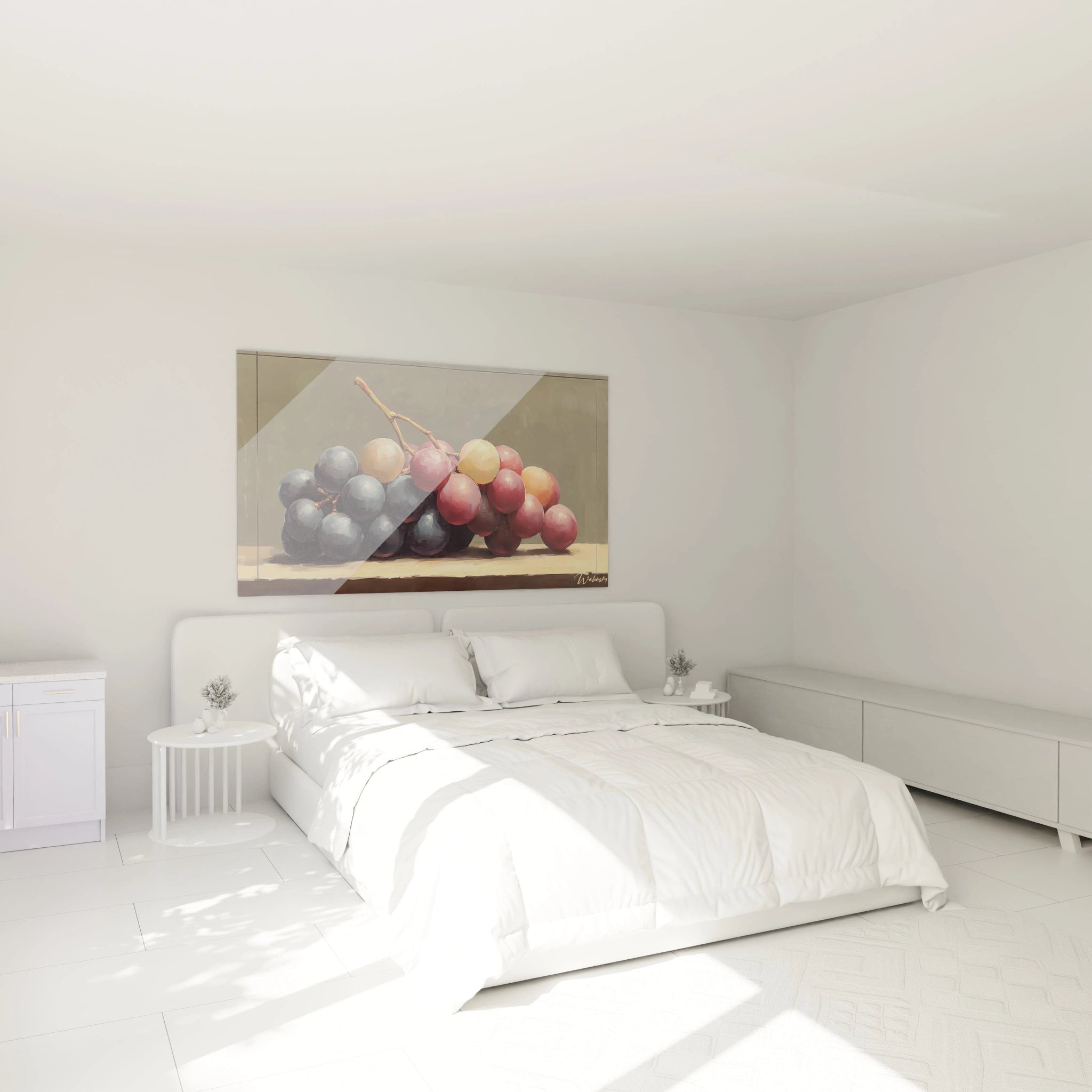
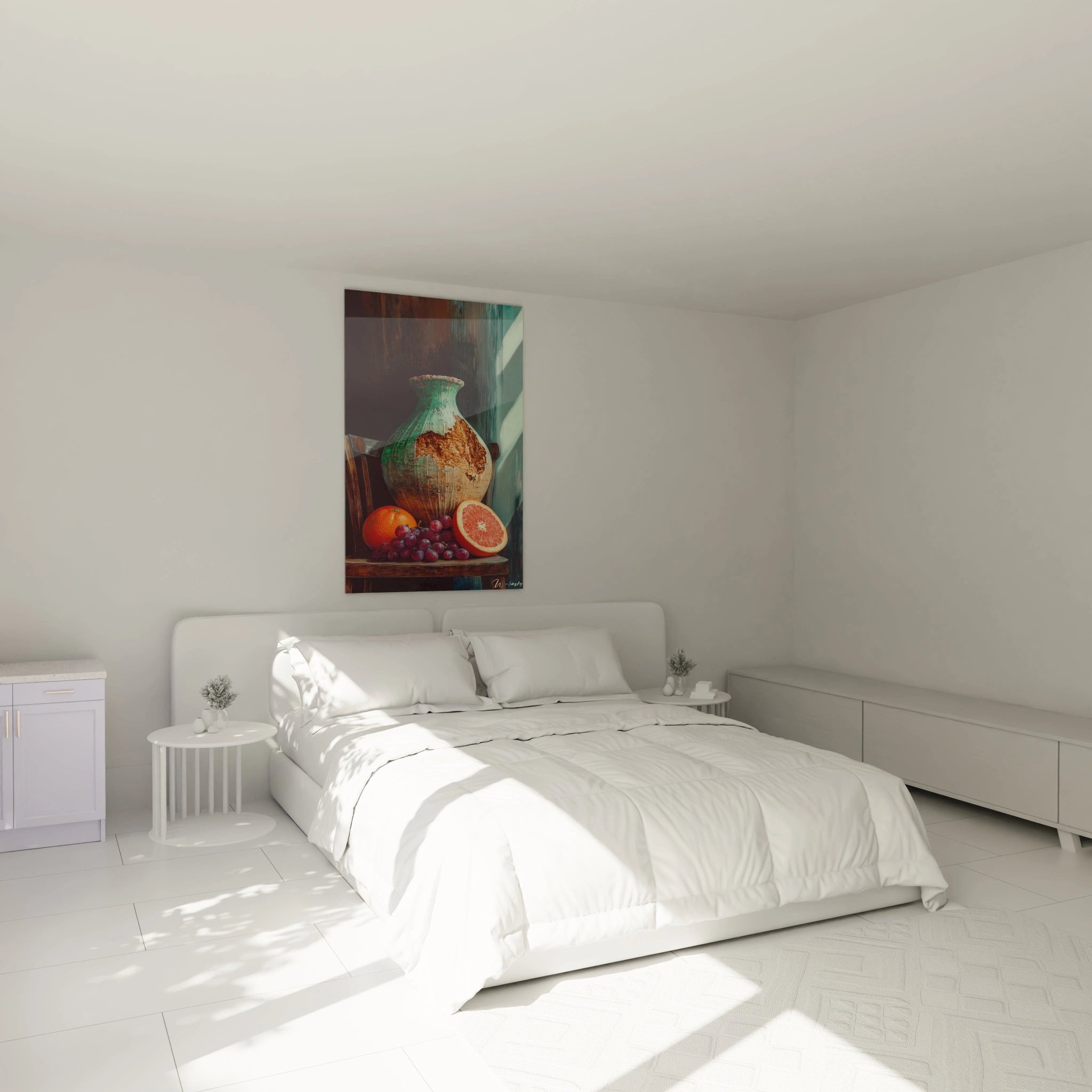
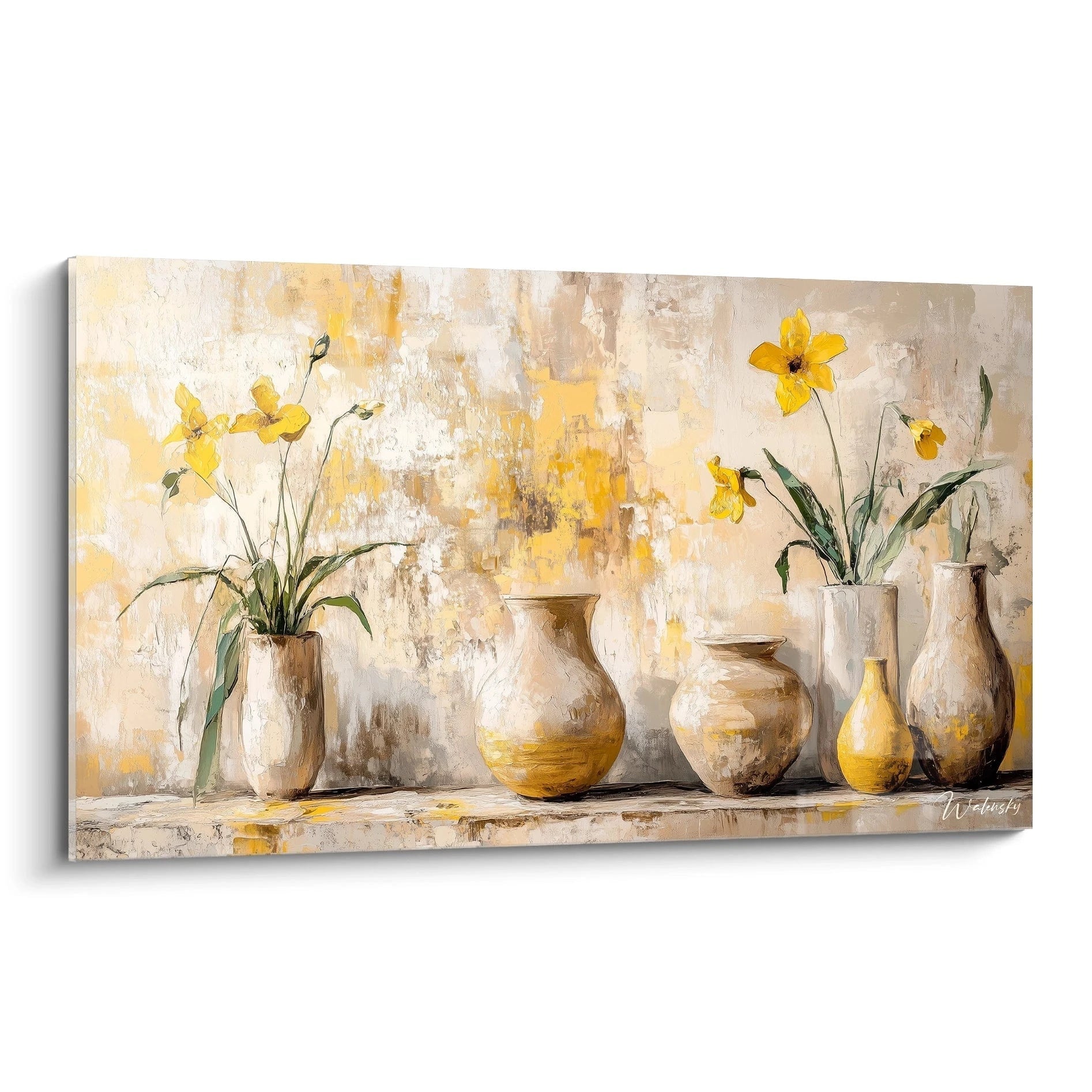
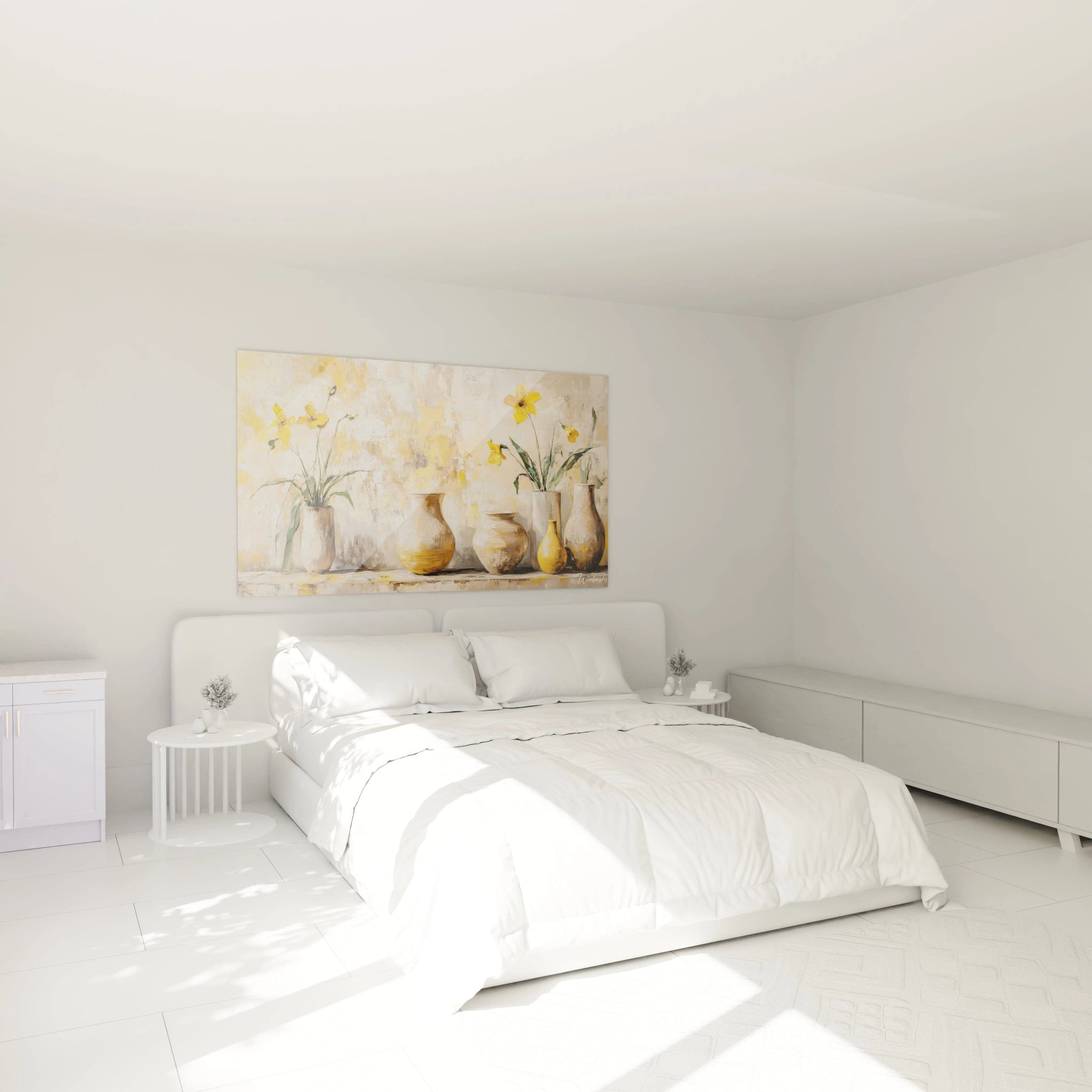
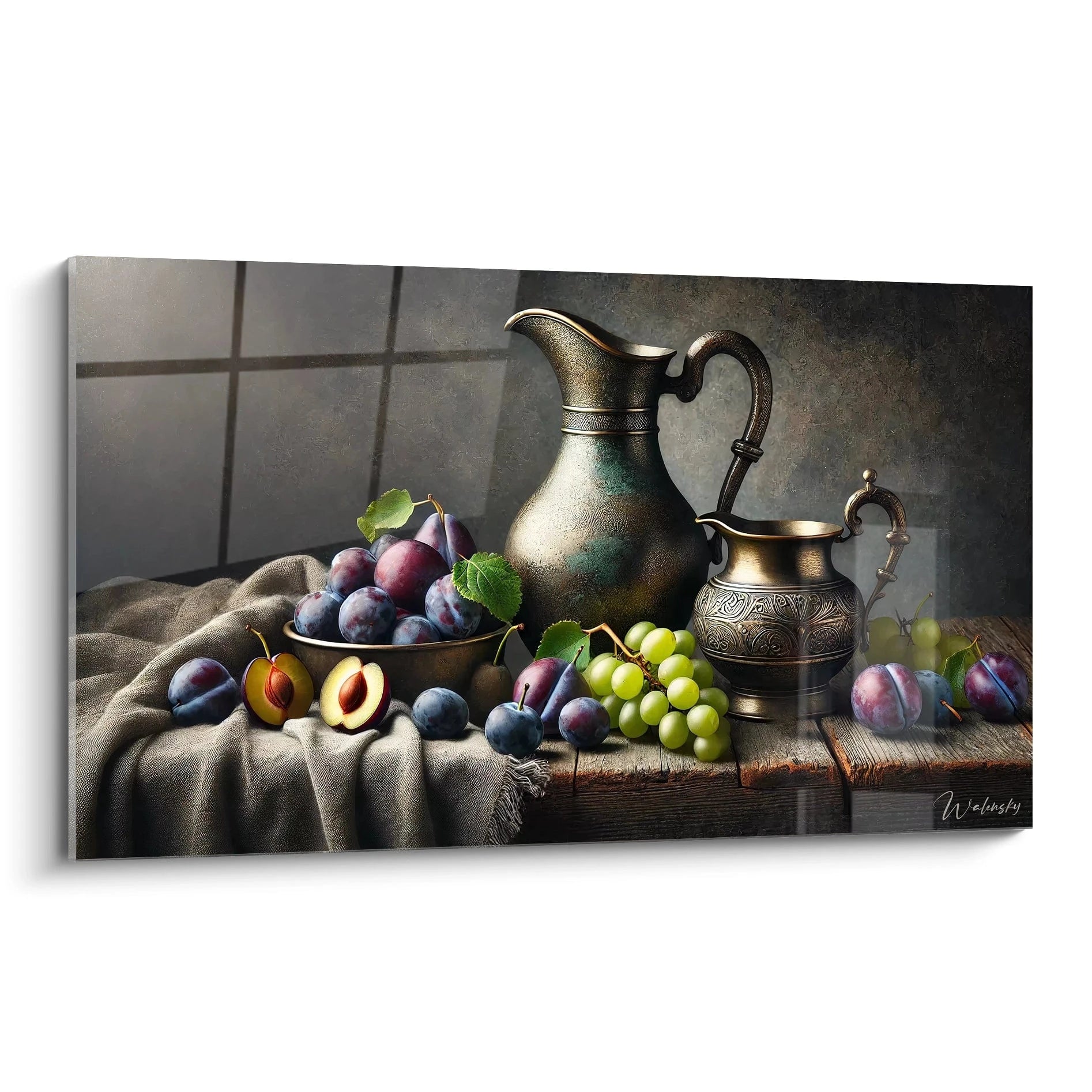
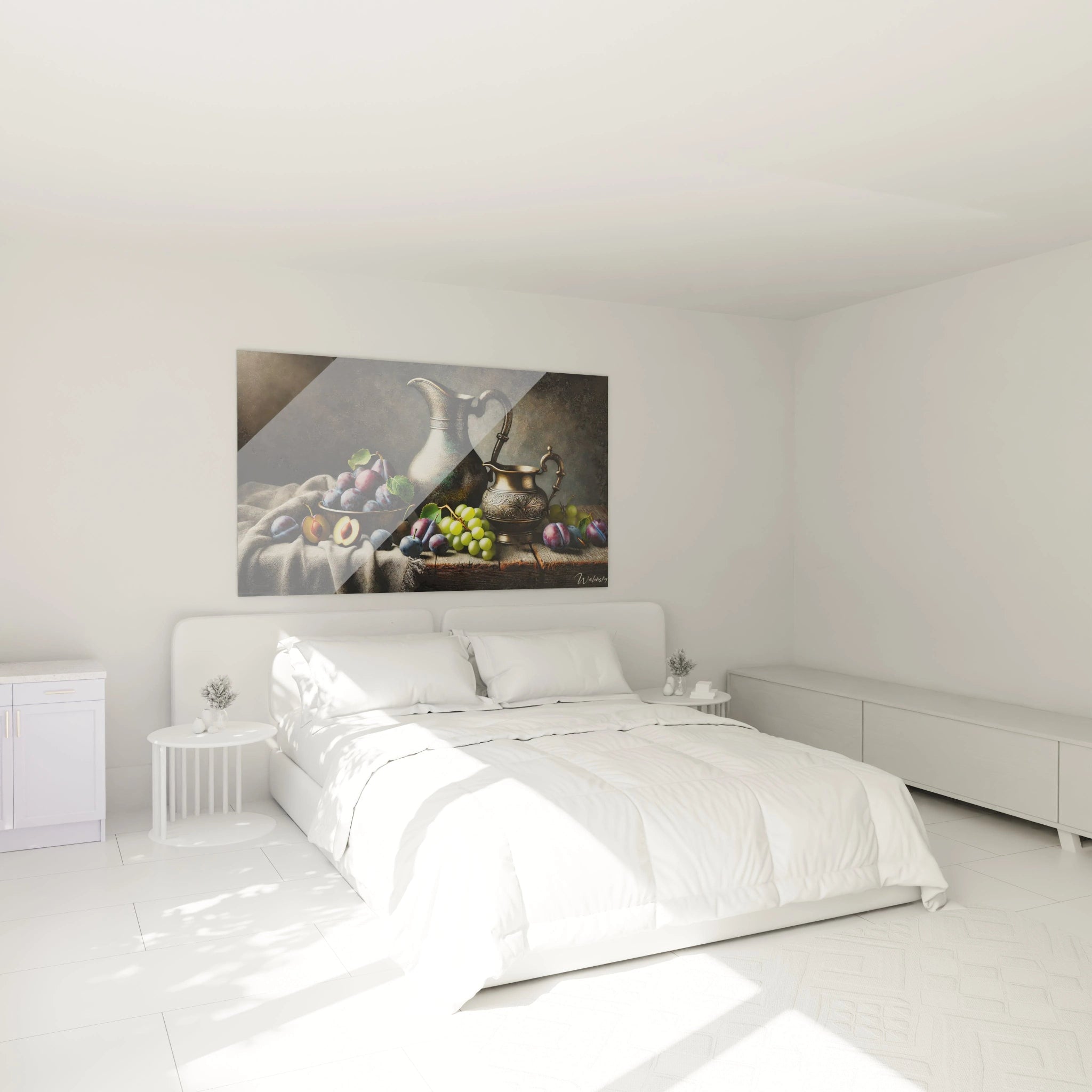
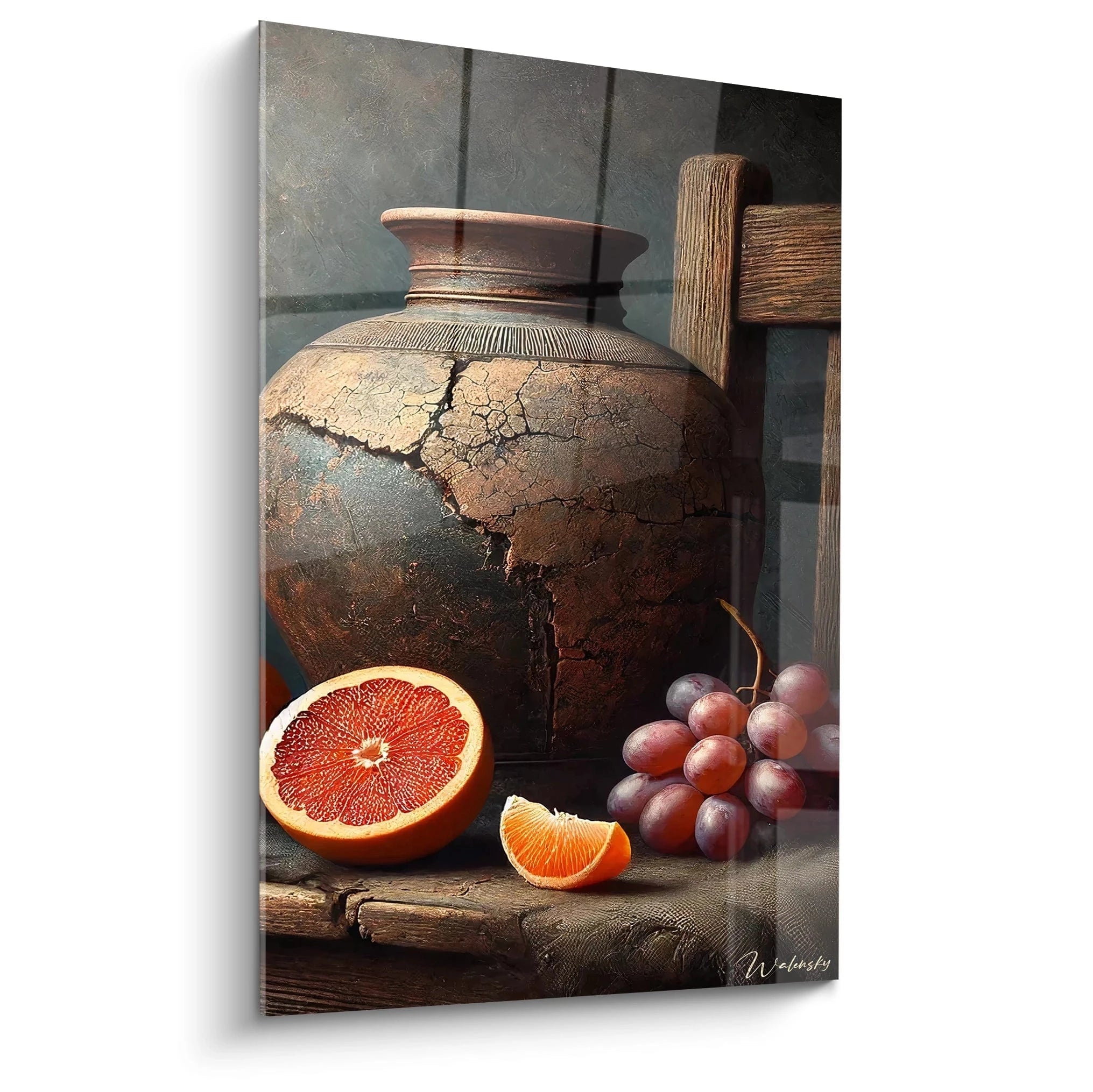
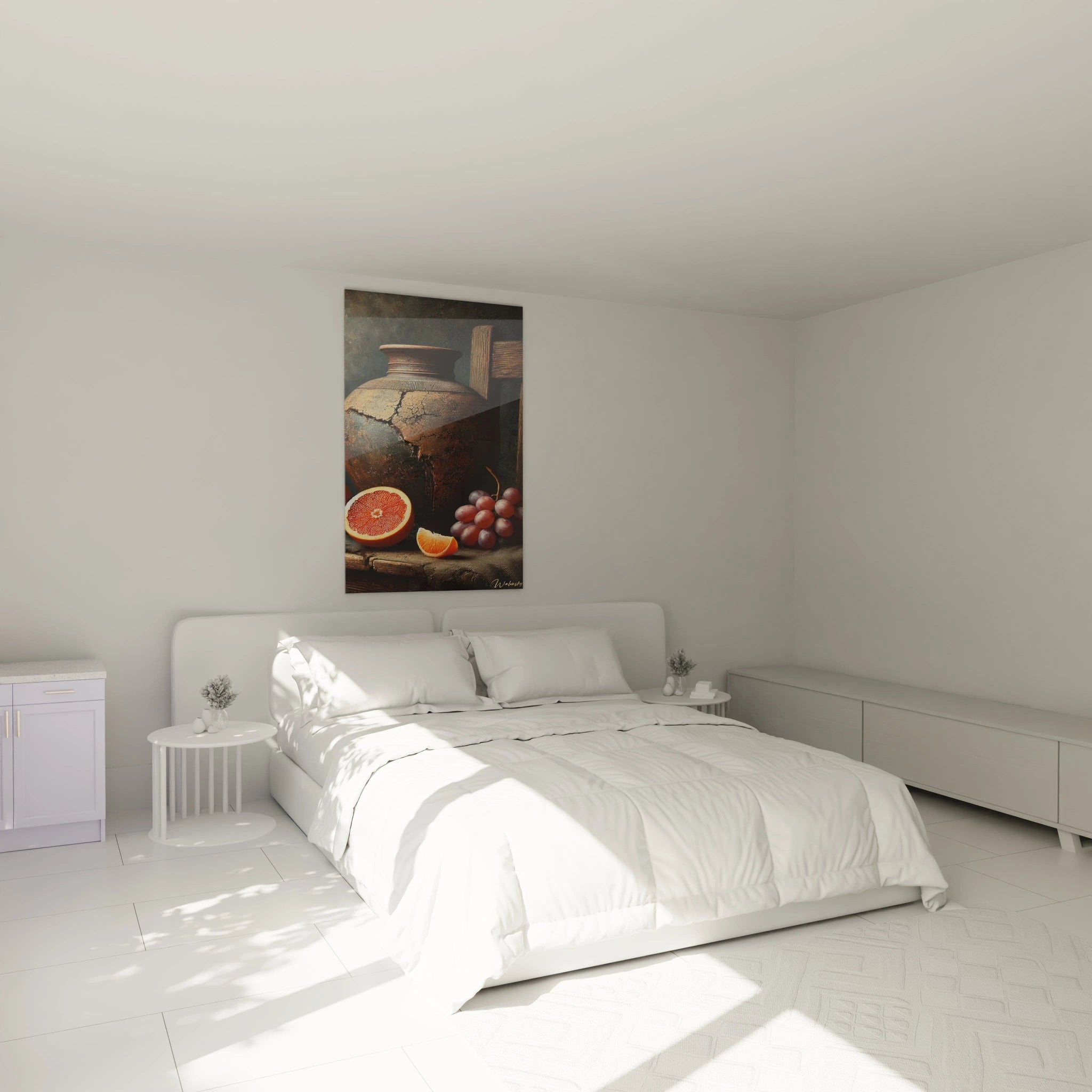
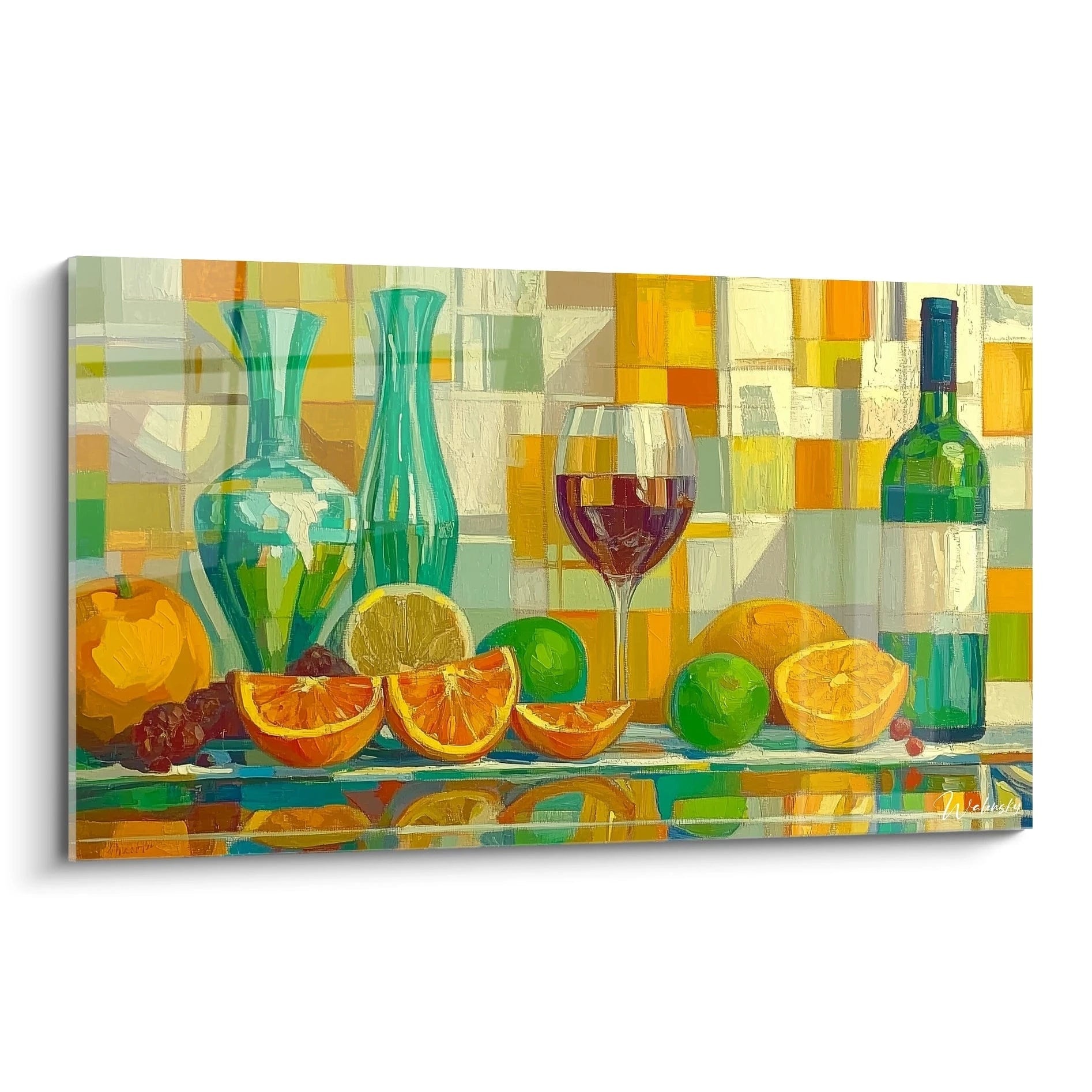
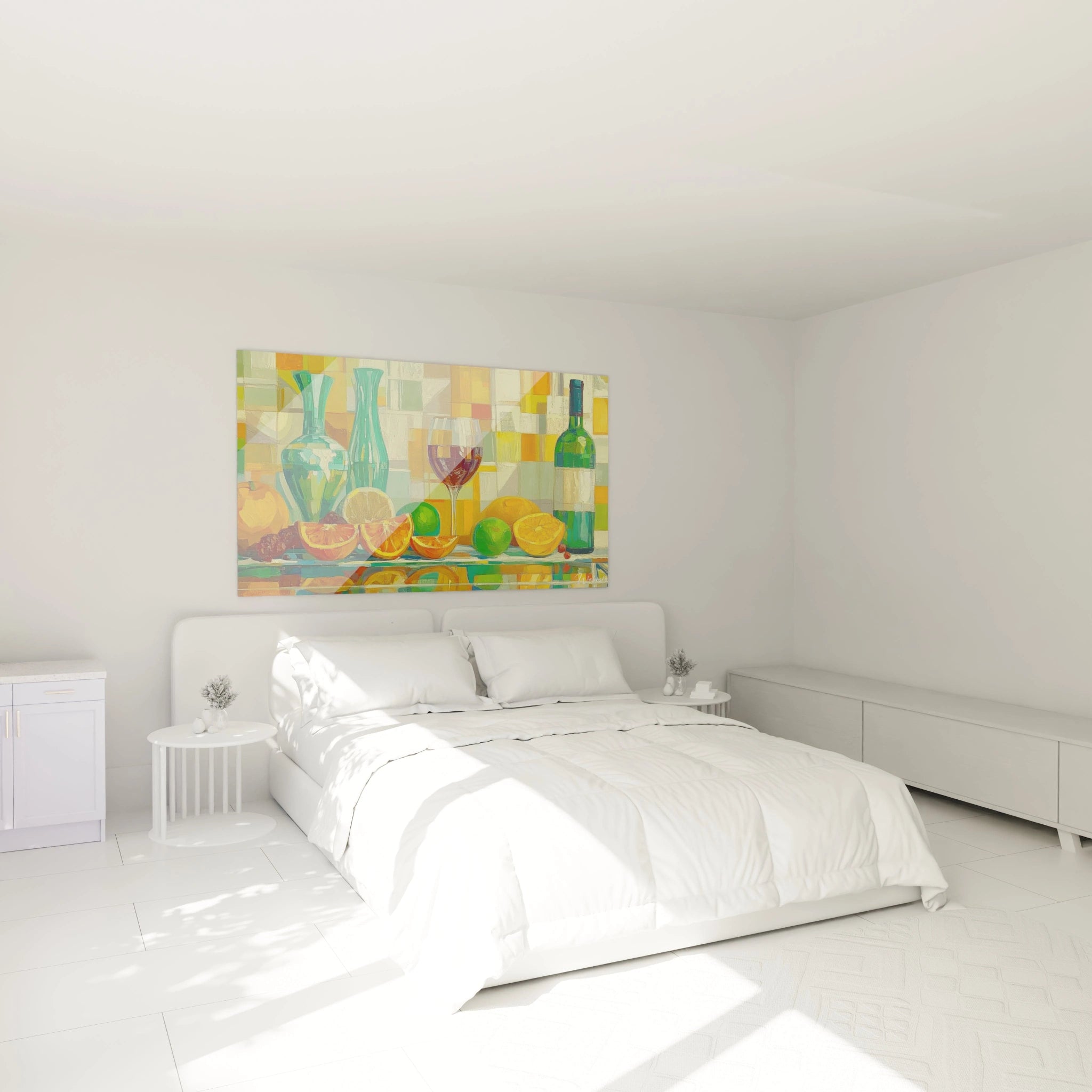
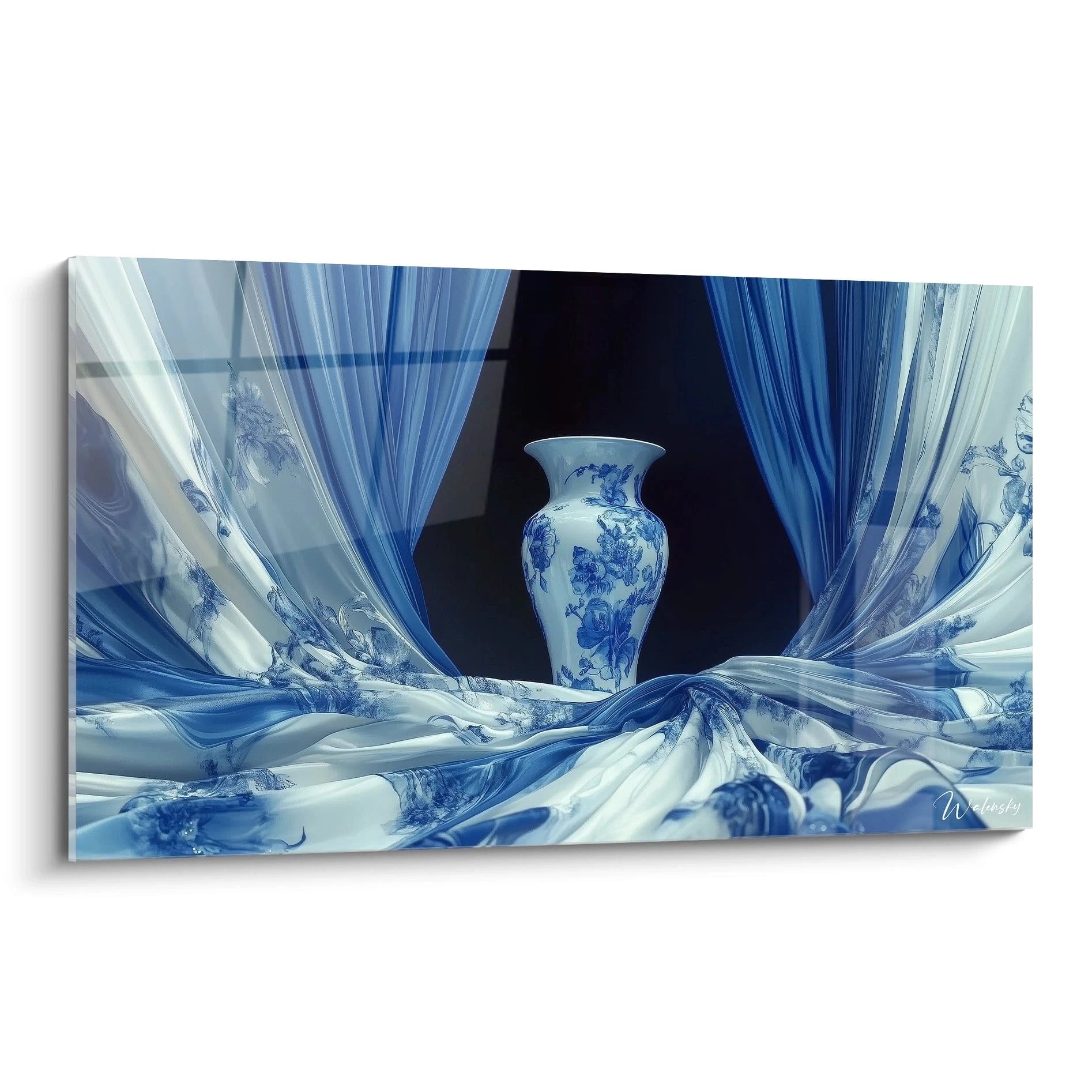
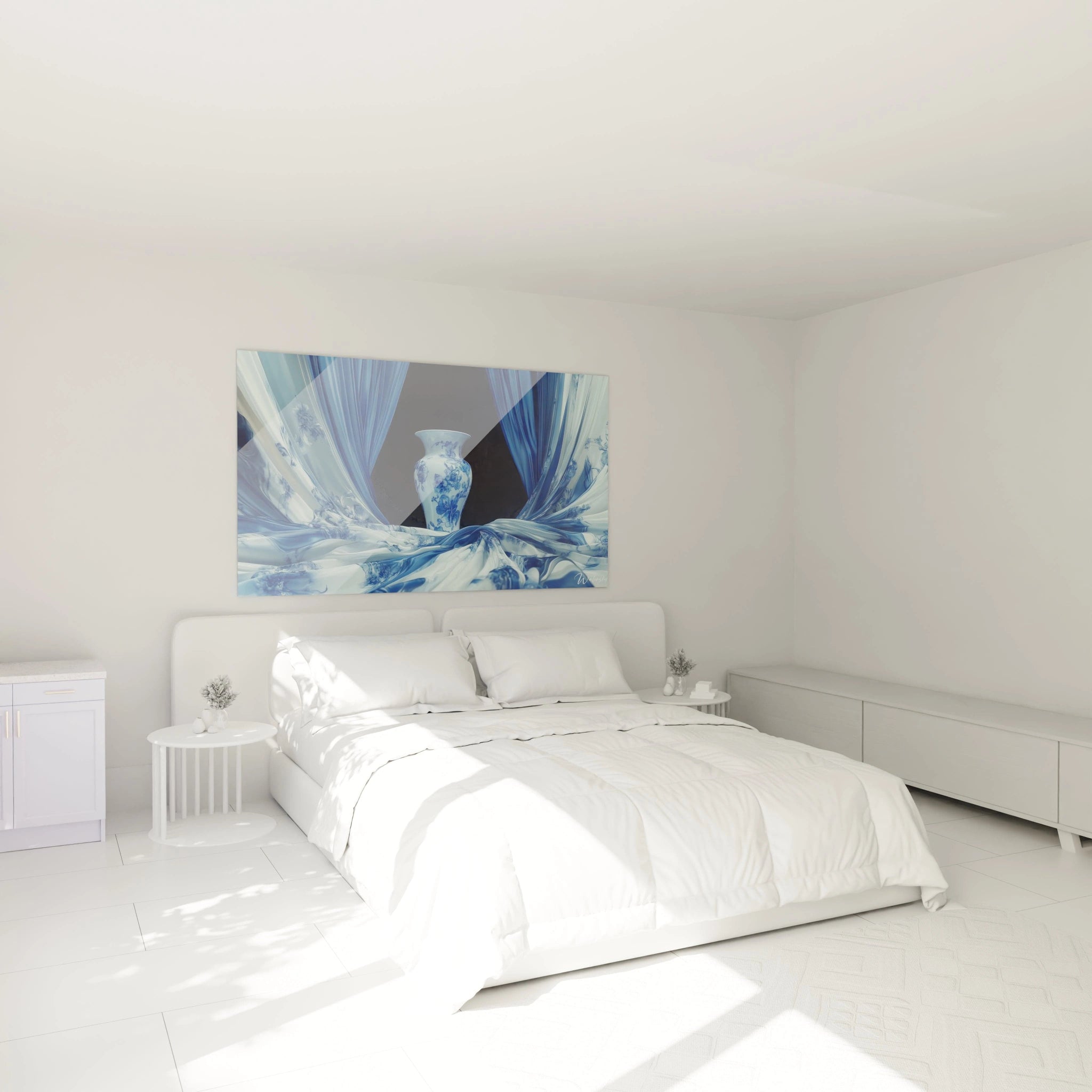
- Abstract Still Life Paintings Overview
- Abstract Still Life Contemporary Symbolism
- Abstract Still Life Geometric Composition
- Abstract Still Life Texture Play
Abstract still life paintings represent a fascinating fusion between the tradition of still life and modern abstract expression. These wall artworks transform everyday objects into dynamic visual compositions where forms, colors and textures take precedence over literal representation. Perfectly suited to contemporary interiors, these abstract paintings bring unique intellectual and visual depth to your wall decoration.
Unlike classical still lifes, abstract versions play with object deconstruction, creating a new visual reality where the viewer's imagination actively participates in interpretation. These large-format artistic representations integrate perfectly into modern spaces seeking to express subtle sophistication and contemporary artistic sensitivity.
Abstract still life paintings stand out for their ability to transform static compositions into explosions of visual movement. By exploring the boundaries between recognition and abstraction, these wall artworks create constant dialogue between the familiar and the unknown, stimulating both reflection and emotion.
Contemporary Symbolism in Abstract Still Life Paintings
Abstract still life paintings profoundly redefine our relationship with everyday objects by transforming them into vehicles for emotional and philosophical expression. These wall pieces reinterpret the centuries-old still life tradition to adapt it to contemporary aesthetic sensibilities, creating a fascinating bridge between artistic heritage and visual innovation.
Each abstract still life composition becomes a space for visual meditation where inanimate objects transcend their utilitarian function. Fruits, vases, or musical instruments traditionally represented in classical still lifes metamorphose into suggestive and enigmatic forms, inviting viewers to active contemplation rather than mere recognition.
### Why do abstract still life paintings fascinate contemporary art collectors?
Contemporary art enthusiasts are particularly drawn to these wall creations for their ability to inhabit space with both intellectual and emotional presence. Beyond their undeniable decorative value, these large-format paintings stimulate reflection on our relationship with objects, materiality and the ephemeral – central themes of traditional still lifes, but reinvented in abstract visual language.
Owners of urban lofts and minimalist architectural spaces favor these wall representations for their capacity to inject conceptual depth and visual warmth without disrupting spatial harmony. An abstract still life painting becomes a focal point that visually anchors the space while elevating it intellectually.
### The Symbolism of Color in Abstract Still Lifes
In these wall compositions, the chromatic palette far exceeds its decorative function to become a vehicle for emotional meaning. Ochres and siennas subtly evoke the pictorial tradition of Flemish masters, while the introduction of vibrant accents in cyan or magenta propels the composition into contemporary sensibility.
Contemporary artists exploit this chromatic tension between tradition and modernity to create works that resonate on multiple levels of interpretation. An abstract still life painting in a contemporary interior thus plays the role of an emotional catalyst, subtly influencing the atmosphere of the space through its carefully orchestrated chromatic presence.
Interior decoration enthusiasts seek these wall representations for their unique ability to harmonize spaces where contemporary design pieces coexist with more traditional elements. These
abstract paintings create visual dialogue between different periods and sensibilities, unifying the space through their visual language at the crossroads of traditions.
### The Temporal Dimension Reinvented in Abstract Still Lifes
One of the most fascinating aspects of these wall paintings lies in their reinterpretation of the concept of temporality, a central theme in classical still lifes. While traditional vanitas paintings reminded us of time's inevitable passage through explicit symbols like ripening fruits or skulls, the contemporary abstract version encodes this temporal meditation in its very structure.
Abstract still life compositions play with fragmentation and visual reconstruction, creating a perception experience that unfolds over time. The gaze circulates between partial recognition and loss of bearings, thus mimicking the very experience of time that continuously transforms our relationship with objects and memories.
This sophisticated temporal dimension makes abstract still life paintings particularly suitable for transitional spaces like spacious entrances or monumental staircases. In these passage zones, these large-format wall artworks create a visual punctuation that invites pause and contemplation, establishing silent dialogue with the daily movement of inhabitants.
Initiated collectors recognize in these wall artworks dual value: that of an investment in a segment of the contemporary art market undergoing full revaluation, and that of a visual presence that enriches daily habitat experience. These abstract still life paintings thus constitute strategic acquisitions for those wishing to combine aesthetic sensitivity with judicious asset placement.
Geometric Composition in Abstract Still Life Paintings
Abstract still life paintings distinguish themselves through their revolutionary approach to geometric composition, radically transforming the pictorial conventions of traditional still lifes. These contemporary wall creations decompose familiar objects into essential geometric structures, revealing visual architecture usually hidden behind the everyday appearance of things.
In these large-format artistic representations, the traditional still life table often becomes an inclined plane or fragmented three-dimensional grid. Objects no longer simply rest on a surface but seem to float in a multidimensional pictorial space where gravity's laws yield to principles of visual composition. This spatial restructuring offers unique perceptual experience to viewers sensitive to sophisticated visual balances.
### How to recognize masterful geometric composition in an abstract still life painting?
Compositional excellence in an abstract still life painting manifests itself in dynamic tension between visual order and chaos. Directional lines create trajectories that subtly guide the gaze through apparent complexity, progressively revealing rigorous underlying structure. This gradual discovery of hidden order constitutes one of the major intellectual satisfactions these wall artworks offer.
Professional space designers – architecture firms, notary offices or high-end medical clinics – frequently select these paintings for their dual capacity to impress visually while demonstrating intellectual rigor. These wall pieces project an image of measured sophistication perfectly aligned with these establishments' identity.
Discerning collectors seek in these abstract geometric compositions the subtle balance between historical references to abstraction pioneers like Mondrian or Malevitch and contemporary compositional innovations. A high-quality abstract still life painting always proposes reinterpretation rather than mere imitation of established canons.
### Cubist Fragmentation Reinvented in Contemporary Abstract Still Lifes
Cubist heritage clearly appears in many current abstract still life paintings, but with sensibility adapted to the 21st century. While cubism pioneers systematically decomposed objects to reveal different facets simultaneously, contemporary artists use this fragmentation as a starting point for freer, less theoretical and more intuitive exploration.
This neo-cubist reinterpretation manifests particularly in the treatment of emblematic still life objects – carafes, musical instruments or fruits. These familiar elements become unrecognizable while retaining ghostly presence, creating perceptual tension between recognition and abstraction that maintains viewer visual engagement.
Owners of residences with angular and geometric architectures – contemporary homes with clean lines or apartments in buildings with distinctive architecture – find in these
abstract paintings perfect visual echo to their built environment. The wall artwork then resonates formally with the space welcoming it, amplifying overall aesthetic impact.
### Masterful Asymmetrical Balance as Signature of Exceptional Abstract Still Life Paintings
Mastered asymmetry constitutes one of the most sophisticated characteristics of contemporary abstract still life paintings. Unlike traditional centered compositions, these wall artworks create dynamic equilibrium where visual masses respond to each other through pictorial space without resorting to conventional symmetry.
This compositional approach requires exceptional mastery of visual tension and balance principles. These large-format painting creators meticulously orchestrate visual weights, using chromatic contrasts and textural variations to counterbalance spatial distribution of represented elements.
Contemporary art collectors particularly value this compositional complexity allowing abstract still life paintings to gradually reveal their structure over time. A truly accomplished wall artwork continues offering new visual discoveries even after years of daily contemplation, fully justifying its status as lasting artistic investment.
Interior designers specializing in high-end residential spaces seek these sophisticated asymmetrical compositions for their ability to dynamize visually minimalist interiors. A judiciously placed abstract still life painting can transform a monochrome and austere room into a visually stimulating environment without compromising the space's overall sobriety.
Texture Play in Abstract Still Life Paintings
Contemporary abstract still life paintings distinguish themselves fundamentally through virtuoso exploration of textures, far transcending smooth or uniform representations. These large-format wall artworks transform the pictorial surface into terrain for tactile experimentation where simulated and real materials conjugate to create complex sensory experience that exceeds mere visual contemplation.
Unlike digital reproductions populating the mass market, these artistic representations exploit impasto, transparent glazes and material inclusions to evoke the very substance of traditional still life objects – glass translucency, textile roughness or fruit's bruised surface – while transposing them into abstract language intensifying their material presence.
### What is texture's importance in the emotional impact of an abstract still life painting?
These wall artworks' immediate emotional impact largely derives from their textural dimension establishing pre-cognitive communication with the viewer. Before any intellectual interpretation, the brain reacts to surface variations, contrasts between smooth and rough zones, creating physical resonance anchoring aesthetic experience in the sensible realm.
Owners of spacious contemporary dwellings, characterized by extensive use of cool materials like concrete, steel or glass, particularly seek these abstract still life paintings for their capacity to introduce textural warmth counterbalancing potential austerity of these environments. These artworks become tactile focal points humanizing the architectural space.
On technical level, superposition of transparent and opaque layers in these wall compositions creates optical depth simulating natural world's textural complexity. This visual stratification invites viewers to prolonged contemplation progressively revealing richness of details and interactions between different textured zones of the work.
### Specific Light Interactions in Textured Abstract Still Life Paintings
One of these large-format artworks' most remarkable characteristics resides in their dynamic interaction with natural or artificial light. Unlike flat representations, relief and surface variations of textured abstract still life paintings capture light differently depending on time of day or ambient lighting, transforming the artwork into a living visual entity constantly evolving.
This kinetic quality makes these
abstract paintings particularly suited to residential spaces benefiting from changing light – large windows facing east or west, light wells or architectural skylights. In these environments, the wall artwork becomes a true optical instrument amplifying and materializing daily light variations.
For discerning collectors, this changing dimension constitutes significant added value distinguishing these abstract still life paintings from industrial reproductions. Investment in a textured artwork offers infinitely renewed visual experience, fully justifying price difference with standardized productions with uniform surfaces.
### The Archaeological Dimension of Texture in Contemporary Abstract Still Lifes
Contemporary creators of abstract still life paintings often develop what might be termed an archaeological approach to texture, constructing their artworks through successive accumulation and excavation of pictorial matter. This method metaphorically evokes temporal strata suggested by traditional vanitas objects – passing time, wear, gradual material transformation.
This textural stratification creates complex surfaces where certain elements seem to emerge while others sink into pictorial depths. The gaze explores these reliefs like miniature landscape, progressively discovering details escaping superficial observation and thus rewarding attentive contemplation.
Interiors privileging wabi-sabi aesthetics – celebrating imperfection, patina and traces of time – find in these abstract still life paintings perfect resonance with their decorative philosophy. These textured wall artworks naturally complement environments where raw materials and patined objects create atmosphere of authenticity and temporal depth.
### FAQ: Frequently Asked Questions About Abstract Still Life Paintings
How to integrate an abstract still life painting into a minimalist interior?
Abstract still life paintings integrate perfectly into minimalist environments by bringing visual depth and textural complexity without cluttering the space. Favor an artwork with tonalities harmonized with your existing palette, but whose textural variations will create a dynamic focal point. Position it ideally on a clear wall where it can be contemplated without visual competition from other decorative elements.
What is the difference between an artisanal abstract still life painting and industrial reproduction?
An authentic abstract still life painting distinguishes itself through its textural presence impossible to reproduce industrially, its visual depth resulting from multiple pictorial layers, and its absolute uniqueness – each artwork presenting subtle variations impossible to standardize. These characteristics justify superior investment compared to mass reproductions which, though aesthetically pleasing, don't offer the same richness of visual and tactile experience.
What dimensions to favor for an abstract still life painting in contemporary residential space?
In contemporary interiors with generous volumes, large-dimension abstract still life paintings (120x80 cm minimum) produce optimal visual impact. These formats allow abstract composition to fully develop its complexity and textural play. For more modest spaces, favor medium format but positioned allowing observation from different distances, thus allowing appreciation of both overall effect and textural details.