


Paintings Inspired by JMW Turner
Paintings inspired by JMW Turner are an ode to light, to color and to movement. Each work captures the essence of maritime and urban landscapes, transforming nature into a vibrant scene of emotions. Let yourself be seduced by these ethereal visions that illuminate any space with captivating energy.
 Painting Inspired by Rain, Steam and Speed by J.M.W. Turner No.1 – Tribute to Renowned Artist273,90 €
 Painting Inspired by Fishermen at Sea by J.M.W. Turner No.2 – Tribute to a Celebrated Artist273,90 €
 Painting Inspired by Fishermen at Sea by J.M.W. Turner No.1 – Tribute to a Celebrated Artist273,90 €
 Painting Inspired by The Last Voyage of the Temeraire by J.M.W. Turner No.2 – Tribute to Celebrated Artist273,90 €
 Painting Inspired by The Fighting Temeraire by J.M.W. Turner No.1 – Homage to Renowned Artist273,90 €
 Painting Inspired by The Burning of Parliament by J.M.W. Turner No.1 – Homage to Renowned Artist273,90 €
In the same family
Also explore the theme Famous Artists ( inspirations )
-
 View all265
artworks
View all265
artworks
-
 Alfred Sisley10
artworks
Alfred Sisley10
artworks
-
 Amedeo Modigliani12
artworks
Amedeo Modigliani12
artworks
-
 Camille Pissarro7
artworks
Camille Pissarro7
artworks
-
 Caspar David Friedrich11
artworks
Caspar David Friedrich11
artworks
-
 Claude Joseph Vernet3
artworks
Claude Joseph Vernet3
artworks
-
 Claude Monet10
artworks
Claude Monet10
artworks
-
 Edgar Degas8
artworks
Edgar Degas8
artworks
-
 Edvard Munch11
artworks
Edvard Munch11
artworks
-
 Edward Hopper8
artworks
Edward Hopper8
artworks
-
 Frida Kahlo6
artworks
Frida Kahlo6
artworks
-
 George Braque5
artworks
George Braque5
artworks
-
 Giuseppe Arcimboldo9
artworks
Giuseppe Arcimboldo9
artworks
-
 Goya8
artworks
Goya8
artworks
-
 Gustav Klimt8
artworks
Gustav Klimt8
artworks
-
 Gustave Courbet8
artworks
Gustave Courbet8
artworks
-
 Henri Matisse4
artworks
Henri Matisse4
artworks
-
 Hieronymus Bosch2
artworks
Hieronymus Bosch2
artworks
-
 Jean Baptiste Camille Corot9
artworks
Jean Baptiste Camille Corot9
artworks
-
 Jean François Millet7
artworks
Jean François Millet7
artworks
-
 Jean-Auguste-Dominique Ingres10
artworks
Jean-Auguste-Dominique Ingres10
artworks
-
 Johannes Vermeer10
artworks
Johannes Vermeer10
artworks
-
 Leonardo da Vinci5
artworks
Leonardo da Vinci5
artworks
-
 Michelangelo6
artworks
Michelangelo6
artworks
-
 Paul Gauguin6
artworks
Paul Gauguin6
artworks
-
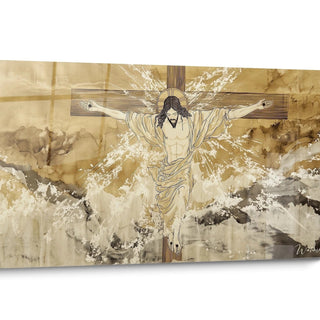 Peter Paul Rubens6
artworks
Peter Paul Rubens6
artworks
-
 Pierre-Auguste Renoir6
artworks
Pierre-Auguste Renoir6
artworks
-
 Piet Mondrian11
artworks
Piet Mondrian11
artworks
-
 Pieter Bruegel the Elder6
artworks
Pieter Bruegel the Elder6
artworks
-
 Rembrandt van Rijn4
artworks
Rembrandt van Rijn4
artworks
-
 Sandro Botticelli9
artworks
Sandro Botticelli9
artworks
-
 Sonia Delaunay6
artworks
Sonia Delaunay6
artworks
-
 Théodore Géricault7
artworks
Théodore Géricault7
artworks
-
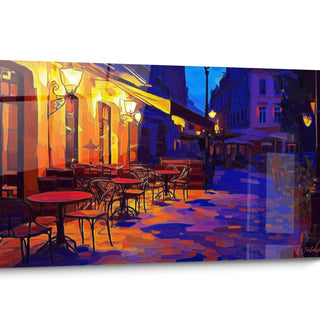 Vincent Van Gogh11
artworks
Vincent Van Gogh11
artworks
-
 Wassily Kandinsky10
artworks
Wassily Kandinsky10
artworks


All about Paintings Inspired by JMW Turner
- Description Painting JMW Turner
- Turner's Works History
- Turner's Luminosity and Techniques
- Integrating Turner's Works into Your Decor
The paintings by Joseph Mallord William Turner represent the pinnacle of British Romanticism and constitute an invaluable artistic heritage. A precursor to Impressionism, Turner revolutionized landscape art with his exceptional mastery of light and his innovative technique. His works, characterized by vaporous atmospheres and vibrant colors, capture the power of the natural elements in a way never seen before. Whether you are an art lover, passionate collector, or simply looking for a remarkable piece to enhance your interior, reproductions of Turner's famous paintings will bring a unique emotional and historical dimension to your living space.
The Artistic Heritage of Turner: Evolution and Impact of His Major Works
Joseph Mallord William Turner, often considered the painter of light, radically transformed landscape painting in the 19th century. His revolutionary techniques and avant-garde artistic vision continue to influence contemporary art, making his paintings timeless pieces sought after by art lovers worldwide.
How Turner revolutionized landscape art in the 19th century?
Turner broke with the artistic conventions of his time by developing a unique atmospheric approach. Unlike his contemporaries who favored detail and precision, Turner focused on capturing ephemeral elements – light, mist, vapor, and movement. This departure from pictorial traditions foreshadowed Impressionism and abstract art, placing Turner as a visionary whose influence transcends centuries. Collectors who choose to integrate a Turner painting into their space benefit from a piece whose historical value transcends mere aesthetic considerations.
The late period of Turner, often referred to as the "yellow paintings" due to its dominant palette, represents the pinnacle of his creative genius. These works, characterized by swirls of color and barely suggested forms, were misunderstood by his contemporaries but are now considered visionary masterpieces foreshadowing 20th-century abstraction.
Marine subjects in Turner's work: a distinctive signature
Turner's fascination with the sea is one of the most emblematic aspects of his work. His depictions of sea storms, shipwrecks, and naval battles capture the raw power and unpredictability of the oceans with unparalleled dramatic intensity. These paintings are not simply marine representations but profound explorations of the relationship between man and the forces of nature.
The acquisition of a reproduction of a Turner marine instantly transforms the atmosphere of a room, creating a dramatic window onto the elemental forces. These works, with their inherent dynamism, can serve as a focal point in a contemporary interior, bringing movement and emotion to minimalist spaces. The dramatic tension they convey creates a striking contrast with ordered domestic environments.
The "Fighting Temeraire" (1839), one of Turner's most famous works, perfectly illustrates his mastery of marine scenes. This painting, which depicts a glorious warship being towed to its final mooring, transcends its simple aesthetic value to become a poignant meditation on the passage of time and the advent of the industrial era.
Atmospheric landscapes: technical innovation in the service of emotion
The landscapes of Turner are distinguished by their almost dreamlike quality. His views of Venice, the Thames, or the Alps do not aim for faithful reproduction but rather to capture an emotional impression. Turner used innovative techniques such as scraping, rubbing, and applying thin layers of glazes to create extraordinary atmospheric effects. The integration of a Turner landscape into a living space creates a unique visual and emotional depth. These works act as portals to other worlds, visually expanding spaces and evoking profound emotions. Their atmospheric quality allows them to harmonize with a variety of interior styles, from classic to contemporary. Turner's innovative composition, which often favors low horizons and expansive skies, has influenced generations of artists. This approach gives his landscapes an immersive quality that continues to captivate modern viewers, even those accustomed to contemporary immersive technologies.
The chronological evolution of Turner's style: a unique artistic trajectory
Turner's artistic trajectory is divided into distinct periods, each offering a different perspective on his genius. From the early works more conventional to the color explosions of his late period, each phase presents specific characteristics that appeal to different types of collectors and art lovers. The early works of Turner (1790-1810) show a remarkable technical mastery of the pictorial conventions of his time. These paintings, with their attention to detail and balanced composition, offer an accessible entry point to his work for more traditional collectors. The intermediate period (1810-1830) sees Turner begin to experiment with light and atmosphere. These works, which maintain a balance between faithful representation and technical innovation, represent a perfect balance for spaces that combine classicism and modernity. The late works (1830-1851), often considered the most revolutionary, foreshadow modern abstraction with their swirls of color and evanescent forms. These paintings, particularly sought after by contemporary collectors, bring an avant-garde dimension even to the most modern interiors.
The emotional value of Turner reproductions in a personal space
Beyond their aesthetic and historical value, Turner's paintings establish a deep emotional connection with their environment. Their unique visual qualities – luminosity, suggested movement, atmospheric depth – create a contemplative experience that transforms the perception of the space in which they are displayed. The display of a Turner reproduction in a personal space does not simply reflect a taste for classic art, but demonstrates an appreciation for innovation and avant-garde artistic vision. These works transcend their historical context to dialogue with contemporary sensibilities, creating a bridge between past and present. The emotional power of Turner's paintings lies in their ability to capture moments of transition – twilights, impending storms, changing seasons. This transient quality resonates particularly with modern sensibilities, marked by an awareness of change and impermanence, making these works perpetually current visual commentaries.
The Mastery of Light: Techniques and Innovations of Turner's Paintings
The inimitable visual signature of JMW Turner lies in his exceptional ability to capture and manipulate light. His technical innovations redefined the pictorial possibilities, creating works of transcendent luminosity that continue to fascinate both experts and art lovers. Integrating a Turner reproduction into a contemporary space brings this unique luminous quality that transforms the atmosphere of the rooms where they are displayed.
Turner's revolutionary techniques for capturing luminosity
Turner developed innovative pictorial methods that allowed him to achieve unprecedented luminous effects. Unlike the conventional techniques of his time, he often applied light underlayers to maximize the reflection of light through superimposed colored glazes. This approach created an inner luminosity that seemed to emanate from the painting itself, rather than simply representing external light sources. Turner's perfected "wet-in-wet" technique allowed him to create extraordinary atmospheric transitions. By applying new colors before the previous ones dried, he obtained subtle blends impossible to achieve with traditional techniques. This method is particularly visible in his tumultuous skies and agitated seas, where colors blend organically. Modern reproductions of Turner's paintings benefit from advanced printing technologies capable of capturing these technical subtleties. Contemporary fine art printing processes faithfully reproduce variations in texture and transparency characteristic of his work, preserving the visual impact of his technical innovations.
Why do Turner's paintings seem to emit their own light?
The distinctive luminous effect of Turner's works results from a skillful combination of painting techniques and an intuitive understanding of the properties of light. His characteristic palette, dominated by golden yellows, incandescent oranges, and pearlescent whites, amplifies the impression of internal luminosity that characterizes his wall art. Turner strategically used the contrast between areas of strong light and atmospheric shadows to create modernized chiaroscuro effects. Unlike traditional chiaroscuro, with its sharp transitions, Turner developed an approach where light and shadow gradually blend, creating ethereal atmospheres that transcend mere representation to achieve an almost spiritual quality. This characteristic luminosity makes Turner reproductions particularly suitable choices for spaces lacking natural light. Strategically placed, they create the illusion of an additional light source, visually expanding the space and bringing warmth and dynamism to otherwise dull environments.
The colorimetric evolution in Turner's work and its decorative impact
Turner's palette underwent a significant evolution throughout his career, moving from relatively conventional earthy tones to bold chromatic explosions in his later works. This transformation reflects his constant exploration of the expressive possibilities of color and today offers a wide spectrum of decorative options for different interior environments. Turner's early works, with their more restrained palette and classic compositions, blend harmoniously into traditional or classic interiors. These wall art pieces bring a touch of historical elegance without visually dominating the space, subtly complementing decors in neutral or earthy tones. In contrast, his later works, with their vibrant yellows, flaming oranges, and deep blues, serve as dramatic focal points in contemporary spaces. These chromatic explosions can radically transform a minimalist room, introducing movement and emotion into otherwise streamlined environments. The emotional intensity of these colors creates an immersive experience that transcends simple decoration.The unique interaction between Turner's wall art and domestic lighting
Reproductions of Turner's works have the exceptional characteristic of dynamically interacting with surrounding lighting conditions. This transformative quality distinguishes these wall art pieces from other works of art and creates an evolving visual experience throughout the day and seasons. Variations in natural light gradually reveal different subtleties in Turner's wall art. A work displayed in a space benefiting from changing natural light will reveal different nuances and details depending on the time of day, thus offering a constantly renewed visual experience. This chameleon-like quality transforms a simple reproduction into a living presence that evolves with its environment. Artificial lighting can be strategically used to amplify the inherent luminous effect of Turner's wall art. Directional spotlights with a warm color temperature (2700-3000K) placed at a 30° angle accentuate the golden dimension of his skies, while more diffused lighting reveals the subtleties of his mists and vapors. This adaptability to different lighting conditions makes Turner reproductions particularly versatile elements in interior design.The spatial effect of Turner's atmospheric landscapes
Turner's wall art, particularly his atmospheric views, possess the remarkable ability to alter the spatial perception of the environments in which they are displayed. Their expansive perspectives and distant horizons create an illusion of space that transcends the physical limits of walls, making these works valuable tools for the visual optimization of small spaces. In urban apartments with limited dimensions, a large-format reproduction of an atmospheric landscape by Turner can function as a "virtual window," visually expanding the space and counteracting the feeling of confinement. The sense of depth created by his atmospheric gradations establishes a perception of spatial continuity beyond architectural constraints. Turner's maritime scenes, with their vast expanses of water and sky, are particularly effective in creating this sense of spatial expansion. Strategically placed in transitional spaces such as hallways or entrances, they amplify the perception of movement and flow, enriching the overall spatial experience of the habitat.Integrating a Painting JMW Turner into Your Contemporary Living Space
The presence of a Joseph Mallord William Turner painting in a contemporary interior transcends simple decoration to become a cultural and aesthetic statement. These timeless works, with their unique atmospheric quality and emotional depth, establish a fascinating dialogue between artistic heritage and modern sensibility. Discover how to strategically integrate these masterpieces to maximize their transformative impact on your living space.
How the large formats of Turner's paintings transform the acoustics of a room
An often-overlooked aspect of large-format reproductions of Turner's paintings is their significant acoustic impact. These large surfaces, particularly when printed on textured supports or mounted with a slight gap from the wall, contribute to the sound regulation of contemporary spaces, often characterized by hard and reflective surfaces.
In modern environments dominated by glass, concrete, and other acoustically reflective materials, the strategic installation of a large-format reproduction of a Turner painting can significantly reduce reverberation and improve overall acoustics. This practical function adds to their aesthetic value, making these works multifunctional elements in contemporary interior design.
To maximize this acoustic effect, prioritize canvas reproductions with a deep frame (minimum 4 cm) creating an air gap between the wall and the artwork. This configuration subtly transforms the painting into an acoustic absorber that attenuates mid and high frequencies, precisely those that contribute most to auditory fatigue in resonant spaces.
The perceptual evolution of Turner's works according to the distance of observation
A fascinating characteristic of Turner's paintings lies in their visual transformation depending on the distance of observation, creating a dynamic experience that constantly renews the perception of the work. This unique quality should be considered when positioning these reproductions in a domestic space.
At close range, Turner's paintings reveal the richness of their pictorial texture – energetic brushstrokes, expressive impastos, and subtle chromatic variations. This proximity allows one to appreciate the physical and material dimension of his art, particularly in his later works where the pictorial matter itself becomes the subject of expression.
At medium distance (2-3 meters), figurative elements emerge more clearly, allowing one to appreciate the overall composition and narrative structures. This intermediate perspective balances abstraction and figuration, offering a more complete reading of the artist's compositional intentions.
At a long distance, Turner's paintings transform into atmospheric symphonies where individual details merge into a global impression dominated by light and color. This overall vision reveals the emotional coherence and immediate impact that characterize his artistic genius.
This perceptual variability suggests an ideal positioning in circulation areas where residents and visitors naturally experience the work from different angles and distances – wide hallways, stairwells, or walls opposite varied seating allowing different perspectives of observation.
What are the ideal color associations to enhance a Turner painting?
The harmonious integration of a Turner reproduction into a contemporary environment requires careful consideration of the chromatic interactions between the work and its immediate context. Turner's paintings, with their characteristic luminosity, establish specific chromatic dialogues that can be amplified by judicious decorative choices.
For Turner's blues-dominated marines and landscapes, an environment with warm neutral tones (beige, taupe, warm gray) creates a complementary contrast that amplifies the intensity of the blues while maintaining overall harmony. These earthy tones visually anchor the ethereal and atmospheric qualities of the work.
Paintings dominated by the incandescent yellows and oranges characteristic of his late period thrive in environments with cool tones – bluish gray, pale sage green, or blue-gray. This thermal opposition amplifies the radiant warmth of the work while creating a soothing visual balance in the overall space.
For a bolder approach, consider extracting a specific secondary or tertiary color from the painting (a subtle violet in a sky, a greenish-gray in a wave) to integrate it as a chromatic accent in the surrounding furniture or accessories. This chromatic resonance establishes a sophisticated visual continuity between the work and its context.
The psychological effect of Turner's dramatic scenes in living spaces
Turner's paintings, particularly his depictions of dramatic natural phenomena such as storms, fires, or shipwrecks, exert a profound psychological influence on the atmosphere of the spaces where they are displayed. This emotional dimension should be carefully considered when integrating them into different functional areas of the home. In relaxation areas such as living rooms or bedrooms, Turner's dramatic scenes can paradoxically create a cathartic effect. Contemplating these forces of nature represented safely allows for an experience of "controlled sublime" – the emotional intensity of the storm or shipwreck being tempered by aesthetic distance, generating a form of soothing emotional release. For workspaces or study areas, Turner's paintings with less tumultuous subjects – Venetian views bathed in golden light or rural landscapes with serene atmospheres – are more conducive to concentration and reflection. These more contemplative works create a visually stimulating environment without introducing the emotional agitation of his more dramatic scenes. The dynamic tension inherent in Turner's compositions, even in his most peaceful works, infuses a subtle energy into static spaces. This underlying kinetic quality effectively combats the visual monotony that can affect minimalist contemporary interiors, introducing movement and vitality without excessive disruption.
Seasonal Positioning Strategies for Turner Reproductions
A particularly refined approach to integrating Turner's paintings is to adopt a strategic seasonal rotation of works, harmonizing their emotional and chromatic content with the natural variations of the seasons. This practice transforms reproductions into dynamic elements that evolve with the annual rhythm of light and atmosphere. For the winter period, prioritize works where Turner captures the golden light piercing through mists and clouds. These paintings, such as "The Sun of Venice" or certain views of the Thames in winter, introduce a compensatory visual warmth during the darkest months of the year. Their intrinsic luminosity effectively counteracts the reduction in natural light characteristic of this season. In spring, rural landscapes by Turner with fresh tones and atmospheres of renewal establish a harmonious dialogue with the natural rebirth visible outdoors. These works amplify the feeling of renewed vitality characteristic of this transitional period. For summer, bright seascapes or Mediterranean landscapes bathed in clarity create a resonance with the luminous fullness of the season. These works, often characterized by intense blues and bright whites, amplify the sensation of spatial expansion and summery lightness. In autumn, compositions with amber tones and more meditative atmospheres harmoniously accompany the change of light and the chromatic transformation of nature. Paintings of this palette establish a gentle visual transition towards the increasing interiority of the coming winter season.
FAQ: Everything You Need to Know About JMW Turner Paintings
What is the value of an original JMW Turner painting on the current art market?
Original JMW Turner paintings achieve exceptional prices on the art market, with auctions exceeding tens of millions of euros for his major works. In 2014, "Rome, From Mount Aventine" was sold for £30.3 million (approximately €42 million) at Sotheby's, setting a record for the artist. High-quality reproductions represent an accessible alternative allowing appreciation of Turner's genius in a contemporary domestic setting.
How to identify artistic periods in Turner's paintings?
Turner's paintings are generally divided into three distinct periods: the initial period (1790-1810) characterized by a more conventional and detailed approach; the intermediate period (1810-1830) where he begins to experiment with light and atmospheric effects; and his late period (1830-1851) where he reaches a quasi-abstraction with compositions dominated by light and color rather than defined forms. Each period presents distinct visual qualities that determine their optimal integration into different interior styles.
Do Turner reproductions require specific lighting to reveal their unique qualities?
Turner reproductions particularly benefit from lighting that reproduces the natural conditions that the artist sought to capture. Directional lighting (ideally with a CRI greater than 90) at a color temperature between 2700K and 3500K allows to reveal the subtleties of his atmospheric effects. Avoid direct, intense lighting that can flatten the atmospheric dimension so characteristic of his work. Installing a variable intensity lighting system allows to adapt the brightness to different times of the day, amplifying the dynamic interaction between the artwork and its environment.
L'art qui suscite l'envie
Maison belge d'art mural grand format
14 jourspour changer d'avis*
Protection Walenskyincluse
Fabriquéen Italie
FormatXXL
Kit de fixationtoujours fourni
* Hors tableaux personnalisés et tailles personnalisées


