


Paintings inspired by Claude Monet
The paintings inspired by Claude Monet celebrate light, nature and color. Discover the spirit of Impressionism with works that transport you to ethereal and timeless landscapes. Ideal for art lovers who appreciate subtle plays of tones and reflections.
 Painting Inspired by Claude Monet's Water Lilies No. 1 – Tribute to a Renowned Artist273,90 €
 Painting Inspired by Claude Monet's Water Lilies No. 2 – Tribute to a Renowned Artist273,90 €
 Painting Inspired by Claude Monet's Water Lily Pond No.2 – Tribute to a Celebrated Artist273,90 €
 Painting Inspired by Claude Monet's Water Lily Pond No.1 – Tribute to a Celebrated Artist273,90 €
 Painting Inspired by Claude Monet's Rouen Cathedral N°2 – Celebrated Artist Tribute273,90 €
 Painting Inspired by Rouen Cathedral by Claude Monet No.1 – Tribute to Celebrated Artist273,90 €
 Painting Inspired by Impression, Sunrise by Claude Monet No.2 – Tribute to Celebrated Artist273,90 €
 Painting Inspired by Impression, Sunrise by Claude Monet No.1 – Tribute to a Celebrated Artist273,90 €
 Painting Inspired by Claude Monet's Saint-Lazare Station No.2 – Homage to a Celebrated Artist273,90 €
 Painting Inspired by Claude Monet's Saint-Lazare Station No.1 – Homage to a Celebrated Artist273,90 €
In the same family
Also explore the theme Famous Artists ( inspirations )
-
 View all265
artworks
View all265
artworks
-
 Alfred Sisley10
artworks
Alfred Sisley10
artworks
-
 Amedeo Modigliani12
artworks
Amedeo Modigliani12
artworks
-
 Camille Pissarro7
artworks
Camille Pissarro7
artworks
-
 Caspar David Friedrich11
artworks
Caspar David Friedrich11
artworks
-
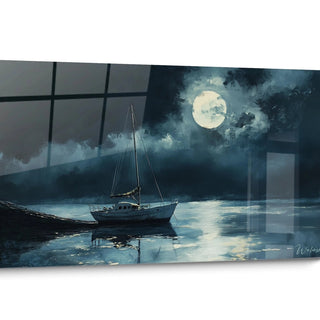 Claude Joseph Vernet3
artworks
Claude Joseph Vernet3
artworks
-
 Edgar Degas8
artworks
Edgar Degas8
artworks
-
 Edvard Munch11
artworks
Edvard Munch11
artworks
-
 Edward Hopper8
artworks
Edward Hopper8
artworks
-
 Frida Kahlo6
artworks
Frida Kahlo6
artworks
-
 George Braque5
artworks
George Braque5
artworks
-
 Giuseppe Arcimboldo9
artworks
Giuseppe Arcimboldo9
artworks
-
 Goya8
artworks
Goya8
artworks
-
 Gustav Klimt8
artworks
Gustav Klimt8
artworks
-
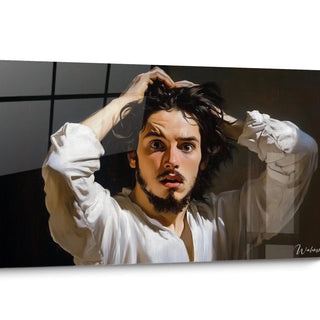 Gustave Courbet8
artworks
Gustave Courbet8
artworks
-
 Henri Matisse4
artworks
Henri Matisse4
artworks
-
 Hieronymus Bosch2
artworks
Hieronymus Bosch2
artworks
-
 Jean Baptiste Camille Corot9
artworks
Jean Baptiste Camille Corot9
artworks
-
 Jean François Millet7
artworks
Jean François Millet7
artworks
-
 Jean-Auguste-Dominique Ingres10
artworks
Jean-Auguste-Dominique Ingres10
artworks
-
 JMW Turner6
artworks
JMW Turner6
artworks
-
 Johannes Vermeer10
artworks
Johannes Vermeer10
artworks
-
 Leonardo da Vinci5
artworks
Leonardo da Vinci5
artworks
-
 Michelangelo6
artworks
Michelangelo6
artworks
-
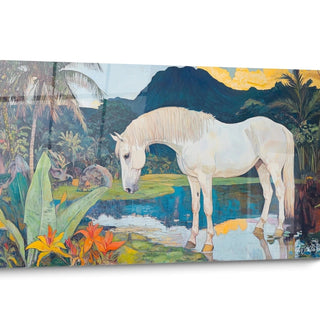 Paul Gauguin6
artworks
Paul Gauguin6
artworks
-
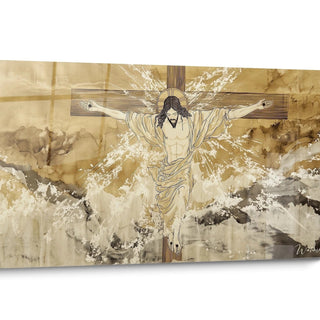 Peter Paul Rubens6
artworks
Peter Paul Rubens6
artworks
-
 Pierre-Auguste Renoir6
artworks
Pierre-Auguste Renoir6
artworks
-
 Piet Mondrian11
artworks
Piet Mondrian11
artworks
-
 Pieter Bruegel the Elder6
artworks
Pieter Bruegel the Elder6
artworks
-
 Rembrandt van Rijn4
artworks
Rembrandt van Rijn4
artworks
-
 Sandro Botticelli9
artworks
Sandro Botticelli9
artworks
-
 Sonia Delaunay6
artworks
Sonia Delaunay6
artworks
-
 Théodore Géricault7
artworks
Théodore Géricault7
artworks
-
 Vincent Van Gogh11
artworks
Vincent Van Gogh11
artworks
-
 Wassily Kandinsky10
artworks
Wassily Kandinsky10
artworks


All about Paintings inspired by Claude Monet
- Claude Monet Painting Presentation
- Claude Monet Paintings and Impressionist Light
- Claude Monet Paintings in Interior Design
- Claude Monet Paintings Investment
Immerse yourself in the enchanting world of Claude Monet paintings, true masterpieces of Impressionism that instantly transform any interior space. These magnificent works distinguish themselves through their unique ability to capture changing light and ephemeral atmospheres that the Impressionist master observed with unparalleled sensitivity.
Claude Monet paintings are not merely decorative elements, but genuine windows opening onto worlds where nature expresses itself in all its vibrant splendor. From the legendary water lilies of Giverny to the cliffs of Étretat, passing through the Rouen Cathedrals, each painting tells a visual story where color and light become the principal protagonists.
One of the most remarkable features of Monet's Impressionist paintings lies in their ability to metamorphose a room's atmosphere. Unlike classical works, Monet's paintings create dynamic ambiance through their vibrant brushstrokes and interplay of light that seem to animate the surfaces they inhabit.
Monet's distinctive technique, with its rapid and juxtaposed brushstrokes, allows his paintings to create a unique visual effect: from a distance, the image appears perfectly coherent, while up close, you discover a fascinating world of colored brushstrokes dancing together. This characteristic offers a visual experience that constantly renews itself depending on viewing angle and distance.
Large-format reproductions of Claude Monet paintings now allow this Impressionist magic to be brought into contemporary interiors, creating spaces where the boundary between art and reality gently fades away.
Claude Monet Paintings: Light Captors and Ambiance Transformers
Claude Monet paintings represent far more than simple artworks; they constitute genuine instruments of light capture whose influence on our perception of interior space remains unmatched. The singularity of these Impressionist masterpieces lies in their ability to radically transform a room's atmosphere through their revolutionary treatment of light.
How do Monet's paintings interact with a room's natural light?
A fascinating characteristic of Claude Monet paintings is their unique reactivity to ambient light. Unlike reproductions of classical works, Monet paintings possess this remarkable quality of "reacting" differently depending on the lighting of the space where they are displayed. This particularity is explained by the master's distinctive Impressionist technique: the use of pure juxtaposed colors rather than mixed pigments.
Scenes of morning mist on the Thames or the aquatic reflections of Giverny literally seem to change appearance throughout the day, creating the illusion of a living painting that evolves with daylight. This constant metamorphosis offers a visual experience that perpetually renews itself, transforming a static painting into a dynamic decorative element.
Discerning collectors strategically position their Monet paintings in spaces benefiting from variable natural light, thereby maximizing this changing effect that constitutes the painter's visual signature. A painting depicting Water Lilies placed in an east-facing room will offer a radically different chromatic experience in the morning and evening.
The space-amplifying effect of Monet paintings
An often-overlooked property of Claude Monet paintings lies in their ability to create a spatial enlargement illusion. Impressionist landscapes, with their vibrant horizons and atmospheric perspectives, function as virtual extensions of physical space. This characteristic makes Monet paintings particularly judicious choices for contemporary interiors with limited dimensions.
Panoramic views of the Giverny gardens or seascapes of Étretat act as visual windows that seem to push back walls, creating a sensation of expanded space. This optical illusion is explained by Monet's exceptional mastery of atmospheric depth effects and his ability to suggest infinity through his interplay of light.
Interior decorators frequently recommend large-format reproductions of Monet paintings for limited urban spaces, transforming cramped rooms into visually expansive environments through this pictorial opening onto light-bathed landscapes.
Can Monet paintings be considered spatial mood regulators?
Research in environmental psychology has demonstrated the significant influence of Claude Monet paintings on the psychological well-being of space occupants. The characteristic color palette of the Impressionist master, dominated by calming blues, revitalizing greens, and soothing violets, exerts a measurable effect on a room's emotional perception.
Series depicting Water Lilies, with their circular compositions and aquatic tonalities, are particularly effective at inducing a relaxation state comparable to that generated by contemplating a natural body of water. This property makes Monet paintings privileged choices for spaces dedicated to relaxation or meditation.
Monet's Impressionist paintings act as genuine ambiance modulators, instantly transforming the emotional atmosphere of an interior. A painting depicting haystacks bathed in golden light can literally warm a room with cool tonalities, creating a psychological contrast that balances the overall sensory experience of the space.
Claude Monet Paintings: Chromatic Orchestration of Contemporary Living Space
Claude Monet paintings transcend their traditional decorative function to become genuine chromatic orchestrators in modern living. Their influence on interior arrangement far exceeds simple aesthetic appreciation to extend to the very structuring of domestic color space.
Monet paintings as chromatic anchor points
In contemporary interior architecture, Claude Monet paintings assume a fundamental role rarely attributed to artworks: that of chromatic anchor point around which the entire color scheme of a space articulates. This distinctive function is explained by the master Impressionist's particularly rich and nuanced palette.
Forward-thinking interior designers now employ the technique called "Monet chromatic radiation" which consists of extracting secondary and tertiary hues from a Monet painting to subtly diffuse them throughout the immediate environment. A painting depicting Giverny poppies can thus generate a complete chromatic journey, from vibrant reds to complementary greens, creating sophisticated visual cohesion.
This approach radically transforms traditional artistic integration design: the painting no longer adapts to existing space but becomes the generator of that space's chromatic identity itself. Secondary textile, furniture, and decorative elements then harmonize with the precise nuances identified in the Impressionist work.
How can you exploit the climatic ambivalence of Monet paintings?
A fascinating characteristic of Claude Monet paintings lies in their unique ability to simultaneously evoke multiple seasons or weather conditions. This atmospheric ambivalence allows their strategic integration into transition or multipurpose spaces, creating visual bridges between different functional zones of a home.
The "Rouen Cathedrals" series, where the same architectural structure appears under different lighting conditions, perfectly illustrates this climatic versatility. Placed between a luminous living space and a darker hallway, such a painting creates a natural visual transition, softening the passage between two distinct ambiances.
Residential biophilia specialists particularly recommend paintings depicting the Giverny gardens for their ability to reproduce the "four seasons" effect in a fixed interior space. This characteristic allows counterbalancing the impression of temporal monotony often felt in contemporary urban homes disconnected from natural cycles.
The influence of Monet paintings on volumetric perception
An often underestimated property of Claude Monet paintings concerns their impact on volumetric perception of a space. Unlike classical figurative works that create a simple depth illusion, Monet's Impressionist compositions subtly modify the complete three-dimensional perception of the room where they are displayed.
This characteristic is explained by the master's distinctive technique which privileges overall atmospheric impression rather than precise contour definition. Morning mists on the Seine or soft lighting effects in woodland create a sensation of undefined space that seems to extend beyond the room's physical boundaries.
Interior architects exploit this property in constrained spaces by strategically positioning large-format reproductions of paintings such as "The Lily Pond" or "Impression, Sunrise". This approach transforms spatial perception by substituting gradual transition for rigid wall boundaries, moving into pictorial space that seems to extend the physical environment.
Claude Monet paintings depicting aquatic scenes are particularly effective at creating this volumetric expansion effect, the reflections and transparency characteristics of water visually multiplying available space and creating a sensation of infinite depth within modestly-dimensioned interiors.
Claude Monet Paintings: Acquisition Strategies and Heritage Valorization
Claude Monet paintings today represent far more than simple aesthetic acquisition; they constitute genuine instruments of heritage valorization whose specific appreciation and preservation characteristics merit particular attention. Investment in these Impressionist masterpieces follows unique dynamics in the art world.
The functional duality of high-definition reproductions
The contemporary market for museum-quality reproductions of Claude Monet paintings presents a fascinating characteristic: the convergence between aesthetic excellence and heritage profitability. Unlike reproductions of other artists, high-definition Monet paintings maintain notable appreciation even in their non-original versions.
This particularity is explained by the master Impressionist's distinctive pictorial technique, whose interplay of light and subtle chromatic nuances particularly benefit from advanced reproduction technologies. Multi-layer pigment printing processes now reproduce with surprising fidelity the overlapping brushstrokes characteristic of Monet paintings that give them their unique luminous vibration.
Discerning collectors now integrate these premium reproductions into a tiered investment strategy: the acquisition of certified museum reproductions in limited editions constitutes an accessible first step toward building an artistic heritage centered on Impressionism. These pieces themselves experience notable appreciation on the secondary market, particularly for emblematic series such as Water Lilies or Cathedrals.
Can Monet paintings be considered counter-cyclical assets?
Recent econometric analyses reveal a singular characteristic of Claude Monet paintings: their remarkable resilience against macroeconomic fluctuations. This distinctive property sets them apart even within the already relatively stable Impressionist art market.
Data compiled by the Artprice Global Index demonstrates that Monet paintings have systematically outperformed traditional stock indices during turbulent economic periods over the past two decades. This stability is partially explained by the aesthetic universality of the master's works, whose appreciation transcends cultural boundaries and transient fashions.
Wealth management advisors now recommend acquiring certified reproductions of Claude Monet paintings as a diversification component for modern investment portfolios. Their dual function—daily aesthetic appreciation and progressive value reserve—represents a rare case of an asset combining immediate enjoyment with long-term heritage security.
The influence of seasonal variations on Monet paintings valorization
A fascinating market observation concerns the cyclical value variations of different thematic series of Claude Monet paintings. This value seasonality, unique in the Impressionist art world, offers strategic opportunities for informed collectors.
Reproductions from winter series such as "The Magpie" or snowy views of Argenteuil systematically experience significant appreciation during autumn months, while representations of blooming gardens like "The Artist's Garden at Giverny" see their demand peak in spring. This phenomenon reflects the profound emotional connection acquirers establish with Monet paintings, seeking either resonance or contrast with their immediate seasonal environment.
Optimal acquisition strategies thus consist of anticipating these predictable cycles, acquiring summer representations during winter and inversely. This counter-cyclical approach not only optimizes initial investment but also progressively builds a balanced collection reflecting the seasonal diversity so characteristic of the Impressionist master's body of work.
FAQ: Claude Monet Paintings
What is the best way to authenticate a Claude Monet painting?
Authenticating a Claude Monet painting requires a multidisciplinary approach combining provenance analysis, stylistic examination, and advanced scientific techniques. Only experts accredited by the Wildenstein Institute, holder of the artist's catalogue raisonné, can issue official authenticity certificates. For quality reproductions, seek certifications from museums holding the original works and limited edition numbers.
How do you protect a Claude Monet painting from light damage?
Claude Monet paintings, particularly sensitive to photochemical degradation due to specific pigments used by the artist, require appropriate UV protection. Modern reproductions benefit from integrated anti-UV treatments, but it remains recommended to avoid direct exposure to sunlight. Installing UV filters on windows and using low-ultraviolet-emission LED lighting ensures optimal preservation of the delicate nuances characteristic of the Impressionist master's work.
Which Claude Monet paintings are best suited for contemporary minimalist spaces?
In contemporary minimalist interiors, Claude Monet paintings from late series such as "Water Lilies" and "Japanese Bridges" integrate harmoniously thanks to their quasi-abstract composition and broad chromatic expanses. These works, characterized by progressive form simplification favoring pure expression of light and color, create a fascinating dialogue with the streamlined lines of modern spaces, bringing emotional depth and visual complexity without disrupting the minimalist balance of the whole.


