


Japanese Wall Art
Discover our collection Japanese Wall Art in acrylic glass, a series of artworks that captures the essence and beauty of Japanese culture. Each Japanese Wall Art showcases the delicacy of traditional landscapes and the elegance of Japanese symbols, while being enhanced by the brilliance of acrylic glass. These artworks offer a perfect fusion of tradition and modernity, creating a soothing and refined atmosphere. Ideal for transforming your space, our Japanese Wall Art immerses you in a unique artistic universe, blending harmony and serenity.
 Tree of Destiny Painting - Japan Edition273,90 €
 Beyond the Clouds Wall Art - Mount Fuji Asia Edition273,90 €
 Mist and Cherry Blossoms Wall Art - Asia Edition273,90 €
 Hair in Flowers Wall Art - Asia Edition273,90 €
 Owl Under the Pines Painting - Japanese Asia Edition273,90 €
 Noble Anger Artwork - Japan Edition273,90 €
 Wall Art In the Silence of the Reeds - Japanese Asia Edition273,90 €
 Koi Dance Wall Art - Asia Edition273,90 €
 Spring Softness Wall Art - Asia Edition273,90 €
 Elegant Floral Wall Art - Japanese Asia Edition273,90 €
 Flight Toward the Sun Wall Art - Asia Edition273,90 €
 Blossoming Artwork - Asia Edition273,90 €
 Perfect Balance Artwork - Asia Edition273,90 €
 Sacred Mountain Awakening Canvas - Mount Fuji Asia Edition273,90 €
 Awakening Black Artwork - Japan Edition273,90 €
 Blood Flower Wall Art - Japan Edition273,90 €
 Flowers in Moonlight Wall Art - Asia Edition273,90 €
 Eternal Bloom Canvas - Asia Edition273,90 €
 Furious Guard Wall Art - Japan Edition273,90 €
 Ancestral Guardians Wall Art - Japan Edition273,90 €
 Graceful Waltz Wall Art - Asia Edition273,90 €
 High Perch Wall Art - Asia Edition273,90 €
 Eastern Hero Wall Art - Asia Edition273,90 €
 Flower Garden Wall Art - Asia Edition273,90 €
Explore further
In Japanese Wall Art

In the same family
Also explore the theme Asia


All about Japanese Wall Art
- Japanese Wall Art Presentation
- Symbolic Japanese Wall Art
- Japanese Minimalist Wall Art
- Contemporary Japanese Wall Art
Japanese wall art represents a unique artistic universe where millennia-old traditions and aesthetic refinement meet to create exceptional mural works. Far more than simple decorations, these creations inspired by Japanese culture bring a contemplative dimension and incomparable serenity to your interior.
Japanese art distinguishes itself through its ability to capture the very essence of represented subjects, whether misty mountain landscapes, delicately sketched cherry blossoms, or imposing waves with harmonious curves. Wall art featuring emblematic animals such as cranes, koi fish, or herons testify to this profound connection with nature, so characteristic of Japanese sensibility.
Each Japanese wall artwork tells a story, conveys an emotion, or illustrates a philosophical principle rooted in Japanese culture. Contemplating these works invites inner calm and meditation, creating a space of tranquility in our often-agitated contemporary interiors.
Whether you are drawn to the elegance of sumi-e (ink painting), the precision of ukiyo-e prints, or the refined compositions of Zen, Japanese wall art offers stylistic diversity that adapts to different spaces and moods. Their presence brings refined exoticism and unparalleled cultural depth to your mural decoration.
Discover in the following sections how these exceptional artworks can transform your interior, what profound symbolism they convey, and how to harmoniously integrate them into different decorative styles.
Japanese Wall Art and Its Rich Cultural Symbolism
Japanese wall art distinguishes itself through its profound symbolic dimension, rooted in centuries of cultural and spiritual traditions. Every motif, every element represented in these mural works tells a story and carries a message that transcends simple aesthetics.
What meanings are hidden behind traditional Japanese motifs?
The symbolic world of Japanese wall art revolves around natural elements rich in meaning. Mount Fuji, the national emblem, evokes permanence and stability in a changing world. Its majestic silhouette, often enveloped in clouds, represents the ideal of peaceful beauty to which the Japanese spirit aspires.
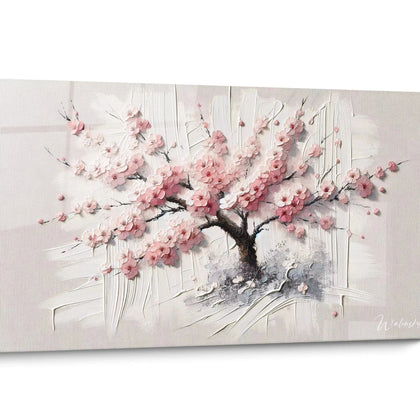
Cherry blossoms (sakura) embody ephemeral beauty and the concept of "mono no aware" - that sweet melancholy linked to the impermanence of things. Their delicate petals remind us that life is as precious as it is fleeting, inviting contemplation of the present moment.
The heron, a recurring figure in Japanese wall art, symbolizes longevity and patience. Its elegant and attentive posture evokes meditation and inner balance. Its presence in an interior brings an energy of calm vigilance and wisdom.
Japanese Wall Art as Portals to Zen Philosophy
Works inspired by Zen aesthetics are characterized by their minimalism and evocative power. A simple circle (ensō) can represent illumination, strength, elegance, and the universe. Its daily contemplation promotes meditation and connection to the present moment.
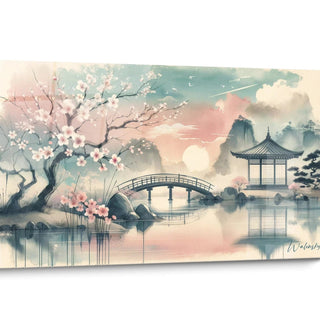
Misty mountain landscapes, so characteristic of Japanese wall art, are not merely decorative. They illustrate the concept of "ma" - that intermediate space-time where the true essence of things resides. These representations invite the gaze to lose itself in empty spaces, encouraging profound mental respiration.
• Stylized wave patterns evoke the cycles of life and the perpetual flow of existence
• Bamboo representations symbolize resilience and the ability to bend without breaking
• Zen garden scenes encourage the harmonization of energies in your living space
How do seasons influence the symbolism of Japanese wall art?
Japanese sensitivity to natural cycles is reflected in wall art evoking the five traditional seasons. Each carries its own energy and can transform the atmosphere of a room:
Spring (haru), marked by cherry blossoms, brings renewal and optimism. A wall artwork representing this season infuses an energy of rebirth and new possibilities into your space.
Summer (natsu) is characterized by scenes of freshness - waterfalls, rivers, and lush foliage. These artworks create a visual sensation of freshness, particularly welcome in rooms exposed to heat.
Autumn (aki) stands out for its flaming maple foliage. These wall pieces with warm colors bring an enveloping and meditative atmosphere, ideal for relaxation or reading spaces.
Winter (fuyu) manifests through snowy landscapes of sober elegance. These works radiate an atmosphere of profound calm and contemplation, perfect for bedrooms or meditation spaces.
The fifth season, lesser known in the West, is the rainy season (tsuyu). Wall art evoking this transitional period, with its gray and soft green tones, symbolizes purification and transition, bringing gentle transformation energy to your interior.
Japanese wall art is therefore not simply decorative elements, but genuine invitations to enrich your daily life with millennia-old philosophical concepts. Their presence on your walls creates an ongoing dialogue between Eastern tradition and contemporary life, between visible and invisible, between permanence and change.
Minimalist Japanese Wall Art: The Art of the Essential for Your Interior
Japanese minimalist aesthetics, known as "ma", transcends simple decorative trend to anchor itself in a profound philosophy of creative emptiness. Minimalist Japanese wall art perfectly embodies this search for the essential, where each stroke, each negative space, possesses deliberate intention.
Why do minimalist Japanese wall artworks radically transform a room's energy?
Minimalist Japanese wall art distinguishes itself through its unique ability to create focal points of tranquility in our often visually overstimulated interiors. Unlike Western artworks that often seek to fill space, Japanese art celebrates emptiness as an active element of composition.
In the sumi-e (ink painting) tradition, a simple brushstroke can capture the essence of a mountain, a bird in flight, or a pine branch. This economy of means creates powerful visual impact, inviting the observer to complete the work through their own imagination. The space surrounding the subject becomes as important as the subject itself.
Large-format minimalist Japanese wall artworks function particularly well in contemporary spaces with clean lines. A monochrome artwork representing a simple cherry branch or a Zen circle (ensō) can completely transform the atmosphere of a living room or entryway, creating a visual anchor that instantly soothes the eye and mind.
• The use of negative space in these artworks creates visual breathing in your interior
• The asymmetrical compositions typical of Japanese art bring dynamic balance
• The restricted color palette promotes concentration and mental clarity
Harmony of Contrasts in Minimalist Japanese Wall Art
The principle of "notan" - balance between light and shadow - constitutes one of the visual signatures of minimalist Japanese wall art. This subtle interplay of contrasts creates captivating visual dynamics that transcend the apparent simplicity of these works.
Wall artworks representing misty mountain landscapes in black ink on white background perfectly illustrate this search for balance between fullness and emptiness. The sketched peaks and valleys suggested by a few delicate strokes invite contemplation and reverie.
Refined representations of birds in flight, reduced to a few expressive brushstrokes, capture the very essence of movement and freedom. Placed in a hallway or transition space, these artworks create a sensation of openness and elevation.
Japanese wall art of vertical format (kakemono) adapt perfectly to narrow spaces like entryways or staircases. Their vertical composition naturally guides the eye upward, creating an impression of space and height even in rooms with modest dimensions.
How to integrate minimalist Japanese wall art into different decorative styles?
The versatility of minimalist Japanese wall art allows it to harmonize with varied decorative styles, well beyond traditional Japanese aesthetics.
In Scandinavian interiors, a monochrome artwork representing an abstract mountain or winter landscape naturally extends the search for purity and luminosity inherent to this style. The soft tones and simplicity of lines create perfect visual continuity.
For industrial spaces with raw materials, a large format representing a stylized wave or a geometric pattern inspired by traditional kimonos brings a welcome touch of refinement that balances environmental roughness. The contrast between the delicacy of Japanese brushwork and the robustness of surrounding materials creates a fascinating visual tension.
In contemporary interiors with clean lines, a triptych of abstract landscapes in black ink can become the focal point of a living room or dining space. The visual sequence created by the three panels invites the eye to travel from one image to another, stimulating contemplation.
Meditation or yoga spaces particularly benefit from the presence of minimalist Japanese wall art. A simple representation of a Zen circle (ensō) encourages concentration and inner harmony, creating an environment conducive to meditative practice.
Minimalist Japanese wall art is not merely decorative objects, but genuine tools for space transformation. Their presence brings visual clarity, philosophical depth, and aesthetic balance, inviting you to rediscover the power of emptiness and the beauty of the essential in our often-overloaded daily lives.
Contemporary Japanese Wall Art: Artistic Fusion Between Tradition and Modernity
Contemporary Japanese wall art represents a fascinating evolution of Japanese art, where centuries-old traditions and modern influences intertwine to create mural works of profound originality. These hybrid creations bring unique cultural dimension to current interiors, far beyond simple decorative effect.
How do contemporary artists reinvent traditional Japanese aesthetics?
The neo-Japonisme characterizing contemporary Japanese wall art manifests through bold reinterpretation of traditional codes. Classical ukiyo-e ("floating world" prints) are deconstructed, enlarged, or fragmented to create compositions that dialogue with Western contemporary art.
Modern artists appropriate ancestral techniques like sumi-e (ink painting) or nihonga (traditional Japanese painting) to apply them to unexpected subjects - urban scenes, expressionist portraits, or geometric abstractions. This fusion creates wall artworks that resonate simultaneously with multiple levels of cultural reading.
Large panoramic formats, inspired by traditional folding screens (byōbu), offer spectacular visual immersion. These contemporary Japanese wall artworks transform an entire wall into a contemplative experience, creating a genuine portal to a hybrid artistic universe.
• The use of unconventional materials such as metallic leaves or fluorescent pigments
• Integration of Japanese pop culture elements (manga, anime) within traditional compositions
• Reinterpretation of classical motifs through contemporary mixed-media techniques
What place do contemporary Japanese wall artworks occupy in modern architecture?
Large contemporary minimalist spaces provide the ideal setting for large-format Japanese wall art. In lofts or interiors with generous volumes, a work inspired by traditional folding screens can serve as visual separation while bringing major artistic dimension.
Professional reception spaces (corporate halls, conference rooms) particularly benefit from the presence of contemporary Japanese wall art. Their both accessible and sophisticated aesthetics create an impression of cultural refinement and international openness.
In constructions extensively using concrete, glass, and steel, contemporary Japanese wall art brings visual warmth and emotional depth that effectively counterbalances the potential coldness of industrial materials. The contrast between the organic quality of Japanese motifs and the geometric rigor of architecture creates a fascinating visual tension.
Transition spaces such as hallways or landing areas are magnified by sequences of contemporary Japanese wall artworks in vertical format. These works create a visual journey that naturally accompanies body movement through space, transforming a simple passage into an aesthetic experience.
Dialogue Between Contemporary Japanese Wall Art and Design Furniture
The association of contemporary Japanese wall art with design furniture pieces creates a fascinating intercultural dialogue in modern interiors. The clean lines of a Scandinavian sofa or minimalist coffee table resonate perfectly with Japanese aesthetic restraint.
Wall artworks in indigo tones (aizome) harmonize remarkably with interiors featuring neutral palettes. This color deeply rooted in Japanese tradition brings meditative dimension and incomparable visual depth to spaces dominated by whites, grays, and blacks.
In interiors with industrial influences, a contemporary Japanese wall artwork representing a stylized wave or geometric pattern inspired by traditional kimonos creates a welcome organic counterpoint. The delicacy of Japanese brushwork visually softens the roughness of surrounding raw materials.
Contemporary art collectors particularly appreciate hybrid works that fuse Japanese calligraphy with abstract expressionism. These wall artworks function as cultural bridges, creating visual dialogue between East and West while constituting centerpieces in an eclectic collection.
FAQ on Japanese Wall Art
What is the difference between a ukiyo-e and contemporary Japanese wall art?
The ukiyo-e is a traditional Japanese print produced between the 17th and 19th centuries, characterized by woodblock printing techniques and specific themes (courtesans, actors, landscapes). Contemporary Japanese wall art, on the other hand, integrates these historical influences but reinterprets them with modern techniques, more imposing formats, and current artistic sensibility, thereby creating a bridge between cultural heritage and contemporary expression.
How to maintain Japanese wall art in a humid environment?
Modern Japanese wall artworks designed for contemporary interiors are generally created on supports resistant to humidity. Nevertheless, avoid exposing them to direct sunlight or near a constant humidity source. Regular dusting with a soft feather duster is recommended. For particularly humid spaces such as bathrooms, choose wall art specifically treated with protective varnishes or prints on aluminum inspired by Japanese aesthetics.
Do Japanese wall artworks provide particular value according to Feng Shui?
Although Feng Shui is a Chinese practice rather than Japanese, Japanese wall art integrates harmoniously into this space arrangement philosophy. Water representations (waves, waterfalls) promote energy circulation and prosperity when placed in the southeast zone of a room. Mountain motifs bring stability and protection in the north zone, while floral representations stimulate creativity and harmonious relationships in the east and southwest zones respectively.


