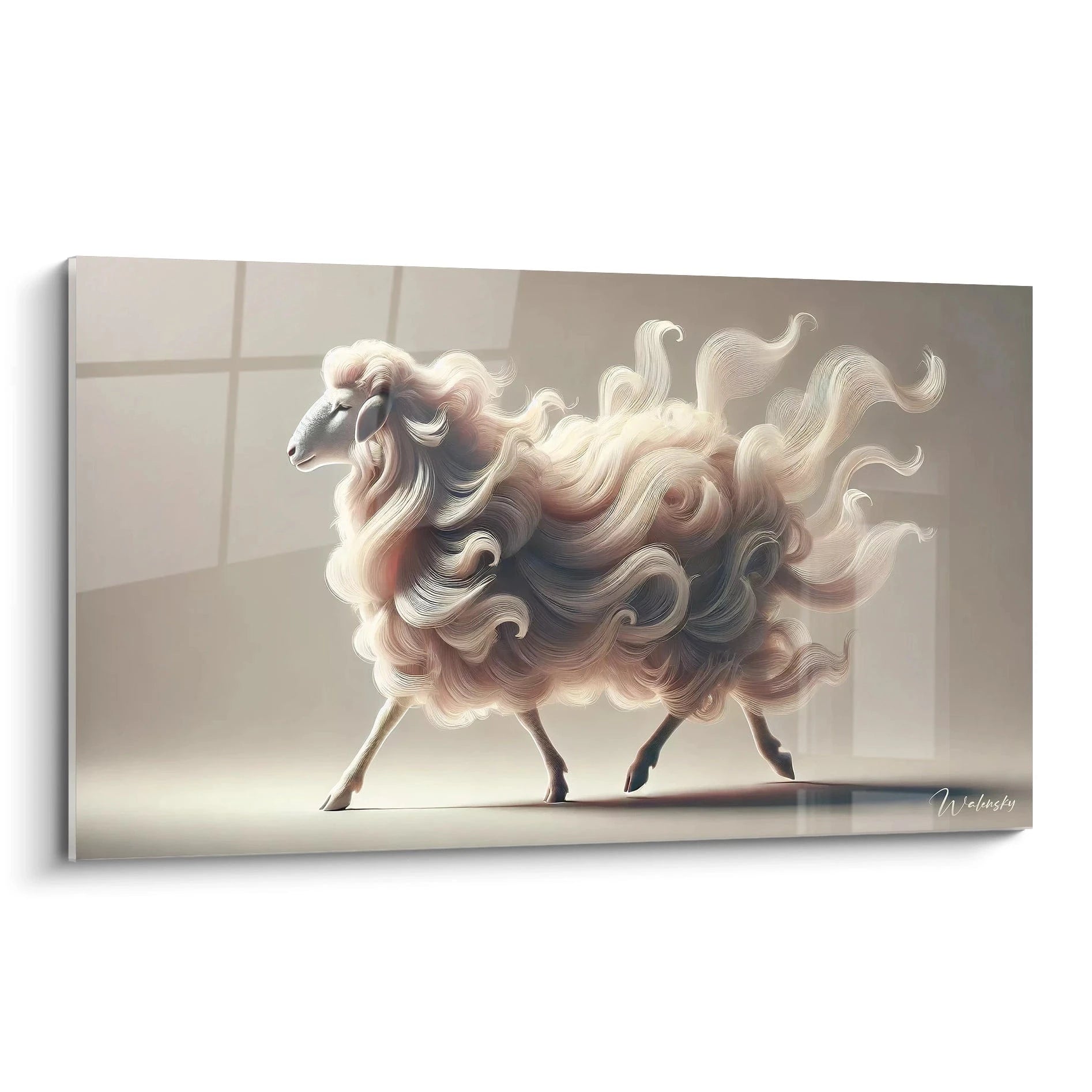
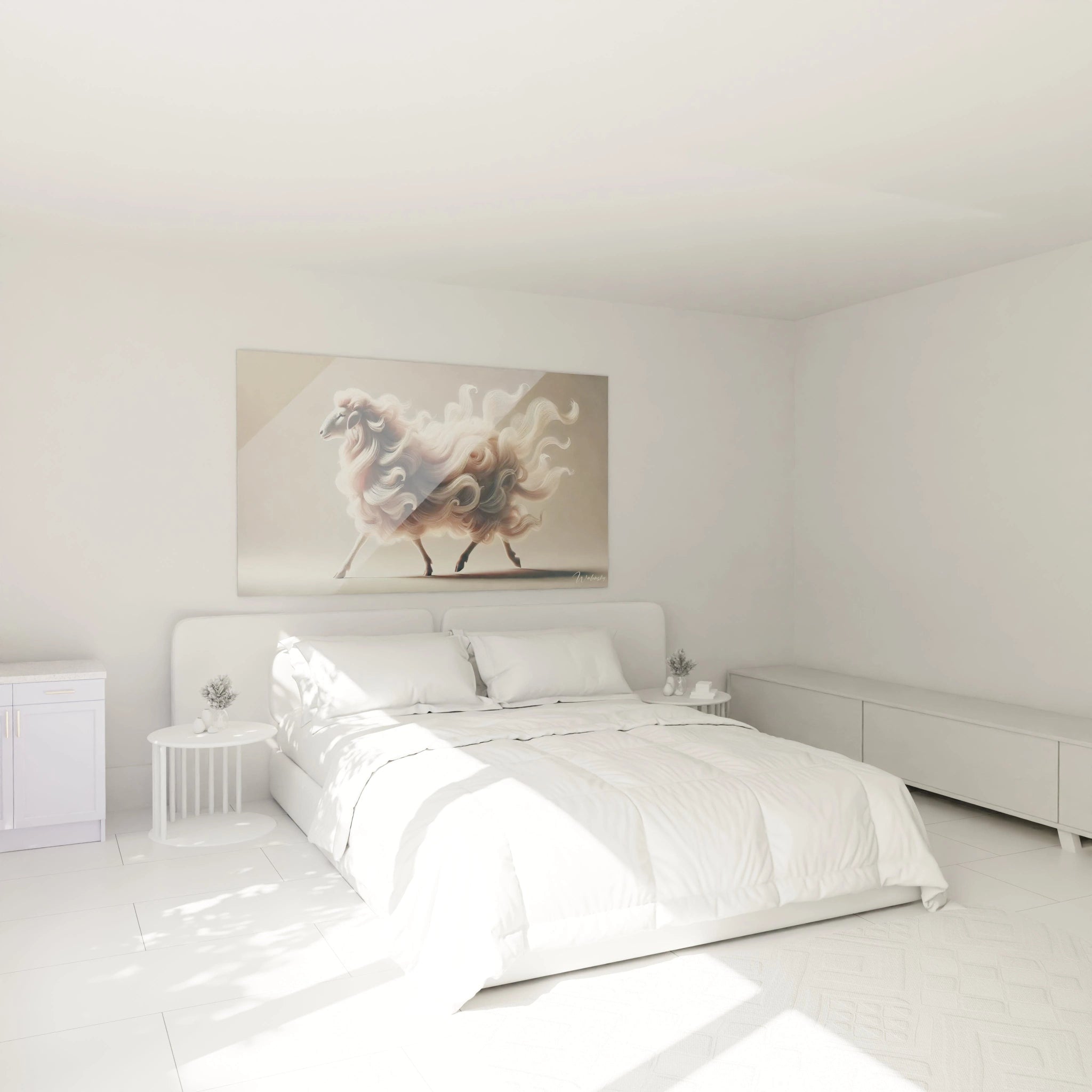
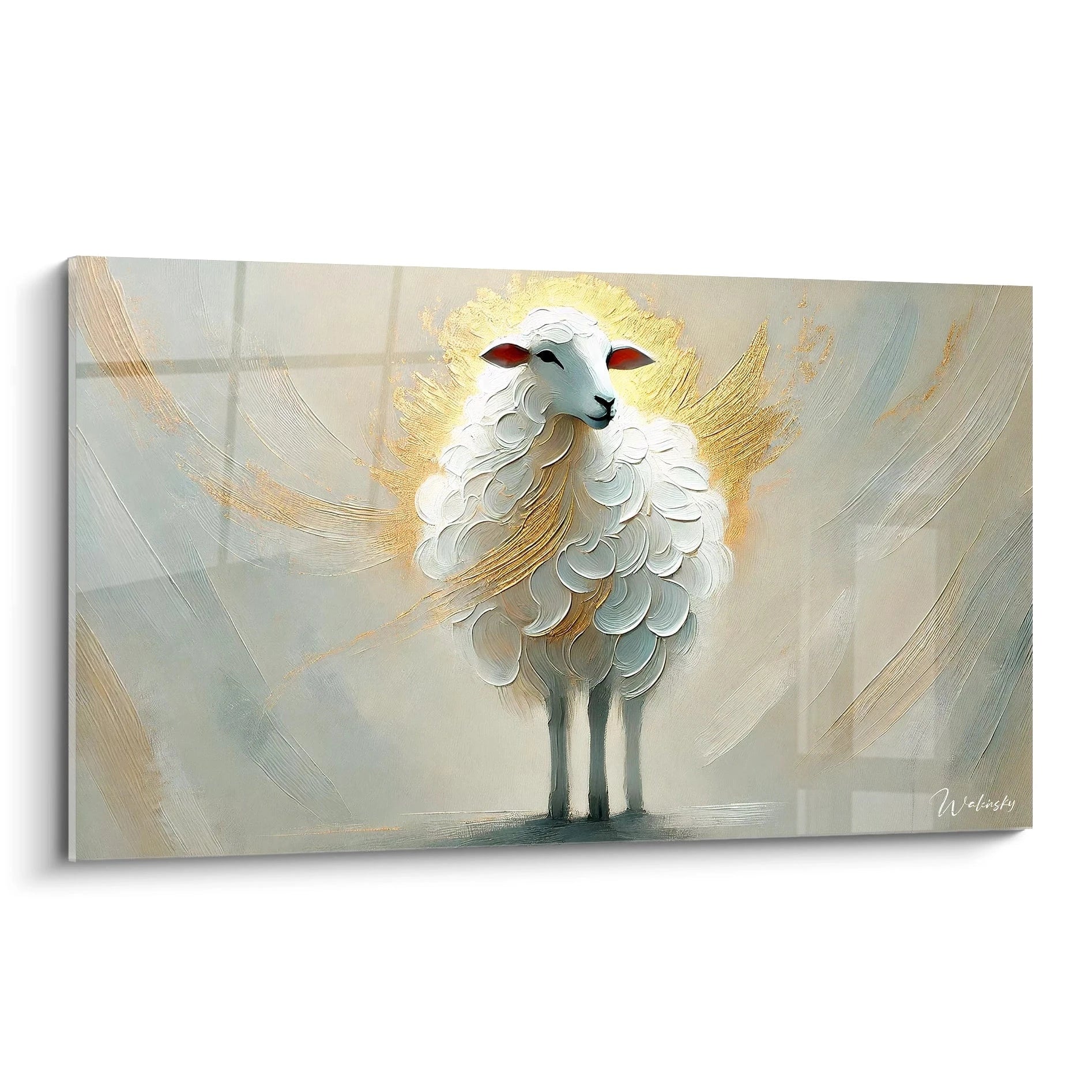
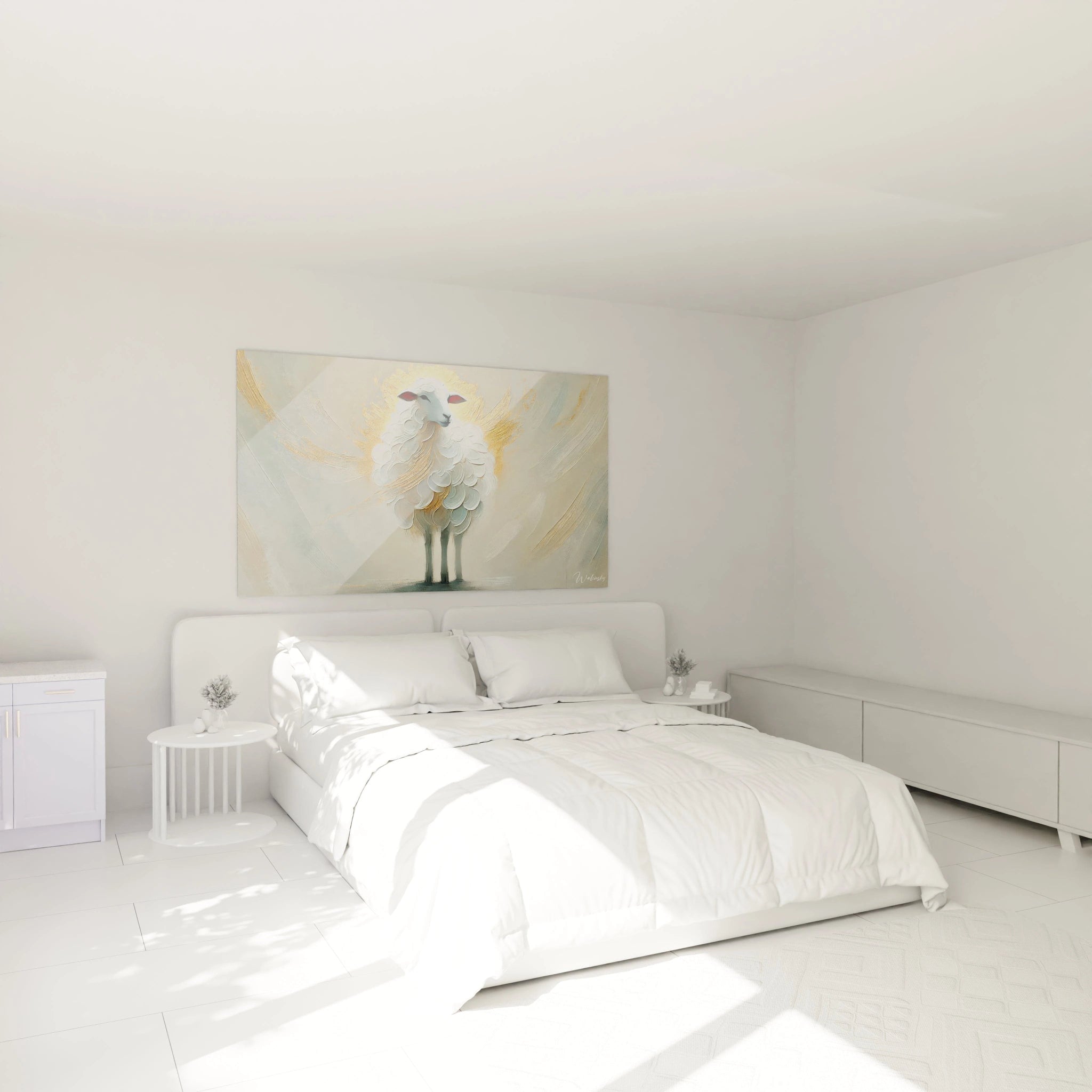
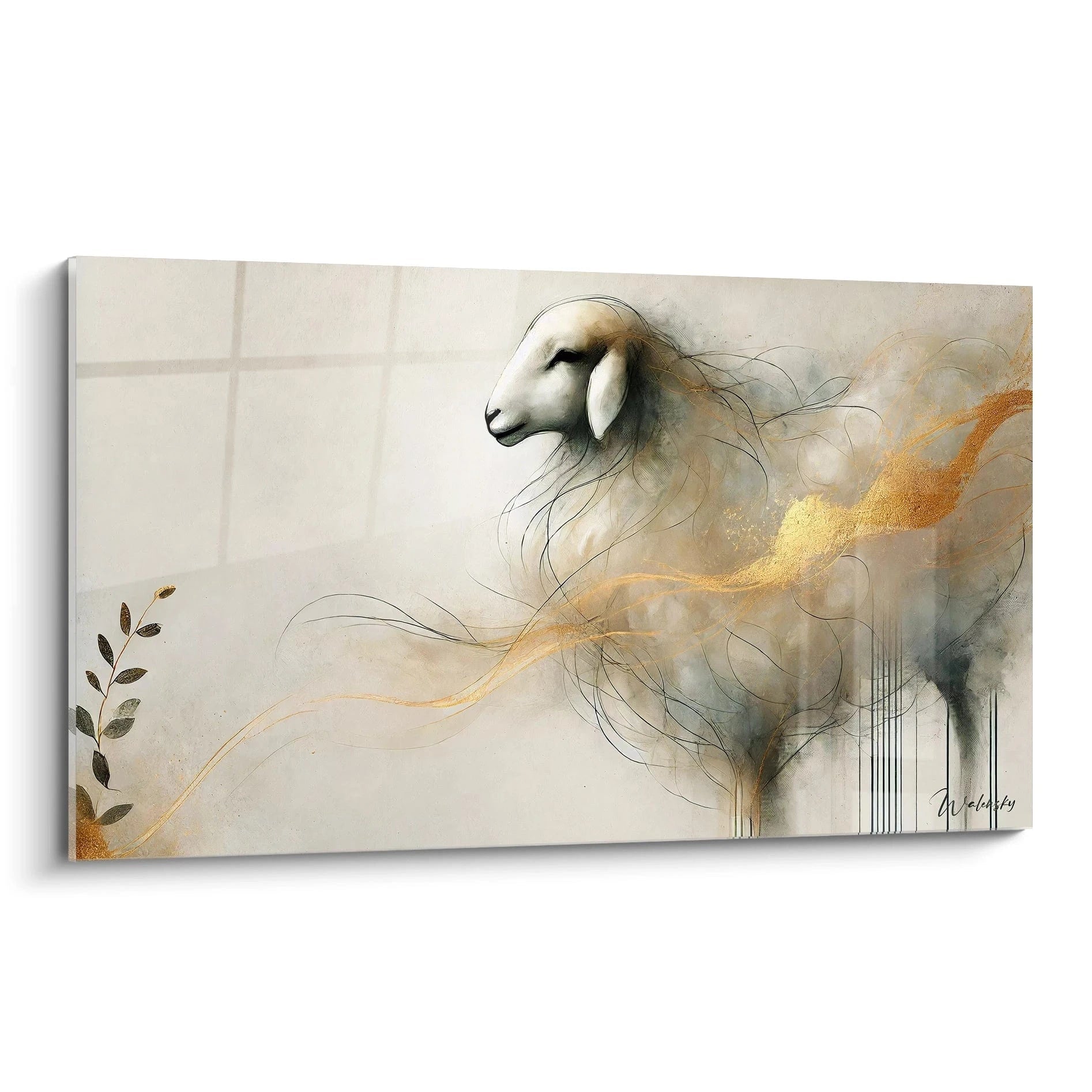
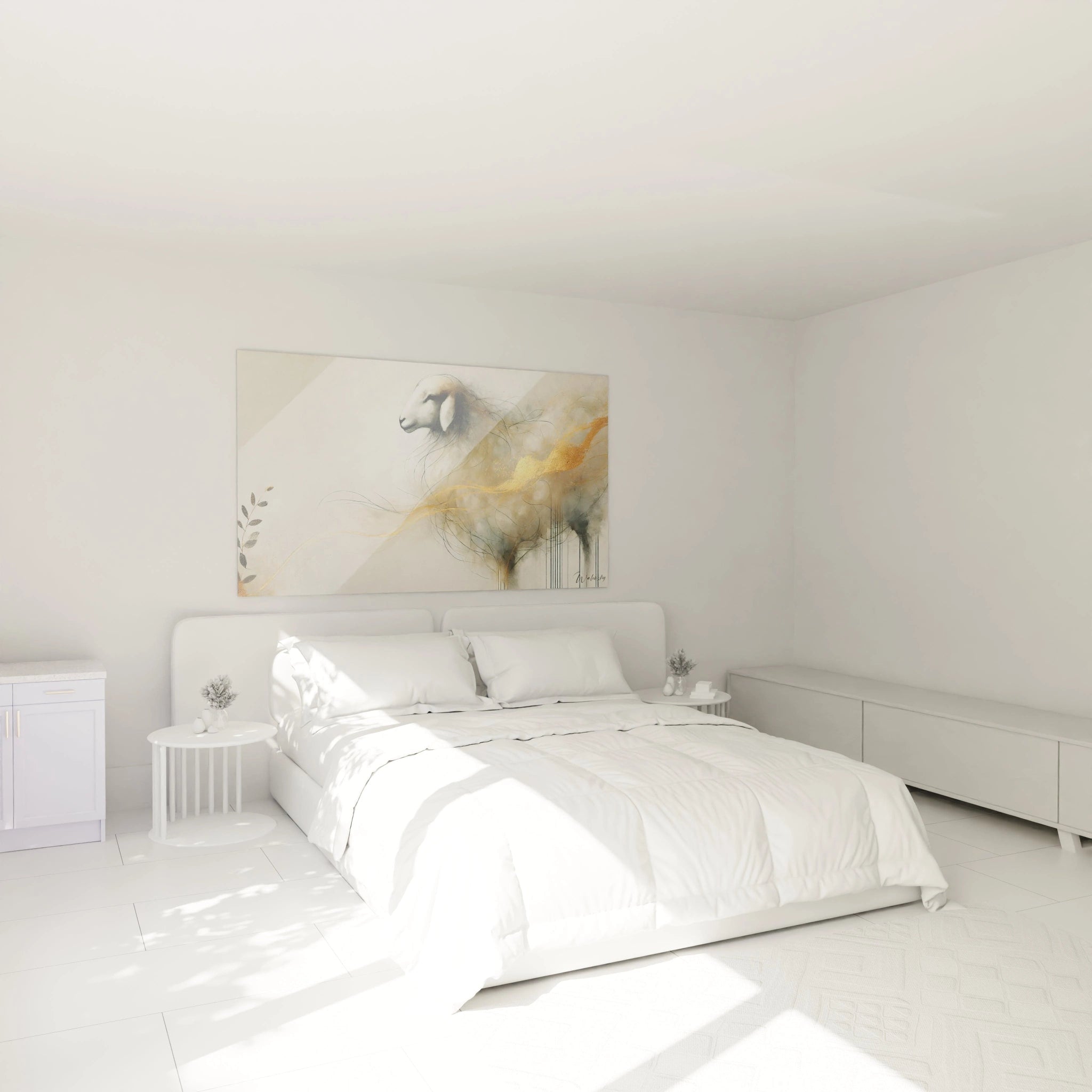
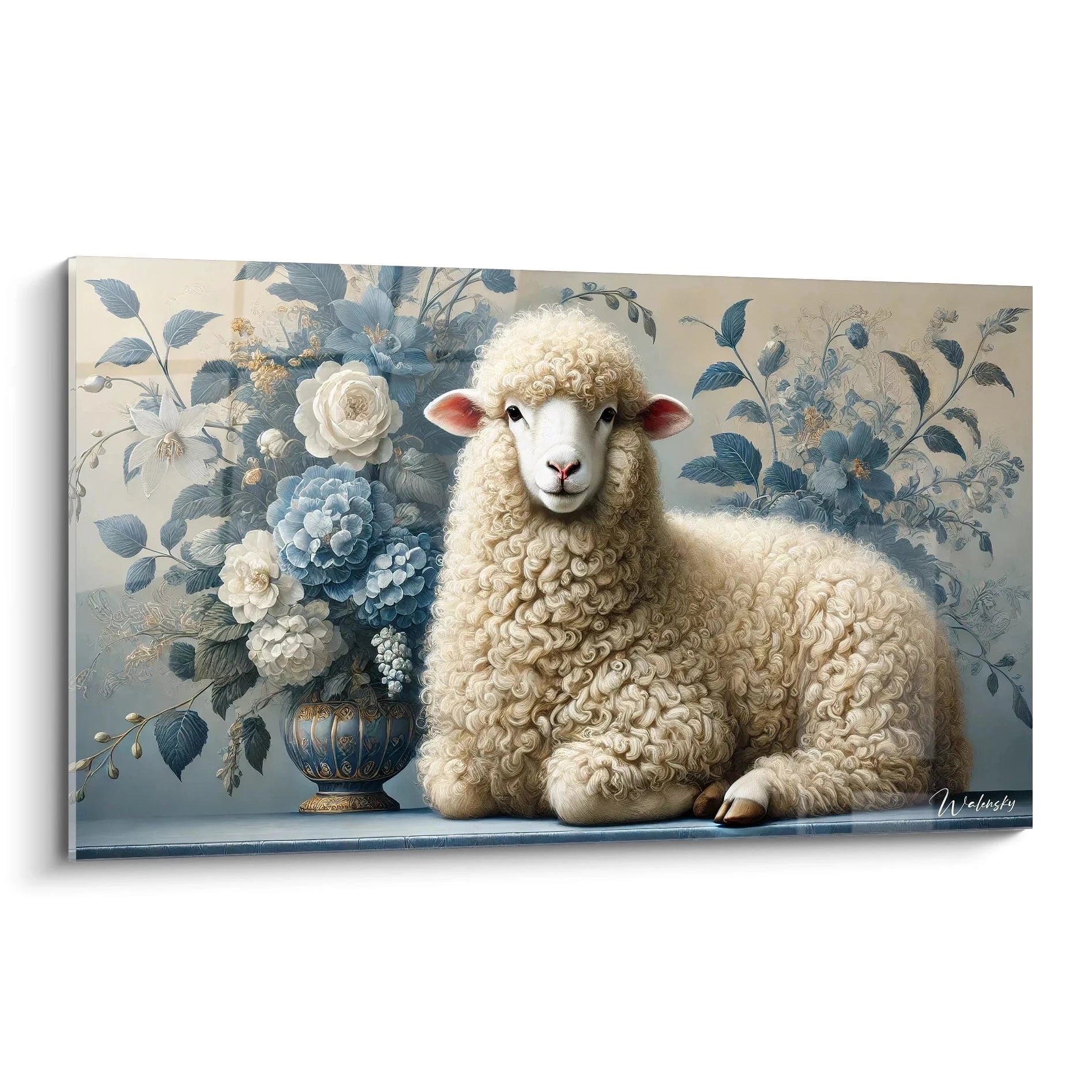
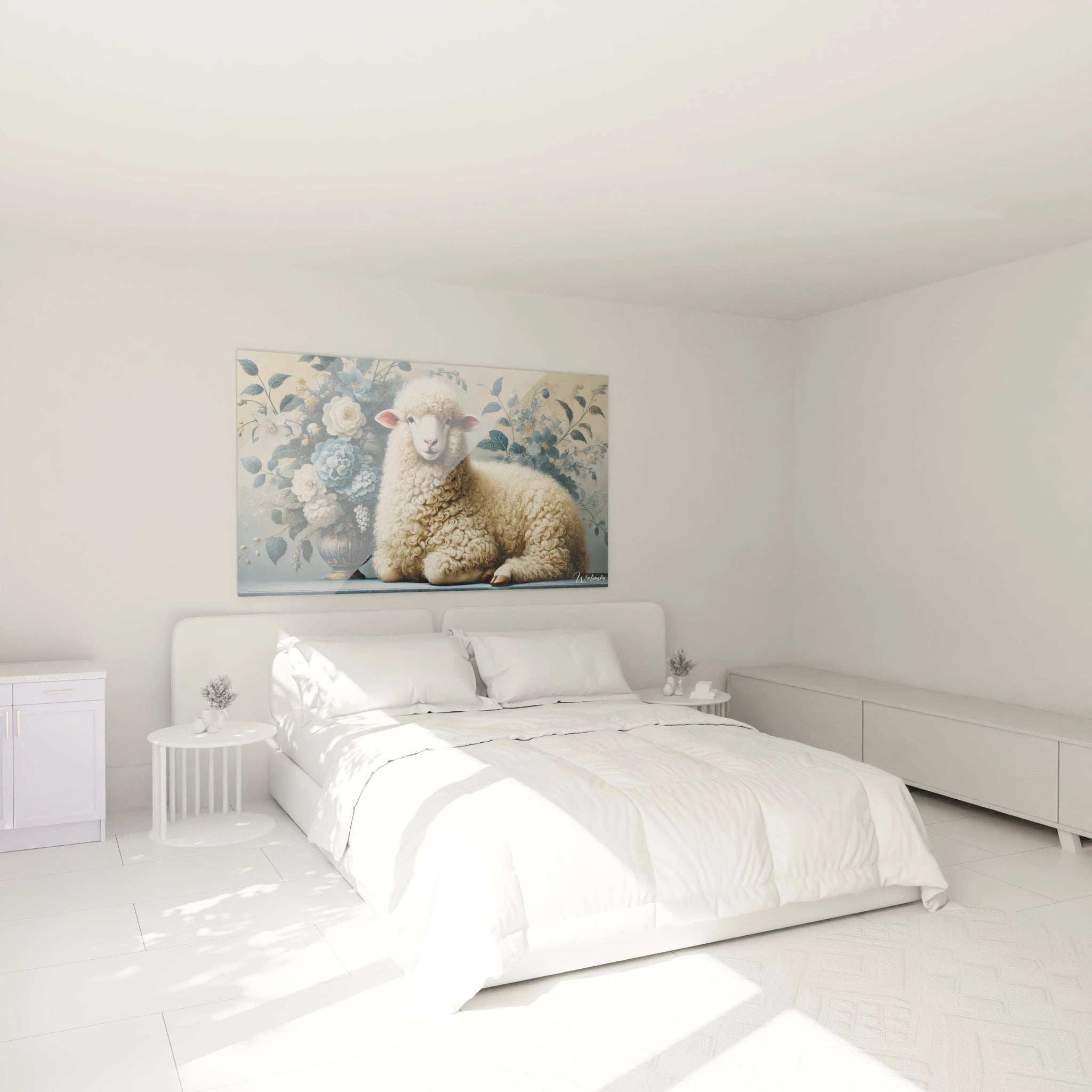
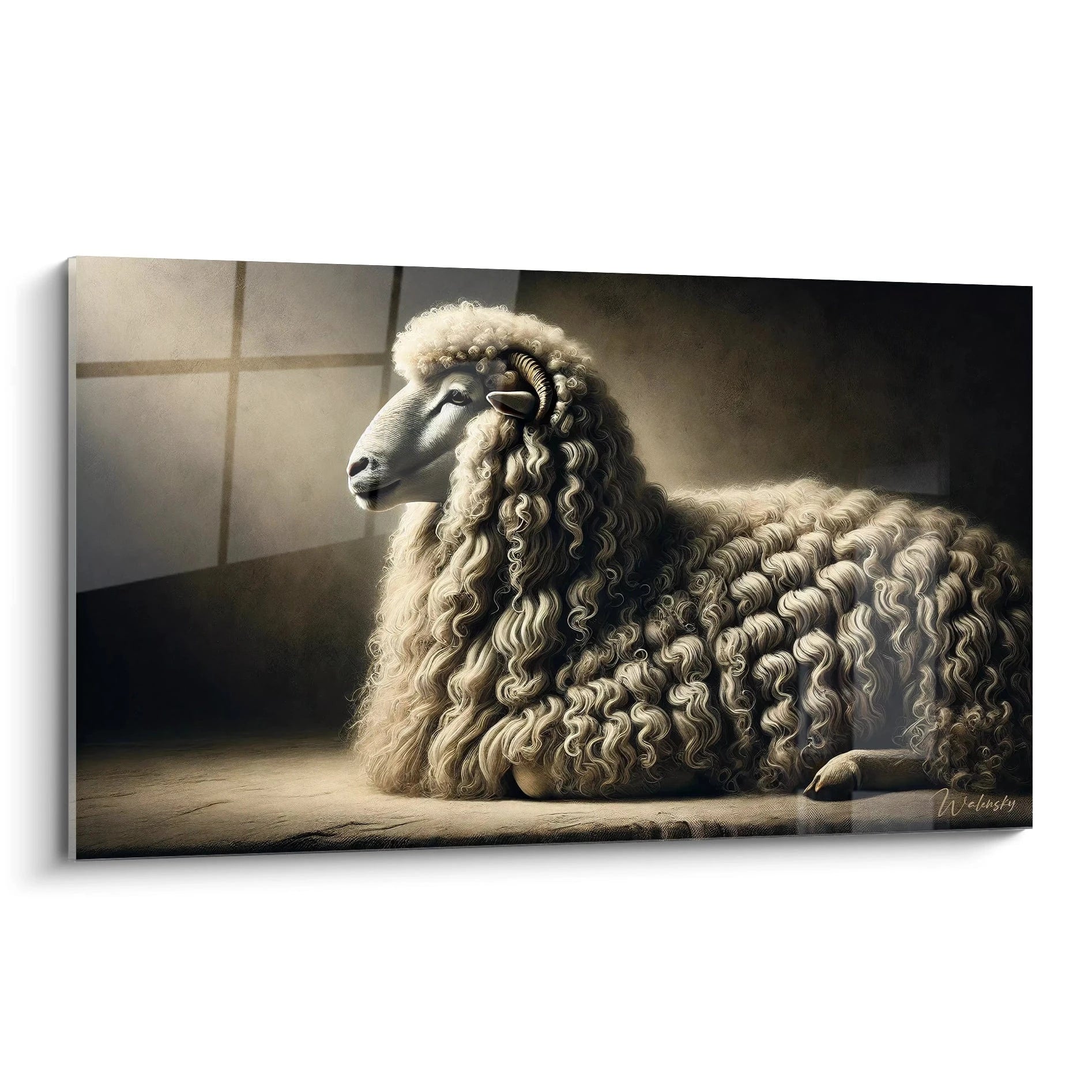
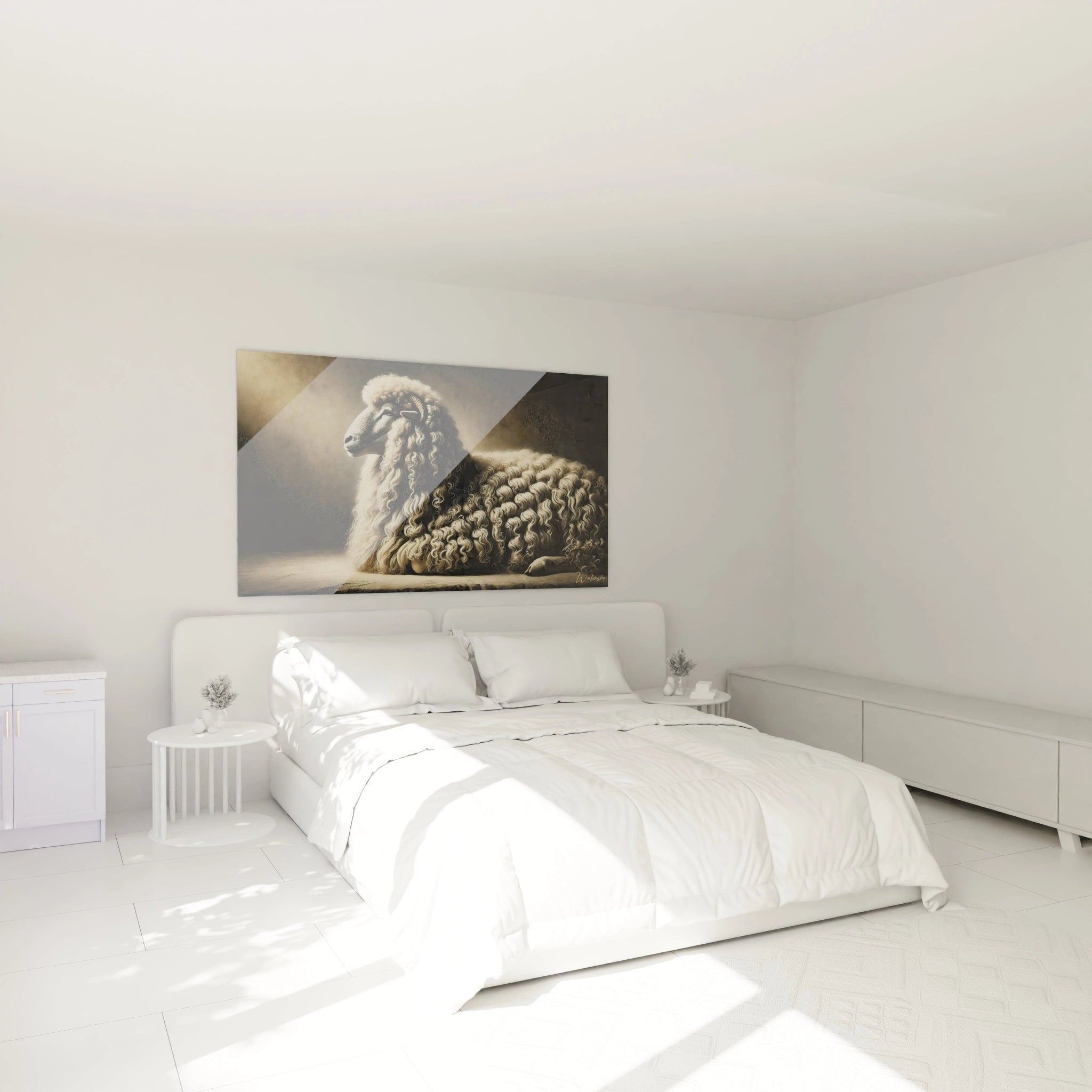
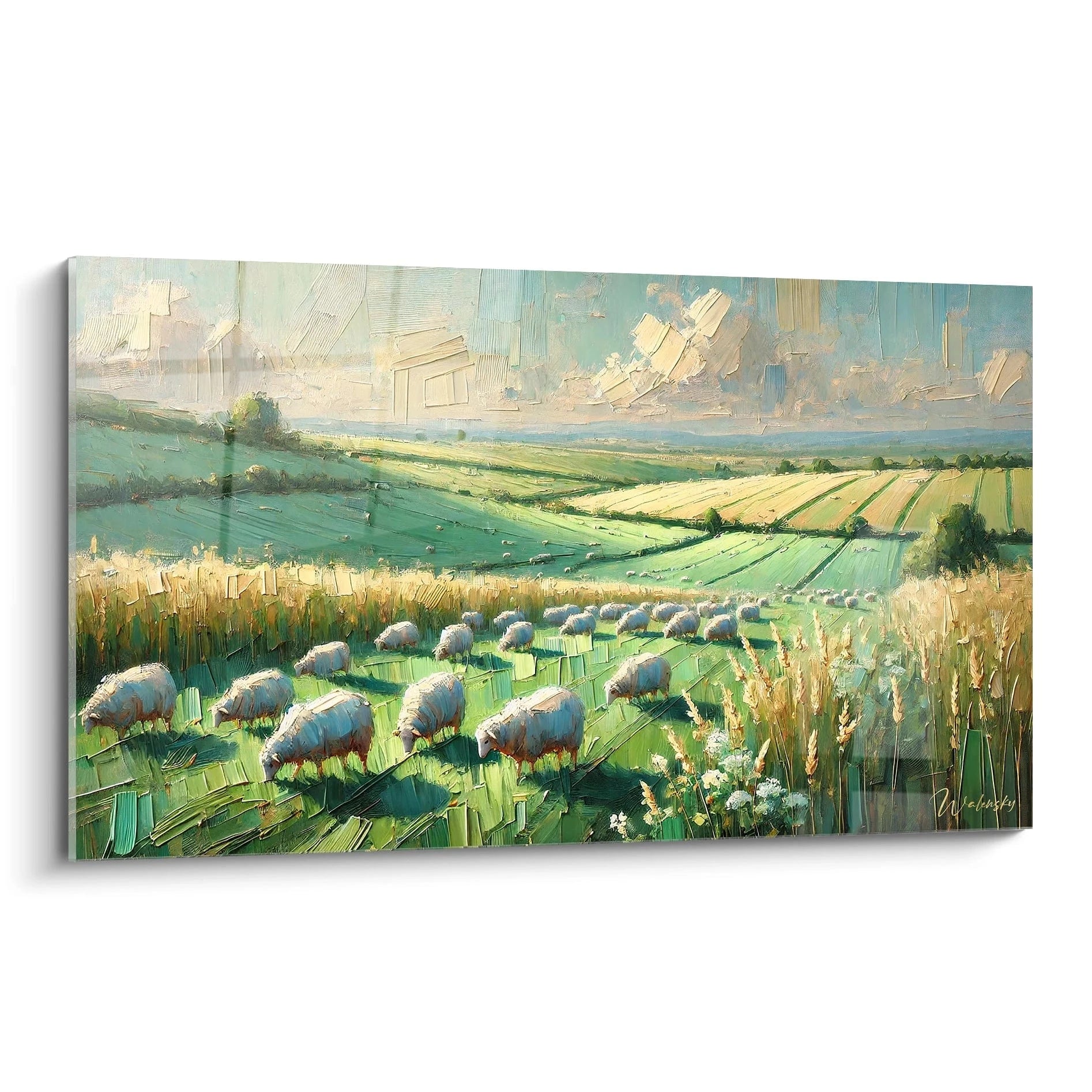
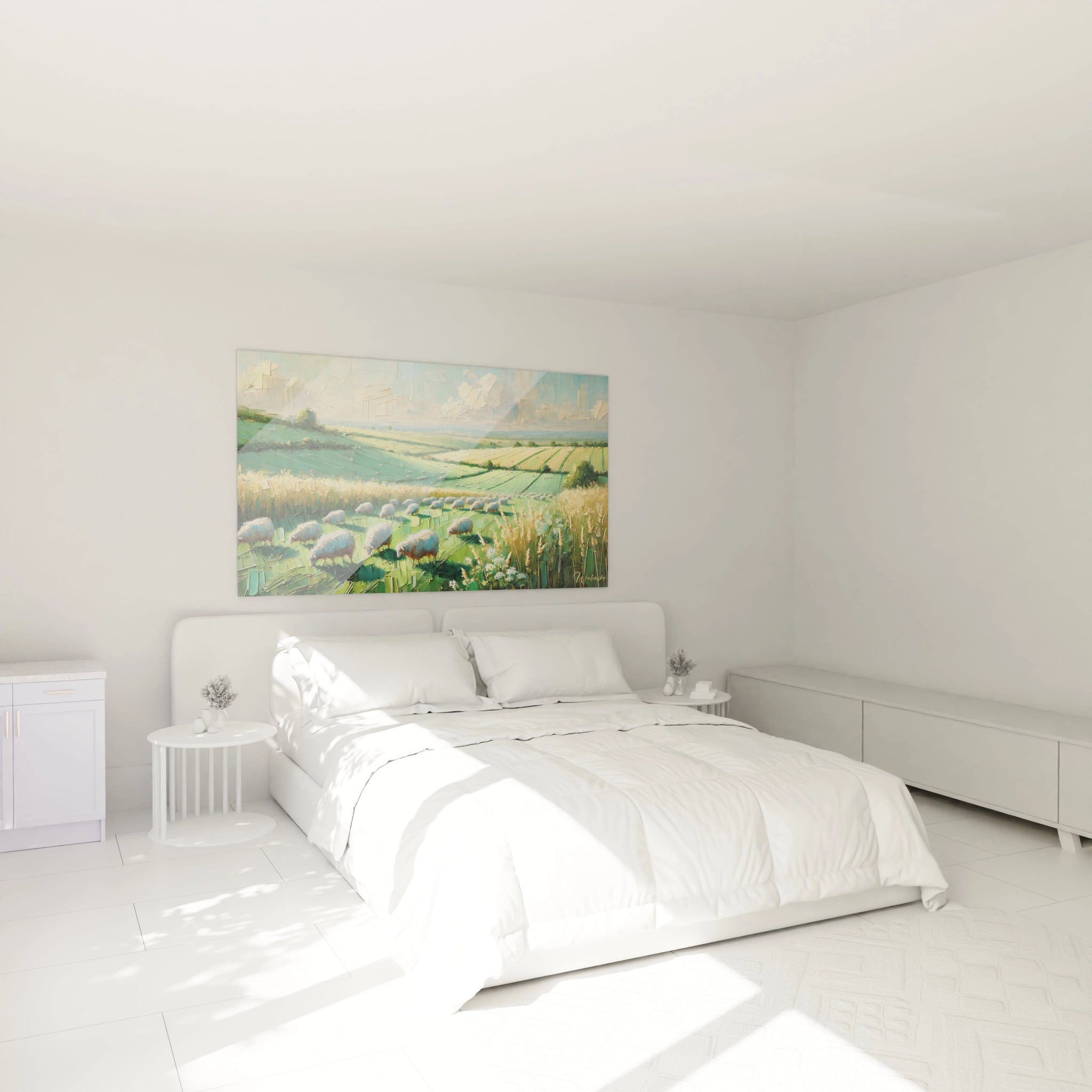
- Sheep Wall Art Presentation
- Sheep Wall Art for Children's Bedrooms
- Sheep Wall Art Contemporary Expression
- Sheep Wall Art Rural Ambiance
Wall art featuring sheep creates a peaceful and pastoral atmosphere in your home. Blending rustic charm with artistic elegance, these murals captivate through their ability to evoke the serenity of countryside landscapes. Whether you're seeking a focal point for your living room or a soothing decorative element for a child's bedroom, animal wall art featuring these peaceful woolly creatures will transform your space with character and originality. Discover how these ovine representations can enhance your interior decoration while expressing your sensitivity to nature and pastoral art.
Sheep Wall Art: Pastoral Expression For Children's Bedrooms
The world of sheep wall art dramatically transforms the atmosphere of children's bedrooms, creating an environment conducive to relaxation and imaginative development. These ovine mural works possess unique qualities that clearly distinguish them from other animal representations.
Why do sheep particularly fascinate children in wall art?
Unlike representations of felines or wild animals, sheep wall art exerts a scientifically proven calming effect on the sleep of young children. The woolly visual texture, rounded shapes, and soft expressions characteristic of sheep activate brain areas associated with security and calm in children. Recent research even revealed that children exposed to ovine representations in their sleep environment experience 23% faster sleep onset.
Mural representations of sheep also play a unique educational role. Beyond simple decoration, these images naturally familiarize children with the rural world and natural cycles. The recognizable silhouette of a sheep becomes a privileged conversation support between parents and children, facilitating the learning of first words and notions about nature.
The impact of specific colors in ovine representations
The color palettes of sheep wall art stand out for their specificity. Creators generally favor shades of off-white, cream, and beige that faithfully reflect natural wool, creating visual harmony impossible to reproduce with other animals. This particular range interacts ideally with natural light in children's rooms, diffusing a soft luminosity that promotes concentration during daytime activities.
The integration of pastel touches around ovine figures - typically soft greens evoking meadows or light blues recalling the sky - constitutes a visual signature unique to these artworks. This specific combination gently stimulates the visual development of babies without causing overstimulation, a perfect balance for spaces dedicated to children.
How to integrate sheep wall art into evolving decor?
An exceptional characteristic of sheep wall art lies in its ability to adapt to different phases of a child's growth. Unlike infantilizing patterns that quickly become outdated, ovine representations maintain their aesthetic relevance across ages, harmoniously accompanying the bedroom's evolution.
Positioned strategically facing the bed, these artworks become reassuring companions during sleep moments. Their soothing visual presence significantly reduces nighttime awakenings and facilitates returning to sleep. To maximize this effect, favor panoramic formats that naturally suit the horizontality of bed headboards.
- Position the artwork at eye level of the child to encourage daily visual interaction
- Pair the work with textile elements subtly echoing the ovine theme to create sensory coherence
- Adjust lighting to highlight the woolly textures represented, creating a soothing focal point
Sheep wall art also distinguishes itself through exceptional compatibility with different children's decorative themes. Whether a forest universe, celestial theme, or Scandinavian decor, ovine silhouettes integrate harmoniously without creating visual discord, a rare versatility among animal representations.
For growing children, these works facilitate the transition toward more mature decorations. Artistic representations of sheep, unlike other animals often infantilized, maintain aesthetic legitimacy even in a teenager's bedroom, particularly when executed in contemporary graphic styles or mixed techniques.
The unsuspected cognitive benefits of ovine representations
Pediatricians specializing in cognitive development now recognize the unique value of sheep wall art. The distinctive silhouette of these animals, with their recognizable proportions and complex textures, specifically stimulates observation and visual discrimination abilities in young children.
The natural contrasts present in these representations - between woolly whiteness and dark extremities - create visual patterns particularly effective for developing peripheral vision in infants. This gentle yet effective visual stimulation constitutes a unique developmental advantage of sheep wall art.
Rural scenes featuring these peaceful animals also become excellent narrative supports. Unlike artworks representing exotic or fantastical creatures, sheep exist in a familiar and reassuring universe that children can easily appropriate to develop their narrative abilities and imagination grounded in reality.
Sheep Wall Art: Contemporary Expression Of Pastoral Art
Contemporary art has seized upon ovine representations with singular passion, transforming the sheep into a genuine modern artistic icon. Far from simple pastoral evocations, contemporary sheep wall art now conveys profound messages about our relationship with nature and tradition.
How do contemporary artists reinvent ovine iconography?
The sheep, in contemporary mural art, transcends its traditional representation to become a powerful vector of social commentary. Unlike representations of other domestic animals, contemporary ovine works deliberately play on this animal's ambivalence, simultaneously a symbol of social conformism and primitive innocence. This semantic duality offers artists a unique territory of expression, impossible to reproduce with other animal subjects.
Mixed techniques dominate this artistic segment particularly. Creators frequently incorporate textile materials evoking wool - threads, frayed fabrics, reclaimed textiles - directly into their compositions. This tactile approach, almost exclusive to ovine representations, creates a sensory dimension transcending simple visual experience, almost inviting touch.
The influence of ecological movements on mural ovine representations
Contemporary sheep wall art distinguishes itself through strong connection to current environmental concerns. Unlike artworks representing endangered species generally emphasizing ecological fragility, ovine representations celebrate rather the millennia-old symbiosis between humans and animals, illustrating traditional livestock management in harmony with ecosystems.
This dimension expresses itself particularly in background treatment. Contemporary artists deliberately contextualize their ovine subjects within preserved or restored landscapes, underlining the crucial role of sheep in maintaining specific biotopes such as moorlands, alpine meadows, or wetlands. This ecological perspective gives sheep wall art unique narrative depth among animal representations.
- Works incorporating elements of landscapes shaped by traditional pastoralism
- Representations highlighting the specific biodiversity of ecosystems maintained by sheep
- Compositions illustrating the sustainable cycle of traditional wool production
The panoramic format has become particularly suited to contemporary ovine representations. This formal preference is not incidental: it reflects the characteristic visual experience of pastoral landscapes, where the gaze naturally embraces vast expanses punctuated by herd presence. For large interior spaces, these elongated formats create an immersive effect impossible to achieve with more conventional compositions.
The renewed symbolism of sheep in today's mural art
Contemporary creators consciously exploit the rich historical symbolism associated with sheep. In current minimalist compositions, the ovine silhouette simplified to the extreme becomes a powerful symbol of return to essentials, responding to growing aspirations toward voluntary simplicity and authenticity.
Some artists deliberately explore the paradox between individuality and collectivity, a theme particularly resonant in our era. Their compositions subtly play on tension between herd and individual, often visually isolating a specimen or attributing distinctive characteristics to certain sheep within a group. This visual exploration of individuality within the collective finds in the ovine subject its most natural and evocative expression.
The tactile dimension of contemporary representations deserves special attention. Artists frequently employ pronounced impasto techniques to render woolly texture, creating works that almost solicit touch. This haptic approach fundamentally differentiates sheep wall art from other animal representations, generally flatter and less textured.
The architectural integration of monumental ovine works
Contemporary architecture rediscovers the visual power of large sheep wall artworks in minimalist spaces. The contrast between refined architectural lines and the organic texture of ovine representations creates visual tension particularly sought after by interior decorators.
In large contemporary volumes, these pastoral works function as "conceptual windows" opening onto different temporality. Their presence introduces a welcome counterpoint to the geometric rigor of current spaces, bringing an organic dimension and temporal depth that anchors the habitat in reassuring historical continuity.
Large-format sheep wall art also creates particularly effective focal points in open-plan living spaces. Their ability to naturally attract attention without creating visual disturbance makes them ideal structuring elements for contemporary interiors with multiple functions, subtly delimiting zones without resorting to physical separations.
Sheep Wall Art: Creators Of Authentic Rural Ambiance
Mural representations of sheep possess this unique faculty of instantly transforming an interior space's atmosphere. Genuine portals to rural authenticity, these works instill an inimitable pastoral dimension transcending simple decoration.
How do sheep wall artworks influence spatial perception of a room?
A fascinating perceptual phenomenon occurs in the presence of sheep wall art in a living space: unlike representations of other domestic animals, ovine scenes systematically provoke a slowing of the observer's breathing rate. This measurable physiological reaction explains itself through deep neurological associations between pastoral landscapes and the sensation of primitive security anchored in our collective unconscious.
Sheep wall art also generates modified acoustic perception of space. Representations of flocks in open meadows unconsciously evoke muffled sound environments, subtly influencing our perception of ambient noise. This unique characteristic makes them preferred choices for urban spaces wishing to create a soothing sensory bubble contrasting with the external environment.
The unique interaction between natural light and ovine representations
The specific reflective properties of white wool representations create singular interaction with natural light. Strategically positioned facing a light source, sheep wall art amplifies and diffuses light in a manner other pictorial subjects cannot reproduce, creating a subtle brightening effect particularly valuable in spaces with limited natural lighting.
This light interaction varies remarkably with seasons, sheep wall art presenting evolving visual dynamics throughout the year. Winter light, more slanting and cold, emphasizes textures and reliefs of woolly representations, while summer lighting reveals more of the subtle color nuances of whites and creams. This seasonal variation gives sheep wall art a unique changing quality among mural works.
- Position the work to maximize shadow and light play on represented woolly textures
- Favor locations benefiting from variable natural lighting throughout the day
- Consider adding discreet directional lighting to highlight reliefs when natural light diminishes
The synergy between sheep wall art and natural materials in the home
Ovine mural representations establish particularly harmonious dialogue with certain architectural materials. Raw or lightly treated wood enters into immediate visual and conceptual resonance with sheep wall art, creating thematic continuity that deeply anchors the space in authentic aesthetics.
This synergy extends to natural textiles present in the space. Fibers such as linen, wool, or untreated cotton create a tactile echo to ovine representations, establishing global sensory coherence impossible to achieve with other pictorial subjects. This multisensory harmony transforms spatial experience, creating an enveloping environment simultaneously engaging multiple senses.
Sheep wall art occupies a privileged place in the current "slow living" trend. Its pastoral evocations serve as daily visual anchors to values of simplicity, connection to nature, and non-industrial temporality. This philosophical dimension far transcends simple decorative function, making these works silent manifestos for an alternative lifestyle.
The specific emotional impact of pastoral ovine representations
Environmental psychologists have identified a particular phenomenon associated with sheep wall art: their ability to evoke what specialists call "positive nostalgia." Unlike other rural evocations that can sometimes generate melancholic feelings, ovine scenes predominantly activate constructive emotional associations, evoking stability and continuity rather than loss or regret.
This specific emotional reaction explains itself through the unique position of sheep in our collective cultural heritage, present in childhood nursery rhymes, founding narratives, and age-old traditions. This cultural omnipresence gives ovine representations reassuring familiarity transcending individual experiences, creating an emotional bridge accessible to all.
In therapeutic environments, sheep wall art is now consciously used for its documented calming effects. Their presence in spaces dedicated to healing - from psychotherapy offices to relaxation rooms to certain hospital wards - testifies to their unique ability to instantly create an atmosphere conducive to mental relaxation.
FAQ on sheep wall art
What dimensions should I choose for sheep wall art in a large living room?
For a spacious living room, favor a panoramic format of at least 120 cm width that will allow appreciating pastoral scene details. The ideal is selecting a work whose width represents approximately two-thirds of the display wall to create harmonious visual balance without excessively dominating the space.
How should I maintain sheep wall art in a brightly lit room?
Sheep wall art exposed to direct natural light requires appropriate UV protection to preserve its subtle shades. Quarterly cleaning with a soft-bristled feather duster is generally sufficient for regular maintenance. Absolutely avoid liquid products, even on glass surfaces, which could irreparably damage the textures and pigments specific to ovine representations.
Does sheep wall art suit industrial style interiors?
Paradoxically, sheep wall art creates striking and sought-after contrast in industrial style interiors. The opposition between the organic gentleness of ovine representations and the rigor of raw materials such as metal or concrete generates balanced visual tension. To reinforce this dynamic, opt for works with contemporary graphic treatment in imposing formats that will dialogue effectively with industrial architecture.