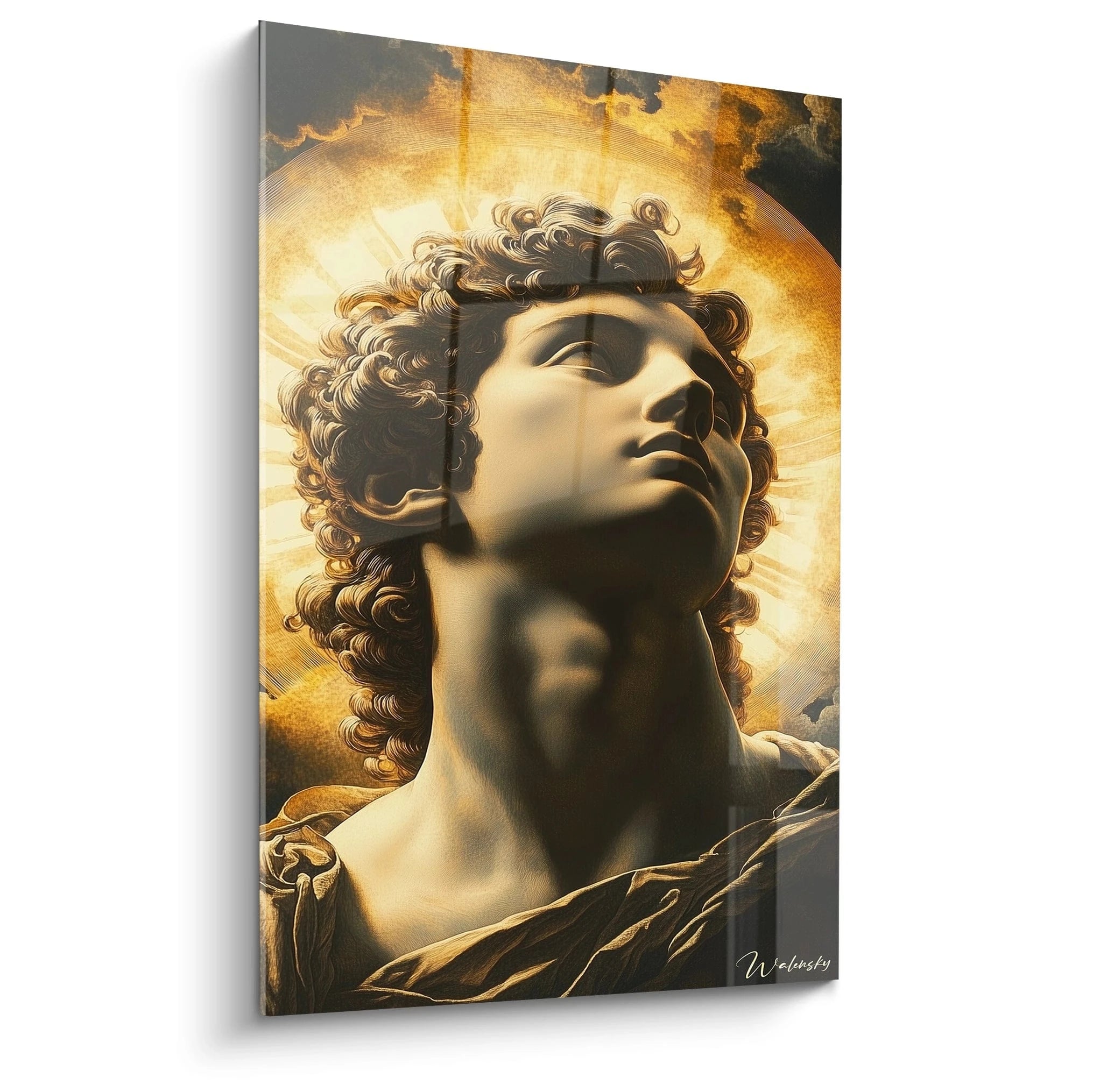
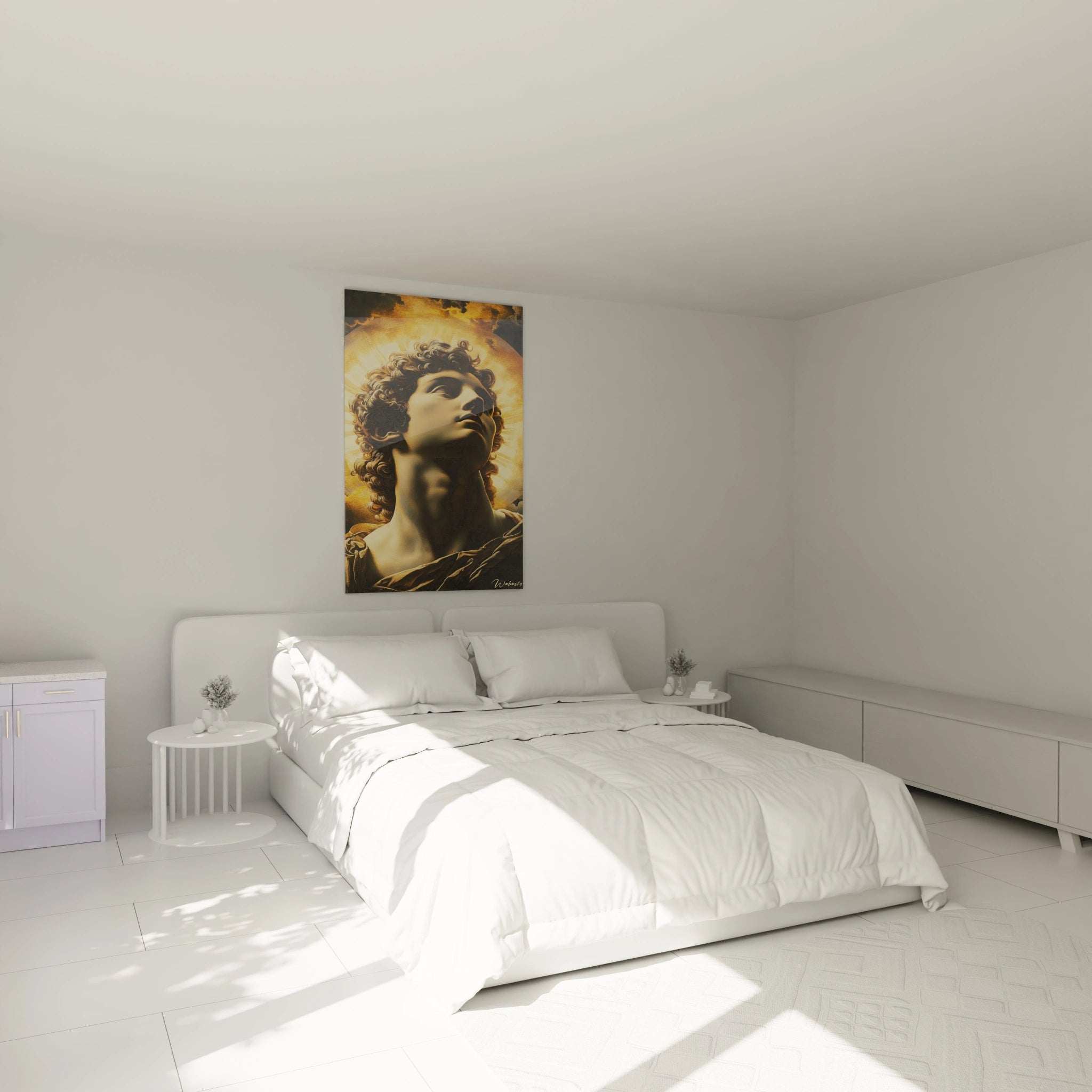
- Apollo Painting Presentation
- Apollo Painting Greek Mythology
- Apollo Painting Neoclassical Decor
- Apollo Painting Solar Symbolism
The Apollo Painting represents one of the most emblematic figures in Greek mythology, embodying beauty, the arts, and light. These captivating wall representations instantly transform your interior by giving it a unique cultural and artistic dimension. Whether you are passionate about mythology or simply looking for a majestic decorative piece, an Apollo mythological wall art brings divine presence and particular radiance to your living space. Discover how these contemporary artworks revisit classical imagery to create impressive wall decorations that tell a millennial story while integrating perfectly into modern interiors.
Apollo Painting: The Mythological Essence of the Sun God in Your Interior
The Apollo Painting is much more than a simple wall decoration – it is a visual immersion into one of the richest pantheons in human history. Son of Zeus and Leto, Apollo embodies perfect masculinity, ideal beauty, and divine harmony that artists have sought to capture since Antiquity. These contemporary wall representations perpetuate this millennial tradition while adapting it to modern aesthetic codes.
Why choose an Apollo Painting for your reception space?
The presence of an Apollo Painting in your entrance hall or main living room immediately creates an atmosphere of classical grandeur and erudition. Unlike other deities more tumultuous like Poseidon or Ares, Apollo brings luminous and balanced energy to your living space. Its solar symbolism generates a warm and welcoming ambiance, ideal for receiving your guests in a setting steeped in culture.
Works featuring Apollo playing the lyre constitute a particularly wise choice for music lovers and art enthusiasts. They subtly remind us of this divinity's patronage over music and poetry, creating symbolic resonance with the cultural activities of your home. For a contemporary interior where music plays an important role, these paintings establish a visual dialogue between classical tradition and modern artistic sensitivity.
Apollonian Iconography and Its Decorative Meanings
Representations of Apollo are distinguished by several characteristic attributes that enrich the symbolism of your wall decoration. The bow and arrows, evoking his ability to spread diseases and healing, bring a dimension of symbolic protection to your interior. The laurel, a sacred plant linked to the myth of Daphne, symbolizes victory and accomplishment – positive energy for dynamizing work or creative spaces.
Scenes illustrating Apollo's solar chariot crossing the sky constitute particularly impressive pieces for walls requiring a majestic and luminous artwork. These large format paintings naturally capture light and create a radiant focal point in spacious rooms like cathedral-like living rooms or monumental staircases.
What are the ideal rooms to showcase an Apollo Painting?
The office or intellectual work space represents a privileged location for an Apollo Painting. As god of the arts, sciences, and prophecy, his presence symbolically stimulates creativity and mental clarity. Representations of Apollo at the Temple of Delphi recall his connection with knowledge and inspiration – a welcome influence in spaces dedicated to study and reflection.
The music room or space dedicated to instruments is also a wise choice. Paintings featuring Apollo with his lyre create thematic continuity with the room's use, reinforcing its cultural identity while adding a mythological dimension that elevates musical practice to the rank of quasi-sacred activity.
For wellness spaces and rooms dedicated to well-being, representations of Apollo the healer (one of his many attributions) bring a symbolic dimension linked to balance and health. These wall artworks harmoniously complement spaces dedicated to yoga, meditation, or balanced physical practices.
The artistic techniques that enhance Apollo Paintings
Contemporary Apollo Paintings stand out through artistic techniques that magnify the luminosity naturally associated with this solar divinity. Artworks using gold leaf or metallic paints create light effects that change depending on the lighting, reminiscent of the god's radiant aura. These precious finishes bring a luxurious dimension to your wall decoration while reinforcing the solar symbolism inherent to the subject.
Representations using chiaroscuro technique dramatize the divine figure by creating striking contrast between shadow and light areas. These paintings work particularly well in spaces with directional lighting or wall sconces that can accentuate these depth effects and reinforce the almost mystical presence of the artwork.
Contemporary creations integrating modern graphic elements around the classical figure of Apollo create a fascinating dialogue between tradition and modernity. These bold interpretations work remarkably well in minimalist or industrial interiors where they bring a touch of revisited classicism and welcome cultural depth.
Apollo Painting: Enhance Your Neoclassical Decor with Divine Art
Integrating an Apollo Painting into a neoclassical interior creates a perfect aesthetic synergy between the artwork and its architectural environment. Neoclassicism, with its return to the values and aesthetics of Antiquity, finds in Apollo one of its emblematic figures – the very embodiment of the Greek ideal of beauty, harmony, and balance. Your wall decoration thus becomes the focal point of a coherent dialogue between all elements of your space.
How an Apollo Painting becomes the jewel of your neoclassical palace
In an interior with elaborate moldings and harmonious proportions, the Apollo Painting is inscribed as the finishing touch that gives meaning to your entire decoration. Positioned strategically above a marble fireplace or a gilded console, it creates a visual anchor point that magnifies the elegance of the space. Representations of Apollo amidst the columns of the Temple of Delphi particularly resonate with the neoclassical architectural elements of your interior.
Unlike paintings featuring pastoral scenes or landscapes, artworks centered on Apollo bring a divine and transcendent dimension to your neoclassical decoration. They symbolically elevate the space to the rank of temple dedicated to beauty and the arts – an ambition perfectly aligned with the fundamental principles of neoclassical style and its love for ancient cultural references.
The typical colors of Apollo Paintings – golden ochres, celestial blues, marbled whites – naturally harmonize with the traditional chromatic palette of neoclassical interiors. This color coherence reinforces the perfect integration of the artwork into your decor while creating an impression of timeless luxury characteristic of Greco-Roman inspired aristocratic homes.
The effects of solar lighting on your Apollo Painting
An Apollo Painting benefits from strategic placement facing east-oriented windows, thus capturing the light of the rising sun that echoes the god's solar symbolism. In this ideal configuration, the artwork seems literally to illuminate at the first hours of the day, creating a changing visual spectacle that dynamizes your living space from morning onwards.
Unlike representations of nocturnal or chthonian deities that poorly support direct lighting, Apollo Paintings are designed to interact with natural light. Golden finishes, amber tints, and luminous pictorial techniques flourish under sunlight, revealing details and nuances invisible under standard artificial lighting.
For rooms benefiting from a glass partition or a light well, a large format depicting Apollo's solar chariot creates an extraordinary immersive experience. The artwork then seems to architecturally continue the opening toward the sky, creating an illusion of elevation and infinity particularly striking in high-ceilinged spaces like entrance halls or reception rooms.
What furniture to associate with your Apollo Painting?
Consoles with lyre-shaped feet constitute ideal companions for an Apollo Painting, creating a subtle reminder of the god's emblematic instrument. This type of neoclassical furniture, with its sinuous lines evoking the divine lyre, establishes a visual conversation with the wall artwork that considerably enriches the thematic coherence of your decoration.
Medallion chairs, with their oval backs recalling Apollonian laurels, harmoniously complete a space dominated by a painting of the god. This association creates a coherent environment where Greek mythology subtly influences each decorative element, never falling into thematic excess or awkward historical pastiche.
Multi-branch lighting fixtures evoking solar rays constitute the ideal lighting complement for enhancing an Apollo Painting. These gilded sconces or chandeliers diffuse warm light that magnifies the solar tints of the artwork while extending its luminous symbolism into the three-dimensional space of your interior.
The psychological impact of an Apollo Painting in your living space
The presence of an Apollo Painting in your daily space subtly influences the emotional atmosphere it emanates. As god of order, harmony, and reason, Apollo brings clarifying and balancing energy that favors concentration and serenity – a visual antidote to the chaos of contemporary life and a constant reminder of the values of balance dear to neoclassical aesthetics.
Unlike representations of deities associated with tumultuous passions, such as Dionysus or Aphrodite, an Apollo Painting creates an ambiance conducive to measured reflection and aesthetic contemplation. This quality makes it a particularly wise choice for spaces dedicated to reading, study, or intellectually stimulating conversations.
For art collectors and mythology connoisseurs, acquiring an Apollo Painting represents much more than a simple decorative purchase – it is the integration of a rich and multidimensional cultural reference into their daily environment. The artwork then becomes an object of contemplation that progressively reveals itself in all its symbolic complexity, offering an aesthetic experience that enriches with time and study.
Apollo Painting: Capturing Divine Light Through Mythological Art
Solar symbolism constitutes the very essence of paintings representing Apollo, transforming these artworks into veritable light captors and amplifiers in your interior. Unlike representations of other deities often associated with darkness or telluric forces, an Apollo Painting literally radiates with luminous energy that transcends its materiality. This unique quality makes it a privileged choice for dynamizing spaces lacking natural luminosity.
How does your Apollo Painting interact with different light sources?
Paintings representing Apollo frequently use high-reflectivity pigments that react spectacularly to variations in ambient lighting. This technical characteristic transforms the artwork into a living entity that evolves throughout the day, moving from a soft and subtle presence in morning dimness to brilliant radiance under zenith light, to ending in a warm and golden aura under evening artificial lighting.
Unlike paintings using cool tints or nocturnal subjects, artworks centered on Apollo have the unique capacity to visually warm a space. The warm dominants – golds, ochres, solar reds – characteristic of Apollonian iconography create a sensation of psychological warmth particularly welcome in regions with long winters and in north-facing rooms that receive little direct light.
The strategic installation of directional spotlights with warm color temperature (2700-3000K) magnifies your Apollo Painting's presence in the evening. This type of targeted lighting brings out the golden details and bright areas of the artwork, creating an almost three-dimensional effect where certain elements seem to detach from the pictorial surface – particularly effective for representations of the god in majesty or driving his solar chariot.
Which spaces benefit most from a luminous Apollo Painting?
Interior hallways and transitional spaces, often lacking windows, are radically transformed with the introduction of an Apollo Painting. These usually functional zones become passages steeped in symbolism, where the artwork acts as a mythological window bringing symbolic light to an architecturally closed space. The effect is particularly striking in hallways leading to main rooms, creating a dramatic and significant visual transition.
North-facing rooms, traditionally cooler and less luminous, find in Apollo the perfect counterpoint to their limited direct luminosity. A painting representing the sun god becomes much more than decoration – it is an almost therapeutic intervention that counterbalances the lack of direct natural light with a warm and radiant visual presence, effectively fighting against the luminous monotony of these spaces.
In professional environments like corporate offices or consultation cabinets, a large format Apollo Painting brings a symbolic dimension linked to intellectual clarity and inspiration. The artwork creates a luminous focal point that visually stimulates creativity and concentration, while adding welcome cultural depth to spaces often dominated by functionalism and chromatic neutrality.
Why do photographers and filmmakers draw inspiration from Apollo Paintings?
Contemporary cinematographers and photographers frequently draw inspiration from Apollo Paintings for their characteristic lighting schemes. The "rim lighting" technique so often used in cinematic portraits derives directly from pictorial representations of Apollo where the god appears haloed with divine light that outlines his silhouette. Your painting thus becomes not only decoration but a sophisticated visual reference testifying to your cinematic culture.
Paintings featuring the sun god constitute a privileged source of inspiration for portrait photographers seeking dramatic and symbolically charged lighting. By placing such an artwork in your photography studio or creative space, you create a constant reminder of classical lighting principles that have crossed the centuries – a permanent visual guide for creating balanced and impactful luminous images.
In spaces dedicated to projection or viewing (home cinema, editing suite), an Apollo Painting establishes a fascinating dialogue between classical pictorial light and contemporary projected light. This juxtaposition creates cultural continuity between different image technologies and different eras, transforming your entertainment space into a place of reflection on the very nature of visual representation across the ages.
The seasonal evolution of your Apollo Painting
At summer solstice, the period traditionally associated with the zenith of Apollonian power, your painting benefits from the maximum luminosity of the year. This concordance between annual solar cycle and mythological symbolism creates a particular moment when the artwork seems to achieve its fullest expression. Some collectors even organize receptions or cultural events around this date to celebrate the solsticial dimension of their Apollo Painting.
During winter months, when natural light becomes scarce, your Apollo Painting plays an almost therapeutic role in preventing seasonal affective disorder. Daily contemplation of these solar representations symbolically stimulates serotonin production and contributes to maintaining emotional balance despite surrounding darkness – a beneficial function that transcends simple decorative dimension.
FAQ: Apollo Painting
What is the difference between an Apollo Painting and a painting representing Helios?
Although both are associated with the sun, an Apollo Painting generally highlights the artistic, musical, and prophetic dimension of the deity, often represented with a lyre, bow, or cultural attributes. Helios paintings, the more ancient sun divinity, focus exclusively on the astronomical and cyclical aspect of the sun, generally representing the god driving his chariot across the sky without the complex cultural dimensions of Apollo.
How to maintain an Apollo Painting with gilded finishes?
Apollo Paintings featuring gilded elements require specific maintenance. Avoid any contact with water or liquid cleaning products that could tarnish metallic finishes. Gentle dusting with soft-bristled feather duster is recommended, avoiding prolonged direct sunlight that could alter pigments. For finishes in genuine gold leaf, annual professional inspection will ensure the longevity of these precious elements.
Can an Apollo Painting suit minimalist contemporary decoration?
Absolutely. An Apollo Painting with refined lines and modern graphic treatment creates striking contrast in a minimalist interior. Choose an artwork in monochromatic or reduced color palette that dialogues with your space's restricted palette. The contrast between the classical subject and the contemporary environment generates sophisticated visual tension particularly appreciated by avant-garde interior decorators seeking to integrate cultural references into resolutely modern spaces.