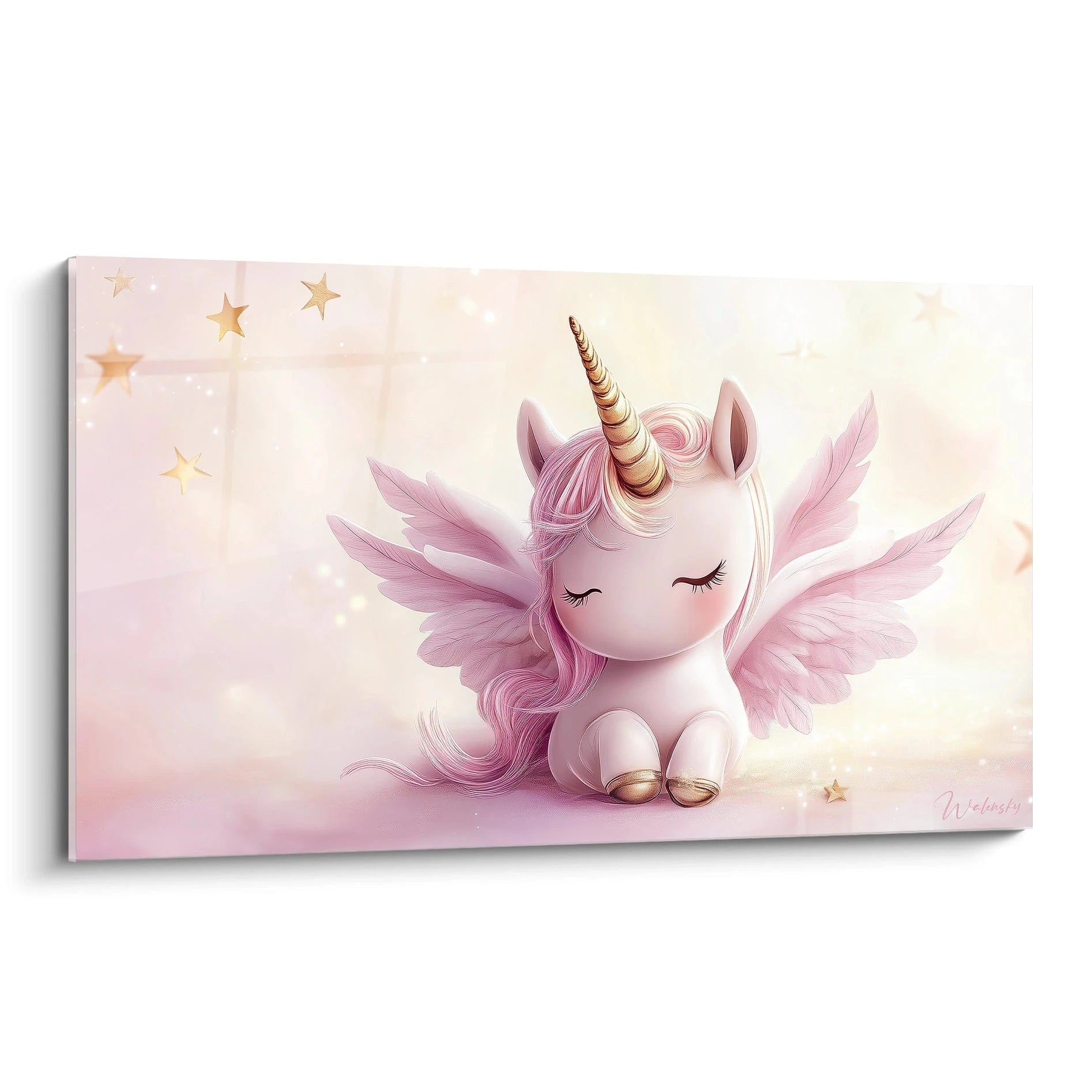
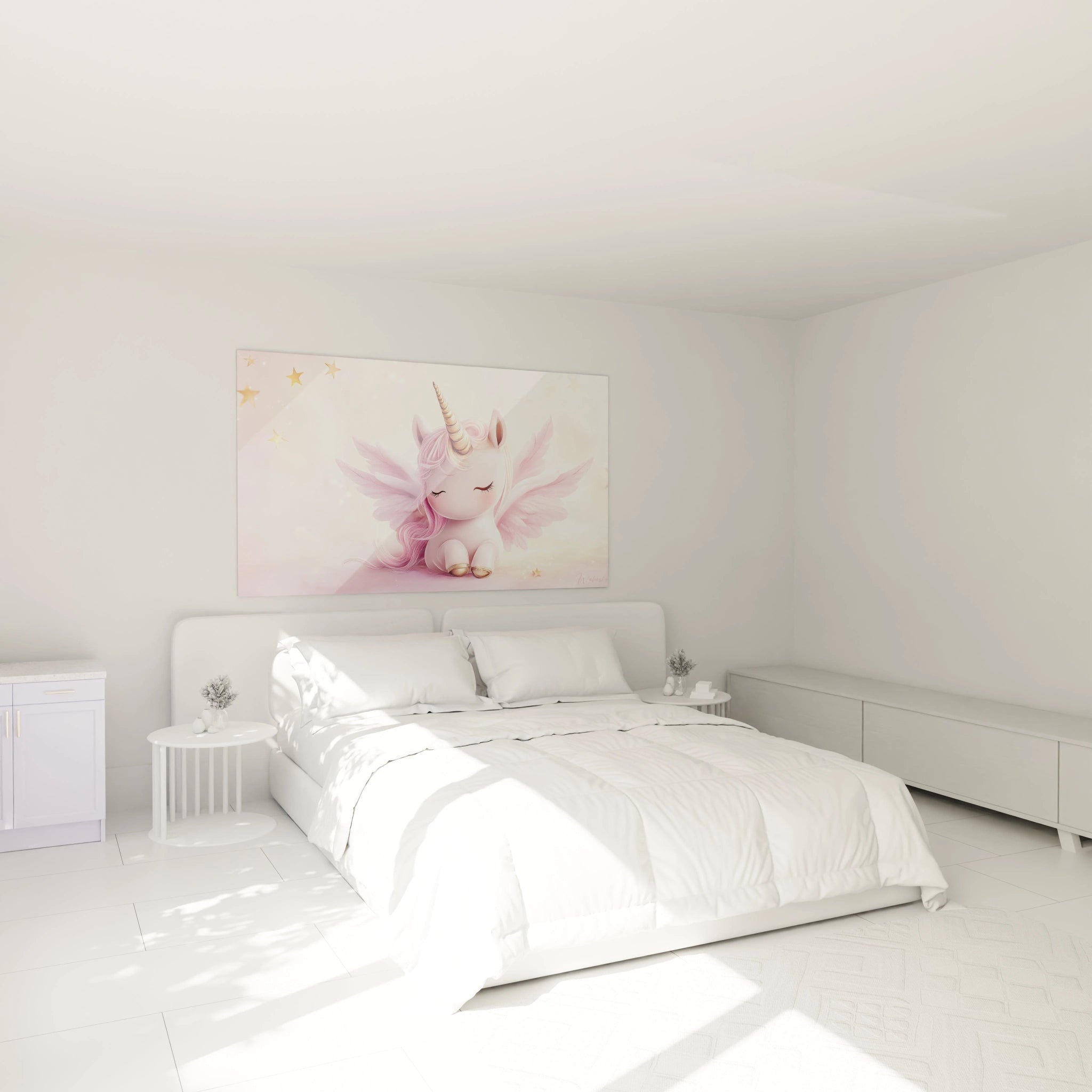
- Children's Unicorn Painting Presentation
- Children's unicorn painting and psychological development
- Children's unicorn painting and thematic room design
- Children's unicorn painting and age transitions
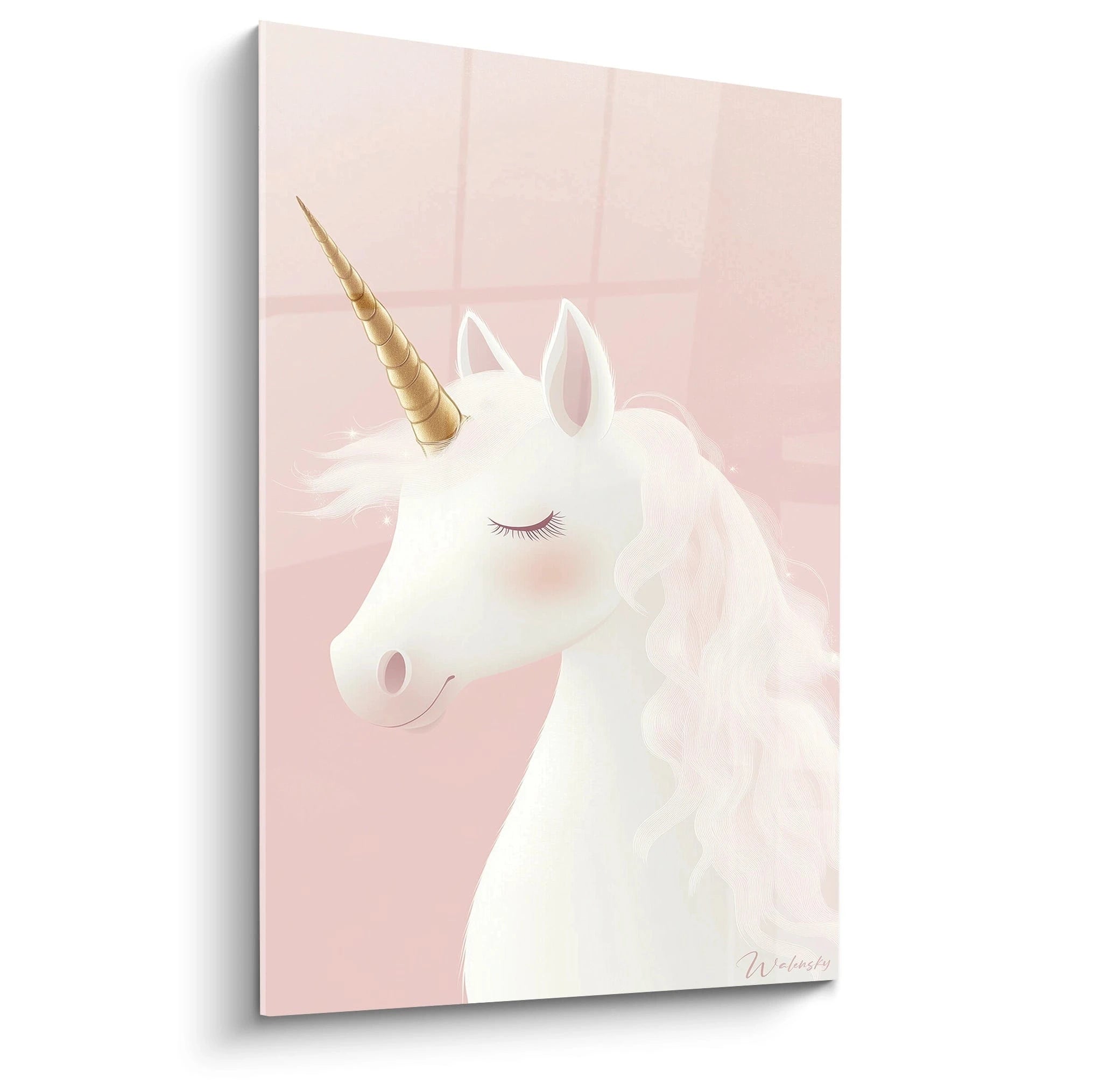
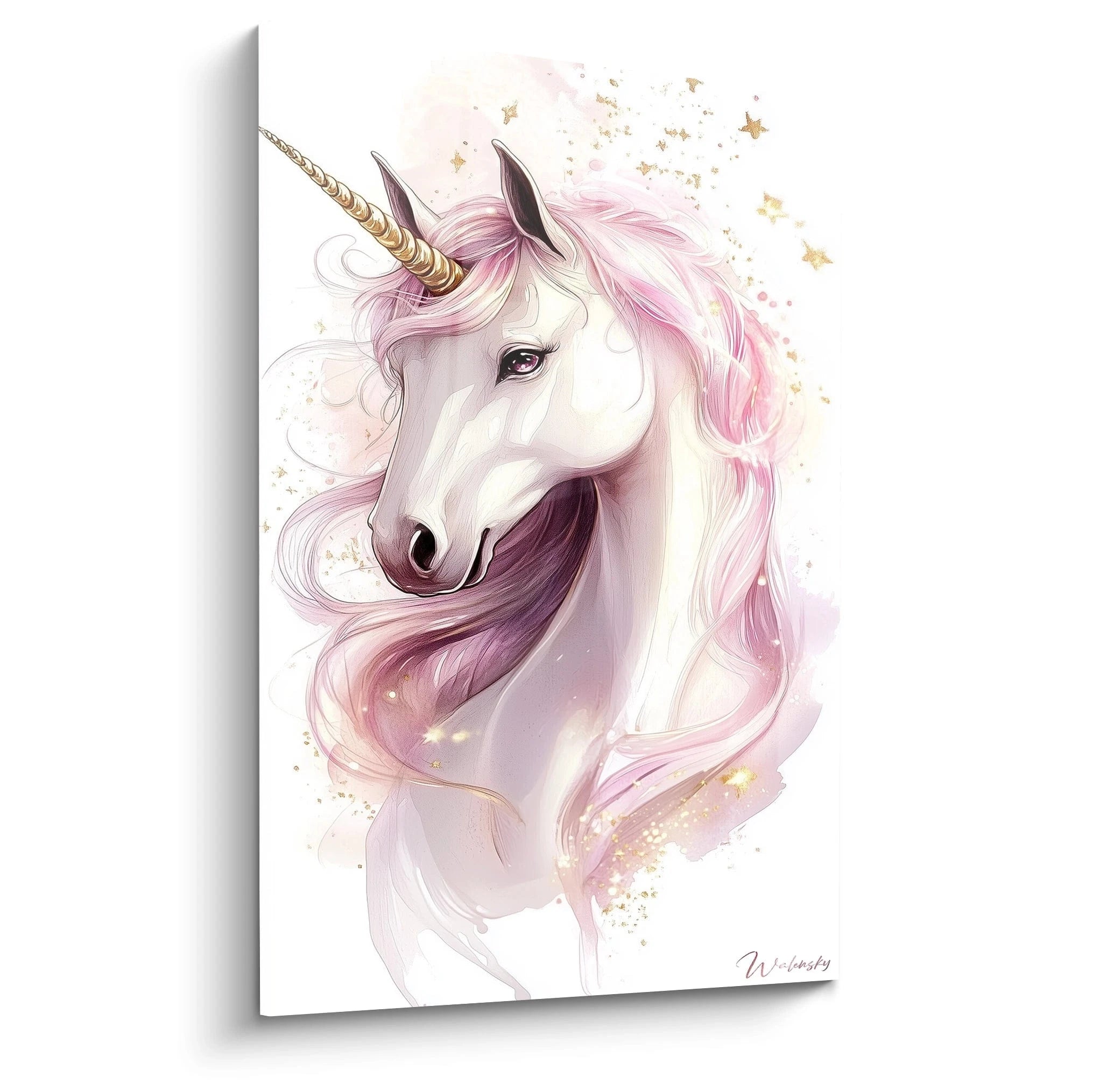
The unicorn painting for children represents much more than simple wall decoration. It is an iconic piece that completely transforms the atmosphere of a child's bedroom by bringing magic and wonder. This large-format decorative element stands out with its vibrant colors and whimsical subject that stimulates the imagination of the young.
The unicorn, a legendary creature symbolizing purity and magic, holds a special fascination for children. Integrated into a quality wall painting, it becomes a focal point that accompanies the child in their development, stimulating their creativity and enriching their daily visual world.
Discover our special children's collection to find the perfect unicorn painting that will enchant your little one while adding a sophisticated decorative touch to their bedroom.
In the following sections, we will explore different essential aspects of unicorn paintings for children: their impact on psychological development, their integration into a coherent thematic design, and their ability to accompany your child's age transitions. Each angle will help you better understand why these large-format paintings are a wise choice for your child's bedroom.
Psychological Impact of Children's Unicorn Paintings on Development
Unicorn paintings for children play a fundamental role in your little one's psychological development. Unlike ordinary wall decorations, these whimsical representations stimulate imagination and foster essential cognitive processes.
How does a unicorn painting influence children's imagination?
A child's visual environment directly shapes their ability to dream and create. A unicorn painting for children, by its fantastical nature, opens a door to imaginary worlds. This mythical creature, at the border between real and wonderful, becomes a narrative support for the child who develops their own stories while contemplating it.
Psychologists specializing in child development emphasize the importance of fantastical visual elements in building abstract thinking. The unicorn, through its impossible yet visually concrete character, helps the child understand the very concept of fiction, a crucial cognitive skill.
The role of rainbow colors in sensory development
Unicorn paintings for children are characterized by their distinctive color palette. This chromatic richness is not merely aesthetic—it constitutes genuine visual stimulation beneficial to development.
The iridescent hues typical of unicorn representations foster:
- Early recognition of primary and secondary colors
- Understanding of shades and gradients
- Learning emotional associations with colors
- Development of descriptive vocabulary related to colors
A large-format unicorn painting for children multiplies these benefits by offering a more detailed visual exploration surface. Children can progressively discover new elements, stimulating their attention to detail.
Symbolism of the unicorn and identity development
Beyond its decorative aspect, the unicorn painting accompanies the child in their identity development. The unicorn embodies particular values that resonate with personal development:
- Rarity and uniqueness, reflecting each child's individuality
- Magic and wonder, encouraging the child to believe in their abilities
- Purity and kindness, conveying positive values
Specialists in early childhood recommend positive representations like unicorns to foster self-esteem. By identifying with this exceptional creature, the child unconsciously integrates these qualities into their own image.
Sleep-wake transition facilitated by reassuring presence
The bedtime period often represents a challenge for young children. A unicorn painting for children placed near the bed can serve as a reassuring anchor during this delicate time. This familiar and kind presence helps the child to:
- Reduce anxiety related to nighttime separation
- Focus attention on a positive image before falling asleep
- Create healthy and autonomous bedtime routines
Large-format paintings reinforce this feeling of protective presence, visually enveloping the child's sleep space with a positive and reassuring aura.
Evolution of relationship with the painting as they age
The child's interaction with their unicorn painting naturally evolves with their cognitive development:
- Before age 3: pure visual fascination, shape recognition
- Ages 3-6: story creation, emotional projection
- Ages 6-9: aesthetic appreciation, symbolic understanding
- Age 9+: nostalgic attachment, sentimental value
This evolution makes the unicorn painting for children a lasting development companion, whose meaning enriches over the years rather than becoming obsolete.
Children's Unicorn Painting: Creating Coherent Thematic Design
Integrating a unicorn painting for children into a bedroom goes far beyond simple decoration. It is a central element around which true thematic design can be articulated. This coherent approach transforms the space into an immersive universe that stimulates imagination.
Optimal placement strategies for a large-format unicorn painting
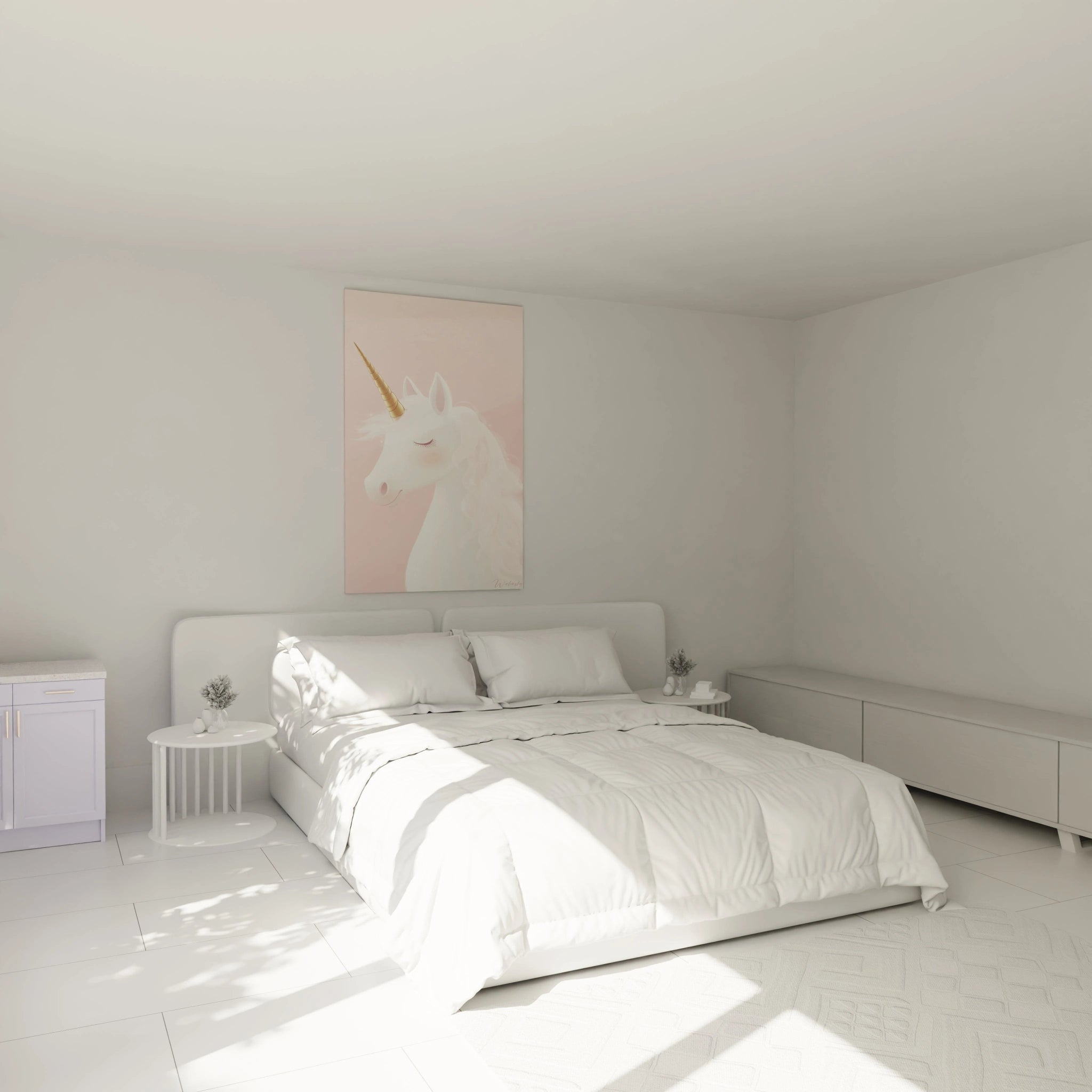
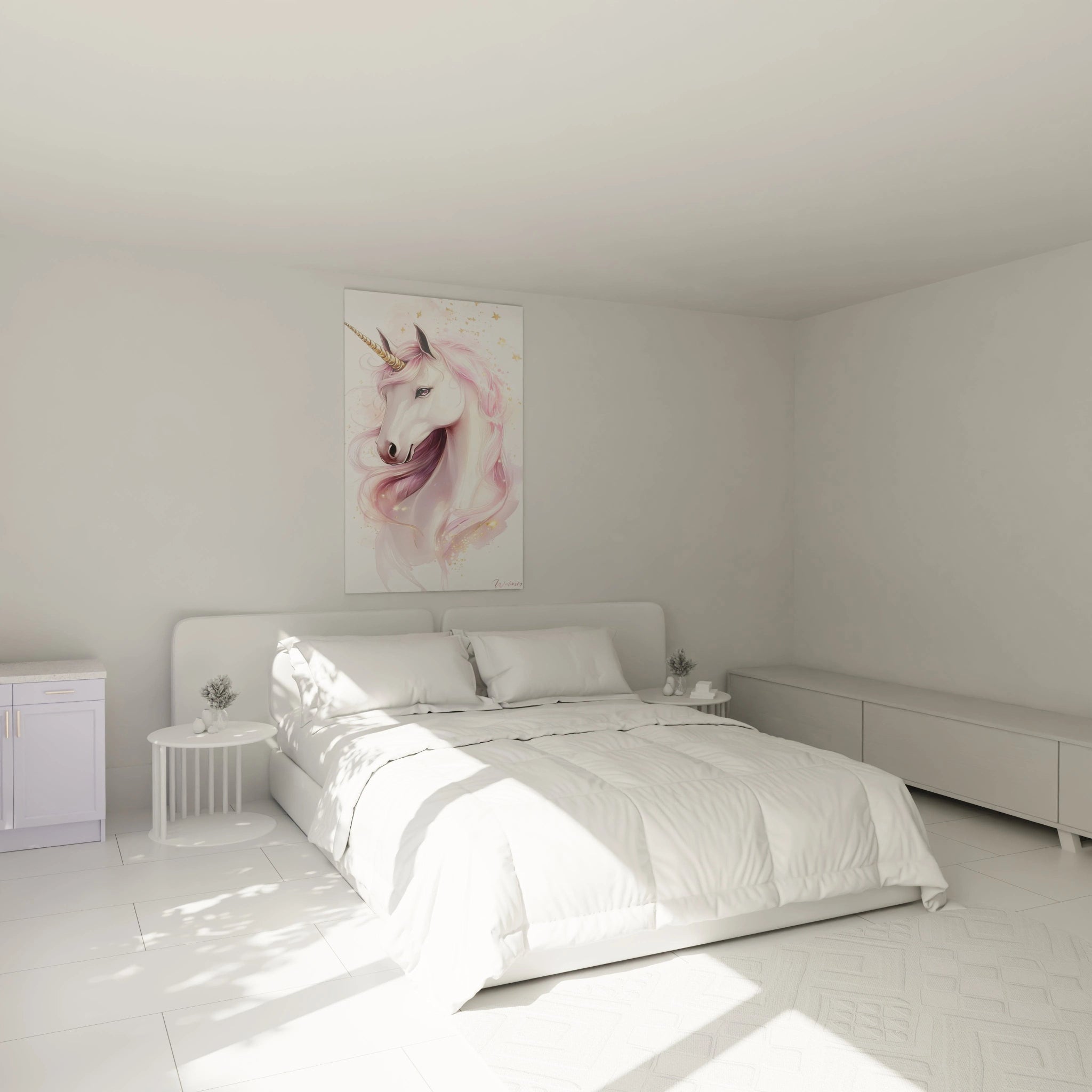
The strategic positioning of a unicorn painting for children determines its visual and functional impact in the room. Contrary to popular belief, the ideal position is not necessarily above the bed.
For a large-format painting depicting a unicorn, prioritize:
- A wall visible from the bedroom entrance to create an immediate "wow" effect
- A placement at the child's eye level to encourage daily interaction
- A zone benefiting from indirect natural lighting, highlighting iridescent nuances
- A space allowing sufficient distance to appreciate the work as a whole
The impressive size of the unicorn painting for children makes it an architectural element that visually restructures space. Use this characteristic to define distinct functional zones in the bedroom.
How to harmonize textiles with your unicorn painting?
Visual consistency between the unicorn painting for children and bedroom textiles reinforces thematic immersion. Rather than literal correspondence, seek subtle complementarity:
- Extract 2-3 secondary colors from the painting (rather than the dominant shade) for bedding
- Favor simple geometric patterns that recall certain painting elements without duplicating them
- Integrate textiles with varied texture (velvet, satin, cotton) that reflect different visual qualities of the painting
A unicorn painting for children with pastel hues can be beautifully complemented by textiles in more saturated tones from the same color range, creating visual depth in the space.
Creating thematic zones coherent with the painting
The unicorn painting for children can serve as inspiration for defining thematized functional spaces in the bedroom:
- "Enchanted forest" zone for play, with natural elements recalling unicorns' mythical habitat
- "Magical clouds" reading corner with comfortable rounded and soft seating
- "Rainbow" creative space integrating a desk and storage for artistic activities
This thematic segmentation, inspired by visual elements of the unicorn painting for children, helps structure space while maintaining narrative coherence that stimulates imagination.
Scenic lighting to enhance your unicorn painting
Well-designed lighting radically transforms the perception of a unicorn painting for children. Unlike standard lighting, a scenic approach adapts light to the work's particularities:
- Adjustable spots with adjustable color temperature to highlight iridescent details
- Indirect LED lighting with dimmer to create different ambiances depending on the time of day
- Subtle colored filters that amplify certain painting tones based on seasons
Installing a smart lighting system allows programming lighting scenarios that transform the appearance of the unicorn painting for children at different times, making it lively and evolving.
What complementary decorative elements should you choose?
To create visual dialogue with your unicorn painting for children without falling into thematic overload, judiciously select complementary decorative elements:
- Three-dimensional objects that extend certain painting elements into real space
- Decorative pieces with metallic finishes recalling the mythical horn
- Natural elements (crystals, plants) evoking the magical unicorn universe
The key lies in suggestion rather than literal repetition: a quality unicorn painting for children deserves complementary decor that enriches its universe without excessively duplicating it.
Children's Unicorn Painting: Accompanying Age Transitions
A unicorn painting for children possesses the rare quality of being able to evolve with its young owner. Unlike many decorative elements quickly abandoned, this type of wall art can accompany the child through different developmental phases, adapting to their changing perceptions of the world.
Why does the unicorn painting transcend ages without becoming outdated?
The exceptional longevity of a unicorn painting for children in the living environment is explained by several psychological and aesthetic factors:
- The multidimensional symbolism of the unicorn (purity, power, magic) resonates differently depending on age
- The intrinsic artistic quality of a large-format painting transcends the mere "childish" aspect
- The emotional attachment that develops over time transforms the decorative object into an identity reference point
Unlike thematic decorations tied to ephemeral fashion phenomena, the unicorn painting for children fits into an ancestral iconographic tradition that grants it particular timelessness.
Adaptation of the decorative context around the painting to different ages
To maintain the relevance of the unicorn painting for children through the years, the surrounding environment can evolve strategically:
- Ages 3-5: playful and colorful environment, amplifying the whimsical aspect
- Ages 6-9: integration of more structured elements, transition toward an "enchanted" yet orderly ambiance
- Ages 10-12: sophistication of surroundings, minimalist framing highlighting artistic aspect
- Teenage years: recontextualization as a "vintage" piece or personal "artistic statement"
This contextual evolution allows the unicorn painting for children to maintain its central place while adapting to the young person's changing aesthetic needs.
Parental testimonials on the emotional durability of the unicorn painting
Parental feedback confirms the exceptional ability of unicorn paintings for children to transcend ages:
"Sophie received her unicorn painting at age 4. Today at 12, she still considers it the heart of her bedroom, even though the way she talks about it has completely changed. From 'my magic unicorn,' it has become 'my favorite artistic piece.'"
"The large-format unicorn painting we chose for Leo has been our best decorative investment. Eight years later, while every other element of his bedroom has changed several times, the painting remains, now accompanied by a small art collection he has assembled around it."
Recontextualization strategies for the unicorn painting during the teenage years
The teenage period, often marked by rejection of childhood symbols, can nevertheless see the unicorn painting for children maintain its relevance through judicious recontextualization strategies:
- Reframing in a more contemporary support that highlights artistic rather than childish aspect
- Repositioning in a new space (office, creative area) that gives it new function
- Association with an emerging collection of other works that transforms the painting into a foundational element of interest in art
This transition allows the unicorn painting for children to become a memorial bridge between different developmental phases rather than an element to abandon.
How does a unicorn painting evolve in the child's perception?
The cognitive and emotional relationship between the child and their unicorn painting transforms fascinatingly over the years:
- Early childhood: object of visual fascination and pure imaginative projection
- Middle childhood: narrative support for increasingly elaborate stories
- Pre-adolescence: object of reflection on the boundary between real and imaginary
- Adolescence: biographical artifact laden with personal significance
This perceptual evolution makes the unicorn painting for children a privileged witness to cognitive and emotional development, playing a role far deeper than that of a simple decorative element.
FAQ Children's Unicorn Painting
At what age is a unicorn painting for children most appreciated?
The unicorn painting for children finds its most receptive audience between ages 4 and 8, a period when whimsical imagination is particularly active. However, carefully chosen, it can be introduced as early as ages 2-3 and maintain relevance well beyond age 10 thanks to its enduring aesthetic qualities.
How to maintain a large-format children's unicorn painting?
Maintenance of a large-format unicorn painting for children requires gentle weekly dusting with a soft-fiber duster. Avoid direct exposure to sunlight which could alter the vibrant colors characteristic of these works. For accidental stains, always consult the manufacturer's specific recommendations.
Can a unicorn painting for children suit a shared bedroom?
Absolutely! A large-format unicorn painting for children can serve as a unifying element in a shared bedroom, provided the theme suits the preferences of different occupants. It can even become a convergence point that facilitates harmonious space-sharing between siblings.