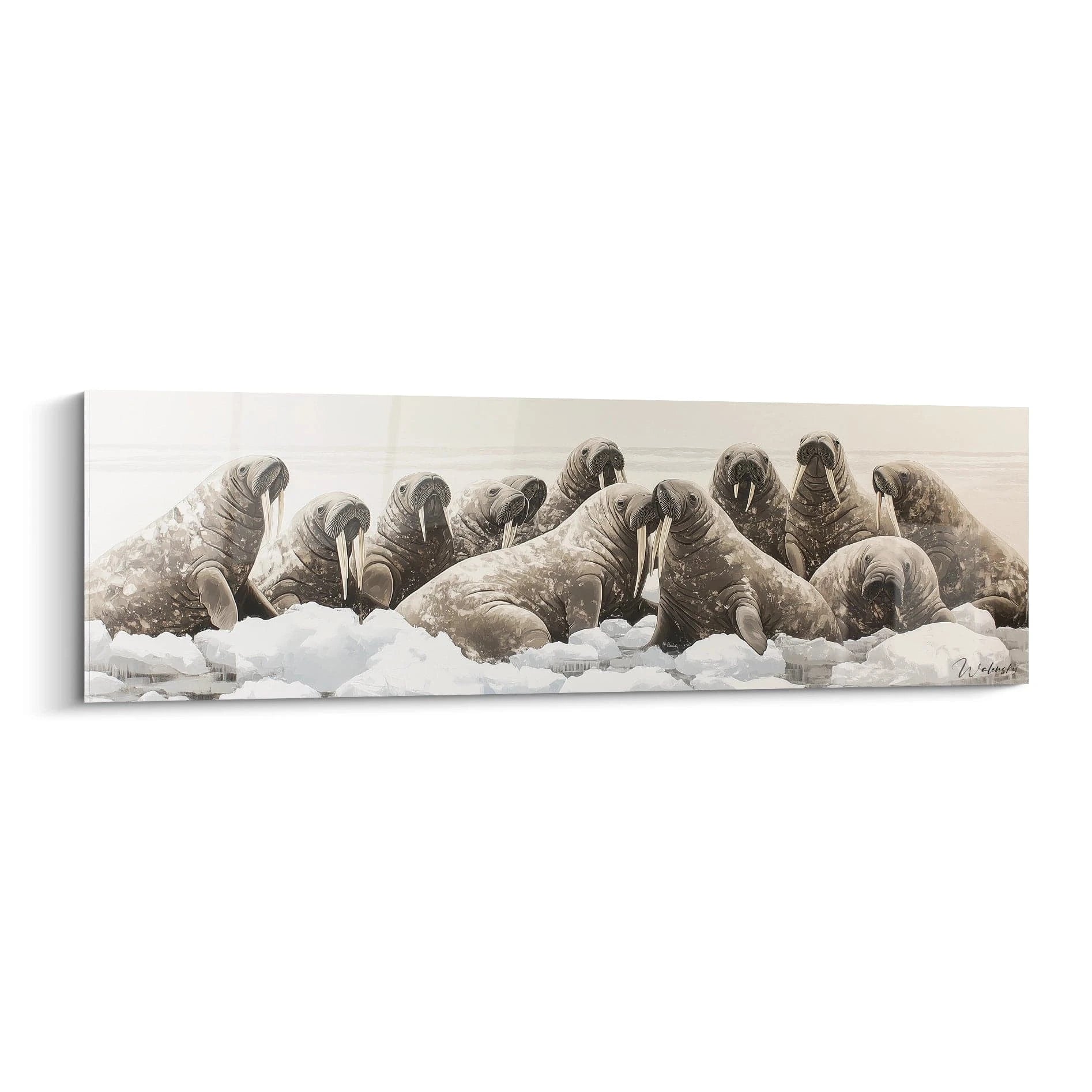
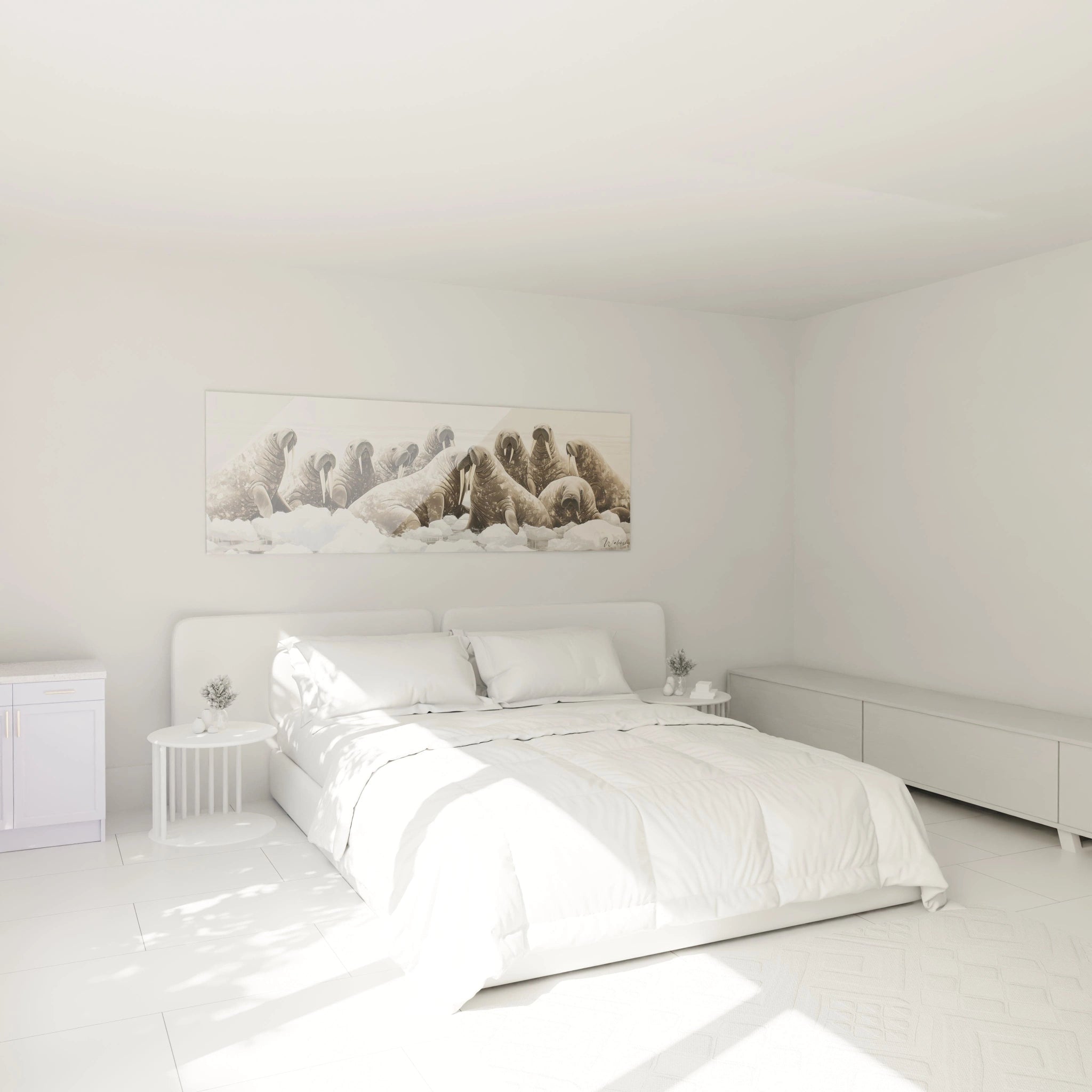
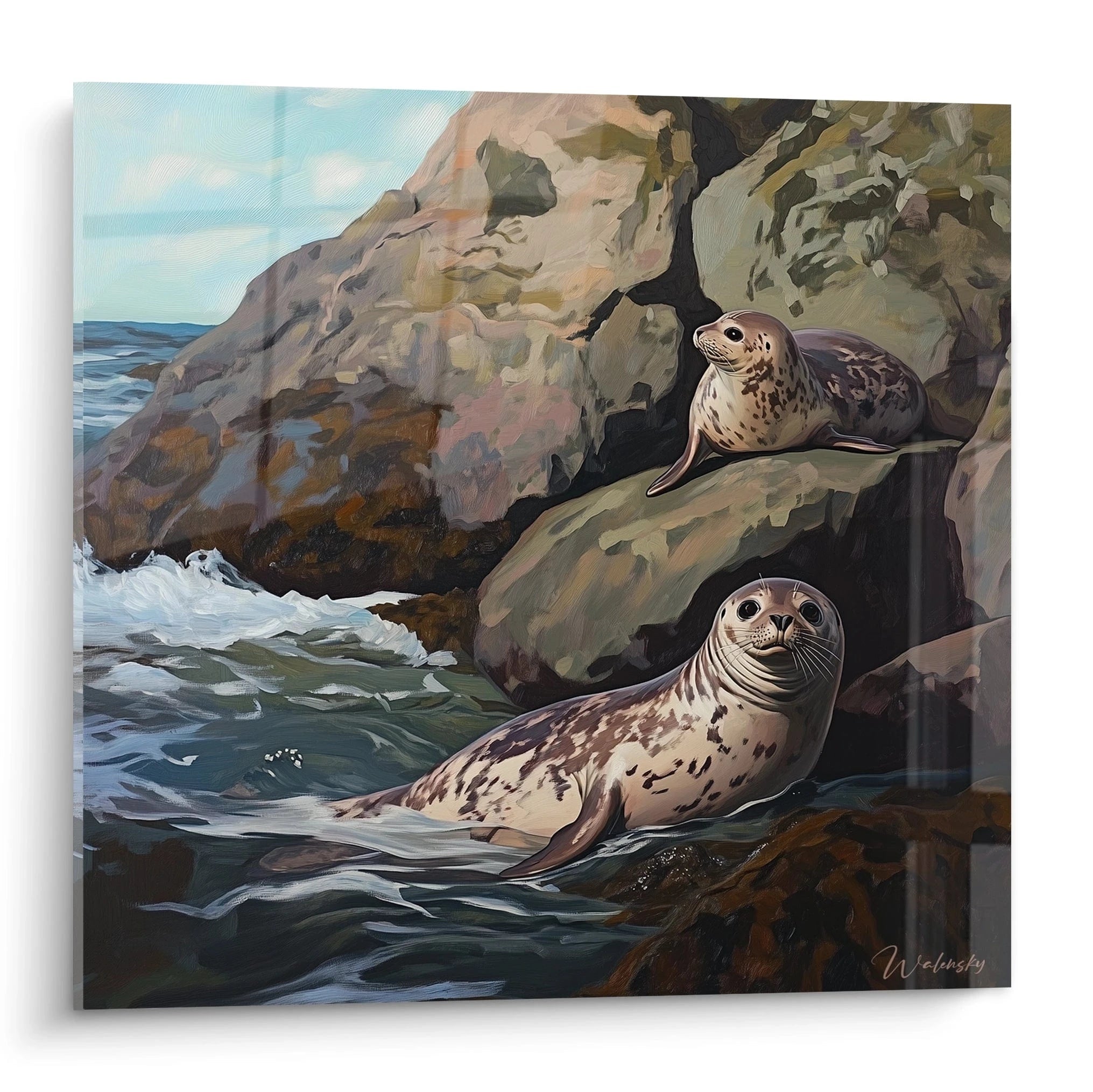
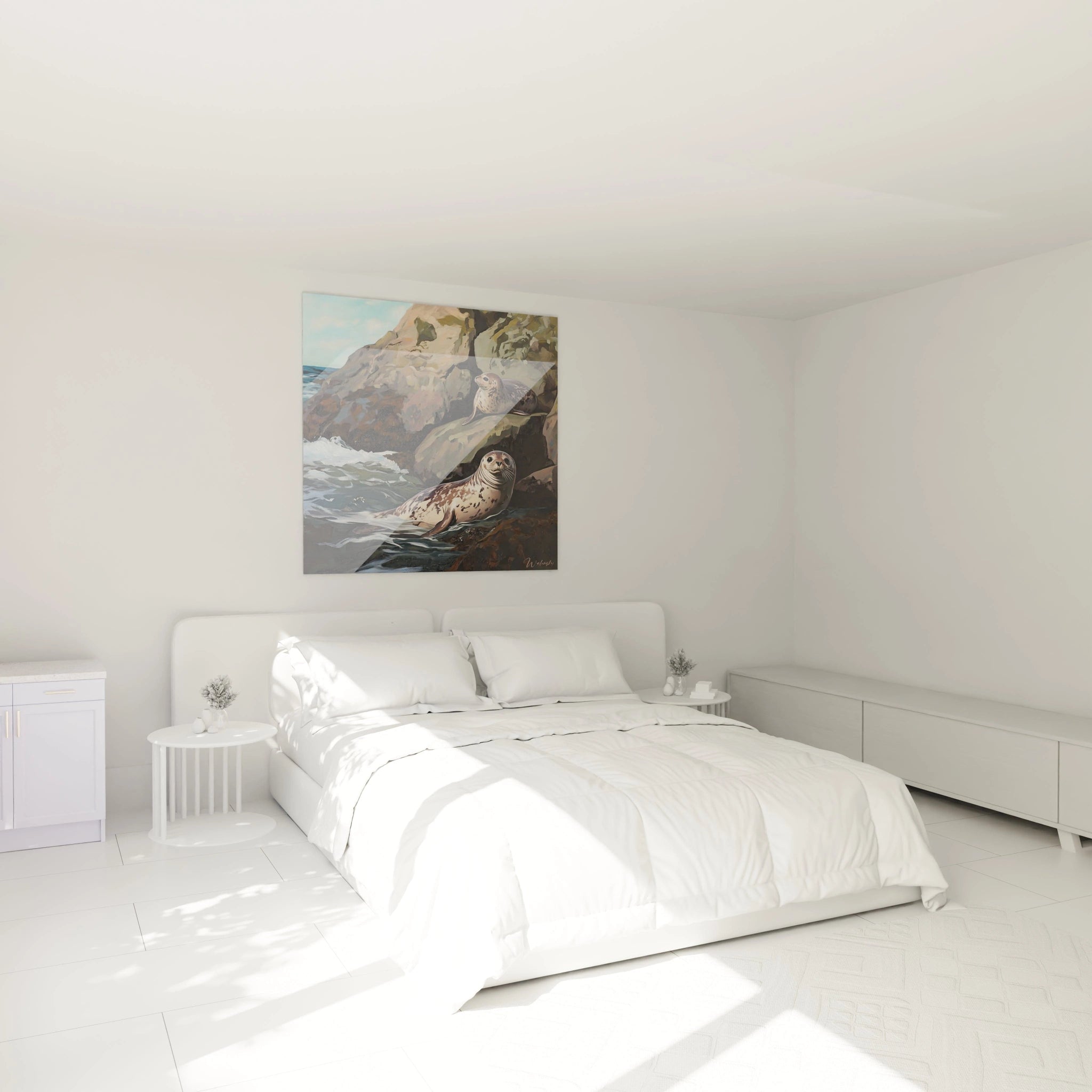
- Seal Paintings Presentation
- Seal paintings Nordic influence
- Seal paintings marine decoration
- Seal paintings animal symbolism
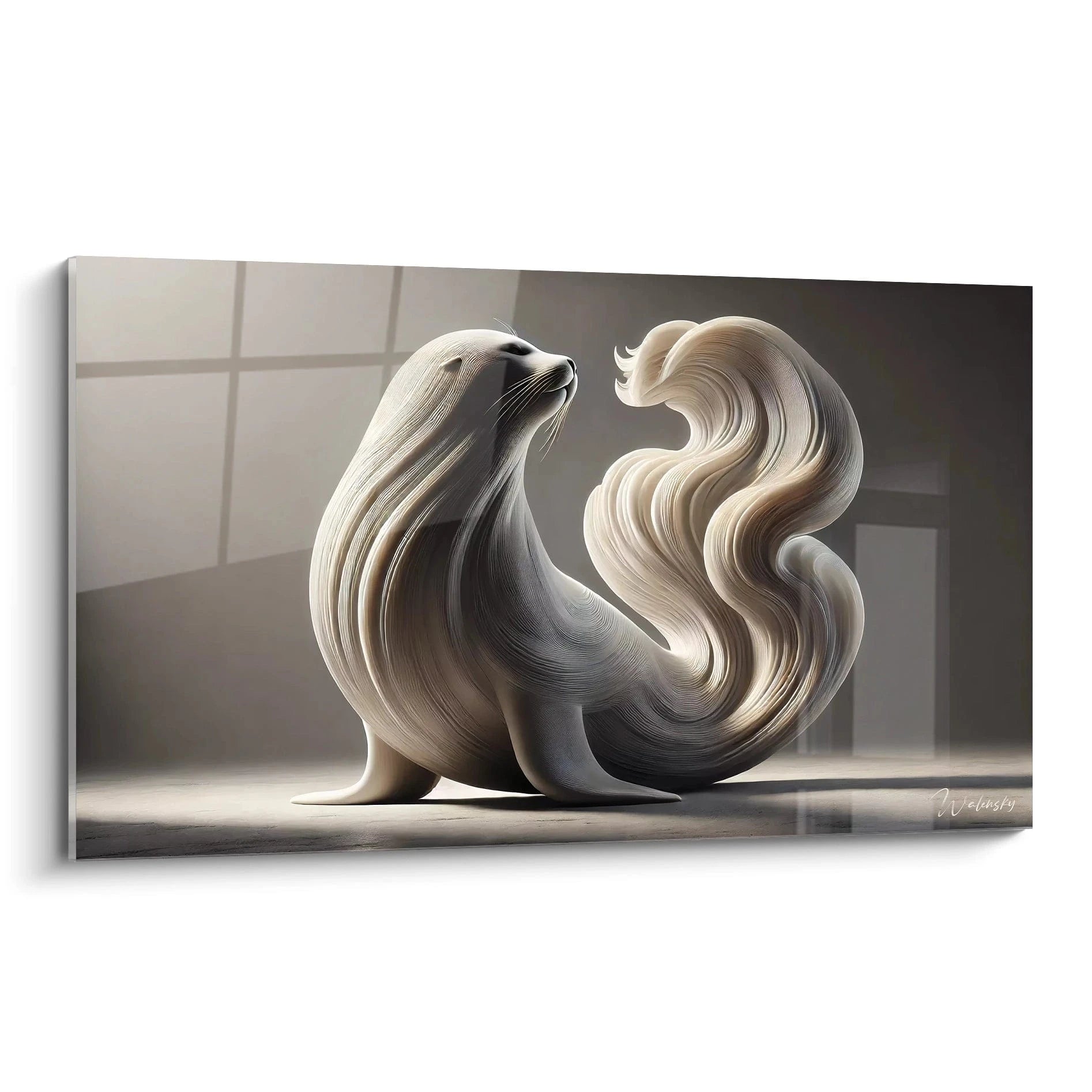
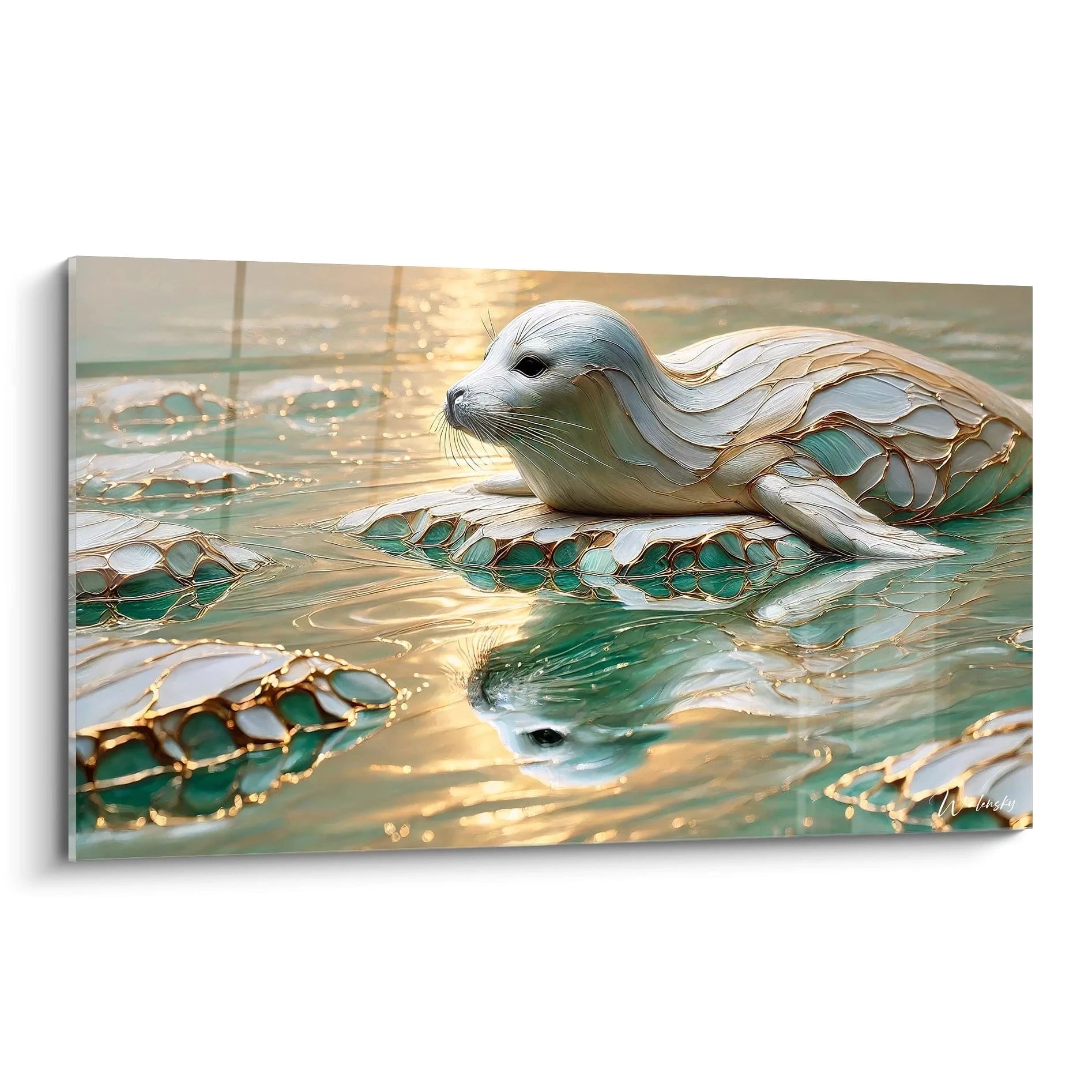
Seal paintings represent a fascinating category of wall decoration that transcends simple ornamental elements to become a true immersion in the Arctic marine universe. These artworks showcase one of the most emblematic marine mammals of polar regions, capturing both their underwater grace and their endearing attitude on the ice. Perfect for marine life enthusiasts, those interested in polar ecosystems, or simply those seeking to infuse a unique natural ambiance into their interiors, these animal paintings stand out for their ability to evoke profound emotions and create a connection with wild nature, even in urban spaces.
The Nordic Influence of Seal Paintings in Contemporary Interiors
Seal paintings constitute a distinctive decorative element that transcends mere wall ornamentation to become a genuine expression of Nordic aesthetics. These artistic representations draw from the visual traditions of Arctic peoples, for whom the seal represents far more than an animal – it is a cultural symbol deeply rooted in their daily life and legends.
Why do seal paintings transform a room's atmosphere differently than other animal representations?
Unlike more common depictions such as feline or exotic bird paintings, seal paintings bring a unique dimension of glacial serenity to your space. The color palette naturally associated with these marine mammals – shades of gray, deep blues, and pristine whites – automatically introduces Scandinavian design codes into your interior. This particular harmony could not be replicated with other animals that do not inhabit these specific ecosystems.
The natural texture contrasts suggested by these paintings – between fur softness, water transparency, and ice roughness – create a visual dynamic that only this species can embody in its natural habitat. The eye is naturally guided through these different materials, provoking an soothing contemplation highly sought after in contemporary interiors.
The influence of Inuit traditions in artistic seal representation
Inuit artistic tradition has always accorded a preeminent place to the seal in its representations. These modern seal paintings perpetuate this heritage by reinterpreting ancestral visual codes. In Inuit culture, the seal is never represented as a simple decorative figure, but as a being carrying soul and wisdom.
The compositions of these artworks are often unconsciously inspired by the spatial arrangement of traditional soapstone sculptures, where the animal is represented in a posture that is both dynamic and meditative. This subtle influence confers upon seal paintings a cultural authenticity that other animal representations do not possess.
• Integration of traditional Inuit motifs in borders or backgrounds
• Use of perspectives typical of Northern shamanic representations
• Visual references to polar legends where the seal plays the role of a bridge between worlds
How do seal paintings create a unique emotional connection with the observer?
The seal's characteristic gaze, with its large expressive eyes, establishes direct visual contact with the observer. This particularity, unique to seal representations, creates an immediate sense of connection that differs fundamentally from the experience provoked by other animal paintings. Neuroscientists have indeed demonstrated that our brains react differently to this type of frontal gaze, activating zones related to empathy.
This silent communication between the artwork and its spectator transforms the seal painting into a living element of your decoration, capable of evolving according to your state of mind. In a moment of calm, you will see the animal's serenity floating peacefully; in a moment of questioning, its gaze will seem to offer you silent reflection on your own existence.
The seasonal evolution of seal paintings in your living space
A fascinating and little-known characteristic of seal paintings is their ability to evolve visually according to seasonal lighting. In winter, when natural light becomes rarer and colder, the bluish and silvery nuances typical of these works take on particular depth, transforming your space into a warm polar refuge by contrast.
In summer, these same paintings reveal more subtleties of white and textures evoking ice, creating a naturally refreshing effect in your interior. This visual metamorphosis throughout the seasons constitutes a unique advantage that only paintings representing Arctic environments can offer.
• In autumn: contrasts between the animal and its environment intensify
• In winter: silvery reflections take on an almost metallic dimension
• In spring: nuances of water and melting ice become more evident
• In summer: naturally refreshing and soothing visual effect
Specific complementarity with Nordic contemporary furniture
The refined lines of Scandinavian design find a perfect echo in the naturally streamlined silhouette of the seal. This formal harmony creates visual cohesion impossible to reproduce with other animal paintings. The hydrodynamic body of these marine mammals, devoid of sharp angles, integrates naturally into spaces arranged according to hygge and lagom principles.
Nordic interior designers frequently recommend seal paintings as focal points in rooms furnished with emblematic creations such as Arne Jacobsen's Egg chairs or String shelving. This association creates coherent visual storytelling that narrates a lifestyle in harmony with Nordic nature.
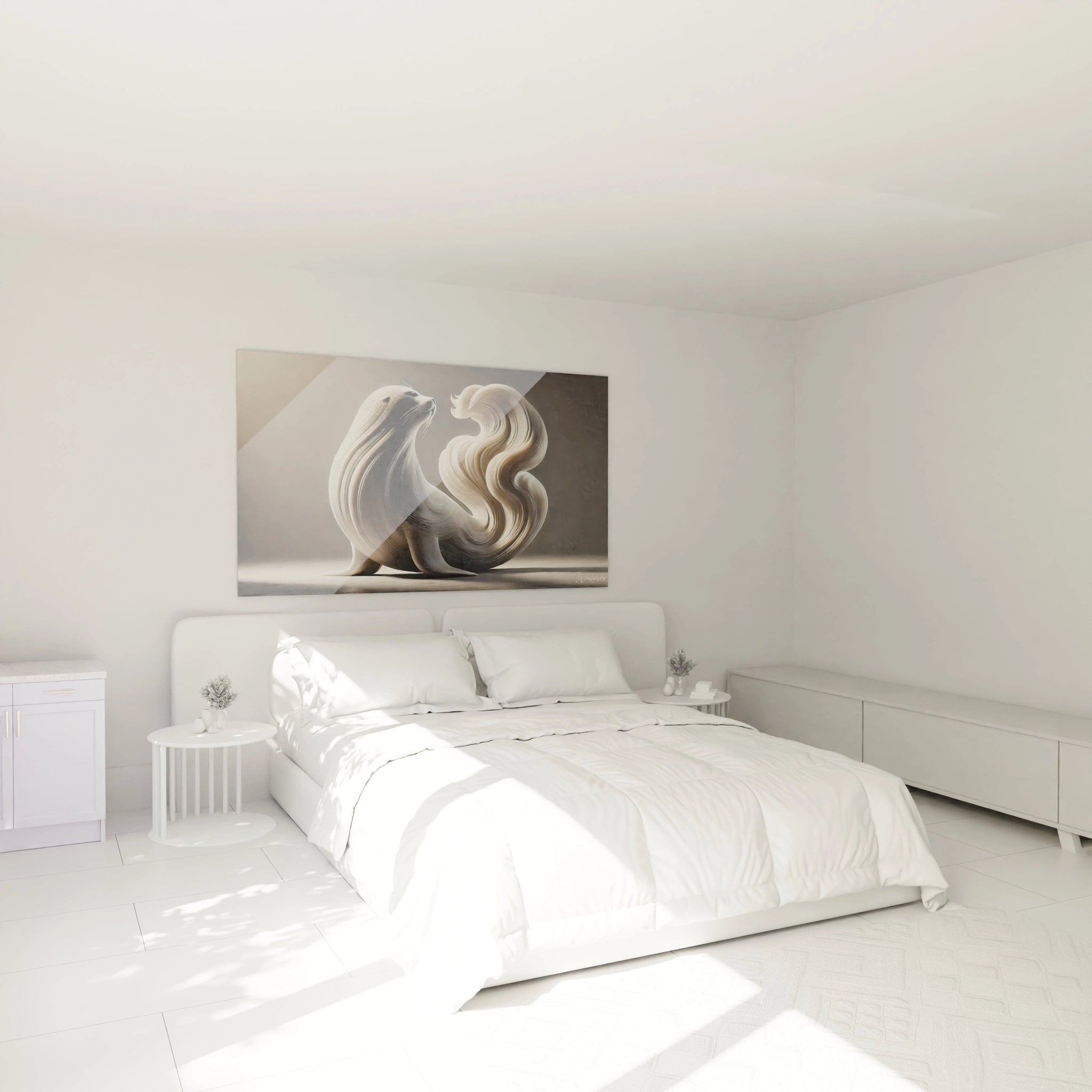
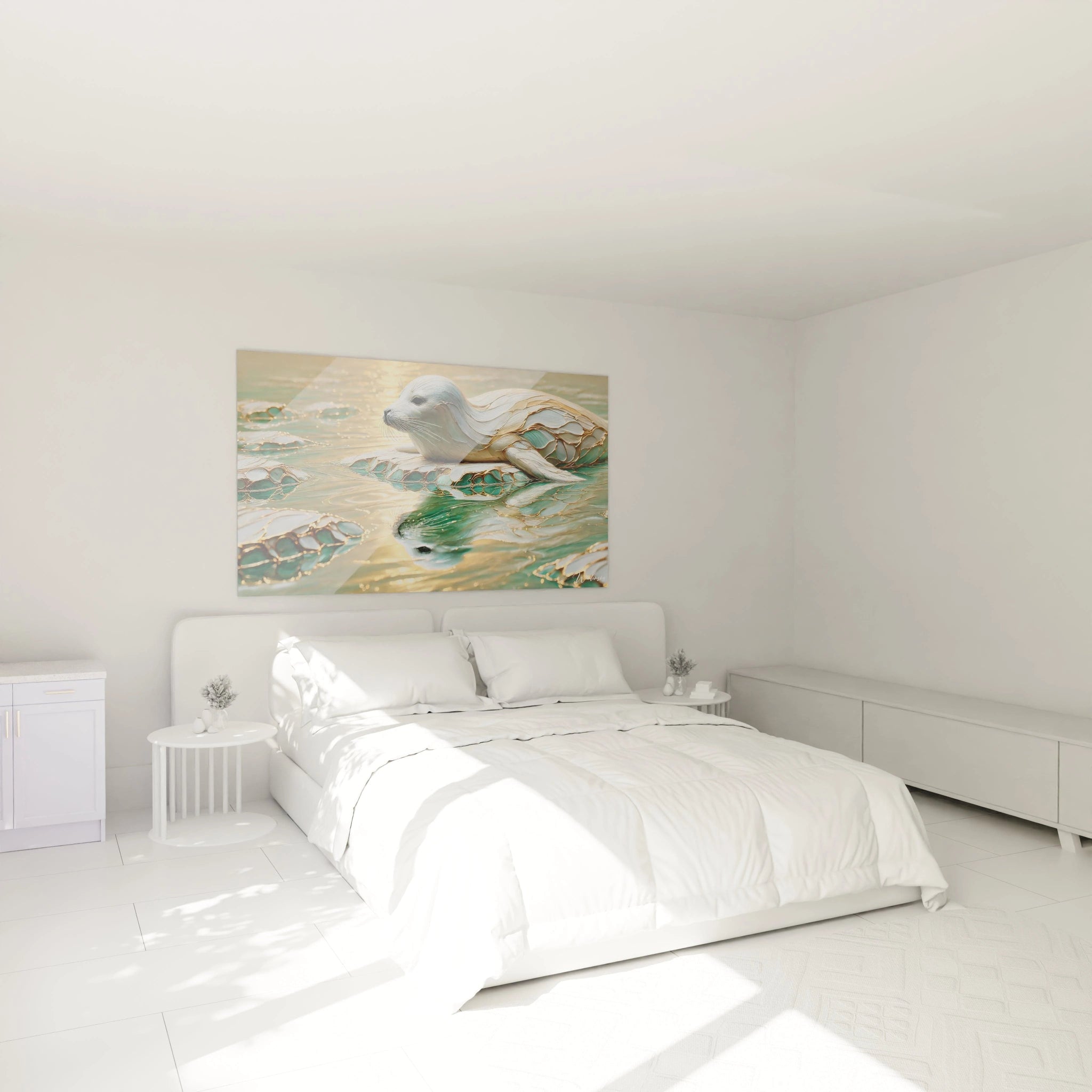
The large size of these paintings allows you to create a true statement in your interior, becoming the founding element of your decorative palette around which your other design choices gravitate.Seal Paintings: The Art of Creating an Authentic Marine Atmosphere
Seal paintings represent far more than simple wall decoration – they constitute a sensory immersion in the Arctic marine universe. Unlike classic marine representations centered on corals or tropical fish, these works capture the very essence of polar ecosystems, offering a unique perspective on cold-water marine life.
How do seal paintings radically transform a room's acoustics?
A little-known yet fascinating aspect of large-scale seal paintings concerns their impact on your space's acoustics. Representations of these marine mammals, particularly when depicting underwater scenes with bubbles and currents, visually create a sense of fluid space that unconsciously influences our acoustic perception of the environment.
Psychoacousticians have documented this phenomenon called "visuo-acoustic resonance," where prolonged exposure to images evoking the underwater world modifies our processing of ambient sound stimuli. In a room adorned with a seal painting, occupants frequently report an subjective impression of ambient sound softening, as if filtered through water.
This characteristic makes seal paintings a particularly judicious choice for relaxation or concentration spaces, where they contribute to creating a perceived quieter sound bubble – a property that other animal paintings do not possess to the same degree.
The natural hygrometric regulation of spaces adorned with seal paintings
Large seal paintings, due to their aquatic subject and representation techniques employed, present a singular capacity to visually balance perceived space humidity. In modern interiors often affected by dryness due to heating systems, these works bring an immediate sensation of hydrating freshness.
This phenomenon is explained by the predominance of cool and aquatic tones dominating these paintings. Our brains establish synesthetic associations between visual stimuli related to water and our perception of the immediate environment. Research in environmental psychology demonstrates that a space adorned with aquatic imagery is systematically perceived as more comfortable hygrometrically, even when actual conditions remain unchanged.
• Visual attenuation of dryness sensation in heated environments
• Psychological refreshing effect during heat waves
• Improved perceived respiratory comfort in confined urban spaces
The unique chromatic evolution of seal paintings under different light sources
A remarkable and exclusive property of seal paintings lies in their visual transformation depending on lighting. The pigments used to represent the characteristic fur of these marine mammals possess variable reflectance that expresses itself differently according to the light source color temperature.
Under 3000K LED lighting (amber), the silvery nuances of the fur develop unexpected warm reflections that contrast magnificently with blue marine backgrounds. Conversely, under natural Nordic lighting or 5000K LED lighting, these same surfaces reveal their most authentic dimension, with subtle micro-nuances of gray, silver, and beige with delicate pearlescent quality.
This chameleon-like quality allows seal paintings to evolve aesthetically throughout the day and seasons, offering a dynamic visual experience that no other type of animal painting can propose with such amplitude.
Marine polar biophilia: The specific psychological impact of seal paintings
Biophilic design – which aims to reconnect humans with nature – finds in seal paintings a particularly powerful expression. Unlike classic biophilia representations centered on vegetation or terrestrial landscapes, these works activate connection with an ecosystem rarely accessible in our daily lives: the Arctic marine world.
Neuropsychologists specializing in biophilic elements' impact on well-being have identified that representations of Arctic marine mammals trigger specific brain responses associated with meditative contemplation. Regular observation of seal paintings stimulates alpha wave production, characteristic of calm and attentive consciousness states.
This neurological specificity makes seal paintings a recognized therapeutic tool in some Nordic healthcare environments, where they are used to facilitate post-operative recovery and reduce chronic pain perception – an application impossible with more common or abstract animal representations.
Integrating seal paintings into transitional habitat spaces
Interior architects specializing in emotionally high-value space creation specifically recommend seal paintings for transitional zones in the home – those intermediate spaces between different functionalities such as hallways, landings, or entryways.
This recommendation rests on the seal's very nature as a transitional animal, naturally evolving between two worlds – aquatic and terrestrial. This symbolism of passage resonates particularly in these intermediate spaces, creating a visual metaphor of movement and transformation accompanying our displacements throughout the home.
By positioning a large-scale seal painting in these transitional zones, you create a visual anchor point that fluidifies passage between different atmospheres in your interior. This "emotional airlock" function is unique to amphibious animal representations, the seal being considered the most aesthetically pleasing and harmonious of this category.The Deep Symbolism of Seal Paintings in Contemporary Art
Seal paintings occupy a singular place in contemporary wall art, conveying symbolic richness rarely matched by other animal representations. Beyond their immediate aesthetic dimension, these works condense ancestral meanings that our subconscious continues to perceive and interpret, even in our modern interiors.
How does the seal's specific gaze influence our daily emotional state?
The seal's characteristic gaze, with its large expressive black eyes, creates direct visual connection with the observer. This anatomical particularity, faithfully reproduced in quality seal paintings, activates specific neurological mechanisms associated with interspecific empathy – that capacity to feel emotional connection with another species.
Studies in affective neuroscience demonstrate that daily exposure to this type of animal gaze triggers the release of neuropeptides associated with well-being, notably oxytocin, known as the "attachment hormone." This phenomenon is particularly pronounced with seal representations, whose facial structure presents a frontal ocular configuration recalling that of human newborns.
This subtle yet constant neurochemical stimulation transforms the seal painting into a passive emotional regulator in your daily space, capable of attenuating stress peaks and fostering a state of attentive presence – a therapeutic property that other animal paintings do not possess to the same degree.
The unique dual symbolic nature of the seal in collective imagination
In world cultural history, the seal occupies a unique symbolic position as a being of "dual nature" – neither completely aquatic nor truly terrestrial. This fundamental ambivalence confers upon it a status of intermediary between different dimensions of existence found in many mythological traditions.
Seal paintings actualize this ancestral symbolism in our contemporary interiors, subtly introducing a transitional dimension. They visually embody this capacity to navigate between different worlds – a powerful metaphor in the age of fluid identities and constant adjustments to changing environments.
• Symbolism of adaptation: capacity to thrive in extremely diverse environments
• Representation of resilience facing environmental transformations
• Visual metaphor of contemporary identity fluidity
• Artistic expression of balance between vulnerability and power
Integration of seal paintings into Nordic chromotherapy practices
Nordic chromotherapy – therapeutic approach using colors to influence psychic and physical state – increasingly integrates seal paintings into its protocols. This trend is explained by the color palette naturally associated with these marine mammals, which combines precisely the nuances considered most effective in this discipline.
The silvery grays, deep blues, and pearlescent whites dominating these representations constitute the chromatic triad identified as optimal for stimulating mental clarity while fostering physical relaxation – a balance particularly sought after in our hyperconnected and overworked societies.
Nordic chromotherapy practitioners specifically recommend seal paintings for spaces dedicated to intellectual or creative work, where they naturally favor entering a state of "flow" – that optimal immersion in activity where effort seems suspended and creativity amplified.
The seal as mediator between consciousness and unconsciousness in wall art
In Jungian analysis of archetypal symbols, the seal occupies a remarkable position as a mediating figure between consciousness levels. Its existence at the frontier of two worlds – submerged then emergent – makes it a powerful representation of the relationship between our conscious mind and the depths of our unconscious.
Seal paintings, when integrated into a living space, function as symbolic portals facilitating this inner communication. Their regular contemplation activates what psychoanalysts call the "transcendent function" – that capacity to harmoniously integrate conscious and unconscious contents into a balanced totality.
This profound psychological dimension explains why these works are often spontaneously chosen for therapeutic or meditative spaces, where they naturally facilitate introspection and emotional integration processes in ways other artistic representations do not allow.
The unique temporal dimension of seal paintings in artistic contemplation
A fascinating characteristic of seal paintings lies in their capacity to modify our subjective perception of time. Studies in psychology of artistic perception demonstrate that contemplating these works induces a phenomenon of "temporal dilation" – a sensation of present moment stretching that favors disconnection from daily frenetic rhythms.
This perceptual alteration is explained by the unique combination of two elements: the fluidity of the seal's forms, evoking slow underwater movement, and the meditative quality of the animal's gaze, which encourages prolonged and attentive observation.
In our contemporary interiors marked by constant acceleration and information overload, seal paintings thus introduce "temporal pockets" – opportunities for slowdown and reconnection to the present moment that constitute genuine passive visual therapy.
Seal Paintings FAQ
Do seal paintings require specific lighting to reveal their full depth?
Seal paintings particularly benefit from directional lighting with variable color temperature (between 4000K and 5000K), which enables highlighting subtle texture variations evoking the animal's wet fur. Dimmable LED spotlight with adjustable intensity offers the possibility to adapt lighting according to times of day, revealing different facets of the work. For optimal experience, favor a spot with medium beam (24-36°) positioned at approximately 30° to the painting's perpendicular.
How do I integrate a seal painting into an interior not dominated by cool tones?
Contrary to common assumptions, seal paintings integrate harmoniously into warm-toned interiors through the complementary contrast they create. In a space dominated by ochres, terracottas, or warm wood, position the seal painting as a refreshing focal point that will naturally balance the global color palette. To strengthen this integration, use textile elements (cushions, throws) that occasionally echo the painting's silvery or bluish nuances, creating coherent visual dialogue throughout the space.
What is the traditional significance of seal paintings in Inuit culture?
In Inuit tradition, the seal (Nattiq) is considered a major spiritual animal embodying abundance, protection, and adaptation. Artistic representations of seals are traditionally associated with transmitting ancestral wisdom and protecting travelers. Inuit artisans created seal amulets to guarantee successful hunts and ensure survival during difficult periods. Today, contemporary seal paintings perpetuate this tradition by subtly integrating these spiritual dimensions, making these works far more than simple decorative elements – they are bearers of benevolent intention for the space they inhabit.