- Coffee Paintings Overview
- Coffee Paintings Sensory Atmosphere
- Coffee Paintings Culinary Pairings
- Coffee Paintings Decorative Style
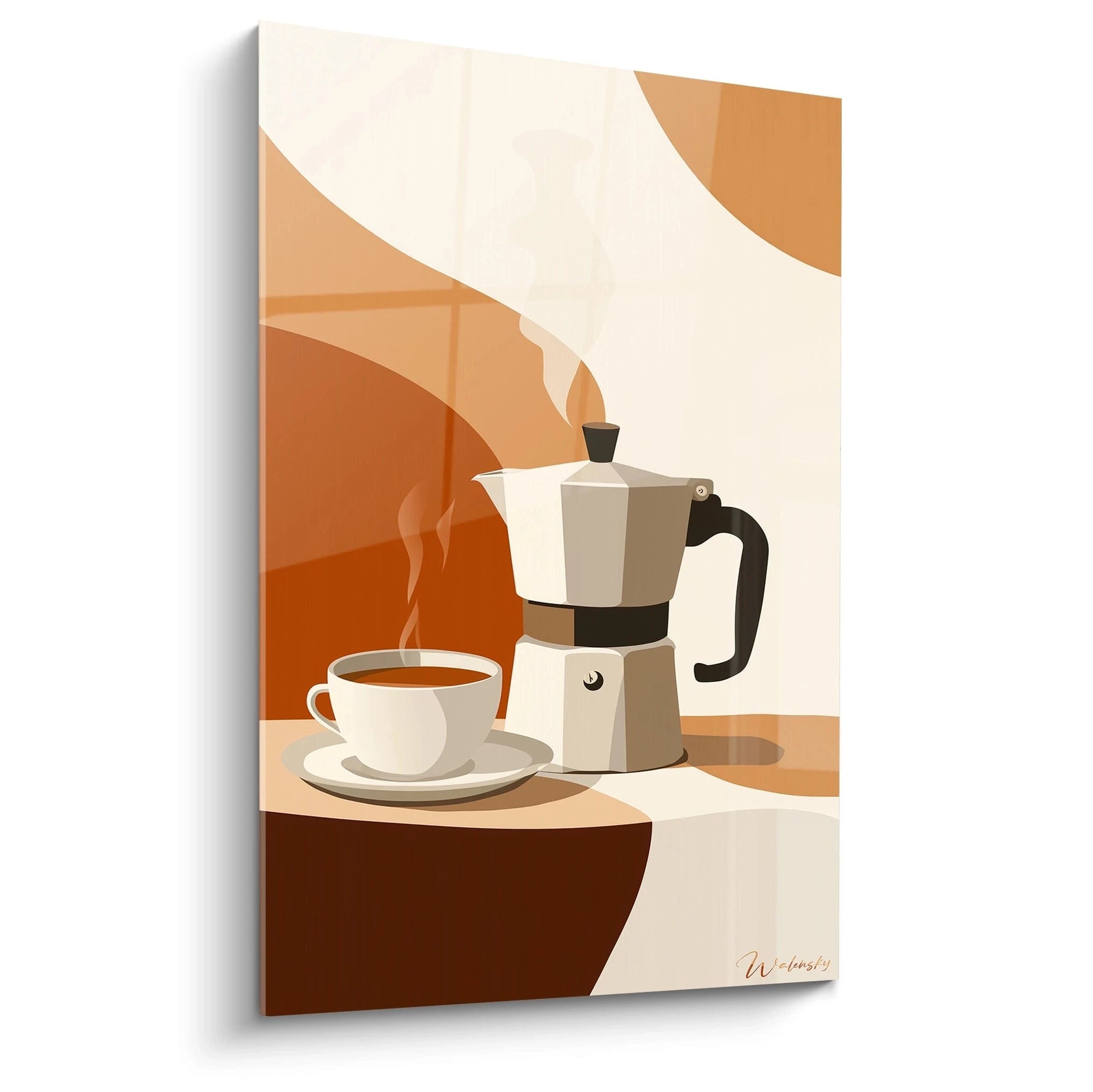
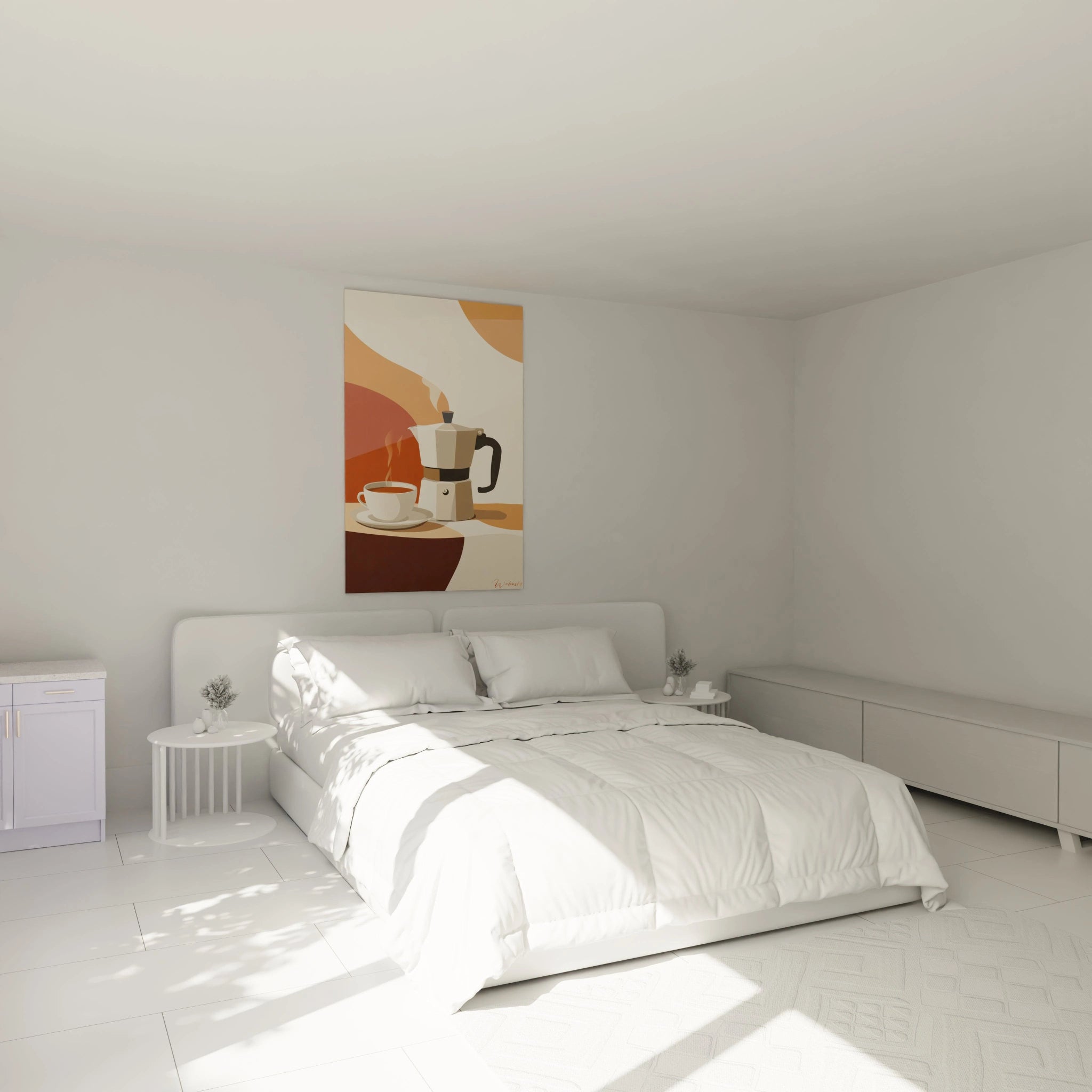
Coffee paintings represent a distinctive category of wall decorations specifically designed for dining establishments and relaxation spaces. Combining visual aesthetics with sensory evocation, these artworks transform a room's ambiance by infusing it with the aromatic richness and cultural significance associated with coffee. Whether you're a business owner or a home enthusiast seeking to create a personalized coffee corner, these kitchen paintings add character and refinement to your walls.
Unlike generic wall decorations, coffee paintings distinguish themselves through their capacity to stimulate the senses beyond simple visual appreciation. They evoke roasted aromas, the warm ambiance of cafés, and the social experience surrounding this universally appreciated beverage. Their presence in a space subtly modifies the atmosphere, inviting tasting, conversation, and relaxation.
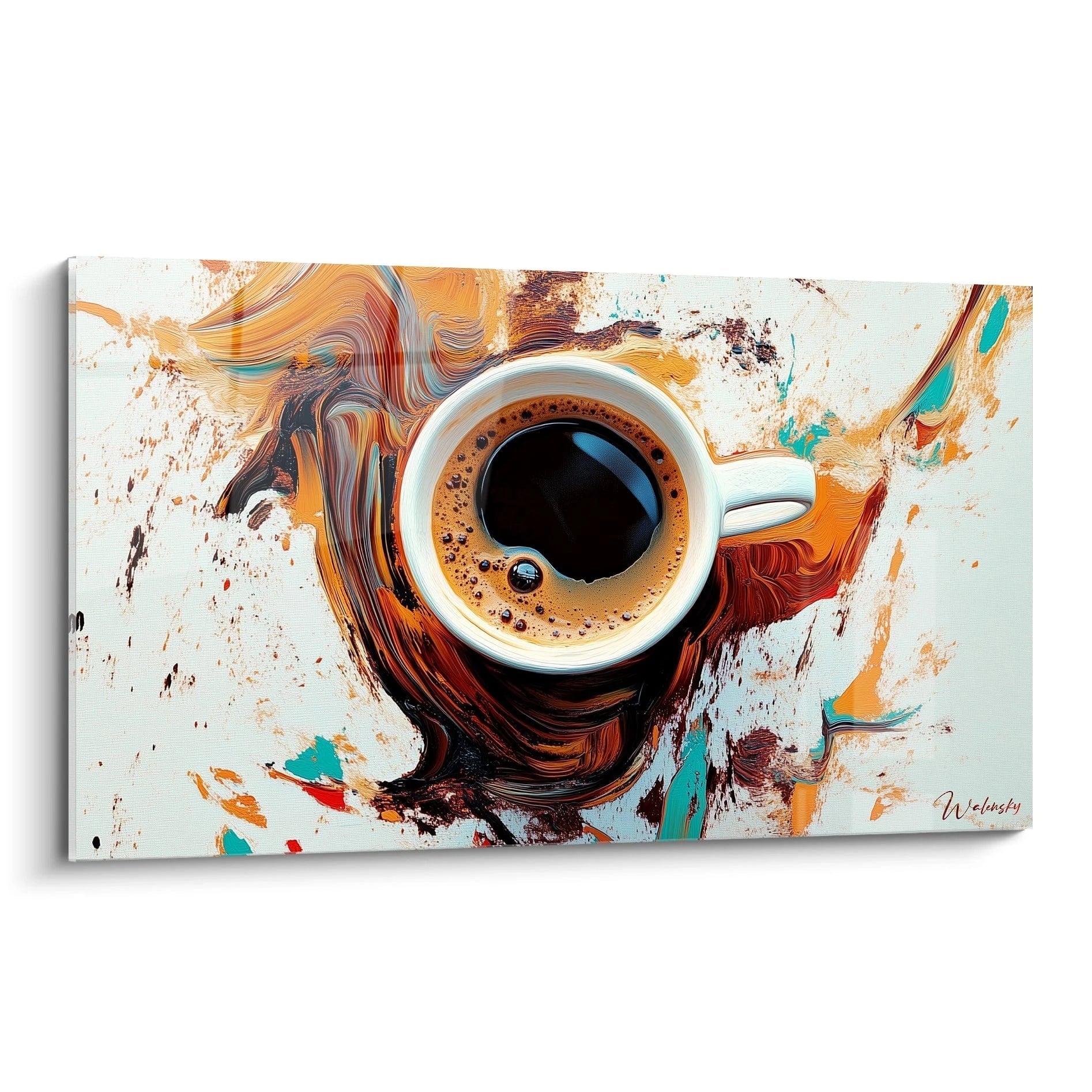
This specific artistic category presents diverse representations, from illustrations of coffee beans to scenes of Parisian cafés, through abstract compositions evoking the warm and deep tones of the beverage. Each painting tells a particular story linked to coffee culture and integrates into a specific decorative context, whether in a modern kitchen, contemporary living room, or commercial dining space.
The sensory influence of coffee paintings on your space's atmosphere
Coffee paintings far exceed simple decorative framing to become true sensory activators in your interior. These wall artworks possess a unique capacity to trigger multi-sensory reactions in those who contemplate them, going well beyond simple visual appreciation.
How do coffee paintings stimulate appetite and the senses?
Neuroscience studies have demonstrated that simply visualizing evocative images of coffee can stimulate brain regions linked to smell and taste. A painting depicting a steaming cup of freshly brewed coffee activates what is called "olfactory memory", creating an almost tangible impression of coffee aromas in the space. This neurological reaction, unique to food representations, transforms a simple decorative element into a trigger for complete sensory experiences.
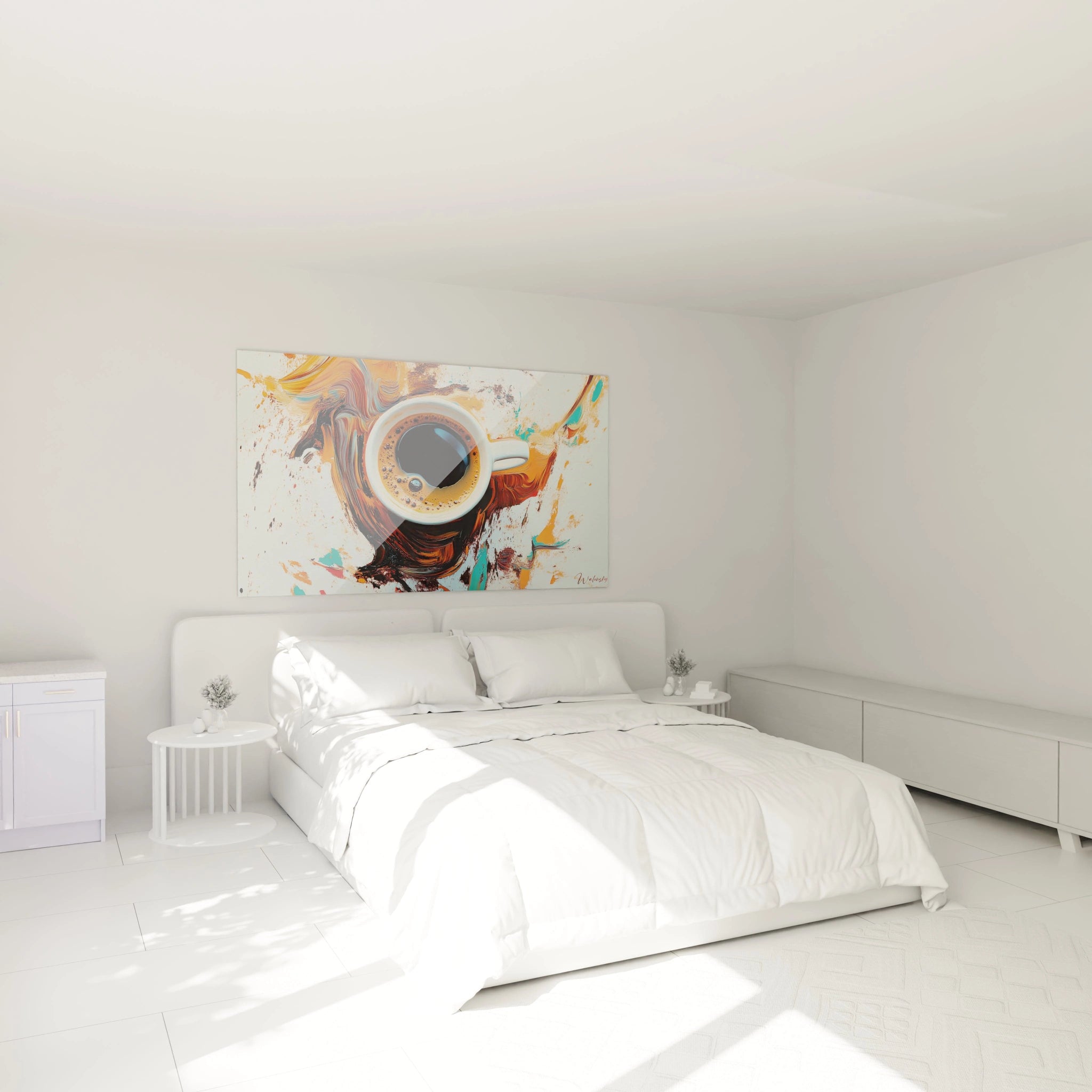
The amber, caramel, and mahogany hues characteristic of coffee paintings create a colour palette that directly influences our perception of ambient temperature. These warm tones subtly modify our thermal perception, making the space feel more welcoming and warm, even without heating adjustments. This is why these large-format paintings are particularly sought after for spaces with neutral walls requiring a comforting focal point.
The unsuspected acoustic effect of large coffee paintings in dining spaces
A rarely discussed aspect of large coffee paintings concerns their impact on a venue's acoustics. In commercial spaces such as cafeterias or restaurants, these paintings partially absorb ambient noise, thereby reducing sound reverberation. This technical characteristic, combined with the visual evocation of a calm environment conducive to tasting, creates what is called a "sensory bubble" favourable to conversation and relaxation.
Establishment owners regularly report that strategic placement of coffee paintings positively influences the time customers spend at their tables. This commercial observation confirms the subtle yet real psychological impact of these artworks on consumer behaviour and their overall experience in the space.
Paintings that adapt to daily light variations
The richness of pigments used in contemporary coffee paintings offers a visual experience that evolves throughout the day. Unlike classical representations, these artworks reveal different nuances depending on the natural or artificial lighting that bathes them. In the morning, under bright light, they emphasise the meticulous details of beans or barista patterns. In the evening, under soft lighting, these same paintings take on a more muted dimension, accentuating contrasts and creating an intimate atmosphere conducive to relaxation.
This capacity for light adaptation makes coffee paintings particularly versatile decorative investments, offering multiple "faces" depending on the time of day and seasons. A single painting can thus radically transform a room's ambiance without any additional decoration modifications.
The socialising influence of depicted coffee scenes
Paintings illustrating lively café scenes or moments of sharing around a cup exercise a subtle yet measurable influence on social interactions in the space where they are displayed. These representations act as unconscious "social signals", encouraging conviviality and exchanges. In professional waiting areas or co-working spaces, these paintings create a psychological climate favourable to informal discussions and meetings.
This socialising dimension explains why coffee paintings are particularly prized in commercial spaces seeking to extend customer dwell time or facilitate professional exchanges in a relaxed atmosphere. Their presence subtly modifies a venue's relational dynamics, without the intervention of other costly furnishing factors.
- Activation of brain regions linked to smell through simple visualisation
- Modification of thermal perception through amber and caramel tones
- Acoustic improvement of dining spaces
- Visual evolution according to daily light variations
- Unconscious stimulation of social interactions
Culinary pairings and visual harmonies of coffee paintings
Integrating coffee paintings into a dining space or kitchen far exceeds simple aesthetic choice. These artworks establish visual and thematic dialogues with the culinary offering proposed, creating perceptive synergies that enrich the overall gastronomic experience. This unique dimension to thematic food paintings deserves particular attention during their selection and positioning.
How to choose a coffee painting based on your gastronomic offering?
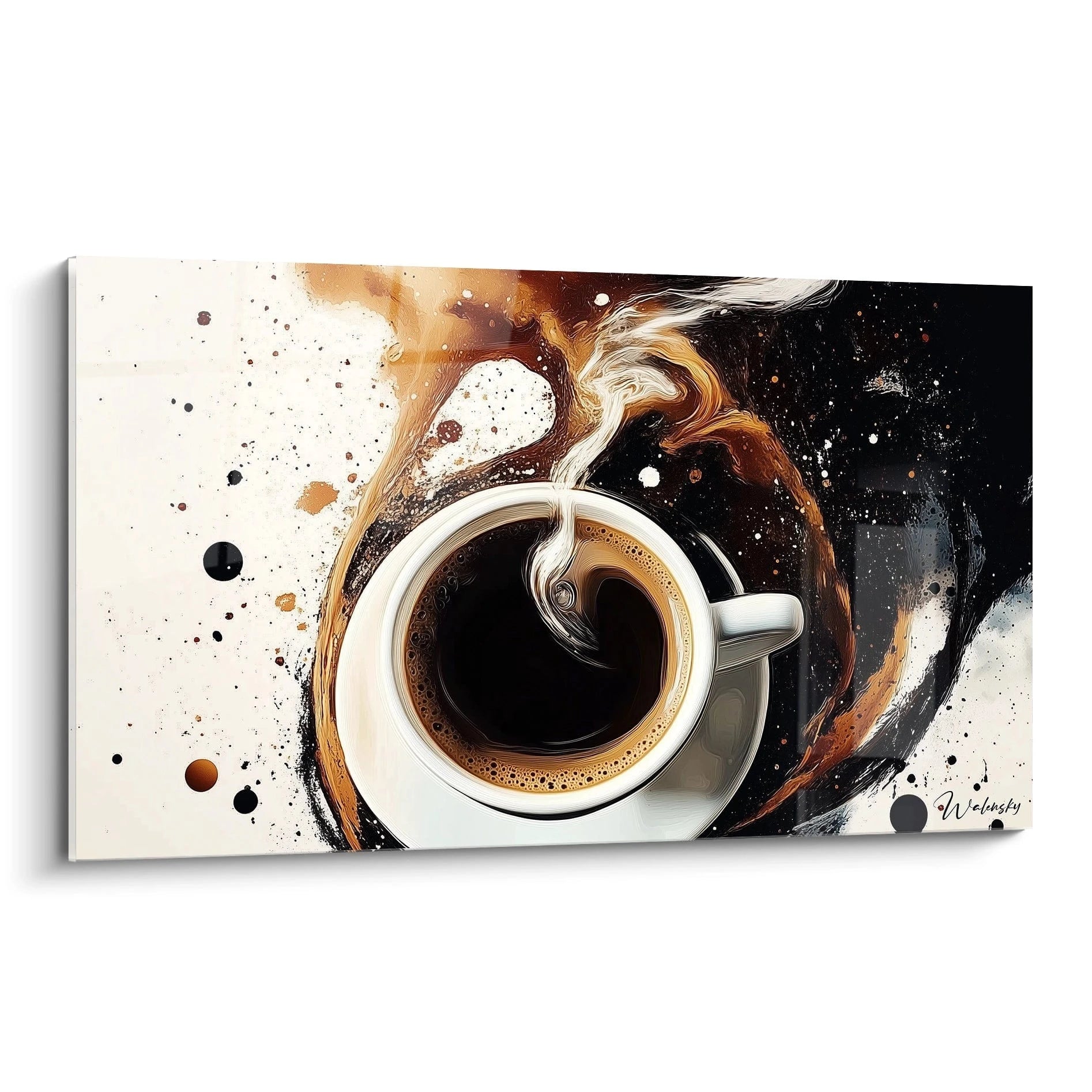
Fine patisserie establishments favour coffee paintings with light tones evoking light coffees, cappuccinos, or artistic lattes. These representations with cream and light caramel nuances establish visual continuity with pastries and desserts, reinforcing the impression of lightness and refined indulgence. Conversely, a restaurant offering robust cuisine and intense flavours will harmonise better with coffee paintings with deep and contrasting colours, reminiscent of strong espressos or specialty coffees.
This colour correspondence between the culinary offering and coffee paintings is not merely an aesthetic matter: it influences the anticipated taste perception of customers. Studies in neuro-gastronomy have demonstrated that visual stimuli in coherence with proposed flavours amplify positive taste expectations and the final appreciation of dishes.
Strategic harmonisation with surrounding materials
In contemporary spaces with raw materials such as polished concrete or steel, coffee paintings create an essential warm contrast. These industrial environments particularly benefit from representations evoking traditional cafés or artisanal coffee roasting processes. The opposition between the coldness of structural materials and the warmth evoked by these paintings generates a visual tension sought after in contemporary decoration.
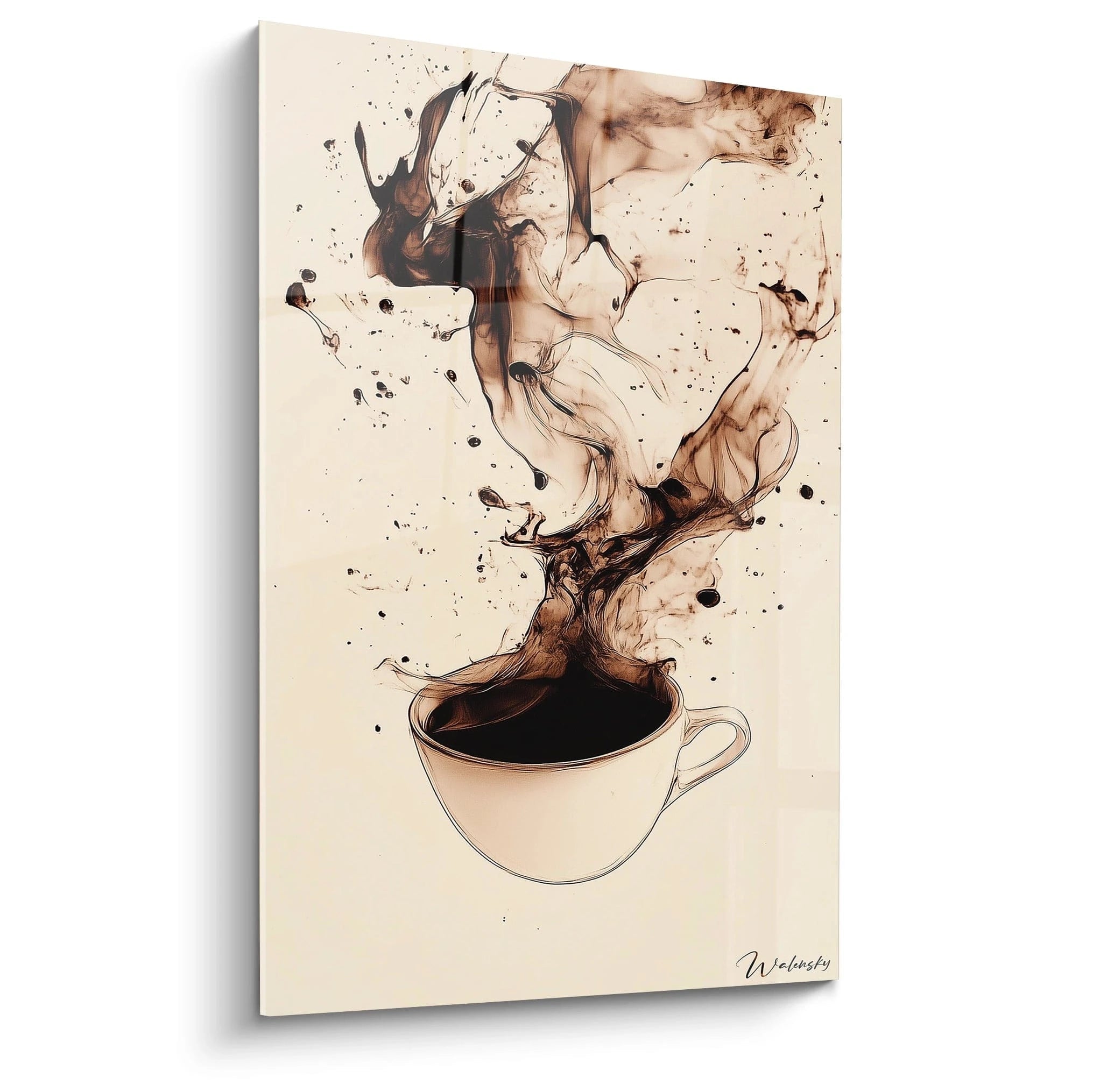
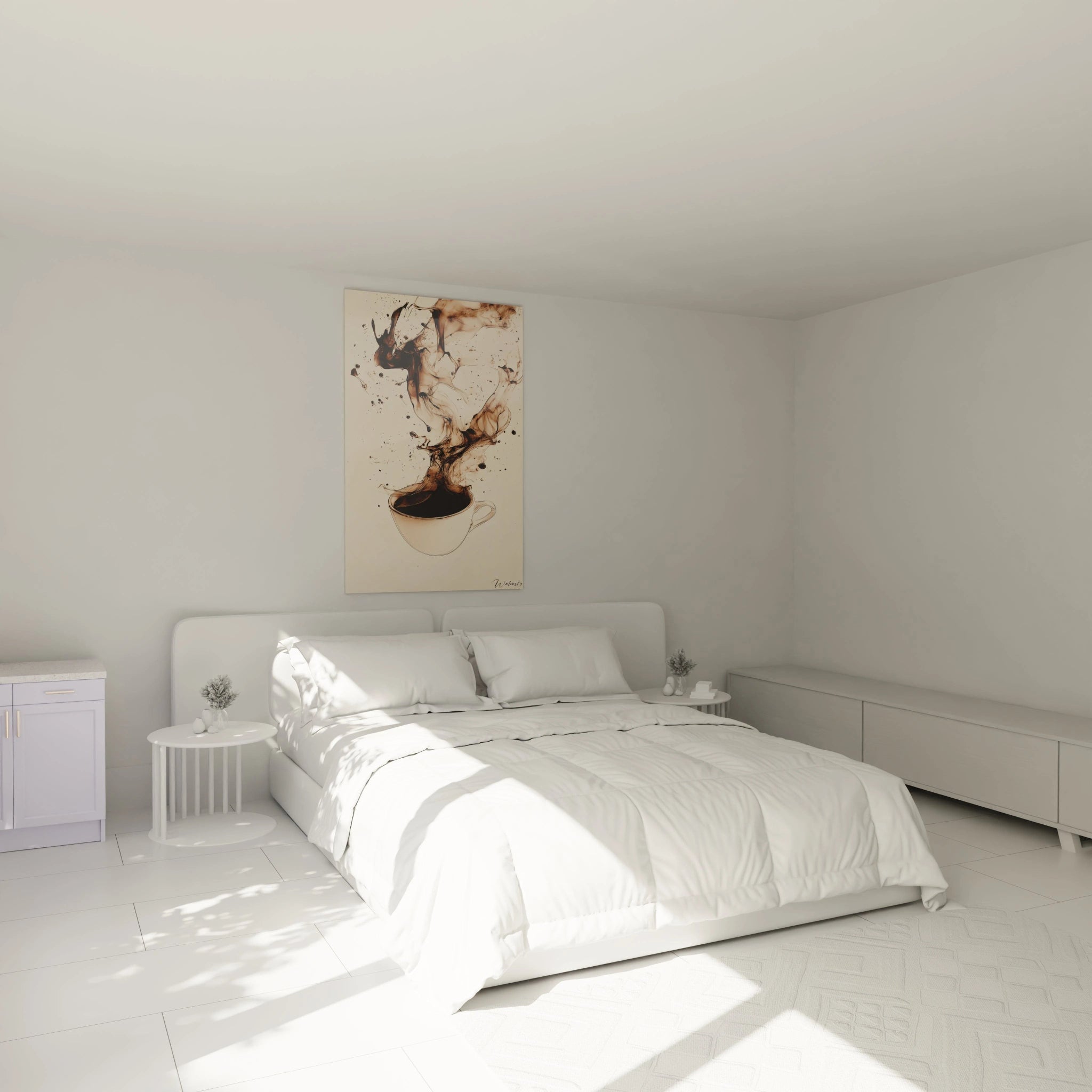
For establishments with wooden finishes or natural tones, abstract coffee paintings depicting vapour swirls or fluid movements of poured coffee bring visual dynamism that avoids a monolithic effect. These compositions suggesting movement enliven the space without disrupting the overall colour harmony based on natural tones.
Strategic positioning according to circulation flows
The ideal placement of a large-format coffee painting responds not solely to aesthetic considerations, but integrates a fine understanding of movement psychology within the space. In cafeterias and restaurants, these paintings are particularly effective when visible from the queue or reception area. This early exposure in the customer journey initiates the sensory experience before even ordering, increasing positive anticipation and emotional engagement.
In private spaces such as open-plan kitchens or dining rooms, coffee paintings find their optimal expression facing seating rather than above preparation areas. This arrangement favours contemplation during tasting moments, creating a reinforcement loop between the actual taste experience and its visual representation.
Seasonal rotation of coffee paintings
Unlike generic wall decorations, coffee paintings benefit from seasonal updating that maintains visual interest and aligns with the evolution of gastronomic menus. During summer, paintings evoking iced coffees, cold brews, or refreshing preparations take on full relevance. As winter approaches, their replacement with representations of steaming beverages, roasted beans, or cosy café atmospheres creates a visual renewal appreciated by regular clientele.
This practice of seasonal artistic rotation, still uncommon but rapidly growing in high-end dining, transforms walls into dynamic exhibition spaces. It also allows optimisation of investment in multiple paintings by extending their visual impact through alternating use.
- Colour correspondence between culinary offering and coffee representations
- Essential warm contrast in spaces with industrial materials
- Strategic positioning based on customer journey and waiting areas
- Seasonal rotation synchronised with menu and beverage evolution
- Harmonisation with surrounding architectural materials and finishes
Integrating coffee paintings into current decorative trends
Coffee paintings occupy a singular position in the contemporary decorative universe, positioned at the intersection of several major aesthetic currents. Their stylistic versatility allows them to transcend usual categorisations to adapt to varied environments, while retaining their distinctive thematic identity linked to the coffee universe.
Which decorative trends naturally harmonise with coffee paintings?
The "Slow Living" movement finds in coffee paintings perfect visual allies. These artworks evoking the ritual of preparation and tasting ideally inscribe themselves in this philosophy promoting reconnection with simple pleasures and moments of conscious pause. Paintings illustrating minimalist compositions - a simple cup on a neutral background or a few artistically scattered beans - particularly resonate with this aesthetic of intentional simplicity characterising contemporary interiors seeking authenticity.
Concurrently, the "Bistronomy" current, which reinvents the codes of gastronomic establishments, naturally integrates coffee paintings into its wall expressions. This trend fusing culinary excellence with relaxed ambiance finds in these artworks the perfect balance between subject sophistication and accessibility of the represented experience. Establishments adopting this aesthetic privilege large-format coffee paintings, creating focal points that anchor the venue's visual identity.
The evolution of formats and supports for contemporary spaces
The architectural trend toward high ceilings and open-plan spaces has directly influenced the evolution of coffee painting formats. Extra-tall vertical works, often exceeding 150 cm, are now favoured for these new interior volumes. These elongated formats visually structure open spaces while maintaining minimal floor footprint, thus responding to establishment constraints seeking to maximise guest capacity.
For residential spaces, particularly open-plan kitchens connected to living areas, coffee diptychs and triptychs are experiencing growing enthusiasm. These modular compositions allow precise adaptation to specific architectural constraints while creating evolving visual narratives. The flexible hanging capability of these segmented sets perfectly meets the needs of multifunctional contemporary interiors.
The territorial and identity dimension of coffee paintings
Beyond their purely decorative function, coffee paintings now engage in territorial anchoring and identity affirmation for numerous establishments. Independent cafés and artisanal roasteries favour artworks illustrating the specific terroirs of their sourcing or distinctive preparation methods. This trend toward "visual traceability" transforms the painting into a subtle educational vector, implicitly informing the customer about the establishment's values and expertise.
In international hotel chains, an inverse yet complementary trend emerges: the use of coffee paintings as local identity markers. These standardised establishments integrate representations of regional coffee traditions, thus creating specific cultural anchoring to each location while maintaining global thematic consistency.
New textures and finishes reinventing the genre
Technical innovation in the coffee painting sector particularly manifests through the emergence of finishes specifically developed for gastronomic environments. Matte anti-glare surfaces become the standard for brightly lit spaces, guaranteeing optimal visibility regardless of spectator position or lighting conditions. This technical evolution directly addresses the constraints of establishments seeking to maintain their wall decorations' visual impact despite variable ambient lighting.
Coffee paintings incorporating textured relief components are also experiencing significant growth. These artworks integrating three-dimensional elements - such as reliefs suggesting the streaks of roasted beans or the velvety texture of latte foam - add a tactile dimension to the visual experience. This multi-sensory approach perfectly aligns with the pursuit of immersive experiences characterising contemporary decorative trends.
- Natural integration into the "Slow Living" movement and conscious pause aesthetics
- Adaptation to extra-tall vertical formats for new architectural spaces
- Use as territorial identity markers and visual traceability vectors
- Development of specific anti-glare finishes for gastronomic environments
- Emergence of modular compositions adaptable to multifunctional interiors
Coffee paintings FAQ
How to maintain a coffee painting in a kitchen environment?
Coffee paintings placed in a culinary environment require specific maintenance due to their exposure to steam and oily particles. A monthly cleaning with a slightly dampened microfibre cloth generally suffices. Avoid aggressive chemical products that could alter the pigments. For optimal protection, prioritise paintings with a finish resistant to splashes.
What coffee painting dimensions to choose for a dining room?
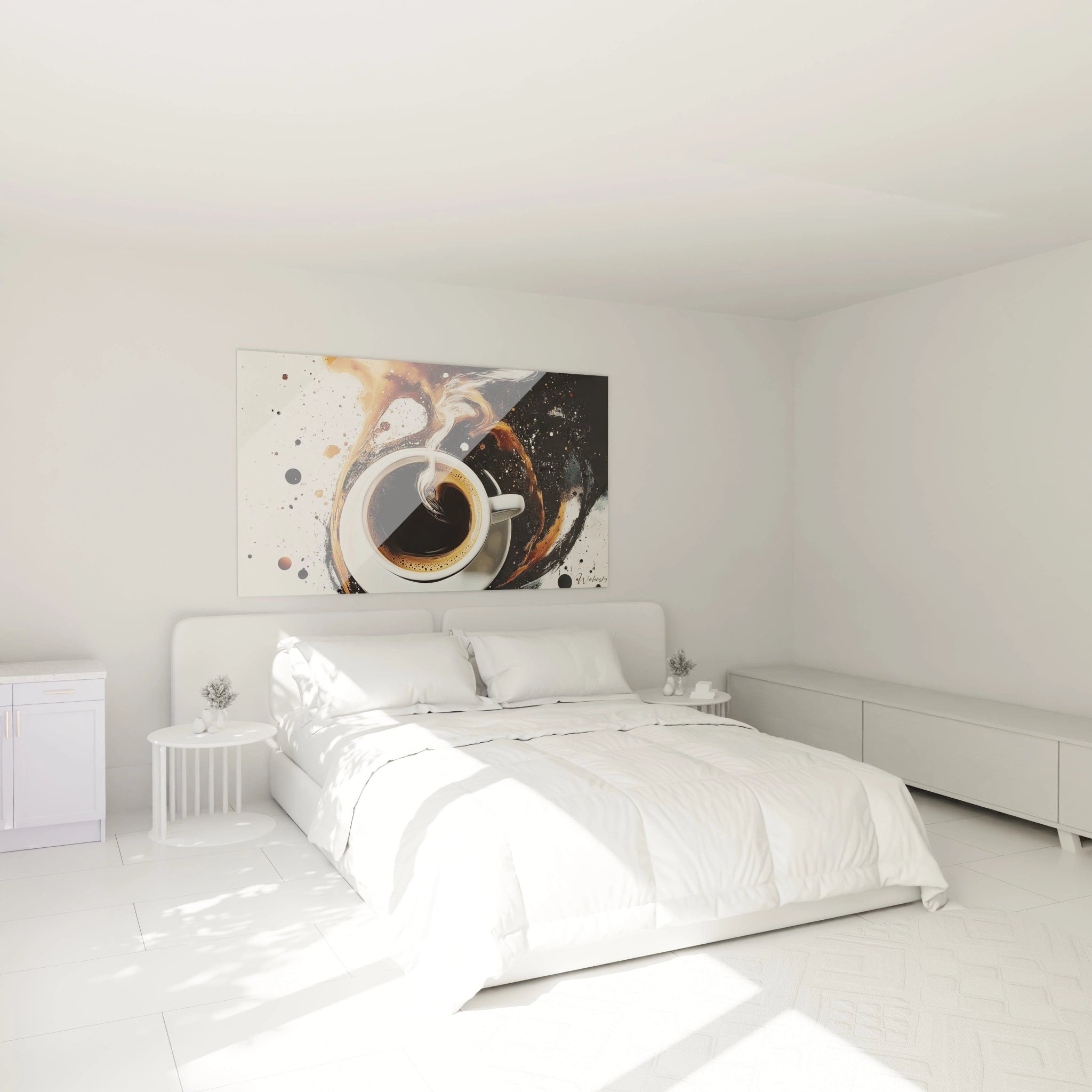
For a dining room, the ideal size of a coffee painting depends on the hosting wall dimension. The general rule recommends that the painting's width represents between 50% and 70% of the width of the furniture it overlooks. For large spaces, favour panoramic formats of at least 100 cm wide that create real visual impact without overwhelming the space.
Can coffee paintings influence guests' appetite?
Indeed, coffee paintings exercise a measurable influence on eating behaviour. Neuro-gastronomy studies demonstrate that visual representations of food or beverages stimulate brain regions linked to appetite. Specifically, paintings evoking aromatic coffees and tasting moments activate the same reward circuits as actual consumption, creating a positive predisposition toward the culinary experience.