


Paintings inspired by Camille Pissarro
The paintings inspired by Camille Pissarro reflect the poetry of everyday life, capturing the light and the nature with a delicate impressionistic touch. Between rural landscapes and vibrant urban scenes, these works exude a peaceful and immersive atmosphere. Perfect for an elegant and refined decoration.
 Painting Inspired by Flowering Apple Trees by Camille Pissarro No.2 – Tribute to a Famous Artist273,90 €
 Painting Inspired by Flowering Apple Trees by Camille Pissarro No.1 – Tribute to a Famous Artist273,90 €
 Painting Inspired by Peasant Woman Planting Shallots by Camille Pissarro No.2 – Tribute to a Celebrated Artist273,90 €
 Painting Inspired by Peasant Woman Planting Shallots by Camille Pissarro No.1 – Tribute to a Celebrated Artist273,90 €
 Wall Art Inspired by The Harvest of Hay by Camille Pissarro No.1 – Tribute to Celebrated Artist273,90 €
 Painting Inspired by French Theatre Square by Camille Pissarro No. 1 – Celebrated Artist Tribute273,90 €
 Painting Inspired by Boulevard Montmartre, Night by Camille Pissarro No.1 – A Tribute to a Celebrated Artist273,90 €
In the same family
Also explore the theme Famous Artists ( inspirations )
-
 View all265
artworks
View all265
artworks
-
 Alfred Sisley10
artworks
Alfred Sisley10
artworks
-
 Amedeo Modigliani12
artworks
Amedeo Modigliani12
artworks
-
 Caspar David Friedrich11
artworks
Caspar David Friedrich11
artworks
-
 Claude Joseph Vernet3
artworks
Claude Joseph Vernet3
artworks
-
 Claude Monet10
artworks
Claude Monet10
artworks
-
 Edgar Degas8
artworks
Edgar Degas8
artworks
-
 Edvard Munch11
artworks
Edvard Munch11
artworks
-
 Edward Hopper8
artworks
Edward Hopper8
artworks
-
 Frida Kahlo6
artworks
Frida Kahlo6
artworks
-
 George Braque5
artworks
George Braque5
artworks
-
 Giuseppe Arcimboldo9
artworks
Giuseppe Arcimboldo9
artworks
-
 Goya8
artworks
Goya8
artworks
-
 Gustav Klimt8
artworks
Gustav Klimt8
artworks
-
 Gustave Courbet8
artworks
Gustave Courbet8
artworks
-
 Henri Matisse4
artworks
Henri Matisse4
artworks
-
 Hieronymus Bosch2
artworks
Hieronymus Bosch2
artworks
-
 Jean Baptiste Camille Corot9
artworks
Jean Baptiste Camille Corot9
artworks
-
 Jean François Millet7
artworks
Jean François Millet7
artworks
-
 Jean-Auguste-Dominique Ingres10
artworks
Jean-Auguste-Dominique Ingres10
artworks
-
 JMW Turner6
artworks
JMW Turner6
artworks
-
 Johannes Vermeer10
artworks
Johannes Vermeer10
artworks
-
 Leonardo da Vinci5
artworks
Leonardo da Vinci5
artworks
-
 Michelangelo6
artworks
Michelangelo6
artworks
-
 Paul Gauguin6
artworks
Paul Gauguin6
artworks
-
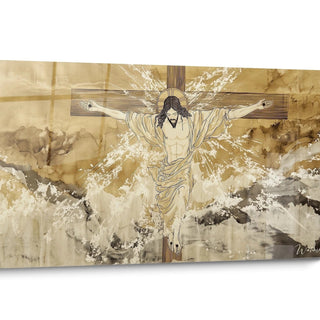 Peter Paul Rubens6
artworks
Peter Paul Rubens6
artworks
-
 Pierre-Auguste Renoir6
artworks
Pierre-Auguste Renoir6
artworks
-
 Piet Mondrian11
artworks
Piet Mondrian11
artworks
-
 Pieter Bruegel the Elder6
artworks
Pieter Bruegel the Elder6
artworks
-
 Rembrandt van Rijn4
artworks
Rembrandt van Rijn4
artworks
-
 Sandro Botticelli9
artworks
Sandro Botticelli9
artworks
-
 Sonia Delaunay6
artworks
Sonia Delaunay6
artworks
-
 Théodore Géricault7
artworks
Théodore Géricault7
artworks
-
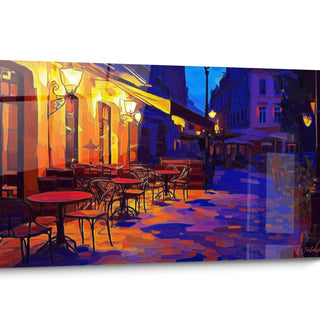 Vincent Van Gogh11
artworks
Vincent Van Gogh11
artworks
-
 Wassily Kandinsky10
artworks
Wassily Kandinsky10
artworks


All about Paintings inspired by Camille Pissarro
- Presentation Wall Art Camille Pissarro
- Camille Pissarro Wall Art Impressionism
- Camille Pissarro Wall Art Rural Scenes
- Camille Pissarro Wall Art Investment
Camille Pissarro wall art represents an invaluable artistic heritage, reflecting the unique sensibility of the "father of Impressionism" for French rural and urban landscapes. A master of light effects and a precursor of innovative techniques, Pissarro created works that capture the essence of everyday life with remarkable authenticity. His depictions of the Norman countryside, Parisian markets, and port scenes offer a precious historical view of 19th-century France. Each Pissarro wall art tells a distinct visual story, marked by his characteristic touch and subtle color palette, making his creations sought-after pieces by collectors and admired in the world's leading museums. Exploring Pissarro's universe is discovering a unique perspective on the French society in transition and appreciating the evolution of an artist who influenced generations of painters after him.
Camille Pissarro Wall Art, Timeless Impressionist Heritage
Camille Pissarro wall art represents the very essence of the Impressionist movement, offering an unparalleled window into 19th-century France through the gaze of a pioneering master. Unlike the academic representations of his time, Pissarro developed a distinctive approach that continues to captivate art lovers and collectors worldwide.
Why are Camille Pissarro's wall art considered foundational to Impressionism?
Camille Pissarro holds a unique place in art history as the only artist to have exhibited his wall art at all eight exhibitions of the Impressionists. This consistency testifies to his central role in the development and legitimization of the movement. His works are distinguished by their fragmented brushwork technique and atmospheric compositions that capture the fleeting moment characteristic of Impressionism.
The influence of Pissarro on his contemporaries was considerable. Claude Monet and Paul Cézanne considered him a mentor and an artistic guide. Famous wall art by Pissarro revolutionized the approach to landscape painting, introducing a new sensitivity to atmospheric changes and natural light that defines the Impressionist aesthetic.
The unique technique of Pissarro in his Impressionist wall art
Camille Pissarro wall art are distinguished by their remarkable technical execution. The artist used a particular method of juxtaposing pure colors that created a vibrating effect when observing his works. This technique, different from that of Monet or Renoir, gives his landscapes a distinct luminosity and a recognizable texture.
Pissarro's color signature rests on a subtle palette of greens, blues, and ochres that evokes the French countryside with a striking authenticity. His wall art often presents a high perspective, offering panoramic views that harmoniously encompass sky, earth, and human activity in a balanced composition.
His brushstrokes - short, precise, and directional - create a visual rhythm that animates his rural and urban scenes. This textural approach immediately distinguishes a Pissarro wall art and constitutes his most recognizable artistic signature.
The stylistic evolution of Pissarro's wall art: beyond classic Impressionism
Unlike some of his contemporaries, Pissarro constantly evolved his style, even exploring Pointillism and Neo-Impressionism in the 1880s. This artistic curiosity gives his wall art a rare stylistic diversity among first-generation Impressionists.
During his Neo-Impressionist phase, his wall art present a more scientific approach to color, with points of pure pigments creating striking optical mixtures. These experimental works demonstrate his willingness to innovate constantly and his refusal to be confined to a single artistic formula.
In his later years, Pissarro returned to a more free technique, synthesizing his various stylistic explorations. These late wall art, often made from the windows of his Parisian apartment, offer an urban vision transformed by his rural experience, creating a unique bridge between these two worlds.
Thematic series in Pissarro's work
Pissarro’s paintings are distinguished by their organization into coherent thematic series. The artist systematically explored the same location under different weather and lighting conditions, anticipating the serial approach that Monet would later develop with his Water Lilies. His Rouen harbor series, painted in 1883, perfectly illustrates this approach. These paintings capture the changing atmospheres of the industrial port, between morning mist and harsh midday light, creating an unparalleled visual document of 19th-century French port activity. His paintings of Norman rural markets also form a coherent ensemble that documents the economic and social life of the countryside. These market scenes are particularly prized for their ethnographic richness and their testimony to local commercial traditions that have now disappeared.
The historical value of Pissarro’s paintings as social testimonies
Beyond their aesthetic beauty, Camille Pissarro’s paintings possess exceptional documentary value. They offer a precious visual testimony of France undergoing industrial and urban transformation, capturing a pivotal moment in European social history. His depictions of working peasants reflect his anarchist convictions and his interest in the condition of the working class. Unlike the romantic or picturesque vision of French peasantry, his paintings present a respectful and dignified view of agricultural labor, without idealization or sentimentalism. Pissarro’s urban paintings also document the transformation of Paris under Haussmann, offering a unique perspective on the rapid modernization of the French capital. These views of Parisian boulevards and squares are now invaluable visual testimonies for urban planners.
Pissarro’s Paintings: The Essence of French Rural Scenes
Pissarro’s paintings dedicated to rural scenes represent a major contribution to 19th-century pictorial art. These works are distinguished by their striking authenticity and their ability to convey the true atmosphere of the French countryside, far from the idealized representations then in vogue.
The unique representation of Norman landscapes in Pissarro’s paintings
Pissarro’s paintings dedicated to Normandy offer a singular vision of this fertile region. Unlike standardized picturesque views, Pissarro captured the specific geography of the Norman valleys with their characteristic orchards and fields with distinctive shapes delimited by hedgerows. The particular light of the region is beautifully reproduced in his paintings. Pissarro excelled at representing this specific Nordic clarity, filtered by the ambient humidity, which creates subtle contrasts and colored shadows characteristic of this French coastal region. Norman orchards in bloom are a recurring subject in Pissarro’s paintings. His representation of apple blossoms around Pontoise reveals his intimate understanding of the regional agricultural cycle and his sensitivity to the seasonal transformations of the rural landscape.
How Pissarro’s paintings document traditional agricultural practices?
Pissarro’s paintings constitute a valuable visual documentation of pre-industrial agricultural methods. His works meticulously detail the techniques of harvesting, mowing, and plowing specific to different regions of France, thus preserving the memory of practices that have now disappeared. The artist was particularly attentive to the traditional agricultural tools that he represented with almost ethnographic precision. His paintings show the plows, scythes, rakes and other instruments in their context of use, offering an invaluable visual testimony on the rural material culture of the 19th century. The seasonal rhythms of agricultural work structure Pissarro’s work. His paintings follow the annual cycle of sowing, harvesting and landscape transformations, creating a complete visual chronicle of French rural life organized around the agricultural calendar.
The architectural dimension in Pissarro’s rural paintings
Pissarro’s paintings offer a particular attention to French vernacular architectures. His representations of Norman half-timbered farms, the mills of the Oise, or the Pontoise barns precisely document regional architectural traditions with their distinctive constructive characteristics. The harmonious integration of agricultural buildings into the landscape constitutes a visual signature of his paintings. Pissarro perfectly captured how these structures organically fit into their environment, reflecting centuries of adaptation to local conditions and available resources. Paintings depicting rural housing also reveal the artist’s social sensitivity. His representations of peasant houses avoid both picturesque idealization and miserable caricature, offering instead a respectful look at the real living conditions of French rural communities.
Seasonal variations as a distinctive element of Pissarro’s paintings
Pissarro’s paintings are distinguished by their exceptional sensitivity to the seasonal transformations of the rural landscape. His winter views of Louveciennes or Éragny capture the particular luminosity of snowy landscapes with an unparalleled atmospheric accuracy in Impressionist painting. Autumn scenes occupy a privileged place in his work. His paintings of Norman orchards in autumn translate the chromatic richness of this season with a distinctive palette of ochres, reds, and golds that defines an immediately recognizable seasonal aesthetic. French rural spring finds in Pissarro’s paintings a particularly accurate expression. His representation of the first blooms, spring plowing, and plant renewal testifies to a careful observation of natural cycles and a keen sensitivity to the subtle transformations of the landscape.
The contemporary legacy of Pissarro’s rural paintings
Pissarro’s paintings dedicated to the rural world today exert a considerable influence on contemporary interior decoration. Their harmonious color palette and balanced compositions fit perfectly into modern living spaces, creating visual focal points that bring warmth and historical depth. Second homes and contemporary country houses often favor these paintings to strengthen their territorial connection. A quality reproduction of a Norman landscape by Pissarro establishes a visual dialogue between the interior space and the surrounding rural environment, creating an appreciated aesthetic continuity. In urban interiors, these paintings introduce a welcome visual breath. Their evocation of a more harmonious relationship with nature and the cycle of seasons offers a soothing counterpoint to the metropolitan environment, explaining their growing popularity in apartments in major French cities.
Paintings by Camille Pissarro: An Exceptional Artistic Investment
Pissarro’s paintings today represent a particularly sought-after artistic investment category. Their patrimonial, historical, and aesthetic value make them strategic acquisitions for discerning collectors and art lovers concerned with possessing works that are both meaningful and financially rewarding.
Why are Pissarro’s paintings experiencing constant appreciation in the art market?
Pissarro’s paintings benefit from a growing scarcity in the public art market. The majority of his major works now being preserved in international museum collections, each appearance of an authentic painting for sale is a remarkable event that attracts the attention of major collectors. Unlike some Impressionists whose quotes have fluctuated, Pissarro’s paintings show a regular and sustained progression of their market value for three decades. This stability makes them particularly appreciated safe havens in times of economic uncertainty. The secondary market for high-end reproductions and limited editions of Pissarro paintings also experiences a positive dynamic. These accessible alternatives to originals allow art lovers with more modest budgets to participate in this segment of the art market.
The distinctive place of Pissarro’s paintings in museum and private collections
Pissarro paintings occupy a strategic position within major Impressionist collections. Their presence is considered essential for any collection aiming to represent the complete evolution of the movement, as Pissarro was the only artist to participate in all of the Impressionist exhibitions.
Private collections specializing in 19th-century French art place particular importance on acquiring Pissarro paintings. These works often serve as pivotal pieces that contextualize and enhance the value of an entire collection, justifying their high acquisition price.
The presence of a Pissarro painting in a private collection confers considerable prestige, demonstrating the collector's sophistication. Beyond their financial value, these works signal a level of artistic knowledge and appreciation that distinguishes the most respected collections.
Authentication and expertise of Pissarro paintings: issues and methods
The authentication of Camille Pissarro paintings involves particularly rigorous expertise protocols. The existence of a comprehensive raisonné catalogue, regularly updated by specialists of the artist, constitutes an essential reference for establishing the authenticity and provenance of each work.
Specific material analyses include the study of the characteristic pigments used by Pissarro. His distinctive palette and specific color mixtures constitute a chemical signature that allows experts to distinguish his authentic paintings from imitations.
The study of provenance is critically important for Pissarro paintings, particularly those that transited through Europe during the period 1933-1945. Rigorous documentation of the ownership history protects buyers from legal risks related to works looted during World War II.
Practical aspects of acquiring and preserving Pissarro paintings
The acquisition of a Pissarro painting requires particular attention to preventive conservation conditions. These Impressionist works, often executed on relatively fragile supports and with pigments sensitive to light, require controlled environments to preserve their chromatic integrity.
Specialized insurance is a crucial aspect of owning Pissarro paintings. Policies dedicated to Impressionist works take into account their particular sensitivity to environmental conditions and their exceptional market value, requiring adapted coverage.
The transport and installation of Pissarro paintings require the intervention of specialized professionals. Their knowledge of the technical particularities of these works guarantees safe handling and optimal hanging that preserves the integrity of the work while maximizing its visual impact.
The impact of temporary exhibitions on the valuation of Pissarro paintings
Pissarro retrospectives organized by major international museums significantly influence the market value of his paintings. Each major exhibition generates a renewed media and academic interest that translates into a positive revaluation of the works on the market, offering strategic opportunities for collectors.
Lending Pissarro paintings from private collections to prestigious exhibitions contributes to strengthen their provenance and historical importance. This institutional visibility values the work and enriches its exhibition history, two determining factors in the appreciation of its long-term value.
FAQ on Camille Pissarro paintings
What is the most valued period in Camille Pissarro paintings?
Pissarro paintings from the period 1872-1884 are generally the most sought-after and valued on the art market. This period corresponds to the maturity of his Impressionist style and includes his iconic series of Pontoise and Louveciennes. Works from this era present the perfect balance between technical innovation and compositional mastery that defines his unique contribution to Impressionism.
How to distinguish an authentic Camille Pissarro painting from a reproduction?
The authentication of a Camille Pissarro painting requires examination by specialized experts who analyze several distinctive elements: the artist's characteristic signature, often discreet and positioned in the lower corner; the specific texture of his pictorial touch; the composition of the pigments used; and the documented provenance of the work. Reproductions, even of high quality, never perfectly reproduce the three-dimensional texture and luminous vibration characteristic of his original paintings.
Do Camille Pissarro paintings require special display conditions?
Pissarro paintings require controlled display conditions to preserve their integrity. Lighting limited to 50-70 lux is recommended to avoid pigment degradation. Relative humidity should be maintained between 45% and 55% to preserve the stability of the pictorial layer and the support. The ideal temperature is between 18°C and 22°C, with minimal variations. These specific parameters explain why serious collectors invest in sophisticated conservation systems to protect these valuable works.
Further reading
Our articles on this topic
L'art qui suscite l'envie
Maison belge d'art mural grand format
14 jourspour changer d'avis*
Protection Walenskyincluse
Fabriquéen Italie
FormatXXL
Kit de fixationtoujours fourni
* Hors tableaux personnalisés et tailles personnalisées


