


Abstract African Wall Art
Discover our collection of "Abstract African" wall art, a vibrant artistic journey into the heart of African cultures and traditions. Each artwork captures the essence of patterns, shapes, and dynamic colors, reflecting the rich and diverse soul of the continent. Whether you're looking to infuse new energy into your interior or enrich your space with a touch of modern exoticism, this collection offers unique and powerful pieces. Carefully selected for their depth and originality, these artworks will bring an exceptional cultural and aesthetic dimension to your décor. Immerse yourself in abstract African art and let yourself be inspired by this fusion of tradition and modernity.
 Abstract African Painting Orange Symphony - Africa Edition273,90 €
 Abstract African wall art carved waves - africa edition273,90 €
 Abstract Geometric Wall Art - Urban Fragments - African Abstract Edition273,90 €
 African Harmony Saffron Wall Art - Africa Edition273,90 €
 African Wall Art Copper River - Africa Edition273,90 €
 African Wall Art Inner Journey - africa edition273,90 €
 African Wall Art Cradle Flames - Africa edition273,90 €
 Africa Painting Golden Lands - africa edition228,90 €
 Tree Artwork Song of Forms - africa edition273,90 €
 Wall Painting Architecture Passage of Souls - edition Africa273,90 €
 Architecture Wall Art Reflections of the Orient - Africa Edition228,90 €
 Branches Painting Breath of the Earth - Africa Edition273,90 €
 Colored Circles Wall Art - Tribal Mosaic - Abstract African Edition242,90 €
 Concentric Circles Wall Art - Color Harmony - African Abstract Edition273,90 €
 Concentric Circles Wall Art - Earthly Mosaic - African Abstract Edition273,90 €
 Geometric Circles Painting Ochre and Terracotta Nuances - Earthly Symphony - African Abstract Edition273,90 €
 Circles Copper Symphony Wall Art - Africa Edition273,90 €
 Warmth of an Ancient Land - African Abstract Edition273,90 €
 Composition Painting Song of Volumes - Africa edition273,90 €
 Geometric Composition Painting with Ochre and Rust Tones - Terrestrial Harmony - African Abstract Edition273,90 €
 African Sword Wall Art Blood and Gold - Africa Edition273,90 €
 Awakening of the Plains - African Abstract Edition273,90 €
 Foliage Painting Vegetable Flames - Africa Edition273,90 €
 Leaves Wall Art Poetic Vegetation - africa edition273,90 €
Explore further
In Abstract African Wall Art
-
 Abstract Geometric African Wall Art22
artworks
Abstract Geometric African Wall Art22
artworks
-
 Abstract Golden African Wall Art16
artworks
Abstract Golden African Wall Art16
artworks
-
 Abstract African Mosaic Wall Art11
artworks
Abstract African Mosaic Wall Art11
artworks
-
 Abstract Tribal African Wall Art18
artworks
Abstract Tribal African Wall Art18
artworks
-
 Abstract Fluid African Painting13
artworks
Abstract Fluid African Painting13
artworks
-
 Abstract African Orange Wall Art23
artworks
Abstract African Orange Wall Art23
artworks
-
 Abstract African Circles Wall Art11
artworks
Abstract African Circles Wall Art11
artworks


In the same family
Also explore the theme Africa
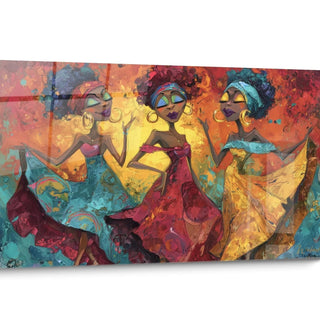


All about Abstract African Wall Art
- African Abstract Art Presentation African Abstract
- African abstract wall art and ancestral symbolism
- African abstract wall art and contemporary decoration
- African abstract wall art and artistic investment
The African abstract wall art represents a unique fusion between contemporary art and the cultural heritage of the African continent. These works captivate through their ability to convey emotions and stories through non-figurative compositions while preserving the essence of millennia-old African artistic traditions.
Unlike other abstract art styles, African abstract wall art distinguishes itself through its distinctive use of geometric patterns inspired by traditional textiles, its earthy and vibrant color palettes, and its subtle references to ancestral rituals and symbols. Each work tells a profound story, rooted in rich cultural heritage.
These monumental abstract wall artworks radically transform the atmosphere of a space. Their imposing presence creates a striking focal point that immediately transports you to a universe where tradition and modernity coexist harmoniously. African abstract art is not simply decorative – it represents a dialogue between past and present.
Whether you are passionate about contemporary art, fascinated by African cultures, or simply seeking a distinctive piece to enhance your interior, African abstract wall art offers an incomparable aesthetic experience. Explore our thematic tabs to discover the multiple facets of this fascinating art form.
Symbolism and Meaning in African Abstract Wall Art: Decoding Ancestral Art
The essence of African abstract wall art lies in its unique ability to merge contemporary expressions with ancestral symbolism. Unlike Western abstract works, these creations draw from a millennia-old repertoire of signs and motifs laden with profound meaning, transmitted through generations.
What ancestral symbols are found in authentic African abstract wall art?
Contemporary African abstract wall artworks subtly integrate traditional symbolic elements that tell complex stories. Spirals and concentric circles, omnipresent in these works, represent the cycle of life and continuity between generations. Broken lines often evoke life paths or rivers, symbols of journey and transformation.
Triangles, particularly significant in African abstract aesthetics, frequently symbolize femininity, fertility, or stability depending on their orientation. Their incorporation into abstract compositions creates an immediately recognizable spiritual dimension for those familiar with these traditions.
- Checkerboard patterns: represent duality and cosmic balance
- Zigzag forms: symbolize protection against negative energies
- Spirals: evoke spiritual journey and inner transformation
- Interlocking circles: illustrate community interconnection
Understanding this symbolic dimension radically transforms the experience of African abstract wall art. What might appear to be simple aesthetic arrangement of forms becomes a complex visual narrative, a genuine language to decipher.
How does the color palette of African abstract wall art influence its meaning?
Colors in African abstract art transcend mere aesthetics to become carriers of specific messages. Burnt red ochre, omnipresent in these works, traditionally represents nurturing earth and vital force. Earthy tones – browns, ochres, burnt reds – connect the work to fundamental natural elements in African cosmologies.
Unlike Western abstract wall art that often privileges free chromatic experimentation, African abstract wall art generally maintains coherence with traditional color meanings:
- Black: ancestral wisdom and mystery of origins
- White: spiritual purity and connection with the invisible world
- Red: vitality, blood and transformative power
- Indigo blue: spiritual protection and communication with the beyond
These chromatic associations transform African abstract wall art into a genuine object of contemplation and meditation, far beyond its simple decorative function. The composition becomes a portal to deeper understandings of ancestral philosophies.
Visual impact of large formats in African abstract art
The monumentality characteristic of contemporary African abstract wall art is not accidental – it perpetuates an ancestral tradition where art occupied significant community spaces. The imposing formats of these works, typically exceeding 100 cm in width, create a physical presence that radically alters the perception of surrounding space.
This imposing dimension enables the incorporation of multiple levels of symbolic reading. Motifs often organize themselves into concentric or radiating compositions that visually illustrate traditional African social structures – from restricted family circles to expanded community connections.
Observing large-format African abstract wall art engages the viewer in an immersive experience where the gaze navigates between overall visions and discovery of minute symbolic details. This dual reading perfectly reflects traditional African cosmology, where microcosm and macrocosm are intrinsically linked.
Dialogue between tradition and innovation in African abstract wall art
Contemporary African abstract art constantly navigates between preservation of symbolic roots and aesthetic innovation. Artists who create these abstract wall artworks are often cultural mediators, deeply anchored in traditions while engaging with global artistic currents.
This duality manifests particularly in mixed-media techniques frequently employed. The incorporation of textured materials such as sand or natural pigments – ancestral techniques – merges with contemporary approaches like transparency effects or layering of abstract forms.
African abstract wall art becomes a visual witness to the constant dialogue between heritage and renewal, particularly significant in the context of post-colonial identity resurgence. These works represent far more than decorative objects – they are tangible manifestations of cultural resilience.
Collecting authentic African abstract wall art amounts to becoming guardian of part of this living heritage, perpetually renewed by contemporary artists who keep alive this visual conversation between ancestral past and vision of the future.
How to Integrate African Abstract Wall Art in Contemporary Decoration
African abstract wall art stands out as an ideal solution to radically transform a contemporary space. Its particularity lies in its unique ability to create striking contrasts with minimalist interiors, instantly bringing warmth and emotional depth.
How to create architectural contrast with African abstract wall art?
One of the most fascinating characteristics of African abstract wall art is its ability to engage with contemporary architecture. In a space with clean lines and smooth surfaces, these works introduce an organic and textured dimension that immediately creates a captivating focal point.
To maximize this architectural contrast effect, interior design experts recommend positioning these African wall artworks on monochrome walls, ideally in neutral tones such as off-white, light gray, or beige. This approach allows the complex geometric patterns and vibrant colors of the work to literally "emerge" from the wall surface.
- White walls + artwork in ochre and earth tones: ideal warm contrast
- Concrete surfaces + African geometric abstractions: dialogue between raw/symbolic materials
- Minimalist spaces + rich African abstract compositions: perfect visual balance
- Large glass surfaces + monumental artworks: fascinating transparency/opacity interplay
Large-format African abstract wall art positioned strategically can completely redefine the perceived proportions of a room, creating an impression of amplified space through the visual depth of its compositions.
What chromatic associations should be prioritized with African abstract wall art?
The distinctive palette of African abstract wall art – typically dominated by earthy reds, ochres, rich browns, and deep blacks – offers fascinating possibilities for chromatic harmonization in contemporary interiors.
Contrary to common assumptions, these works do not necessarily require a neutral environment to express themselves. Bold decorations often exploit specific accents present in the artwork to create subtle chromatic echoes throughout the space:
- Extraction of a terracotta shade from the artwork for punctual decorative objects
- Repetition of specific ochre on textiles such as cushions or curtains
- Use of black present in the work for structural elements like furniture legs or light fixtures
- Introduction of green plants creating complementary contrast with reds in the artwork
The resulting effect transforms African abstract wall art into a true chromatic conductor of the space, creating sophisticated visual coherence without imposing a stereotyped "ethnic" ambiance.
Distance and breathing space: strategically positioning African abstract wall art
The inherent visual strength of African abstract wall art requires particular consideration regarding its positioning in the space. Unlike more conventional decorative works, these artworks benefit from a certain isolation that allows full appreciation of their impact.
Interior design specialists consistently recommend creating a "breathing zone" around these works – a clear space of at least 50 cm where no other strong visual elements compete with the artwork. This approach transforms the experience of the work:
- Optimal highlighting of subtle symbolic details
- Amplified perception of the characteristic texture of these works
- Appreciation of chromatic variations under different lighting conditions
- Creation of a contemplative moment in space circulation
A monumental African abstract wall art ideally requires viewing distance of 2.5 to 3 meters minimum, an essential parameter to consider when planning a space that will house it.
Specific lighting to enhance textures in African abstract wall art
The pronounced textural dimension of African abstract wall art constitutes one of its most distinctive signatures. Unlike printed reproductions, these original works often present subtle reliefs, material overlays, and variations in sheen that require specific lighting to be fully appreciated.
Soft directional lighting, ideally oriented at 30° to the artwork surface, magnificently reveals the characteristic micro-reliefs of these creations. Specialists recommend:
- Warm color-temperature LED spotlights (2700-3000K) to preserve pigment authenticity
- Adjustable-intensity lighting to adapt ambiance according to time of day
- Asymmetrical positioning of light source to reveal different textural layers
- Absolutely avoid fluorescent lighting which visually flattens these complex works
This particular attention to lighting literally transforms the experience of African abstract wall art, revealing its visual depth that might go unnoticed under standard ambient lighting.
Experienced collectors know these works "live" differently depending on lighting conditions, offering perpetually renewed discoveries throughout hours and seasons – a unique interactive dimension that distinguishes these artworks from simple static decorative elements.
Investing in African Abstract Wall Art: Guide for the Discerning Collector
African abstract wall art represents far more than simple decorative acquisition – it constitutes genuine artistic heritage in full appreciation. The contemporary African art market is currently experiencing unprecedented international recognition, transforming these works into potentially lucrative investments.
How to identify African abstract wall art with growing value?
Evaluating African abstract wall art as an investment rests on specific criteria that differ significantly from traditional Western standards. The traceability of the artist within African cultural institutions, rather than simple visibility in European galleries, often constitutes a more reliable indicator of lasting value.
Experienced connoisseurs systematically seek several distinctive quality markers:
- Authenticity of symbolic references used (coherence with specific traditions)
- Technical mastery in balancing abstraction and identifiable traditional motifs
- Artist participation in pan-African biennials (Dakar, Lagos, Marrakech)
- Representation by galleries specialized in contemporary African art
Unlike other art market segments, African abstract wall art sees its value increase significantly when combining aesthetic innovation with authentic cultural anchorage – a duality perfectly embodied by emerging artists from the continent.
What value evolution can be expected from quality African abstract wall art?
Analysis of market data over the past decade reveals a particularly favorable appreciation trajectory for African abstract wall art. According to specialized studies, these works have experienced average annual appreciation of 13-18% since 2015, significantly surpassing several other contemporary art market segments.
This dynamic is explained by several converging factors:
- Historical rebalancing of international institutional collections
- Emergence of African collectors investing in their own heritage
- Increasing interest from foundations and museums in non-Western artistic narratives
- Progressive scarcity of works by pioneers of African abstraction
Monumental African abstract artworks (dimensions exceeding 150×100 cm) show particularly remarkable resilience to general art market fluctuations, maintaining value progression even during correction periods.
Specific conservation for valuable African abstract wall art
Optimal preservation of high-value African abstract wall art involves particular considerations related to traditional materials often incorporated in these works. Unlike standardized Western artworks, these creations frequently present distinctive characteristics requiring adapted conservation protocols.
Conservation experts recommend:
- Strict hygrometric control (45-55% relative humidity) to preserve natural pigments
- Protection from direct sunlight exposure which can alter characteristic earth tones
- Cleaning exclusively by conservators specialized in African art
- Framing with spacing allowing micro-ventilation of the work
Investment in discreet climate monitoring equipment constitutes highly recommended precaution for serious collectors, ensuring long-term preservation of the aesthetic and financial value of these sensitive works.
Heritage transmission and specific taxation of African abstract wall art
Acquisition of significant African abstract wall art often fits into global heritage strategy, with specific fiscal and succession implications deserving consideration. These works benefit in several jurisdictions from favorable provisions regarding transmission.
Several distinctive advantages can be exploited by discerning collectors:
- Potential eligibility for cultural patronage arrangements with associated tax deductions
- Appreciation within temporary donation framework to cultural institutions
- Succession planning optimization opportunities via adapted legal structures
- Tax advantages linked to preservation of African artistic heritage in certain countries
Consultation with an advisor specialized in art taxation is highly recommended to maximize these heritage advantages, transforming acquisition of African abstract wall art into an intelligent component of global optimization strategy.
FAQ on African Abstract Wall Art
How to authenticate African abstract wall art before purchase?
Authentication of African abstract wall art relies on several elements: certificate of origin signed by the artist or gallery, photographic documentation of the creation process, stylistic coherence with the artist's known body of work, and ideally, analysis of materials used. For significant works, consultation with an independent expert specialized in contemporary African art is recommended before any major acquisition.
What is the difference between African abstract wall art and simple reproduction of traditional motifs?
True African abstract wall art transcends simple reproduction of traditional motifs through its creative and interpretive dimension. The contemporary artist reinterprets ancestral symbols through personal vision, creating a work that engages with heritage while proposing unique expression. Conceptual depth, technical mastery, and innovation in composition distinguish these creations from purely decorative reproductions.
Does African abstract wall art require specific insurance?
Absolutely. Valuable African abstract wall artworks should be covered by specialized art insurance, offering protection against specific risks such as climate-related damage, transportation, or domestic accidents. These insurance policies typically include a clause for periodic revaluation to adapt to potential artwork appreciation on the market. Independent expertise precisely determining the work's value constitutes an essential prerequisite.
Further reading
Our articles on this topic
- African Artwork: The Perfect Element for Authentic African Décor
- Top 5 African Abstract Paintings for a Bathroom
- Top 10 Ethnic Art Prints of African Arts to Decorate Your Interior
- African Ethnic Art : A Guide to Creating a Unique Style
- African Art: Secrets to Integrating an Ethnic Painting into Your Home
L'art qui suscite l'envie
Maison belge d'art mural grand format
14 jourspour changer d'avis*
Protection Walenskyincluse
Fabriquéen Italie
FormatXXL
Kit de fixationtoujours fourni
* Hors tableaux personnalisés et tailles personnalisées


