Ancient tree painting: its unique characteristics
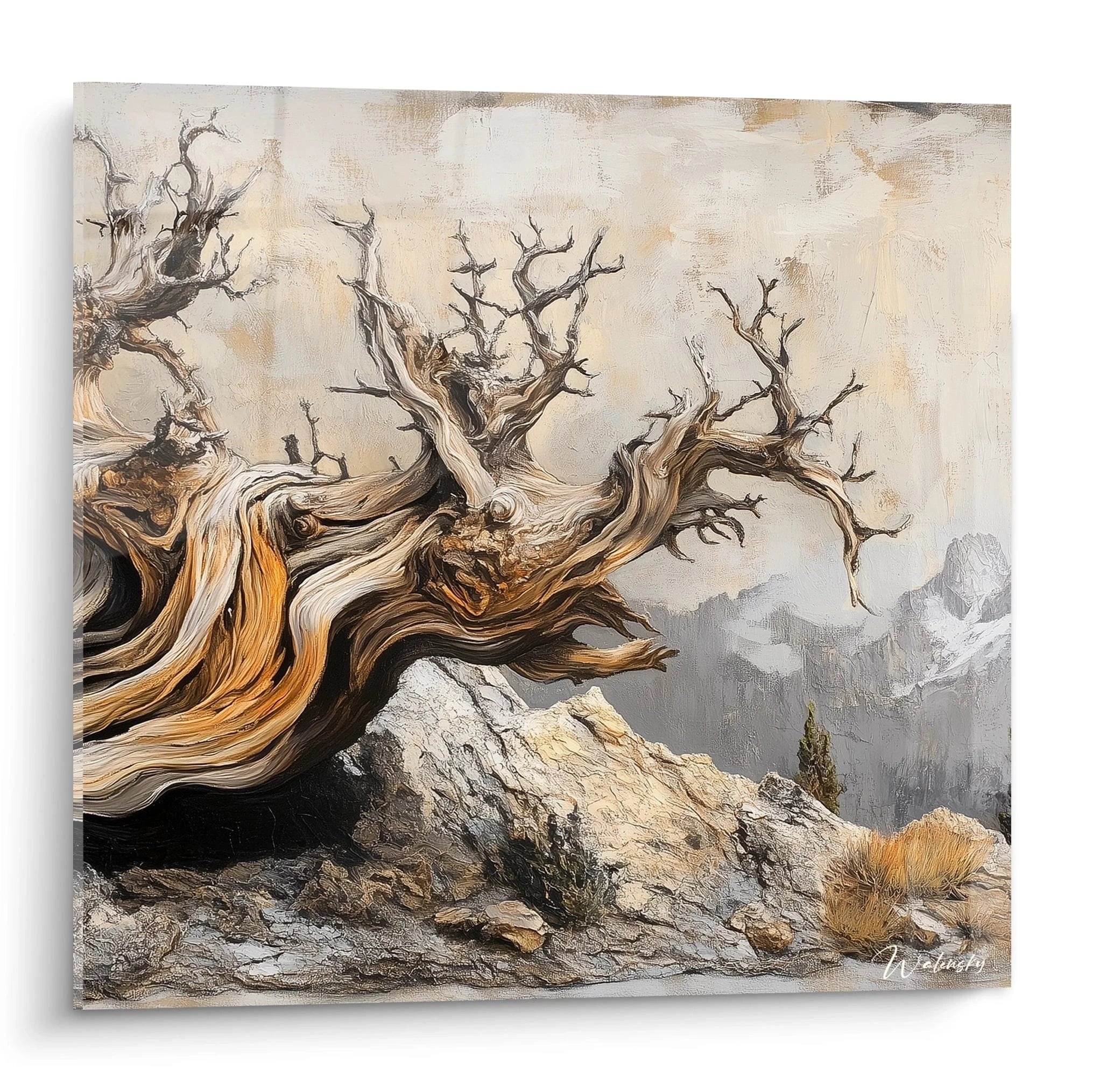
This ancient tree painting captivates with its striking representation of a knotted and time-sculpted trunk. Bare branches stretch toward the sky against a background of misty mountains, creating a contemplative atmosphere. The work presents a striking contrast between the warm-toned gnarled wood in the foreground and the gray tones of mountain reliefs in the background. The meticulous texture of bark reveals painstaking work where every crack and wood vein comes to life.
How this ancestral mountain tree painting is structured
The composition of this ancestral mountain tree painting is dominated by the powerful diagonal of the trunk occupying the left portion of the work. This arrangement creates dynamic balance between the massive tree and aerial space. Bare and twisted branches extend toward the right, naturally guiding the gaze toward misty mountains at the horizon. A rock formation strategically occupies the bottom of the image, anchoring the composition and accentuating perspective.
The sinuous lines of the tree create organic movement that contrasts with the more horizontal and stable lines of the mountains in the background. This structural tension between verticality and horizontality confers remarkable spatial depth on the work while underlining the solitary majesty of this tree facing the immensity of the mountain landscape.
The colors of the ancient tree painting and their harmony
The chromatic palette of the ancient tree painting articulates around an earthy and mineral harmony perfectly mastered. Golden ochres and warm browns illuminate the sinuous curves of the trunk, creating a luminous focal point that immediately captivates the gaze. These warm hues delicately contrast with the blue-grays of mountains in the background and nuanced whites of rocks, generating striking atmospheric depth.
The artist used subtle transitions between colors to create visual cohesion despite marked contrasts. Beige nuances in the sky and golden touches on bark sections establish chromatic link between foreground and background. This color harmony perfectly evokes the contemplative ambiance of a high mountain landscape while exalting the austere beauty of a tree that has crossed the ages.
Textures and technical details of the tree sculpted by elements painting
The tree sculpted by elements painting distinguishes itself through an exceptional treatment of textures that confers an almost tactile dimension to the work. The artist employed an impasto technique to render wood asperities and knots, creating reliefs that magnificently capture light. Brush strokes systematically follow the natural curves of wood, reinforcing the impression of movement frozen in matter.
One observes striking technical contrast between the meticulous precision of the foreground and the more vaporous treatment of mountains in the background. This variation in paint application amplifies the depth effect and directs attention to the extraordinary details of the tree. The mastery of cast shadows and light reflections on textured surfaces testifies to meticulous observation of natural light effects on organic materials.
What makes this millennial mountain tree painting unique
This millennial mountain tree painting stands out through its capacity to capture the very essence of resilience. Every wood twist tells a story of survival facing the elements, a profoundly moving visual narrative. The extraordinary rendering of knots and cavities in the trunk evokes the scars of a long and tumultuous life, transforming this tree wall decor into a veritable metaphor for endurance.
The unique perspective adopted by the artist places the spectator below the tree, accentuating its monumental stature against the sky. This ancient tree work distinguishes itself also through its mastered minimalism – despite the richness of details, the composition remains refined, centered on the essential. The perfect balance between botanical precision and artistic interpretation creates a visual tension that maintains viewer attention far beyond first impression.
Depth and details of the tree painting
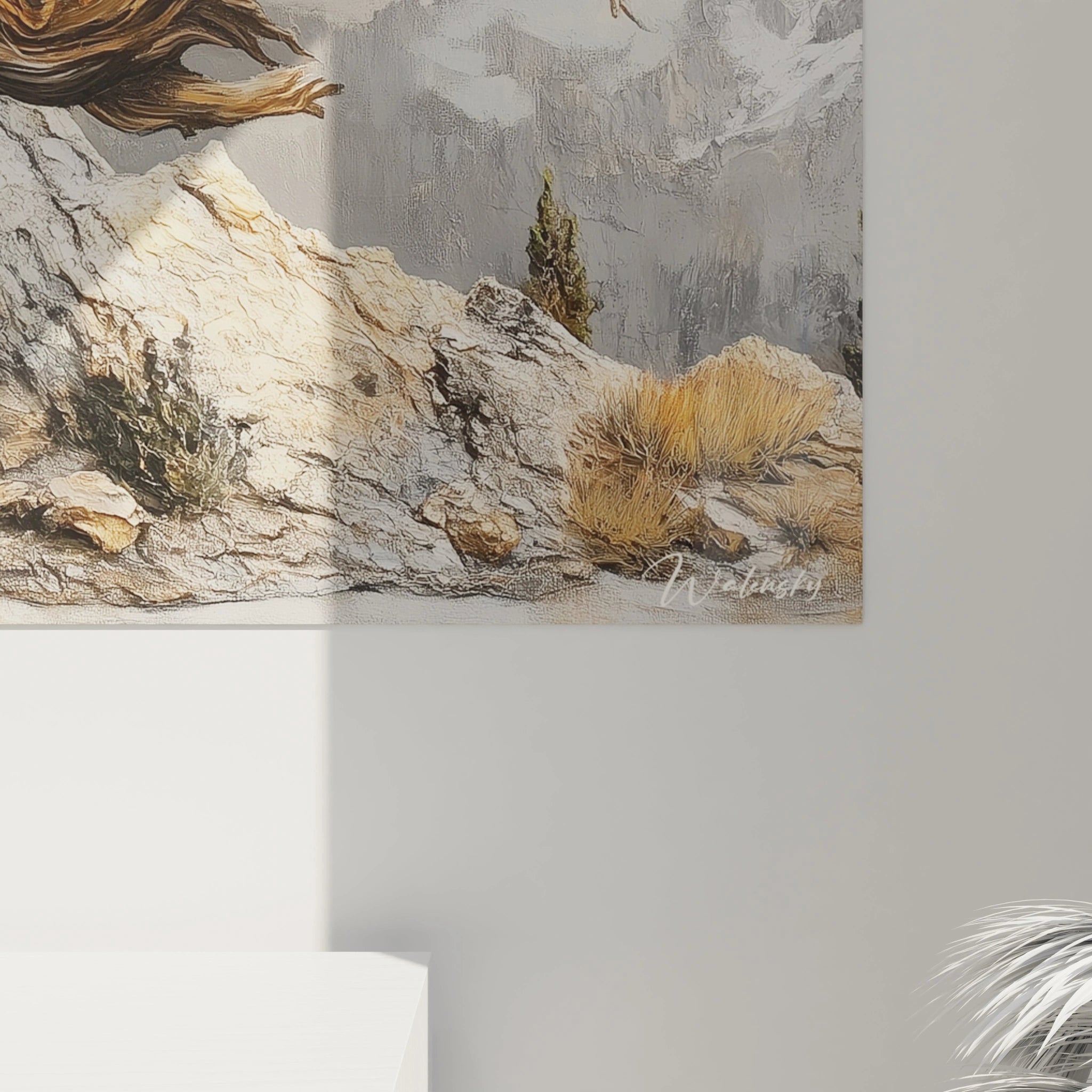
Viewed from afar, this tree work presents itself as a harmonious composition where the general tree forms stand out majestically against the mountain landscape. The visual impact is immediate, creating an impression of quiet strength and contemplative solitude. As one draws closer, extraordinary details emerge: the infinitesimal striations of bark, subtle chromatic variations and small anfractuosities in the wood reveal a fascinating microscopic universe.
The richness of textures of the twisted mountain tree painting fully unveils itself upon close examination. Hundreds of small precise brushstrokes construct the woody matter, while delicate light touches suggest bark roughness. This dual reading, both macroscopic and microscopic, considerably enriches the visual and emotional experience of the work, inviting prolonged contemplation that continually reveals new details.
Where and how to showcase your age-old mountain tree painting
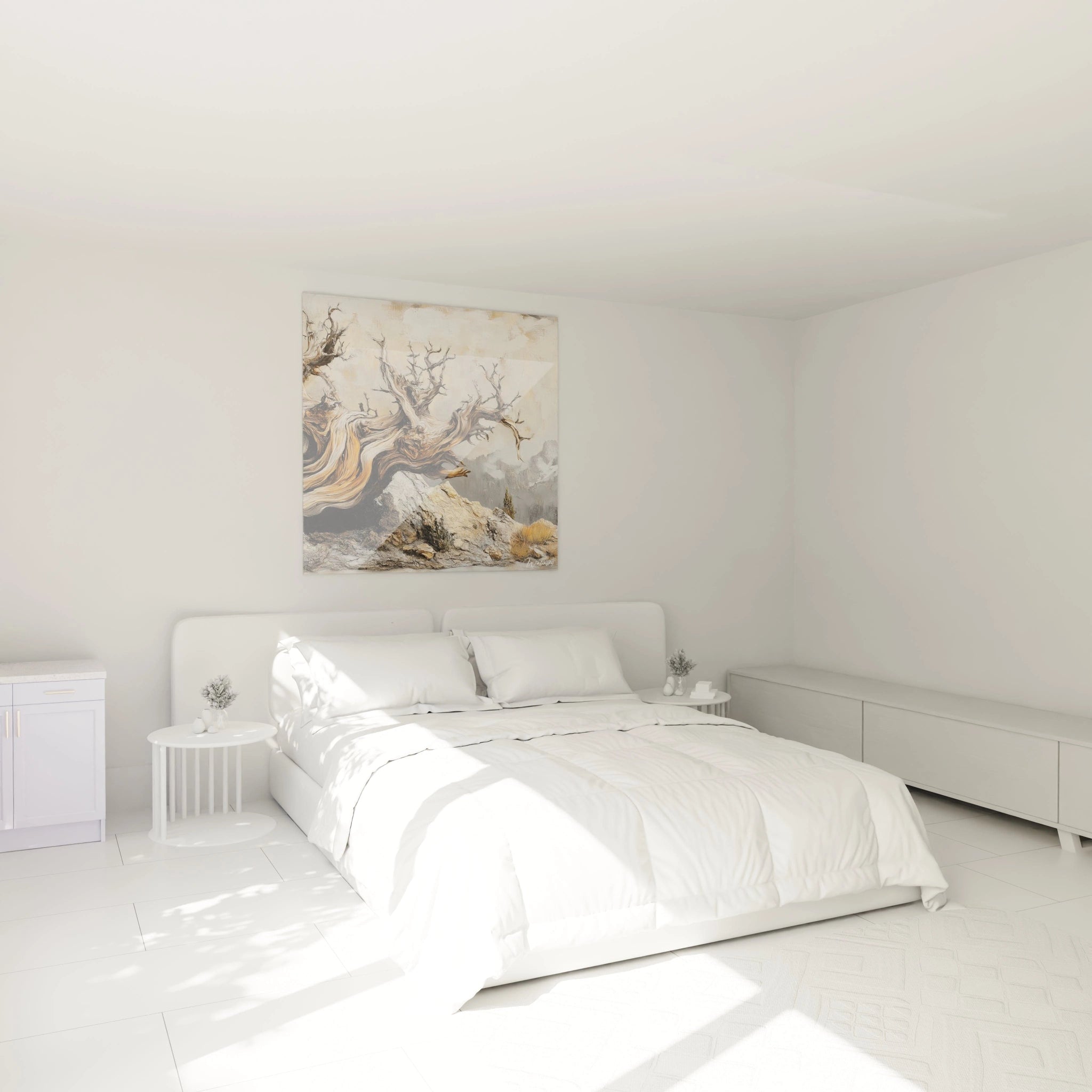
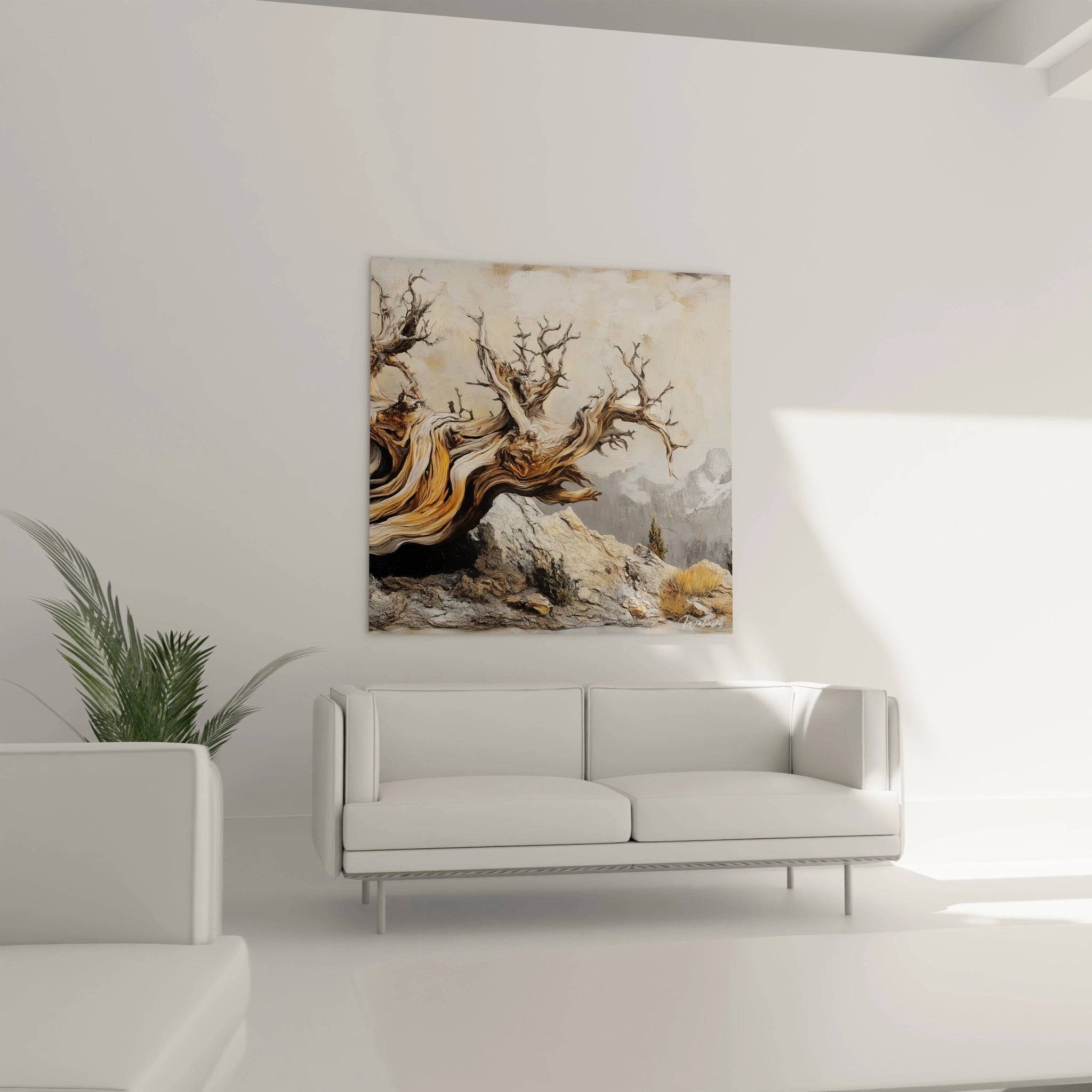
This age-old mountain tree painting will find its perfect place in an interior with neutral tones where it can fully express itself as a masterpiece. A wall of cream, taupe or light gray color will constitute an ideal setting to enhance its earthy nuances and visual dynamism. For optimal installation, favor a location where natural light can play on its textures without creating bothersome reflections – ideally a wall adjacent to a window rather than facing it.
To enhance this wall decor tree, opt for soft directional lighting, like an adjustable LED spot, that will accentuate the reliefs and textures of the work. Avoid cluttering the surrounding space with competing decorative objects – a few mineral elements like stones or a small raw wood sculpture will suffice to create coherent visual dialogue. In a contemporary living room as in a mountain chalet, this painting will bring a presence both soothing and majestic, inviting contemplation.