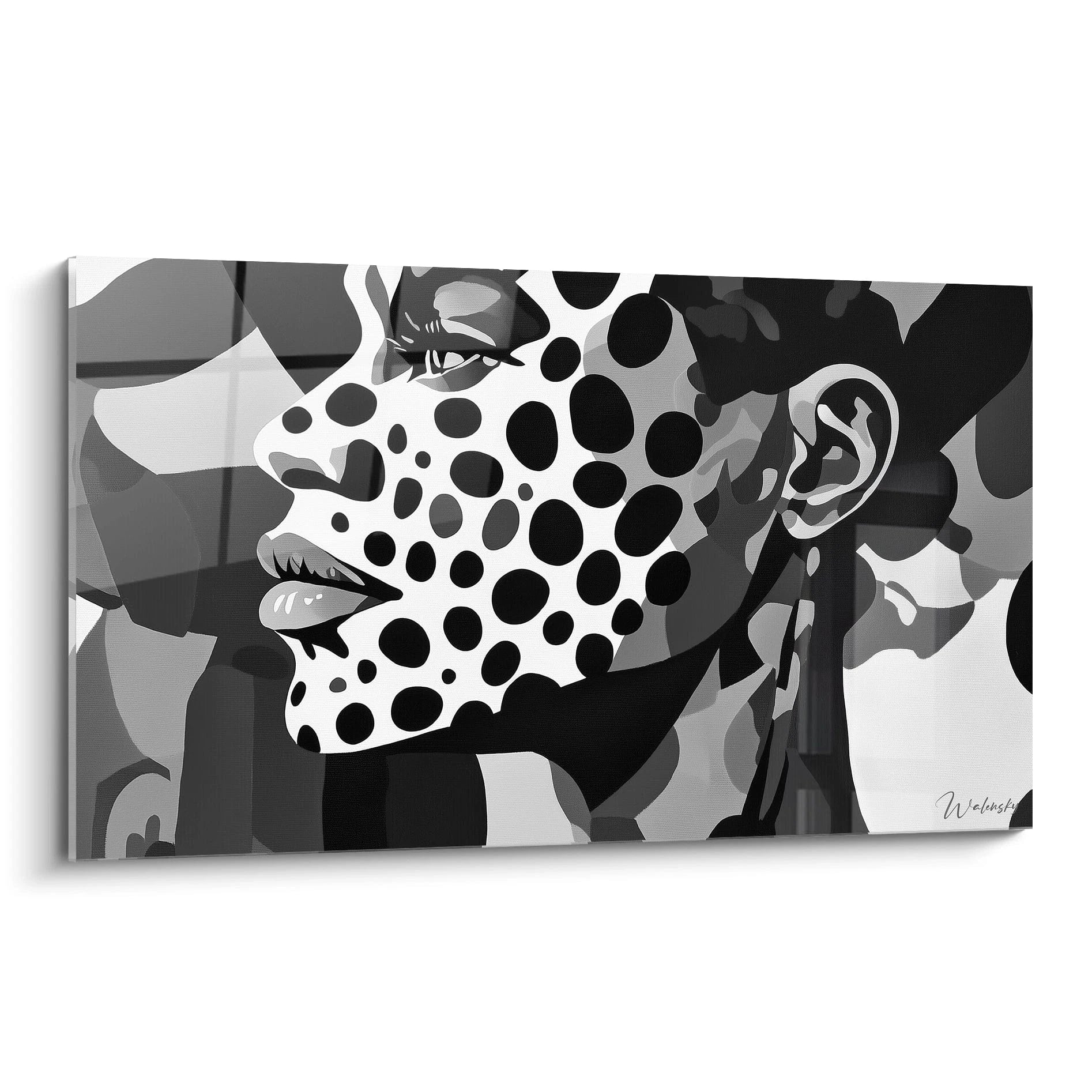
This black and white face painting presents striking monochrome composition where a face appears fragmented through various graphic elements. The central part is marked by a pointillist motif of black circles on white background, creating a mask or camouflage effect. One can clearly distinguish the contours of a mouth, an eye and an ear despite image decomposition. The whole is constructed on strong contrast play between deep shadow zones and luminous spaces.
Black and white pointillist face painting: its unique characteristics
This black and white face painting immediately captivates through its audacious human representation approach. The work presents a fragmented portrait where the face emerges from complex geometric and organic shape play in striking contrast. The composition's focal point is undeniably this central zone punctuated with black circular motifs on white background, creating contemporary pointillist effect defying our perception.
The first visual impression is one of tension between recognition and abstraction. The facial silhouette appears then disappears depending on observation angle, revealing identifiable elements like expressionist mouth and suggested eye. This geometric face painting deliberately plays on this figuration-decomposition boundary, inviting active image reading beyond simple representation.
How this expressionist black and white face painting is structured
This work's composition relies on dynamic contrast between different graphic treatment zones. The portrait is constructed around slightly off-center axis, creating asymmetrical tension that energizes the whole. Face elements are strategically positioned to guide eye movement in circular motion: from central pointillist zone toward marked lips, then toward visible ear on the right.
Directional lines mainly follow organic curves opposing circular geometric patterns, creating complex but mastered visual balance. The perspective adopted offers slightly lateral face view, multiplying reading planes and enriching visual experience. The artist deliberately played with proportions to accentuate certain expressive zones like the mouth and minimize other elements, participating in this fragmented identity reconstruction.
The colors of the black and white face painting and their harmony
Although limited to monochrome palette, this work masterfully exploits all value richness between absolute black and pure white. The artist developed sophisticated intermediate gray range that structures space and creates surprising depth despite color absence.
Contrasts are meticulously orchestrated to create intensity points guiding the eye. The central pointillist zone, with its black circles on white background, constitutes the strongest contrast space immediately attracting attention. This chromatic tension generates almost kinetic optical vibration, conferring intense visual energy to the painting transcending black and white limitations.
- Deep black: used for maximum shadow zones and certain definitive contours
- Luminous white: present in central pointillist zone, creating striking mask effect
- Medium gray: serving transition between extremes and bringing depth and nuance
- Anthracite gray: deployed on intermediate zones structuring composition
Textures and technical details of the deconstructed black and white face painting
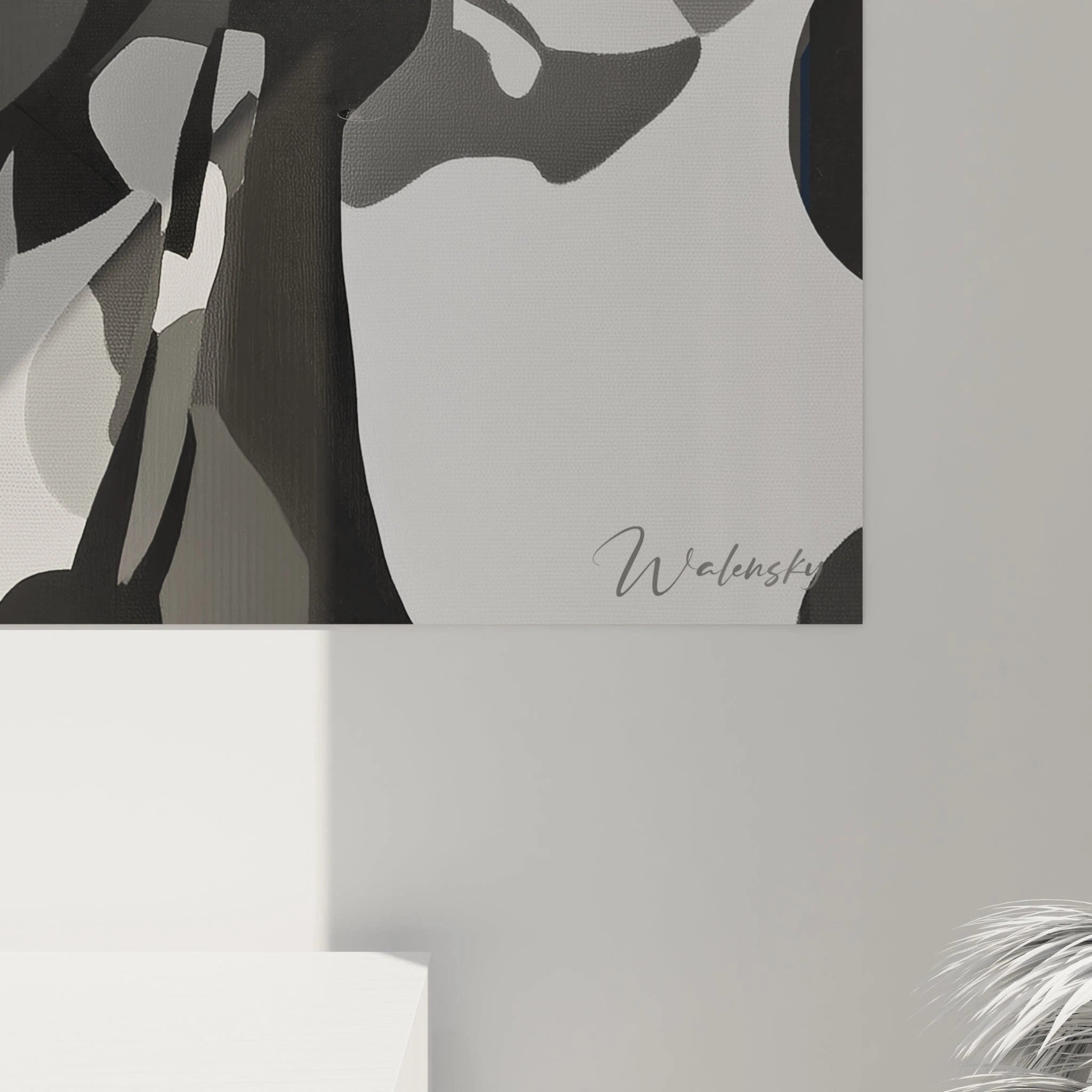
Careful work examination reveals remarkable textural richness despite chromatic restriction. The surface presents different treatments enriching visual experience: uniform smooth zones contrasting with more textured passages where matter seems to have been worked in successive layers. This treatment variation creates visual rhythm animating the entire composition.
The employed technique seems to combine contemporary digital and graphic approaches, with particular mastery of transition and superposition effects. Shadow and light interplay is particularly sophisticated, notably in the way they model subtle facial volumes without resorting to realistic treatment. The central zone circles present geometric precision contrasting with more expressive and gestural treatment elsewhere, creating technical tension echoing the artistic proposition.
What makes this geometric black and white face painting unique
This work's singularity lies principally in its ability to merge diverse artistic influences into coherent and powerful visual proposition. The dialogue between central pointillist motif and more expressionist zones creates an impossible-to-duplicate visual signature. This juxtaposition of different graphic approaches within the same portrait constitutes an audacious artistic proposition.
Face deconstruction while maintaining recognition testifies to remarkable technical mastery. The artist succeeds in walking this fine line between abstraction and figuration, constantly maintaining viewer visual interest. This contemporary face wall decoration distinguishes itself also through its functionality at different observation distances: from afar, facial silhouette imposes itself, while up close, motif complexity and transitions captivate.
Depth and details of the black and white face painting
This work's visual experience transforms radically depending on observation distance. Viewed from afar, composition clearly reveals a human face in enigmatic expression, black and white contrasts creating strong immediate presence. This global reading allows appreciating overall composition balance and portrait's expressive power.
Moving closer, the eye progressively discovers detail richness composing this contemporary artistic face painting. The varying-size circles punctuating the central zone reveal their precise borders, while subtle transitions between different gray values become perceptible. At very close distance, composition transforms into pure abstraction, figurative elements dissolving in favor of purely graphic experience where each form exists for itself before participating in the whole.
Where and how to highlight your modern black and white face painting
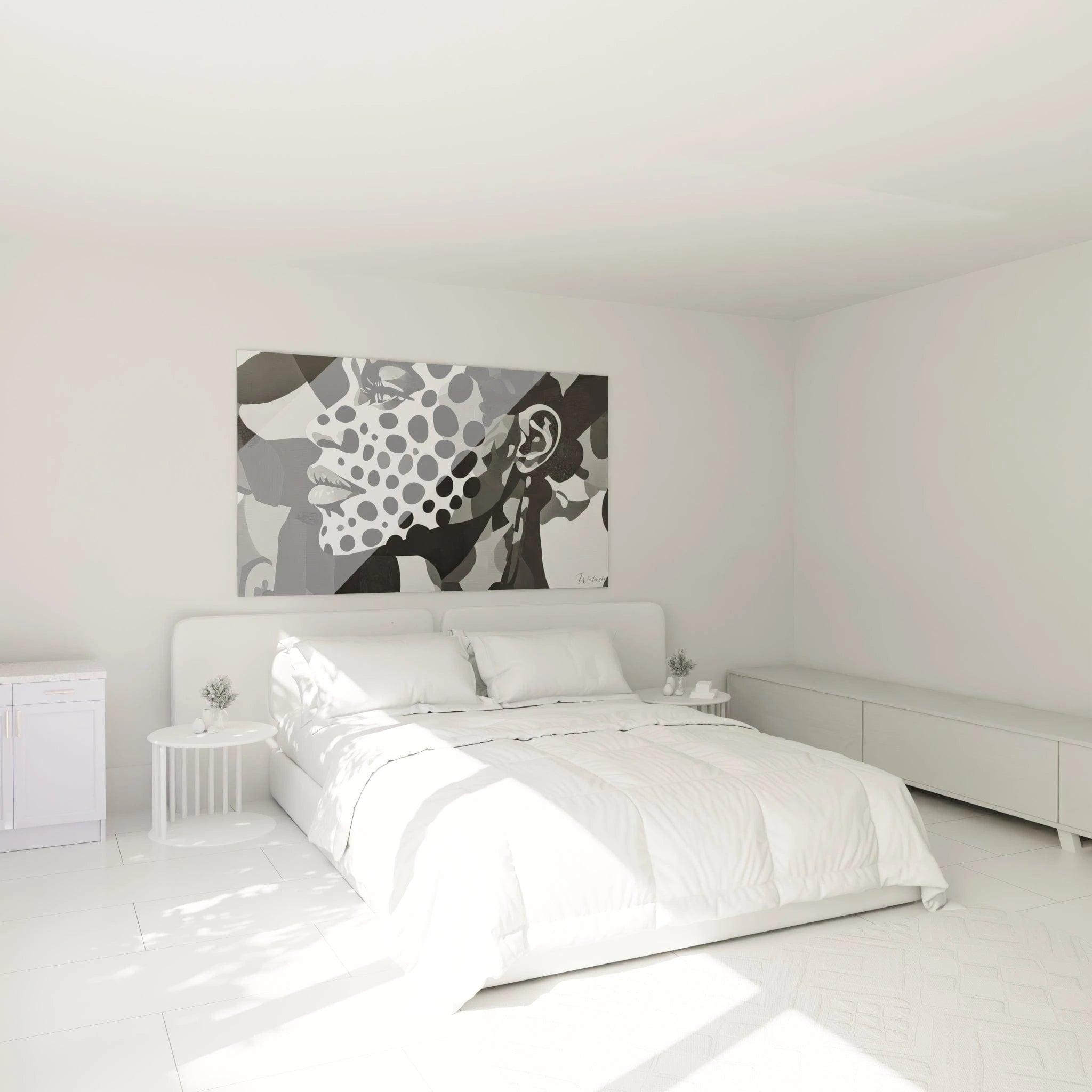
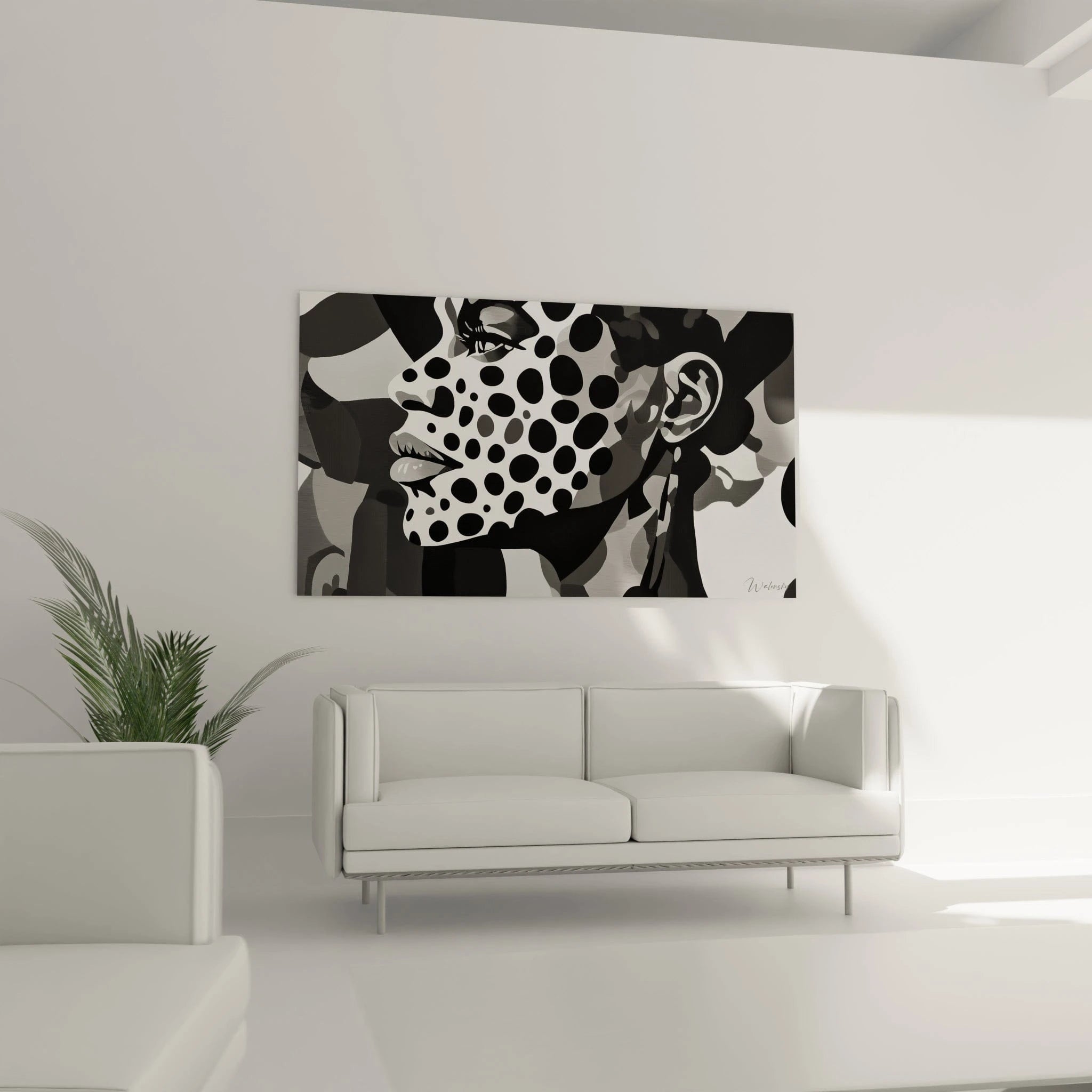
This black and white face painting naturally finds its place in contemporary environments with streamlined lines. A white or light gray wall constitutes ideal background highlighting its striking contrasts, particularly in minimalist living space or design office. For optimal installation, favor a location where the work can be observed both closely and from certain distance, thus allowing appreciation of its multiple reading levels.
Lighting plays a crucial role in showcasing this expressionist face wall art. A directional spot oriented at 45° allows revealing subtle texture differences and accentuates shadow interplay in composition. Avoid frontal light sources that could flatten the work. To complete the environment, decorative accessories with simple geometric lines and neutral tones will create coherent visual harmony without competing with the painting's graphic power.