

Ancient ruins painting: its unique characteristics
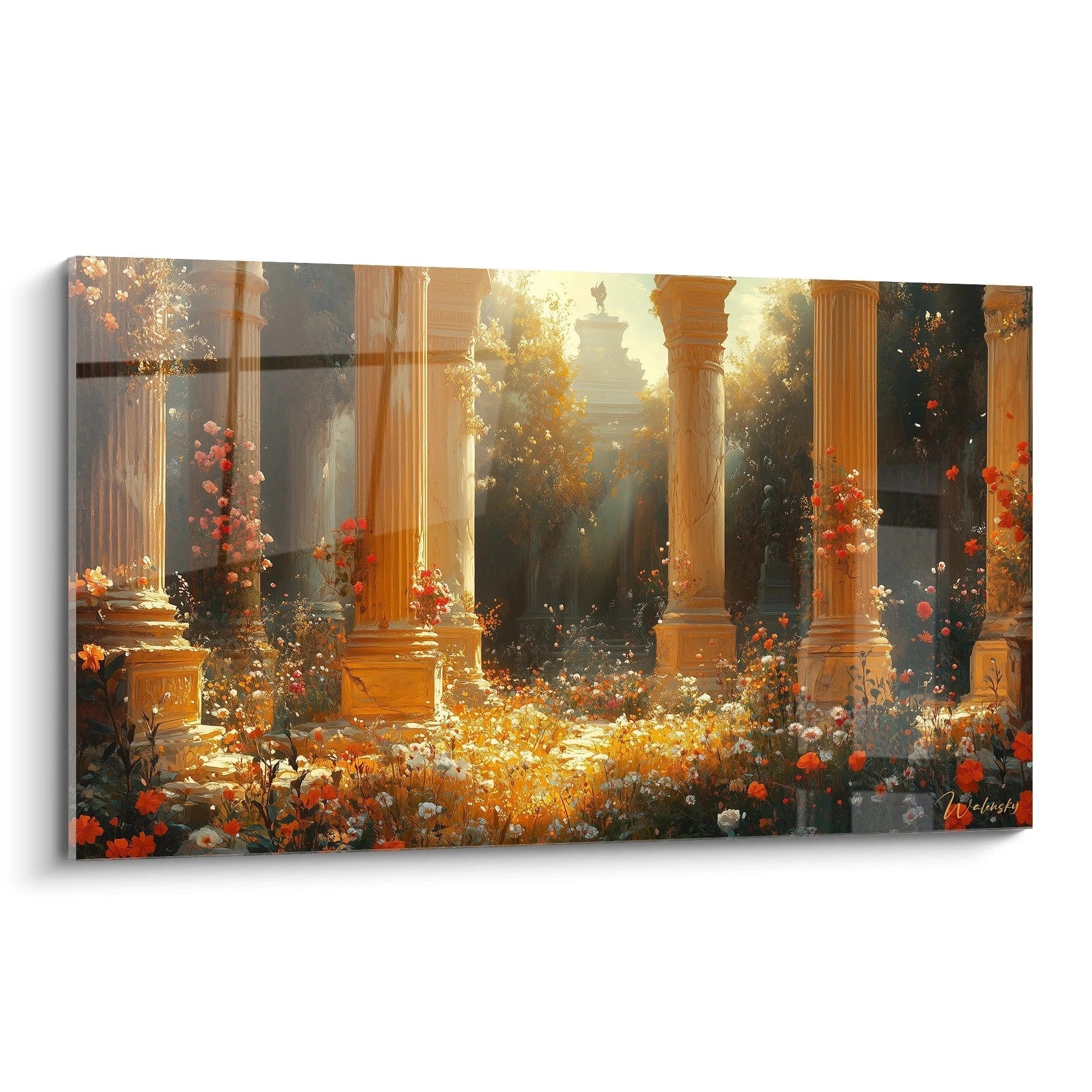
This ancient ruins painting captivates immediately with its majestic architectural composition bathed in an enchanting golden light. Classical columns rise with grandeur, creating a monumental portico that perfectly frames a distant temple. The first impression is that of an open door to an ancient and mystical world, where nature and architecture coexist in perfect harmony. The orange and white wildflowers that invade this sanctuary create a striking contrast with the blonde stone of the columns.
How this ancient ruins painting at sunset is structured
The composition of this ancient ruins painting at sunset revolves around a central perspective that guides the viewer's gaze toward a luminous vanishing point. The imposing columns are arranged symmetrically on either side of the frame, creating a natural corridor effect toward the background. This architectural structure forms a frame within a frame, inviting the viewer to visually penetrate the depicted space.
The dominant vertical lines of the columns contrast with the organic and random nature of flourishing vegetation, creating dynamic balance between order and chaos, between human creation and wild nature. The perspective is slightly downward-tilted, as if the viewer were standing on a promontory, observing the scene from a slightly elevated position.
The colors of the ancient ruins painting and their harmony
The color palette of the ancient ruins painting is dominated by warm tones that evoke the magic of day's end. Gold and amber dominate, creating an almost supernatural atmosphere that transforms ordinary stone into precious material. These warm hues are balanced by subtle contrasts with deep greens in shadowed areas and touches of pure white that catch the eye.
The masterful use of light creates a striking backlighting effect, where sunbeams filter between the columns, casting elongated shadows and bathing everything in a luminous halo. The three main colors that structure the harmony are:
- Solar gold that floods the entire composition
- Vibrant orange flowers that strategically punctuate the space
- Dark green that brings depth and mystery to shadowed areas
Textures and technical details of the ancient ruins painting overtaken by nature
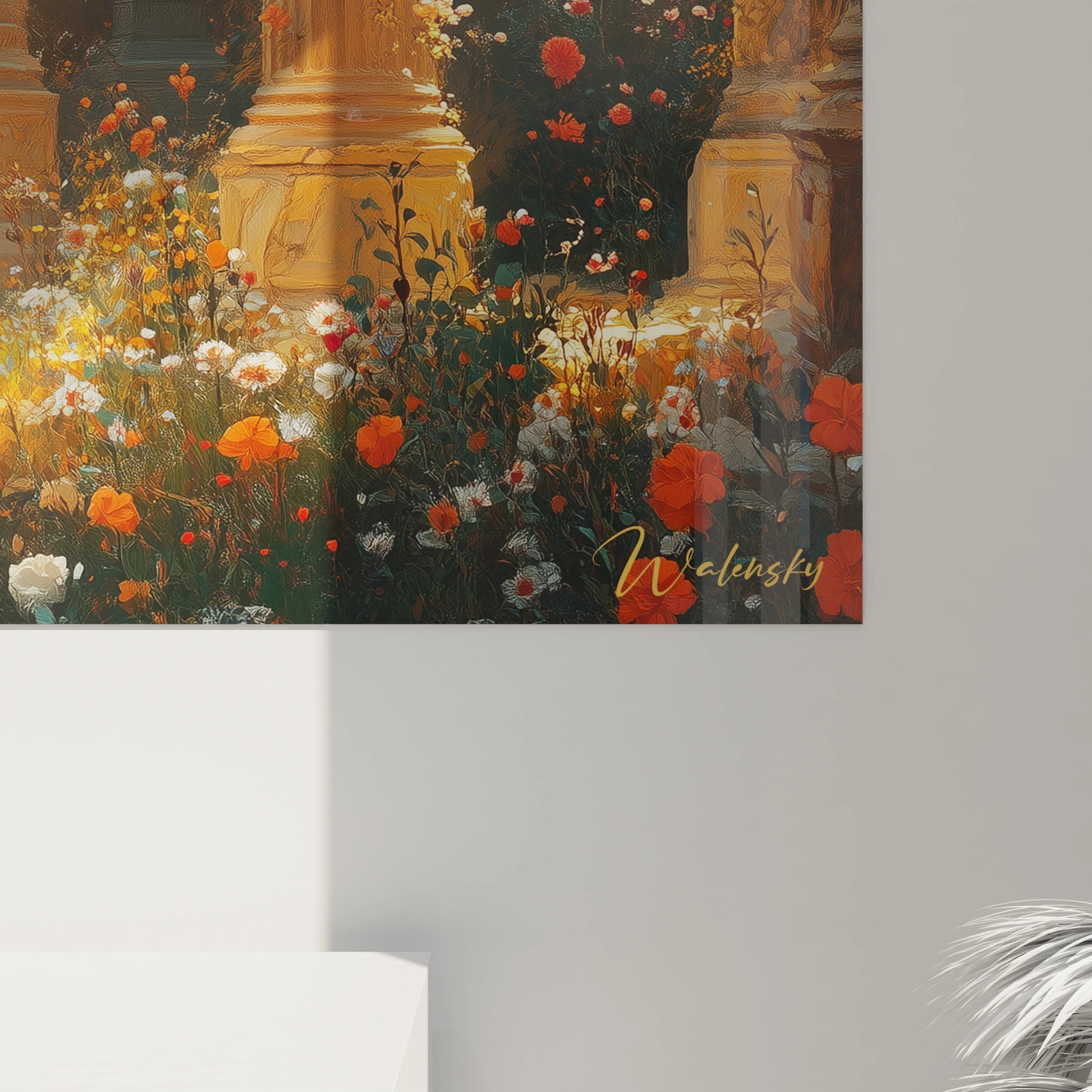
Careful observation of the ancient ruins painting overtaken by nature reveals meticulous work on textures. The columns display marble veins and slight cracks that testify to their antiquity, rendered with remarkable precision. The material effects are particularly striking in the treatment of stones, where one perceives both their solidity and the erosion of time.
The technique employed combines subtle impasto for floral elements, creating a relief effect that contrasts with the smoother and more vaporous treatment of the sky and diffused light. The interplay of shadow and light is rendered with exceptional mastery, particularly in how the rays traverse the space between columns, creating nearly tangible light beams that give the whole a spiritual dimension.
What makes this blooming ancient ruins painting unique
The uniqueness of this blooming ancient ruins painting lies in its ability to merge architectural grandeur and botanical delicacy into perfect symbiosis. Unlike many ruins representations that evoke melancholy and desolation, this work celebrates the beauty of renaissance and transformation. The vegetation appears not as a destructive force but as an element that magnifies and completes human structures.
The exceptional luminosity emanating from the background of the image gives this ancient wall decoration a nearly transcendent quality, as if we were witnessing a moment of epiphany or revelation. This light transforms what might be perceived as abandoned vestiges into a living and vibrant sanctuary, where past and present merge in a timeless celebration of beauty.
Depth and details of the ancient ruins painting
Viewed from afar, this work impresses with its balanced composition and harmonious color scheme, creating an enveloping atmosphere that invites dream and escape. As one approaches, fascinating details gradually reveal themselves: the fine veins of flower petals, the subtle color variations in the marble of columns, small statues barely visible nestled between structures.
The depth of field is particularly remarkable in this classical ruins painting bathed in sunlight, creating several distinct planes that reinforce the illusion of perspective. In the foreground, flowers are rendered with almost botanical precision; in the middle ground, the imposing columns; then the distant temple in golden mist that blends into the luminous background, adding a mystical dimension to the whole.
Where and how to display your romantic ancient ruins painting
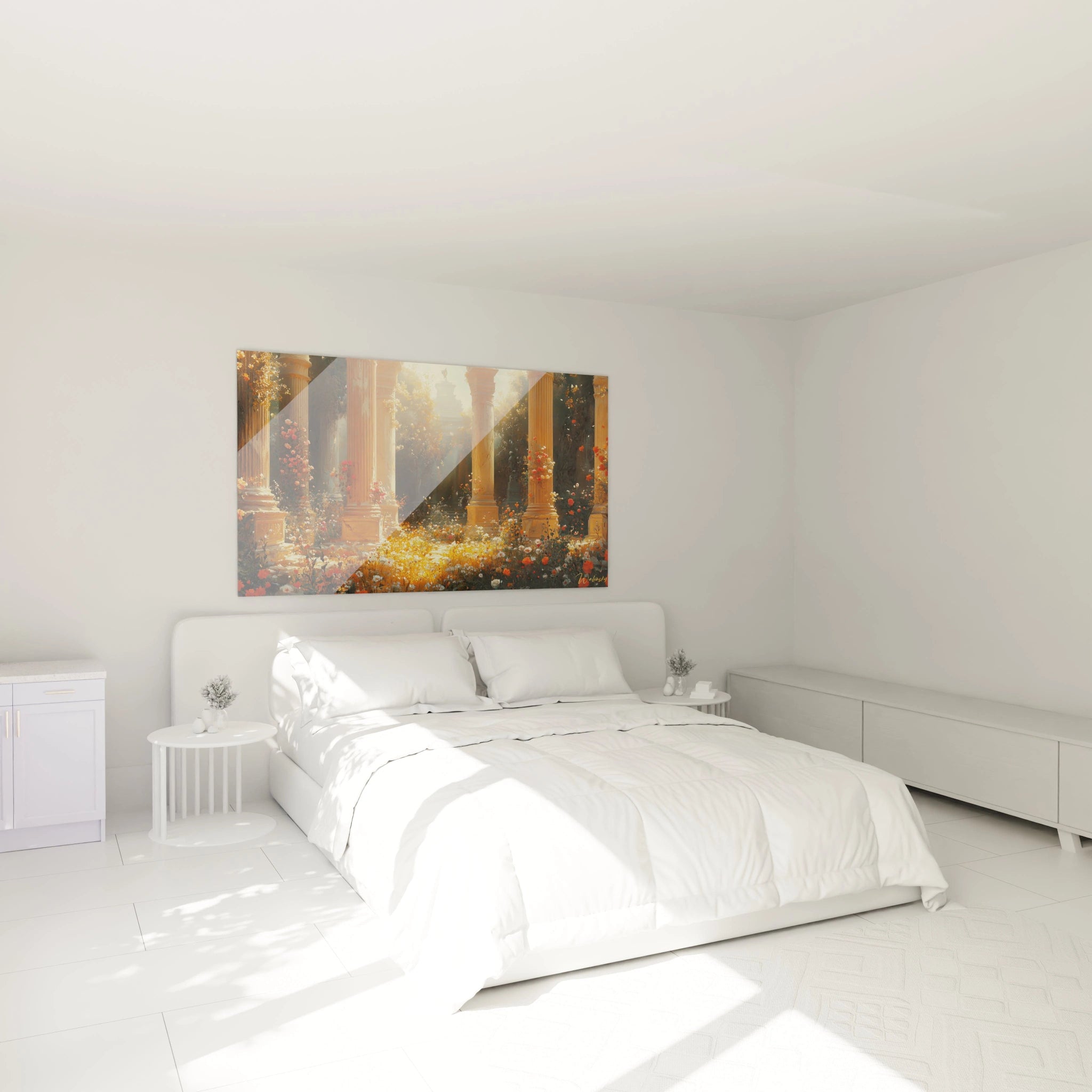
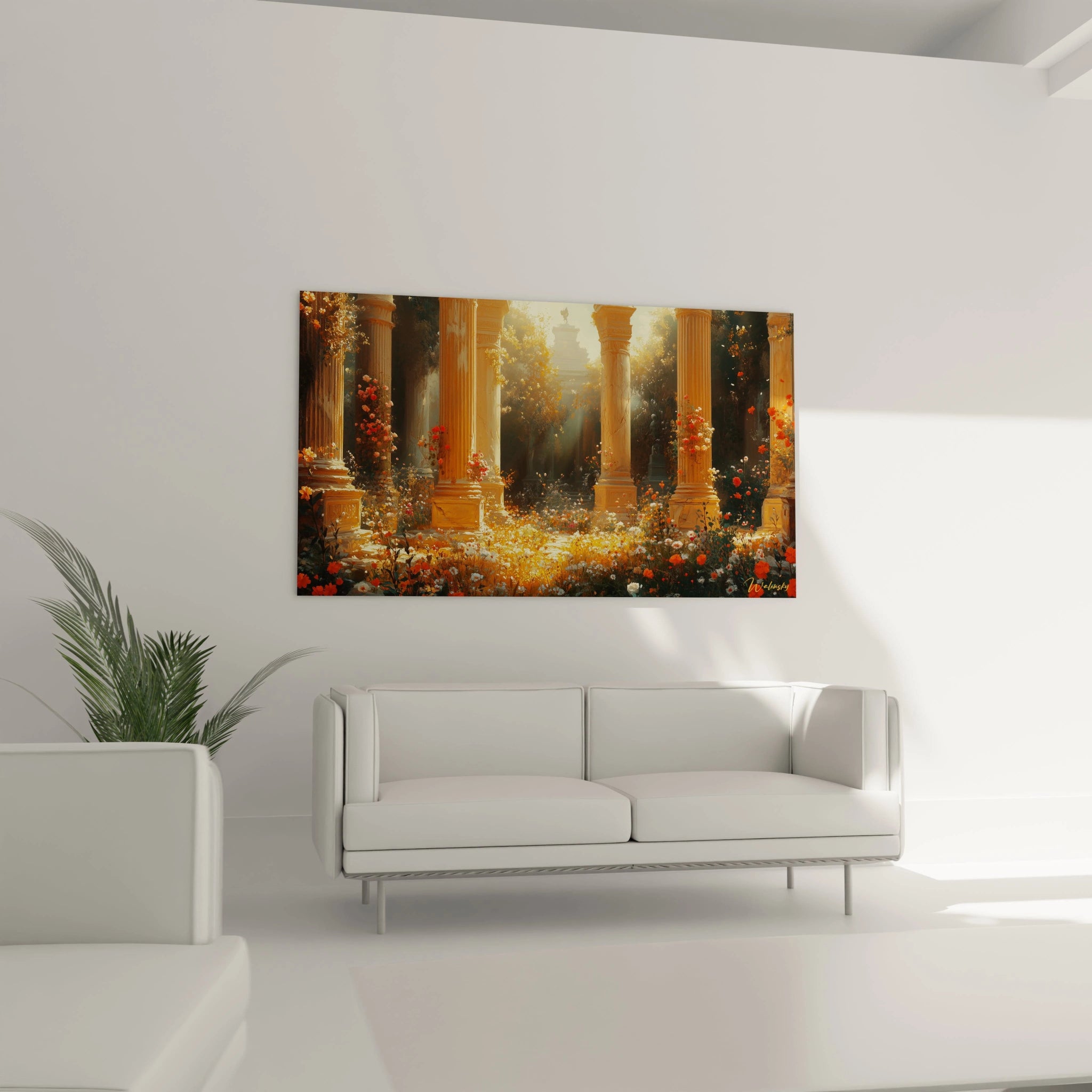
This romantic ancient ruins painting deserves a privileged location that allows you to fully appreciate its natural luminosity and richness of detail. A wall with neutral tones, ideally in cream or light beige, will provide the perfect contrast to make the dominant warm tones of the work stand out. Avoid placing this ancient wall decoration facing a window to prevent reflections that could diminish appreciation of the subtle luminous qualities.
For optimal lighting, favor a soft and warm light source, ideally adjustable, that can be directed toward the work. LEDs with color temperature between 2700K and 3000K will perfectly reproduce the golden ambiance of the painting without risking damage. In a contemporary interior, this work will bring timeless warmth, while in more classical décor, it will integrate naturally while remaining a remarkable focal point.