Rocky coastline painting: its unique characteristics
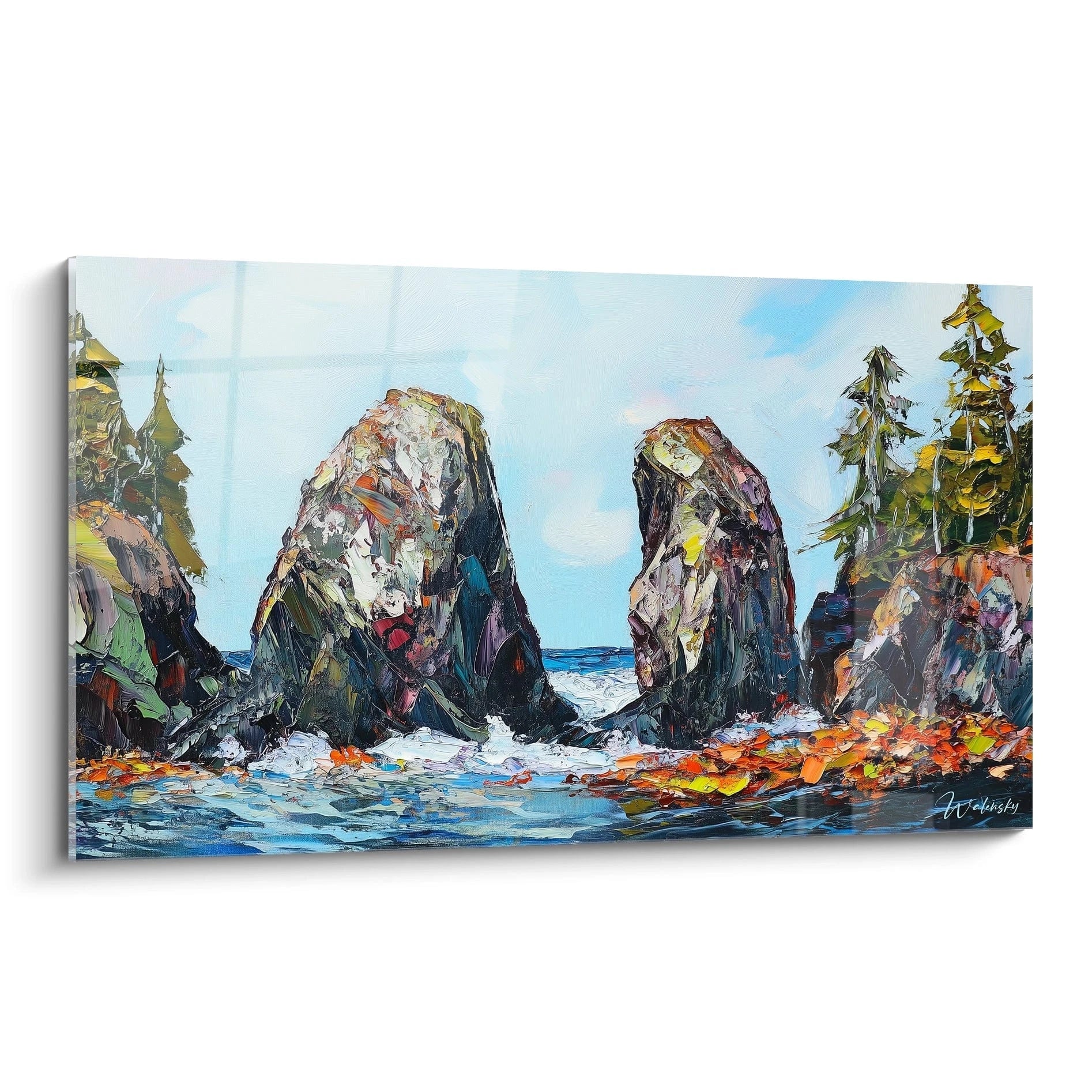
Discover this rocky coastline painting that masterfully captures the encounter between land and sea in a striking composition of expressive realism. This work immediately stands out through its imposing rock formations that rise majestically amid foaming waves. The artist brilliantly seized the moment when turquoise water crashes against these stone sentinels, creating a striking contrast between the immutable solidity of the rocks and the ephemeral fluidity of the ocean. The conifers crowning the cliffs add a vibrant touch of greenery, harmoniously completing this captivating coastal scene.
How this sea cliff painting splashed with foam is structured
The visual architecture of this sea cliff painting is based on a balanced triangular composition where the two main rock formations occupy the center of the work, creating a powerful focal point. These mineral sentinels are arranged to form a natural opening toward the horizon, subtly guiding the viewer's gaze toward the depth of the image. The perspective is slightly elevated, as if the observer were contemplating the scene from a privileged position on the adjacent coast.
The directional lines of the work follow primarily a vertical orientation thanks to the slender rocks, counterbalanced by the horizontals of the waves and horizon. This structure creates a dynamic tension that animates the entire rocky coastline painting, while the conifers on the sides harmoniously frame the composition, bringing perfect visual balance between natural elements.
The colors of the rocky coastline painting and their harmony
The chromatic palette of this work reveals an exceptional mastery of natural contrasts observable in coastal environments. The artist has orchestrated a visual symphony where dominate:
- Deep blues and turquoise that capture the transparency and depth of water
- Nuanced grays and stony tones with multicolored reflections that bring life and dimension to rock formations
- Bright orange and yellow touches on the shore that create a warm point of interest contrasting with the cool water tones
- Olive and emerald greens for the conifers crowning the cliffs
- Dazzling whites that highlight the foam of waves crashing against the rocks
The chromatic harmony relies on the complementary contrast between dominant blues and orange touches, creating visual vibration that energizes the entire sea cliff painting splashed with foam. The light sky with pastel tones softens the composition and brings a sensation of airy space balancing the density of terrestrial elements.
Textures and technical details of the rocky shore painting with foaming waves
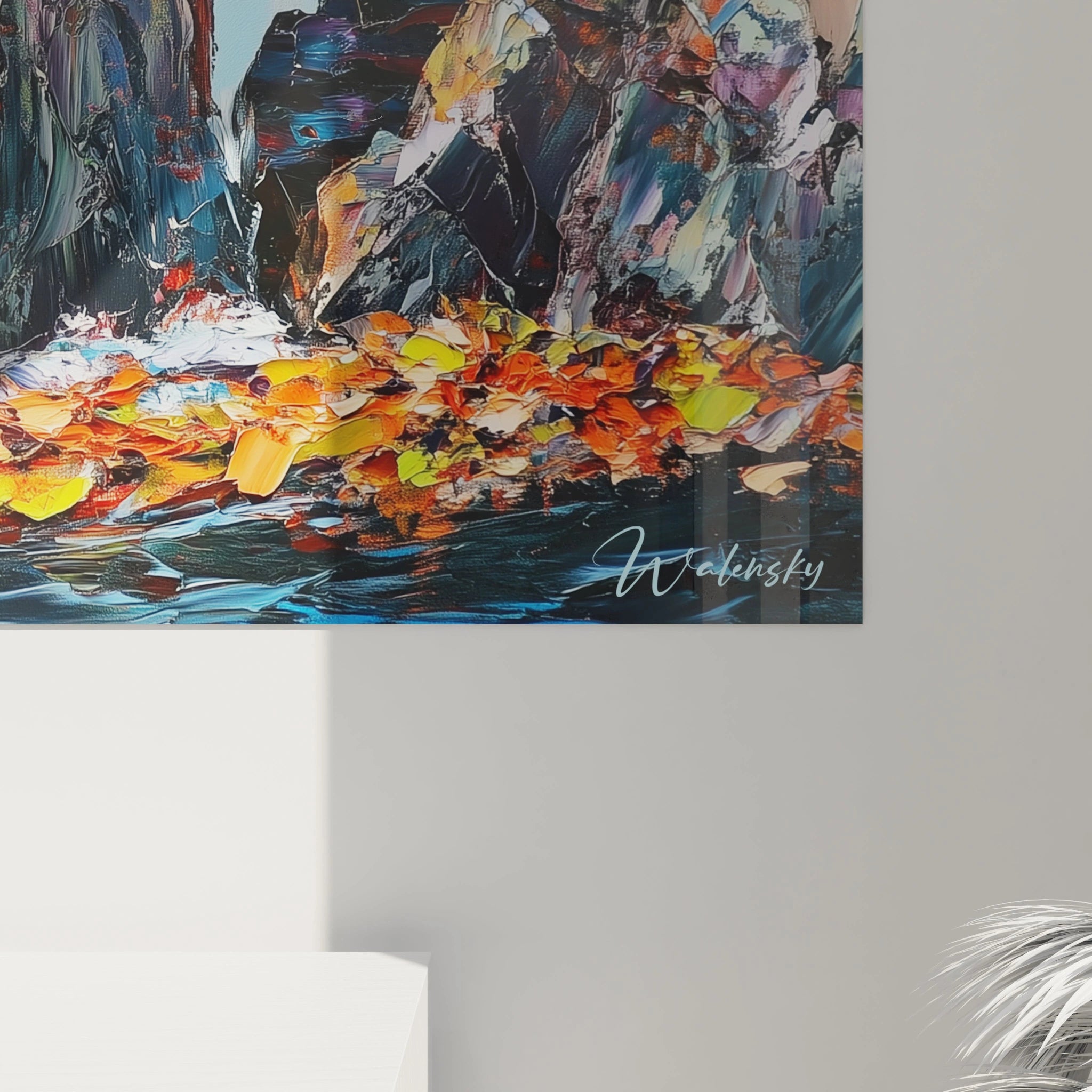
What immediately distinguishes this rocky shore painting is its exceptionally rich and tactile texture. The artist employed generous impasto technique, applying paint in thick layers, particularly visible in the rendering of rocks and foam. Each knife or brush stroke is deliberate and expressive, creating an almost three-dimensional relief that invites the viewer to want to touch the surface.
Light plays a crucial role in defining textures, with skillfully placed reflections on the wet surfaces of rocks and wave crests. The artist used a technique of juxtaposing pure colors rather than blending, recalling the impressionist approach, but with more pronounced gestural expressiveness. This bold application of pictorial matter gives the rocky shore painting imposing physical presence and vibrant energy that transcends mere representation to become a complete sensory experience.
What makes this turbulent sea against cliffs painting unique
The uniqueness of this turbulent sea painting lies in its ability to simultaneously capture the brute force of natural elements and the contemplative serenity this landscape inspires. Unlike other representations of marine scenes that favor either calm or storm, this work succeeds in perfectly balancing these two contradictory aspects of the oceanic experience.
A particularly remarkable detail is the treatment of colored reflections on rock surfaces, which are not simply gray but reveal a constellation of subtle hues—deep purples to golden ochres—suggesting the varied minerals that compose these geological formations. This coastal wall decoration also distinguishes itself through its ability to evoke sound and movement: when contemplating it, one can almost hear the crash of waves and feel the salty spray, testifying to the exceptional evocative power of the artist that transcends mere visual representation.
Depth and details of the rocky coastline painting
Viewed from afar, this work imposes its presence through the harmonious balance of its composition and the impact of its chromatic contrasts. The rock masses stand out clearly against the blue background of ocean and sky, creating a memorable silhouette and a general impression of natural power contained within the frame's limits.
Upon approaching the wild rocky coast painting battered by waves, one progressively discovers the incredible richness of minute details: geological striations on the cliffs, infinite variations of blues in the water, multicolored touches that compose the foam, and interplay of shadow and light on each element. This ability to function visually at different observation distances is characteristic of high-quality works, offering the viewer a renewed experience with each contemplation. The maritime wall art presented here thus reveals its narrative and technical depth over time spent observing it.
Where and how to showcase your sea cliff painting battered by waves
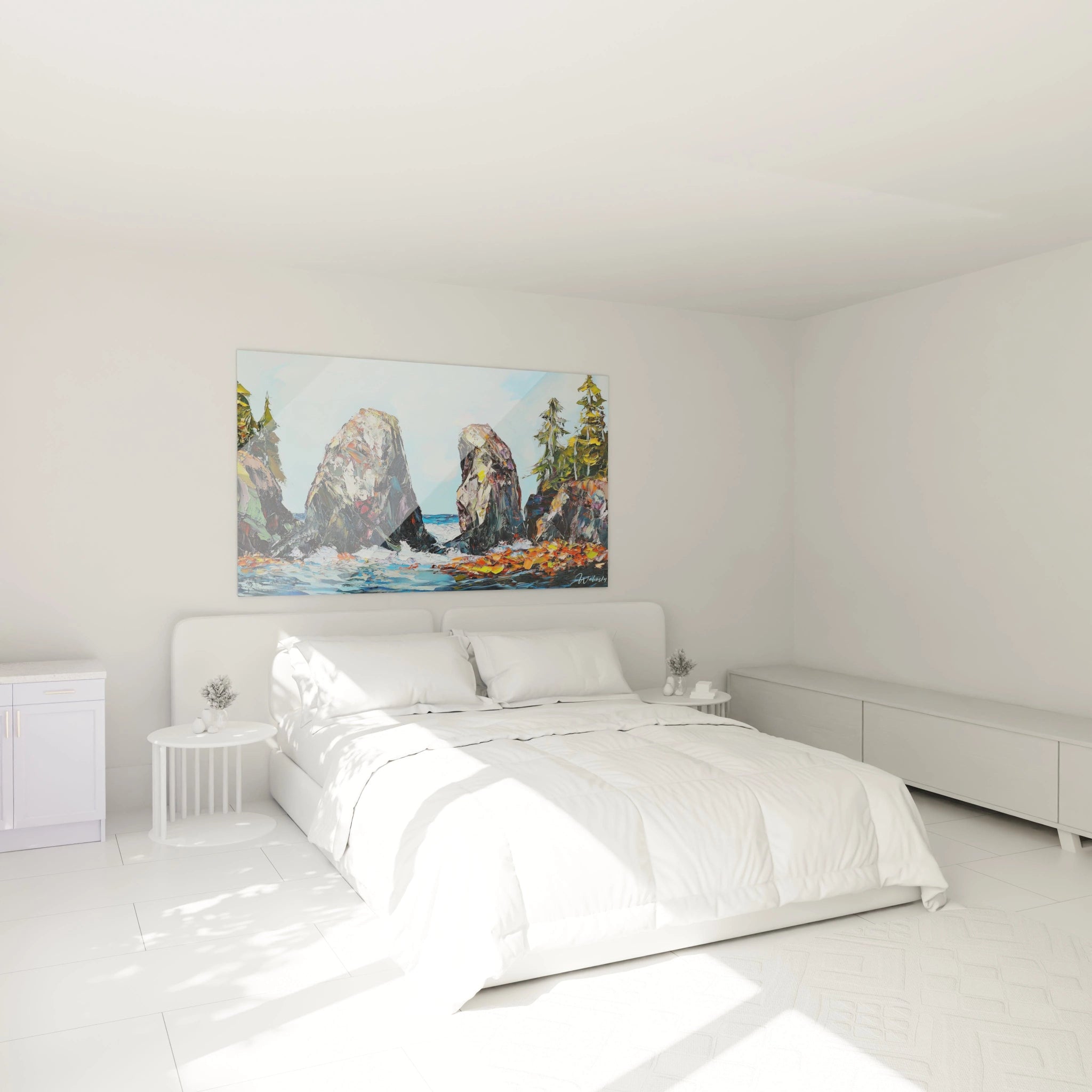
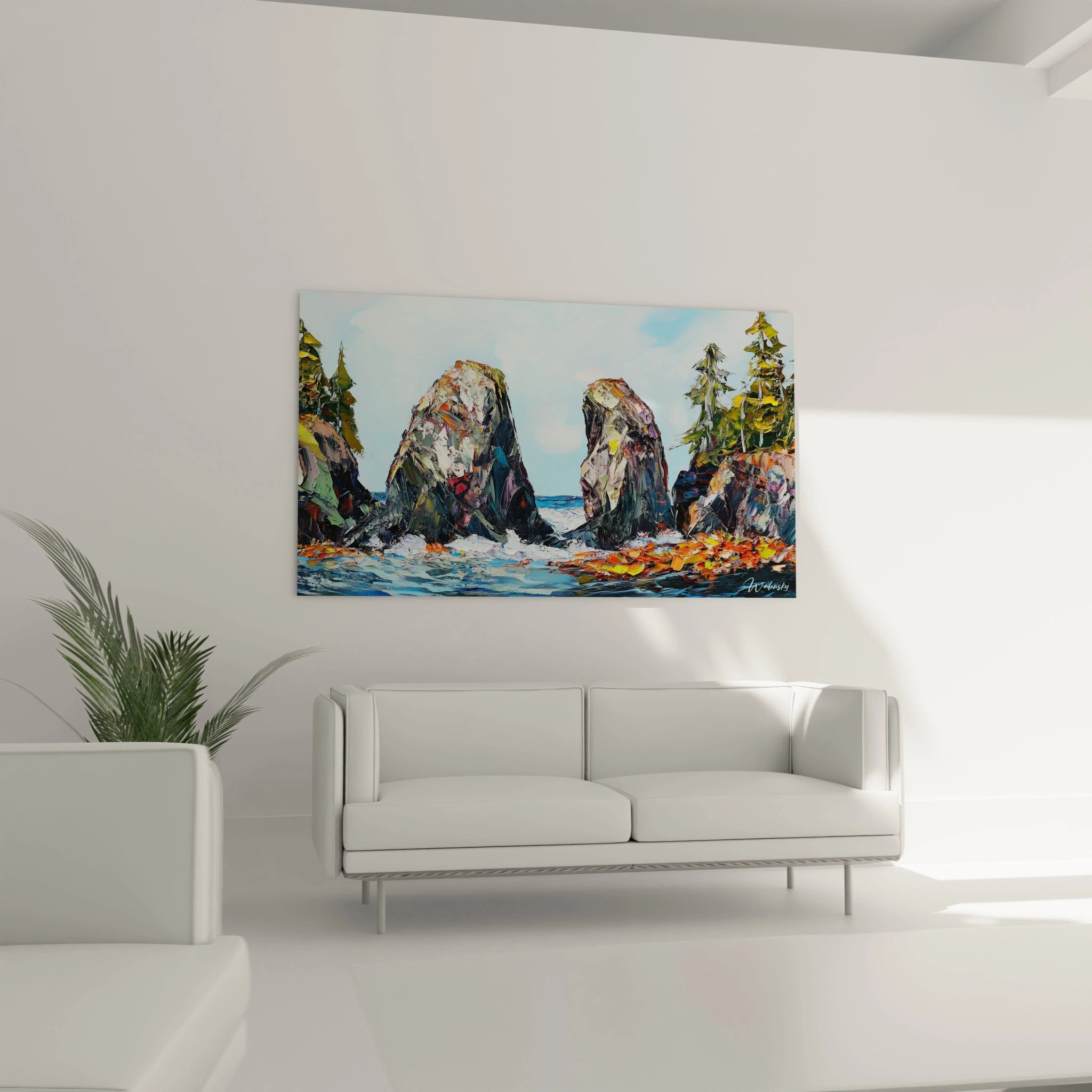
This marine wall decoration will find its ideal place in a space offering sufficient distance to fully appreciate its visual impact. A wall of neutral color—off-white, pale gray, or light beige—will allow the vibrant colors of the work to express themselves fully without chromatic interference. Lighting is crucial: favor a directional light source that will highlight the relief textures and color nuances without creating bothersome reflections on the work's surface.
To enhance this sea cliff painting, consider a sober framing that does not divert attention from the work itself—a thin frame in light wood or dark brushed metal would be ideal. In a contemporary interior, this work will dialogue perfectly with natural materials like wood, stone, or linen, creating harmony between art and its environment. Avoid overloading the space around with other competing decorative elements—leave this powerful maritime landscape the breathing space it deserves to fully deploy its emotional impact on observers.