Urban facade in ruin painting: its unique characteristics
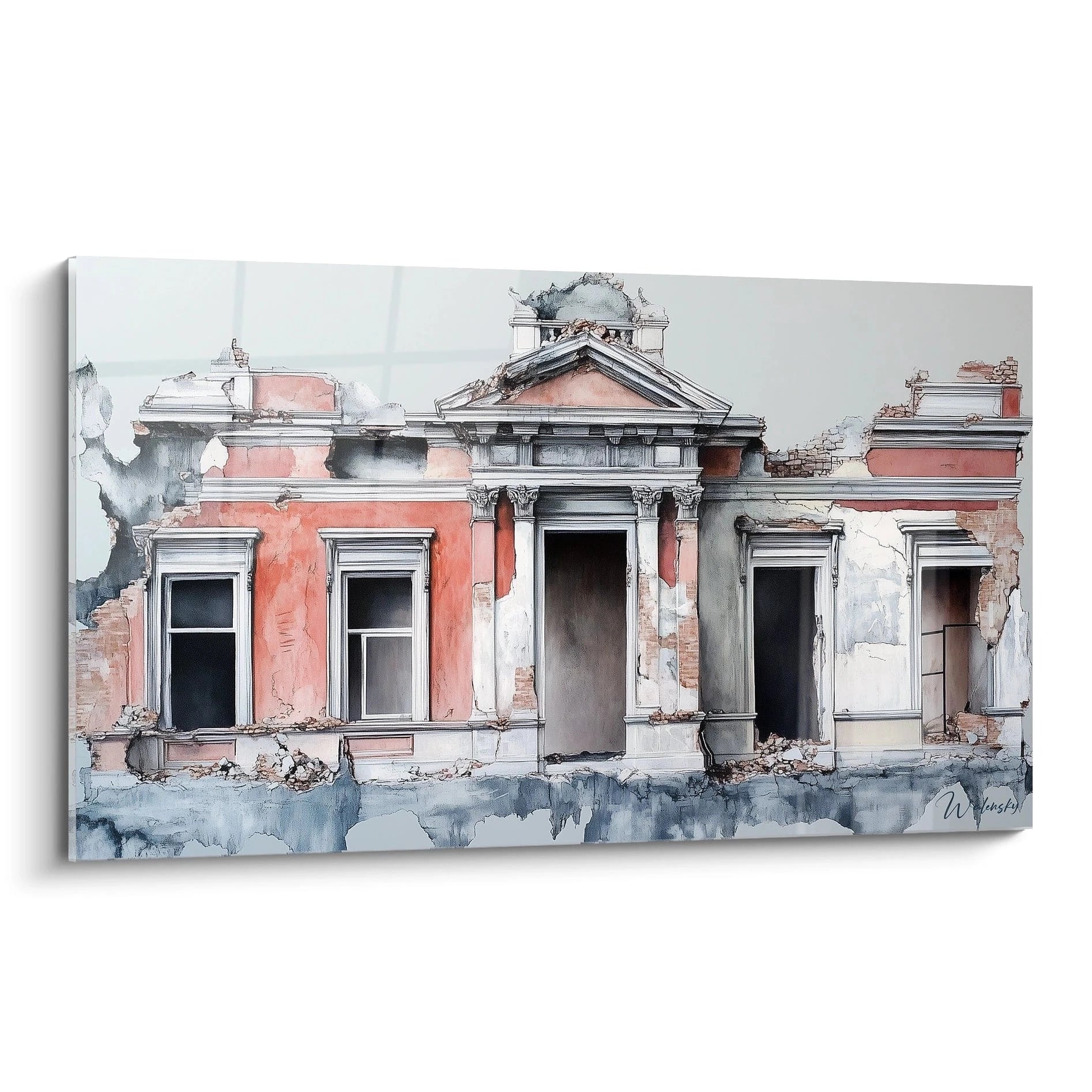
This urban facade painting captures the essence of a historical building in decline with remarkable precision. The work presents a partially collapsed neoclassical facade, where coral and gray tones intertwine to create an atmosphere of melancholic beauty. The triangular pediment at the top of the building retains its majesty despite obvious signs of decay that characterize the whole of this striking wall decoration.
Immediately, the gaze is attracted by the contrast between formal architectural structure and the watercolor effect of colors that seem to flow, symbolizing the passage of time. This dilapidated architectural artwork distinguishes itself through perfect balance between technical detail and free artistic expression, capturing the suspended instant of a building between past splendor and imminent ruin.
How this dilapidated classical facade painting is structured
This dilapidated classical facade painting adopts a centered composition, with the main entrance serving as focal point. The strong horizontal lines created by the stories and cornices perfectly counterbalance the vertical elements of the windows and partially visible columns. The triangular pediment at the top adds a classical dimension that solidly anchors the composition.
The frontal perspective chosen for this urban architectural painting emphasizes the natural symmetry of the building, while allowing collapse and decay zones to create visual breaks that energize the whole. Proportions faithfully respect neoclassical architecture, with regularly spaced windows and a more imposing central entrance, thus offering a faithful testimony to this urban wall decoration in dilapidation.
The colors of the urban facade painting and their harmony
The chromatic palette of this urban facade painting is both restricted and extremely expressive. The work is dominated by three color families that harmonize perfectly:
- The warm coral pink that dresses the main sections of the facade
- Gray and white tones that define architectural elements and suggest weathered stone
- Blue-gray nuances that anchor the base of the work and evoke moisture having penetrated the structure
These hues create a soft and melancholic harmony in this decrepit facade painting, where colors seem to dilute into one another, as if washed by time. Fluid transitions between colored and faded zones generate a characteristic watercolor effect that amplifies the emotion of fragility and ephemerality that emanates from this architectural wall decoration.
Textures and technical details of the eroded neoclassical facade painting
This eroded neoclassical facade painting presents remarkable richness of visual textures. The artist skillfully represented different surfaces and materials: smooth stone of columns and casings, chipped render of walls, exposed bricks where the covering has detached. Deliberately visible brushstrokes in certain zones create a tactile effect that reinforces the impression of decomposing matter.
The technique masterfully plays with transparencies and dilution effects. The shadow and light play on this dilapidated architecture painting is subtle, suggesting soft light that caresses the facade, revealing its imperfections while conferring upon it a certain grace. The darker zones of openings create a depth that contrasts with the relative flatness of the facade, adding spatial dimension to this deliquescent urban work.
What makes this degraded historical facade painting unique
The singularity of this degraded historical facade painting lies in its ability to transcend simple architectural documentation to achieve profound poetic dimension. The perfect balance between faithful representation and artistic interpretation creates a work that speaks to both our aesthetic appreciation and our sense of history and time passage.
The way colors seem to flow and merge is particularly distinctive, creating an effect that evokes both watercolor and contemporary street art. This classical architecture wall decoration captures a precise moment in the deterioration process, as if the artist had seized the exact instant when beauty and decay reach perfect balance, thus creating a unique work impossible to duplicate, both in its technical execution and in the emotion it evokes.
Depth and details of the urban facade painting
Close observation of this urban facade painting reveals remarkable level of detail in architectural elements: column capitals, window casings moldings, and pediment ornaments are rendered with precision testifying to deep knowledge of neoclassical architecture. These microdetails contrast with more expressive zones where paint was applied more freely.
Stepping back, this painting of an abandoned building facade transforms into a harmonious composition where individual details fade in favor of overall emotional impact. Colors merge, textures combine, and the eye perceives more the general atmosphere of melancholy and vanishing beauty. This duality of perception considerably enriches the visual experience of this deteriorated urban work, offering different readings depending on viewing distance.
Where and how to highlight your deteriorated pink facade painting
This deteriorated pink facade painting will find its ideal place in a contemporary interior with clean lines, where its subtle architectural details and palette can stand out without being overwhelmed by an overly loaded environment. A neutral-colored wall – white, pale gray or light beige – will constitute the perfect background to enhance the delicate nuances of coral and blue-gray of the work.
For lighting, favor soft directional light that will enhance textures and chromatic variations without creating annoying reflections. This classical facade wall decoration will particularly harmonize with furniture with contemporary lines in light or dark wood, creating an interesting dialogue between the architectural past represented and the current design of your living space.