Gramophone painting: its unique characteristics
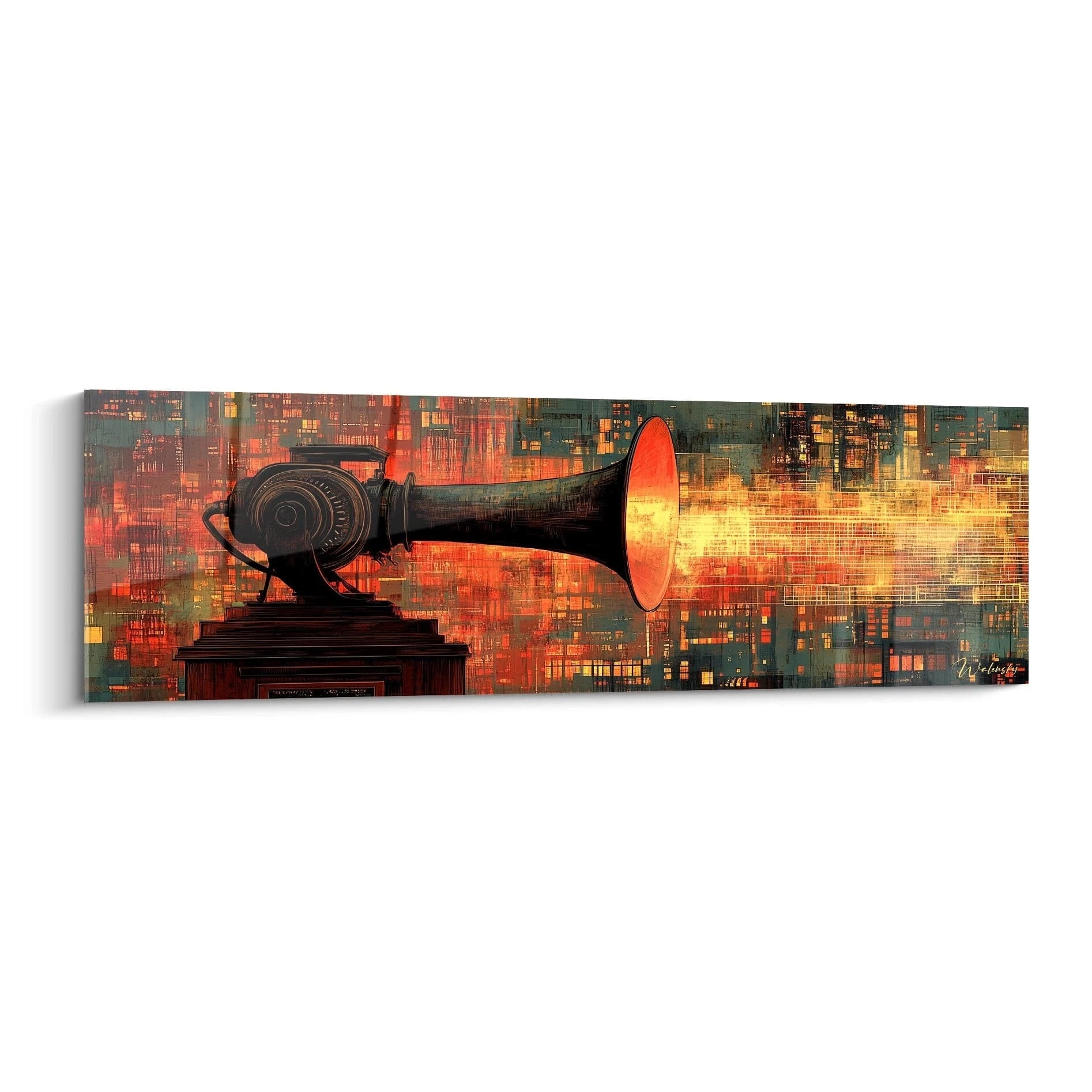
This gramophone painting captivates instantly with its panoramic composition featuring a retro gramophone against a dazzling digital backdrop. The work strikes through its bold blend of steampunk aesthetic and contemporary digital art. The antique phonograph, with its copper horn projecting intense orange light, stands out magnificently against a fragmented background of red, orange and deep green pixels that evoke an illuminated urban digital matrix.
How this vintage gramophone painting on modern background is structured
The gramophone painting is structured with balanced horizontal composition where the central object occupies the left third of the space, while its horn extends elegantly toward the right, traversing the majority of the pictorial surface. This arrangement creates powerful directional dynamics, guiding the viewer's gaze from left to right, as sound would propagate from the apparatus.
The directional lines are primarily horizontal, with the elongated silhouette of the horn creating a major force line dividing the work. The perspective chosen is slightly upward, magnifying the object's presence and conferring an almost monumental stature against the digital landscape that seems to extend infinitely in the background.
The colors of the gramophone painting and their harmony
The chromatic palette of this work is dominated by a striking harmony of deep reds and luminous oranges that create spectacular contrast with the dark greens and blacks of the background. The phonograph itself is rendered in deep blacks and anthracite grays, while the interior of its horn radiates in bright golden orange, as if the object emitted its own light.
- Vibrant red-orange dominating the digital background
- Deep black for the phonograph body creating visual anchoring
- Dark green interwoven in background for additional depth
- Golden orange illuminating the horn interior like a heat source
Textures and technical details of the gramophone painting digital style
The work presents a fascinating contrast of textures between the metallic solidity of the phonograph and the pixelated fluidity of the background. The gramophone's surface is rendered with meticulous attention to detail, revealing subtle reflections on metal, mechanical lines of gears and the slightly grainy texture of its base. Each mechanical element is defined with precision, from dials to articulated joints.
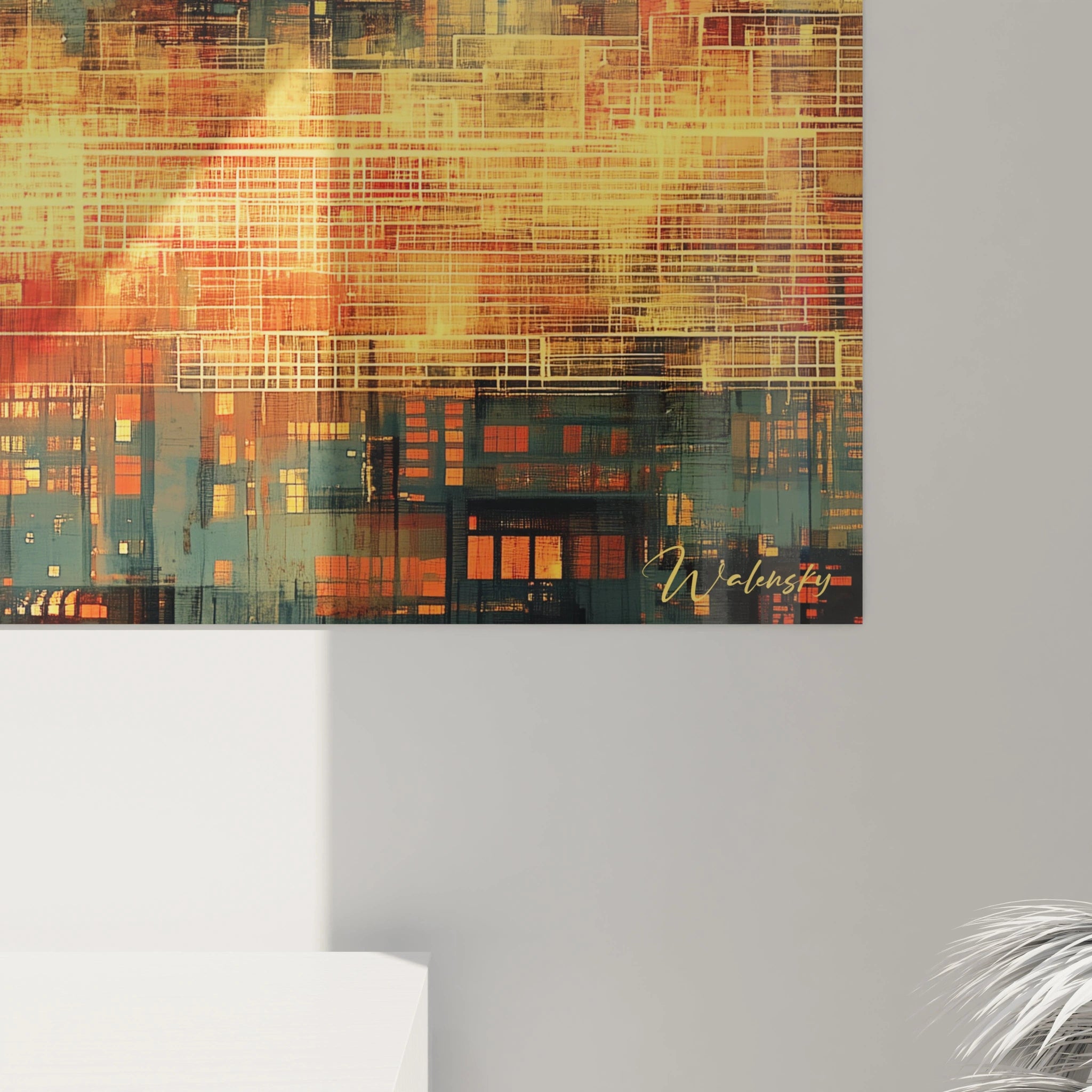
The background, conversely, offers completely different texture—a complex interweaving of luminescent lines and pixelated fragments that seem to vibrate and pulse like perpetual moving digital data. This juxtaposition creates a fascinating visual dialogue between the tangible materiality of the antique object and the ephemeral, nearly immaterial aspect of the digital world surrounding it.
What makes this gramophone painting urban art unique
The singularity of this work lies in its ability to transcend temporal boundaries, merging past technology with resolutely contemporary aesthetic. The phonograph, symbol of the industrial era and first great sound disseminator, is here reinterpreted as a digital light emitter, as if the apparatus had evolved to broadcast not sound waves but digital data.
The artist created an impression of arrested motion particularly striking, where the orange energy emanating from the horn seems to transform into pixels and codes constructing the surrounding digital urban environment. This gramophone wall decoration thus captures a moment of technological transition, like a visual metaphor for the evolution of our means of communication.
Depth and details of the gramophone painting
Viewed from afar, this work appears as striking composition of contrasting colors, dominated by the distinctive silhouette of the gramophone standing out against an abstract urban horizon. It is at this distance that the overall impression of warmth and energy is most prevalent, with orange seeming to radiate from the canvas.
Approaching reveals a multitude of meticulous details: inscriptions on the gramophone's base, metallic reflections on its structure, and especially the extraordinary complexity of the background revealed as hypnotic assembly of pixels, code lines and abstract architectural structures. This retrofuturistic gramophone painting thus offers visual experience renewed according to observation distance, progressively revealing unexpected levels of detail.
Where and how to display your retro contemporary gramophone painting
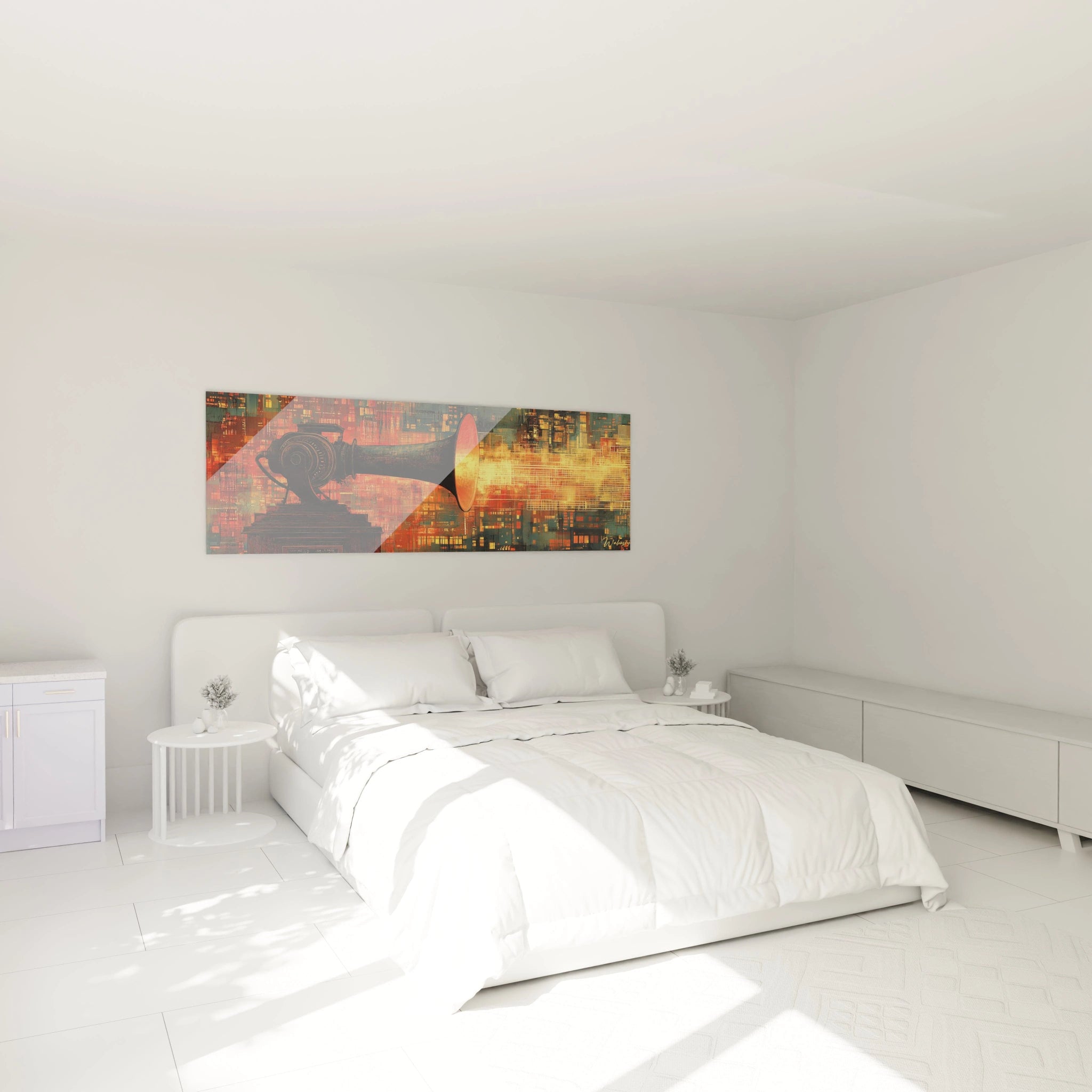
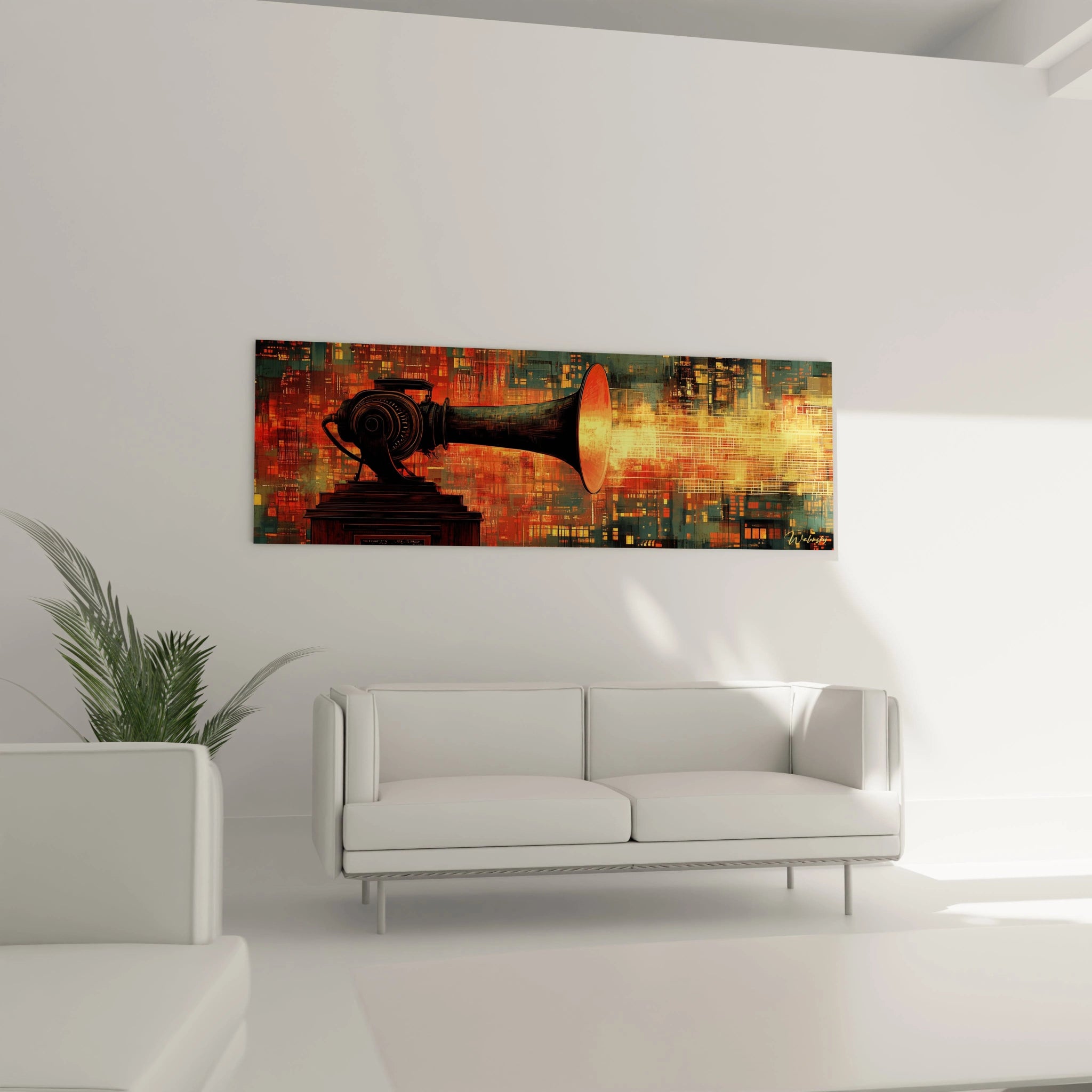
This work finds its perfect place in contemporary interiors with industrial or technological influences. A dark-colored wall—anthracite gray, midnight blue or even matte black—will maximize impact of the orange hues radiating from the painting. Lighting is crucial: favor directional spot with warm light that will accentuate contrasts and bring out the gramophone's details.
For optimal effect, install this gramophone painting in modern living spaces as focal point of a minimalist living room, in creative office where it will inspire innovation, or in loft with industrial accents where it will dialogue with raw architectural elements. Its dominant warm hue will bring vibrant energy even to the most sober spaces.