Canyon Painting: Its Unique Characteristics
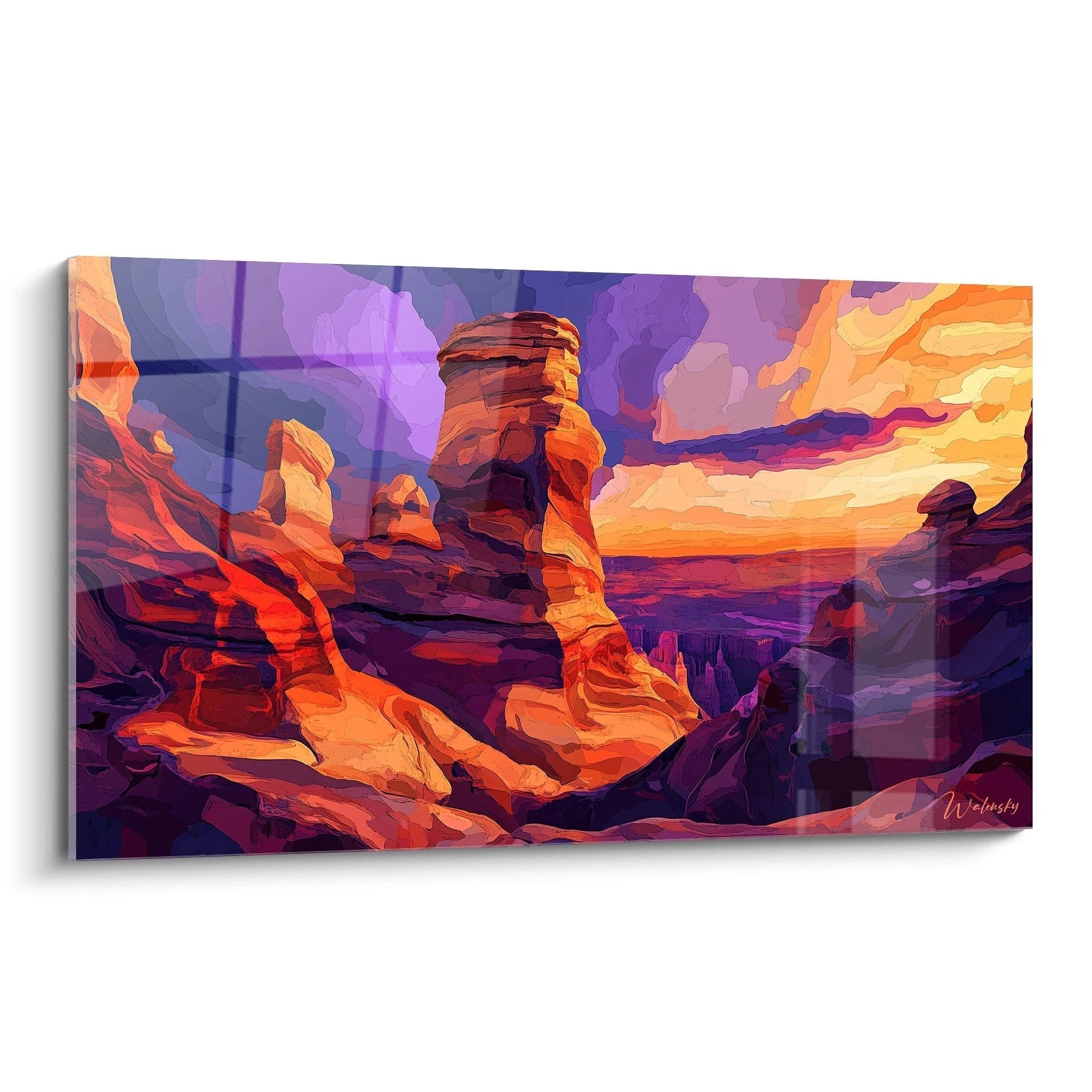
Dive into the spectacular immensity of this canyon painting with flamboyant hues that capture the magic of a sunset over monumental rock formations. This striking work presents sandstone pillars sculpted by erosion, standing majestically against a sky with purple and orange gradients. The strategic composition highlights striking contrasts between deep shadows and surfaces illuminated by the golden light of dusk, creating an atmosphere that is both mystical and grandiose, immediately transporting the observer to the heart of vast American spaces.
How This Monumental Canyon Painting Is Structured
The composition of this work reveals exceptional mastery of perspective and visual balance. At the center, an imposing column-shaped rock formation rises like a sentinel watching over the landscape, creating a powerful focal point that anchors the gaze. On either side, secondary rock structures establish dynamic symmetry that guides the eye toward the canyon's depth. The low-angle framing emphasizes the monumentality of the formations, conferring upon them an almost mythic presence, while the horizon placed in the upper two-thirds of the work optimizes the sensation of immensity and spiritual elevation inherent to grand natural landscapes.
The Colors of the Canyon Painting and Their Harmony
The color palette of this canyon painting deploys a symphony of captivating colors that faithfully transcribe the magic of a sunset in the desert. The dominant hues revolve around a striking contrast between incandescent oranges and deep purples, creating visual tension that energizes the entire composition. The terracotta reds of the rock formations, caressed by the grazing light of the setting sun, intensify to almost fluorescent notes on their edges, while the shadows dress themselves in purples and mysterious indigos that add a contemplative dimension to the work.
- Flamboyant orange: illuminates rock surfaces exposed to direct light
- Deep violet: enriches shadow areas and the twilight sky
- Terracotta red: constitutes the fundamental hue of geological formations
- Golden yellow: punctuates the horizon and underlines rock contours
- Midnight blue: deepens hollows and distant valleys
Textures and Technical Details of the Desert Canyon Painting
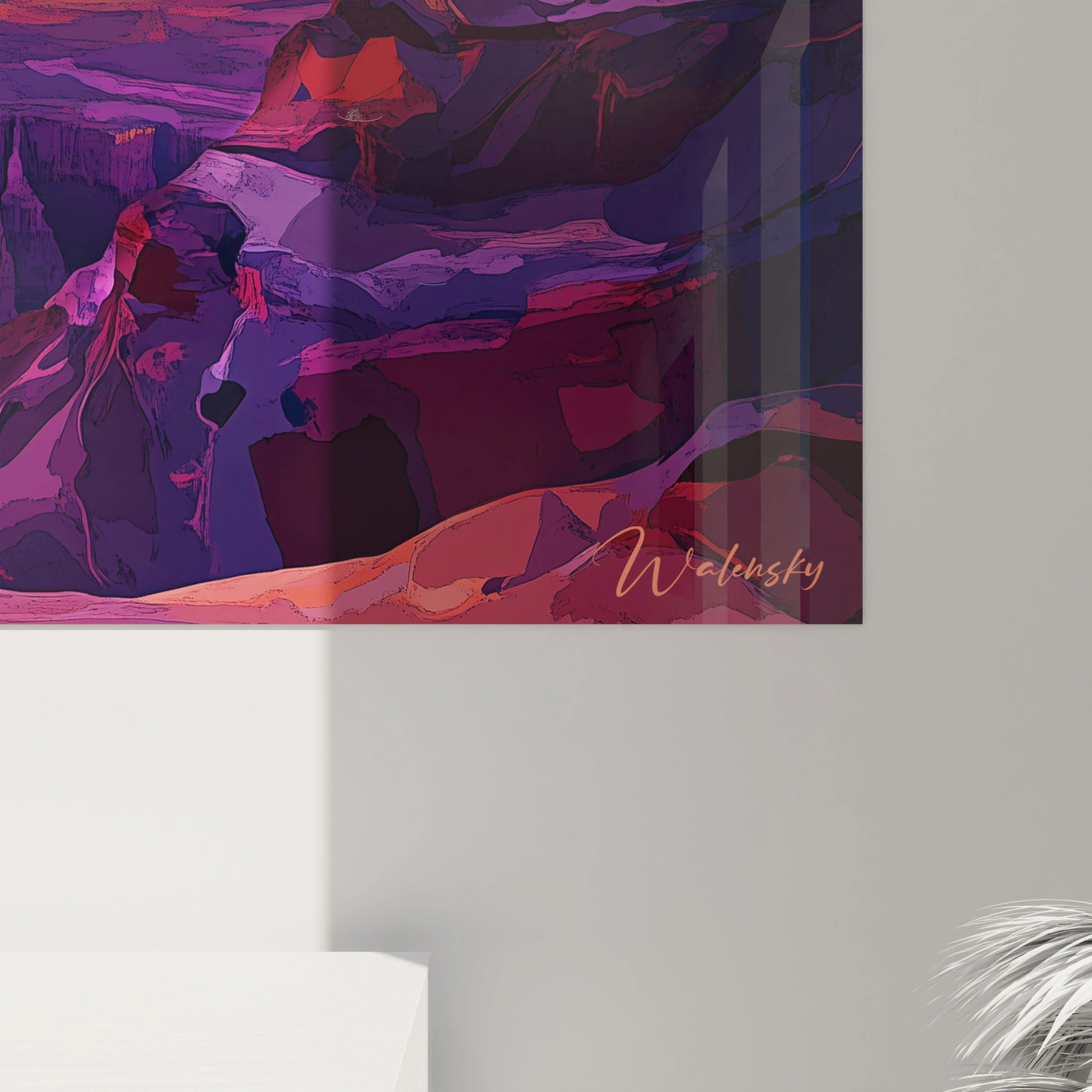
The textural approach of this desert canyon painting reveals meticulous work that faithfully transcribes the physical characteristics of eroded rock. The surface displays rich tactile qualities evocative of the features, with fluid transitions between smooth and rough zones that mimic geological strata. Thick and gestural touches define the jagged contours of the formations, while more subtle glazes create atmospheric effects of the sky and diffuse light. The technique employed clearly combines several pictorial approaches, fusing the precision of geological detail with the expressive freedom of light interplay, for a rendering that is both faithful and emotionally powerful.
What Makes This American Canyon Painting Unique
The singularity of this American canyon painting lies in its ability to capture that precise moment when the setting sun's light transfigures the desert landscape, conferring upon it an almost supernatural dimension. The artist has achieved the feat of seizing the particular quality of that golden light which seems to emanate from the rocks themselves, creating the illusion that they are incandescent from within. The chosen perspective, unusually intimate despite the immensity of the subject, places us at the very heart of the rock formations rather than as a distant observer, inviting us to an immersive experience of the landscape. This canyon wall decoration also distinguishes itself through its contemporary interpretation of a classic subject, fusing the tradition of American landscapes with a resolutely modern color sensibility.
Depth and Details of the Canyon Painting
Observed from a distance, this canyon painting offers a striking vision of a desert landscape bathed in twilight light, where rock masses seem to pulse with inner energy. Drawing closer, the eye discovers a multitude of fascinating details that enrich the visual experience: the fine horizontal striations that testify to millions of years of sedimentation, the crevices and cavities that punctuate the walls, the subtle color variations that reveal the diverse mineralogical composition of these natural monuments. This artistic canyon work progressively unveils its complexity, rewarding careful observation with the revelation of pictorial microcosms within the overall composition, creating an ever-renewed contemplative experience.
Where and How to Display Your Rocky Canyon Painting
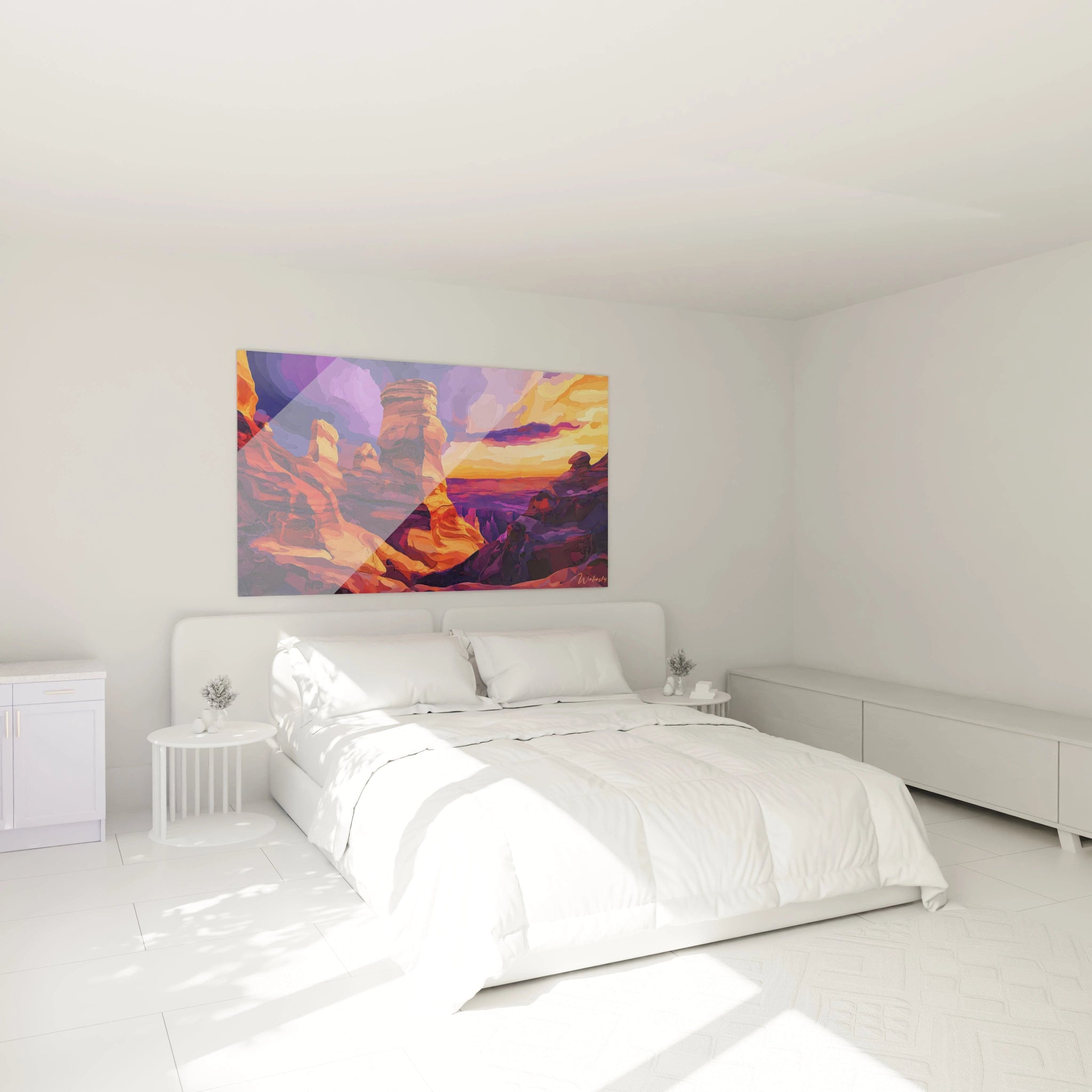
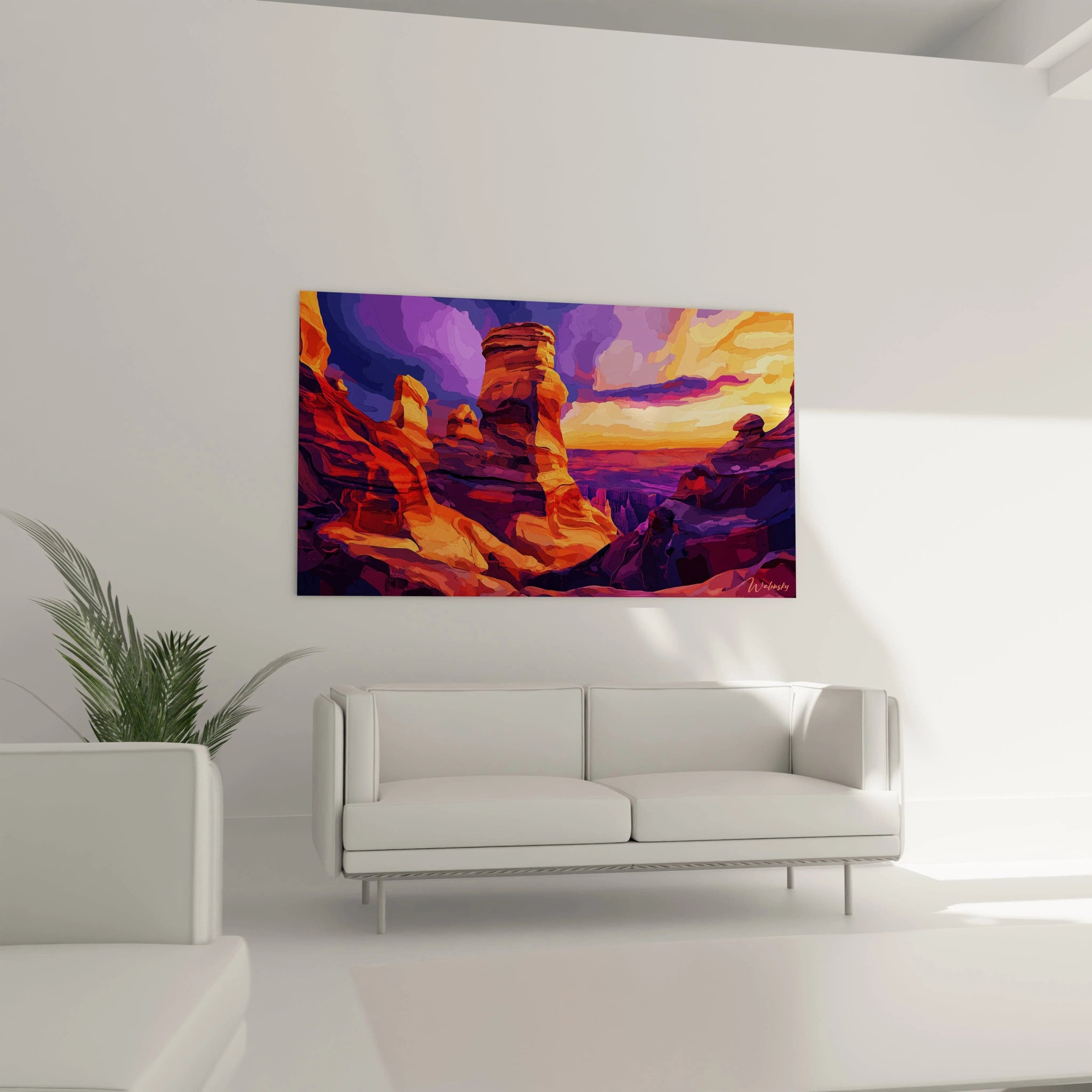
This rocky canyon painting will find its ideal place in a space benefiting from generous but indirect natural light, which will allow you to fully appreciate the chromatic subtleties without creating bothersome reflections. A wall in neutral color—off-white, pale gray, or light beige—will constitute the perfect background to showcase the intensity of oranges and purples. For artificial lighting, favor spots with warm color temperature (2700-3000K) oriented at 30 degrees toward the canvas, to reproduce the grazing light effect so characteristic of this composition. This wall decoration will be magnified in an interior with refined lines, where elements of raw wood and textiles with natural textures will echo the minerality of the subject without entering into visual competition with it.